Wednesday, March 26, 2025


Two Killed as Bulker Runs Over Tug’s Towline in the Philippines

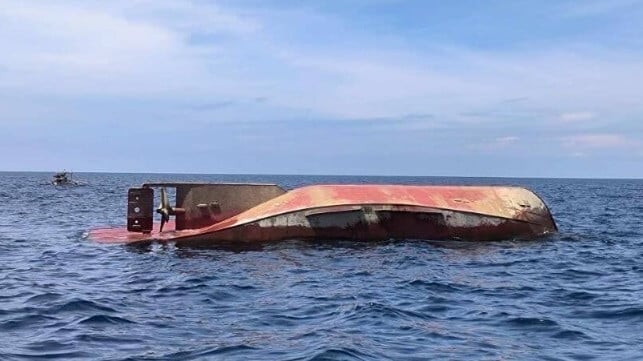
capsized tugboat
Philippines'; tugboat capsized when the bulker hit its towline (PCG)

Published Mar 25, 2025 12:32 PM by The Maritime Executive


The Philippines Coast Guard is reporting it rescued six crewmembers, but that two others including the captain were killed when a bulker ran over a tugboat’s towline. The tug registered in the Philippines capsized when the vessel struck the towline.

The incident happened at 0420 local time today, March 25, in the waters near Maasim, Sarangani Province, in the southern Philippines. The Coast Guard reports it dispatched four boats with rescue divers and response teams to the scene.

The Chinese-owned bulker Universe Kiza (28,388 dwt) has been detained. It was sent to the anchorage at General Santos City. The Coast Guard reports it has instructed its legal officers to handle the filing of appropriate charges against the master and crew of Universe Kiza. The vessel built in 2004 and registered in Panama was transporting a load of concrete from Vietnam. 

According to the survivors from the tug, they were towing a barge with approximately 50 to 100 meters of towline. The bulker attempted to pass in between the tug Sadong 33 and the barge LCT Sea Asia

The tug had a crew of eight aboard and capsized from the impact. The Coast Guard was able to recover six seafarers from the water while search teams later recovered the two deceased crewmembers. One is identified as the captain of the tug and the other was working as an oiler. The six were provided medical attention and reported not to be seriously injured.

The Coast Guard has placed oil booms around the tug as a precaution. A salvage company is working to recover the tug.


Conservationists Sue BOEM to Restore OSV Speed Limits for Rice's Whale

A rare image of a Rice's whale in the wild (NOAA)

Published Mar 25, 2025 8:09 PM by The Maritime Executive


A group of U.S. environmental NGOs are suing the Trump administration over the rollback of guidance that was intended to protect the endangered Rice's whale, an ultra-rare species found only in the U.S. Gulf. Only an estimated 50 individuals remain, and conservationists believe that without protection, it could become the first whale species ever to go extinct due to human activity - possibly even before the North Atlantic right whale

"[Rice's whales] are on the brink of extinction and the few dozen left alive desperately need more protections from speeding vessels and other offshore oil drilling activity, not less," said Kristen Monsell, oceans legal director at the Centre for Biological Diversity. 

The Rice's whale is a relative of the Bryde's whale, and was first identified as a separate species in 2021. In 2022, more than 100 marine scientists called for "excluding leasing and other [oil and gas] activities from the whale's habitat."

In response, BOEM removed lease blocks in Rice's whale habitat areas from a federal lease auction, and it asked offshore oil and gas operators to incorporate whale-protection measures when transiting specific water depths, including all areas between the 100-400 meter depth contours - the areas where the whale is known to feed. These protective measures included a halt to nighttime OSV navigation and a 10-knot speed limit across the depth contour band. 

Pushback from oil majors came swiftly, and a federal judge prohibited BOEM from incorporating the restrictions into the requirements of a 2023 lease auction. On February 20, 2025, BOEM rescinded the guidance altogether, citing the Interior Department's new guidance for "Unleashing American Energy." 

In a letter to BOEM this week, the NGOs Friends of the Earth, Centre for Biological Diversity, the Sierra Club, and the Turtle Island Restoration Network said that they plan to sue to restore the recommendations. BOEM's guidance on Rice's whale protection never became mandatory, but the nonprofits want the agency to make it official policy once more. 

"It cannot be overstated: Trump is dealing a death blow to the critically endangered Rice’s whale in the name of Big Oil handouts," said Hallie Templeton, legal director for Friends of the Earth. 


First LR1 Tanker Fitted with Scrubber and Carbon Capture Dual System

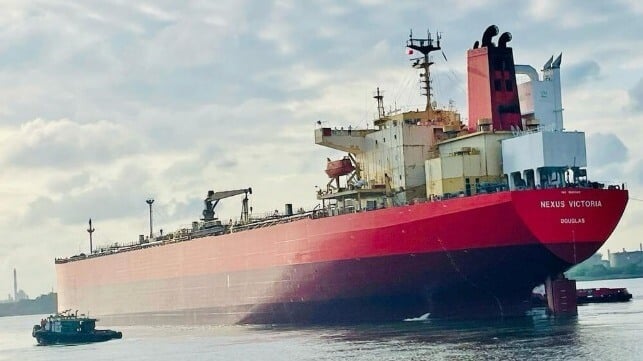
tanker with CO2 capture system
Nexus Victoria fitted wit hthe subber and CO2 capture system (Value Maritime)

Published Mar 24, 2025 3:50 PM by The Maritime Executive


The first LR1 tanker has been fitted with a combined system from Value Maritime to capture carbon emissions while also scrubbing exhaust gas for particulate matter. The tanker, Nexus Victoria (75,000 dwt) is also reported to be the largest vessel to incorporate Value Marine’s SOx scrubber with advanced carbon capture technology.

The installation was recently completed in Singapore aboard the tanker, which is owned by Mitsui O.S.K. Lines and registered in the Isle of Man. The tanker, which is managed by Synergy Maritime, was built in Japan and runs with a single two-stroke six-cylinder diesel engine from Mitsui Engineering.

“This system represents a crucial step in decarbonizing vessels that cannot yet transition to next-generation fuels,” said Hiroyoshi Kubo, Executive Officer – Tanker Unit at MOL. “Together with Value Maritime, we are committed to advancing carbon capture solutions and building a CO2 value chain that contributes to a sustainable, carbon-neutral industry.”

VM’s Filtree system is designed to filter sulfur, CO2, and (ultra) fine particulate matter from the vessel’s exhaust stream. The company was started in 2017 focusing on scrubbers but has now developed a system that combines the two functions. The system’s plug-and-play design includes onboard CO2 capture and storage capabilities, enabling captured CO2 to be offloaded onshore for reuse in greenhouse cultivation, methanol production, or the food industry. 

The system consists of two elements, including a small prefabricated, pre-installed, “plug and play” gas cleaning system in a road transportable housing. This system filters the sulfur, 99 percent of the particulate matter (fine dust), and CO? from the exhaust gases of ships. The second stage is equipped with a filter that cleans the washing water. Oil residues and particulate matter are removed from the washing water and fed to the sludge tank.

According to the company, its VM 15MW next-generation EGCS Filtree system will capture 10 percent of the tanker’s CO2 emissions. It is potentially scalable to 30 percent.

This project was agreed to in April 2024 as the company’s first in Japan. Value Maritime aims to expand its partnerships across Asia and enhance its carbon logistics.

Eastern Pacific Shipping installed onboard its MR tanker Pacific Cobalt a first-of-its-kind fully integrated carbon capture solution developed by Value Maritime in February 2023. At the time they reported the system would be capable of capturing up to 40 percent of CO2 emissions from the vessel’s main and auxiliary engines as well as 99 percent of SOx emissions. Ardmore Shipping in September 2023 also began fitting the first of nine systems aboard its tankers at a shipyard in China.

The shipping industry is showing increasing interest in the technology. It could become a key tool in addressing the emissions of the in-service fleet extending the life and financial performance of these vessels.


The Importance of Monitoring Indoor Air Quality Onboard Ships

iStock
iStock

Published Mar 25, 2025 2:13 PM by Guillaume Drillet, Khairul Irfan, Umid Joshi and Lisa Drake


Looking to land-based environmental health and safety, extensive research from the 1980s and 1990s has demonstrated the negative impacts of "sick buildings" on employee health and productivity. Research studies have established a link between exposure to poor indoor air quality (IAQ) and a range of respiratory issues, including cough, asthma, and heart arrhythmia, even in otherwise healthy individuals. Not surprisingly, general allergens—particulate matter, volatile organic carbon, mold, and bacteria—have been identified as key causes for such issues. Given this knowledge, maintaining healthy air quality on ships is crucial not only for improving seafarers’ happiness, wellbeing, and productivity, but also for reducing the risk of workplace accidents.

To ensure decent living conditions that support seafarer safety as well as decent living and working conditions, international organizations have developed guidelines and requirements to protect seafarers, such as the International Maritime Organization Code on noise levels on board ships (Resolution MSC.337(91), 2012) and the International Labour Convention Maritime Labour Convention (MLC, 2006). The MLC sets high-level standards for provisions like drinking water, food, and ventilation. That said, the MLC leaves the specific prescriptive monitoring limits to individual parties to determine.

Many countries have regulations and guidelines in place to set limits on a variety of IAQ parameters, with a handful of countries enforcing the regulations (Dimitroulopoulou et al., 2022; e.g., ANSI/ASHARE Standard 62.1, 2021, which sets requirements for ventilation). In practice, administrations—apart from Brazil—tend not to require strict IAQ monitoring on board ships. More often, such requirements are generated through requirements from Classification societies, for example, the Comfort Class notation from DNV. Here, comfort is evaluated to achieve ratings from “acceptable” to “high” based on noise and vibration (COMF-V) and indoor climate (COMF-C; DNV, 2014). However, the requirement is not widely implemented, nor are ships’ compliance with it reviewed in an ongoing basis by an independent third-party testing organization.

To assess IAQ, we sampled 13 vessels, collecting 530 measurements across 12 physical, chemical, and biological parameters. The results revealed concerning findings when benchmarked against Singapore's IAQ standards (SS554, 2021). While ships met the limits for carbon dioxide and carbon monoxide levels, 5% of the measurements exceeded the limits for total volatile organic compounds.

Temperature can be more difficult to control on ships compared to buildings, and, indeed, the limits were not always met in this dataset (70% noncompliance). Likewise, particulate matter (PM) values were too high in some cases: respirable dust (PM 4 µm) showed 15% noncompliance, and PM2.5 (PM 2.5 µm) showed 8% noncompliance. Finally, 11% of the samples tested for total airborne bacteria were above the limits, although no mold values exceeded the limit.

These results indicate that in most cases, at least one parameter for IAQ on ships exceeded the recommended occupational and public health standards. This highlights the need for proactive air-quality maintenance to ensure the well-being of crew members who are can be exposed to unfavorable or unhealthy for extended periods.

Regular monitoring can help ship owners and managers make informed decisions about ventilation and living conditions, benchmark air quality across their fleet, and incorporate air quality into their corporate sustainability goals and key performance indicators.

Guillaume Drillet (PhD) is the Regional Manager of Marine Services for Asia and Pacific at SGS, the world's leading testing, inspection and certification company. He has 20 years of experience in public and private sectors dealing with Environmental Health and Safety issues.

Khairul Irfan is the Operation Manager of the Environmental Health and safety teams of SGS Singapore and has >10 years of experience monitoring worker’s exposures to environmental stressors such as air quality and noise.

Umid Joshi (PhD) is the Technical Manager of the Environmental Health and Safety teams of SGS Singapore and has >20 years of experience monitoring workers’ exposures to environmental stressors such as air quality and noise.

Lisa Drake (PhD) manages SGS Marine Services for the Americas. She—along with a team of experts—guides this work in >600 ports worldwide. Her career addressing marine, global environmental issues has spanned academia, government, and the private sector.

The opinions expressed herein are the author's and not necessarily those of The Maritime Executive.
On Anniversary of Baltimore Bridge Collapse, Study Says More Hits Coming

Dali bridge strike
Courtesy U.S. Army Corps of Engineers

Published Mar 24, 2025 11:22 PM by The Maritime Executive


Days after the National Transportation Safety Board took state highway agencies to task for unassessed bridge strike risks, a team at Johns Hopkins University has published a comprehensive list of the bridge spans that are most exposed to the hazard. The Francis Scott Key Bridge in Baltimore, which was struck and destroyed by the boxship Dali last year, emerged in the top-10 list for bridges most likely to be hit. 

“With this investigation we wanted to know if what happened to the Key Bridge was a rare occurrence. Was it an aberration? We found it’s really not,” said Michael Shields, Johns Hopkins associate professor and lead author. “In fact, it's something we should expect to happen every few years.”

The study suggests that the likelihood of ships alliding with bridges has been greatly underestimated, and that we should all expect to see more bridge strikes in our lifetimes. Owing to the dramatic increase in the size of ships, and the fact that most bridges are witnessing an unprecedented increase in vessel traffic, future allisions are virtually certain - though the severity will vary, and there are engineering interventions to reduce harm. For example, the group calculated that the Huey P. Long Bridge outside New Orleans and the San Francisco-Oakland Bay Bridge are likely to be hit by a ship within two decades.

Johns Hopkins is releasing the preliminary findings of the study on the first anniversary of the Key Bridge collapse after it was struck by the boxship Dali, killing six people who were carrying out roadway repairs on the bridge deck. While investigations are still ongoing on the cause of the allision, the reality is that the chances of another similar incident are much higher. Ship strikes should be extremely rare, with bridge design standards stipulating that the annual chances of a bridge collapse from ship allisions should be less than 1 in 10,000 years. But after collecting, mining and analyzing 16 years of U.S. Coast Guard data, the team concluded the next allision could be in the pipeline. Notably, even iconic bridges like San Francisco's Golden Gate Bridge and Maryland's Chesapeake Bay Bridge are not immune to allisions.

The team based its study on AIS tracking, port data and bridge data from the National Bridge Inventory to determine which large ships passed under which bridges. Using the traffic data, along with average mishap rates from the American Association of State Highway and Transportation Officials, the team was able to estimate the probability of very large ships hitting the piers of major bridges across the U.S. (Bridges without in-water piers were excluded from the study.)

The Key Bridge allision provided an unfortunate confirmation of their methods: the team predicted it would have likely been hit by a ship within 48 years. The bridge was 46 years old when it fell, having sustained a minor hit from a ship previously.

The study identifies the bridges facing the highest risks of allision over the next five decades or less. These include the Huey P. Long Bridge (17 years), the San Francisco-Oakland Bay Bridge (22 years), the Crescent City Connection in New Orleans (34 years) and the Beltway 8 Bridge in Houston (35 years). Others include the Hale Boggs Memorial Bridge west of New Orleans (37 years), Bayonne Bridge, N.Y./N.J (43 years) and Fred Hartman Bridge, Texas (47 years).

“There's still a lot of uncertainty in predicting the frequency of ship collisions, even with the best data we have,” said Shields. “But the important point is not whether it will occur every 17 years or every 75 years. It's that it's happening way too often.”


PHOTO ESSAY

Year after horrific Key Bridge collapse, Baltimore's trauma is 'still very real'

Christopher Cann, 
USA TODAY
Wed, March 26, 2025 

BALTIMORE – When Bobby LaPin was a young boy, his grandfather took him on his rickety boat to fish for bass and trout in the Patapsco River. Their route took them under the Francis Scott Key Bridge, where LaPin listened to the rumble of vehicles above and waves washing against its massive support columns.

For LaPin, the bridge symbolized cherished afternoons spent with his grandfather. Perhaps for that reason, he has struggled to get used to a Baltimore skyline without the steel truss bridge.

“It’s eerie not to see it out there anymore,” LaPin, 46, said. “When you grow up with something and it’s gone, it’s devastating.”

When a container vessel the size of a Manhattan skyscraper rammed into the Key Bridge one year ago, it was far more than a symbolic loss for the city. The maritime disaster killed six construction workers, temporarily shuttered one of the nation's busiest ports, and spotlighted the vulnerabilities of aged bridges against increasingly larger cargo ships.

Now, a year later, the reality of the disaster still weighs on Baltimore and its residents, especially those in the working-class neighborhoods near where the four-lane bridge once stood.

Daily traffic delays plague east-west interstates, frustrating commuters. And businesses in neighborhoods isolated by the loss of the bridge are grappling with a sustained decline in revenue.

Still, many marvel at the pace of the recovery effort. The port of Baltimore rebounded after a seven-week closure and reported one of its most financially successful years. Meanwhile, authorities are preparing controlled demolitions to get rid of the remaining sections of the original bridge before starting construction on the new one.

“This time last year, I don’t think anyone thought things would be where they are today," LaPin said.
The collapse of the Francis Scott Key Bridge

On the frigid night of March 26, 2024, the Dali, a 984-foot-long cargo ship, lost power while departing Baltimore’s harbor. The electrical breakers that fed most of the vessel’s equipment had tripped, according to the National Transportation Safety Board.

An emergency generator came online and the senior pilot steering the ship ordered the anchor dropped. But less than a quarter mile from the bridge, the ship lost power again. Police quickly closed both sides of the bridge – a decision credited with saving lives.

Less than three minutes later, the Singapore-flagged ship smashed into one of the bridge’s piers.

While the NTSB has yet to release its final report on the incident, the agency has faulted the state of Maryland for failing to conduct a risk assessment on the Key Bridge. The NTSB, which says the assessment would have shown the bridge's vulnerabilities to such a strike, has since called for reviewing dozens of bridges across the country to reduce the chances of another major collapse.

More: Span of disaster: US bridges face deadly risk of ship ramming, study finds


John Flansburg of Dundalk, Md. shares his experience seeing the immediate aftermath of the Francis Scott Key Bridge after it was struck by the Singapore-flagged container ship. Campion says he could hear and feel the immediate crash and collapse from his home, which is situated near the bridge.More

John Flansburg, who could once see the Key Bridge from his front yard in Dundalk, Maryland, recalls being shaken from his sleep by the crash.

“The house shook,” Flansburg, 66, said. Outside, he could see police lights flashing on both sides of the river, but the bridge was gone.

At dawn, he saw the devastation: 50,000 tons of twisted steel and concrete lay across the river and atop the deck of the ship. A streetlight protruded eerily from the water.

“This is the worst tragedy that has happened here in my lifetime,” Flansburg said.
The disaster left wounds that will never heal

Eight construction workers were on the bridge when the Dali collided with the pier. An inspector ran out of harm’s way, but the others were in their vehicles and plunged into the frigid water. Only one survived.

Those killed include: Alejandro Hernandez Fuentes, 35; Dorlian Ronial Castillo Cabrera, 26; Maynor Yasir Suazo Sandoval, 38; Carlos Daniel Hernández, 24; Miguel Angel Luna Gonzalez, 49; and José Mynor López, 37.

All immigrants from Latina America, the men were beloved fathers, grandfathers, husbands, brothers and sons. They had dreams of owning their own businesses, worked long hours to send money to their families back home and even contributed donations to help fund youth soccer leagues.


A photograph of Miguel Luna is visible along with others at a memorial honoring the lives of those who died after the Francis Scott Key Bridge in Baltimore collapsed last year Thursday, March 20, 2025. The bridge collapsed after it was struck by the Singapore-flagged container ship, killing six road workers who were on the bridge at the time.More

Relatives of three of the men – Cabrera, Suazo Sandoval and Gonzalez – last year filed a lawsuit against the owner and operator of the Dali, Grace Ocean Private Ltd. and Synergy Marine Pte. Ltd., for unspecified damages.

In court records, the families claim the companies allowed the ship to depart despite knowing it had mechanical issues. The companies, which have repeatedly denied responsibility for the crash, did not respond to USA TODAY's request for comment.

The families have pledged to fight for justice not only for their relatives, but for all immigrants working in dangerous conditions. The lawsuit remains pending in court.

Over the last year, the Baltimore Mayor’s Office of Immigrant Affairs and the Baltimore Civic Fund raised over $1.1 million to help support the families of the victims. The payments, which are dispersed on a monthly basis, have been used to cover expenses like rent, food, utilities, childcare and funeral costs.

The city said half the funds have so far been released, and it expects to continue disbursing payments through the end of the year.


A memorial honoring the lives of those who died after the Francis Scott Key Bridge in Baltimore collapsed last year is visible Thursday, March 20, 2025. The bridge collapsed after it was struck by the Singapore-flagged container ship, killing six road workers who were on the bridge at the time.


Economic toll and recovery

For nearly two months, the port of Baltimore was shut down, putting thousands out of work and stirring fears the closure could hike good prices.

Richard Krueger, the president of the International Longshoremen's Association Local 953 in Baltimore, said it was a stressful time rife with uncertainty.

“It was devastating because there was a complete halt to everything,” the union leader said. “We went from 60 to zero in one day.”


A member of the Army Corp. of Engineers and a journalist assess the wreckage of the cargo ship Dali after it collided with the Francis Scott Key Bridge on April 04, 2024 in Baltimore, Maryland.

Local businesses also felt the pinch.

Joel Schlossberg, the general manager of Lighthouse Point Marina, which opened a few months before the disaster, said the collapse of the bridge killed the momentum they had going into their first busy spring season.

“It had a major impact on us,” Schlossberg, 58, said. “We hired less dock hands, we hired less restaurant workers because everything pretty much stopped on the water.”

LaPin, who runs a boat tour business on the Patapsco River, said the closure shut down his operations completely for about two months.

Joel Schlossberg, general manager at Lighthouse Point Marina, poses for a portrait near one of the docks that was temporarily closed after the Francis Scott Key Bridge, a major span over the Patapsco River in Baltimore, collapsed on March 26, 2024.More

“I was terrified,” he said. “We work off such a small margin and the future looked really dire.”

But the pain was more temporary than people expected. By mid-June, the main shipping channel reopened and allowed the port of Baltimore to resume operations.

Krueger said the union's workers were hired back to near pre-collapse levels. Local businesses – thousands of which received low-interest loans – began to regain some of their losses. And even after a weekslong closure, the port of Baltimore had its second best year in history, handling 45.9 million tons of cargo at state-owned marine terminals.

"The recovery beat everyone's expectations," Schlossberg said.


Shipping containers are pictured at the Port of Baltimore, in Baltimore, Maryland, U.S., March 29, 2024.


Traffic plagues Baltimore

A year after the collapse of the Key Bridge, one issue still disrupts the lives of millions of Marylanders: traffic gridlock.

From April to September 2024, vehicles on three major interstates spent 2.5 million extra hours commuting than the year prior, according to a study by the University of Maryland.

Alex Delsordo, co-owner of the Hard Yacht Cafe, said his commute to work has gone from 35 minutes to over an hour and a half. At the same time, business has shrunk 12% year-over-year – a decline he links to the loss of the bridge.

Located in Dundalk, a blue-collar town southeast of Baltimore, Hard Yacht Cafe is one of many businesses in the area who lost its customers across the Patapsco River.


Alex Delsordo, owner of Anchor Bay Marina and Hard Yacht Cafe, poses for a portrait at his business Thursday, March 20, 2025. Delsordo opened up his fueling station and provided meals and lodging for first responders the night the Francis Scott Key Bridge, a major span over the Patapsco River in Baltimore, collapsed on March 26, 2024 after it was struck by the Singapore-flagged container ship.

Once an easy drive over the Key Bridge, many of its customers now have to brave snarled traffic in the Baltimore Harbor Tunnel to enjoy the restaurant’s beloved “Fisherman’s Grilled Cheese.”

“I can’t say woe is me but it’s a huge inconvenience for everybody,” he said. “It’s all you hear people talk about.”

For the trucking industry, delays add up. A study by University of Maryland and Morgan State University researchers found average travel times for trucks driving through Baltimore have jumped 58% following the collapse. The added time on the road is expected to surge operating costs for carriers by $92 million in 2025.

Louis Campion, the president and CEO of the Maryland Trucking Association, said companies have begun implementing delivery surcharges and the higher costs will likely be passed to consumers.

“There’s no doubt that the trickle down effect will be absorbed by consumers through price increases,” he said.


A truck drives past containers at Consol Marine Terminal in Baltimore, Maryland, U.S., April 8, 2024.


Legal battles and rebuilding

In the wake of the bridge collapse, the FBI opened a criminal probe, dozens of lawsuits have been filed and both companies affiliated with the ship as well as Maryland state government have faced fierce criticisms.

Last year, Grace Ocean Private Ltd. and Synergy Marine Pte. Ltd. agreed to pay over $100 million to settle a civil lawsuit brought by the U.S. Department of Justice. The lawsuit came after the companies attempted to limit their liability to $44 million, claiming the crash was a result of circumstances outside their control.

The Justice Department disputed this in its filings, saying the companies were aware of the ship’s power issues and “recklessly chose to send an unseaworthy vessel” into a critical waterway. Other lawsuits have been filed by the state of Maryland, the city of Baltimore and scores of longshoremen who lost work when the harbor shut down.

Meanwhile, NTSB Chairwoman ​​​​​​​​​​​​Jennifer L. Homendy last week said the Maryland Transportation Authority should have known the Key Bridge's risk of collapse due to collision was 30 times above the accepted federal threshold. Had the state conducted a risk assessment of the bridge, Homendy said, "the collapse could have been prevented.”

More: Maryland officials should have known Key Bridge was vulnerable: NTSB


View of the Dali cargo vessel which crashed into the Francis Scott Key Bridge causing it to collapse in Baltimore, Maryland, U.S., April 4, 2024.

In a statement, the Maryland Transportation Authority said it "maintains the catastrophe and the tragic loss of life was the sole fault of the Dali and the gross negligence of her owners and operators who put profits above safety."

As the lawsuits move through the court system and investigations into the collapse continue, officials are moving forward with construction plans.

Last month, Maryland’s governor unveiled a digital rendering of the new bridge, which promises to modernize Baltimore’s skyline, trading the old truss design with an updated cable system.

The structure will be taller than the original bridge and will feature state-of-the-art pier protection, officials said. The new bridge will cost nearly $2 billion, which the federal government has agreed to pay. Construction is expected to be completed by October 2028.


The Maryland Transportation Authority revealed the new design of Baltimore's Francis Scott Key Bridge that collapsed into the Patapsco River March, 26, 2025 killing six construction workers.


Memorial on the Patapsco

On Tuesday, government officials and family members of the victims traveled by boat to the collapse site. There, among the remnants of the Key Bridge, they laid six floral wreaths on the waves of the Patapsco River.

Standing at the back of a Baltimore fire department vessel, some of the relatives embraced while others stood and watched as the current carried the white and yellow flowers downstream.

“For these families, that trauma is still very real and that pain is still very apparent,” Maryland Gov. Wes Moore said after the memorial.


Family members of the six men who died in the collapse of the Francis Scott Key Bridge participate in a memorial service marking the anniversary of the maritime disaster, March 25, 2025.

Baltimore Mayor Brandon Scott, who had planned the service, said he spoke with several of the victim’s children aboard the boat, including a young girl preparing to start high school.

“Even in the midst of having to face this bridge head on, you could see these folks are so strong and loved their loved ones,” he said.

After the new bridge is built and the lives of most Baltimoreans returns to normal, Scott said the city will remember those six men, "and the families who lost someone and will never be the same.”

The Crisis Of African Liberators
March 21, 2025
Source: Africa Is A Country


On the eve of celebrating the 50th anniversary of its independence on June 25, 1975, Mozambique is going through a political and human rights crisis that is unprecedented in its young history as a nation. The anniversary coincides with the that of other former Portuguese colonies in Africa—Angola, Cape Verde, Guinea-Bissau (which became independent in 1973), and São Tomé and Príncipe (which became independent in 1975)—since the historical liberation processes took place in parallel and articulated fashion, in the face of the struggle against a common enemy. This synchronicity prompts a series of reflections on the countries’ experiences over the last five decades. Objectively, the assessment is not positive, given that these countries are among the world’s most impoverished nations, as shown by various social and economic indicators. In addition, these countries are afflicted by acute political crises marked by their populations’ weariness with the vicissitudes of the current regimes, especially in Mozambique, whose case is paradigmatic of an even greater problem on the continent.

In the wake of the major geopolitical transformations taking place in the main centers of global power, political movements have emerged on the African continent that challenge the regimes installed after independence. Many characterize these as struggles for a “second independence,” in the sense that the movements for liberation from the European colonial yoke, which began in the 1950s, 1960s, and 1970s, became distorted over time, degenerating into oppressive and authoritarian regimes. This has led to a crisis of representation based on the widespread perception that African political elites have hijacked their respective state apparatuses to satisfy private interests and keep themselves in power. Even more aggravating is the idea that these elites have allied themselves with their former European colonizers, as well as with other foreign players, becoming the local counterpart to a logic of neocolonial domination.

Certainly, the most eloquent example of this phenomenon is the case of the Alliance of Sahel States (AES), a recently founded mutual defense pact between the countries of Mali, Niger, and Burkina Faso. This is a coordinated action with the manifest aim of eliminating French influence in the region, resulting from colonialism and previously abetted by the local political elites, who were deposed by military coups. To this end, the leaders of the movement expelled French military bases (and even embassies, in some cases) and redirected dividends from the exploitation of mineral resources to the respective national treasuries. Even more emblematic of the movement’s aims was its unilateral decision to leave ECOWAS, the regional cooperation bloc, on the grounds that it was an organization manipulated by the West under the leadership of Nigeria.

Across the continent, emerging movements challenge the status quo, characterized by demands for emancipation, participation, and greater social inclusion. Each in its own way, these movements express new correlations of forces resulting from their internal and regional social dynamics in interaction with broader geopolitical transformations. As a result, their success or failure will depend on factors such as the solidity of institutions, the degree of organization of civil society, and above all, how the regimes in power will react to a whole set of relatively unprecedented situations in African countries since their independence. Let’s see how the current political crisis in Mozambique fits into this context.
From controversial elections to a “parallel government”

Since the results of the general elections on October 9 were announced, a wave of demonstrations and civil protests has swept Mozambique, challenging what is seen as electoral fraud in favor of the Frelimo party, which has been in power since independence. On October 24, the electoral bodies gave victory to Daniel Chapo, the ruling candidate, with 70.61 percent of the votes, against 20.37 percent for the runner-up, Venâncio Mondlane, supported by the newly created Podemos party. However, the electoral process was marred by numerous allegations of irregularities, from the registration process to the voting itself. In fact, since the first multiparty elections in 1994, accusations of fraud have been recurrent and widely documented, with the determining factor being the fact that Frelimo has almost absolute control over state institutions, including the electoral and judicial bodies. However, this time, due to the sheer volume of accusations, the challenge came not only from the opposition but also from various sectors of civil society and even the international community (especially the European Union).

The fact is that after the official announcement of the results, the main opposition candidate called on the population to demonstrate in protest and obtained great support for his cause, above all because of widespread dissatisfaction with deteriorating living conditions in the country. The brutal murders of Elvino Dias and Paulo Guambe, activists from the Podemos party, which took place in circumstances that have yet to be clarified, further aggravated public indignation. Against this backdrop and having been harshly and disproportionately repressed by the authorities, the demonstrations escalated from marches in the streets to more drastic actions. Over the last three months, the country has witnessed episodes of genuine popular revolt and civil disobedience, such as the interruption of access routes, activities at ports, airports, and borders, and the destruction of infrastructure (especially police stations and headquarters of the ruling party), leaving the country in a state of anomie bordering on ungovernability.

Tensions peaked in the last week of 2024 after the Constitutional Council validated the election results, which were widely contested at various levels. During this phase of the demonstrations, acts of popular revolt increased and police repression intensified, to the point that civil society organizations filed accusations against security authorities to international bodies on the grounds of serious human rights violations and crimes against humanity. As 2025 began, with the expected confirmation of Frelimo’s victory, the inauguration ceremony for the new president was also marked by strong popular protests and disproportionate police repression, resulting in arrests and even deaths.

At the inauguration, public participation was isolated and suppressed, supposedly for security reasons. From a symbolic point of view, the ceremony epitomized the notorious disconnection between the once liberating party and Mozambican society. By contrast, Venâncio Mondlane’s triumphant return to the country the week before was greeted with popular acclaim in the streets of the country’s capital. Since October, Mondlane had gone into self-exile, allegedly for his own safety. It was from his exile that the officially defeated candidate called for and organized the demonstrations, which included work stoppages and, especially, the nonpayment of road fares, among other actions. Many demonstrations led to violence and various tensions, generating an atmosphere of generalized confusion for which both parties were blamed. Controversies aside, the fact is that the demonstrations called for by the opposition gained massive popular support, in visible contrast to the officially established authority of the regime.

Taking advantage of the vacuum in the popularity of the sworn-in president, Mondlane proclaimed himself President of the Republic via social networks, from “where” he does most of his mobilization work. This communication strategy has been one of the main factors behind his popular support, especially among the huge youth population, plagued by unemployment, absolute poverty, violence, and low expectations for the future. In fact, as various Mozambican social analysts have said, these are the fundamental causes of popular discontent, with the electoral crisis appearing as the tip of the iceberg of deeper problems. In this sense, various sectors of society have called for an initiative to promote an inclusive dialogue between the new government and the opposition, which has not happened, thus postponing a solution to the crisis.

It is precisely through social media that Mondlane has instituted a kind of “parallel government,” issuing “presidential decrees” based on agendas that are widely supported by a large part of the population and, on the other hand, contradict the government’s decisions and policies. This situation of ambiguity has resulted in several episodes of social tension that are expected to worsen over the next few years, with no prospect of reduction and a high risk of growing out of control and becoming violent, as has already been observed. According to data published by the Decide Electoral Platform (a civil society organization that has been monitoring the latest electoral processes), 353 deaths have been recorded since the demonstrations began in October, with the majority, 91 percent, being lethal shootings by the police. According to the organization, if this situation of “two governments” continues, the tendency is for social unrest to increase, leading to more deaths and violent clashes.
Problems and solutions in the neighborhood

The environment of uncertainty in Mozambique is paradigmatic of a broader context on the continent, namely, contestation against political regimes that were consolidated decades ago, after the dawn of African independence. At a regional level, the prompt support provided by Frelimo’s closest historical allies, such as the ANC (South Africa), MPLA (Angola), ZANU-PF (Zimbabwe), and Chama Cha Mapinduzi (Tanzania), who recognized the electoral victory of their “comrades” even before the final official validation, is quite symptomatic. It’s no coincidence that some of these countries are facing similar problems at home: In last year’s elections, Nelson Mandela’s historic ANC was forced to form a government of “national unity” with the Democratic Alliance (DA), the party that represents the white segment of the population; this situation stems from the growing unpopularity of the party that fought apartheid and has ruled the country since 1994. In Angola, meanwhile, there is enormous concern on the part of the regime about the potential contamination effect that the situation in Mozambique could generate locally, given the parallels between the two countries’ histories.

As a counterpoint, Botswana held elections that put an end to 58 years of rule by the BDP party, which had been in power since its independence in 1966. This case attracted attention precisely because it was a point outside the curve, in which the transition took place smoothly. This perhaps reflects the fact that Botswana is recognized as one of the most prosperous countries in Africa, registering positive economic growth rates and good positions in the HDI ranking by the continent’s standards. Despite being a country of little strategic relevance in the region, Botswana’s example holds important lessons for its neighbors, especially from the point of view of political stability and socioeconomic development.

Finally, for Mozambique and its counterparts in the PALOP (Portuguese-speaking African countries), the 50th anniversary of independence could serve as a moment of reflection that provides useful lessons for overcoming the difficult living conditions to which the overwhelming majority of their inhabitants are subjected. In the cases of Mozambique and Angola, one-party systems survived the establishment of liberal democracy, resulting in a kind of “multipartyism without democracy,” in which almost absolute control over all institutions and spheres of public life persists. As the Mozambican case suggests, the excessive concentration of power on the part of the liberation parties and movements, whose legitimacy is anchored in past anticolonial struggles, can become the main factor of instability and an obstacle to development. As a result, the various protest movements all over the continent point to internal solutions in the form of strengthening civil society and mechanisms aimed at greater inclusion of various actors and sectors of society in decision-making processes. Only in this way will everyone be able to truly participate in the celebrations of the 50th anniversary of independence.
Palestinian co-director of Oscar-winning documentary detained, released by Israeli forces

JERUSALEM (RNS) — The filmmaker was allegedly attacked by Israeli settlers in his West Bank village, according to his co-director.


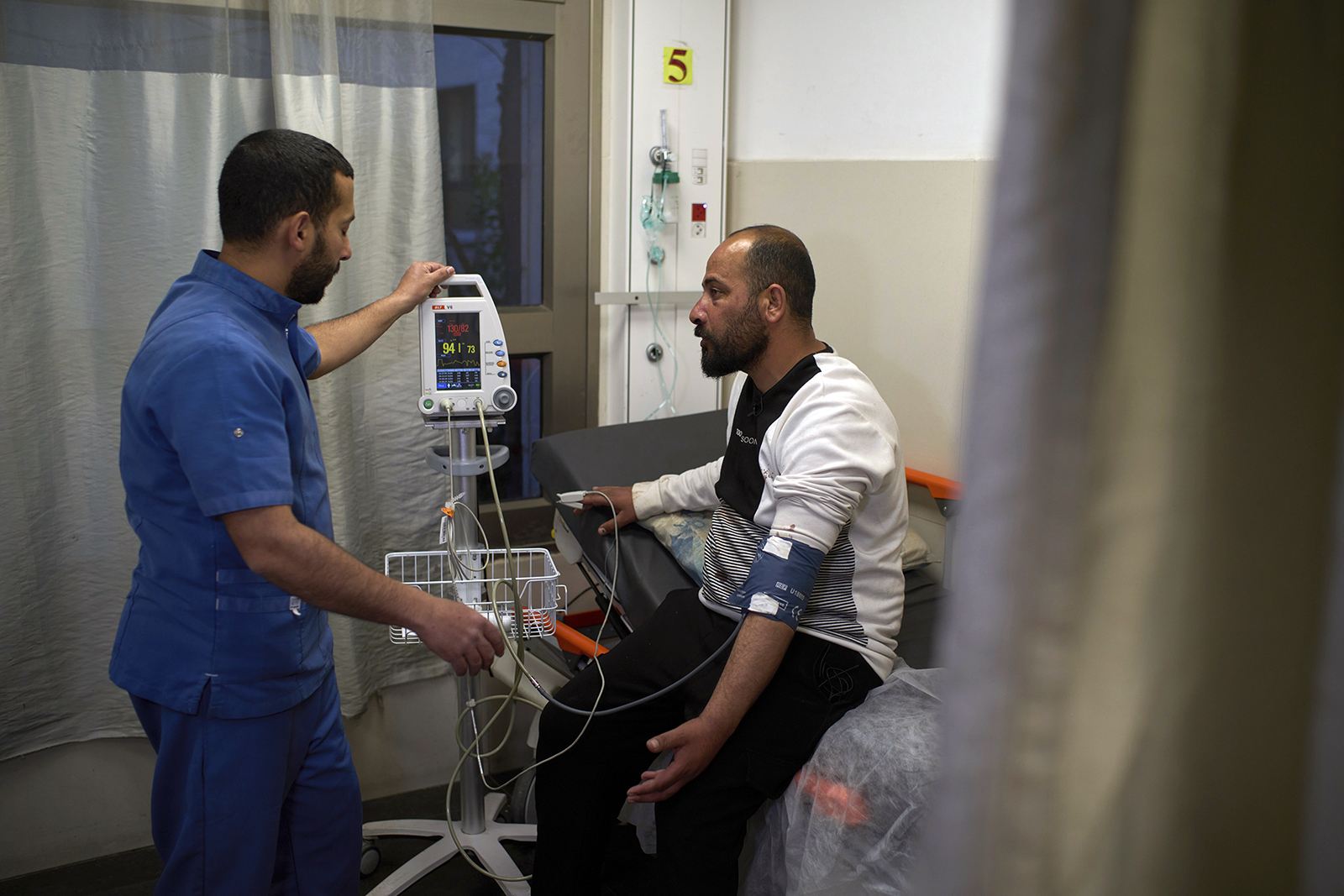
Hamdan Ballal, right, Oscar-winning Palestinian co-director of “No Other Land,” is checked at a hospital in Hebron a day after being detained by the Israeli army following an attack by Jewish settlers in the village of Susya in Masafer Yatta, March 25, 2025. 
(AP Photo/Leo Correa)


Michele Chabin
March 25, 2025


JERUSALEM (RNS) — Hamdan Ballal, the Palestinian co-director of the Oscar-winning documentary “No Other Land,” was injured by Jewish settlers in the West Bank on Monday night (March 24) and subsequently detained by Israeli security forces, his co-director said.

Yuval Abraham, one of the film’s four Israeli and Palestinian co-directors, said on social media that a group of settlers “lynched” Ballal, leaving him with injuries to his head and stomach. The Israeli journalist said “soldiers invaded the ambulance that (Ballal) called and took him. No sign of him since.”

Ballal was released on Tuesday, his lawyer said.

The Israel Defense Forces issued a different account of the events.

“Last night several terrorists hurled rocks at Israeli citizens, damaging their vehicles near Susya,” the IDF said in a statement. “Following this, a violent confrontation broke out, involving mutual rock-hurling between Palestinians and Israelis at the scene.”

When the IDF and Israeli police arrived “to disperse the confrontation, several terrorists began hurling rocks at the security forces.” The forces apprehended three Palestinians — including Ballal — “suspected of hurling rocks at them, as well as an Israeli civilian involved in the violent confrontation. Contrary to claims, no Palestinian was apprehended from inside an ambulance,” the statement said.

The West Bank village of Susya is where Ballal lives. Basel Adra, the film’s other Palestinian director, told The Associated Press that about two dozen young Jewish settlers, some of them teenagers and many of them masked, pelted Palestinian villagers with rocks.

When IDF soldiers arrived, “soldiers pointed their guns at the Palestinians, while settlers continued throwing stones,” the AP reported.

Adra said settlers have ramped up their attacks on Susya and other Palestinian villages since the film won an Academy Award on March 2.

“We came back from the Oscars and every day since there is an attack on us,” said Adra, who is from Masafer Yatta, the subject of the film. “This might be their revenge on us for making the movie. It feels like a punishment.”

The documentary chronicles the Israeli government’s attempts to displace Palestinians from Masafer Yatta, an area south of Hebron in the West Bank composed of several small Palestinian enclaves. Israel has used the area for military training since the 1970s.

Critics of the film say it depicts Israelis as violent while ignoring decades of Palestinian violence against Israeli civilians, killing thousands. Its supporters say it shines a light on Israel’s state-sanctioned settlement expansion in the West Bank.

A Feb. 26 report by Oxfam, a British nongovernmental organization focused on poverty, found that more than 40,000 Palestinians have been forcibly displaced from the West Bank since a temporary ceasefire in Gaza came into force on Jan. 19. The report said it was the highest number of displaced Palestinians from the West Bank since Israel captured the territory from Jordan during the 1967 war.

Mustafa Tamaizeh, economic justice development manager and West Bank response lead for Oxfam, said in a statement with the report that Israel was “pursuing this destruction with full impunity while aiding and abetting illegal Israeli settlers to attack Palestinian communities.”

Israel, however, insists the goal of Operation Iron Wall, the military operation it launched in the West Bank on Jan. 21, is designed to prevent armed Palestinian groups, including Hamas, from attacking Israel, as it did during the first and second intifadas, or uprisings. The military operation has become the longest such Israeli campaign in the West Bank since the second intifada, according to the International Crisis Group, a global NGO.

RELATED: He won a Pulitzer for his book on the Israeli occupation. Then came the cancellations.

While only a small fraction — an estimated few hundred to 3,000 or 4,000 — of the West Bank’s 500,000 settlers are confrontational or violent, according to organizations that monitor the situation, they have become bolder and more dangerous in recent years.

Arik Ascherman, director of the Israeli human rights organization Torat Tzedek-Torah of Justice, identified three milestones that have empowered the settler fringe. The first was the November 2022 election of the current Israeli government, led by right-wing Prime Minister Benjamin Netanyahu, who has repeatedly capitulated to demands from his far-right-wing pro-settlement coalition partners. The second was the Oct. 7, 2023, Hamas massacre. The third was the election of President Donald Trump in the United States.


Since the Oct. 7 massacre, “even Israelis who were somewhat supportive of Palestinian rights may be unwilling to support them now. Some are angry at all Palestinians,” Ascherman told RNS. “They are giving settlers free rein to carry out attacks.”

And Trump’s election and his decision to immediately cancel President Joe Biden’s sanctions against violent settlers has led them to feel “they are untouchable,” Ascherman said.
In Pulling The Gaza Documentary, The BBC Is Failing Palestinian Children

Anyone who is offended by a child sharing their lived experiences of survival can choose not to watch the BBC Gaza documentary. But do not deny innocent children – who have experienced unimaginable grief and loss – the right to tell their stories, writes Sylvia Monkhouse

By Sylvia Monkhouse
March 21, 2025


Gaza: How to Survive a Warzone is a harrowing account of life in Gaza as seen through the eyes of Palestinian children. It provides a rare window into young lives devastated by months of relentless bombings, displacements, and unspeakable horrors.

It aired on 17 February on BBC Two, but was swiftly removed from iPlayer four days later, following fierce lobbying from pro-Israel voices. The reasons given for its removal? Well, they simply don’t add up.

The main objection was that the father of Abdullah, the 13-year-old narrator, is the deputy minister of agriculture in Gaza’s Hamas-run government. But like it or not, it’s a fact of life in Gaza that almost anyone living there will have some connection to Hamas. Hamas runs the government, so anyone working in an official capacity must also work with Hamas. Not only that, but Abdullah’s father is hardly a “terrorist leader” as was claimed. He is a technocrat, in a role concerned with agriculture, not politics or military, who even studied at UK universities.

Other objections included the risk of payments potentially funding Hamas. But as Hoyo Films and now the boy himself have confirmed, Abdullah was paid a very small sum via his sister’s bank account which was used to cover basic living expenses. And the complaints around the use of antisemitic language have been rebuffed by many – including Jewish Voice for Labour. The word ‘“Yehudi” is simply Arabic for “Israeli,” and is used by Jewish Israeli journalist Yuval Abrahamto to describe himself in the Oscar-winning film No Other Land.

Crucially, absolutely nothing in the film has been found to be factually inaccurate.

The film received five stars in the Guardian and the Times, which described it as “exceptional”. It’s an outstanding, powerful film and a crucial piece of journalism. Since international journalists are banned from Gaza, there are scant opportunities to witness Gazan children’s stories. This film gave us a small insight and humanised Palestinian children.

Why then, is an innocent child, the victim of unimaginable suffering, put under such intense scrutiny as to whether or not they should be allowed to tell their story?

Consider the source

When you consider the source of the complaints, you can’t help but feel like the humanisation of Palestinians was precisely the problem.

Spearheading the campaign to have the documentary removed from public view was Tzipi Hotovely, Israel’s ambassador to the UK. Throughout her political career, Hotovely has gone out of her way to dehumanise Palestinians, accusing them of being “thieves of history” who have no heritage, and calling the Nakba – the violent mass displacement of Palestinians – “an Arab lie.” More recently, she claimed there was “no humanitarian crisis” in Gaza.

Despite strong counterprotests from a far greater number of people wanting the documentary to stay put – including over 1,000 industry professionals and more than 600 British Jews – the BBC bowed to pressure from the pro-Israel lobby, and dutifully took the documentary down.

That’s why I decided to start a petition, calling on the BBC to reconsider its decision, and allow Palestinian children their right to be heard. The petition quickly gained lots of support and now has over 25,000 signatures.

Failing Palestinian children

Not long after I started the petition, it emerged that Abdullah, the film’s 13-year-old narrator, has experienced harassment as a result of the kickback against the film, and now fears for his life. “I did not agree to the risk of me being targeted in any way”, he said. And “[if] anything happens to me, the BBC is responsible for it.”

Putting children’s safety and mental wellbeing at risk is not only blatantly wrong, but is in breach of the BBC’s own guidelines on safeguarding young people. Sadly, Abdullah’s was not an isolated case.

In a recent interview with the Independent, former BBC newsreader Karishma Patel explained her reason for quitting the BBC: its longstanding refusal to show the full extent to which Irael is harming Palestinian children. She recalls how she begged the BBC to cover five-year-old Hind Rajab’s story while she was still alive, trapped inside a car with her murdered relatives. The BBC chose not to, only naming her after she was killed, and not even making clear in the headline who had done it. “The BBC failed Hind,” says Patel. “And it has failed Palestinian children again in pulling the [Gaza] documentary.”

I’ve just written to Tim Davie, Controller-General of the BBC, to draw his attention to the huge number of people who want the documentary to be reinstated, and why the reasons put forward to justify its removal simply do not add up. I told him, “Anyone who is offended by a child sharing their lived experiences of survival can choose not to watch it. But do not deny innocent children – who have experienced unimaginable grief and loss – the right to tell their stories.” You can read my full letter here.

Let’s see if he responds. The BBC didn’t bother reaching out to Abdullah to apologise to him after they pulled the film. So I’m not holding out too much hope.


ZNetwork is funded solely through the generosity of its readers.  Donate


Sylvia Monkhouse is a freelance copy editor, writer, activist and mother.
Israel’s Return To War Is a Prelude To Mass Expulsion
March 21, 2025
Source: +972 Magazine


Image by Abed Rahim Khatib/Flash90

Two months after agreeing to a ceasefire deal that should have ended the war, Israel has resumed its bombardment of the Gaza Strip with an intensity that recalls the earliest days of the onslaught. Israeli airstrikes have killed over 400 Palestinians and wounded hundreds more since the early hours of this morning, and the army has ordered thousands of residents of the towns and neighborhoods spanning the perimeter of the Strip to flee their homes.

Israel has again fully sealed off Rafah Crossing to medical evacuees, while Egyptian and American forces that had replaced Israeli troops in the Netzarim Corridor as part of the ceasefire are withdrawing from their posts. Dismembered bodies are piling up in hospitals once more, with medical staff across the Strip warning that their facilities are at full capacity.

We know what comes next: more airstrikes and evacuation orders and likely another ground invasion which, if we are to take Israeli ministers at their word, promises to be more extensive and lethal than the last. “Israel will, from now on, act against Hamas with increasing military strength,” Prime Minister Benjamin Netanyahu’s office said in a statement earlier today. “With God’s help,” Finance Minister Bezalel Smotrich echoed, “[the renewed assault] will look completely different from what has been done so far.” Former National Security Minister Itamar Ben Gvir, who quit the government over the ceasefire deal, appears set to triumphantly return to office.

But to what end? Israel is spinning a narrative that it had no choice but to resume the offensive due to “Hamas’ repeated refusal to release our hostages, as well as its rejection of all the proposals it has received from U.S. Presidential Envoy Steve Witkoff and from the mediators.” Yet this is a total distortion of reality, and the families of Israeli hostages who remain captive in Gaza know it.

“The claim that the war is being renewed for the release of the hostages is a complete deception,” the Hostages and Missing Families Forum said in a statement. “The Israeli government has chosen to give up on the hostages [through] the deliberate dismantling of the process to return our loved ones.”

Indeed, what Hamas rejected were Israel’s attempts to renege on the terms of the ceasefire that both parties had committed to. The second phase of the deal, which was supposed to bring about the return of the remaining hostages and a permanent ceasefire, was due to begin over two weeks ago, except Israel never allowed it to. Instead, together with Witkoff, Israel ripped up the agreement and concocted a new proposal: to extend phase one and keep exchanging hostages for Palestinian detainees; in other words, to sever the release of hostages from any guarantee to end the war.

Israel knew Hamas would reject this proposal, and that was the point all along. The maneuver simply gave the Israeli government a pretext to re-impose a total blockade on food, water, fuel, electricity, and medicine into the Strip; and now, with President Trump’s full backing, to resume its genocidal assault. This time, though, the end goal is clearer than ever.
‘Finishing the job’

When Trump stood beside Netanyahu in the White House on Feb. 4 and proclaimed his intention to “take over” and “own” the Gaza Strip, he didn’t go into detail about what exactly this would portend for the enclave’s 2.3 million Palestinian residents, besides making it clear that Gaza will no longer be their home. “We’ll make sure something really spectacular is done,” he declared, adding that the population could be relocated to “other countries of interest with humanitarian hearts” where they will be able to “live out their lives in peace and harmony.”

In essence, what Trump presented wasn’t really a blueprint; it was a green light for Israel’s government and defense establishment to begin imagining scenarios for the ethnic cleansing of Gaza.

Where the population would go didn’t really matter (Egypt and Jordan swiftly rejected Trump’s suggestion that they would take in displaced Palestinians). What mattered was that the most powerful country in the world had given its backing to what the Israeli right has long referred to as “finishing the job” that the Nakba of 1948 left incomplete; what senior ministers and government agencies have been clamoring for since October 7; and what Netanyahu himself has reportedly considered to be a desirable outcome.

The Israeli government didn’t waste any time in getting the wheels turning. As Environmental Protection Minister Idit Sliman put it: “God has sent us the [Trump] administration, and it is clearly telling us: it’s time to inherit the land.”

As soon as Netanyahu returned from Washington, Israel’s security cabinet resoundingly endorsed Trump’s proposal. Defense Minister Israel Katz set up a new authority to facilitate what is euphemistically referred to as the “voluntary emigration” of Palestinians from Gaza, and discussed plans to that effect with senior figures in the army and the Prime Minister’s Office. COGAT, the army unit responsible for handling Palestinian civilian affairs, prepared its own outline, stating that the expulsion of Palestinians from Gaza can proceed even if Egypt refuses to open its border: the army will instead facilitate their transport via land or sea to an airport, and from there to destination countries.

Lauding Katz’s creation of a “very large emigration department” in the Defense Ministry, Smotrich told a meeting in the Knesset earlier this month that “if we remove 5,000 [Palestinians] a day, it will take a year [to expel them all],” adding that budget will not be an issue. And while he conceded that the logistics of finding countries to receive them will be complex, he noted that Israel was working with the United States to identify candidates.

Indeed, in recent days, American and Israeli officials told AP that their governments had approached Sudan, Somalia, and Somaliland about absorbing Palestinians from Gaza in exchange for financial, diplomatic, and security benefits. CBS later reported that the Trump administration has also reached out to the new interim government in Syria via a third-party interlocutor.

It is unclear if any of these regimes would actually entertain such a proposition. But if we learned anything from the Abraham Accords, it’s that, for the right price, there will be takers.
Making Gaza unlivable

There will, of course, be no “voluntary emigration” from Gaza; Palestinians have unequivocally rejected Trump’s plan, hitting back that the only places they will willingly relocate to are the villages, towns, and cities inside Israel from which they were expelled in 1948. Netanyahu, Smotrich, and Katz know this even better than Trump does — which is why, in practice, the idea of eradicating Gaza’s population was always premised on a resumption of Israel’s military assault on the territory.

Forcibly displacing over 2 million people, even with the support of a global superpower, is no simple task. For one thing, it would require eliminating Hamas as a viable resistance force, which Israel was unable to do throughout more than 15 months of fighting. Trump was never going to agree to putting American boots on the ground to fulfil his fantasy; it was always going to be left in Israeli hands to work out the practicalities. And while we don’t yet know how exactly the army will escalate its renewed offensive — if indeed, as reports suggest, it intends to — we do have clues from the way it waged the war until now.

In particular, the army’s three-month operation in northern Gaza that preceded the ceasefire provided something of a test case for mass expulsion, based on the so-called Generals’ Plan. By isolating three cities from the rest of the Strip, subjecting them to intense bombardment, and denying the entry of any humanitarian aid, Israel managed to forcibly displace hundreds of thousands of people. It is not hard to imagine that a renewed ground invasion could herald a similar move scaled up to encompass the whole enclave. How successful such an endeavor would be remains to be seen.

But Israel’s 15-month onslaught also exhibited another impetus which, albeit not an official war aim, appears to have guided much of the military’s policy in Gaza: an effort to bring about conditions that make it impossible to sustain life.

There is simply no other way to explain the starving of an entire population while attacking food distribution centers and aid convoys; the shutting off of water pipes and denial of electricity to desalination plants; the systematic destruction of health care facilities, abduction of medical staff, and restrictions on foreign health workers; the razing of entire towns and neighborhoods; and the attempt to terminate the only organization capable of preventing total humanitarian collapse. Even after the ceasefire took hold, Israel has continued to prevent the entry of mobile homes into Gaza in violation of the agreement, ensuring that stable life cannot return to the Strip.

In this sense, Israel had already laid the foundations for the eradication of Gaza’s population before Trump even came to office. As Meron Rapoport wrote here last month, the president’s speech at the White House merely gave Israel’s visions of ethnic cleansing a “Made in America” stamp of approval.