It’s possible that I shall make an ass of myself. But in that case one can always get out of it with a little dialectic. I have, of course, so worded my proposition as to be right either way (K.Marx, Letter to F.Engels on the Indian Mutiny)
Sunday, April 20, 2025
50,000 back MP’s petition for a wealth tax to raise cash instead of welfare cuts
Daniel Green 21st April, 2025
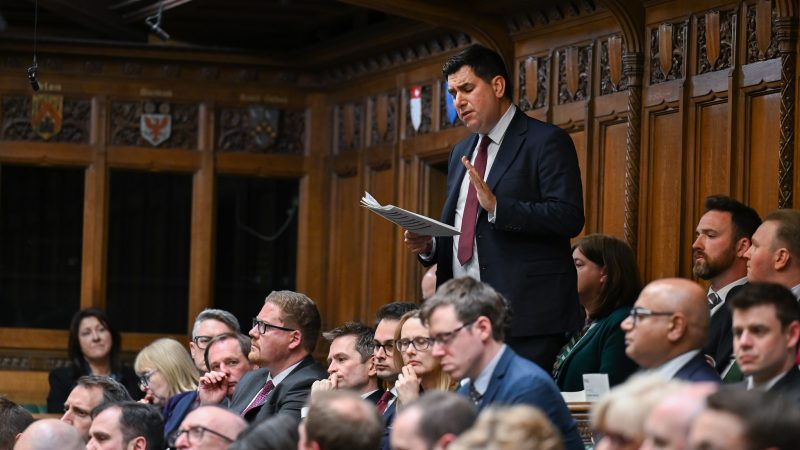
Photo: House of Commons/Flickr
A petition by a left-wing Labour MP calling for the government to abandon its welfare reforms in favour of a wealth tax has been backed by more than 48,000 people in recent weeks.
Richard Burgon, MP for Leeds East who was only recently re-admitted to the party for rebelling, has hit out at the decision to “slash disability benefits instead of taxing extreme wealth” and claimed that a two percent wealth tax on assets over £10m would raise up to £24bn per year.
The petition reads: “We call on the government to abandon these cruel cuts and, instead of punishing the poorest, to implement a wealth tax on the very wealthiest.”
Burgon, who had the whip withdrawn for six months after backing an SNP amendment to scrap the two child benefit cap, has said he will vote against the government’s welfare reforms when they go before Parliament.
He told LabourList that there is “widespread opposition” to the reforms amongst Labour MPs, the wider party and the general public.
‘There are fairer, more Labour, ways forward’
Burgon said: “If the government doesn’t drop these plans, it will face a rebellion far larger than it could have ever imagined when it won its majority last year.
“Many MPs have told me they will vote against these cuts. But they haven’t spoken out publicly yet because they hope the government will see sense and reconsider.
“While some MPs are concerned that this issue will see them losing their seats, for many this goes beyond an electoral issue – it’s a moral one. Labour MPs didn’t enter politics to make life even harder for disabled people.
“My petition is part of a growing public campaign urging the government to rethink and abandon these plans. There are fairer, more Labour, ways forward. The government should be taxing the wealthiest through a wealth tax.
“Soaring inequality in our economy means it has been boom-time for those at the top while millions are struggling with soaring costs of living. It’s only right that the very wealthiest are made to pay their fair share, rather than attempting to balance the books on the backs of the poor and disabled.”
But the government has previously defended reforms to welfare as taking “decisive action to fix the broken benefits system”.
MPs supportive of the government have also pointed out that, since taking office, Labour has hiked taxes on the wealthiest with the abolition of the non-dom regime, inheritance tax changes and scrapping the VAT exemption for private schools.
The Treasury was approached for comment.
‘Andrew Tate phenomena’ sweeping UK schools with boys ‘barking at female teachers’
Many of the teachers polled named self-proclaimed misogynist Andrew Tate as having a negative influence on male pupils (Picture: AP)
A rise in misogyny and sexism is sweeping schools as pupils mimic the behaviour and views espoused by figures like Andrew Tate and Donald Trump, teachers have warned.
Nearly three in five of the 5,800 polled by the NASUWT teaching union said they believe social media use has contributed to a deterioration in pupils’ behaviour in schools.
Many named self-proclaimed misogynist Tate as having a negative influence on male pupils.
One said: ‘I have had boys refuse to speak to me and speak to a male teaching assistant instead because I am a woman, and they follow Andrew Tate and think he is amazing with all his cars and women and how women should be treated. These were 10-year-olds.’
Another teacher said: ‘We had some incidents in school with derogatory language towards female staff (e.g. boys barking at female staff and blocking doorways so they couldn’t leave the classroom), as a direct result of Andrew Tate videos.’
A third said: ‘In an all-boys school, low socio-economic area, the “Andrew Tate” phenomena had a huge impact on how they interacted with females and males they did not see as “masculine”.’
Another replied: ‘A lot of the students are influenced by Tate and Trump, they spout racist, homophobic, transphobic and sexist comments in every conversation and don’t believe there will be consequences.’
Nearly three in five teachers said they believe social media use has contributed to a deterioration in pupils’ behaviour in schools (Picture: Getty Images)
Last month, Prime Minister Sir Keir Starmer said there was no ‘simple solution’ to stop boys from being dragged into a ‘whirlpool’ of misogyny as he hosted creators of the Netflix drama Adolescence at Downing Street.
It also comes as Tory leader Kemi Badenoch revealed her young cousin ended their life after goiing down an ‘internet rabbit hole’.
In an interview with the Daily Mail, she said: ‘I worry a lot about social media.’
She added: ‘It’s heartbreaking. My views about the dangers of social media are not just about children. I know even as adults we can get dangerously addicted.’
Patrick Roach, general secretary of the NASUWT, said: ‘Misogyny, racism and other forms of prejudice and hatred may have attracted greater media attention of late, but it is clear from our data that these behaviours are not a recent phenomenon.
‘There is an urgent need for concerted action involving schools, colleges and other agencies to safeguard all children and young people from the dangerous influence of far-right populists and extremists and to ensure that our schools and colleges are safe places for learners and for staff.
‘Teachers cannot be left alone to deal with these problems.
‘We need a multi-agency response to improve social media literacy, critical thinking skills, and to expose disinformation and false narratives.
‘We are urging the Government to lead a national effort to tackle the root causes of poverty and deprivation and keep children safe online.’
Last month, Prime Minister Sir Keir Starmer said there was no ‘simple solution’ to stop boys from being dragged into a ‘whirlpool’ of misogyny (Picture: Getty Images)
A Department for Education (DfE) spokesperson said: ‘We know the rise of dangerous influencers is having a damaging impact on our children, which is why are supporting the sector in their crucial role building young people’s resilience to extremism as part of our Plan for Change.
‘Education can be the antidote to hate, and the classroom should be a safe environment for sensitive topics to be discussed and where critical thinking is encouraged.
‘That’s why we provide a range of resources to support teachers to navigate these challenging issues, and why our curriculum review will look at the skills children need to thrive in a fast-changing online world.
‘This is on top of wider protections being brought in for children with the Online Safety Act, to ensure children have an age-appropriate experience online.’
Disruption warning as Scottish Water staff begin 48-hour walkout
Essential services, including emergency repairs and water quality checks, will be suspended during the two-day strike
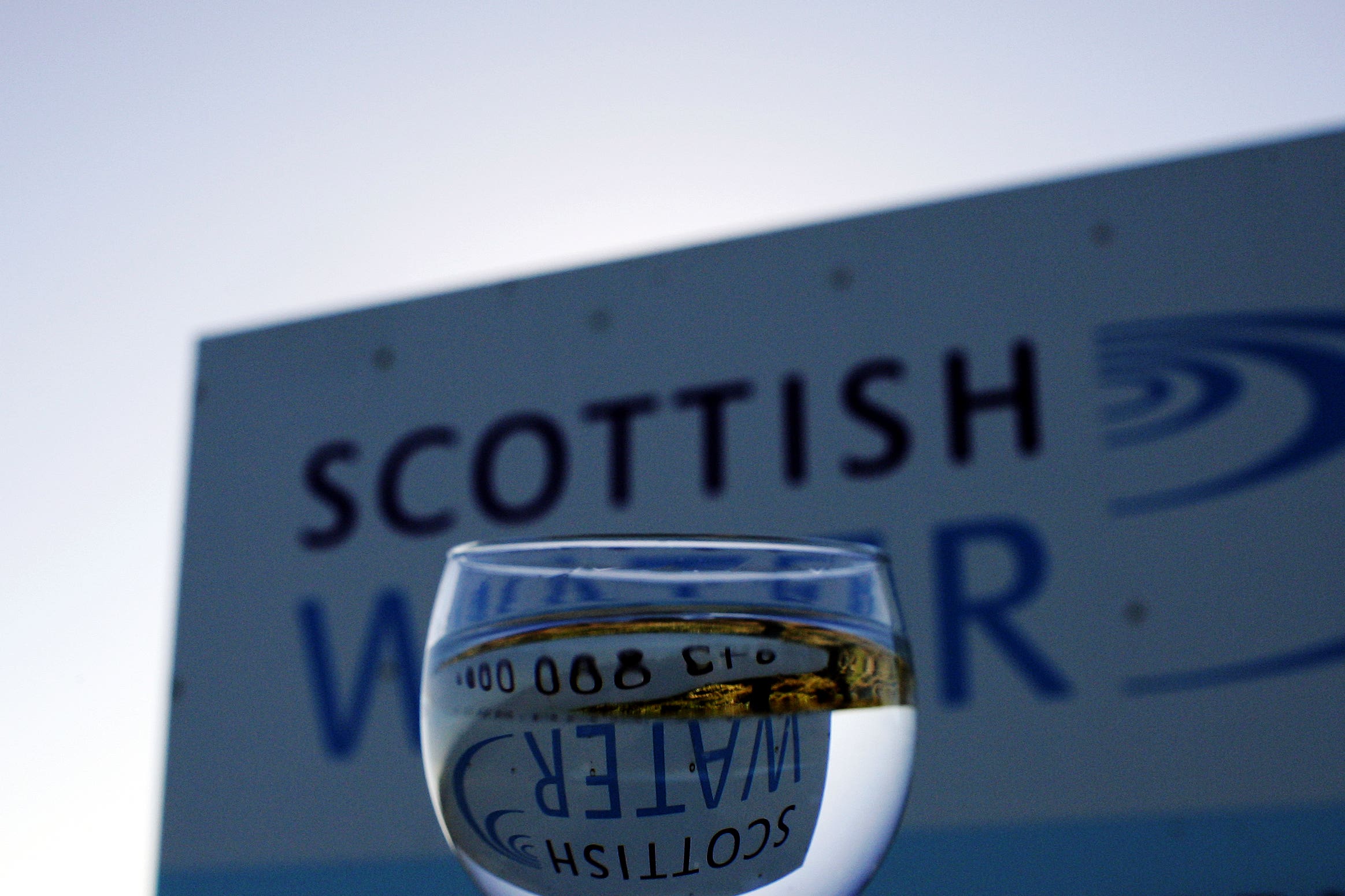
open image in galleryScottish Water staff are set to stage a two-day strike from midnight (PA)
Scottish Water staff are set to stage a two-day strike from midnight on Tuesday, escalating a continued dispute over pay.
Workers will walk out on Tuesday and Wednesday after Unison, which represents more than 1,000 staff, rejected a 2.6 per cent pay offer, amounting to at least £1,050, saying it “fails to compensate staff for a decade of real-term pay cuts”.
The action follows a one-day strike on March 28.
The union warned that essential services, including emergency repairs and water quality checks, will be suspended during the 48-hour walkout.
Customers should be aware that issues with water supply, sewage, or drainage will not be addressed until the strike concludes.
But Scottish Water has said, “contingency plans are in place to enable us to maintain normal service”.
Workers will walk out on Tuesday and Wednesday (Andrew Milligan/PA)
Unison Scotland regional organiser Emma Phillips said: “Strike action is always a last resort.
“Staff have suffered a decade of pay deals that haven’t kept up with inflation. They are not willing to be underpaid any longer.
“The union has done everything it can to try and get Scottish Water’s senior managers to put a fair offer on the table, but they are refusing to be reasonable.”
Unison Scottish Water branch secretary Tricia McArthur added: “Scottish Water workers are simply asking to be paid fairly for the essential services upon which everyone in Scotland relies.
“Things are meant to be different in a publicly owned service like this.
“But senior managers are behaving no differently to those running private water companies south of the border.”
A strike ballot took place in February with 65 per cent of votes in favour of walkouts.
Scottish Water workers walked out on March 28 (Craig Meighan/PA)
Peter Farrer, Scottish Water’s chief operating officer, said: “No one benefits from industrial action, and our focus is on continuing to deliver for our millions of customers across Scotland.
“Our above-inflation pay proposal is fair and progressive, prioritising the highest percentage increases in the business for those on the lowest salary grades – money that should be in employees’ pockets now.
“We met with Acas and the trade unions on April 15 to explore options to resolve the current dispute. Following that, we made a different, further improved proposal in an effort to reach an agreement.
“This is a good proposal, and we are disappointed that union officials have not shared it with their members and given them the opportunity to vote on the offer in a ballot.
“We urge the unions to get back round the negotiating table as soon as possible.”
British civil servants warned of listening devices in pubs near government buildings
BRITAIN’S SECURITY AGENCIES HAVE reportedly warned civil servants and parliamentarians that public places located near government buildings may be bugged by foreign intelligence agencies. The warning covers the SW1 postcode district of southwest London, which encompasses the City of Westminster and includes the Houses of Parliament, the Office of the Prime Minister at 10 Downing Steet, and Whitehall. The latter is home to several ministries and departments, including the Foreign and Commonwealth Office, the Cabinet office, and the Ministry of Defense.
The historic London borough is littered with historic public houses (commonly referred to as ‘pubs’) and restaurants, where thousands of parliamentarians and civil servants, as well as their aides, gather for lunch or drinks on weekdays. The area is also home to numerous parks, where many government workers eat their lunch during breaks—weather permitting. Among them is St. James’ Park, which is adjacent to Downing Street and within a short walking distance from the Treasury and the Foreign Office.
It is for these reasons, according to Britain’s Daily Mail newspaper, that foreign intelligence agencies consider these gathering hotspots as targets. The paper reports that “Chinese and other spies, including the Russians and Iranians” consider these prime SW1 locations as “the soft underbelly of Whitehall”. Accordingly, government officials holding sensitive positions, as well as junior staff working for them, have been warned to refrain from work-related discussions when frequenting these locations for lunch of drinks after work.
One source reportedly told the paper that St. James’ Park is “full of Chinese agents”, and went on to say: “we have been told the Chinese literally have the park bugged, with devices in the bushes and under park benches”.
► Author: Joseph Fitsanakis | Date: 21 April 2025 | Permalink
US Defence Secretary Pete Hegseth shares war plans in second Signal chat
message group that included his wife, brother and personal lawyerShare on Twitter
By Idrees Ali and Phil Stewart, Reuters
US Defence Secretary Pete Hegseth is under fire. Photo: BRENDAN SMIALOWSKI / AFP
US Defence Secretary Pete Hegseth shared details of a March attack on Yemen's Iran-aligned Houthis in a message group that included his wife, brother and personal lawyer, a source familiar with the matter told Reuters on Sunday.
The person familiar with the matter, who was speaking on condition of anonymity, said the second chat included about a dozen people and was created during his confirmation process to discuss administrative issues rather than detailed military planning.
The chat included details of the schedule of the air strikes, the person said.
Hegseth's wife, Jennifer, a former Fox News producer, has attended sensitive meetings with foreign military counterparts, according to images the Pentagon has publicly posted.
During a meeting Hegseth had with his British counterpart at the Pentagon in March, his wife could be seen sitting behind him.
Hegseth's brother is a Department of Homeland Security liaison to the Pentagon.
The Trump administration has aggressively pursued leaks, an effort that has been enthusiastically embraced by Hegseth at the Pentagon.
Pentagon spokesperson Sean Parnell, without evidence, said that the media was "enthusiastically taking the grievances of disgruntled former employees as the sole sources for their article."
"The Trump-hating media continues to be obsessed with destroying anyone committed to President Trump's agenda. ... We've already achieved so much for the American warfighter, and will never back down," Parnell said in a statement on X.
White House spokesperson Anna Kelly said that "recently fired leakers are continuing to misrepresent the truth to soothe their shattered egos and undermine the President's agenda."
Tumultous moment for Hegseth
Democratic lawmakers said Hegseth could no longer stay in his job.
"We keep learning how Pete Hegseth put lives at risk," Senate Minority Leader Chuck Schumer said in a post to X. "But Trump is still too weak to fire him. Pete Hegseth must be fired."
Senator Tammy Duckworth, an Iraq War veteran who suffered grave injuries in combat in 2004, said that Hegseth "must resign in disgrace."
A US official at the Pentagon questioned how Hegseth could keep his job after the latest news.
The latest revelation comes days after Dan Caldwell, one of Hegseth's leading advisers, was escorted from the Pentagon after being identified during an investigation into leaks at the Department of Defence.
Photo: SHAWN THEW / AFP
Although Caldwell is not as well known as other senior Pentagon officials, he has played a critical role for Hegseth and was named as the Pentagon's point person by the Secretary in the first Signal chat.
"We are incredibly disappointed by the manner in which our service at the Department of Defence ended," Caldwell posted on X on Saturday. "Unnamed Pentagon officials have slandered our character with baseless attacks on our way out the door."
Following Caldwell's departure, less-senior officials Darin Selnick, who recently became Hegseth's deputy chief of staff, and Colin Carroll, who was chief of staff to Deputy Defence Secretary Steve Feinberg, were put on administrative leave and fired on Friday.
- Reuters
UK Home secretary calls Trans activist damage to statues disgraceful
Tony Grew BBC News
APRIL 20, 2025
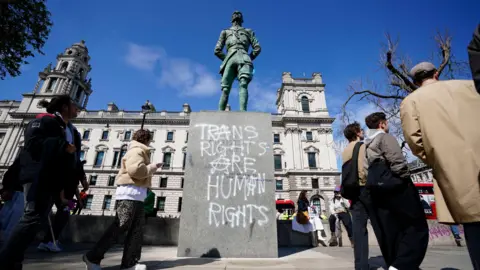
PA Media A statue of former South African prime minister Jan Smuts was targeted by vandals SMITS WAS AN AFRIKANER APARTHEIDIST
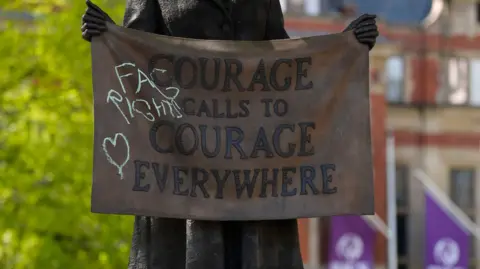
Home Secretary Yvette Cooper has called the vandalism of several statues in Parliament Square, including one of women's votes campaigner Dame Millicent Fawcett, "disgraceful".
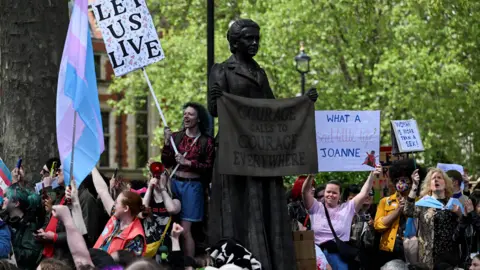
Transgender campaigners gathered on Saturday in front of Parliament to protest against the Supreme Court ruling that biological sex defines a woman for the purposes of the Equality Act.
Cooper said she welcomed the Metropolitan Police's investigation and that the government will strengthen the law "to better respect and protect important memorials".
The force said seven statues were damaged and they are investigating the incidents as criminal damage. No arrests have been made. Advertisement
PA Media Graffiti on the statue of Dame Millicent Fawcett in Parliament Square
A statue of former South African prime minister Jan Smuts was graffitied with the words "trans rights are human rights".
"Criminal damage like this, including to statues of men and women who fought for freedom and justice like Winston Churchill, Nelson Mandela and Millicent Fawcett, is disgraceful - it is right the police are investigating," Cooper said.
"We are strengthening the law to better respect and protect important memorials. Freedom of speech and protest are important in our democracy, but this kind of criminal damage is completely unacceptable."
The Met said its officers were in the area policing Parliament Square "but did not witness the criminal damage take place as the area was densely populated with thousands of protestors and it was not reported at the time".
It confirmed it is investigating the graffiti as criminal damage and has asked anyone with information, footage or pictures to come forward.
The Greater London Authority plans to remove the graffiti but this requires specialist equipment and "we are confident this will be done shortly," the Met added.
On Wednesday the Supreme Court ruled that transgender women with a gender recognition certificate can be excluded from single-sex spaces "if it is proportionate to do so".
The judges unanimously ruled that the terms woman and sex in the 2010 Equality Act "refer to a biological woman and biological sex" rather than "certificated sex".
Protests against the ruling also took place on Saturday in Reading, Edinburgh and Glasgow.
Reuters The statue of the women's votes campaigner was unveiled in 2018
Ch Supt Stuart Bell, who was leading the policing operation for the protest, said: "It is very disappointing to see damage to seven statues and property in the vicinity of the protest today.
"We support the public's right to protest but criminality like this is completely unacceptable."
A spokesperson for Women and Equalities Minister Bridget Phillipson, speaking on the damage to Dame Millicent's statue, said she "utterly condemns the appalling defacement of such an important national monument to the fight for women's rights".
"There is no excuse for this disgraceful criminal damage."
The Met confirmed it is also dealing with a number of complaints from the public about signs and images shared on social media that were reportedly displayed at the protest yesterday and "action will be taken if there are signs displayed that breach of the law".
The statue of Dame Millicent by artist Gillian Wearing is the only statue of a woman in Parliament Square, where others honoured include international statesmen like Nelson Mandela and Mahatma Gandhi, and former prime ministers Sir Winston Churchill and David Lloyd-George.
Unveiled in 2018, it is also the only statue by a female artist in the square, and was erected following a campaign and petition by the feminist activist Caroline Criado Perez.
Animated film explores the strength found in the shadow of demons
“Qaq Wah Hell Cliff,” a still from Qaqsoss Naka Wahantuhsis by Tara Audibert.
By Odette Auger Local Journalism Initiative Reporter Windspeaker.com
Video
Qaqsoss Naka Wahantuhsis (Fox & the Tiny Demon) is a new animated film directed by award winning animator, director and artist Tara Audibert, who has ties to Neqotkuk (Tobique First Nation) through her mother.
The film addresses issues of mental health while preserving Indigenous culture and language. It is the first animated feature film in Wolastoqey, an Algonquian language spoken by the Wolastoqiyik (Maliseet/Malecite) people.
The film is narrated by Audibert's great aunt Carole Polchies of Woodstock First Nation, who is one of the few remaining fluent Wolastoquey speakers. Audibert has used her aunt’s voice in other films to tell “Indigenous stories that I've heard all my life, and then I animated them.” Audibert has “grown up to appreciate the stories even more. You hear them over and over and over again, but these stories change every time you hear them, and depending on who’s listening, as well.”
Audibert takes the task of creating from Wolastoqey stories seriously.
“I question a lot, because I am taking these stories that are supposed to be passed down verbally, but I want to preserve them, and I want to share them,” she said.
“That's a part of how I can be a part of reconciliation. My family is willing to share, and I have the ability to share these a little bit wider.”
For this project, Audibert wrote the story and Polchies translated it and narrated as the storyteller of the film.
“Some of the words were too modern. She had to think of how to combine existing words to capture the meaning,” said Audibert. That’s when the work of her great-grandfather, Dr. Peter Lewis Paul, comes in. He was awarded the Order of Canada a few months before he passed in 1987 for his work to preserve the language, including writing a Wolastoquey dictionary.
Tara Audibert, MoxyFox Studio.
Finding ways to talk about mental health
Audibert was inspired by classic animated films such as Watership Down, which dealt with deeper subject matter.
“It's all about these animals and we're telling this story. There is the reality of the human world that's in there, but we're looking at it through the eyes of the animals,” she said of that film.
Audibert seeks to create a similarly impactful and meaningful experience for young audiences. The story of Fox & the Tiny Demon explores themes of mental health, depression, and the intergenerational trauma of residential schools. Audibert approaches these heavy topics through an animated, child-friendly lens that allows for open-ended discussion.
“Those are very heavy things. How do you talk to children about those things?” So Audibert created a story and a space where viewers can be curious about a character’s actions.
“Then you can have a conversation that's not based around my mental health or your mental health or a specific person's mental health. It's about the health of these characters. And it doesn't even have to be about mental health. ‘Why do you think they did that? Why do you think they did it’? There can be a conversation that doesn’t have to be so heavy.”
Audibert’s mom was a day school survivor, and the filmmaker reflects on the ongoing impacts. “It's so much to piece together, and I think that a lot of times it's hard to talk about these things. And how can we frame them?”
Finding a way to talk about the impacts was part of her idea behind the film, Audibert said.
“That it's continuing to persist because of the third, second, third generations that are still suffering, not knowing why your parents were unable to do things that are on the TV of a “normal family. I wanted to talk about what happens when you have mental illness. and you have to live with someone that has mental illness? And you don't have a choice when you're a kid. You just have to live with them until you don't. But can we talk about that in some way?”
Audibert sees artists as “the counterculture, the rebels. We're the ones that are supposed to stand up to everything that is questionable.”
By lifting up a mirror to society, people can see things from different perspectives, she said.
“I think that's what most artists are hoping to do, is just to impart a little bit and share, because I think many artists are on the outside looking in, or we're on whatever that outer edge is. And I think that's an important place to be, because that's where we're going. She said that once others reach the edge where artists are, artists expand beyond.
“And then once people get there and that's the norm, then artists have to move out further and see what's out there again and then show that back. There's no way to get to a better place without that extreme,” said Audibert.
“I think to be able to change people's minds is a large thing. And then the artist keeps going, keeps forward with the mirror reflecting back, and that's our job constantly.”
“Qaqsoss’ path,” a still from Qaqsoss Naka Wahantuhsis by Tara Audibert.
Storyteller first
Audibert knew she was an artist since she was two years old, and she chuckles about the early manifestations of that creative impulse.
“I got into trouble a lot,” from drawing on her wallpaper to figuring out how to draw characters from cartoons.
She paused the VCR and wrapped Saran Wrap over the TV.
“I got this brilliant idea. I'm going to put Saran Wrap over and I trace it, and then I can put it on paper and trace it off there, and I'll have a copy of what it looks like,” she said. “Little did I know that permanent marker goes through. There's a reason not to do that,” she laughed. “It went right on the actual TV. I got in a lot of trouble for trying to trace stuff from the Flintstones.”
Audibert keeps adults in mind as much as children when making her films.
“Why wouldn’t I want to make something that’s good for everyone?”
She recalls watching cartoons with her younger sister. She knows parents are watching alongside their young ones.
“I hope people will want to watch (Fox & the Tiny Demon) more than once because there's so many little things included in the backgrounds and in the meaning of it,” Audibert said. Similar to listening to the variations of her great aunt’s traditional stories, “Maybe each time they can find something new or different.”
The film was produced on a small indie budget with a minimal crew of 40, which is “unheard of in animation,” she said. Audibert is grateful for the dedicated team that connected deeply with the project's themes and went above and beyond.
“They gave far more than they were paid for. And everyone in the crew told me they found this story very meaningful to them personally.”
“And I was just kind of amazed because there it is, right there. That’s part of reconciliation,” said Audibert. She’s still looking for a distributor for Qaqsoss Naka Wahantuhsis, and the team is preparing to submit to film festivals in addition to having local screenings and the upcoming premiere in Miramichi, New Brunswick on April 19 at 2 p.m. at the Cineplex Miramichi.
Local Journalism Initiative Reporters are supported by a financial contribution made by the Government of Canada.
The Dire Wolf
By Professor Victoria Sutton
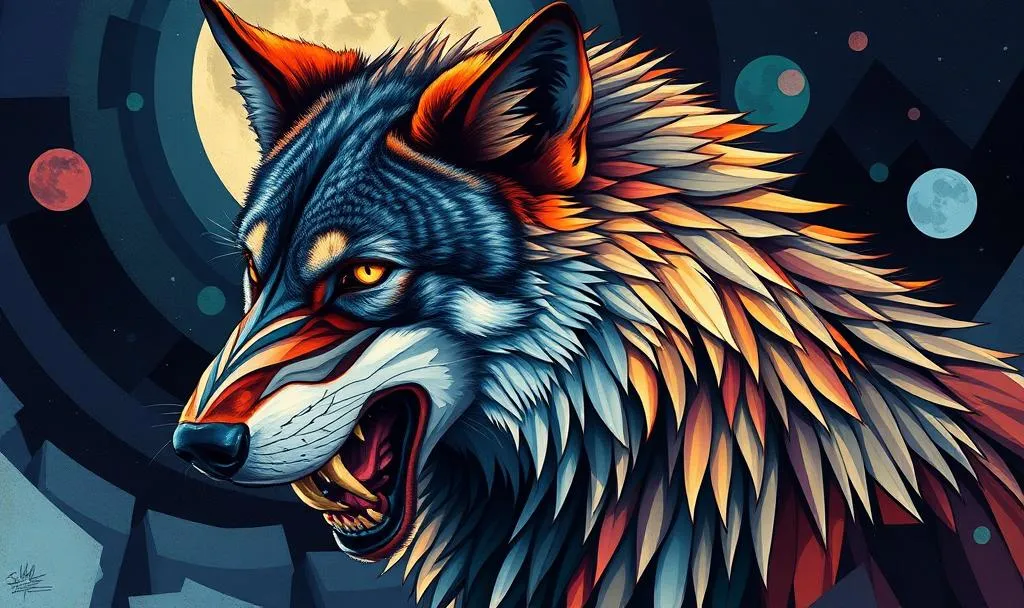
April 16, 2025 Guest Opinion. The Dire Wolf is said to have become extinct about 10,000 years ago. It was a true North American carnivore, unlike the Eurasian wolf that we have today. Its prey was bison, horses, mastadons, camels, sloths and other extinct animals, which led to its own extinction.
Having written here about creating a dragon, and resurrecting endangered species, it would be hard not to comment on the announcement that a biotech company in Dallas, Colossal Biosciences, has resurrected a dire wolf. I would like to think they found enough DNA from an insect embedded in amber (Jurassic Park plot) to fill in the blanks with modern wolf DNA, but it was really a semblance of the corollary that happened. Modern wolf DNA was the base of the genome, and 14 replacement characteristics were made from a variety or species, none of which was the Dire Wolf. Recoverable DNA from a Dire Wolf was found in two bones — a tooth and an ear bone. They extracted the genome to compare it to the modern wolf.
The Dire Wolf pups were born on October 1, 2025.
The Dire Wolf puppies are super cute. George R.R. Martin (author of Game of Thrones that had Dire Wolf characters) came out to be part of the announcement, while Peter Jackson, who bought the iron throne, loaned it for the photo op. It was fun.
Not everyone was amused.
The Wolf Conservancy has criticized the claims of Colossal Biosciences for claiming to have resurrected a Dire Wolf which they find to be incorrect; but especially for claiming to be helping with conservation by cloning Red Wolves. Colossal Biosciences also cloned Red Wolves, the most endangered species of wolf in the world. But the spokesperson for the Wolf Conservancy disputes even that claim, saying what they cloned were coyotes. Dr. Hinton, of the Wolf Conservancy said:
The cloned “Red Wolves” are not Red Wolves. They were derived from coyotes captured in southwest Louisiana for the Gulf Coast Canid Project. I know these were coyotes because I served as field supervisor and captured 44 coyotes for the project during 2021–2022.
Dr. Hinton points out that there are 200 Red Wolves in captivity looking for places to go in the wild, and not all of them are suited for release. So cloning Red Wolves (even if they were Red Wolves) would not be helpful to the conservation effort. A solution in search of a problem.
Patenting
It appears that Colossal Biosciences has done something unique and advanced the scientific arts. In August 2024, Colossal Biosciences was issued a patent for a gene editing tool that is an improvement over the CRISPR/Cas-9 editing tool that can change nucleotides in genes to make them produce different enzymes. The purpose in summary, is to do gene editing more precisely and at greater speed. Given the timing of the publication of this patent, they may have used their own patented tool. However, I have not heard the company articulate the details of what tools they used, so I would still speculate that they may have been trying their newly patented tool.
The company has not tried to patent the Dire Wolf, it appears, and that may be a good thing. If they patented it, we would be able to see every genetic engineering step that was taken, and by definition, be able to reproduce the results. Instead, they may be identifying the Dire Wolf as a “trade secret” under Texas state law. Colossal Biosciences has said the Dire Wolves they created will live out their lives on a 2,000 acre preserve. The owner will need to make sure they are monitored and no one seeks to clone one, thereby misappropriating their trade secret. To have a trade secret and defend it under Texas state law, the genome of this Dire Wolf (1) is not generally known or readily ascertainable; (2) derives independent economic value from not being generally known; and (3) is protected by reasonable measures to maintain its secrecy. If I advised Colossal Biosciences on how to protect their invention, this would be my legal tool of choice. (I am not advising Colossal Biosciences, but I do advise other biotech clients.)
Regulation of Genetically Engineering Animals—is this Dire Wolf creation regulated?
If Colossal Biosciences was claiming to cure a wolf disease or alter it to avoid genetic diseases, then they would be required by policy to contact FDA to obtain a letter to allow them to proceed with development. Since this area is not regulated, FDA is gathering data as well as trying to keep aware of this developmental area that is increasingly undertaken in the United States by startups to large companies.
However, like the GloFish(R) the Dire Wolf is an altered animal that is not released into the wild without any claims to cure anything. The Dire Wolf project likely used U.S. tissues that did not require importation and so they were safely within a non-regulated space. I wrote about transgenic animals in this article.
In 2021, Colossal Biosciences announced they were pursuing the “de-extinction” of the mammoth. They have disclosed they intend to obtain elephant DNA or embryos and alter the genome of an elephant with morphological characteristics of the mammoth. This is the same technique used for the Dire Wolf. However, in this case, if they are unable to obtain elephant tissues or extracted DNA from mammoths within the U.S. that will present a regulatory issue requiring a USDA permit for importing the tissues. In this case, I wrote in October 2024, the developer imported embryos and tissue for cloning without a permit resulting in a criminal conviction, not the cloning.
The Lives of the Dire Wolves
Bioethicists talk about the unintended consequences of genetic engineering, which might result in secondary effects that cause pain, injury or death to the animal. Related to that question is what is the quality of life that this animal will have? Leaving two litter mates alone in a preserve for life, may afford them a protected life, but perhaps not a natural one. It is their plan to return them to the wild, and if it is not a government action or funded by the government, it will not require an Environmental Impact Statement, and so no legal assessment of this release would be required. However, the Animal Damage Control Act, permits destruction of predators that cause economic damage — like wolves; however Tribes are exempt for compliance.
In the case of the mammoth de-extinction proposal from Colossal Biosciences, there is a habitat waiting for them that has all the right ecology, in Siberia. Based on George Church’s proposal they want to test the hypothesis that when mammoths disappeared, scrub brush began to overgrow on the plains, choking out the grasses. Mammoths cleared out the scrub brush. The de-extincted mammoths are assumed to act like original mammoths, and have an appetite for scrub brush, and thus they can test this hypothesis
Native Nations and the Dire Wolf
Extinction of animals is the extinction of a relative for Native Nations. Not all Native Nations have the same beliefs, but some are well known, like the Lakota who knew their fates were tied to that of the bison. The re-introduction of the bison to the Plains is a sign of life and the restoration of life.
The wolf is part of the Ojibway creation story and so wolves are to be protected.
Today, The Dakotan reported that:
The Mandan, Hidatsa, and Arikara (MHA) Nation has expressed interest in hosting dire wolves on tribal lands, viewing the effort not only as a groundbreaking scientific collaboration but also as a meaningful act of cultural restoration rooted in ancestral connections and ecological stewardship. According to Colossal Biosciences, discussions with MHA leaders have begun, and tribal representatives have highlighted connections between dire wolves and ancestral oral histories.13
I believe the MHA Nation will be consulting with their Elders in this decision because that kind of wisdom will be needed.
Apex predators being re-introduced to an ecosystem that has evolved for 10,000 years without them, may carry unintended consequences. The large Ice Age prey the Dire Wolf once ate is no longer available, and deer and elk (and horses) will be the closest species to fill that ecological hole for them. They will need to be protected from poachers and if they are “trade secrets” they will need significant protection from theft (misappropriation).
I have confidence that the people whose ancestral stories are intertwined with the Dire Wolf of 10,000 years ago are the best people to accompany it in this world’s existence. To read more articles by Professor Sutton go to: https://profvictoria.substack.com/
Professor Victoria Sutton (Lumbee) is a law professor on the faculty of Texas Tech University. In 2005, Sutton became a founding member of the National Congress of American Indians, Policy Advisory Board to the NCAI Policy Center, positioning the Native American community to act and lead on policy issues affecting Indigenous communities in the United States.
Q&A with Fierce Aunties! Illustrator Steph Littlebird
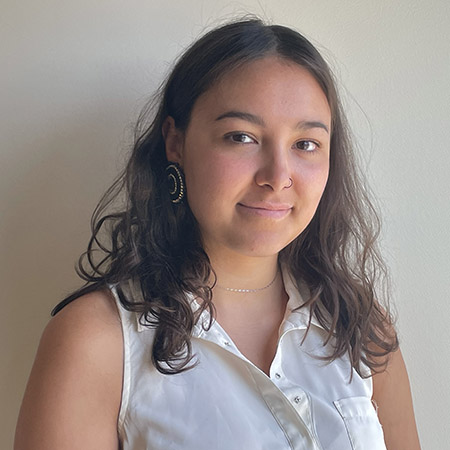
(Photo/Courtesy)
By Neely Bardwell
April 15, 2025
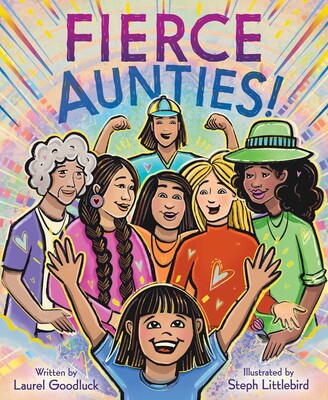
Today, Indigenous author and illustrator team Laurel Goodluck and Steph Littlebird released their new children’s picture book titled FIERCE AUNTIES!, a celebration of what makes aunties so special.
Steph Littlebird, a citizen of the Grand Ronde Confederated Tribes of Oregon, has illustrated before with first book, "My Powerful Hair." Now, with Fierce Aunties!, Littlebird took on the powerful job of illustrating aunties that represent all communities, even including some that reflect aunties in her real life.
Native News Online spoke with Littlebird for a Q&A to discuss why having Indigenous representation in children’s books is important. This interview has been edited for clarity and brevity.
What made you want to illustrate for a Fierce Auntie?
Much of my work outside of publishing is about empowering Indigenous women. The work that I'm most known for is actually my Pocahontas series, where I dispel myths about her because of the Disney movie. What I'm rooted in is empowering Indigenous women. It's creating art that I needed as a young Indigenous person that I didn't have.
When I read the the manuscript, I was like, this is for me, this is my chance to honor and show my love for all of the women, not just Indigenous women, but all women who have really uplifted me in my own career and in my own life.
What was the process working on Fierce Aunties?
It was honestly such a cool process. Not every time that you work with a publisher and author, do necessarily feel friendly, but it was a really wholesome process of bringing this together.
It takes about a year total for illustrations. Once the manuscript is approved by the publisher, then they send it to me. From that point forward, you are illustrating. What I do is start with bare bones sketches, just black and white, sketches of my ideas. Once we sort of get through the process of editing each page, which can take months, then eventually you get to the fun part, which is my favorite part, the color. That takes usually somewhere between eight to twelve months. It really just depends on the project and the publisher.
Fierce Aunties! is such an imaginative and whimsical story, so there were lots of illustrations that were fun to make, and that's not always the case. Sometimes stories are more straightforward, but this one has so much whimsy and joy in it. It was just so fun for me, because I just kept thinking about all of these amazing women in my own life that I was sort of illustrating it for.
Is there anybody that you know in your real life that you drew into the book?
Absolutely. It was important to bring in an Afro-Indigenous auntie, because our community has very diverse members, and Black Indigenous people are often underrepresented. I have many Black Indigenous friends, and I also have a friend who is Afro-Latina, but she is also Indigenous. She's always working with young people and teaching them things about the earth, so the Black-Indigenous auntie is teaching them about planting and going on adventures into nature, and that's so her. When I actually showed her the book, she immediately knew that it was inspired by her.
It's so important for people to see themselves in my work, and not just literally another person, but these values that each of the aunts have. I also have a mentor who is not Native, but she is one of the first people who told me that my writing and my art was good enough. So the auntie who is reading to the young girl is very much her, because that person was my mentor.
There's all these sort of underlying symbols in there that I think are really important. I hope I encompassed the world of aunties well because there are so many things that they bring to the table.
Can you tell me a little bit about Deb Haaland’s features in the illustrations?
Deb Holland, she's the first of her kind. She’s the first Indigenous person to run the Department of the Interior, let alone Indigenous woman. She is an auntie archetype. She is out there doing big things. She’s showing younger women what is possible, and that's so important because I didn't grow up seeing that.
Deb is this example of Indigenous excellence, and we need that. We need that so much. She really is one of the most visible Indigenous women. She is making decisions, and was instrumental in bringing attention to the boarding school system while she was in office. Deb is the first person to really push the government to even think about those things.
She is a demonstration of our potential, and she is a demonstration of all the things that we can do and will hopefully achieve in our futures. To me, she is such an inspiration.When I was illustrating I had to make sure she's in there, because she is the one of the most visible aunties in our community.
What does it mean to be an auntie?
I am an auntie of both children that are related to me by blood, but also all of these young women that I have adopted as my nieces, and for me, it's so much about care and recognizing the unique beauty of each child, and trying to help cultivate that. Even though they are not my children, I want them to see their highest potential, and I want them to live inspired lives, and I want them to achieve their dreams.
I get to say inspiring things to them that probably sound less biased coming from me than their parents. When my nieces see me doing good, and they send me love, I send them that love right back. I say all the stuff that I'm doing right now, you're gonna do bigger things in your life, and that's the best part about being an auntie is living as inspiration for them and showing them that what I have is possible for them, and so much more. It's a big responsibility, but it's also the most fun thing, to give love and care for young people and show them their value.
Why do you think it's important for books like Fierce Aunties! to be visible for Native youth and Indigenous girls?
Aunties in Indigenous culture are so important. The idea of the village raising the child, aunties are core to that. What I've learned is that Auntie culture, while it's very important to Indigenous people, is actually something that a lot of people outside of our culture resonate with.
I was actually just speaking with a Black person the other day, and she was like, Oh my gosh, I love the title of this book, because I had so many aunties in my life. All kinds of people will resonate with this book, and think about the women that have been instrumental in their lives.
For me, the book is a love letter to the women who care, who give love to others, even if they're not their own children or their own bloodline. Women are out in this world making sure that each other succeeds and making sure young people do well. This is a beautiful thing. This is so deserved–honoring women and the contributions they give to their community is really important.
What advice would you give to any aspiring illustrators out there?
The big thing that changed my life was sharing my work online and sharing it through Instagram. Gallerists are looking for art on social media, looking for new artists on social media. That is how my agent found my work for my first book.
I've had my Instagram for about 10 years, and in the last five years, it has become where people find me and where people approach me for jobs. I really encourage kids to one, put your work out there regularly, and two, don't agonize over it being a masterpiece. It's really just about creating work and sharing work.
I really encourage Indigenous illustrators to learn a digital art program, and start making your work in that medium, even if you do other stuff. Just start making work in digital because people are looking for it. There is a big demand for Indigenous illustrators right now, and there aren't that many of them.
I'm even working inside my own tribe's community to encourage these skill sets because there are jobs waiting for you, if you can come up to speed on this stuff. You don't have to go to art school to do that, you can literally learn this stuff on YouTube.
The world is your oyster. If you dedicate yourself to your craft and share it with the world, people are going to find you. There are people out there who are looking for your work and ready to love it and celebrate it.
About The Author Neely Bardwell (descendant of the Little Traverse Bay Bands of Odawa Indian) is a staff reporter for Native News Online covering politics, policy and environmental issues. Bardwell graduated from Michigan State University where she majored in policy and minored in Native American studies.




 BRITAIN’S SECURITY AGENCIES HAVE reportedly warned civil servants and parliamentarians that public places located near government buildings may be bugged by foreign intelligence agencies. The warning covers the SW1 postcode district of southwest London, which encompasses the City of Westminster and includes the Houses of Parliament, the Office of the Prime Minister at 10 Downing Steet, and Whitehall. The latter is home to several ministries and departments, including the Foreign and Commonwealth Office, the Cabinet office, and the Ministry of Defense.