Monday, April 21, 2025


Australia’s Inland Tsunami: The 2025 Floods That Reshaped A Continent – OpEd
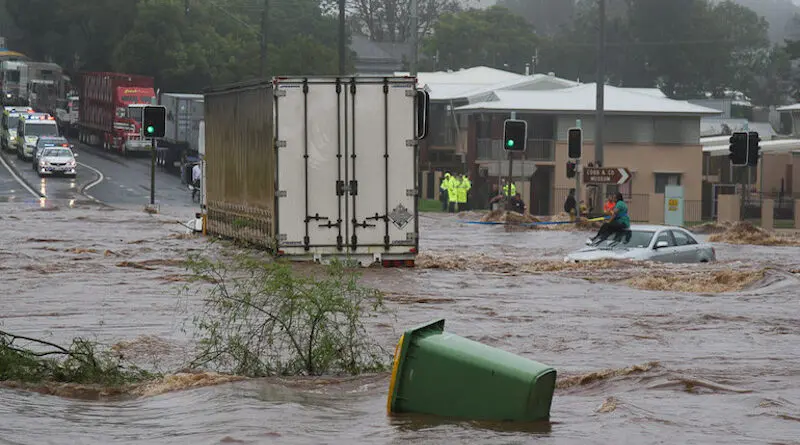
File photo of past flooding in Queensland, Australia. Photo Credit: Kingbob86, Wikipedia Commons


By 

Australia is facing one of the most extraordinary and widespread flooding events in its recent history, with the arid interior of the country now transformed into a vast, waterlogged basin. In the past 24 hours, the situation in regions like Innamincka in South Australia’s far northeast has escalated into what many are describing as an “inland tsunami,” with water volumes comparable to those of Sydney Harbour.


This deluge is a result of record-breaking rainfall in Queensland’s Channel Country, and the subsequent overflow into South Australia via the Cooper Creek. The phenomenon is staggering not only for its volume but also for its reach, this is not just a flood in the traditional sense, but a reconfiguration of Australia’s interior landscape on a continental scale.

The township of Innamincka, usually home to just under two dozen permanent residents, is now entirely cut off. With water levels at the nearby Cullyamurra Waterhole reaching 13.39 meters, surpassing the 1974 record of 11.85 meters, the area has never seen such water levels in living memory. Outback pilot Trevor Wright, who has flown over the region for decades, described the scene as “an inland tsunami,” a sentiment echoed by local residents. The town, though elevated slightly on a stony rise, remains surrounded by water, and damage has already been reported. The Innamincka Racing Club, for instance, suffered extensive flooding, with entire structures submerged and ablution blocks floating away.

This unfolding disaster is not an isolated meteorological event but part of a much broader pattern. According to the Bureau of Meteorology and environmental scientists, the rainfall that caused this flooding broke March records in many locations, records that go back more than a century. What makes this particularly alarming is that the event was not tied to the typical La Niña weather system, which usually brings such deluges. Instead, experts like Professor Steve Turton from Central Queensland University point to abnormally high sea surface temperatures north of Australia, driven by global warming, as the primary culprit. This warming has intensified the hydrological cycle, creating what can only be described as a hyperactive rain event.

Communities across outback Queensland and northern South Australia are now facing weeks, potentially months, of isolation. Over 300 roads have been cut off, and emergency services are struggling to deliver aid. The South Australian State Emergency Service has deployed personnel, vehicles, and drones to assess and protect threatened areas. In Innamincka, sand walls have been hastily constructed, and while some residents have evacuated on their own, many remain in place with emergency stocks. The broader community, which includes surrounding pastoral properties, numbers around 60 people who are bracing for a long haul before access is restored.

The damage is not confined to homes and roads. The agricultural impact is enormous. Thousands of kilometers of fencing, including vital predator-exclusion barriers, have been destroyed. Early estimates suggest that more than 150,000 livestock may have been lost, and countless more are at risk of starvation or disease in the coming weeks. The floods have disrupted the food supply chain and destroyed pasturelands, making recovery a herculean task. Despite this devastation, some ecological benefits may arise. The sudden influx of water is expected to trigger an explosion of plant and animal life across the Channel Country and into the Lake Eyre Basin. Already, frogs have begun to spawn, birds are thriving on new insect blooms, and native mammals like the long-haired rat are expected to multiply rapidly. These periodic booms are part of Australia’s unique outback ecology, where life explodes after prolonged droughts.


However, the public health implications of such flooding are deeply concerning. A recent study published by researchers at Monash University in the journal Nature Water has revealed that communities affected by flooding face up to a 26% higher risk of serious health conditions requiring hospitalization. The impact is long-lasting, often extending up to seven months after the floodwaters recede. Conditions such as cardiovascular disease, diabetes, cancer, respiratory illnesses, and mental health disorders all saw significant spikes post-flooding events. This underscores the urgency of integrating health planning into Australia’s disaster management frameworks, especially as climate change increases the frequency and intensity of such disasters.

There is also an economic dimension to the crisis. With regions like Winton and Adavale receiving more rainfall in a few days than they typically see in a year, towns are now faced with rebuilding or even considering relocation. In Adavale, residents returned to homes buried under silt, with essential infrastructure like roads, fences, and even homes uprooted. The town’s pub, a communal hub, is filled with thick mud. For these communities, questions are being raised about the long-term viability of staying put versus moving to higher ground.

Australia’s 2025 flood is not merely a weather anomaly it is a signal of what’s to come. As climate change continues to accelerate, the boundaries of “normal” are shifting. Events that once occurred every hundred years are now being recorded multiple times in a generation. This demands a fundamental rethink in how Australia prepares for and responds to such catastrophes. It’s not enough to repair roads or restock shelves; the country must invest in climate-resilient infrastructure, enforce stronger zoning regulations, and bolster public health systems to handle the cascading effects of climate disasters. The inland tsunami sweeping through South Australia may recede, but its legacy will shape the region for years, perhaps decades, to come.


Ayesha Rafiq

Ayesha Rafiq is a Policy Analyst, and a Graduate in Peace and Conflict Studies from National Defence University, Islamabad. As a published writer, Millennium Fellow, and advocate for social equity, she blends academic rigor with practical experience to craft compelling analyses on global affairs, climate policy, human rights, and emerging technologies.

 

A Moment Of Truth For Europe’s Far-Right – Analysis

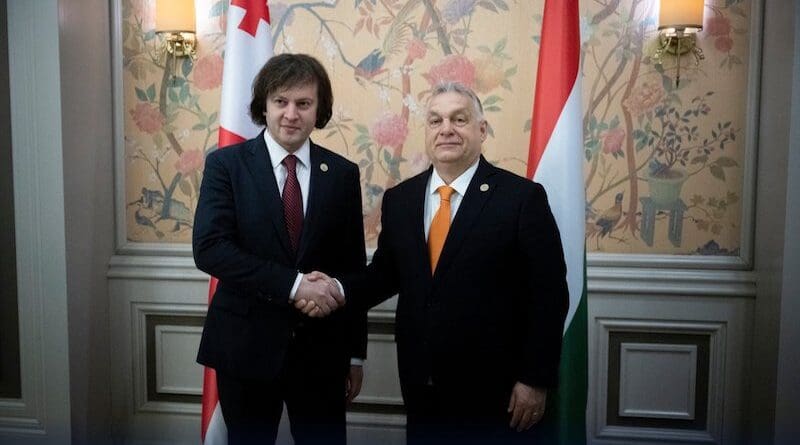
Georgia's Prime Minister Irakli Kobakhidze with Hungary's Prime Minster Viktor Orbán Credit: Viktor Orbán, X


By 

By Shairee Malhotra


In February 2025, Europe’s far-right leaders gathered in Madrid at an event hosted by Spain’s far-right Vox party. Under the slogan “Make Europe Great Again” (MEGA), the event was inspired by Trumpian ideology.

The European far-right’s affinity with United States (US) President Donald Trump’s populist worldview is well-known. They share similar conservative and nationalist outlooks on themes ranging from anti-migration and anti-establishment to Euroscepticism and hostility towards climate policy and multilateralism. Trump’s return to power in his second term was seen to validate and legitimise the ideas of the European far-right. As Hungary’s populist Prime Minister Viktor Orban reiterated at the MEGA event, “Yesterday we were the heretics, now we are the mainstream”. Influential figures within the Trump administration, such as tech billionaire Elon Musk, have explicitly aligned themselves with the European far-right, including Germany’s Alternative for Deutschland (AfD), France’s Marine Le Pen, and Italy’s conservative League Party.

Yet despite their broad ideological convergence with the MAGA (Make America Great Again) brigade, Washington’s tariffs and America first policies have disconcerted Europe’s far-right leaders given their direct impact on European national interests and economies.

On April 2, Trump announced a sweeping 20 percent tariff rate on European imports in addition to the previously imposed sectoral tariffs on metals and automobiles. Even though this rate has been temporarily reduced to 10 percent, the tariffs have rendered politicians of all colours in Europe nervous as they are estimated to impact European growth by 1.5 percent or 260 billion euros.

Many far-right politicians did what they do best, which is blame the European Union (EU). Vox’s president Santiago Abascal called out EU regulations and taxes as the greater danger. The AfD blamed Brussels for not reducing the high European tariffs on cars, while its leader Alice Weidel simultaneously criticised the tariffs “as fundamentally bad for free trade”.


There are widespread concerns that the tariffs would disproportionately impact the traditional voter bases of far-right parties, and impact economic growth in Europe, revealing a fundamental clash between the MAGA and MEGA agendas.

The industrial fallout from Trump 2.0 

Based on her warm interpersonal ties with Trump, far-right Italian Prime Minister Giorgia Meloni, who described the tariffs as “wrong” but defended Vice-President JD Vance’s attack on Europe at the Munich Security Conference, descended into Washington on April 17 aiming to ease transatlantic trade tensions and pitch herself as an interlocutor between Brussels and Washington. With exports to the US valuing 70 billion euros, Italy maintains a significant trade surplus with the country, and a 10 percent tariff rate is expected to incur losses of 7 billion euros for the Italian economy. In other divergences, Italy still remains below the 2 percent threshold, spending only 1.49 percent of GDP towards NATO, which is far below Trump’s 5 percent expectation. While softening the tariffs remained an elusive goal despite Trump’s gushing of Meloni as a “friend” doing “a fantastic job and taking Europe by storm”,  Meloni emphasised a mutually beneficial EU-US trade deal and the goal of “making the West great again” during her visit to the White House.

In France, despite general support for the far-right, Trump remains unpopular. The findings of a pre-US election YouGov poll revealed that Le Pen’s supporters preferred Democrat candidate Kamala Harris over Trump. Le Pen’s National Rally party had already distanced itself from the president’s more radical rhetoric to broaden its voter base. Simultaneously, the party, struggling after Marine Le Pen’s disqualification from contesting French elections, will need to retain the support of its core electorate, in particular the working and middle classes expected to be hit hard by the tariffs and whom it has vowed to protect.

The tariffs are also expected to garner losses of €4.3 billion in 2025 for the Spanish economy, with negative prospects for the agri-food sector and machinery and electrical equipment industries. Data from Spain’s Center for Sociological Research posits that the far-right Vox party is supported by “one in five farm workers and 10% of industrial workers”, who are likely to be harmed by the tariffs. In Hungary, the EU’s notorious outlier, headed by its far-right premier and ardent Trump supporter, Orban, tariffs will impact the country’s economic growth, which relies on the success of its automobile industry.

In general, Trump’s tariffs are expected to severely hit sectors such as automobiles, food and beverages, agriculture and those employed by these industries, thereby adversely impacting European farmers, winemakers, cheese producers and other manpower.

Despite the far-right’s Euroscepticism, only through the collective strength of the EU, which coordinates trade policy and its single market of 450 million consumers, can member states respond effectively to Trump’s trade wars. Far-right parties may walk a tightrope between balancing their ideological support for Trump while defending their economic interests by backing the EU response and maintaining domestic credibility. Whether they use their close ties with the Trump administration to forge bilateral deals for their nations or leverage their influence in favour of wider European interests remains to be seen.

Meloni has so far struck a balance between maintaining close ties with the US president while advocating for European interests. During her visit to the White House, she spoke in favour of a transatlantic trade deal and convinced Trump to visit Rome soon, where she would facilitate his meetings with other European leaders. But as the voter base of the European far-right bears the consequences of the economic disruption unleashed by the American president, the nexus between Trump and the European far-right may start to crumble.


  • About the author: Shairee Malhotra is the Deputy Director of the Strategic Studies Programme at the Observer Research Foundation 
  • Source: This article was published at the Observer Research Foundation 

Observer Research Foundation

ORF was established on 5 September 1990 as a private, not for profit, ’think tank’ to influence public policy formulation. The Foundation brought together, for the first time, leading Indian economists and policymakers to present An Agenda for Economic Reforms in India. The idea was to help develop a consensus in favour of economic reforms.


AI And Africa’s ‘Counterfeit’ Journalists – Analysis

artificial intelligence hand


By 

AI technology is ‘shooting the messenger’ by impersonating professional journalists to gain credibility for false narratives.

By Karen Allen


Not long ago, journalism tools comprised a notebook, a typewriter and possibly some coins for a telephone box to phone copy into the news desk. Then computers, email and cell phones brought speed, connectivity and the potential to demand greater accountability of the world’s leaders, as the media took advantage of improved communications technologies.

After the 1993 Black Hawk Down incident in Somalia, which was broadcast around the world and shaped the future of counter-terrorism operations, the 2002 Iraq war marked a new era of 24/7 news broadcasting.

Round-the-clock coverage enabled newsrooms to expose global events in real time. The Broadband Global Area Network satellite system relayed quality images and audio at speed. It was replaced by systems like LiveU, an industry standard using multiple cellphone connections to deliver broadcast news.

Each new iteration of technology has left the basic principles of news journalism intact. Key to the profession is the ability to hold power to account as part of the constitutionally guaranteed right to a free press.

However, a worrying trend is the abuse of emerging technologies to pollute the information environment. This can be done by distorting what we see or read, manipulating how information is delivered, or impersonating the messenger. That is, mimicking journalists, who traditionally have been considered a credible source for fact-based information.


AI avatars are being created to impersonate journalists and deliver narratives at scale and speed

The trend of AI-driven avatar journalists impersonating investigative reporters across Africa is captured in a recent Konrad Adenauer Foundation report.

‘Democracy relies on pluralism, that is, many opinions that lead to societal and political decisions,’ argues Hendrik Sittig, Director of the organisation’s Media Programme for Sub-Saharan Africa. ‘However, the information by which we form our opinions must be … fact-based and true … anything else could have tragic and devastating consequences.’

The report identifies how – as well as AI-generated deepfake attacks on journalists and influencers – AI avatars are being created to impersonate journalists and deliver narratives at scale and speed. This is part of information operations, or foreign information manipulation and interference (FIMI), which is used as a tool of geopolitical influence.

An investigation highlighted by the African Digital Democracy Observatory, discovered that Israeli cybersecurity company Percepto International used such techniques to create a fake French-Ghanaian investigative journalist with her own social media profile and website. She was used to insert material into mass African media, and designed to ‘smear local politicians and international organisations in Africa with fabricated revelations.’

Creating a fake investigative journalist arguably lends credibility to a story while trampling on the code of practice that underpins professional journalism. The investigation found multiple examples of such avatar journalists.

This tactic appears to mimic the earlier use of fake personae in prominent political advertising campaigns in Burkina Faso, where literal international actors appeared to lend support to the country’s September 2022 coup leaders. The firm Graphika observed a similar technique used to distribute pro-Chinese Communist Party propaganda via supposedly fake websites populated by avatars.

Creating fake investigative journalists lends credibility to a story while trampling on professional journalism

While the technology behind AI avatar creation is designed mainly for training and marketing, malign actors use it to undermine public trust. The technology is not at fault – instead, the problem is the absence of guardrails surrounding its use.

More recently, an Al Jazeera investigation found that ‘ghost reporters’ were writing pro-Russia propaganda in West and Central Africa, using the identities of deceased people, rebranded as investigative journalists. The content is posted on news outlets across the continent. Articles published in at least 12 African countries linked the practice to what the Al Jazeera team called a coordinated ‘pro-Russia influence campaign.’

Using new technologies to pollute the information environment or sow doubt about established facts poses a threat to democracies. In fragile democracies like many across Africa, the absence of robust professional media to counter such disinformation is concerning to those who care about information integrity.

While African leaders are embracing the benefits of digital technology and generative AI, for example through the African Union’s Continental Artificial Intelligence Strategy, a sense of urgency in understanding the risks appears lacking.

Another danger is the erosion of traditional professional media, both in terms of funding and staffing. One senior editor told Institute for Security Studies (ISS) researchers that during South Africa’s May 2024 elections, some of her young journalist team struggled to understand their role in the democratic process.

Lack of access by tech companies to online data makes it difficult to measure risks facing African countries

Notwithstanding those concerns, a separate ISS study found that professional journalism acted as a bulwark against mis/disinformation campaigns during that election.

There are some efforts to educate the public about the dangers of a distorted information environment. The Konrad Adenauer Foundation recently published a Marvel-style comic book described as ‘a journalist’s quest for justice in the age of AI,’ written and illustrated by a South African team. This, plus initiatives from organisations such as Media Monitoring Africa, are notable exceptions in promoting digital literacy and could inspire future interventions.

While much of the current debate in South Africa has focused on social media platforms and regulating online content – particularly in the context of recent white supremacist narratives – this is unlikely to catch the journalist impersonators using generative AI.

An Artificial Intelligence Act like that recently introduced in Europe may not, and arguably should not, be replicated across Africa because of what many argue is the lack of data, capacity and inequalities in access.

South African-based organisations like Research ICT Africa say it will be hard to measure risks and develop resilience measures unless tech companies grant research and monitoring organisations access to online data as they do in the global north.

Hardwiring AI awareness into newsroom training may also be a practical solution to consider on the supply side. On the demand side, public campaigns are needed that frame professional journalism as a public good and highlight the danger of it being undermined by counterfeits – just as one would with fake brands.


ISS

The Institute for Security Studies (ISS) partners to build knowledge and skills that secure Africa’s future. Our goal is to enhance human security as a means to achieve sustainable peace and prosperity. The ISS is an African non-profit organisation with offices in South Africa, Kenya, Ethiopia and Senegal.