Monday, April 21, 2025


Ukraine signs a preliminary minerals deal memorandum of understanding with the US after months of wrangling

Ukraine signs a preliminary minerals deal memorandum of understanding with the US after months of wrangling
Ukraine has signed a preliminary memorandum of understanding with the US on the controversial minerals deal after months of wrangling, but many important details of the deal still need to be agreed.
By Ben Aris in Berlin April 19, 2025

​Ukraine has signed a preliminary memorandum of understanding (MoU) with the US on the controversial minerals deal after months of wrangling, but many important details of the deal still need to be agreed, Ukrainian officials said on April 18.

“We are happy to announce the signing, with our American partners, of a memorandum of intent, which paves the way for an Economic Partnership Agreement and the establishment of the Investment Fund for the Reconstruction of Ukraine,” Yulia Svyrydenko, First Deputy Prime Minister and Minister of Economy of Ukraine, said in a post on social media.

“We hope that the fund will become an effective tool for attracting investments in the reconstruction of our country, modernisation of infrastructure, support for business and the creation of new economic opportunities.”

The memorandum was very brief and general, containing only one page that said little more than it is the intention of both parties to finalise the agreement on economic partnership and the creation of an investment fund. The White House sent Bankova (Ukraine’s equivalent of the Kremlin) a fourth, and extremely harsh, version of the minerals deal on March 28, which Ukrainian President Volodymyr Zelenskiy rejected, saying that it undermines Ukraine’s sovereignty and would threaten Ukraine’s EU accession aspirations.

The Financial Times reports that the parties still have fundamental disagreements on the changes that the agreement has undergone in a month. US Treasury Secretary Scott Bessent says that essentially it has not changed, Ukrainian sources claim that there is a positive for Ukraine. Presumably, the most controversial points that could hinder ratification by the Verkhovna Rada have been removed, but there are no details yet.

The initial version of the deal was focused on getting rights over Ukraine’s rare earth metals (REMs) resources, which US Senator Lindsey Graham claimed are worth trillions of dollars. But as bne IntelliNews reported, Ukraine has no rare earth metal deposits of note, although it does have significant deposits of critical minerals that are worth an estimated $800bn, including copper, graphite, lithium and some other minerals important to modern technology. Ukraine reports deposits of 22 of the 34 minerals identified by the European Union as critical, according to Ukrainian data, but the US Geological Survey (USGS) confirms it has insignificant amounts of the 17 REMs.

Svyrydenko was upbeat on the latest memo, saying the deal “notes the desire of the American people to invest together with the Ukrainian people in a free, sovereign and secure Ukraine.”

However, she made it clear that it was only a preliminary agreement and work on a final version continues.

“There is a lot to do, but the current pace and significant progress give reason to expect that the document will be very beneficial for both countries,” she added.

Security deal missing

Bankova has been reluctant to sign off on the agreement that would give away the rights to revenues earned from much of its natural resources – money it is going to need to cover the cost of reconstruction. The World Bank recently estimated the total cost of the damage at $585bn and while Ukraine’s Western partners have been generous in providing Ukraine with money to fund the budget and buy weapons, so far the only commitment to funding the cost of reconstruction is commitments from the international financial institutions (IFIs) to the order of $75bn, according to estimates from Peterson Institute for International Economics (PIIE).

In addition, Zelenskiy has been holding out to link the deal to concrete security guarantees from Western partners, especially the US or Nato, to ensure Russia cannot invade Ukraine a second time post-war. While the details of the current fifth version of the deal were not released no mention of security guarantees was made in the new memo and they have been missing from all previous versions.

US President Donald Trump has made it clear that the US is not prepared to offer Ukraine a security deal and has also said that early or accelerated Nato membership is definitely also off the table.

More work to do

Treasury Secretary Bessent later clarified that a final version of the deal will be signed on April 26. He added that the deal was substantially the same as the previous, fourth version that was not signed during Zelenskiy's meeting with Trump in the White House that descended into a shouting match between two presidents on February 28. However, the FT reported that Ukraine officials say they have brought the latest version a bit closer in line with their own demands.

“This is a memorandum of intent – not the agreement itself – but it reflects our constructive and positional intentions,” Bessent said.

One point of progress in the talks is that Trump has backed off his earlier demands for $350bn worth of compensation, the money he claims the US has provided Ukraine with over the last three years of conflict. However, as observers were quick to point out, Congress has signed off on a total of $188bn in aid, and Zelenskiy claims that of this pledge a bit more than $90bn was actually delivered.

In the most recent version of the deal, revealed to the public, the amount of compensation Trump is now claiming was $120bn, although no concrete figure has been mentioned in connection with the latest version of the agreement.

Zelenskiy has also rejected the idea that the US is entitled to any compensation, saying the money Kyiv has received from the US under the Biden administration was “not debt” but largely in the form of grants, which do not have to be repaid. The EU, which has provided Ukraine with slightly more money than the US, has extended far more of its aid in the form of loans, which do have to be repaid, albeit under extremely lenient terms.

Tensions remain

Tensions remain between the White House and Bankova despite the apparent progress, but the White House made it clear that its patience with the progress on striking a deal is wearing thin.

US Secretary of State Marco Rubio said on April 18 that Washington could soon exit efforts to reach a Ukraine ceasefire if it decided peace was not "doable", after meeting European and Ukrainian officials in Paris.

"We need to figure out here now, within a matter of days, whether this is doable in the short term, because if it's not, then I think we're just going to move on," he told reporters at Le Bourget Airport outside Paris. "We have other priorities to focus on as well."

And there are major discrepancies between what the White House seems to be offering Russian President Vladimir Putin in negotiations and what Bankova will accept.

After a five-hour meeting last week between Putin and special envoy to the Middle East Steve Witkoff, the US envoy suggested that Ukraine give up on its claims to the “five regions” Russia wants sovereignty over without naming them.

(Earlier this month in an interview on US TV, Witkoff appeared to be unable to name the four regions that Russia annexed in 2023 and by mentioning “five” he appears to be alluding to the Crimea as well, which Russia annexed in 2014.)

Following Witkoff’s comments Zelenskiy repeated earlier statements saying that Ukraine would never agree to giving up sovereignty over any of its territory.

“These are red lines for us – recognising any temporarily occupied territories as Russian. Trump’s representative, Witkoff, is discussing matters beyond his competence,” Zelenskiy said in his daily video address on April 15.

Ukraine said on April 18 that Prime Minister Denis Shmyhal would visit Washington next week for talks with US officials aimed at clinching a long-fraught minerals and resources deal.

Getting Europe to play ball

Rubio also said in Paris after his meeting with EU leaders that he hoped European nations would consider lifting sanctions against Russia over the war.

"Many of them are European sanctions that we can't lift, if that were ever to be part of a deal," he said.

The Trump team have apparently agreed to some of Putin’s demands of sanctions relief, however, the White House is not in a position to unilaterally lift sanctions and would have to work in combination with the EU, which has so far refused to cooperate. The European position is that sanctions relief can only be discussed after a ceasefire is in place and the Armed Forces of Russia (AFR) have withdrawn from all of Ukraine’s territory.

Celia Belin, of the European Council on Foreign Relations, told AFP Rubio's latest comments were "not surprising" and that, "Trump wants to get rid of the Ukraine issue.”

"He wants to renew a strategic partnership with Moscow and he doesn't want a 'little problem' like Ukraine getting in the way,” she said.

Main points of agreement

Bankova published a full text of the understanding on April 18, which remains brief and general and goes into no details on how a proposed investment fund will work – the key element of the deal. They main points include:

  • The US has provided significant financial and material support to Ukraine since Russia's full-scale invasion in February 2022.
  • The American and Ukrainian people aim to invest together in a free, sovereign and secure Ukraine.
  • Both countries seek a lasting peace in Ukraine and a durable bilateral partnership.
  • Ukraine’s decision to relinquish its nuclear arsenal is recognised as a contribution to international peace and security.
  • The US and Ukraine intend to establish a reconstruction investment fund as part of an economic partnership.
  • Technical discussions to finalise the fund agreement took place in Washington, D.C., on April 11-12.
  • The US respects Ukraine's effort to ensure the agreement aligns with its EU accession and other international obligations.
  • Ukrainian Prime Minister Denys Shmyhal is scheduled to visit Washington during the week of April 21, to support the finalisation of the agreement.
  • Negotiators aim to report progress by April 26, with the goal of completing discussions and signing the agreement shortly thereafter.
  • The memorandum of intent reflects the commitment of both governments to expedite the finalisation of the agreement and may be signed in multiple original counterparts.


 

Raging wildfire threatens Poland’s Biebrza National Park

Raging wildfire threatens Poland’s Biebrza National Park
Biebrza National Park is Poland’s largest and is internationally known for its rare bird species. / Biebrza National Park via Facebook
By Wojciech Kosc in Warsaw April 21, 2025

A wildfire in Biebrza National Park, north-eastern Poland, has covered 450 hectares since breaking out, the Ministry of the Interior said on 21 April, as emergency crews continued attempts to bring the blaze under control using helicopters and an aeroplane.

The response involves 240 firefighters, 100 Territorial Defence Force soldiers, and staff from the forestry service and the park itself. The fire was first reported on the afternoon of 20 April, though the cause remains unknown.

By that evening, the affected area had already exceeded 60 hectares and continued to expand on 21 April.

“The fire-fighting operation is now focused on aerial measures due to difficult terrain,” Interior Minister Tomasz Siemoniak said on social media.

“There is currently no threat to the life or health of nearby residents, as the fire is at least five kilometres from the nearest buildings. However, the services are prepared to evacuate people if necessary,” Siemoniak also said.

Park authorities have closed hiking routes and educational trails in the affected areas.

Established in 1993, Biebrza National Park is Poland’s largest and protects extensive peat bogs, wetlands, and marshes along the Biebrza River.

The park is internationally known for its rare bird species, especially waterfowl and migratory birds, making it a popular destination for ornithologists and bird-watchers. Its largely undisturbed ecosystems also support moose, beavers, and unique plant communities.

However, climate change has altered temperature and precipitation patterns, increasing the risk of drought and fire in Biebrza and other important Polish habitats. The April rainfall anomaly in the are was at just 25% of the long-term average as of April 20, according to data by the Polish meteorological service.

The park experienced smaller fires in late March and mid-April. In 2020, a major blaze burned around 5,500 hectares—close to 10% of the park’s total area.


Turkey to renovate 1,500-year-old dome of Hagia Sophia

Turkey to renovate 1,500-year-old dome of Hagia Sophia
The dome will be temporarily covered with a steel structure and a special tarpaulin. / screenshot\\Feedly

By Akin Nazli in Belgrade April 20, 2025

Turkey’s culture and tourism ministry is set to launch a restoration of the dome of Hagia Sophia in Istanbul, minister Mehmet Nuri Ersoy (@MehmetNuriErsoy) wrote on April 14 in a tweet.

“We continue our restoration and reinforcement works at the 1,486-year-old Hagia Sophia Grand Mosque,” the minister adde.

“We have completed some of these works [in an earlier phase] and are carrying out the remaining sections carefully,” he added.

Video: The minister shared a video on X depicting the restoration plans for the dome.

In the new phase, the main dome will undergo the largest and most comprehensive restoration process in its history.

The restoration works will be carried out from the outer surface to avoid damaging the mosaics on the inner surface of the dome, while the dome will be temporarily covered with a steel structure and a special tarpaulin to prevent impacts from weather conditions and additionally protect the mosaics.

A steel platform with a height of 43.5 meters will be installed on four main columns.

Continuous restoration

Restoration works on the other sections of Hagia Sophia have been under way for 10 years, Asnu Bilban Yalcin, a professor of Byzantine history at Istanbul University, told Reuters on April 14.

“Hagia Sophia is full of surprises… you design and plan it, but when you open it, things may develop differently,” she added.

The actual structural problems will become more apparent when the lead cover is lifted, Hasan Firat Diker, a professor of architecture at Fatih Sultan Mehmet Vakif University, told the news service.

Built by Justinian I

Hagia Sophia, completed by Roman Emperor Justinian I in 537, has been a subject of political controversy across millennia.

By 1204, it was an Orthodox church. Between 1204 and 1261, it served as a Catholic church after the invasion of the city in the Fourth Crusade.

Between 1261 and 1453, it was again an Orthodox church. In 1453, Ottoman sultan Mehmet the Conqueror invaded the city and converted Hagia Sophia into a mosque. Minarets were added.

In 1934, Mustafa Kemal Ataturk, founder of the Republic of Turkey, converted it into a museum. In 2020, it was again opened to worship for mosque goers.

WAIT, WHAT?!

When Can You Be Convicted Of A Crime That Is Not A Crime? – Analysis

Hammer Horizontal Court Justice Right Law


By 

By Charles Doyle


A panel of the United States Court of Appeals for the Tenth Circuit (Tenth Circuit) recently upheld the murder conviction of a defendant who the court conceded had been “convicted of a crime that is not a crime.”

The case, United States v. Melgar-Cabrera, is the product of extradition and an underappreciated landmark Supreme Court decision, Apprendi v. New Jersey.

Melgar-Cabrera began when the defendant and two cohorts robbed a Denny’s restaurant and killed a waitress. They were charged with three offenses: (1) robbery in violation of the Hobbs Act, 18 U.S.C. § 1951; (2) using a firearm in relation to a crime of violence, 18 U.S.C. § 924(c); and (3) murder committed during the Section 924(c) firearms offense, 18 U.S.C. § 924(j). Before he could be tried, the defendant fled to El Salvador. Salvadoran authorities agreed to his extradition, but only under the Hobbs Act and the murder charges. They denied extradition on the Section 924(c) firearms charge.

Upon his return, the defendant was tried, convicted, and sentenced to life imprisonment for murder under Section 924(j). Section 924(j) provides: “A person who, in the course of a violation of subsection (c), causes the death of a person through the use of firearm shall – (1) if the killing is a murder . . . be punished by death or by imprisonment for any term of years or for life; and (2) if the killing manslaughter . . . be punished” by imprisonment for not more than 15 years.

The Tenth Circuit panel discovered a problem on appeal. In United States v. Battlethe Tenth Circuit had held previously that Section 924(j) is not a separate crime. Instead the court said in Battle, Section 924(j) merely supplies possible sentencing factors in Section 924(c) firearms cases. Yet, Melgar-Cabrera was not convicted of a Section 924(c) crime; he was convicted of a Section 924(j) noncrime. How could his conviction be affirmed? But it was.


The Tenth Circuit panel began by pointing out that its Battle decision stood on shaky grounds. It had failed to fully take into account Apprendi and its progeny, decisions that called into question treating facts properly left to the jury as sentencing factors decided by the trial court judge. That failure made Battle’s position untenable in the mind of the Tenth Circuit panel.

The panel, however, faced a further obstacle. A circuit court panel is ordinarily bound by circuit precedent until released by a decision en banc, that is, by a decision in which all the active judges in the circuit take part. The panel overcame the en banc requirement with a footnote: “This opinion has been circulated to all active members of this court, and it is our unanimous decision to overturn the conclusion articulated in Battle that 18 U.S.C. § 924(j) is a sentencing factor rather than a discrete crime.”

Thus freed of the shackles of Battle and having concluded that the robbery constituted a crime of violence for purposes of the Section 924(c) elements of the Section 924(j) crime, the panel affirmed Melgar- Carbrera’s conviction for a crime which at time of conviction the Tenth Circuit did not consider a crime.


CRS

The Congressional Research Service (CRS) works exclusively for the United States Congress, providing policy and legal analysis to committees and Members of both the House and Senate, regardless of party affiliation. As a legislative branch agency within the Library of Congress, CRS has been a valued and respected resource on Capitol Hill for nearly a century.


Green Energy In Southeast Asia: Why The US Should Invest More – Analysis


BUT TRUMP WON'T

Windmill Wind Power Wind Energy Desert Energy Old


By 

By Jessica C. Teets, Katherine Michaelson, MacKenzie Van Mete and Marisa Jones


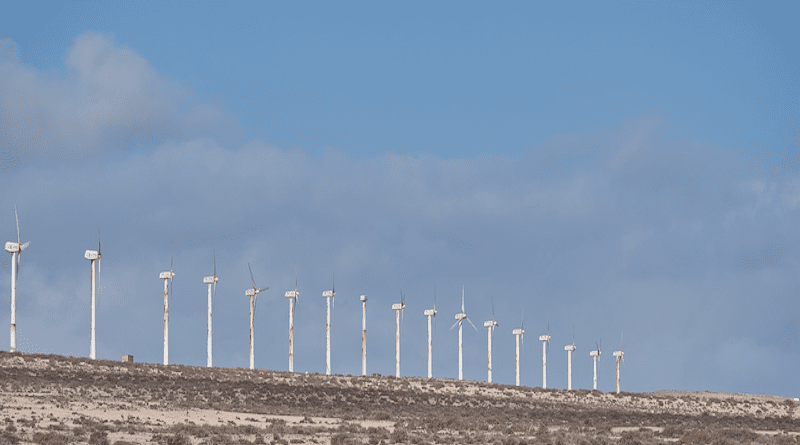
(FPRI) — Flowing from Tibet, the Lancang River goes through twelve Chinese megadams before reaching Laos as the Mekong River, a crucial freshwater source in Southeast Asia. A hydropower map from the Stimson Center shows 209 hydropower dams completed or under construction on the Mekong River, with 109 built by China and lower Mekong countries. The United States is concerned about how China will utilize its infrastructure investment to spread its influence across Southeast Asia.

Despite the growing Chinese influence in downstream countries, concerns over declining fish catches, crop yields, and water levels have prompted stakeholders to question the impact of Chinese-funded projects. In the past few years, through its US Agency for International Development (USAID) support to local and global nongovernmental organizations (NGOs), the US government has made some progress in raising local awareness of the detrimental effects of dam-building in the region. For example, the Stimson Center provides transparent data on the water flow of all dams along the Mekong River available through satellite imaging, which China refuses to provide to downstream countries.

Although a positive step, making water flow data during the dry season available is insufficient to counter China’s influence in Southeast Asia. To combat China’s influence in the Mekong, the United States and regional allies should significantly increase their foreign direct investment (FDI) in green energy technologies. Increased investment in Thailand and Vietnam can make the United States an effective alternative to China, allowing regional powers to not be solely dependent on China.

Southeast Asia’s Hedging Strategy 

“Hedging” is best described as a foreign policy strategy that combines cooperation and confrontation with great powers to maximize returns and minimize risk. This degree of ambiguity allows smaller states to maintain autonomy and achieve their objectives in the midst of great power competition.

Vietnam’s hedging strategy stems from its shared history and geography with China, in addition to the legacy of the Vietnam War. Vietnam is also a socialist country, but past incursions have shown that it cannot defend itself against China. Thus, Vietnamese leaders developed a policy of “assurance” toward China, prioritizing its relationship with Beijing and assuring its perception as not being “anti-China.” Vietnam has also worked hard to tighten its ties with the United States by joining the US-led Trans-Pacific Partnership negotiations and conducting joint military exercises with the United States and Japan. Vietnam classifies both China and America as “joint strategic partners,” the highest tier of diplomatic relationship. In his 2023 trip to Hanoi, former President Joseph Biden not only signed a strategic partnership agreement, but also explicitly identified Vietnam as a “new trusted technology partner” and vowed to increase US investment in the country’s high-tech sectors. Unfortunately, the signature multi-billion-dollar investment proposed by Intel failed to capitalize in 2024 due to the undersupply of reliable electricity in Vietnam.


Thailand’s foreign policy is similar to that of its eastern neighbor. It seeks to “bend in the wind” and remain flexible enough to adapt to a changing geopolitical landscape.  Thailand is a long-time ally of the United States and has held annual Cobra Gold joint military exercises with the United States. In the meantime, it has begun another annual joint naval exercise with China six years ago. The Thai government’s hedging strategy has spanned from military to economic areas. It has been proactively engaging both the United States and China economically. Thailand has been eager to accept economic investments in infrastructure projects along its Eastern Economic Zone, but it has remained skeptical of China’s true intentions in the region and has worked hard not to give too much influence to China by completing the projects on its own terms.

Broader Regional Variation in Alignment with China and the United States

Conversations with government officials and industry leaders in Vietnam and Thailand revealed that they tend to be pragmatic about their expectations, noting that both American and Chinese engagement in Southeast Asia is driven by self-interest. Thus, Vietnam and Thailand recognize the development opportunities that this great power competition brings. China offers economic opportunities in the form of infrastructure projects, such as motorways connecting Bangkok to rural Thailand and hydropower development. The United States, on the other hand, provides transparency and an important opportunity to hedge against China. This transparency is especially useful for both nations regarding national security and for NGOs, especially in Thailand, which fear the destruction of the river and its ecosystems as a result of the hydropower projects.

Vietnam may have warmed to the United States in recent years as tensions have escalated with China due to South China Sea disputes. But Vietnam cannot turn its back on China completely. One renowned researcher at the Institute of Foreign Policy at the Vietnamese Diplomacy Academy said that, specifically in the context of the Mekong, China is too big a player: “China is considered the ‘top boss’ of river…The Mekong region must find ways in relations to sustain development, keep relations with China, and have a practical conduct for the region.” He explicitly expressed that it was encouraging to witness the growing interest of the United States to invest, but he also acknowledged that it has become “difficult for Vietnam to maintain autonomy from the great powers as it is caught tiptoeing between two great powers.”

Stakeholders in Thailand shared similar hopes and concerns about engaging both China and the United States. The campaign director for the International Rivers NGO in Thailand pointed out that while the United States had begun to increase its investment in the region, China is more clever in its tactics. It chooses to act bilaterally, giving large grants to universities and institutions. The close ties with local research institutions have helped Chinese investors develop better strategies for the successful localization of their investments.

Current Assessment of Renewable Energy Investment from the United States

Vietnam has committed to ambitious climate and renewable energy goals aiming to decrease its reliance on coal and hydropower by 20 percent by 2030, looking to clean energy alternatives such as onshore wind and solar power to contribute a larger share of the country’s total energy production. In response to Vietnam’s clean energy commitment, G7 countries pledged $15.5 billion to aid the country in reaching these goals.

In 2023, US foreign direct investment in Vietnam totaled US$530 million, which was insignificant compared with China and other Asian investors such as Singapore, Japan, and South Korea. US investment in Vietnam focused on manufacturing and new energy infrastructure. These two sectors are not only the priority of the Vietnamese government, but also are mutually beneficial for the United States. After all, American high-tech companies cannot enter the economy if they are not assured of a stable electricity supply in Vietnam. This is evidenced by Intel’s decision to withdraw its multi-billion-dollar investment in semiconductor manufacturing in Vietnam in 2023 due to the large-scale power outage in that year. About fifteen American businesses, including semiconductor companies, have signaled a willingness to invest US$8 billion in Vietnam’s clean energy sector, conditional on the progress made in renewable energy policy adjustments by the Vietnamese government. By the end of April 2024, US corporations had invested over US$12 billion across 1,300 projects. A lecturer at the Hanoi University of Science and Technology revealed that a potential problem could arise given Vietnam’s reluctance to accept foreign investment in certain forms of renewable energy due to national security concerns such as offshore wind farms that require mapping of the seabed. The current regulation requires that foreign firms purchase electricity from state-owned Vietnamese electricity companies. Vietnam’s Ministry of Industry and Trade is implementing a USAID-assisted direct power purchase agreement pilot scheme, enabling renewable energy producers to sell electricity directly to consumers, thereby attracting more foreign investment. These initiatives underscore the growing role of US investments in advancing Vietnam’s renewable energy landscape.

Despite the recent US push for investment in Vietnam, China has outcompeted it. In 2023, the combined FDI from both China and Hong Kong reached US$9 billion. Vietnam’s energy sector has been key to recent Chinese investment. For example, the Chinese power construction corporation PowerChina has been building fifty energy-related projects in Vietnam, including what it claims will be Southeast Asia’s largest solar energy park.

Given Vietnam’s ambitious energy and development goals, the United States must focus on continued investment and collaboration with the private sector. More importantly, the United States should fill the current gap in Vietnam’s renewable energy sector, as China’s dominant role in financing and constructing hydropower projects on the Mekong River has already caused severe climate and environmental-related problems. Investment in green energy infrastructure to support Vietnam’s manufacturing industry would be a wise policy choice by the US government. Not only would it encourage Vietnam to move away from hydropower and toward more sustainable energy sources, but it also would strengthen America’s influence and position in the region. Against the backdrop of the heightening US-China tit-for-tat tariff war and consequently   US firms’ relocation of manufacturing base from China to Vietnam, including Intel and Apple, this green energy infrastructure investment will become a win-win strategy for both countries.

US Strategy to Counter China’s Economic Influence in Thailand

In 2023, China was the leading investor in Thailand, contributing nearly one quarter of Thailand’s total FDI, primarily in the electronics industry and automobile production. This trend is expected to continue due to Thailand’s focus on technology and electric vehicles. Tax exemptions of three to thirteen years were given to the electric vehicle sector by the Thailand Board of Investment, and Chinese companies like BYD Auto have invested heavily in Thailand. While Thailand has been a long-term security partner of the United States, the 2014 coup and subsequent reduced engagement with America have led to a stronger bond between China and Thailand. The two governments are increasingly collaborating in the security domain, and there are high levels of Chinese investment.

The Eastern Economic Corridor (EEC) Development Plan positions Thailand as the “gateway to Asia,” a global investment hub for companies in the Asian marketplace. One large project is the development of a railway from Bangkok to Yunnan, constructed by the China Railway Construction Corporation (CRCC), but Thailand’s regulation of Chinese construction projects in infrastructure and sustainability has frustrated the CRCC. Thailand prioritizes sustainable development and international standards without compromising key values for Chinese investment. Our interviews with Thai government officials show that they still favor Western investments and are actively seeking quality investments from the United States and similar countries, just as seen in Vietnam.

China has consistently emerged as the top investor in Thailand’s economy over the last few years, with multiple infrastructure projects including new motorways out of Bangkok and a high-speed rail that connects the nation’s EEC. America’s investment is currently dwarfed by China’s, but according to the Thai Bureau of Investment, Thailand currently wants to attract investment in green energy projects to improve its grid system and move toward other green sources of energy, such as solar, wind, and biomass. The United States and its regional allies can provide high-quality and sustainable investment for green energy projects. This is good for US companies and increases American influence in the region by offering an alternative to China.

A strength of the United States is its close ties with many NGOs that have developed effective approaches to pursue community-based initiatives and raise awareness among the Thai people of the detrimental effects of Chinese hydropower and other infrastructure projects. The US government and NGOs have been critical of China’s BRI projects for their large carbon footprint and disregard for environmental degradation, critiques that have spread to local communities in Thailand and Vietnam. However, the window for the United States to compete with more transparent, greener infrastructure is closing as the BRI focuses more on greener projects, coined “small and beautiful projects.” Such initiatives are smaller scale, focusing on more environmentally friendly projects, and are more community-based.

To counter China’s soft power grab in the Mekong region, the United States and its allies must invest more in green technologies and sustainable projects, providing viable alternatives to Chinese initiatives. The United States has a strength in providing reliable green technology, such as solar and wind farms, both onshore and offshore. In addition to pushing China to be more transparent, the United States should lean into its advanced green technology strengths and invest in developing the next generation of clean energy technologies like green hydrogen and more efficient batteries. The United States must act now. As Beijing shifts its focus from large projects to smaller initiatives aligned with local needs, America’s window to challenge Chinese influence is closing. As Southeast Asia becomes a focal point of geopolitical competition between the United States and China, it is imperative that the United States adopts a timely and strategic approach to green energy investment to safeguard and advance its regional influence.

About the authors:

  • Jessica C. Teets is a Professor at Middlebury College and China Program Fellow at the Wilson Center. She previously served as a 2023 Templeton Fellow with the FPRI Asia Program.
  • Katherine Michaelson is a senior at Middlebury College majoring in International Global Studies with a focus on East Asia.
  • MacKenzie Van Meter obtained her Master of Arts in International Trade and Economic Diplomacy with a concentration in French from the Middlebury Institute of International Studies at Monterey. 
  • Marisa Jones received her Master of Arts in International Trade and Economic Diplomacy from Middlebury Institute of International Studies and now works for Global Trade Compliance at Zoll Medical.

Source: This article was published by FPRI


Published by the Foreign Policy Research Institute

Founded in 1955, FPRI (http://www.fpri.org/) is a 501(c)(3) non-profit organization devoted to bringing the insights of scholarship to bear on the development of policies that advance U.S. national interests and seeks to add perspective to events by fitting them into the larger historical and cultural context of international poli