Friday, May 30, 2025


The MSC Elsa 3 Disaster Off Kerala’s Maritime Coast: Causes And Consequences – Analysis
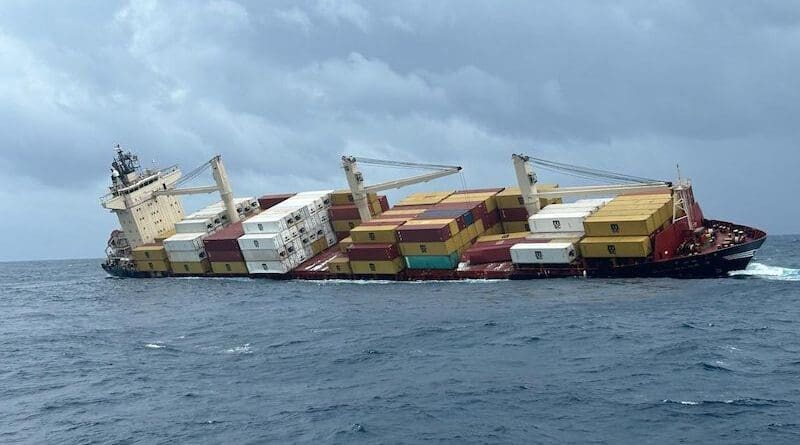

At the time of the incident, MSC ELSA 3 was carrying 640 containers. Photo Credit: Ministry of Defence, Government of India

By 

The capsizing and subsequent sinking of the MSC Elsa 3 on May 25, 2025, just 14.6 nautical miles off the Kerala coast, was not a routine maritime mishap. It revealed the fragility of a system where shipping operations, environmental protections, and regulatory mechanisms often function in silos.


With 640 containers on board—13 of which held hazardous materials—and over 450 metric tonnes of marine fuel, the vessel’s sinking released a potent mix of commercial cargo and environmental toxins into one of India’s most ecologically sensitive and densely inhabited coastal regions. While Kerala Chief Minister Pinarayi Vijayan declared the episode a “state-specific disaster,” its implications go far beyond temporary relief and isolated cleanup. What transpired was a telling example of the growing mismatch between the expansion of global maritime commerce and the underprepared infrastructure and oversight mechanisms of coastal states like Kerala.

This disaster came in the context of intensified maritime activity following the inauguration of Vizhinjam International Deepwater Multipurpose Seaport Port and increased vessel traffic through Kerala’s maritime corridor. It lays bare the tensions between developmental ambitions and ecological fragility, highlighting systemic failures in global shipping regulation, vessel maintenance standards, and the enforcement of international maritime law. The episode also reveals gaps in India’s preparedness for complex maritime emergencies involving hazardous substances, raising questions about coastal strength and institutional accountability. Moreover, this is not an isolated incident but part of a worrying pattern of increasing maritime casualties involving aging vessels, flag-of-convenience registrations, and insufficient global oversight. What follows from this event is not merely a set of localized consequences but an emblem of broader systemic inertia that afflicts global maritime governance.

A Captain’s Warning: Ageing Fleets and Flags of Convenience

In the wake of the MSC Elsa 3 disaster, a merchant ship captain with over 25 years of international experience shared with this writer his valuable insights into persistent structural problems in the global shipping industry. While he did not comment on the specifics of the MSC Elsa 3, his observations drew attention to the broader systemic vulnerabilities linked to ageing vessels and regulatory evasion.

According to him, cargo ships that cross the 25-year threshold must undergo mandatory annual certification of service, alongside rigorous safety inspections. These procedures are designed to ensure that critical operational systems—such as hull integrity, propulsion, fuel systems, and onboard safety mechanisms—meet internationally accepted standards. However, to bypass these costly and time-consuming procedures, many shipowners resort to “reflagging” their vessels in jurisdictions known for lenient oversight.

This practice of operating under “flags of convenience” allows companies to register ships in countries like Panama, Liberia, and the Marshall Islands—nations with open registries and minimal enforcement of safety, labour, and environmental regulations. The captain stressed that many of the ships flying such flags would not pass the inspection protocols applied by stricter maritime authorities, such as those in the European Union, Japan, or the United States. Yet, under current international law, they continue to operate legally, albeit with diminished accountability. 


The implications are far-reaching. These reflagged vessels are often older, poorly maintained, and prone to technical failures, posing a disproportionate risk to marine ecosystems and coastal communities. When accidents occur, such as leaks of bunker fuel or hazardous cargo, shipowners often avoid legal liability by exploiting the ambiguity of jurisdictional responsibility and the limited enforceability of transnational maritime regulations.

This loophole in global governance is compounded by uneven enforcement mechanisms and the limited authority of port state control regimes in many developing countries. While classification societies—entities responsible for certifying ships as seaworthy—exist to ensure compliance, many operate without stringent third-party audits, leading to potential conflicts of interest. The cumulative result is a global shipping network where operational expediency often trumps environmental and human safety.

The insights from this experienced seafarer serve as a crucial reminder: maritime safety is not merely about navigation or weather—it is deeply entangled with the political economy of global trade, regulatory evasion, and an under-resourced system of international accountability.

Environmental and Economic Fallout in Kerala

The sunken vessel posed an immediate ecological threat to Kerala’s unique coastal ecosystem. While no large-scale oil spill has yet been confirmed, the presence of 367.1 tonnes of Very Low Sulphur Fuel Oil (VLSFO) and 84.4 tonnes of Marine Gas Oil (MGO) on board the ship remains a ticking environmental time bomb. Also, the cargo included calcium carbide and other hazardous materials, which, if leaked, could severely contaminate marine habitats.

Kerala’s coastline supports a dense population and a thriving fisheries economy. The state accounts for roughly 15% of India’s marine fish production, employing more than a million people directly and indirectly. A marine pollution incident of this magnitude could devastate breeding grounds, especially during the southwest monsoon when nutrient flows and spawning cycles are in full swing. Already, the region has witnessed shoreline plastic contamination in the past—often from sunken containers—which can disrupt coral reefs, entangle marine fauna, and introduce microplastics into the food web.

With preliminary assessments by the Indian Coast Guard showing no oil slick as yet, the threat has not passed—it has only moved underwater. Surveillance aircraft and pollution control vessels may offer short-term reassurance, but long-term environmental monitoring and an independent ecological impact assessment are crucial to ensure accountability. Kerala’s coastline, already vulnerable to climate-induced erosion and flooding, cannot afford cumulative stressors from maritime neglect.

Kerala’s coastal ecology has long been under pressure from industrial expansion, sand mining, port construction, and tourism. The MSC Elsa 3 disaster aggravates this fragile balance. Early assessments by the Kerala State Pollution Control Board and the National Centre for Coastal Research suggest the spillage of marine fuel and leakage from hazardous containers has already affected marine biodiversity in the region. Toxic residues, plastic pellets, and fuel slicks have begun washing ashore across multiple districts, raising fears of long-term damage to spawning grounds and coral reefs.

The disaster’s economic fallout is no less severe. Kerala’s fisheries economy, which contributes over ₹7,000 crore annually to the state’s GDP and employs more than one million people directly or indirectly, faces disruption from bans on fishing activity in affected waters. Several fishers’ cooperatives have reported a collapse in daily income, while marine exporters fear an embargo due to contamination concerns. The timing couldn’t be worse: the incident coincided with the pre-monsoon season, when fishing activity traditionally peaks. The event also raises red flags for Kerala’s fledgling coastal tourism sector, particularly in areas like Kovalam and Varkala.

Regulatory and Zoning Failures

At the heart of this disaster lies the absence of an effective maritime zoning framework that delineates shipping lanes, ecological reserves, and exclusion zones. Despite repeated calls from environmental scientists and coastal planners, no binding mechanism exists to keep hazardous maritime activity away from high-risk ecosystems and fishing grounds along India’s southwest coast. The lack of real-time vessel monitoring, poor enforcement of speed and anchorage restrictions, and absence of contingency planning for port-adjacent spills exemplify regulatory apathy.

There have been earlier warnings. A 2020 study by the Integrated Coastal and Marine Area Management (ICMAM) project under India’s Ministry of Earth Sciences flagged Kerala’s coast as particularly vulnerable to chemical and oil spills due to increasing port activity. Yet, no follow-up action materialized in the form of updated risk maps, public awareness protocols, or joint drills. This reactive approach—where planning only follows disaster—has deepened public mistrust in state and central institutions.

Structural Weaknesses in Maritime Oversight

The MSC Elsa 3 was an aging vessel, reportedly built over two decades ago and flagged under a jurisdiction known for weak regulatory standards. This reflects a broader structural problem: the prevalence of flag-of-convenience systems, where shipping companies register vessels in countries with lax inspection regimes to avoid stricter standards in their home countries. These registries often outsource crucial safety and maintenance oversight to private classification societies.

While classification societies play a central role in certifying vessel seaworthiness, their credibility has come under question. Critics argue that these entities operate in a conflict-prone environment, often being paid by the very companies they are meant to scrutinize. The International Association of Classification Societies (IACS) does provide global guidelines, but enforcement varies widely. India’s port state control regime—though empowered to detain unfit vessels—remains understaffed and inconsistently applied, especially in smaller or emerging ports.

A deeper problem is the opacity of vessel histories. In many cases, vessels undergo rapid changes in ownership, flag, and classification in ways that make accountability elusive. Investigative journalists and maritime watchdogs have repeatedly flagged this practice, citing incidents like the X-Press Pearl disaster in Sri Lanka and the MSC Zoe container spill in the North Sea. The MSC Elsa 3 fits this pattern, and its inspection record, classification status, and insurance coverage now deserve full public scrutiny.

Legal and Jurisdictional Challenges

Maritime law is notoriously complex, involving overlapping jurisdictions between flag states, coastal states, and international waters. India has domestic statutes like the Merchant Shipping Act and the Environment (Protection) Act, but these are often insufficient when dealing with foreign-flagged vessels and complex spill scenarios. For instance, if criminal negligence is established against the shipowner or crew, prosecuting them under Indian law would require navigating international legal frameworks such as the United Nations Convention on the Law of the Sea (UNCLOS) and mutual legal assistance treaties.

India has faced such challenges before. The Enrica Lexie case, involving the killing of two Indian fishermen by Italian marines on board an oil tanker, became a diplomatic quagmire that lasted nearly a decade. Similarly, the MSC ChitraKhalijia 3 collision in Mumbai’s harbor in 2010 triggered a massive oil spill, yet compensation proceedings dragged on for years due to gaps in liability frameworks.

The lack of a specialized maritime environmental tribunal in India has further delayed justice in such cases. Current redress mechanisms involve overburdened civil courts or bureaucratic arbitration boards, neither of which are equipped to handle cases involving transnational actors, complex cargo manifests, or ecological restoration demands. This not only slows recovery but also weakens deterrence.

Towards Regulatory Reform: Lessons from a Global Industry

The MSC Elsa 3 disaster is a powerful reminder of the need for stronger maritime governance, not only at the national level but also within the international shipping community. With over 90% of global trade moved via maritime routes, shipping remains the lifeline of the global economy. It facilitates the mass movement of food, energy, and industrial goods, making it indispensable to global supply chains. However, this enormous logistical engine is governed by a fragmented regulatory system, often skewed in favour of commercial interests over environmental or labour protections.

Despite being the most efficient mode of large-scale transport in terms of emissions per ton-mile, the shipping industry is a significant contributor to marine pollution—through oil spills, ballast water discharge, hazardous waste dumping, and greenhouse gas emissions. Recognizing this, the International Maritime Organization (IMO) has gradually expanded its regulatory ambit since the 1970s to include 21 environment-related treaties out of the 51 international conventions it has adopted. Instruments like MARPOL, the Ballast Water Management Convention, and the Hong Kong Convention for ship recycling are crucial in framing a global environmental code for the seas. Yet implementation remains inconsistent, particularly among developing nations.

The MSC Elsa 3 case underlines why India must take a leadership role in regional maritime governance. The IMO’s Integrated Technical Cooperation Programme (ITCP) aims to assist countries in building institutional capacity, but stronger coordination with national ports, customs authorities, and coastal state administrations is essential. India’s current dependence on foreign-flagged and aging vessels—often registered under open registries with minimal oversight—exposes its maritime zones to heightened risk. Classification societies and port state control regimes must be held to stricter scrutiny, with independent audits and transparent reporting.

Furthermore, India needs to urgently invest in maritime spatial planning, develop an effective  marine pollution response framework, and expand its legal toolkit for prosecuting and penalizing foreign shipowners responsible for marine damage. Establishing a specialized environmental maritime tribunal could expedite case resolution and strengthen deterrence. As climate change intensifies maritime risks—from extreme weather events to rising sea levels—India’s ports and coastal economies will only become more vulnerable.  The MSC Elsa 3 incident should be a wake-up call for a strategic reset – to ensure that maritime trade evolves not just in scale, but also in safety, sustainability, and global accountability.



K.M. Seethi

K.M. Seethi is is Director, Inter University Centre for Social Science Research and Extension (IUCSSRE), Mahatma Gandhi University (MGU), Kerala. He also served as ICSSR Senior Fellow, Senior Professor of International Relations and Dean of Social Sciences at MGU. One of his latest works is "ENDURING DILEMMA Flashpoints in Kashmir and India-Pakistan Relations."

 

Russian cargo ship captain pleads not guilty in deadly North Sea tanker collision

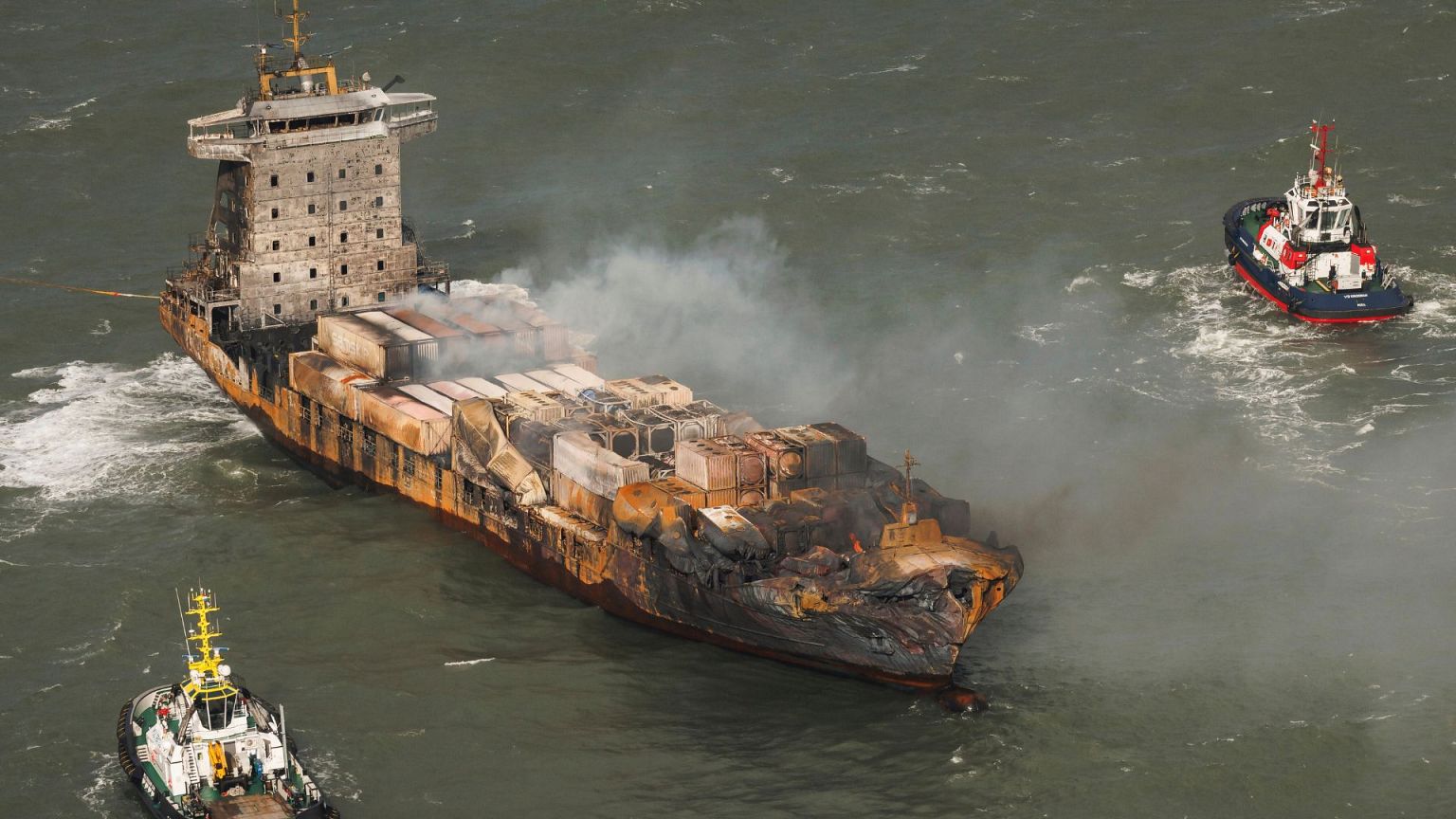
FILE - Smoke billows from the MV Solong cargo ship in the North Sea, off the Yorkshire coast, 11 March 2025.
Copyright Dan Kitwood/Pool Photo via AP, File


By Oman Al Yahyai with AP
Published on 

Vladimir Motin appeared via video link at London’s Central Criminal Court, where he denied responsibility for the presumed death of Filipino crew member Mark Angelo Pernia.

The Russian captain of a cargo vessel involved in a fatal collision with a US tanker in the North Sea has pleaded not guilty to a charge of manslaughter in front of a UK court.

Vladimir Motin, 59, of St Petersburg, appeared via video link from custody at a pre-trial hearing at London's Central Criminal Court. 

With the assistance of an interpreter, he denied gross negligence manslaughter over the presumed death of 38-year-old Filipino crew member Mark Angelo Pernia.

Motin was remanded in custody, with a trial date scheduled for 12 January.

The collision occurred on 10 March, when the Portuguese-flagged cargo ship Solong, travelling at approximately 28 km/h, struck the anchored US tanker MV Stena Immaculate roughly 19 kilometres off England’s northeast coast. 

The Stena Immaculate had been carrying jet fuel intended for the US military. The impact triggered a fire that burned for nearly a week

Thirty-six crew members from both vessels were rescued. Pernia remains missing and is presumed dead.

British authorities have stated there is no evidence linking the incident to any national security threat.

Although initial fears of severe environmental damage have eased, thousands of plastic pellets, known as nurdles, from ruptured containers aboard the Solong have washed ashore along the east coast of England. 

Conservation groups warn that while nurdles are not inherently toxic, they can pose a danger to wildlife if ingested.


Georgia arrests second opposition figure in days as ruling party faces more protests

Nika Melia, one of the leaders of the Coalition for Change opposition group, attends a court hearing in Tbilisi, 30 May, 2025
Copyright AP Photo


By Euronews Georgia
Published on 

Nightly protests across the country began on 28 November, when Prime Minister Irakli Kobakhidze halted the country's EU integration process.

Police in Georgia have detained a second opposition leader within days as protests against the ruling Georgian Dream party and its perceived Russia-friendly stance continue in the South Caucasus country.

Lawyers for Nika Melia, one of the figureheads for Georgia's pro-Western Coalition for Change, said his car was stopped by police on Thursday.

Soon after, he was bundled away by a large group of people in civilian clothing.

According to the interior ministry, Melia has been detained on charges of verbally insulting a law enforcement officer.

A court placed Melia in pre-trial detention but the length of that period of imprisonment has not been made clear.

Opposition leader Zurab Japaridze attends a court hearing in Tbilisi, 22 May, 2025AP Photo

The arrest comes a week after that of Zurab Japaridze, another leader of the pro-Western, liberal coalition of parties that support European Union integration and want a restoration of democratic norms.

Japaridze, who heads the New Political Centre (Girchi) party, was detained on 22 May after refusing to appear before a parliamentary commission investigating alleged wrongdoings by the government of former president Mikheil Saakashvili.

Opposition politicians have declined to attend the commission hearings, saying they are politically motivated by Georgian Dream to damage the opposition, particularly Saakashvili’s United National Movement party.

Melia, of the Ahali party and former chairman of Saakashvili’s United National Movement party, was detained on the eve of a scheduled court hearing for failing to testify.

Japaridze and seven other opposition politicians who did not attend the commission are expected to appear before a court in coming days.

If found guilty of failing to comply with a parliamentary investigative commission, they face up to a year in prison.

Meanwhile, demonstrators have continued to gather in the capital Tbilisi, demanding new elections and the release of dissidents.

Nightly protests began on 28 November, when Prime Minister Irakli Kobakhidze halted the country’s EU integration process.

Georgia has seen widespread political unrest since the country’s last parliamentary election in October, which was won by Georgian Dream.

Demonstrators with Georgian national flags rally to call for the release of political prisoners and demand new elections in Tbilisi, 31 March, 2025AP Photo

Protestors and the country’s opposition declared the result as illegitimate amid allegations of vote-rigging helped by Russia, sparking weeks of protests across the country

At the time, opposition leaders vowed to boycott sessions of parliament until a new parliamentary election was held under international supervision and alleged ballot irregularities were investigated.

Georgian Dream has seen widespread condemnation by European leaders and international rights groups over its rough handling of protestors and perceived democratic backsliding.


Indira Gandhi And The Years That Transformed India – Book Review

"Indira Gandhi and the Years that Transformed India" by Srinath Raghavan

By 

An incisive new book “Indira Gandhi And The Years That Transformed India” by leading historian Srinath Raghavan explodes myths about India working to a grand plan to break up Pakistan in 1971 — claims made often by admirers of Indira Gandhi and by Pakistanis.


Raghavan’s book, published by Penguin and acclaimed by leading experts as an accurate portrayal of Indira Gandhi’s long years at the helm, details the great caution with which Indira Gandhi started handling the first major international crisis of her political career. 

In the aftermath of the war , Indira Gandhi would be credited with exceptional foresight, impeccable timing and unerring judgement – all of which would add to her political charisma. Yet her handling of the developing situation was tentative and improvisatory… her instinctive caution was reinforced by Haksar (her principal aide). Although their sympathies lay with the Bengalis, Indira Gandhi and Haksar believed India as a state had to walk warily.

Raghavan notes in some detail the huge domestic pressure on Indira Gandhi to act decisively in support of the Bengali Liberation struggle cutting across the political divide. Inspite of these pressures, the Indian Prime Minister tried her best to get international support to force Pakistan’s military junta to stop the genocide and take back the vast numbers of Bengali refugees who had fled into eastern and northeastern states of India.  Only when Pakistan refused to stop the genocide on the Bengalis and the flow of refugees remained unabated, did Indira Gandhi start to consider the military option.

Not only was the financial burden for maintaining the refugees taxing India’s fragile economy, which was still dependent on foreign aid, but the presence of the refugees was fraught with consequences dangerous for India.

By October 1971, the projected cost of maintaining the 9 million refugees was Rs 5250 million, while the quantum of external aid was only Rs 1125 million.


At one point, observes Raghavan, Indira Gandhi’s advisers had even projected a possible need for pushing for a moratorium on external debt repayment  to shore up resources to handle the refugee crisis.

It is at that time, says Raghavan, that Indira Gandhi seriously started considering war against Pakistan. 

The government realised that a prolonged crisis would push the problem to unmanageable proportions. While war would entail significant costs, these would be more bearable than the burden posed by the refugees.” 

Raghavan observes that many in Delhi’s policy making circles feared that ultra Leftists in both Bengals could join hands to take over the leadership of the Liberation struggle, what with West Bengal reeling under an intense bout of Naxalite armed activism. Indira’s decision-making circles also factored in the possible demographic fallout as a result of the presence of too Bengali refugees not going back anytime soon that could spark nativist upheavals in India’s Northeastern states, many of which were already facing intense ethnic insurgencies. 

Raghavan rightly observes that the emerging power equations with US drawing close to China and both backing Pakistan strongly pushed Indira into a now-or-never desperate situation where military intervention to create an independent Bangladesh was the only option to send back ten million Bengali refugees. Even the Soviet Union, with whom a treaty of friendship had been signed to counter the Sino-US nexus, was keen to avoid war or a breakup of Pakistan, until Indira Gandhi made it clear to the Russian leaders that she had no choice.

But once she decided on military intervention, Indira Gandhi was on a no-holds barred mode. The Indian army, with huge support from the Bengali freedom fighters of ‘Mukti Bahini’, infiltrated deep into East Pakistan to create launchpads for the final assault once war was declared. The tank battle at Garibpur inside East Pakistan on 21-22 November 1971 involving a full detachment of India’s 45th Cavalry and an Infantry battalion points to the deep infiltration a good two weeks before the formal declaration of war.

Raghavan’s detailed analysis of how Indira Gandhi handled the Bangladesh crisis clearly points to one enduring reality — that India has been a defensive, status quo power that seeks to avoid conflict unless left with no other options.

Despite its ultra-nationalist Hindutva ideology, both the BJP’s Prime Minister’s, late Atal Behari Vajpayee and the current PM Narendra Modi have reached out to Pakistan with an olive branch to its political leadership, only to thwarted by the military adventurism of the Pakistan army, which sees conflict with India as one sure way to reinforce its control of the nation’s polity.  


Subir Bhaumik

Subir Bhaumik is a former BBC and Reuters correspondent and author of books on South Asian conflicts.


Russian Army’s Degradation In Ukraine Makes Returning Veterans Even Greater Threat – Analysis

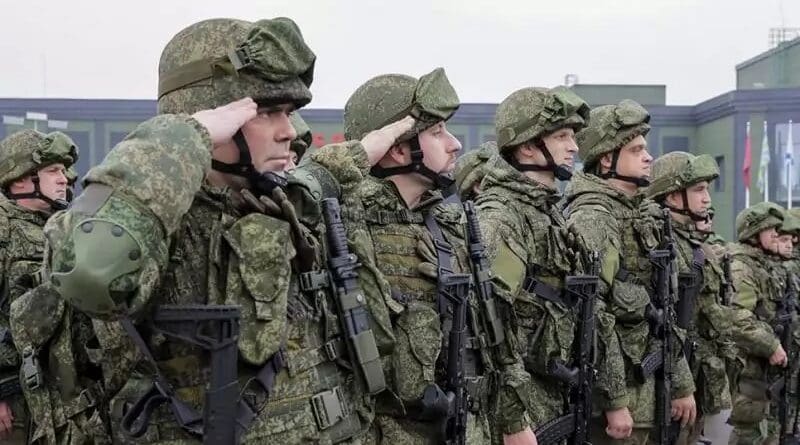
Russian soldiers. Photo Credit: Russian Defense Ministry

By 

The degradation of the Russian army in Ukraine, along with growing losses, means that Moscow is having to scrape the bottom of the barrel to fill its ranks. This has not prevented the Russian Army from continuing to advance, albeit with increasing losses, but the ever-decreasing quality of the average soldier causes myriad problems. The army itself has become a crucible for the growth of criminal attitudes and behaviors that will affect Russia long after the war’s end (Verstka, February 24; Okno, May 21; The Insider, May 22). 


Many Russian officials and observers now concede, however, that when as many as 700,000 veterans eventually return home—100,000 more than the number of veterans who returned from the Soviet Union’s war in Afghanistan in the 1980s—there is certain to be a dramatic upsurge in violence and crime. This may mean that the post-war consequences will be even greater than what has already been seen (see EDM, February 25). The longer Russia’s war against Ukraine continues and the more the Russian army degrades, the larger the challenge that veterans’ return to Russia will pose. Problems caused by returning veterans are yet another reason why some in Moscow would like to see the war end soon.

Russian commentator Viktoriya Ponomaryeva observes: “Discipline in the Russian army has never been its strong suit, but since the mass conscription of convicts began in the fall of 2022, the military [in the case of Russia’s war against Ukraine] has been unraveling at an alarming speed. The longer the war goes on, the harder it has become to re-impose order (The Insider, May 22) .”

In this lengthy article, Ponomaryeva provides example after example to show that the deterioration of the Russian army reflects the influx of soldiers fighting in Ukraine for financial gain or because the government deceived them (The Insider, May 22 [Russian version], [English version]). Rising rates of alcoholism, corruption, and brutality are widespread (Versatka, January 30, February 23, 2024; Kholod, November 12, 2024; Vazhnie Istorii, May 26).

Both in the ranks and among commanders, abuse of power and senseless violence against Ukrainians and fellow Russians alike are common. Desertion and suicide among Russian troops continue to rise (Okno, May 21). These factors have created an environment in which criminal attitudes and hostility to authority are growing, leading an increasing number of Russian analysts to predict disaster when those serving in Ukraine return home (Bumaga, March 5).

Observers of the effects of returning veterans from the war against Ukraine are drawing parallels to the role that the return of veterans of the Soviet Union’s war in Afghanistan—known as Afgantsy (Aфганцы). These soldiers played a large role played in increasing crime in Russia at the end of Soviet times and the beginning of the post-Soviet period. The behavior of Russian troops in Russia’s Kursk oblast, the lack of government effort to treat veterans’ post-traumatic stress disorder (PTSD), and the Putin regime’s hesitancy to punish veterans for domestic crimes are all contributing to the threat that veterans pose to Russian society (see EDM. October 25, 2023, July 29, December 13, 2024, February 25, April 28).


The Kremlin both coddles veterans, giving them the sense that they will not be punished for crimes, and represses them, angering growing groups of veterans and creating the potential for anti-regime actions in response (Kommersant, April 16, 2024; Window on Eurasia, September 3, 2024; Mediazona, November 15, 2024).

Not all Russian troops will be affected by their experiences in ways that lead to anti-social or criminal actions. Experts say that only 10 to 15 percent of veterans are likely to commit crimes (Bumaga, March 5). This proportion of the roughly 700,000 returning veterans (approximately 70,000 to 105,000), however, is still a very large number, and many more will probably engage in violence in the home against wives and children. Officials are unlikely to link crime with veterans’ experiences in the war against Ukraine, but this association is undeniable, especially given how difficult reintegration has been for veterans in a context where domestic incomes are stagnating (Radio Svoboda, May 14).

The Kremlin ostensibly believes it can suppress any veteran-driven crime. Behind that confidence, however, are fears that returning veterans may engage in more serious political challenges to the Vladimir Putin regime. Some veterans have even already joined regional militias (Window on Eurasia, September 15, 2023, September 27, 2024). Even if only a few veterans are attracted to extremist nationalist militias that could become a real threat, the Kremlin intends to channel most extremist veterans into the “Russian Community,” a far-right organization under Moscow’s control. Still, in nurturing the far-right, there is a chance that the Kremlin is creating a political force that it cannot fully control (see EDM, May 27, 28).

If these veterans join forces with nationalist politicians who want the Kremlin to pursue more expansionist policies, there is a danger that the returning Ukraintsy (Украинцы), as the veterans of Putin’s war in Ukraine are beginning to be called, could play an even more noxious role than the Afgantsy did a generation ago (see EDM, January 19, 2024,February 25). Ukraintsy could become a force similar to the Freikorps in post-World War I Germany, which challenged the civilian government by forming alliances with influential elite groups. There was, notably, more concern from Russian officials about returning veterans after 2014 when Putin occupied Ukraine’s Donbass, even though the number of veterans then was much smaller than now (Window on Eurasia, March 12, 2015). Both the threat to the regime posed by veterans and the scale of the Kremlin’s response to a potential threat could shake the foundations of the Russian Federation (Window on Eurasia, April 24).

The longer Putin’s war against Ukraine goes on, the worse shape the Russian military will be in, and the more veterans there will be to pose a threat to Russian society and its rulers. Some Russians think that ending the war quickly is in their best interests lest the Putin regime become even more repressive to cope with the return of veterans (see EDM, January 13). Others favor ending the war to ensure that extremist veterans who may want an even harsher regime than Putin do not take power. One thing is clear: veterans of Russia’s war against Ukraine, precisely because of what Putin has done to the Russian military, are going to play a major role in the future of Russia, demanding close attention going forward. 


Paul Goble

Paul Goble is a longtime specialist on ethnic and religious questions in Eurasia. Most recently, he was director of research and publications at the Azerbaijan Diplomatic Academy. Earlier, he served as vice dean for the social sciences and humanities at Audentes University in Tallinn and a senior research associate at the EuroCollege of the University of Tartu in Estonia. He has served in various capacities in the U.S. State Department, the Central Intelligence Agency and the International Broadcasting Bureau as well as at the Voice of America and Radio Free Europe/Radio Liberty and at the Carnegie Endowment for International Peace. Mr. Goble maintains the Window on Eurasia blog and can be contacted directly at paul.goble@gmail.com