Sunday, June 01, 2025

Is Hollywood still the world's movie business capital?

OR JUST ANOTHER MOVIE LOT


PEOPLE & PROFIT © FRANCE 24
Issued on: 30/05/2025 - 
By:

Charles PELLEGRIN
Farah BOUCHERAK
Play (12:44 min
)From the show

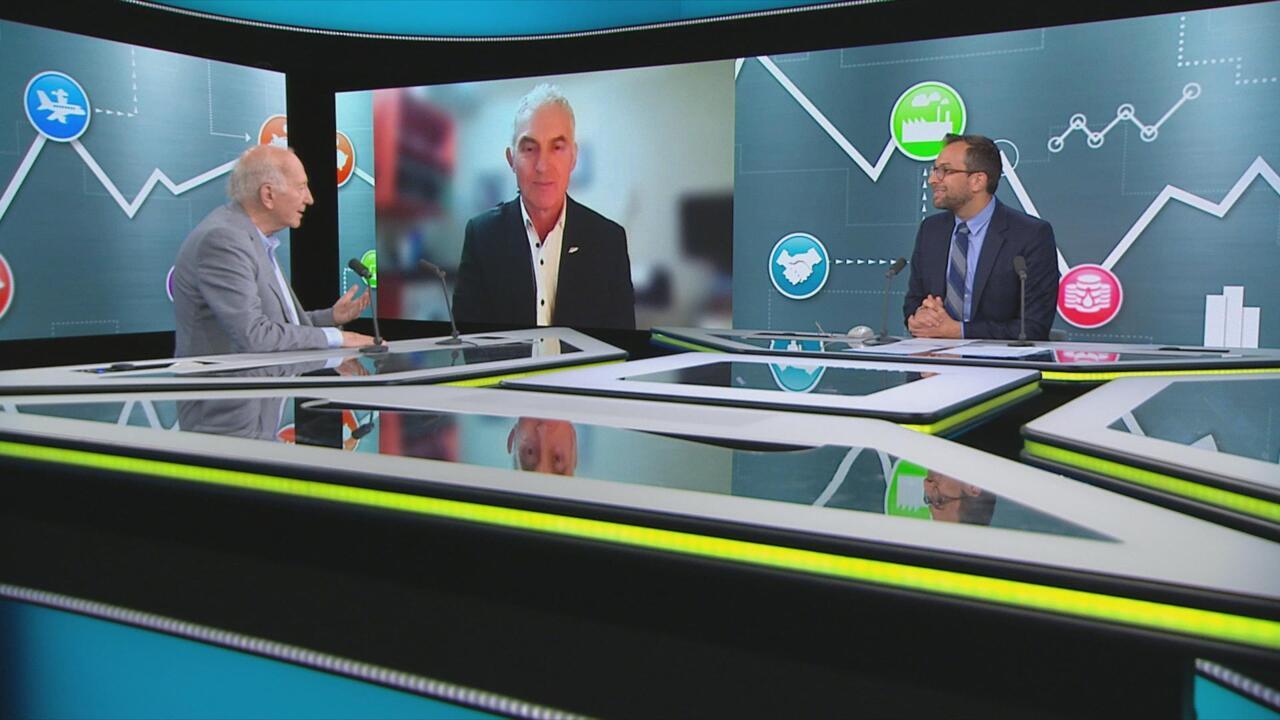
US President Donald Trump's threat to drag the movie world into his trade wars has rattled an industry that is still recovering from the Covid-19 shutdown, historic Hollywood strikes and the disruption caused by streaming platforms like Netflix. Will Los Angeles end up like Detroit, the former global capital of the auto industry, or will it bounce back from this crisis? Charles Pellegrin discusses this and more with Serge Siritzky, a French film producer as well as an expert in film finance; and Stuart Nash, a former New Zealand minister for economic development. While in office he oversaw over $650 million in film subsidies to attract huge Hollywood productions such as "Avatar" or "A Minecraft Movie".


ICYMI

'No sign of respite' in global warming for coming years, UN says


There is a 70 percent chance that average global temperatures will by 2029 exceed the 1.5 degrees Celsius warming benchmark, significantly intensifying heatwaves, extreme precipitation, droughts, and the melting of glaciers, according to a new report released by the United Nations on Wednesday.


Issued on: 28/05/2025 
By: FRANCE 24
People take shade under cloths on a hot summer day in Varanasi, India, on May 26, 2025. © Niharika Kulkarni, AFP


The United Nations warned Wednesday there is a 70 percent chance that average warming from 2025 to 2029 will exceed the 1.5 degrees Celsius international benchmark.

The planet is therefore expected to remain at historic levels of warming after the two hottest years ever recorded in 2023 and 2024, according to an annual climate report published by the World Meteorological Organization, the UN's weather and climate agency.

"We have just experienced the 10 warmest years on record," said the WMO's deputy secretary-general Ko Barrett.

"Unfortunately, this WMO report provides no sign of respite over the coming years, and this means that there will be a growing negative impact on our economies, our daily lives, our ecosystems and our planet."

The 2015 Paris climate accords aimed to limit global warming to well below 2C above pre-industrial levels – and to 1.5C if possible.


The targets are calculated relative to the 1850-1900 average, before humanity began industrially burning coal, oil, and gas, which emits carbon dioxide (CO2) – the greenhouse gas largely responsible for climate change.

The more optimistic 1.5C target is one that growing numbers of climate scientists now consider impossible to achieve, as CO2 emissions are still increasing.

Read moreWorld's richest 10% responsible for two thirds of global warming, study finds
Five-year outlook

The WMO's latest projections are compiled by Britain's Met Office national weather service, based on forecasts from multiple global centres.

The agency forecasts that the global mean near-surface temperature for each year between 2025 and 2029 will be between 1.2C and 1.9C above the pre-industrial average.

It says there is a 70 percent chance that average warming across the 2025-2029 period will exceed 1.5C.

"This is entirely consistent with our proximity to passing 1.5C on a long-term basis in the late 2020s or early 2030s," said Peter Thorne, director of the Irish Climate Analysis and Research Units group at the University of Maynooth.

"I would expect in two to three years this probability to be 100 percent" in the five-year outlook, he added.

The WMO says there is an 80 percent chance that at least one year between 2025 and 2029 will be warmer than the warmest year on record (2024).

Longer-term outlook

To smooth out natural climate variations, several methods assess long-term warming, the WMO's climate services director Christopher Hewitt told a press conference.

One approach combines observations from the past 10 years with projections for the next decade.

This predicts that the 20-year average warming for 2015-2034 will be 1.44C.

There is no consensus yet on how best to assess long-term warming.

The EU's climate monitor Copernicus reckons warming currently stands at 1.39C, and projects 1.5C could be reached in mid-2029 or sooner.

2C warming now on the radar

Although "exceptionally unlikely" at one percent, there is now an above-zero chance of at least one year in the next five exceeding 2C of warming.

"It's the first time we've ever seen such an event in our computer predictions," said the Met Office's Adam Scaife.

"It is shocking," and "that probability is going to rise".

He recalled that a decade ago, forecasts first showed the very low probability of a calendar year exceeding the 1.5C benchmark. But that came to pass in 2024.

'Dangerous' level of warming


Every fraction of a degree of additional warming can intensify heatwaves, extreme precipitation, droughts, and the melting of ice caps, sea ice, and glaciers.

This year's climate is offering no respite.

Last week, China recorded temperatures exceeding 40C (104 degrees Fahrenheit) in some areas, the United Arab Emirates nearly 52C (126F), and Pakistan was hit by deadly winds following an intense heatwave.


"We've already hit a dangerous level of warming," with recent "deadly floods in Australia, France, Algeria, India, China and Ghana, wildfires in Canada," said climatologist Friederike Otto of Imperial College London.

"Relying on oil, gas and coal in 2025 is total lunacy."

Other warnings

Arctic warming is predicted to continue to outstrip the global average over the next five years, said the WMO.

Sea ice predictions for March 2025-2029 suggest further reductions in the Barents Sea, the Bering Sea, and the Sea of Okhotsk.

Forecasts suggest South Asia will be wetter than average across the next five years.

And precipitation patterns suggest wetter than average conditions in the Sahel, northern Europe, Alaska and northern Siberia, and drier than average conditions over the Amazon.

(FRANCE 24 with AFP)

Swiss glacier collapse underscores urgency of efficient warning systems elsewhere, experts say

The small Swiss Alps village of Blatten was largely destroyed when the Birch glacier collapsed and sent a mass of rock, ice and scree hurtling down into the valley it was located. Although one person remains missing, authorities managed to avoid catastrophe by evacuating Blatten’s 300 residents pre-emptively. Experts warn that the monitoring systems in poorer glacier-rich nations, especially in Asia, are not nearly as efficient.


Issued on: 31/05/2025 - 
By: FRANCE 24
The Swiss alp village of Blatten was largely destroyed when the huge glacier collapsed. Picture taken on May 31, 2025. © Fabrice Coffrini, AFP

The collapse of the Swiss Birch glacier serves as a chilling warning of the escalating dangers faced by communities worldwide living under the shadow of fragile ice, particularly in Asia, experts say.

Footage of the May 28 collapse showed a huge cloud of ice and rubble hurtling down the mountainside, into the hamlet of Blatten.

Ali Neumann, disaster risk reduction advisor to the Swiss Development Cooperation, noted that while the role of climate change in the specific case of Blatten “still needs to be investigated”, the wider impacts were clear on the cryosphere – the part of the world covered by frozen water.

“Climate change and its impact on the cryosphere will have growing repercussions on human societies that live near glaciers, near the cryosphere, and depend on glaciers somehow and live with them,” he said.

The barrage largely destroyed Blatten, but the evacuation of its 300 residents last week averted mass casualties, although one person remains missing.

“It also showed that with the right skills and observation and management of an emergency, you can significantly reduce the magnitude of this type of disaster,” Neumann said at an international UN-backed glacier conference in Tajikistan.

Stefan Uhlenbrook, Director for Hydrology, Water and Cryosphere at the World Meteorological Organisation (WMO), said it showed the need for vulnerable regions like the Himalayas and other parts of Asia to prepare.

“From monitoring, to data sharing, to numerical simulation models, to hazard assessment and to communicating that, the whole chain needs to be strengthened,” Uhlenbrook said.

“But in many Asian countries, this is weak, the data is not sufficiently connected.”
Need better warning systems

Swiss geologists use various methods, including sensors and satellite images, to monitor their glaciers.

Asia was the world’s most disaster-hit region from climate and weather hazards in 2023, the United Nations said last year, with floods and storms the chief cause of casualties and economic losses.

But many Asian nations, particularly in the Himalayas, lack the resources to monitor their vast glaciers to the same degree as the Swiss.

According to a 2024 UN Office for Disaster Risk Reduction report, two-thirds of countries in the Asia and Pacific region have early warning systems.

But the least developed countries, many of whom are in the frontlines of climate change, have the worst coverage.

“Monitoring is not absent, but it is not enough,” said geologist Sudan Bikash Maharjan of the Nepal-based International Centre for Integrated Mountain Development (ICIMOD).

“Our terrains and climatic conditions are challenging, but also we lack that level of resources for intensive data generation.”

That gap is reflected in the number of disaster-related fatalities for each event.

While the average number of fatalities per disaster was 189 globally, in Asia and the Pacific it was much higher at 338, according to the Belgium-based Centre for Research on the Epidemiology of Disasters’ Emergency Events Database.
Heightened risk of landslides

Himalayan glaciers, providing critical water to nearly two billion people, are melting faster than ever before due to climate change, exposing communities to unpredictable and costly disasters, scientists warn.

Hundreds of lakes formed from glacial meltwater have appeared in recent decades. They can be deadly when they burst and rush down the valley.

The softening of permafrost increases the chances of landslides.

Declan Magee, from the Asian Development Bank’s Climate Change and Sustainable Development Department, said that monitoring and early warnings alone are not enough.

“We have to think ... about where we build, where people build infrastructure and homes, and how we can decrease their vulnerability if it is exposed,” he said.

Nepali climate activist and filmmaker Tashi Lhazom described how the village of Til, near to her home, was devastated by a landslide earlier in May.

The 21 families escaped – but only just.

“In Switzerland they were evacuated days before, here we did not even get seconds,” said Lhazom.

(FRANCE 24 with AFP)
Righting history's wrong: Will France posthumously promote Alfred Dreyfus 90 years after his death?


Copyright AP Photo - Public Domain


By David Mouriquand
Published on 29/05/2025 -

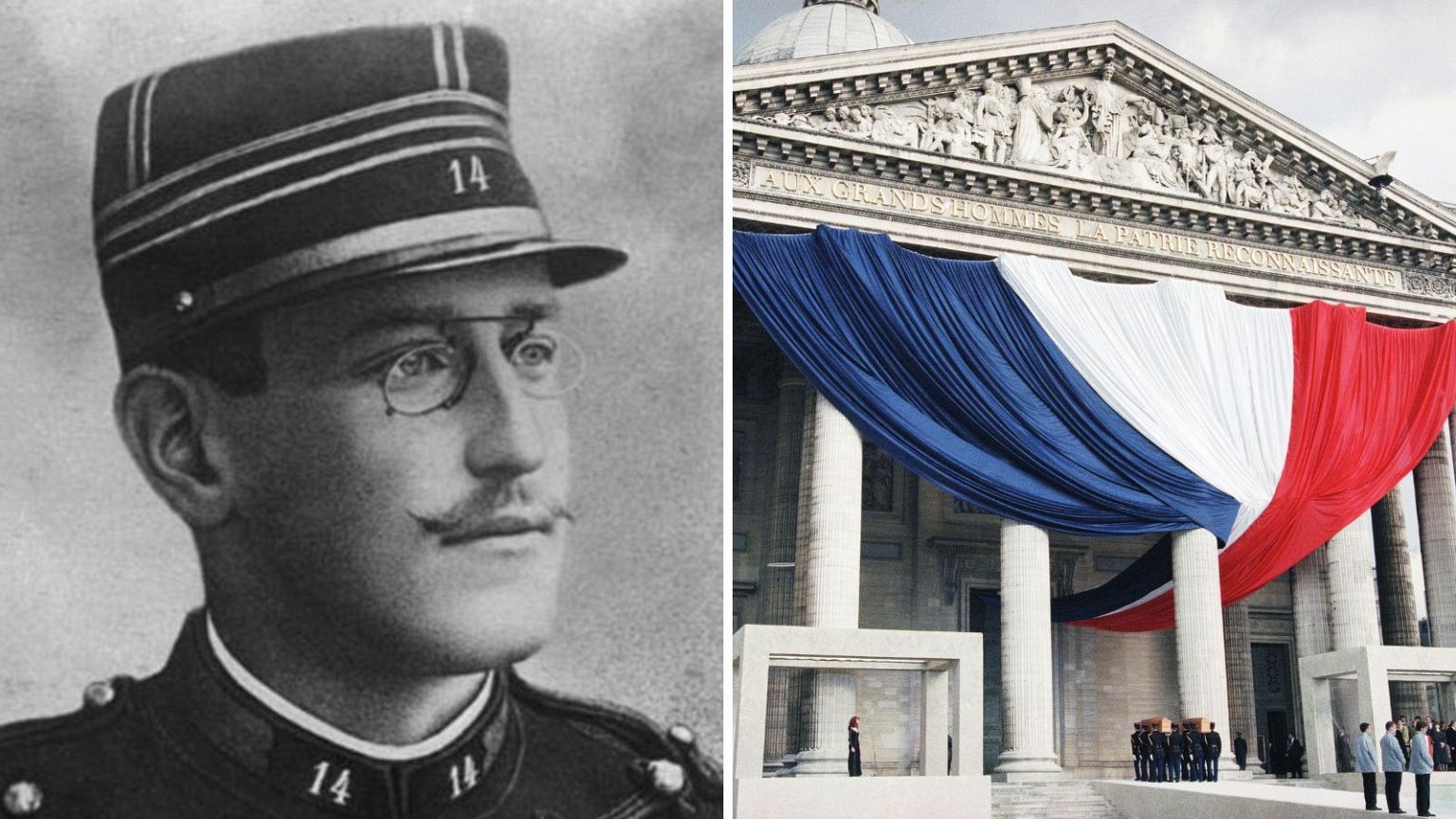
France’s National Assembly Defense Committee has unanimously approved a bill to posthumously promote Captain Alfred Dreyfus - a symbolic step that may lead to Dreyfus' inclusion in national necropolis the Panthéon.


France’s National Assembly Defense Committee has unanimously approved a bill to posthumously promote Captain Alfred Dreyfus to the rank of brigadier general, marking a historic correction of the antisemitic injustice he endured.

The bill comes 90 years after Dreyfus’ death and has been described as “an important step in the history of Alfred Dreyfus and in the history of the Republic,” according to Charles Sitzenstuhl, the Ensemble pour la république (EPR) MP for Bas-Rhin and the rapporteur for the bill.

“The anti-Semitism that struck Alfred Dreyfus is not a thing of the past. Today's acts of hatred are a reminder that this fight is still relevant today,” pointed out former Prime Minister Gabriel Attal, who tabled the bill on 7 May.

The text also states that “five years of deportation and humiliation irreparably hampered (Dreyfus’) military career” and it is “indisputable that without this injustice, Alfred Dreyfus would naturally have risen to the highest ranks.”

In a statement, the French Embassy in Israel said: “The French nation is committed to justice and does not forget. It is posthumously promoting Alfred Dreyfus to brigadier general — to correct a wrong, to honor a soldier, and to affirm that antisemitism, past or present, has no place in the Republic.”
The degradation of Alfred DreyfusGallica

For those in need of a refresher on the Dreyfus Affair, French intelligence intercepted a memo from a French officer to a German embassy official in Paris in 1894. Suspicion fell on Dreyfus, who was tried by a military tribunal and convicted of treason. In January 1895, was stripped of his rank in a public degradation ceremony and sentenced to life imprisonment on Devil’s Island in French Guiana.

The trial was fueled by widespread antisemitism within the military and French society. A public campaign to clear Dreyfus’ name soon emerged, led by journalist Bernard Lazare.

In 1896, new intelligence chief Lt. Col. Georges Picquart discovered that the real traitor was another officer, Maj. Ferdinand Walsin Esterhazy.

Respected French novelist Émile Zola published his famous open letter, “J’accuse” (“I Accuse”), in January 1898, denouncing the military’s role in the miscarriage of justice.

In 1906, France’s highest court overturned the conviction, fully exonerating Dreyfus. He was reinstated in the army as a major and went on to serve during World War I.

Dreyfus died on 12 July 1935 at the age of 76, and the Dreyfus Affair became synonymous with the wrongful conviction of the innocent. It also remains one of France’s - and history’s - most enduring examples of institutional antisemitism.


The bill will be further debated on 2 June and if it is adopted, “it does not close the door on the strong symbol that would be the pantheonisation of Dreyfus,” according to historian Philippe Oriol, a specialist in the Dreyfus Affair – who refers to the Panthéon, the national necropolis reserved for the worship of illustrious men.

“The idea is not to include a moment in history” in the Pantheon, but “to include a man”, added Oriol.

“I can only regret that this promotion did not take place during his lifetime,” said Charles Dreyfus, grandson of Alfred Dreyfus. He told France Inter: “Most of the tributes paid to him were posthumous,” and how this gesture of reparation initiated by the parliamentarians remains a powerful symbol.

“It is important to show what antisemitism can do.”
POLAND ELECTION

LGBT+ rights in Poland: 'We are patient, but our patience has its limits'


Warsaw – As Poland prepares to go to the polls in the second round of the presidential election on Sunday, filmmaker and activist Bartosz Staszewski, a leading figure in the country's LGBT+ movement, looks back on difficult years under the previous right-wing government, but says that change is under way in Polish society.


Issued on: 31/05/2025 -  RFI

The Warsaw Pride march on 15 June, 2024. 
AFP - SERGEI GAPON

RFI: Since you started campaigning for LGBT+ rights, how have you seen things evolve in Poland?

Bartosz Staszewski: I think one of the most visible signs of change is that liberal candidates no longer hesitate to make LGBT+ rights a topic of discussion during the presidential election period. Most of them support the introduction of a civil union, and even the rights of trans people. This is a real change.

During the last presidential elections, these subjects were taboo, nobody mentioned them. But during the eight years that the right-wing Law and Justice (PiS) party was in power, the more the government tried to oppress us, the more we fought back – with, for example, Pride marches, which were never as numerous in Poland as they were at that time. In a way, this spurred us on and pushed the community to act, to get organised and show solidarity.


What were those eight years (2015-2023) under the PiS like for the LGBT+ community?

It was a difficult period. All public funding for progressive NGOs was cut. From 2019 onwards, there started to be visible propaganda against us and LGBT+ people became scapegoats. This propaganda was particularly dehumanising, with commentators on prime time TV at 7pm publicly saying that we were Poland's enemies.

This was also the period when the so-called "LGBT-free zones" came into being. Nearly 48 municipalities signed an "anti-LGBT ideology" resolution. After a long battle, the courts gradually declared these zones illegal, and the last of them was abolished last week.
LGBT+ activist Bartosz Staszewski in Warsaw, 16 May. 
© Pierre Fesnien/RFI

How has becoming a public figure in the fight for LGBT+ rights in Poland affected your own life?

The last eight years have been very hard for me, I've been constantly fighting for the LGBT+ cause. I was prepared for something bad to happen to me. I regularly received death threats, some of them quite serious, and when I reported them to the police they did nothing.

A year and a half ago, when Donald Tusk's Civic Coalition won the election, I said to myself, what do we do now? I wasn't really mentally prepared for that, but it was still a relief.


The election of Tusk in 2023 raised a lot of hopes, including for a law to establish civil unions in Poland, but since then nothing concrete has really changed. Is the LGBT+ community frustrated by this?

We are patient, but our patience has its limits. At the moment, the government cannot pass progressive legislation because of the right of veto held by President Andrzej Duda, who is part of the PiS party.

But if the Civic Coalition candidate, Rafal Trzaskowski, is elected [as the new president], passing laws that the PiS rejects shouldn't be a problem. It's time to turn the page on PiS.

Today, would you say that a gay couple can walk hand in hand down the street in complete safety in Poland?

In the big cities, it's a lot safer than it was 10 years ago – progress has been made. Personally, I'm part of that "lost generation" who will probably never really feel safe after experiencing being attacked by hooligans in the street. But nowadays, from time to time, I see young people who are not afraid and who walk hand in hand in big cities like Warsaw, Krakow or Gdansk.

I think the Pride marches have been very useful, because they have helped to normalise the existence of gay people within the population – and that's also thanks to the activists who are doing a fantastic job.


So do you feel that attitudes are changing in Poland?

Yes, I do. And I think that's the way forward. That's also why politicians are increasingly open to supporting this cause. They can see that society is changing. It's still difficult to be gay in Poland, because we have very few rights: there's no civil union, no marriage equality, no law to protect us from hate speech – and it's even worse for trans people. But on the other hand, polls also show that Poles are increasingly tolerant.

This article was adapted from the original version in French.
Rescue operations underway after Nigeria flooding kills at least 150

Flash flooding earlier this week in central Nigeria killed more than 150 people, a local disaster response spokesman told AFP on Saturday, while displacing 3,000, levelling more than 250 homes and washing away two bridges.


Issued on: 31/05/2025 - RFI/AFP

Rubble from collapsed houses is seen in Anguwar Hausawa Gangari community, due to the flooding that killed 151 people and forced several thousand from their homes in Mokwa, Niger State Nigeria, on 31 May 2025.
 REUTERS - Stringer

The sharp jump from the previous death toll of 115 came as bodies were recovered nearly 10 kilometres away from the town of Mokwa, the epicentre of the floods, Ibrahim Audu Husseini, a spokesman for the Niger State Emergency Management Agency, told AFP.

As Husseini warned that the toll could still rise, with bodies being swept away down the powerful Niger River, President Bola Tinubu said that search-and-rescue operations were underway, with the disaster response being aided by security forces.

Tinubu, in an overnight post on social media, added that "relief materials and temporary shelter assistance are being deployed without delay" in Mokwa, which was hit by torrential rains late on Wednesday through to early on Thursday.

Buildings collapsed and roads were inundated in the town, which is located more than 350 kilometres by road from the capital Abuja, an AFP journalist in Mokwa observed on Friday.

Emergency services and residents searched through the rubble as floodwaters flowed alongside.

"Some bodies were recovered from the debris of collapsed homes," Husseini said, adding that his teams would need excavators to retrieve corpses.

He said many were still missing, citing a family of 12 where only four members had been accounted for as of Friday.

Mohammed Tanko, 29, a civil servant, pointed to a house he grew up in, telling reporters: "We lost at least 15 from this house. The property (is) gone. We lost everything."

The National Emergency Management Agency (NEMA) said that the Nigerian Red Cross, local volunteers, the military and police were all helping in the response.

According to the figures shared by Husseini, 151 people were killed, 3,018 were displaced, 265 houses were "completely destroyed" and two bridges were washed away in the busy, rural market town.

Changing climate

Nigeria's rainy season, which usually lasts six months, is just getting started for the year.

Flooding, usually caused by heavy rains and poor infrastructure, wreaks havoc every year, killing hundreds of people across the west African country.

Scientists have also warned that climate change is fuelling more extreme weather patterns.


People are increasingly affected by floods in Nigeria, like here in Maiduguri, on 12 September 2024. 
AFP - AUDU MARTE

In Nigeria, the floods are exacerbated by inadequate drainage, the construction of homes on waterways and the dumping of waste in drains and water channels.

"This tragic incident serves as a timely reminder of the dangers associated with building on waterways and the critical importance of keeping drainage channels and river paths clear," NEMA said in a statement.

According to the Daily Trust newspaper, thousands of people have been displaced and more than 50 children in an Islamic school were reported missing.


Warning sounded

The Nigerian Meteorological Agency had warned of possible flash floods in 15 of Nigeria's 36 states, including Niger state, between Wednesday and Friday.

In 2024, more than 1,200 people were killed and 1.2 million displaced in at least 31 out of Nigeria's 36 states, making it one of the country's worst flood seasons in decades, according to NEMA.

Displaced children played in the flood waters on Friday, heightening the possibility of exposure to water-borne diseases, with at least two bodies lying nearby covered in banana leaves and printed ankara cloth.

Describing how she escaped the raging waters, Sabuwar Bala, a 50-year-old yam vendor, told reporters: "I was only wearing my underwear, someone loaned me all I'm wearing now. I couldn't even save my flip-flops."

"I can't locate where my home stood because of the destruction," she said.

(AFP)
Tanzanian politician's lawyers ask UN to declare his detention arbitrary

Lawyers for Tanzania's jailed opposition leader Tundu Lissu filed a complaint on Friday to the United Nations Working Group on Arbitrary Detention in a bid to ramp up international pressure for his release.


Issued on: 31/05/2025 - RFI


Tanzanian opposition leader and former presidential candidate of CHADEMA party Tundu Lissu gestures to his supporters as he arrives at the Kisutu Resident Magistrate Court in Dar es Salaam, Tanzania, on 19 May 2025.
 REUTERS - Emmanuel Herman

Lissu, chairman of Tanzania's main opposition party and runner-up in the 2020 presidential election, was arrested last month and charged with treason, a capital offence, over comments he is alleged to have made calling on supporters to prevent national elections in October from going ahead.

Tanzania's government spokesperson did not immediately respond to a request for comment.

While President Samia Suluhu Hassan has won plaudits for easing political repression, she has faced questions about unexplained abductions of government critics in recent months.

Hassan, who will stand for re-election in October, has said her government respects human rights and ordered an investigation into the reported abductions.

Lissu's international lawyer, Robert Amsterdam, said the confidential complaint to the UN working group, which issues opinions but has no enforcement power, was part of a wider pressure campaign.

The European Parliament this month adopted a resolution denouncing Lissu's arrest as politically motivated, and Amsterdam said he would petition the US State Department to impose sanctions.

"Right down to prosecutors, judges, police - all the people that are involved in this false show trial had better be aware that they should protect their US assets," Amsterdam told Reuters.

In response to the European Parliament resolution, Tanzania's foreign ministry said outside criticisms about the case were based on "incomplete or partisan information".

The US State Department did not immediately respond to a request for comment.


Lissu, who was shot 16 times in a 2017 attack for which no one has ever been charged, will appear in court on Monday.

Before he appeared in court last week, authorities detained a Kenyan and a Ugandan rights activist who had come to attend the hearing.

They were abandoned several days later near the borders of their home countries, and the Kenyan activist, Boniface Mwangi, said both were badly tortured while in custody.

Tanzanian officials have not responded to requests for comment about the allegation. Hassan has warned outsiders against "invading and interfering in our affairs".

(Reuters)
The women carrying the burden of Kenya’s rural healthcare on their backs

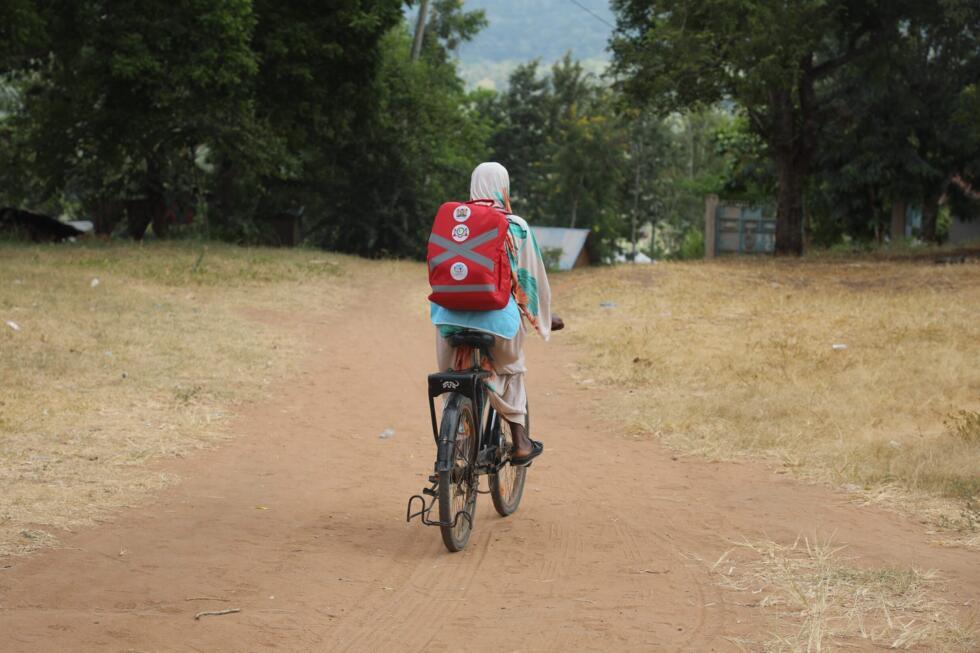
East Kenya – In the dim light of early morning in eastern Kenya, Lucia ties a shawl around her head, hauls a red backpack on to her shoulders and sets out on foot. The bag contains only a few essential medicines, but for the families in this remote village, it may as well contain miracles.


Community Health Workers are the backbone of rural healthcare in Kenya. 
© World Bicycle Relief


By: Anne Macharia in Nairobi

Issued on: 31/05/2025 -  RFI


For more than 10 years, Lucia has been the closest thing to a doctor many here have seen.

She is a Community Health Worker, or CHW – part of a vast but often overlooked network of women who quietly sustain Kenya’s rural healthcare system.

Every day before sunrise, she walks up to 20 kilometres on dusty paths and rocky hills to visit people in their homes – checking on pregnant mothers, tending to sick children and referring emergency cases to distant health centres.


In places where clinics are scarce and roads barely exist, CHWs like Lucia are a lifeline. People know her, and they trust her – some owe their lives to her.

“I’ve been doing this for a long time,” Lucia says. “I’m not paid much, but I do it because these are my people. They have no one else to rely on.”

Community Health Workers visit pregnant women, mothers and the elderly, giving medical advice and a listening ear. © World Bicycle Relief


A life-changing gift


Lucia used to spend hours walking between homes, which meant fewer visits and longer days. Then she received a gift that changed everything: a bicycle.

It was given to her by World Bicycle Relief, a global charity working to empower remote communities through mobility. It has distributed more than 24,000 bicycles across Kenya to support health workers, schoolchildren and displaced individuals.

With her new bike, the time Lucia once spent trekking between appointments could now be spent reaching more patients, and getting to them faster.

“This bike is a lifesaver,” she says. “Before, I could visit maybe five homes a day. Now I can reach 15, sometimes 20. Every minute counts.”

“A good quality bicycle means a health worker can serve more patients, and it requires almost no maintenance," Maureen Kolenyo, regional director of World Bicycle Relief in East Africa, told RFI.


Government support in Kenya is often lacking, leaving organisations such as World Bicycle Relief to step in and fill the gaps.

Esther Mwangi, a county health official, knows how crucial such interventions are. "People often underestimate how transformative a bicycle can be, especially in developing regions where the infrastructure supports it,” she said.

“We’re working closely with Kenya’s Ministry of Health to identify high-need areas. The pressing question now is: who will invest, and help scale up the solution?" Kolenyo added.
'I carry my people'

Lucia’s relationship with her community is intimate, born of countless hours spent listening, checking and comforting.

“We can always count on her. She saved my baby,” Nthenya, a mother of four, said

An elderly man who receives weekly check-ups calls her “more reliable than the dispensary", while one young woman in her final trimester of pregnancy said she sees Lucia as “a second mother".

          US grant cuts could affect two million worldwide, disrupt HIV aid in Kenya

At the end of another long day, she mounts her bicycle and begins the steep, uneven ride home. The light is fading and the road is rough, but she is still smiling.

“Before, my legs would be shaking by now,” she says. “But this bicycle – it’s like my partner. It carries me, and I carry my people."

CHWs like Lucia travel to remote villages where no other healthcare is available. © World Bicycle Relief


Here's why fashion designer Brunello Cucinelli earned an honorary doctorate in architecture

Copyright Brunello Cucinelli

By Olivia Pinnock
Published on 01/06/2025 - 


Brunello Cucinelli is known to many as the king of cashmere and a fashion philosopher. Now the luxury fashion designer can add Doctor of Architecture to his titles as he's recently received an honorary diploma for restoring his Umbrian village.

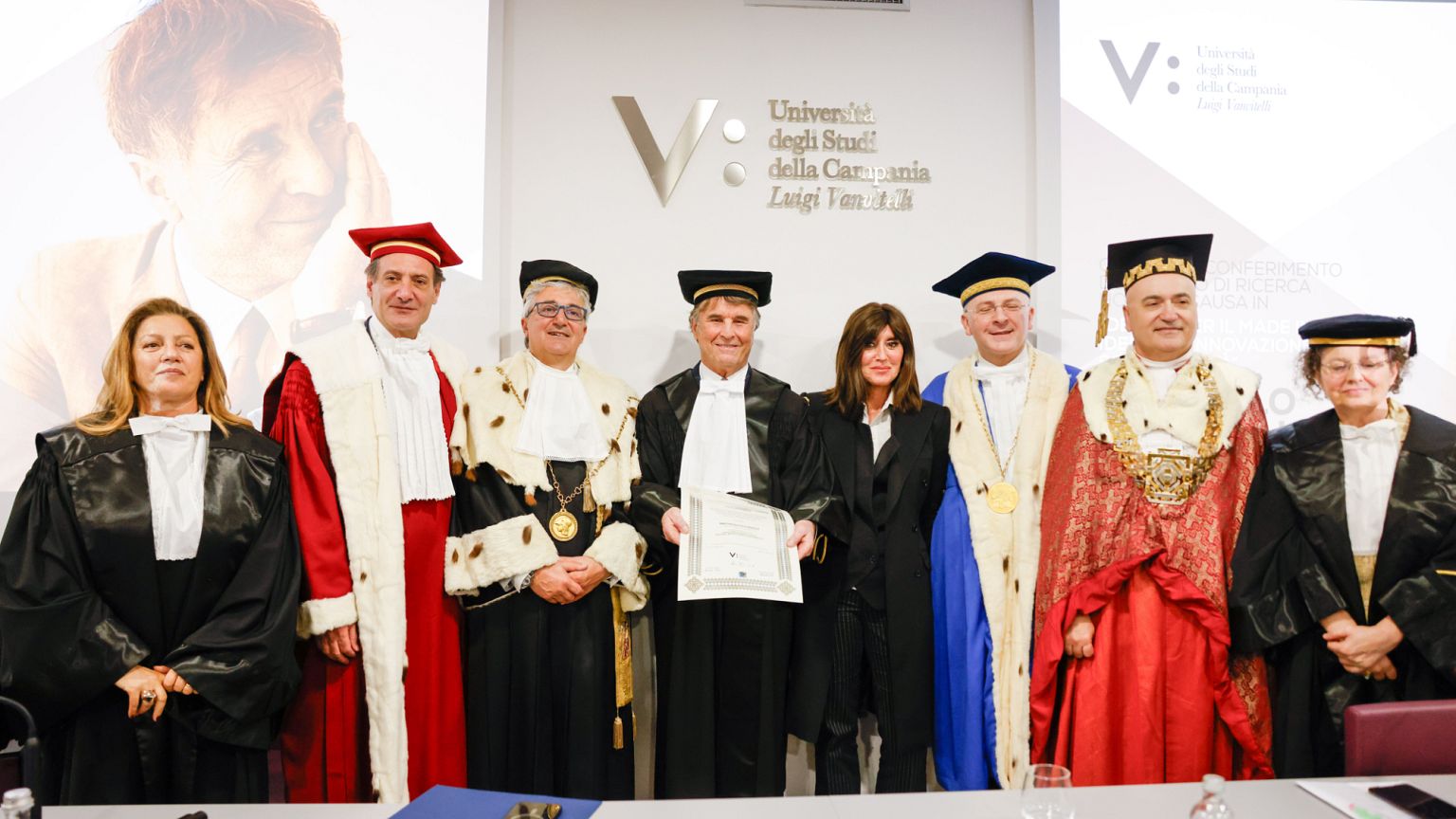
“When we build, let us think that we build forever,” Italian fashion designer Brunello Cucinelli quoted English polymath John Ruskin at an address to celebrate being the first recipient of an honorary doctorate in “Design for Made in Italy: Identity, Innovation, and Sustainability”.

The same quote is inscribed on a plaque in the centre of Solomeo, the hamlet which Cucinelli has made the home of his family, business and spiritual life since 1985. Once a crumbling site at the top of a hill among the rolling Umbrian countryside, it has been lovingly restored over the years thanks to funds from the Cucinelli enterprise.

It is for this that he's been honoured at the University of Campania by a group of universities and specialists in the field of architecture, as well as the extension of this work to the surrounding Umbrian region. It is the first time the designer has received an award for architecture.
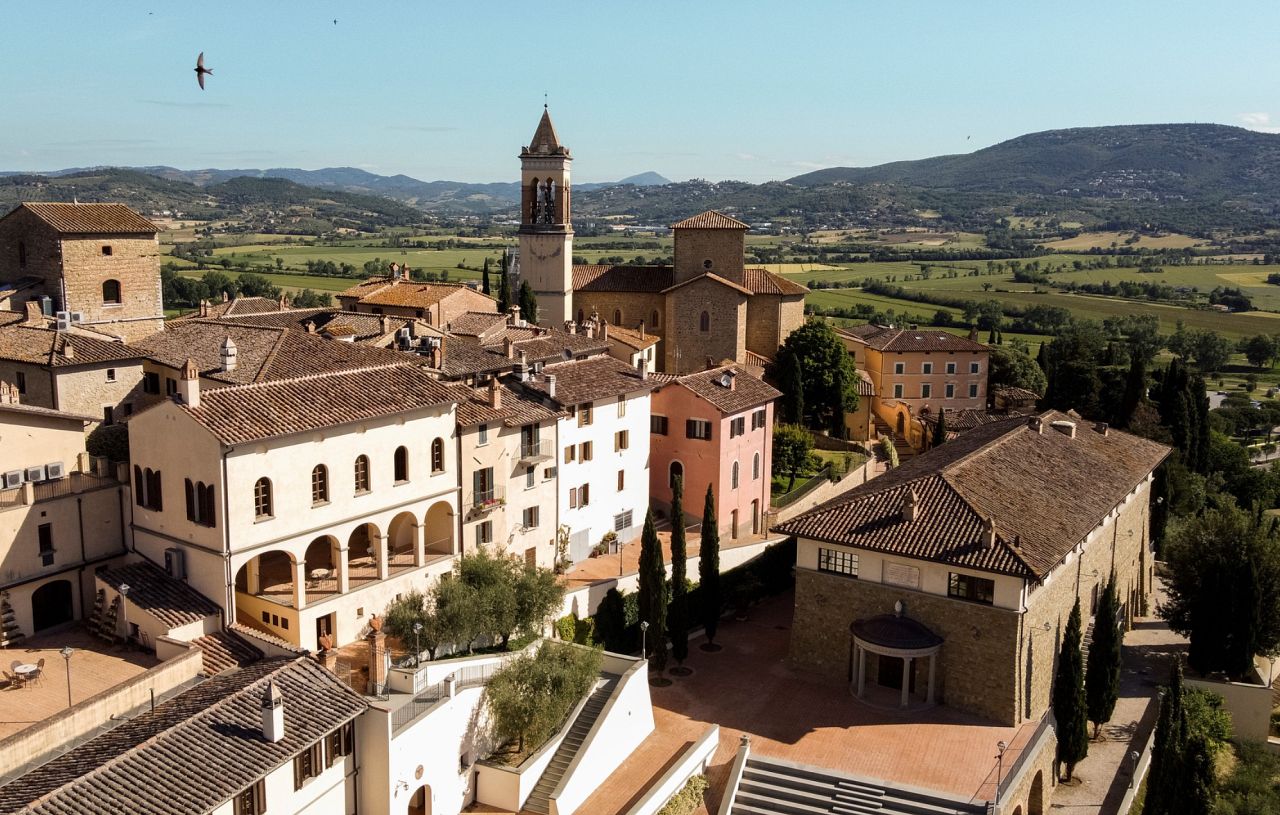
Solomeo, a medieval village nestled in the Umbrian hills, is being restored through the funds from the Cucinelli enterprise 
Brunello Cucinello

In 2010 the designer, famed for his luxurious cashmere knitwear, and his wife, established Fondazione Brunello e Federica Cucinelli which has had a significant and lasting impact on the Umbrian region.

The Italian region is characterised by medieval towns, monasteries and lush green fields and hills which make it a popular holiday and wedding destination, but the countless historic sites present a challenge to maintain. “I firmly believe in the duty to preserve this legacy,” says Cucinelli. “In losing our memories, we would lose ourselves. Moreover, safeguarding history means giving substance to the future.”
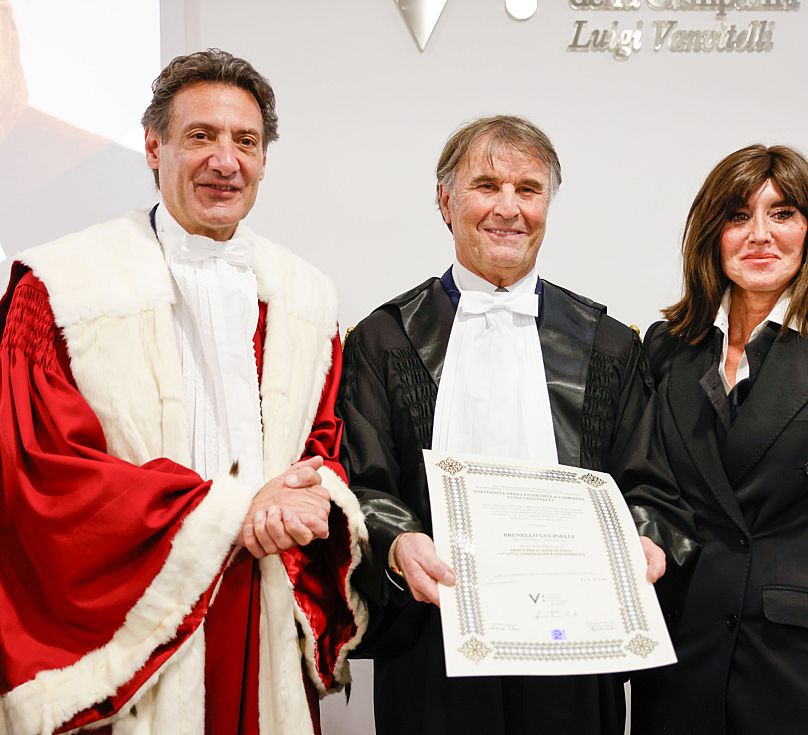
Brunello Cucinelli receives his architecture award, honoured for restoring his Umbrian hometown and its surrounding heritage
Brunello Cucinelli

Walking around Perugia, the region’s capital, you won’t find the Cucinelli name celebrated on a plaque or in the name of a building, but the family’s influence is everywhere. It’s in the pink tones of the Roman inscription on the city’s Etruscan arch landmark, which hadn’t been visible to present-day visitors until the Cucinelli Foundation restored it in 2014. It’s in the beautifully refurbished interiors of the Morlacchi theatre, which has remained open to residents thanks to funding given in 2017 and the fresh façade of the cathedral they supported in 2022.
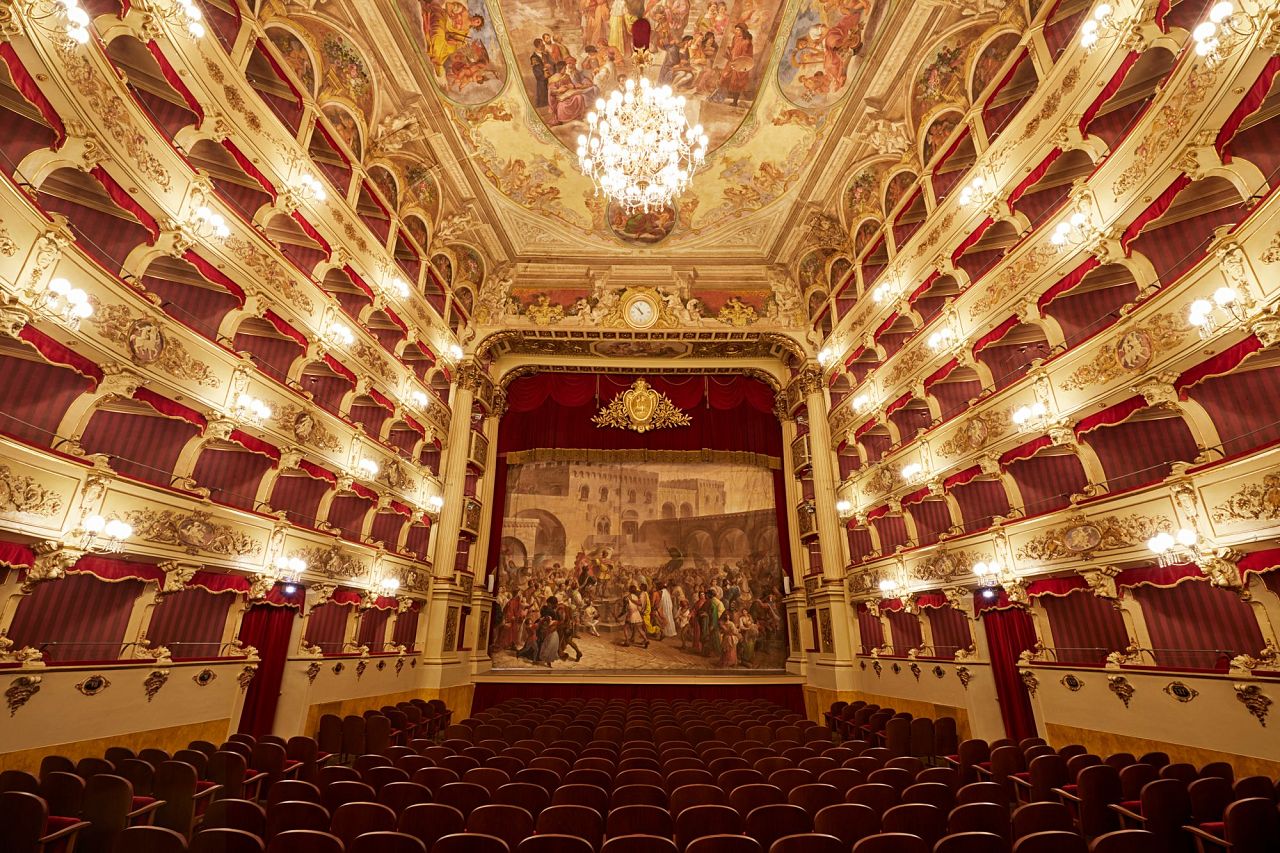
The interiors of the Morlacchi theatre, located in the center of Perugia, refurbished
Brunello Cucinelli

In 2018, Brunello Cucinelli sold a 6% share in his eponymous company to add a further €100 million to the foundation. The foundation’s current ongoing projects include a library in Solomeo and the rebuilding of the medieval village of Castelluccio di Norcia which was destroyed in an earthquake in 2016.

Many of Italy’s fashion houses have contributed to the restoration of the country’s historic landmarks. Fendi donated €2 million to the restoration of the Trevi Fountain in 2013, Salvatore Ferragamo renovated a wing of the Uffizi Gallery in 2015 and Bulgari sponsored work on the Spanish Steps in 2016.

While these projects are necessary and worthwhile, there’s something particularly special about Cucinelli’s ongoing work on a local level in the region he clearly loves so deeply. The projects also go beyond preserving history, with many having tangible benefits for the wider community too. Culture, education and spirituality are at the heart of many of them. “I have learned that architecture is made for mankind,” he explains.
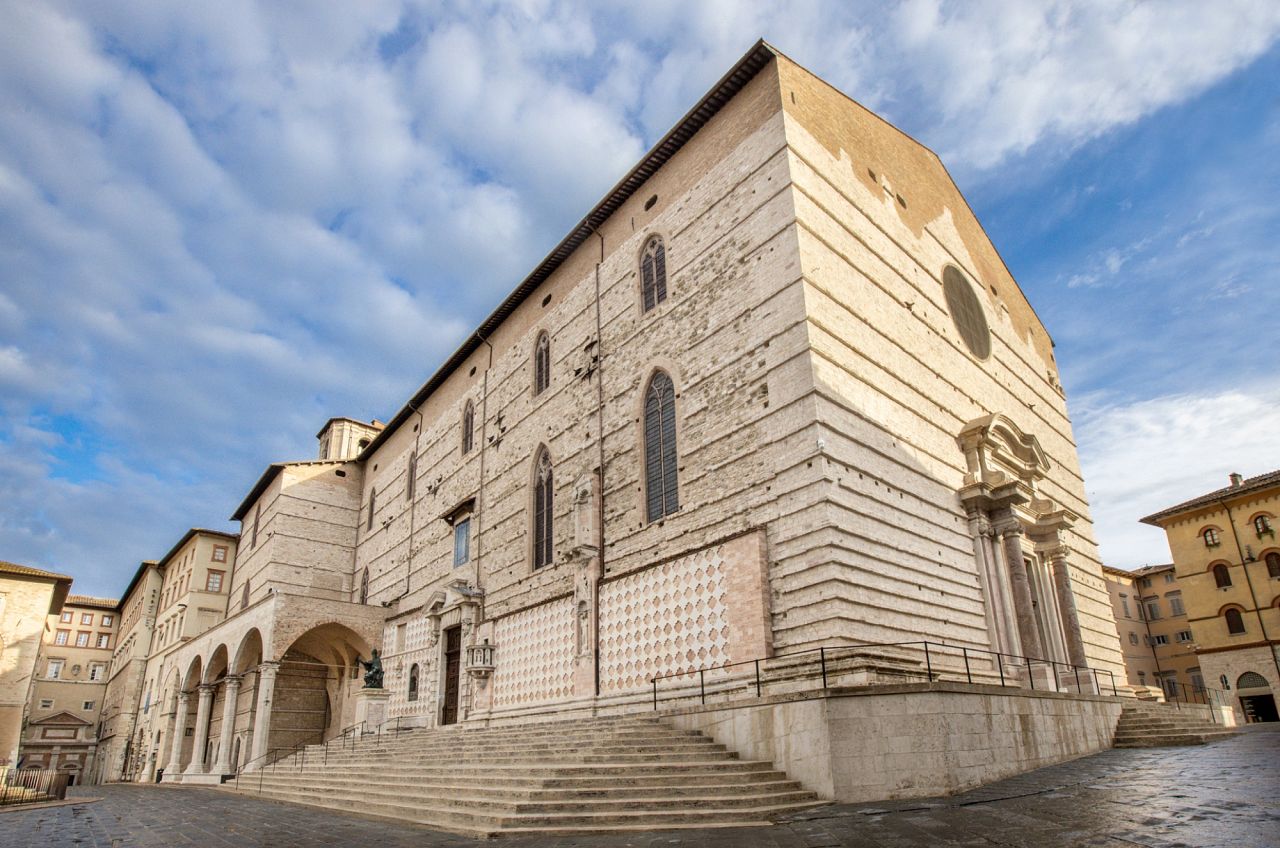
The cathedral in Perugia, given a fresh façade in 2022 
Brunello Cucinelli

Brunello Cucinelli was born in the rural Umbrian village of Castel Rigone, around 20km from Solomeo. He met his wife, Federica, in her hometown of Solomeo when they were teenagers and the couple set up home in the hamlet which today is home to around 700 other residents. It’s also now home to their two daughters, Camilla and Carolina, along with their husbands, all of whom work in the company, and their children.

Down in the valley next to the hamlet is the Brunello Cucinelli factory and offices which provide work to around 700 employees. The space is bright and clean, with large windows that look out onto the manicured lawns and surrounding countryside, a luxury many fashion workers don’t get in city warehouses. Lunch breaks are an hour and a half, no one eats at their desk, and everyone leaves on time at the end of the day. “That time is for your soul,” says the entrepreneur. Even among his own family, they don’t talk business at the dinner table.
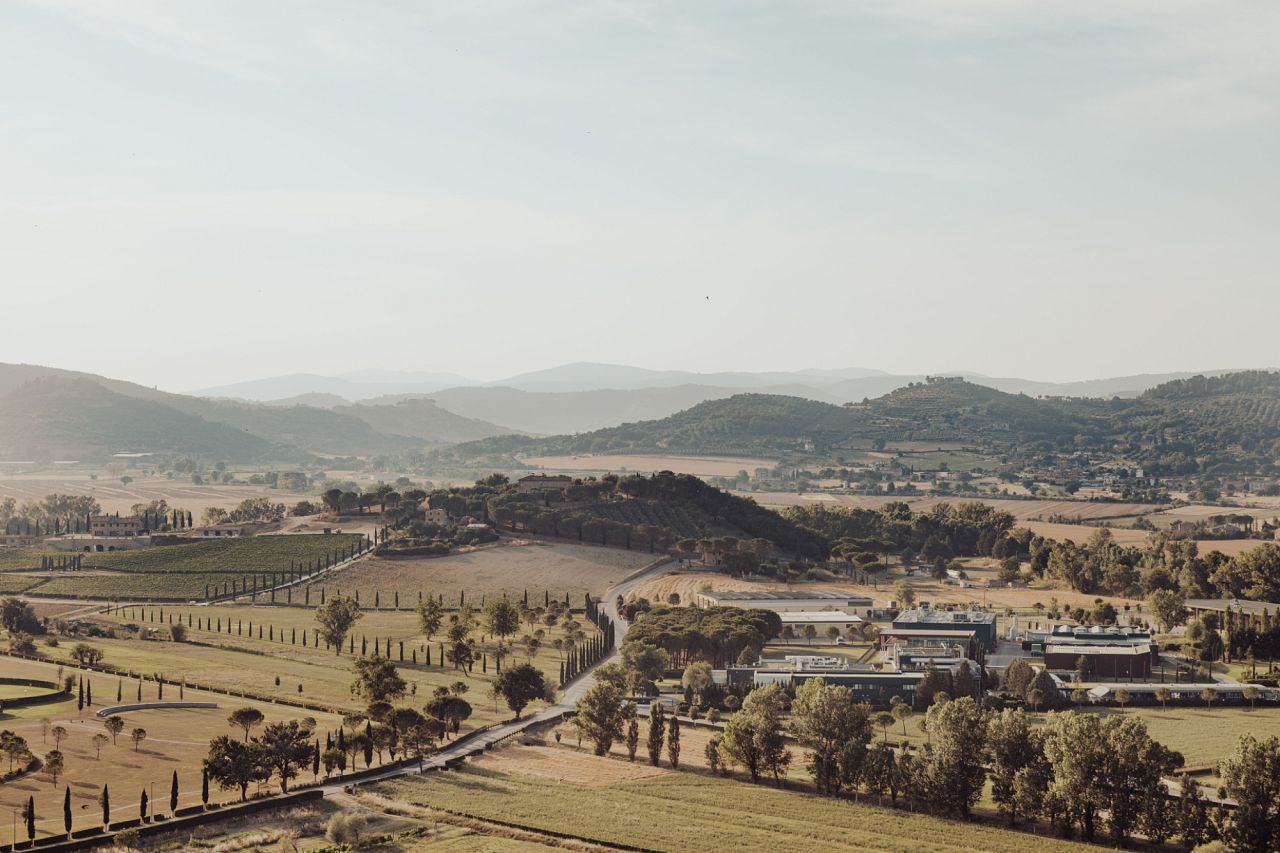
The Solomeo valley in the Province of Perugia
Bruno Cucinello

Cucinelli has a reputation as “fashion’s philosopher”, and his speech at the University of Campania Luigi Vanvitelli was littered with the thoughts and words of great thinkers: Kant, St Francis, St Benedict, Xenophanes, Emperor Hadrian and many more.

He’s driven by his own philosophy of “humanistic capitalism”. Unlike many capitalists though, he thinks far into the future. The old workshops of the company in Solomeo are kept in a way that they could be returned into residential apartments should the company no longer need them.

The spaces are currently being used, however, to train future generations of artisans. “I’m not concerned about who will buy luxury in the future, I’m concerned about who will make it,” Cucinelli says. The School of Contemporary High Craftsmanship and Arts opened in 2013 offers programmes which directly support the company’s outputs, such as pattern cutting, tailoring and mending, but also horticulture, gardening and masonry, skills which he believes need preserving for the wider world.
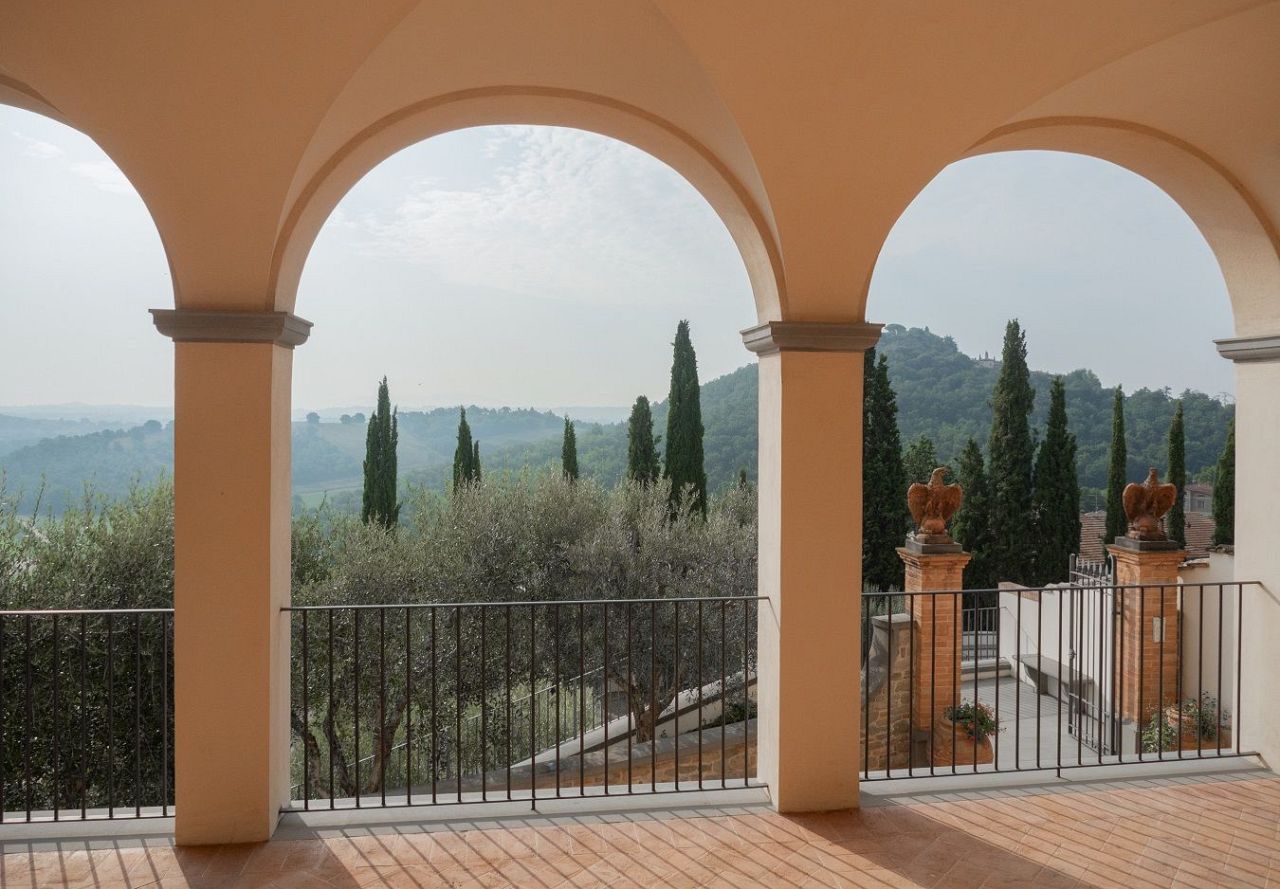
View from Solomeo: restored archways overlook the Umbrian hills
Brunello Cucinelli

Since Brunello Cucinelli went public in 2012, its market capitalisation has grown from €530 million to €6.5 billion, a dream come true for any entrepreneur. However, it’s clear from what he’s done with this fortune over the past 15 years that his dreams go bigger than business success, bigger than the company itself and bigger than his own lifetime.

As he collects his honorary doctorate in architecture he muses about his own company, but also calls on the room to consider the impact of their own actions, saying: “The future is not wholly ours, nor is it wholly not ours.”
Sex, sleaze and subversion: Inside London's new grindhouse cinema


Copyright Dominic Hicks

By Amber Louise Bryce
Published on 31/05/2025 


As mainstream cinemas fight for survival, a micro grindhouse in London is offering hope through freaky programming and analogue formats.

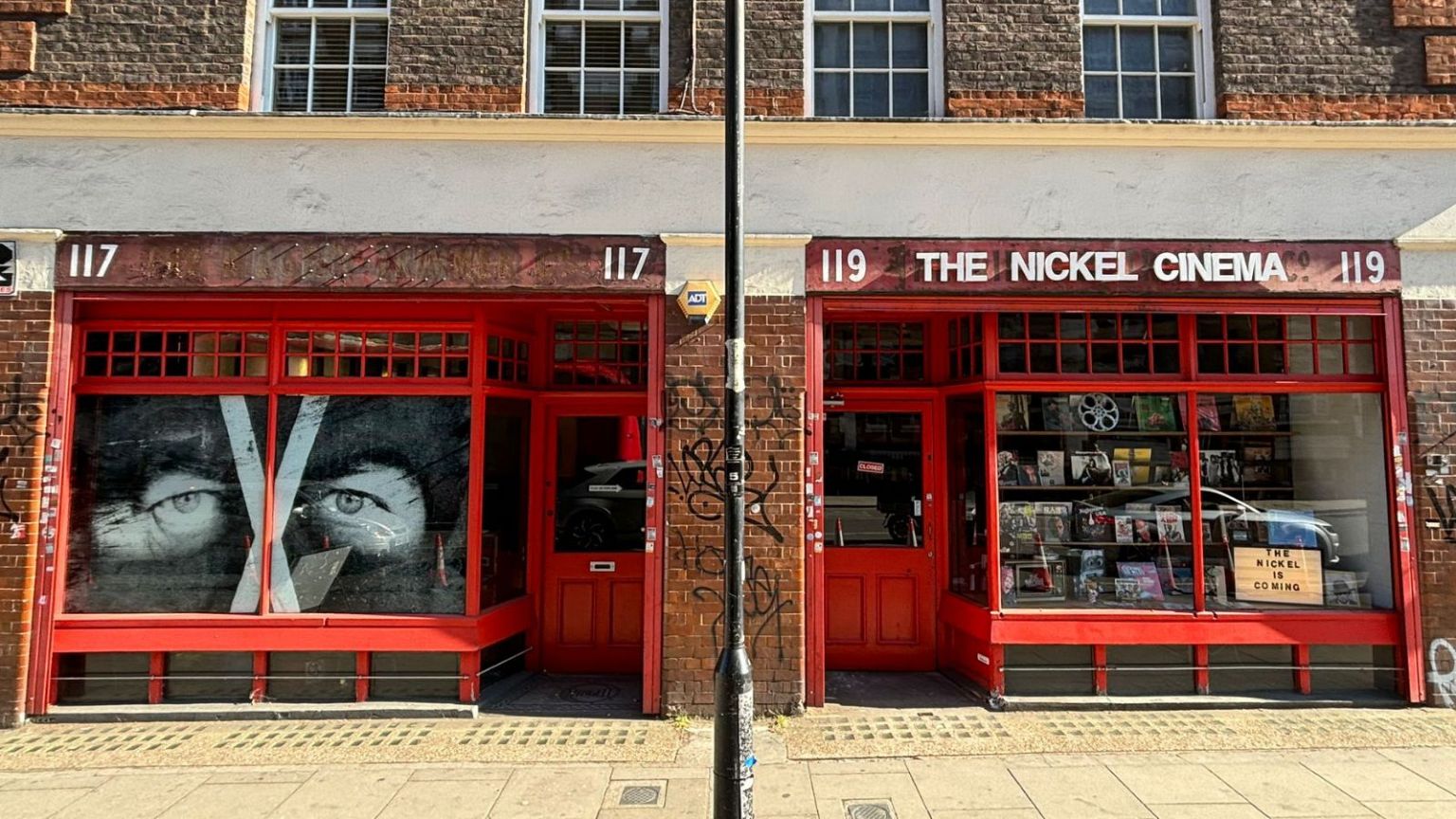
On an unassuming street in central London, a red-painted building peeks at passersby — its facade plastered with a close-up of The Man with the X-Ray Eyes. Inside, I’m watching Ruggero Deodato’s The Washing Machine, an Italian murder mystery involving psychosexual mind games, fridge fornication, and bleeding appliances.

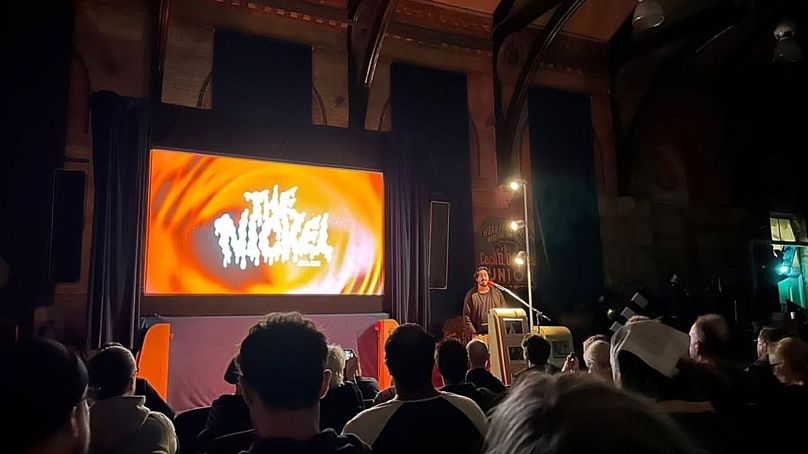
It’s the kind of filmic fever dream only The Nickel would dare to screen: a new micro cinema in London founded by filmmaker and programmer Dominic Hicks. Imbued with the frenetic spirit and sleazy charm of retro American grindhouse theatres, it’s a shrine to the deranged gems of exploitation cinema: gritty, boundary-pushing B-movies.

Or as Hicks puts it: “A safe place for weirdos and outsiders.”

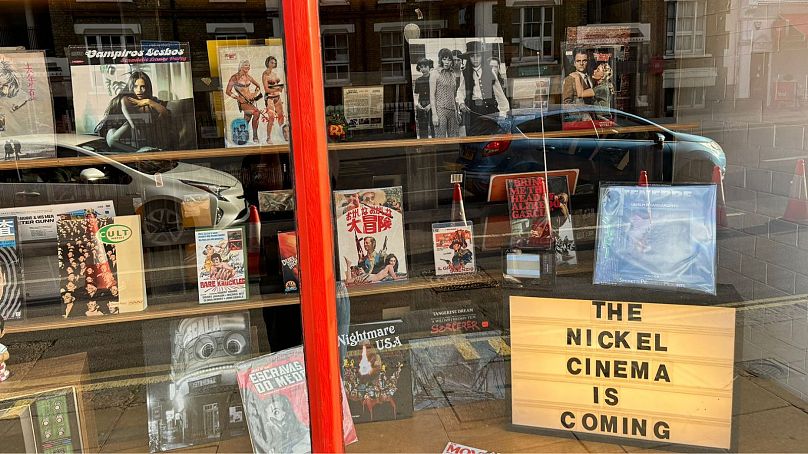
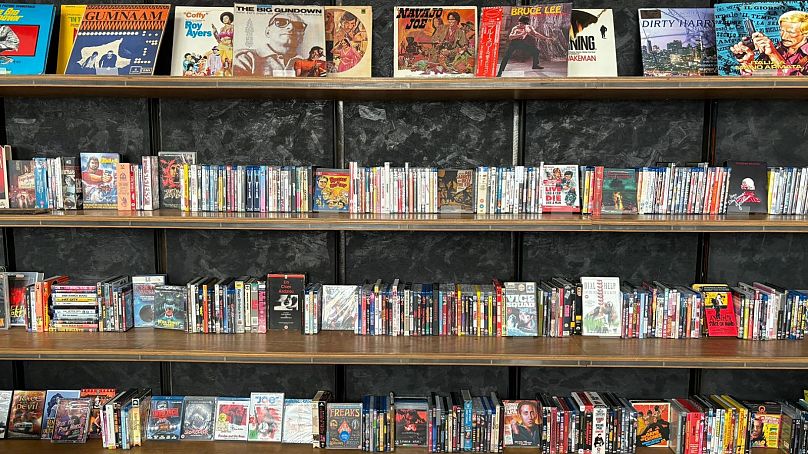
The Nickel's window display - full of obscure treasures!
Dominic Hicks

June’s inaugural screenings include everything from Todd Browning's silent horror The Unknown, to Roman Polanski's erotic thriller Bitter Moon, to David Winters’ Cannes-set giallo The Last Horror Film. The programming embraces an anything-goes approach, inspired by the edgy offerings of London’s infamous Scala cinema.

“I like films where the beauty in them comes through how the audience receives and nurtures them in their collective imagination,” Hicks tells Euronews Culture. “Whether it's the practical effects, or the score, or the bad acting that they find really quotable — it belongs to the audience in the long run.”

The Nickel might be small, but in an era of digital disconnection and algorithmic ennui, it’s part of a growing movement across Europe: DIY film clubs and hyperlocal venues that counter the monoculture of streaming services and multiplexes. From Liverpool’s trans-inclusive ‘Paraphysis Cinema’ to the feminist-themed ‘Tonnerre’ in Paris, these repertory pop-ups represent a desire among cinephiles to discover subversive oddities as intended: with an audience.

“These community spaces are an opportunity to bring people back together to have conversations about movies,” Hicks says. “You don't have to all feel the same, but the idea of being challenged, or getting the giggles together about some strange little forgotten gem, is always going to be entertaining.”


A Nickel screening at The Cinema Museum. 
Dominic Hicks/Instagram

This idea of confronting discomfort together is key. Namwali Serpell, writing in the New Yorker, recently lamented the rise of “new literalism” — a cinematic trend where movies like The Substance and Anora heavy-handedly spell out their meanings and politics. Exploitation cinema, in all its moral ambiguity and tonal absurdity, offers a thrilling antithesis.

“I actually prefer, particularly when you look at the films of the 70s, how murky those movies were — that it's not abundantly clear if the filmmakers had the right morals,” Hicks explains. “For me, that doesn't mean it’s actually promoting poor morals. I think audiences are intelligent enough to challenge what they're seeing.”

Before raising nearly £14,000 (€16,640) for its permanent space, Hicks ran The Nickel as an event programme for his local pub and The Cinema Museum. Much of what he shared was on rare 16mm prints, tapping into the sensory ambience of physical formats.

Similar to the revival of vinyl, the crackle and click of film reels have become a way for people to connect with art more tangibly. “You can't come close to the aesthetic experience of watching an original film print being projected in public when you're streaming things digitally,” Hicks says, citing one magical moment at The Cinema Museum when the projector got stuck and burned a film print: “Everybody was just delighted. It was like we'd seen a shooting star.”


The Nickel will also operate as a retail shop for rare physical media. 
Dominic Hicks

Though The Nickel is still under construction when I visit, the vibe already feels special. Obscure physical media lines the entrance’s shelves, their lurid covers begging to be fondled. Meanwhile, the dimly-lit basement bar is set to double as a communal hub for film-related workshops. “Ultimately the plan would be to have everybody create projects together, then we can screen them here,” says Hicks, excited at the prospect of working “on weird shit” with others.

I have faith that people won’t surrender something so essential as the experience of going to the movies
Dominic Hicks
Founder of The Nickel cinema

At a time when cinemas face a precarious future, The Nickel’s vision is ambitious and comfortingly optimistic. According to the Independent Cinema Office (ICO), almost a third of UK independent cinemas are under threat, with London institutions like The Prince Charles launching petitions against redevelopment. But Hicks doesn’t believe cinema will die — just its commercial models of old.

“I think we're seeing a return to that neighbourhood, smaller, independent cinema, because multiplexes don't give people a compelling enough reason to leave their sofas,” he explains. “But I have faith that people won’t surrender something so essential as the experience of going to the movies. I really hope not, anyway. And if they do, it'll be a hill worth dying on for me.”

As the end credits of The Washing Machine roll, the room fizzes with the excitable energy of a shared (and sordid) little secret. Away from the anodyne streaming output, there’s a quiet rebelliousness in The Nickel’s embrace of mess, madness and misfits — a reminder that cinema’s darkened rooms are often where we feel most fully seen.

The Nickel cinema opens in London on 11 June.