Sunday, June 01, 2025


The Gong Show, Jerry Springer, Maury Povitch, Howard Stern, Seinfeld
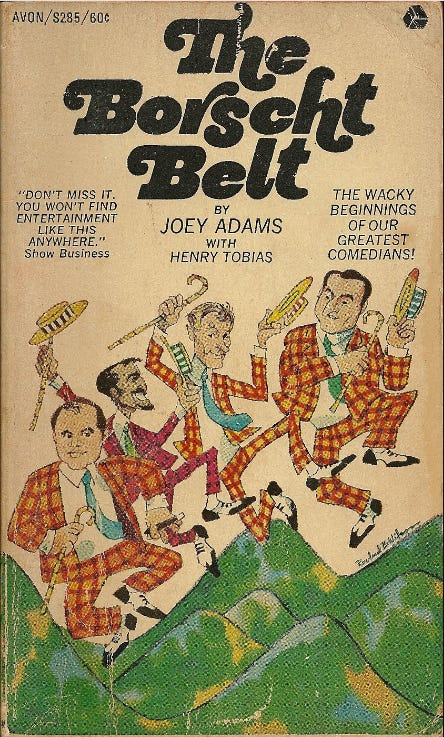

And we thought the Borscht Belt had died out. We have it in the corridors of power, in the White Man’s House, in every corner of media and the law. To take this to its silliness level: The name comes from borscht, a soup of Ukrainian origin (made with beets as the main ingredient, giving it a deep reddish-purple color) that is popular in many Central and Eastern European countries and brought by Ashkenazi Jewish and Slavic immigrants to the United States. The alliterative name was coined by Abel Green, editor of Variety starting in 1933, and is a play on existing colloquial names for other American regions (such as the Bible Belt and Rust Belt). An alternate name, the Yiddish Alps was used by Larry King and is satirical: a classic example of borscht belt humor.

This country has devolved, man, into disgrace. No real journalists in corporate Press, and the goofy celebrity cults, and the billionaires and their Eichmann Millionaires. It is a dirty dirty country, and so why not more of the Rapist in Chief Trump’s Room Temperature IQ antics? ….Disgraced reality TV stars Todd and Julie Chrisley, convicted in a scheme to swindle banks out of tens of millions of dollars, walked free from prison Wednesday after they were pardoned by President Donald Trump, their lawyers said.

The pair, known for the show “Chrisley Knows Best,” were headed home to Nashville following their release, law firm Litson PLLC said.

The “Trumps of the South,” who were convicted in 2022 of fraud, tax evasion and conspiracy to defraud the United States, received the pardons after intervention by one of their daughters.

Clown show in the trillion$: And this is accepted as reality? What, 250,000 people sacked since that Jan. 20 Trump Coronation?

Elon Musk has said he is leaving the Trump administration after helping lead a tumultuous drive to shrink size of US government that saw thousands of federal jobs axed.

In a post on his social media platform X, the world’s richest man thanked Trump for the opportunity to help run the Department of Government Efficiency, known as Doge.

The White House began “offboarding” Musk as a special government employee on Wednesday night, the BBC understands.

His role was temporary and his exit is not unexpected, but it comes a day after Musk criticised the legislative centrepiece of Trump’s agenda.

“As my scheduled time as a Special Government Employee comes to an end, I would like to thank President @realDonaldTrump for the opportunity to reduce wasteful spending,” Musk wrote on X. “The @DOGE mission will only strengthen over time as it becomes a way of life throughout the government.”

Measured from Trump’s inauguration on 20 January, he would hit that limit towards the end of May. But his exit comes after a day after he said he was “disappointed” with Trump’s budget bill, which proposes multi-trillion dollar tax breaks and a boost to defence spending.

The SpaceX and Tesla boss said in an interview with BBC’s US partner CBS that the “big, beautiful bill”, as Trump calls it, would increase the federal deficit.

Musk also said he thought it “undermines the work” of Doge.

“I think a bill can be big or it could be beautiful,” Musk said. “But I don’t know if it could be both.”
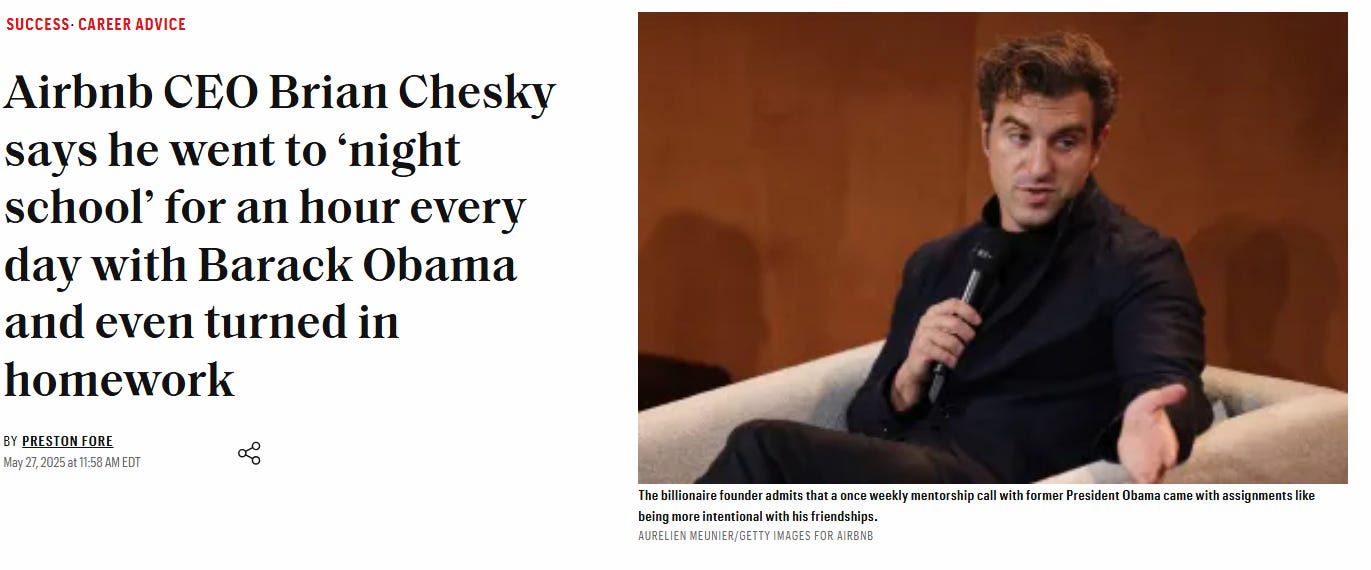
It is significant that this guy Chesky is Jewish because, drum roll, the company they keep, the family they cherish, the boardrooms they populate, the anti-Palestine thinking they hold ….
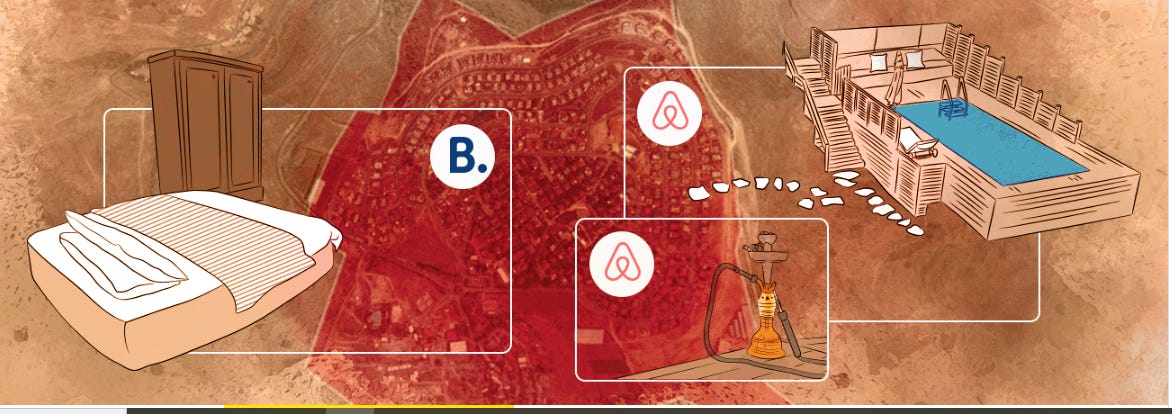
….from the Guardian:

Hotel rooms or holiday rentals listed on both sites were counted only once. Duplicates were removed by assigning holiday lets (those in apartments and houses) as Airbnbs and hotel rooms as Booking.com. Looking at listings instead of properties, there were 402 in total across the West Bank including East Jerusalem – 350 on Airbnb and 52 on Booking.com.

The Airbnb listings found by the Guardian analysis include 18 situated in outposts – settlements considered illegal under international law and also not officially authorised by the Israeli government and against Israeli law.

‘War crimes are not a tourist attraction’

By operating in settlements, multinational companies including Booking.com and Airbnb are violating international law, human rights activists warn. Booking.com and Airbnb are among 16 non-Israeli companies identified by the UN as having ties to Israeli settlements in the West Bank.

“Any company doing business in Israel’s illegal settlements is enabling a war crime and helping to prop up Israel’s system of apartheid,” Kristyan Benedict, Amnesty International UK’s crisis response manager, said in response to the Guardian’s findings.

“With Israeli military forces and settlers having killed and injured huge numbers of Palestinian civilians in the West Bank including East Jerusalem in the last 15 months, tourist companies are making themselves complicit in a blood-soaked system of Israeli war crimes and systematic repression.

“War crimes are not a tourist attraction – Airbnb, Booking.com and the wider business community should immediately sever all links with Israel’s illegal occupation and ongoing annexation of Palestinian territory.”

Sari Bashi, programme director at Human Rights Watch, said that, in allowing properties in Israeli settlements to be listed on their sites, “Airbnb and Booking.com are contributing to land grabs, crippling movement restrictions and even the forced displacement of Palestinians in the occupied West Bank and East Jerusalem, abuses that Israeli authorities commit in order to maintain oppression and domination over Palestinians as part of the crime against humanity of apartheid”.

“Businesses should not enable, facilitate, or profit from serious violations of international law. The time has come for both companies to stop doing business in the occupied territories on stolen land.”


[Photo Credit: (From left) Michelle Obama, her brother Craig Robinson, and Airbnb CEO Brian Chesky during the IMO podcast on May 21, 2025.]

There seems to be no end to the profiteers gouging the world even at the cost of hundreds of thousands dead or dying in that concentration camp now turned into a killing field. It’s as if the scabs America and the west have won through capital-capitalism punishment have turned most in the west into zombies or lobotomies or Stepford Wives and Husbands. Handmaid Tale? Think hard. Read the piece — fiction but oh so real — by Ursula le Guin below this rant. It will run shivers down your spine.

But first, that Airbnb:

Seized, settled, let: how Airbnb and Booking.com help Israelis make money from stolen Palestinian land

Billionaire Airbnb CEO Brian Chesky went back to school prior to the company going public—but it wasn’t to obtain a degree, it was to seek the guidance of a former president. Chesky reveals that during weekly chats with Barack Obama, he would receive “assignments” that revolutionized his leadership.

To build Airbnb into a billion-dollar business, Brian Chesky sometimes worked gruesome 100-hour weeks. However, on top of that, he would regularly carve out time to pick the brains of one of the most important people in the world: former President Barack Obama.

*****

I say it a thousand times — “no precautionary principle, so anything goes; or, “no at first and always do NO harm, so a billion harms are the result,” and, finally, “intended and unintended (usually already known) consequences should be prosecuted as crimes against humanity and ecosystems.”
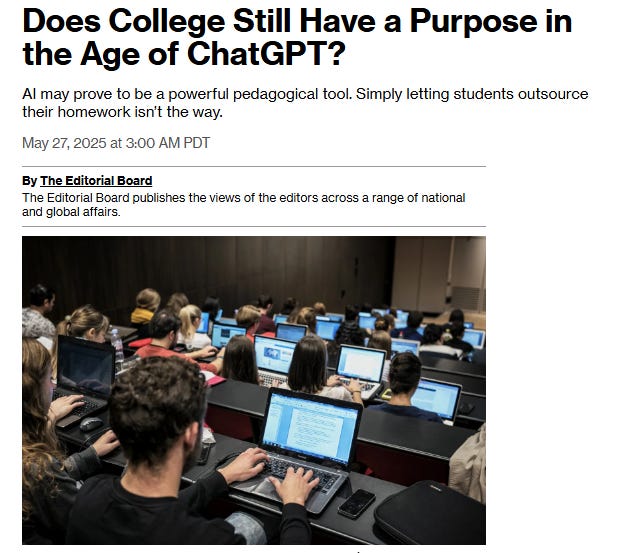
The question is the wrong question, as always with Mainlining Corporate Media, and, well, how about proposing an end to AI — the war on drugs, well, how about the war on AI? No?

And so the most unqualified people in the world, again, his tribal connections count, but I’ll not beat that dead horse, do have a chair at the Star Chamber: Meta’s Mark Zuckerberg Warns Colleges of ‘a Reckoning’ Because They’re Not ‘Preparing People for the Jobs That They Need’

And so it’s not a Mad Mad Mad Mad World of rotten reality TV in real time? Give me a break. Gates and Fink and Ellison and Mark Cuban and Bezos and hell throw in Kissinger or Sean Penn or Ben Stiller, they all, like Zuckerberg, have the world, our world, in the palm of their collective hand.

In a recent interview with comedian Theo Von on his podcast, Meta CEO Mark Zuckerberg offered a blunt critique of the modern college system, questioning its relevance in preparing young people for today’s evolving job market. The remarks add to a growing chorus of skepticism from tech industry leaders about the role and value of higher education in an increasingly skills-driven economy.

“I’m not sure that college is preparing people for the jobs that they need to have,” Zuckerberg said when asked whether he believes college is still necessary in today’s world. “There’s a big issue on that, and all the student debt issues are really big issues. The fact that college is so expensive for so many people.” He did offer the idea that college has its place as a means of living on one’s own, away from one’s parents, while they learn to be an adult. However, the CEO added that the massive debt people often graduate with doesn’t make sense for many.

Oh, insightful nothing burger from that “criminal,” Zuckerberg, with, well, a comic with a podcast? Theodor Capitani von Kurnatowski III?? So, Chromebooks and Zoom Remote School and an end to humanities and history and all the crap they don’t like so they can get partially employed folk who are on universal chump change incomes while their drones and missiles and 100,000 satellites in the heavens and sky can do their dirty work.

And language and such mean nothing. MAHA? Right, tell that to the people in Gaza, even outside of Gaza, where bombs bursting in air, all the dust, all the depleted uranium atoms, well well, how’s that going to work on cancers and birth-defects and birth-deaths? RFK Jr, though, don’t you know, believes Palestinians are spoiled and all Hamas.

Orwell would be spinning in his urn:

As he has promoted the Trump administration’s “Make America Healthy Again” agenda, Robert F. Kennedy Jr., the U.S. Health and Human Services secretary, has lamented the toll that processed foods have taken on the health of Americans, in particular Native Americans.

Prepackaged foods have “mass poisoned” tribal communities, he said last month when he met with tribal leaders and visited a Native American health clinic in Arizona.

Weeks later, in testimony before the House Appropriations Committee, he said processed foods had resulted in a “genocide” among Native Americans, who disproportionately live in places where there are few or no grocery stores.

“One of my big priorities will be getting good food — high-quality food, traditional foods — onto the reservation because processed foods for American Indians is poison,” Kennedy told the committee. Healthy food is key to combating the high rates of chronic disease in tribal communities, he said.

Yet even as the president tasks Kennedy’s agency and the U.S. Department of Agriculture with improving healthy eating programs, the USDA has terminated the very program that dozens of tribal food banks say has helped them provide fresh, locally produced food that is important to their traditions and cultures.

That program — the USDA’s Local Food Purchase Assistance Cooperative Agreement program — began under President Joe Biden in late 2021 as a response to challenges accessing food that were magnified by the pandemic. Its goal was to boost purchases from local farmers and ranchers, and the funding went to hundreds of food banks across the country, including 90 focused on serving tribes.

(Hint hint: Meals on Wheels is on the chopping block, and so are programs to lower prices of groceries for that program and for food banks thoughout the land . . . healthy diets include 800 calories a day for grandma?)

Nah, AI in their hands will not be a criminal facilitation of destroying human agency and human connections and just plain ol’ book smarts and on the job intelligence. The gift that keeps on corroding, AI, VR, MR, AR, AGI.

And no, this isn’t another ‘the internet is a series of tubes‘ moment. Think about this for more than half a second and it seems obvious: The high-level interactions that we have in any software is always a veil over the low-level machinations rolling forward underneath. But it’s interesting to be reminded of this fact in the context of a supposedly new phase, paradigm, or stage of computing and the internet.

Then this? From the Associated Press? Headlines? AP? I used to respect the outfit, five decades ago.  “Get ready for several years of killer heat, top weather forecasters warn.” And so is it AI getting us ready for wet bulb temperatures out the roof? AirB&B? Michelle Obama? DOGE?
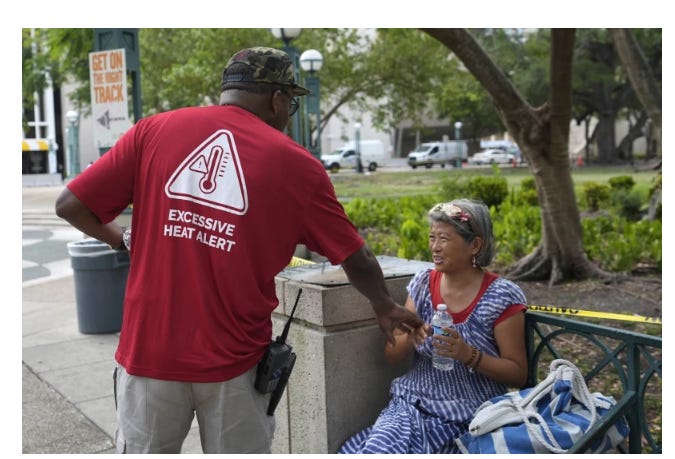
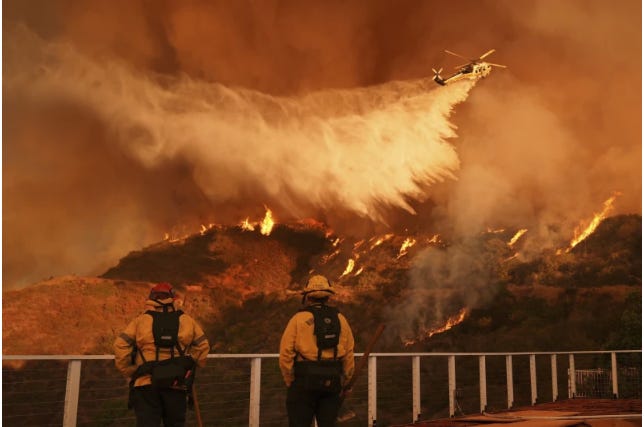
And it all comes down to shit. Sewage and all the other shit. No way forward with this Jerry Springer Show.

UCSD study: Tijuana sewage isn’t the only pollutant detectible in the air

Researchers found illicit drugs and chemicals from tires in the Tijuana River becoming airborne.

*****

Jewish Springer, Seinfeld, Chuck Barris (Gong Show), Maury Povitch, and Stern, what a Mad Mad Mad Mad World, and now this?

Comedy Central for Jews in Israel? [Israeli police officers assist a Palestinian after he was pushed by right-wing Israelis as they mark Jerusalem Day, in Jerusalem’s Old City, May 26, 2025. (AP Photo/Ohad Zwigenberg)]

The United Arab Emirates lays into Israel over this week’s Jerusalem Flag March, characterizing it as an “annual spectacle of unchecked violence and extremist provocation” and issuing a rare warning against Israel if Jerusalem doesn’t take “decisive steps” against the phenomenon.

“It is utterly unfathomable that, amid the ongoing carnage in Gaza, the Israeli government — underscored by the presence of one of its ministers — continues to permit” the flag march an Emirati official tells The Times of Israel in a statement issued shortly after Abu Dhabi summoned Israel’s ambassador to the Gulf country for a rare reprimand.

*****

Let’s go out with Gerald Horne, a true winner: Oh Canada! and more!! Gerald Horne Around The Horne: G7 Unite Against China, But Is the Era of US World Dominance Over?

Mad Mad Mad Mad World Indeed.

The Ones Who Walk Away From Omelas

by Ursula K LeGuin – from The Wind’s Twelve Quarters 

With a clamor of bells that set the swallows soaring, the Festival of Summer came to the city Omelas, bright-towered by the sea. The ringing of the boats in harbor sparkled with flags. In the streets between houses with red roofs and painted walls, between old moss-grown gardens and under avenues of trees, past great parks and public buildings, processions moved.

Some were decorous: old people in long stiff robes of mauve and gray, grave master workmen, quiet, merry women carrying their babies and chatting as they walked. In other streets the music beat faster, a shimmering of gong and tambourine, and the people went dancing, the procession was a dance. Children dodged in and out, their high calls rising like the swallows’ crossing flights over the music and the singing. All the processions wound towards the north side of the city, where on the great water-meadow called the Green Fields boys and girls, naked in the bright air, with mud-stained feet and ankles and long, lithe arms,exercised their restive horses before the race. The horses wore no gear at all but a halter without bit. Their manes were braided with streamers of silver, gold, and green. They flared their nostrils and pranced and boasted to one another; they were vastly excited, the horse being the only animal who has adopted our ceremonies as his own. Far off to the north and west the mountains stood up half encircling Omelas on her bay. The air of morning was so clear that the snow still crowning the Eighteen Peaks burned with white-gold fire across the miles of sunlit air, under the dark blue of the sky. There was just enough wind to make the banners that marked the racecourse snap and flutter now and then. In the silence of the broad green meadows one could hear the music winding throughout the city streets, farther and nearer and ever approaching, a cheerful faint sweetness of the air from time to time trembled and gathered together and broke out into the great joyous clanging of the bells.

Joyous! How is one to tell about joy? How describe the citizens of Omelas?

They were not simple folk, you see, though they were happy. But we do not say the words of cheer much any more. All smiles have become archaic. Given a description such as this one tends to make certain assumptions. Given a description such as this one tends to look next for the King, mounted on a splendid stallion and surrounded by his noble knights, or perhaps in a golden litter borne by great-muscled slaves. But there was no king. They did not use swords, or keep slaves. They were not barbarians, I do not know the rules and laws of their society, but I suspect that they were singularly few. As they did without monarchy and slavery, so they also got on without the stock exchange, the advertisement, the secret police, and the bomb. Yet I repeat that these were not simple folk, not dulcet shepherds, noble savages, bland utopians. There were not less complex than us.

The trouble is that we have a bad habit, encouraged by pedants and sophisticates, of considering happiness as something rather stupid. Only pain is intellectual, only evil interesting. This is the treason of the artist: a refusal to admit the banality of evil and the terrible boredom of pain. If you can’t lick ’em, join ’em. If it hurts, repeat it. But to praise despair is to condemn delight, to embrace violence is to lose hold of everything else. We have almost lost hold; we can no longer describe happy man, nor make any celebration of joy. How can I tell you about the people of Omelas? They were not naive and happy children–though their children were, in fact, happy. They were mature, intelligent, passionate adults whose lives were not wretched. O miracle! But I wish I could describe it better. I wish I could convince you. Omelas sounds in my words like a city in a fairy tale, long ago and far away, once upon a time. Perhaps it would be best if you imagined it as your own fancy bids, assuming it will rise to the occasion, for certainly I cannot suit you all. For instance, how about technology? I think that there would be no cars or helicopters in and above the streets; this follows from the fact that the people of Omelas are happy people. Happiness is based on a just discrimination of what is necessary, what is neither necessary nor destructive, and what is destructive. In the middle category, however–that of the unnecessary but undestructive, that of comfort, luxury, exuberance, etc.– they could perfectly well have central heating, subway trains, washing machines, and all kinds of marvelous devices not yet invented here, floating light-sources, fuelless power, a cure for the common cold. Or they could have none of that: it doesn’t matter. As you like it. I incline to think that people from towns up and down the coast have been coming to to Omelas during the last days before the Festival on very fast little trains and double-decked trams, and that the trains station of Omelas is actually the handsomest building in town, though plainer than the magnificent Farmers’ Market. But even granted trains, I fear that Omelas so far strikes some of you as goody-goody. Smiles, bells, parades, horses, bleh. If so, please add an orgy. If an orgy would help, don’t hesitate. Let us not, however, have temples from which issue beautiful nude priests and priestesses already half in ecstasy and ready to copulate with any man or woman, lover or stranger, who desires union with the deep godhead of the blood, although that was my first idea. But really it would be better not to have any temples in Omelas–at least, not manned temples. Religion yes, clergy no. Surely the beautiful nudes can just wander about, offering themselves like divine souffles to the hunger of the needy and the rapture of the flesh. Let them join the processions. Let tambourines be struck above the copulations, and the gory of desire be proclaimed upon the gongs, and (a not unimportant point) let the offspring of these delightful rituals be beloved and looked after by all. One thing I know there is none of in Omelas is guilt. But what else should there be? I thought at first there were no drugs, but that is puritanical. For those who like it, the faint insistent sweetness of drooz may perfume the ways of the city, drooz which first brings a great lightness and brilliance to the mind and limbs, and then after some hours a dreamy languor, and wonderful visions at last of the very arcane and inmost secrets of the Universe, as well as exciting the pleasure of sex beyond all belief; and it is not habit-forming. For more modest tastes I think there ought to be beer. What else, what else belongs in the joyous city? The sense of victory, surely, the celebration of courage. But as we did without clergy, let us do without soldiers. The joy built upon successful slaughter is not the right kind of joy; it will not do; it is fearful and it is trivial. A boundless and generous contentment, a magnanimous triumph felt not against some outer enemy but in communion with the finest and fairest in the souls of all men everywhere and the splendor of the world’s summer: This is what swells the hearts of the people of Omelas, and the victory they celebrate is that of life. I don’t think many of them need to take drooz.

Most of the processions have reached the Green Fields by now. A marvelous smell of cooking goes forth from the red and blue tents of the provisioners. The faces of small children are amiably sticky; in the benign gray beard of a man a couple of crumbs of rich pastry are entangled. The youths and girls have mounted their horses and are beginning to group around the starting line of the course. An old woman, small, fat, and laughing, is passing out flowers from a basket, and tall young men wear her flowers in their shining hair. A child of nine or ten sits at the edge of the crowd alone, playing on a wooden flute.

People pause to listen, and they smile, but they do not speak to him, for he never ceases playing and never sees them, his dark eyes wholly rapt in the sweet, thing magic of the tune.

He finishes, and slowly lowers his hands holding the wooden flute.

Omelas

As if that little private silence were the signal, all at once a trumpet sounds from the pavilion near the starting line: imperious, melancholy, piercing. The horses rear on their slender legs, and some of them neigh in answer. Sober-faced, the young riders stroke the horses’ necks and soothe them, whispering. “Quiet, quiet, there my beauty, my hope…” They begin to form in rank along the starting line. The crowds along the racecourse are like a field of grass and flowers in the wind. The Festival of Summer has begun.

Do you believe? Do you accept the festival, the city, the joy? No? Then let me describe one more thing.

The Ones Who Walk Away From Omelas Reflection - Araaa Aquarian's Digital Portfolio

In a basement under one of the beautiful public buildings of Omelas, or perhaps in the cellar of one of its spacious private homes, there is a room. It has one locked door, and no window. A little light seeps in dustily between cracks in the boards, secondhand from a cobwebbed window somewhere across the cellar. In one corner of the little room a couple of mops, with stiff, clotted, foul-smelling heads, stand near a rusty bucket. The floor is dirt, a little damp to the touch, as cellar dirt usually is.

The room is about three paces long and two wide: a mere broom closet or disused tool room. In the room, a child is sitting. It could be a boy or a girl. It looks about six, but actually is nearly ten. It is feeble-minded. Perhaps it was born defective, or perhaps it has become imbecile through fear, malnutrition, and neglect. It picks its nose and occasionally fumbles vaguely with its toes or genitals, as it sits hunched in the corner farthest from the bucket and the two mops. It is afraid of the mops. It finds them horrible. It shuts its eyes, but it knows the mops are still standing there; and the door is locked; and nobody will come. The door is always locked; and nobody ever comes, except that sometimes–the child has no understanding of time or interval–sometimes the door rattles terribly and opens, and a person, or several people, are there. One of them may come in and kick the child to make it stand up. The others never come close, but peer in at it with frightened, disgusted eyes. The food bowl and the water jug are hastily filled, the door is locked; the eyes disappear. The people at the door never say anything, but the child, who has not always lived in the tool room, and can remember sunlight and its mother’s voice, sometimes speaks. “I will be good, ” it says. “Please let me out. I will be good!” They never answer. The child used to scream for help at night, and cry a good deal, but now it only makes a kind of whining, “eh-haa, eh-haa,” and it speaks less and less often. It is so thin there are no calves to its legs; its belly protrudes; it lives on a half-bowl of corn meal and grease a day. It is naked. Its buttocks and thighs are a mass of festered sores, as it sits in its own excrement continually.

Response to "The Ones Who Walk Away From Omelas" | bulb

They all know it is there, all the people of Omelas. Some of them have come to see it, others are content merely to know it is there. They all know that it has to be there. Some of them understand why, and some do not, but they all understand that their happiness, the beauty of their city, the tenderness of their friendships, the health of their children, the wisdom of their scholars, the skill of their makers, even the abundance of their harvest and the kindly weathers of their skies, depend wholly on this child’s abominable misery.

How to distract a starving child: Hunger in Rafah amid Israel’s war on Gaza

This is usually explained to children when they are between eight and twelve, whenever they seem capable of understanding; and most of those who come to see the child are young people, though often enough an adult comes, or comes back, to see the child. No matter how well the matter has been explained to them, these young spectators are always shocked and sickened at the sight. They feel disgust, which they had thought themselves superior to. They feel anger, outrage, impotence, despite all the explanations. They would like to do something for the child. But there is nothing they can do. If the child were brought up into the sunlight out of that vile place, if it were cleaned and fed and comforted, that would be a good thing, indeed; but if it were done, in that day and hour all the prosperity and beauty and delight of Omelas would wither and be destroyed. Those are the terms. To exchange all the goodness and grace of every life in Omelas for that single, small improvement: to throw away the happiness of thousands for the chance of happiness of one: that would be to let guilt within the walls indeed.

The terms are strict and absolute; there may not even be a kind word spoken to the child.

4 Children Have Died of Hunger This Week in Gaza as Half a Million Face Famine | Truthout

Often the young people go home in tears, or in a tearless rage, when they have seen the child and faced this terrible paradox. They may brood over it for weeks or years. But as time goes on they begin to realize that even if the child could be released, it would not get much good of its freedom: a little vague pleasure of warmth and food, no real doubt, but little more. It is too degraded and imbecile to know any real joy. It has been afraid too long ever to be free of fear. Its habits are too uncouth for it to respond to humane treatment. Indeed, after so long it would probably be wretched without walls about it to protect it, and darkness for its eyes, and its own excrement to sit in. Their tears at the bitter injustice dry when they begin to perceive the terrible justice of reality, and to accept it. Yet it is their tears and anger, the trying of their generosity and the acceptance of their helplessness, which are perhaps the true source of the splendor of their lives. Theirs is no vapid, irresponsible happiness. They know that they, like the child, are not free. They know compassion. It is the existence of the child, and their knowledge of its existence, that makes possible the nobility of their architecture, the poignancy of their music, the profundity of their science. It is because of the child that they are so gentle with children. They know that if the wretched one were not there sniveling in the dark, the other one, the flute-player, could make no joyful music as the young riders line up in their beauty for the race in the sunlight of the first morning of summer.

Now do you believe them? Are they not more credible? But there is one more thing to tell, and this is quite incredible.

At times one of the adolescent girls or boys who go see the child does not go home to weep or rage, does not, in fact, go home at all. Sometimes also a man or a woman much older falls silent for a day or two, then leaves home. These people go out into the street, and walk down the street alone. They keep walking, and walk straight out of the city of Omelas, through the beautiful gates. They keep walking across the farmlands of Omelas. Each one goes alone, youth or girl, man or woman.

Night falls; the traveler must pass down village streets, between the houses with yellow- lit windows, and on out into the darkness of the fields. Each alone, they go west or north, towards the mountains. They go on. They leave Omelas, they walk ahead into the darkness, and they do not come back. The place they go towards is a place even less imaginable to most of us than the city of happiness. I cannot describe it at all. It is possible that it does not exist. But they seem to know where they are going, the ones who walk away from Omelas.
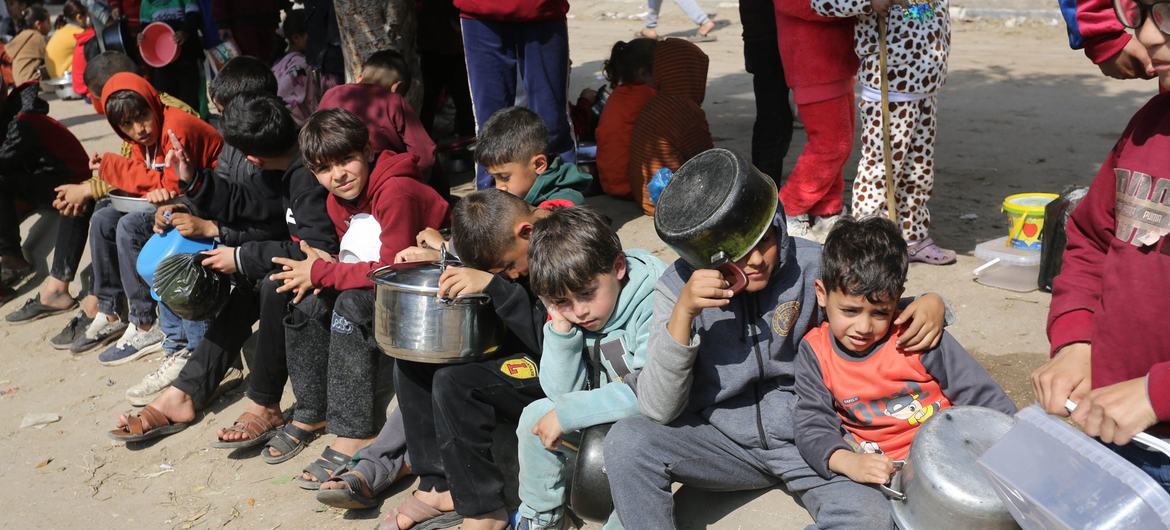
A 50 per cent reduction in aid entering war-torn Gaza in February has led to sharp increases in malnutrition, hunger and starvation.

Paul Haeder's been a teacher, social worker, newspaperman, environmental activist, and marginalized muckraker, union organizer. Paul's book, Reimagining Sanity: Voices Beyond the Echo Chamber (2016), looks at 10 years (now going on 17 years) of his writing at Dissident Voice. Read his musings at LA Progressive. Read (purchase) his short story collection, Wide Open Eyes: Surfacing from Vietnam now out, published by Cirque Journal. Here's his Amazon page with more published work AmazonRead other articles by Paul, or visit Paul's website.

 TAIWAN

A Sketch of the Origins of Jiang Jieshi’s Relationship with the United States


A public opinion poll in 2023 found that 64% of likely United States voters thought that our government should officially recognize the Island of Taiwan as an independent nation, while a poll this year found that 82% of them believe that Taiwan “is” independent. A few months ago the U.S. State Department removed a line from their website stating that the US does not support Taiwan independence, triggering a rebuke from Beijing that this “sends a seriously erroneous message to the separatist forces” in Taiwan. Consistent with such views among U.S. citizens and State Department officials, the number of U.S. military personnel on Taiwan has increased recently. It was previously known that the number stationed there was 41; now, according to the testimony of retired Navy Rear Admiral Mark Montgomery on 15 May, there are approximately 500.

U.S. experts speak of war with China. The U.S. and China are apparently preparing for it (Peter Apps, “US Prepares for Long War with China that Might Hit Its Bases, Homeland,” Reuters, 19 May 2025). And according to opinion polls, a large percentage of Americans, if not the majority, do support using U.S. troops to defend Taiwan. Thus it is important in 2025 to understand Taiwan’s special status and U.S.-China relations.

The civil war between the Nationalist Party (Guomindang) and the Chinese Communist Party (CCP) continued intermittently from 1927 until 1949, when the Communists won control over mainland China. The war resulted in the premature deaths of millions of people, with a large portion of those non-combatants. In 1949 the head of the Guomindang, Chiang Kaishek (1887-1975), known today as “Jiang Jieshi” by most mainland Chinese speakers, retreated to the Island of Taiwan with the remnants of his forces and “established a relatively benign dictatorship” there, executing one thousand farmers, workers, intellectuals, students, labor union activists, and apolitical civilians during the White Terror in the 1950s. (Po Chien CHEN and Yi-hung LIU, “A Spark Extinguished: Worker Militancy in Taiwan after World War II [1945-1950],” Ivan Franceschini and Christian Sorace, eds., Proletarian China: A Century of Chinese Labour, Verso, 2022). The martial law that Jiang Jieshi imposed in 1949 lasted for nearly four decades, until 1987.

Under his reign there were two Taiwan Strait crises in which a hot war between the Guomindang and the CCP almost broke out. The most dangerous, in terms of the prospects for decent human survival, was probably the second crisis, in 1958. It almost resulted in a nuclear war, according to the late Daniel Ellsberg. At a point in time when U.S.-backed Jiang Jieshi aspired to take back all of China, the U.S. had a secret plan to “hit every city in the Soviet Union and every city in China.” The U.S. military was prepared to annihilate 600 million people, a “hundred Holocausts,” Ellsberg explained. Today the Island of Taiwan may or may not be the “most dangerous place on Earth,” as the Economist called it (Justin Metz, “The Most Dangerous Place on Earth,” The Economist, 1 May 2021), but given the constant tension between the People’s Republic of China (PRC) and the Republic of China (i.e., Taiwan) during the last three quarters of a century, the fact that the U.S. and the PRC are both nuclear powers, the fact that U.S. intelligence leaders have recently called the CCP the “most consequential threat” to U.S. national security, and the fact that the Trump administration is riddled with China hawks underscores how important it is, for our species as a whole, and especially for people in East Asia, that sincere agents of peace understand Taiwan.

Over the course of nearly half a century, Jiang Jieshi and his party received constant diplomatic support, weapons, and billions of dollars in aid from the U.S.  Our government has recently even “quietly unfrozen about $870 million in security assistance programs for Taiwan.” With all this U.S. “support” for, or U.S. domination of, Taiwan, what does the word “sovereignty” mean in Taiwan’s case? And what does it mean for an island of 23 million people to prepare to fight with the PRC, with its population of 1.4 billion? How can Lai Ching-te say that they must prepare for war?

To understand the fight between the Republic of China and the PRC, and the intervening/interfering role of the U.S., one must have a basic understanding of the nature of this fight. A little study of the historical context in which Jiang Jieshi first seized power a century ago might help. This month marks 100 years since the start of the May Thirtieth Movement, when Chinese workers stood up against the imperialism of the West and Japan, while at the same time taking on the greedy business class and the power-hungry warlords of China.

Chinese Workers Struggle for Dignity in 1925

Back in 1925, Shanghai was known as “the Paris of the East,” and like Paris, it was a place where the rich could have fun as they liked and the poor had to suffer as they must. The workers of Shanghai suffered the injustices of colonialism and racism. Rich Europeans and Japanese colonizer-parasites had carved up the city and set up their own “International Settlement,” that they, rather than the Chinese, governed. This Settlement allowed them to live among and exploit the local laborers even as they disrespected them with the pejorative “coolies.” Some Japanese said they were “worthless” and called them “foreign slaves” (S.A. Smith, Like Cattle and Horses: Nationalism and Labor in Shanghai, 1895-1927, Duke UP, 2002, page 163).

Shanghai had been a frequent site of labor “unrest” for some time. It was not a coincidence that the Chinese Communist Party (CCP) had been founded there in 1921. Early in 1925 a Japanese company that owned a cotton mill had rejected an agreement made by the striking workers and a mediation board. The conflict reached a head on the 15th of May that year when the managers of the mill locked out the workers and stopped paying their wages. (Apo Leong, “From the May Thirtieth Movement to the Canton Strike,” Proletarian China: A Century of Chinese Labour). In this conflict, Japanese supervisors physically beat several workers and one foreman shot and killed a 20-year-old worker, a Communist, by the name of Gu Zhenghong.

This was not the first time that foreign bosses had murdered Chinese workers, but it was said that “Japanese capitalists treat Chinese laborers like cattle and horses” (S.A. Smith, Like Cattle and Horses 164). Many people, not only workers and students but also Chinese business persons, were fed up that year, in 1925. On the 30th of May nearly 10,000 demonstrators marched through the streets of Shanghai to the International Settlement where the British, French, Japanese, and other privileged foreigners lived. It was guarded by foreign soldiers and police. (Leong, “From the May Thirtieth Movement…”). The British chief of police gave orders to fire on the protesting workers and students, and thirteen people were killed, shot at “point-blank range” (Working Class History, PM Press, 2020, page 111-12).  Dozens were injured. This triggered what is known today as the May Thirtieth Movement. Through the cooperation of workers, students, and many Chinese businesses, a general strike was organized in Shanghai. There were at least 135 solidarity strikes in other regions. (Leong, “From the May Thirtieth Movement…”).

By one estimate, there were already 84,000 unionized workers in Shanghai at this time and many unions had contributed to building worker solidarity (Smith, Like Cattle and Horses 154). Up until the May Thirtieth Incident, the Shanghai Federation of Syndicates (SFS) had been a leading labor organization, if not the leading organization in Shanghai. It had been established in 1924, mainly by right-wing members, but also by many anarchists, such as Shen Zhongjiu (1887–1968), the editor of the anarchist journal Free Man (Ziyou ren) and later the chief editor of Revolution (Geming). Anarchism was the “central radical stream” in China after the First World War. And there had been a “long-standing indigenous libertarian tradition” in China (Peter Marshall, Demanding the Impossible: A History of Anarchism, PM Press, 2010, page 519).

Many SFS labor activists distrusted the Communist Party because they felt that CCP intellectuals tried to speak for the workers. The SFS had a “vaguely anarchist orientation,” but did not espouse federalism. (Smith, Like Cattle and Horses 155-59). Chinese anarchists in general, regardless whether they were members of SFS, had vocally opposed the CCP’s statist goals and promotion of “proletarian dictatorship” and “iron discipline.” But the fledgling CCP was on the ball. They “instantly launched a campaign calling for solidarity with the textile workers, a boycott of Japanese products, and a public funeral” for Gu Zhenghong (Leong, “From the May Thirtieth Movement…”).

In the city of Guangzhou, already an industrial center near Hong Kong then, anarchists had established at least 40 unions by 1921, and had been collaborating since 1924 with the Guomindang labor leaders in the syndicalist movement. The Guomindang was founded in 1924 by Sun Yat-sen (1866-1925) in Guangzhou, and many anarchists and communists had collaborated with them for years.  In May 1925 the “Second National Labour Conference” was held in Guangzhou. The All-China Federation of Trade Unions (ACFTU) was established, representing 166 trade unions and 540,000 members. It was a national umbrella organization that functioned as a platform to coordinate different forces among workers, including non-party actors. After the Shanghai Massacre, the ACFTU called for a demonstration on 2 June and a solidarity strike. In the wake of the Massacre, many more workers joined unions (Leong, “From the May Thirtieth Movement…”).

Union leaders organized a strike in Guangzhou and in nearby Hong Kong. This strike began on 19 June. Soon, 250,000 workers hand had joined and many students in Hong Kong were also mobilized. In fact, half the labor force of Hong Kong was on strike, paralyzing the city. By the 21st of June, there was a full embargo against the foreign powers, and on the 23rd of June, a public procession in solidarity with the May Thirtieth Movement. The joint foreign security force with police from multiple countries opened fire on students and killed fifty-two people.

1925 was the beginning of a period of very active worker resistance, that is sometimes called the “Revolution of 1925-1927.” It was a time of many large uprisings, often or usually very violent, and a time of dedicated labor organizing. Through this revolution, Chinese workers regained some dignity, but true liberation was put on the back burner. According to the historian Gotelind Müller, “the CCP worked on Comintern instructions in a united front with the Guomindang, an authoritarian party populist in rhetoric but tied in practice to defending the interests of China’s business groups and rural elites. The terms of the alliance required the CCP’s subordination to the Nationalist [i.e., Guomindang] leaders and the submersion of its membership.” She explains that, just as with anarchists elsewhere, “Chinese anarchists were at first sympathetic to the Bolsheviks but by the mid-1920s they saw the regime in Moscow as oppressive.”

Meanwhile, Mao Zedong knew that something was happening, and he became very interested in this movement in the summer of 1925 (Rebecca Karl, Mao Zedong and China in the Twentieth Century World, Duke UP, 2010, page 29). In addition to labor unions in the city, peasant unions were also forming, appearing in Hunan and surrounding provinces. Mao saw revolutionary potential among them, even more than among workers in the cities. This put him in opposition to the orthodox Marxist approach.

A Year of Strikes: 1926

There were even more strikes in 1926 than in 1925, and some of the rulers of China resorted to violence to keep them down. “During 1926 in Shanghai there were, according to one official survey, 169 strikes affecting 165 factories and companies and involving 202,297 workers.” Half of them were “wholly or partially successful.” (Harold Isaacs, The Tragedy of the Chinese Revolution, 1938). In May 1926 the Third Labor Congress was held in Guangzhou, with the participation of 699 labor organizations, who claimed to represent 1.24 million workers.

And it was at this point, when things were going so well for the workers, that Jiang Jieshi started abandoning them and dismissed his Soviet advisors (Dennis Showalter, “Bring in the Germans,” The Quarterly Journal of Military History 28:1, page 60). It was the Soviets who had urged the Communists of China to work with the Guomindang.

On 18 March, there was a massacre of anti-imperialist protesters in front of Beiyang Government headquarters. The Beiyang Government was run by warlords like Duan Qirui (1865-1936), who was tight with Japan. They were the main government of China between 1912 and 1928, and were based in Beijing.

Among those injured during the 18 March massacre was the leader Li Dazhao (1889-1927), who had co-founded the CCP with Chen Duxiu (1879-1942). Chen Duxiu had also founded the progressive journal New Youth (Xin Qingnian) in 1916, advocating human rights, democracy, science, and even Esperanto. Influenced by the October Revolution, it was openly promoting communism in 1920.

The great writer Lu Xun, who is often credited with modernizing Chinese literature, wrote about the March 1926 massacre in some detail in “In Memory of Miss Liu Hezhen.” Lu Xun wrote, “On March 18 in the fifteenth year of the Republic of China, Duan Qirui’s government ordered guards with guns and bayonets to surround and slaughter the unarmed protesters in front of the gates of the State Council, the hundreds of young men and women whose intent was to lend their support in China’s diplomatic dealings with foreign powers. An order was even issued, slandering them as ‘mobsters’!” (Lu Xun, “In Memory of Liu Hezhen,” Jottings Under Lamplight, Harvard UP, 2017, page 72).

Meanwhile in June, Jiang Jieshi was put in charge of the Northern Expedition aimed at removing the warlords from power and unifying the country.

Jiang Jieshi’s 1927 Slaughters

In 1927 rich men slaughtered workers like never before. Early on, the CCP suspected that something was up. On 26 January an internal Party memo read, “The most important problem which requires our urgent consideration at the moment is the alliance of foreign imperialism and the [Guomindang] right wing with the so-called moderate elements of the [Guomindang], resulting in internal and external opposition to Soviet Russia, communism, and the labor and peasant movements” (Michael D. Wilson, United States Policy and the Nationalist Revolution in China, 1925-1928, UCLA dissertation, 1996, page 121). The Communists knew that the Guomindang was allied with the “Powers,” i.e., the empires of the West and Japan. Yet they still encouraged workers to trust the Guomindang.

Around this time in early 1927, a powerful Communist-led union called the Shanghai General Labour Union (GLU) launched two insurrections. Their first insurrection was a general strike from the 19th to the 22nd of February, and their second was a strike supported by an armed militia from the 21st to 22nd of March. The strike in February “shut post offices, all cotton mills, and most essential services” (S.A. Smith, “The Third Armed Uprising and the Shanghai Massacre,” Proletarian China: A Century of Chinese Labour, and Working Class History 41). This contributed greatly to the popularity of both the Guomindang and the CCP in Shanghai.

For their second insurrection in March, the GLU’s plan was “to take control of the city first and then welcome” Jiang Jieshi. But the British, the Americans, and the Japanese in Shanghai already knew the script. Written in 1938, Harold Isaacs’ historical account got to the heart of the matter:

The prevailing attitude among them during those early weeks of 1927 seemed to be to hear and protect the evils they had rather than fly to others they knew not of. For to your foreign business man, banker, soldier, consul, and missionary, this incomprehensible unrest, these endless slings and arrows for which they were the quivering targets, seemed the blows of a universally outrageous fortune. They could not make out who were the hares and who the hounds. So they barricaded their settlements behind gates and barbed wire. From overseas came regiment after regiment and whole fleets to protect them against all contingencies. Only the keenest among them understood from the beginning that their bread was buttered on the same side as that of the Shanghai bankers and oriented themselves accordingly. They knew Chiang Kai-shek [Jiang Jieshi] as a politically-minded militarist who wore a coat of many colours. If the Shanghai bankers were ready to back him, they knew they could follow suit. Only the workers of Shanghai stood between them and the consummation of the deal. Chiang’s coming would remove this obstacle. Thus by February when Chiang’s troops advanced into Chekiang, the situation was vastly clarified for all concerned except the workers and the Communist leaders for whom Chiang still remained the hero-general of the revolution. (Harold Isaacs, The Tragedy of the Chinese Revolution, 1938).

But as evidenced by the quote from the CCP internal Party memo, the Communist leaders, too, knew what was happening, that Jiang Jieshi was not on their side.

“On 21 March between 600,000 and 800,000 workers struck in demand for an end to militarist rule of the city. Among the workers who played key roles were the printers, postal workers, and mechanics. Several thousand radicals also formed an armed militia that occupied key sections of the city” (St. James Encyclopedia of Labor History Worldwide: Major Events in Labor History and Their Impact).

On the same day that these Communist supporters of Jiang Jieshi launched their violent take-over of Shanghai, Guomindang troops took control of the City of Nanjing, attacked foreigners and looted foreign property there, “including the American, British, and Japanese consulates.” (Wilson, United States Policy and the Nationalist Revolution in China, 1925-1928, page 111). Foreigners were frightened by these attacks and they blamed it on communists, not on Jiang Jieshi. “Actually, however, the nationalists [i.e., Guomindang] were the perpetrators of this series of attacks on foreign civilians. Some foreign officials, such as the Japanese Consul General, thus advised [Jiang Jieshi] to crack down on the radical elements in the city” (St. James Encyclopedia…). This is remembered as the “Nanking Incident of 1927.”

On 22 March, the stage was set for the great betrayal and a years-long bloodbath. On that day, a subordinate of Jiang Jieshi, called off the strike in Shanghai and ordered the suppression of the labor unions and other radical groups (Wilson 110). With thousands of soldiers in toe and at his command, Jiang Jieshi himself arrived on 26 March and began meeting with members of the local Guomindang, the Shanghai business community, and the gangsters. He was promised financial support “if he broke from the communists and pledged to ‘regulate’ the relationship between labor and capital” (St. James Encyclopedia…).

April 1927: Let the Reign of Terror Begin

Jiang Jieshi agreed with these parasitic foreigners that the changes being proposed by the workers and the Communists were too radical. “It should have come as no surprise to anyone that [Jiang Jieshi] decided to move against the radicals, as he had already done so in several other cities in late March” (St. James Encyclopedia…), but many Chinese workers as well as French, German, and Russian communists continued to believe in him.

After the Guomindang’s attack on Westerners and Japanese in Nanjing (i.e., the Nanking Incident of March 1927), Jiang Jieshi started to seek support from Japan and the U.S. rather than the USSR and the CCP (Wilson 33, 72, 134).

Jiang Jieshi viewed the success of the peasants and the workers as a threat to his party’s political, military, and social control, and this is one reason why he initiated the April 12th Shanghai Massacre, in which the Guomindang slaughtered communists in Shanghai and other places. According to Vincent Kolo, the “capitalist class and rural landowners whose sons were well represented in the officer corps of the [Guomindang] armies grew fearful of the increasingly radical demands of the working class (for shorter work hours and against the terror regime in many factories) and the peasantry (for land reform and against the crushing taxes of the landlord class)” (Kolo, “90 Years since Chiang Kai-shek’s Shanghai Massacre,” Chinaworker.info).

On 5 April Jiang Jieshi “instituted martial law and ordered the disarming of all bearers of arms not properly registered with the Nationalist Army” (Wilson 123). On the 11th, Wang Shouhua [the President of the GLU] was thrown in a sack and “buried alive” (Smith, “The Third Armed Uprising”). By the morning of the 12th, the worker militias “had been crushed,” according to historian S.A. Smith. That day, Jiang Jieshi hired hundreds of armed gangsters to massacre labor leaders and communists (Wilson, page 124).

Even so, the tenacious workers, led mainly by the GLU, called a general strike for the 13th of April. “240,000 workers walked out” (Smith, “The Third Armed Uprising”). Machine gunners opened fire on their parade. “Attackers” engaged in “stabbing, shooting, and clubbing the panic-stricken crowd.” One hundred were killed. But even on the 14th, the majority of striking workers did not give up.

By the 15th, the GLU estimated that three hundred trade union activists had been killed. It is estimated that by the end of the year, two thousand “Communists and worker militants” had lost their lives. The Guomindang killed “thousands of worker activists” in Shanghai, Wuhan, and Guangzhou (Leong, “From the May Thirtieth Movement…”). “Over the following twelve months, more than three hundred thousand people would be killed in the Guomindang’s anti-communist purges” (Working Class History 80-81).

The police of “Qingbang and Hongbang brutally executed the captured communist and union members by slaughtering them and putting them in the crater of a locomotive.” (“4.12 Shanghai Coup,” Namuwiki, 15 April 2025). Communists refer to the following years of Guomindang massacres as the “White Terror.” By one estimate, this White Terror resulted in the deaths of one million people (Karl, Mao Zedong and China in the Twentieth-Century World 33). Enabled by the governments of the U.S. and other countries, Jiang Jieshi began in 1947 another White Terror on the Island of Taiwan. It did not end until 1987.

This is the way that Jiang Jieshi thanked the peasant and worker revolutionaries who had propelled his party to power. His rewards for this great achievement of “unifying” the nation included generous financial support from the business class of Shanghai (David Lowe, “Generalissimo,” The Weekly Standard 9:27:22, page 43), lots of help of various kinds from the Powers of the West and Japan, and recognition from the Empires that he was the legitimate ruler of China.

With his solid track record of bullying into submission Chinese workers, the U.S. showered Jiang Jieshi with treasure for decades, until his death in 1975. The U.S. was the first foreign country to step forward and grant recognition to his new regime (in 1928), and soon the U.S. would begin supporting him financially and militarily, too, even when informed U.S. observers, such as John King Fairbank (1907-91) labeled his Party as “proto-fascist.” For Fairbank, the Guomindang were a “small political group holding tenaciously to power…with hopes of using industrialization as a tool of perpetuating their power and with ideas which are socially conservative and backward-looking” (Wilson 2).

Yokomitsu Riichi, the Japanese ultra-rightist author who wrote the novel Shanghai (1931), presented in that story a surprisingly similar picture of the political and economic situation of China, a country where parasites of the West, Japan, and even China committed state violence against them and stole the fruits of their labor. For example:

He [Sanki] fell silent. He had detected the strength of will of the authorities who had hired Chinese to kill Chinese.

[Fang Qiu-lan, a woman to whom Sanki is attracted and a Communist who organizes workers in Japanese textile factories:]  “That’s right. The craftiness of the British authorities isn’t new. The history of the modern Orient is so filled with the crimes of that country that if you tried to add them up, you’d be paralyzed. Starving millions of Indians, disabling Chinese with the opium trade. These were Britain’s economic policies. It’s the same as using Persia, India, Afghanistan, and Malaysia to poison China. Now we Chinese must resist completely.” (Yokomitsu Riichi, Shanghai: A Novel by Yokomitsu Riichi, Dennis Washburn, trans., Center of Japanese Studies, University of Michigan, 2001, page 153).

Since 1950, the United States has sold Taiwan nearly $50 billion in “defense equipment and services, with a number of large sales during recent U.S. administrations.” Is this how we deliver “power to the people” and peace in East Asia? Were we promoting industrial democracy by increasing the wealth and power of Jiang Jieshi even after he committed massacres of Chinese workers with impunity? Don’t the people of Taiwan, the vast majority of whom are Han Chinese, deserve credit for sprouting democracy even under the sun-starved, U.S.-backed dictatorship of Jiang Jieshi? Where in the U.S. is there any recognition of the crimes that the U.S. committed against the Han Chinese and other ethnic groups of Taiwan and the rest of China? How solid is the foundation on which the current President Lai Ching-te stands, the man who called himself a “pragmatic worker for Taiwan independence” in 2017? When we spend 250 million U.S. dollars on an upgrade on our “informal,” 10-acre embassy in Taiwan, is that an example of how we adhere to our One China policy? Even merely with the foregoing brief exploration of the history of the obvious class struggle in China a century ago, and quick examples of U.S. support for Jiang Jieshi’s attacks on the working class of China, one can see that U.S. dollars were spent on death, destruction, and tyranny rather than on democracy and peace.

Joseph Essertier is an associate professor at the Nagoya Institute of Technology in Japan, an international human rights advocate, and an editor of The Asia-Pacific Journal: Japan FocusRead other articles by Joseph.


Tobacco: Death Sentence with Perks


Meet Joe Black (1998) is basically a 2 1/2 hr anecdote, where an angelic Brad Pitt, the angel of death, comes and saves the day by impersonating an IRS agent investigating and exposing the vile young suitor Drew, as Brad takes fiancee Allison’s father (Anthony Hopkins) to heaven. Brad quotes money-grubbing Drew: You can’t avoid ‘death and taxes’.

Yes, Death gets us all in the end, smokers and nonsmokers, smokers statistically earlier but not nearly everyone, and not all that much sooner in any case. And there are lots more causes of lung cancer.

*asbestos
*air pollution
*radon
*genetics
*alcohol
*high carb diet
*viruses

I can attest to smoking – in moderation – as a perk in my life which I don’t begrudge my younger self or me now. Life is hard, and then you die. And I politely demure when I’m told by doctor after doctor to give it up. One cigarette a day is not going to kill me. As an avid cyclist, a car/truck is much more likely to do that.

Speaking of giving up, I seem to have done that with alcohol without any sense of loss. Alcohol was an endless source of headache and nausea in my wild youth. Ramadan helps, and this year, when I could drink (moderately) freely again, I tried and found it did virtually nothing. A brief buzz. It’s good (one drink) to break the ice, but when you’re old, there aren’t any parties or mixers anymore so what’s the use?

That’s one of Islam’s perks: pushing you to give up alcohol. Surah Al-Baqarah (2:219): They ask you about intoxicants and gambling. Say, ‘In both is great sin and [yet, some] benefit for people. But their sin is greater than their benefit.’

I get angry hearing calls to ban smoking completely. Another great Quran quote: Surah Al-Baqarah (2:)256 Let there be no compulsion in religion, for the truth stands out clearly from falsehood. Already cigarette adverts are gone, sponsorships. Fair enough. Far enough!

So why not the same puritanism with respect to alcohol? Alcohol is far, far more lethal, disruptive, a real killer, and yet ads everywhere complete with sexy models or rugged men, everyone happily celebrating whatever. Sadly, prohibition doesn’t work, but take a leaf from the war against smoking: no ads, more taxes, more rigorous legal penalities for the many crimes ‘under the influence’. Make drinking clearly a dangerous vice. That would be a huge step forward.

Don’t take my words as a prescription. I envy people who don’t need a crutch like smoking or alcohol to be happy. And keep in mind, one cigarette is my norm. It’s the anticipation of that calm as much as the smoking. As a general rule in life: it’s the thought that counts. And 90% of joy is in the anticipation.

Like most pleasures/poisons, there are good and bad qualities to tobacco.

Health

Leaving aside its poisonous quality and the heightened risk of lung cancer, the major upside is its calming effect. I know when some crisis hits, I can always take refuge in a smoke. Anything used to excess is harmful. Unlike alcohol, which often leads to more and more and then acting dangerously and foolishly, you quickly reach a limit in smoking. You can die of alcohol poisoning, but it takes years to die from smoking, if at all.

Like all natural poisons, it has medicinal uses:

*Insect repellant against all garden parasites (many a mosquitoey camping trip benefited from a few puffs).

*Indigenous people used tobacco as a pain reliever for ear aches, toothaches and as a poultice.

*Indigenous people believed that the nicotine in the tobacco would help relieve pain as well as help draw out the poison and heal the snake wound. After the poison had been sucked out, chewed leaves could be applied to cuts or bound on the bite with a bandage.

*To alleviate symptoms of ADHD, schizophrenia, Alzheimer’s and dementia.

It’s not a cure, but a powerful pain reliever, with some magical (i.e., we don’t understand) effects.

Social psychology

If you are nervous, again it is calming. Then there’s Freud and what a cigarette represents, its role as a fetish, a substitute for sex. A smoke can be a nice icebreaker. Many of my friendships have begun over sharing a smoke. It’s cheap and less harmful that a few drinks. It’s communal, especially for boys/men. Worldwide, a third of men smoke, only 6% of women, 5x less, do. Canadian men much less (14%), Canadian women much more (10%) — a negative spin-off from feminism?

I remember my first smoke as a teen, out the window but immediately detected by sentry-mother, guilt-tripping me, as if that’s any way to make me stop. As pacifier in my nervous early teaching days. Graduating to Drum rolling tobacco while living abroad. Then reverting to cheap manufactured cigarettes in Egypt, eventually returning to rolling my own in retirement. A cigarette has been a comforting companion throughout my life. I’m loathe to despise and reject this simple, economical pleasure totally. I don’t like fanatics of any stripe.

Religion

Everything is spiritual. Sadly, tobacco was captured by capitalism and most smoking is now industrial – packaged in plastic, filled with chemicals to burn faster so you smoke more. You take them for granted. Rolling my daily cigarette is done with reverence, a ritual akin to prayer. I thank the Lord for His generous gifts to be used responsibly.

North American natives considered it sacred, e.g., the ‘peace pipe’. The sweat lodge relies on heat and wood smoke to cleanse the spirit, recalling early Man’s smokey cave dwelling.

Judaism, Christianity and Islam are undecided, as tobacco only became an issue in the 17th century. In short, moderation is called for, but while Islam proscribes alcohol, smoking (in moderation) is acceptable. Early on in the Hasidic movement, the Baal Shem Tov taught that smoking tobacco can be used as a religious devotion, and can even help bring the Messianic Era. Rabbi Levi Yiztchak of Berditchev is quoted as saying that ‘a Jew smokes on the weekdays and sniffs tobacco on the Sabbath.’

My conclusion after a lifetime of cogitating: one cigarette a day keeps the doctor away. (Also one toke a day but that’s for another article.)

Eric Walberg is a journalist who worked in Uzbekistan and is now writing for Al-Ahram Weekly in Cairo. He is the author of From Postmodernism to Postsecularism and Postmodern Imperialism. His most recent book is Islamic Resistance to ImperialismRead other articles by Eric, or visit Eric's website.