Sunday, June 01, 2025

Right-wing media watch – Dovid Efune insists his ‘British bid’ for Telegraph still alive amid foreign takeover deal

TODAY
Left Foot Forward News

The sale of the Telegraph saga goes on.


The sale of the Telegraph saga goes on.

Dovid Efune, the British-born publisher of the online-only New York Sun, is vowing to press ahead with his bid to buy the Conservative newspaper, despite a rival deal that appears to give control to a UAE-backed firm.

Efune acquired what was a nearly defunct New York Sun five years ago. Since taking over, he has expanded the Sun’s reporting beyond New York, with a strong presence in Washington as well as in Europe and Israel. The title gained the attention of Donald Trump, who regularly posts its articles on Truth Social, which has helped bolster subscriptions.

But Efune has risen to prominence since joining the race for the Telegraph.

Appearing on Sky News recently, the publisher declared that his “British bid for the Telegraph is alive and well, and not going anywhere.”

He dismissed reports of a finalised sale to RedBird IMI, a US-UAE joint venture, as premature, adding: “If the history of the Telegraph’s ownership saga teaches us anything, it’s that the ownership of the Telegraph and, frankly, any other crown jewel of British public life, will not be determined by means of a press release.”

Efune entered the bidding in late 2023 after submitting the highest second-round offer. A self-described admirer of the Telegraph’s “values-based, principled and constitutionalist” journalism, he has cast himself as a defender of British media independence, arguing that the final decision should involve Parliament, the paper’s staff, and its readership.

“The British public will yet have their say via their elected representatives, the Telegraph’s staff and the Telegraph’s readers will have their say, as will the rest of the British press,” he said.

That message, however, sits awkwardly alongside Efune’s history of inflammatory political commentary. In a series of posts on X, he has claimed Israel would “decapitate” Iran’s leadership through “targeted strikes and close quarter assassinations.”

In a speech in 2023 in New York, he said that when it comes to the Israel-Hamas conflict there is a need to “fight with every report and headline”.

Such remarks sparked concern among Telegraph staff about possible editorial influence.

“We are out of the frying pan into the fire,” one insider commented, adding his tweets are “not the behaviour you want to see from a newspaper proprietor. It compromises everybody by association.”

Efune’s defiant position comes just days after RedBird IMI announced an agreement in principle to take a majority stake in the Telegraph from IMI, the UAE’s state-backed media investment arm. RedBird founder Gerry Cardinale aims to become the controlling shareholder, with IMI retaining a passive stake of up to 15%.

That deal is now possible under a new UK law announced on May 15, which allows state-owned investors, including sovereign wealth funds, to hold up to 15% of British newspaper companies. The move raises the threshold from a previously proposed 5% cap, introduced in response to the backlash against RedBird IMI’s original £600 million bid in 2024, fronted by Sheikh Mansour bin Zayed Al Nahyan, owner of Manchester City FC.

Still, uncertainty lingers over how much cumulative foreign state ownership will be allowed, with peers in the House of Lords warning “where will it end?”

With both bids mired in political and editorial controversy, the future of the Telegraph, Britain’s Conservative mouthpiece, which has endorsed the party at every general election since 1945, remains as turbulent and uncertain than ever.


Right-Wing Watch

Woke bashing of the week – woke-bashing backfires as GB News faces backlash over anti-LGBTQ+ slur

Today
Left Foot Forward News


“That is an actual comedy show. Not comedy masquerading as news like GB News output.”


In a moment of poetic justice, GB News is under fire after airing a vile anti-LGBTQ+ remark that sparked hundreds of thousands of complaints and triggered an official investigation by Ofcom.

The controversy centres around the channel’s long-running ‘comedy’ panel show Headliners, where right-wing pundits and comedians discuss the next day’s newspapers and routinely take aim at so-called ‘woke’ culture.

During a January episode, comedian Josh Howie made a comment while discussing a sermon by Bishop Mariann Edgar Budde, who had called on Donald Trump to show compassion for immigrants and LGBTQ+ people.

Quoting the bishop’s statement, Howie sneered:

“I just want to say, that includes paedos, if you’re doing the full inclusion.”

More than 1,200 formal complaints were lodged with Ofcom, alongside a petition from the Good Law Project, signed by over 70,000 people. The petition was delivered to the media regulator, which has confirmed it is investigating the broadcaster – again.

GB News hit back, attempting to frame the controversy as a ‘free speech’ issue.
Its chief executive, Angelos Frangopoulos, said the channel had been “subjected to a coordinated political campaign by far-left pressure groups.”

But the courts have long discredited this kind of rhetoric. The High Court has described the slur linking the LGBTQ+ community with paedophilia as “one of the oldest, most pernicious and most stubbornly ineradicable falsities or myths of homophobia.”

Agustina Oliveri, head of campaigns and communications at the Good Law Project, welcomed the investigation into a “channel of hatred.”

“Ofcom has been letting GB News get away with broadcasting racism, misogyny and homophobia for too long,” Oliveri said. “It’s time for the regulator to do its job and make sure that media barons stop profiting from monetising hate.”

The Good Law Project has since expanded its campaign, urging advertisers to distance themselves from the channel.

Sky, one of GB News’ largest advertisers, has come under pressure, with over 19,800 people emailing CEO Dana Strong demanding that she stops funding hate speech by advertising on the channel.

Even readers of the right-wing Daily Express took aim.

‘Anti-woke’ comedy show sums up all of GB News output,” wrote one commenter in response to the newspaper’s report on Ofcom’s latest investigation into the broadcaster.

Another summed it up: “That is an actual comedy show. Not comedy masquerading as news like GB News output.”

Let’s hope this time, the broadcaster isn’t let off the hook, because, surely, turning hate into entertainment shouldn’t come without consequences.


LGBTQ+ groups call on Ofcom to sanction GB News over homophobic broadcast

29 May, 2025
Left Foot Forward News

“We can’t have foreign-funded broadcasters poisoning the national conversation with these ugly lies. Ofcom needs to say ‘Stop’.”


A coalition of LGBT+ groups and the Good Law Project have joined forces to urge Ofcom to take action over a homophobic broadcast aired by GB News.

The Good Law Project, LGBT Consortium, TransActual, Trans Media Watch and others made a formal submission to Ofcom’s investigation into GB News.

The submission argues that the regulator should sanction GB News for breaches of the broadcasting code, including failing to protect its audience from harmful material and the proscription of hate speech.

The media regulator opened an investigation into GB News in March after presenter Josh Howie made a homophobic slur linking the LGBTQ+ community to paedophilia.

Discussing a bishop’s sermon urging Donald Trump to “have mercy” on marginalised communities, Howie said that when the bishop’s diocese “talks about the ‘full inclusion of LGBTQ+ persons” that “includes paedos, if you’re doing the full inclusion there’.”

More than 70,000 people used an online tool created by the Good Law Project to complain about the homophobic broadcast, making it the biggest complaint Ofcom has ever received. Yet, Paul Marshall’s GB News still stands by the content.

Jo Maugham, executive director of Good Law Project, said this “appalling” broadcast cuts to the heart of British values.

“Britain is a kind country, with kind people, who try to do the right thing,” Maugham said. “We don’t want and we can’t have foreign-funded broadcasters poisoning the national conversation with these ugly lies. Ofcom needs to say ‘Stop’.”

Chair of Trans Media watch, Jane Fae, argued it should be “an open and shut case”.

“Our fear, though,” Fae said, “is that as so many times before, Ofcom will find sufficient wiggle room to allow it to let GB News off with mild censure, and no real consequence.”

Olivia Barber is a reporter at Left Foot Forward
Britain

Labour panders to racism – playing the far right’s game


Friday 30 May 2025, by Simon Hannah


When Keir Starmer was standing for Labour leader in 2020 after Jeremy Corbyn resigned, his slogan was “Another World is Possible”. This was a call back to the ideals and hope of the anti capitalist movement in the late 1990s and early 2000s before 9/11 made our world more reactionary, more dangerous, more cynical. As part of his bid for leadership to win over a membership that had only recently elected Corbyn twice over, Starmer gave a speech in which he outlined his view on immigration; “We welcome migrants, we don’t scapegoat them. Low wages, poor housing, poor public services, are not the fault of migrants… we have to make the case for the benefits of migration”.


Music to the ears of the left – fighting a rearguard action every day against the right wing press, fascists and the political right who are constantly beating the drum that all our problems are ultimately down to mass migration.

It is no surprise of course to see Starmer totally collapse on this issue in the face of the growth of the Reform vote. Starmer has no principles, no spine, no moral code. His only interest is power, and exercising power for the sake of maintaining the collapsing status quo.

Starmer’s speech was to promote the new immigration white paper – in reality a white flag to racism that collapsed Labour’s policy agenda into Reform’s. Nigel Farage gave a statesman performance in Parliament, not crowing or goading, simply acknowledging that Starmer was now on the right track but could go a little further – call a state of emergency at the border for instance. Don’t be surprised if that happens before the end of this parliament.

We are living through the most eroded, politically bankrupt form of a Labour government. Bereft of ideas or inspiration apart from Rachel Reeves’ laughable neoliberalism greatest hits covers band, all they can do is flail around as their hopes of a rejuvenated Britain fuelled by GDP growth collapses around them. News reports of 0.7% GDP growth are hailed as a glimmer of hope, in a world where the tendency towards stagflation and economic decline is growing stronger.

Austerity, austerity and more austerity. Death by a thousand cuts. But you cannot blame the tax dodging businesses or the super rich, and you certainly cannot propose even going back to even the middle ground of post war social democracy. All there is are markets, businesses, wealth and power and the complete subordination of our lives and communities to them.

No such thing as society, indeed.

But there is racism. And nationalism. The last refuge of a desperate scoundrel. And is there any more desperate or scandalous than Sir Starmer? Beating down on migrants and refugees is so commonplace now Starmer probably doesn’t give it a second thought. The ghost of his own self from 2020 is waved away, after all you have to be realistic when you’re in power don’t you? And realism today means transphobia and racism; fresh, bleeding red meat for the hungry mouths of the culture wars.
Labour’s racist history

Of course this is nothing new, Labour has routinely thrown ‘foreigners’ to the wolves despite the fact they historically got a lot of the Black vote.

In 1924 during their first government, one Labour minister proclaimed “I’m here to make sure there is no mucking about with the British Empire”. Labour reluctantly gave up India in 1947 only because of the success of the anti colonial movement, but made sure to partition the country at the cost of millions of lives.

Labour opposed the Tories 1961 anti immigration legislation that would limit the number of people from Commonwealth countries, only to legislate their own three years later. Harold Wilson was clear that Labour “did not contest the need for control of immigration into this country” because as he said the “number of immigrants with differing cultural and social backgrounds” was causing “difficulties”. This was just a few years after the racist riots at Nottinghill when local young white people had attacked Black people living there.

The reality is that immigration under capitalism is always turned on or off for the benefit of business and the bosses. When there was a Labour shortage after World War Two every political party backed recruiting Black workers from the Caribbean. By the 1960s when concerns over economic stagnation began to set in, the anti-immigrant rhetoric ramped up, not just over competition for jobs but a feeling that ‘British culture’ was being undermined by people from abroad. The idea that culture always evolves and changes is lost on the nationalist, all they see is a fake nostalgia for an imagined past, impervious to nuance or facts.

Labour doesn’t just pander to these prejudices to win votes – though it does also do that.. Labour is a political machine for managing capitalism, it claims to shift the balance slightly more favourably towards ‘hard working people’ though as we have seen this is usually just electioneering for the grim reality of servicing the needs of big business and the capitalist class. Because it is a machine that is embedded in and welded to capitalism and the nation state, it will happily attack immigrants if they can convince themselves there is an economic logic to it.

The key shift in Starmer’s speech is that instead of attacking ‘illegal immigrants’ and ‘bogus asylum seekers’ Labour is now going after legal migration – workers and students who have visas.

In a situation of economic decline, the logic to restrict immigration even to sectors that traditionally rely on workers from abroad like social care and health, is based on the theory that too many ‘cheap’ migrants depress wages, therefore there is no investment in new labour saving technology and this limits productivity and therefore growth.

So the idea is that if cheap migration is stopped and British bosses have to start using ‘more expensive’ workers then the incentive is to introduce technology to eventually make them redundant. This is not a pro workers argument, it is a pro business argument because it boosts ‘productive’ sectors like manufacturing (itself increasingly automated) at the expense of sectors that are less profitable. Those people backing the clampdown might do well to think through how this is actually going to help anyone apart from some sections of business.
The fightback

Mass migration is not the cause of the problems in Britain, it is decades of neoliberalism and austerity, huge wealth inequality, the collapsing welfare state and public sector and the growth of reactionary divisive ideas that are tearing apart communities. At the root of it, the problem is an economy predicated on private property and people being mere pawns in the wealth creation of the rich.

Of course it is true that a major growth in population could put pressure on public services, but decades of under-funding or an almost entirely unregulated market in homes is the primary cause of that. But the Reform, the Tories and Labour Party don’t want to tackle the actual problem of the people with economic and social power so they go after Black people and anyone else they can use as a political football to kick around.

We have to be clear – we resist racist policies and nationalism as fake solutions to the more fundamental problems. We are united as working people to fight for a decent quality of life for everyone and we are implacable opponents of anyone and anything that gets in the way of that.

A mass anti racist movement that is rooted in working class communities, including the trade unions is central to this. You cannot fight Reform in isolation, calling them a racist party is limited as a strategy, because a lot of people are voting for them because they are racist, or because their voters on one level do think that mass migration is eroding the country.

Also how can we challenge Reform in isolation when Labour is adopting their policies? The collapse of Labour into Reform’s policy agenda also raises questions over whether ‘voting Labour to stop Reform’ is a viable tactic. The current political dynamic is toward the authoritarian right and Labour is absolutely part of that, whether imprisoning climate protesters, building more prisons, rolling back social provision, its new Crime and Policing Bill or its war on refugees and immigrants, Labour is absolutely in the same game as the Tories and by extension Reform.

18 May 2025

Source Anti*Capitalist Resistance.


Attached documentslabour-panders-to-racism-playing-the-far-right-s-game_a9014.pdf (PDF - 913 KiB)
Extraction PDF [->article9014]


Simon Hannah
Simon Hannah is a member of Anti*Capitalist Resistance and author of several books on political activism in Britain.

International Viewpoint is published under the responsibility of the Bureau of the Fourth International. Signed articles do not necessarily reflect editorial policy. Articles can be reprinted with acknowledgement, and a live link if possible.
A dictatorship without complexes in Mali

Saturday 31 May 2025, by Paul Martial

The ban on political parties in Mali is a further step in the consolidation of a dictatorship incapable of curbing jihadist attacks. From now on, all political parties in Mali will be dissolved. This was a recommendation of the National Transitional Council (CNT), the legislative body set up by the junta that seized power in 2021.

At that time, Colonel Assimi Goïta pledged to organize elections and return power to civilians. Since then, elections have been repeatedly postponed, the colonel has become a general in the army, and the CNT recommends that he remain in power until 2030.
A long succession

The ban on political parties is the culmination of a policy of restricting democratic space. Initially, the junta had already tried to ban the SADI party (Solidarité africaine pour la démocratie et l’indépendance) because its leader, Oumar Mariko, had criticized the Malian armed forces’ actions against civilians. Little by little, all dissenting voices were hunted down. Youtubers like Ras Bath and Rose-Vie Chère are behind bars; religious dignitaries are suffering the same fate. Imam Bandiougou Traoré, for example, was arrested simply for criticizing the substantial funding for a festival in the town of Kayes, “when the state of the roads in the region is deteriorating daily”.

The junta is trying to terrorize the population with the disappearance of activists. Following the decision to ban political parties, a rally of several hundred people took place to demand the return to power of civilians. Since then, many demonstrators have been abducted. This is the case of two political opposition leaders, Abba Alhassane and El Bachir Thiam, as well as Abdoul Karim Traoré, leader of a youth organization. On the other hand, on social networks, supporters of the putschists can call for violence against opponents with complete impunity.
Targeting the population

This repression is not just political. It is also ethnically based. Under the pretext of fighting the jihadists, who are gaining strength and ground, the Malian armed forces, with their Russian Wagner auxiliaries, are guilty of massacring members of the Peuhl community. Recently, during an army operation in the town of Diafarabé in the centre of the country, some twenty men were arrested and had their throats slit, as was the case in April for the 60 men arrested and executed in Sébabougou.

The extreme warfare between the jihadists on the one hand, and Malian forces on the other, has put the population in a stranglehold, where they are successively subjected to reprisals from one side and then the other.

When the putschists seized power, they spoke of a second independence for Mali, but this is not the case. If there’s a similarity to be found, it is with the Moussa dictatorship of the 1970s and 1980s.

23 May 2025

Translated by International Viewpoint from l’Anticapitaliste.


Attached documentsa-dictatorship-without-complexes-in-mali_a9022.pdf (PDF - 904.7 KiB)
Extraction PDF [->article9022]

Mali
Mali: the dead end of all-out war
West Africa: rivalry and division between leaders
The imperative of peace in Mali
Crisis in Mali - the position of the radical left
Sahel: a military coup

Paul Martial
Paul Martial is a correspondent for International Viewpoint. He is editor of Afriques en Lutte and a member of the Fourth International in France.


International Viewpoint is published under the responsibility of the Bureau of the Fourth International. Signed articles do not necessarily reflect editorial policy. Articles can be reprinted with acknowledgement, and a live link if possible.


Kurdistan

Dissolution of the PKK and new perspectives


Sunday 1 June 2025, by Mireille Court


On February 2025, from the Turkish island of Imrali where he has been held in solitary confinement since 1999, Abdullah Öcalan, “Apo” (uncle) as he is affectionately known to the Kurds, called for the dissolution of the Partiya Karkerên Kurdistanê (PKK – Kurdistan Workers’ Party) and an end to the armed struggle in Turkey. The stunned reaction of some international opinion showed the extent to which the PKK’s political evolution had been ignored.


The dissolution was therefore ratified at an extraordinary congress on May 12, held in two different locations (one can never be too careful...). This is the culmination of a 25-year quest for a political solution to the Kurdish question.
A decades-long struggle against oppression

At the time of the PKK’s creation in 1984, the population of the Kurdish regions was living under the yoke of Turkish nationalism, and enduring constant repression in their political and daily lives: forbidden to speak their mother tongue, to stand for election as a Kurdish party... The list of prohibitions was long. For example, in 1991, Leyla Zana, a member of the Turkish Parliament, uttered the following sentence in Kurdish: “Long live peace between the Turkish people and the Kurdish people! This earned her 15 years in prison and torture. The only remaining political expression was therefore armed struggle.

By the mid-1990s, the PKK was already looking for an alternative to armed struggle. At his trial in 1999, Abdullah Öcalan reaffirmed his commitment to a federal solution with equal rights for all. Numerous attempts were made by the PKK to initiate dialogue with the Turkish government, including with the peace activists who came down from the mountains, but the wall of Turkish nationalism remained immovable, and Kurdish parties were systematically dissolved: HEP, DEP, HADEP... Here too, the list is long.
Openness and the Arab Spring

When Turkish president Recep Tayyip Erdogan first came to power, an opening seemed possible, with the start of negotiations, but this was cut short by the Arab revolution of 2011. The Turkish president saw an opportunity to regain a dominant role in the Middle East and stopped the negotiations. Meanwhile, in Rojava, north-eastern Syria, a laboratory of PKK ideas was being organized, an autonomous region that advocated equality between men and women, with fighters descending from the Qandil mountain and rescuing Yezidis, defending Kobane while forming an alliance with Arab tribes to form the FDS (Syrian Democratic Forces). Rojava’s existence seemed to be hanging by a thread since Turkey’s invasion of Afrin in the north-west, and then of Serekanye, Turkey’s stranglehold on the water of the Euphrates. The jihadist offensive that toppled Assad changed all that.

Turkey was counting on its ANS mercenaries to overcome Rojava, the FDS held out, The new Syrian leader Ahmed Al-Shaara no longer had an army since Israel shelled all his military bases, his only concern was the lifting of sanctions. The US has done so, and Europe will probably follow suit. Turkey has ceased its intensive bombardment of Rojava and northern Iraq, and is now developing a new oil and gas route through Iraqi Kurdistan, as an alternative to the Russian-Chinese route.

Will the economic stakes be enough to secure an acceptable political settlement to the Kurdish question? The ball is in Ankara’s court, as it has still not released a single one of the 12,000 political prisoners it is holding, a prerequisite for serious negotiations.

22 May 2025

Translated by International Viewpoint from l’Anticapitaliste.

Attached documentsdissolution-of-the-pkk-and-new-perspectives_a9021.pdf (PDF - 905.7 KiB)
Extraction PDF [->article9021]

Kurdistan
Kurdistan/Turkey: A Newroz of hope against a backdrop of coup d’état
Türkiye: Political Crisis and Democratic Movement
Kurdistan: ‘Turkey must choose between the status quo, endless war and peace with the Kurds’.
The Turkish State and the Kurdish Question: Contradictions and fragilities of a new hope
Syria: "The West is sacrificing dozens of peoples and faiths"

Mireille Court
Mireille Court is a member of the NPA in France.


International Viewpoint is published under the responsibility of the Bureau of the Fourth International. Signed articles do not necessarily reflect editorial policy. Articles can be reprinted with acknowledgement, and a live link if possible.


The pro-Maduro left’s blind spots: Against the ‘nuancing’ of Venezuela’s disaster


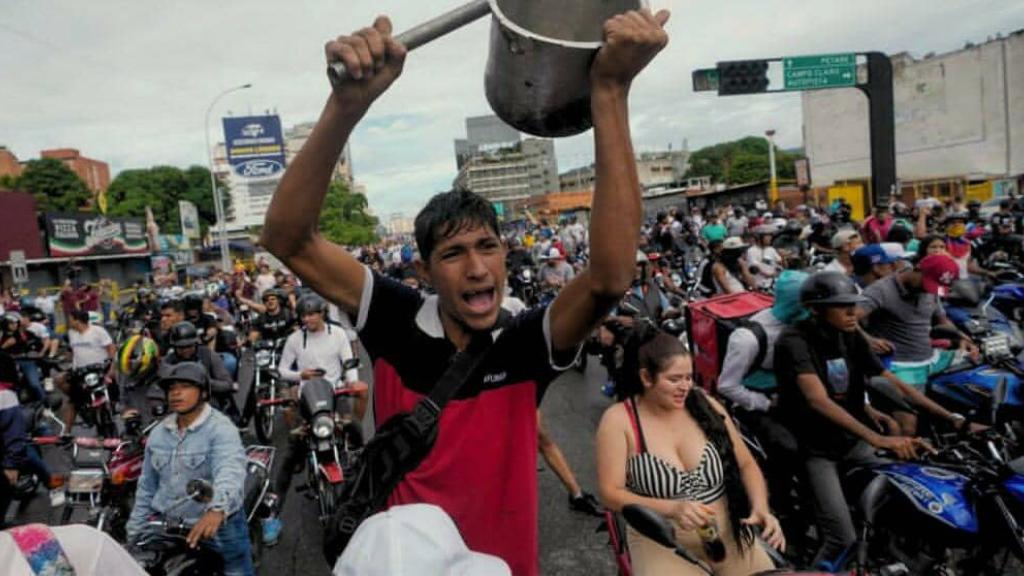
Protest in Venezuela

Steve Ellner’s article, “‘Neoliberal and authoritarian’? A simplistic analysis of the Maduro government that leaves much unsaid,” written in response to Gabriel Hetland’s piece “Capitalism and authoritarianism in Maduro’s Venezuela” and published at LINKS International Journal of Socialist Renewal, provides an opportunity to continue and deepen an important debate about Venezuela’s current political situation and the direction of the Bolivarian government. I want to weigh in on this debate, primarily to respond to several of Ellner’s arguments. 

In my view, his piece attempts to dampen or minimise criticisms of the increasingly authoritarian and regressive course taken by the Venezuelan political system under Nicolás Maduro. His defence of the Maduro government also reflects a broader problem among some sectors of the left: a tendency to remain tied to decaying regimes, while lacking any ideas and imagination to chart out alternative paths that are both critical and rooted in popular struggles. Such political clarity is urgently needed in a world where far-right movements and authoritarianism are gaining ground.

Ellner’s central argument is that criticism of Maduro should be more contextualised and nuanced, and that greater rigour is needed. However, his article simply amounts to a series of so-called “nuances” to Hetland’s arguments that, in effect, justify Maduro’s repression of workers, destruction of wages and implementation of a highly aggressive neoliberal regime. Paradoxically, Ellner’s own arguments lack nuance. He makes glaring omissions on issues that are essential to any analysis seeking to avoid simplistic binaries, especially one grounded in solidarity with popular struggles. In the end, Ellner falls into the very trap he criticises. As for rigour, it is worth noting Ellner often fails to provide any of the data he demands of Hetland. In some cases, his sources are no more than statements from Venezuelan government officials. For this reason, it remains necessary to carry out the work of critical nuance that Ellner claims to value — but unfortunately does not practice.

Sanctions as a tool to silence criticism and dissent

Ellner raises several key issues. For example, he argues international sanctions should be central to any analysis of the situation in Venezuela. I want to make my position clear from the outset: these sanctions are entirely condemnable, especially coming from a government such as the United States, with its long-standing tradition of interventionism and neo-colonialism. I would also add that this is an almost universally shared position on the Venezuelan left — diverse as it is — which has consistently rejected sanctions. In fact, these measures are broadly unpopular across Venezuelan society. Even some liberal scholars, intellectuals and opposition figures have spoken out against them, though others have not. The problem, however, is that Maduro’s government has turned the issue of sanctions into a tool to suppress criticism and debate, and the perfect excuse to justify an ongoing series of economic and political abuses. 

If we are going to talk about nuance and rigour in relation to sanctions, then it is only fair to ask whether these measures actually triggered the worst crisis in Venezuela’s history, and to what extent they have shaped its course. Ellner refers to the sanctions imposed by the Obama administration in 2015, but those were limited to freezing assets and bank accounts in the US, as well as revoking visas and restricting entry for Venezuelan government officials and key figures. What he does not mention is that by 2017 — when the first sanctions targeting Venezuela’s economy were introduced — the country’s GDP had already plummeted by 31.9% from 2013, imports had collapsed by 81.76% compared to 2012, inflation was the highest in the world at 438.1%, and external debt had soared to a staggering $148.3 billion.1 In fact, the slow decline of oil production, along with the deterioration of numerous state-run industries and key agricultural sectors such as sugarcane and corn, began during the Hugo Chávez years. Something was already deeply wrong then, stemming from the deepening of Venezuela’s oil rentier model during Chávez’s government together with a disastrous administrative and economic management. This all unfolded at a time when Chávez enjoyed nearly 70% popularity and benefited from record-high oil prices, years of unprecedented revenues, control over state institutions, and significant regional influence and alliances. 

Ellner fails to mention this context, as well as the rather significant detail of the huge corruption scandals that drained public coffers and harmed the population. These include: foreign exchange fraud through Cadivi; multiple large-scale corruption cases within the state oil company PDVSA, the state food supply network PDVAL and the China-Venezuela Fund; various infrastructure project scams; and a long, ongoing list of other such examples. Ultimately, the widely-promoted narrative of an “economic war” was, in reality, the work of a network of actors that included government officials (sometimes at the highest levels), working in conjunction with international and business-sector elites. This process has continued under Maduro’s government — something even authorities have acknowledged, with the arrests of several high-ranking officials (including multiple presidents of PDVSA) and the revelation of more recent scandals involving the oil company and the state’s cryptocurrency regulator, Sunacrip, that entailed more than $21 billion in uncollected revenue. Given the scale and continuity of this plunder, it is hard to see this as just anomalies or the work of a few unscrupulous individuals. A truly critical thinker must recognise it as a systematic and large-scale mechanism for the illicit appropriation of wealth.

Some may wonder how the Chávez government, which enjoyed huge popularity during the first decade of this century, sank to a disapproval rating hovering between 70-80% under Maduro. The immeasurable suffering of Venezuelans — soaring poverty, collapsed hospitals and basic services, etc — stands in stark contrast to the luxurious, excessive lifestyles of the ruling elites. These elites have luxury apartments in Dubai or Europe, ride around in high-end SUVs, dine in gourmet restaurants, and throw extravagant parties. This reality is deeply rooted in the consciousness of the Venezuelan people and embedded in the national imagination. It explains the widespread loathing of Maduro’s government, the hollowing out of popular support, and the huge voter turnout for the July 28, 2024 presidential elections by a population desperate to end what they perceive as a nightmare. It also helps explain the protests that erupted on July 29-30 against electoral fraud — mobilisations that were primarily driven by working-class neighbourhoods such as Petare, La Vega, El Valle and Catia. 

I watched in astonishment as these protests were criminalised by sectors of the international left who, with chilling ease, labelled them as demonstrations by “people from the far right,” thereby legitimising the brutal repression that unfolded in the days and weeks that followed. We have seen a similar criminalisation of popular protest under right-wing presidents such as Iván Duque in Colombia and Sebastián Piñera in Chile during the huge 2019 protests. If we are to talk about nuance, then there should be deep reflection on the reasons behind the huge public discontent in Venezuela. Followers and supporters of Maduro’s government seem to always prefer to look for external scapegoats and criminalise dissenters rather than take a hard look at how and why they lost the support and connection with the population.

Sanctions have had a subsequent negative impact on the course of the crisis and indeed made recovery from Venezuela’s economic free fall more difficult. But they do not explain the root causes of the societal collapse we have lived through. Nor the fact that this entire process has unfolded within a framework that both triggers and enables wealth appropriation, and that emerged from the heart of the Bolivarian government itself. The official sanctions narrative functions as a powerful mechanism for neutralising debate and criticism — and has unfortunately been adopted by a section of the international left to avoid confronting our reality.

Clinging to narratives of the past to justify the disaster of the present

There is a persistent tendency to cling to arguments from the Chávez government era — when oil revenue was widely distributed throughout society, the nominal monthly wage was US$400, and popular participation in politics was encouraged — and transpose them onto a present reality that has dramatically changed. Several examples can be mentioned. Ellner refers to the communes, even though he himself acknowledges that under Maduro they were marginalised for years. He refers to a “renewed push” to support communes, but does not mention that this marginalisation was part of a broader process of demobilisation and hollowing out of popular organisation, which had very harmful effects, such as stripping the communal idea of its original meaning, with the concept reduced by Maduro to the CLAP food distribution system. Today, the commune proposal has been reinterpreted as an instrument to facilitate the state/government’s territorial control within a political system that has evolved into a kind of neopatrimonial model.

When people talk about the “Bolivarian process,” we are no longer referring to a system based on a national-popular alliance with an emphasis on the most disadvantaged classes. That formula has been drastically reconfigured: the alliance with the military has multiplied the presence of security forces throughout the state, while priority is given to coordinating with the main national business federation (Fedecámaras), working with evangelical church elites, strengthening partnerships with US oil corporation Chevron and Chinese capital in the Orinoco Oil Belt, and supporting bankers and new elites born from within the so-called “revolution”. Importantly, practically all capitalists operating in Venezuela are profiting from the country’s wealth under shamefully preferential conditions, with generous advantages and without any restrictions or mechanisms of accountability. Laws such as the Anti-Blockade Law, the Law on Special Economic Zones, and the Law for the Protection of Foreign Investment, along with tax exemption decrees for companies, backdoor privatisations, Chevron’s License LG41, and the agreements with the China National Petroleum Corporation, among many other examples, demonstrate this reality. What is striking is not that most leftist forces in the country — especially the most combative — have strongly opposed this surrender of national assets, but that the only left still supporting, and even applauding, all this is the pro-Maduro left.

Another example of the disconnect between an outdated narrative and the current regime is Ellner’s insistence that we must not forget the role of the (traditional) Venezuelan opposition when understanding the “scope of the war against Venezuela.” Undoubtedly, this opposition has played a part in the country’s political decay — through certain insurrectionary cycles driven by its more radical wing having further degraded political life, and with its minimal grassroots organising and very few efforts to build real alternatives. What the author fails to explain is how the government ended up crushing not only the right-wing opposition — which lies in ruins, helping explain the rise of María Corina Machado — but also any political or social force that dared oppose it. This included intervening into and splitting traditional parties, such as Acción Democrática and Copei, to impose new leaderships handpicked by the government. The end result is the kind of “opposition” we now see presented to the public. It also included the persecution and imprisonment of union members, community leaders, social organisations and NGOs. Ellner should have highlighted the arrest of grassroots Chavistas and communal organisers, the use of torture in Venezuelan prisons, the crackdown on the Communist Party of Venezuela and the chilling effect of the “Law Against Hate.” But on such sensitive issues, there are no “nuances” in his text — and that is a serious omission.

Ultimately, Ellner does not acknowledge that Venezuela today is not the Venezuela of 2017 or 2019. We face a different scenario today — one shaped by a system of power without any real checks and balances. Any analysis must evolve, just as history does.

Nuancing the destruction of a country? On the limits of the unacceptable

One of Ellner’s conclusions — in my view quite striking — is that Maduro’s mistakes were forced by Washington. This kind of argument reflects a Manichaean outlook, in which a dark, malevolent force (the US) pushes Maduro into wrongdoing. Seen this way, the other side is not truly “bad,” it is merely forced to act that way. It is the kind of reasoning you would expect from someone who follows a leader out of sheer faith. It is difficult to respond with reason to someone who portrays the Maduro government as a victim while failing to mention in the same article the victims within Venezuelan society — those produced by the regime’s decay and predatory turn. Ellner — and here I agree with Hetland — ends up constructing a narrative of justification. For example, Ellner justifies the new alliances with Fedecámaras and their policies, but says nothing about the deliberate destruction of wages or the persecution and imprisonment of workers.

Perhaps at the heart of all this is the question of the limits of the unacceptable. That there are things that quite simply no longer allow for nuance. That there are things that have come to embody the very worst of the horrors the left once spent decades denouncing. That today’s geopolitical dynamics — as abominable as they may be — are not enough to “nuance” the barbarity and devastation of a country carried out by its own government, and in the name of nothing. 

Those who advocate for a supposed “critical support for Maduro” are not far removed in their logic from those who might claim critical support for El Salvador’s Nayib Bukele, Argentina’s Javier Milei, Nicaragua’s Daniel Ortega or Russia’s Vladimir Putin. In the end, anything can be nuanced, anyone can be made a victim. Donald Trump, for instance, can be the victim of the US “Deep State”, Benjamin Netanyahu a victim of Hamas. The argument can be stretched to cover anything — but it always only serves to justify abuse. In the end, such a path can only lead us astray — into a world where we relativise barbarism and plunder, turning them into the new global “normal”. Once there, the left will have lost its way forever. 

Epilogue

One of the many questions that can be raised about Venezuela is this: if that section of the international left that supports the Maduro government is fully aware of the regime’s abuses and corruption but considers it a matter of “honour” to not support traditional opposition leaders or parties, why not instead dedicate their energy, resources, support and advocacy to strengthening a left-wing opposition that might someday challenge for political power? If it is truly about preserving a leftist identity with integrity, why not build bridges with sections of the left opposition inside Venezuela? Why not help develop an alternative that is not neoliberal, but rooted in popular demands — a political project with national reach, capable of uniting diverse organisations and defending wages, workers, popular sovereignty, public education, and other historic demands? 

These questions seem crucial to me and open the door to other much-needed debates.

Emiliano Teran Mantovani is a Venezuelan left activist, researcher and professor in sociology at the Universidad Central de Venezuela. His writings can be found at uab.academia.edu/EmilianoTeranMantovani. Translated by Anderson Bean. 

  • 1

    GDP figures are from the IMF; import data calculated using figures from the BCV, ECLAC, and the OEC; inflation data from the World Bank, IMF, and BCV; external debt figures from ECLAC.


Socialists and the national question in Ukraine, yesterday and today


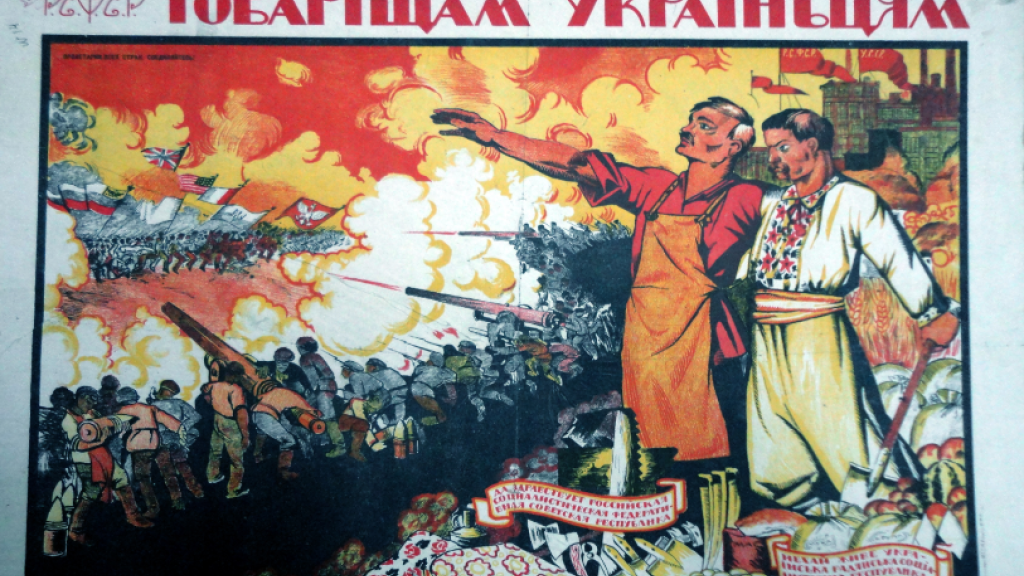
Russian bolshevik poster

It is common on the left to hear Ukraine referred to as a “neo-Nazi state” or “nation of reactionaries”, hellbent on oppressing Russian speakers and left-wing ideas. In reality, the former Soviet republic has a rich tradition of socialist and progressive thinkers who helped shape Ukrainian national consciousness.

Andriy Movchan is a left-wing Ukrainian and a former activist of several left-wing organisations in Ukraine. He now lives in Catalonia, where he devotes himself to issues of media activism, art and journalism. 

In this wide-ranging conversation with Victor Osprey for LINKS International Journal of Socialist Renewal, Movchan explores the influence of progressive thinkers and the Soviet Union on Ukrainian national consciousness, the tense debates among Bolsheviks on Ukrainian independence, how the history of Great Russian chauvinism helps us understand the current war, and the thorny issue of language discrimination.

The second part of this interview discusses the current state of the Russia-Ukraine conflict, the role of the far right in both countries, and the challenges Ukraine’s left forces face in building solidarity with their struggles internationally.

Could you start by explaining why you left Ukraine in 2014?

My biography is interesting because I started my political activism as a right-wing Ukrainian nationalist. Language discrimination contributed to my radicalisation. However, I revised my views towards socialism. My former comrades from the radical right-wing camp did not like this; I was repeatedly attacked in the street by these radicals. In the end, this is what made me leave Ukraine.

In exile, I settled in Madrid. For the first year-and-a-half I lived there illegally — without documents,  money, almost any friends, or knowledge of foreign languages. Later, I was officially granted political asylum and moved to Barcelona, where I live now.

Can you explain the influence of progressive thinkers and socialists to the emergence of a Ukrainian national consciousness in the 19th and early 20th century, from the democratic pan-Slavism of Ukrainian writer and poet Taras Shevchenko to the anarcho-socialist Mykhailo Drahomanov, and figures such as the translator of the Communist Manifesto into Ukrainian, Lesya Ukrainka?

When I was at school in the 1990s, all these historical figures were taught to us as classics of Ukrainian literature and fighters for Ukraine’s independence. But their political views, which were deeply rooted in socialist and democratic traditions, were silenced. I learned much later, when I became interested in left-wing ideas, that Ukrainka and [Ukrainian poet and writer] Ivan Franko were ardent socialists.

The ideology of the ruling class in modern Ukraine tries to avoid talking about these aspects of our history. However, the founding fathers of the modern Ukrainian nation were, for the most part, supporters of egalitarian ideas. 

Paradoxically, portraying Ukrainians as a “nation of reactionaries” whose “mentality is opposed to the ideas of socialism” is beneficial to both the Ukrainian bourgeoisie and Western “tankies” [who support Russian President Vladimir Putin and his invasion of Ukraine]. Yet, a detailed look at the history of Ukraine allows us to assert the exact opposite: the ideas of national and social liberation of the Ukrainian people have always been inextricably linked.

What was the relationship like between Ukrainian and Russian socialists in the era of the tsarist empire? How much cooperation was there?

Ukrainian and Russian socialists of the time closely cooperated as they shared a common enemy: the tsarist autocracy. Ukrainians understood that political changes in Ukraine — which was under tsarist rule — would be difficult to implement without changes in Russia itself. Similarly, Russian revolutionaries realised that peoples oppressed by the Russian empire were a powerful revolutionary resource. 

However, these relations were not easy. In particular, when it came to the issue of Ukraines secession. In this context, the debate between the Ukrainian socialist Lev Yurkevych and Vladimir Lenin is interesting. Yurkevych suggested Ukrainians should focus on their own national struggle, while Lenin appealed for close cooperation, without which the struggle against tsarism could not be won.

In that debate, Lenin said: “Given united action by the Great-Russian and Ukrainian proletarians, a free Ukraine is possible; without such unity, it is out of the question.” This quote was inscribed on the pedestal of the monument to him in Kyiv. However, it should be noted that by the time the Soviet authorities decided to decorate the pedestal in Kyiv with this quote in the 1950s, it had acquired a completely different meaning. 

Taken out of context, it had been incorporated into the Great Russian chauvinism rehabilitated by Josef Stalin. Its new interpretation was that only under the rule of Soviet Moscow could the Ukrainian people be “free”, while any dreams of political independence from Moscow would only harm Ukrainians.

It is important to say that this Leninist phrase has gained new relevance in the context of the war. It is extremely difficult for Ukraine to fend off the invasion of a much stronger enemy — neo-tsarist Russia. The only chance for a just end to the war is not victory on the battlefield, but political change in Russia itself. Thus, cooperation with Russian opposition, anti-war and revolutionary movements should be a priority for Ukrainians. After all, we have a common enemy: the Putin regime. 

However, the logic of the nationalism of the Ukrainian elites prevents such international cooperation. On the other hand, the weakness of the Russian opposition under the Putin dictatorship, and the arrogant attitude of a large part of the Russian left to Ukraine, are also not encouraging.

While Lenin’s writing before and after the 1917 revolution clearly advocated for self-determination and upheld Ukrainian national rights against Russian chauvinism, it was sacrificed at times for the sake of extracting resources, particularly during the civil war. Other Bolsheviks held a more “Luxemburgist” view [a reference to Rosa Luxemburg] that regarded specifically “national” demands as irrelevant or reactionary. 

Eventually, a radical socialist party in Ukraine called the Borotbists merged with the Ukrainian Bolsheviks, organised in the Communist Party (Bolshevik) of Ukraine in 1921. Bolshevik policy then shifted to one of “Ukrainisation”, where Ukrainian language and culture was promoted, leading to a linguistic and artistic renaissance in the 1920s. However, this was largely abandoned under Stalin. How do you understand this process, and what were the consequences of its abandonment?

The processes of national revival in the 1920s, and the reverse process of rehabilitation of Russian chauvinism in the 1930s followed by Russification, are key to understanding Russia’s current invasion. The lack of knowledge about the Ukrainian national question at this crucial period among the Russian and global left prevents us from understanding the true context of the war.

Even Putin, in his February 21, 2022, speech ideologically justifying the invasion, refers to the 1917 revolution as the “root of the problem” — that is, the existence of an independent Ukraine. Putin is nostalgic for the days of the Russian empire, when Ukraine did not exist as a political entity. He accused Lenin of having granted the peoples of the empire the right to self-determination, which Ukraine and other republics exercised in 1991.

Lenin was an extremely progressive politician of his time, and understood that the struggle of the peoples oppressed by tsarism was a powerful revolutionary force. At the same time, as an advocate of building socialism within the framework of great powers, he did not welcome the separation of peoples. While proclaiming slogans of self-determination, in practice he opposed them.

As a result, after victory in the Civil War, the Bolsheviks found a compromise formula: while denying Ukrainians independence (which they were forced to grant to Poland and Finland), they granted Ukraine formal autonomy within the framework of the Soviet Union. At the same time, they launched a process of indigenisation, which involved positive discrimination in favour of the Ukrainian language and culture to overcome the effects of tsarist Russification and make the Ukrainian masses understand that the revolution was their project, not something foreign. Indigenisation was accompanied by an unprecedented surge in Ukrainian revolutionary culture. We have never had better examples of world-class literature, cinema, and art before or since. 

This did not last, however. By 1932, with the beginning of collectivisation, Stalin flipped this policy 180 degrees. If Russian chauvinism had been considered the main enemy, now “Ukrainian bourgeois nationalism” was proclaimed the main enemy. Ukrainian schools and magazines were closed, and hundreds of the best representatives of the Ukrainian revolutionary intelligentsia were killed — they would later be called the “Executed Renaissance”. Ukrainian culture was relegated to a formal, decorative place. Russification, and even the rehabilitation of Russian imperial chauvinism in the late 1930s, followed.

Due to the assimilation processes at the end of the Soviet era, the Ukrainian language was in a very poor state. Large cities in Ukraine (except in the western regions) became almost entirely Russian-speaking. Dissidents’ attempts to criticise this state of affairs were repressed. Linguistic assimilation and the fact Ukraine continued to be de facto ruled by Moscow during the Soviet era made many people from Moscow or Leningrad believe Ukraine was part of Russia and that its independence was an unfortunate mistake. Putin is among them.

What was the social status of those who only or mostly spoke Ukrainian in Soviet Ukraine, compared to Russian speakers? Was it a barrier to social mobility, or a sign of “backwardness” and being from a rural background where Ukrainian was more widely spoken?

The real situation of Ukrainian speakers in the Ukrainian Soviet Socialist Republic (SSR) is really important for understanding the context of the war. It is a pity that very few people know about this issue.

After the policy of indigenisation was abandoned in the early 1930s, the situation of the Ukrainian language deteriorated significantly. The number of Ukrainian schools gradually decreased, and the proportion of books and magazines in Ukrainian fell. Russian dominated higher education, science and popular culture. In the 1970s, targeted Russification took on catastrophic proportions.

Worst of all, Ukrainian had a reputation as a village language. In large cities, Ukrainian speakers were perceived as “unwashed peasants”, “backward”, and “collective farmers”. It was believed that those who were cultured, educated and “progressive” should speak Russian. Domestic bullying of Ukrainian speakers in public places (queues, public transport, workplaces) was extremely common. For children and young people, it was simply impossible to speak Ukrainian without facing ridicule and social exclusion in cities such as Kyiv, Donetsk, Kharkiv, Odesa and Dnipro. Villagers who came to the cities (and even more so their children) developed an inferiority complex and preferred to switch to Russian.

The state left a certain niche for the Ukrainian language: official literature, some cinema, philology faculties, and some media and TV. But against the backdrop of a total decline in the prestige of the Ukrainian language, these areas were no longer taken seriously by society. At the same time, any attempts to problematise the status of the Ukrainian language by intellectuals and dissidents were considered by the state as “Ukrainian nationalism” and punished by repression. During the Leonid Brezhnev era, there were several campaigns to combat “nationalism”. Meanwhile, manifestations of Russian chauvinism were not punished at all.

The situation of language inequality persisted even after Ukraine gained independence. In my childhood and teenage years in Kyiv, there was not a single native Ukrainian speaker in my neighbourhood. Ukrainian speakers were bullied. When I was 18, I switched from Russian to Ukrainian on purpose, in protest against discrimination. Even my friends laughed in my face and called me a “collective farmer”. It was an interesting challenge. For hundreds of people around me, I was the first person to show that it was not a shame to speak Ukrainian.

Despite the existence of Ukrainian publications and language schools, the language was relegated to a secondary status, which went against official promotion of “bilingualism” and the full equality of peoples in the Soviet Union. Were those who spoke up about wanting greater promotion of Ukrainian language and culture in the form of magazines, books, films — many of them Communists such as Ukrainian literary critic Ivan Dzyuba — regarded as “nationalists”, as opposed to the automatic assumption that reading and speaking the lingua franca of the Soviet Union, Russian, was “internationalist”?

Ivan Dziuba, in his work Internationalism or Russification?, quite correctly addressed the position of the Ukrainian language and argued for a Leninist perspective. Formally, the Ukrainian language in post-Stalinist times had equal status with Russian. However, from the point of view of Marxism, practice is the criterion of truth. Could a person who spoke Ukrainian expect to be treated in the same way and similarly climb the same social ladder as Russian speakers? Absolutely not. 

Moreover, institutional discrimination (such as against Russian speakers in independent Ukraine) may be more visible than everyday discrimination, but normalised domestic discrimination — bullying — is much more socially painful. If a person runs the risk of being subjected to humiliating remarks every day, of being called a “collective farmer” or being asked to “speak a normal language”, it is as much or more painful. Especially when there is no way to defend oneself against it.

Such discrimination could not only break people down and force them to assimilate, but also radicalise them. For example, the dissident [Ukrainian poet] Vasyl Stus took the path of fighting for language rights after he was humiliated for speaking Ukrainian in a canteen queue in Donetsk. The situation was aggravated by the fact that the party saw dangerous nationalism in defence of the Ukrainian language. If someone like Dziuba or other dissidents began their criticism as committed Communists, the party’s repression left them disillusioned with socialist ideas.

Were Russians regarded, officially or not, as the “leading people” of the Soviet Union, and the embodiment of and “rightful” leaders of progressive pan-Slavic aspirations, albeit in a formally Communist guise?

In the late 1930s, Stalin’s doctrine officially established a hierarchy of nations in the Soviet Union, with Russians playing a leading role. It was argued that Russians had carried out the revolution, leading the rest of the nations. In addition, Stalin’s ideologues began to present the Soviet Union as the heir to Russia's “millennial” statehood. 

The foundations of the Russian national myth and Russian nationalism as a mass ideology were laid in the 1930s. Even the Soviet Union’s anthem, written in 1943 by Sergei Mikhalkov, has the opening words: “The union of indestructible republics of the free was forever united by the great Russia.” What do these words have to do with internationalism?

Stalin relied on Russian nationalism to facilitate the patriotic mobilisation of the masses in the event of war. The ideas of internationalism were too complex to provide that mobilisation potential, as they were based on a belief in national exclusivity and superiority. This is a very important detail that is often misunderstood by the Western left. In almost any war for independence, nationalism is a decisive driving force. World War II was won by the Red Army, not under the slogans of a global revolution but of defending the Russian homeland. “We fought not for Communism, but for Russia,” as participants of the war confessed. 

Is it any wonder then that nationalism is also becoming a driver of Ukraine’s defence? This is absolutely natural.

Can you speak about the current language policy of the Ukrainian state? Are speakers of Russian or Surzhyk [Ukrainian–Russian pidgin] discriminated against?

Throughout the existence of independent Ukraine, both Russian and Ukrainian languages have faced discrimination. Russian was subject to institutional discrimination because it was not the official language. In practice, however, Russian remained dominant for a long time even in institutions such as national TV and schools in the southeastern regions, while Ukrainian was subject to discrimination in everyday life in large cities and Russian-speaking regions.

In 2022, there was a huge surge of patriotism. Many Russian-speaking people joined the army to defend the country, and even more people switched to speaking Ukrainian in civilian life. It seemed solidarity was uniting the country after a long time. Unfortunately, however, the state’s language policy has begun to radicalise. Discrimination against the use of Russian in public space has become more frequent. Everyday life discrimination against the Russian language, which used to be rare, has emerged.

However, the talk from tankies about repression of the Russian language or its prohibition are fiction. Cities such as Kharkiv, Zaporizhzhia and even Kyiv continue to be predominantly Russian-speaking. These Russian-speaking citizens are under constant attack from Putin’s missiles, which is why they sincerely hate the “liberators” from the north.

Can you break down some of the views on the international left towards Ukraine and their assumption that Russian-speaking region automatically implies pro-Russian sentiment? Kharkiv, for example, is a city where most people speak Russian and the vast majority stand against the Russian invasion…

Kharkiv is an excellent example of the fact that Russian-speaking people, who are the absolute majority there, are not waiting for Russia to “liberate” them. It is one of the regional centres most affected by Russia’s aggression. It is 40 kilometres from the border, so Russian missiles, drones and heavy aircraft bombs shell the city almost daily. Kharkiv has become a symbol of the resilience of the Ukrainian people, as its residents have been heroically rebuilding their city for more than three years. 

The same can be said about Zaporizhzhya, Kherson, Odesa, Mykolaiv, Kryvyi Rih, Dnipro — all have a majority of Russian-speakers, but they are Ukrainians.

How severe is the repression and Russification of Ukrainians in Russian-occupied parts of Ukraine? 

Russification and assimilation of the population in the occupied territories is a priority for the occupation administrations. All references to Ukraine are being eliminated. The Ukrainian language is being eradicated. The very use of the Ukrainian language is considered disloyalty to the occupiers. For this, people can be fired from their jobs, kidnapped and even tortured.

But the main thing is the education system and indoctrination of children. All schools have been switched to the Russian language. Students are brainwashed with Russian chauvinistic propaganda and taught to hate Ukraine. Tens of thousands of children are involved in the chauvinistic scouting organisation Yunarmiya (All-Russian Military Patriotic Social Movement “Young Army”), where they undergo ideological indoctrination and military training. This is simply terrible: Putinists are training Ukrainian children from the occupied territories to fight against other Ukrainians!

Also, settler colonisation is being carried out on occupied lands. Russia does not even trust local collaborators with serious positions, so it sends teachers, doctors, officials and security officers from Russian regions instead. There are favorable loan and mortgage programs for Russians to resettle in the occupied territories. Through colonisation and assimilation, Russia is deliberately carrying out a gradual ethnic cleansing.

Is there any effective Ukrainian resistance in the occupied territories?

As for Ukrainian partisan resistance, it is not widespread. The most active opponents of the occupation managed to leave those territories. The activities of guerrilla groups are also complicated by the strength of Russian security services, which has easily exposed such groups. Even Ukraine’s military leadership has called on Ukrainians in the occupied territories not to take risks and wait for liberation. Guerrillas mostly act by passing on intelligence information, missile strikes on occupiers’ military targets and committing acts of sabotage. 

There is a movement of women from the occupied territories called the Angry Mavkas [a reference to a virtuous nymph from Ukrainian folklore who lures young men to their deaths in the woods], which reminds the occupiers through posters and graffiti that they are not welcome here. The Tatar guerrilla movement Atesh also operates in Crimea.

You manage the social media page Socialist Art on Facebook and Instagram. What sparked your interest in historical socialist art? And how do you relate this to the contradictory legacy of the Soviet Union, particularly in Ukraine?

I have long been interested in the aesthetic legacy of revolutionary movements and socialist regimes. Back in Ukraine, I wrote a lot about art as an art critic and read about art history. Sometimes I posted examples of Soviet art on my Facebook page. 

Later, I had the opportunity to run a Socialist Art page, and discovered tens of thousands of followers from all over the world who had a great thirst for learning about this art. My knowledge could meet this demand. The Socialist Art page really gained a lot of popularity. There were thousands of followers from different countries: India, Brazil, United States, Germany, Turkey, Britain, Mexico. Most were from Kolkata, West Bengal, which is considered the “red state” of India.

However, at some point, I lost my enthusiasm. The most interesting pieces of art, such as the Soviet avant-garde of the 1920s, were not gaining popularity. At the same time, primitive and recognisable images of propaganda, such as the hammer and sickle or portraits of leaders, instantly gained thousands of likes and reposts.

I was even sadder to find that hundreds of thousands of left-wing activists from around the world who love Soviet art were absolutely sincere in their support for Russia’s aggression against Ukraine. To convince my followers otherwise, I tried to promote the art of the 1920s indigenisation period, the avant-garde repressed by Stalin and Russian anti-war art. However, these efforts were in vain.

If a person is convinced that any aggressor who opposes the West has the right to invade and occupy other countries, this is not socialism. This is campism [which sees the world as simply divided into a pro-US imperialism and an anti-US imperialism camp, and automatically supports any force in the latter camp]. It is a religious belief and no art can help.