Tuesday, June 03, 2025

More than 1,800 people arrested in crack down on Asia-based scam operations


By The Associated Press
Published: June 03, 2025 

The skyline of the business district is silhouetted at sunset in Hong Kong 
(AP Photo/Vincent Yu) (Vincent Yu/AP)

HONG KONG — More than 1,800 people have been arrested in a joint operation across Asia targeting scam networks, police in Hong Kong said on Tuesday.

The crack down involving authorities in six other jurisdictions successfully intercepted fraudulent funds involving about US$20 million, Wong Chun-yue, chief superintendent of the city’s police’s commercial crime bureau, said.

The scam networks were closed down during the operation jointly conducted by South Korea, Thailand, Singapore and neighbouring Chinese gambling hub Macao, he said.

The operation, which also involved authorities from Malaysia and the Maldives, targeted cases of online shopping and telephone scams, as well as investment and employment frauds. Nearly 33,000 accounts were frozen in the month to May 28, Wong said. Those arrested were aged between 14 and 81.

In one case in March, a finance director in Singapore was scammed through deep-fake videos by someone who claimed to be the chief executive at a multinational corporation. The victim transferred $499,000 to Hong Kong, said Aileen Yap, assistant director of Singapore police’s anti-scam command. Through cross-border cooperation, the money was recovered, she said.

The victims of scams and online fraud often include not only those defrauded but also the workers used by scamming operations, with staff facing threats, violence and poor working conditions.

A United Nations report in April found transnational organized crime groups in East and Southeast Asia are spreading their scam operations across the globe.

For several years, scam compounds have proliferated in Southeast Asia, especially in border areas of Cambodia, Laos and Myanmar, as well as in the Philippines, shifting operations from site to site to stay a step ahead of the police, according to the report issued by the U.N. Office on Drugs and Crime.

The scam centers in Myanmar, Cambodia and Laos are notorious for luring people to work in them under false pretenses. Staff are often forced to financially exploit people around the world through false romances, bogus investment pitches and illegal gambling schemes. Many workers find themselves trapped in virtual slavery.

Kanis Leung, The Associated Press

Oxford Properties buys CPP Investments’ stake in office portfolio in Western Canada

By The Canadian Press
 June 03, 2025 

Signage is seen in the reception of CPP Investments' Toronto offices, on Thursday, Sept. 21, 2023. THE CANADIAN PRESS/Chris Young

TORONTO — Oxford Properties Group has signed a deal to buy the Canada Pension Plan Investment Board’s 50 per cent stake in a group of office properties in Western Canada that they co-own for $730 million.

The deal gives Oxford full ownership of the portfolio that includes seven downtown office properties.

Oxford is the global real estate arm of pension fund manager OMERS.

The deal covers Eau Claire Tower, Centennial Place and 400 Third in Calgary, while in Vancouver it includes the Stack, Guinness Tower, the Marine Building and MNP Tower.


Oxford and CPP Investments will still co-own a substantial portfolio across Canada.


Tyler Seaman, Oxford Properties executive vice-president, Canada, says the fund believes now is an opportune time to rotate capital back into this asset class.

This report by The Canadian Press was first published June 3, 2025.
Why Are There So Many Shoes Hanging From Power Lines?

And why you shouldn't take them down.


Rachael Funnell
Writer & Senior Digital Producer
Editedby
Johannes Van Zijl
IFLSCIENCE


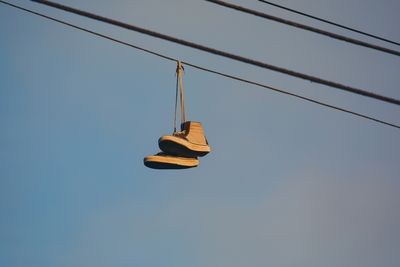
Pro tip: don’t yeet your sneakers over a power line if you want to wear them again.
Image Credit: Jason Busa/Shutterstock.com


Ever been out for a walk and noticed a pair of sneakers dangling from a power line? It's a surprisingly common sight, and there's a reason behind it.


Shoe tossing - also known as 'shoefiti' - happens all around the world, and for a variety of reasons. Let’s explore some of the most common theories behind this puzzling phenomenon.

Memorial

Humans have been memorializing the dead for millennia, with graves and burial sites dating back as far as the Neanderthals (though some of that may have been the work of bees). Since then, we’ve come up with all sorts of ways to remember lost loved ones, from Memento Mori to hanging shoes on powerlines.

The practice has the potential to backfire, however, particularly in the case of a TikTokker who angered people after posting a now-deleted video where they cut down hanging shoes to sell. The stunt was criticized online for being “insensitive” after the user said, “When you see shoes on power lines, you might think of gang territory, but what I think of is profits,” tapping into a common legend about shoe tossing.

Territory

One of the more dramatic theories behind shoe tossing is that it’s a marker of “gang activity”, marking territory or communicating messages, such as where people can buy drugs. Our old debunking pals at Snopes have labeled this theory a Legend, because, simply, there’s no one answer as to why people toss shoes over power lines.

However, just because something isn’t a universal sign of gang activity doesn’t mean that’s never the case. As WBEZ Chicago found out when they spoke to Missouri state prison inmate Patrick Starr, once a high-ranking member of the Bloods gang. “To us in Kansas City it was about your crew and y’all marking your neighborhood.” According to Starr, other inmates from Chicago and St Louis “said that represented guys who were killed from each neighborhood.”

Taunting

If you’re old enough to have endured high school, this one likely won’t be surprising. In the United States, the standard utility pole is around 10 meters (35 feet) tall, making them a great place to toss someone’s sneakers if you really want to piss them off, being both too high to reach, as well as really dangerous.

Wearing rubber gloves or rubber-soled shoes can’t protect you from electrocution from powerlines, according to Austin Energy. So, if some dumbass tosses your shoes over a power line, do not try to get them back.

Wayward sneakers can hold all kinds of meaning and information, and in the case of marine forensics, those found sailing with human feet still inside can have a lot to say. It seems that unless you’re there in the moment, it's unlikely you'll ever know the true motivation behind shoefiti. 

World's oldest Neanderthal fingerprint found on 43,000-year-old pebble in Spain

Researchers suggest the pebble may represent one of the earliest human facial symbolizations in prehistory.


MAY 28, 2025 
World's oldest Neanderthal fingerprint found on 43,000-year-old pebble in Spain. Illustration.(photo credit: Tom Bjorklund/Max Planck Institute for Evolutionary Anthropology)


Scientists unearthed a granite pebble bearing the world's oldest known human fingerprint, left by a Neanderthal approximately 43,000 years ago. The pebble, found at the San Lázaro Shelter archaeological site in Segovia, Spain, provides evidence of the symbolic thinking and abstract capacity of Neanderthals. According to Deutsche Welle, the finding was clearly identified as Neanderthal through multispectral techniques and forensic analysis.

The discovery was announced by the Spanish National Research Council (CSIC), and detailed findings were published in the journal Archaeological and Anthropological Sciences. The research was conducted by a team of scientists from the Complutense University of Madrid (UCM), the Geological and Mining Institute of Spain (IGME-CSIC), the Scientific Police of the National Police, and the University of Salamanca.

"The discovery represents direct evidence of the intentional use of pigments for symbolic purposes by Neanderthals," said David Álvarez Alonso, a researcher at the Department of Prehistory, Ancient History, and Archaeology of UCM. The pebble features a red ochre dot applied with the tip of a finger, leaving behind a complete fingerprint.

Further analyses determined that the fingerprint belonged to a Neanderthal male aged between 18 and 25 years. The print was made with the right index finger, emphasizing the symbolic capacity of Neanderthals. The pigment used was composed of clay and iron oxides, commonly known as ochre, which was often utilized in prehistoric cave paintings.

The pebble was discovered during the 2022 excavation campaign at the San Lázaro Shelter site, a rocky cavity on the bank of the Eresma River. The site provided refuge to Neanderthals between 41,000 and 45,000 years ago and contains abundant remains of lithic industry associated with Neanderthal tools, including those shaped using the "Levallois" technique.

World's oldest Neanderthal fingerprint found on 43,000-year-old pebble in Spain (credit: Pedro A. Saura Ramos/Archaeological and Anthropological Sciences, 2025 (Open Access))

"The piece was very special: it was not an anvil, that is, it had not been used to carve on it, nor was it a hammer to make tools. It was a piece of granite without marks that had been brought expressly to that limestone cave," explained geologist Andrés Díez-Herrero of IGME-CSIC. Researchers suggest that the pebble's natural notches resembled the eyes and mouth of a human face, and the red dot was placed where the nose would be, indicating a possible representation through pareidolia.

"Where the nose should have been, a perfect fingerprint had been imprinted. It was amazing," Díez-Herrero recounted. The team believes that a Neanderthal may have seen the stone with a shape similar to a face, picked it up, and intentionally marked it with ochre, projecting abstract thought onto a material object.

Analyses using scanning electron microscopy (SEM), 3D scanning, and multispectral techniques were conducted to determine the intentional manipulation of the pebble.

The authors of the study conclude that the stone was intentionally manipulated for non-utilitarian purposes. "The fact that the pebble was selected for its appearance and marked with ochre demonstrates that there existed a human mind capable of symbolizing, imagining, idealizing, and projecting thoughts onto an object," they stated.

"This object contributes to our understanding of Neanderthals' capacity for abstraction, suggesting that it could represent one of the earliest human facial symbolizations in Prehistory," the authors wrote in the study.

The San Lázaro Shelter site is considered a key location for studying the last Neanderthal communities in the Iberian Peninsula, believed to have been inhabited just before their extinction about 30,000 years ago. The site contains numerous artifacts and remains, including tools and animal bones, providing valuable insights into Neanderthal life.

However, some experts expressed skepticism regarding the interpretation of the findings. Archaeologist Javier Baena from the Autonomous University of Madrid congratulated the team for bringing the fingerprint to light but disagreed with their conclusions. "The finding itself, excellently analyzed in its materiality, is of undoubted interest. The problem arises when one wants to dress it with a character of unicum (the oldest, the most singular) and the argument is forced in support of a purpose that strays from the strictly scientific," Baena commented.

The research team named the pebble "Perico" in honor of Spanish cyclist Pedro Delgado, who won a historic stage at Alpe D'Huez on July 14, 1988, leading him to win the Tour de France that year.

"The finding not only represents a milestone in European prehistoric research but also an invaluable opportunity to promote the archaeological heritage of Castilla y León," the CSIC stated.
Powerful 5.8 earthquake jolts Turkey, dozens injured
JUNE 3, 2025 

ISTANBUL: A powerful earthquake measuring 5.8 on the Richter scale struck southwestern Turkey on Tuesday, injuring dozens of people and causing panic among residents.

According to international media reports, strong tremors were felt in the Marmaris region, where people rushed out of buildings and onto the streets in search of safety.

The quake, which struck with considerable force, reportedly injured around 70 people, including a 14-year-old girl. Turkey’s interior minister said on social media that some of the injured had jumped from heights in an attempt to save themselves during the quake, causing damage.

Despite the chaos, authorities have confirmed that there has been no significant structural damage to residential buildings so far. Emergency services responded quickly, and rescue operations have been launched in the affected areas.

The seismic activity is the latest in a series of tremors to hit Turkey in recent months. Authorities are closely monitoring the situation and have urged citizens to remain calm and follow safety protocols.


More than 200 prisoners break out of Pakistani jail after earthquake panic, says official

Prisoners ran through the area throughout the night, some of them barefoot, with police giving chase, local TV footage showed.

By REUTERS
JUNE 3, 2025 


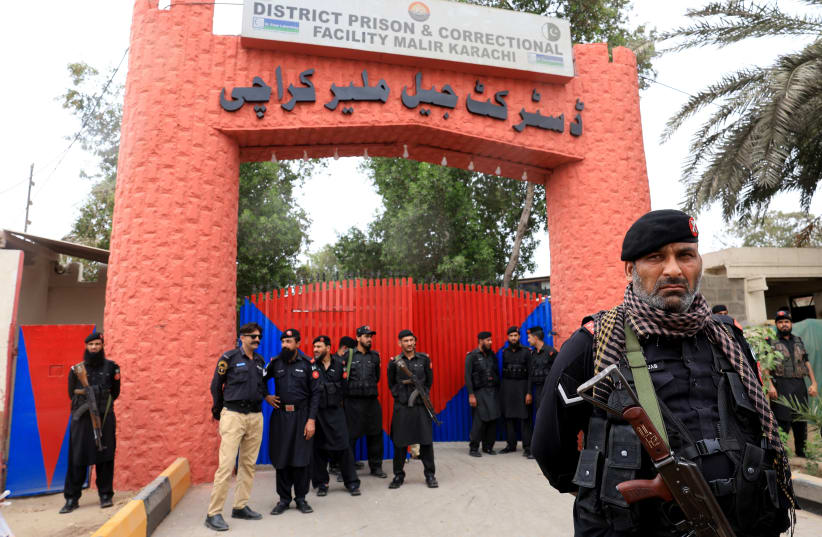
Paramilitary soldiers stand outside the district Malir jail after dozens of prisoners escaped from the jail on the outskirts of Karachi, Pakistan, June 3, 2025.(photo credit: REUTERS/Akhtar Somroo)

More than 200 inmates escaped from a jail in the southern Pakistani city of Karachi late on Monday when they overpowered prison guards after being allowed to leave their cells following a series of earthquakes, local officials and police said.

The jailbreak began just before midnight and continued into the early hours of Tuesday after hundreds of prisoners were allowed into the courtyard of the District Malir prison because of the tremors, Zia-ul-Hasan Lanjar, the provincial law minister, told reporters at the scene on Tuesday.

Police said the prisoners snatched guns from prison staff and forced open the main gate after a shootout, evading paramilitary soldiers. At least one prisoner was killed and three guards wounded, said Provincial Police Chief Ghulam Nabi Memon.

"I heard the firing for quite some time and then some time later prisoners made their way out running in all directions," Bukhsh, a private security guard at a residential complex opposite the jail who goes by a single name, told Reuters.

He added that some of the prisoners entered the apartment complex before being taken away by police.
Members of media are seen through a broken glass window inside the premises of the district Malir jail after dozens of prisoners escaped from the jail on the outskirts of Karachi, Pakistan, June 3, 2025. (credit: REUTERS/Akhtar Somroo)

On Tuesday, a Reuters reporter who visited the prison saw shattered glass and damaged electronic equipment. A meeting room, for prisoners to see their families, had been ransacked. Anxious family members had gathered outside.

The jailbreak was one of the largest ever in Pakistan, Lanjar said. The prison, which houses 6,000 inmates, is in the Malir district of Karachi, Pakistan's biggest city.

Prisoners ran through the area throughout the night, some of them barefoot, with police giving chase, local TV footage showed. About 80 of those who escaped had been caught, said Murad Ali Shah, the provincial chief minister.
Not all of the prison's inmates escaped

The jail's superintendent, Arshad Shah, told reporters that there were 28 prison guards on duty at night, and that "only a few of such a large number of prisoners escaped". He said the prison did not have security cameras.

Officials said the inmates, many of them heroin users, had been unnerved by the earthquakes.

"There was panic here because of earthquake tremors," said Lanjar.

The provincial chief minister said it was a mistake for prison authorities to have allowed the prisoners to leave their cells. He urged the inmates still at large to hand themselves in, or face a serious charge for breaking out.

"Petty crime charges will become a big case like terrorism," Shah said.


Oil, Strategy, And Survival: How Energy Security Determined The Course Of The Second World War – Analysis

A B-24 Liberator called Sandman during a bomb run over the Ploiești Astra Română refinery during Operation Tidal Wave. Photo Credit: 44th Bomb Group Photograph Collection, Wikipedia Commons


By 

Energy security is not just a modern geopolitical issue; it has been a decisive factor in shaping global conflicts throughout history.


The Second World War (1939-1945), a conflict that involved nearly every major power and reshaped the world order, was no exception. From the control of oil fields to securing access to strategic raw materials, energy security played a critical role in determining the outcome of the war and the character of the military strategies employed by the belligerents. The strategic importance of energy resources—especially oil—shaped the course of battles, influenced diplomatic alliances, and even impacted the decision-making processes of military and political leaders.

The Strategic Importance of Oil: The Nexus Between Energy and Warfare

The Second World War marked the first large-scale conflict where oil and energy resources were not only a vital component of industrial production but also directly influenced military strategy. As Daniel Yergin discusses in his seminal work The Prize: The Epic Quest for Oil, Money, and Power (1991), oil was the “lifeblood” of modern warfare. Tanks, aircraft, naval vessels, and trucks—all the key components of mechanized warfare—depended on oil. The need for oil not only shaped the strategic outlook of the warring powers but also set the stage for some of the most critical battles and turning points of the war.

For Adolf Hitler’s Germany, securing energy resources was essential for continuing the war effort, especially after the early successes in Europe. By the time the war began, the Nazi regime had already identified the Soviet Union’s oil fields, particularly those in the Caucasus region, as a crucial prize. The seizure of the oil-rich areas was seen as vital to fuel Germany’s war machine. As historian Alan Clark writes in The Fall of the German Empire: The Collapse of the Third Reich (1982), “The drive to the east was more than an ideological mission; it was a battle for the control of oil fields, which would enable the Reich to sustain its war effort.”

Germany’s Strategic Imperative: The Caucasus Oil Fields and the Battle of Stalingrad

In the early years of the war, Hitler’s plans for global dominance included gaining control over the Soviet Union’s vast energy resources. The German military’s Operation Barbarossa, launched in June 1941, aimed to take Moscow, destroy the Soviet army, and secure the oil fields of the Caucasus. The Battle of Stalingrad, fought from 1942 to 1943, became the turning point in the war, both militarily and strategically. The German Sixth Army’s attempt to capture Stalingrad was part of a broader effort to secure access to the rich oil reserves of the Caspian Sea.

The importance of oil was emphasized by General Erich von Manstein, one of Hitler’s top military strategists, who acknowledged the necessity of seizing oil-rich regions to ensure Germany’s survival. According to David Stahel in Operation Barbarossa and Germany’s Defeat in the East (2009), the failure to capture Stalingrad and the subsequent defeat of the German forces were partly due to logistical difficulties, including inadequate fuel supplies. Germany’s inability to secure sufficient energy resources for its military operations contributed directly to the collapse of its Eastern Front.


The Battle of Stalingrad, thus, was not only a clash of ideologies but a pivotal moment where control over energy supplies—specifically oil—would determine the future of the war. The German failure to secure the oil resources from the Soviet Union marked a decisive blow to their war efforts, as their military machine ran low on fuel and became increasingly ineffective.

Japan’s Quest for Energy and Resources in the Pacific

While Germany focused on securing oil from the East, Japan sought to dominate the Pacific region to gain access to vital raw materials, particularly oil, rubber, and tin. Japan’s limited domestic energy resources, coupled with its reliance on imported oil from the United States and the Dutch East Indies (present-day Indonesia), made energy security a critical issue. The embargoes placed by the United States and the United Kingdom in response to Japan’s expansionist policies in Asia severely crippled Japan’s access to energy, forcing the country to take drastic measures.

The Japanese decision to attack Pearl Harbor in December 1941 was not just about crippling the U.S. Pacific Fleet; it was also about securing the oil fields in Southeast Asia, which were critical to Japan’s war effort. As noted by historian John W. Dower in War Without Mercy: Race and Power in the Pacific War (1986), Japan’s desire to seize control of the oil-rich territories of Southeast Asia was a primary motivation behind its military expansion. The Japanese believed that control over these resources would allow them to secure their dominance in the Pacific and sustain their war machine against Allied forces.

The oil fields in Borneo, Sumatra, and the Philippines were considered vital for Japan’s survival. According to Richard J. Samuels in Securing Japan: Tokyo’s Grand Strategy and the Future of East Asia (2007), Japan’s military strategy in the Pacific was deeply intertwined with the need to secure these energy resources, as they were indispensable for fueling Japan’s naval and air forces.

The Allied Response: The Strategic Bombing of Oil Refineries

The Allies understood the critical importance of oil to the Axis powers and sought to disrupt their access to these vital resources. One of the key strategies used by the Allies was the targeted bombing of oil refineries and supply lines. The bombing raids on German synthetic oil plants, particularly the attacks on the Ploiești oil fields in Romania, were designed to cripple Germany’s ability to produce and refine oil. According to historian Martin van Creveld in Supplying War: Logistics from Wallenstein to Patton (1977), the destruction of oil production facilities severely hampered Germany’s military operations, leading to a shortage of fuel for tanks, planes, and other mechanized units.

The Ploiești raids, though costly in terms of Allied lives and resources, demonstrated the pivotal role that oil played in the war. As Yergin notes, “Control of oil was not only about military supremacy; it was about economic survival and the ability to wage total war.” The targeting of energy infrastructure by the Allies was one of the defining features of World War II, as it emphasized the strategic significance of energy resources in modern warfare.

The United States and Its Role as the Arsenal of Democracy

By the time the United States entered the war in 1941, it had already established itself as the world’s preeminent oil producer. The U.S. had vast domestic reserves, and its energy security ensured that it could maintain a robust war effort without the same vulnerabilities faced by Germany and Japan. As historian David Kennedy explains in Freedom from Fear: The American People in Depression and War (1999), the United States’ economic and military power during World War II was largely due to its control over energy resources.

The U.S. was able to fuel not only its own military forces but also provide oil and other resources to its allies through programs like Lend-Lease. The ability to supply energy to the Soviet Union, the United Kingdom, and other Allied powers helped to ensure the defeat of the Axis powers. This energy diplomacy underscored the importance of energy security in shaping the strategic decisions of the war.

Energy Security and the Post-War World Order

The importance of energy security during the Second World War laid the groundwork for the global energy order that emerged in the post-war period. The United States, with its vast energy resources, emerged as the world’s leading superpower, while the Soviet Union and other European powers were left to rebuild their war-torn economies.

The post-war era also saw the rise of new global energy institutions, such as the Organization of Petroleum Exporting Countries (OPEC), which would later play a pivotal role in shaping global energy markets and geopolitics. As Yergin notes in The New Map: Energy, Climate, and the Clash of Nations (2020), the energy security issues that defined the Second World War continued to shape global power relations well into the 20th century and beyond.

Conclusion: Energy Security as a Driving Force of World War II

In conclusion, energy security was not merely a supporting factor in the Second World War—it was a driving force that shaped the character, course, and outcome of the conflict. From Germany’s failed attempts to secure Soviet oil fields to Japan’s quest for Southeast Asian resources and the Allied efforts to disrupt Axis energy supplies, the strategic importance of energy was undeniable. The war demonstrated that access to energy resources was as important as military strength and diplomatic alliances in determining the outcome of a global conflict.

As we look at the energy crises of the 21st century, the lessons of World War II remain relevant. Energy security continues to shape global politics, and the control of energy resources remains central to the strategies of great powers. The legacy of energy as a key factor in warfare and geopolitics, as highlighted by the Second World War, continues to influence international relations today.

References:

• Yergin, D. (1991). The Prize: The Epic Quest for Oil, Money, and Power. Free Press.
• Clark, A. (1982). The Fall of the German Empire: The Collapse of the Third Reich. Harper & Row.
• Stahel, D. (2009). Operation Barbarossa and Germany’s Defeat in the East. Cambridge University Press.
• Dower, J. W. (1986). War Without Mercy: Race and Power in the Pacific War. Pantheon Books.
• Samuels, R. J. (2007). Securing Japan: Tokyo’s Grand Strategy and the Future of East Asia. Cornell University Press.
• van Creveld, M. (1977). Supplying War: Logistics from Wallenstein to Patton. Cambridge University Press.
• Kennedy, D. (1999). Freedom from Fear: The American People in Depression and War. Oxford University Press.
• Yergin, D. (2020). The New Map: Energy, Climate, and the Clash of Nations. Penguin Press.



Syed Raiyan Amir is a Senior Research Associate at The KRF Center for Bangladesh and Global Affairs (CBGA).
India’s Selective Censorship


Amid escalating India-Pakistan tensions, TV channels peddled misinformation and sensationalized news. But independent voices, including 8,000 X accounts, were silenced.

By Gafira Qadir
June 03, 2025
DIPLOMAT

In early May, Maktoob Media’s newsroom was buzzing with urgency. Like many independent media outlets, its journalists were working around the clock to report on the escalating tensions between India and Pakistan. They had been sharing ground reports with their readers on X, formerly Twitter, for over two weeks.

Then, silence.

On May 8, readers told Maktoob’s founder-editor, Aslah Kayyalakkath, that the media outlet’s X account had been withheld in India. “We received no official notice or email. It was our readers who first noticed our X account had been withheld in India. That’s how we found out,” Kayyalakkath told The Diplomat.


Maktoob is an independent Indian media organization that mainly covers human rights and minority issues.

However, Maktoob wasn’t alone. In a sweeping move justified under national securityconcerns, the Indian government directed social media platform X to block nearly 8,000 accounts—many belonging to independent journalists, regional media outlets, and activists. The order came in the aftermath of “Operation Sindoor,” which was launched by India against Pakistan and Pakistan-administered Kashmir in retaliation for the Pahalgam attack on April 22 that killed 26 tourists.

In a post, X’s Global Government Affairs team said it had “received executive orders from the Indian government requiring X to block over 8,000 accounts in India,” including “demands to block access in India to accounts belonging to international news organizations and prominent X users.”

“In most cases,” the post said, “the Indian government has not specified which posts from an account have violated India’s local laws. For a significant number of accounts, we did not receive any evidence or justification to block the accounts.”

Several of the blocked X accounts — such as those of Free Press Kashmir, Maktoob Media, BBC Urdu, The Kashmiriyat, The Wire, and the accounts of some well-known journalists, including Muzamil Jaleel of The Indian Express and Anuradha Bhasin of The Kashmir Times — have since been restored. However, the government did not make public the list of banned X accounts nor did it specify the criteria it used to ban them.

“No direct notice or explanation was provided to us by the authorities. We did not receive any prior notice or formal communication either from the Government of India or from X,” said Qazi Zaid, editor of Free Press Kashmir. “We were primarily posting factual updates, ground reports, and verified information. It’s unclear what specific content triggered the action, as no detailed reasons were shared.”


Maktoob is preparing to challenge the ban in India’s Supreme Court. The organization said it had sent emails to both the Ministry for Information and X, but received no responses. “The withholding was eventually revoked on May 17 — without informing us of the reason behind either the initial withholding or its revocation,” Kayyalakkath said.

While a warlike situation was unfolding on the ground and independent voices were being shut down, another “war” was playing out on Indian TV news channels.

The coverage of these TV channels was marked by misinformation, fake news, and sensationalized propaganda with dramatic sound effects and visuals like any action Bollywood movie. Many portrayed the Pahalgam incident in overtly communal terms. Hashtags like #PakTerror and #RevengeForPahalgam trended across platforms, aided in part by state-aligned influencers and bots.

“The TV media channels were just peddling bizarre lies and turning out bizarre stories, making claims that have no basis. Or even kind of encouraging hate rhetoric and warmongering,” said senior journalist Bhasin, who is managing editor of Kashmir Times.

In one case, Mohammad Iqbal, a resident of Indian-administered Kashmir’s Poonch who was killed in Pakistani shelling on May 7, was misrepresented by multiple TV channels as a “terrorist.” The police later refuted the claim.

News outlets like Maktoob and The Wire have extensively covered unrest in Kashmir following the Pahalgam attack in April. For Maktoob, the timing of the block wasn’t surprising or coincidental. “We were covering the India-Pakistan tensions, but we report on a wide range of issues, including human rights, marginalized communities, and current affairs,” said Maktoob’s editor. “The ban feels like a clear attempt at intimidation, a message that said: ‘We are watching you.’”

This is not the first time the Indian government has cracked down on X users. Last year, the Indian government blocked 177 social media accounts amid the farmers’ protests, citing concerns over public order.

Disinformation by TV news channels is not recent. Sensational and false reporting has become the norm with news channels in India, especially those that are described as the “godi” (or lapdog, a reference to pro-government) media.

Kunal Majumdar, India representative for the Committee to Protect Journalists (CPJ), told The Diplomat that silencing journalists, especially during moments of heightened geopolitical conflict, not only “undermines press freedom but also deprives the public of access to accurate and timely information when it is needed most.”

According to Bhasin, accounts were “randomly blocked.” While the blocking of accounts was not surprising, the “huge scale” at which it was done — more than 8,000 accounts were blocked at one go — was shocking.

“This is a government that wants to crush any kind of dissenting voice and any questions that are being asked. They only want to peddle a narrative that is not in sync with the ground reality, whatever it is about,” she said.

After the abrogation of Jammu and Kashmir’s special status in August 2019, Bhasin had filed a petition in the Supreme Court challenging the information blackout in the region. The petition drew attention to how the communication blackout had paralyzed newsrooms and journalists’ work. In 2020, the Supreme Court ruled that internet access is a fundamental right. Although it did not immediately result in the restoration of internet services, Bhasin’s case became a landmark in the fight for press freedom during state-imposed censorship.

In the recent ban, her X account was withheld too. She sees the ban as a part of a broader pattern of suppressing dissent and shaping public perception through selective censorship. “I wrote to the government after I received a notification regarding the ban from X. Initially, they responded, asking me to share my identification details. I did, and then no response was received until my account was restored a few days ago.”

The peddling of propaganda and fake news by India’s major television news channels increased sharply during Operation Sindoor.

“This was absolute nonsense, absolute junk, absolute fake news, and amplification,” Bhasin said, adding that “the whole idea of such coverage is to reduce the thinking capacities of Indian citizens.”

According to Zaid, news coverage “imbalances can distort the information ecosystem. A healthy media space,” he said, “depends on the presence of diverse, fact-based voices to ensure accountability and public trust.”

Aslah said that national security and press freedom are not mutually exclusive. “If the press isn’t free, the nation and its citizens are not truly secure,” he said, stressing that “suppressing journalism undermines democratic values and transparency.”

Majumdar told The Diplomat that the CPJ does not assess the editorial standards or accuracy of mainstream media. “Our focus is on defending press freedom and ensuring the safety of journalists. That said, the absence of transparency, judicial review, and clearly defined criteria in these digital censorship actions creates an environment of fear and uncertainty — especially for independent and regional media — and raises serious concerns about the state of press freedom in India,” he said. “Unfortunately, in India, journalist safety is still not taken seriously enough — either at an institutional level or within the larger journalist fraternity.”

Critics believe that many of the affected accounts and outlets were independent voices reporting on the India-Pakistan conflict, often offering alternative perspectives or critical commentary. “Their targeting sends a chilling message and sets a dangerous precedent for freedom of expression in India,” said Majumdar.

“This isn’t just about our account being blocked,” Aslah said. “It’s about a government choosing which truths are acceptable. And about us refusing to stop telling the ones that aren’t.”
Chile to ban goods from Israeli-occupied territories

President Gabriel Boric condemns actions in Gaza, advocates for arms embargo

Laura Gamba Fadul |03.06.2025 - TRT/AA

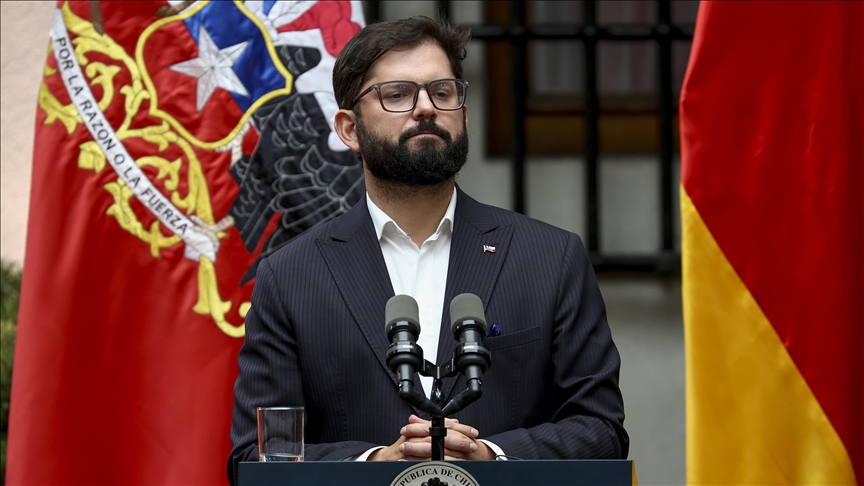
Gabriel Boric

BOGOTA, Colombia

Chilean President Gabriel Boric announced his intention to submit a bill banning the importation of goods produced in Israeli settlements located in Palestinian territories, which are widely considered illegal under international law.

“We cannot continue to fund the death of children,” Boric told lawmakers during his final annual address from Congress in Valparaiso on Sunday. The three-hour speech, which drew applause and strong criticism across the political spectrum, also saw Boric condemn Hamas' Oct. 7, 2023, terror attack in Israel and call for the immediate release of all Israeli hostages held by the Palestinian resistance group, emphasizing that his policy targets "a genocidal government, not the Israeli people."

Boric expressed support for Spain's efforts to impose an arms embargo against Israel.

In response, Israeli Ambassador to Chile Gil Artzyeli warned that the proposed boycott could trigger trade consequences, particularly with the US, citing American laws that might sanction Chile for the measure.

Boric rejected those claims, asserting that his stance is rooted in principles of justice, not trade issues.

"The issue here is not a trade issue; it's once again an issue of principles and justice," he said.

Defending his position against accusations of antisemitism, Boric stated that criticizing the Israeli government does not equate to antisemitism.

"We are criticizing actions, not people."

The latest initiative comes after Boric, an outspoken critic of Israel, recently withdrew Chile's military attachés from Tel Aviv, citing humanitarian concerns in the Gaza Strip.

Tensions between Boric's administration and Israel first surfaced in September 2022, when the president declined to meet the Israeli ambassador at the La Moneda Palace to accept his credentials.

The strain intensified in November 2023, when Boric recalled Chile's ambassador to Israel for consultations following the bombing of a Palestinian refugee camp.

In April 2024, Boric escalated tensions by excluding Israel from the International Air and Space Fair (FIDAE) -- a move Tel Aviv interpreted as a political sanction. His government also announced its support for South Africa's lawsuit against Israel at the International Court of Justice (ICJ).
BETTER LATE THAN NEVER 

Hamas and Israel respond to former Biden official who said Israel 'without a doubt' committed war crimes in Gaza

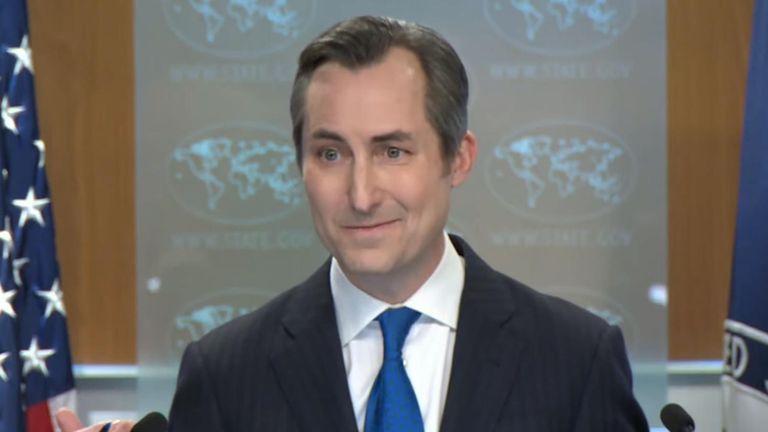
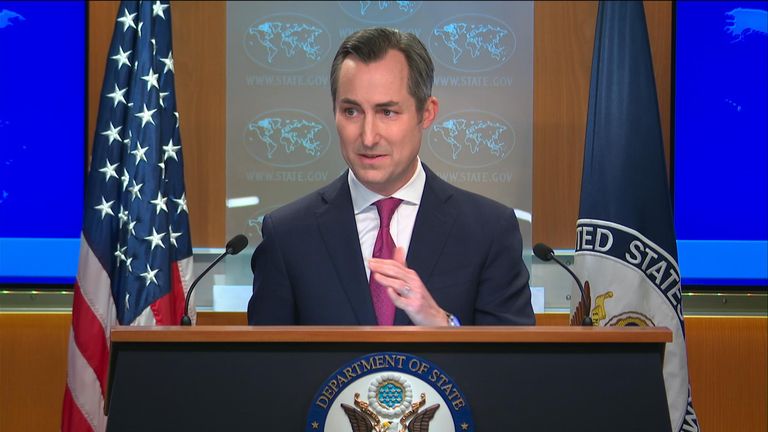
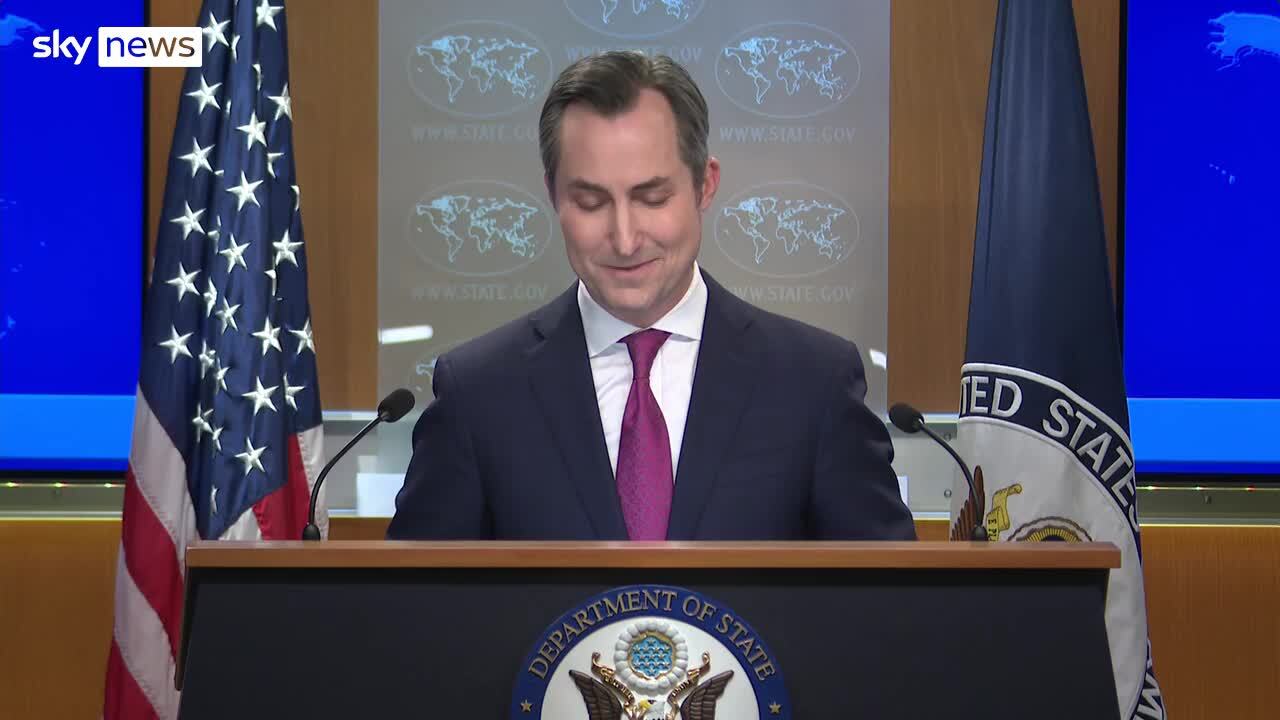
On the Trump 100 podcast, former US state department spokesperson Matthew Miller said he believes "it is without a doubt true that Israel has committed war crimes" in Gaza.

Mark Stone
US correspondent @Stone_SkyNews
Tuesday 3 June 2025


Hamas and the Israeli government have responded to an interview on Sky News in which a former official in the Biden White House said Israel had "without a doubt" committed war crimes in Gaza.

A statement from Hamas said comments by Matt Miller, who as State Department Spokesman articulated the views of the US government, amounted to a "significant admission that condemns the occupation and exposes its crimes".
Sponsored link

On the Trump 100 podcast, Mr Miller was asked if he agreed with the view that Israel's actions in Gaza amounted to genocide.

"I don't think it's a genocide, but I think, I think it is without a doubt true that Israel has committed war crimes," Mr Miller said.


In a written statement, Hamas said Mr Miller's words reveal that he was, quote, "not allowed to speak the truth while in office and was forced to adhere to the US government's official narrative regarding the occupation's practices"

"This exposes the deep political complicity of US administrations with the occupation and their criminal cover-up of its brutal violations," it added.

And the proscribed terror group said his words "reveal attempts by successive US administrations to obscure the truth about this brutal war against innocent civilians in the Gaza Strip".

More on Hamas
Israel confirms Hamas chief Mohammad Sinwar was killed - as group makes counter-offer on ceasefire


Israel accepts US Gaza ceasefire plan - while Hamas says it's 'under discussion'


'Daylight robbery of land - sanctioned by Israeli authorities': Inside 'terrorised' West Bank village


A Hamas spokesperson said: "This admission does not only condemn the occupation but also holds Washington directly responsible as an active partner in the war crimes and genocide committed against our Palestinian people in Gaza, through funding, arming, providing political and diplomatic protection, along with spreading misleading media coverage."

3:42 Play Video - 27 reported killed by Israeli fire

Sky News challenged Mr Miller on why he didn't speak up while in government, to which he said: "When you're at the podium, you're not expressing your personal opinion.

"You're expressing the conclusions of the United States government. The United States government had not concluded that they committed war crimes, still have not concluded [that]."


Pressed further on why he didn't offer such views while serving as State Department spokesman, Mr Miller told Trump100: "The State Department did release a report in the spring of last year where, look, there was a bunch of bureaucratic legalese language as the government always [uses] where they did say it's reasonable to assess that Israel has at times acted in violation of the laws of war, or something similar."

He continued: "So the State department itself had concluded - they didn't phrase it in these terms - but I think I did it at the podium, a few times, conclude that it was likely that Israel had committed war crimes, but I do think it's almost certain that they have."


Mr Miller offered a qualifying distinction between state-sanctioned war crimes and individual illegal acts by soldiers.

"There are two ways to think about the commission of war crimes: One is if the state has pursued a policy to deliberately commit war crimes or is acting reckless in a way that aids and abets war crimes.

"Is the [Israeli] state committing war crimes? That, I think, is an open question. I think what is almost certainly not an open question is that there have been individual incidents that have been war crimes where Israeli soldiers, members of the Israeli military, have committed war crimes."

Sky News put Mr Miller's accusations to Israeli government spokesman David Mencer.

"Of course, when there are claims like that, they need to be fairly investigated, but I can tell you that Israel upholds the highest levels of international law that is key in the strategy of releasing our hostages and destroying this terrorist organisation," he said.

Read more:
Hamas calls shooting near aid centre in Gaza 'massacre'
IDF deny reports at least 31 people killed near aid distribution site
How the rollout of new Gaza aid system collapsed into chaos


Follow The World
Listen to The World with Richard Engel and Yalda Hakim every Wednesday
Tap to follow

But to that, Mr Miller, out of office, now echoes a point repeatedly put to him by journalists while he was in office, at the podium: that Israeli investigations so often go nowhere.

At the podium, he repeated phrases like "...we are asking the Israelis to investigate...", "...we are concerned by what we have seen...", "...we are waiting for the results of the Israeli investigation...".

Now, Mr Miller says: "We do know that Israel has opened investigations, but look, we are many months into those investigations and we're not seeing Israeli soldiers held accountable.

"We have not yet seen them hold sufficient numbers of the military accountable and I think it's an open question whether they are going to."
AI defence expo: Palestine protesters interrupt former Google CEO Eric Schmidt and Navy secretary

AI+ Expo seeks to bolster 'US and allied competitiveness'


Cody Combs
Washington
June 03, 2025

A prominent AI conference in Washington focusing on US defence technology was interrupted by Palestine protesters for a second day on Tuesday.

Former Google chief executive Eric Schmidt was speaking before hundreds of people at the AI+ Expo when demonstrators stood up and shouted at the technology tycoon: “Shame on you! Your AI is being used in genocide!"


Mr Schmidt told the moderator, not directly acknowledging the several protesters: “Let's just wait until the audience can hear us."

Mr Schmidt is also the chairman of the Special Competitive Studies Project (SCSP), which is the main organiser of the AI+ Expo. SCSP describes itself as an organisation that “seeks to recapture the competitive mindset and unifying national mission from past eras, and then adapt them to the age of AI and 21st-century strategic rivalry”.


Alphabet-owned Google, like several other US-based tech firms, has come under intense criticism for its AI-military defence contracts with Israel.

On Monday, protesters interrupted US Navy Secretary John Phelan as he spoke at the conference. “AI should not be used in genocide,” several people yelled.

In both instances, demonstrators tried to unfurl Palestinian flags as people shouted allegations that AI is being used unfairly and disproportionately against Gazans.

For Mr Phelan, the protesters also displayed a banner that specifically accused the AI-tech firm Palantir. “Palantir kills in Gaza,” read the sign, which was ripped away from the protesters.


The moderator of the discussion, Mike Gallagher, who is also head of defence at Palantir, decided to address the protests.

“How wonderful to live in a country where people are allowed to speak their minds and ask questions of their governments,” he said. “Because the adversaries we're up against, whether they're genocidal communists in Beijing or Islamic jihadists in the Middle East, do not.”

Demonstrators are increasingly targeting the booming AI sector. Palantir, Lockheed Martin, Booz Allen Hamilton, Google and Microsoft - which sent representatives to the event - have faced criticism from pro-Gaza protesters.

In recent months, Microsoft has had its company events interrupted by demonstrators and former employees who say the company’s AI tools are being used by the Israeli military in its assault on Gaza.


In responding to the claims, the company recently announced an internal review had found “no evidence” its products have been used to harm people in Gaza. That review, however, according to demonstrators, left more questions than answers.

In May, Palantir’s chief executive Alex Karp spent more than 10 minutes sparring with a protester over the company's AI technology being used in the Israel-Gaza war.

“Your AI technology kills Palestinians,” the protester shouted. Mr Karp quickly responded: “Mostly terrorists, that’s true.”

The anger related to AI being used in military operations has shown no sign of slowing. Among those speaking at this week's AI conference is Alexandr Wang, chief executive of the increasingly powerful tech firm Scale AI.


It too, has come in for criticism for its revenue generated from defence contracts. In a recent interview, Mr Wang defended his company's business model.

“We’re at the brink of this incredibly powerful new technology, and the applications for national security are obvious,” Mr Wang said during a discussion at the Centre for Strategic and International Studies (CSIS) in Washington. “It’s going to be imperative for the US to stay ahead.”

Israel's punishing campaign in Gaza – which followed the 2023 attacks by Hamas-led fighters on Israel that resulted in the deaths of about 1,200 people and the capture of 240 hostages – has killed at least 54,100 people and injured at least 123,208. The war has prompted heightened Islamophobia and anti-Semitism in the US.


Updated: June 03, 2025, 12:16 PM`