Tuesday, June 03, 2025


NTSB: Overwhelming Towline Force Caused Loss of Towboat in Severe Storm
towboat
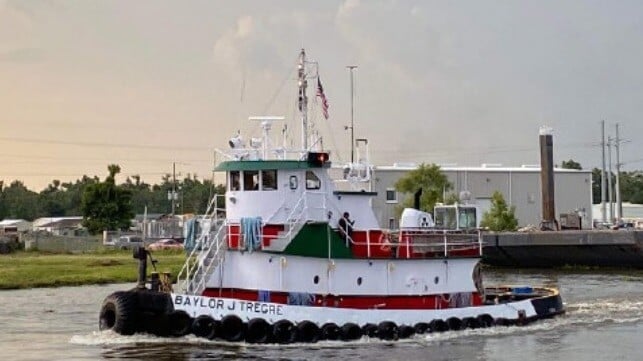
Towboat Baylor J. Tregre was overwhelmed by towline forces during a severe storm (Trinity Towing photo courtesy of NTSB)

Published Jun 3, 2025 3:27 PM by The Maritime Executive


The NTSB concluded that the loss of a towboat off the Louisiana coast in May 2024 was due to the vessel being overwhelmed during a sudden, severe storm. While the crew of the towing vessel Baylor J, Tregre was unable to maneuver in an attempt to save the vessel due to overwhelming towline force, the report also highlights the lack of an emergency release and some issues with the vessel that might have accelerated its loss.

The towboat, which was built in 1997 and 67 feet long, was towing a 260-foot long barge loaded with a production platform and helideck bound for an offshore site. They had departed Houma, Louisiana, but due to the height of the platform were required to sail offshore instead of the Gulf Intercoastal Waterway.

It was midday on May 13 with the vessel approximately 60 miles from its destination. The weather was good with 3 to 4-foot seas and wind of 9 to 13 knots. The crew had checked weather reports and was receiving information from its shoreside office. They had a report of possible thunderstorms. The tow was traveling and 4 to 5 knots.

The mate was navigating when he observed a storm forming and made changes to the course but the line of thunderstorms appeared to shift to a circle and the wind began to intensify “at a very quick rate.” It was possibly hailing but they never determined if a waterspout had formed. The captain and mate later estimated for investigators that the winds could have been 85 to 100 mph (74 to 87 knots).

The vessel was losing speed and had started to heel. The mate was attempting to reposition the vessel but as the situation quickly deteriorated the vessel was heeling at 45 degrees. They had lost sight of the barge in the storm but it had moved alongside the towboat with the crew later reporting the line was taught “like a banjo string.” The captain ordered the mate to turn the barge loose. He attempted but reported to the captain it was impossible. The NTSB highlights in the report that the vessel did not have an emergency release and none is required under the regulations. Even if the mate had been able to reach the controls in the doghouse, it required the winch engine to be running, which it was not.

The captain was attempting to change the heading but by then the port quarter of the towboat was underwater. They believed the starboard rudder and propeller were out of the water. They made a distress call and moments later the vessel lost electrical power and the engines stopped running. Seas were now 6 to 7 feet.

The crew had to climb out of the tilted wheelhouse and one deckhand fell into the water. The others had to follow as the vessel sank. The self-deploying liferaft worked and they were eventually able to make it to the raft. The emergency beacon was also located and the Coast Guard was able to rescue the four crewmembers, although one suffered minor injuries.

When the towboat was recovered, the NTSB reports some of the fiddley blowers on the second deck were missing and might have contributed to the flooding. Also, some of the sealing gaskets were found deteriorated on the exterior doors.

The casualty, which resulted in $2 million in damages, they attributed to the overwhelming towline forces during the storm and the inability to complete an emergency release of the barge. The heeling became unrecoverable for the vessel.

 

VDR Transcript Shows Final Panic Aboard Dali as It Approached the Bridge

Dali after fitting Key Bridge
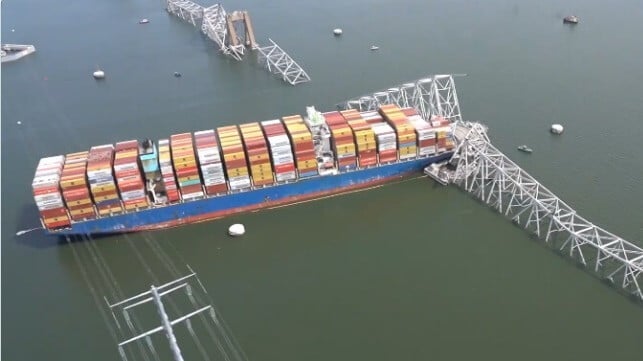
VDT transcript shows the situation on the bridge as the Dali approaches the Key Bridge (Maryland National Guard photo)

Published Jun 3, 2025 12:13 PM by The Maritime Executive


The National Transportation Safety Board is continuing its investigation and release of data from the 2024 incident in which the containership Dali destroyed Baltimore’s Francis Scott Key Bridge. In April, it posted the transcript of the VDR and crew interviews, which are now getting extensive attention in the Baltimore media.

The full 74-page transcript of the voice conversations was posted following the NTSB’s outline of the information in a March press briefing. Unlike the formal briefing, the actual wording shows the panic, terror, and frantic situation as multiple commands were shouted and the pilots and crew struggled to manage the situation.

It ends with the now fateful call by the pilot to the U.S. Coast Guard. At 0129:37 the senior pilot calls from the bridge of the Dali, “This the Dali. We have a major problem. The Key Bridge is down. I repeat. The Key Bridge is down. ummm Coast Guard. Coast Guard. This is container ship Dali. you copy?” 

In the minutes that follow they frantically try to contact officials, determine what happened, ask if anyone was injured, and start to second guess the situation. There were two pilots, a senior pilot and a trainee, and the trainee lets out what the transcript says is a “quick nervous laugh,” and the pilot remarks “Now this is a problem.”

The transcript followed much of the day including the power failures that prior afternoon while the vessel was at the dock and the subsequent briefing to the master. The master tells the chief engineer to write up the situation in full detail for the office but hours later when the pilots board after midnight they are told everything is good. They have a casual conversation as they prepare to push off. At about 0039 the Dali is underway with two tugs, which are released at 0107 with the captain of the tug Bridget McAllister signing off by wishing the Dali and the pilots a “safe trip.”

The alarms sound at 0124:59 with the pilot asking immediately does the ship still has steering and he is told yes. Immediately they are calling for the bosun and telling him “Go forward fast.” The bosun is told to prepare and later at 0127:14 to drop the anchor.

At 0126 the pilot is heard making the first call telling the port to close the bridge and 30 seconds later he is calling asking if the McAllister tug is still in the area. When he reaches the tug and realizes they are out of distance, he tells the master “hammer down,” to get back fast implying they need immediate help.

In the final moments, the pilot desperately calls out at 0128:59 for full bow thruster to port. The second officer responds, “No. It’s not working.” 

The anchor chain is heard at 0128:59. Six seconds later the transcript lists “sound of groaning/cringing,” which it speculates is the pilot. Nine seconds later the sound of the bridge collapsing is reported while the transcript shows the pilot and the training shouting expletives. 

In the moments that follow the officers, crew, and pilot begin to recover and start responding.  Later in the post-accident interviews, the ship’s second officer speculated if they could have allowed the anchor to be dropped earlier and if it would have prevented the allision. The helmsmen, the transcript of his interview shows, would not speculate and said he had no opinion.


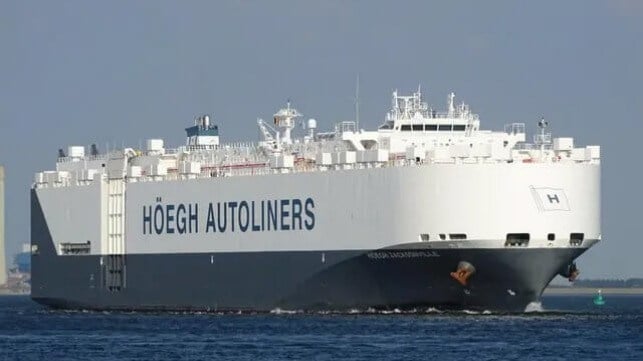
Norway and Höegh Autoliners Launch Plan to “Upcycle” End-of-Life Ships

car carrier
Hoegh Autolines has committed to recycling up to eight vessels to start the new approach (Hoegh Autolines file photo)

Published Jun 3, 2025 4:34 PM by The Maritime Executive


One of the biggest challenges facing European shipowners is the end-of-life resolution for ships. EU regulations limit how and where they can dispose of ships while environmentalists highlight the energy and lack of sustainability in the dismantling of old ships.

Norway has come together with an innovative solution that they believe establishes a circular value chain in which decommissioned ships are repurposed or “upcycled” into new build materials. Explaining the approach, they highlighted that steel should not be exported and melted down, but instead, it can be reused in Norway and Europe as new building material.

A partnership of Norwegian industry looks to create an alternative to the export of ships to Turkey, which currently holds the EU’s only large-scale ship recycling capacity. They highlight that seven Norwegian shipyards have developed EU-approved capabilities for decommissioning end-of-life ships and the upcycling of the material.

Höegh Autoliners is working with Nordic Circles for the national project which they report will “revolutionize the handling of decommissioned ships.” Applying the process without melting and exporting the material, they report will lower emissions by up to 97 percent.

As part of the agreement, Höegh Autoliners will send up to eight ships for recycling in Norway. They report the value of the agreement at NOK 1.3 billion ($128 million) with the first upcycling in 2026 to be conducted by AF Offshore Decom in Vats, Norway.

“With this agreement, we ensure sustainability from cradle to grave and lay the foundation for a new green industrial adventure in Norway,” said Sebjørn Dahl, COO of Höegh Autoliners. “We are extremely proud of that.”

The group highlights a strong and emerging opportunity for ship upcycling citing reports that a doubling of decommissioning assignments is expected driven by new climate regulations and an aging fleet. Norway, they note, has the fifth largest merchant fleet by value and when including the EU’s share, they foresee the potential to address 45 percent of the world’s merchant fleet.


Australia to Give Maldives New Patrol Boat to Tackle Maritime Crimes

Austal patrol boat
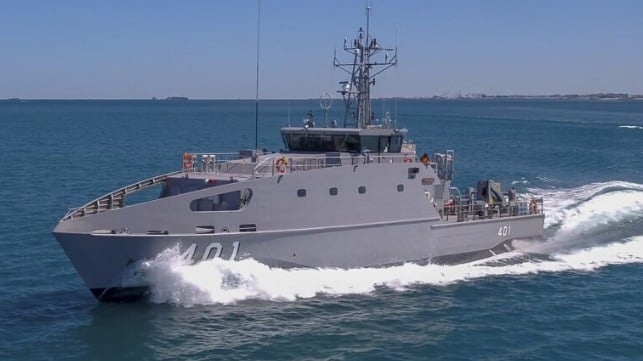
Austal is building the patrol boats Australia is giving to neighbors to expand ties (Austal)

Published Jun 3, 2025 5:36 PM by The Maritime Executive


Australia has announced that it will extend its Pacific Maritime Security Program for the first time sending a patrol boat to an Indian Ocean nation. Australia has previously given patrol boats to 16 Pacific Ocean nations.

In the past five years, Australia has been donating Guardian-class boats to nations, as part of its defense initiative to boost maritime security in the South Pacific. Australia’s foreign policy has been focusing on the Pacific Ocean, but this is now widening to strengthen its influence in the Indian Ocean. The patrol boat to Maldives represents a key milestone in this shift.

Australian Defense Minister Richard Marles said the Guardian-class patrol boat will help the archipelago be better placed to protect its sovereign waters. In particular, the boat will enable Maldives to have a more persistent presence in its vast exclusive economic zone to deter, detect and disrupt illegal maritime activities. 

As an archipelago of low-lying islands, the country’s existence is severely threatened by rising sea levels, with the World Bank warning that by 2050, 80 percent of Maldives could become uninhabitable due to global warming.

The boat is currently under construction at Austal Australia and is due for completion in 2026. The Guardian-class patrol boats are 39.5 meters (130 feet) long and are designed to have the capability of traveling at a maximum speed of 20 knots and a maximum 3,000 nautical mile range. Each vessel can accommodate up to 23 people.

The Minister of Defense of the Maldives Mohamed Ghassan Maumoon, acknowledged the donations describing Australia as a mutual partner in the safety and security of the seas. He said the vessel was part of the country’s president, Mohamed Muizzu’s vision of doubling the strength of the Maldives Coast Guard.

In April, Turkey also donated its former TCG Volkan (P343) missile boat to the Maldives Coast Guard. This became the largest defense platform for the coast guard, whose fleet largely consists of patrol boats and landing craft. 

Australia is building a total of 24 vessels gifting them to 16 nations. The Guardian-class vessels are replacing the existing 22 Pacific Patrol Boats gifted to 12 Pacific Island countries between 1987 and 1997. The first vessel was delivered to Papua New Guinea in 2018 and last year number 21 went to Tuvalu and 22 was sent to Fiji.

Apart from gifting Maldives one of the boats, Australia will also gift a multi-beam echo sounder to the island nation. The hydrographic equipment will support the country’s capability to map its ocean floor, helping to ensure maritime safety and unlock economic development.


Denmark Issues First Life Extension Permits for Offshore Wind Farm

offshore wind farm
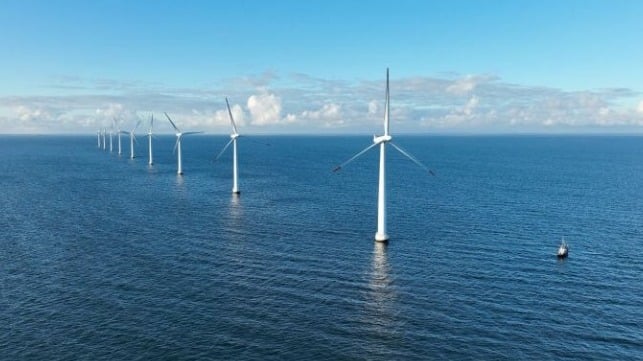
Denmark granted its first life extension for an offshore wind farm (Wind Estate A/S)

Published Jun 3, 2025 6:14 PM by The Maritime Executive


Denmark was a pioneer in the development of the offshore wind farm energy sector more than 30 years ago and now it has issued the first permits to extend the service life of some of the farms. The decision comes at a critical time as several wind farms are facing the expiration of their original 25-year licenses.

The Danish Energy Agency approved the extension of the electricity production permit for the Samsø Offshore Wind Farm by ten years. When the Samsø Offshore Wind Farm was established in 2002, the electricity production permit was limited to 25 years. After that, the wind turbines had to be removed by the plant owner, Wind Estate. The ten-turbine park with a total capacity of 23 MW can produce electricity equivalent to the electricity consumption of 20-25,000 households.

"With this decision, Samsø Offshore Wind Farm can continue to produce green electricity rather than being dismantled and decommissioned. It is gratifying for the green transition and sustainable from a resource perspective, as long as the plant can continue to operate in a responsible manner,” said Deputy Director Stig Uffe Pedersen, Danish Energy Agency.  

The Samsø offshore wind farm the agency notes is almost 25 years old, and it has therefore been important to ensure that the plant's structures can withstand continued production. Wind Estate provided an independent analysis of the remaining service life to the Danish Energy Agency. In addition, the plant owner has agreed to carry out an extended service inspection annually.

The granted permit will allow the offshore wind farm to produce electricity for another 10 years until 2037.

“There are several older offshore wind farms around Denmark that are also approaching their final expiration date. In the coming time, the Danish Energy Agency will assess whether those wind farms can also continue to operate responsibly,” notes Pedersen.

The Danish Energy Agency is currently processing applications for an extension of the electricity production permit for the Middelgrunden offshore wind farm, Rønland offshore wind farm, Nysted offshore wind farm, and Horns Rev 1 offshore wind farm.

The older farms are smaller which has challenged some of them to remain economically viable. In the Netherlands, Google recently signed an agreement with Shell to buy the electricity from a nearly 20-year-old wind farm. It was pointed out that the private purchase agreement made it possible to extend the life of the wind farm


New River Transport Services Support Vietnam’s Export Manufacturing

Vietnam inland transport
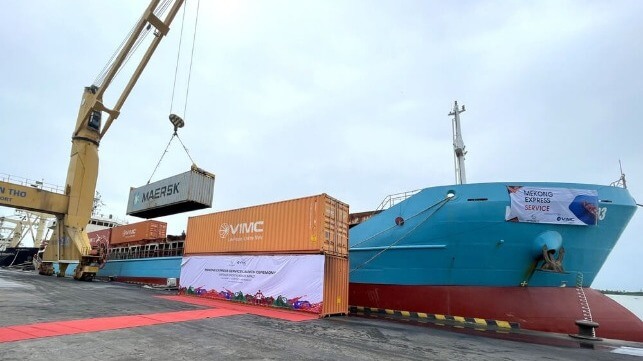
New Mekong Express from DP World and VIMC Lines connects inland manufacturing with the ports (VIMC Lines)

Published Jun 3, 2025 6:58 PM by The Maritime Executive


The shipping industry is rushing to build new capacity in Vietnam as the country works to expand its role as a manufacturing base competing with China. Two international players, CMA CGM and DP World, are highlighting their investments to build new capacity focusing on internal logistics with new river – sea transport operations.

Vietnam has already successfully positioned itself as a cost-effective alternative to China and now looks to leverage the Trump administration's efforts to reign in China by presenting itself as a strong alternative. Reports are that Vietnam was quick to open tariff negotiations with the Trump administration. South Vietnam, home to the Mekong Delta Key Economic Region and the Southern Key Economic Region has become a driver for Vietnam’s manufacturing and export economy.

One of the challenges is internal infrastructure. The government has been calling for developing inland waterway transportation as a means of linking the manufacturing areas and ports. 

DP World currently operates the Saigon Premier Container Terminal in Ho Chi Minh City with an annual capacity of 400,000 TEU and the only RoRo port in the south. It announced a new partnership with VIMC Lines, one of the units of Vietnam National Shipping Lines. They said the program known as the Mekong Express will enhance connectivity between the key economic regions in the South.

The companies mark the launch of the new Megong Express river service at the end of ay. Hey will be operating two trips per week combining river and sea routes with the ability to move hundreds of containers per week, including reefers. 

“DP World is committed to building an integrated, seamless supply chain ecosystem in Vietnam – an increasingly important market in the Asia Pacific region as well as globally,” said Glen Hilton, General Director of Asia Pacific for DP World. “With the Mekong Express, we are meeting the demand for an efficient and reliable service. This transport route will contribute to promoting economic development not only in the Southern region but also throughout Vietnam.”

The companies highlight that the water route is significantly shorter reducing an approximately 230-mile trip to 125 miles. Travel time for containers will be reduced from 48 hours to 15 hours. The service connects to Cai Mep Port and Cai Cui Port. They are also exploring extending it to the port operations of DP World and VIMC at two locations in Saigon. 

CMA CGM announced last month its planned investment to expand port operations to the north of Vietnam. The company has also signed an agreement with Gemadept, a key logistics and port operator in Vietnam, to establish a new joint venture, Green River Transport. It will operate the previously announced electric barge that CMA CGM is building for transport in Vietnam. The new joint venture will manage transport in the Mekong Delta. 

The barge is due to enter service in 2026 and it will be powered by a charging station being built at the Cai Mep port near Ho Chi Minh City. It is the country’s main container gateway. CMA CGM highlights that it operates 29 weekly maritime services from Vietnam.

Nike has agreed to be the first customer of the new electric barge service. It will use the service for its logistics flow between its Vietnam manufacturing locations and the Gemalink container terminal.

‘I might never pay it off’: Some Canadians retire still in debt
June 02, 2025 

A growing number of Canadians are entering retirement still carrying mortgage debt. (Credit: Pexels)

A growing number of Canadians are entering retirement with mortgage debt — and for many, it’s not by choice.

A new Royal LePage survey, conducted by Leger, reveals that nearly three in 10 Canadians (29 per cent) planning to retire within the next two years say they will still be making mortgage payments when they leave the workforce. Nearly half (47 per cent) say they don’t plan to downsize their homes.

Statistics Canada data show the average retirement age in Canada is also rising. In 2024, it was 65.3, up from 64.3 in 2020.

While some retirees are choosing to stay in their homes for comfort or practicality, many are finding themselves unable to pay off their mortgages — a shift that raises concerns about long-term financial security, health-care access and housing affordability.

CTVNews.ca asked readers to share their experiences with retiring while still carrying a mortgage. The responses below have been edited for length and clarity.
‘The math was sound, but life didn’t cooperate’

Leon Budziszewski of Ottawa planned to retire at 65 with his mortgage paid off, savings in place, and enough money for a new car and a modest trip.

But a surprise case of COVID-19, which developed into long COVID, forced him to stop working earlier than expected.

“The math I used was sound, but life did not cooperate,” he wrote in an email to CTVNews.ca.

“You never know what will happen to you in life … and situations you thought were nearly impossible, or at the very least not very likely, can happen.”
For some, keeping a mortgage makes sense

Sandi Hunter, who retired with her husband in Ottawa in 2021, says their condo mortgage still costs less per square foot than renting.

“It makes sense to us,” she wrote in an email to CTVNews.ca.

“We’re even up for renewal in August and plan on continuing with our mortgage for another five years.”

Carolyn Lynch said renewing her mortgage after retirement was no easy task. Despite having pension income and RRSP savings, the new lender was only interested in her part-time job.

“If I didn’t have that job, I’m not sure I would have got a new mortgage,” she wrote in an email to CTVNews.ca.
Market realities leave little choice

Toronto realtor John Pasalis, president of Realosophy Realty, says his firm has been watching this trend for at least five to seven years.

The surge in housing costs, especially in urban centres like Toronto and Vancouver, has made it harder for younger generations to buy homes — leading some parents to take on more debt to help their kids.

“It’s not entirely surprising,” Pasalis said in a video interview with CTVNews.ca.

“Many parents are faced with a difficult choice: borrow to help their kids, or see them move far away.”

The rising cost of downsizing is another factor.

Pasalis says condos in Toronto are relatively expensive when compared to what retirees give up in terms of size and amenities.

“Even though they are downsizing their space, many don’t end up spending less,” he said.

“But they’re choosing lifestyle: no stairs, no maintenance, freedom to travel.”
‘I’ll have to pinch pennies’

For others, the burden is heavier.

Cheryl Maxwell, who moved from Winnipeg to Carman, Man., to prepare for retirement, still faces the reality of long commutes and an uncertain future.

“It is unlikely my mortgage will be paid off during my lifetime,” she wrote in an email to CTVNews.ca.

“I’ll have to pinch pennies for sure — I may very well need a part-time job just to make ends meet.”

Some retirees say they’re shouldering the load for family members.

Lynne Foster, 72, of Winnipeg, still works full time and supports six people, including her son and grandchildren, who live rent-free in a city house.

“They refuse to pay rent,” she wrote in an email to CTVNews.ca.

“Here I am at 72, supporting everyone. I’m also collecting pensions to keep up with all the payments — and no one seems to care.”
‘Hope this will be the last house I own’

Dean White, a firefighter in Niagara Falls, says he’s preparing to retire in five years and will still have a mortgage at that time — a decision partly shaped by health risks from his job.

“Since my life expectancy is shortened by toxic exposure during fire calls, paying off our mortgage has not been a priority,” he wrote in an email to CTVNews.ca.

“I’ll be using CPP and retirement buyout funds to pay it down faster.”

Christine Bell of Kemptville, Ont., has owned homes since the age of 25. A single woman throughout her life, she says she’s been fortunate to hold jobs that allowed her to purchase several properties over the years with the help of the bank.

“I feel very fortunate, but I’ve just retired and still carry a mortgage on my current house,” she wrote in an email to CTVNews.ca.

Now retired and living in a bungalow for health reasons, Bell hopes “this will be the last house” she will own. She recently renewed her mortgage knowing she likely won’t pay it off entirely.

“I took the longest amortization period at the lowest rate, understanding that I’ll probably carry this mortgage until I either pass away or move into long-term care.”


Tammy IbrahimpoorOpens in new window


CTVNews.ca National Digital Producer
Shopify wins court battle against Canada Revenue Agency in merchant-data case


By The Canadian Press
 June 02, 2025 

The Ottawa headquarters of Canadian e-commerce company Shopify are pictured on Wednesday, May 29, 2019. THE CANADIAN PRESS/Justin Tang

Shopify Inc. has come out on top of a battle with the Canada Revenue Agency.

A federal court order issued Thursday shows Judge Guy Régimbald sided with the Canadian tech company, which was fighting the CRA’s attempt to get more than six years of Shopify records.

The records were being sought in order to verify that Canadian merchants using Shopify software were obeying the Income Tax Act and the Excise Tax Act.

The CRA wanted the names of individuals who own Shopify accounts, their birthdates, addresses, phone numbers and their bank transit, institution and account numbers.

It also asked for their Shopify ID numbers, what type of store they ran, when their Shopify accounts were activated or closed and how many transactions and their value were made over the six-year period the CRA was interested in.


Some of the information had been requested by the Australian Tax Office, which wanted to ensure Shopify merchants were complying with the country’s laws. A separate case Judge Régimbald presided over saw the CRA ask for court permission to obtain and send the records to Australia.

CRA spokesperson Sylvie Branch said the agency is aware of the courts decision and “is currently analyzing the case details and associated information.”

Shopify pointed The Canadian Press to a post on X from its CEO Tobi Lütke who shared the outcome of his company’s court battle and called the CRA’s behaviour “blatant overreach.”

Shopify fought the CRA in both cases when they were filed in 2023, insisting the group of merchants the agency wanted information for was “overly broad and inconsistently defined.”

The company also claimed a multilateral tax treaty being used to seek the information for Australia “is without domestic force” when information about unnamed people is being requested.

Régimbald ultimately decided not to order Shopify to turn over the records to the CRA because he found the tax agency had not outlined an identifiable group of individuals whose data it wanted.

He said the court would not entertain a request to hand over information on unnamed parties “that is unintelligible, incoherent, or otherwise beyond its understanding.”

As part of his order, Régimbald requested the CRA pay legal costs of $45,000 in each case, bringing the government’s bill to $90,000.

This report by The Canadian Press was first published June 2, 2025.
China blasts U.S. for its computer chip moves and for threatening student visas


By The Associated Press
 June 02, 2025 

American flags are displayed together with Chinese flags on top of a trishaw on Sept. 16, 2018, in Beijing. (AP Photo/Andy Wong, File)

TAIPEI, Taiwan — China criticized the U.S. on Monday over moves it alleged harmed Chinese interests, including issuing AI chip export control guidelines, stopping the sale of chip design software to China, and planning to revoke Chinese student visas.

“These practices seriously violate the consensus,” the Commerce Ministry said in a statement, referring to a China-U.S. joint statement in which the United States and China agreed to slash their massive recent tariffs, restarting stalled trade between the world’s two biggest economies.

But last month’s de-escalation in President Donald Trump’s trade wars did nothing to resolve underlying differences between Beijing and Washington and Monday’s statement showed how easily such agreements can lead to further turbulence.

The deal lasts 90 days, creating time for U.S. and Chinese negotiators to reach a more substantive agreement. But the pause also leaves tariffs higher than before Trump started ramping them up last month. And businesses and investors must contend with uncertainty about whether the truce will last.

U.S. Trade Representative Jamieson Greer said the U.S. agreed to drop the 145% tax Trump imposed last month to 30%. China agreed to lower its tariff rate on U.S. goods to 10% from 125%.


The Commerce Ministry said China held up its end of the deal, canceling or suspending tariffs and non-tariff measures taken against the U.S. “reciprocal tariffs” following the agreement.

“The United States has unilaterally provoked new economic and trade frictions, exacerbating the uncertainty and instability of bilateral economic and trade relations,” while China has stood by its commitments, the statement said.

It also threatened unspecified retaliation, saying China will “continue to take resolute and forceful measures to safeguard its legitimate rights and interests.”

Trump stirred further controversy Friday, saying he will no longer be nice with China on trade, declaring in a social media post that the country had broken an agreement with the United States.

Hours later, Trump said in the Oval Office that he will speak with Chinese President Xi Jinping and “hopefully we’ll work that out,” while still insisting China had violated the agreement.

“The bad news is that China, perhaps not surprisingly to some, HAS TOTALLY VIOLATED ITS AGREEMENT WITH US,” Trump posted. “So much for being Mr. NICE GUY!”

In response to recent comments by Trump, the Commerce Ministry said of the U.S.: “Instead of reflecting on itself, it has turned the tables and unreasonably accused China of violating the consensus, which is seriously contrary to the facts.”

U.S. Commerce Secretary Howard Lutnick said that the Chinese were “just slow rolling the deal” from Geneva.

Appearing on Fox News on Sunday, Lutnick said the U.S. was “taking certain actions to show them what it feels like on the other side of that equation,” adding that Trump would “work it out” with Xi.

The Trump administration also stepped up the clash with China in other ways last week, announcing that it would start revoking visas for Chinese students studying in the U.S.

U.S. campuses host more than 275,000 students from China.


Both countries are in a race to develop advanced technologies such as artificial intelligence, with Washington seeking to curb China’s access to the most advanced computer chips. China is also seeking to displace the U.S. as the leading power in the Asia-Pacific, including through gaining control over close U.S. partner and leading tech giant Taiwan.

Christopher Bodeen, The Associated Press
More than 1,800 people arrested in crack down on Asia-based scam operations


By The Associated Press
Published: June 03, 2025 

The skyline of the business district is silhouetted at sunset in Hong Kong 
(AP Photo/Vincent Yu) (Vincent Yu/AP)

HONG KONG — More than 1,800 people have been arrested in a joint operation across Asia targeting scam networks, police in Hong Kong said on Tuesday.

The crack down involving authorities in six other jurisdictions successfully intercepted fraudulent funds involving about US$20 million, Wong Chun-yue, chief superintendent of the city’s police’s commercial crime bureau, said.

The scam networks were closed down during the operation jointly conducted by South Korea, Thailand, Singapore and neighbouring Chinese gambling hub Macao, he said.

The operation, which also involved authorities from Malaysia and the Maldives, targeted cases of online shopping and telephone scams, as well as investment and employment frauds. Nearly 33,000 accounts were frozen in the month to May 28, Wong said. Those arrested were aged between 14 and 81.

In one case in March, a finance director in Singapore was scammed through deep-fake videos by someone who claimed to be the chief executive at a multinational corporation. The victim transferred $499,000 to Hong Kong, said Aileen Yap, assistant director of Singapore police’s anti-scam command. Through cross-border cooperation, the money was recovered, she said.

The victims of scams and online fraud often include not only those defrauded but also the workers used by scamming operations, with staff facing threats, violence and poor working conditions.

A United Nations report in April found transnational organized crime groups in East and Southeast Asia are spreading their scam operations across the globe.

For several years, scam compounds have proliferated in Southeast Asia, especially in border areas of Cambodia, Laos and Myanmar, as well as in the Philippines, shifting operations from site to site to stay a step ahead of the police, according to the report issued by the U.N. Office on Drugs and Crime.

The scam centers in Myanmar, Cambodia and Laos are notorious for luring people to work in them under false pretenses. Staff are often forced to financially exploit people around the world through false romances, bogus investment pitches and illegal gambling schemes. Many workers find themselves trapped in virtual slavery.

Kanis Leung, The Associated Press