Thursday, July 24, 2025

A brain-inspired approach for resilient AI processing


Texas A&M University


Researchers in the Department of Electrical and Computer Engineering at Texas A&M University have received a two-year, $1.2 million grant from the U.S. Army Research Laboratory (ARL) to explore a new approach to cloud computing in battlefield environments.

Led by Drs. I-Hong Hou, Krishna Narayanan, P.R. Kumar and Dileep Kalathil, the project aims to revolutionize a growing challenge in modern computing: how to deliver the power of artificial intelligence (AI) not just from distant cloud servers, but directly to users and devices operating in constrained, dynamic, or infrastructure-poor environments.

Cloud-based AI tools like ChatGPT are common in civilian life. A user types or speaks into their phone, which sends input across the internet to a massive data center, often located far away. There, the AI model runs on powerful computers, processes the request, and sends back a response.

While this architecture works well for many everyday applications, it reveals serious limitations when connectivity is constrained, latency is critical, or robustness is paramount.

“In remote or time-sensitive scenarios, especially in battlefield applications, that kind of setup can be a real problem,” Hou said. “Even just a few seconds of delay could mean the difference between success and failure or even life and death. Whether it’s a military mission, disaster response, or autonomous system, the need is the same: intelligent decision-making must happen in real-time, close to the data.”

Rather than relying on one central data center, every device — Wi-Fi access points, routers, cellular towers, even vehicles — will play a role in both moving and processing data. This eliminates a single point of failure, making this method more secure and reliable.

"It's similar to how our brains work," Hou said. "Each brain cell, or neuron, does a little bit of thinking and also passes signals along to other neurons. That’s what we want to build, a distributed system where every part of the network helps with both communication and computation."

Through this project, every network component becomes a tiny computer. These components can handle small bits of processing independently, passing partially processed data to the next device. By the time the data reaches a more powerful computer, like a server in a vehicle or a base station, it’s already mostly processed, making the final computations fast and efficient.

The team’s new system offers speed and resilience. Since processing happens close to the action, the system can deliver results almost instantly. There is also no single weak spot. If one part of the network is damaged or removed, the system can potentially adapt and reroute tasks elsewhere.

"Every device does a little bit, and if one goes down, others pick up the slack," Hou said. "It makes the entire system much harder to break."

One major goal of this project is to design network processing, where data is partially processed step-by-step as it moves through the network. This requires coordinating a wide range of devices to work together intelligently and efficiently.

Another key focus is resilience and safety. Because the network supports safety-critical applications, it must be able to withstand attacks, adapt to changing missions, and continue operating under extreme conditions.

“We’re doing this because we want AI to make smart decisions in real-time,” Hou said. 

While the project is designed to support ARL applications — where robust, real-time AI in contested environments is essential — the broader implications are far-reaching. The same principles apply to smart cities, autonomous vehicles, remote sensing, industrial robotics, and environmental monitoring.

 By Katie Satterlee, Texas A&M University College of Engineering

###


British Army will use AI to strike enemy targets on battlefield by 2027

The £1bn Asgard system will use a network of sensors to detect enemy targets before employing AI to recommend action - within minutes or even seconds

Article thumbnail image
British Army officers use the new Asgard AI-powered targeting system
 (Photo: Corporal Christian P Delice/Ministry of Defence)


bookmark

The British Army will rely on AI to detect and strike enemy targets on the battlefield in just two years


The £1bn system, known as Asgard, uses a network of sensors to detect enemy targets or incoming attacks, then employs AI to identify them and recommend a course of action.


Traditionally, information on targets and threats is collected and inputted manually, which can take several hours.


Now that information will be gathered by AI, along with options for military action, and presented to officers within minutes or even seconds.


The project is due to be fully operational by 2027, when the head of the Army has warned the UK needs to be ready to fight or deter a war against Russia, potentially supported by China, Iran and North Korea.


IMAGE: ASGARD Virtual Reality demonstration On Wednesday 16th July 2025 ASGARD was showcased to international allies and industry partners in London, with participants shown the capability in action, including its overwhelming effect on adversaries.
A British Army officer demonstrates the new Asgard system (Photo: Corporal Christian P Delice/ Ministry of Defence)

The current Asgard system has a “human in the loop” to identify friendly vs enemy assets and make the final call on military strikes, but officials suggest that this could change in future.

The system is technically capable of running without human oversight and insiders did not rule out allowing the AI to operate independently if ethical and legal considerations changed.

However, at present there are no plans to remove humans from the system.

Asgard would be rolled out in case of a war or during military exercises.

Some of the system will be shared with allies to bolster cooperation, while others will be sold as an export to boost domestic economic growth.

Officials said the Army was learning from the war in Ukraine, where soldiers are already using AI and software to speed up the process of identifying and hitting Russian targets.

‘Every citizen can play their part’

One of the 27 firms contributing to Asgard is British-Estonian firm SensusQ, co-founded by serving Estonian reservist Villiko Nurmoja.

With a 183-mile border with Russia and a history of Soviet occupation, Estonia has seen firsthand the threat posed by Vladimir Putin.

It is also home to the largest contingent of British troops deployed anywhere in the world.

Nurmoja’s firm has created an app in which civilians and military alike can feed in information about suspicious objects.

“The app can be used even in peacetime; if you see a crime, you can report it. But in a military context, if you see the enemy aircraft coming, or enemy drones coming or an enemy tank or convoy is moving somewhere, you take a picture and send it. Every citizen can be a sensor, not only soldiers,” he said.

VORU, ESTONIA - MAY 25: Soldiers from Royal Welsh Battlegroup take part in maneuvers during NATO exercise Hedgehog on the Estonian-Latvian border on May 25, 2022 in Voru, Estonia. Fifteen thousand troops from fourteen countries are taking part in one of the largest ever military exercises to take place in the Baltics. Among them are British units from the Royal Tank Regiment and Royal Welsh Battlegroup. UK military presence has doubled in Estonia in response to the Russian invasion of Ukraine in February 2022. (Photo by Jeff J Mitchell/Getty Images)
Soldiers from Royal Welsh Battlegroup take part in manoeuvres during Nato exercise Hedgehog on the Estonian-Latvian border in 2022 (Photo: Jeff J Mitchell/Getty)

While the app might sound high-tech, Nurmoja describes it as a modern version of civilian reporting during the Second World War.

Thanks to his military service, Nurmoja understands the difficulties faced by troops defending Nato’s eastern border and is attempting to solve them for the next generation of soldiers.

“We started to build the intelligent management system that we missed during our service years; instead of using seven/eight different systems on three to four different computer systems at the same time, I want to have one thing,” he said.

“The amount of human hours you spend on putting intelligence together even on a lower tactical level, it’s enormous.”

Smartphone microphones can warn of drone attacks

Another firm bringing familiar technologies to the high-tech Asgard system is Mind Foundry, which uses smartphone microphones to detect and warn of drone attacks, which are causing around 70 per cent of casualties in Ukraine.

The firm specialises in using acoustic signals to detect threats. It has previously used smartphone microphones to predict whether mosquitoes were carrying malaria, according to the wingspan, location and time of year, and underwater signals to detect maritime threats.

The new system, which can be downloaded as an app, buys soldiers crucial seconds to prepare for incoming drone attacks and helps the military gather intelligence on the nature of the enemy’s drone operations.

KYIV, UKRAINE - JULY 4: People look at a 5-story residential building in Solomyanskyi district heavily damaged by a Russian airstrike on July 4, 2025 in Kyiv, Ukraine. The Russian army launched a mass strike on Ukraine, using almost 540 drones and more than 10 missiles of various types, most of which were targeted at the Ukrainian capital - Kyiv, and Kyiv Oblast. Many people were injured in Kyiv. The attack resulted in damage to civilian infrastructure, residential buildings, and vehicles in six districts of Kyiv, with the Sviatoshynskyi and Solomyanskyi districts being the worst affected. The rail infrastructure was also damaged and requires restoration. (Photo by Ivan Antypenko/Suspilne Ukraine/JSC "UA:PBC"/Global Images Ukraine via Getty Images)
Devastation in Kyiv after the Russian army launched a mass strike on Ukraine using almost 540 drones and more than 10 missiles of various types (Photo: Ivan Antypenko/Suspilne Ukraine/JSC “UA:PBC”/Global Images Ukraine via Getty)

“Every soldier will be carrying something called an attack device, which is like a mobile phone sitting on their chest giving them streams of information. We deploy onto that, so a soldier would see an alert telling them that our software detected a drone coming towards them,” said Al Bowman, former director of the Army’s intelligence centre and now general manager of Mind Foundry.

“We can feed that back to a central control point, so you’d be able to see what every soldier’s device is listening to, so you can then use that to track everything and determine what’s coming next.”

The app monitors the sound of the drone wings to identify the type of drone, direction of travel and proximity up to 50m away.

“If you can detect what drones are coming, then you can start to understand what the target is and do something about it, and eventually counter that by understanding how the adversary is using drones,” Bowman said.

‘AI can make eight-hour process take 23 seconds’


Many of the contractors involved in Project Asgard use AI to save time and boost battlefield efficiency.


Shefali Sharma, director of Oxford Dynamics, said her AI-driven system – which collates and organises information and recommends different courses of action – can complete a process which would usually take an analyst eight hours in just 23 seconds.


“The particular problem that we were set was to look at open-source intelligence as well as the documents or information that analysts have available on their systems. How can we pull all that data together to provide tactical information to those operators and users in the shortest amount of time possible?”

The firm is not planning to eradicate the human in the loop, but to use AI to allow soldiers to focus on things that they can do uniquely well.

“We don’t believe that these systems should be allowed to make decisions autonomously. However, [this] allows humans to focus on tasks that are most pertinent to our human skill set, rather than finding that needle in the haystack.

“If we can be more strategic with our decision making, we can get a better tempo on the battlefield against our enemies, and that will eventually save lives.”

AI IS ACCELERATIONISM

Accelerating science with AI


Texas A&M University


It can take years for humans to solve complex scientific problems. With AI, it can take a fraction of the time.

Dr. Shuiwang Ji, a professor in the Department of Computer Science and Engineering at Texas A&M University and a leading expert in the emerging field of AI for science and engineering — commonly referred to as AI4Science — is at the forefront of using AI to accelerate scientific problem solving. 

Ji, along with other Texas A&M researchers, has recently published a paper in Foundations and Trends in Machine Learning outlining the uses and benefits of AI4Science. This collaborative paper features more than 60 authors from 15 universities, and contains over 500 pages of information on using AI for science. 

The paper highlights the importance of using AI to solve complex equations, which can be applied to many different areas of science and engineering. For example, the famed Schrodinger’s equation can be solved with AI, improving efficiency and accuracy in many research areas, including drug discovery, material design, battery materials, and catalyst design.

“The goal of natural sciences is to understand the world on different temporal and physical scales, leading to three main systems: quantum, atomic, and continuum,” said Ji, who is also a Presidential Impact Fellow and Chancellor EDGES Fellow. “The fundamentals of these systems are ruled by differential equations, but the complexity of these equations significantly increases as the systems grow.” 

These differential equations, such as Schrodinger’s, can be solved analytically on a small scale, testing the dynamics of two particles, like electrons. As the number of particles being tested increases, the complexity of equations grows exponentially, making them impossible to solve for any systems of practically useful sizes.

By implementing AI to solve these equations, large-scale systems can be analyzed effectively in a fraction of the time it would take with traditional methods. 

“We are using AI to accelerate our understanding of science and design better engineering systems,” said Ji. Ji is also director of Texas A&M’s Research in Artificial Intelligence for Science and Engineering (RAISE) Initiative. With over 85 faculty members from Texas A&M, the RAISE Initiative is promoting collaborative research in AI.

“I have a curiosity for fundamental science, as it drives many areas of science and engineering research thanks to shared underlying principles and governing equations,” said Ji.

Funding for this research is administered by the Texas A&M Engineering Experiment Station (TEES), the official research agency for Texas A&M Engineering.

 By Alyssa Schaechinger, Texas A&M University College of Engineering

###


New research uncovers gene impacts of PFAS exposure in firefighters


A new paper provides evidence of how PFAS, often called “forever chemicals,” correspond to epigenetic changes that can lead to cancers, neurological disorders and autoimmune conditions.


University of Arizona Health Sciences

Firefighters 

image: 

Firefighters face more than flames on the job – new research suggests that exposure to industrial chemicals may alter gene activity linked to cancer and other diseases.

view more 

Credit: Photo by Kris Hanning, U of A Health Sciences Office of Communications


TUCSON, Ariz. — Researchers at the University of Arizona Mel and Enid Zuckerman College of Public Health found that certain kinds of long-lasting chemicals firefighters are exposed to may affect the activity of genes linked to cancer and other diseases. The findings appear in the journal Environmental Research.

The study is among the first to connect common industrial chemicals called PFAS – per- and polyfluoroalkyl substances – to changes in microRNAs, or miRNAs, which are molecules that act as guardrails to help control gene expression. 

PFAS are found in a wide range of products, including upholstery, insulation, electronics, cleaning products, fabrics, non-stick cookware – and firefighting foam and gear. Firefighters can be at higher risk for certain cancers, and exposure to toxic chemicals may be one reason why.  

“Firefighters tend to have higher PFAS levels due to their occupational exposures,” said first author Melissa Furlong, PhD, an assistant professor of environmental health sciences at the Zuckerman College of Public Health and a member of both the University of Arizona Cancer Center and the Center for Firefighter Health Collaborative Research. “Gene activity can be affected by changes in the environment. We wanted to see the imprint of PFAS exposure on miRNAs and evaluate which ones might be associated with diseases.”

The scientists analyzed blood samples from 303 firefighters from six locations across the U.S. to measure levels of nine PFAS and corresponding miRNA activity. Changes in miRNAs can play roles in a range of different diseases, including cancers and neurological disorders.  

They found that blood levels of certain PFAS in this group of firefighters were associated with changes in specific miRNA activity. The latter were connected to disease pathways for several cancers, neurological disorders and autoimmune conditions. 

Furlong was surprised by the number and range of biological pathways that showed up for some of the PFAS, indicating potentially broad impacts on the human body.

For example, a common PFAS called PFOS, or perfluorooctane sulfonic acid, was associated with lower levels of miR-128-1-5p, a miRNA tied to cancer development. Branched forms of PFOS were linked to changes in five other miRNAs, including some known to play roles in regulating cancer development.

More specifically, Furlong and her team found connections among PFAS-related miRNA changes and biological pathways involved in leukemia and bladder, liver, thyroid and breast cancers. They also found miRNA alterations linked to biological pathways involved in neurological diseases, including Alzheimer’s disease, and autoimmune and infectious diseases such as lupus, asthma and tuberculosis.

Furlong noted that while the study didn’t show direct disease outcomes, the findings pointed to biological changes that might precede disease. A better understanding of the potential biological effects of these kinds of exposures could help in developing new ways to prevent or reduce long-term health risks.

“Identifying an early miRNA signature could indicate a higher likelihood of certain health outcomes, such as a cancer or another disease,” she said. “It could be an early indicator of a biological response that could lead to that health outcome.”  

Changes to DNA that affect gene activity – but don’t alter genes themselves – are known as epigenetic changes. Senior author Jeff Burgess, MD, MPH, has been collaborating with firefighters on health and safety research since 1992, with a focus on cancer risk and prevention since 2015. Some of his previous research with firefighters identified epigenetic changes linked to health risks, including cancer, and provided evidence that helped support the international classification of firefighting as carcinogenic.

“Firefighters have requested research on how their exposures lead to increased risk of cancer,” said Burgess, who founded the Center for Firefighter Health Collaborative Research and is a professor at the Zuckerman College of Public Health and a U of A Cancer Center member. “Epigenetic markers provide a measure of cancer risk and can also be used to determine the effectiveness of interventions to reduce cancer risk.”

Furlong, Burgess and others are working on long-term follow-up studies with firefighters to find ways to help prevent the development of diseases.  

“If epigenetics is the mechanism by which PFAS initially works and then later on results in a range of diseases, then that might mean the miRNA could be a modifiable step,” Furlong said. “Pharmaceutical companies are already working on treatments that are focused on epigenetic modifications. We have much more work to do.”

The study included participants from two firefighter cancer prevention studies, as well as some from the Tucson Fire Department. Additional co-authors from the Zuckerman College of Public Health include former graduate research associate Tuo Liu, PhD, and Shawn Beitel, research program administration officer for the Firefighter Health Collaborative Research Program. The study is also part of the larger Fire Fighter Cancer Cohort Study.

The work was supported in part by the Federal Emergency Management Agency under award nos. EMW-2014-FP-00200, EMW-2015-FP-00213 and EMW-2018-FP-00086, the National Cancer Institute, a division of the National Institutes of Health, under award no. P30CA023074, and the NIH’s National Institute of Environmental Health Sciences under award nos. R00ES028743, P30ES006694 and T32ES007091.


Melissa Furlong, PhD, is an assistant professor of environmental health sciences at the Mel and Enid Zuckerman College of Public Health and a member of the University of Arizona Cancer Center and the Center for Firefighter Health Collaborative Research.

Credit

Photo by Kris Hanning, U of A Health Sciences Office of Communications


Long-term exposure to outdoor air pollution linked to increased risk of dementia


University of Cambridge


An analysis of studies incorporating data from almost 30 million people has highlighted the role that air pollution – including that coming from car exhaust emissions – plays in increased risk of dementia.

Dementias such as Alzheimer's disease are estimated to affect more than 57.4 million people worldwide, a number that is expected to almost triple to 152.8 million cases by 2050. The impacts on the individuals, families and caregivers and society at large are immense.

While there are some indications that the prevalence of dementia is decreasing in Europe and North America, suggesting that it may be possible to reduce the risk of the disease at a population level, elsewhere the picture is less promising.

Air pollution has recently been identified as a risk factor for dementia, with several studies pointing the finger at a number of pollutants. However, the strength of evidence and ability to determine a causal effect has been varied.

In a paper published today in The Lancet Planetary Health, a team led by researchers at the Medical Research Council (MRC) Epidemiology Unit, University of Cambridge, carried out a systematic review and meta-analysis of existing scientific literature to examine this link further. This approach allowed them to bring together studies that on their own may not provide sufficient evidence, and which sometimes disagree with each other, to provide more robust overarching conclusions.

In total, the researchers included 51 studies, including data from more than 29 million participants, mostly from high-income countries. Of these, 34 papers were included in the meta-analysis: 15 originated in North America, 10 in Europe, seven in Asia, and two in Australia.

The researchers found a positive and statistically-significant association between three types of air pollutant and dementia. These were:

  • Particulate matter with a diameter of 2.5 microns or less (PM2.5), a pollutant made up of tiny particles small enough that they can be inhaled deep into the lungs. These particles come from several sources, including vehicle emissions, power plants, industrial processes, wood burning stoves and fireplaces, and construction dust. They also form in the atmosphere because of complex chemical reactions involving other pollutants such as sulphur dioxide and nitrogen oxides. The particles can stay in the air for a long time and travel a long way from where they were produced.
  • Nitrogen dioxide (NO2), one of the key pollutants that arise from burning fossil fuels. It is found in vehicle exhaust, especially diesel exhaust, and industrial emissions, as well as those from gas stoves and heaters. Exposure to high concentrations of nitrogen dioxide can irritate the respiratory system, worsening and inducing conditions like asthma and reducing lung function.
  • Soot, from sources such as vehicle exhaust emissions and burning wood. It can trap heat and affect the climate. When inhaled, it can penetrate deep into the lungs, aggravating respiratory diseases and increasing the risk of heart problems.

According to the researchers, for every 10 micrograms per cubic meter (μg/m³) of PM2.5, an individual’s relative risk of dementia would increase by 17%. The average roadside measurement for PM2.5 in Central London in 2023 was 10 μg/m³.

For every 10 μg/m3 of NO2, the relative risk increased by 3%. The average roadside measurement for NO2 in Central London in 2023 was 33 µg/m³.

For each 1 μg/m³ of soot as found in PM2.5, the relative risk increased by 13%. Across the UK, annual mean soot concentrations measured at select roadside locations in 2023 were 0.93 μg/m³ in London, 1.51 μg/m³ in Birmingham and 0.65 μg/m³ Glasgow.

Senior author Dr Haneen Khreis from the MRC Epidemiology Unit said: “Epidemiological evidence plays a crucial role in allowing us to determine whether or not air pollution increases the risk of dementia and by how much. Our work provides further evidence to support the observation that long-term exposure to outdoor air pollution is a risk factor for the onset of dementia in previously healthy adults.

“Tackling air pollution can deliver long-term health, social, climate, and economic benefits. It can reduce the immense burden on patients, families, and caregivers, while easing pressure on overstretched healthcare systems.”

Several mechanisms have been proposed to explain how air pollution may cause dementia, primarily involving inflammation in the brain and oxidative stress (a chemical process in the body that can cause damage to cells, proteins, and DNA). Both oxidative stress and inflammation play a well-established role in the onset and progression of dementia. Air pollution is thought to trigger these processes through direct entry to the brain or via the same mechanisms underlying lung and cardiovascular diseases. Air pollution can also enter circulation from the lungs and travel to solid organs, initiating local and wide-spread inflammation.

The researchers point out that the majority of people included in the published studies were white and living in high-income countries, even though marginalised groups tend to have a higher exposure to air pollution. Given that studies have suggested that reducing air pollution exposure appears to be more beneficial at reducing the risk of early death for marginalised groups, they call for future work to urgently ensure better and more adequate representation across ethnicities and low- and middle-income countries and communities.

Joint first author Clare Rogowski, also from the MRC Epidemiology Unit, said: “Efforts to reduce exposure to these key pollutants are likely to help reduce the burden of dementia on society. Stricter limits for several pollutants are likely to be necessary targeting major contributors such as the transport and industry sectors. Given the extent of air pollution, there is an urgent need for regional, national, and international policy interventions to combat air pollution equitably.”

Further analysis revealed that while exposure to these pollutants increased the risk of Alzheimer's disease, the effect seemed stronger for vascular dementia, a type of dementia caused by reduced blood flow to the brain. Around 180,000 people in the UK are thought to be affected by this type of dementia. However, as there were only a small number of studies that examined this difference, the researchers did not class it as statistically significant.

Joint first author Dr Christiaan Bredell from the University of Cambridge and North West Anglia NHS Foundation Trust said: “These findings underscore the need for an interdisciplinary approach to dementia prevention. Preventing dementia is not just the responsibility of healthcare: this study strengthens the case that urban planning, transport policy, and environmental regulation all have a significant role to play.”

The research was funded by the European Research Council under the Horizon 2020 research and innovation programme and from the European Union’s Horizon Europe Framework Programme. 

Reference

Best Rogowski, CB, & Bredell, C et al. Long-term Air Pollution Exposure and Incident Dementia: A Systematic Review and Meta-Analysis. Lancet Planetary Health; 24 July 2025; DOI: 10.1016/S2542-5196(25)00118-4

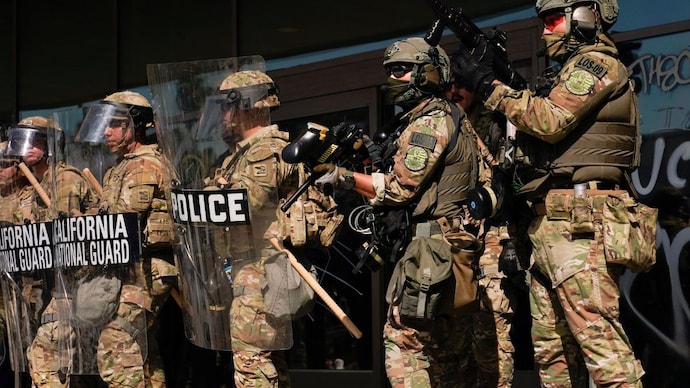
Pentagon withdraws 700 Marines from LA after month-long deployment
IN VIOLATION OF POSSE COMMITAS

Marines deployed to Los Angeles during protests against Trump's immigration raids are being withdrawn as calm returns, amid ongoing legal challenges and criticism over military involvement in civilian matters.


The Marines were dispatched to counter LA unrest. (File Photo: Reuters)


India Today World Desk
New Delhi,
UPDATED: Jul 22, 2025 

In Short
Troops deployed to protect federal property amid immigration protests
Federal court upheld Trump’s control over California National Guard
Marines praised for restoring order during month-long mission

The Pentagon on Monday announced the withdrawal of some 700 active-duty Marines from Los Angeles, ending a month-long deployment aimed at protecting federal property and personnel amid protests triggered by President Donald Trump's immigration enforcement actions.

The Marines, sent in June against the objections of California Governor Gavin Newsom, were dispatched alongside nearly 4,000 National Guard troops to counter unrest tied to workplace immigration raids carried out by Immigration and Customs Enforcement (ICE). The decision to send troops marked one of the Trump administration’s most forceful uses of the military on domestic soil.

“With stability returning to Los Angeles, the Secretary has directed the redeployment of the 700 Marines whose presence sent a clear message: Lawlessness will not be tolerated,” Pentagon spokesperson Sean Parnell said in a statement.

COURT BACKS TRUMP’S MILITARY DEPLOYMENT

The military deployment sparked fierce political debate over the federal government's use of military force in American cities. Despite court challenges, a federal appeals court upheld Trump’s authority to control the California National Guard, further escalating tensions between the White House and state officials.

The Marines’ withdrawal follows last week's partial drawdown of National Guard forces, with about half of the 4,000 troops already removed from Los Angeles.

Parnell praised the Marines for their conduct during the deployment. “Their rapid response, unwavering discipline, and unmistakable presence were instrumental in restoring order and upholding the rule of law,” he said.

President Trump has relied on the military as part of his crackdown on illegal immigration, vowing to deport millions and ramping up raids, including at California farms that had largely been spared during his first term. The administration has faced numerous lawsuits over its tactics.

- Ends

With inputs from Reuters
Pyongyang’s new strategy: Exploiting S. Korea’s political divisions and weakened NGOs

The National Reunification Institute, previously under the United Front Department, has been renamed the Institute of Enemy State Studies

By Lee Sang-yong
- July 22, 2025
DAILY NK

The Workers' Party newspaper Rodong Sinmun reported on Aug. 26 that North Korean Chairman of the State Affairs Commission Kim Jong Un conducted on-site guidance at several local industrial factory construction sites on Aug. 24 and 25. /Photo=Rodong Sinmun, News1

North Korea has adopted a cautious approach to the new South Korean administration’s conciliatory gestures—including suspending loudspeaker broadcasts at the border, asking private groups to stop launching propaganda balloons, and returning fishermen who drifted across the maritime boundary. But the regime is also studying changing attitudes toward unification in South Korea and shifts in its civil society.

A source in North Korea told Daily NK recently that North Korea’s Institute of Enemy State Studies is focusing its analysis on how South Korean youth view unification and the declining resources of NGOs that work on North Korean human rights.

Specifically, the institute argues that South Korean young people’s indifference or hostility toward North Korea represents a move toward “de-ethnification.” Its analysts say these changes go beyond simple disinterest in unification—they show that the sense of shared ethnic identity is itself weakening.

Behind closed doors, North Korean leaders believe that South Korean youth’s psychological distance from North Korea actually helps their strategy of creating divisions within South Korean society and undermining unification narratives.

“The thinking here is that South Korean young people’s growing tendency to reject unification or see North Korea as ‘different from us’ creates openings for the North to more easily conduct information and psychological warfare around the ‘two-state narrative.’ That’s why the Institute of Enemy State Studies has made this a key research priority,” the source explained.

The institute is also closely watching the financial struggles and reduced activity of South Korean NGOs focused on North Korean human rights. It’s evaluating whether these organizations can survive based on concrete factors like their dependence on foreign funding, how often they’ve been active recently, and whether they might receive direct government support.

“Analysts at the Institute of Enemy State Studies are paying attention to the fact that organizations that have long worked on North Korean human rights issues struggle to stay open without overseas funding,” the source said.
Turning weakness into opportunity

Importantly, the institute sees this trend as a “strategic opportunity” that will likely weaken opposition from South Korean society and the international community to North Korean repression.

“In the past, even small increases in repression would trigger protests from these organizations, prompting international responses. But the institute believes that as these groups become less active, that kind of pressure will weaken, giving the regime more room to increase repression,” the source said.

This shows how North Korea views the growing psychological distance in South Korean society and the potential decline of NGO activity as key elements in the South Korea strategy it’s developing. North Korea reportedly plans to finalize this strategy by October after carefully monitoring these trends.

The source explained that North Korea will likely develop propaganda emphasizing South Korea’s deep political divisions, young people’s disinterest in North Korea and unification, and the weakening of North Korea-focused NGOs as examples of chaos and instability in the South Korean system. This internal propaganda would send the message that “we are more unified” to strengthen the North Korean regime.

“The Institute of Enemy State Studies is currently crafting a strategy to use these signs of South Korean chaos to reinforce North Koreans’ disgust with the South. It’s not just analyzing—it’s also creating materials for the party’s propaganda campaigns. The strategy aims to convince North Koreans that the South Korean way is wrong,” the source said.

The institute’s existence was first revealed by North Korean media last November.

The source said that the National Reunification Institute, previously under the United Front Department, has been renamed the Institute of Enemy State Studies and placed under Bureau 10 of the Workers’ Party Central Committee. These changes align with North Korean leader Kim Jong Un’s two-state doctrine.

The institute now treats South Korea as a hostile state rather than a unification partner, focusing on analyzing competition with South Korea and the threat it poses.