Tuesday, August 19, 2025


Americans are rethinking alcohol amid growing concerns over health risks

A group of people raise a toast at a party.
Copyright Canva


By Euronews with AP
Publishd on 

A new survey found that 54 per cent of US adults drink alcohol, the lowest point in the past three decades.

Fewer Americans are reporting that they drink alcohol amid a growing belief that even moderate alcohol consumption is a health risk, according to a Gallup poll released Wednesday.

A record high percentage of US adults, 53 per cent, now say moderate drinking is bad for their health, up from 28 per cent in 2015.

The uptick in doubt about alcohol’s benefits is largely driven by young adults – the age group that is most likely to believe drinking “one or two drinks a day” can cause health hazards – but older adults are also now increasingly likely to think moderate drinking carries risks.

As concerns about health impacts rise, fewer Americans are reporting that they drink. The survey finds that 54 per cent of US adults say they drink alcoholic beverages such as liquor, wine or beer. That’s lower than at any other point in the past three decades

The findings of the poll, which was conducted in July, indicate that after years of many believing that moderate drinking was harmless – or even beneficial – worries about alcohol consumption are taking hold.

According to Gallup’s data, even those who consume alcohol are drinking less.

Before the COVID-19 pandemic, US government data showed Americans' alcohol consumption was trending up. But other US government surveys have shown a decline in certain types of drinking, particularly among teenagers and young adults.

The US is not alone in this trend. European countries, including Belgium, have recorded a decline in alcohol consumption in recent years.

This comes alongside a new drumbeat of information about alcohol’s risks. While moderate drinking was once thought to have benefits for heart health, health professionals in recent years have pointed to overwhelming evidence that alcohol consumption leads to negative health outcomes and is a leading cause of cancer.

Growing scepticism about alcohol’s benefits

In the past, moderate drinking was thought to have some benefits. That idea came from imperfect studies that largely didn’t include younger people and couldn’t prove cause and effect.

Now the scientific consensus has shifted, and several countries recently lowered their alcohol consumption recommendations.

Earlier this year, the outgoing US surgeon general, Vivek Murthy, recommended a label on bottles of beer, wine, and liquor that would clearly outline the link between alcohol consumption and cancer.

The federal government’s current dietary guidelines recommend Americans not drink or, if they do consume alcohol, men should limit themselves to two drinks a day or fewer while women should stick to one or fewer.

Gallup’s director of US social research, Lydia Saad, said shifting health advice throughout older Americans’ lives may be a reason they have been more gradual than young adults to recognise alcohol as harmful.

“Older folks may be a little more hardened in terms of the whiplash that they get with recommendations,” Saad said.

“It may take them a little longer to absorb or accept the information,” she added. “Whereas, for young folks, this is the environment that they’ve grown up in. ... In many cases, it would be the first thing young adults would have heard as they were coming into adulthood”.

The US government is expected to release new guidelines later this year.

Romania, NATO and sham accounts: Fake Euronews content persists online
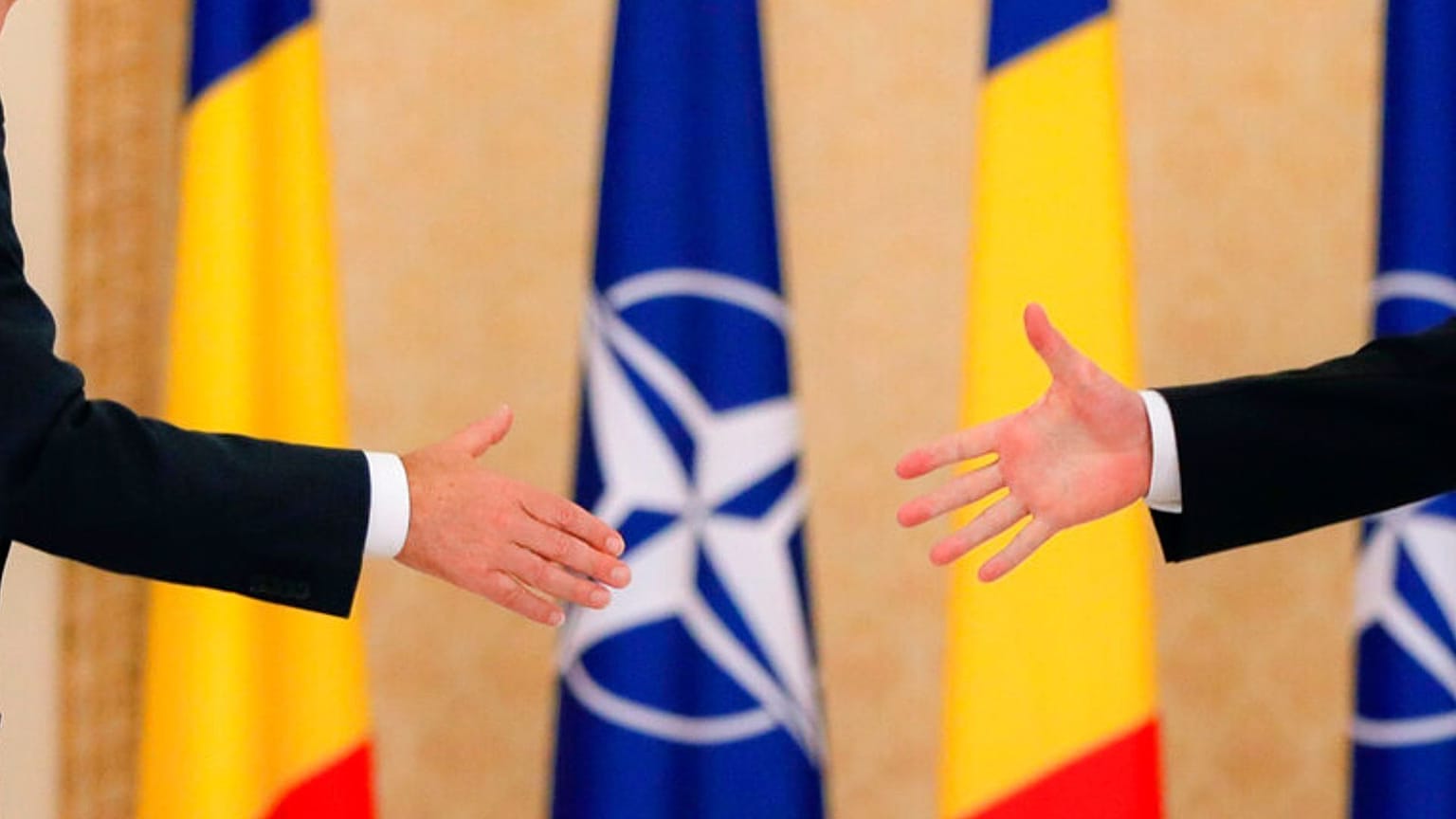
Copyright AP Photo/Vadim GhirdaBy James Thomas19/08/2025 - EURONEWS

False videos in the style of Euronews reports claim that a Romanian politician has called for the country to leave NATO and join forces with Russia.

Since Russia's full-scale invasion of Ukraine, the Kremlin has intensified a specific kind of propaganda campaign, which consists of digitally altering and faking news reports from mainstream news outlets.

For instance, a news segment which was aired on the Euronews programme Good Morning Romania in February recently surfaced on pro-Russian social media accounts and Telegram channels.

They took a statement made by Cristian Diaconescu, head of Romania's presidential chancellery, out of context, to make it seem like he supported the idea of Romania leaving NATO and joining Russia.

"Romania must join Russia. We don't need NATO," the caption superimposed onto the video reads.

The video takes a Euronews report out of context
The video takes a Euronews report out of context Euronews

The accounts that reposted the clip cut it short and inserted Romanian and Russian flags, as well as the communist hammer and sickle symbol, to further push a pro-Kremlin narrative. 

In the real report broadcast in February, Diaconescu suggested that Moscow wants NATO to revert its security guarantees to what they were in 1997.

This would mean that countries that joined the alliance after 1997, such as Romania, wouldn't be covered, according to the report.

In 1997, there were 16 NATO countries compared to today's 32. Back then, the alliance was mostly confined to Western Europe, the US and Canada, sharing a relatively small border with Russia via the northeastern part of Norway.

Romania officially joined NATO in 2004, around the time many other European countries that had historically been under Soviet influence, or indeed forcibly incorporated into the Soviet Union, were doing the same, including Bulgaria and the Baltics.

Diaconescu also said that Russia wants to unilaterally establish a sphere of influence over Eastern Europe and force the West to accept it.

He later clarified that neither issue is up for discussion, and that Russia's President Vladimir Putin first released the information at the beginning of his full-scale invasion of Ukraine, as potential measures he would accept to stop his offensive.

Romania's Ministry of Foreign Affairs has rejected any of the allegations made in the fake Euronews report, stating that it amounts to a typical line of attack by pro-Russian actors.

Other Euronews bureaus have also been targeted, with fake Instagram and Telegram accounts which purport to be Euronews' Uzbekistan bureaus also cropping up recently. 

This comes as the pro-Russian Matryoshka campaign ramps up its efforts to spread disinformation in Moldova, ahead of its elections, often in the form of fake Euronews reports, in addition to videos allegedly created by other reputable news outlets.

EuroVerify has already debunked various instances of this, including false Euronews videos posted by fake journalists alleging criminality in Moldova, and others claiming that Romania cautioned French authorities over interference in the Romanian presidential election runoff.

REAL FAKE NEWS
Conservative network Newsmax agrees to pay US$67M in defamation case over bogus 2020 election claims

By  The Associated Press
August 18, 2025 

A display shows a Newsmax logo on the day of their IPO on the floor at the New York Stock Exchange in New York, March 31, 2025. (AP Photo/Seth Wenig, File)

DENVER — The conservative network Newsmax will pay US$67 million to settle a lawsuit accusing it of defaming a voting equipment company by spreading lies about President Donald Trump’s 2020 election loss, according to documents filed Monday.

The settlement comes after Fox News Channel paid $787.5 million to settle a similar lawsuit in 2023 and Newsmax paid what court papers describe as $40 million to settle a libel lawsuit from a different voting machine manufacturer, Smartmatic, which also was a target of pro-Trump conspiracy theories on the network.

Delaware Superior Court Judge Eric Davis had ruled earlier that Newsmax did indeed defame Denver-based Dominion Voting Systems by airing false information about the company and its equipment. But Davis left it to a jury to eventually decide whether that was done with malice, and, if so, how much Dominion deserved from Newsmax in damages. Newsmax and Dominion reached the settlement before the trial could take place.

The settlement was disclosed by Newsmax on Monday in a new filing with the U.S. Securities and Exchange Commission. It said the deal was reached Friday. A spokesperson for Dominion said the company was pleased to have settled the lawsuit.

The disclosure came as Trump, who lost his 2020 reelection bid to Democrat Joe Biden, vowed in a social media post Monday to eliminate mail-in ballots and voting machines such as those supplied by Dominion and other companies. It was unclear how the Republican president could achieve that.

The same judge also handled the Dominion-Fox News case and made a similar ruling that the network repeated numerous lies by Trump’s allies about his 2020 loss despite internal communications showing Fox officials knew the claims were bogus. At the time, Davis found it was “CRYSTAL clear” that none of the allegations was true.

Internal correspondence from Newsmax officials likewise shows they knew the claims were baseless.

“How long are we going to play along with election fraud?” Newsmax host Bob Sellers said two days after the 2020 election was called for Biden, according to internal documents revealed as part of the case.

Newsmax took pride that it was not calling the election for Biden and, the internal documents show, saw a business opportunity in catering to viewers who believed Trump won. Private communications that surfaced as part of Dominion’s earlier defamation case against Fox News also revealed how the network’s business interests intersected with decisions it made related to coverage of Trump’s 2020 election claims.

At Newsmax, employees repeatedly warned against false allegations from pro-Trump guests such as attorney Sidney Powell, according to documents in the lawsuit. In one text, even Newsmax owner Chris Ruddy, a Trump ally, said he found it “scary” that Trump was meeting with Powell.

Dominion was at the heart of many of the wild claims aired by guests on Newsmax and elsewhere, who promoted a conspiracy theory involving deceased Venezuelan president Hugo Chavez to rig the machines for Biden. The network retracted some of the more bombastic allegations in December 2020.

Though Trump has insisted his fraud claims are real, there’s no evidence they were, and the lawsuits in the Fox and Newsmax cases show how some of the president’s biggest supporters knew they were false at the time. Trump’s then-attorney general, William Barr, said there was no evidence of widespread fraud.

Trump and his backers lost dozens of lawsuits alleging fraud, some before Trump-appointed judges. Numerous recounts, reviews and audits of the election results, including some run by Republicans, turned up no signs of significant wrongdoing or error and affirmed Biden’s win.

After returning to office, Trump pardoned those who tried to halt the transfer of power during the Jan. 6, 2021, attack on the U.S. Capitol and directed his Department of Justice to investigate Chris Krebs, a former Trump cybersecurity appointee who had vouched for the security and accuracy of the 2020 election.

As an initial trial date approached in the Dominion case earlier this year, Trump issued an executive order attacking the law firm that litigated it and the Fox case, Susman Godfrey. The order, part of a series targeting law firms Trump has tussled with, cited Susman Godfrey’s work on elections and said the government would not do business with any of its clients or permit any of its staff in federal buildings.

A federal judge put that action on hold, saying the framers would view it as “a shocking abuse of power. ”


Nicholas Riccardi, The Associated Press


'Traitorous liars': Conservative network slammed over $67 million election defamation settlement


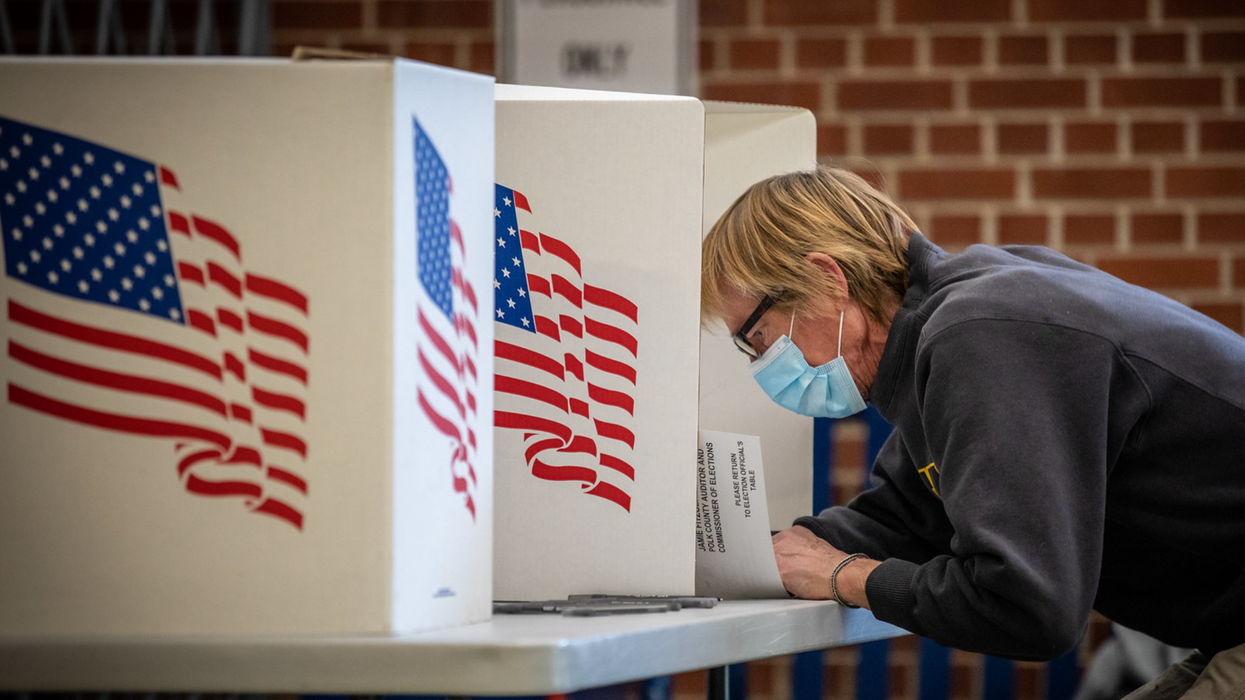
Voters in Des Moines precincts 43, 61 and 62 cast their ballots at Roosevelt High School. (Photo: Phil Roeder / Creative Commons)
August 18, 2025
ALTERNET


A recent regulatory filing shows that conservative cable network Newsmax has agreed to pay $67 million to Dominion Voting Systems to resolve a defamation lawsuit — stemming from unfounded allegations that the 2020 presidential election was manipulated.

According to NBC News, this agreement prevents what had been anticipated as a prominent courtroom showdown.

According to a filing with the Securities and Exchange Commission, Newsmax and Dominion Voting Systems finalized the settlement on Friday.

In their official release regarding the matter, Newsmax said they felt it was “critically important for the American people to hear both sides of the election disputes that arose in 2020.”

“We stand by our coverage as fair, balanced, and conducted within professional standards of journalism," Newsmax added.

Social media strongly reacted to the news.

Columnist Sophia Nelson wrote on the social platform X: "Another one bites the dust."

Writer Amy McGrath wrote: "$67 million is not enough."

Podcaster Jim Stewartson wrote: "FUN FACT: On the board of NEWSMAX is the former US Attorney and Secretary of Labor Alex Acosta who gave Epstein his horrific plea deal. This may explain why this channel is the leading defender of Ghislaine Maxwell."


Mediaite editor-in-chief Aidan McLaughlin wrote: "Between this and the Smartmatic settlement, Trump's 2020 election claims have now cost Newsmax a total of $107 million."

An X user wrote: "Doesn't seem like nearly enough. These traitorous liars need to be fined so much they don't dare pull that s-- -- again."


Finland’s war on fake news starts in schools. AI could make that a lot harder

AI could change the fight against disinformation that is being waged in Finnish schools, experts say.
Copyright Canva


By Anna Desmarais
Published on 

While Finnish students learn how to discern fact from fiction online, media literacy experts say AI-specific training should be guaranteed going forward.

In a Finnish classroom full of children under six earlier this year, a teacher suggested writing a story as a group using a new online tool – artificial intelligence (AI). 

With the teacher’s help, the children decided the genre (horror), the story’s plot, and the characters to include. 

The teacher wrote all of the children’s suggestions into a prompt for an AI system. It not only generated the text, but also some images to illustrate the horror story – to the delight and surprise of the kids, according to an AI literacy expert who watched the exercise.

The story exercise is one way the Nordic country, which lands at the top of an index tracking resilience to fake news across Europe, is starting to teach its youngest citizens how to interact with AI.

Media literacy creates a public that is “both critically and digitally literate,” making it easier for them to assess information they encounter online, according to the European Digital Media Observatory (EDMO)

For decades, media literacy and critical thinking skills have been ingrained in Finnish schools, from math to history and science courses. But Finland’s education experts say the country is still trying to figure out how to integrate AI into their curricula.

“The students need skills to understand AI and understand how it works,” Nina Penttinen, counsellor of education at the Finnish National Agency for Education, told Euronews Next. “In schools, they need to produce texts without AI”. 

Media literacy as a life skill

Finland started teaching its citizens about media literacy in the 1970s, focusing back then on how to interpret radio and TV programmes, experts told Euronews Next. 

The most recent curriculum update in 2014 – coincidently, just months after Russia illegally annexed Crimea, prompting a flurry of disinformation in Finland and nearby countries –  brought the world of social media and smartphones into the fold. 

The curriculum works around a concept called “multiliteracy,” the idea that understanding, evaluating, and analysing different sources of information is a skill for life and not an individual course that children can take.

The curriculum is complemented by approximately 100 different organisations that promote media literacy throughout the country. They also contribute teaching materials to classrooms, according to the Finnish National Audiovisual Institute (KAVI). 

In their system, children as young as three start to understand the digital environment by researching some images or sounds that they find funny. 

By ages seven or eight, children start to receive guidance from their teachers about whether the information they find online is reliable or not. 

A couple years later, students who are nine or 10 begin learning how to put together research, with emphasis placed on which perspectives they are selecting and which they could be leaving out. 

Leo Pekkala, KAVI’s deputy director, said teachers might explain in math class how algorithms work and how they’re made. 

Ultimately, Penttinen said it’s up to the teachers to decide how to integrate critical thinking into their subjects and lessons and to evaluate whether students are meeting expectations.

Pekkala said their approach appears to be working, citing the  limited success of disinformation campaigns in Finland.

Most people “seem to recognise really well” that it is malicious, he said.

“There were certain international conspiracy theories [during the COVID-19 pandemic] that were also spread in Finland, but they never kind of spread very largely and people recognised them rather easily and there was discussion that, yeah, that's absurd,” Pekkala said. 

Literacy skills will help with AI, experts say

Deepfakes are one AI-related challenge in the classroom. The World Intellectual Property Organisation (WIPO) defines deepfakes as videos or images that synthesise media by either superimposing human features onto another body or manipulating sounds to generate a realistic video. 

This year, high-profile deepfake scams have targeted US Secretary of State Marco Rubio, Italian defense minister Guido Crosetto, and several celebrities, including Taylor Swift and Joe Rogan, whose voices were used to promote a scam that promised people government funds.

The surface technology [of AI] which is developing at high speed, doesn’t take away the need for basic critical understanding of how media works.
 Leo Pekkala 
Deputy Director, Finnish National Audiovisual Institute (KAVI)

This material is “very, very difficult to separate from real material,” Pekkala said. 

The hope is that students will be able to use the skills they learned in school to identify that content in an AI-generated video could potentially be “off”. To confirm that suspicion, students would check another source to verify whether that video was truthful or not. 

“The surface technology [of AI] which is developing at high speed, doesn’t take away the need for basic critical understanding of how media works,” Pekkala added. 

Children will also learn some signs that a video, picture, or audio clip is fake, for example if it generates a “really emotional reaction,” Penttinen added. 

Despite the risks, she added that children need to learn “how AI works and [how] the companies are developing it”.

‘It’s a huge task ahead of us’

Kari Kivinen, an education outreach expert for the European Observatory on Infringements of Intellectual Property Rights (EUIPO), said Finnish teachers are already changing how they work with AI in the classroom.

That could include asking for handwritten assignments in class instead of online essays or specifying that AI can be used for tasks like brainstorming, but not for a final assignment. He cited the teacher's horror story exercise as a way to introduce young children to AI.

The government introduced some AI guidelines, including recommendations for early education teachers, earlier this year.

The document suggests that teachers disclose how and when they use AI in their own work and to tell their students what errors and biases could come from its use. 

The AI tools have been developing so fast that the education systems have not been able to follow it sufficiently so far
 Kari Kivinen 
Education Outreach Expert, European Observatory on Infringements of Intellectual Property Rights (EUIPO)

Pettinen pointed to some flaws in the guidelines, saying that because they are not baked into the curriculum, schools and teachers may not adopt them. A curriculum-wide review typically happens every 10 years, she added, but it has not yet started. 

Kivinen said he is working on a joint AI literacy framework for the European Union and other developed countries, which could provide some more guidance. 

The framework, to be published in early 2026, will provide guidelines for how students should use AI, how to communicate that they are using AI, and how to get more reliable results from AI. 

Eventually, it aims to eventually measure the AI skills of 15-year-olds in 100 countries, he added. He said the AI literacy framework is “aligned with the Finnish approach”. 

“[AI use is] not only a Finnish problem, it’s a problem all over Europe and the world at this moment,” Kivinen said. “The AI tools have been developing so fast that the education systems have not been able to follow it sufficiently so far”.

“It’s a huge task ahead of us”.


EU Commission defends funding for Islam and Islamophobia research projects

UNDERSTANDING YOUR NEIGHTBOURS
An ERC-backedproject, coordinated by Istanbul Bilgi University between 2018 and 2019, received €2.3 million to study the rise of populist and Islamophobic discourse in Europe.
Copyright AP Photo

By Gerardo Fortuna
Published on 


The EU executive has pushed back against far-right criticism over the allocation of over €17 million in grants by the leading European Research Council (ERC) to Islam-related projects, insisting they won funding on scientific merit.

The European Commission has countered criticism from far-right political groups for allocating EU research funds over the past years on projects focused on subject matters like Islam, the Qur’an, Sharia, and Islamophobia.

The controversy began after Italian hard-right MEP Silvia Sardone questioned the value of the projects, describing them as “studies of questionable utility, all focused on Islam,” and demanding that the Commission justify the use of public funds.

Similar concerns were raised by French far-right MEP Jean-Paul Garraud. Both lawmakers, who sit in the Patriots for Europe group in the European Parliament, suggested the projects unfairly promoted Islam or exaggerated the existence of Islamophobia in Europe.

In a response made public on Monday, the EU Commissioner for research, Ekaterina Zaharieva, stood by the European Research Council (ERC), the bloc’s scientific funding body, pointing out that the projects in question are “world-class scholarly undertakings that advance the frontiers of knowledge.”

She noted that the funded research spans a wide range of topics, including minority inclusion in democratic societies and the evolution of Islamic law.

Examples of ERC-backed initiatives include a €2.5 million project led by France’s National Centre for Scientific Research, which is mapping the evolution of Sharia law and will run until 2029.

Another project, coordinated by Istanbul Bilgi University between 2018 and 2019, received €2.3 million to study the rise of populist and Islamophobic discourse in Europe.

At Ludwig-Maximilians University in Munich, researchers were awarded €2.3 million for a study completed in 2023 on the role of animals in Islamic philosophy. Meanwhile, Oxford University is conducting a €2.7 million project, running from 2021 to 2027, that examines the experiences of Muslim youth in Europe and the UK.

The Commission rejected allegations of bias, stressing that the ERC employs rigorous independent peer review in assessing proposals and that these grants were awarded through a transparent and highly competitive process.

“The sole criterion for funding is the scientific excellence of the proposal,” Zaharieva said, highlighting that all projects undergo detailed ethics reviews before funding is approved.

Since its creation in 2007, the ERC has supported more than 17,000 projects and over 10,000 researchers across disciplines ranging from engineering and life sciences to social sciences and humanities.

This work has resulted in more than 200,000 scientific publications, 2,200 patents and intellectual property applications, and numerous international accolades, including fourteen Nobel Prizes, seven Fields Medals, and eleven Wolf Prizes, according to the European Commission.

Monday, August 18, 2025

EPSTEIN'S OTHER BUDDY

An ‘Entitled’ scandal: Here are the key takeaways from the scathing new Prince Andrew biography


Copyright AP Photo - Harper Collins

By David Mouriquand
Published on 14/08/2025 -

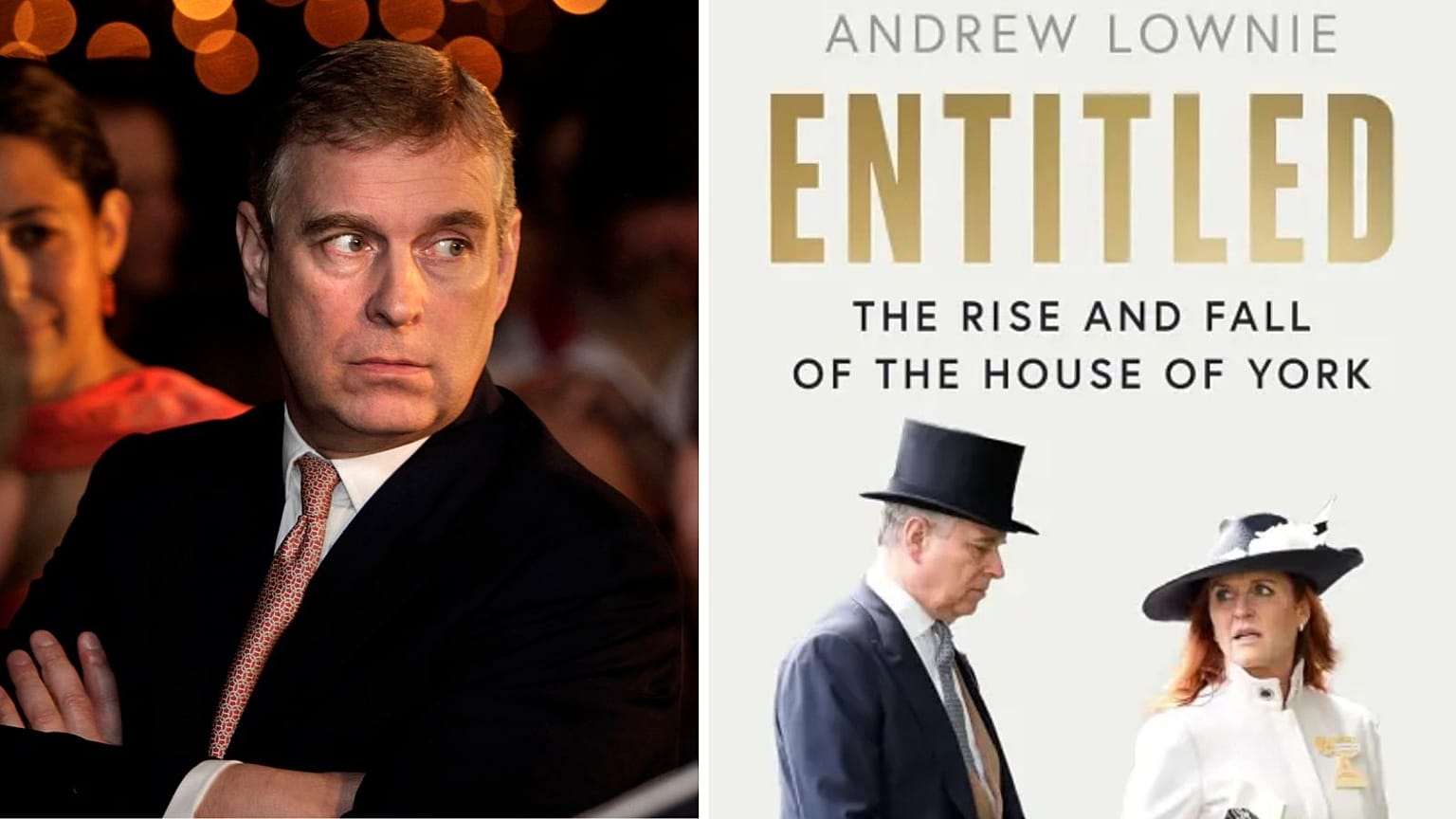
“Entitled: The Rise and Fall of the House of York”, by Andrew Lownie, “traces the life of the late Queen’s second son.” It hits the shelves today. Here are some of the key takeaways from a scathing exposé.

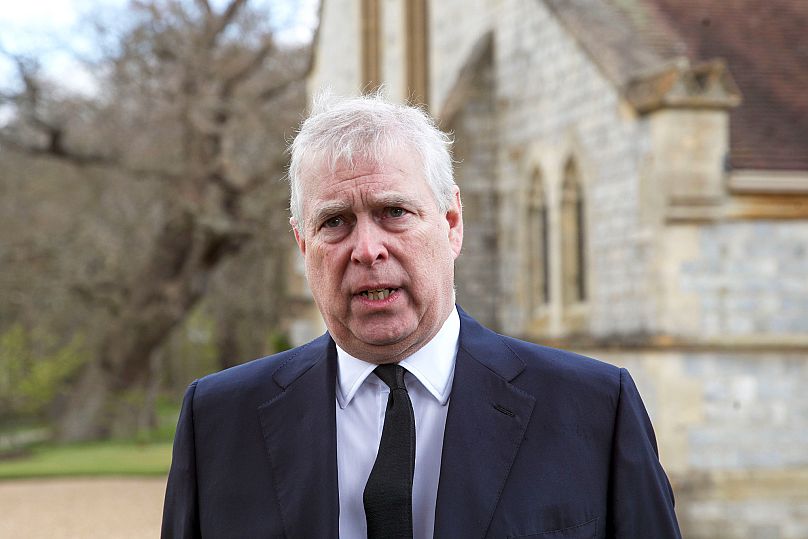
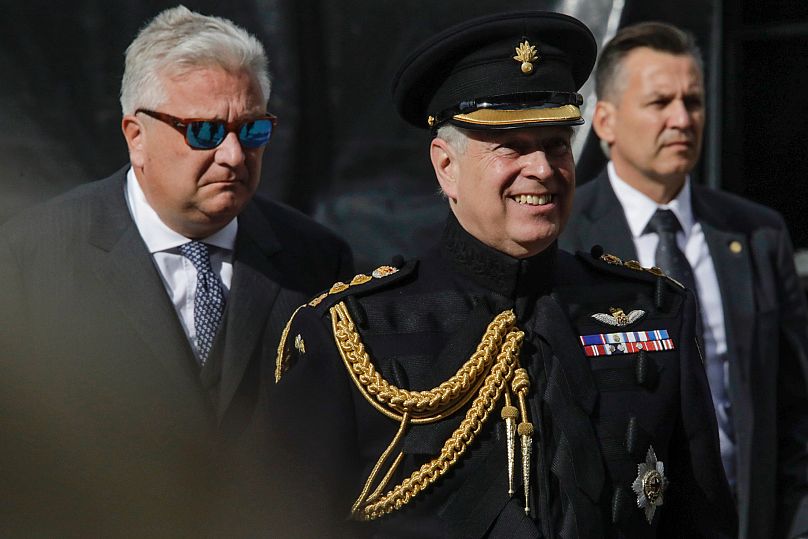
Short-tempered, vain, arrogant, sex obsessed... Prince Andrew, Duke of York and the younger brother of King Charles III, does not come off well in Andrew Lownie’s new book, “Entitled: The Rise And Fall Of The House Of York.”

To say the very least.

The new biography, which tells the story of "a spoilt prince unable to connect and a duchess pushed by her insecurities into a desperate need to maintain the attention her ‘royal’ status brought," is based on court papers, freedom of information disclosures, interviews with ex-staffers and correspondence.

The 450 pages reportedly took Lownie four years to complete, and he paints an unflattering portrait of the Duke of York – from shady financial deals to sex scandals and close ties with convicted sex offender Jeffrey Epstein.

Extracts from the book were serialised in the Daily Mail newspaper, and the biography hits shelves today.

It comes as a YouGov poll suggests that not only is Prince Andrew is the most unpopular royal in the country, but also that two thirds of Britons would support stripping him of his remaining royal titles - Queen Elizabeth II having stripped her son of his military titles and patronages in 2022.

“Entitled: The Rise And Fall Of The House Of York” will do nothing to lower his polling numbers.

Here are five of the key takeaways from this damning new book.
"Entitled: The Rise and Fall of the House of York" by Andrew Lownie Harper Collins


Andrew and Epstein’s relationship


“Entitled: The Rise And Fall Of The House Of York” dwells on the relationship between Andrew and convicted sex offender Jeffrey Epstein, saying that their bond was much closer than the prince has admitted

Lownie claims that Andrew “was easy prey for a rattlesnake like Epstein,” adding: “Epstein played Andrew. The prince was a useful idiot who gave him respectability, access to political leaders and business opportunities. He found him easy to exploit.”

Lownie reports that Ivan Novikov, Epstein’s personal driver, claims he remembers driving the prince around with “two young girls around eighteen to the Gansevoort Hotel in the Meatpacking District. Both girls were doing lines of cocaine.”

Lownie also alleges that Epstein sold Andrew’s “most intimate secrets” to foreign intelligence agencies around the world, including to Israel’s Mossad and the Saudi Arabian authorities.

Andrew claims to have met Epstein in 1999 – something the book refutes, as the pair allegedly already knew each other “almost a decade earlier”.

The late Virgina Giuffre, who was a masseuse in Epstein’s employ, accused Andrew and Epstein of sexual assault. He denied any wrongdoing in the disastrous 2019 interview with BBC’s Newsnight, in which Andrew claimed that he had no memory of meeting Giuffre - despite numerous photos of them together.

Giuffre later filed a lawsuit against Andrew in 2021. They settled the following year outside of court for an undisclosed amount. Giuffre took her own life earlier this year, at the age of 41.

Prince Andrew AP Photo


An “unbelievably cruel” man

The book claims that Andrew once called a royal staff member a “f*cking imbecile” for failing to give the Queen Mother her full title.

“He could be unbelievably cruel,” Lownie writes of Andrew’s behaviour towards royal employees.

Other cases of inappropriate and childish behaviour include firing an employee because he wore a nylon tie, dismissing another member of staff because he had a mole on his face, and asking his security guards to retrieve his golf balls.

Prince Andrew AP Photo


A tussle with Harry

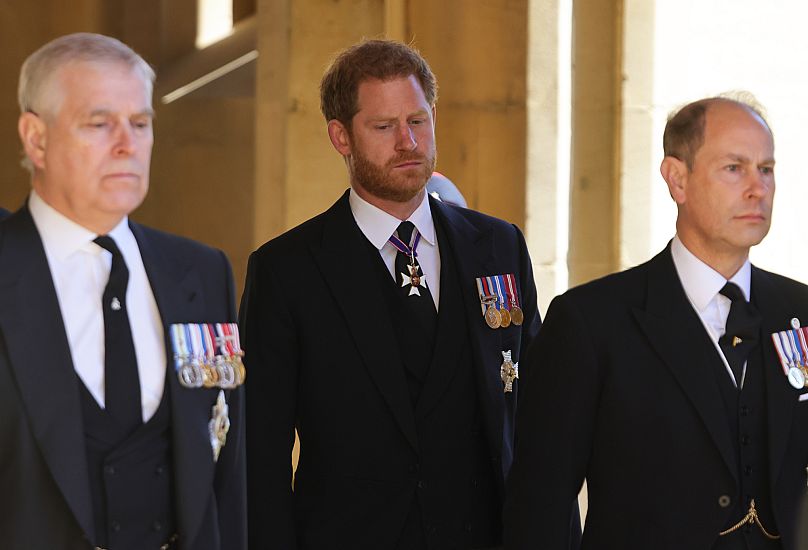
Lownie alleges that Prince Harry gave his uncle Andrew a bloody nose during a “heated argument” at a 2013 family gathering in which “punches were thrown”.

The book claims that Harry “got the better of Andrew” after the latter said that his marriage to “opportunist” Meghan Markle would not last more than a month.

Lownie also claims: “Buckingham Palace braced itself for historic complaints about Prince Andrew’s bullying, profanities and impossible demands. Some say a report on bullying accusations against Meghan Markle has never been released because it would also raise questions about the behaviour of the queen’s second son.” This refers to the accusations of bullying levelled against Markle in 2021 – accusations which she has denied.

Prince Andrew and Prince Harry AP Photo

The philandering prince

Lownie alleges that Andrew, a “sex addict,” had relations with anywhere from “one thousand” to “three thousand” women, including dozens he met through Epstein.

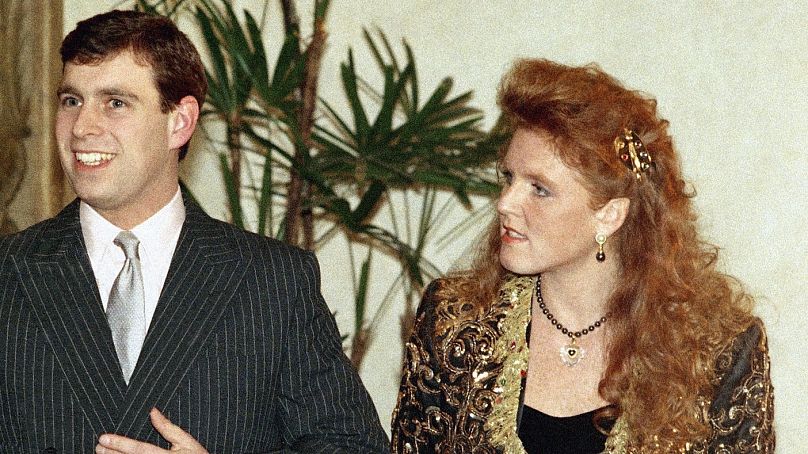
Regarding his marriage with Sarah Ferguson, the book details how Andrew was in the Royal Navy when he and Ferguson wed in 1986, and most of his time was spent at sea.

“Sarah discovered Andrew wasn’t coming home on some of his leave. He was going elsewhere - and this just drove her crazy,” shares the Duke of York’s former driver in Lownie’s book. The former employee also reveals that “Randy Andy” slept with “more than a dozen women” before Andrew and Ferguson’s first anniversary.

Other claims about Andrew’s sex life include that he lost his virginity at 11 years old, that he “realised he was obsessed with women”, and that dozens of women were brought to his hotel room during a stay in Bangkok.

“Hotel staff were used to foreigners bringing in girls, but amazed that more than 10 a day were going to Andrew’s room,” Lownie writes.

Prince Andrew and Sarah Ferguson AP Photo

Andrew and Sarah’s schemes

The book details Ferguson’s money schemes, as well as how she met with an editor at Hello! magazine to discuss how she could fill the gap left by Princess Diana, following her death in 1997.

She agreed “to give Hello! everything about her for a monthly retainer,” a source told Lownie. “The deal was thought to be worth $134,000 a month.”

However, the spotlight is more on Andrew’s grifting.


From 2001 to 2011, he worked as the UK’s Special Representative for International Trade and Investment and met leaders from Azerbaijan, Libya and Tunisia. He was reportedly not shy about asking for gifts and once allegedly demanded he be offered a Faberge egg.

Lownie claims the late Queen Elizabeth II was well aware of Andrew’s shady deals and the handouts, but that she was “not going to do anything” as “it seemed to be that if he wasn’t caught and could get away with it,” then the palace would turn a blind eye.

Throughout the book, Lownie doesn’t just chronicle the downfall of a entitled and petty man, who hasn’t been a "working royal" since 2019, but paints the portrait of the rot at the heart of Britain’s royal family and how “The Firm” favours a misguided sense of loyality over any accountability.

"Entitled: The Rise and Fall of the House of York" by Andrew Lownie, published by Harper Collins, is released on 14 August.
GOOD NEWS
Hamas tells mediators it accepts latest Gaza ceasefire proposal, reports claim

HAMAS IS A POLITICAL ORG.


Copyright AP Photo

By Euronews
Published on 18/08/2025 - 

Hamas on Monday informed mediators that it had accepted a ceasefire deal proposal submitted to it the day before, according to international and Israeli outlets.


Hamas on Monday told mediators that it approves of the latest Gaza ceasefire proposal, according to international and Israeli outlets, citing Hamas officials.

The officials did not provide further details at this time.

Israeli media report that the latest proposal was presented to the militant group the day before and was a revised version of Hamas’ latest response, which involved a framework agreement for a 60-day ceasefire and a two-step release of Hamas-held hostages.

Egyptian and Qatari mediators were holding talks with Hamas in their latest effort to broker a ceasefire with Israel in the Gaza Strip.

Israeli Defence Minister Israel Katz reacted to the news on Monday by saying Hamas was open to discussing the deal to release the remaining hostages "only because of its fear that we seriously intend to conquer Gaza City.”

Speaking to senior IDF officers on Monday, Katz said taking control of Gaza City “will lead to the defeat of Hamas," Israeli media reported.

"The leadership is there, and there remain the central infrastructures of the military wing. Hamas also knows that this is now the core of its rule,” Katz added.

Israel announced plans to take complete control of Gaza City after ceasefire talks appeared to break down. The move raised further international concerns amid fears of a worsening humanitarian catastrophe in Gaza, which experts say is sliding into famine.

US President Donald Trump appeared to cast doubt on these talks, posting on social media: “We will only see the return of the remaining hostages when Hamas is confronted and destroyed."

"The sooner this takes place, the better the chances of success will be," Trump emphasised.


Verifying claims Spain sent humanitarian supplies in bad condition to Gaza

A viral video claims to show a bag of humanitarian supplies air-dropped into the Gaza Strip by Spain and other governments containing mouldy contents. Euroverify investigates.


Copyright Abdel Kareem Hana/Copyright 2025 The AP. All rights reserved.

By Mared Gwyn Jones
Published on 18/08/2025 - 

A video spreading virally online shows a young Palestinian opening a bag of aid allegedly air-dropped into the Gaza Strip.

It contains sachets of supplies covered in mould.

The Palestinian in the video says that the bag was parachuted into the Khan Younis and Deir Al-Balah areas, and was being sold "in the markets" for the equivalent of $100 (around €85).

"Can you see? There is mould," he explains, showing sachets covered in a dark substance. "Look how aid with mould is reaching us."

The packet carries the branding of JOMIPSA, an Alicante-based company that provides food rations and humanitarian aid kits to customers including European governments and the NATO alliance.

Photographs of food packs on the JOMIPSA website match those seen in the viral video, which Euroverify detected on X, Instagram, TikTok and Telegram.
The video was first published on 2 August, a day after Spain, along with France, Germany, the UAE and Jordan, air-dropped humanitarian supplies into Gaza in response to the humanitarian crisis gripping the enclave.

Spain provided 12 tonnes of aid, dropped using 24 parachutes. This included 5,500 food rations designed to feed 11,000 people.

Online users have assumed that the bag in question was air-dropped as part of the aid rations donated by the Spanish government.

Euroverify put the claims made by the Palestinian in the video to the Spanish foreign affairs ministry. It firmly rejected what it described as "false information”.

"We categorically deny that, under any circumstances, content was sent in a bad condition," the ministry said in a statement.

The ministry adds that it's impossible to verify the origin of a package without the batch number, but that the Spanish company in question, JOMIPSA, had also sold supplies to other donor countries.
Palestinians say aid is being sold at markets

Several Spanish media, including news agency EFE, have also received pictures from Palestinians on the ground in Gaza claiming to show the aid packets being sold at markets.

They say the bags were being sold for 350 shekels (around €90) on the markets.

Testimonies shared with EFE match the Palestinian's account in the video, both in terms of the contents of the bags, namely 24 sachets of foodstuff including biscuits and coffee, as well as the location where the parachutes fell.

Images obtained by Catalan newspaper Diari ARA show bags matching those in the video being sold at a Gaza market.

The director of the UN agency for Palestinian refugees (UNRWA), Philippe Lazzarini, said in a statement after the parachutes were dropped that such methods are "at least 100 times more costly than trucks”.

"If there is political will to allow airdrops - which are highly costly, insufficient and Inefficient, there should be similar political will to open the road crossings," he added.

Spain's foreign minister José Manuel Albares described the aid parachuted into the Strip as a "drop in the ocean" and called for aid to be allowed to enter in a "regular, sufficient and safe way”.
Madrid rejects allegations that pork product was included in food aid

Other online users have claimed that the aid bags dropped into Gaza, whose population is predominantly Muslim, contained pork.

Some users have shared a screenshot from JOMIPSA's website in which the contents of one of the available aid packs is listed as including "pork meatballs”.

But there is no evidence that these food rations were included in the packs sent to Gaza, and the Spanish foreign ministry has firmly denied the allegations, saying all meals sent to civilians in Gaza were halal.

1.4 million Canadians missed a credit payment in the second quarter, report says

By The Canadian Press
August 18, 2025 

 A consumer pays with a credit card at a store in Montreal . THE CANADIAN PRESS/Ryan Remiorz

TORONTO — There’s a deepening divide among consumers, even as the rate of missed credit payments dipped, a new Equifax Canada report shows.

It shows 1.4 million Canadians missed a credit payment in the second quarter. While that’s up by 118,000 compared with the same time last year, it’s down slightly from the first quarter.

Rebecca Oakes, vice-president of advanced analytics at Equifax Canada, said it’s “a bit of good news” to see the delinquency rate levelling off.

“We’re starting to finally see that stabilize a little bit,” she said in an interview.

“The less good news, though, is that below that high level number, we’re still seeing this financial gap widening for some groups of consumers,” she added, particularly between homeowners and non-homeowners.

About one in 19 Canadians without a mortgage missed at least one credit payment, compared with one in 37 homeowners, the report said.

Total consumer debt rose 3.1 per cent year-over-year to $2.58 trillion, Equifax said, while average non-mortgage debt per consumer increased to $22,147.


Oakes said various factors, including high unemployment and economic uncertainty — amplified by trade disruptions — have made it harder for many Canadians to keep up with day-to-day expenses.

Consumers under the age of 36 are being hit the hardest, the report suggests.

Millennials and gen Z saw their average non-mortgage debt rise two per cent to $14,304 from a year ago. The group’s 90-plus days non-mortgage balance delinquency rate also rose to 2.35 per cent — a 19.7 per cent jump year-over-year.

“The affordability crisis seems to be hitting younger consumers the hardest,” Oakes said. “Between rising costs, employment uncertainty, and limited access to affordable credit, many are struggling just to stay afloat.”

Also, many homeowners who locked in lower mortgage rates during the height of the pandemic could see their payments rise upon renewal.

“Payment levels are going up for many consumers when they’re renewing their mortgage and when that is a little bit too much, the first place you tend to see that is (missed payments) on things like credit cards,” she said.

Ontario remained the hot spot for financial distress in the second quarter. The 90-plus day delinquency rate was 1.75 per cent, which is 15.2 basis points higher than the national average, the report said.

The rates of missed payments were even higher in the city of Toronto and the surrounding area, which are exposed to the tariff-hit auto and steel sectors.

However, Oakes said the financial gap between homeowners versus non-homeowners in Ontario peaked last year and has started to come down.

Another credit-tracking agency, TransUnion, released its second-quarter consumer credit report last week.

It said consumer debt reached $2.52 trillion in the second quarter, up 4.4 per cent year-over-year.


“Subprime consumers are more likely to feel the impact of higher costs of living and may choose to take on additional debt, such as credit card balances, to help cover the costs of goods and services,” Matthew Fabian, director of financial services research and consulting at TransUnion Canada, said in a statement.

“For other risk tiers of borrowers, their card balance growth has been less than the rate of inflation, indicating that these consumers are less reliant on credit cards to maintain purchasing power,” he said.

This report by The Canadian Press was first published Aug. 18, 2025.

Ritika Dubey, The Canadian Press