Monday, September 01, 2025

MULTIPOLARITY

BRICS leaders gather in China to coordinate anti-Trump alliance

BRICS leaders gather in China to coordinate anti-Trump alliance
Chinese President Xi Jinping is hosting leaders from the Emerging Markets to draw up a response to Trump's bullying that will bring the BRICS nations closer together. EU foreign ministers met in Copenhagen to deal with Russia but are likely to get a lot less done. / bne IntelliNews
By Ben Aris in Berlin September 1, 2025

The EU’s 27 foreign ministers will debate the option of seizing Russia’s frozen $200bn at an informal gathering in Copenhagen, as the leading BRICS nations gather in Beijing to form a common strategy to deal with US trade aggression on August 30.

The leaders of three of the world’s four most powerful nations met in China this weekend to discuss how to react to the upending of the international order brought forth by the US under President Trump.

At a Shanghai Cooperation Organization meeting, Chinese leader Xi Jinping welcomed Russian President Vladimir Putin and Indian Prime Minister Narendra Modi, amongst others, who together represent the majority of humanity alive today.

China’s leader Xi Jinping laid out Beijing’s ambitions for an alternative international order when he welcomed his counterparts from Russia, India and Iran to the four-day security forum where he sought to offer a contrast to US President Donald Trump’s global stewardship.

As bne IntelliNews reported, the US support of Ukraine and sanctions on Russia has pushed Putin into the arms of China, but since taking office US President Donald Trump’s aggressive Liberation Day tariffs has also pushed India and Brazil into the BRICS bloc that is maturing from an informal economic block into a fully-fledged geopolitical alliance specifically seeking to counter the US-led western hegemony. Moreover, those countries that were previously holding back, like Indonesia and Malaysia, have been so unsettled by the mercurial Trump administration that they have also joined up.

The SCO meeting in the Chinese city of Tianjin has a specific geopolitical agenda and follows on from a Gulf Cooperation Council (GCC) countries, China and ASEAN summit in May that brought together another two large emerging market blocs in what is also the world’s largest economic bloc. Together, these countries have over 2bn people, 30% of the world's GDP and, crucially, about 55% of world GDP growth in PPP terms.

“This is a group of countries that have been significantly antagonised by the west, especially by the US,” said Yun Sun, senior fellow at the Stimson Center, a Washington think-tank, told the Financial Times. “China is bringing them together and making a statement about global governance and the global order . . . It will be saying that we, the SCO, have a very different vision.”

China has been biding its time as it modernised its economy, but came out and explicitly challenged the US claim to lead the world with his three-day state visit to Moscow in 2023 where the two leaders declared an “unlimited partnership”. Since then, China has thrown its full support behind Russia in defiance of US pressure. Putin and Xi have since deepened their relationship and spelled out their vision of a new multipolar world order, most recently in an 8,000 word essay published last year.

The Sino-Russian tie up was initially derided as lop-sided as Russia would be relegated to becoming a raw materials storehouse for China, but as time passes the BRICS nations are merging into a much more coordinated and powerful political force.

Sino-India reset

Modi’s presence is key as relations between New Delhi and Beijing have never been good and were rankled by a tense border dispute. However, the two superpowers are becoming increasingly pragmatic. China and India have been at loggerheads since a war in 1962 and last clashed along their shared border in 2020. As a result, Modi and Xi are pushing for a reset as trade pressures force New Delhi to bury the hatchet.

“Had a fruitful meeting with President Xi Jinping in Tianjin on the sidelines of the SCO Summit. We reviewed the positive momentum in India-China relations since our last meeting in Kazan,” Modi said in a post on social media. “We agreed on the importance of maintaining peace and tranquility in border areas and reaffirmed our commitment to cooperation based on mutual respect, mutual interest and mutual sensitivity.”

Xi made four suggestions  in his bilateral meeting with Modi to deepen ties between the two countries. Xi called for stronger “strategic communication” and deepening mutual trust and also called for expanding cooperation to “achieve mutual benefits and win-win results,” to accommodate each others concerns. He also called for  “strengthen multilateral cooperation to safeguard common interests." Modi welcomed the suggestions. 

The two leaders also discussed the border issue as part of ongoing negotiations, and technical agreements were made to resume direct flights between the two countries.

Another difficult relationship that will need to be papered over is that of Pakistan and India, who fought a brief war in May. Pakistani Prime Minister Shahbaz Sharif is also attending the meeting. Beijing has angered New Delhi by supplying Pakistan with advanced J-35 stealth jet fighters, but Washington has also done the same, with a deal to sell Pakistan advanced F-16 fighters.

This is Modi’s first visit to China in seven years, a period marked by deadlock along the Himalayan frontier, military clashes in Ladakh’s Galwan Valley and a sharp decline in trade and travel. The two leaders now say the atmosphere has changed, with Xi describing India as a “partner” rather than a rival and Modi speaking of “peace and stability”. On very good terms with both countries, Putin has also played an important mediating role in their relations.

The growing warmth in the Sino-Indian relations starkly contrasts with the growing anger the Indians feel for Washington’s “hypocritical” approach to trade after Trump slapped an additional 25% tariffs on India bringing the total to 50%, to “punish” them for continuing to buy Russian oil. India accounts for some 38% of Russian oil exports, with China buying most of the rest. New Delhi is defying Washington and says it will continue to buy Russia’s crude.

The government in New Delhi issued a scathing letter pointing out that the EU and US both continue to trade with Russia and indeed the EU’s trade – energy imports – is far in excess of India’s imports of oil. At the start of the war in 2022 and up to the G20 summit hosted by India two years ago, India remained a moderate and hoped to maintain cordial relations with both the East and West. Relations with Washington have dramatically deteriorated since then.

In addition to Modi and Putin, Xi will be joined by about 20 other leaders at this year’s summit, which will be the SCO’s biggest yet, according to Chinese Communist party media outlet Qiushi.

Brazil to hold emergency BRICS conference 

Brazil is also angry with Trump and will call an extraordinary summit of the BRICS group to discuss a coordinated response to new US trade measures, President Luiz Inácio Lula da Silva’s senior adviser Celso Amorim confirmed, and Kyiv Independent reported. The summit is expected to take place online.

Brazil holds the rotating BRICS presidency in 2025 and is seeking to use the position to forge a joint stance among members in response to Washington’s growing trade restrictions. “During the event, the country’s President Luiz Inácio Lula da Silva plans to discuss and develop a joint response by the association’s members to threats to cooperation from the United States,” officials said.

On July 30, US President Donald Trump signed an executive order raising tariffs on Brazilian goods to 50%. The measure, however, included around 700 exemptions covering strategic industries such as aircraft manufacturing, energy, and certain agricultural products.

Brazilian officials fear the decision could mark the beginning of a broader trade confrontation. The Financial Times previously reported that Brasília is concerned it may face additional US duties similar to those levied on India earlier this year.

Brazil has sought to expand its role within BRICS, both as a counterweight to Washington’s economic leverage and to safeguard its own strategic partnerships. The country is currently the largest buyer of Russian diesel fuel, a trade relationship that has grown in importance since the outbreak of the war in Ukraine.

Celso Amorim, Lula’s chief foreign policy adviser and a veteran diplomat, has been tasked with preparing the agenda for the extraordinary meeting. The summit is expected to focus on tariffs, energy security, and broader trade resilience among BRICS members.

Russian bilateral meetings

Putin has a busy schedule as he continues to work to undermine sanctions with his partners in the Global South and most of their leaders will be at the SCO meeting.

In all Putin is planning some ten bilateral meetings, starting with Xi. On September 1, Putin plans to meet with Indian Prime Minister Narendra Modi, Turkish President Recep Tayyip Erdogan, and Iranian President Masoud Pezeshkian, and hold brief conversations with Cambodian Prime Minister Hun Manet and Nepalese Prime Minister Sharma Oli.

On September 2, the Russian leader is set to meet with Pakistani Prime Minister Shehbaz Sharif, Syrian President Aleksandar Vucic and Uzbek President Shavkat Mirziy/yev. Putin is also expected to hold conversations with President Denis Sassou Nguesso of the Republic of the Congo and Vietnamese President Luong Cuong. Ushakov pointed out that a meeting with North Korean leader Kim Jong Un, who will also attend the Beijing celebrations, was under consideration.

In addition Putin brought a very large delegation that includes almost all Russia’s top businessmen.

The following leaders will attend the SCO meeting, according to Xinhua:

Armenian Prime Minister Nikol Pashinyan
Azerbaijani President Ilham Aliyev
Belarusian President Alexander Lukashenko
Cambodian Prime Minister Hun Manet
Cuban President Miguel Díaz-Canel Bermúdez
Egyptian Prime Minister Mostafa Madbouly
Indian Prime Minister Narendra Modi
Indonesian President Prabowo Subianto
Iran's President Masoud Pezeshkian
Kazakh President Kassym-Jomart Tokayev
Kyrgyz President Sadyr Japarov
General Secretary of the Lao People's Revolutionary Party Central Committee and Lao President Thongloun Sisoulith
Malaysian Prime Minister Anwar Ibrahim
Maldivian President Mohamed Muizzu
Mongolian President Ukhnaa Khurelsukh
Nepali Prime Minister KP Sharma Oli
North Korean ruler Kim Jong Un
Pakistani Prime Minister Shahbaz Sharif
Russian President Vladimir Putin
Serbian President Aleksander Vucic
Tajik President Emomali Rahmon
Turkish President Recep Tayyip Erdogan
Turkmen President Serdar Berdimuhamedov
Uzbek President Shavkat Mirziyoyev
Vietnamese Prime Minister Pham Minh Chinh
President of Zimbabwe Emmerson Dambudzo Mnangagwa

 

The Shanghai Cooperation Organization is coming of age

The Shanghai Cooperation Organization is coming of age
The SCO was set up 24 years ago to improve the security of the Central Asian border, but has since grown into an increasingly important geopolitical forum to promote the interests of Eurasian countries. / bne IntelliNews
By Ben Aris in Berlin September 1, 2025

More than two and half decades after it was founded as a regional security organization to secure porous borders in the depths of Central Asia, the Shanghai Cooperation Organization (SCO) is coming of age as it expands its reach and agenda across Eurasia.

Twenty-six leaders gathered for the SCO forum in the northern city of Tianjin in China on September 1 that brings the Global South together and is now openly challenging the West as one of the preeminent Global South geopolitical groups.

The host, Chinese President Xi Jinping, along with his guest of honour, Russian President Vladimir Putin, laid out a vision for a new multipolar world order and called for an end to colonial and Cold War era mindsets. The SCO is composed of ten-full members, but the Eurasian landmass that is its core focus is becoming increasingly important in the growing geopolitical rivalry between East and West.

The Global South is increasingly united by lingering resentment to the two-speed unipolar world, dominated by the US, where the West dictates to the emerging world and punishes them for non-compliance with missile strikes or sanctions. That process has been catalysed by shared grievances to US President Donald Trump aggressive Liberation Day tariffs that has driven more and more countries into China’s arms.

Notably, Prime Minister Narendra Modi made his first trip to China in seven years to attend the event, and in a joint press conference with Xi, called for a reset to Indo-Chinese relations that have been undermined by decades of military tension on their mutual border. Likewise, Modi was in the room with Pakistani Prime Minister Shahbaz Sharif, with whom India fought a short war earlier this year in May.

However, former tensions are still very visible. Pointedly, Modi stopped off in Japan on his way to China, a member of the Western-backed Quadrilateral Security Dialogue together with the US and Australia, which is Nato’s main ally in Asia. He will also skip the military parade to mark the 80th anniversary of the end of WWII in Asia, where Chinese weapons will be on display, some of which Beijing sold to Pakistan for use in the recent war with India earlier this year.

The success of the event suggests that Putin’s big bet on the Global South Century may pay off. He has defied Western sanctions to invade Ukraine in the hope of forcing it to abandon its Nato ambitions and switched Russian trade to the burgeoning new markets in the rest of the world with some success.

China likes to emphasise the SCO size and reach. It accounts for about a quarter of the global economy and 40% of the world’s population. But Beijing itself rejects the idea that the grouping should develop into a formal bloc and should instead concentrate on expanding its international influence of non-Western countries.

It has been a long time in the making and now joins other young institutions that are representing the emerging markets, such as the G20, a BRICS bloc, the Eurasian Economic Union (EUU), and ASEAN (Association of Southeast Asian Nations) which tied up with the Gulf Cooperation Council (GCC) in May to form the world’s biggest market, accounting for 30% of global GDP.

The forum is a key part of China’s campaign to be seen as a reliable partner in a new economic paradigm and a counterweight to US unpredictability in an increasingly transactional multipolar world model. Since its inception, the SCO has broadened its brief from ensuring border security in Central Asia to a much more general geopolitical and economic integration agenda.

Tianjin was chosen as a venue as it is home to the Luban workshops, vocational education and training centres established by China overseas and a key plank in the BRI cooperation with other countries. The first Luban Workshop was launched in 2016 in Thailand by Tianjin’s vocational colleges, but they have since expanded to 20 more countries, across Asia, Africa, the Middle East, and Europe. China presents them as a way to share skills, raise educational standards, and train local talent for industries linked to BRI projects.

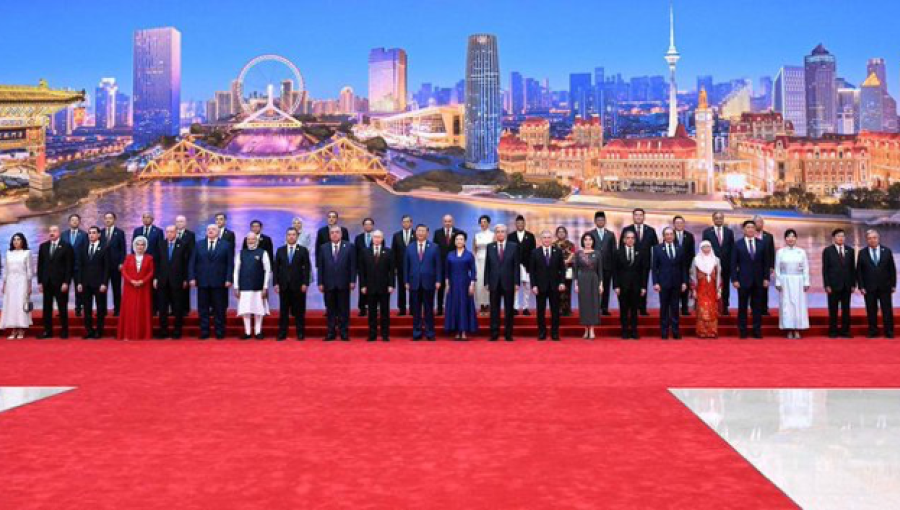
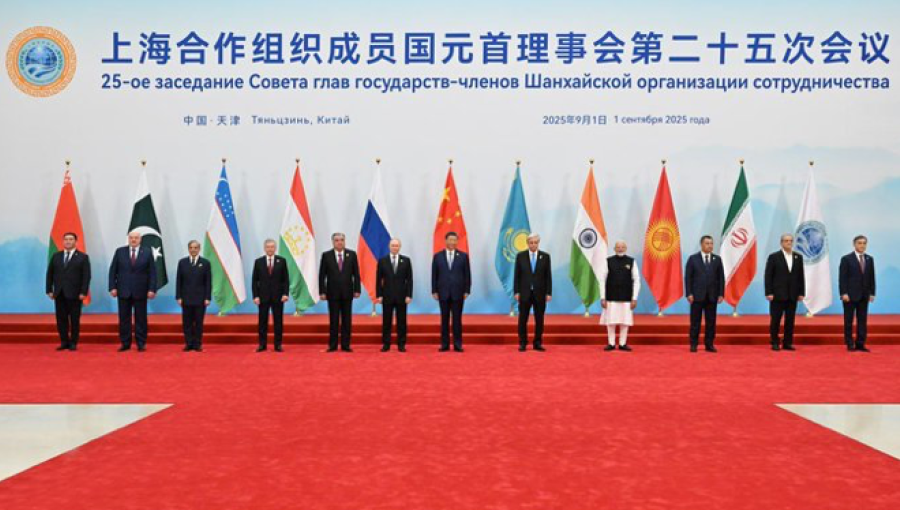
The ten-member group was founded in 2001 by six countries -- Russia China, Kazakhstan, Kyrgyzstan, Tajikistan, Uzbekistan -- to promote trade and security within Central Asia and all five of the presidents of the so-called ‘Stans are in attendance in Tianjin, standing prominently in the front rank with Putin and Xi during the photo call.

Now the SCO is moving into a new phase. Xi called for deepening economic ties to take advantage of the group’s “mega-sized market,” and suggested establishing an SCO development bank to work in parallel with the China-based New Development Bank (NDB, formerly known as the BRICS Bank) – the Global South’s answer to the International Monetary Fund (IMF). China has already invested $84bn in member countries as part of its Belt and Road Initiative (BRI) and will provide another $1.4bn in loans over the next three years, Xi said.

From its Eurasian roots, the SCO has taken on an increasingly Asian flavour, providing both Beijing and Moscow a useful platform to shape policies in their shared backyard. In Russia’s revised foreign policy concept released in March 2023, the Kremlin reorientated its external relations from partnership with the West to developing its relations with the Eurasian landmass to the south and east. China has a very similar emphasis.

The SCO summit is the latest rung up ladder to building an alternative world order not based on western-established and dominated global institutions. At the most recent BRICS summit in Kazakh last year one of the main topics of discussion was setting up an alternative payments system, based on the BRICS Pay cryptocurrency, to challenge the dollar’s dominance of global trade. The themes dominating the SCO talks so far are overtly geopolitical and a direct challenge to the US aggressively transactional foreign policies.

The SCO was formally established in June 2001 in Shanghai, evolving from the “Shanghai Five” (without Uzbekistan). The first countries to join the SCO after it was founded were India and Pakistan in 2017

at the Astana summit in Kazakhstan. In 2023, Iran became a full member at the New Delhi summit in India, and Belarus was admitted as the tenth full member last year. Turkey, Egypt and Saudi Arabia are among 14 dialogue partners, while Mongolia and Afghanistan are observers. On August 31, Xi endorsed the applications for full membership of South Caucasus neighbors Azerbaijan and Armenia.


Mexico weighs tariffs on Chinese imports in bid to placate Trump

Mexico weighs tariffs on Chinese imports in bid to placate Trump
With the 2026 review of the USMCA agreement looming, Mexico finds itself juggling its relationships with its two most important economic partners.
By bnl editorial staff September 1, 2025

Mexico is set to impose higher tariffs on Chinese imports as part of its 2026 budget proposals, in a move that appears carefully calibrated to satisfy demands from the Trump administration whilst addressing domestic economic pressures.

The planned measures, which would target automobiles, textiles and plastics amongst other goods, herald a sweeping change in Mexico's trade stance towards China, its second-largest trading partner. According to Bloomberg, the proposals are expected to be presented to Congress before September 8 as part of President Claudia Sheinbaum's broader "Plan México" industrial strategy.

The timing is particularly telling. With the 2026 review of the United States-Mexico-Canada (USMCA) Agreement looming, Mexico finds itself juggling its relationships with its two most important economic partners. As Gabriela Siller of BASE Financial Group observed, imposing tariffs on China would "clearly be aimed at getting on Trump's good side" ahead of the crucial trade pact negotiations.

President Trump has long railed against what he sees as trade "loopholes" in the USMCA that allow Chinese goods to sneak into the US through Mexico. During his campaign, he warned of imposing punitive tariffs of up to 250% on Chinese cars manufactured in Mexico for export to the United States, declaring they would "never sell one car in this country."

His administration's push for a "Fortress North America" approach to supply chains has ramped up pressure on Mexico to demonstrate its commitment to reducing Chinese influence in regional trade networks. To this end, officials in Washington have long been urging Mexico to take concrete steps to limit what they view as backdoor access for Chinese products into the American market.

The Mexican government's calculus extends beyond Washington's demands, however. Capital Economics notes that Mexico has multiple incentives for restricting Chinese imports: appeasing its northern neighbour, addressing a budget deficit that reached 5.9% of GDP last year—the highest in over three decades—and protecting domestic manufacturers from subsidised competition.

The trade imbalance with China has become increasingly stark. Mexico purchased $129bn in Chinese goods in 2024 whilst exporting just $9.93bn to China, a deficit that President Sheinbaum has explicitly acknowledged needs addressing. "We have to review our tariffs with China," she stated back in April, signalling her government's intent to address the yawning trade gap.

Yet the challenge of curbing Chinese influence appears daunting. Despite the seemingly pro-US rhetoric emanating from Mexico City, Chinese imports continue flooding into Mexico at unprecedented levels. In January and February 2025 alone, Mexico imported $20.6bn in Chinese goods—a historic high according to Bank of Mexico data—demonstrating China's persistent and growing market presence.

Chinese imports to Mexico exceeded $51bn last year, accounting for nearly a fifth of the country's total overseas purchases. Mexico has become the world's top destination for Chinese vehicles, overtaking heavily sanctioned Russia, a development that has left local manufacturers complaining of unfair competition.

Beijing has responded sharply to the proposals. Foreign Ministry spokesman Guo Jiakun stated that China "firmly opposes moves that are taken under coercion to constrain China," adding that economic cooperation between the nations operates on principles of mutual benefit. He expressed confidence that Mexico would "uphold independence and properly handle relevant matters."

The Chinese response underscores the delicate diplomatic balance Mexico must maintain. Guo noted that China serves as Mexico's second-largest trading partner in Latin America whilst Mexico ranks as China's third main export destination, highlighting the mutual dependency that has developed between the two economies.

The proposed tariffs build upon existing measures. Since January, Mexico has introduced levies on low-value parcels from Chinese e-commerce platforms such as Shein and Temu, with rates rising from 19% to 33.5% in July. Current tariffs include duties of up to 20% on Chinese vehicles—far below the 100% slapped by the US and Canada on Chinese electric vehicles—and 35% on many textile products.

According to El Pais, Adolfo Laborde, an international trade specialist at CIDE, offered a blunt assessment of Mexico's position: "Mexico's strategy is clear: disconnect from China and establish closer policies with the US and Canada. The government is closing ranks with the United States despite everything happening to us. We are hostages to Trump's negotiation strategy."

This lays bare the limited room for manoeuvre that Mexico enjoys in the current geopolitical environment. The Sheinbaum administration's flagship "Plan México" explicitly aims to strengthen commercial and industrial ties within North America whilst distancing the country from Asian imports, a strategy that aligns closely with Trump's vision for regional trade.

Capital Economics suggests the implications could extend well beyond Mexico's borders. The research firm notes that Mexico has played a significant role in China's post-pandemic export boom as its 11th largest export market. However, they assess that whilst other emerging markets face similar pressures from Chinese competition, few are likely to follow Mexico's lead given their dependence on Chinese demand for commodities.

"Mexico appeared particularly susceptible to US pressure to put tariffs on China given its dependence on US final demand," Capital Economics observed, noting that Mexico's deep trade ties with America make it a natural target for efforts to prevent Chinese technology from entering North American supply chains.

The measures could create complications for Mexico's own manufacturing sector. China and other Asian nations account for approximately 40% of Mexico's goods imports, many consisting of components essential for supply chains. Capital Economics warns that tariffs could raise input costs, potentially harming Mexico's competitiveness, particularly if extended to self-governing Taiwan, which supplies crucial high-end components for AI servers assembled in Mexico.

The research firm points to Mexico's booming exports of servers, driven by America's AI data centre boom, as one area that could be vulnerable if tariffs are applied too broadly. This highlights the challenge of targeting Chinese imports without disrupting the complex supply chains that underpin Mexico's role as a manufacturing hub for North American markets.

There are also inflationary concerns. Whilst the impact may prove modest, higher import costs could complicate monetary policy at a time when Mexico's central bank is approaching the end of its easing cycle. Capital Economics suggests this could bring rate cuts to an end sooner than currently anticipated.

Jorge Guajardo, Mexico's former ambassador to China and an advocate for higher tariffs, expressed hope that any measures would be "high enough that they protect industry more than they raise revenue," pointing out the delicate balance between protectionism and fiscal necessity.

The proposals also raise questions about consumer impact, particularly in the automotive sector. Chinese brands like BYD and Chirey have gained significant market share in the Central American nation by offering affordable vehicles, including electric models. Higher tariffs would make these cars more expensive, potentially limiting Mexican consumers' access to affordable EVs at a time when the country, particularly under the climate-sensitive Sheinbaum administration, is trying to promote cleaner transportation.

The proposals reflect broader shifts in global trade dynamics as nations reassess their relationships with China. For Mexico, the challenge lies in maintaining its role as a key US manufacturing hub whilst satisfying American concerns about Chinese influence in North American supply chains.

Capital Economics notes that whilst India, with its large manufacturing sector and history of anti-dumping measures against China, might be a candidate to follow Mexico's lead, most Latin American countries are unlikely to impose similar barriers given their reliance on Chinese demand for commodities.

As Congress prepares to debate the budget package over the next months, industries and consumers await clarity on how far Mexico will go in recalibrating its economic relationship with China. The outcome could prove pivotal not only for Mexico's trade balance but for its strategic position in an increasingly fractured global economy.

The Sheinbaum administration now faces the unenviable task of threading the needle between maintaining access to affordable imports, protecting domestic industry, raising revenue for stretched public finances, and—perhaps most crucially—demonstrating sufficient alignment with Washington's strategic objectives to ensure smooth sailing through the USMCA review. How successfully Mexico manages these competing demands could set the template for other nations caught between the world’s two largest economic giants.


UK-based energy think tank Ember reports record growth in solar panel imports across Africa

UK-based energy think tank Ember reports record growth in solar panel imports across Africa
Egypt and South Africa are the only countries on the continent where installed solar capacity is measured in gigawatts, and not megawatts / bne IntelliNews
By bne IntelliNews September 1, 2025

Africa is entering a new phase in its energy transition journey. The past year has provided the first hard evidence of a continent-wide take-off in solar power generation, says energy think tank Ember.

What: An analysis by Ember shows record-breaking solar panel imports from China across Africa.

Why: Such imports could significantly boost power generation in many African countries and will provide a lot of electricity.

What next: The potential is transformative: reduced reliance on costly fossil fuels, accelerated electrification, greater energy security and cleaner, more affordable power for millions.

The African continent is beginning to show the first clear signs of a solar power boom. According to an analysis by UK-based independent energy think tank Ember, imports of solar panels from China into Africa have surged dramatically over the past year, pointing to the start of a transformation in how the continent generates electricity.

While solar has long played an important role in small-scale and off-grid applications, the scale of the recent increase in panel imports suggests that solar power could soon take on a much larger role in Africa’s energy systems.

China, which manufactures around 80% of the world’s solar panels, dominates global exports. In a report published on August 26, Ember has tracked Chinese customs data for solar modules, converting the value of these exports into megawatts (MW) of capacity. The results reveal that in the 12 months to June 2025, Africa imported 15,032 MW of solar panels from China – a 60% increase compared to the preceding year.

Sharp growth

Currently, Egypt and South Africa are the only two countries on the continent where installed solar capacity is measured in gigawatts, and not megawatts. However, Ember points out that this could soon change. According to the report, imports outside South Africa nearly tripled over two years, from 3,734 MW to 11,248 MW.

This shift has occurred across the continent. A total of 20 African countries set new records for solar panel imports during the year to June 2025, says Ember. Moreover, 25 countries imported at least 100 MW, up from only 15 countries the year before.

Growth has been particularly sharp in countries such as Algeria, where imports grew 33-fold, and Zambia, where imports rose eightfold. Botswana, Sudan, Liberia, the Democratic Republic of Congo (DRC), Benin, Angola and Ethiopia also saw their imports multiply several times over. South Africa remained the largest importer, but Nigeria overtook Egypt for second place, while Algeria rose rapidly to third.

If installed, these solar panels could transform electricity access in many countries. In Sierra Leone, imports over the past year equate to 61% of the country’s entire 2023 electricity generation, says the energy think tank. Chad’s imports are equivalent to almost half its total generation, while Liberia, Somalia, Eritrea, Togo and Benin would all see boosts of 10% or more. Altogether, 16 countries would see increases above 5%. Although the continent-wide share remains modest, this is largely because South Africa and Egypt account for over half of Africa’s electricity supply, making national contributions in smaller countries proportionally more dramatic.

Energy security

According to Ember, the implications for energy security across the continent are profound. Many African countries remain heavily reliant on imported refined petroleum products, particularly diesel for generators. Research by Wood Mackenzie in 2022 showed that in 17 African countries, diesel generator capacity exceeded on-grid capacity – including 28 GW in Nigeria, 10 GW in Ghana and 8 GW in Kenya. Solar panel imports into these three countries alone totalled 2.5 GW in the past year.

The economics strongly favour solar, says the think tank. In Nigeria, a solar panel costing $60 can generate 550 kilowatt-hours (kWh) annually, whereas the same expenditure on diesel would only produce half as much electricity. The payback period for solar against diesel is therefore as little as six months, and even shorter in countries where diesel prices are higher.

Wider benefits

Solar panel imports also come with wider benefits, Ember points out. By reducing diesel consumption, countries can lower oil import bills, cut exposure to fuel price volatility and improve balance of payments. At the same time, more reliable and cleaner electricity supports industrial growth, powers services and improves household welfare. According to the report, the value of petroleum imports exceeded solar panel imports , for all of the top ten solar importers by factors ranging from 30 to over 100, underlining the scale of potential savings if solar deployment continues.

While Africa currently relies almost entirely on imported panels, domestic manufacturing is beginning to emerge. Morocco recently doubled its production capacity to 1 GW per year, while South Africa maintains a similar output. Egypt is on the verge of a major expansion, with three new large-scale factories due online between 2025 and 2026, including a 3-GW facility from EliTe Solar, a 2-GW plant from Sunrev Solar (Chinese private solar manufacturers), and a 4 GW-project by UAE's state -run renewable energy developer Masdar. These developments could gradually reduce Africa’s dependence on imports.

Structural trend

Ember views Africa’s surge in solar panel imports as part of a structural trend rather than a temporary spike. Imports hit a record in December 2024 and have stayed high since. Although Africa’s growth is far behind Pakistan – which imported more panels in a year than the entire continent despite its smaller population – Ember notes that Pakistan’s imports tripled within a year, suggesting Africa’s solar uptake could accelerate just as rapidly.

Much of the growth so far appears to be in distributed solar, such as rooftop systems, rather than utility-scale projects. According to the report, this may reflect the realities of African energy markets, where weak grids and widespread diesel generator use create strong demand for decentralised solutions. Nevertheless, utility-scale projects are also expected to play a growing role, particularly in countries with ambitious renewable energy programmes.

More research needed

Despite the promising data, Ember emphasises that more research is needed to track solar’s expansion across the continent. Official statistics often underestimate electricity generation, particularly from non-grid sources, making precise comparisons difficult. Reliable, country-level data on solar deployment will be crucial to understand the full scale and impact of this transformation.

Dave Jones, chief analyst at Ember, underscores the significance of the continent’s record -breaking growth of solar panel imports. “The take-off of solar in Africa is a pivotal moment. This report is a call to action, urging stronger research, analysis and reporting on solar’s rise – to ensure the world’s cheapest electricity source fulfils its vast potential to transform the African continent,” says Jones.

According to the energy think tank, rising solar panel imports signal Africa’s shift to renewable power generation. While the scale still lags behind some global leaders, Africa’s solar revolution has begun – and the coming years may determine just how far and how fast it will go.


Auto-enrolment: The quiet pension reform that could transform Europe’s economy

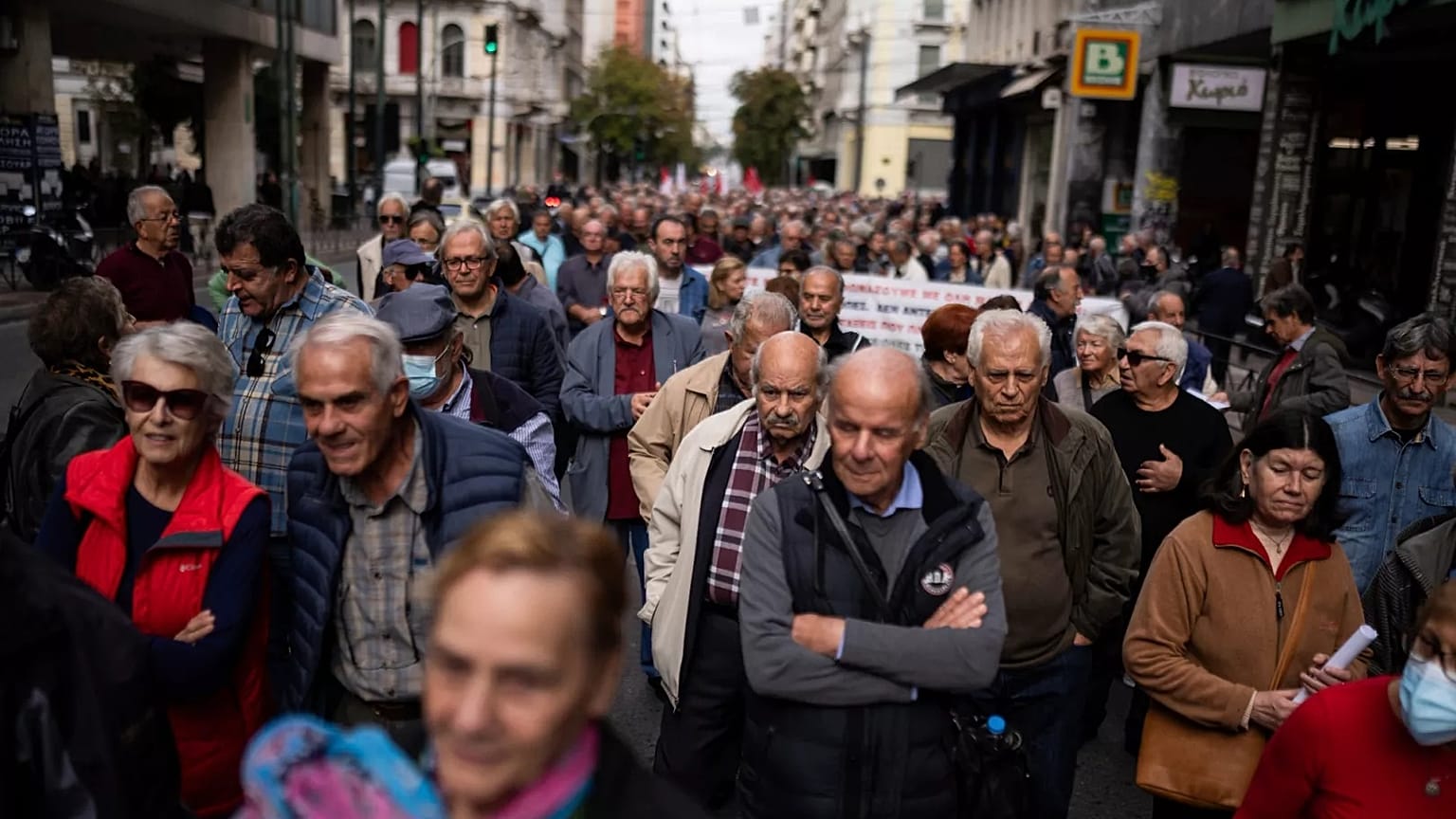
Pensioners protest in Athens in November 2023.
Copyright AP Photo


By Una Hajdari
Published on 

Auto-enrolment into funded pensions would ensure more retirement contributions are invested, powering Europe’s growth.

Europe is sitting on a paradox. On the one hand, the continent faces enormous investment needs—from financing the green transition and upgrading infrastructure to supporting innovation and competitiveness against global rivals.

On the other hand, European households hold trillions of euros in savings, much of it sitting passively in bank deposits that yield little and do very little to power growth.

A new Bruegel working paper, Plugging Europe’s Investment Gap: Understanding the Potential of Leveraging Institutional Investors, examines this mismatch through the lens of Europe’s institutional investors, namely insurance companies and pension funds, also known as ICPFs.

These institutions sit at the heart of the problem and, potentially, offer one of the solutions.

Where are Europeans holding their money?

Europeans are generally conservative investors, with most people keeping their savings in banks where they accrue little-to-no value over the years.

An institutional investor is a big organisation that invests money on behalf of people or households. Unlike an individual, who might buy a few shares or open a savings account, these institutions manage huge pools of money and invest it in different financial markets.

The most common types of institutional investors are pension funds, who manage the retirement savings for workers, and insurance companies, who invest the premiums or subscriptions people pay to cover future insurance claims.

Funded vs regular state pensions

The report frames pensions and investment as two sides of the same coin.

Europe’s ageing population puts pressure on pay-as-you-go pension systems, while at the same time the continent faces huge financing needs.

According to the pay-as-you-go system, the money that today's non-retired workforce puts into the pension fund is immediately taken out and given to today's retirees. In the future, when today's workers retire, future workers will pay for their pensions.

Except, if you have an ageing population, then the group of retirees will be much larger than the group of future workers who will cover for them.

A funded pension scheme is a retirement plan where some of the money you and your employer pay in is actually saved and invested, rather than spent right away. Over time, those investments in things like stocks or bonds grow, so you build up a pot of money for when you retire.

Funded pension schemes, if expanded, can help address both problems at once. By securing more retirement savings for households and channelling that money into long-term projects, they become a bridge between private wealth and collective investment needs.

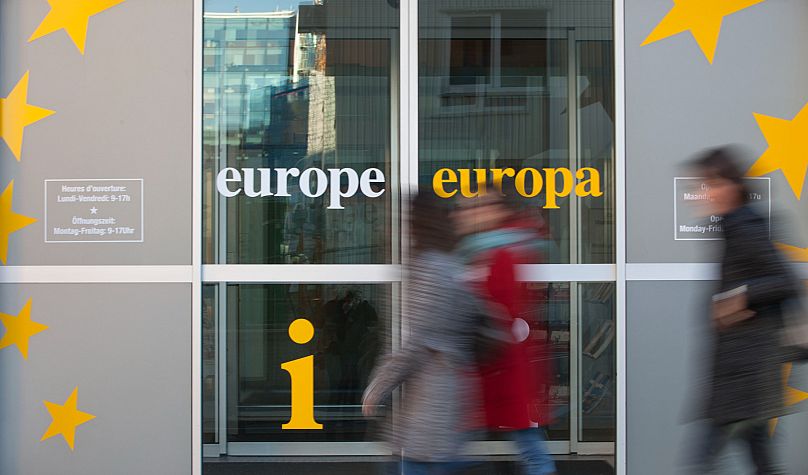
People walk in front of an information office outside of an EU summit in Brussels. November 2012. AP Photo

Europe vs the United States

The debate often centres on whether Europe is “losing” capital to the United States. Indeed, European pensions and insurers do hold US assets, particularly equities.

Between 2013 and 2023, the share of US equities in European ICPF portfolios rose from 23% to 39%. Over the same period, US debt holdings rose more modestly, from 6% to 11%.

But relative to the sheer size of US capital markets, this is not as large as it might seem.

“So while it’s true that a lot of savings in pension funds and insurance companies go to the US, it’s also true that relative to the sheer size of the US market, it’s actually not that much. This basically shows that, and our results show, there is actually an underinvestment in the US from the whole EU," Marie-Sophie Lappe, one of the authors of the report, told Euronews.

In other words, Europe’s institutional investors are still home-biased. They overwhelmingly prefer to keep money inside Europe, particularly in government and corporate bonds. This stands in sharp contrast to US pension funds, which allocate much more heavily to equities and alternative investments, including venture capital.

Why this difference? Familiarity, currency and caution all play a role.

“Possible explanations are, for example, that people are more familiar with their home market and their home politics. The Belgian pension fund is more likely to be an expert on the Belgian economy than any other.

"Language is another driver. Currency risks play a role too, especially when pension funds and insurance companies are obligated to pay out their clients in euros," Lappe continued.

Pension design remains firmly in the hands of national governments, but the EU can still play a supporting role.

The Bruegel paper argues that Brussels should focus on applying best practices such as auto-enrolment, while also working to make Europe’s capital markets more integrated and efficient. If institutional investors are able to invest more smoothly across borders, they can scale up and diversify their portfolios.

But any reform, the authors stress, must keep the saver at its centre—pensions are first and foremost about retirement security, not just a tool to plug Europe’s financing gap.

Households: Too much money in bank accounts

The bigger problem may not be where ICPFs invest, but how little money actually flows into them in the first place.

Today, approximately 27% of household savings in the EU are invested in insurance and pensions, nearly equal to the share allocated to currency and deposits. In other words, Europeans are still keeping vast sums in low-yield bank accounts, missing out on the potential returns of capital markets.

“We argue that the outflow of investments to the US is not necessarily a concern for EU markets if we just get to scale up the sector by funnelling savings that are currently stuck in currency and deposits. In the EU, a lot of households keep their savings in a bank account, which is very low yield. It doesn't generate many returns for the future,” Lappe explains.

Shifting even a small portion of this money would unlock huge capital for investment.

"We did this back-of-the-envelope calculation, if for every 100 euros in an EU bank account, you would shift 10 euros into the ICPF sector, you would mobilise just above 400 billion euros that go into debt securities and listed shares," she continued.

Auto-enrolment: A small reform, big impacts

How could that shift be made? One answer is auto-enrolment into funded pensions.

Auto-enrolment works by making investment the default. Workers are automatically signed up to a funded pension scheme—which then channels their savings into capital markets—with the option to opt out. Experience in countries like the UK shows participation rates skyrocket under this system, because inertia keeps most people enrolled.

“If you only relied on people to invest themselves, you would need to spend a lot of time in financial literacy, which has been tried over the years, but largely hasn’t been very successful. So to really mobilise savings across the board, this would be a very helpful policy," Lappe explained.

In other words, financial literacy campaigns help, but they are not enough. Default mechanisms like auto-enrolment are far more efficient.

Savers must be the priority

The Bruegel paper’s conclusion is important: Europe does not actually need to worry too much about capital “leaking” to the US. Instead, the real issue is the untapped potential sitting idle in household savings accounts. And in times of uncertainty, the instinct to sit tight only grows stronger.

Redirecting even a small fraction of that money into funded pensions and insurers could not only strengthen retirement security but also fuel Europe’s investment needs: greening the economy, financing innovation and making capital markets more robust.

Auto-enrolment is not flashy. It will not grab headlines like a trillion-euro stimulus plan. But as the paper argues, it may be the quiet reform with transformative potential.

The authors warn, however, against using pensions as a piggy bank for political or economic projects. The first duty of insurers and pension funds is to protect and grow people’s savings, and any boost to Europe’s investment gap should be treated as a welcome side effect, not the main goal.

If governments push funds to favour certain regions or industries at the expense of careful investing, it could end up harming the very savers these reforms are meant to benefit.