Monday, September 01, 2025

Fierce winds force Gaza aid flotilla back to Barcelona


By AFP
September 1, 2025

Fierce Mediterranean winds forced a Gaza-bound flotilla carrying humanitarian aid and hundreds of pro-Palestinian activists, including environmental campaigner Greta Thunberg, to return to Barcelona, organisers said on Monday.

Around 20 vessels left the Spanish city on Sunday aiming to “open a humanitarian corridor and end the ongoing genocide of the Palestinian people” amid the Israel-Hamas war, said the Global Sumud Flotilla — sumud being the Arabic term for “resilience”.

But “due to unsafe weather conditions, we conducted a sea trial and then returned to port to allow the storm to pass,” the organisation said in a statement, without specifying when exactly the boats returned to Barcelona.

“This meant delaying our departure to avoid risking complications with the smaller boats,” it added, citing gusts that exceeded 55 kilometres (34 miles) per hour.

“We made this decision to prioritize the safety and well-being of all participants and to safeguard the success of our mission.”

Spanish media reported that the organisers would meet to decide whether to resume the expedition later on Monday.

Among the activists from dozens of countries were Thunberg, actors Liam Cunningham of Ireland and Eduard Fernandez of Spain, as well as European lawmakers and public figures, including former Barcelona mayor Ada Colau.

The flotilla is expected to arrive in Gaza in mid-September and comes after Israel blocked two activist attempts to deliver aid to the devastated Palestinian territory by ship in June and July.

The United Nations has declared a famine in Gaza, warning that 500,000 people face “catastrophic” conditions.

The war was triggered by an unprecedented cross-border attack on Israel by Palestinian militant group Hamas on October 7, 2023, which resulted in the death of 1,219 people, mainly civilians, according to an AFP tally based on official data.

Palestinian militants also seized 251 hostages, with 47 still held in Gaza, including 25 the Israeli army says are dead.

Israel’s retaliatory offensive has killed at least 63,459 Palestinians, mostly civilians, according to figures from Gaza’s Hamas-run health ministry which the UN considers reliable.


Gaza aid flotilla ‘should not have to exist’ says Thunberg


By AFP
August 30, 2025


'It should not have to be up to us,' Thunberg told AFPTV
 - Copyright AFP Stefano RELLANDINI

Aid flotillas like the one preparing to leave for Gaza would not be necessary if governments upheld international law, rights activist Greta Thunberg told AFP Saturday.

“It should not have to be up to us,” said the 22-year-old Swedish campaigner, who will join the flotilla when it sets off from Barcelona on Sunday.

“A mission like this should not have to exist,” she added.

“It is the responsibility of countries, of our governments and elected officials to act to try to uphold international law, to prevent war crimes, to prevent genocide,” she said.

“That is their legal duty to do. And they are failing to do so. And thereby betraying Palestinians but also all of humanity.”

The latest aid expedition towards Gaza is organised by a group called the Global Sumud Flotilla, which describes itself as an “independent” organisation. Sumud is the Arab word for perseverance.

“Our aim is to get to Gaza, to deliver the humanitarian aid, announce the opening of a humanitarian corridor and then bring more aid, and then thus also ending, breaking Israel’s illegal and inhumane siege on Gaza,” said Thunberg.

Two attempts by activists to deliver aid by ship to Gaza, in June and July, were blocked by Israel.

Troops boarded their vessels and detained the activists, bringing them ashore in Israel before expelling them. Thunberg was among the 12 activists on board the June flotilla and was deported.

The organisers of this latest flotilla have not said exactly when they are setting off, nor how many boats will leave from Barcelona.

The UN on August 22 declared a famine in Gaza, blaming Israel’s “systematic obstruction” of aid, sparking furious denials from the Israeli authorities.

Global Sumud Flotilla Set for Latest Attempt to 'Break Israel's Illegal Siege on Gaza'


"Our boats carry more than aid. They carry a message—the siege must end. The greater danger lies not in confronting Israel at sea, but in allowing genocide to continue with impunity."


An activist waves a Palestinian flag from the bow of a Freedom Flotilla Coalition vessel en route to Gaza.
(Photo: Tan Safi/Freedom Flotilla Coalition)

Brett Wilkins
Aug 29, 2025
COMMON DREAMS

Palestine defenders are preparing for the latest—and largest—Freedom Flotilla Coalition mission to set sail for Gaza in an attempt to break Israel's US-backed genocidal siege on the embattled Palestinian territory.

Dozens of boats carrying hundreds of activists from as many as 44 nations are set to take part in the Global Sumud Flotilla—sumud means "perseverance" in Arabic—as it attempts to run Israel's naval blockade and deliver desperately needed humanitarian aid including food, medicines, and baby formula to the starving people of Gaza.

"We are a coalition of everyday people—organizers, humanitarians, doctors, artists, clergy, lawyers, and seafarers—who believe in human dignity and the power of nonviolent action," Global Sumud Flotilla's website explains.


In addition to "everyday people," flotilla participants include Swedish climate activist Greta Thunberg, American actress Susan Sarandon, Irish actor Liam Cunningham, leftist Portuguese parliamentarian Mariana Mortágua, former Barcelona Mayor Ada Colau, and Mandla Mandela, the grandson of former South African President Nelson Mandela.

Israel "is starving and killing the people of Gaza," Mandela—whose grandfather was not only a hero of his country's anti-apartheid struggle but also a staunch supporter of Palestinian liberation—said Friday on behalf of the South African flotilla delegation. "We are a diverse group of international activists calling for urgent global action to compel Israel to open Gaza's borders to aid and end its genocide of the Palestinian people.

"We ask that South Africans of conscience join us," he added. South Africa is leading an ongoing genocide case against Israel at the International Court of Justice (ICJ) in The Hague that is officially or informally supported by around two dozen nations.

Colau said earlier this week that "to end the genocide in Gaza is the duty of all of us, so we have to do what is in our power to do it if governments, including the government of Spain, do not do what they can to stop the criminal state of Israel."

Spain has joined the ICJ genocide case against Israel, has formally recognized Palestinian statehood and urged other nations to do so, and has taken significant steps toward an arms embargo on Israel.

"Although Spain has positioned itself more than other governments and recognized the Palestinian state, words are not enough when thousands of children are being killed," Colau said Friday in an interview with RTE.

At least 18,500 children are among the more than 63,000 Palestinians killed by Israeli forces in Gaza since October 2023—although the official Gaza Health Ministry figures are likely a vast undercount, according to peer-reviewed studies.

"This is my third attempt to try to sail with humanitarian aid to break Israel's illegal siege on Gaza and open up a humanitarian corridor," Thunberg, who is a member of the flotilla steering committee, told Middle East Eye Thursday.


"There have been 38 previous attempts just for the Freedom Flotilla Coalition (FFC) and now with the Global Sumud Flotilla," Thunberg continued. "This is unprecedented. We are mobilizing people from all over the world with dozens of boats sailing from Barcelona first, and then more boats joining us from other ports around the Mediterranean Sea."

"We are doing this because we are facing a genocide," she added. "We are seeing people being deliberately deprived of their basic means to sustain life. And this is a continuation of the suffocating oppression that Palestinians have been living under for decades, and we simply have no choice if we have any sense of humanity left, we cannot just sit by and watch this unfolding."

The Gaza Famine—officially declared last week by the authoritative Integrated Food Security Phase Classification—has claimed at least hundreds of Palestinian lives in what experts say is an engineered effort by Israel. The International Criminal Court arrest warrants issued last year for Israeli Prime Minister Benjamin Netanyahu and former Defense Minister Yoav Gallant, who ordered the "complete siege" on Gaza fueling the famine, list forced starvation, along with murder, as alleged crimes against humanity and war crimes committed by the pair.

Earlier this year, the FFC vessels Conscience, Madleen, and Handala each separately tried to break the blockade but were thwarted by Israeli forces in international waters, an apparent violation of maritime law. Flotilla activists were beaten, kidnapped, jailed, interrogated, and deported by Israel.

Fifteen years ago, Israeli forces raided one of the first FFC convoys carrying humanitarian aid to Gaza. The Israeli attackers killed nine volunteers aboard the MV Mavi Marmara, including Turkish-American teenager Furkan Doğan.

The Sumud Flotilla comes as Israeli forces ramp up Operation Gideon's Chariots 2, a campaign of conquest, occupation, and ethnic cleansing of Gaza backed by the administration of US President Donald Trump. On Thursday, Israeli Finance Minister Bezalel Smotrich proposed the systematic annexation of Gaza over the coming months if Hamas keeps fighting, as well as the implementation of Trump's plan to ethnically cleanse the Palestinian exclave and transform it into the "Riviera of the Middle East."

Israel's siege of Gaza has been in effect in varying degrees of severity since 2006 in response to Hamas' rise to power in the strip.

"The idea is to put the Palestinians on a diet, but not to make them die of hunger," a senior adviser to then-Israeli Prime Minister Ehud Olmert said at the time.

Now Palestinians are dying of hunger, and the world has increasingly had enough.

"Our boats carry more than aid," Global Sumud Flotilla said. "They carry a message—the siege must end. The greater danger lies not in confronting Israel at sea, but in allowing genocide to continue with impunity."
International media protest over journalist deaths in Gaza

By AFP
September 1, 2025


The killing of journalists during Israeli strikes in Gaza has sparked protests around the world - Copyright AFP Wakil KOHSAR

More than 250 media outlets in over 70 countries staged a front page protest Monday highlighting the deaths of scores of journalists in Israel’s war against Hamas in Gaza, the Reporters Without Borders media freedom group said.

“At the rate journalists are being killed in Gaza by the Israeli army, there will soon be no-one left to keep you informed,” the group’s general director Thibaut Bruttin said in a statement.

The protest was taken up on the website front pages of publications including Qatari broadcaster Al Jazeera, British news site The Independent, French newspapers La Croix and L’Humanite and Germany’s TAZ and Frankfurter Rundschau, according to Reporters Without Borders.

Some 220 journalists have been killed during Israel’s Gaza campaign mounted in retaliation to Hamas’ October 7, 2023 attack, according to RWB data.

The protest was staged one week after five journalists — some working for Al Jazeera, Associated Press and Reuters — were killed in Israeli strikes on the Nasser Hospital in Gaza’s Khan Yunis city. Earlier in August, six journalists were killed in another Israeli air strike outside the Al-Shifa hospital in Gaza City.

Israel said the strike on the Nasser hospital killings had targeted a Hamas camera. But the attack drew international condemnation. Even US President Donald Trump, a key Israeli ally, said he was “not happy”.

Media participating in Monday’s action “demand an end to impunity for Israeli crimes against Gaza’s reporters, the emergency evacuation of reporters seeking to leave the Strip and that foreign press be granted independent access,” the RWB statement statement.

RWB says it has filed four complaints at the International Criminal Court (ICC) for war crimes it says the Israeli army committed against journalists in Gaza over the past 22 months.

International media have been denied free access to the Gaza Strip since the war broke out.

A few selected outlets have embedded reporters with Israeli army units operating in the Palestinian territory, under condition of strict military censorship.

The Hamas 2023 attack killed 1,219 people in Israel, according to an AFP tally based on official data. Some 47 people remain hostage in Gaza out of 251 originally abducted, though only around 20 are believed to be alive.

Israeli’s retaliatory campaign has killed at least 63,459 people in Gaza, according to figures from the Hamas-run goverment’s health ministry considered reliable by the United Nations.
'Nowhere in Gaza is safe' says RFI correspondent amid call for global media access

Global media outlets and press freedom groups on Monday called for better protection of journalists in Gaza and access for international reporters. RFI correspondent Rami El Meghari described the enclave as a place where "nowhere is safe" for reporters or civilians, yet covering the news remains vital.


Issued on: 01/09/2025 - RFI


Rami El Meghari has covered Gaza for 14 years. He says daily life is a struggle to survive and report as international media remain barred from the enclave. © Rami el Meghari / RFI

RFI: On 1 September Reporters Without Borders launched a campaign to support journalists in Gaza. How do you view this initiative?

REM: For me, a long-time journalist for Radio France Internationale, it matters a lot – especially in this crucial period when journalists are being targeted one way or another by Israeli military actions. So we say thank you.

RFI: More than 200 journalists have been killed in Gaza in almost two years. Tell us about the danger.

REM: That is a good question. I think in Gaza, nobody – not even journalists – can feel safe. Wherever I am, as a journalist, as a human being, as a civilian in Gaza, I never feel safe. Even at home, in my own house, I never feel safe.

I come from the Meghazi refugee camp in central Gaza. In January 2024 Israel forced refugees to leave for the south of Gaza because the army was preparing to intervene. I had to pack my things, gather my family and we went by truck to Rafah. I left my home. In that house, in Meghazi, I used to sit in a corner. That exact spot was later hit by a large brick from a nearby house struck in an air raid. The window shattered and the brick fell where I used to sit with my coffee and work, before the Israeli invasion of Meghazi.

RSF says journalists 'targeted' in Israeli strike on Gaza hospital

RFI: You have escaped Israeli strikes and shooting several times while reporting…

REM: Nowhere in Gaza feels safe. You cross the street and there could be a strike. As soon as you move, you could face death or injury. Sometimes you are forced to go to places where strikes are happening, where Israeli actions are taking place. Even if you take precautions to do your reporting, there is always something that makes you feel in danger.

RFI: Despite this you keep working and reporting on the ground.

REM: As a reporter working in this job for 25 years, it has always felt like a duty to do everything I can to tell this story to the world. Especially now, when there are no foreign journalists here in Gaza. So it is my responsibility. I also have an obligation to myself and my family. Because this is the nature of my work, as a freelancer. If I do not work, it means I starve – I will have nothing to eat and I cannot feed my family. If I work, I can survive. Without it, I cannot live and we will not be able to cope.

RFI: Gaza is now the deadliest place in the world for journalists. Is this always on your mind?

REM: Of course, I always have that in mind. That is why I want to leave and be evacuated from Gaza. Can you imagine? I have been trying, with RFI’s help, since February 2024. Just a few months after the war began. February was my first attempt to get out. Because I always felt the situation was becoming more and more dangerous. It is no longer liveable. Not only for me as a journalist, but also as a father, caring for my children, who need a better present and a better future. Both the present and the future are missing in Gaza now. It is my dream to leave this place with RFI’s help.

Humanitarian aid flotilla sets sail for Gaza to ‘break illegal siege’

RFI: Tell us what a typical day is like for a journalist in Gaza.

REM: A typical day starts with looking for basic needs, like water. You have to make sure you always have water, wherever you are. You have to make sure your family has food – for breakfast, for lunch. You have to make sure the electricity works, to charge your phone, to charge your LED lamps.

So a journalist's day is quite intense. You are torn between your duties as a reporter and your duties as head of the family, responsible for your loved ones.

I have to wake up early to follow the latest news, take care of daily tasks for my family, then start my working day. I must find a subject, go to dangerous areas to meet people, give a voice to those who do not have one, and produce a report for RFI.

RFI joins 135 NGOs and media groups in urging unrestricted press access to Gaza

RFI: Your colleague Rami Abou Jamous, also a journalist in Gaza, told us recently: “The Israeli army wants to bury reality.” Do you agree?

REM: Honestly, I cannot say. I cannot judge myself whether Israel wants to stifle the truth. But I can ask Israel this question: why do you forbid foreign journalists from entering Gaza?

RFI: How can we help you and all the journalists in Gaza?

REM: How can you help us? Do everything possible so that the French government lifts its decision to freeze the evacuation of journalists from Gaza. Then myself and others will be able to leave.

This interview was conducted by RFI's Arnaud Pontus.


Egypt’s Petromaint wins $121mn Iraqi oilfield maintenance deal, eyes operations in Algeria

Egypt’s Petromaint wins $121mn Iraqi oilfield maintenance deal, eyes operations in Algeria
/ Alexandria Petroleum Maintenance CO.(Petromaint)
By bne IntelliNews September 1, 2025

Alexandria Petroleum Maintenance Company (Petromaint), a subsidiary of Egypt’s Ministry of Petroleum, has secured EGP 3.75bn ($121mn) contract to provide full maintenance services at Iraq’s Zubair oilfield, Economy Plus reported on September 1. 

Ahmed Hassan, assistant general manager for business development, is cited as saying the company began work in the field several weeks ago, with the agreement set to run for three years.

Petromaint is looking to expand its cooperation with international operators in Iraq, particularly Italy’s Eni, to broaden its footprint in the market, and is also considering establishing a specialised maintenance and construction services plant in Algeria, focusing on the oil, gas, and petrochemicals sectors. 

Hassan said that regional expansion remains a top strategic priority for Petromaint, as the company leverages its workforce, technical expertise, and international partnerships to solidify its position as a leading oilfield services provider in the MENA region.

According to Egypt Oil and Gas, Petromaint is expanding its international footprint, including a 20% joint venture stake with Modern Gas in Saudi Arabia and active branches in Libya, Oman, alongside a growing share of foreign-sourced revenues. 

The company employs around 10,000 workers, nearly 5% of whom are engineers and technical specialists in maintenance and engineering inspection.

Petromaint has operations in Libya, Saudi Arabia, Iraq, and Oman, and subsidiaries in Muscat as well as branches in Jordan, the UAE, and Niger.

Hungary launches biggest home loan scheme since regime change

Hungary launches biggest home loan scheme since regime change
/ bne IntelliNews
By bne IntelliNews September 1, 2025

Hungary has rolled out its most ambitious homeownership programme since the transition to democracy, with the government pledging to make property purchases more affordable for first-time buyers while giving a powerful boost to the construction industry, pro-government media outlets wrote on September 1, after the kick-off of the Home Start loan scheme offering 3% fixed rates. 

Under the scheme, buyers could borrow up to HUF50mn (€130,000) for a maximum of 25 years with 10% down payment, reduced from 20%, at rates half of the prevailing rates.

Government officials claim the scheme, which is backed by long-term state interest subsidies, could support hundreds of thousands of young people and families in stepping onto the property ladder.

"This is the strongest first-home programme in Europe," said Miklos Panyi, state secretary and deputy minister in charge of the scheme, adding that it makes housing more accessible, reins in runaway prices, and stimulates the construction of tens of thousands of new homes."

The launch of the new credit scheme, with less than seven months until the election, the measure is widely seen as an attempt to bolster support for the ruling Fidesz party among middle-class urban voters and those under 35.

It is part of a series of other populist initiatives timed ahead of the election, such as doubling tax allowances for families with at least two children and the gradual introduction of a lifetime PIT exemption for mothers with at least two children.

The government has not addressed the direct fiscal impact of the measure. Analysts note that the scheme generates immediate fiscal gains through higher transaction taxes and multiplier effects. However, its medium-term costs could outweigh these benefits, as state subsidies might reach tens of billions of forints, placing additional strain on Hungary’s already stretched budget. Some economists have even questioned the long-term sustainability of the program.

Initially, the preferential loan programme was designed to help first time homebuyers, but the eligibility criteria were later broadened to include applicants who had held up to a 50% ownership stake in a residential property within the past ten years, as long as the value of their share did not exceed HUF15mn. 

For households or married couples, it is sufficient for only one member to meet the eligibility requirements. Furthermore, it will not be required to live in the property, nor to rent it out, opening the door for would-be investors.

For these reasons, many analysts argued that Home Start disproportionately benefits affluent buyers and warned that pent-up demand, as already seen in the surge in new inquiries, could risk further inflationary prices, from an already high level. Home prices in Hungary have surged at one of the quickest rates in the EU over the past decade, with prices tripling across most regions. In some regions, prices have doubled since the pandemic.

On the launch of the programme, banks have rolled out their fees, with some going below the 3% threshold to gain a larger market share.

MBH Bank, the country’s second-largest commercial lender, is offering HUF100,000 worth of MOL fuel vouchers to borrowers. CIB Bank has launched a 2.95% promotional rate for the first five years, along with rebates and waived fees. Granit Bank is going further, advertising 2.85% rates and one-off HUF200,000 rebates.

Financial website Portfolio.hu has estimated that monthly new home loan outlays could rise from HUF140-150bn to HUF170–240bn, driven by the subsidised scheme, pushing home lending to record highs in 2025 and 2026.

Listings site ingatlan.com reported that 71% of prospective home buyers now plan to take out credit, up from 51% in March, while nearly 60% expect to finalise a purchase within six months.

Demand is already spilling into the market as property search activity jumped to a four-year high in August, while developers have announced over 10,000 projects in Budapest for the autumn, many targeting Home Start buyers. Eligible properties under the programme are capped at HUF100mn for flats and HUF150mn for houses, and the maximum per sqm price is set at HUF1.5mn.

Duna House, one of Hungary’s biggest brokers, forecast that new home construction projects could nearly double by 2026, reaching 20,000–25,000 annually, with a larger increase in completions expected by 2027–2028.

Construction association EVOSZ predicted orders for 10,000 additional new homes in 2025, rising to 35,000 by 2027, which is the level seen as necessary to renew Hungary’s ageing housing stock.

The National Bank on September 1 announced that while own equity requirements will be reduced to 10% for borrowers over 40, stricter debt-to-income limits will apply: for households earning less than HUF800,000 per month, no more than 50% of their income can go toward repayments.

Economists expect the scheme to lift not only lending volumes but also construction-sector output, with potential HUF800bn in new orders.


Vietnam property developers’ inventories hit record highs

Vietnam property developers’ inventories hit record highs
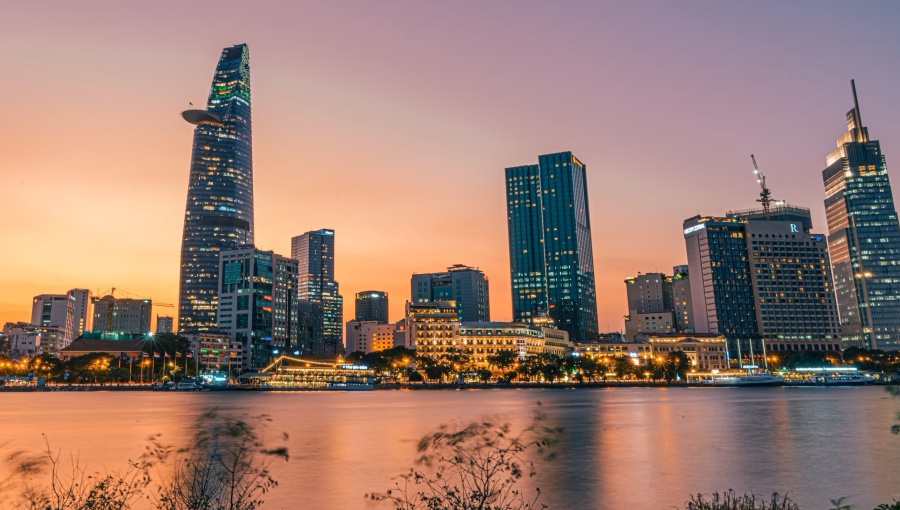
Ho Chi Minh / Unsplash - Tron Le
By bno - Phnom Penh Office September 1, 2025

Inventories held by major Vietnamese property developers, including Novaland, Vinhomes, Vingroup, and Khang Dien, soared to unprecedented levels in the second quarter of 2025, with analysts describing the trend as a positive signal for the market, according to VnExpress

Data shows that the combined inventories of more than 100 listed real estate firms reached VND531 trillion ($20.15bn), an increase of 11% compared with the start of the year.

Novaland led the sector with holdings worth VND150 trillion, its highest on record. Around 95% of this comprised land and ongoing developments, notably Aqua City in Dong Nai Province, Novaworld Ho Tram, and The Grand Manhattan in Ho Chi Minh City. The remainder included completed units awaiting transfer to buyers.

Vingroup, Vietnam’s largest private conglomerate, ranked second with inventories surpassing VND98.6 trillion.

According to Nguyen Trong Dinh Tam, deputy director of analysis at ASEAN Securities, properties under construction typically make up the bulk of developers’ inventory. Vo Hong Thang, investment director at DKRA Group, added that the sizeable stock reflects businesses’ preparedness to release projects to the market and demonstrates their access to capital.

Between 2022 and 2024, high inventory levels were considered a risk due to delays in administrative approvals. However, Thang noted that government efforts this year have eased many of those bottlenecks, enabling numerous projects to advance and increasing market supply.

Authorities in Ho Chi Minh City alone reviewed issues at 571 delayed projects during the first half of the year. Of these, 63 schemes—covering 923 hectares and valued at VND86.8 trillion—were resolved, according to an official report.

Tam highlighted that the current stock levels coincide with more favourable financing conditions, with average mortgage interest rates falling to 6.38%, down from nearly 7% at the end of 2024. This, he argued, benefits both homebuyers and developers. With demand remaining strong, large inventories are no longer viewed as a threat.

SSI Securities reported that listed property developers posted a 129.6% jump in second-quarter net profits. The brokerage attributed the improvement to legal reforms, the resumption of previously suspended projects, and new approvals, including in the social housing sector.


After meeting with Chinese President Xi Jinping, Cambodian PM meets UN Secretary-General to discuss Thai border tensions

CHINESE CLIENT STATE

After meeting with Chinese President Xi Jinping, Cambodian PM meets UN Secretary-General to discuss Thai border tensions
Prime Minister Hun Manet meeting Chinese President Xi Jinping / Cambodia - MFAIC
By bno - Phnom Penh Office September 1, 2025

Cambodia's Prime Minister Hun Manet met United Nations Secretary-General António Guterres in Beijing on September 1, with talks focusing on Cambodia’s active role within the UN system and the ongoing border dispute with Thailand.

According to Khmer Times, Hun Manet reported that the UN chief praised Cambodia’s constructive engagement as a member state, highlighting its contributions to various areas of international cooperation.

On the border situation, Guterres assured the Cambodian leader that he has been closely monitoring developments. He welcomed the recent ceasefire between Cambodian and Thai forces, describing it as an important step towards de-escalation, and urged both sides to work towards restoring normal bilateral relations as quickly as possible.

Quoting the Secretary-General, Hun Manet said: “He has personally and attentively followed the issue, welcomed the ceasefire, and encouraged both sides to normalise relations soon.”

The UN leader also endorsed Cambodia’s proposal that both nations refrain from using military means to address unresolved border disputes, particularly in areas populated by civilians. Instead, he underlined the importance of resolving differences peacefully, making use of established bilateral mechanisms such as the Cambodia–Thailand Joint Boundary Commission (JBC).

According to Hun Manet, “The Secretary-General has agreed to call on both parties to avoid military action in unsettled border areas, especially those with civilian populations, and to resolve disputes through mechanisms like the JBC, guided by agreements, treaties, and international law.”

The meeting took place during Hun Manet’s official visit to China, where he is participating in a series of events and high-level discussions with global leaders.

Laos ranked 13th among world’s fastest-growing tourist destinations

Laos ranked 13th among world’s fastest-growing tourist destinations
/ Dick Hoskins - Unsplash
By bno - Phnom Penh Office September 1, 2025

Laos has been listed as one of the world’s fastest-growing travel destinations in 2024, securing the 13th position globally, according to the United Nations World Tourism Organisation (UNWTO).

As reported by The Laotian Times, the country recorded a 25.3% rise in international arrivals last year compared with 2023, welcoming more than 4.1mn visitors—almost 1mn more than the previous year. Most tourists came from neighbouring Thailand, Vietnam, and China.

Within Southeast Asia, Vietnam reported the strongest tourism growth, placing 4th worldwide with an increase of 38.6%. Thailand followed closely with 26.3% growth, ranking 12th globally. Malaysia rose by 24.2% (15th place), Cambodia climbed 22.87% (16th), and Singapore grew by 21.22% (20th).

By July 2025, Laos had already drawn over 2.3mn foreign visitors, up from 2.1mn during the same period last year. With this trajectory, the country is expected to surpass its 2025 target of 4.3mn tourists.

On a global scale, South Korea topped the UNWTO list with an impressive 48.82% increase in arrivals, followed by Japan with 47.09% and Chile with 40.42%. Despite these growth rates, France continued to hold its position as the world’s most visited country, recording more than 102mn international arrivals in 2024.

The UNWTO highlighted that strong regional demand, improved connectivity, and the easing of travel restrictions contributed to the robust growth of tourism in Asia, with Laos and its neighbours benefiting significantly from these favourable conditions.

Laos’ performance reflects the government’s ongoing efforts to boost the tourism sector as a driver of economic development. Infrastructure improvements, cultural promotion, and cross-border cooperation with neighbouring countries have all played a role in making the nation more attractive to international travellers.

With its mix of natural landscapes, heritage sites, and cultural experiences, Laos is positioning itself to capture a larger share of Southeast Asia’s expanding tourism market, while maintaining its reputation as a peaceful and authentic destination.