It’s possible that I shall make an ass of myself. But in that case one can always get out of it with a little dialectic. I have, of course, so worded my proposition as to be right either way (K.Marx, Letter to F.Engels on the Indian Mutiny)
Monday, September 01, 2025
URANIUM
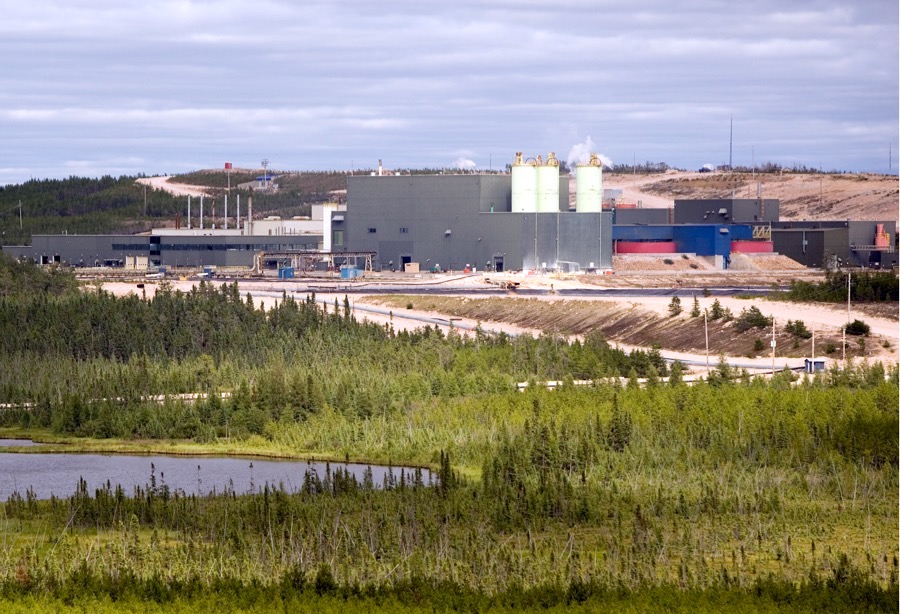
Cameco flags 2025 production hit amid McArthur River mine transition delays
McArthur River in Saskatchewan, the world’s biggest uranium mine. (Image courtesy of Cameco.)
Canadian uranium supplier Cameco Corp said on Thursday the development delays in transitioning the McArthur River mine in Saskatchewan to new mining areas are expected to impact its 2025 production forecast.
The company cited risks including development delays and the expected timing of ground freezing as the mine transitions into two new mining areas.
Additionally, challenges related to access to skilled labor and the timing of commissioning new customized equipment are also potential risks.
“Production from the McArthur River/Key Lake operation is now anticipated to be between 14 million and 15 million pounds of uranium concentrate (U3O8),” the company said, adding, this production projection was lower than its previous forecast of 18 million pounds.
Cameco also said that it was unable to fully mitigate the impact of delayed development and slower-than-anticipated ground freezing in the first half of this year.
However, strong performance at the Cigar Lake mine may partially offset the deferred McArthur River production, the statement mentioned.
(By Pooja Menon; Editing by Mohammed Safi Shamsi)
Swiss gold industry lobby rejects idea of US relocation
Switzerland’s trade group for gold refiners opposes a relocation of some operations to the US to ease a trade imbalance between the countries and help tariff negotiations, newspaper Neue Zuercher Zeitung reported.
The government is trying to find ways to get President Donald Trump to lower his 39% tariff on Switzerland, which is damaging companies and the economy. There have been suggestions that moving gold refining capacity to the US would be an option to appease Trump.
Christoph Wild, president of the Swiss Association of Precious Metals Producers and Traders, told NZZ that the government “shouldn’t make hasty decisions.”
Wild said Switzerland’s huge gold export surpluses at the end of 2024 and in early 2025 were outliers. Those figures were largely driven by traders moving metals to the US to get ahead of any potential tariffs.
Gold affects Switzerland’s trade balance as the country is a large refiner. Gold moving from Europe to the US must be recast from 400-ounce bars standard in London — the largest gold trading venue — into the 1 kilo or 100-ounce bars required by the US-based Comex exchange.
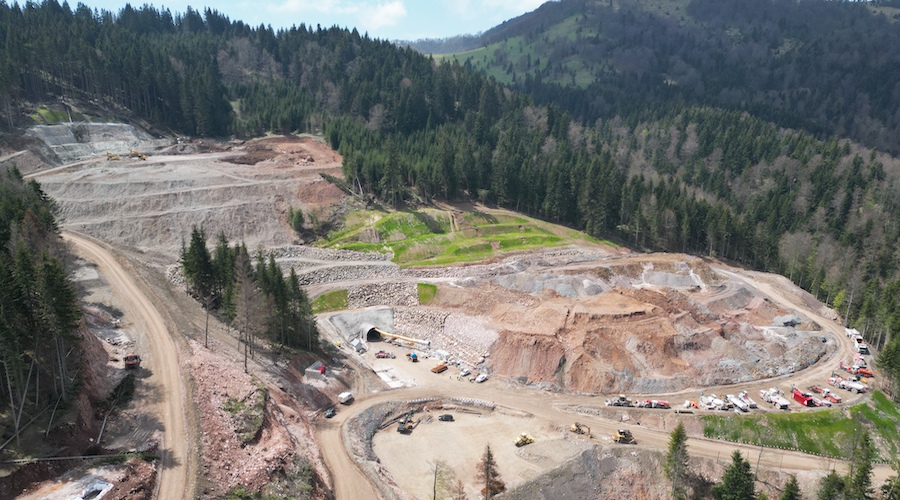
Vares project. (Image courtesy of Adriatic Metals.)
Dundee Precious Metals (TSX: DPM) has secured UK court approval for its acquisition of London-based silver-zinc miner Adriatic Metals (LON: ADT1), a deal that it now expects to close this week.
On Friday, the Toronto-based company said the High Court of Justice in England and Wales has sanctioned the $1.25 billion cash-and-stock deal that was announced in mid-June. With this approval, the deal is expected to go ahead and be completed on Wednesday, it said.
Post merger, Dundee and Adriatic shareholders will respectively hold 75.3% and 24.7% of the combined company. Its global headquarters will be kept in Toronto, while Adriatic’s UK office will shut down.
Separately, Dundee has also been granted approval for listing on the Australian exchange, with official quotation to be announced at a later date.
Expanded Balkan presence
The transaction would give Dundee control of Adriatic’s flagship Vareš mine in central Bosnia, along with the Raška project in Serbia. Already active in the Balkans, Dundee saw the new assets as a strategic fit that will expand its production pipeline and diversify its cash flow.
Vareš, as the centrepiece of the acquisition, is set up to become a low-cost producer of silver and zinc, supported by a high-grade deposit, long mine life and strong exploration upside.
“The Vareš is a logical fit with our portfolio, and adds near-term production growth and mine life, a highly prospective land package, and cash flow diversification,” Dundee’s CEO David Rae said at the time of the acquisition.
Adriatic initially acquired the project in 2017 with a view of reviving a historic silver mine that was abandoned amid civil unrest in the early 1990s. In early 2024, the London-based company successfully produced the first concentrate at Vareš, making it Europe’s first new mine in over a decade.
The operation, with a projected 15-year life, has a nameplate production capacity of 90,000 tonnes in zinc concentrates and 65,000 tonnes in silver-lead concentrates per annum. Mining is expected to occur from an ore reserve base of 12.3 million tonnes grading 192 grams per tonne silver and 5.7% zinc.
ArcelorMittal South Africa job cuts could rise above 4,000, union says
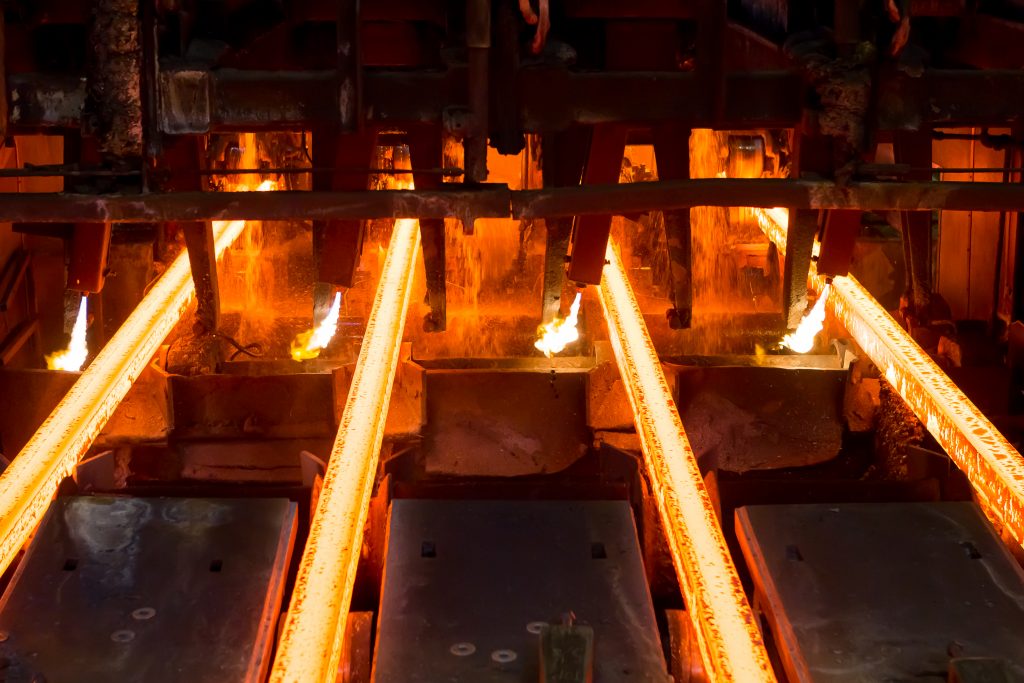
ArcelorMittal South Africa is planning to lay off 4,000 workers, nearly half its workforce and more than initially expected, with cuts now set to extend to its main Vanderbijlpark plants, a union said on Monday.
The steelmaker previously announced plans to shut its long steel plants at Newcastle and Vereeniging this month, cutting 3,500 jobs, as talks with the government have failed to provide an alternative solution.
AMSA said it was “limited in what we can say in the public domain given the complexities of the matters under discussion and a cautionary announcement we issued recently”, adding that “certain processes are still ongoing.”
The company produces some 2.4 million metric tons of steel annually, about 4% of group output.
The Solidarity union said AMSA had told employees that it was preparing “mass retrenchments involving more than 4,000 jobs”.
Its statement said the cuts had been expaned to include Vanderbijlpark – AMSA’s flagship operation, making flat steel.
The company has been reporting losses since 2023 and posted a half-year headline loss of 1.0 billion rand ($56 million) on persistently low sales volumes and low prices.
AMSA has twice deferred closing its long steel operations, which are buckling under the pressure of weak local demand, high electricity tariffs, poor freight logistics, competition from local scrap recycling mills and imports from China.
The union accused the government of dragging its heels in seeking solutions.
AMSA had asked the government to lower scrap export duties, which it says give recyclers an unfair advantage, and to impose tariffs on imports. It also sought favourable electricity and freight costs from state-owned utilities.
Chinese firm faces $420 million Zambia mine spill damages claims
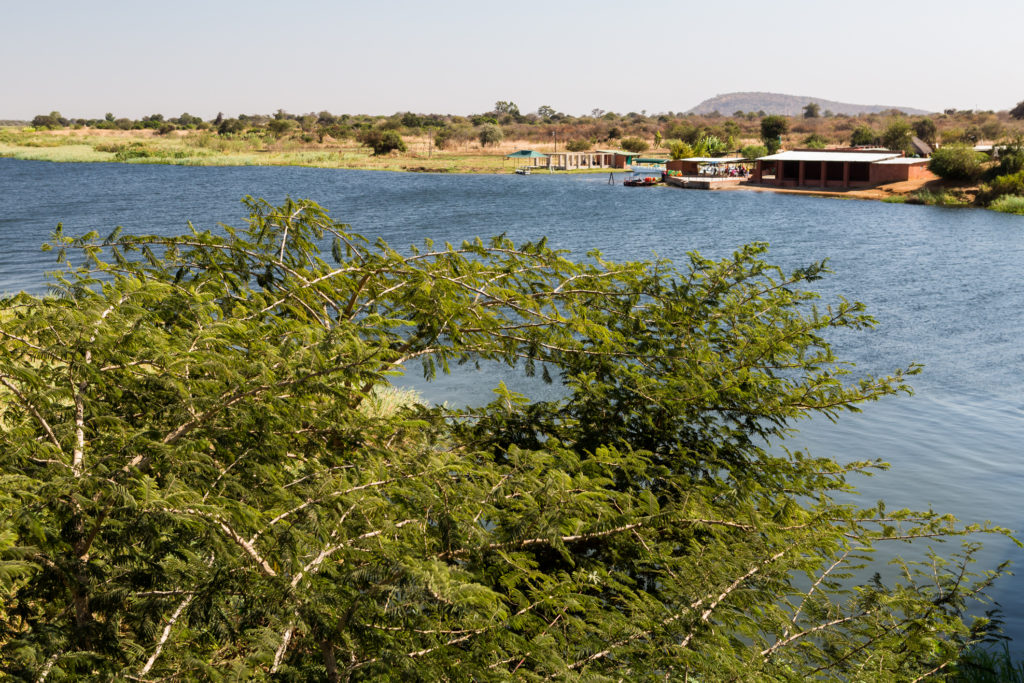
Kafue is the longest river lying wholly within Zambia. Credit: Wikipedia.
People affected by a large-scale toxic spill at a Zambian mine in February are demanding $420 million in compensation from the Chinese state-owned company that operates the site.
Two separate groups sent letters of demand to Sino Metals Leach Zambia Ltd. in recent days, according to documents seen by Bloomberg and confirmed by the legal firms that issued them.
The claims follow reports that the spill of highly acidic mine waste laden with toxic heavy metals may have been worse than initially thought, and rank among the worst such disasters globally. The incident prompted statements by the US and Chinese governments, and highlights the risks the world faces in meeting surging demand for critical minerals.
One letter from Malisa & Partners Legal Practitioners demanded the immediate payment of $220 million in interim compensation to facilitate the relocation of 47 households that are part of the Kalusale community and are living in the direct vicinity of the spill. The amount would also cover their screening, independent medical testing, treatment and livelihood restoration, according to the document.
The other from Malambo & Co. says the firm represents “several residents of Kalusale” and other interested Zambians. The lawyers demanded an immediate payment of $200 million to set up an emergency fund for their clients.
A Sino Metals spokesman said the company had received the letters, which were with its legal department. He declined to comment further.
China’s Foreign Ministry said last month that the company had “actively shouldered responsibility and pro-actively cooperated with the Zambian government” to compensate those affected by the spill. The Zambian government also “spoke highly of the work done by the Chinese company” at an Aug. 7 media briefing, it said.
Impact assessment
As much as 1.5 million tons of waste were spilled in the disaster, according to Drizit Environmental (Pty) Ltd., the company that Sino Metals hired to undertake an environmental impact assessment. Sino Metals fired Drizit for alleged breach of contract, and later questioned the methodology used to assess the magnitude of the spill.
About 900,000 cubic meters (238 million gallons) of toxic tailings remain present in the environment, Drizit said in a statement last week.
“These materials were found to contain dangerous levels of cyanide, arsenic, copper, zinc, lead, chromium, cadmium and other pollutants posing significant long-term health risks, including organ damage, birth defects and cancer,” it said.
Various embassies have warned their citizens to avoid the area because of the health risks.
Zambia’s government initially tried to downplay the threat, but later said it found dangerous levels of heavy metals in some water samples. It didn’t immediately respond to a request for comment on the latest developments.
(By Taonga Mitimingi and Matthew Hill)
China’s Dongfang Electric Hoists 26 MW Offshore Wind Turbine for Testing
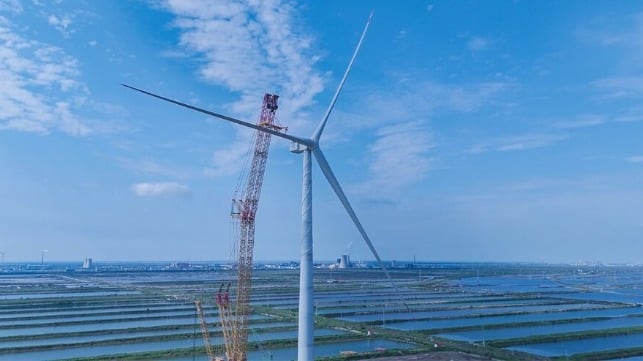
Dongfang Electric installed for testing a 26 MW wind turbine standing more than 600 feet (Dongfang Electric)
Dongfang Electric Wind Power completed the hoisting of the 26 MW offshore wind turbine for testing on August 29 as the industry races forward with the huge next generation of turbines. It is one of several large offshore wind turbines currently in design or testing to break the 20 MW barrier and continues China’s emergence as the leader in the technology.
Western companies have generally stopped efforts at turbines above 18 MW, ceding the advancements to the Chinese. Mingyang Electric showed off its 20 MW turbine a year ago, as well as unveiling its efforts at a 26 MW giant. Dongfang previewed its 26 MW model last October, displaying the nacelle. The first unit was installed in Dongying, a city in northern Shandong province.
The company reports there were large challenges to overcome, including difficulties with aerodynamics and structural coupling. The unit consists of over 30,000 components and is designed for medium to high-speed wind areas. It says it is suited for wind speeds above approximately 18 mph (8 meters per second).
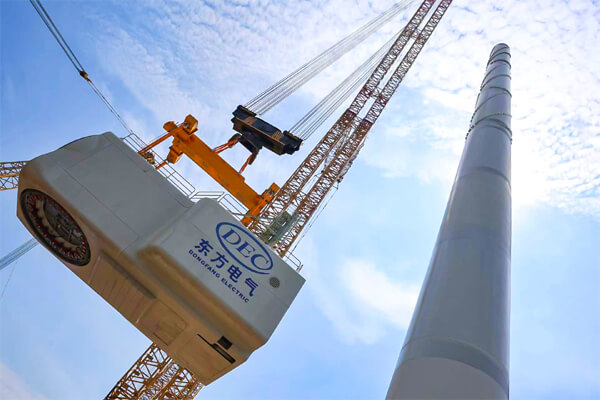
Nacelle for the massive unit being raised into position (Dongfang)
The new unit is 31 percent larger than the 18 MW units and stands with its hub over 600 feet above the water level. It is reported to have a diameter of 310 meters (over 1,000 feet) with blades that are approximately 153 meters (502 feet) in length. Each rotation of the unit generates 62 kilowatt hours of electricity, and at average wind speeds of 22 mph, a single unit can produce 100 million kilowatt-hours annually. They report the design is also capable of withstanding a super typhoon with wind speeds of over 115 mph.
It employs a third-generation fully integrated semi-direct drive technology that combines the shaft system, gearbox, and generator. It is also fully sealed to prevent salt spray corrosion and incorporates internal and external cooling systems. Critically, they highlight that the control systems and key components are all domestically made.
Dongfang reports the unit is suited for operation in the 20 to 26 MW range. China, however, is yet to commercialize its largest wind turbines. Last December, Mingyang shut down tests on its 20 MW unit, acknowledging that two blades had fractured due to what were called “extreme, abnormal conditions,” according to Recharge News.
China is believed to have reached 40 GW of installed offshore wind energy capacity, far ahead of any other nation. While the domestic market is booming, its manufacturers are also anxious to break into the Western market.
Study: Collapse of Key Atlantic Ocean Current May Begin As Early As 2060
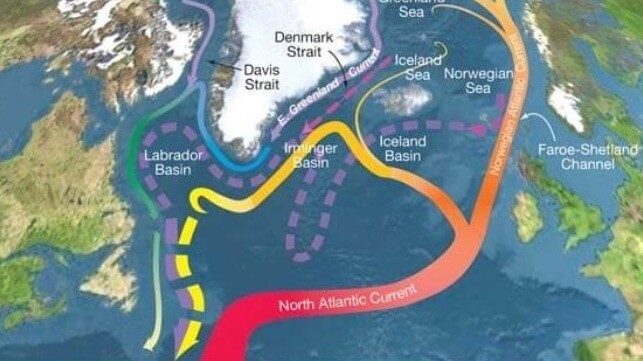
The branching currents of the AMOC (Woods Hole / R. Curry / USGCRP)
In the past few years, there has been a growing body of research looking into the potential weakening of the Atlantic meridional overturning circulation(AMOC). It is the Atlantic branch of the global ocean current system, responsible for transporting warm ocean water to the north, where it sinks and returns as cold, deep water to the South Atlantic. This circulation helps control the Northwestern European climate. In fact, AMOC is part of the reason Northern Hemisphere is on average 1.40C warmer than the Southern Hemisphere.
However, researchers have revealed rising risks for AMOC to reach a tipping point, especially as the global climate system changes. A key destabilizing factor for AMOC is changes in ocean salinity. Back in 1961, the U.S oceanographer Henry Stommel was among the first researchers to recognize how the Atlantic’s water salinity leads to AMOC tipping point. But as this research has progressed with time, there has been speculation about the role played by climate change.
Last week, researchers from Utrecht University in Netherlands released a groundbreaking study on the nexus between climate change and AMOC collapse. While the researchers published an almost similar study last year, the new paper uses data from the latest climate models contained under the Coupled Model Intercomparison Project Phase 6 (CMIP6). The recent IPCC report is based on data from CMIP6, which consists of climate models from various institutes around the world. Under CMIP6, some of the models have global warming projections beyond year 2100. This has provided a more granular approach in analyzing systems such as AMOC. Unfortunately, the findings are concerning.
Although previous studies indicated that AMOC collapse before 2100 was unlikely, the new paper shows that the tipping point could begin as early as 2060. “The risk of a tipping point by 2100 is over 90% under a high-emission scenario and over 50% under an intermediate climate change scenario,” said René van Westen, co-author of the study.
In this case, a tipping point is when deep convection in the northern Atlantic stops. One approach to the AMOC shut down is the ongoing loss of ice in the Arctic, which adds freshwater in the Atlantic, affecting the ocean salinity levels.
“The study provides rough estimates but main point is - this is a risk I used to consider less than 10%, and given the devastating impacts lasting many centuries we really want this to be less than 1%,” said Stefan Rahmstorf, Professor at Potsdam Institute for Climate Impact Research in Germany, who was also part of the study team.
A full shut down of AMOC would cause severe climate disruptions. Some studies have showed that if AMOC weakens, sea levels on the American northeast coastline would rise sharply. On the other side, cold air temperatures would expand to cover Iceland, Britain and Scandinavia, with unprecedented storms.
D.E.I.
IMO Secretary-General Pays Official Visit to the Panama Maritime Authority
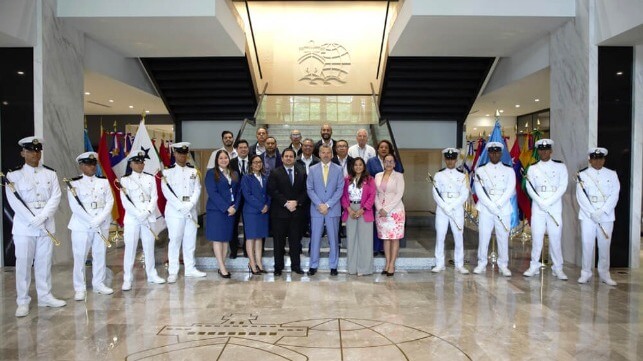
Arsenio Domínguez, Secretary-General of the International Maritime Organization (IMO), carried out an official visit to the Panama Maritime Authority (PMA) as part of his first mission to the country since taking office in January 2024.
He was welcomed by Luis Roquebert, Administrator of the PMA, together with the institution’s directors and deputy directors. “I am delighted to be here. This is an institution that I hold very close to my heart, having worked here for more than 20 years,” Domínguez remarked.
The highlight of the visit was the forum “Empowering Women in the Maritime Sector: A Call to Action on Training, Visibility, and Recognition for Sustainable Development.”
The event emphasized the importance of continuing to expand women’s participation in an industry long dominated by men. Beyond training and leadership opportunities, the forum stressed the need to highlight women’s contributions and to ensure fair conditions across the maritime field—a sector that plays a pivotal role in the global economy. Both the IMO and PMA agreed that advancing gender equality is key to driving sustainability, innovation, and competitiveness in international shipping.
Alongside the Secretary-General, the panel included Rina Berrocal, Deputy General Director of the Merchant Marine; Marta Aparicio, The General Director of Public Registry of Ship Ownership; and Pilar Castillo, Vice President of the Panama Maritime Chamber.
“I greatly valued hearing the perspectives and initiatives being put forward, as well as the commitment to strengthening and showcasing the efficiency of the world’s largest ship registry by number of flagged vessels,” Domínguez noted at the close of the event. This visit forms part of a broader agenda led by the IMO Secretary-General in Panama, which includes high-level meetings with the Ministry of Foreign Affairs, the PMA, the Panama Canal Authority, the International Maritime University of Panama, and various maritime industry associations—pushing forward the priority issues of his mandate.
The products and services herein described in this press release are not endorsed by The Maritime Executive.
Shearwater to Undertake Ghana’s First Deepwater Ocean Bottom Survey
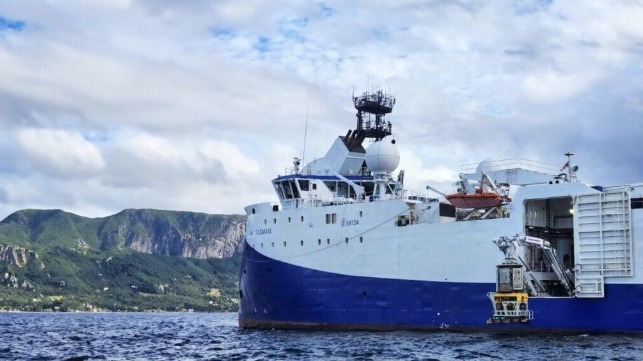
Shearwater Geoservices AS (“Shearwater”) has been awarded a deepwater Ocean Bottom Node (OBN) seismic survey in Ghana’s Jubilee and TEN fields, operated by Tullow and its partners. It will be the first deepwater OBN project offshore Ghana, following Shearwater’s successful recent deployment of the SWTasman vessel and Pearl node OBN platform in Côte d’Ivoire and Angola. The two-month survey is scheduled to begin in the last quarter of 2025.
The SWTasman and Pearlnodeplatformhave been continuously deployed offshore West Africa since late 2024, first executing the inaugural OBN survey offshore Côte d’Ivoire before mobilising to consecutive surveys offshore Angola.
“These projects demonstrate Shearwater’s role in pioneering new technology in new regions, delivering operational excellence and industry-leading survey efficiency and data quality. By delivering the first OBN project in Ghana and other surveys across this part of Africa, we are opening new geophysical frontiers – combining precision, innovation and commitment to responsible resource exploration,” said Irene Waage Basili, the CEO of Shearwater.
The Jubilee and TEN fields have been central to Tullow’s operations for nearly two decades. This first OBN survey is expected to further enhance reservoir imaging, helping unlock deeper insights to inform field development and production strategies. It follows a streamer survey executed by Shearwater over the Jubilee and TEN fields in early 2025.
The products and services herein described in this press release are not endorsed by The Maritime Executive.
Cruise Industry Sues Hawaii Saying “Green Fee” is Unconstitutional
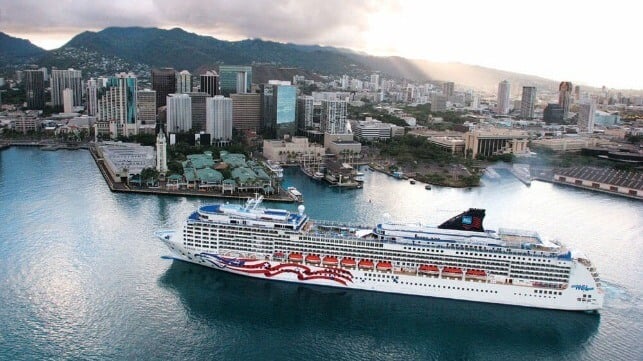
Pride of America cruise ship arriving in Honolulu (NCL)
The cruise industry has taken the unusual step of filing a lawsuit seeking to enjoin the enforcement of a new Hawaiian law that they claim is unconstitutional and will impose unreasonable fees on cruise ships docking in the state. At issue is a new law known as the “Green Fee” enacted in Hawaii in May and due to go into effect on January 1, increasing the state tax on hotels and short-term rentals, and for the first time extending the tax to cruise ship passengers.
The state government ratified the first-of-its-kind legislation this year, saying it would provide funding to deal with the impacts of climate change on its resources. It cited beach erosion and the devastating fire on Maui in 2023. Experts have predicted the new taxes could raise as much as $100 million annually.
Hotel guests and short-term rentals have long been paying taxes in Hawaii. The new law increases the tax on those visitors from the current 10.25 percent, adding .75 percent for a total of 11 percent of their stay, with various exemptions. At the same time, the law imposes for the first time an 11 percent “Green Fee” on cruise ship passengers for the time their ship is docked in Hawaiian ports and also gives the local government the authority to collect an additional 3 percent surcharge.
The trade group Cruise Lines International Association, along with several representatives of Hawaii businesses impacted by the cruise tax, filed suit in U.S. District Court for Hawaii on August 27, seeking an injunction to block the tax and reporting requirements.
According to the suit, the “Green Fee” is a “blatant violation” of the U.S. Constitution, federal Rivers and Harbors regulations, and the principles of freedom of speech. The suit contends that U.S. federal legislation ensures that “navigable waters of the United States are a common resource, not one to be commandeered by individual states for their own parochial revenue-raising interests.” They assert that no other state has attempted this type of fee, which they allege will be used to fund the state’s treasury and fund green projects as opposed to being linked to services provided to the cruise ships.
The suit highlights the regulations in the federal Rivers and Harbors Appropriation Act of 1884 as well as the “tonnage clause” in the U.S. Constitution. They write that Hawaii is violating federal statutory limits on the fees states may impose for the use of navigable waters. They also claim the tax is unfair because it lacks the exemptions provided for hotel and short-term rental guests and is disproportionate for cruise passengers compared to other entities related to tourism in the state.
The suit also attacks a provision that requires the cruise ships to post notices about compliance with the fee onboard and include similar information in every advertisement for Hawaii-bound cruises. Since the fee is unconstitutional, they assert the notification is a violation of free speech.
Cruises they report bring about 3000,000 tourists annually to Hawaii based on 2023 data. Hawaii government data shows that there were more than 9.6 million visitors to the state in 2023.
In the suit, CLIA contends the additional fees will make Hawaii cruises far more expensive for families. They write it will add hundreds of dollars to the cost of popular cruise itineraries that dock in Hawaii’s ports. They suggest that families will forgo trips to Hawaii in favor of other destinations, also hurting the state’s broader economy and businesses in Hawaii that draw revenues from cruise passengers.
The suit asks the court to enjoin the state from enforcing the new legislation. A hearing is scheduled for the end of October.
The cruise industry has long been known to use its size to pressure destinations that impose taxes or other levies, but this is only the second time that CLIA has filed suit against a state. In 2016, CLIA Alaska sued Juneau, Alaska, as part of its fight with the state over head taxes. That suit also hinged on the “tonnage clause,” and in 2018, the U.S. District Court sided with CLIA that a tax could only be imposed for services that were being provided to the vessel. The following year, CLIA and Juneau reached a settlement in the case over the use of the passenger taxes.
The cruise industry has been facing similar pressures internationally. Greece recently imposed new fees to deal with the impact on the most popular islands after many complained that the ports, such as Santorini and Mykonos, were being overrun by cruise passengers. Mexico also announced a large head tax, but later reached an agreement with the cruise industry for a more phased approach to the fees.
Disney Adventure Cruise Ship Departs Wismar for Trials
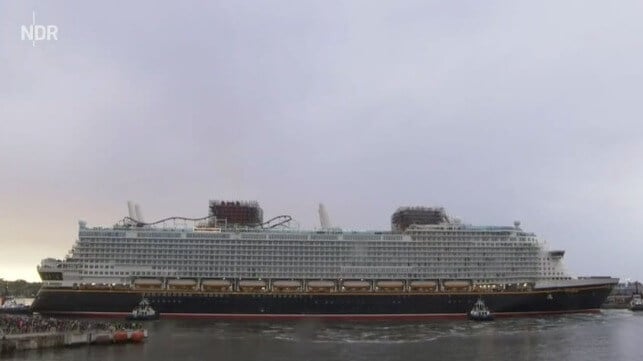
Disney Adventure maneuvering from the fitting out berth for sea trials (NDR live broadcast)
Disney’s newest cruise ship and the eleventh largest in the cruise industry departed Wismar, Germany, on the evening of September 1, for sea trials. It marks several firsts as Disney will be the third cruise line to exceed the 200,000 gross ton mark, while also bringing to a close the construction in Wismar, which was marked by the financial collapse of Genting Hong Kong and the bankruptcy of the builder MV Werften.
The departure of the Disney Adventure was delayed, with reports that it had been planned for Saturday and then pushed back first to Sunday and finally to Monday. The German media outlet NDR reports there were concerns over the water level in the Bay of Wismar, which is currently low, and winds due to the size and height of the ship at nearly 70 meters (230 feet).
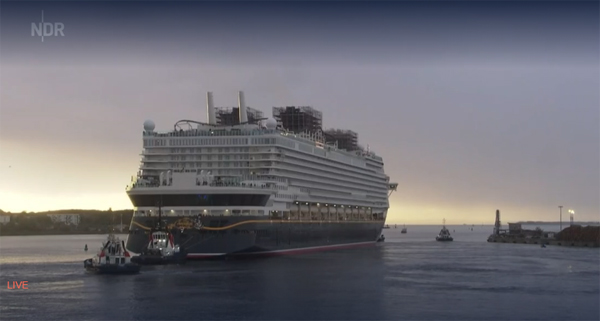
The ship got underway at around 1830 on September 1, with NDR reporting the harbor had been closed to all other ships and boats. A flotilla of tugs and harbor boats was on hand to assist the massive 1,122-foot (342-meter) vessel as it pushed off the fitting-out dock where it had been since April. It moved forward slowly and then pivoted with the assistance of tugs and its bow thrusters. The construction scaffolds still remain around the vessel's funnels.
Due to the low water level, the ship will be making a stop at Mukran, Germany, on Rügen Island. There, it will refill its fresh water tanks and take on final supplies before heading into the North Sea for trials. The ship will then proceed to Bremerhaven after the trials to complete fitting out and is scheduled for a handover to Disney Cruise Line around the end of the month.
Disney Adventure departing Wismar, Germany (NDR live broadcast)
At 206,500 gross tons, the Disney Adventure is part of the emerging group of cruise ships exceeding the 200,000 GT mark and follows only Royal Caribbean International’s Icon and Oasis class and MSC Cruises’ World class in size. Norwegian Cruise Line and Carnival have ordered similarly large cruise ships, which will begin delivery late in the decade.
Disney acquired the ship from the bankruptcy of MV Werften and employed Meyer Werft to complete the construction at the shipyard in Wismar. The yard itself has been sold to TKMS for naval construction.
Work on the ship began in 2018 for Genting Hong Kong’s Dream Cruises, known as Global One and named Global Dream. Designed for the Asian cruise market, the ship was going to have accommodations for approximately 9,500 passengers and over 2,000 crew. MV Werften filed for bankruptcy in January 2022. A planned sister ship was scrapped before assembly began.
Disney redesigned the ship in keeping with its brand and experiences. Passenger capacity is now reported at approximately 6,700 and 2,300 crew. The ship was finally emerged from the building hall in April.
Areas of the ship, such as a large casino, were reworked, and decor was created in the Disney style. Some features, including a roller coaster amusement, have been retained from the original design. Disney scheduled the ship to operate short cruises from Singapore year-round starting in mid-December.
It is part of a large expansion of the cruise line. Late this year, the company will also add a cruise ship to its U.S.-based operations, the Disney Destiny, which was recently floated out at Meyer’s yard in Papenburg, Germany. Work has begun on another cruise ship at Papenburg, and Disney has ordered three additional ships, also to be built by Meyer. The operator of the Disney Tokyo Resort has also ordered its first cruise ship.
Disney launched the cruise line in 1998 with a ship called Disney Magic. Today, the company operates six cruise ships with the operation reported to be one of the most profitable portions of the Disney corporation.