Tuesday, September 02, 2025

How to Stop Israel from Starving Gaza


Israel has crossed the clear line into the darkest crimes.

Israel, with US complicity, is committing genocide in Gaza through the mass starvation of the population as well as direct mass murders and the physical destruction of Gaza’s infrastructure. Israel does the dirty work.  The US Government funds it and provides diplomatic cover through its UN veto.  Palantir, through “Lavendar,” provides the AI for efficient mass murder. Microsoft, through Azure cloud services, and Google and Amazon  through the “Nimbus” initiative, supply core tech infrastructure for the Israeli army.

This marks 21st century war crimes as an Israel-US public-private partnership.  Israel’s mass starvation of the people of Gaza has been confirmed by the United NationsAmnesty International, Red Cross, Save the Children and many others. The Norwegian Refugee Council, along with 100 organizations, have been calling for an end to Israel’s weaponization of food relief.  This is the first time that mass starvation has been officially confirmed in the Middle East.

The scale of the starvation is staggering. Israel is systematically depriving food to more than 2 million people. Over half a million Palestinians face catastrophic hunger and at least 132,000 children aged under five are at risk of death from acute malnutrition. The scale of the horror is thoroughly documented by Haaretz in a recent article entitled “Starvation is Everywhere.” Those who are able to somehow access food distribution sites are routinely fired on by the Israeli army.

As a former US ambassador to Israel has recently explained, the intention to starve the population has been present from the start.  Israel’s Heritage Minister Amichai Eliyahu recently declared, “there is no nation that feeds its enemies.”  Minister Bezalel Smotrich recently stated, “whoever doesn’t evacuate, don’t let them. No water, no electricity; they can die of hunger or surrender. This is what we want.”

Yet despite these glaring declarations of genocide, US representatives at the UN repeatedly deny the facts and cover for Israel’s war crimes. The US alone vetoed Palestine’s admission to the UN in 2024.  The US now denies visas to Palestinian leaders to come to the UN in September, yet another violation of international law.

The US has used its power and especially its veto in the UN Security Council to abet Israel’s genocide of the Palestinians and to block even the most basic humanitarian responses.  The world is aghast but seems paralyzed before the the Israel-US murder machine.  Yet the world can act, even in the face of US intransigence.  The US will stand naked and alone in its criminal complicity with Israel.

Let’s be clear.  The overwhelming voice of humanity is on the side of the people of Palestine.  Last December, 172 countries, with more than 90 percent of the world population, voted to support Palestine’s right to self-determination.  Israel and the US were essentially isolated in their opposition.  Similar overwhelming majorities are repeatedly expressed on behalf of Palestine and against the actions of Israel.

Israel’s thuggish government now counts solely on US support, but even that may not be there for long.  Despite Trump’s intransigence and US government attempts to stifle pro-Palestinian voices, 58% of Americans want the UN to recognize the State of Palestine, compared to only 33% who do not. Moreover, 60% of Americans oppose Israel’s actions in Gaza.

Here are practical steps that the world can take.

First, Türkiye has set the correct course by ending all economic, trade, shipping, and air links with Israel. Israel is currently a rogue state, and Türkiye is right to treat it as such until Israeli-created mass starvation ends, and a State of Palestine is admitted to the UN as the 194th member, with the borders of June 4, 1967.  Other states should immediately follow Türkiye’s lead.

Second, all UN member states that have not yet done so should recognize the State of Palestine.  So far, 147 countries recognize Palestine.  Dozens more should do so at the UN Summit on Palestine on September 22, even over the vociferous objections of the US.

Third, the Arab signatories to the Abraham Accords, Bahrain, Morocco, Sudan, and the UAE, should suspend their diplomatic relations with Israel until the Gaza siege ends and the State of Palestine is admitted to the UN.

Fourth, the UN General Assembly, by a vote of two-thirds present and voting, should suspend Israel from the UN General Assembly until it lifts its murderous siege on Gaza, based on the precedent of suspending South Africa during its Apartheid regime.  The US has no veto in the UN General Assembly.

Fifth, UN member states should stop the export of all technology services that support the war, until the siege of Gaza ends and Palestine’s membership in the UN is adopted by the UN Security Council.  Consumer companies such as Amazon and Microsoft that persist in aiding the Israel Defence Forces in the context of a genocide should face the wrath of consumers worldwide.

Sixth, the UN General Assembly should dispatch a UN Protection Force to Gaza and the West Bank. Typically, it would be the UN Security Council that mandates a protection force, but in this case, the US will block the Security Council with its veto.  There is another way.

Under the “Uniting for Peace” mechanism, when the Security Council is deadlocked, the authority to act passes to the General Assembly. After a Security Council session and the almost inevitable US veto, the issue would be brought before the UNGA in a resumed 10th emergency special session on the Israel-Palestine conflict.  There, the General Assembly can, by a two-thirds majority not subject to US veto, authorize a protection force in response to an urgent request from the State of Palestine.  There is a precedent: in 1956, the General Assembly authorized the UN Emergency Force (UNEF) to enter Egypt and protect it from the ongoing invasion by Israel, France, and the United Kingdom.

At the invitation of Palestine, the protection force would enter Gaza to secure emergency humanitarian aid for the starving population. If Israel were to attack the UN protection force, the force would be authorized to defend itself and the Gazans. Whether Israel and the US would dare to fight a UNGA-mandated force protecting the starving Gazans remains to be seen.

Israel has crossed the clear line into the darkest crimes — starving civilians to death and shooting them as they line up, emaciated, for food. There is no further line to cross, nor time to lose. The family of nations is being tested and summoned to action as it has not been in decades.

Jeffrey D. Sachs is a University Professor and Director of the Center for Sustainable Development at Columbia University, where he directed The Earth Institute from 2002 until 2016. He has been advisor to three United Nations Secretaries-General, and currently serves as an SDG Advocate under Secretary-General Antonio Guterres. Sybil Fares is a specialist and advisor in Middle East policy and sustainable development at SDSN. Read other articles by Jeffrey Sachs and Sybil Fares.
Open letter: With the deaths of journalists in Gaza, press freedom is also being assassinated


"At the rate the Israeli army is killing journalists in the Gaza Strip, there will soon be no one left to inform you." The editorial committees of more than forty French media outlets, including FRANCE 24 and our sister network RFI, are signing on to the international movement initiated by Reporters Without Borders (RSF) and Avaaz to sound the alarm about the fate of Palestinian journalists – and the notion of press freedom as a whole – currently under assault in the Gaza Strip.


Issued on: 01/09/2025 - 
By: FRANCE 24

Journalist Mariam Dagga, 33, was one of several journalists killed in Israeli strikes on Nasser Hospital in Khan Younis on August 25, 2025. © Jehad Alshrafi, AP (File)

At the rate the Israeli army is killing journalists in the Gaza Strip, there will soon be no one left to inform you.

We, the editorial committees of the undersigned media outlets, are joining the international mobilisation initiated by Reporters Without Borders (RSF) and Avaaz in solidarity with our Palestinian journalist colleagues in the Gaza Strip.

On August 25 alone, five journalists were killed by the Israeli army during a double bombing in the area of Nasser Hospital in Khan Younis.

On the night of August 10-11, the Israeli army killed six journalists in a targeted and claimed strike against Al-Jazeera correspondent Anas al-Sharif.

In total, more than 220 journalists have been killed by the Israeli army since the terrible attacks of October 7, 2023, according to RSF. Many of them were killed while performing their professional duties.

With their deaths, press freedom is also assassinated, and the reality of the Palestinians living under bombardment and threatened by famine is silenced.

Together, we denounce these murders and assassinations by the Israeli army in the Gaza Strip with the utmost firmness.

We also denounce the systematic campaigns to discredit and delegitimise the work of our colleagues in Gaza. These information professionals, who risk their lives daily to do their work under extreme conditions, deserve our respect and support, not our suspicion.

We call on our leaders to put pressure on the Israeli government to stop its army’s crimes against Palestinian journalists. With just days before the opening of the 80th UN General Assembly, urgent action is needed.

We call on the Israeli authorities to at last allow the international press independent access to the Gaza Strip without supervision or control by the Israeli army. We insist: this restriction constitutes a major obstacle to the right to information and press freedom.

We demand that French authorities immediately resume the evacuation of our Palestinian colleagues for those who wish it, as they are now continually threatened with death by famine and bombardment.

Our profession is under attack. Our duty to inform is being trampled. Our solidarity with our Palestinian colleagues is total.

Finally, we deplore the fate of millions of Palestinian civilians who have lived under the permanent threat of Israeli army fire and hunger for nearly two years. We do not forget the uncertain fate of the remaining Israeli hostages, captive since October 7, 2023.

Signed by the editorial committees (sociétés des journalistes) of:

Agence France Presse, Arrêt sur Images, Arte, BFM Business, BFMTV, Blast, Ça m'intéresse, Ça m'intéresse Histoire, Capital, Challenges, Courrier international, FRANCE 24, France 3 nationale, France Télévisions rédaction nationale, franceinfo numérique, franceinfo TV, GÉO, La Tribune, LCI, Le Figaro, Les Echos, L’Express, Le Monde, Le Nouvel Obs, Le Parisien, Le Point, L’Equipe, L’Humanité, L'Informé, L’Usine nouvelle, Libération, Mediapart, M6, NRJ Group, Premières Lignes TV, Public Sénat, Radio France, Radio France Internationale, RTL, Sept à Huit , Télérama, TV5 Monde
Analysis

US block on Palestinian visas is a 'violation' of obligations, law professor says


As Europe urges Washington to honour its UN obligations over Palestinian visas, RFI spoke to international law professor François Dubuisson about the wider implications of the US administration's move to block the entry of Palestinian delegates onto American soil.


Issued on: 02/09/2025 - RFI

The EU wants the United States to reconsider its decision to deny visas to Palestinian officials seeking to attend this month's UN General Assembly. AP - Frank Franklin II

The European Union has urged Washington to rethink its decision to block visas for Palestinian officials hoping to attend next month’s UN General Assembly in New York, warning that the move breaches international obligations.

“In the light of the existing agreements between the UN and its host state, we all urge for this decision to be reconsidered,” EU foreign policy chief Kaja Kallas said after a meeting of foreign ministers in Copenhagen at the weekend.

Kallas invoked international law in pressing the US to reverse what she called an “extraordinary step”, one that further aligns President Donald Trump’s administration with Israel as its war in Gaza rages on.


'No restrictions'

The visa dispute threatens to overshadow France’s initiative to push for broader recognition of a Palestinian state at the gathering of world leaders.

French foreign minister Jean-Noël Barrot was among the first to denounce the move, insisting that “a UN General Assembly meeting ... should not be subject to any restrictions on access”.

Several ministers in Copenhagen echoed France’s stance, underlining that the United States, as host nation of the United Nations, is obliged not to obstruct the participation of invited delegations.

Breach of international law

Palestinian Authority president Mahmud Abbas had been due to attend in person, a symbolic moment given his long if fraught history of engagement with Washington.

The Palestinian Authority condemned the decision as a “clear contradiction of international law and the UN Headquarters Agreement”. That agreement stipulates that the United States cannot deny entry to officials invited to UN sessions, regardless of the state of bilateral relations.

Against this backdrop of mounting criticism, legal experts have been weighing in.

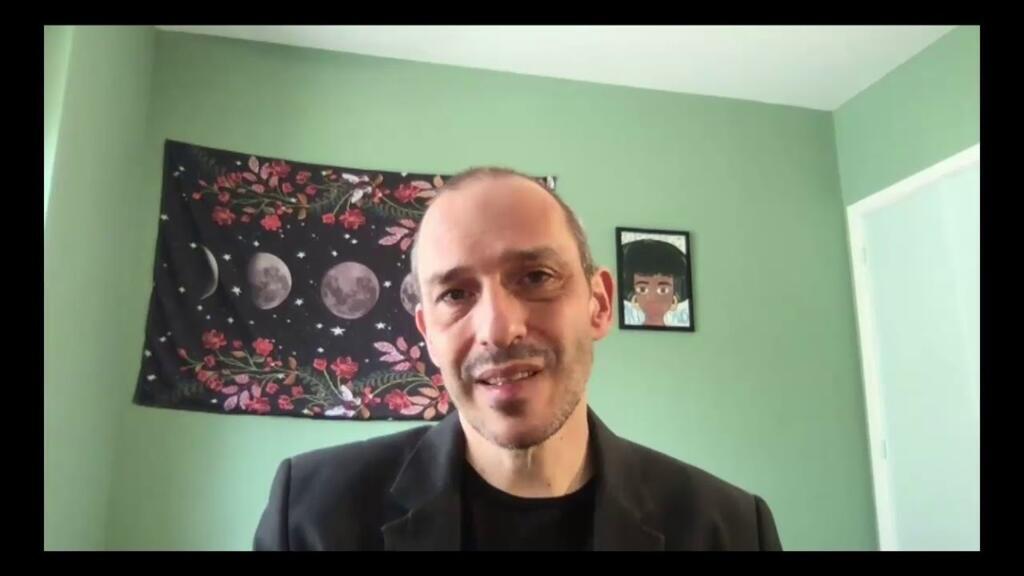
François Dubuisson, professor of international law at the Université Libre de Bruxelles, spoke to RFI about why he believes the US move represents a breach of binding international commitments.

François Dubuisson, professor of international law at the Université Libre de Bruxelles, tells RFI: "The United States is violating its international obligation" over refusing visas for Palestinian delegates ahead of the UN General Assembly this September. © wikimedia commons

RFI: What does the agreement between the United Nations and the United States say regarding access to the UN HQ?

The United States is bound by a headquarters agreement with the UN, covering the holding of its sessions in New York. This agreement sets out a number of obligations – in particular, the duty not to obstruct the arrival of people invited to take part in UN sessions. That includes the obligation to grant the necessary visas to those invited by the UN.

Crucially, these obligations apply regardless of the US’s bilateral relations with the governments concerned. The aim is precisely to avoid situations where diplomatic tensions or non-recognition of certain states would lead to obstacles. This protection extends not only to state representatives but also to NGOs or media accredited by the UN.

So yes, the US decision is a breach of its obligations under the headquarters agreement.

RFI: Does this amount to a violation of international law?

Yes, because the headquarters agreement is part of international law and creates binding obligations for the United States.

Preventing Palestinian representatives from attending the General Assembly in September is therefore clearly a violation of international law.

RFI: In 1988, the Reagan administration refused to issue a visa for Yasser Arafat. Is this situation comparable?

There are similarities but also key differences. In 1988, a US law prevented members of the PLO mission in New York from attending the session, because of anti-terrorism legislation that led to the mission’s closure.

That provoked strong protests from the UN and even triggered legal proceedings at the International Court of Justice.

Ultimately, a US judge ruled that the headquarters agreement prevailed over domestic legislation, forcing Washington to comply. But in the meantime, the General Assembly had to decamp to Geneva to allow Arafat to address world leaders.

Today, the situation is even clearer: Palestine now holds observer state status at the UN. This means it is fully covered by the headquarters agreement. Blocking its representatives is therefore a direct violation.

RFI: Could the same outcome be expected today?

Perhaps, but things may prove more complicated. The Trump administration has shown little inclination to abide by judicial rulings, domestic or international. That could drag out any dispute.

RFI: The US justification is that the Palestinian Authority has failed to uphold its peace commitments. Isn’t that more political than legal?

Absolutely. If we look at the reality, Israel has also obstructed the peace process through its occupation and settlement policies, not to mention events in Gaza.

To single out the Palestinians is clearly political and shows the bias of President Trump.

But such considerations are irrelevant when it comes to granting visas for UN sessions. If the host country started issuing or withholding visas depending on whether it approved of a government’s policies, it would undermine the very principle of the United Nations: to bring all states together, irrespective of political disagreements.

This interview is based on the original French version by RFI's Guilhel Delteil and has been slightly edited for clarity.


Belgium to join France and other countries to recognise Palestinian state


Belgium has said it will recognise the State of Palestine at the United Nations General Assembly this month, joining France and other western countries in a move that has angered Israel and the United States.


Issued on: 02/09/2025 - RFI

Belgium's Foreign Affairs Minister, Maxime Prevot in March 2025. On Tuesday he announced that his country would recognise the state of Palestine during a summit at the UN General Assembly in September. © Nicolas Tucat/AFP

“In the face of the violence perpetrated by Israel in violation of international law, given its international obligations, including the duty to prevent any risk of genocide, Belgium had to take strong decisions to increase pressure on the Israeli government and Hamas terrorists,” Belgian Foreign Minister Maxime Prevot wrote on X on Tuesday, announcing Belgium’s intention to recognise Palestine.

France and Saudi Arabia have led a diplomatic effort to urge countries to recognise a Palestinian state at a summit during the UN General Assembly to be held from 9-23 September in New York.

France along with Britain, Australia and Canada had already made the pledge, in a move described as a political signal also aimed at condemning Israel's settlement expansion and military presence in the territories.Why is France recognising Palestinian statehood and will it change anything?

Israel has been angered by the pledges, and the United States has condemned them.

“This is not about punishing the Israeli people, but rather about ensuring that its government respects international and humanitarian law and taking action to try to change the situation on the ground,” Prevot said, adding that Belgium will also levy "12 firm sanctions" on Israel.

These include a ban on importing products from its settlements, a review of public procurement policies with Israeli companies and declaring Hamas leaders persona non grata in Belgium.

European Union member states remain divided over Israel's war in Gaza.

During a meeting of foreign ministers in Copenhagen on Saturday some urged the bloc to exert significant economic pressure on Israel, while others were firmly opposed such measures.

However the EU as a bloc has urged the US to reconsider its decision to deny visas to Palestinian Authority President Mahmoud Abbas and other Palestinian officials seeking to travel to New York to attend the UN General Assembly and the summit.

"In the light of the existing agreements between the UN and its host state, we all urge for this decision to be reconsidered," EU foreign policy chief Kaja Kallas said after the Copenhagen meeting.

(with newswires)

ICYMI

Biggest ever aid flotilla sets sail for Gaza

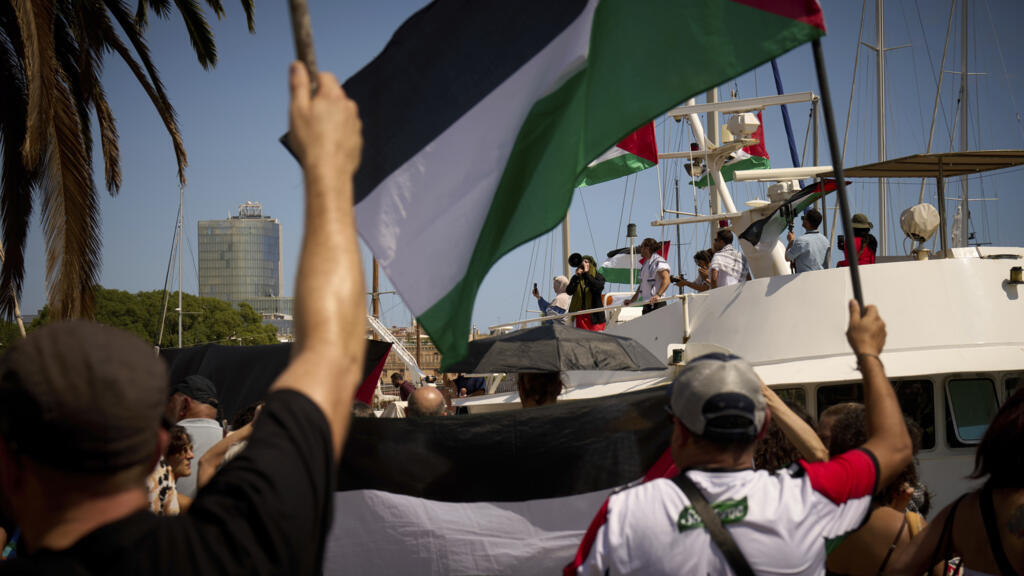
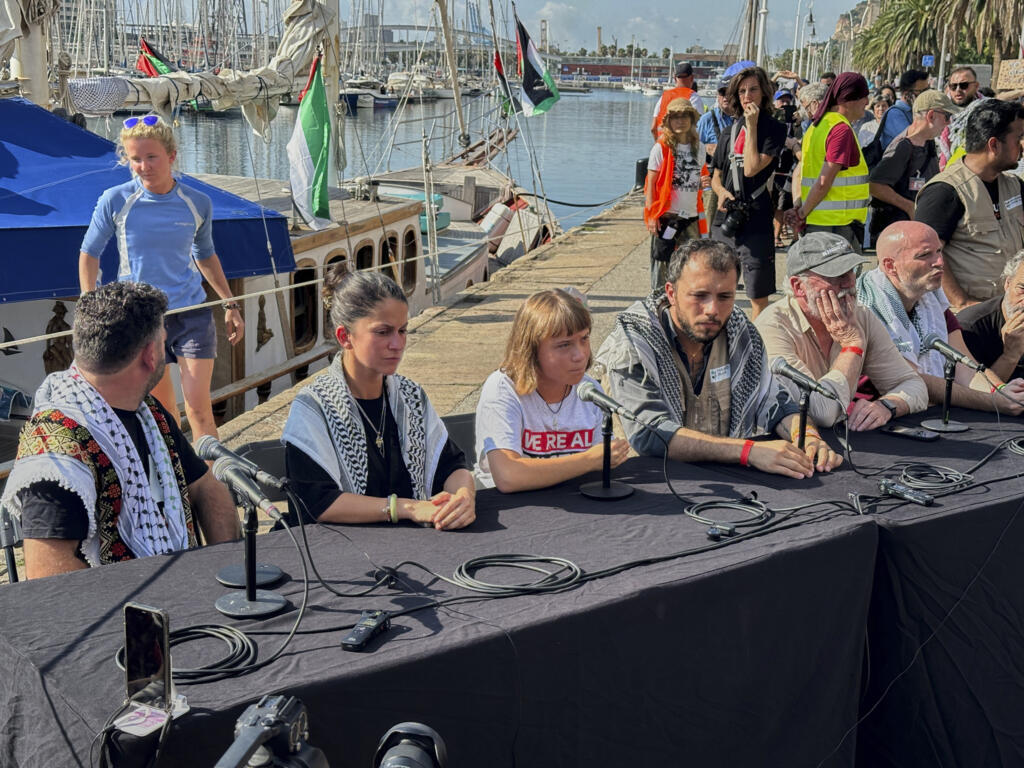
Two dozen boats left Barcelona today, Sunday 31st August, carrying hundreds of people and kilos of food towards Gaza, in the largest ever bid to break Israel’s siege and open a humanitarian aid corridor, report Novara Media.

Greta Thunberg and Brazilian humanitarian Thiago Ávila are among a steering committee of activists leading the mission from on board. Boats varying in size from small sailing yachts to large cruisers left the Spanish city at 3pm, carrying delegations from 44 countries, including South Africa, Ireland, Malaysia, Great Britain and the United States.

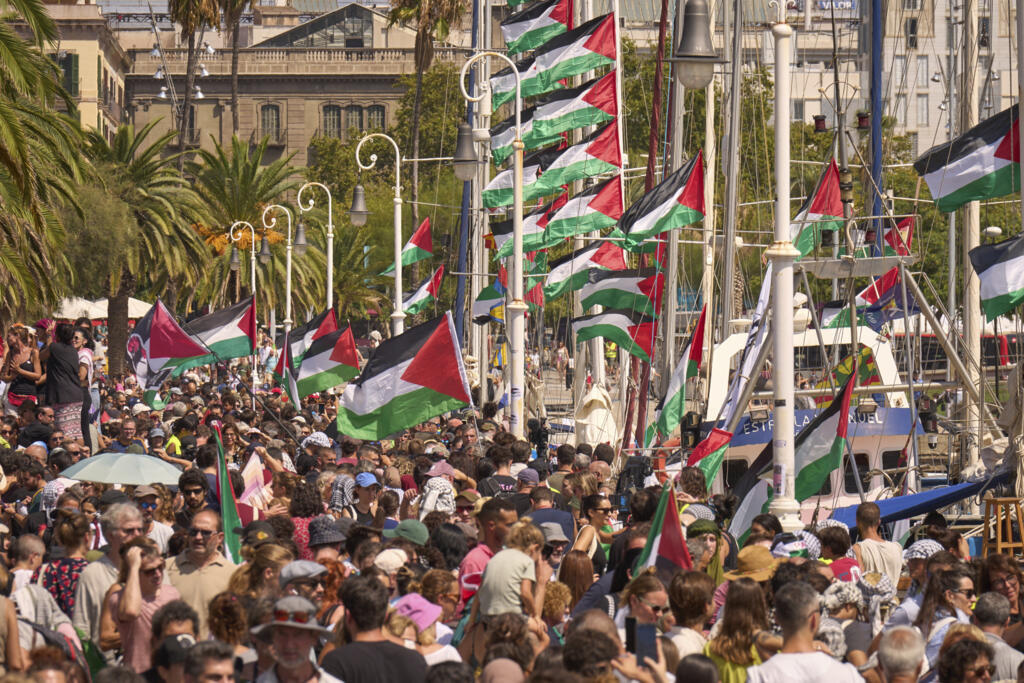
The Global Sumud Flotilla left as thousands gathered at the port to send off participants with heartfelt messages of solidarity, hope, and love for Palestine. They included the Catalan Committee in Solidarity with Ukraine, who displayed a banner reading “From Ukraine to Palestine, occupation is a crime.”

The flotilla is the biggest mission of its kind, with fifty boats set to join. Carrying vital humanitarian aid, it marks the  38th attempt in total, and the third in recent months, to break Israel’s blockade and open a lifeline to Gaza by organising a flotilla of aid. Sumud means “perseverance” in Arabic.

The first convoy will be joined by a second wave in Tunisia on 4th September. The organisers are demanding Israel lift the blockade, guarantee entry for aid, end the massacre and stop the genocide.

The mission is organised by four major coalitions, including groups that have participated in previous land and sea efforts to Gaza. They are the Global Movement to Gaza, a grassroots movement organising global solidarity actions to support Gaza and break the siege; the Freedom Flotilla Coalition, which has fifteen years of experience running sea missions, including past flotillas such as the Madleen and Handala; the Maghreb Sumud Flotilla, a North Africa-based initiative carrying out solidarity missions to deliver aid and support to Palestinian communities; and Sumud Nusantara, a people-led convoy from Malaysia and eight other countries, which aims to break the Gaza blockade.

“If Israel once again decides to violate international law and prevent humanitarian aid from getting into Gaza,” said Greta Thunberg at the press conference before departure, “our plan B is to come back even bigger. As simple as that.”

In June, twelve activists on board the Madleen were intercepted by Israeli forces 115 miles west of Gaza. Its passengers, who included Thunberg, were detained and eventually expelled. In July, 21 activists from ten countries were intercepted as they tried to approach Gaza in another vessel, the Handala.

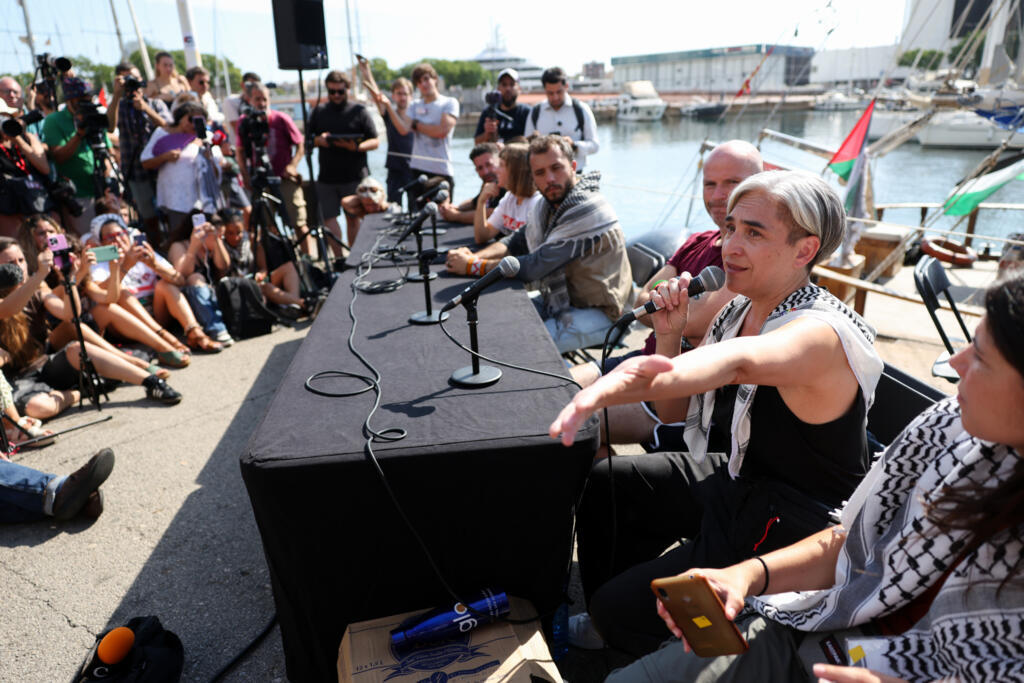
The latest mission has several high-profile figures tsking part. They include Mariana Mortagua, the National Coordinator of the Portuguese Left Bloc and MP, Irish actor Liam Cunningham, Spanish actor Eduardo Fernandez, and former Barcelona Mayor Ada Colau.

Also aboard is writer and activist Ewa Jasiewicz. Jasiewicz was in the Gaza Strip during the first Gaza War in 2008 and in 2010 was attacked at sea alongside other human rights activists by Israeli commandos while travelling in a ship convoy intending to breach the naval blockade of Gaza.

Follow the flotilla’s progress on X at https://x.com/GlobalSumudF and on Instagram at https://www.instagram.com/globalsumudflotilla/

Image: London protest, July 2024, c/o Labour Hub

Humanitarian aid flotilla sets sail for Gaza to ‘break illegal siege’

A flotilla carrying humanitarian aid and activists, including Swedish climate campaigner Greta Thunberg, left the port of Barcelona on Sunday to try to "break the illegal siege of Gaza", organisers said. Previous attempts by activists to deliver aid to the enclave by ship have failed, but a French left-wing MEP onboard hopes this larger fleet has a greater chance of success.


Issued on: 31/08/2025 - RFI

Demonstrators shout slogans on a boat ahead of the launch of a civilian flotilla bound for Gaza, aiming to break the Israeli blockade and deliver humanitarian aid in Barcelona, Spain, Sunday, Aug. 31, 2025. AP - Emilio Morenatti

Dozens of vessels set off from the Spanish port city with hundreds of people aboard, including delegations from some 44 countries.

The operation will take humanitarian aid, food, water and medicine to Gaza as Israel steps up its offensive in Gaza City.

The aim is to "open a humanitarian corridor and end the ongoing genocide of the Palestinian people", said the Global Sumud Flotilla. Sumud is the Arabic term for "resilience".

The group defines itself as an independent organisation which has no affiliation to any government or political party.

The humanitarian situation in Gaza has worsened in recent weeks.

The United Nations declared a state of famine in the territory this month, warning that 500,000 people face "catastrophic" conditions. Israel rejected the accusation as "a lie".


People crowd the dock in Barcelona ahead of the launch of a civilian flotilla bound for Gaza. AP - Emilio Morenatti


Also aboard were actors Susan Sarandon, Liam Cunningham, European lawmakers and public figures including former Barcelona mayor Ada Colau.

The convoy will be joined by other ships from ports in Italy, Greece, and Tunisia in the coming days as it makes its way through the Mediterranean to Gaza, organisers said.

It is expected to arrive at the coastal enclave in mid-September.

"The story here is about Palestine," Thunberg said at a press conference in Barcelona. "The story here is how people are being deliberately deprived of the very basic means to survive."

Thunberg, a member of the flotilla's steering committee, told AFP the goal was to open up a humanitarian corridor to break an "illegal" and "inhuman" blockade of Gaza.


Swedish climate activist Greta Thunberg, centre, speaks during a news conference in Barcelona ahead of the launch of a civilian flotilla bound for Gaza. AP - Hernan Munoz

Largest solidarity mission in history


Activists will also stage simultaneous demonstrations and other protests in 44 countries "in solidarity with the Palestinian people", Thunberg wrote on Instagram.

"This will be the largest solidarity mission in history, with more people and more boats than all previous attempts combined," Brazilian activist Thiago Avila told journalists in Barcelona last week.

"We understand that this is a legal mission under international law," Portuguese lawmaker Mariana Mortagua, who will join the mission, told journalists in Lisbon last week.

Former Barcelona mayor Ada Colau delivers a speech at the flotilla launch 
© Lluis GENE / AFP


Previous attempts


Israel has already blocked two attempts by activists to deliver aid by ship to Gaza, in June and July.

In June, 12 activists on board the sailboat Madleen, from France, Germany, Brazil, Turkey, Sweden, Spain and the Netherlands, were intercepted by Israeli forces 185 kilometres west of Gaza.

Its passengers, who included Thunberg, were detained and eventually expelled.

In July, 21 activists from 10 countries were intercepted as they tried to approach Gaza in another vessel, the Handala.

Among them was Emma Fourreau, an MEP with the hard-left France Unbowed party. She told RFI she was more hopeful this time.

"You can see that the scale has changed, that the balance of power is totally different. Maybe we can get some boats through... to break this blockade."

Activists are calling for their countries to protect the flottilla.

The Spanish government says it will "deploy all of its diplomatic and consular protection to protect our citizens" sailing with the flotilla, the country's Foreign Minister Jose Manuel Albares said Saturday.

Madrid last year recognised Palestine as an independent state.

Israel launched its massive offensive in Gaza following the 7 October attack by Hamas in which 1,200 people were killed and 251 taken as hostages. At least 63,000 Palestinians have been killed in the war since then, mostly civilians, according to the territory's Hamas-run health ministry.

(with AFP)


'Massive' Sudan landslide kills more than 1,000 in Darfur, rebel group says


A rebel group said Monday that a "devastating" landslide had engulfed a village in war-torn Sudan's Darfur region, killing "all village residents" – more than one thousand people – except for one person, and appealed for the "urgent" intervention of international aid organisations.


Issued on: 02/09/2025 -
By: FRANCE 24


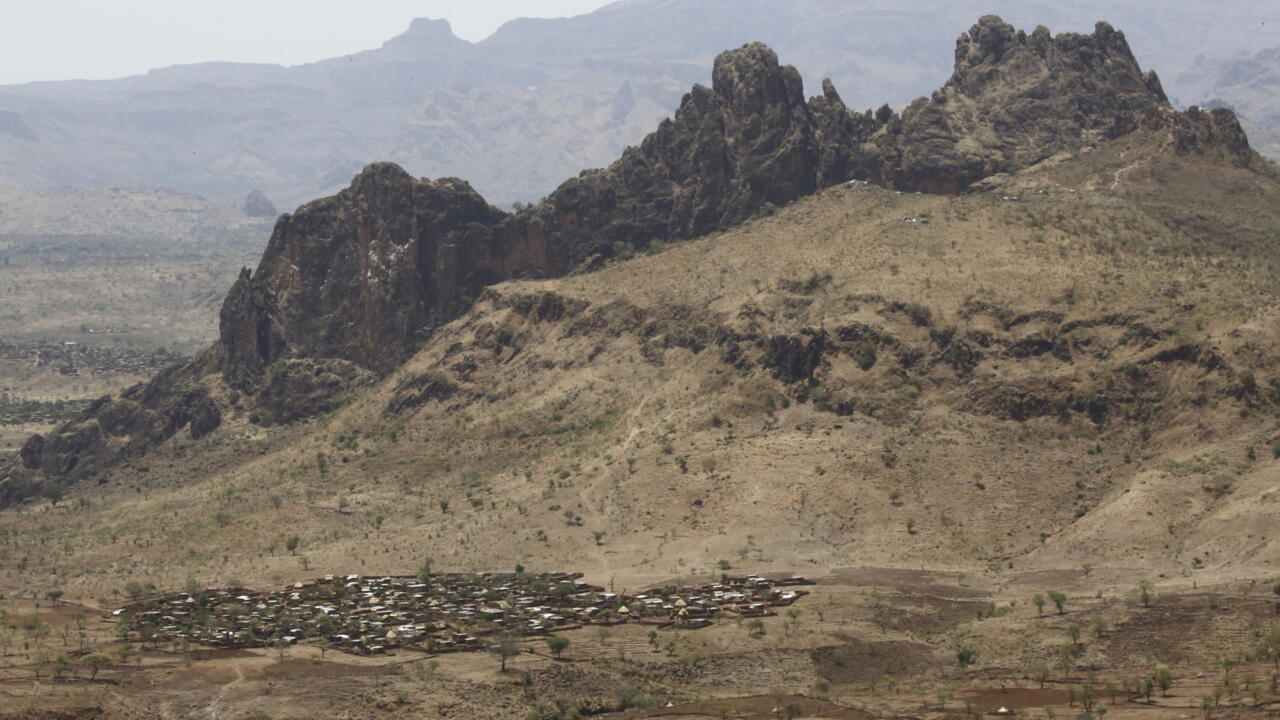
A picture taken from a helicopter on June 19, 2017 shows an aerial view of the war-torn town of Golo in the thickly forested mountainous area of Jebel Marra in central Darfur. 
© Ashraf Shazly, AFP


A "massive" landslide in Sudan's western Darfur region has flattened an entire mountain village and killed more than 1,000 people, a rebel group that controls the area said late Monday, adding there was just one survivor.

The disaster struck Sunday after days of heavy rain, devastating the village of Tarasin in the Marra mountains, the Sudan Liberation Movement/Army (SLM) said in a statement.

"Initial information indicates the death of all village residents, estimated to be more than one thousand individuals, with only one survivor," the group said.

The "massive and devastating" landslide "completely destroyed" part of a region known for citrus production, it added.

The group appealed to the United Nations and other aid organisations for help recovering the dead still buried under dirt and debris.

Sudan is embroiled in a bloody civil war between the army and paramilitary Rapid Support Forces (RSF), which has plunged the country into one of the world's worst humanitarian crises.

The SLM has mostly stayed out of the fighting, but controls parts of Sudan's tallest mountain range.

Darfur's army-aligned governor, Minni Minnawi, called the landslide a "humanitarian tragedy that goes beyond the borders of the region".

"We appeal to international humanitarian organisations to urgently intervene and provide support and assistance at this critical moment, for the tragedy is greater than what our people can bear alone," he said in a statement.

Much of Darfur – including the area where the landslide occurred – remains largely inaccessible to international aid organisations due to ongoing fighting, severely limiting the delivery of urgent humanitarian assistance.
Hunger crisis

Since April 2023, Sudan has been ravaged by a war that erupted with a power struggle between army chief Abdel Fattah al-Burhan and his former deputy, RSF commander Mohamed Hamdan Daglo.

In a series of offensives, Burhan's forces regained central Sudan this year, leaving the RSF with control over most of Darfur – where it has conquered all but one state capital, El-Fasher – and parts of southern Kordofan.

The fighting has killed tens of thousands and displaced millions, including about four million from the capital alone.

Hundreds have been reported killed in recent months, and civilians in El-Fasher say the paramilitaries are currently waging their fiercest ever assault on the North Darfur state capital.

The war has decimated the northeast African country's infrastructure and created what the UN describes as the world's largest displacement and hunger crises.

Approximately 10 million people are currently displaced within Sudan, while an additional four million have fled to neighbouring countries, according to the UN.

(FRANCE 24 with AFP)
WIND POWER

‘Europe’s overlooked power plant’: Why Poland is leaning toward the Baltic Sea

Explainer


Poland, long considered a central European country, is starting to look north toward its Nordic and Baltic neighbors. The shift is driven by energy and security concerns, with the Baltic Sea representing a potential green industry centre, according to an expert.


Issued on: 01/09/2025 - 
FRANCE24
By: Sonya CIESNIK


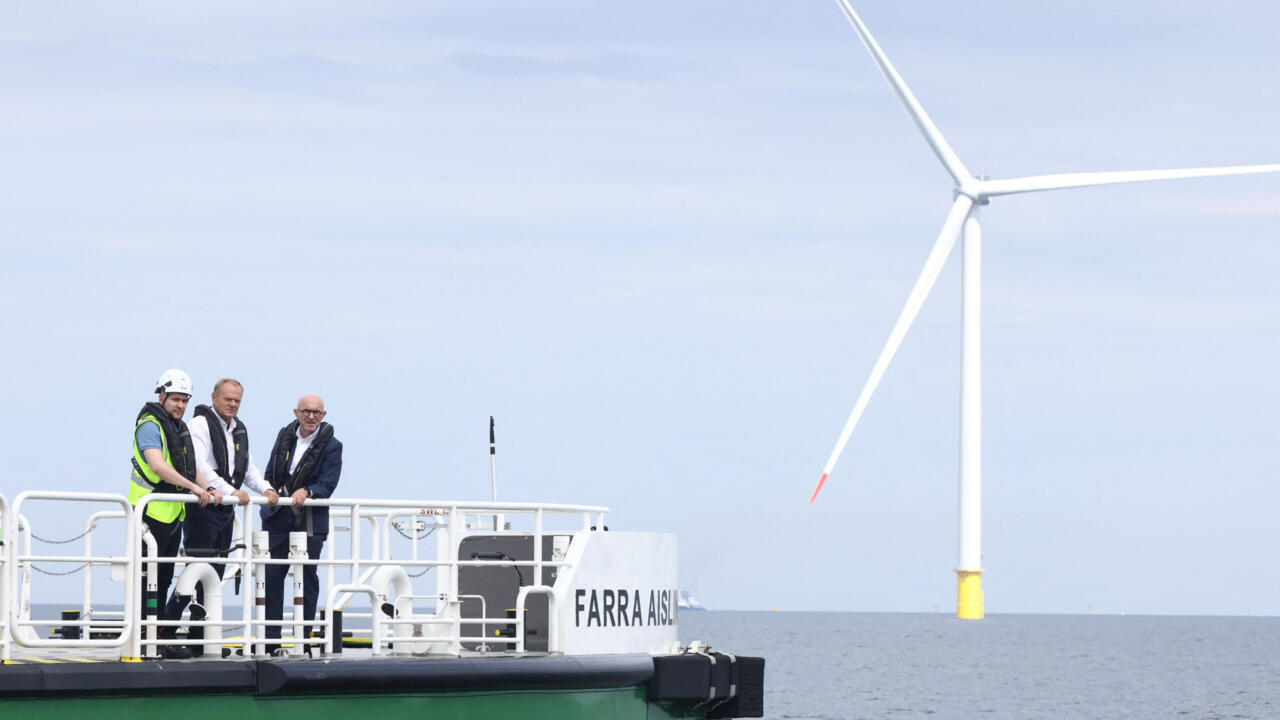
Polish Prime Minister Donald Tusk and Orlen CEO Ireneusz Fafara visit the construction site of offshore Baltic Power wind farms in the Baltic Sea, off the coast of the city of Leba, Poland, August 8, 2025. © Lukasz Glowala, Reuters


The massive turbines rise from the shallow waters of the Baltic Sea, powered by a persistent maritime breeze. Located 20 kilometres off the Polish resort town of Leba, the turbines installed by Baltic Power will supply energy to some 1.5 million households.

As Poland's energy transition takes hold, and renewable energy overtakes coal for the first time, the country is multiplying its energy investments in the Baltic region.

To understand Poland’s shift to the north, one might look east. Poland’s coal mines are “a legacy of Soviet times”, said Zuzanna Nowak, an energy and climate analyst from Opportunity, a foreign-policy think-tank in Warsaw. “Coal was reasonable to exploit and sell, and it was a natural element of the Polish energy system.”

The changes on the global climate scene, including the Paris Agreement of 2016, “made us realize we cannot only use coal, but other energy sources”, said Nowak. “It was normal for us to get gas from Russia, because of the transit pipes from Russia to Germany.”

Yet tensions over Ukraine before Russia’s full-scale invasion made Polish and EU leaders wary over importing Russian energy supplies. “Crimea [the Ukrainian peninsula annexed by Russia in 2014] was a wake-up call. We started preparations for a liquid natural gas (LNG) terminal,” said Nowak.

Moscow’s February 2022 invasion of Ukraine spurred a process that had already been set in motion years earlier. It was “a breakthrough year for the Polish gas sector”, when Russian gas, previously accounting for 87% of all gas imported to Poland, plummeted to 20%, according to a report released by Opportunity.


Russian energy out, Nordic energy in

The option was to turn north, which was “a natural choice”, according to Nowak.

“Not only Poland but the EU realized that there had to be alternatives to Russian energy sources,” she said. A Baltic Pipe offshore pipeline opened in the fall of 2022 with a route running from Norway via Denmark through the Baltic Sea to Poland.

A gas interconnection between Poland and Lithuania was also established, “boosting energy security in the region by connecting the Baltic and Finnish with the Polish markets”, announced the European Commission in 2022.

The sea is also helping Poland with the construction of nuclear power plants. While not ideal for vacationers, its cold waters are amenable for reactor cores. Poland’s first nuclear power plant, developed by a consortium of US companies and scheduled to go into operation in 2030, will be located near the Baltic Sea coast.

Poland’s commitment to the Baltic and Nordic countries is as much about energy as about foreign policy. "Poland can’t rely on our central European neighbors when it comes to dealing with energy,” said Nowak. “The Visegrád Group (V4), made up of Poland, the Czech Republic, Slovakia and Hungary, has a diversity of perceptions when it comes to analyzing the threat of Russia, a diversity of cooperation pathways and a diversity of reliance on external suppliers – Poland didn't follow the same path.”

While current political conditions might make it hard for V4 to function at a political level, Nowak believes that Poland could “guarantee” the southern countries access to the sea, “not just for energy purposes but also for all other goods that might be exported”.
A zone of hybrid confrontation

The massive investment for energy infrastructure in and around the Baltic Sea is not without its risks. A ship believed to be part of Russia’s “shadow fleet” was seen performing suspicious maneuvers in May near a power cable connecting Poland and Sweden. In another case, Finnish prosecutors charged the captain and two officers of another ship linked to Russia with sabotage, after it was found dragging an anchor along the Gulf of Finland seabed last December.

These efforts interfere with Poland's "major projects, both onshore and offshore, including not just our wind power project but also our nuclear power plant”, said the Polish Prime Minister Donald Tusk after the incident in May.

The Baltic Sea is more monitored today than ever before, with new NATO military activity in the area to protect critical infrastructure. “This isn’t just about energy strategy but industrial strategy – it’s about jobs, ports, shared expertise. The Baltic Sea can be a shared engine for the energy transition, but it’s not yet used to its full potential,” said Nowak.
Bolsonaro coup trial enters verdict and sentencing phase as US-Brazil ties fray


Brazil's Supreme Court on Tuesday began sessions to decide if far-right former president Jair Bolsonaro is guilty of plotting a coup to hold on to power, with one justice saying Bolsonaro tried to install a "real dictatorship" after losing the 2022 election. US President Donald Trump has stoked tensions around the courtcase, describing the trial as a "witch hunt" and slapping high tariffs on Brazilian exports in protest.


Issued on: 02/09/2025 - 
By: FRANCE 24

Former Brazilian president Jair Bolsonaro risks more than 40 years in prison if convicted
. © Evaristo Sa, AFP file photo
05:05


Brazil's Supreme Court began verdict deliberations Tuesday in the trial of former president Jair Bolsonaro, the Donald Trump ally accused of plotting a coup to retain power after he lost the 2022 election.

In opening comments for the multi-day session, presiding Justice Alexandre de Moraes said Bolsonaro aimed to install a "real dictatorship" when he allegedly launched the uprising.

Referring to extraordinary pressure put on Brazil by the US president, as well as domestic tensions, de Moraes said the top court would operate "independent from internal or external threats and coercion."

Bolsonaro, 70, faces a prison sentence of more than four decades if convicted of conspiring to cling onto power after losing to leftist rival and current President Luiz Inacio Lula da Silva.

Verdicts in his case and those of seven co-defendants, including several former ministers and generals, are expected by September 12.

The former army officer, who is under house arrest, was not expected to appear in the Brasilia courtroom.

It is the first trial of a former Brazilian president on coup charges and has sparked tensions across Latin America's biggest country – stoked by Trump's highly unusual campaign in support of the leader once dubbed "Trump of the Tropics".

Democracy test or show trial?


Five justices are deliberating and a simple majority of three is needed for a guilty verdict.

A guilty verdict could scupper Bolsonaro's hopes of making a spectacular Trump-style comeback from a criminal conviction to the country's top job.

The case has deeply divided the country between those in favour, who view it as a test of the vitality of Brazil's democracy 40 years after the end of a military dictatorship, and those who see it as a political show trial.

Trump has denounced a "witch hunt" and imposed a 50-percent tariff on a variety of exports from Brazil, plunging relations between the two allies into crisis. The US Treasury has also sanctioned de Moraes.

Bolsonaro's supporters welcome Trump's attacks.


"Thanks to these measures, they (the accused) see that they are not alone, that there is someone above them who can make a difference," Carlos Sergio Alcantara, a businessman who took part in a Bolsonaro solidarity rally Sunday, told AFP.

Supporters of Jair Bolsonaro have held several rallies to show solidarity with him during his trial. © Evaristo Sa, AFP

Storming seat of power


On January 8, 2023, mobs of Bolsonaro supporters stormed the Supreme Court, presidential palace and parliament, calling for the military to depose Lula, who had just been inaugurated.

Bolsonaro was in the United States at the time but has been accused of instigating the unrest.

The violence bore uncanny similarities to the January 6, 2021 attack by Trump supporters on Congress in Washington in a failed attempt to prevent certification of Joe Biden's presidential election win. Trump eventually came back to retake the White House in the 2024 election.

Prosecutors accuse Bolsonaro of leading a "criminal organization" that conspired to prevent Lula taking office, saying that his attacks on Brazil's electronic voting system months before the vote aimed to discredit the election.

They charge that, after his defeat, Bolsonaro planned to declare a state of emergency and call new elections but failed to win the support of the military top brass.

Prosecutors also allege that he knew of a plan to assassinate Lula, his vice president Geraldo Alckmin and Moraes, which was later abandoned.

Bolsonaro denies all the charges and claims he is the victim of political persecution.

Bid for amnesty


Moraes was opening proceedings by summarizing the evidence, after which the prosecution and defense were to present closing arguments.

The judges will vote next week to convict or acquit Bolsonaro and his co-accused before considering possible sentences.

If Bolsonaro is convicted on five charges and given the maximum sentence for each crime, he could be imprisoned for 43 years.

But he can appeal the verdict to a full chamber of the Supreme Court.

His allies believe his conviction to be a foregone conclusion and are counting on Congress to pass an amnesty law to save him from prison.

(FRANCE 24 with AFP)
New 5.2 quake hits Afghanistan as rescuers scramble to find survivors


Another earthquake hit eastern Afghanistan on Tuesday near to where a 6.0 magnitude quake on Sunday night killed more than 1,400 people. Villagers joined rescue workers in a desperate search for survivors as the disaster threatens to worsen Afghanistan's ongoing humanitarian crisis.


Issued on: 02/09/2025 - 
By: FRANCE 24

An injured person is carried to a military helicopter evacuating victims of an earthquake in Mazar Dara in Afghanistan's Kunar province on September 1, 2025. © Wahidullah Kakar, AP
01:46


A fresh 5.2-magnitude earthquake hit the east of Afghanistan on Tuesday, jolting a region still struggling with the aftermath of a powerful quake at the weekend that killed 1,400 people.

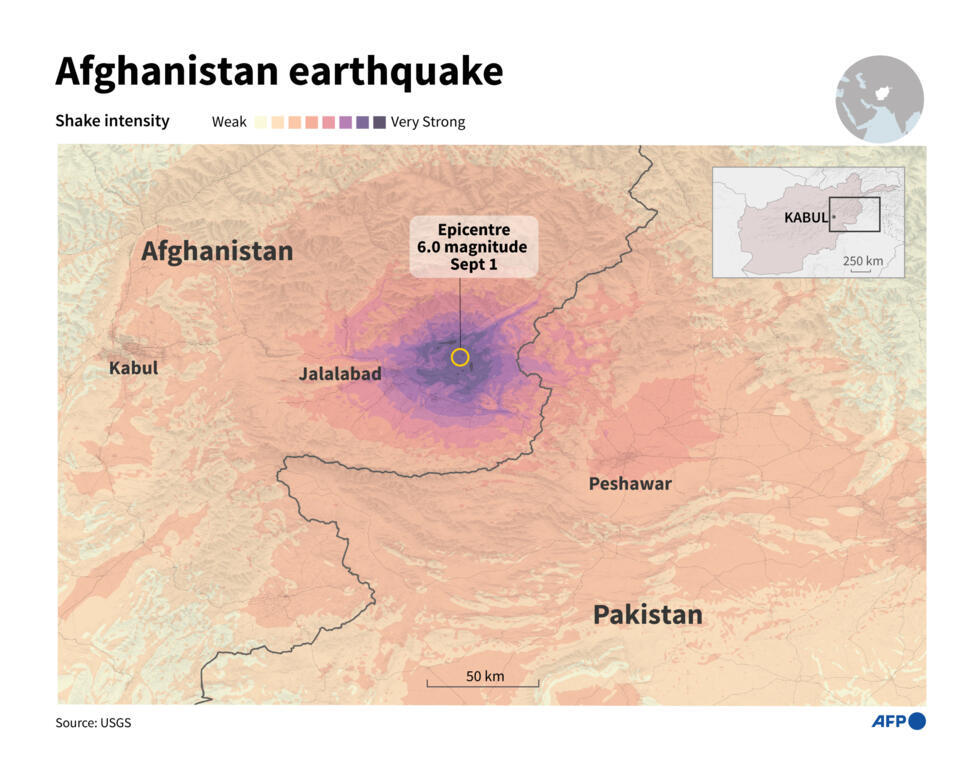
The epicentre of the tremor was close to where a magnitude 6.0 earthquake hit late Sunday night, devastating remote areas in mountainous provinces near the border with Pakistan.

The "quake was felt in the same areas which were affected in Kunar (province) in the first earthquake," Ehsanullah Ehsan, the disaster management spokesman in the hard-hit province, told AFP.

"These aftershocks are constant, but they have not caused any casualties yet."


The quake was reported by the US Geological Survey late Tuesday.

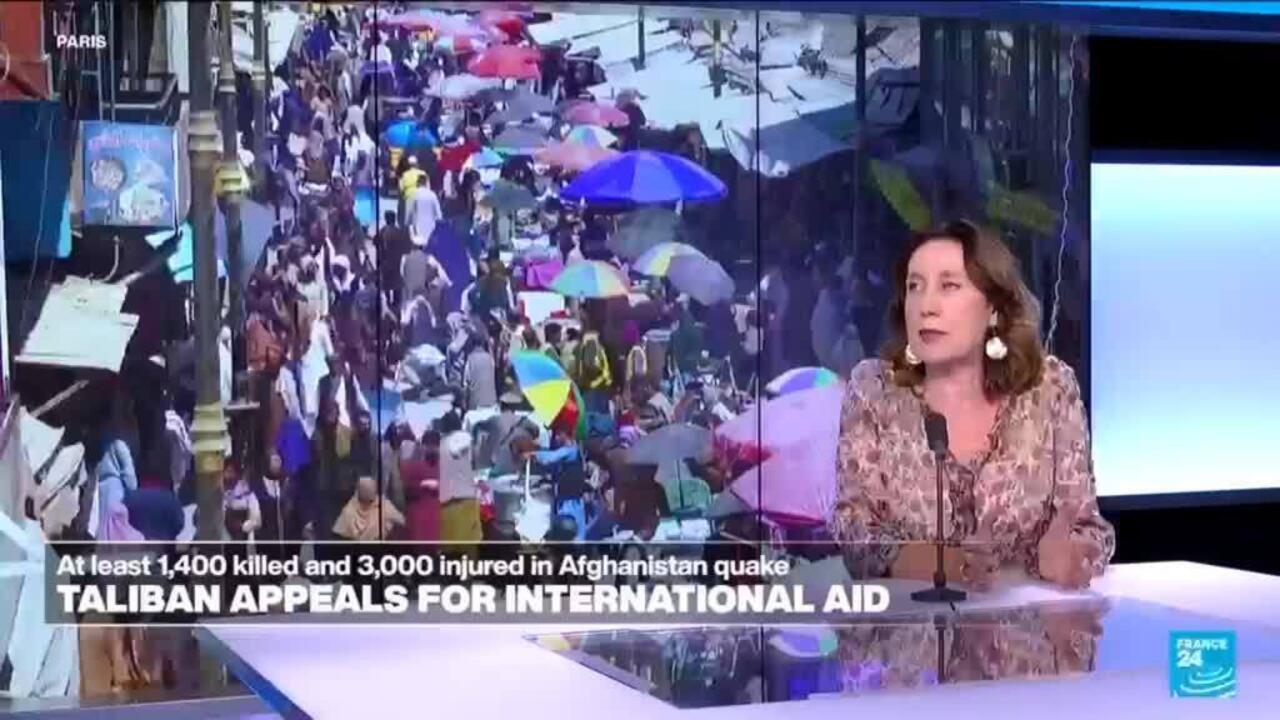
The number of victims from Sunday's earthquake has mounted steadily, with 1,411 people dead and 3,124 injured in Kunar alone, chief Taliban government spokesman Zabihullah Mujahid said on Tuesday, making it one of the deadliest to hit the country in decades.

Read moreEarthquake in eastern Afghanistan kills hundreds, destroys villages

Another dozen people were killed and hundreds injured in neighbouring Nangarhar province.
The earthquake struck Afghanistan's eastern provinces. © Jonathan Walter, Jean-Michel Cornu, AFP


Afghanistan is one of the poorest countries in the world, with dwindling aid since the Taliban seized power in 2021 undermining its ability to respond to disasters.

The devastation could affect "hundreds of thousands", said United Nations humanitarian coordinator for Afghanistan Indrika Ratwatte.

Rescuers searched through the night and all day for survivors in the rubble of homes flattened in Kunar, where more than 5,400 houses were destroyed, government spokesman Hamdullah Fitrat said on X.

Many of the worst-affected areas were still unreachable by road, but emergency facilities were being set up and multiple countries had announced they would provide aid, Fitrat said.

The European Union said it was sending 130 tonnes of emergency supplies and providing one million euros ($1.2 million) to help victims of the deadly quake.

The bloc has become one of the key aid donors to Afghanistan after the United States – previously the country's largest aid provider – cut all but a slice of its assistance after President Donald Trump took office in January.

The aid cuts risk impeding the response to the earthquake, sector experts told AFP, in a country already facing one of the world's worst humanitarian crises after decades of conflict.

"The scale of need far exceeds current resources," the International Federation of Red Cross and Red Crescent Societies said in a statement, noting that funding cuts had hit humanitarian air services, "limiting access to remote communities".

© France 24
05:07


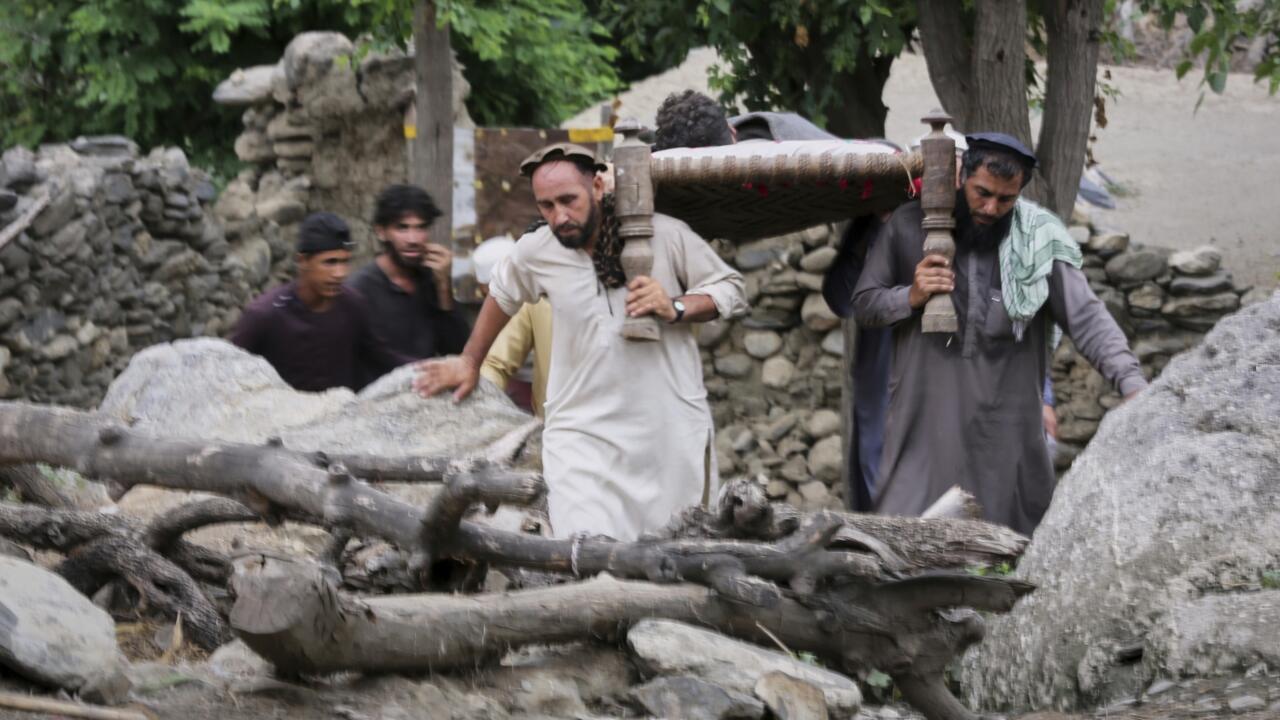
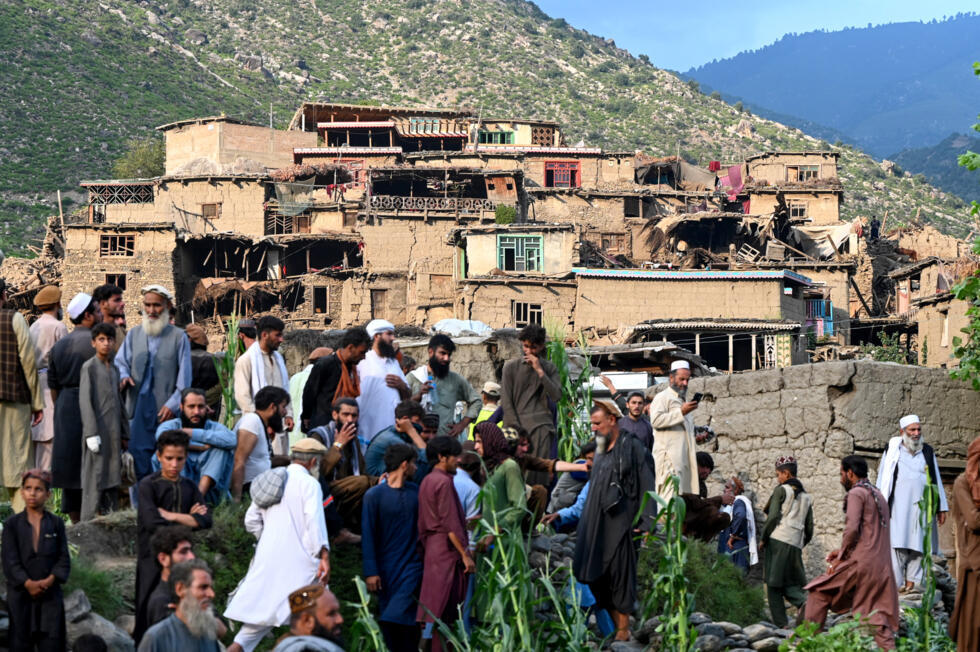
Emergency workers struggled to reach mountainous areas and villagers joined the rescue efforts, using their bare hands to clear debris from mud and stone homes built into steep valleys.

Obaidullah Stoman, 26, who travelled to the village of Wadir to search for a friend, was overwhelmed by the level of destruction.

"I'm searching here, but I didn't see him. It was very difficult for me to see the conditions here," he told AFP.

"There is only rubble left."

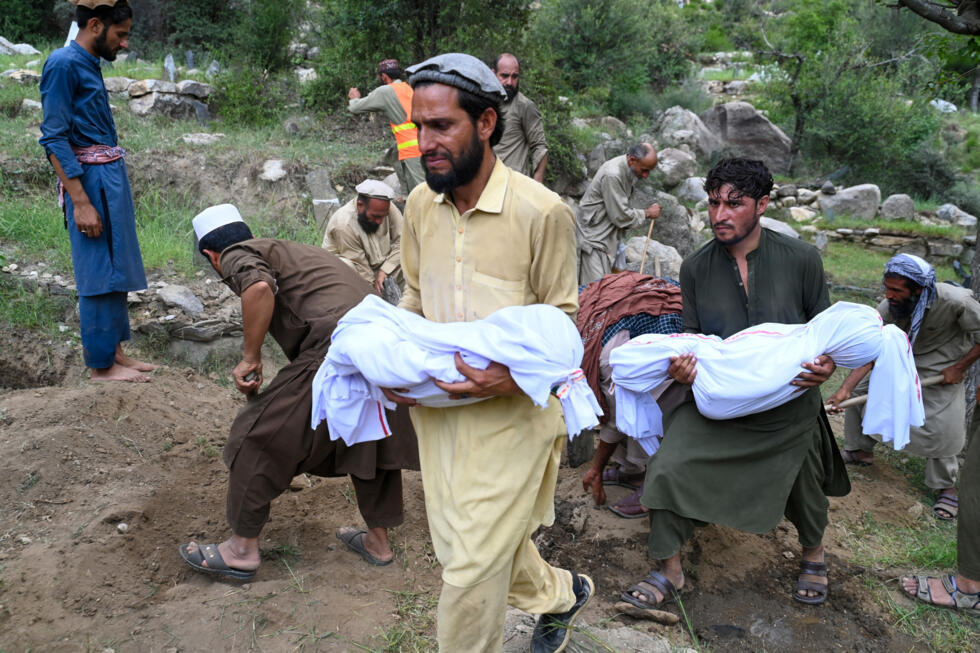
The dead, including children, were wrapped in white shrouds by villagers who prayed over their bodies before burying them.

The bodies of two children are taken for burial in Nurgal. © Wakil Kohsar, AFP

'Whole house collapsed'

The earthquake epicentre was about 27 kilometres (17 miles) from Jalalabad, according to the USGS, and struck just eight kilometres below the Earth's surface.

Such relatively shallow quakes can cause more damage, especially since the majority of Afghans live in mud-brick homes vulnerable to collapse.
Thousands of mud-brick homes were damaged in the magnitude six quake. © Wakil Kohsar, AFP

Many of those living in the quake-hit villages were among the more than four million Afghans forced back to the country from Iran and Pakistan in recent years, many coming through the Torkham border crossing in Nangarhar province.

Rahmatullah Khaksar, who heads the emergency ward at a hospital in Jalalabad, Nangarhar's provincial capital, said they had received 600 injured since Sunday night.

"Most of the patients were trauma patients. They were hit on the head, back, abdomen and legs," he told AFP, adding they had cleared a ward for unidentified patients "so they will stay there until they find their families".

Afghanistan is frequently hit by earthquakes, especially in the Hindu Kush mountain range near the junction of the Eurasia and India tectonic plates.

Western Herat province was devastated in October 2023 by a 6.3-magnitude earthquake, which killed more than 1,500 people and damaged or destroyed more than 63,000 homes.

A 5.9-magnitude quake struck the eastern province of Paktika in June 2022, killing more than 1,000 people and leaving tens of thousands homeless.

(FRANCE 24 with AFP )


Vietnam marks 80 years of independence from France with parade of 40,000

Thousands packed the streets of Hanoi Tuesday to watch around 40,000 troops and civilians march in a military parade to mark Vietnam's 80 years of independence from French colonial rule.


Issued on: 02/09/2025 - 
By: FRANCE 24


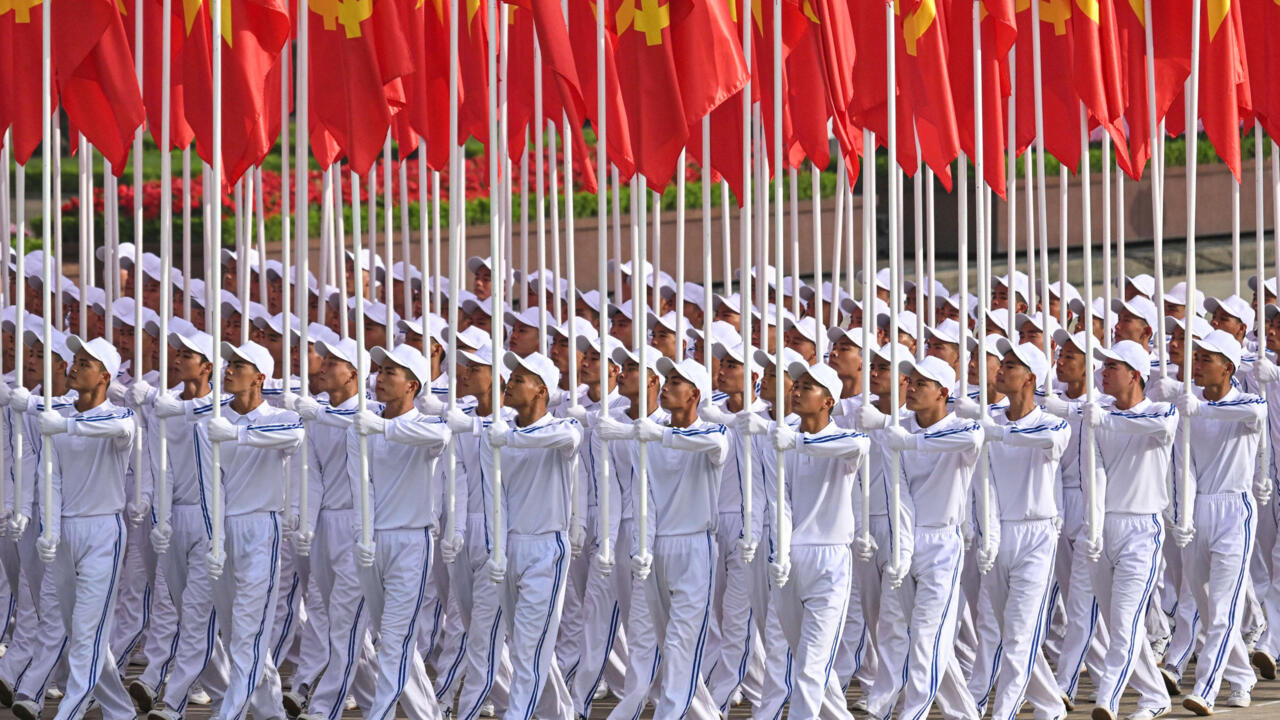
Men carry Vietnamese national and party flags during a parade marking Vietnam's 80th National Day celebrations in Hanoi on September 2, 2025. © Nhac Nguyen, AFP

Vietnam held its largest-ever public celebrations on Tuesday to mark 80 years since the declaration of independence, with legions of lock-stepped patriots marching under fluttering flags.

Around 40,000 troops and civilians began parading in the capital Hanoi after dawn, feting the date when communist revolutionary Ho Chi Minh declared a "Democratic Republic of Vietnam" free from French rule in 1945.

Tanks, drones and missile batteries filed through the streets as helicopters and planes streaked above crowds which were hundreds-of-thousands strong in the sweltering morning sun.

Pham Thanh Van, a 78-year-old veteran, wore his military uniform pinned with medals earned fighting American troops as he watched from a front row seat at the Ho Chi Minh mausoleum.


"This will be my final memory. Don't forget us," he told AFP. "I feel so proud. Independence brought development and prosperity to the country. I felt it worth fighting for."

Hanoi's top leader To Lam marked the top of the parade with a speech as China's number-three official – National People's Congress Chairman Zhao Leji – looked on, alongside influential former Cambodian prime minister Hun Sen and Cuban President Miguel Diaz-Canel.
Tanks, drones and missile batteries filed through the streets as helicopters and planes streaked above massive crowds. © An Pham, AFP
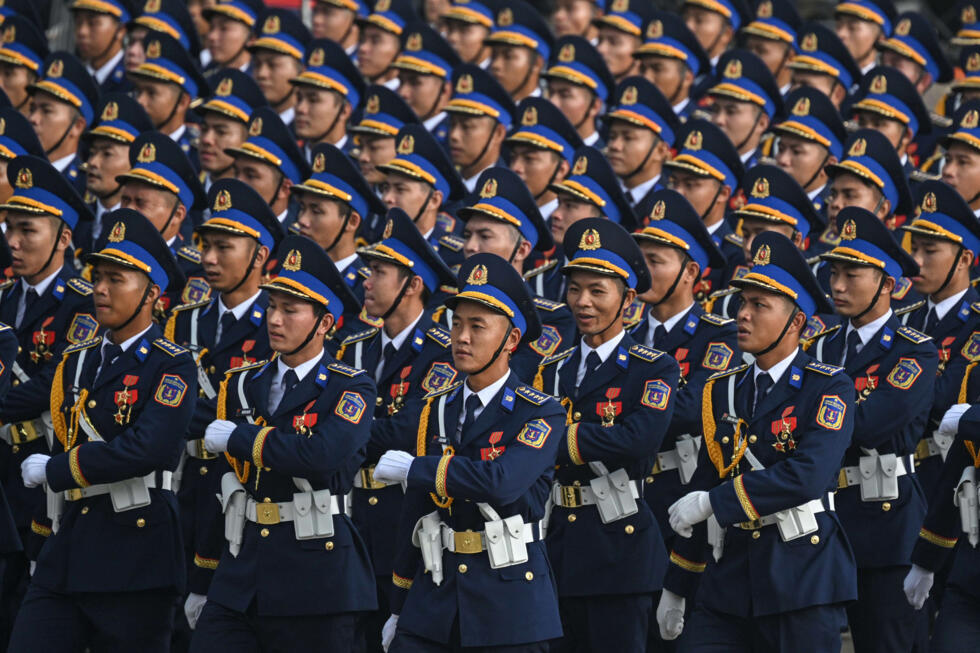
"In this sacred moment, we respectfully remember our ancestors," Lam said.

"Our nation has overcome countless difficulties and challenges. Our country has transformed from a colony into an independent and unified nation, steadily advancing towards modernity and deep integration."

Chinese and Russian troops marched alongside their Vietnamese counterparts in the procession lasting around two hours, beginning with a squadron of helicopters trailing the national yellow-star flag and hammer-and-sickle banners over the capital.

Underneath, youngsters in traditional dress twirled giant floral tributes after artillery fired off a ceremonial salute, and an honour guard of police goose-stepped in pristine dress whites.

"It showcased Vietnam's strength," said impressed spectator 34-year-old Tran Nguyen Trung Chien. "We the people welcomed them all – this showcased Vietnam's high patriotism.

Economic transformation

The tightly-choreographed celebrations out-scaled those staged in April to mark the 50th anniversary of the fall of Saigon, when communist North Vietnam sealed the defeat of the US-backed South.

Read moreFall of Saigon, 50 years on: A tale of war, loss and renewal

Around 40,000 troops and civilians began parading in the capital Hanoi after dawn. © Nhac Nguyen, AFP


The festivities, which state media called "unprecedented in scale", also broke the record 30,000-strong show of force that the one-party state mustered for emancipation celebrations back in 1985.

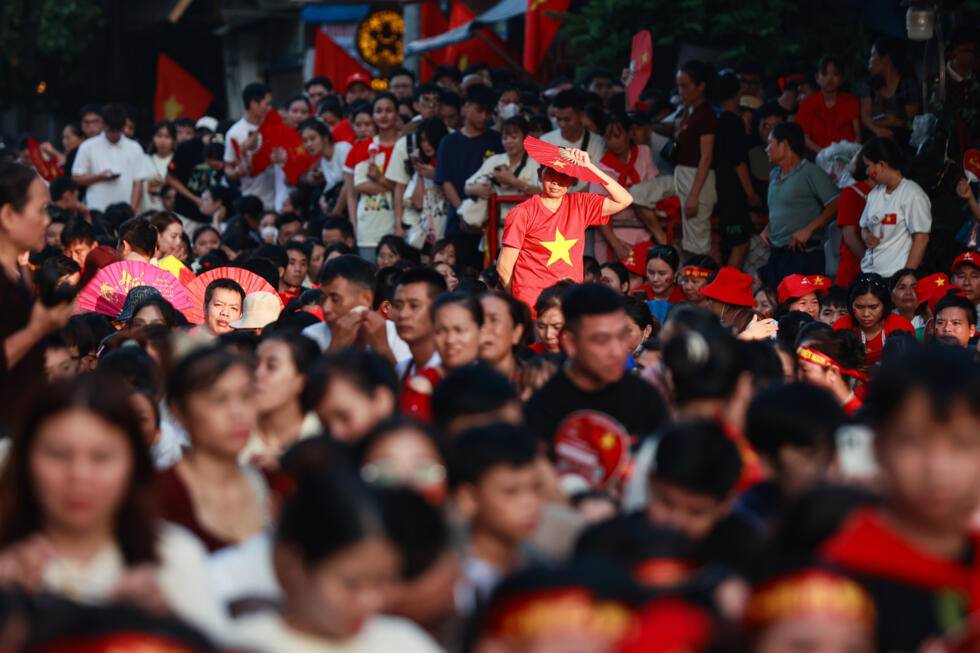
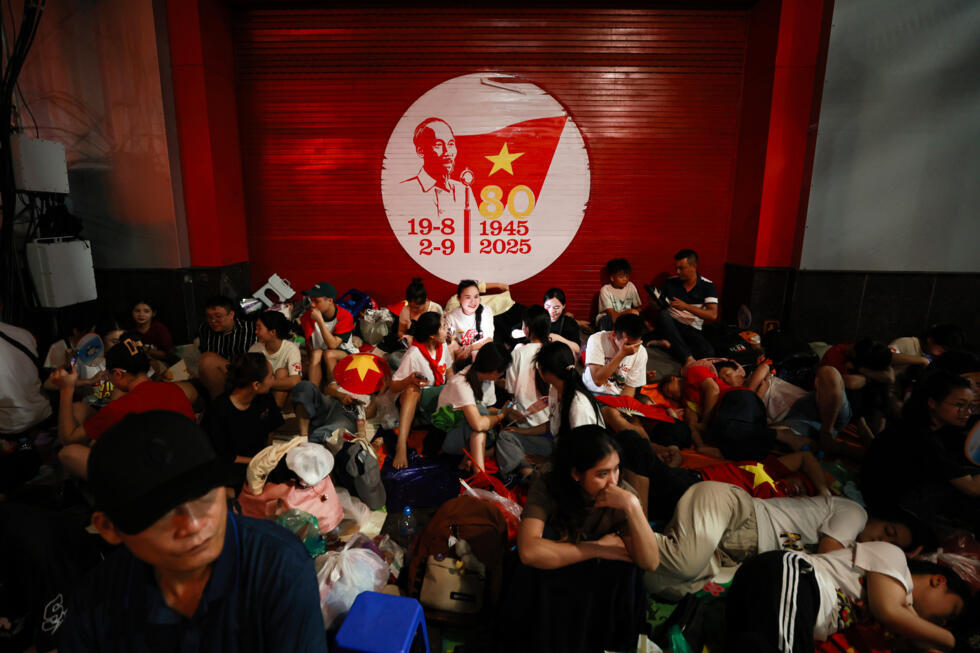
University student Vu Thi Trang staked out her position to spectate from midnight on Sunday – a full 30 hours before the parade's start – her spirits undampened by monsoon season downpours.

"Something inside just pushed me to be here," the 19-year-old told AFP on Monday.

"I am grateful for the sacrifices of the previous generation, so that we have peace and freedom to grow up."

French influence is still visible throughout Vietnam – in the colonial facades of Hanoi's mansions, in its fusion cuisine and schools where the French language is taught as a marker of prestige.

But the celebrations focussed on Vietnam's independent accomplishments, including its economic transformation into a global manufacturing powerhouse.

People waited overnight to reserve their spot in Hanoi for independence celebrations. © An Pham, AFP

Ho Chi Minh's 1945 independence proclamation was not recognised by France, which ruled Vietnam – as well as neighbouring Laos and Cambodia – as colonial assets prized for their rubber, rice and coffee.

But a disastrous military defeat at Dien Bien Phu in 1954 led to France's full-scale retreat from the region.


"We gained independence through the blood and sweat of previous generations," said 36-year-old flag vendor Dang Khoa on Saturday.

(FRANCE 24 with AFP)


Paint thrown at Sagrada Familia in protest of Spanish government's inaction to devastating wildfires

Exterior image of the Sagrada Família.
Copyright Pexels


By Maria Muñoz Morillo
Published on 

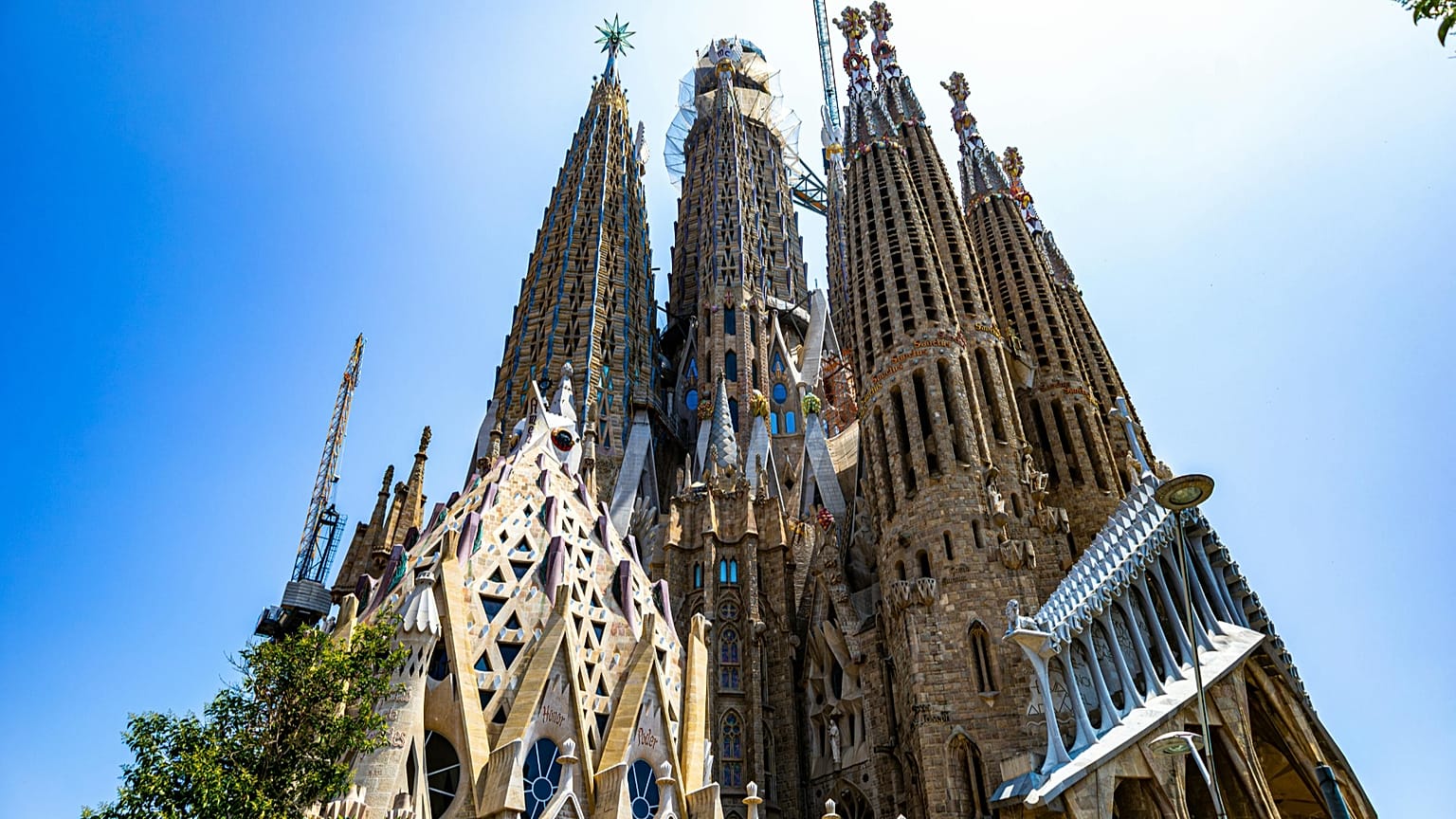
Activists from the organisation Futuro Vegetal (Vegetable Future) threw red and black dyed powder against the façade of the Sagrada Familia in Barcelona in protest against the management of politicians during the serious fires that devastated a large part of Spain this summer.

Two activists from the organisation Futuro Vegetal threw red and black powder against the façade of one of Spain's most famous monuments: the Sagrada Familia in Barcelona. The organisation is protesting against the management of the fires that have devastated thousands of hectares of land in Spain this summer.

The protesters were arrested and released after paying a fine of €600.

Check out the moment below:


Futuro Vegetal explained that their action aims to denounce "the complicity of the different governments in the fires that have ravaged the Peninsula this summer" - alluding to the political disputes during the serious fires.

The organisation criticises the "lack of government measures against the climate crisis and its repercussions on the fires that have devastated the Peninsula and a large part of Europe".

Luna Lagos, spokesperson for the association, lamented that "politicians, bankers and CEOs of multinationals continue to gamble our lives to multiply their profits". They also blame industrial livestock farming for being indirectly responsible for around 70% of forest fires.

"Governments are prioritising irrigating livestock farms with public money instead of protecting people who have lost their homes," says Futuro Vegetal. "They subsidise ecocidal industries with our taxes while condemning essential workers such as firefighters and health workers to precariousness."