Tuesday, September 02, 2025

Russia and China Ink Deal for Massive New Gas Pipeline

Russia’s gas giant Gazprom on Tuesday signed an agreement with China’s state energy firm CNPC to build a second huge natural gas pipeline from Russia to China, Gazprom’s CEO Alexey Miller said

Russia bets on selling increased volumes of energy products to China after losing Europe as a key oil and gas export market following Putin’s war in Ukraine.

Gazprom and CNPC signed today a “legally binding memorandum” on the construction of the Power of Siberia 2 gas pipeline from Russia to China via Mongolia, Russian media quoted Miller as telling reporters in Beijing. 

Power of Siberia 2 has been a topic of discussions between Russia and China for years but no progress has been made so far. 

Currently, Russia supplies pipeline gas to China via the Power of Siberia pipeline, one of the biggest projects recently completed by Gazprom and the first conduit for Russian gas to China.  

The Power of Siberia 2 pipeline is designed to ship gas from Russia’s Western Siberia Altai region to northeast China via Mongolia.  

An agreement on the Power of Siberia 2 has been elusive due to some sticking points, including the price at which Gazprom will deliver the gas.

The memorandum signed on Tuesday doesn’t include details and issues such as prices or capacity commitments, so the key sticking points remain. 

“It should be understood that the project of the Power of Siberia 2 gas pipeline construction and the Soyuz Vostok gas pipeline construction, the transit gas pipeline via Mongolia and related gas transport facilities in China, it will now be the largest, having the greatest scale and the most capital-intensive project in the gas industry globally,” Russian news agencies quoted Miller as saying on Tuesday. 

Russia touted the project as the biggest ever in the global gas industry, while China has yet to confirm the deal, which is light on details.  

Miller himself acknowledged that Russia and China have yet to discuss issues related to financing and the price of supply.  


Sanctioned Russian Arctic LNG 2 Project Is Shipping Cargoes

The sanctioned Arctic LNG 2 project in Russia has accelerated cargo loadings and shipments in recent weeks, in a sign that the facility has now found its first customer after more than a year, and new buyers may have emerged—all in China.

Arctic LNG 2 is under sanctions by the United States, the EU, and the UK, which have also blacklisted many of the LNG vessels thought to be servicing the project’s output. The Russian export project has struggled for more than a year to find any buyer willing to risk secondary sanctions.

It appears that Arctic LNG 2 is done waiting and is now sending off loaded LNG cargoes, which could be testing the Trump Administration’s willingness to sanction Russia’s LNG customers in China.

Last week, a sixth LNG tanker loaded from the project in the Arctic this year, Reuters reported on Tuesday, citing vessel-tracking data by Vortexa and Kpler.

In recent weeks, signs have emerged that Arctic LNG 2 is coming back to life after a year of no activity and is looking for buyers in Asia.

La Perouse, a tanker sanctioned by the UK, loaded LNG and departed from Arctic LNG 2 on August 30-31, according to the data cited by Reuters.

Last week, a cargo from the facility docked at a Chinese import terminal in what appears to be Arctic LNG 2, testing the current U.S. willingness to enforce sanctions. The Arctic Mulan LNG tanker arrived at the Beihai LNG terminal, and China received the cargo, making it the first-ever actual exported cargo out of the Russian facility.

Six laden vessels are in transit, Ashley Sherman, senior LNG analyst at Vortexa, wrote on LinkedIn last week.

“In contrast to 2024, these sanctioned vessels have not spoofed or deactivated their AIS signals,” Sherman said, adding that “This year, Russia’s Arctic LNG 2 activity is no longer in the shadows.”

By Tsvetana Paraskova for Oilprice.com

India’s Electricity Generation Jumps as Industry Rebounds

India’s manufacturing activity, which consumes about half of the country’s power supply, surged in August to the highest level in 17 years, driving the fastest growth in electricity generation in five months. 

India saw a 4% rise in power generation in August, according to a Reuters analysis of data from Grid India, the federal grid operator.

Industrial activity, which began to recover in July and soared in August to a 2008 high, was the key driver of higher electricity generation in one of the fastest-growing developing economies. 

India’s manufacturing activity, as measured by the HSBC India Manufacturing Purchasing Managers’ Index (PMI) compiled by S&P Global, signaled the fastest improvement in operating conditions for 17 and a half years.

Strong demand continues to underpin robust increases in factory orders and production, S&P Global noted. 

As the manufacturing sector accounts for half of India’s power demand, electricity generation jumped in August by the most since March this year. Further improvements are likely in the coming two quarters as the June-September monsoon season with heavy rains is coming to a close. 

Doubts remain about how India’s massive manufacturing industry would cope with the now-hiked 50% tariffs on Indian goods imported into the U.S., with 25% of the tariff due to India’s continued purchases of Russian oil. 

Still, India’s power demand from the business is rising and generation responds. 

The higher power output helped generation from coal—which remains India’s top electricity source—post an annual increase in August for the first month in five months. 

Despite the lowest coal prices in Asia in four years, India’s coal power generation dipped in May to the lowest since the Covid lockdowns of 2020, as a lack of heatwaves and soaring renewable energy installations and generation pushed down coal demand in the electricity sector. 

In July, India boasted achieving five years ahead of schedule its target to have 50% of its installed electricity capacity coming from non-fossil fuel sources. 

This installed capacity, however, does not mean renewable power generation will soon replace coal in India, especially if grid constraints and battery and transmission delays persist.   

By Michael Kern for Oilprice.com

GOOD NEWS 

Germany already met its 2028 goal for reducing coal-fired power


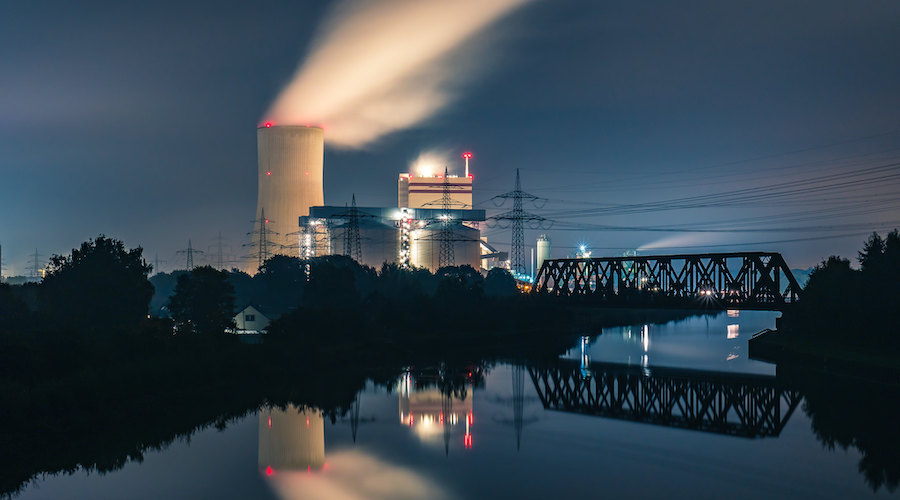
Coal-fired power plant in Lünen, Germany. (Image by Daniel Grothe, Flickr.)

Germany has already met its 2028 goal for reducing coal-fired power generation, so won’t need to order the shutdown of any plants for a second year running, the country’s regulator said.

Germany has an interim 2028 target of reducing coal-fired power by 8.7 gigawatts, and as of Sept. 1 it had exceeded this level by about 10%, the Federal Network Agency said on its website on Monday.

Almost two thirds of Germany’s electricity comes from renewables and excess solar power production has frequently pushed prices below zero, making burning coal less profitable. Yet Europe’s largest economy remains heavily dependent on the fossil fuel and is still the European Union’s biggest polluter.

The country plans to completely phase out coal-fired power by 2038, but some large lignite-burning plants that are connected to mining operations have been given more time to shut down to mitigate job losses. Hard-coal power plants and smaller lignite-burning facilities, which initially had the option to join auctions for voluntary shutdowns until 2026, can now be halted if the regulator deems it necessary.

Coal plant operators also have to buy carbon allowances under the EU Emissions Trading system, where prices have fluctuated widely this year between €60 and €84 a ton, and are currently around €74.

(By Petra Sorge)

Aclara secures $5M US funding for Brazilian rare earth project


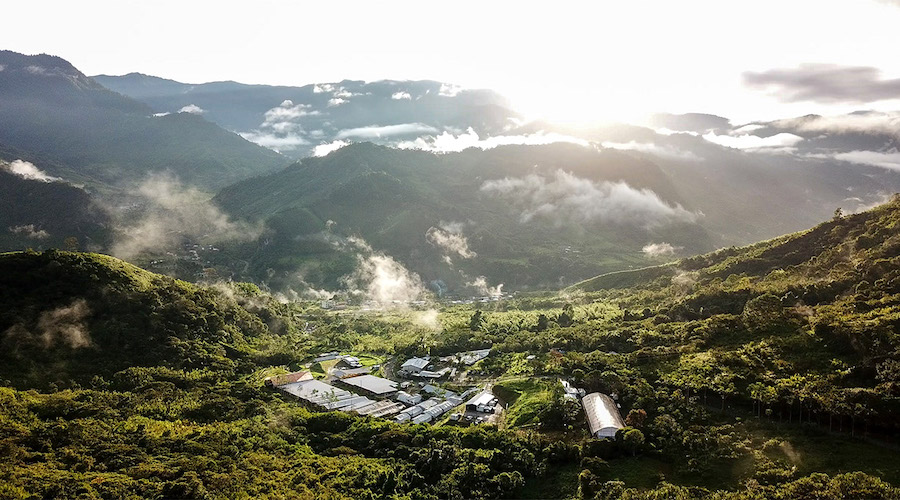
Carina represents one of two cornerstone assets held by Aclara. Credit: Aclara Resources

Aclara Resources (TSX: ARA) has received financial backing from the US government for one of its two rare earth assets in the Americas, in the latest example of Western nations attempting to build its own supply chain to counter China’s minerals dominance.

In a press release Tuesday, the company announced that the US International Development Finance Corporation (DFC) has committed up to $5 million to support the development of its Carina heavy rare earths project in Goiás, Brazil.

Specifically, the funds — to be provided under DFC’s Project Development Program — will go towards a feasibility study that is scheduled for completion in early 2026. Work on the feasibility began in July, and is being conducted by Hatch Ltd. as a continuation of the pre-feasibility, due later this month.

“We are deeply honored to have been selected by the US DFC as a recipient of the project development funds. This initial investment is not only a validation of Aclara’s strategy, but also an important first step toward a larger commitment from DFC once we complete the feasibility study for the Carina project,” stated Aclara’s CEO Ramón Barúa.

The DFC funding may be converted into equity of the company in the future. This can be triggered once Aclara completes a single financing of $50 million or more, or multiple financings of at least $75 million, within 12 months to fund the Carina project’s construction. Upon Aclara completing the financing(s), DFC will also have a preferential option to provide or arrange financing.

Shares of Aclara rose to a 52-week high of C$1.57 on the funding announcement. By 10:30 a.m., it traded 5.5% higher at C$1.53 for a market capitalization of C$332.2 million ($233.6 million).

Key heavy rare earth asset

In July, Bloomberg reported that Aclara’s management held talks with US government agencies for possible financing toward its $1.5 billion plan to mine rare earths in Latin America. The company, which is 57% owned by the Hochschild Group, is developing two ionic clay deposits in Brazil and Chile, with Carina being its flagship.

Aclara considers Carina to be a key rare earth asset that could reduce Western reliance on China, which currently accounts for 90% of the global supply. Chief executive Barua told Reuters last year that once in operation, Carina could produce about 13% of China’s rare earth output each year.

According to a preliminary economic assessment, Carina could generate on an annual basis as much as 191 tonnes of dysprosium (Dy) and terbium (Tb), heavy rare earths that are essential to electric vehicle motors, wind turbines, and various defence and medical technologies. The report estimated a mine life of 22 years and a net present value of $1.5 billion, using an 8% discount rate, with an internal rate of return (IRR) of 27%.

Production in 2028

The upcoming pre-feasibility study will look to improve on those economics, using a total resource count of 298 million tonnes grading 1,452 ppm total rare earth oxides (TREO) in the inferred category, for 432,000 tonnes of TREO.

On the DFC funding for the feasibility study, Barua said that it would help de-risk the development of the Carina project while providing additional confidence to potential off-takers currently evaluating its viability as a long-term supplier of heavy rare earths.

Earlier this year, Aclara launched a pilot plant to test the production of dysprosium and terbium from ionic clay extracted from Carina. The facility represents a key step in advancing the project towards production, which management is targeting for in 2028.

The company is also eyeing a similar production timeline for its Penco project in Chile, which is smaller and hosts a measured and indicated resource totalling 27.5 million tonnes grading 2,292 ppm TREO, for 62,900 tonnes of contained TREO.


enCore’s Dewey Burdock uranium project gains US fast-track approval


The Dewey Burdock project site in South Dakota. (Credit: Azarga Uranium)

enCore Energy Corp.’s (NASDAQ: EU; TSXV: EU) Dewey Burdock uranium project in South Dakota has been approved for inclusion in the Fast-41 Program by the US Federal Permitting Improvement Steering Council.

The program is part of the implementation of President Trump’s Executive Order on Immediate Measures to Increase American Mineral Production.

Under the executive order, the Permitting Council identifies priority infrastructure and critical minerals projects to receive accelerated permitting review. Dewey Burdock is the first critical minerals project in South Dakota to be added to the federal fast-track system.

enCore is currently the only uranium producer in the United States. It operates the 100%-owned Rosita central processing plant (CPP) in South Texas as well as the Alta Mesa CPP in a joint venture with Boss Energy (ASX: BOE).

enCore plans to advance Dewey Burdock into development and production using the In-Situ Recovery (ISR) process. The method employs a chemical-free, water-based solution in the wellfield to dissolve uranium minerals underground, before pumping the uranium-bearing solution to a central processing plant for recovery. Compared to conventional open-pit or underground mining, ISR significantly reduces surface disturbance.

The project, wholly owned by enCore, is located in Custer and Fall River counties and will recover uranium from subsurface sandstone ore bodies.

The Dewey Burdock project hosts an estimated 17.1 million pounds of Measured and Indicated uranium resources at an average grade of 0.12% U₃O₈, with an additional 712,600 pounds classified as Inferred resources at 0.06% U₃O₈.

Shares of enCore slipped 1% in early Tuesday trading in Toronto to C$3.24 ($2.35), valuing the company at C$608 million ($441 million).

GNOMES OF ZURICH

SolGold shifts to Swiss tax base as it fast-tracks Cascabel


Cascabel copper-gold project in northern Ecuador. (Image courtesy of SolGold.)

Ecuador-focused SolGold (LON: SOLG) has moved its tax domicile to Switzerland as it pushes its flagship Cascabel copper-gold project into development.

The shift, effective August 28, includes the relocation of chief executive Dan Vujcic to Europe. SolGold delisted from the Toronto Stock Exchange in June, but kept its primary listing in London and is weighing an additional listing as part of its corporate overhaul.

A key element of the restructuring is the consolidation of full ownership of Cascabel under SolGold Finance AG, its Swiss subsidiary. The move brings the project in line with existing royalty and stream agreements, placing 100% ownership under one entity.

“As we advance Cascabel into development, we are not only simplifying and improving our execution plan, but also our corporate structure with the express aim of unlocking substantial value for our shareholders,” Vujcic said.

The executive added that establishing a Swiss base would generate a “sizable uplift to post-tax cash flow over the life of mine,” making the project more financeable and improving its already strong economics.

The shift comes as the company,  backed by some of the biggest names in the industry, including BHP (ASX: BHP) and Newmont (NYSE: NEM), is working on options to bring Cascabel into production three to four years ahead of schedule. The company sees the mine as a potential multi-generational asset, ranking among the 20 largest copper-gold operations in South America.

The new structure aims to sharpen financial performance, enhance shareholder value through tax efficiency, and attract investors amid geopolitical uncertainty and shifting global supply chains.

China’s aluminum factories are changing to escape a crushing price war


For Liang Zhu, who runs an aluminum factory about 100 kilometers north of Hong Kong, there is only one way out of China’s vicious spiral of excessive competition: shift away from inexpensive metal for window frames and door handles, and toward the specialized alternatives needed for iPads and airplanes.

Guangdong province has long been a powerhouse of light manufacturing. Today, though, many companies like Liang’s are battling to survive in the era of “involution”, a term commonly used to describe the country’s intense, self-harming industrial race. China’s property boom is over, and has left behind small to medium-sized manufacturers saddled with overcapacity, evaporating margins and a relentless struggle for customers.

“Without sufficient profits, there will be no funds to invest in innovation, research or in finding solutions for society,” said Liang, general manager at Guangdong Mingzhu Metal Material Technology Co., a company he founded after returning from a spell working in Australia. “That’s a dilemma for us, so we look for ways to get out of this so-called involution.”

Producers of aluminum to be used in railings or furniture thrived in Guangdong from the early reform years of the 1980s up until the country’s real estate crisis began in earnest five years ago. Since then, the region has seen a wave of consolidation.

In July, Mingzhu Metal started up its first production line making items with “7-series” aluminum, a more complex product that’s harder to rework and weld, more resistant to heat and easier to crack when cooling. Most importantly, it has lucrative buyers in China’s emerging higher-value industries — from aerospace to electric vehicles and consumer goods.

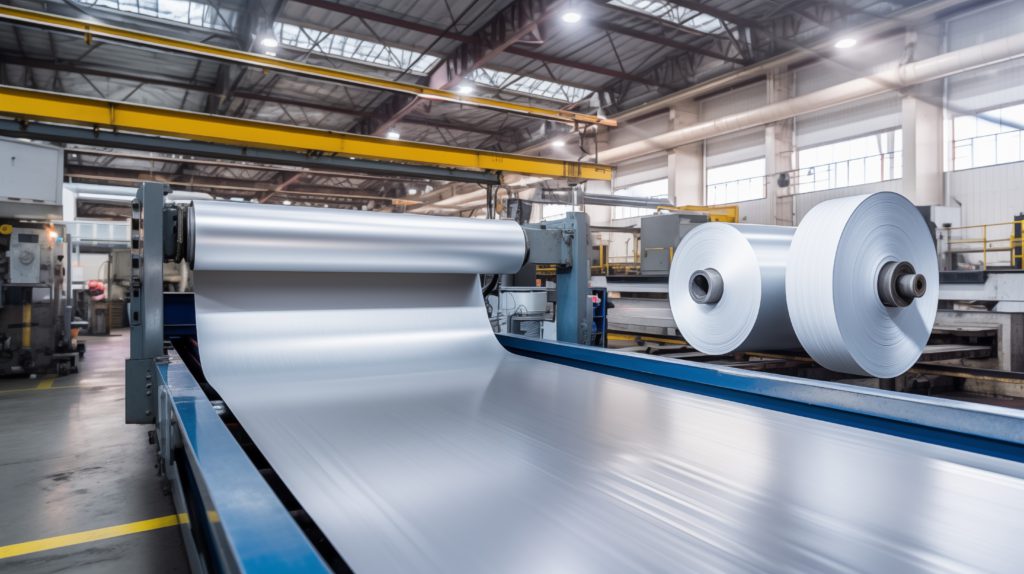
Aluminum is arguably the world’s most versatile metal because it’s lightweight, durable and doesn’t rust. Extruders, as companies like Liang’s outfit are known, take thick bars of semi-finished metal and work it through several phases to form different shapes and profiles, from car frames to supports for solar panels.

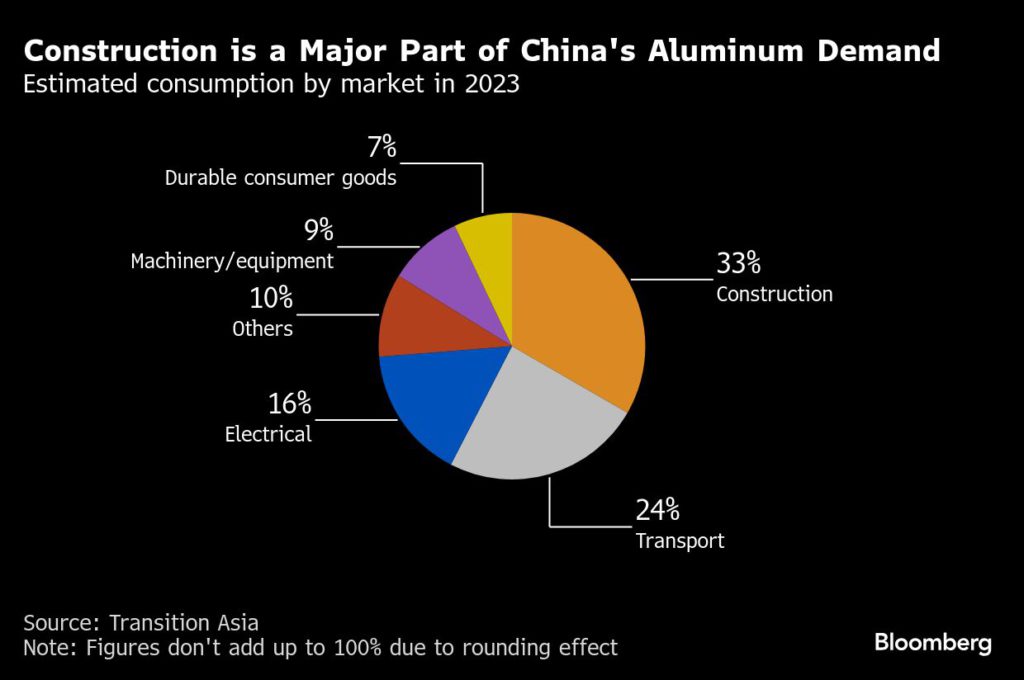
This corner of the sector has long relied on real estate and infrastructure, so the collapse of construction activity since the start of the pandemic has been devastating. Operating rates for aluminum processors are at about 60% to 70% for the best-performing companies, and at only 40% to 50% for the weaker ones, according to researcher Shanghai Metals Market, or SMM. Both are below the 80% level deemed a healthy minimum.

Midstream aluminum producers are “facing complex situations such as weak domestic demand, increased uncertainty in foreign trade, and intensified internal competition in the industry,” the China Nonferrous Metals Industry Association said in July. “The price competition situation is quite severe, and overall processing fees have reached an historic low.”

Shandong Nanshan Aluminum Co., a major producer of extrusions in eastern China, is a case in point. The firm said last week it’ll close 120,000 tons of its total 320,000 tons of capacity after recording utilization rates of just 59%. It plans to shift its focus to higher-end products for industry and autos.

President Xi Jinping has said he wants to “break involution,” which means reducing the excessive competition and capacity levels blamed both for a cycle of domestic deflation and raising tensions with trade partners.

The campaign is taking different forms across industries. Nationwide coal output declined in July from a year ago, after government inspectors targeted mines that produce too much. Oil refining and petrochemicals are set for a sweeping overhaul. And bosses from electric vehicle companies and some tech giants have been called before regulators and warned about over-competition.

An hour’s drive from Mingzhu Metal is China’s “aluminum capital” of Foshan, known for its panoply of extruders, fabricators and wholesale markets. Here, Foshan Golden Source Precision Manufacturing Co. has passed through several phases of specialization and technological upgrades since it was founded in the early 1990s.

Its showroom exhibits include trailer ramps and bathroom fittings to hard disk components and parts for the Harmony trains that pioneered China’s high-speed rail. The firm has hewn closely to the technological path prescribed by Xi’s Made in China 2025 plan that was launched a decade ago.

Most recently, Golden Source has developed components for EV charging points and lightweight fittings for airplane trolleys. When General Manager Rain Tam took over the business from her father, its founder, she raised spending on technological research in order to cut costs and to improve product quality.

Even then, there is intense competition.

“Technological innovation helps profit margins for some products, but overall our margins will be a lot worse this year than last,” said Wang Shunli, deputy general manager. “Right now, when it comes to pricing, I feel the pressure is extremely high.”

China’s last round of industrial supply reforms after 2015 heralded changes across the sector, from the smelters that produce aluminum to the factories that handle the metal. For extruders, strict new controls on carbon emissions and energy consumption put the squeeze on smaller, less efficient firms.

That’s left an environment that is complex, but also modestly positive. Chinese demand for the metal is set to grow 3.4% this year, according to Bloomberg Intelligence. China Hongqiao Group Co., the biggest primary aluminum producer, gave an upbeat outlook after it reported a rise in first-half earnings.

“Overall aluminum consumption is trending upward, but the main issues are rapid capacity expansion and severe product homogenization,” said SMM analyst Liu Xiaolei. “The aluminum industry is shifting toward new energy sectors, but these are also experiencing clear overcapacity.”

In Guangdong, managers and factory workers are settling in for a long battle. Unlike Xi’s last round of supply-side reforms, there’s little prospect of massive stimulus or a renewed construction boom to restore the growth rates of the past.

“The whole industry is experiencing a test,” said Golden Precision’s Wang. “For now, we need to survive first, so that we can advance more in five, seven, eight years.”


The U.S. and China Are Battling for Control of the World’s Bauxite Supply

  • The global alumina and bauxite market is projected to grow from $84.5 billion in 2025 to $125.9 billion by 2033 at a 5.11% CAGR.

  • The U.S. and China are vying for global bauxite supply, with China consuming over 60% of traded bauxite and the U.S. importing 75% of its needs.

  • Guinea’s concession revocation, Rio Tinto’s $180M expansion, and stable Q2 2025 prices highlight both opportunities and risks for the sector.

Despite a few hiccups and occasional worries of oversupply, the global bauxite market has been growing steadily. Much of this expansion has been fueled by rising demand in the aluminum market, especially from automotive, aerospace and renewable energy sectors.

About 60% of EV manufacturers and over 70% of aerospace materials use aluminum in one form or another. Moreover, about 85% of bauxite is used for alumina production. Because of these facts, the global alumina and bauxite market is projected to grow from US $84.51 billion in 2025 to US $125.91 billion by 2033, at a CAGR of 5.11%. This means opportunity, but also the potential for volatility. Steps to manage the downstream volatility which can occur as a result of these supply chain disruptions are covered in MetalMiner’s Weekly Newsletter.

The U.S. and China Now Vying for Global Supply

Sector analysts believe the bauxite market, and by extension the aluminum market, is undergoing a strategic transformation. This hinges on the fact that the U.S. is expanding in domestic mining capacity, while the other major player, China, is vying for control over global bauxite resources.

The latter is the world’s largest aluminum producer, consuming over 60% of globally traded bauxite, much of it sourced from Guinea and Australia. On the other hand, the U.S. largely imports its bauxite, to the tune of about 75%. As aluminum market demand heads up, the United States wants to reduce this reliance on foreign supply.

The U.S. and the rest of North America have long relied on the Asia-Pacific region for bauxite. That area currently dominates the global market, with a 45% share of reserves. However, Africa and the Middle East follow closely. Guinea, for example, has about 24% of global reserves. And while Australia leads in exports, China is still numero uno in refining, followed by Saudi Arabia and the UAE. 

Guinea’s Recent Moves

In a decisive move to assert control over its mineral resources, Guinea recently revoked a major bauxite concession from the UAE’s Guinea Alumina Corporation (GAC), citing failure to build a promised alumina refinery. The decree transferred the Boké concession from Emirates Global Aluminium (EGA) to a new state-owned entity, Nimba Mining Company, for a duration of 25 years.

GAC, which exported 18 million tons in 2024, plans to challenge the decision through international arbitration, calling it a wrongful termination. Some experts believe this could also change some of the dynamics where the U.S. is concerned, since the country relies on Guinea for at least some part of its bauxite supply. 

More Investments

Even as the U.S. goes about expanding mining capacity, major aluminum market players like Rio Tinto are making moves to add to the overall bauxite supply. That company recently invested a significant amount of resources into its Australian operations, committing US $180 million to expand bauxite access at the Amrun mine in Queensland. Initial production is expected in 2027, with a full ramp-up by 2028.

Price Range

The sturdiness of the bauxite and aluminum market is reflected in global bauxite prices, which have remained relatively stable in Q2 2025. This is mainly the result of a complex interplay of supply chain disruptions, environmental regulations, and robust demand from the aluminum sector.

In the U.S., Q2 prices held at $82/MT thanks to consistent demand from aluminum smelters and refractory industries. Meanwhile, import reliance and freight delays pushed up landed costs, while environmental rules and labor shortages strained mining logistics. In China, Q2 prices rose to $99/MT amid strong industrial demand and domestic supply disruptions. Simultaneously, tight import availability and shipping delays from Southeast Asia and West Africa further constrained sourcing.

With aluminum demand accelerating and countries like the U.S. and Australia investing in strategic supply chains, the bauxite market seems poised for long-term expansion. But certain challenges do lie in its path. These include environmental constraints like red mud disposal, which adds up to 50% in operational costs, as well as certain geopolitical risks and the resulting price volatility.

By Metal Miner