Wednesday, September 03, 2025

CRIMINAL CAPITALI$M

French winemaker jailed for selling millions of euros worth of fake champagne


A French winemaker was jailed on Tuesday for making and selling thousands of bottles of fake champagne as part of a scam worth millions of euros. Courts found the winemaker added aromas and gas to wines from Spain and southern France to pass them off as the exclusive French sparkling wine, which can only be produced in the Champagne region.


Issued on: 02/09/2025 -
By: FRANCE 24
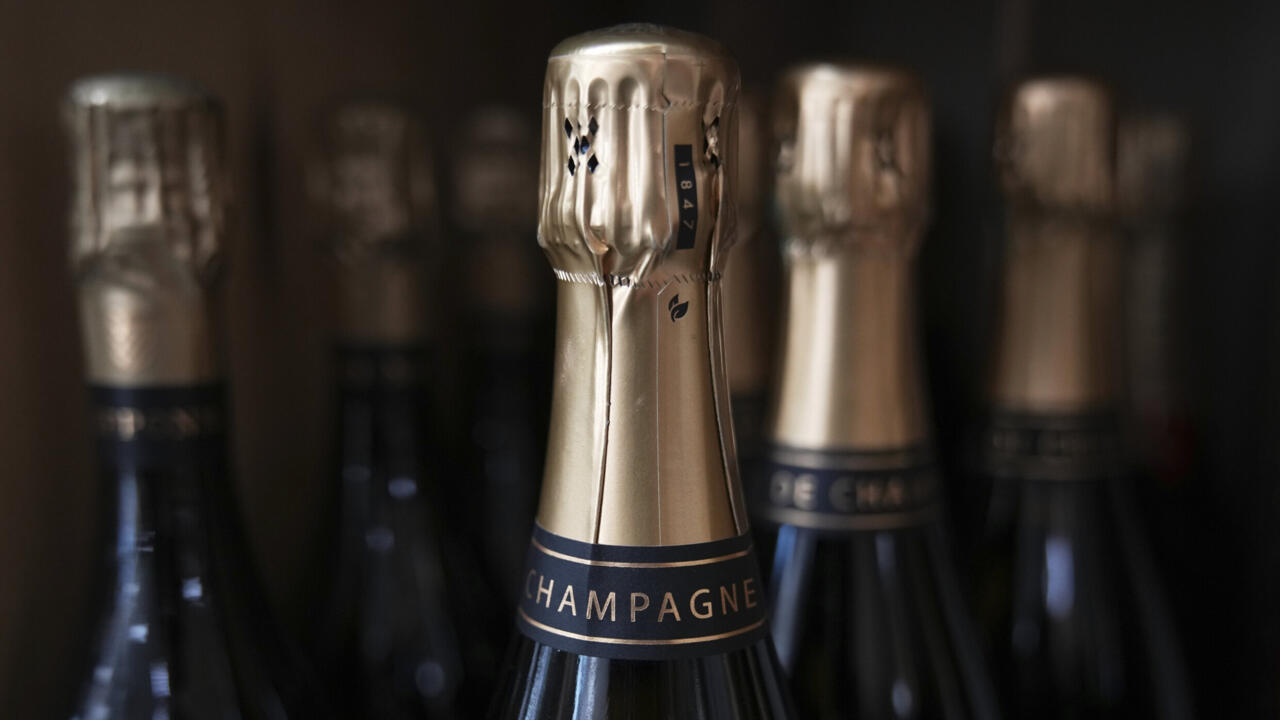
Bottles of champagne on sale at a wine dealer shop in Ville d'Avray, 
outside Paris, on March 13, 2025. © Christophe Ena, AP

A French winemaker who made and sold thousands of bottles of fake champagne in an elaborate scam involving carbonating Spanish wine was jailed Tuesday.

Didier Chopin, 56, was also barred from ever running a company again and from working in the champagne industry for at least five years.

Chopin sold hundreds of thousands of bottles of fake champagne he made with wines from Spain and southern France, to which he added aromas and gas to make them sparkling.

A court in Reims – the biggest city in the Champagne region – sentenced him to 18 months behind bars, with an additional 30 months suspended.

His wife was handed a two-year suspended sentence on the same charges of fraud and theft of a protected brand name.

The fraud was estimated at several million euros, and he was ordered to pay damages to injured parties, including the champagne growers and merchants association and several buyers.

The prosecution had denounced "a cynical and premeditated" scam.
Fizzled out

Chopin and his wife were each fined €100,000 and their holding company, SAS Chopin, was fined €300,000 fine on charges of embezzlement and misuse of company assets.

"I made a mistake, I am ruined and I have nothing else to add," Chopin told reporters during the trial.

The winemaker from the northern Aisne region also faces a separate case after five former employees accused him of sexual assault.

His lawyer Francis Fossier argued for a suspended sentence, saying his client had already spent "seven months" in prison in Morocco "in horrible conditions".

After the champagne fraud was revealed by former employees in 2023, Chopin fled to Morocco and launched a new vegetable farming business there. He was then arrested and jailed for bouncing cheques.

The part of the trial relating to customs violations – the export of the fake champagne outside of France – has been adjourned to February 3.

(FRANCE 24 with AFP)


Study on Roma community in Spain urges education system that safeguards cultural identity to tackle antigypsyism and disengagement


Juan Jarque Jarque also argues that Spanish Roma must work to eradicate their disaffection with the norms and values of society


Universitat Jaume I

A education system that safeguards cultural identity to tackle antigypsyism and disengagement 

image: 

Juan Jarque Jarque és el primer gitano que rep un doctorat en Història Contemporània per la Universitat Jaume I amb la tesi «Gitanos en Castellón de la Plana. Avecindamiento forzoso, control y desigualdad (1739- 1978)» realitzat sota la direcció de la doctora Imilcy Balboa Navarro i defensada en juny de 2025. La investigació reconstrueix per primera vegada la història de les famílies gitanes de la província de Castelló, que ha sigut prou semblant a la resta del territori peninsular, amb períodes de pelegrinatge, expulsions, deslocalitzacions i persecucions, però sempre amb actituds de rebuig, discriminació per diferents normatives i control per part de les autoritats.

La seua investigació tenia dos objectius. El primer era narrar la història dels gitanos a Castelló des del veïnatge forçat de dues famílies gitanes el 12 de maig de 1739 fins al 29 de desembre de 1978, dia que va entrar en vigor la Constitució, que consagra en l'article 14 la igualtat de tota la ciutadania espanyola. El segon objectiu és buscar les causes de la discriminació persistent de la minoria gitana després de sis segles de permanència a Espanya, però especialment, quan han transcorregut 46 anys des que el poble gitano espanyol té els mateixos drets que la resta dels seus conciutadans.

L'any 2025, Espanya celebra el 600 aniversari de l'arribada del poble gitano a la península. La declaració institucional aprovada pel Consell de Ministres al gener en destaca la presència des del segle XV i les seues aportacions a la història, la cultura i la llengua, i posa de manifest el deute històric lligat a la desigualtat persistent, la presència de la normativa antigitana al llarg de la nostra història i els intents d'extermini que s'han produït al llarg del temps.

view more 

Credit: Universitat Jaume I of Castellón


After six centuries in Spain, discrimination against the Roma people remains “rooted in stereotypes based on ignorance and, in some cases, pseudo-knowledge about this community”, explains Juan Jarque Jarque, who advocates for an inclusive education system that respects diverse values as a way to end antigypsyism and encourage greater Roma participation in community life.

“The image society has today”, he argues, “is practically the same as the one recorded and published by Sebastián de Covarrubias in 1611 and by the Royal Spanish Academy in its Diccionario de Autoridades in 1734, which described Roma as lost souls, vagabonds, tricksters, and thieves”. These stereotypes have been repeated in the Academy’s twenty-three editions since 1780, although the latest online version of the 23rd edition modified the entry for "trapacero" [trickster], acknowledging that the term was “offensive or discriminatory”.

The researcher, who has recently earned a doctorate, explains why some of these stereotypes are inaccurate, such as the notion of a nomadic lifestyle. He notes that Roma migrations were mostly due to wars (refugees and displaced people), economic reasons (migrants), or religious pilgrimages within Europe. In fact, data from the Fundación Secretariado Gitano in 1978 showed that the number of nomadic Roma in Spain did not exceed 5%.

Jarque emphasizes that “while Roma and mainstream society share cultural spaces, it is essential to recognize that Spain’s Roma population is heterogeneous and diverse”. Historically, this diversity was reflected in the way authorities classified individuals as Roma, often basing it on lifestyle or social behaviour rather than ethnicity itself.

To overcome both antigypsyism in Spanish society and Roma disengagement from it, Jarque proposes an education system that weaves Roma history into Spain’s national narrative while also protecting each community’s cultural identity. This way, different groups can preserve their traditions yet share the same cultural, political and social space.

At the same time, he suggests that Spanish Roma must also work to overcome disengagement from social norms and values, and increase participation in political and civic life (voter turnout is low, and representation in political parties is almost nonexistent). He welcomes initiatives led by the Fundación Secretariado Gitano to challenge negative stereotypes, as well as the growing number of mixed marriages, which often encourage longer engagement with formal education.

Despite the challenges, the current National Strategy for Equality, Inclusion, and Participation of the Roma People (2021–2030) offers grounds for optimism. Jarque believes it provides a framework for Roma communities and public administrations to work together to improve their social image and promote active civic participation.

Juan Jarque Jarque has become the first Roma scholar to earn a PhD in Contemporary History at the Universitat Jaume I, defending in June 2025 his dissertation Gitanos en Castellón de la Plana. Avecindamiento forzoso, control y desigualdad (1739- 1978) [Roma in Castelló de la Plana: Forced Settlement, Control, and Inequality (1739–1978)], supervised by Professor Imilcy Balboa Navarro. The study reconstructs, for the first time, the history of Roma families in Castelló province, which largely mirrors that of the rest of Spain: periods of migration, settlement, expulsion, resettlement, persecution—and always rejection, discrimination through legal measures, and strict control by authorities.

His research set out two goals. First, to narrate the history of Roma in Castelló from the forced settlement of two Roma families on May 12, 1739, to December 29, 1978, when the Spanish Constitution—whose Article 14 guarantees equality for all citizens—entered into force. Second, to identify the causes of persistent discrimination against the Roma minority after six centuries in Spain and, more specifically, in the 46 years since Roma Spaniards gained the same legal rights as the rest of the population.

In 2025, Spain marks the 600th anniversary of the Roma people’s arrival on the Iberian Peninsula. An institutional declaration approved by the Council of Ministers in January highlights the Roma presence since the 15th century and their contributions to Spain’s history, culture and language, while also acknowledging the historic debt linked to enduring inequality, centuries of antigypsy laws, and repeated attempts at extermination.

In Senegal, the last of Dakar's 'bubble homes' at risk

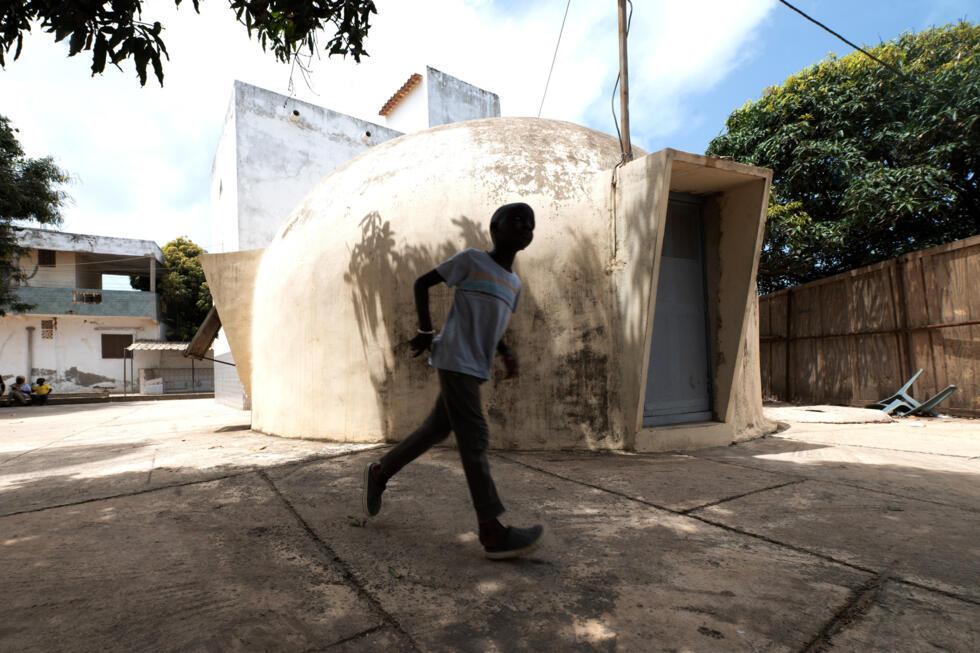
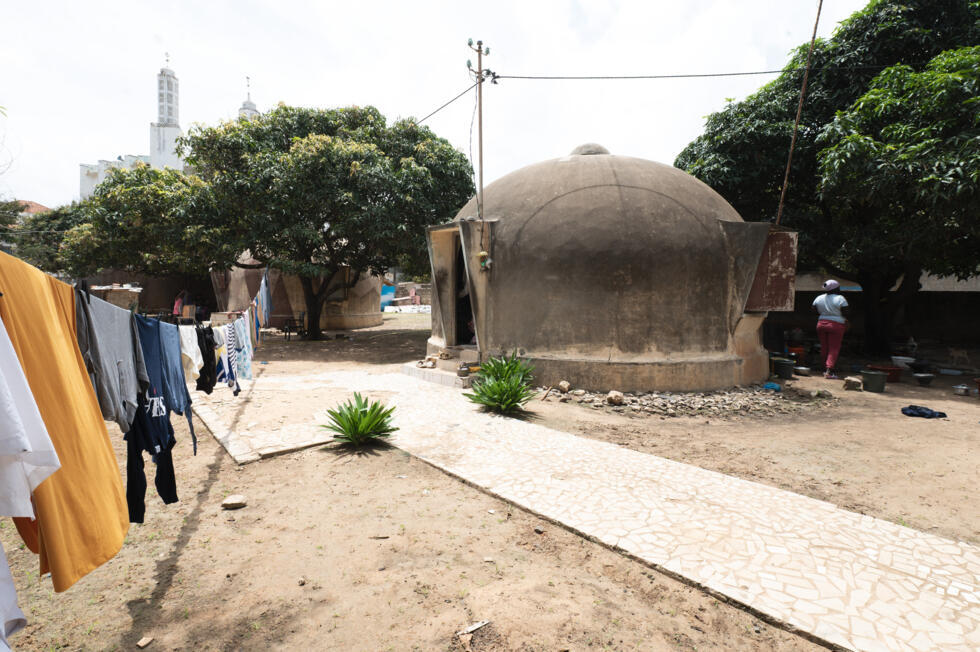
Dakar (AFP) – Marieme Ndiaye emerged from her igloo-shaped home in Senegal's capital, its 1950s space-age aesthetic in sharp contrast with the boxy, multi-storey apartments being built nearby.


Issued on: 03/09/2025
FRANCE24


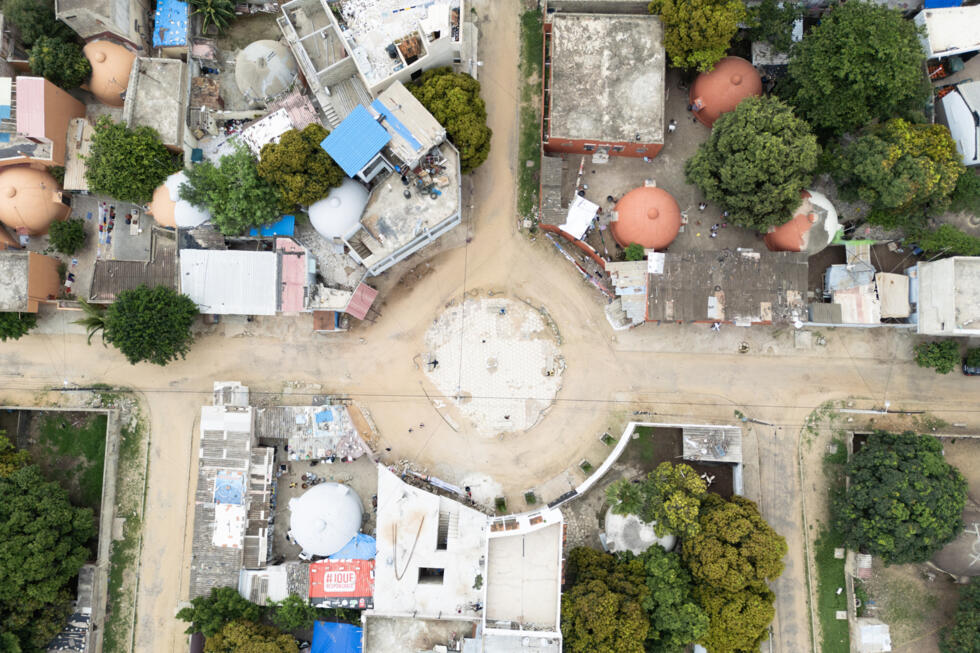
Dakar once had more than 1,000 balloon homes like Marieme Ndiaye's, but now hers is among the remaining few © Carmen Abd Ali / AFP

The little concrete house is a head-turner, seemingly better suited for a sci-fi movie than the average Dakar residential block where it is located.

In the 1950s, around 1,200 of the tidy little homes were built in several neighbourhoods across Dakar to alleviate a post-World War II housing crunch.

The dwellings were made by inflating a giant balloon and spraying it with a concrete solution called gunite, before then deflating the balloon.

Row after row of the light-coloured domes, which could be constructed in just 48 hours, quickly sprung from the brown Sahelian landscape.

Designed by a California architect; implemented by French colonial authorities; lived in by Senegalese -- the dwellings saw only lukewarm success.

Few of Dakar's bubble homes remain totally freestanding, such as this one in the Ouakam neighbourhood © SEYLLOU / AFP


Senegal's traditionally non-nuclear, multi-generational families began outgrowing the homes' small, circular confines quickly.


In addition, the land beneath them soon became more valuable than the odd little bubbles themselves.


These days, only around 100 are estimated to remain, according to Dakar architect Carole Diop, with the majority having fallen victim to rampant urban development.

"When I was little, we only had balloons," Ndiaye said, referring to the area where she grew up and lives today in Dakar's central Zone B neighbourhood.

Without historical societies or architectural organisations campaigning to preserve the homes, the remaining residents have become the little igloos' principal protectors.

With an average diameter of six metres (20 feet), a standard bubble house would have consisted of a bedroom, living room and bathroom © SEYLLOU / AFP

"Now we're in the middle of destroying the balloons, of transforming," Ndiaye told AFP.

"For me, it's sentimental," said the 65-year-old retiree, who is the reason her dome house is still standing. "My younger brothers want to tear down the ballon and build," she said.

The balloon homes are being preserved by residents for a variety of reasons, Diop told AFP.

But "unfortunately, many families who had the means ended up demolishing the balloon to build a building", she added.

'Very atypical'


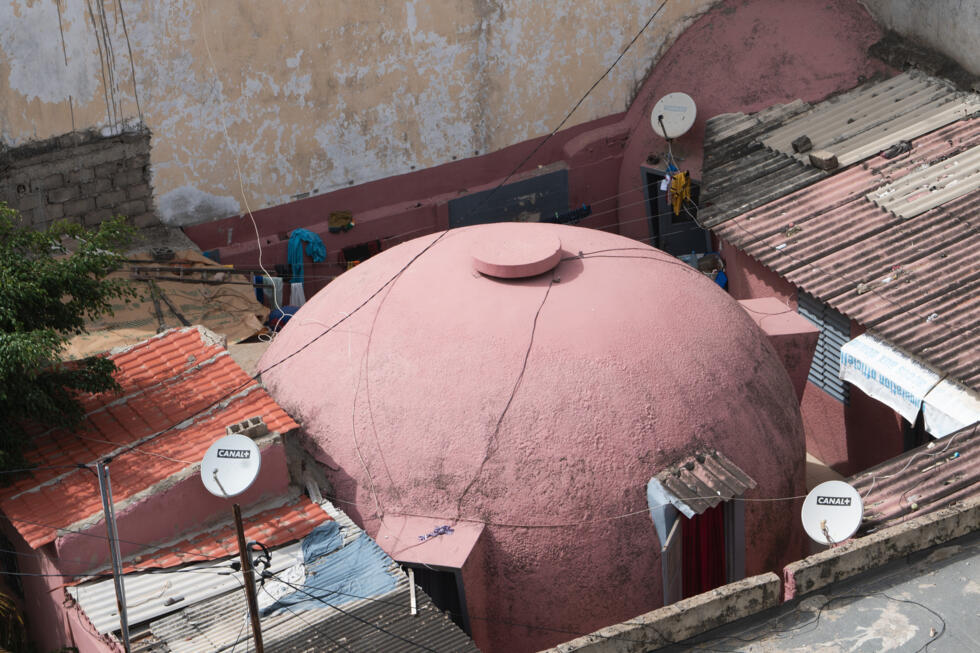
Many of those remaining have been transformed to better fit Senegalese life and no longer exist as solitary bubbles.

With an average diameter of just six metres (20 feet), a standard bubble house like Ndiaye's would have consisted of a bedroom, living room and bathroom, according to Diop.

Some bubble houses have been incorporated into family compound courtyards
 © Elena BOFFETTA / AFP


"Many families adapted and found ways to meet the need for expansion", such as building an attachment, she said.

Ndiaye's house, first bought by her father in the 1950s, is now enveloped inside her family's larger compound, where she lives with about half a dozen relatives spanning multiple generations.

The bubble house is in the middle of a square courtyard, with other rooms along the courtyard walls.

While the bubble homes can become warm in the direct sun, even with a vent on top, Ndiaye said hers was comfortable.

A 10-minute walk away, Sekouna Yansane recently built a large house next to the bubble home his father bought in the 1950s, incorporating it as a room jutting off one side.

Describing himself as artistic, he was loath to allow the little dome to fall into developers' hands.

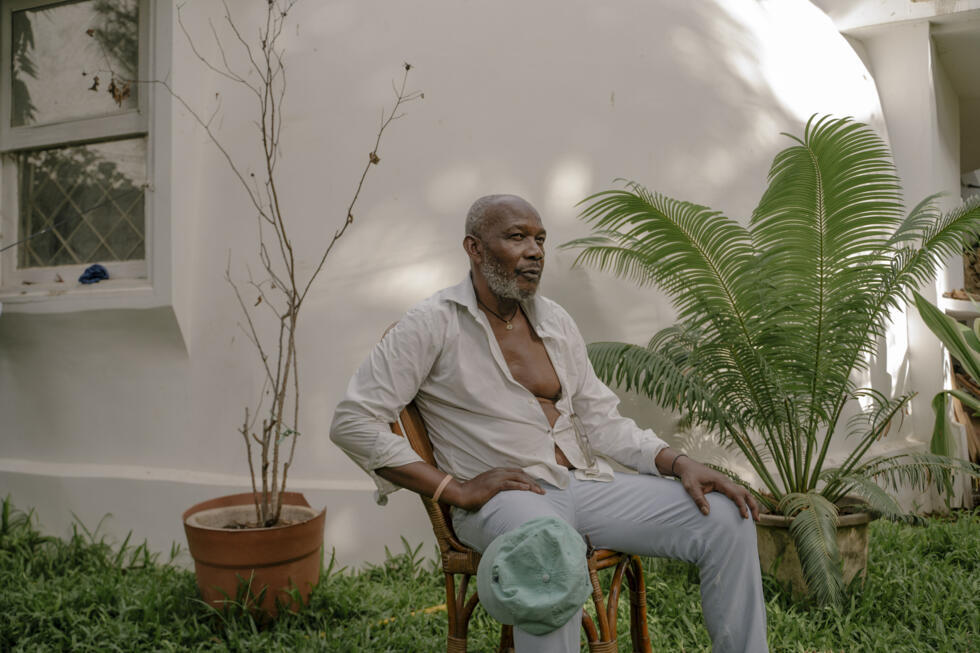
Sekouna Yansane thinks the bubble house adds character to his home © Carmen Abd Ali / AFP

"It's very atypical, I love it," the 65-year-old said. "It reminds me of when I went to Mongolia, the yurts."

Four years ago he began constructing the larger home, while his next-door neighbours tore their bubble house down.

Along the street, a towering and decidedly non-descript apartment building looms where bubble houses no doubt once stood.

"Why destroy them? They are things we should keep," Yansane said, adding that a good house always has "character".

In 100 years


American architect Wallace Neff, who invented the bubble house, was best known for his Spanish colonial revival homes and residences for major Hollywood stars like Judy Garland and Groucho Marx.


The homes were made by inflating a giant balloon and spraying it with a concrete solution © SEYLLOU / AFP

Yet, he believed the bubble homes, which were constructed in several countries, were his most significant contribution to architecture.

Asked whether she thought the homes would still exist in 100 years, Diop voiced doubts.

"At the pace at which the city is densifying and evolving, I think unfortunately in 100 years there will be no more ballons," she said, but expressed hope that if classified or transformed for preservation, some might survive.

Yansane was slightly more positive.

"I'm in favour of preserving things," he said, adding: "In 100 years, this house, if it still exists, it's going to be something extraordinary."

© 2025 AFP
THE SAHEL MANDATE

Burkina Faso criminalises homosexuality in far-reaching family law reform

Burkina Faso has joined a growing list of African nations tightening laws against same-sex relations, with an extensive new code set to reshape family and nationality rules.


Issued on: 02/09/2025 - RFI

Burkina Faso’s parliament has passed a new law criminalising homosexuality, the first of its kind in the country.
 AP - Ben Curtis


Burkina Faso’s transitional assembly has passed a controversial law criminalising homosexuality, marking the first time such legislation has been introduced in the country.

The move, backed unanimously on Monday by the 71 unelected members of the transitional legislative assembly, comes nearly three years after the military junta seized power.

Under the new law, individuals convicted of same-sex relations face prison sentences of between two and five years, as well as fines.

Justice Minister Edasso Rodrigue Bayala announced on national television that foreign nationals found guilty would be expelled from the country.


Bukrina Faso's Justice Minister Edasso Rodrigue Bayala said on national TV that foreigners convicted under the new anti-LGBTQ+ law would be expelled from the country. © wikipedia


Broader 'family' reforms

Until now, Burkina Faso had no specific laws targeting homosexuals, although LGBT+ communities have long been forced to live discreetly.

The measure is part of a broader reform of the "Code of Persons and Families", which also tightens the rules for acquiring Burkinabè nationality through marriage and grants legal recognition to religious and customary unions.

The legislation is expected to be signed into law by junta leader Captain Ibrahim Traoré, who took power in a coup in September 2022.

Traoré has pursued a fiercely sovereigntist line, often rejecting what he calls Western “values” and drawing closer to allies such as Russia and Iran.

Authorities say the new code will be rolled out through a public awareness campaign.

In August 2023, Burkina Faso’s media regulator banned television stations from broadcasting content deemed to promote homosexuality.


THE SAHEL 


Criminalisation of homosexuality


Monday’s legislation builds on this hardening stance. Neighbouring Mali, also ruled by a military junta, adopted a similar law in November 2024.

Burkina Faso joins more than 30 African nations where same-sex relations are outlawed.

In countries such as Tanzania, Zambia, Sierra Leone and The Gambia, prison terms can extend to life sentences.

In Nigeria, Kenya and Malawi, those convicted can face up to 14 years behind bars. Uganda’s recent Anti-Homosexuality Act has drawn widespread international condemnation for introducing harsh penalties, while Ghana’s parliament earlier this year passed a bill criminalising LGBT+ advocacy and support networks.

Around a third of countries around the world continue to prohibit same-sex relations, and in some cases these laws carry the death penalty.

Despite steady progress in many regions towards decriminalisation, campaigners warn of a “troubling regression” across parts of Africa.

The international advocacy group Ilga World has voiced concern that such crackdowns risk entrenching discrimination and undermining basic human rights.


African LGBTQs exploited for clout, activist says as Burkina Faso bans homosexuality

Issued on: 02/09/2025 - FRANCE24

Junta-run Burkina Faso has passed a law banning homosexuality and instituting punishments of up to five years in jail, the latest in a clutch of African nations to pass anti-gay legislation. Speaking with FRANCE 24's Sharon Gaffney, Robert Akoto Amoafo, Advocacy Manager at the African regional chapter of ILGA, says that African LGBTQ have become the go-to group for political and religious leaders to score popularity points.


French press take on digital databases to defend journalist copyright against AI

French newspapers and magazines are launching an offensive against public online databases used to train generative artificial intelligence applications that they say use content without compensating the authors, putting the France's professional journalism sector's economic model at risk.


Issued on: 02/09/2025 - RFI

French press associations are trying to limit how generative artificial intelligence services use their members' content without authorisation. © Oceane2508/Getty Images/RFI

Two professional organisations representing 800 newspapers and magazines employing over half of journalists in France announced Monday that they are taking “coordinated action” against public datasets used to train generative artificial intelligence services, such as ChatGPT.

Public-access datasets

The Apig, the general news medial alliance, and the Sepm, the magazine publisher's union, aim to remove their members’ content from Common Crawl, C4 and Oscar – public-access datasets created by bots that “crawl” the internet.

The groups denounce what they say is a system that collects and distributes copyrighted articles “without authorisation or any access restrictions", and allows generative AI service providers "to source press material through these intermediaries, avoiding any direct negotiations with publishers and respect of intellectual property rights".

Their strategy involves identifying the presence of copyrighted content in the datasets, formally requesting their removal, and preparing legal action against those who have profited from their use.

French court blocks Google project to limit news content in searches

The legal framework to protect copyrighted material is not solid, Apig CEO Pierre Petillault told RFI, and the political will to support authors rights clashes with France’s interest in technological innovation.

"There is this tension between innovation and intellectual property that unfortunately sometimes leads public authorities to be a little complacent towards large digital platforms,” he said.

“There is the temptation to promote innovation” and allow European AI companies the leeway to compete with the United States.

The impact of new technologies

However, the organisations argue that protecting the "professional information" sector is crucial.

Journalism and "professional information" requires investment and content must be compensated, the groups said.

Their initiative aims for "a fair sharing of the value generated by these new technologies.

It continued: "In a context where professional journalism's economic viability is already fragile, this unauthorised capturing of value represents a direct threat to the quality of information, and ultimately, to democracy".

EU begins rollout of new AI rules with tech giants split on compliance

In February, five press organisations – including the Apig and the Spem - representing more than 3,000 newspapers and magazines called on the public authorities to “impose a dialogue” between AI companies and the media, to “put an end to the plundering” of their content and preserve France’s information ecosystem.
Two-thirds of Mayotte’s coral lost after cyclone and bleaching batter lagoon

Nearly half of Mayotte's coral reefs were wiped out when Cyclone Chido hit the French territory in December, a new report has found. The study is the first assessment of marine damage since the storm, and warns the losses come on top of bleaching that had already weakened the lagoon.


Issued on: 02/09/2025 - RFI

The Mayotte lagoon, one of the world’s largest, is protected by coral reefs but increasingly weakened by pollution and rapid population growth. AFP - ALEXIS ROSENFELD

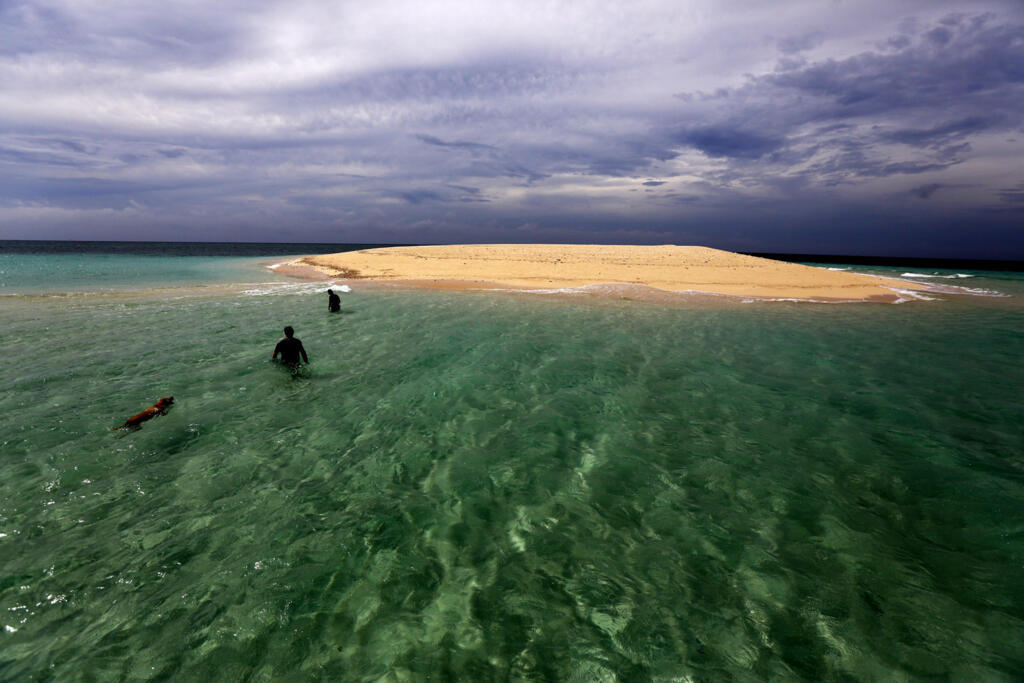
The Mayotte lagoon – one of the world’s largest at 1,100 square kilometres – once teemed with coral that sheltered fish and crustaceans.

Enclosed by an outer barrier reef and fringed by an inner reef, it normally protects the island from ocean swells and cyclones. But the ecosystem is under strain from population growth, with poor sewage treatment and waste management threatening water quality.

Surveys by the Mayotte Marine Nature Park show Cyclone Chido wiped out 45 percent of corals across the island when it struck on 14 December 2024, killing 40 people and leaving 41 missing as it swept through the territory.

Combined with bleaching linked to El Nino earlier in the year, the two events decimated about two-thirds of Mayotte’s corals, representing a 35 percent loss of coral cover across the lagoon.

The report says the combined impacts have caused “very significant degradation of coral populations” across the island’s reefs. It describes the losses as major for a lagoon long regarded as a biodiversity hotspot in the Indian Ocean.

The big blue blindspot: why the ocean floor is still an unmapped mystery

Reefs already weakened

The destruction varied across sites. The north-east, where the cyclone first struck, was hardest hit, with most corals wiped out. The double barrier reef fared better, losing roughly a quarter of its coral cover.

“When you first put your head underwater, there are areas that are particularly well preserved and others where nothing is left, though before there was richness and significant biodiversity,” Yoan Doucet, head of engineering at the Mayotte Marine Nature Park, told RFI in January.

He said surveys carried out before the cyclone had already measured an average 35 percent mortality from bleaching.

“It is therefore possible that afterwards, with the passage of Cyclone Chido, reefs that were already weakened could not resist Chido’s impact.”

Mayotte lagoon, with its double coral barrier, is a jewel of the Indian Ocean. But it's under threat. RFI/Pierre René-Worms

The scale surprised park scientists. The mortality was quite unprecedented, with the last episode of this magnitude in 1998, said Oriane Lepeigneul, marine ecosystems officer at the Mayotte Marine Nature Park.

“They serve as both a habitat and a feeding ground. When you lose that habitat, you potentially lose functionality for these species,” she told RFI. “So either these species will move elsewhere, or perhaps some of them will decline.”

The study, which involved scientific support from consultancies Marex and Creocéan, says the island’s reefs were hit hard by the combined effects of bleaching and storm damage.

Threats to coastal protection

The collapse of corals threatens marine life and the livelihoods of those who depend on it.

The study warns that damage to the reef barrier also compromises natural protection for Mayotte’s shoreline, leaving the coast more exposed to storms and future cyclones.

Despite the devastation, some areas showed resilience. The cyclone’s force may even help recovery in certain places by clearing dead coral that had blocked regrowth after bleaching.

“If dead corals remain standing, that prevents recolonisation by live corals. But if the rock underneath is bare, that allows new corals to settle,” Lepeigneul told RFI.

The marine park says its priority now is to conserve surviving reefs while reducing human pressures such as pollution, poor water quality and coastal development.

“What will be most important now is to manage to conserve the reefs that have resisted,” Lepeigneul added.

Active restoration measures are being explored, though researchers caution that even with coral propagation techniques, only a fraction of what has been lost could be restored.
Bangladesh eyes end to treasure trove bank vault mystery

Dhaka (AFP) – For more than a century, the fate of the dazzling Darya-e-Noor diamond has been sealed inside a bank vault -- a mystery that haunts Khawaja Naim Murad, great-grandson of the last prince, or Nawab, of Dhaka.


Issued on: 03/09/2025 - 06:24

Khawaja Naim Murad (R), the great-grandson of Sir Salimullah Bahadur - the last prince or Nawab of Dhaka, shows ornament designs as he sits beside his daughter Nameera Naim during an interview with AFP at their house in Dhaka 
© Munir UZ ZAMAN / AFP

Locked away in 1908, were the family's heirlooms lost during the violence at the end of British rule in 1947?

Did they survive Bangladesh's war of independence in 1971 and the string of coups that followed, or are they still safe, dusty but untouched?

Many suspect the jewels are long gone, and officials at the state-run bank hesitate to simply open the vault, fearing they'd carry the cost if it is empty.

But the cash-strapped South Asian government have now ordered a committee unseal the vault -- and Murad clings to hope.

"This is not a fairytale," said Murad, 55, recounting a story passed down from his father about the giant diamond dubbed the "River of Light", the centrepiece rock of glittering armband.

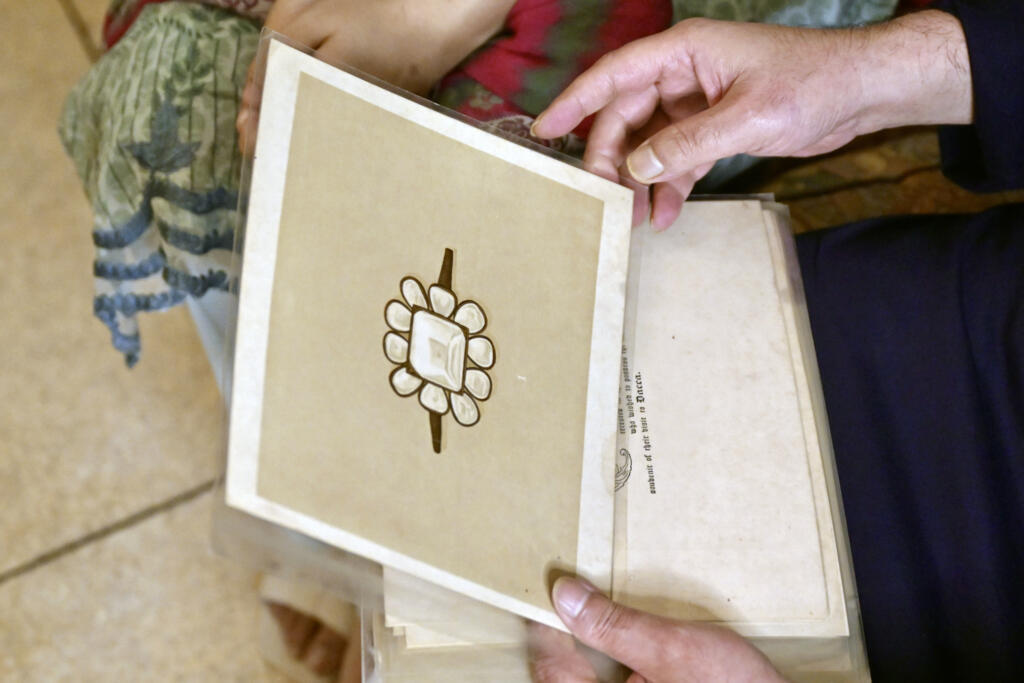
"The diamond was rectangular in shape and surrounded by more than half a dozen smaller diamonds," Murad told AFP.

It was part of a trove of 108 treasures. According to original court documents, they include a gold-and-silver sword encrusted with diamonds, a bejewelled fez with cascading pearls, and a fabulous star brooch once owned by a French empress.


History and myth

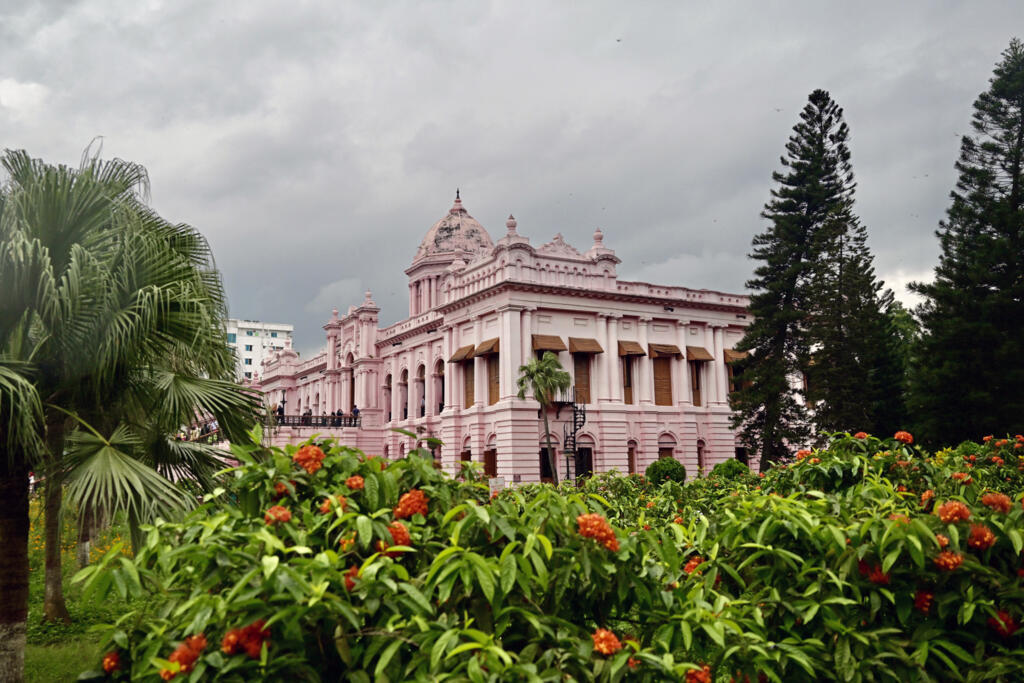
The nawab's riverside pink palace of Ahsan Manzil is now a government museum.

The Ahsan Manzil, a government museum and the former residence of Sir Salimullah Bahadur - the last prince or Nawab of Dhaka, in Dhaka © Munir UZ ZAMAN / AFP

Murad, a former popular film star, lives in a sprawling villa in a wealthy Dhaka suburb.

He flourished a sheaf of documents, including a family book with detailed paintings of the treasures.

"It is one of the most famous diamonds in the world, and its history is closely associated with that of the Koh-i-Noor," the book reports, referring to the shining centrepiece of Britain's crown jewels -- a gem also claimed by Afghanistan, India, Iran and Pakistan.

"It is absolutely perfect in lustre."

Another diamond of the same name, the pink-hued Daria-i-Noor, is in Tehran as part of Iran's former royal jewels.

Murad maintains that the family's diamond, too, was once owned by Persia's shahs, then worn by Sikh warrior-leader Ranjit Singh in 19th-century Punjab. It was later seized by the British and eventually acquired by his ancestors.

But fortunes shifted. In 1908, the then-nawab faced financial trouble.

Sir Salimullah Bahadur borrowed from British colonial powers -- mortgaging his vast Dhaka estates and placing the treasures in a vault as collateral.

Khwaja Naim Murad, the great-grandson of Nawab Sir Salimullah — the last Nawab of Dhaka — shows a painting of the Darya-e-Noor during an interview with AFP in Dhaka 
© Munir UZ ZAMAN / AFP


That was their last confirmed sighting. Since then, myth and history merge.

Murad believes his uncle saw the jewels in the bank in the 1980s, but bank officials say they do not know if the vault has ever been opened.

Chairman of the Bangladesh's Land Reforms Board, AJM Salahuddin Nagri, says the government body inherited custody of the trove, held in a state-owned bank.

"But I haven't seen any of the jewels yet," he told AFP.

'Vault is sealed'

The 1908 court papers did not specify the diamond's carat weight but valued it at 500,000 rupees -- part of a hoard worth 1.8 million rupees.

By today's conversion, that equals roughly $13 million, though experts say the market value of such rare and large jewels has since sometimes soared many times higher.

Today's guardian, Shawkat Ali Khan, managing director of Sonali Bank, said the safe remains shut.

"The vault is sealed," Khan said. "Many years back, an inspection team came to check on the jewels, but they never really opened it -- they just opened the gate that held the vault."

He is keen for the vault to be opened at last, though no date yet has been given.

"I am excited," he said with a brief smile.

The family hope to discover if any of the century-old debt remains, and whether they could reclaim the jewels.

Murad dreams of diamonds, but says his real wish is to simply see the treasure for himself.

"We believe that if anyone dies in debt, his soul never finds peace," he said.

© 2025 AFP
China endured its hottest summer on record in 2025

Beijing (AFP) – China experienced its hottest summer on record in 2025, the meteorological authority said, as heatwaves continued to scorch the country's south.


Issued on: 03/09/2025 - RFI


© WANG Zhao / AFP

Temperatures around the world have soared in recent years as human-induced climate change creates ever more erratic weather patterns, with the UK, Japan and South Korea also reporting record heat this summer.

From June to August, "large parts of China experienced intense heat, with the national average temperature reaching 22.31C", the hottest summer since records began in 1961, the China Meteorological Administration (CMA) said in a social media post on Monday night.

Temperatures in the capital Beijing rose to nearly 40C in June, and authorities warned in July of heat-related health risks across large swathes of eastern China.

Shanghai authorities said the city had sweltered through 27 days of temperatures hotter than 35C in August, the most since record keeping started.

According to the CMA, stronger high-pressure weather systems contributed to clearer skies and more exposure to heat from the sun across the country this year.

The CMA said that while parts of China would experience a brief reprieve from blistering heat in the middle of the week, cities including Shanghai would see daily highs exceeding 35C again by the end of the week.
Deadly floods

Last year's summer was also a record-breaking one in China, setting the bar at 22.30C.

Globally, 2024 was the world's hottest year on record, according to the World Meteorological Organization.

This year isn't looking to let up on the heat -- this week officials in Japan, South Korea and the United Kingdom also announced record average summer temperatures.

Global warming, driven largely by the burning of fossil fuels, is not just about rising temperatures, but the knock-on effect of all the extra heat in the atmosphere and seas.

Warmer air can hold more water vapour, and warmer oceans mean greater evaporation, resulting in more intense downpours and storms.

Heavy rain has hit China this summer, with the resulting floods and mudslides killing dozens.

At least 44 people died in the capital Beijing's rural suburbs after floods submerged homes in July.

In normally arid Inner Mongolia, tourists at a campsite were swept away by a flash flood in August which killed at least nine people.

China is the world's largest producer of carbon dioxide, a potent greenhouse gas, though it has pledged to bring its emissions to a peak by the end of this decade and to net zero by 2060.

The country has also emerged as a global leader in renewable energy in recent years as it seeks to pivot its massive economy away from highly polluting coal consumption.

© 2025 AFP

Tuesday, September 02, 2025


Volkswagen's dark Brazilian chapter ends in $30mn court ruling

Volkswagen's dark Brazilian chapter ends in $30mn court ruling
The cattle ranch scandal forms part of a broader pattern of Volkswagen's collaboration with Brazil's military regime, which ruled from 1964 to 1985.
 / bne IntelliNews
By bnl editorial staff September 2, 2025

Volkswagen's Brazilian subsidiary has been ordered to pay BRL165mn ($30mn) in what marks the largest compensation award of its kind in Brazil, after a labour court found the German carmaker guilty of subjecting hundreds of workers to conditions "analogous to slavery" at an Amazon cattle ranch during the 1970s and 1980s.

The August 29 ruling by a Pará state labour court breaks new ground in Brazil's reckoning with corporate abuses during its military dictatorship era, when multinational companies partnered with the authoritarian regime to develop the Amazon region.

Volkswagen do Brasil announced it would appeal against the decision, maintaining that it "consistently upholds the principles of human dignity and strictly complies with all applicable labour laws and regulations," as reported by AFP. The Wolfsburg-based company, which has operated in Brazil for 72 years, said it would "continue its defence in pursuit of justice and legal certainty before higher courts."

According to the Washington Post, Judge Otávio Bruno da Silva Ferreira determined that workers at the Santana do Araguaia ranch had been subjected to "debt labour, violence and submitted to degrading conditions" that met "the definition of contemporary slave labour." Beyond the financial penalty, the court mandated that Volkswagen issue a formal apology and publicly acknowledge the abuses.

“Slavery is a ‘present past,’ because its marks remain in Brazilian society, especially in labour relations,” Ferreira stated.

The case sheds light on a largely forgotten chapter of Brazilian economic history. The Volkswagen ranch, acquired in the mid-1970s as part of a government scheme to encourage Amazon settlement, became a site of systematic exploitation. Workers were recruited through labour contractors known as "gatos," who lured impoverished labourers from rural towns with false promises of high wages.

"If anyone tried to escape, the guards went after them and shot them," José Pereira, a former worker, told German broadcaster ARD in 2022, describing the armed surveillance that enforced the debt bondage system.

The compensation will not go directly to victims but rather to a Pará state fund dedicated to promoting dignified working conditions and eradicating slave labour. This decision has disappointed some survivors, though they expressed relief at the formal recognition of their suffering.

Long road to justice

The case owes much to the persistence of Ricardo Rezende Figueira, a Catholic priest who spent decades documenting the abuses, the Washington Post reported. Now 73 and a human rights professor in Rio de Janeiro, Rezende first investigated the ranch in the early 1980s, gathering testimonies from dozens of labourers who had escaped.

His 1983 public denunciation — "Priest says there are slaves on Volks farm," as the Correio Braziliense newspaper reported — triggered multiple official investigations that confirmed forced labour conditions. Yet no action was taken for decades.

The breakthrough came in 2019 when Rezende, observing that Volkswagen Brazil had acknowledged political persecution of factory workers during the dictatorship, submitted his 1,000-page dossier to federal prosecutors. The documentation identified 69 alleged victims, backing up their cases with notarised declarations, police statements and parliamentary reports.

Corporate complicity under dictatorship

The cattle ranch scandal forms part of a broader pattern of Volkswagen's collaboration with Brazil's military regime, which ruled from 1964 to 1985. Christopher Kopper, a historian at Germany's Bielefeld University commissioned by Volkswagen to investigate its Brazilian operations during the dictatorship, uncovered systematic cooperation with security forces.

"VW worked closely with the dictatorship's security apparatus," Kopper told DW, noting that this extended beyond the ranch to the company's main factories. "Correspondence with the board of directors in Wolfsburg documents full acceptance of the military dictatorship up until 1979."

The parallels with Volkswagen's notorious origins in Nazi Germany, where the company systematically exploited forced labour, have not gone unnoticed. Kopper noted that many VW managers in Brazil during the 1950s and 1960s "had been army officers and Nazi party members" in their youth.

The Fazenda Volkswagen itself was established in 1974 under Swiss agricultural economist Friedrich-Georg Brugger. Whilst directly employed VW workers enjoyed proper housing, schools and medical facilities, subcontracted labourers faced vastly different conditions.

"They worked under conditions akin to indentured servitude," Kopper explained, adding that management consistently deflected responsibility by claiming they were not accountable for subcontractors' treatment of workers.

The long shadow of corporate accountability

Federal prosecutors hailed the ruling as potentially transformative for corporate accountability in Brazil, where the crime of "reducing someone to conditions analogous to slavery" carries no statute of limitations.

"It is without doubt a historic mark," said Ulisses Dias de Carvalho, a federal prosecutor on the case, as quoted by the Washington Post. "This sentence will serve as an example for the next cases and open up the opportunity to hold other companies to account."

Rafael Garcia, who leads the Brazilian Labour Ministry's slave labour division, called it a "historic" decision for a nation that has never fully confronted the human suffering inflicted during Amazon development. "This conviction is for the country. It is a day to celebrate the struggle for human rights."

Volkswagen's ambitious expansion plans in Brazil — recently revised upward to BRL16bn ($2.9bn) by 2028 — are now tarnished by the shadow of this ruling. The company, which opened Latin America's first VW production facility outside Germany in São Paulo in the 1950s, has positioned itself as a modernising force in Brazilian industry.

Yet as Brazil continues to grapple with its authoritarian past, the scandal demonstrates that corporate complicity in historical abuses remains a live issue, one that carries both reputational and financial consequences decades after the fact.


Xi pitches an equitable “multipolar” world order leveraging Global South “mega-markets power” at SCO summit

Xi pitches an equitable “multipolar” world order leveraging Global South “mega-markets power” at SCO summit
What started as a “marriage of convenience” has become increasingly ideological as Xi and Putin attempt to build a new world order to challenge the Western dominated system made up of Global South countries. / bne IntelliNews
By Ben Aris in Berlin September 2, 2025

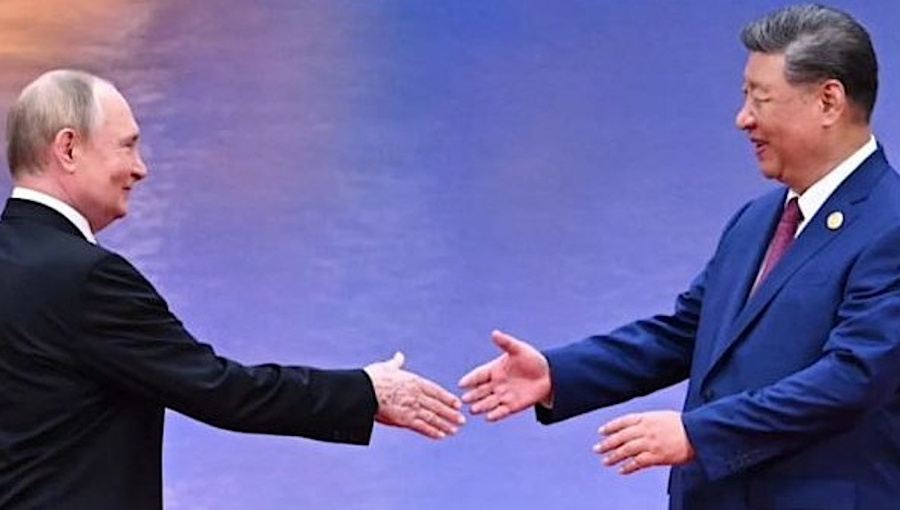
Chinese President Xi Jinping and Russian President Vladimir Putin called on Global South leaders to leverage their "mega-scale market" and strive for a new equalitarian multipolar world order at the Shanghai Cooperation Organization (SCO) summit in Tianjin on September 1.

The SCO had set a model for a “new type of international relations,” Xi said in opening remarks to 26 assembled leaders from emerging markets in Eurasia and beyond. He urged the assembled countries to find common ground and “oppose hegemony and power politics.”

"We should advocate for equal and orderly multipolarisation of the world, inclusive economic globalisation and promote the construction of a more just and equitable global governance system," he said, as cited by Reuters.

"We must take advantage of the mega-scale market... to improve the level of trade and investment facilitation," said Xi, urging the bloc to boost cooperation in fields including energy, infrastructure, science and technology, and artificial intelligence.

Putin echoed the same "genuine multilateralism", highlighting the multipolar world order he has been championing with Xi for years to replace what they called the unipolar order dominated by the US.

Putin also pointed to the growing settlement of trade deals in national currencies increasingly used in mutual settlements as concrete progress towards breaking up the old system.

"This, in turn, lays the political and socio-economic groundwork for the formation of a new system of stability and security in Eurasia," he said.

"This security system, unlike Euro-centric and Euro-Atlantic models, would genuinely consider the interests of a broad range of countries, be truly balanced, and would not allow one country to ensure its own security at the expense of others.”

Putin and Xi have gone beyond the pragmatic “marriage of convenience” their relation was described as in the early days and are becoming increasingly ideologically aligned. Payment systems to undermine the leading role of the US dollar in international trade deals was also a key feature of the BRICS Kazan summit held in Russia last September, the last time Putin and Xi met in person.

The Dragon, the Bear and the Elephant 

The SCO has come of age. Among the concrete initiatives floated at the SCO summit is a Chinese proposal to set up a SCO development bank to work in parallel with the China-based New Development Bank (NDB, formerly known as the BRICS Bank). Xi said China will provide CYN2bn ($280mn) to capitalise the new bank and another CYN10bn of loans to get it started. China has already invested $84bn in member countries and would provide another $1.4bn in loans over the next three years, he said.

Far from looking isolated, despite extreme international sanctions on Russia and an issued an arrest warrant for Putin personally, Putin was Xi’s guest of honour, standing next to the Chinese leader in the photo call and sitting next to him at the gala dinner.

Amongst the other prominent guests was Indian Prime Minister Narendra Modi as well as other leaders from Central Asia, the Middle East, South Asia and Southeast Asia. Modi was in China for the first time in seven years and was hoping to improve ties with China. The two countries have suffered from prickly relations for years, but Modi, like Putin, is increasingly being driven into China’s arms, by the aggressive tariff policy followed by the Trump administration. New Delhi and Beijing are seeking a reset in their relations as the leading Emerging Markets increasingly circle their wagons in the face of US pressure.

Amongst the other meetings, Xi also pledged to support Myanmar to “unify all domestic political forces as much as possible and restore stability” in a meeting with Min Aung Hlaing, the head of the country’s military. Myanmar's brutal military dictatorship is under sanctions by the West and counts China and Russia as amongst its few friends. 


China is offering a new deal based on mutual respect and strict non-interference in each other’s domestic affairs that is very appealing to Global South governments that have grown tired of lecturing by the G7 nations and punishments with missiles or sanctions when they don’t comply.

Xi called his partners to "oppose Cold War mentality and bloc confrontation" and to support “multilateral” free trade systems as he rallied the delegates in what has emerged as an anti-Trump alliance in the short-term and an alternative to the Western-dominated institutions of the international system in the long-term, although this very much remains a work in progress.

Speaking on the sidelines of the event, United Nations Secretary-General Antonio Guterres, who is one of the few Western guests, said China played a "fundamental" role in upholding global multilateralism.

A huge military parade is schdeuled for September 3 in Beijing to mark the 80th anniversary of victory in World War II by China over the Japanese. North Korean leader Kim Jong Un, despite not attending in Tianjin, is expected to join Putin and Xi on the rostrum overlooking Tiananmen Square for the parade

In a follow up meeting the Brazilian government has announced that it will organize an extraordinary BRICS summit in Kazakh  soon, Valor Econômico writes. During the event, the country's President Luiz Inacio Lula da Silva plans to discuss and develop a joint response by the association's members to threats to cooperation from the US.