Wednesday, September 03, 2025


Miners Dig Through Yesterday’s Waste to Find Tomorrow’s Metals

  • The mining industry is exploring alternative methods like recycling and re-mining waste tailings to secure essential metals for the energy transition due to challenges in traditional mining investments.

  • Significant amounts of valuable metals, particularly copper, can be recovered from mining waste, with some companies already investigating or investing in reprocessing plants.

  • While re-mining offers a promising solution for material security and waste reduction, its widespread adoption depends on developing cost-effective technologies and favorable market prices for recovered metals.

The mining industry is instrumental for securing the metals necessary for a transition to a more electricity-heavy energy system in the future. It has also been struggling with finding the motivation to invest in these metals. The paradoxical situation has stimulated an alternative approach: recycling and re-mining.

“I genuinely don’t see where all of this copper is going to come from at this point in time.” The observation was made by Anglo American’s chief executive, Duncan Winblad, to Bloomberg three years ago, referring to the projected huge amount of basic metal needed to advance the transition to net zero emissions in accordance with Paris Agreement targets.

But this is not the only thing Winblad told Bloomberg in that 2022 interview. He also said that “There are lots of copper resources in the world, and I think those resources could be brought to book, but the length of time it takes is completely under-appreciated by the market.”

Indeed, the long lead times in mining are the biggest obstacle on the net-zero course. The market has developed some appreciation of the fact, but copper prices still don’t motivate large-scale greenfield investments. So some miners are turning to alternative approaches to sourcing basic metals.

One of these approaches is re-mining, or recovering metals from tailings. Tailings is a nice name for waste—more specifically and importantly, mining waste. This waste contains certain amounts of metals that, according to some in the industry, can be recovered and used in the same way that the primary mined metals are used. These amounts of waste metals can be quite considerable and worth recovering.

According to the German research outlet Fraunhofer Institute, there is as much as 100 million tons of copper sitting in tailings dams from copper mining between 1910 and 2010. The current rate of tailings production is a sizable 7 billion tons annually. The metal content in the tailings is tiny, at between 0.1% and 0.5% for older mines and less than 0.1% for modern ones, but some argue that recovering metal content may be worth it to secure the copper that the energy transition needs.

Reuters’ Andy Home reported last week that some companies are indeed studying the commercial viability of metal recovery from tailings. These include Hudbay Minerals, which is considering copper recovery from the Flin Flon mine, which closed in 2022 but contains a lot of copper and zinc that is recoverable.

Another company, Australian Cobalt Blue Holdings, is considering a similar project for pyrite tailings as a source of sulfur to be tapped after the closure of a local copper smelter that is currently producing the chemical.

Yet another company, Hindustan Zinc, recently approved an actual investment in metals recovery from tailings for a zinc mine. The investment will be used to build a reprocessing plant with a capacity of 10 million tons per year. The Rampura Agucha is the world’s biggest zinc mine.

Re-mining certainly sounds like something that makes sense, especially in the context of a push towards what proponents call a circular economy, with a twin focus on securing necessary materials while keeping waste to a minimum. The problem seems to be technology. To make the extraction of residual metals from tailings economical, the cost of the process must be low enough to ensure its profitability.

The price of copper on international markets is not an incentive right now. It has remained stubbornly low despite projections of soaring demand and shortages. So, while re-mining sounds promising, it may be a while yet before we see tailing dams getting drained and their residual metal contents sucked out and used to manufacture copper wire. 

By Irina Slav for Oilprice.com 

U.S. Utilities Are Baffled by Phantom Data Centers

  • US electric utilities are struggling to accurately forecast future power demand due to numerous speculative data center interconnection requests that may not materialize.

  • The practice of AI-focused tech groups filing power requests with multiple utilities for a single potential data center project creates "phantom" demand, making accurate capacity planning difficult.

  • Overestimating demand could lead to utilities overbuilding new capacity, potentially at the expense of American ratepayers who are already experiencing rising electricity prices.


America’s electric utilities are preparing for the surge in electricity demand coming with the data centers powering AI. Utilities have increased investments as they see unprecedented demand growth in the coming years after two decades of flat U.S. electricity consumption.   

But they are grappling with increased levels of uncertainty because not all requests for interconnection they receive will materialize in actual data centers, necessitating electricity supply.  

Phantom Data Centers

Hyperscalers and AI-focused tech groups are sounding out the utilities in the areas they are considering for future data centers, and are filing requests for interconnection of one data center with several utilities in several areas. 

The huge number of requests does not paint an accurate—or full—picture of the power needs of the technology giants because companies tend to inquire about data center power supply with at least three utilities in different areas. 

Of these three requests for new power capacity, only one will become a project for which agreements will be signed. Analysts and utilities cannot reliably say how much new capacity is needed, considering that one data center project pitches electricity supply requests to different utilities in different states.

After one site is picked, all the other previously proposed locations – and the interconnections – will never be built. These would be “phantom” data centers, which will never see the light of day, but which are currently haunting the projections and plans of the U.S. utilities. 

So, electric utilities face a high degree of uncertainty over future revenues as the boom of AI data centers generates widely varying forecasts of peak demand in many areas across the country. 

If utilities overestimate their future demand, they risk overbuilding new capacity that will not be met by consumption. A possible overbuild would come at the expense of the American ratepayers, who have already seen electricity prices rising at a faster pace than U.S. inflation over the past three years.

Puzzled Utilities  

The phantom data centers and the speculative projects are making projections difficult for utilities. 

For example, Sempra’s Texas-based utility Oncor said its active large commercial and industrial (LC&I) interconnection queue as of June 30, 2025, was about 38% higher than at the same time last year. As of June 30, Oncor’s active LC&I interconnection queue had 552 requests, which includes approximately 186 gigawatts (GW) from data centers and over 19 GW of load from diverse industrial sectors. 

American Electric Power Company, which serves over 5 million customers in 11 states, said it now has 24 GW of firm customer commitments for incremental load by the end of the decade, up from 21 GW previously, thanks to data center growth, reshoring, and manufacturing.

“Beyond the 24 gigawatts, customers are also actively seeking to connect approximately 190 gigawatts of additional load to our system. This is five times our current system size of 37 gigawatts,” AEP president and CEO William J. Fehrman said on the Q2 earnings call. 

U.S. power utilities are investing a record amount of money into transmission and grid connection. But current forecasts of AI-driven power demand vary so much that there is a massive margin of error, analysts and utility officials told Reuters Events in June.

The U.S. market faces “a moment of peak uncertainty,” according to Rebecca Carroll, Senior Director of Market Analytics at energy advisor Trio.

The latest report from the U.S. Department of Energy (DOE) puts data center consumption at anywhere between 6.7% and 12% of total U.S. electricity by 2028.

“The report estimates that data center load growth has tripled over the past decade and is projected to double or triple by 2028,” DOE said.

However, there is a huge difference between double or triple growth in data center load.

This has prompted utilities to demand clear demand estimates from data centers for future connections and power purchase agreements (PPAs), to reduce the risk of getting demand and/or prices wrong.

AI Drives U.S. Power Demand Growth

“We know not all of that is going to come online, but even a fraction of that is significant,” AEP’s chief financial officer, Trevor Mihalik, said on the earnings call.  

U.S. power utilities have announced billions of dollars in capital plans for the next few years and are getting a lot of requests from commercial users, most notably Big Tech, for new power capacity in many areas next to planned data centers. 

Onshoring of manufacturing activity and AI-related data centers are driving an increase in U.S. electricity consumption, Goldman Sachs said in a report earlier this year. 

U.S. electrical power demand is expected to rise by 2.4% each year through 2030, with AI-related demand accounting for about two-thirds of the incremental power demand in the country, the investment bank said. 

The world’s biggest economy will need all energy sources to ensure power demand is met. Natural gas is the biggest near-term winner of AI advancements, but renewables will also play a key role in powering the data centers of next-generation computing, analysts say. 

By Tsvetana Paraskova for Oilprice.com 


AI Energy Demand Is Soaring but Not Because of Consumer Queries

  • Nearly half of U.S. electricity demand growth by 2030 will come from AI-driven data centers, with consumers absorbing higher costs.

  • AI companies provide little to no transparency on energy use or emissions, leaving regulators and consumers in the dark.

  • While AI could eventually offset emissions through innovation, today it is fueling both rising utility bills and climate concerns.

Artificial intelligence (AI) is eating up more and more energy all the time as large language models become increasingly complex and pervasive. In the United States, nearly half of all growth in electricity demand between now and 2030 will come from data centers, driven by the AI boom. But the problem isn’t your daily queries to ChatGPT – it’s indiscriminate AI integration in technologies and services that are far outside the end-users' control. Yet, it’s consumers who are footing the bill for soaring energy demand. 

We don’t know exactly how much energy large language models are consuming, because AI companies aren’t required to disclose the information. As a result, the vast majority of them do not, and the sector is characterized by opacity when it comes to environmental impact. As of May, 84 percent of all large language model traffic was conducted on AI models with zero environmental disclosure. While many researchers are trying to calculate AI’s energy footprint, it’s a difficult task – especially because models are changing all the time, generating shifts in terms of both increased complexity and increased efficiency. 

“It blows my mind that you can buy a car and know how many miles per gallon it consumes, yet we use all these AI tools every day and we have absolutely no efficiency metrics, emissions factors, nothing,” says Sasha Luccioni, climate lead at an AI company called Hugging Face. “It’s not mandated, it’s not regulatory. Given where we are with the climate crisis, it should be top of the agenda for regulators everywhere,” she went on to say.

But while we don’t know exactly how much energy AI models use, we do know that it’s a lot. “AI’s integration into almost everything from customer service calls to algorithmic “bosses” to warfare is fueling enormous demand,” reports the Washington Post. “Despite dramatic efficiency improvements, pouring those gains back into bigger, hungrier models powered by fossil fuels will create the energy monster we imagine.”

That being said, there are many things that we as consumers do each and every day that contribute far more to global greenhouse emissions. A handful of AI queries per day is negligible compared to other common and under-scrutinized practices. Watching TV and streaming videos on the internet is likely a far greater culprit of energy usage if your lifestyle is anything close to the average American’s. And your work commute is surely generating much more greenhouse gas emissions.

Put simply, the spike in energy demand from AI models is not consumers’ fault – but it is their problem. While tech companies are consuming more and more energy each year to power their AI ambitions, common consumers are footing the bill. Not only are consumers paying the literal price for AI expansion, but they will also have to bear the burden of the sector’s environmental impacts. Silicon Valley's backtracking on climate pledges, for example, will directly impact global communities, whether or not they ever benefit from AI.

"We are witnessing a massive transfer of wealth from residential utility customers to large corporations—data centers and large utilities and their corporate parents, which profit from building additional energy infrastructure," Maryland People's Counsel David Lapp recently told Business Insider. "Utility regulation is failing to protect residential customers, contributing to an energy affordability crisis.”

On the other hand, AI is gaining efficiency all the time and will be instrumental to reshaping global industries, including the energy sector, to be greener. Large language models can help advance technological breakthroughs for significant emissions gains, with noted potential for innovations in batteries and solar power. The International Energy Agency reports that increased emissions from data centers could even eventually be offset if AI is used to lower emissions from other sectors. 

We’re currently in the messy exploration stages of a global transformation, and the up-front costs in terms will be – and already are – high. Training large language models is incredibly energy- and resource-intensive. But as AI advances, we will get much better at learning how to optimize it, and it could be a net benefit – even in terms of emissions – further down the road. But until then, consumers will be paying the price.

By Haley Zaremba for Oilprice.com


Video: Meyer Turku in Finland Floats Third Mega Cruise Ship

giaint cruise ship floated
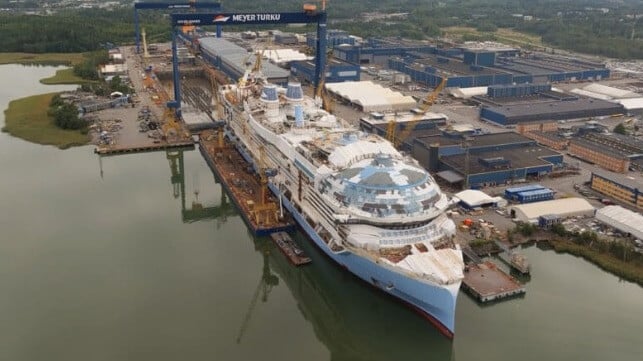
Legend of the Seas was floated and moved forward to the fitting out berth (Royal Caribbean)

Published Sep 2, 2025 4:03 PM by The Maritime Executive


Meyer Turk in Finland marked the next milestone as it continues at pace in the shipbuilding project for the world’s largest cruise ships. The third vessel, which is named Legend of the Seas, was floated in the assembly dock on August 29 and has now been moved forward to the fitting out berth. 

This latest achievement came just seven weeks after the delivery of the second cruise ship of the class, Star of the Seas. The third ship was being moved to her fitting out berth as the second ship started its first commercial cruise after a series of preview trips from Port Canaveral, Florida.

The floating of the new ship comes after all the structural elements of the assembly are completed and includes ceremonial elements, starting with the firing of a historic cannon to commence the floating.  The actual floating takes nearly 12 hours to lift the 248,663 gross ton cruise ship. Measuring 1,196 feet (364 meters), the cruise ship is nearly the length of the assembly dry dock. After the ship is floated, they open the massive doors on the front of the dock and use tugs to pull the ship forward.


"Legend of the Seas continues the state-of-the-art Icon Class, which allows the Finnish maritime industry to showcase its unique expertise at its best,” said Casimir Lindholm, CEO of Meyer Turku. “The shipyard, Royal Caribbean, and an extensive network of partners work together to develop the processes and concepts from ship to ship. Alongside its sister ships, Legend of the Seas will also mark an important milestone in increasingly responsible shipbuilding.”

The ship, like her sisters, is outfitted with a broad range of amusements and attractions for passengers, ranging from an infinity swimming pool and water slides to the massive glass Aqua Dome entertainment venue above the bridge the ship and a range of dining options. The ship, when completed, will have over 2,800 passenger cabins and suites able to accommodate approximately 6,700 passengers and 2,350 crew when full. The Legend of the Seas is due to enter service for Royal Caribbean International in the summer of 2026, first in the Mediterranean and then repositioning for cruises ot the Caribbean.

Like her two sister ships and the Oasis class Utopia of the SeasLegend of the Seas will be fueled by LNG. It has other technologies, including waste heat recovery systems and shore power connections, to its environmental impact.

The pace of construction will continue at Meyer Turku with the first blocks of the fourth ship of the class expected to be placed into the assembly dock in the coming weeks. Royal Caribbean Group ordered the fourth ship in August 2024 for delivery in 2027. The company also has unexercised options with Meyer Turku for a potential fifth and sixth ship of the class.

The cruise industry is pushing forward to build more cruise ships exceeding the 200,000 gross ton size. Royal Caribbean has also ordered an additional Oasis class cruise ship (236,473 gross tons) from Chantiers de l’Atlantique, while MSC Cruises has also ordered four more of its World class cruise ships (215,000 gross tons) from the French yard. This week, Disney Cruise Line’s Disney Adventure (206,500 gross tons) began sea trials ahead of her entry into service in December. Carnival Cruise Line has ordered three cruise ships for its Project Ace (230,000 gross tons), which will be built at Fincantieri, starting delivery in 2029, and Norwegian Cruise Line has ordered four 227,000 gross ton cruise also to be built by Fincantieri for delivery starting in 2030.


Advanced Battery Technologies Can Support Integration of Alternative Fuels

ABS

Published Sep 2, 2025 9:13 PM by The Maritime Executive


[By: ABS]

The latest advances in battery technologies have the potential to not only support direct electrification and the integration of alternative fuels but also offer pathways to enhance operational efficiency and reduce fuel costs according to the latest industry-leading analysis from ABS.

Emerging Battery Technologies in the Maritime Industry Volume II deepens industry understanding of the inherent safety risks associated with emerging battery systems, particularly thermal runaway (TR) and gas emissions.

The report also delivers actionable insights to guide the safe implementation and development of comprehensive safety strategies and is intended as a critical resource for operators looking to incorporate advanced battery technologies into their fleets.

“Batteries offer tangible benefits in marine and offshore operations, supporting advancements in efficiency, regulatory compliance and emission reduction. The challenges are primarily due to the developing comprehension of TR behavior, the need for wider research on gas generation and explosion hazards, and the lack of a robust safety management strategy for large-scale applications. At ABS, we are proud to offer the latest insights into fire safety strategies and the safe integration of current and advanced battery technologies,” said Michael Kei, ABS Vice President, Technology.

The study explores the latest advancements in technologies including lithium-ion (Li-ion) and six, next-generation batteries, evaluating the maturity, benefits and challenges of energy storage systems for marine and offshore applications.

ABS offers industry-leading guidance on alternative hybrid electrical technologies and certifications for the operation and installation of these technologies on vessels. Learn more here. Download a copy of the ABS Emerging Battery Technologies in the Maritime Industry Volume 2 here, and find volume one here.

The products and services herein described in this press release are not endorsed by The Maritime Executive.


The CyberBoat Challenge: Cybersecurity Education for the MTS

Ship with digital elements
iStock / Suphanat Khumsap

Published Sep 2, 2025 10:00 PM by Dr. Gary C. Kessler, Dr. Jeremy Daily and Karl Heimer


The information security industry has lamented the lack of available skilled and talented workers for the last three decades. A common estimate today is that there are a million unfilled cybersecurity-related positions in the U.S. alone. The absence of skilled cybersecurity workers has a particular impact on the maritime transportation system (MTS) because "traditional" cyberdefense skills do not directly translate to the maritime information ecosystem, so we are even further behind.

The maritime domain is a highly intertwined system of systems, composed of a complex and interconnected collection of information technology (IT) and operational technology (OT). Maritime's information ecosystem is a mix of data centers, networks, sensors, communication systems, and end-user devices that are subject to the same cyberdefense requirements as the rest of the information universe. That said, the MTS has unique cybersecurity requirements, including the combination of many moving and stationary parts; smart ships, ports, and cargo; cyber-physical systems and operational technology; maritime-specific navigation and situational awareness systems; and human-machine interfaces.

The CyberBoat Challenge started in 2022 and has become an annual educational event, bringing together cybersecurity students learning about maritime systems, industry partners and government. It is a cooperative learning opportunity where students examine the maritime environment and maritime information systems in order to understand the protocols, operations and interfaces - and how they all relate to the real world.

Traditional methods of cybersecurity education, training, and workforce development benefit from new and innovative ideas in order to teach students about the many niche technical specialties that have emerged in last couple of decades and, in particular, to develop the next generation of cyberdefense professionals in the maritime industry. Maritime product vendors, ports, shipping lines, merchant mariners, and others in the maritime domain need to be creative in where we find people for cyber roles, which might include professionals from the engine room or the bridge.

The maritime industry must also engage more fully with academic institutions to channel students in understanding the unique needs within the maritime domain. A handful of colleges and universities in the U.S. and globally are already focusing on maritime in their computer science, computer engineering, cybersecurity, or other related programs. The CyberBoat Challenge provides one way in which faculty and students from these — and other — academic institutions can meet and network. The CyberBoat events specifically seek industry and government involvement to help create a miniature ecosystem which not only helps students understand the context of the material and problems, but also helps them form ties with potential mentors and potential employers regardless if their goals are industry, government, academia, or the security community.

There is an adage that engineers don't understand security. This is somewhat borne out by the fact that the most common software flaws reported today are the same as the most common software flaws reported 25 years ago. All too often, engineers work in solution space and not problem space; i.e., they work on solving known problems but they're not necessarily trained to go out and seek new problems hidden in our increasingly complex technology systems. Indeed, most undergraduate courses teach technical topics by assigning problem sets rather than assigning students to find problems.

By bringing together people with diverse academic and experiential backgrounds, students new to this information environment can exercise the critical thinking necessary to identify problems that we may not yet have recognized before they appeared in tragic ways. Every time an accidental event occurs in an IT or OT system on a ship or at a port, cyber processionals — and adversaries — look to see if there's a cyberattack vector that might deliberately cause the same outcome. Consider the failure of a microswitch in the steering control system on BBC Africa, causing her to collide with Common Faith in Houston in August 2023, or the tripped breaker resulting in a power failure on Dali, causing an allision with — and catastrophic failure of — the Francis Scott Key Bridge in March 2024.

CyberBoat is not a cyber competition. The event is pro-industry, and its raison d'être is to help industry understand and address cybersecurity challenges. It is a resource for participants to draw on in terms of augmenting education; making industry connections; understanding the needs, priorities, and remedies of sister organizations; understanding the perspective and role of governmental agencies; and as a recruitment resource for companies looking for interns and employees. It also helps to build a cohort of students learning a new way to think critically about problem identification and solution.

While this is a new approach within the maritime domain to address a long-existent problem, the CyberBoat Challenge is using a well-known engagement and education model which was pioneered by its "elder siblings" — CyberAuto Challenge since 2012 and CyberTruck Challenge since 2017 — which have served as a training and mentoring asset for industry, academia, government, and students, and has seen many hundreds of past participants enter the transportation cybersecurity field. This training system works and has had positive effects in the community of interest.

The next CyberBoat Challenge is in December and will be held at the University of North Carolina Wilmington. Faculty, students, academic institutions, vendors of maritime products, shipping companies, ports, and other interested parties can find more information at https://cyberboatchallenge.net/.

Dr. Gary C. Kessler is co-author of "Maritime Cybersecurity," 2/e and is a lecturer and advisory board member of the CyberBoat Challenge.

Dr. Jeremy Daily is a professor at Colorado State University and program organizer of the CyberBoat Challenge.

Karl Heimer is the founder and board chair of the CyberAuto, CyberBoat, and CyberTruck Challenges.

The opinions expressed herein are the author's and not necessarily those of The Maritime Executive.


Gibdock Becomes Major Focus for Offshore Support Vessel Work

Gibdock
BOKA Southern Ocean - Image credit: Gibdock

Published Sep 2, 2025 9:07 PM by The Maritime Executive


[By: Gibdock]

Gibdock has completed a series of high-profile offshore support vessel (OSV) projects in recent months to consolidate its reputation for delivering exceptional and timely service to the offshore industry.

In a significant and growing market for Gibdock, the Gibraltar-based ship repair yard has established itself as a trusted strategic partner to several major offshore players by consistently executing projects on time, within budget, and to the highest safety and quality standards.

As part of an ongoing relationship with Boskalis, Gibdock has completed works on the trailing hopper suction dredger Gateway, the construction support vessel BOKA Southern Ocean, and the multipurpose construction vessel BOKA Fulmar in recent months. Other significant OSV projects this year include the repair of Subsea 7’s construction/flex-lay vessel Seven Pacific and the repair and renewal of Technip’s specialised rigid pipelay vessel Deep Blue.

With Solstad’s anchor-handling tug supply vessel Normand Pacific currently in the yard for renewal, and many more projects in the pipeline for the year ahead, Gibdock’s outlook in the offshore support segment is strong.

“Offshore majors trust Gibdock because of our track record in delivering safe, high-quality, and on-time services at good value,” commented John Barnard, Commercial Director, Gibdock. “We work closely with these companies to provide bespoke projects and conversions within a timeline that suits them. Due to the strong and growing demand for our OSV services, we encourage proactive engagement: interested parties should approach us early, even when projects are planned for two or three years out, so we can ensure availability and provide tailored input.

The products and services herein described in this press release are not endorsed by The Maritime Executive.


Everllence Breaks Ground on New Danish HQ

Everllence
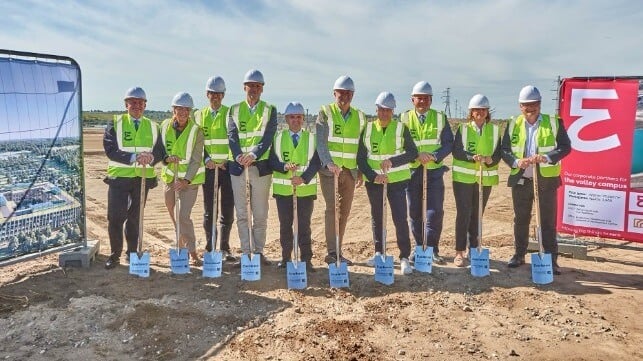
Pictured at the groundbreaking ceremony for the new Everllence Danish headquarters in Roskilde, Denmark

Published Sep 2, 2025 8:38 PM by The Maritime Executive


[By: Everllence]

Everllence has held a groundbreaking ceremony in Roskilde, Denmark to mark the commencement of the building phase of its new Danish headquarters. Called ‘The Valley’, the development is a joint venture between Everllence and Volkswagen Immobilien, the Volkswagen Group’s real-estate division.

The company states that its current base in Greater Copenhagen – and its Holeby, southern Denmark site – have given rise to many innovations that drive climate-neutral shipping, including such world-firsts as the high-pressure dual-fuel two-stroke engine, methanol-powered engines, as well as the first firing of a two-stroke engine fuelled by ammonia.

However, the sites’ current facilities – particularly at its Copenhagen location – are outdated with major renovations otherwise looming. The decision to relocate is driven then by strategic necessity with The Valley offering space for growth, both in terms of workforce and production capacity, and in an industrial setting that facilitates the testing of new fuel-technologies while ensuring safer logistics.

The ceremony was attended by members of the Everllence Executive Board and a number of prominent guests, including: Everllence CEO, Dr Uwe Lauber; Managing Director Volkswagen Immobilien, Hardy Brennecke; Everllence Head of Two-Stroke Business and Country Manager Denmark, Bjarne Foldager; and Mayor of Roskilde, Tomas Breddam.

Lauber said: “Today’s event marks a historic milestone in Everllence’s journey. As we turn the first sod in this exciting venture, we are laying the foundation – not just for a new campus, but for a new chapter in our company’s history. Our current facilities in Denmark have served us well but were not built for the future we are envisaging. This location is purposely designed for excellence, tailored to the unique needs of our people, our technologies, and our decarbonisation aspirations. The future starts here – and it starts now.”

Located on the site of a former gravel pit, The Valley campus lies 40 km west of Copenhagen and will comprise a 70,000 m² complex of buildings including office space for at least 1,500 workstations, a teaching academy, meeting centre and an employee club. Construction by general contractor, DS Flexhal, will also see the building of a production unit and warehouse, as well as a research centre with testing facilities.

Speaking on behalf of VW Immobilien, Brennecke said: “The traditional groundbreaking ceremony for ‘The Valley Campus’ marks the start of construction for a special real-estate project. Over the next few years, modern, sustainable office and production facilities, an academy, and meeting areas will be built on the approximately 175,000 m² site. With this sustainable construction project, Everllence is underscoring its successful business development. We wish everyone involved in the project a thriving and accident-free construction period.”

Foldager said: ”This project is also a strategic consolidation that brings together our teams from Copenhagen and Holeby, creating an environment where expertise meets collaboration, where two-stroke meets four-stroke – and with room to grow, free from the constraints of residential surroundings. Here, we can innovate safely, efficiently, and responsibly – especially as we work with new fuels like ammonia. Together, we are building more than a main location for Everllence in Denmark; we are building a legacy.”

The products and services herein described in this press release are not endorsed by The Maritime Executive.


Panama and Classification Societies Review Regulations to Align Strategies

Panama meets classification societies

Published Sep 2, 2025 7:06 PM by The Maritime Executive


[By Panama Ship Registry]


The Panama Maritime Authority (PMA), through the Directorate General of Merchant Marine (DGMM), held a roundtable with the International Association of Recognized Organizations (IARO) to review, update, and align Panama’s Ship Registry regulations with the demands of the global market.

The meeting brought together PMA officials and leading classification societies within the IARO, marking a decisive step toward modernizing Panama’s ship registration regime.

“We must see the Panamanian Registry as a single team. It’s not only the PMA’s responsibility, maritime lawyers and Recognized Organizations must also drive projects and new measures to strengthen competitiveness,” emphasized Ramón Franco, Director General of Merchant Marine.

For his part, IARO President Santiago Torrijos Oro highlighted that cooperation with the PMA will bolster Panama’s flag on the international stage. “The measures may seem drastic, but they are necessary to remain one of the world’s most prestigious flags,” he stated.

Discussions focused on key industry challenges, including maritime safety, environmental protection, and the need for a modern and transparent regulatory framework. These efforts aim to ensure that Panama maintains its global leadership while adapting to the evolving standards of the International Maritime Organization (IMO) and the growing demands of international trade.

The IARO brings together classification societies recognized by the PMA to inspect and certify vessels, making their role vital in ensuring the continuous improvement of the Panamanian flag.

Through this joint effort, Panama reaffirms its standing as a global leader in merchant shipping and strengthens international shipowners’ confidence in its flag. 
 

The products and services herein described in this press release are not endorsed by The Maritime Executive.