Wednesday, September 03, 2025

Serbia records lowest support for EU in Western Balkans, survey shows

Serbia records lowest support for EU in Western Balkans, survey shows
Protest on the anniversary of NATO’s 1999 bombing of Belgrade, March 2025. / X/@SprinterExpres0
By bne IntelliNews September 2, 2025

Support for European Union (EU) membership in Serbia has dropped to the lowest level in the Western Balkans, a new Eurobarometer survey showed on September 2, underscoring the country’s strained ties with the bloc amid stalled accession talks and closer relations with Russia and China.

Just 33% of respondents in Serbia said they backed joining the EU, compared with 91% in Albania and 69% in North Macedonia, according to the survey commissioned by the European Commission. Only 38% of Serbians said they had a positive image of the EU, the lowest in the region.

The findings highlight the deep ambivalence many Serbs feel toward Brussels, shaped by the legacy of the 1990s conflicts and more recent political frictions. Nato’s 1999 air strikes against Serbia and the recognition of Kosovo’s independence by most Western states in 2008 entrenched resentment, with Belgrade turning to Moscow for diplomatic support.

Russia and China have since expanded their influence. Russian backing over Kosovo and frequent state visits keep Moscow popular among nationalist and anti-Western groups, while Chinese investment in infrastructure and vaccine donations during the pandemic boosted Beijing’s standing.

At the same time, the EU lost credibility among liberal, pro-Western Serbs, many of whom once saw membership as a guarantee of stability and prosperity. Critics say the bloc has tolerated President Aleksandar Vucic’s tightening grip on power while sidelining the opposition in pursuit of its own interests, such as securing the bloc access to Serbia’s critical minerals.

Serbia launched accession talks in 2014 but has not opened a new negotiation chapter in four years, with Brussels demanding reforms to strengthen the rule of law and normalise relations with Kosovo. The EU remains Serbia’s biggest trade and investment partner, but Belgrade has sought to balance ties by cultivating relations with Moscow and Beijing.

Elsewhere in the region, Montenegro and Albania are seen as the frontrunners in the membership process, which might explain their higher level of public support for joining the bloc. North Macedonia’s progress has been repeatedly delayed, first by a name dispute with Greece resolved in 2018 and later by Bulgaria over language and historical issues. Bosnia & Herzegovina and Kosovo remain at an early stage of accession talks.

Despite falling public support, Serbian officials insist EU entry remains a strategic goal. Analysts say, however, that delays and disillusionment with enlargement are driving Belgrade to diversify its alliances.

Across the EU, the survey found nearly two-thirds of respondents aged 15 to 39 supported enlargement, citing benefits in security, competitiveness and global influence, though 67% said they felt poorly informed about the process


Putin has no objection to Ukraine joining the EU

Putin has no objection to Ukraine joining the EU
Putin repeated remarks to Slovak Prime Minister Robert Fico during his visit to China that the Kremlin has no objection to Ukraine joining the EU, but Nato membership remains the reddest of red lines. / bne IntelliNews
By Ben Aris in Berlin September 3, 2025

Debunking a widely held assumption, Russian President Vladimir Putin said during a visit to China to attend the SCO summit that Russia has “no objection” to Ukraine joining the EU on September 2.

However, he repeated that the Kremlin does object to Ukraine joining Nato, which remains a red line for Moscow since the Russian Ministry of Foreign Affairs issued an eight-point list of demands in December 2021 in the prelude to the invasion of Ukraine three months later.

Moscow has long said that it has no problem with Ukraine’s desire to become a member of the European trade club and sees it as a business deal. However, the Kremlin has always said that if Ukraine were to join there would need to be a three-way discussion including Moscow, Brussels and Kyiv as Russia and Ukraine had significant mutual trade. The Kremlin was afraid of EU goods entering the Russia market via Ukraine, which had open borders and a free trade agreement pre-war, undermining Russia’s trade policies. Both Kyiv and Brussels refused three-way talks which was the start of tensions between them.

Putin repeated that Moscow does not oppose Ukraine’s possible accession to the European Union during his trip to China this week, while reiterating that Nato membership for Kyiv remains unacceptable to the Kremlin. Speaking during a visit to China, Putin also signalled a willingness to cooperate with the US on restarting the Cold War-era missile deals that he discussed with US President Donald Trump during the recent Alaska summit on August 15.

“As for Ukraine’s membership of the EU, we have never objected to this,” Putin told Slovak Prime Minister Robert Fico during bilateral talks. “As for Nato, this is another issue... Our position here is well known: we consider this unacceptable for ourselves.”

Putin’s comments come as Ukraine’s Western allies attempt to thrash out security guarantees and an aid package as part of the US sponsored drive to end the war in Ukraine. Trump has called for bilateral and trilateral meetings between Putin and Ukrainian President Volodymyr Zelenskiy and himself, but progress towards such a meeting is currently stalled. Ukraine’s European allies are due to have another meeting of the coalition of the willing in Paris on September 4 to continue the discussion, however, the Trump administration has already said it will not attend that meeting.

“There are options for ensuring Ukraine’s security in the event of an end to the conflict,” Putin told Fico, referencing his meeting with Trump in Alaska. “And it seems to me that there is an opportunity to find consensus here.”

Trump, speaking after the summit, said he believed Putin was “tired” of the war and told a US radio station over the weekend that he was “disappointed” with Putin, hinting at new harsh sanctions on Russia if a Zelenskiy meeting doesn’t happen soon. However, Trump has repeatedly threatened Russia with new sanctions since he took office and so far has imposed no new sanctions whatsoever.

Ukraine and its Western allies are becoming increasingly sceptical about Putin’s commitment to a negotiated resolution and accuse the Kremlin of suggesting concessions and meetings as a ruse to delay possible new sanctions on Russia by the US. Ukrainian officials argue that Moscow cannot dictate Kyiv’s foreign policy, and Nato has reaffirmed that Russia has no veto over the alliance’s enlargement, although the Trump administration has made it clear that Nato membership is off the table for Ukraine. In lieu of full membership Italy’s Prime Minister Giorgia Meloni has suggested a Nato-lite variant of Article 5-like security guarantees by individual EM member states that is currently under discussion.

Putin said reaching consensus on security guarantees for Ukraine was possible, even as he reiterated Moscow would never accept Kyiv’s accession into NATO. However, the  Kremlin has been ambivalent on Meloni’s Nato-lite suggestion, hinting it would accept bi-lateral security guarantees by individual European powers. This sort of agreement on security deals was already reached at as part of the failed 2022 Istanbul peace deal. The Kremlin has repeatedly suggested that those talks should be used as a framework for the current security arrangement negotiations.

However, the Kremlin has made  it clear it must be part of any bilateral agreements on Ukraine’s security. Putin has rejected the US-sponsored idea of an unconditional 30-day ceasefire, floated by the White House in February and prefers to start talks on a longer-term peace plan that deals with the “root causes” of the conflict. Part of that would be to include Russia in any pan-European security deal, rather than excluding it, as Ukraine’s Nato membership entails.

“There are options for ensuring Ukraine’s security if the conflict ends,” Putin told Fico, Reuters reports. “It seems to me that there is an opportunity to find a consensus here,” adding that the topic came up in discussions with US President Donald Trump when the two leaders met in Alaska.

In an apparent attempt to allay Western concerns, Putin dismissed warnings of further Russian aggression as “horror stories” and “hysteria” promoted by “incompetent people seeking to cast Russia as an enemy”.

“Hysteria is constantly being whipped up that Russia is supposedly planning to attack Europe,” he said. “This is a provocation or complete incompetence.”

British and German intelligence have warned that Russia may be contemplating an attack on Nato members sometime in the next five years, but Russian Foreign Minister Sergei Lavrov has always dismissed the idea. “We are not crazy,” he commented early in the war when the idea was first floated.

On nuclear safety, Putin said Russia was open to working with US authorities at the Zaporizhzhia nuclear power plant in Ukraine, under Armed Forces of Russia (AFR) control since March 2022.

“We can cooperate with American partners at the Zaporizhzhia nuclear power plant,” he said, noting that discussions had already taken place indirectly with Washington. He added that Moscow was also prepared to engage with Ukraine on the issue.


Ecuador considers hosting US deportees as Washington eyes military base return

Ecuador considers hosting US deportees as Washington eyes military base return
This potential agreement marks a major shift in Ecuador's immigration policy under centre-right President Noboa, who was re-elected for a four-year term in April on promises to tackle security challenges and pursue stronger US ties.
By Mathew Cohen September 3, 2025

Ecuador and the United States are negotiating an unprecedented immigration agreement that would allow the South American nation to host deported migrants from third countries, coinciding with Secretary of State Marco Rubio's visit to Quito this week.

Foreign Minister Gabriela Sommerfeld confirmed that Washington has requested Ecuador accept a small group of migrants as refugees, though she stipulated that the programme would differ significantly from El Salvador's current arrangement, which includes receiving criminal deportees.

"It will be a limited program that only addresses refugees of certain nationalities who have no criminal record and who meet certain criteria, such as good health," Sommerfeld stated. The proposed framework includes strict parameters: maximum admission of 300 people annually, selection limited to unspecified nationalities, exclusion of individuals with criminal records, and health requirements.

Sommerfeld also said that “there is a possibility” Washington could establish a military base on Ecuadorian territory. 

“It doesn’t necessarily have to be a base for military purposes, but rather a base for different types of cooperation,” she said. Ecuador hosted US forces at the Manta air force base from the late 1990s until 2009, when former leftist president Rafael Correa cancelled the deal after coming to power.

Presidential spokesperson Carolina Jaramillo clarified that discussions remain ongoing with no final decision reached, describing it as a mutual agreement rather than a US imposition.

Rubio's arrival in Quito will address three key bilateral issues: security cooperation against organised crime and drug trafficking, irregular migration management, and economic development opportunities. Ecuador also plans to discuss the 15% tariffs imposed by the Trump administration that continue to affect its exports.

If finalised, the deal would mark a major shift in Ecuador's immigration policy under centre-right President Noboa, who was re-elected for a four-year term in April on promises to tackle security challenges and pursue stronger US ties. The arrangement could prove politically sensitive, however, given public concerns about Ecuador's capacity to manage additional migration pressures amid its own economic difficulties.


'Greatest Corruption in Presidential History': Trump Family Reaps $5 Billion More in Crypto Profits

"Your family gets higher energy prices and cuts to healthcare. His family gets billions," said Rep. Greg Casar.


Demonstrators hold up mock cryptocurrency during the "America is Not for Sale" rally against President Donald Trump's crypto dealings at the Trump National Golf Club on May 22, 2025, in Washington, DC.
(Photo by Jemal Countess/Getty Images for Public Citizen)\

Stephen Prager
Sep 03, 2025
COMMON DREAMS

In what Public Citizen called "the greatest corruption in presidential history," US President Donald Trump and his family added $5 billion in cash to their fortunes this Labor Day as his new cryptocurrency was opened to the public market.

The currency, known as WLFI, is owned by World Liberty Financial, a company founded by the president's sons, Donald Trump, Jr., and Eric Trump. A Trump business entity owns 60% of the company and is entitled to 75% of the revenue from coin sales.

As the Wall Street Journal reported Monday:
The trading debut was most likely the biggest financial success for the president's family since the inauguration...

WLFI is likely now the Trumps' most valuable asset, exceeding their decades-old property portfolio. While the president's family has continued to pursue property deals around the world since taking office, the fast-moving crypto business has had the biggest early impact.

Crypto is now the dominant source of Trump's wealth. As an investigation by the anti-corruption group Accountable.US found last month, "President Trump's net worth could roughly be $15.9 billion, with about $11.6 billion in uncounted crypto assets," meaning that the digital currencies now make up 73% of his total net worth.

In addition to the tokens owned by World Liberty Financial, it found that two Trump-affiliated companies owned 80% of the $TRUMP meme coin as of May and had collected over $324 million in fees since Trump took office in January.

Meanwhile, Trump Media, which owns his online platform Truth Social, bought $2 billion worth of Bitcoin in July and reserved another $300 million in Bitcoin options.

As America's self-proclaimed "first crypto president," Trump has sought to curb regulations against the volatile financial assets.

In July, Trump signed the GENIUS Act, which purports to establish the US's first regulatory framework for crypto. However, critics noted that the law designated so-called "stablecoins," of which Trump owns many, as "commodities" rather than "securities," allowing them to face much looser oversight.

Though the bill passed with support from over 100 Democrats, Rep. Maxine Waters (Calif.), the ranking Democrat on the House Financial Services Committee, warned that the bill "legitimizes Trump actively building the most corrupt self-dealing crypto environment this country has ever seen."

Rep. Ayanna Pressley (D-Mass.) described Trump's latest $5 billion windfall as "blatantly corrupt and a brazen abuse of power."

"The current occupant of the White House," she said, "is putting personal profit above the people, using his power to illegally line the pockets of his family and billionaire friends while hanging everyday families out to dry by ripping away their healthcare, food assistance, raising the cost of consumer goods, gutting the Consumer Financial Protection Bureau, and more."

While cryptocurrency is often billed as an asset available to everyone that levels the playing field of the finance world, in practice, its ownership is largely concentrated among the wealthiest Americans. According to a Harris poll published in April, nearly half of all crypto owners have a yearly income of over $150,000, putting them in the wealthiest 10% of the country.

"Your family gets higher energy prices and cuts to healthcare. [Trump's] family gets billions," said Rep. Greg Casar (D-Texas), the chair of the Congressional Progressive Caucus. "Corruption, plain and simple."

Sen. Patty Murray (D-Wash), a strong advocate for crypto regulation, said that such blatant profiting from the presidency makes Trump "easily the most corrupt president in our country's history," and emphasized that "Republicans in Congress are not lifting a single finger to exercise basic oversight."

According to data from OpenSecrets, just three crypto industry-backed political action committees (PACs) poured over $133 million into the 2024 election. Though they spent the majority of that money supporting Republicans, nearly 40% of it went to Democrats.


But although all this money helped to buy what Coinbase CEO Brian Armstrong called "America's most pro-crypto Congress ever," according to Reuters, just 3% of legislators in the US House of Representatives and Senate own these assets themselves, including Sens. Dave McCormick (R-Pa.) and Tim Sheehy (R-Mon.), as well as Reps. Nick Begich (R-Ark.) and Mike Collins (R-Ga.).

But Trump's profiteering far exceeds the crypto holdings of every congressperson put together.

"We have only seen the tip of the iceberg when it comes to the damage that this corruption will inflict on the American people," said Bartlett Naylor, a financial reform advocate with Public Citizen. "The impact of attempts by the Trump family and others to buy and sell politics and politicians will continue to ricochet."
Federal Appeals Court Rules Against Trump on Unlawful Deportation Scheme

The ACLU hailed the ruling for "reining in the administration's view that it can simply declare an emergency without any oversight by the courts."


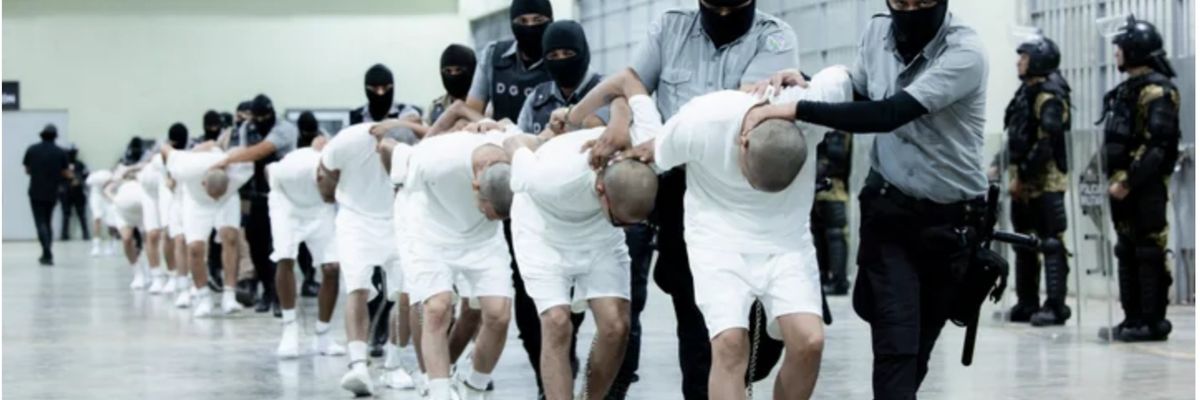
Some of the 260 Venezuelans illegally deported arrive at El Salvador prison.
(Image: Screenshot from footage)

Jon Queally
Sep 03, 2025
COMMON DREAMS

A federal appeals court late Tuesday ruled against a Trump administration scheme that cited an 18th-century wartime statute to justify its clandestine deportation of alleged gang members to El Salvador, where they were imprisoned under harsh conditions without accountability and limited legal recourse.

The 3-judge panel of the 5th Circuit Court of Appeals—among the most conservative of the US appellate courts and more likely to side with Trump—said lawyers for the Department of Homeland Security did not present a satisfying case arguing that the Alien Enemies Act of 1798, which allows for the arrest and deportation of "enemies" by presidential authority during wartime or an active invasion, could be used to target alleged low-level gang members, in this case those of Tren de Aragua or TdA, which has roots in Venezuela.


Trump and his team had argued the gang members were being directed by the Venezuelan government of President Nicolas Maduro, but have presented no evidence to support such claims. And while the group is known for some levels of violence and illegal drug trafficking, civil rights groups—led by ACLU—challenged the deportation of alleged members as a clear violation of domestic immigration law and principles of due process.


Critics of Trump also said it was laughable to treat a criminal gang like TdA as equivalent to an invading army. They warned that Trump's overreach was only part of his broader authoritarian push to claim wider and more dangerous power to target, intimidate, and harm immigrant communities.

"TdA was not the kind of organized force or engaged in the kind of actions necessary to constitute an invasion or predatory incursion," wrote Judge Leslie Southwick in the panel's 2-1 majority decision.

The court granted the preliminary injunction sought by the plaintiffs, barring further deportations from Texas, Louisiana, and Mississippi—where alleged TdA members are currently being held—until the case, almost certainly destined for the US Supreme Court, is finally decided.

Lee Gelernt, who argued the case for the ACLU, said the Trump administration's "use of a wartime statute during peacetime to regulate immigration was rightly shut down by the court."

The ruling, Gelernt added, was "a critically important decision reining in the administration’s view that it can simply declare an emergency without any oversight by the courts."


Delta-8 THC use highest where marijuana is illegal, study finds


UC San Diego researchers report that more than 19 million U.S. adults have tried delta-8 THC


University of California - San Diego


Researchers from University of California San Diego have found that Delta-8 tetrahydrocannabinol (delta-8 THC), a psychoactive compound often sold as a legal alternative to marijuana, is most commonly used in states where marijuana use remains illegal and delta-8 THC sales are unregulated. The findings, published in the American Journal of Preventive Medicine, highlight how gaps in cannabis policy may be inadvertently steering people toward less-regulated substances and have allowed manufacturers to evade restrictions placed on marijuana products.

The study’s authors categorized each state based on two key policy types: whether marijuana was permitted for medical or recreational use, and whether delta-8 THC sales were banned, regulated or unregulated. They then analyzed the likelihood of lifetime delta-8 THC use across these groups.

The study was based on a nationally representative survey of 1,523 U.S. adults. Roughly 7.7% of respondents reported using delta-8 THC in their lifetime. But this use was not spread evenly across the country. Adults in states that prohibit all forms of marijuana were about twice as likely (10.9%) to have used delta-8 THC compared to those living in states where adult-use recreational marijuana is legal. Likewise, delta-8 THC use was significantly more common in states with no regulations on its sale (10.5%), compared to states that had taken steps to prohibit (4.5%) or regulate the compound (3.9%). The prevalence of delta-8 THC use was lower among adults in states permitting both medical and nonmedical marijuana (5.5%) and states permitting medical use only (8.5%).

“These findings underscore that people don’t just stop using cannabis when their state bans it. They often shift to alternatives that are easier to access, even if they’re less well-studied or poorly regulated,” said Eric Leas, Ph.D., M.P.H., assistant professor at the Herbert Wertheim School of Public Health and Human Longevity Science at UC San Diego and senior author of the study. Leas is also affiliate faculty at the Qualcomm Institute.

“It’s a classic case of unintended consequences in public policy.”

The policy loophole driving delta-8 THC use

Delta-8 THC is a chemical cousin to delta-9-tetrahydrocannabinol (delta-9 THC), the primary psychoactive ingredient in marijuana that produces comparable psychotropic effects. Although it occurs naturally in small amounts, most delta-8 THC products are synthesized by chemically converting hemp-derived cannabidiol (CBD), a process that was made more feasible after the 2018 U.S. Farm Bill legalized industrial hemp (defined as cannabis with less than 0.3% delta-9 THC).

Because delta-8 THC can be produced from legally cultivated hemp, many manufacturers argue they can legally make and sell delta-8 THC products as hemp. The Food and Drug Administration (FDA) has issued warnings about delta-8 THC’s safety and made a determination that it is not a legal food additive, but federal enforcement has been limited. In the absence of clear federal rules, some states have enacted their own laws, ranging from full bans to no regulation at all. However, most states have made no official determination, leaving delta-8 THC essentially unregulated. Leas has called for this hemp loophole to be closed.

“The numbers in this study confirm a pattern we have seen before in data on delta-8 THC internet searches published in the International Journal of Drug Policy: when safer, regulated access to marijuana is unavailable, people become interested in products that are available, even if they’re riskier,” said Leas. “Providing legal access to cannabis that meets safety standards and disallowing understudied and poorly regulated products like delta-8 THC could be one way to prioritize public health in our cannabis policies.”

Public health concerns and regulatory uncertainty

Unlike regulated marijuana products, which are subject to quality control, dosage limits and labeling requirements in many states, delta-8 THC is often sold in convenience stores and online with little oversight. Some products have been marketed to resemble popular snacks or candies, raising concerns about accidental ingestion, particularly by children. The FDA has received numerous reports of adverse events linked to delta-8 THC and has determined that it does not satisfy the Generally Recognized As Safe standard for food additives and dietary supplements.

“Many people assume that because something is legal, it must be safe,” Leas continued. “We’ve seen rising reports of poisonings and other harmful outcomes tied to delta-8 THC. A regulatory free-for-all only makes that worse.”

This new research provides further evidence that delta-8 THC is serving as a substitute in states where traditional cannabis remains illegal or hard to access. This substitution effect, while perhaps predictable, complicates efforts to control cannabis-related harms. In particular, it suggests that prohibiting marijuana may unintentionally drive consumers toward substances that lack both scientific study and regulatory scrutiny.

What comes next

The study authors suggest that clearer, nationwide standards for delta-8 THC could help mitigate potential harms, especially as Congress considers changes to the federal Farm Bill that may close current legal loopholes. At the same time, they urge further research into how and why people choose delta-8 THC over other products.

“Understanding who uses delta-8 THC, how they’re using it and what their experiences are can help shape smarter policies,” said Leas. “We need to ensure people aren’t caught in a policy vacuum, relying on products that fall outside both safety regulations and scientific understanding.”

Future studies, the researchers say, should explore motivations behind delta-8 THC use and how policies impact behavior over time. For now, Leas believes this study offers a cautionary tale for lawmakers. “We often think banning a product solves the problem. But when the market moves faster than regulation, it can create new problems,” he said. “If we want to reduce harm, we need policies that reflect how people actually behave, not just how we hope they will.”

# # #

Link to full study: https://www.sciencedirect.com/science/article/pii/S0749379725005045

Additional co-authors on the study include Kevin Yang, M.D., at UC San Diego School of Medicine; Nora Satybaldiyeva, Ph.D., M.P.H., and Wayne Kepner, Ph.D., M.P.H., at Stanford University School of Medicine.

The study was funded, in part, by grant K01DA054303 from the U.S. National Institute on Drug Abuse. Satybaldiyeva acknowledges salary support from grant 5T32HL161270 from the National Heart, Lung, and Blood Institute of the National Institutes of Health. Kepner also acknowledges salary support from grant T32DA035165 from the National Institutes On Drug Abuse of the National Institutes of Health.

Leas reports receiving consulting fees from The National Association of Attorneys General and consulting fees and an equity position in the AI company Medeloop, all for work performed outside the context of this manuscript. All other authors report no conflicts of interests.


Understanding catalyst activity for green hydrogen production


Fritz Haber Institute of the Max Planck Society

Understanding Catalyst Activity for Green Hydrogen Production 

image: 

Understanding Catalyst Activity for Green Hydrogen Production

view more 

Credit: © FHI


Key Aspects:

  • The study focuses on the oxygen evolution reaction, a key process in water electrolysis for hydrogen production.
  • Researchers identified a critical transition point in catalyst kinetics using a combination of temperature dependent kinetics and advanced spectroscopy techniques.
  • Findings suggest that the catalyst activity is related to the need for solvation of ions at the catalyst interface.
  • The research emphasizes the importance of viewing the catalyst-electrolyte interface as a unified system.

Introduction to Catalyst Activity

The Department of Interface Science at the Fritz Haber Institute has made significant strides in understanding how catalysts function in aqueous environments. This research is crucial for advancing technologies like green hydrogen production, which relies on efficient catalysts to split water molecules.

Discovering a Transition Point

The study, led by Dr. Martinez-Hincapié and Dr. Oener within Prof. Roldán Cuenya FHI department utilizes temperature-dependent electrochemistry and operando spectroscopy to investigate the oxygen evolution reaction (OER). This reaction is a bottleneck in water electrolysis, where sluggish OER kinetics can hinder hydrogen production. The researchers discovered a key transition point in the bias dependent kinetics where the catalyst's activity shifts from being limited by the build up of excess charge to becoming highly active.

The Role of Solvation

A critical finding of the study is the role of interfacial solvation — a process by which ions are losing or gaining solvent molecules. This initial step appears to be crucial for the catalyst's intrinsic activity. Dr. Oener explains, “We should really think about the catalyst-electrolyte interphase as a whole, not in separate terms. We cannot understand the stabilization of excess charge on the solid side without the response of the solvent and we cannot understand interfacial ion solvation without carefully considering what happens on the solid side. This is particularly critical since the solid interface also experiences drastic structural and chemical changes in the course of the reaction. It is one interphase that gives rise to the observed activity.”

Technical Insights

In more technical terms, the study reveals that the catalyst's kinetics are governed by an intricate interplay between chemical and structural adaptation of the oxide surface and the response of interfacial water molecules. Using operando X-ray spectroscopy, the team observed structural and chemical adaptations of the oxide catalysts right at an important transition potential in the kinetics. Importantly, this transition potential is independent of the catalyst loading (the amount of material used), nor its surface area. This indicates that the catalyst's activity is intrinsically linked to its ability to build-up excess charge to interact with solvated ions from the liquid electrolyte.

Conclusion and Future Directions

Prof. Dr. Beatriz Roldán Cuenya highlights the importance of combining different operando spectro-microscopy techniques that inform on the catalyst surface, the solvent and the fundamental kinetics. This is needed to gain deeper insights into the catalyst behavior. The research not only advances our understanding of the catalyst activity, but also holds promise for improving energy conversion technologies. The team is committed to further exploring these findings, with the potential to significantly impact the fields of energy and chemical conversion technology.