Tuesday, September 23, 2025

TRUMPISM IN LATIN AMERIKA

Chile presidential contender vows to deport 'all' undocumented migrants

 59-year-old lawyer, is the son of a suspected German Nazi who fled to Chile after World War II,


Santiago (AFP) – Chile's far-right presidential candidate, Jose Antonio Kast, one of the favorites to succeed leftist leader Gabriel Boric in November's vote, vowed Monday to deport "all" undocumented migrants if victorious.


Issued on: 23/09/2025 - RFI
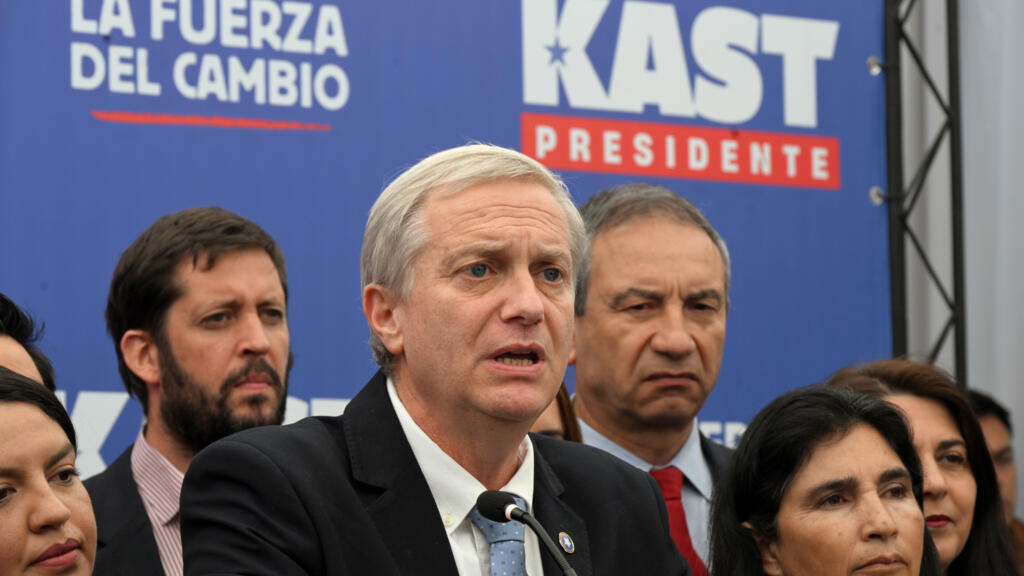
Chilean presidential candidate Jose Antonio Kast narrowly lost the 2021 election
 © RODRIGO ARANGUA / AFP

Some 330,000 foreign nationals, the vast majority Venezuelans, live illegally in the South American country, according to official estimates.

Kast, who is hotly tipped to win the presidency on his third attempt, said he would make illegal migration a crime and deport all undocumented migrants, including children.

The law-and-order candidate, who was narrowly beaten by Boric in December 2021, declared that all illegal migrants, including children, would be detained pending their deportation.

"All of them will stay in temporary detention centers until their expulsion to their country of origin or their return to the country through which they entered," he told a press conference, echoing the hardline policies of US President Donald Trump's administration.

Foreigners who commit crimes will be incarcerated in a special prison and expelled once they had served their sentence, Kast added.

Opinion polls show Kast neck-and-neck with communist former labor minister Jeannette Jara ahead of the first round of the election on November 16.

Conservative ex-mayor Evelyn Matthei is running in third.

While some of the surveys put Jara marginally ahead, all show Kast beating Jara if, as predicted, the election goes to a second round of voting between the two on December 14.

The ultraconservative father of nine has vowed to go to "war" against organized crime and build maximum security prisons, modelled on El Salvador's notorious Terrorist Confinement Center, for dangerous offenders.

He has also previously vowed to build a wall along Chile's desert border with Bolivia to keep out undocumented migrants but on Monday made no mention of the proposal.

Polls show rising insecurity, for which many Chileans blame foreign crime gangs, particularly Venezuelan, as voters' top concern.

Chile's murder rate, while one of the lowest in Latin America, has more than doubled in the past decade and cases of extortion and drug trafficking have also risen.

"Anyone who enters (Chile) through the window (illegally) will never be rewarded with any benefit in our nation," the 59-year-old lawyer, the son of a suspected German Nazi who fled to Chile after World War II, said.

Chile's immigrant population has doubled in the last seven years, reaching 8.8 percent of the population of nearly 20 million, according to the National Statistics Institute.

© 2025 AFP


What do some researchers call disinformation? Anything but disinformation

Washington (AFP) – "Disinformation" is fast becoming a dirty word in the United States -- a label so contentious in a hyperpolarized political climate that some researchers who study the harmful effects of falsehoods are abandoning it altogether.


Issued on: 23/09/2025 - 

In a hyperpolarized climate, some US researchers are abandoning the label "disinformation" 
© Mandel NGAN / AFP/File


In an era of online deception and information manipulation, the study of disinformation seems more critical than ever, but researchers are battling federal funding cuts, a surge of abuse, and even death threats -- fueled in part by accusations from conservative advocates of a liberal bias.

Some researchers are now opting for more neutral language -- words, and at times, technical jargon that are less likely to inflame or derail vital public discourse about falsehoods flooding the internet.

Earlier this year, the watchdog NewsGuard announced it was retiring the labels "misinformation" and "disinformation" -– terms it said were "politicized beyond recognition and turned into partisan weapons by actors on the right and the left, and among anti-democratic foreign actors."

It renamed its so-called "Misinformation Fingerprints" database to "False Claim Fingerprints," opting for language that it said was "more precise" and "harder to hijack."

"A simple phrase like 'false claim' is more powerful and precise than 'misinformation' and 'disinformation,'" said NewsGuard's McKenzie Sadeghi.

"It names the problem plainly and directs attention to the content itself -- without triggering partisan reflexes or rhetorical spin."

'Fractured information ecosystem'

Terms such as "fake news", "misinformation" and "disinformation" pre-date the internet age, but they have never been more heavily weaponized by governments and vested interests to silence critics and thwart legitimate debate.

Peter Cunliffe-Jones, author of the book "Fake News -- What's the harm," has advocated for using more specific alternatives ranging from false or unproven to mislabelled or fabricated.

Such labels "do not simply declare information false but explain the way in which information is untrue or misleading," he said.

"That way, we hopefully create less room for cynical disputes and more for better understanding."

Authoritarian states including Russia routinely dismiss credible Western media reports as disinformation.

Some governments have even co-opted fact-checking itself -- launching state-sponsored "fact checks" to legitimize their own propaganda and spin.

"In today's fractured information ecosystem, one person's 'misinformation' or 'disinformation' is another's truth," said Sadeghi.

"And in that ambiguity, bad actors win."

'Provocative, dangerous'

The debate comes as major tech platforms pull back key anti-misinformation guardrails -- including scaling down content moderation and reducing their reliance on human fact-checkers, who reject accusations of liberal bias.

However, Emerson Brooking, from the Atlantic Council's Digital Forensic Research Lab (DFRLab), said the problem with abandoning the term disinformation was the lack of a clear replacement to describe the intention to deceive.

"This idea of intentionality is very important," he told AFP.

"If we see thousands of fake accounts posting a false claim in unison, we can reasonably describe it as a disinformation campaign."

The label, however, has become so heavily politicized that officials in US President Donald Trump's administration have equated disinformation research with censorship.

Following Trump's executive order on "ending federal censorship," the National Science Foundation recently cancelled hundreds of grants, including projects that supported disinformation research.

In April, Secretary of State Marco Rubio shut down the State Department's Counter Foreign Information Manipulation and Interference (R/FIMI) hub -- formerly known as the Global Engagement Center (GEC) -- which was responsible for tracking and countering disinformation from foreign actors.

Rubio justified its closure, saying that it was the government's responsibility to "preserve and protect the freedom for Americans to exercise their free speech."

"It's true that the term (disinformation) has been politicized, and that using it can feel provocative -- even dangerous," Brooking said.

"But so long as it has descriptive value, it should still be used. My organization fights authoritarian information manipulation around the world -- if we start censoring our own language, we aren't doing a good job."

© 2025 AFP
KENYA

The karate grannies of Korogocho, fighting back at any age


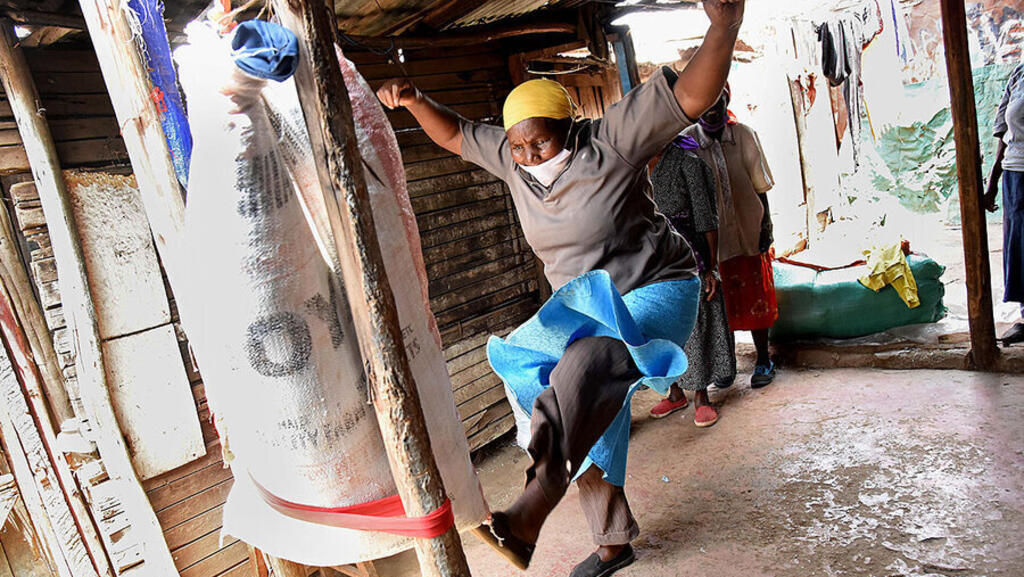
In the heart of Korogocho, a Nairobi slum where corrugated metal homes lean wearily against each other, a group of elderly women gathers every morning in a small community hall. Some use canes, others steady themselves on their friends' arms, but all share the same determined focus. They're not here to gossip or pray, they're here to learn how to fight.


Issued on: 23/09/2025 - RFI


The women have named their group 'Shosho Jiking' – meaning 'Grandmother, defend yourself'. © RFI/Anne Macharia

By: Anne Macharia in Nairobi

A makeshift punching bag stuffed with rags hangs from the rafters. The women form a circle around it, colourful khangas wrapped tight, bare feet planted firmly on the earthen floor.

Beatrice Nyariara, who is in her seventies, calls out: "Remember, grandmothers, defend yourselves!"

For years, elderly women in Korogocho were targeted for rape and robbery, made vulnerable by a deadly myth that older women were "safer" victims less likely to carry HIV.

With few local police officers and slow response times, help rarely arrived when needed.

The violence seemed unstoppable until 2007, when Beatrice and the others began learning martial arts from visiting instructors.

The techniques they use blend karate, kung fu and taekwondo, stripped down to the essentials: quick strikes, joint locks, targeted kicks. They don't aim for flashy moves, but for practical techniques that create escape opportunities.

The women named their group Shosho Jiking – meaning "Grandmother, defend yourself".


'He thought I was helpless'


The women practise palm strikes to the nose, precise blows to the collarbone and swift kicks to the groin. Every move ends with a fierce chorus: "No! No! No!" – to stun attackers and alert neighbours.

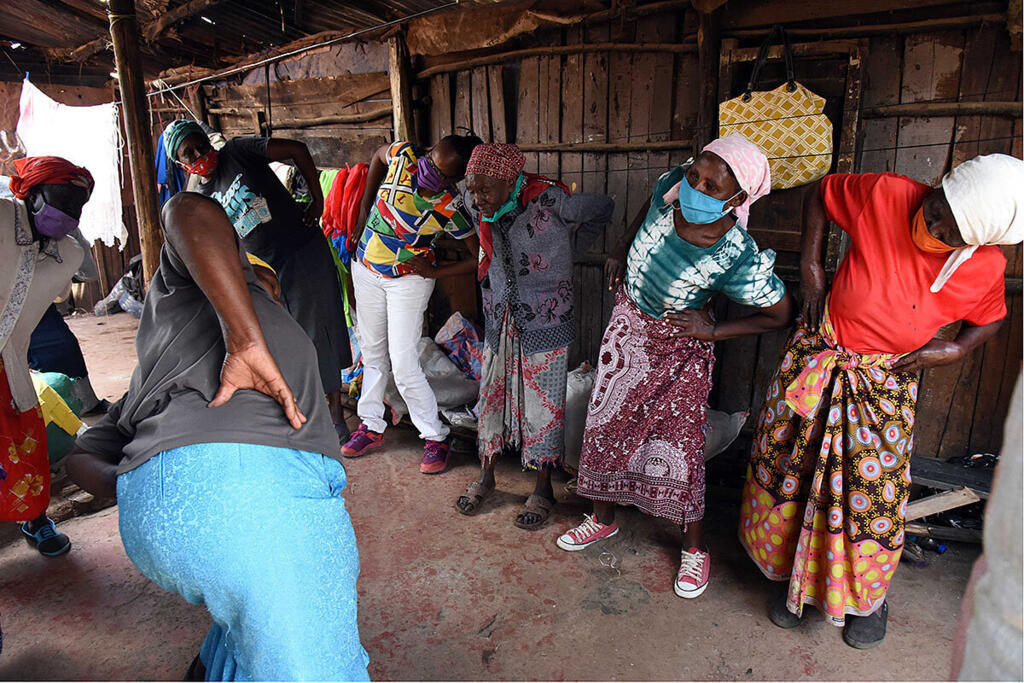
At first, many of the women questioned whether their ageing bodies could handle the strain. Joints ached. Muscles protested. But week after week they returned, growing stronger in body and spirit.

Gradually, attacks on elderly women in the neighbourhood declined. Word spread: these grandmothers knew how to fight back.
The karate grannies warm up for training. © RFI/Anne Macharia


After a brutal assault left Jane Waithiegeni HIV-positive, she withdrew from community life for years, trapped in isolation and shame.

Finding the karate group marked a turning point. Today, she instructs women of all ages through the Ujamaa Karate programme, teaching them that their bodies are worth defending.

Hannah Nyakio smiles when she recalls the night an intruder broke into her home. "He thought I was helpless," she says. A quick kick to his nose and a knee to his groin gave her time to escape and raise the alarm.

Then there's Rebecca Wambui, who at nearly 100 years old walks to training with her cane but delivers sharp, accurate strikes. Her presence alone reminds the group that strength is about more than muscle.


Beyond self-defence

The karate lessons too have evolved into something much bigger. The women have formed a chama – a traditional savings club where small contributions help cover medical bills, funeral costs or expenses for the grandchildren that many are raising alone, after they were left orphaned by AIDS.

In a community where poverty and crime frequently tear families apart, the karate grannies have created their own safety net, protecting the children from abuse and gang recruitment.

The sessions also help maintain their mental health, as well as the physical. Between drills they joke with each other and share news and recipes. What began as survival training has become a source of joy, wellness and sisterhood.

They also challenge assumptions about gender and age. In a society where older women are often dismissed as powerless, these grandmothers prove that vulnerability isn't an inevitable part of ageing.
Macron’s office plays down fears over Bayeux Tapestry loan to London

Moving the Bayeux Tapestry to London may be a triumph of diplomacy, but some experts warn it could prove a nightmare for conservationists – prompting the Elysée Palace to insist the challenge is far from impossible.


Issued on: 23/09/2025-RFI

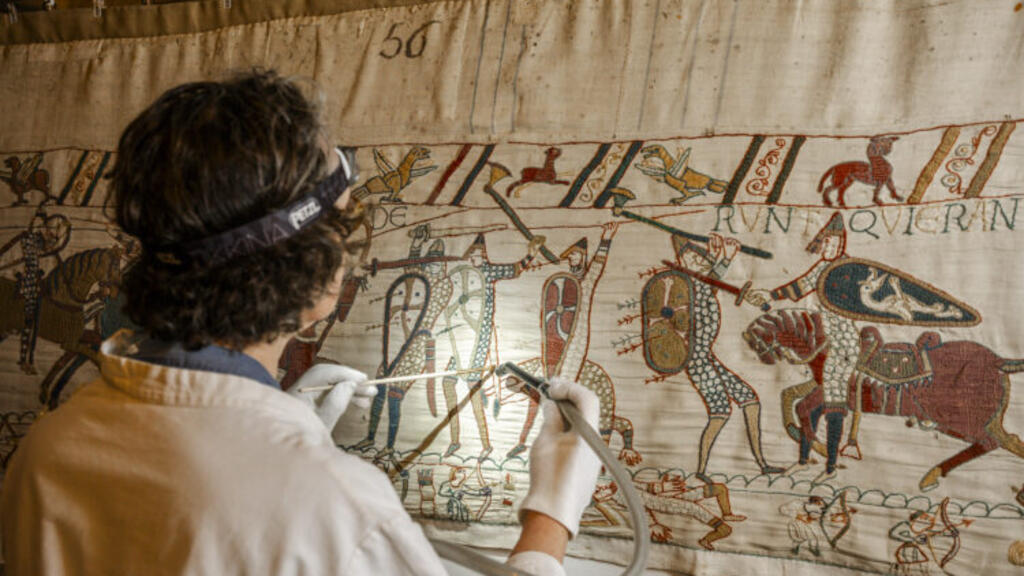
A conservation specialist meticulously collects dust from the Bayeux Tapestry, January 2025. The nearly 1,000-year-old embroidery is being carefully monitored ahead of its planned loan to the British Museum in London © Ville-de-Bayeux, Bayeux Muséum

The planned loan of the Bayeux Tapestry to Britain has been thrown into controversy, with French heritage experts warning that the fragile 11th-century embroidery is simply too delicate to withstand a cross-Channel journey.

But President Emmanuel Macron’s office has moved to calm the debate, insisting that the technical hurdles are not insurmountable.

Philippe Bélaval, the presidential aide tasked with overseeing the project, said: “Nothing suggests the technical challenge is impossible to overcome.”

The Bayeux Tapestry as it can be seen at the Museum in Bayeux, France. © Bayeux Museum


His comments come after the tapestry – which stretches nearly 70 metres and depicts William the Conqueror’s 1066 invasion of England – was removed from its museum in Bayeux for the first time in more than four decades.

Last Thursday’s extraction was a delicate, seven-hour operation involving around 100 people.

The tapestry, which had been hanging from a rail since 1983, was carefully eased onto some 30 wheeled panels, folded onto itself, and then placed in a protective crate before being taken to a secret storage site in the Normandy town.

Officials described the transfer as having gone “remarkably well”, a result they see as encouraging for the eventual loan to London.


Conservation concerns


The embroidery is scheduled to go on display at the British Museum from the summer of 2026, with exact dates still to be confirmed depending on conservation needs.

The London exhibition is expected to draw record crowds, with the museum predicting it could be “one of our most popular exhibitions ever”.

The project, however, has faced some pushback with several conservators and historians arguing that the nearly 1,000-year-old cloth, already weakened by age and past damage, risks suffering irreversible harm if moved again.

Some critics have labelled Macron’s offer to Britain – announced in July as a gesture of goodwill – a politically symbolic move that ignores expert advice.


British Museum covers the cost


Bélaval has countered that the successful test run in Bayeux shows the loan can be done “properly” if handled with extreme care.

He also stressed that the entire cost of the operation will be covered by the British Museum.

“This is an operation that costs French taxpayers nothing,” he said, adding that financing has been a key concern in France.

The tapestry is due to spend a year in London before returning to Bayeux at the end of 2027, by which time its home museum will have undergone major renovation.
Recommit To A Two-State Solution For Israel-Palestine Conflict, ‘Before It’s Too Late’: Guterres


The separation wall built by Israel in the West Bank. Photo Credit: UN News/Shirin Yaseen

September 23, 2025 
By UN News

The time has come to free the 48 hostages still being held by Hamas in Gaza and to stop the bombing, massacres and displacement in the embattled enclave, French President Emmanual Macron told delegates in the UN General Assembly Hall on Monday.

He was speaking at the resumption of the international conference co-chaired with Saudi Arabia focused on the question of Palestine and the two-State solution with Israel.

“The time for peace has come because we’re just a few moments away from no longer being able to seize peace,” he said.

‘We can no longer wait’: Macron

The UK, Canada, Australia and Portugal recognised a Palestinian State on Sunday, and President Macron announced that France would join them – to lengthy applause from delegates attending the meeting.

“The recognition of the legitimate rights of the Palestinian people takes nothing away from the rights of the people of Israel who France supported from Day One and to the respect of which it is staunchly committed,” he said.

“This is why we’re so convinced that this recognition is the only solution that will allow for Israel to live in peace.”


More support needed


The meeting follows the General Assembly’s resolution overwhelming endorsement of the outcome declaration from the first phase of the conference, which took place in July at UN Headquarters.

Saudi Foreign Minister Faisal bin Farhan Al Saud thanked those countries that have recognized the State of Palestine or announced their intention to do so.

“We call on all other countries to take a similar historic step that will have a great impact on supporting the efforts towards the implementation of the two-State solution, achieve permanent and comprehensive peace in the Middle East, and find a new reality whereby the region can enjoy peace, stability and prosperity,” he said.

Guterres reiterates ceasefire appeal

In his remarks, UN Secretary-General António Guterres repeated his assertion that nothing can justify the horrific 7 October 2023 Hamas attacks on Israel nor the collective punishment of the Palestinian people.

He again called for a ceasefire in Gaza, the release of all hostages, and safe, unconditional and unhindered humanitarian access – which must all happen immediately.

The UN chief added that nothing can excuse developments in the West Bank that pose an existential threat to a two-State solution and called for an end to “relentless” settlement expansion, “the creeping threat of annexation” and intensifying settler violence.

Palestinian Statehood is a right


“We must recommit ourselves to the Two-State solution before it is too late,” he warned.

“Let’s be clear: Statehood for the Palestinians is a right, not a reward,” he said, drawing applause.

“And denying statehood would be a gift to extremists everywhere. Without two States, there will be no peace in the Middle East, and radicalism will spread around the world.”

‘Not a ‘naïve wish’

General Assembly President Annalena Baerbock insisted that the two-State solution is the only way to ensure that future generations of both Palestinians and Israelis can live in peace, security, and dignity.

“We know that some think this is a naïve wish” as the first resolution on the matter “is almost as old as this organization”, she said.

To those who point to decades of failure, she emphasised that not aiming for what is right means that “evil would prevail” and be “the end of this institution”.

Ms. Baerbock said the international community is not only committed to the two-State solution but “identifying tangible, timebound and irreversible steps for its realisation”, and willing to take decisive measures and provide international guarantees.

UK MAP OF PALESTINE 2025


As NATO Mulls Response To Trespassing Russian Warplanes, Can It Shoot Them Down? – Analysis


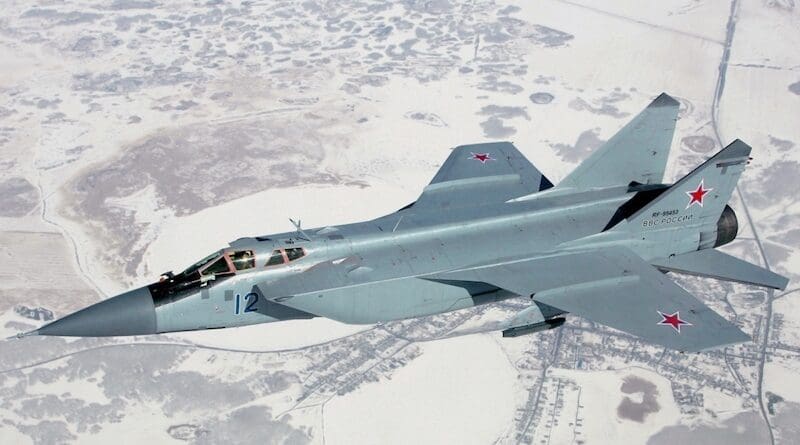
Russian Air Force Mikoyan-Gurevich MiG-31. 
Photo Credit: Dmitriy Pichugin, Wikipedia Commons

September 23, 2025 
By RFE RL
By Rikard Jozwiak

(RFE/RL) — NATO officials are gathering for a meeting of its North Atlantic Council (NAC) on September 23, called by Estonia in response to an incursion by Russian warplanes into its airspace last week.

That incident and previous incursions into other NATO countries by Russian drones, particularly into Poland on September 10, have left the alliance scrambling for the right response.

Czech President Petr Pavel, a career soldier who was a senior NATO official as head of its Military Committee, even suggested shooting down Russian planes if necessary in remarks to Czech media on September 20.

In the Polish case, some of the drones were shot down by Polish and NATO air assets. In Estonia, Russian jets were escorted away by Swedish, Finnish, and Italian planes — with the latter nation currently being in charge of the alliance’s Baltic air policing mission together with Spain and Hungary.

NATO officials who spoke to RFE/RL on condition of anonymity say it is much easier to get clearance to shoot at an unmanned drone, especially if it is seen as heading toward critical infrastructure, than a jet with a pilot.


Can They Shoot?

As a rule of thumb: NATO is a defensive alliance consisting of 32 sovereign nations. That means that, ultimately, it is up to each and every country how it polices and defends its territory — including its airspace. But a “caution first” approach is usually applied. In other words: Don’t shoot immediately.

But things are different if there is a mission or operation in progress that falls under the NATO umbrella.

This is the case with the eight battlegroups along the alliance’s eastern flank and the Baltic air policing mission that has been in place since Estonia, Latvia, and Lithuania joined in 2004. NATO allies with fighter jets take turns every four months to patrol the skies of the Baltic trio, which lack their own air power.

In cases such as this, the rules of engagement are set by the NAC, which is the alliance’s foremost political decision-making body.

Decisions are made via unanimity, with the military aspects then executed by the Supreme Allied Commander Europe (SACEUR). This is always a US general, currently General Alexus G. Grynkewich, who took up the role in July. Every mission under him has its own specific rules of engagement. What unites them all is that they aren’t made public and should keep enemies guessing.

What makes it even more complicated is that NATO as an organization has few assets under its own command. Instead, most allies provide their national capabilities to SACEUR but maintain their own national caveats.

A hypothetical example: If Italian planes are asked to shot down drones over Poland as part the alliance’s new Eastern Sentry operation, someone in Rome must give the green light.

Depending on the agreement, this could be a military chief, defense minister, or even prime minister. In other instances, countries allow SACEUR or his commanders to make the call.

As noted, there’s a high bar for opening fire, especially at Russian planes with human crews. The NATO jets involved in the Baltic air policing mission shouldn’t really shoot at those.

Two NATO officials told RFE/RL the three MiGs that spent 12 minutes in Estonian airspace on September 19 did not represent a direct threat to the country. Rather, they said, it was a provocation to test the alliance’s response and that NATO aircraft did the correct thing in escorting them away.

But the wisdom of this is now being debated in public. Like the Czech president, Polish Prime Minister Donald Tusk and Lithuanian Defense Minister Dovile Sakaliene have suggested that it could become necessary to shoot down Russian planes.
Why Turkey Opened Fire

The example of Turkey gunning down a Russian Sukhoi-24M near the Turkish-Syrian border in 2015 is often highlighted. The jet violated Turkish airspace during the height of the Syrian War for 17 seconds after having been warned numerous times to change course.

This was a simpler situation. Turkey made its own decision to use its own air force as it saw fit.

While tensions were high between Ankara and Moscow and the latter imposed immediate sanctions, relations warmed again six months later with the Turkish leader Recep Tayyip Erdogan expressing regret. NATO sided with Ankara but asked for caution and deployed more AWACS (Airborne Warning and Control System) planes to the country.

Much like Turkey back then, and Poland earlier in September, Estonia has called for consultations under NATO’s Article 4, which are now going ahead on September 23. Tallinn is likely to point out that this is the fifth Russian airspace violation this year, the two planes had their transponders shut down, and they failed to communicate with Estonian air traffic control.

This behavior is becoming increasingly common by Russian planes in the Baltic Sea theater.

NATO officials believe some allies will repeat the warning that they might be forced to shoot down next time. But rules of engagements can also be changed in other ways, such as allowing allied aircraft to fly closer to enemy planes or to fire warning shots.


Rikard Jozwiak is the Europe editor for RFE/RL in Prague, focusing on coverage of the European Union and NATO. He previously worked as RFE/RL’s Brussels correspondent, covering numerous international summits, European elections, and international court rulings. He has reported from most European capitals, as well as Central Asia.


RFE RL

RFE/RL journalists report the news in 21 countries where a free press is banned by the government or not fully established.
Niger, Mali, and Burkina Faso announce International Criminal Court withdrawal

The three members of the Alliance of Sahel States in West Africa issued a joint statement denouncing the International Criminal Court, and their plans to withdraw from it in favour of "indigenous mechanisms for the consolidation of peace and justice."


Issued on: 23/09/2025 -
By: FRANCE 24

A general view of the International Criminal Court, in The Hague, Netherlands. 
© Wolfgang Rattay, Reuters 

The military-led west African nations of Burkina Faso, Mali and Niger on Monday announced their withdrawal from the International Criminal Court, branding it a "neo-colonial" imperialist tool.

The juntas which took over in Bamako, Ouagadougou and Niamey after coups between 2020 and 2023 have since allied themselves in a confederation called the Alliance of Sahel States (AES) and distanced themselves from the West, notably from former colonial ruler France.

Read more  Mali junta accuses 'foreign states' of attempted destabilisation plot

The court, based in The Hague, was "an instrument of neo-colonialist repression in the hands of imperialism," the three countries said in a joint statement.

"The ICC has proven itself incapable of handling and prosecuting proven war crimes, crimes against humanity, crimes of genocide, and crimes of aggression," they said.

The three states also said they wanted to create "indigenous mechanisms for the consolidation of peace and justice."

A state's withdrawal only takes effect one year after the official submission of the case to the UN general secretariat.

Burkina Faso, Mali and Niger have notably drawn closer to countries such as Russia, whose President Vladimir Putin has been the subject of an ICC arrest warrant since March 2023 over the war in Ukraine.

Read more  Russia steps out from shadows in Africa with state paramilitary

The West African countries are facing deadly violence from jihadist groups linked to Al-Qaeda and the Islamic State, but their armies are also accused of crimes against civilians.

Founded in 2002, the International Criminal Court's mission is to prosecute the perpetrators of the most serious crimes, such as war crimes, when countries lack the will or capacity to do so themselves.

(FRANCE 24 with AFP.)

Sudan: Burhan In A Jam As The Quad At Last Sets Out A Joint Position – OpEd


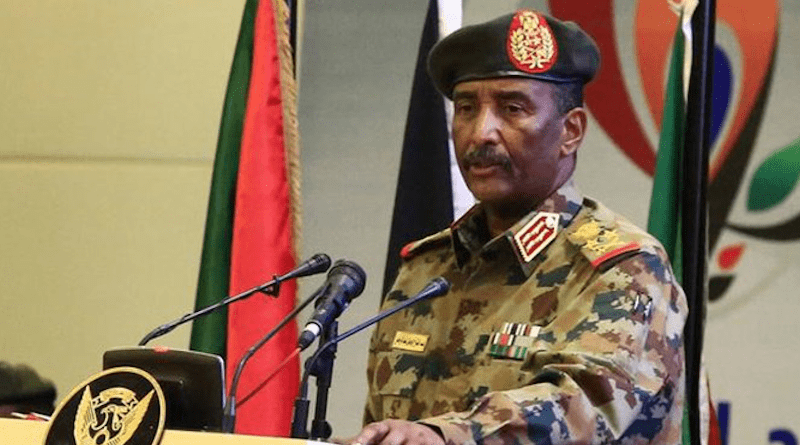
Sudan's General Abdel Fattah al-Burhan. Photo Credit: Fars News Agency

September 23, 2025 
By James Wilson


Two of the international community’s leading authorities concerned with finding a solution to the Sudan crisis issued separate pronouncements on the same day,12 September, about Sudan’s civil war, neither of which, for rather different reasons, will be of any comfort to either of the major combatants. But it’s the Sudanese Armed Forces that are in the bigger jam.

The first was a resolution by the Security Council to extend for a year its existing sanctions against Sudan in relation to the Darfur region, this on the advice of its ‘panel of experts’—in relation to which, also, the words, teapot, chocolate and ‘as good as a’ come to mind, given all these experts have accomplished since 2023. What, one might ask, are the Rapid Support Forces to make of this resolution, given that Darfur is their redoubt, and centre of their resistance against an Islamist regime whose army, the SAF, has been waging its war to eliminate them, and democracy, from the future of Sudan?

The second was a statement issued by the US State Department on behalf of The Quad, the US, Egypt, Saudi Arabia and the United Arab Emirates. The statement alone will have required some internal arm-twisting but now that’s there. it puts the Quad’s weight squarely behind the 2020 Jeddah Agreement, a document which, had its terms been implemented, might well have seen Sudan further along to the road to the kind of secular, democratic Sudan for which the Rapid Support Forces have shown support in their own more recent vision statements.

For the Sudanese Armed Forces it’s a different matter. Buried in Principle Four of the Quad’s statement is the proposition that “Sudan’s future governance is for the Sudanese people to decide through an inclusive and transparent transition process, not controlled by any warring party.”

And it goes on to stipulate that “an independent, civilian-led government with broad-based legitimacy and accountability is vital for the long-term stability of Sudan and the preservation of its state Institutions. Sudan’s future cannot be dictated by violent extremist groups part of or evidently linked to the Muslim brotherhood, whose destabilising influence has fuelled violence and instability across the region.”

For the SAF’s Islamists, this is well beyond the pale no matter how SAF commander General Abdel Fattah al-Burhan reshuffles the top brass in his police and armed forces. They still remain deeply embedded in the political and military structures that provide his base, As Reuters has reported, Sudan’s Islamists are set on a constitution based on Islamic law, military oversight ensuring stability, and limited civilian power, with the military and security sector dominating the country’s political development in order to guarantee the settlement.

So this pending Quad statement will have made for some difficult conversation when Burhan met Massad Boulos, President Trump’s senior sdviser on Arab and African Affairs, in Geneva last month. And two days after the Quad statement, SAF foreign minister Eddim Salem’s reaction was decidedly leery, while trying to avoid the impression of intransigence.

As the Sudanese Sunday Tribune reported, Salem said the SAF’s own peace roadmap would serve as the “main reference” for any path forward. The SAF refuses to talk while the RSF siege of El-Fasher continues. It demands that the RSF withdraw from Kordofan and Darfur, and that the RSF disarm withdraw from all civilian areas before any negotiations can begin.

All this suggests that the SAF are resisting efforts by the Quad to establish a peace process leading to secular civilian rule, and that Burhan remains besieged by the demands of the powerful Islamist factions that keep him in power.

Burhan may be hoping that he can persuade the UN to mobilise a parallel negotiating track that runs interference for his own agenda and buys him more time. But the UN is the proverbial chocolate tea pot at this party. It is only the Quad that has the muscle necessary to get Burhan in the room with the RSF’s General Mohamed Dagalo and start talking turkey about the shape of a government that can undo the miserable Islamist legacy of Omar al-Bashir.


James Wilson is the Editor-in-Chief of EU Political Report. He is Correspondent on African Affairs for NE Global Media.
ANARCHO-CAPITALI$M IN THEORY
Will Private Defense Agencies Wage War—Or Keep The Peace? – OpEd


September 23, 2025 
By MISES
By Stanisław Wójtowicz

Anarcho-capitalism is a libertarian vision of a stateless society, where security, law and dispute resolution would be provided by private, for-profit companies. Proponents of this system believe that it would be both more ethical and more effective than the state. However, not everyone is convinced. Critics of anarcho-capitalism have raised serious doubts about the feasibility of such an order. I discussed these briefly in a previous article. In subsequent articles, I will delve deeper into these concerns and present the responses of anarcho-capitalist theorists. First, we will address the most immediately obvious objection: that companies providing consumer protection—so-called private defense agencies—will refuse to settle disputes peacefully among themselves.

In an anarcho-capitalist order, the basic institution would be private defense agencies (PDAs). These agencies would be responsible for ensuring that individuals’ rights to freely manage their bodies and justly-acquired property are respected. Many PDAs would compete with each other in the marketplace, and each individual would sign a contract with the agency offering the most advantageous terms at that particular moment (the ability to change agencies is central to the system). Anarcho-capitalist theorists speculate that PDAs would perform four functions. First, (1) they would protect their clients from violence (security function). (2) If a crime occurred, they would try to identify the perpetrators, enforce compensation from them, and bring them to justice (policing function). (3) The agencies would also represent clients in legal disputes (legal representation function). Finally, (4) PDAs would act as insurance companies, paying compensation to clients whose rights were violated (insurance function).

Now, let’s consider what would happen if a crime were to occur. Suppose someone broke into A’s house and stole a TV. As soon as A realized that they had been burgled, they would notify their agency (PDAA). The agency would compensate A and then try to determine who was responsible for the crime. The agency would have a strong economic incentive to do so, as the perpetrator would have to compensate for the damage caused once caught. Let us assume that the agency obtained evidence that B was the perpetrator. In this situation, PDAA representatives would report to PDAB, presenting evidence of B’s guilt and demanding the return of the TV, as well as compensation for the burglary.

According to critics, a potentially fatal flaw in anarcho-capitalist theory emerges at this point. They point out that the PDAB would refuse to compensate for losses caused by its client, announcing that, should the PDAA attempt to obtain compensation from B by force, the PDAB would defend B with all its might. A less sophisticated version of the argument suggests that the agencies would be unable to reach an agreement. A more sophisticated version of this argument asserts that they would not want to agree due to the economic incentives built into the system: ultimately, the better an agency defends its clients (even when they are guilty), the more clients it will have. This objection was first raised against Gustav de Molinari, who proposed a system of private security production in 1849. More than a century later, this objection was famously repeated by Ayn Rand, an advocate of the minimal state. For Rand, it was obvious that, in the absence of a third party—the state—PDAs would be unwilling (and unable) to resolve disputes between themselves, resulting in an escalation of violence. According to Rand, anarcho-capitalism would simply transfer Hobbes’s “war of all against all” from individuals to the agencies protecting them.

How do anarcho-capitalists respond to this? They believe that, in such a situation, events would unfold very differently. Rather than “declaring war” on the PDAA, the PDAB would analyze the evidence it provided. If PDAB found B’s guilt to be indisputable and deemed the compensation proposed by the PDAA to be appropriate, it would agree to pay the compensation or allow it to be enforced against B, ensuring that he was not harmed in the process. However, if it deemed B’s guilt uncertain or the compensation excessive, it would propose referring the case to a private court. The court would then decide on fault and award appropriate compensation. In other words, anarcho-capitalists believe that PDAB would choose peace, agreement, and cooperation over war.

Why would that happen? Would it be because the CEOs of the agencies are virtuous people? Or because anarcho-capitalists assume that people are inherently good? No. The reason is that this approach would be most profitable for PDAs. According to anarcho-capitalists, the best long-term, profit-maximizing strategy for security agencies would be to protect non-aggressive clients effectively. The optimal situation would be for agencies to receive a steady stream of money in the form of premiums, while ensuring that their clients engage in as few conflicts—especially violent ones—as possible so that their protection incurs minimal costs. When a conflict arises, the agencies would work together to determine who was at fault, enforce the cessation of wrongful actions, and ensure compensation was paid. Of course, agencies would compete with each other to attract as many clients as possible, but this competition would be economic in nature.

There are several reasons why this modus operandi seems most likely for agencies. First, solving problems with violence is costly, contingent, and risky, whereas cooperative solutions are cheap, predictable, and safe.

Second, firms can only provide what is of greatest value to most of their clients—safety—by cooperating with each other. An agency that wanted to protect its clients even when they were guilty would jeopardize its cooperative relationships with other PDAs. This would place its clients, especially those who do not want to initiate violence—the vast majority—in a significantly worse position. Other agencies would respond in kind, allowing their clients and employees to use violence against those of the offending agency. Consequently, most of that agency’s clients would find themselves in a worse situation than if the agency, like others, only protected its clients when they were in the right. This could result in a significant proportion of the aggressive PDA’s clients switching to cooperating agencies. It is in every client’s interest to be with an agency that punishes aggressors and cooperates peacefully with the largest possible network of like-minded agencies.

Third, this problem would be exacerbated by adverse selection. An agency that defended its clients when they were in the wrong would attract clients who wanted to initiate violence, while those who wanted to live peacefully would leave. However, this solution seems unstable for two reasons. First, such clients are much more difficult and costly to protect. Second, such clients are much fewer in number and, on average, less productive.

Fourth, such an agency would experience conflicts between its own clients. Believing that the agency would always protect them, they would constantly clash with each other, and the agency would have to resolve these conflicts.

Fifth, an agency that chose this path would incur additional costs because, instead of resolving conflicts peacefully, it would start protecting clients, even when they are the aggressors. This would result in some staff leaving and the need to increase the salaries of those remaining significantly. Imagine your boss suddenly informs you that, from tomorrow, you will no longer be catching thieves, murderers, and rapists, but protecting them instead. You would probably quit your job immediately. Or, if you were a psychopath, you might ask for a pay rise. But that’s only part of the cost. What about insurance costs? What about the costs resulting from your company being ostracized by others (not just PDAs)?

These problems would put strong pressure on security agencies to cooperate with each other, only protect their clients when they are innocent and allow them to be appropriately punished when they are guilty. It would be very difficult for a single agency to deviate from such an equilibrium. Suppose one agency decided not to cooperate with the others, but instead to defend its clients even when they were guilty. Not only would such a company experience a radical increase in operating costs, an outflow of peaceful clients, and an influx of bad risks, but it would also face radical resistance from all other PDAs. Its situation would be unenviable.

Importantly, the system protects against companies seeking to dominate others by refusing to settle disputes peacefully, as well as against fraud and abuse in relations between agencies. It may seem that it would be profitable for each agency to cheat the other agency each time and tip the scales in favor of its client. However, by doing so, the agency risks disrupting its peaceful, cooperative relationship with the other agency. The profits from such one-off fraud would be much lower than the losses resulting from disrupting these peaceful relations. Relations between security agencies are best viewed as a series of repetitive exchanges involving relatively small sums, which occur in the absence of a third party enforcing contracts (the state). In such exchanges, either party can cheat the other as neither party can be forced to act honestly. However, as game theory indicates, the parties to the contract will not cheat because the profit from one-off fraud is disproportionately small compared to the losses resulting from disrupted or terminated long-term cooperation. Moreover, this mechanism of self-enforcing contracts is greatly reinforced by reputation. A company that gains a reputation as a cheater will lose out because all other companies will scrutinize its every move in the event of a dispute, generating high costs.

The theory of anarcho-capitalism is based on the idea that it is more profitable to protect productive individuals from unprovoked violence than to protect unproductive individuals from justified retaliation. It is also founded on the idea that resolving a single dispute fairly, quickly and effectively enables subsequent disputes to be resolved in the same way. When you think about it, this must be true.

Although the idea of universal interagency warfare seems fairly obvious at first glance, on further inspection this claim—essentially asserting that fighting is more profitable than collaboration and that it is more lucrative to protect unproductive aggressors than productive peaceful individuals—seems increasingly unconvincing. The obvious starts to look ridiculous. There are some good arguments challenging the feasibility of anarcho-capitalism. However, this does not appear to be one of them.


About the author: Stanisław Wójtowicz holds a PhD in literary criticism from the University of Adam Mickiewicz in Poznań, and is currently pursuing a PhD in philosophy at Nicolaus Copernicus University in Toruń. His academic interests include libertarian political theory and the economics of stateless societies. He has published numerous scholarly articles on libertarianism, economics and literature. He runs the largest Polish blog on libertarianism at stanislawwojtowicz.pl. He was a 2025 Summer Fellow at the Mises Institute, working on a research project on the feasibility of anarcho-capitalism. He can be reached at stanwojtow@gmail.com.


Source: This article was published by the Mises Institute


MISES

The Mises Institute, founded in 1982, teaches the scholarship of Austrian economics, freedom, and peace. The liberal intellectual tradition of Ludwig von Mises (1881-1973) and Murray N. Rothbard (1926-1995) guides us. Accordingly, the Mises Institute seeks a profound and radical shift in the intellectual climate: away from statism and toward a private property order. The Mises Institute encourages critical historical research, and stands against political correctness.


ANARCHO-CAPITALI$M IN PRACTICE


Stress Tests Can Help Determine How Much Capital Central Banks Need – Analysis

skyscrapers city


By 

Central banks pride themselves on being data-driven and consensus-based. Surprisingly, though, there is little consensus among policymakers on a crucial issue: how much capital should these institutions hold?


Unlike commercial banks, central banks don’t have universally prescribed minimum capital requirements. They can’t go bankrupt, because they can always issue their own currency to meet their nominal payment obligations. Even so, a weak capital position can diminish institutional credibility and potentially increase risks to independence. Hence central banks do care about maintaining sufficient capital buffers. But there is a diversity of views on how to get there. 

This is why we propose a new approach of stress-testing central banks to help them maintain a sound financial position. 

Balance sheet risk received little attention through most of the long history of central banks. Before the global financial crisis, they typically had small balance sheets and were almost always profitable. This reflected that currency, their main liability, paid zero interest, and that they could invest the proceeds that they received from issuing currency in interest-bearing government bonds. Much of the profit was paid out as dividends to governments. 

But the issue, which may sound arcane, has much more practical relevance today when central banks have taken on much more balance sheet risk, including using large-scale asset purchases to spur a faster recovery from the GFC and the pandemic. 

Managing risk

This additional risk has translated into sizable losses, as they bought long-term bonds at low yields and eventually had to raise interest rates sharply. While the losses are not a good measure of the social value of central banks actions, which shortened the recessions and improved financial stability, they underscore the need to consider carefully how to better manage balance sheet risk. 


Studying the bylaws of central banks provides little clarity about how to proceed. Many set their authorized capital as a fixed amount, which loses relevance over time due to inflation. Only a few institutions adjust their capital—based on inflation or gross domestic product—to keep it relevant.

Unfortunately, existing laws about distributing central bank profits are also quite mechanical. In some cases, they determine exactly how much gains should be kept or shared, which can result in having too much or too little capital. At best, these laws require banks to keep profits until they reach a minimum level of capital. But legal targets vary a lot—from 8 percent to 20 percent of base money—and there is little explanation for thresholds. At the other end of the spectrum, some central banks lack specific rules on capital, leaving it up to their boards to decide how to handle risks. Yet, whatever they choose to do, central banks are generally reluctant to explain their approach to a broader audience.

There’s a better way. The key is to ensure that capital cushions are more consistent with “policy solvency”—with the central bank’s ability to fulfil its mandate in an environment of much greater balance sheet risk. This means considering several factors, such as institutional objectives and activities.

Shock absorber

Specifically, stress-testing can help a central bank gauge the level of capital that would allow it to absorb large but plausible shocks without pushing capital to very low levels that could weaken its credibility and independence. To this end, IMF staff developed a quantitative model, building on 2015 research by Robert E. Hall and Ricardo Reis, that allows assessing how capital would evolve in a framework that takes account of interest rate risk, credit risk, and foreign exchange risk. A stress test would consider inflation and other broad economic dynamics, and how they would affect capital.

This approach can also help decide when a capital increase through profit retention is warranted—or when and how to share profits while protecting capital levels. Some central banks may find such a risk-based approach appealing, especially if they perceive that a weak capital position could constrain their independence. Others may view little risk to their credibility or independence, and prefer to retain their current policy for capital distributions. But even in these circumstances, they may see stress-testing as a way to enhance transparency about the likely effects of balance sheet actions such as quantitative easing, and desirable for strengthening public accountability. 

The IMF has published a guidance note on central bank stress-testing, and we provide technical assistance on that topic to our member countries. To be sure, these unique institutions have a specific public mission which distinguishes them from commercial firms. But sometimes the approaches taken to supervise private banks can illuminate the debate about central banks.


Romain Veyrune

Romain Veyrune oversees the IMF's work on central bank operations and governance, including technical assistance and analytical work. Romain joined the Fund in June 2005 and has participated in the delivery of most MCM products over the years. This includes numerous technical assistance missions, Financial Sector Assessment Programs (FSAPs), and Annual Reports on Exchange Rate Arrangements and Exchange Restrictions.

When Algeria’s Desert Produces Gold – OpEd

A center pivot irrigation potato field in Algeria. Photo Credit: IRRIGATIONDZ, Wikipedia CommonsA center pivot irrigation potato field in Algeria. 

Photo Credit: IRRIGATIONDZ, Wikipedia Commons


By 

In recent years, Algeria has pursued a strategic shift toward developing desert agriculture, within the framework of state policies that grant concession contracts to farmers as well as local and international companies. This approach reflects a national will to make agriculture in the South a lever for food security and a tool for export diversification.


The Desert Turning into an Agricultural Hub

The Algerian desert offers vast areas suitable for cultivation, thanks to modern irrigation techniques and the use of underground water resources. Large-scale projects for grain, potatoes, and fodder production have already emerged, transforming the South into fertile ground for producing food that resembles gold in its strategic value.

Alongside desert agriculture, the olive sector occupies a central place in Algeria, with more than 500,000 hectares of olive groves. Although exports remain modest compared to major European producers, Algeria has significant opportunities to develop this sector by focusing on quality, branding, and smart marketing.

Europe’s Crisis Opens New Doors

Southern European countries such as Spain, Italy, and Greece have been hit by recurring climate crises — prolonged droughts and devastating wildfires — which have led to a decline in agricultural output, especially olives. This situation has created a gap in global markets, giving Algeria a historic opportunity to position its agricultural products as a reliable and sustainable alternative.

At the same time, Algeria itself faces challenges such as seasonal droughts and wildfires, which highlight the need for greater investment in agricultural research, modern technologies, and risk insurance to stabilize production.

To transform this wealth into real economic gains, Algeria must enhance value-added production, such as bottled olive oil, organic-certified products, and internationally recognized quality labels. Building strong national brands capable of reaching global consumers will be crucial for success.


Conclusion

The Algerian desert, once synonymous with barrenness, is now turning into a source of life and strategic production. With the rise of desert farming and the strengthening of the olive sector, Algeria has the potential to position itself as a leading player in regional and global food security.


Madjed Sakhri

Madjed Sakhri is an Algerian journalist with Iktisad Elbaled, specializing in trade, 
agriculture, and economic development. He writes extensively on Algeria's strategic
 opportunities in global markets and regional trade dynamics.