Tuesday, September 23, 2025


Study of glaciers in the Andes sheds light on future climate impact


Aberystwyth
The Upper Santa Cruz Valley in Peru, showing darker ridges of moraines that were left behind as the glaciers receded. 

image: 

The Upper Santa Cruz Valley in Peru, showing darker ridges of moraines that were left behind as the glaciers receded.

view more 

Credit: Aberystwyth University


Andean glaciers advanced during an acute period of climate change at the end of the last Ice Age, new research has found.

An international team of glaciologists, led by Aberystwyth University, made the discovery as part of a new project into tropical glaciers in Peru. The finding challenges long-held assumptions about glacier behaviour during this period.

The findings, published in Scientific Reports, shed new light on how glaciers respond to shifting climate patterns and may help improve predictions of future climate impacts.

The study focused on the Younger Dryas period, a time of sudden and dramatic climate change that occurred approximately 12,900 to 11,700 years ago. Contrary to previous theories, which suggest that glaciers in this area of Peru retreated during this time, the researchers found that those in the Santa Cruz Valley of Peru actually grew.

The glaciologists believe that this advance was driven by increased snowfall linked to seasonal shifts in the Intertropical Convergence Zone - a belt of low pressure that moves between the hemispheres and influences tropical weather patterns.

To reach their conclusions, the research team dated boulders transported and deposited by glaciers in the Santa Cruz Valley, Peru. Once deposited, these boulders serve as physical evidence of glacial movement over millennia and provide valuable insights into historical climate conditions.

Lead author Professor Neil Glasser from Aberystwyth University is a glacial geomorphologist who researches glacier change in southern South America. He said:

“Our study suggests that snowfall was a key factor driving glacier growth in the tropical Andes during the Younger Dryas. Unlike many other glaciers, the glaciers in this part of the Andes do not calve icebergs, where large sections of ice detach. They also lack heavy debris cover, making them especially well-suited for reconstructing past climate conditions. We were also able to date the timing of their advances more precisely than ever before.

“Our study shows that these glaciers are highly sensitive to climate shifts, particularly changes in precipitation patterns. Understanding the history of glacier advance and recession is really important because it helps us better anticipate how these glaciers will respond to future warming. This is especially important in Peru, where the glaciers are a source of fresh water for drinking, sanitation and irrigation of crops.”

The study was a collaborative effort involving researchers from the UK, Italy, Canada, and Peru.
 

Climate change could erase 80% of whitebark pine’s current habitat across the Rockies and Northwest 


What that means for bears, birds, farmers, and ranchers 


University of Colorado Denver

CU Denver Professor Diana Tomback 

image: 

Using U.S. Forest Service and U.S. Fish and Wildlife Service data, CU Denver Professor Diana Tomback and her colleagues modeled how rising temperatures could shift the tree’s growth range across roughly 56 million acres in the U.S.  

view more 

Credit: University of Colorado Denver, Paul Wedlake


A new study, led by federal agencies in collaboration with the University of Colorado Denver, shows that the whitebark pine tree—an iconic, high-elevation tree that stretches from California’s Sierra Nevada through the Cascades and Rockies and into Canada—could lose as much as 80 percent of its habitat to climate change in the next 25 years.  

The loss could have a cascade of effects, impacting wildlife and people. 

The threatened whitebark pine tree is a crucial food source for squirrels and grizzly bears. It also acts as a natural snow fence, holding snowpack in place and releasing meltwater slowly throughout the summer. That runoff supports entire watersheds, which farmers and ranchers depend on. The nearest whitebark pine to us in Colorado is in the Greater Yellowstone Ecosystem in Wyoming.   

“Whitebark pine supports biodiversity, and it helps people too,” said Diana Tomback, PhD, professor at the University of Colorado Denver. “The canopies act as a snow fence and slow snowmelt, enabling summer water flow, which farmers and ranchers depend on.”  

The potential loss of whitebark pine habitat with climate warming is the focus of a study Tomback co-authored and which appeared earlier this month in the journal Environmental Research Letters.  

A Shrinking Range  

Using U.S. Forest Service and U.S. Fish and Wildlife Service data, Tomback and her colleagues modeled how rising temperatures could shift the tree’s growth range across roughly 56 million acres in the U.S.  

“Even using a conservative model where the temperature increases 2 degrees, we’re looking at about an 80% loss of range,” Tomback said. “That means whole communities will lose their whitebark pine forests.”  

The areas where whitebark pine is projected to survive are mostly in public lands, especially Wilderness Areas and national parks. While that shields them from development, it also limits the kinds of interventions allowed to help the species recover.  

A Tree Under Attack  

The whitebark pine is unlike any other tree on the threatened and endangered species list. It has the largest range and a unique partnership with the Clark’s nutcracker bird, which buries the tree’s seeds in soil—effectively planting the next generation. Without the bird, the seeds cannot spread.  

Tomback discovered this relationship in the late 1970s and is now recognized as a national expert. But the tree species faces multiple threats: hotter temperatures, invasive blister rust disease, increasing wildfires, and mountain pine beetle outbreaks, which have killed many pine trees across the West.  

Research and New Approaches to Conservation  

To map the tree’s future, the research team used publicly available U.S. Forest Service plot data collected between 2007 and 2021 and climate variables from TopoTerra models. Their models produced detailed maps that can guide conservation efforts by pinpointing where the tree is most likely to persevere.  

At the same time, CU Denver is also helping pioneer a minimally intrusive and cost-effective way to help restore trees in wilderness areas that mimics the Clark’s nutcracker method of burying a small number of whitebark pine seeds (caches) throughout an area. Tomback, and graduate student Abbigail King, have been working with the non-profit American Forests and the Bureau of Land Management to pilot a program in Idaho that aims to help with reforestation. If successful, the technique holds much promise because it is one of the few acceptable restoration techniques for designated wilderness areas, including some national parks.   

American Forests’ collaborator on the project is CU Denver alum Elizabeth Pansing, who completed her PhD in Tomback’s lab working part on this problem.   

“We’re still in the early stages of research to see if this technique will work,” King said. “I love that the field work I’m doing may be able to contribute to the regeneration of this tree and through that the other species that depend on it.”  

The People Behind the Work  

Other co-authors on the published study are: Sean A Parks, Kira L. Hefty, Jaclyn F. Rushing, Sara A. Goeking, Sharon M. Hood, J. Christopher Toney, Michèle R. Slaton, Benhamin S. Soderquist from the USDA Forest Service; Destin L. Harrell and James Lindstrom from the U.S. Fish & Wildlife Service; Cameron E. Naficy from the Department of Forest Ecosystems and Society at Oregon State University; and E.J. Taylor from the Laboratory of Tree-Ring Research at the  University of Arizona, Tucson. Sean Parks is an ecological modeler with the USDA Forest Service Aldo Leopold Wilderness Institute in Missoula, MT,  

Tomback joined CU Denver in 1981. She is a professor of integrative biology with expertise in evolutionary ecology, with application to forest ecology and conservation biology. She has a master’s degree in zoology from UCLA and a PhD in biological sciences from UC Santa Barbara. She has published more than 150 articles and presented at dozens of conferences. She is an AAAS fellow and her work with whitebark pine led to its inclusion as a threatened species in 2023, listed under the Endangered Species Act. Tomback together with several colleagues started the Whitebark Pine Ecosystem Foundation, a 501 (c)(3) non-profit based in Missoula, MT. The foundation is dedicated to the restoration of whitebark pine ecosystems and educating the public and resource management agencies about the importance of this pine.  She has served as volunteer director of this organization for 17 years and now serves as Policy and Outreach Coordinator.  

About the University of Colorado Denver 
Millions of moments start at CU Denver, a place where innovation, research, and learning meet in the heart of a global city. We’re the state’s premier public urban research university with more than 100 in-demand, top ranked bachelor’s, master’s, and doctoral degree programs. We partner with diverse learners—at any stage of their life and career—for transformative educational experiences. Across seven schools and colleges, our leading faculty inspires and works alongside students to solve complex challenges and produce impactful creative work. As part of the state’s largest university system, CU Denver is a major contributor to the Colorado economy, with 2,000 employees and an annual economic impact of $800 million. To learn more about how CU Denver helps learners meet their moment, visit ucdenver.edu.  

The whitebark pine is unlike any other tree on the threatened and endangered species list. It has the largest range and a unique partnership with the Clark’s nutcracker bird, which buries the tree’s seeds in soil—effectively planting the next generation. Without the bird, the seeds cannot spread.  

Credit

Courtesy of Professor Diana Tomback.

FAU engineers develop smarter AI to redefine control in complex systems


Florida Atlantic University
Smarter AI 

image: 

A new AI framework improves management of complex systems with unequal decision-makers, like smart grids, traffic networks, and autonomous vehicles.

view more 

Credit: Florida Atlantic University


A new artificial intelligence breakthrough developed by researchers in the College of Engineering and Computer Science at Florida Atlantic University offers a smarter, more efficient way to manage complex systems that rely on multiple decision-makers operating at different levels of authority.

This novel framework, recently published in IEEE Transactions on Systems, Man and Cybernetics: Systems, could significantly impact the future of smart energy grids, traffic networks and autonomous vehicle systems – technologies that are becoming increasingly central to daily life.

In many real-world systems, decisions don’t happen simultaneously or equally. A utility company might decide when to cut power during peak hours, and households must adjust their energy use in response. In traffic systems, central controllers dictate signals while vehicles adapt accordingly.

“These types of systems operate under a power hierarchy, where one player makes the first move and others must follow, and they’re more complicated than typical AI models assume,” said Zhen Ni, Ph.D., senior author, IEEE senior member and an associate professor in the Department of Electrical Engineering and Computer Science. “Traditional AI methods often treat every decision-maker as equal, operating at the same time with the same level of influence. While this makes for clean simulations, it doesn’t reflect how decisions are actually made in real-world scenarios – especially in environments full of uncertainty, limited bandwidth and uneven access to information.”

To address this, Ni and Xiangnan Zhong, Ph.D., first author, IEEE member and an associate professor in the Department of Electrical Engineering and Computer Science, designed a new AI framework based on reinforcement learning, a technique that allows intelligent agents to learn from interacting with their environment over time.

Their approach adds two key innovations. First, it structures the decision-making process using a game theory model called the Stackelberg-Nash game, where a “leader” agent acts first and “follower” agents respond in an optimal way. This hierarchy better mirrors systems like energy management, connected transportation and autonomous driving. Second, the researchers introduced an event-triggered mechanism that reduces the computational burden.

“Instead of constantly updating decisions at every time step, which is typical of many AI systems, our method updates decisions only when necessary, saving energy and processing power while maintaining performance and stability,” said Zhong.

The result is a system that not only handles the power asymmetry between decision-makers but also deals with mismatched uncertainties – cases where different players operate with varying levels of information and predictability. This is especially critical in environments like smart grids or traffic control systems, where conditions change rapidly and resources are often limited. The framework allows for a more robust, adaptive and scalable form of AI control that can make better use of limited bandwidth and computing resources.

“This work fills a crucial gap in the current AI landscape. By developing a method that reflects real-world decision hierarchies and adapts to imperfect information, Professors Zhong and Ni are helping us move closer to practical, intelligent systems that can handle the complexity of our modern infrastructure,” said Stella Batalama, Ph.D., dean of the College of Engineering and Computer Science. “The implications of this research are far-reaching. Whether it’s optimizing power consumption across cities or making autonomous systems more reliable, this kind of innovation is foundational to the future of intelligent technology. It represents a step forward not just for AI research, but for the everyday systems we depend on.”

Backed by rigorous theoretical analysis and validated through simulation studies, Zhong and Ni demonstrated that their event-triggered reinforcement learning method maintains system stability, ensures optimal strategy outcomes and effectively reduces unnecessary computation. The approach combines deep control theory with practical machine learning, offering a compelling path forward for intelligent control in asymmetric, uncertain environments. Two related journal articles have recently been published on IEEE Transactions on Artificial Intelligence as well. The research work is mainly supported by the National Science Foundation and the United States Department of Transportation.

The research team is now working on expanding their model for larger-scale testing in real-world scenarios. Their long-term vision is to integrate this AI framework into operational systems that power cities, manage traffic and coordinate fleets of autonomous machines – bringing the promise of smarter infrastructure one step closer to reality.

- FAU -

About FAU’s College of Engineering and Computer Science:

The FAU College of Engineering and Computer Science is internationally recognized for innovative research and education in the areas of computer science and artificial intelligence (AI), computer engineering, electrical engineering, biomedical engineering, civil, environmental, and geomatics engineering, mechanical engineering, and ocean engineering. Research conducted by the faculty and their teams exposes students to technology innovations that push the current state-of-the-art of the disciplines. The College's research efforts are supported by the National Science Foundation (NSF), the National Institutes of Health (NIH), the Department of Defense (DOD), the Department of Transportation (DOT), the Department of Education (DOE), the State of Florida, and industry. The FAU College of Engineering and Computer Science offers degrees with a modern twist that bear specializations in areas of national priority such as AI, cybersecurity, internet-of-things, transportation and supply chain management, and data science. New degree programs include Master of Science in AI (first in Florida), Master of Science and Bachelor in Data Science and Analytics, and the new Professional Master of Science and Ph.D. in computer science for working professionals. For more information about the College, please visit eng.fau.edu


About Florida Atlantic University:

Florida Atlantic University serves more than 32,000 undergraduate and graduate students across six campuses located along the Southeast Florida coast. It is one of only 21 institutions in the country designated by the Carnegie Classification of Institutions of Higher Education as an “R1: Very High Research Spending and Doctorate Production” university and an “Opportunity College and University” for providing greater access to higher education as well as higher earnings for students after graduation. In 2025, Florida Atlantic was nationally recognized as a Top 25 Best-In-Class College and as “one of the country’s most effective engines of upward mobility” by Washington Monthly magazine. Increasingly a first-choice university for students in both Florida and across the nation, Florida Atlantic welcomed its most academically competitive incoming class in the university’s history in Fall 2025. For more information, visit www.fau.edu.


Singapore and Denmark pioneer sustainable cooling for megacities, supported by US$9.4 million from Grundfos Foundation


Nanyang Technological University
CEO of Grundfos Foundation Mr Kim Nøhr Skibsted, affirming ties with NTU Singapore Professor Madhavi Srinivasan 

image: 

CEO of Grundfos Foundation Mr Kim Nøhr Skibsted, affirming ties with NTU Singapore Professor Madhavi Srinivasan, Executive Director of the Energy Research Institute @ NTU, in Denmark.

view more 

Credit: Rasmus Reimer Larsen


As climate change accelerates, the world is experiencing more frequent extreme weather events and rising temperatures.

This is driving up the demand for cooling to make cities liveable, especially in fast-growing megacities with populations exceeding 10 million.

While cooling is essential, it also creates a challenge, as conventional cooling systems consume vast amounts of energy and contribute to carbon emissions, creating a vicious cycle that worsens global warming.

To break this cycle, Nanyang Technological University, Singapore (NTU Singapore)Aalborg University and Aarhus University in Denmark have embarked on a new five-year research initiative, supported by US$9.4 million (DKK 60 million or S$12 million) in funding from the Grundfos Foundation.

This is the foundation’s largest individual research grant to date and the first to include a university outside Denmark.

Titled Sustainable Water-based cooling in Megacities (SWiM), the three universities will develop intelligent and sustainable cooling systems that can reduce energy consumption in large cities by up to 30 per cent, lowering both costs and carbon emissions.

Building on Denmark and Singapore’s expertise

Denmark is a world leader in district heating, where hot water generated from a central plant is distributed through pipelines to homes and industries.

Notable projects include the Avedøre Power Station near Copenhagen, one of the world’s most efficient combined heat and power plants, and Amager Bakke, a waste-to-energy facility that supplies heat to the city while also serving as a public ski slope.

Singapore has adapted the concept for tropical conditions by developing district cooling systems, where chilled water from central plants is distributed to buildings through underground pipes.

The Marina Bay financial district is home to the world’s largest underground district cooling network, which serves major developments such as Marina Bay Sands and Asia Square, cutting annual carbon emissions by nearly 20,000 tonnes – the equivalent of removing 17,000 cars from the road.

District cooling is also being adapted for residential estates, with Tengah estate being the country’s first public housing town to adopt the system, serving up to 22,000 homes.

While these systems have proven effective, they still have challenges to overcome, as they typically cover only limited areas such as a business district or housing estate.

The SWiM project aims to address these technical challenges by developing new tools, algorithms and demonstration platforms to make sustainable cooling practical at a city-wide scale.

Mr Kim Nøhr Skibsted, CEO of Grundfos Foundation, said: “Cooling is on its way to becoming the single largest user of electricity, contributing significantly to climate change. Due to rapid demographic development in tropical and subtropical megacities, particularly among the growing middle-income population, the need for innovative cooling systems that enhance liveability while minimising environmental impact is further increased.”

Professor Madhavi Srinivasan, Executive Director of the Energy Research Institute @ NTU Singapore, said: “NTU is pleased to receive funding support from the Grundfos Foundation, marking a significant milestone in international collaboration for sustainable urban innovation. This joint effort brings together NTU’s research strengths in sustainability, engineering and artificial intelligence, with the expertise of Denmark’s universities and Grundfos, to develop advanced sustainable urban cooling solutions. This partnership is a testament to our shared commitment to support urban sustainability goals through science, technology, and international cooperation.”

Professor Rafael Wisniewski, Department of Electronic Systems, Aalborg University, who is coordinating the SWiM project, said: “It is extremely important that the systems we develop are autonomous and can be installed and operated without requiring a top-level expert. This large-scale initiative is a starting point for something bigger, paving the way for concrete solutions that will apply theory and methods in practice over the next five years.”

A key element is the intelligent control of the cooling systems, both during deployment and operation. The systems must be able to operate despite human installation errors, cyber-attacks, equipment failures, and a constantly changing environment. This aspect is ensured by the Department of Electrical and Computer Engineering at Aarhus University.

Professor Peter Gorm Larsen, who leads the initiative at Aarhus University, explains: “Autonomy will be enhanced by the use of digital twins supporting Building Information Models and include monitors that will be able to support transition between different states controlling the cooling in an optimal manner.”

Developing innovations for real-world impact

Through SWiM, NTU Singapore, Aalborg University and Aarhus University will pioneer new models and control systems for sustainable cooling.

The project aims to create technologies that not only optimise energy consumption in the lab but also function reliably in real-world settings, even under conditions such as installation errors, cyberattacks, equipment failures, or shifting urban environments.

SWiM will combine interdisciplinary expertise in several tracks, for instance: developing urban planning tools to project and manage future cooling demand in megacities; using artificial intelligence to monitor efficiency, detecting faults and guiding predictive maintenance; and designing smart algorithms that balance cooling needs with energy efficiency and grid stability.

By addressing both new districts and the retrofit of district cooling for older buildings, the solutions will be adaptable to suit different urban scenarios.

To prove these innovations will work at scale, the project will build physical testbeds in Singapore at the room, floor and building level, complemented by digital twins – virtual recreations of physical spaces that mirror real infrastructure – to simulate large-scale deployments.

Close collaboration with industry partners, including Grundfos, will ensure that the innovations developed are practical, scalable and readily deployable, supporting cities in reducing cooling energy use and carbon emissions.

These efforts are aligned with the national climate goals of both countries, with Singapore targeting net-zero emissions by 2050 and Denmark committing to climate neutrality by 2045.


CEO of Grundfos Foundation Mr Kim Nøhr Skibsted visiting Aalborg University’s infrastructure lab.

Credit
Grundfos Foundation
South China braces for Super Typhoon Ragasa
DW with AFP, AP, dpa, Reuters
23/09/2025

Parts of southern China are braced for the arrival of Super Typhoon Ragasa, with schools and businesses closed and flights cancelled. The storm has already claimed lives in the Philippines.

Schools and businesses have closed as a weather system bears down on southern China
Image: Vernon Yuen/Nexpher Images/ZUMA/picture alliance

Hong Kong, Macau, and Guangdong Province in China on Tuesday prepared for the arrival of one of the strongest typhoons in years. Schools and businesses were closed, and flights were canceled.

Super Typhoon Ragasa has already proved deadly, killing at least three people in the Philippines and displacing thousands of others.

Where is Super Typhoon Ragasa headed?


The Hong Kong Observatory said that the weather system was carrying maximum sustained winds of some 220 kilometers per hour (about 140 miles per hour) and was slowly moving to the northwest over the South China Sea.

The monitoring station on Tuesday afternoon raised the typhoon signal to Number 8, the city's third-highest alert, shutting most businesses and transport services and disrupting about 700 flights. The alert level could still be upgraded.

The observatory forecasts hurricane-force winds offshore and on high ground on Wednesday, with heavy rain likely to trigger a major storm and sea surge.

Sea levels could rise about two meters along coastal areas and reach four to five meters in some areas, similar to the surges during Typhoons Hato in 2017 and Mangkhut in 2018, which caused billions of dollars in damage.

How is South China preparing for the typhoon?


China has ordered sweeping precautions as Typhoon Ragasa nears, a move affecting tens of millions of people and hampering production at thousands of factories across its manufacturing belt.


Guangdong's emergency management bureau said Ragasa is expected to make landfall along the province's central and western coast.

"Key areas should decisively adopt measures... fully ensuring the safety of people's lives and property, and minimising disaster losses to the greatest extent," said a statement from the bureau.

In the technology hub of Shenzhen, authorities have ordered the evacuation of 400,000 residents and warned of severe wind, rain, waves, and floods.

"Except for emergency rescue personnel and those ensuring people's livelihood, please do not go out casually," city authorities said.

Beforehand, residents queued for supplies as officials distributed sandbags to protect low-lying homes. Milk and meat sold out in some supermarkets and vegetable prices reportedly tripled at fresh-produce markets.

Residents of the world's largest gambling hub, Macau, were also bracing for heavy impact from Typhoon Ragasa, with all casinos ordered to close by late Tuesday afternoon.
What damage has Super Typhoon Ragasa done so far?

The typhoon swept through the northern Philippines on Monday, prompting President Ferdinand Marcos Jr. to place the national disaster agency on full alert and mobilize government departments.

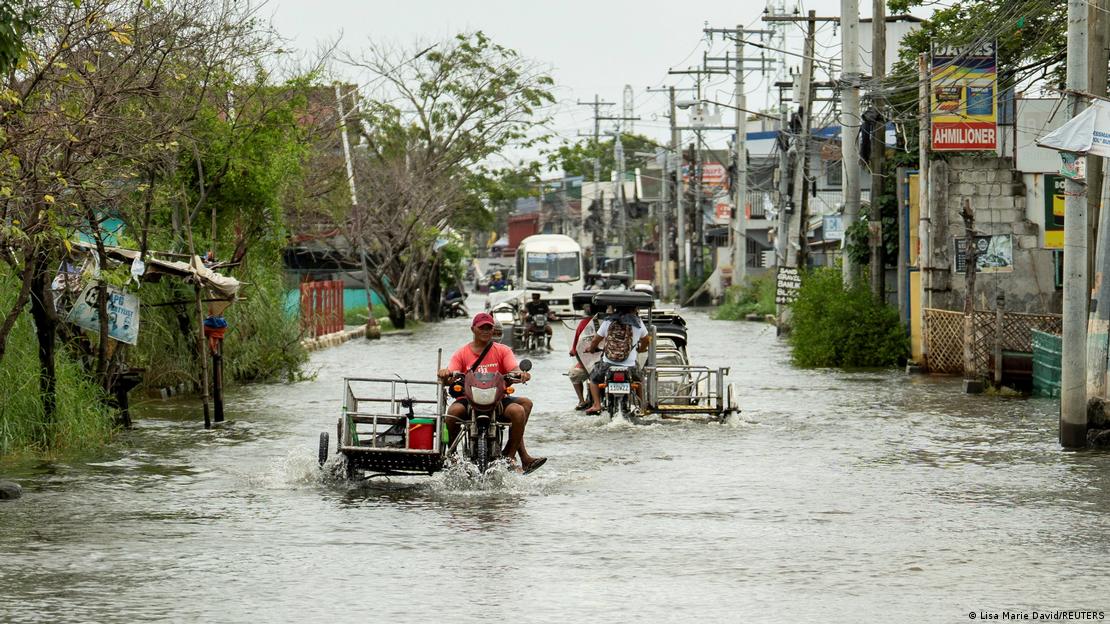
Many thousands had to be evacuated in the Philippines amid flooding and landslides
Image: Lisa Marie David/REUTERS

Ragasa has killed at least three people, left five missing and displaced more than 17,500 in flooding and landslides across the Philippines, the national disaster agency and provincial officials said.

Authorities reported that a 74-year-old man died while being taken to a hospital after mud, rocks and trees buried four vehicles on a narrow road Monday in Tuba, Benguet province. Two other villagers were killed, including a resident of Calayan town in northern Cagayan province, where the storm made landfall.

Meanwhile, Taiwan has recorded nearly 60 centimeters of rain in its mountainous east and reported 25 injuries. Transport disruptions there continued for a second day on Tuesday, with 273 flights canceled.

Edited by: Dmytro Hubenko
Richard Connor Reporting on stories from around the world, with a particular focus on Europe — especially Germany.
Which countries recognize Palestinian statehood?
DW
September 22, 2025

Despite widespread international recognition of Palestine, some Western nations have said they will only endorse Palestinian statehood as part of a comprehensive peace agreement with Israel. But the tide is changing.


The UK, Canada, Australia and Portugal are among the latest countries to recognize Palestinian statehood
Image: Luis Boza/NurPhoto/picture alliance


A majority of countries now recognize Palestine as a state. But despite decades of efforts, full sovereignty and UN membership remain out of reach for a Palestinian state.

On September 9, the United Nations General Assembly overwhelmingly backed a resolution supporting a two-state solution for Israelis and Palestinians: 142 countries voted in favor, 10 against and 12 abstained.

The vote came less than 24 hours after Israeli Prime Minister Benjamin Netanyahu declared there would "never" be a Palestinian state.

On September 21, the United Kingdom, Canada,Australia and Portugal announced their recognition of Palestine as a state.

France recognized Palestinian statehood on Monday. Luxembourg and Malta have announced plans to recognize Palestine as a state this month at the UN General Assembly. Belgium said it would recognize Palestine given certain conditions.

The recent moves signal a shift in Western policy on Palestinian statehood — and they have angered Israeli officials.


Netanyahu and members of his government have consistently criticized the moves to recognize a Palestinian state, often arguing that it would reward terrorism.

Most countries worldwide already acknowledge the Palestinian territories as a state, but opposition remains strong from key powers.

Palestine already has non-member observer status, but full UN membership can only be decided upon by the UN Security Council.

In April 2024, the US, a permanent member with veto power, blocked a draft resolution that would have recommended granting the Palestinians full membership.

Path to recognition for a Palestinian state

More than 150 countries have officially recognized the Palestinian territories as a state.

Just under half of these nations did this formally after November 1988, when the Palestine Liberation Organization (PLO) officially declared Palestine an independent state.

Endorsements came from communist states such as the Soviet Union and China, as well as nonaligned countries Yugoslavia and India.

More countries followed suit. In the last decade of the 20th century, many central Asian nations, along with South Africa, the Philippines and Rwanda, established diplomatic relations with the Palestinian territories.

In the early 2000s, Argentina, Bolivia, Ecuador and Venezuela officially recognized the Palestinian territories as a sovereign nation.

In 2011, the Palestinian Authority (PA) applied for full membership in the UN, but the Security Council dismissed its bid.

Nonetheless, the PA's diplomatic efforts, coupled with widespread frustration with the stalled Israeli-Palestinian peace process, prompted more than a dozen countries, including Chile, Uruguay and Peru, to recognize the Palestinian territories as a state.

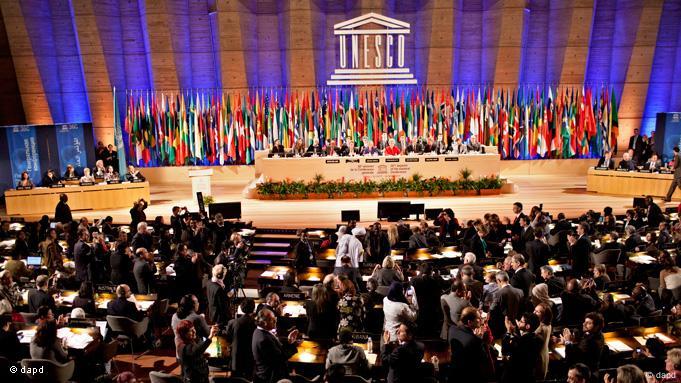
In 2011, Palestine was admitted as a full member of UNESCO, marking a victory for Palestinian diplomacy.

Iceland became the first Western European country to recognize it as a state the same year, setting a precedent for Sweden, which followed suit in 2014.

For some countries, recognizing the Palestinian territories as a state was a symbolic act to balance diplomatic relations in the Middle East and signal their commitment to a two-state solution
Image: dapd

Recent developments


In 2024, the Bahamas, Trinidad and Tobago, Jamaica and Barbados announced their recognition of the Palestinian territories as a state.

A year earlier, in June 2023, Mexico announced its full support for Palestinian statehood, and shortly afterward, the Mexican government moved to establish a full embassy with all the privileges and immunities granted to diplomatic missions in the Palestinian territories.

In 2018, Colombia declared Palestine a sovereign nation just before the end of President Juan Manuel Santos' term. Since the beginning of the Israeli offensive on Gaza in October 2023, the Latin American country, which exported $1 billion worth of goods to Israel in 2023, has reduced its political and economic relations with Israel.

President Gustavo Petro has cut ties with Israel, and in May 2024 ordered the opening of an embassy in the Palestinian city of Ramallah, in the occupied West Bank.

What is the West's stance?


The US, Germany and many Western European states and their ally South Korea have long supported the concept of an independent Palestinian state coexisting with Israel as a resolution to the long-standing Middle East conflict.

However, many have said they will only recognize the Palestinian territories as an independent nation within the framework of a comprehensive peace agreement.

That stance has begun to shift since Israel's ongoing war in Gaza began in 2023 after the October 7 Hamas-led terror attacks.

Ireland, Norway and Spain formally recognized Palestinian statehood in 2024, citing Israel's conduct in the conflict.

In 2025, France become the first G7 country to announce its intention to recognize Palestinian statehood, and Canada, Malta,

Australia and Portugal followed suit.

Japan has said it will not recognize a Palestinian state for now, a move aimed at preserving ties with the United States and avoiding further strain with Israel, the Asahi newspaper reported on September 17.

Hugh Lovatt, a senior policy fellow and Middle East expert at the European Council on Foreign Relations, told DW that Germany, as one of the staunchest supporters of Israel in the EU, is unlikely to change its position.

"Well, never say never, but I think the Germans have made it very clear that they will be amongst the last to recognize the state of Palestine," he told DW in July 2025.

Update, September 22, 2025: This article was originally published on May 25, 2024, and has been updated with the news that the United Kingdom, Canada, Australia and Portugal recognized a Palestinian state on September 21, 2025.


Anchal Vohra contributed to this report.


Monir Ghaedi Iranian author and reporter on current affairsMonirghaedi

Davis VanOpdorp Sports reporter and editorDavis_VanOpdorp
Italy: Thousands join pro-Palestinian protests, strikes

Zac Crellin 
DW with AFP, Reuters
Issued on: 23/09/2025

Tens of thousands took part in the nationwide action in solidarity with Palestinians in Gaza. Clashes were reported in Milan, where about 60 police officers were hurt.


About 20,000 people demonstrated in central Rome
Image: Riccardo De Luca/Anadolu/picture alliance

Thousands of workers and students across Italy have joined a general strike and staged rallies in solidarity with Palestinians in Gaza.

A number of grassroots unions called for a 24-hour strike on Monday, which affected transportation, schools and ports, among other infrastructure.

More than 20,000 people attended a pro-Palestinian protest in front of Rome's central Termini railway station, while demonstrators in Bologna blocked traffic on a motorway.

Italy saw a wave of protests and strikes in several major cities
Image: Vincenzo Nuzzolese/ZUMA Press Wire/IMAGO

Dock workers went on strike in the ports of Genoa, Livorno, Trieste and Venice, where police used a water cannon to break up protesters.

"The Palestinian people continue to give us yet another lesson in dignity and resistance," Ricky, a protester in Genoa from a group called the Autonomous Dockworkers' Collective, told the Reuters news agency.

"We learn from them and try to do our part," he said.

Police used a water cannon against striking dock workers in Venice
Image: Andrea Merola/ANSA/ZUMA/picture alliance

Meloni denounces clashes with police in Milan

In Milan, protesters clashed with police at the city's central station.

At least 10 people were arrested, and about 60 police officers suffered bruising or more serious injuries, Italy's ANSA news agency reported.

At least 10 people were arrested in Milan after police clashed with protesters
Image: Francesco Enriquez/IPA/ZUMA/picture alliance

Italian Prime Minister Giorgia Meloni condemned the clashes between protesters and police in Milan.

"(This was) violence and destruction that have nothing to do with solidarity and will not change the lives of people in Gaza by a fraction, but will have concrete consequences for Italian citizens who will end up suffering and paying for the damage caused by these hooligans," she said on social media.

Italy's prime minister denounced the scenes in Milan
Image: Francesco Enriquez/Fotogramma/IPA/ABACA/picture alliance

Edited by: Karl Sexton
FASCIST AMERIKA
Trump labels Antifa as 'domestic terrorist organization'

Shakeel Sobhan 
DW with AP, AFP, Reuters, dpa
23/09/2025

According to Donald Trump's executive order, US authorities can act against "any person claiming to act on behalf of Antifa." The order follows the assassination of conservative activist Charlie Kirk.

Antifa stands for anti-fascism or anti-fascist, and is derived from early 1930s Germany, where socialist "anti-fa" groups stood against Adolf Hitler's Nazis
 [FILE: Apr 11, 2021]Image: David Dee Delgado/Getty Images


US President Donald Trump on Monday signed an executive order designating the left-wing Antifa movement a terrorist organization, the White House said. The announcement comes in the wake of the assassination of conservative activist Charlie Kirk.

According to the order, Antifa was labelled a "domestic terrorist organization," because of a "pattern of political violence designed to suppress lawful political activity and obstruct the rule of law."

Trump's order directs federal agencies to investigate and dismantle the "militarist, anarchist enterprise that explicitly calls for the overthrow of the United States Government."

US authorities can act against "any person claiming to act on behalf of Antifa, or for which Antifa or any person claiming to act on behalf of Antifa provided material support," the order said.

What is the Antifa movement?

Antifa stands for anti-fascism or anti-fascist, and is derived from early 1930s Germany, where socialist "anti-fa" groups stood against Adolf Hitler's Nazis.

It is a left-wing political movement that also identifies as anti-racist, with many of its protests staged against white supremacy.

A decentralized movement, Antifa has no national leader and is made up of "independent, radical, like-minded groups and individuals," according to a 2020 Congressional Research Service analysis.

What led to Antifa's classification?


During an exchange with reporters in the Oval Office last week, Trump announced plans to label the movement as domestic terrorism, saying "Antifa is terrible."

On September 10, Kirk, a prominent conservative activist with close ties to Trump, was assassinated while speaking on a college campus in Utah.

A 22-year-old technical college student was charged with Kirk's murder.

Although investigators have not said whether the suspect was associated with any groups, Trump has blamed left-wing rhetoric for the assassination.

'Others will take up Kirk's mantle,' political analyst warns 04:12

Critics warn order could curb free speech

The executive order did not specify how Trump would designate Antifa as a domestic terrorist organization, as it is not eligible for inclusion on the State Department's list of foreign terror organizations, alongside the Islamic State group and al-Qaeda.

The move could expand surveillance and financial tracking powers. However, legal experts say there is no precedent for labeling a domestic group as a terrorist organization under US law.

At the same time, critics warn that the order risks targeting dissent and curbing free speech, while targeting Trump's opponents.

Meanwhile, experts say that far-right violence remains the leading domestic extremist threat.

Edited by: Dmytro Hubenko


Trump pushes unproven claims linking Tylenol to autism


Jenipher Camino Gonzalez
DW with AP, Reuters, AFP
23/09/2025


Donald Trump said pregnant women must not take acetaminophen, as his government moved to link the drug to autism, contradicting medical consensus on its safety as a painkiller during pregnancy.


US President Donald Trump on Monday announced new health guidelines on vaccines and made the unproven claim that use of acetaminophen, known in the US as Tylenol, during pregnancy was linked to autism.

Trump said the US Food and Drug Administration (FDA) would notify doctors that the use of acetaminophen "can be associated" with an increased risk of autism, without providing any medical evidence for the new recommendation.

In response, the World Health Organization (WHO), said that the evidence for this claim was "inconsistent."

Spokesman Tarik Jašarević told reporters in Geneva that there was no scientific basis for the US policy, adding that "we know that vaccines do not cause autism... this is something that science has proven."

What are Trump and RFK's views on autism?

The new guideline and the push to uncover autism's roots have been a goal of Health Secretary Robert F. Kennedy Jr. (RFK), who has spent decades pushing discredited claims that link vaccines to the condition. It all comes as RFK and Trump have vowed to upend the country's health agencies with the slogan "Make America Healthy Again."

The US president said "taking Tylenol is not good."

"For this reason, they are strongly recommending that women limit Tylenol use during pregnancy unless medically necessary. That's for instance, in cases of extremely high fever that you feel you can't tough it out," he said.

Trump also falsely claimed that there are "parts of the world" that are too poor to use the drug and thus "don't have autism."
Tylenol company criticizes Trump autism comments

Tylenol's parent company Kenvue said in a statement that it "strongly disagrees" with Trump's comments, adding that "sound science clearly shows that taking acetaminophen does not cause autism."

The company highlighted scientific reviews by multiple government regulators worldwide, including those previously published by the FDA.

Edited by: Saim Dušan Inayatullah