Monday, October 20, 2025

SCI-FI-TEK 70 YRS IN THE MAKING

USA sets out roadmap for fusion commercialisation

The US Department of Energy has released its Fusion Science and Technology Roadmap, a comprehensive national strategy to accelerate the development and commercialisation of fusion energy by the mid-2030s.
 
(Image: DOE)

Developed with input from more than 600 scientists, engineers, and industry stakeholders, the roadmap aims to identify the key research, materials, and technology gaps that must be closed to realise a fusion pilot plant (FPP) and strengthen US leadership in the global fusion industry.

The Fusion Science and Technology (FS&T) Roadmap establishes a unified strategy for the US fusion industry built around three primary drivers: build critical infrastructure to close fusion materials and technology gaps; innovate through advanced research, high-performance computing, and artificial intelligence; and grow the US fusion ecosystem through public-private partnerships, regional manufacturing hubs, and workforce development.

"With more than USD9 billion in private investment already advancing burning-plasma demonstrations and prototype reactor designs, DOE is coordinating a national effort to close the remaining technical gaps - spanning materials, plasma systems, fuel cycles, and plant engineering," the department said. "Through the Build–Innovate–Grow strategy, DOE and its partners across national laboratories, industry, universities, and allied nations are strengthening domestic supply chains, advancing fusion science, and securing America's leadership in the race to deliver commercial fusion energy. The roadmap outlines DOE's plan to address these challenges through coordinated investments in six core fusion science and technology areas: structural materials, plasma-facing components, confinement systems, fuel cycle, blankets, and plant engineering and integration."

DOE said the roadmap is strongly aligned to the 2020 Fusion Energy Sciences Advisory Committee (FESAC) Long-Range Plan (LRP). The roadmap combines the FESAC LRP critical science drivers with a revamped FES public programme in the DOE Office of Science to "define a new era of US fusion energy leadership". The department said this era is characterised by strong alignment between the public sector roadmap and the private sector's stated ambitions to deliver fusion power on an aggressive timeline and is increasingly enabled and accelerated by the revolutionary potential of artificial intelligence-fusion convergence. The roadmap defines key actions to be executed in the near-term (next 2-3 years), mid-term (3-5 years) and long-term (5-10 years), aligned to the Build-Innovate-Grow strategy and to the LRP science drivers.

"Taken together, the roadmap key actions set the course for strategic actions and capability delivery necessary to support a world-leading US fusion ecosystem, while the Technical Roadmap Metrics and Milestones will track progress and ensure these actions are aligned with closing critical scientific and technical challenges progressing toward fusion commercialisation," the roadmap says.

"This approach enables the public programme to remain nimble and prioritise resources with decisions that may require pivoting as fusion developers accelerate towards their technology roadmaps and viable fusion power plant designs, while suppliers advance their innovations, supporting a growing fusion power industry in the US."

DOE said its ability to support this roadmap's milestones and timelines of scaling up the domestic fusion private sector by the 2030s is "contingent on the development of future public private partnerships. This roadmap is not committing DOE to specific funding levels, and future funding will be subject to Congressional appropriations".

The department said the roadmap advances President Donald Trump's Executive Order Unleashing American Energy, reinforcing the Administration's commitment to expand domestic energy production and restore US energy dominance. "By accelerating progress toward commercial fusion power, DOE is strengthening America's grid, rebuilding critical supply chains, and securing a new era of abundant, reliable, American-made energy."

"The Fusion Science and Technology Roadmap brings unprecedented coordination across America's fusion enterprise," said Energy Department Under Secretary for Science DarĂ­o Gil. "For the first time, DOE, industry, and our National Labs will be aligned with a shared purpose - to accelerate the path to commercial fusion power and strengthen America's leadership in energy innovation. Thanks to President Trump's leadership, the Department is streamlining the full strength of the US scientific and industrial base to deliver fusion energy faster than ever before."

Jean Paul Allain, Associate Director of DOE’s Office of Fusion Energy Sciences, added: "Fusion is real, near, and ready for coordinated action. This roadmap provides the strategic foundation for building the scientific, technical, and industrial base needed to ensure American leadership in commercial fusion on an ambitious timeline."

World Nuclear News

EUROfusion and ITER strengthen scientific cooperation with new agreement


Contract will foster material research and training


EUROfusion

ITER and EUROfusion celebrate new agreement 

image: 

“EUROfusion Programme Manager Gianfranco Federici (right) and ITER Director-General Pietro Barabaschi sign the cooperation agreement at the IAEA Fusion Energy Conference in Chengdu, People’s Republic of China.” Credit: ITER Organisation 

view more 

Credit: ITER Organization


The new agreement, signed by EUROfusion Programme Manager Gianfranco Federici and ITER Director-General Pietro Barabaschi, establishes a framework for a more targeted and coordinated European contribution to ITER over the next two years.  


The collaboration focuses on three initial Implementing Agreements

  • Support for the design of the ITER first wall

  • Development of tungsten coating techniques for stainless steel wall components, 

  • Joint initiatives in training and education to prepare the next generation of fusion specialists. 

Beyond these first steps, the agreement opens the door for joint activities in research, engineering, data exchange, and knowledge management — all aimed at ensuring a smooth transition from ITER’s construction to operation. 


Gianfranco Federici, EUROfusion Programme Manager said: 


“This agreement marks a new level of partnership between EUROfusion and ITER. It allows us to focus European expertise where it matters most — supporting ITER as the world’s flagship for fusion energy.” 


Pietro Barabaschi, ITER Director-General said: 


The ITER project and EUROfusion have a long history of working together. The agreement today is important because it formalizes that cooperation. I am very grateful that EUROfusion is ready to deploy resources to ITER. As I said at the conference today, ITER is facility for the community and EUROfusion represents the fusion community in Europe.  


Richard Kamendje, EUROfusion International Collaborations Manager said: 


“The agreement is about enabling EUROfusion to provide additional support to the ITER project by looking into issues that have been raised because of the rebaselining. And what we are trying to do here in particular here is to provide support to design of in-vessel components in particular the first wall and this is crutial right now for ITER for the integrity of the facility. Basically the agreement lasts as long as needed but the idea is that we’d like to kick in as quickly as possible activities and actions and we have actually started working on this. We have dedicated teams visited ITER, working with ITER experts and the idea is just to frame to this collabroation framework. – Richard Kamendje, International Collaborations Manager, EUROfusion. ” 


The cooperation reinforces Europe’s leading role in the global fusion landscape, ensuring that scientific expertise, training, and technological innovation continue to advance hand in hand with ITER’s development. 


 World Nuclear News


Urenco doubles expansion plans for uranium enrichment in the Netherlands


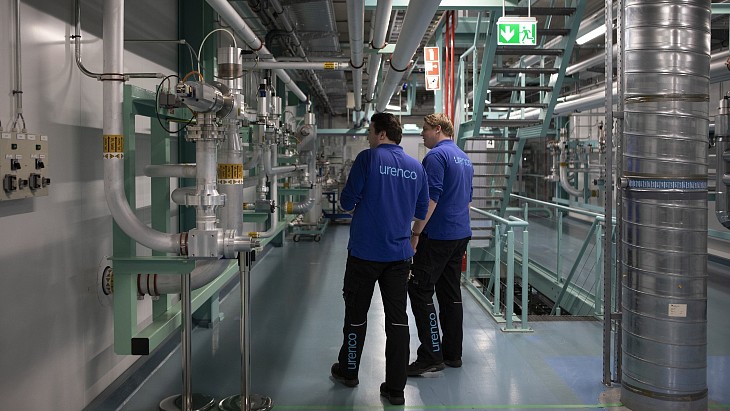
Urenco has announced plans to double the scale of its planned expansion at its Almelo uranium enrichment plant in the Netherlands.
 
(Image: Urenco)

The first stage of expansion at Almelo, of about 750,000 separative work units (SWU), was announced in 2023 and is scheduled to come online in 2027. That will increase the site's capacity by about 15%. The company is now planning a second stage, to build an additional centrifuge hall providing a similar amount of extra capacity, so in total providing 1.5 million SWU of extra capacity by 2030.

Ad Louter, Managing Director of Urenco Almelo, said: "This project is the largest buildout of new enrichment capacity undertaken so far as part of the company's capacity expansion programme and ensures that we can offer security of supply to global customers, while providing stable and long-term employment opportunities in our region.

"We are encouraged by the actions of both utilities and governments to support the nuclear industry and the fuel supply chain specifically. We will evaluate other expansions as supported by long-term contracts. Stable government policy is also critical and a positive development in the EU has been the intention to phase out Russian nuclear material through the REPowerEU plan."

The announcement means Urenco has globally now committed to 2.5 million SWU of new enrichment capacity, including the first two centrifuge cascades now online in Eunice, New Mexico in the USA. At its site in Gronau, Germany, the company is re-fitting an existing space with more modern centrifuge technology which will enhance the capacity of the plant.

In addition to the Almelo, Eunice and Gronau plants, Urenco also operates an enrichment facility at Capenhurst in the UK.

The nuclear fuel cycle

Unenriched, or natural, uranium contains about 0.7% of the fissile uranium-235 (U-235) isotope. ("Fissile" means it's capable of undergoing the fission process by which energy is produced in a nuclear reactor). The rest is the non-fissile uranium-238 isotope. Most nuclear reactors need fuel containing between 3.5% and 5% U-235. This is also known as low-enriched uranium, or LEU. Advanced reactor designs that are now being developed - and many small modular reactors - will require higher enrichments still. This material, containing between 5% and 20% U-235 - is known as high-assay low-enriched uranium, or HALEU. And some reactors - for example the Canadian-designed Candu - use natural uranium as their fuel and don’t require enrichment services. But more of that later.

Enrichment increases the concentration of the fissile isotope by passing the gaseous UF6 (uranium hexafluoride) through gas centrifuges, in which a fast spinning rotor inside a vacuum casing makes use of the very slight difference in mass between the fissile and non-fissile isotopes to separate them. As the rotor spins, the concentration of molecules containing heavier, non-fissile, isotopes near the outer wall of the cylinder increases, with a corresponding increase in the concentration of molecules containing the lighter U-235 isotope towards the centre.

Enriched uranium is then reconverted from the fluoride to the oxide - a powder - for fabrication into nuclear fuel assemblies.

World Nuclear Association’s information paper on uranium enrichment contains more details about the enrichment process and technology.

Netherlands aims to extend operation of Borssele plant


In a move to enable the continued operation of the Borssele nuclear power plant beyond 2033, the Dutch cabinet has submitted an amendment to the Nuclear Energy Act to the House of Representatives. The cabinet also announced plans to create a new state-owned company for the construction and operation of two new nuclear power plants.
 
Borssele (Image: EPZ)

The 485 MWe (net) pressurised water reactor at Borssele - operated by EPZ - has been in operation since 1973 and accounts for about 3% of the country's total electricity generation. It is scheduled to close in 2033, but the government has requested it remain in operation until 2054, if this can be done safely. The government has said it will consider acquiring a stake in the Borssele plant should a decision be made to extend its operation beyond 2033.

"The amendment to the law is an important step towards keeping the nuclear power plant operational longer," the government said. "If the amendment is adopted, Borssele's operator can apply to the independent regulator ANVS to keep the nuclear power plant operating beyond 2033. This will allow the Netherlands to continue consuming CO2-free energy for a longer period. The extension aligns with the government's policy of not relying solely on green energy sources, such as offshore wind or solar panels, but also fully committing to CO2-free and reliable nuclear energy. This will ensure our country can keep running, even when the sun doesn't shine and the wind doesn't blow."

In December 2021, the Netherlands' new coalition government placed nuclear power at the heart of its climate and energy policy. In addition to keeping the Borssele plant in operation for longer, the government also called for the construction of new reactors. Based on preliminary plans, two new reactors will be completed around 2035 and each will have a capacity of 1000-1650 MWe. The two reactors would provide 9-13% of the country's electricity production in 2035. The cabinet announced in December 2022 that it currently sees Borssele as the most suitable location for the construction of the new reactors. Three other locations are also being considered for the reactors: the Tweede Maasvlakte near Rotterdam, Terneuzen in Zeeland and Eemshaven in Groningen.

The government will establish a new state-owned company - the Nuclear Energy Organisation of the Netherlands (NEO NL) - for this purpose, Minister of Environment and Green Growth Sophie Hermans informed the House of Representatives. "This company will contract with the builder and will also operate the new plants. NEO NL will take the form of a 'policy participation', with the Ministry of Climate and Green Growth as the sole shareholder. At least EUR45 million (USD52 million) is available for its establishment," she said.

The government is also taking steps to prepare the Netherlands for the possible deployment of small modular reactors (SMRs). It said it is allocating EUR20 million "to stimulate developments in the Netherlands".

"In Europe, the United Kingdom is one of the frontrunners in this field," it said. "The Netherlands and the UK have therefore joined forces and signed a cooperation agreement in July 2025, allowing the Netherlands to learn from the British."

"Our country cannot survive without nuclear energy," Hermans said. "With the proposed establishment of NEO NL and the continued operation of Borssele, we are now taking a historic step towards a future with reliable nuclear energy. I hope that the next cabinet will continue on the path we have embarked on with the same energy and dedication."

Outer containment work under way for Leningrad's seventh unit

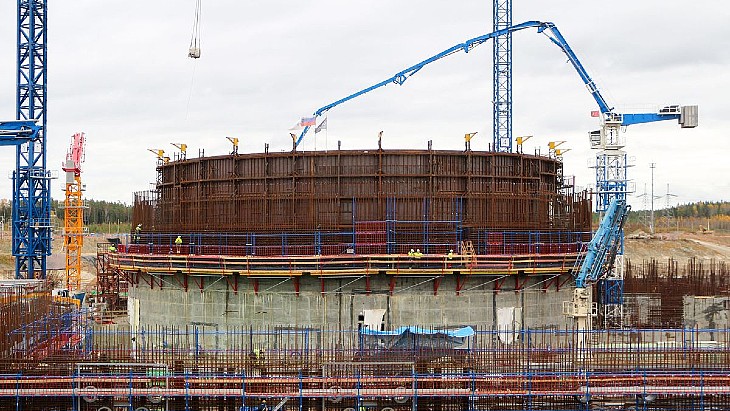
Construction work has begun on the outer containment building for the third new unit at the Leningrad nuclear power plant, which will be the seventh in total.
 
Work is taking place on both containment buildings (Image: Rosatom)

The new phase of the plant - known as Leningrad II - features two VVER-1200 units, commissioned in 2018 and 2021 respectively, with a third and fourth new unit currently under construction. Together, they will replace the four RBMK-1000 units from the original 1970s phase of the Leningrad nuclear power plant.

The outer containment work involves successively constructing and erecting tiers of a reinforced steel 'cage' which will then be filled with concrete. When complete, it will be 70 metres high, 52 metres in diameter and 80 centimetres thick.

Containment buildings for nuclear power units are safety features, with the VVER-1200 involving an internal and an outer containment building as part of a double containment protection system - with the outer containment designed to provide extra protection from external hazards such as earthquakes and aircraft crashes.

Leningrad NPP-2's Evgeny Milushkin, said: "The outer containment shell will be constructed in tiers. We plan to have the first one ready as early as November.  The structure, approximately four metres high, will require over 200 tonnes of steel reinforcement and nearly 600 cubic metres of concrete. Early next year, the shell will grow another four metres. The entire outer containment shell will be ready in 2028."

Construction of the inner containment is taking place at the same time as the outer containment. The lower tier of the inner containment building - with a 44-metre diameter, measuring 10 metres high and weighing 227 tonnes - was lowered into place last month. Work is also taking place on the reactor building and core catcher.

Rosatom says there are more than 1,000 people involved in the construction of the unit and the fourth new unit. The new units are scheduled to be commissioned in 2030 and 2032.

Background

The Leningrad nuclear power plant is one of the largest in Russia, with an installed capacity of 4,400 MWe, and provides more than 55% of the electricity demand of St Petersburg and the Leningrad region, or 30% of all the electricity in northwest Russia.

Leningrad 1 shut down in 2018 after 45 years of operation. Leningrad 2, also a 1,000 MWe RBMK unit, started up in 1975 and was permanently shut down in November 2020. As the first two of the plant's four RBMK-1000 units shut down, new VVER-1200 units started up at the neighbouring Leningrad II plant. The 60-year service life of these fifth and sixth units (also known as Leningrad II-1 and Leningrad II-2) secures power supply until the 2080s. Units 7 and 8 (also known as Leningrad II-3 and Leningrad II-4) will replace units 3 and 4 as they are shut in the coming years.

The pouring of the first concrete for unit 7 in March 2024 marked the start of the main phase of construction of the new power unit, which is expected to generate power for 60 years, with the possibility of a 20-year extension.

Trump signals 'not fathomable' plan to topple South American regime: expert

Robert Davis
October 20, 2025
RAW STORY


U.S. President Donald Trump speaks to senior military leaders at Marine Corps Base Quantico, in Quantico, Virginia September 30, 2025. (Andrew Harnik/Pool via REUTERS)

President Donald Trump's latest moves in South America show that he's after "regime change," according to one analyst.

On Sunday, the Trump administration struck a seventh boat with alleged ties to drug smuggling. The strike was conducted off the coast of Colombia and killed three people, according to reports. After the strike, Trump escalated his feud with Colombian President Gustavo Petro by posting a lengthy message on Truth Social announcing that he was cutting off foreign aid to the country.

"The purpose of this drug production is the sale of massive amounts of product into the United States, causing death, destruction, and havoc," Trump posted. "Petro, a low rated and very unpopular leader, with a fresh mouth toward America, better close up these killing fields immediately, or the United States will close them up for him, and it won’t be done nicely."

Sergio GuzmĂ¡n, who heads Colombia Risk Analysis, a consultancy that studies U.S.-Colombia policy, told the Wall Street Journal that Trump's actions appear to have a higher purpose.

“The U.S. is pushing the boundary of international law,” GuzmĂ¡n told the outlet. “Essentially, the U.S. has now cut all of its foreign assistance to Colombia and it is also looking for regime change in Venezuela—two things that eight months ago or 10 months ago were not fathomable.”

Read the entire report by clicking here.


Venezuela Revives Coal as Oil Remains Off Limits

Venezuela is betting on coal to jumpstart its resource economy and exports amid increasing sanctions on its oil industry with few exemptions in the form of waivers. 

At the end of 2024, a Venezuelan-Turkish joint venture restarted coal production at two mines in northwestern Venezuela – Paso Diablo and Mina Norte – after years of no coal output there at all, multiple sources from the Venezuelan company told Reuters

The two mines are operated by the Carboturven joint venture, which is a partnership between Venezuela’s state-owned firm Carbozulia and the Turkish company Glenmore Dis Ticaret Ve Madencilik A.S.

Unlike oil, Venezuela’s coal is not under sanctions and now attracts additional efforts of Nicolas Maduro’s government to boost output, exports, and state revenues, of course. 

Since the restart of the two mines, coal production in Venezuela reached about 3 million tons for the first quarter of 2025, per data from Carbozulia cited by Reuters.  

This first-quarter figure puts Venezuela on track to top 8 million tons in annual production, which was last seen about two decades ago in the early 2000s. 

Venezuela mostly exports its coal with higher energy content and aims to further increase exports as it seeks to boost its state revenues that have been severely crippled by the U.S. sanctions on its oil industry and exports.  

Venezuela aims to boost its coal exports to 10 million tons per year, an anonymous employee at the Paso Diablo mine told Reuters. 

But on its quest to boost coal output and exports, the South American country completely disregards any environmental concerns and regulations. 

The restarted mines in northwest Venezuela pollute the air and water, spewing cyanide, mercury, lead, and cadmium into the Guasare River, as no safeguards are in place to ensure environmental protection, Indigenous leaders and members of local communities tell Reuters.  

By Charles Kennedy for Oilprice.com 


Progress Reported on California-China Green Shipping Corridor

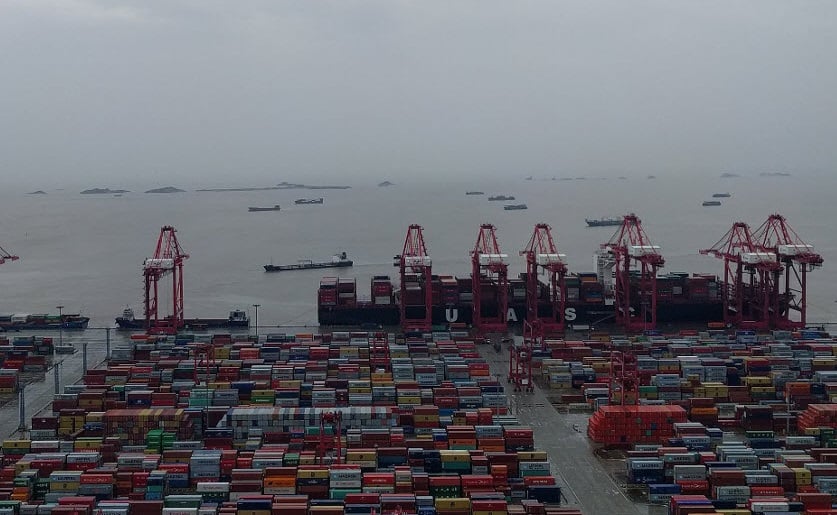
Shanghai container port
Progress was reported in the efforts to develop a green shipping corridor from Shanghai to California

Published Oct 20, 2025 4:26 PM by The Maritime Executive


U.S. and Chinese officials are reporting that good progress has been made in the early phases for the launch of the first green shipping corridor on the Pacific. The sponsors of the project highlighted the progress during a conference in Shanghai while China’s Ministry of Transport also outlined steps it will be taking to expand green shipping.

The concept for the corridor followed an agreement at the UN’s global climate conference in Scotland (COP26 in 2021). Designed as a demonstration for the industry, the effort which is being facilitated by C40 Cities, a global network of nearly 100 mayors, calls for the launch of green shipping between the ports of Shanghai, Los Angeles, and Long Beach. It would be the first long-distance effort and would bring decarbonization to one of the busiest shipping routes in the world.

The effort presented its second annual report at the 2025 North Bund Forum in Shanghai. They reported during 2024 the effort has seen the expansion of the shore power infrastructure at the three ports. Shanghai, Los Angeles, and Long Beach have now reached 100 percent capability with the necessary power infrastructure. The California ports completed their installation as part of the state’s mandated efforts to reduce emissions while vessels are on dock.

Shanghai has also completed the development of its green methanol bunkering operation. It supplied more than 47,000 tons of green methanol and realized China’s first linkage for domestically produced green methanol. The California ports have also begun the development of their methanol bunkering infrastructure. The Ports of Los Angeles and Long Beach have also commissioned a Clean Fuels Study.

The potential for shipping on the route using methanol was demonstrated by Maersk in August 2024. The company brought its fourth 16,000 TEU dual-fuel methanol containership, Alette Maersk, for a special naming ceremony. The vessel is normally deployed between Asia and Europe.

The working groups for the effort are continuing to work on elements including the emerging fuel standards and studies on fuel supply and demand. They continue to work toward the goal of demonstrating the feasibility of deploying zero lifecycle carbon emission containerships by 2030.

Chinese officials reported that they are building on the initiative calling for joint efforts to create a more efficient and greener shipping ecosystem. They outlined seven additional measures. This includes expanding green shipping corridors in phases, accelerating the development of green and low-carbon vessels, developing (near) zero-carbon ports, enhancing green fuel supply capacity, leveraging government-market collaboration, sharing best practices, and supporting innovation.

China said that major ports, including Shanghai and Ningbo-Zhoushan, have accelerated the development of the green fuel supply infrastructure. They also reported the establishment of another green corridor with an agreement between Qingdao Port and the Port of Hamburg, Germany.

Decarbonization Focus Moves to MEPC Working Group After IMO’s Delay

TRUMP ANTI-GREEN SABOTAGE

IMO
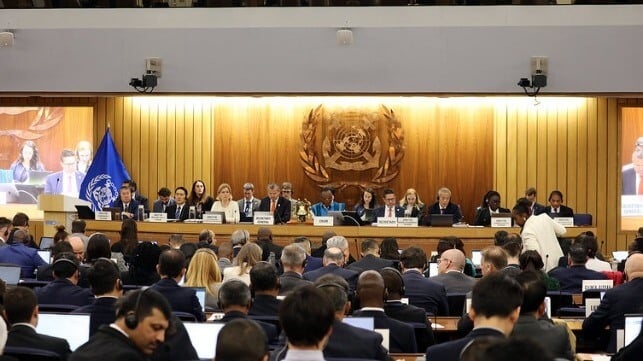
After last week's delay at the MEPC extraordinary session, focus moves back to the working groups to formulate the decarbonization strategy (IMO)

Published Oct 20, 2025 2:07 PM by The Maritime Executive


The IMO’s Intersessional Working Group on the Reduction on Greenhouse Gas Emissions from Ships convened as scheduled today, October 20, as the shipping industry remains confused over last week’s decision to adjourn for one year the discussions on the Net-Zero Framework. Some participants are feeling relief while many were disappointed and pointed to the near-term uncertainties that everyone hoped would have been resolved.

The working group, however, is going ahead to continue work on the guidelines for implementing the Net Zero Framework. They will be focusing on key issues related to greenhouse gas emissions as it works to develop consensus and clarifications on the architecture and implementation as well as the planned global fund. Further negotiations are expected on the carbon revenues as well as elements such as the use of biofuels and the supply of alternative fuels.

“The Framework’s success was always dependent on the development of strong and coherent implementation guidelines,” said Dr. Alison Shaw, IMO Policy Manager at the influential NGO T&E (European Federation for Transport and Environment). “This work can continue regardless of the delay.”

Jan Hoffmann, the Global Lead for Maritime Transport and Ports at the World Bank wrote in a social media posting that the delays were “sad news” and “a sad day for multilateralism.” He warned that it “extends uncertainty for the maritime industry, leading to delays in investments in ports and shipping capacity, which will ultimately also mean higher and more volatile freight rates.”

Some parts, however, also expressed their frustration and anger at the members and the IMO. The Ambassador of the Republic of the Marshall Islands who is the Marshall Islands Special Envoy for Maritime Decarbonization, Albon Ishoda, wrote, “Don’t pretend that the Pacific was voiceless; we were ignored, bullied, threatened, cornered, sidelined and harassed…. A year delay is a year of more devastation and displacement for our communities that have nothing to do with this catastrophe. We don’t have the luxury of time. The IMO owe our people an explanation!”

The industry has begun to comprehend the delay while still standing behind the IMO. “Global regulation is essential to ensure a level playing field at international level and to deliver the energy transition of international shipping. We will continue to work with our international partners to ensure an agreement on the IMO NZF can be reached,” said Sotiris Raptis, Secretary General of European Shipowners (ECSA).

The World Shipping Council also asserted that the IMO remains the right place to deliver a global solution. It wrote on Friday after the vote that it is committed to continuing to work with the government to deliver the necessary regulatory consistent for the industry.

The World Shipping Council is urging the IMO to use the time to close the remaining gaps in the agreement. INTERCARGO also reaffirmed its support for the IMO as the sole global regulator capable of delivering coherent and effective measures for international shipping. Similarly, the International Transport Workers’ Federation issue a statement calling for the governments to use the time to rebuild trust and reach agreement on a fair and practical path to decarbonizing shipping.

Many shipping companies have already said they will stay the course with their current efforts, while some owners of older ships are feeling a sense of temporary relief. 

This week’s session is a closed-door effort. The meeting summary expected from the IMO will provide the first clear signal if the IMO is able to come together and develop a clearer path forward on decarbonization.

Global Coalition Launches to Overhaul Carbon Accounting

A coalition of some of the world’s largest industrial and financial companies — including ExxonMobil, ADNOC, BASF, Banco Santander, and NextEra Energy — has launched Carbon Measures, a new global initiative to establish a standardized and scientifically robust carbon accounting framework designed to accelerate emissions reduction through market forces.

The New York–based coalition, unveiled today, aims to replace today’s fragmented and often inconsistent emissions reporting practices with a ledger-based carbon accounting system modeled on financial reporting standards. The new framework seeks to eliminate double-counting, fill information gaps, and enable accurate product-level emissions tracking across supply chains.

The launch of Carbon Measures marks one of the most coordinated private-sector efforts yet to modernize carbon measurement and align it with investment-grade standards. By creating transparent and comparable carbon data, the group aims to drive innovation, guide policymaking, and incentivize companies that adopt lower-carbon technologies.

Amy Brachio, formerly Global Vice Chair for Sustainability at Ernst & Young (EY), has been appointed CEO of the coalition. With three decades of experience in risk management, regulatory compliance, and corporate sustainability, Brachio is tasked with steering the group’s mission to make accurate emissions accounting the foundation for effective market-driven climate action.

“Good data leads to good decisions,” Brachio said. “For too long, emissions tracking has relied on rough estimates and voluntary commitments. Carbon Measures intends to create a system that unleashes competition and investment - accelerating the pace of real-world emissions reduction.”

Carbon Measures will prioritize two areas: developing a globally consistent carbon accounting framework, and designing carbon intensity standards for high-emitting products such as steel, concrete, fuels, chemicals, and electricity. These sectors, the group notes, underpin most industrial supply chains and account for the majority of global greenhouse gas emissions.

The founding members span the energy, manufacturing, and finance sectors, reflecting broad cross-industry interest in harmonizing carbon reporting. Alongside ADNOC, ExxonMobil, Air Liquide, BASF, and Nucor, participants include Bayer, CF Industries, EQT Corporation, Honeywell, Linde, Mitsubishi Heavy Industries, Mitsui & Co., Mitsui O.S.K. Lines, Vale, the Port of Rotterdam, and Global Infrastructure Partners (part of BlackRock).

The move comes as global emissions continue to rise despite record investments in renewables and carbon reduction initiatives. Many analysts argue that fragmented carbon data and the absence of consistent standards have hindered progress and discouraged efficient capital allocation toward low-carbon solutions.

Industry leaders say the coalition could bridge the gap between voluntary climate pledges and enforceable, market-backed mechanisms. “If you can’t measure it, you can’t manage it,” said ExxonMobil CEO Darren Woods, emphasizing that credible accounting standards are essential to leverage market forces effectively.

Air Liquide CEO François Jackow added that harmonized carbon intensity standards “will reward low-carbon solutions and harness the power of markets,” while Banco Santander Executive Chair Ana BotĂ­n called for a “globally comparable” approach to emissions measurement that enables product-level standards and accelerates the transition.

By aligning emissions tracking with financial-grade precision, Carbon Measures aims to lay the foundation for a new generation of carbon markets - ones that prioritize verified data, comparability, and transparency. The coalition plans to work with policymakers, civil society, and academia to embed its framework into future regulatory and market systems.

With Brachio at the helm, the initiative could mark a turning point in how emissions are quantified and priced across industries, a step toward transforming carbon from an accounting burden into a competitive advantage.

By Charles Kennedy for Oilprice.com