Sunday, November 02, 2025

Drought is quietly pushing American cities toward a fiscal cliff

October 27, 2025 


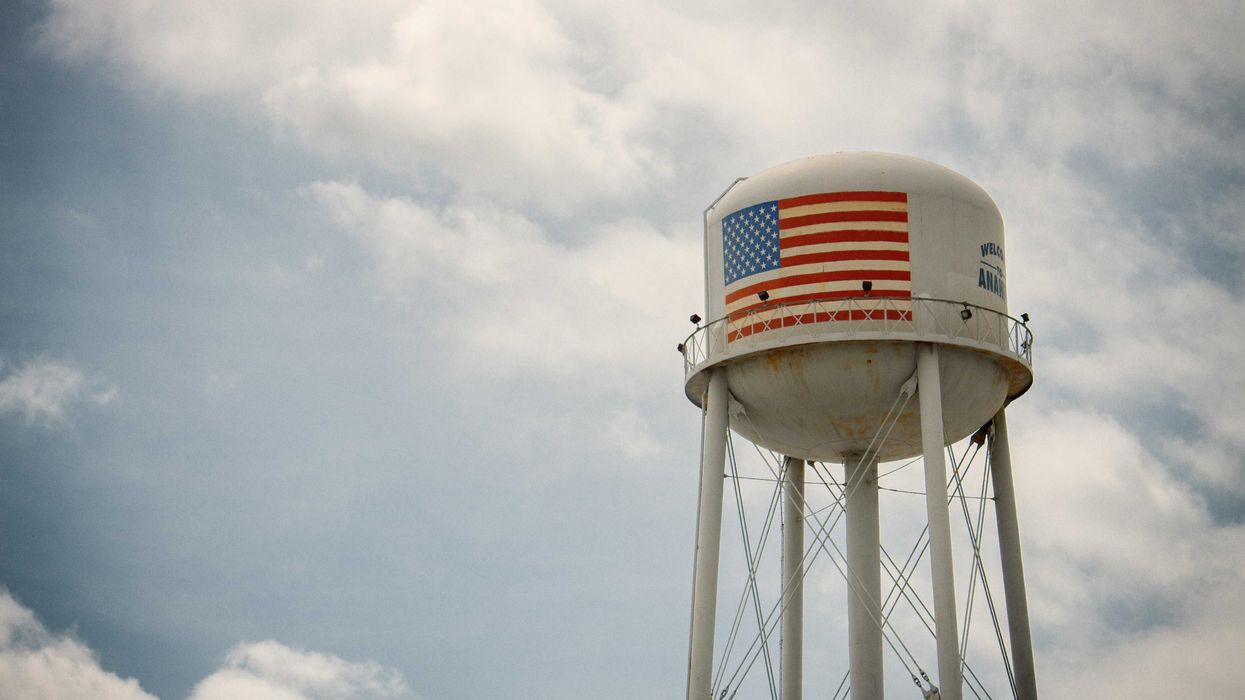
The city of Clyde sits about two hours west of Fort Worth on the plains of north Texas. It gets its water from a lake by the same name a few miles away. Starting in 2022, scorching weather caused its levels to drop further and further. Within a year, officials had declared a water conservation emergency and, on August 1 of last year, they raised the warning level again. That meant residents rationing their spigot use even more tightly, especially lawn irrigation. The restrictions weren’t, however, the worst news that day: The city also missed two debt payments.

Municipal bond defaults of any kind are extraordinarily rare, let alone those linked to a changing climate. But, with about 4,000 residents and an annual budget of under $10 million, Clyde has never had room to absorb surprises. So when poor financial planning collided with the prolonged dry spell, the city found itself stretched beyond its limits.

The drought meant that Clyde sold millions of gallons less water, even as it imported more of it from neighboring Abilene, at about $1,200 per day. Worse, as the ground dried, it cracked, destroying a sewer main and bursting another, quarter-million dollar, hole in the town budget. Within days of Clyde missing its payments, rating agency Standard & Poor’s slashed the city’s bond ratings, which limited its ability to borrow more money. Within weeks, officials had hiked taxes and water rates to help staunch the financial bleeding.

“There’s more to a drought than just the cost of water,” said Rodger Brown, who was mayor at the time and is now interim city manager. “It tanks your credibility.”

Drought, of course, isn’t the only climate-driven disaster hitting places like Clyde. Hurricanes, floods and fires are bankrupting cities across America. After flames ripped through Paradise, California in 2018, the town’s redevelopment agency defaulted on some of its obligations. Naples, Florida resorted to selling $11 million in bond to rebuild its pier after Hurricane Ian in 2022. Earlier this year, the Los Angeles Department of Water and Power had a harder time raising money after massive fires swept the city. Kerr County, Texas is in the midst of raising taxes after devastating floods in July.

Each episode underscores how climate shocks once seen as exceptional are now straining local budgets. But drought may be the most insidious of these threats. Compared to other types of disasters, it often hits everyone in a community, affects large areas, and can last months, if not years. There are also fewer defenses and relatively limited government assistance. Experts worry that drought could ultimately prove an enormous risk to the $4 trillion municipal bond market that underwrites everything from roads and schools to the water running through millions of taps.

“I personally think this is a dark horse in the conversation right now,” said Evan Kodra, the head of climate research for the financial data company Intercontinental Exchange, or ICE. “It should be a bigger deal.”

This year alone has seen droughts in at least 43 states, from Vermont to California, affecting 125 million people. And ICE projects that more of the currently outstanding municipal debt will be located in areas prone to drought by 2040 than hurricanes, floods and wildfires combined. The financial effects of prolonged water woes can mount in ways not seen in one-off events, said Jeremy Porter, the chief economist at First Street Foundation, a nonprofit climate research firm.

“Drought is one of those things, if there is an impact, there’s a step-function impact,” he said. “You just don’t have the capacity to cover the risk.”

Droughts are particularly difficult for cities to guard against. While building codes and insurance discounts can encourage homeowners to raise their house, use wind-resistant shingles, or clear brush to slow fires, the options for making sure people have enough water are far more limited without curbing development.

Also unlike with its headline-grabbing cousins, drought has a much weaker federal safety net when something does go wrong. The Department of Agriculture offers some aid to farmers, but there’s little funding for individuals or municipalities. The Federal Emergency Management Agency, or FEMA, hasn’t issued a drought-related emergency or disaster declaration in the United States since 1993, despite states requesting aid. “There is no adapting to drought,” said Porter. “The federal government is probably not going to come in.”

As the planet warms, the dry conditions that sent Clyde into the financial abyss are only set to become more frequent and more intense. Intercontinental Exchange researchers found that even in a ‘best-case’ climate scenario, drought, heat stress and water stress will place billions of dollars of municipal bonds at risk by 2040. Under a worst-case situation, that number could reach hundreds of billions. While Clyde’s default was relatively tiny, municipal debt is the bedrock of everything from hedge funds to retirement accounts, making a string of such events potentially catastrophic for the economy.

But well before dramatic rolling defaults, the financial pressures of drought will likely alter daily life in many regions. That’s already the reality for one community in Arizona, where the rush for water has turned into a years-long financial and political standoff.

Rio Verde Foothills lies on the outskirts of Scottsdale. Residents there have been trucking water in from its larger neighbor ever since the unincorporated, “wildcat” development was founded in the early 2000s. The arrangement worked well until 2021, when a severe drought gripped the area and Scottsdale decided it could no longer spare the dwindling resource. Cut off residents of Rio Verde scrambled and eventually signed a $12 million contract with the state’s largest private water company, Epcor Utilities, to build a permanent supply line.

Three years later, though, the feud continues. Scottsdale agreed to keep providing water through the end of this year while Epcor Utilities built new infrastructure. But construction is months behind schedule and Scottsdale is sticking to its deadline — leaving the foothills once again facing a cutoff. (Epcor remains confident this won’t happen.)

Even when the new line is connected, Rio Verde Foothills residents could see their water bills double or triple. Hikes like that are going to be a far wider concern across the West than outright disconnection, says Sara Fletcher, an environmental engineer at Stanford University who works on water scarcity issues. “Water prices are going up, and up, and up,” she said. “They are going to go up much faster than inflation for the past decade.”

The irony of drought is that as people conserve water to combat it, there is less money for the utility, whose costs remain relatively fixed. That results in “drought surcharges”, or other fees, for customers. It’s a cycle that was on full display in Clyde.

By August, 2023, the wave of aridity that hit West Texas had stretched for months, and officials in Clyde declared a stage 2 water emergency, which targets a 20 percent decrease in demand. By the following year they raised it to stage 3, or a 30 percent decline — one step below mandatory rationing. The measures worked, but at a cost. “Water sales are one of the main things that a city, almost any city, has,” said Brown. “That’s big for a city’s revenue generation.”

According to Clyde’s financial statements, it sold 7 million gallons less in 2023 than the year prior. It also had to import water from nearby Abilene at a premium of around $3 per thousand gallons. While Brown didn’t know exactly how much Clyde bought, he said it wasn’t as much as in some previous droughts but still significant. The bigger blow came when the parched ground split, shifted, and ruptured a major sewer line. The roughly $250,000 repair bill turned the cracks in the town’s finances into crevasses

“You can’t have people out here without the services. So we had to fix it,” he said. These new liabilities and dwindling income came on top of millions of dollars in debt that Clyde had amassed over the years, despite having kept taxes or utility prices relatively flat. It created what Brown called a “perfect storm.”

On August 1, 2024, the city missed two bond payments — one for $354,325, another for $308,400 — and filed a claim on its bond insurance to cover them. By the end of the year Clyde had failed to meet a total of $1.4 million in liabilities. Standard & Poor’s slashed the ratings of the bonds with missed payments from A- to D, and the city’s creditworthiness to B, moves that will raise future borrowing costs for the city.

While drought wasn’t the whole story, Brown called it a “significant reason” for Clyde’s woes. Whatever the cause, the fallout rippled quickly. The city council raised property taxes by 10 percent and tacked a $35 surcharge onto monthly utility bills. “We have people in this very room who have to decide already, do I buy medicine [or] do I buy groceries?” pleaded one person at a city council hearing. “This is reality in Clyde. You can’t raise their typical water bills any further.”

So far residents have absorbed the added costs, which has allowed the city to continue to operate. But the spiral from expensive, inaccessible, or nonexistent water could have been much worse. High bills can lead to compromises in daily life, whether that be letting parks wither or skipping showers. Over time, those inconveniences could make a town a less desirable place to live, which, in turn, might result in lower property values, a dwindling tax base, and, consequently, more financial troubles.

“If you don’t have water, if you don’t have a functioning city, there is a vicious cycle dynamic that could come into play,” said Kodra at Intercontinental Exchange. “Once your property tax base is decently lower than it was, then it’s harder to borrow money to dig out of that hole.”

First Street Foundation estimates that 11.1 million Americans are expected to move due to strained water resources by 2055. While it didn’t isolate drought specifically, the analysis also found that property values are slated to drop by $1.47 trillion over that same time period due to climate risks.

“We haven’t hit the point yet where people can’t get access to water,” said Porter. But there are inklings of that future, especially in the West. In Arizona, for example, water supply requirements for new developments are already beginning to halt some new construction.. According to Fletcher, “the fraction of the population that will face unaffordable water in the future is likely to increase unless we do something major.”

First Street also provided Grist with county-level data showing how the risk of prolonged water scarcity will change over the next 30 years. Of the 10 counties with the largest jump over that timeframe, seven are in Texas and three are in Florida. By 2055, more than 20 counties across the West will have a one in five chance of being in severe drought for at least 11 months out of the year. Over 500 counties could see 6 or more months.According to Fletcher, “the fraction of the population that will face unaffordable water in the future is likely to increase unless we do something major.”

Solutions won’t be easy to come by, and certainly won’t be painless. One logical conclusion might be that municipalities that are at risk of climate-impacts — like Clyde with drought or Tampa Bay with hurricanes — should simply pay more for their debt. In most sectors risk and interest rates traditionally correspond but, according to multiple studies, that’s not the case with municipal bonds.

“Climate poses a systemic credit risk to the municipal industry, of which it has never experienced,” said Thomas Doe, founder of Municipal Market Analytics. “[But] the marketplace is not pricing climate risk into bonds.”

The conundrum arises from the fact that people primarily buy municipal bonds to receive tax-exempt dividends. Demand, therefore, isn’t particularly sensitive to the price of the bond, but rather the risk of default, which remains extremely low. Another major bulwark against climate-pricing has been the federal government, which pumps billions of disaster aid into communities across the country — money that would have otherwise come out of state or municipal budgets.

“Bonds initially dip in price on the news of the event. Then they end up recovering because the federal government essentially rebuilds,” explained Doe. That support is in jeopardy with President Donald Trump’s deep cuts to government spending and that could eventually trickle into the municipal market. In the absence of aid, Doe says, bonds could start being priced in accordance with the risk.

Not all climate-debt, however, is bad.

This fall Norfolk, Virginia is planning to break ground on a $2.6 billion flood protection system, featuring a nearly 9-mile long seawall. The city is responsible for roughly $1 billion of that cost and is expected to issue new debt to help cover it. But Doe says that this type of climate-adaptation debt is generally considered good and should be encouraged, explaining that, “if it’s proactive, credit ratings look favorably.”

While you can’t build a wall against drought, the same principle applies for the admittedly limited tools that are available. Cities could, for instance, spend money making their water system more efficient, or building grey water recycling projects. Green infrastructure can also help keep rain from running off. More drastic steps might involve relocating people, or repurposing especially dry land for other uses, such as clean energy.

Although Clyde isn’t yet at a point where it’s climate-proofing its infrastructure, Lake Clyde is spilling over this year. That has provided the city a respite during which it can financially heal. Brown says the city has repaid its bond insurer, is back on track with debt payments, and is slowly rebuilding its emergency funds. The hope is that higher prices making the city’s recovery possible will mean less pain the next time the water runs low.

“We haven’t dug completely out,” said Brown. “But we’re still digging.”

Grist is a nonprofit, independent media organization dedicated to telling stories of climate solutions and a just future. Learn more at Grist.org
Trump creating 'grandiose' monuments to himself because he can't 'get to heaven': analysis


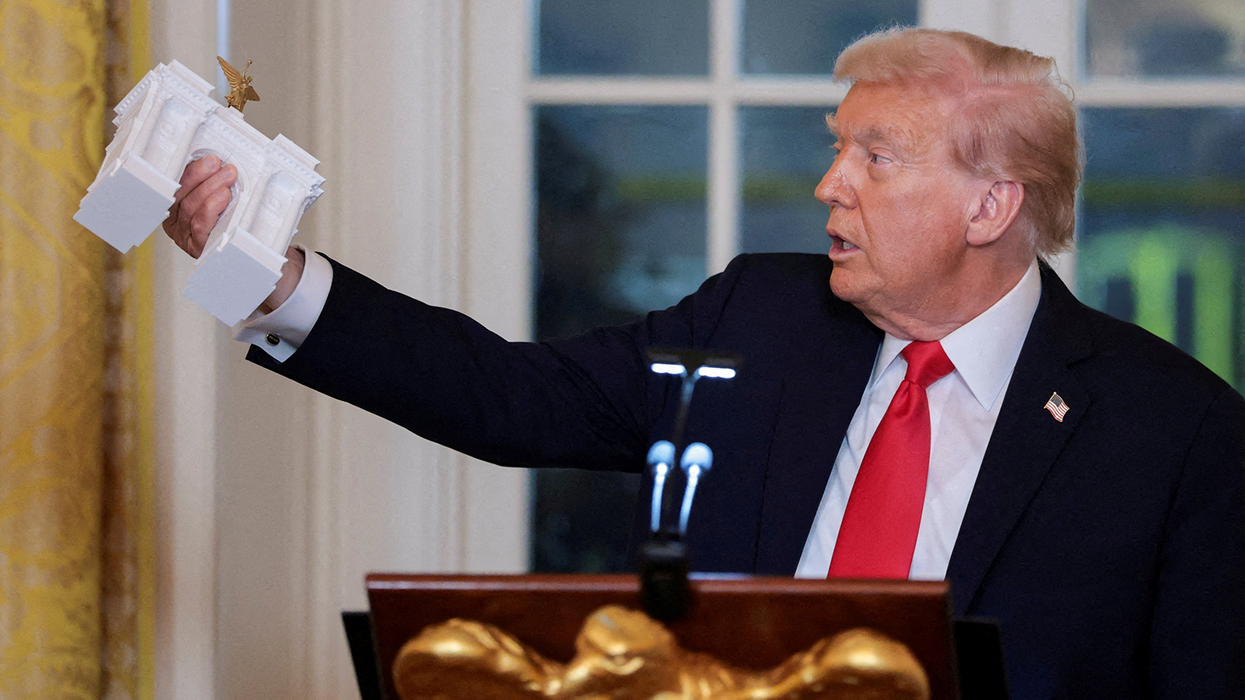
U.S. President Donald Trump holds a model of an arch monument during a ballroom dinner in the East Room at the White House in Washington, D.C., U.S., October 15, 2025.
 REUTERS/Jonathan Ernst TPX IMAGES OF THE DAY
October 30, 2025 
ALTERNET


Although President Donald Trump maintains a strong bond with the most severe part of Christianity — far-right white fundamentalist evangelicals and Christian nationalists — he has been joking about the afterlife quite a bit recently and remarking that he doesn't think his chances of getting into heaven are good. Trump, during an August appearance on Fox News' "Fox & Friends," remarked, "I want to try and get to heaven, if possible. I'm hearing I'm not doing well. I am really at the bottom of the totem pole."

The New York Times' Peter Baker, in an article published on October 30, stresses that Trump's heaven comments are coming at a time when he is determined to create as many monuments to himself as possible.

"Mr. Trump is hardly the first 79-year-old to dwell on what may come after he departs this mortal coil — or to wonder whether he has earned entry into the pearly gates," Baker reports. "But it is so unlike Mr. Trump to express self-doubt that his public rumination has raised questions. What is on his mind lately that makes him fear his fate in the hereafter? What sins might he be regretting? He has not clarified his thinking, at least not on camera. Nor, for that matter, has he shown any public signs of repentance for scandals that he may believe hold him back from grace. And yet, the president's curious contemplation comes at a time when Mr. Trump seems to be seeking a form of immortality."

Baker adds, "If absolution is out of reach, perhaps there are more achievable ways of living beyond his natural time on this earth."

For many years, Trump has been naming office buildings, hotels, casinos and golf courses after himself. But in 2025, Baker observes, Trump "seems intent on leaving his mark in even more grandiose fashion."

"He demolished the East Wing of the White House last week to make way for a vast, gilded Trumpian ballroom," Baker observes. "He wants to erect an arch at the entrance to Washington that resembles Napoleon's Arc de Triomphe. He is even considering having the government issue a new $1 coin with his own face on it — something no president has done in nearly a century…. Presumably, none of that would provide a speed pass to paradise, but it might help satisfy Mr. Trump's craving for glory that will outlast his time in office."

Baker continues, "As it is, his on-again, off-again flirtation with the idea of running for an unconstitutional third term makes clear his reluctance to cede the stage. All presidents want to leave a legacy once they do depart, historical and often physical — see (former President) Barack Obama's new towering presidential library rising in Chicago, called the 'Obamalisk.' But none in modern times have gone to the lengths that Mr. Trump has to put his personal stamp on national landmarks."

Read Peter Baker's full New York Times article at this link (subscription required).


Sep 29, 2025 ... Albert Speer, German architect who was Adolf Hitler's chief architect (1933–45) and minister for armaments and war production (1942–45).

Oct 13, 2025 ... One of those who lived to tell the tale was Albert Speer, the youthful and confident figure who served first as Adolf Hitler's architect and ...

Speer, then 29, succeeded him and took over most of Hitler's grandiose building projects, such as the parade grounds at Nuremberg where the 1934 Nazi Party ...

Albert Speer Jr was a German architect and urban planner. He was the son of Albert Speer (1905–1981), Adolf Hitler's chief architect before assuming the ...

Jan 29, 2025 ... Albert Speer was Hitler's architect and Minister of Armaments. He built structures symbolizing Nazi power and played a critical role in ...

Albert Speer was a pupil of Heinrich Tessenow. Tessenow was considered a progressive architect, famous for the modest, pure simplicity of his buildings, mostly ...

Speer, Albert. (1905--1981), Hitler's architect and German Minister of Armaments from. 1942 to 1945. Speer joined the Nazi Party in 1931. Soon after the Nazis ...

Sep 16, 2021 ... Albert Speer was the Nazi Party's chief architect, a close confidant of Adolf Hitler and the brains behind the Nazi military production ...


Trump makes it hard for male vets to get cancer coverage citing new 'biological truth' doctrine


October 29, 2025 
ALTERNET


The Trump administration is making it more difficult for veterans with a rare but deadly cancer to get their health care needs covered by the government. The new policy, involving breast cancer in men, is laid out in a Department of Veterans Affairs memo obtained by ProPublica.


The previously undisclosed document does not cite any evolving science. Rather, it relies on an order that President Donald Trump issued on his first day in office titled: “Defending Women from Gender Ideology Extremism and Restoring Biological Truth to the Federal Government.”


An agency spokesperson confirmed the change.

“As of Sept. 30, the department no longer presumes service connection for male breast cancer,” press secretary Pete Kasperowicz wrote in a statement to ProPublica. He noted that veterans who’ve previously qualified for coverage can keep it.

But for the roughly 100 male veterans who are newly diagnosed each year, the path will now be significantly harder. They will have to show their cancer was connected to their military service, a burden that has often been hard to meet.

Without VA coverage, experts say, veterans’ care could be delayed or even missed altogether — even as research has shown the rate of breast cancer among men has been increasing and the disease is deadlier than for women. One study also found that breast cancer for men is “notably higher among veterans.”

“Cancer in male veterans should be covered,” said Dr. Anita Aggarwal, a VA oncologist who researched and treated breast cancer for years before retiring recently. “These people have put their lives at risk for us.”

As Aggarwal noted, breast tissue in men and women are similar. “Male breasts don’t produce milk,” Aggarwal said. “But the treatment is the same.” She added that research has linked breast cancer to toxic exposure.

The administration’s new policy rolls back benefits that were created under the Promise to Address Comprehensive Toxics, or PACT, Act, a Biden-era law that ushered in one of the largest expansions of health care and benefits in VA history.

After a long fight by advocates, congressional Democrats and Republicans passed the measure three years ago, making it easier for veterans poisoned by Agent Orange and other toxic substances to get benefits.

Before the law, the VA had frequently been denying the claims. Now, the government would presume many ailments were connected to veterans’ military service, so long as they served in particular areas and had any number of diseases on a VA list.

As a result, more than 200,000 veterans likely exposed to toxic substances during their service have qualified to have their care covered.

The Trump administration’s change means that male veterans who get breast cancer will no longer be able to benefit from that easier path for coverage.

Veterans who have breast cancer said the move left them aghast and puzzled.

Jack Gelman, a 80-year-old former Navy fighter pilot who served in Vietnam, is already facing the fact that his long-dormant breast cancer came back last year. Now he has to grapple with the fact that the government has just made it harder to get his care covered.


“I’m astonished,” Gelman said repeatedly when ProPublica told him about the change. “This is really nickel and diming a very small group of people who should be taken care of.”

Other veterans echoed that. “I don’t care if it’s toenail cancer,” said Kirby Lewis, who was diagnosed with breast cancer about a dozen years ago and is now Stage 4. “If exposure occurs, they should take care of those people.”

Lewis, who served in the Navy for five years during the 1980s, isn’t worried about losing his coverage, which the VA granted him as a result of unrelated heart issues. But he said the administration’s decision risks further stigmatizing men with the disease.

“There’s this machinismo aspect that they don’t want to accept that we have breasts, but we do,” said Lewis, who called the decision “very upsetting.”

The PACT Act gives administrations widespread discretion to cover diseases as science develops. Last year, the VA added three cancers, including male breast cancer.

The law states that “reproductive cancer of any type” be covered. Officials added male breast cancer under that category after a working group of experts reviewed the science. The decision noted “the marked similarity of male and female breast cancer.”

The Trump administration’s memo argues that designation is a mistake. “The Biden Administration falsely classified male breasts as reproductive organs,” Kasperowicz said in his statement to ProPublica.

A former official who was involved in the VA’s decision last year said that while there were discussions about how to interpret “reproductive cancer,” the scientific consensus among VA oncologists was clear. “The evidence showed that male and female breast tissue respond similarly to toxic exposures and share nearly identical biological and mutational profiles,” said the former official, who spoke on condition of anonymity, citing concern for his job prospects in government. “Expanding coverage to male breast cancer was the right call.”

Rosie Torres, who advocated for the PACT Act after her husband became sick, said the current administration is putting politics above patriotism and people. “It shouldn’t matter who signed the bill,” Torres said, referring to Biden. “If you don’t like the ‘reproductive’ word, do it under another category. Don’t remove it. These are peoples’ lives.”

Kasperowicz emphasized that veterans can still get coverage, so long as they show a connection between their illness and their service.

“The department grants disability benefits compensation claims for male Veterans with breast cancer on an individual basis and will continue to do so,” he said in his statement. “VA encourages any male Veterans with breast cancer who feel their health may have been impacted by their military service to submit a disability compensation claim.”

The change follows a wider tumult at the VA, where tens of thousands of staffers have left amid plummeting morale and work edicts such as a return to office.

Secretary Doug Collins has long insisted that care will not be affected. “Veterans benefits aren’t getting cut,” Collins said in February. “In fact, we are actually giving and improving services.”

Advocates and Democrats say they’re concerned that the rollback of presumptive coverage for male breast cancer could presage wider cuts. This year, House Republicans passed a bill to cut a fund for veterans covered under the PACT Act, which they’ve criticized as lacking in oversight. The bill has not passed in the Senate.

Meanwhile, Project 2025, the conservative initiative to create a blueprint for the Trump administration, urges officials to roll back benefits, or as the initiative puts it, to “target significant cost savings from revising disability rating awards.”

The Trump administration has so far not done that. ProPublica asked the VA whether there are any plans to change coverage beyond male breast cancer.

The department did not respond.

Disgraced techbro launches app to 'hasten the coming of Christ's return'


Intel chief executive officer Pat Gelsinger 

October 28, 2025  
ALTERNET


The former CEO of Intel is now rolling out an artificial intelligence-powered app aimed at churches and faith communities — and is being particularly open about what's motivating him.

The Guardian reported Tuesday that Pat Gelsinger — who led Intel between 2021 and 2024 before he was forced out after being sued by shareholders — is heavily promoting his evangelical philosophy as the head of tech company Gloo. In March of this year, Gelsinger took the helm of Gloo, which is a combination AI chatbot and workspace platform for churches. Gloo boasts that it serves more than 140,000 "faith, ministry and nonprofit leaders."


Gelsinger, who is a born-again Christian, said he was passionate about combining AI with his Christian values, and said Gloo was his opportunity to develop a large language model (LLM) infused with fundamentalist Christian theology.

"My life mission has been [to] work on a piece of technology that would improve the quality of life of every human on the planet and hasten the coming of Christ’s return," Gelsinger said.

Gizmodo's A.J. Dellinger wrote Tuesday that Gelsinger's quote about the second coming of Christ is particularly alarming, as it "would spell the end of the humanity, which would not be great for every human on the planet."

"Luckily, Gelsinger’s attempts to expedite the second coming via selling churches on a chatbot subscription or whatever are probably no more likely to be a conduit to the End Times than those TikTokers predicting the Rapture," Dellinger quipped.

The former Intel CEO's forced retirement in 2024 came despite the semiconductor industry experiencing a boom in previous years. Intel's performance in the industry was lackluster in comparison to competitors like Nvidia and AMD. Just before Gelsinger was driven out of his role, Intel had laid off roughly 15,000 people, making up about 15 percent of its workforce.


Why Trump really just pardoned a terrorist enabler


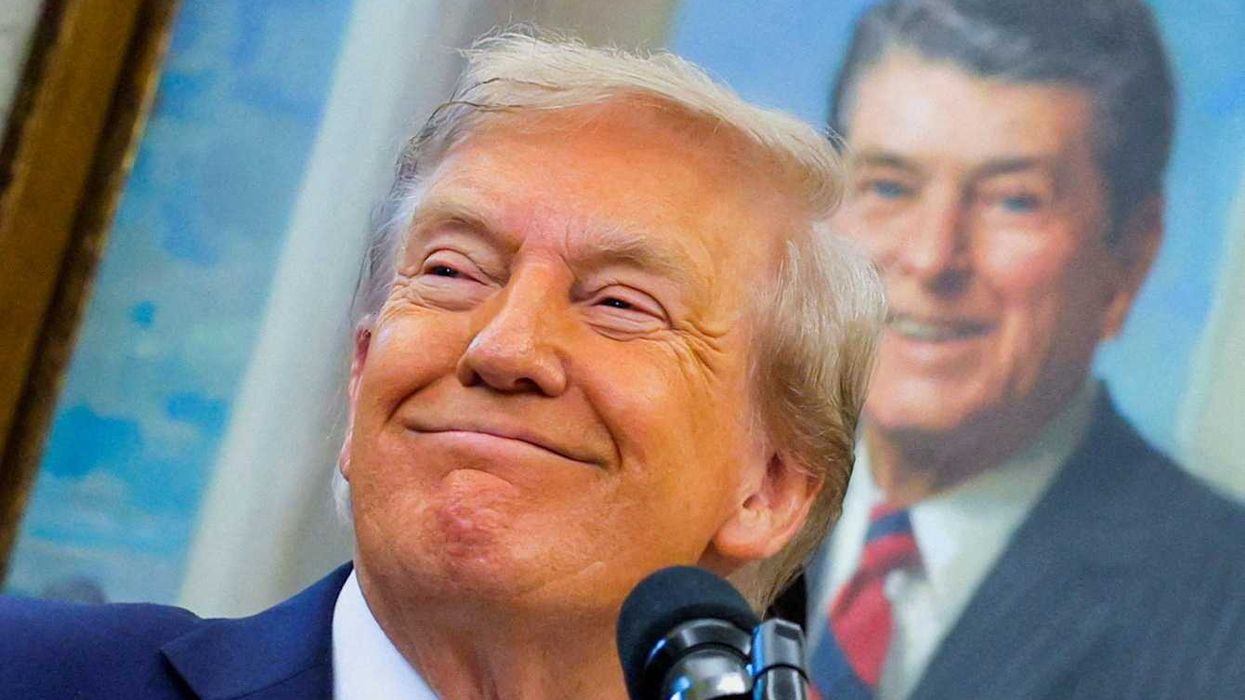
FILE PHOTO: U.S. President Donald Trump, in front of a painting of former U.S. President Ronald Reagan, smiles during an event to announce that the Space Force Command will move from Colorado to Alabama, in the Oval Office at the White House in Washington, D.C., U.S., September 2, 2025. REUTERS/Brian Snyder/File Photo

October 30, 2025
ALTERNET

When Donald Trump delivered a full pardon to cryptocurrency billionaire Changpeng Zhao last week, the president didn't mention the enormous financial favor that Zhao bestowed on the Trump family last July -- an investment of $2 billion in World Liberty Financial, the first family's big crypto venture.

Instead, when a reporter asked about the pardon of "CZ," as the crypto mogul is known, Trump portrayed him as a wholly innocent victim of the Biden Justice Department, those "corrupt" and "far-left" prosecutors who had targeted the president himself.

"I don't believe I ever met him," Trump said of his crypto benefactor. "But I've been told, a lot of support, he had a lot of support, and they said that what he did is not even a crime, it wasn't a crime, that he was persecuted by the Biden administration and so I gave him a pardon at the request of a lot of good people."

One of those good people was of course CZ himself, who commenced his pardon campaign shortly after funneling that multibillion-dollar investment, financed by Trump's other friends in the United Arab Emirates, into World Liberty. But the Binance boss was hardly the fall guy in a government witch hunt, to use a Trumpian trope. In fact, he committed serious crimes -- which we know because rather than mount a vigorous defense in court, with all the enormous resources at his disposal, both Zhao and his company negotiated plea deals that resulted in guilty pleas.

The Justice Department generously permitted CZ to plead to a single count of facilitating money laundering, an offense that Binance actually had committed countless times and that formed the basis of its business model. The Binance trading operation, launched in 2017, had grown within four years to become the largest crypto platform in the world by willfully ignoring and evading U.S. anti-money laundering laws.

Zhao's business model vindicated the warnings of blockchain critics from the very beginning: that crypto's only obvious uses are to evade taxation and regulation -- and to facilitate crime both here and abroad. Law enforcement officials estimated that "hundreds of millions of dollars in illicit proceeds from ransomware variants, darknet transactions, and various internet-related scams" were routed through Binance to escape detection by U.S. and international authorities.

"For years, Binance allowed users to open accounts and trade without submitting any identifying information beyond an email address," as the Justice Department explained when it announced Zhao's plea deal. What this meant in practice was explained in a gloating text message from one Binance executive to another: "we need a banner 'is washing drug money too hard these days - come to binance we got cake for you.'"

Indeed, the charging documents in the Binance case recite a litany of international malefactors who routinely exploited its services to carry out their atrocities, from child trafficking and sexual abuse of minors to narcotics smuggling and murderous terrorism. Crypto provided an easy and convenient channel for weapons dealers, espionage agents and terror organizations to evade sanctions on the outlaw regimes in countries like Iran and North Korea that support them.

The most notorious cases involved Hamas, whose leaders employed crypto accounts on Binance to covertly raise millions of dollars between 2019 and 2023 to fund its armed wing, the Izz al-Din al-Qassam Brigades. Not incidentally, the prosecution and seizure of scores of terrorist crypto accounts -- used by al-Qaeda and ISIS as well as Hamas -- occurred under the first Trump administration, overseen by former FBI Director Christopher Wray and former Attorney General William Barr.

Now the Trump White House encourages and excuses major criminal activity, not only by clearing Zhao but by pardoning Ross Ulbricht, whose "Silk Road" dark web entity sold millions of dollars of illicit drugs -- along with regulatory leniency toward Justin Sun, another major crypto manipulator who channeled many millions into Trump family enterprises.

Trump is a crony of crypto whose only purpose is to amass billions of dollars for himself, his family and his friends. He has no interest in preventing the abuses -- financing terror, abusing children, marketing narcotics -- that were so crucial to the founding of a crypto economy. Remember that when you hear him and his minions smearing his critics as "domestic terrorists," or when his "war department" blows a fishing boat out of the Caribbean ocean for unproved drug crimes.

Sadly, those Venezuelan fishermen didn't figure out a way to pay off the Trumps before they went to sea. They might still be in business, like Zhao.

Black Americans were never supposed to exercise the right to vote


African American and white voters voting together in the Democratic primary for the gubernatorial election in Tallahassee, Florida, in May 1956.
 (Photo via State Archives of Florida)

November 01, 2025 

The white political elite in America – politicians, judges, lawyers, policymakers, businesses and corporations – has never as a whole acted in good faith towards its Black citizens. These “leaders” routinely moved electoral goalposts, added impediments to gum up the voting process, made promises they never intended to keep, lied, grudgingly made concessions and over time, always clawed them back.

Meanwhile, on the ground during the last century, mobs of white vigilantes used a campaign of terror, intimidating Black potential voters, beating, brutalizing and lynching African Americans, and burning down Black businesses and whole communities.

Americans love to push out their chests and gloat about the freedoms citizens enjoy, but a dirty little secret is that being “American” has never referred to ALL Americans.

Throughout much of history, African Americans and their native brothers and sisters were forced to stand outside the proverbial shop window looking in, barred from entering by menacing gatekeepers and often forcibly removed, beaten, and killed if they tried to get inside.

The ability to vote is the sacred touchstone of American democracy but to this point, it is merely aspirational, frail, ethereal, because those opposed to electoral freedom have never quite figured out how to contend with America’s Original Sin.

For centuries, those in power found, and continue to manufacture, techniques to wage a relentless, multi-pronged war against a people.

The latest antagonists, in a long list of adversaries, are Gov. Ron DeSantis, the Republican-dominated Florida Legislature and the MAGA-Republican-led US Supreme Court.

The future of the Voting Rights Act

Earlier in October, justices listened to arguments in Louisiana v. Callais, a significant redistricting case that could determine the very future of the Voting Rights Act.

If the high court overturns Section 2 – a provision that bans racial discrimination in voting — GOP-controlled legislatures would rush to redraw at least 19 more voting districts for the House of Representatives in favor of Republicans in the 2026 midterms, according to a recent report by the voting rights advocacy groups Black Voters Matter Fund and Fair Fight Action.

The result, a National Public Radio story notes, could have “a cascading effect on congressional maps in mostly Southern states where Republicans either control both legislative chambers and the governor’s office or have a veto-proof majority in the legislature — and where voting is racially polarized, with Black voters tending to vote Democratic and white voters tending to vote Republican.”

New maps would deny racial minority voters a realistic opportunity of electing their preferred candidate, with Florida, Louisiana, Georgia, Missouri, North Carolina, and Texas possibly ending up with fewer Democratic representatives in Congress.

Alabama, Mississippi, South Carolina, and Tennessee could lose all of theirs, the report finds. And as much as 30% of the Congressional Black Caucus and 11% of the Congressional Hispanic Caucus could also be lost.

It is not out of the realm of possibility that Republicans would cement one-party control of the House for at least a generation, according to Cliff Albright, co-founder and executive director of the Black Voters Matter Fund.

“Part of the point that we’re trying to make with this report is that what happens in the South doesn’t just stay in the South,” Albright adds. “This racial gerrymandering has the ability to not just disempower, disenfranchise Black voters and to eliminate Black elected officials and Latino elected officials. What happens in these states impacts the entire country.”

In Florida DeSantis and his MAGA Republican accomplices have eagerly embraced President Donald Trump’s commands for Republican state leaders to hold special sessions to redraw electoral districts in favor of the GOP.

DeSantis has argued in favor of manipulating electoral mechanisms to ensure that Florida is one of those states.

“I think the state is malapportioned,” he said at a press conference in Bradenton. “So I do think it would be appropriate to do a redistricting in the mid-decade. So we’re working through what that would look like, but I can tell you just look at how the population has shifted in different parts of the state over a four-to-five-year period. It’s been really significant.”


Using population data from the US Census, legislators or independent commissions draw district lines once a decade to account for population changes. But Trump has upended the practice in an effort to pad the slim GOP majority in the House of Representatives.

The governor is proud of his actions in 2022 when he vetoed an original congressional redistricting map passed by the Legislature, labeling it a “disaster.” DeSantis then championed a proposal the Legislature agreed to pass that erased Black representation in Northern Florida and helped to flip Congress.

While a variety of voting rights groups sued to strike down that map, the Florida Supreme Court ruledthat it was constitutional. Writing for the majority, Chief Justice Carlos Muñiz said that legislators had a “superior” obligation to follow federal equal protection law, and not the Fair Districts Amendment passed by Florida voters in 2010.

That amendment had a clause modeled after the Voting Rights Act now being scrutinized by the U.S. Supreme Court that said legislators could not diminish the ability of minorities to elect a representative of their choice. The Florida Supreme Court decision gives legislators in the future a way to sidestep that clause.


The Fair District Amendment also bans congressional districts from being “drawn with the intent to favor or disfavor a political party or an incumbent.”

But will DeSantis and the Legislature be able to use court rulings related to race to draw districts that accomplish the goal of flipping Democratic seats while at the same time eliminating minority representation in Congress? Time will tell.

The League of Women Voters of Florida detailed the deliberate and expansive efforts by DeSantis and his cronies to use legislation, policies, programs and subterfuge to steadily reduce the electoral playing field for African Americans.

“In recent years, the state of Florida has implemented an alarming series of policies that undermine voter participation, creating conditions ripe for mass voter intimidation, LWV officials said in the report. “State officials, led by Governor Ron DeSantis, have weaponized law enforcement to target voters across the state, from the arrest of formerly incarcerated individuals who believed they were eligible to vote to the harassment of citizens who signed petitions for a reproductive right ballot initiative.”

The report described these instances of systematic voter intimidation as a “a dangerous and deliberate attempt to disenfranchise certain communities – led explicitly by state institutions. They undermine both the rule of law and democratic norms. These actions create a chilling effect on political participation, discouraging people within the targeted communities from engaging in civic life. Fear and confusion around voter eligibility causes many to remain de facto disenfranchised even when they are legally eligible to vote.”

For years before the 2024 presidential election, DeSantis and legislative Republicans kept busy carrying out their part of their national party’s agenda to incapacitate parts of the state’s electoral apparatus to dissuade Black and brown voters, young people, seniors, and other Democratic constituencies from voting.

This meant passing a slew of laws that make it considerably harder to vote than was true four years earlier, according to the Brennan Center for Justice. Florida is now one of four states that have “used single bills to enact an array of restrictions, imposing limits across the entire voting process,” the center has reported.

The Sunshine State is among 11 Republican-dominated legislatures that have impinged on ways the electorate can register to vote, while also restricting voter registration drives.

According to the Brennan Center report, DeSantis has given “partisan actors unprecedented authority over elections”; he has also created “election police” to investigate and prosecute supposed fraud and intimidate eligible voters.

We are living in a time when those responsible for upholding the law are doing everything but. DeSantis, Trump, Texas Gov. Greg Abbott, Texas Attorney General Ken Paxton, the Supreme Court and phalanx of MAGA Republicans are making their moves with significant, concerted pushback from Democrats.

There is little expectation that the forces of regression, bigotry and retreat – who have plotted and schemed on ways to eviscerate not just the Voting Rights Act, but also to ensure that Black and brown voting power is permanently hobbled, disabled, demolished, will be slowed down.

And with this, we can expect these rogues to steal not just the 2026 midterm elections but the 2028 presidential elections as well.


Conservative magazine dismantles right-wing think tank's embrace of 'rank Jew hatred'


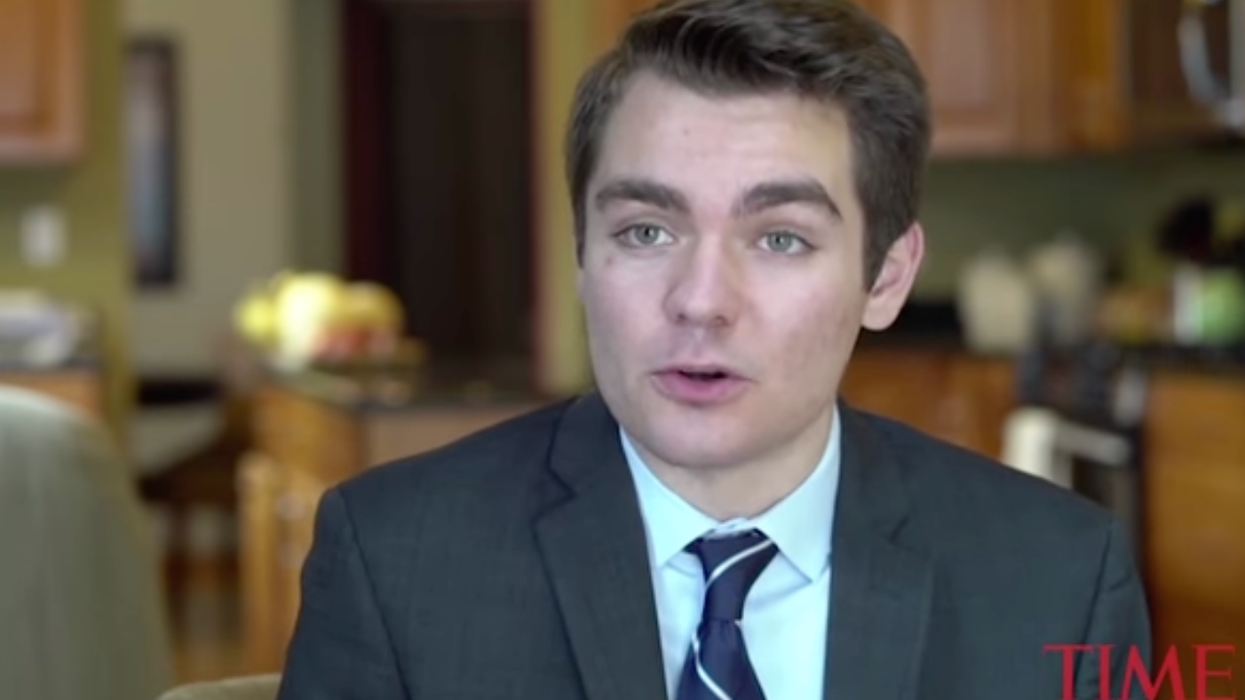
Right-wing activist, Nick Fuentes, Image via Screengrab


November 01, 2025
ALTERNET


National Review Senior writer Noah Rothman blasted Heritage Foundation President Kevin Roberts’ embrace of MAGA influencer Tucker Carlson, and the alternative media host’s “friendly interview with avowed racist Nick Fuentes.”


After Carlson posted his interview with Fuentes Monday, conservatives urged the foundation to distance itself from Carlson due to Fuentes’s being the founder of a group of internet trolls that praise Hitler and white Christian nationalism.

But that’s not what Roberts did, said Rothman.

“My loyalty as a Christian and as an American is to Christ first and to America always,” Roberts said instead. “When it serves the United States to cooperate with Israel and other allies, we should do so with partnerships on security, intelligence, and technology. But when it doesn’t, conservatives should feel no obligation to reflexively support any foreign government, no matter how loud the pressure becomes from the globalist class or from their mouthpieces in Washington.”

Rothman called this a “strawman — and a familiar one, at that.”

“It gets a beating whenever rank Jew hatred encounters even the mildest dissent, allowing purveyors of the world’s oldest hate to retreat into a more defensible posture,” Rothman argued. “‘We were only critiquing the geopolitical entity of Israel, and your obsession with one of many nation-states marks YOU as the monomaniac here!’ The notion that those who object to anti-Jewish slurs insist upon ‘reflexive’ — read, thoughtless and tribalistic — support for the Israeli government’s every act is false.”

Additionally, said Rothman, Israel’s military policies did not inspire Roberts’s statement. It was “Carlson’s generous efforts to elevate the profile of an unapologetic racist and antisemite” that is the issue to which Roberts is responding.

Equally cowardly is Roberts’ attempt to “evade direct engagement with the subject he pretended to address” by swearing off “cancelling our own people or policing the consciences of Christians,” said Rothman.

“I disagree with, and even abhor, things that Nick Fuentes says. But cancelling him is not the answer either,” Roberts argued. “When we disagree with a person’s thoughts and opinions, we challenge those ideas in debate.”

Only there was no disagreement with Fuentes by Carson.

“This, too, is preposterous,” Rothman said. “… Carlson conspicuously declined to challenge Fuentes’s ideas on any substantive level,” as Carson has happily done for Sen. Ted Cruz (R-Texas).

“As we wrote, amid the rise of right-wing antisemitism, it is ‘a time for choosing.’ This video suggests Roberts is making his choice,” said Rothman.

Read the National Review article at this link.


'Make the world pay': Inside America's worst addiction


Adam Lynch
November 02, 2025 
ALTERNET

Intelligencer writer Sam Adler-Bell admits that pointing out MAGA hypocrisy ‘is a chump’s game,’ as is looking for “consistency” or “integrity.”

House Speaker Mike Johnson recently took a question about a MAGA-minded Jan. 6 Trump parolee caught conspiring to kill a Democrat. He then tried to blame Democrats for the Trump supporter’s attempted violence by saying: “They call every Republican a fascist now.”

“For sanity’s sake, I will state the plain facts: A man pardoned by the sitting president after engaging in a riot on his behalf was apprehended a second time, for allegedly threatening to kill a leading Democrat — and this, according to the Speaker of the House, is the fault of leftists,” said Adler-Bell.

“Amid a syncopated cascade of assaults, partisans play a perverted game of hot potato: Whoever is holding the ball when the music stops is responsible,” Adler-Bell argued. “If the latest shooter is plausibly left wing, the right is faultless, and vice versa, until the next round begins. Sometimes you win, sometimes you lose, but everybody plays. (And sometimes, of course, you cheat. In the Moynihan case, Johnson found himself holding the ball and threw it at his opponent’s chest.)

But that’s not the story, said Adler-Bell. The story is that the U.S. public remains fascinated with the idea of fixing things through violence, and our illness is going to burn the world.

“Today, American film and television are lousy with special-forces units, police detectives, and secret agents who use illegal and inhumane means (often including torture) to restore order and protect the innocent. Sometimes these bad but necessary men, like [John] Wayne in Liberty Valance, are consumed by guilt and drink — and, in a last feeble gesture of moral purgation, die alone in despair,” Adler-Bell said. “We Americans love these stories for their psychic parsimony: They redeem the violence underpinning the social order while allowing us to remain, at once, tut-tutting bystanders to its cruelty and deliciously complicit in its excess.”

Americans keep “looking for some new order born from the ashes of the old,” said Adler-Bell. For the right, Donald Trump is “the gunslinger who has come to slay the forces of liberal chaos and break a few rules, like habeas corpus and the First and Fourth Amendments, to establish a conservative empire.

Liberals, meanwhile. "await an avenging authority — a new kind of candidate, a sufficiently ballsy prosecutor, a judge or general — to come along and clean up the neighborhood,” said Adler-Bell. “The authoritarian chaos of the past decade demands a renewal of the liberal order in a more muscular form.”

We keep hoping that we can get “a new civilized order” from violence, but that’s simply not how you build anything.

Our “perennial American delusion,” said Adler-Bell, quoting writer Susan Sontag, is that purgative violence can be used to restore our blamelessness and our purity. It was okay to affectionately jeer at American barbarism, but that was before the American empire held the planet’s “historical future in its King Kong paws.”

“It is incredible that a country so idiotic and prone to neurotic excess has managed to keep the world in its meaty grasp for so long, fondling it like Lennie with his mouse, said Adler-Bell. “America has made the world pay for its priggish delusions of sanity. It will surely make the world pay for its nervous breakdown.”

Read the Intelligencer report at this link.


Why America can’t seem to 'cut out the Epstein cancer' like the UK


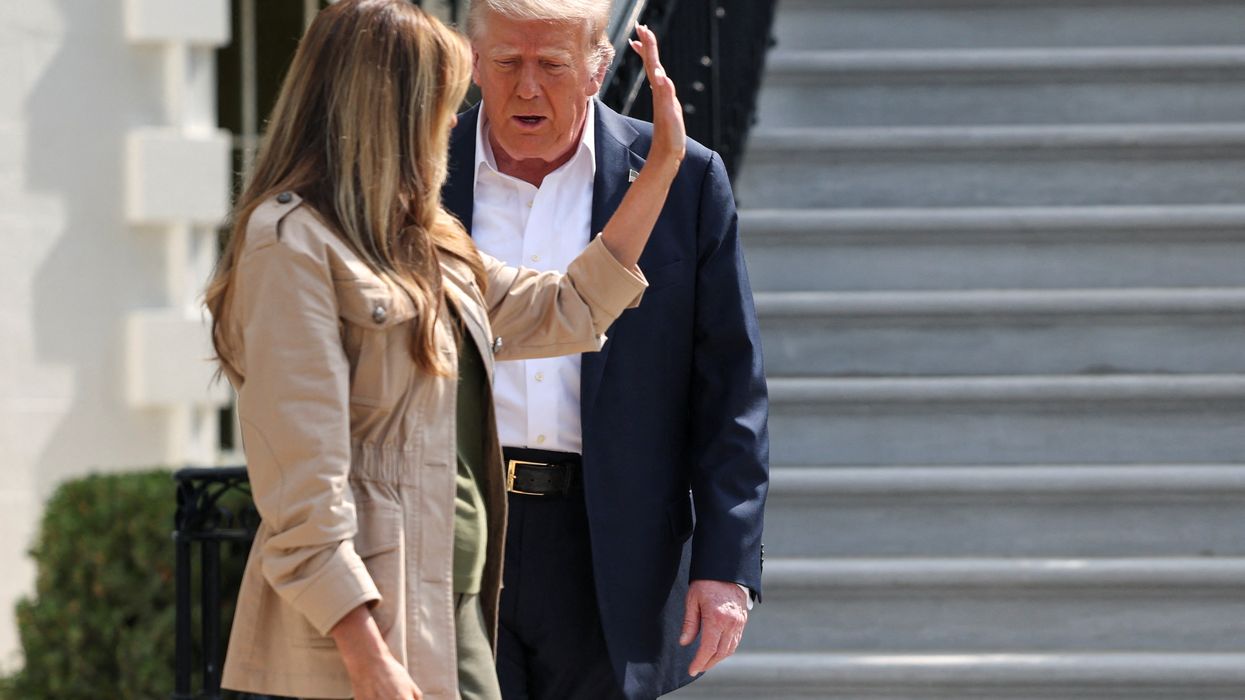
U.S. President Donald Trump and First lady Melania Trump depart for travel to Texas to tour areas affected by deadly flash flooding, from the South Lawn of the White House in Washington, D.C., U.S., July 11, 2025. REUTERS/Jonathan Ernst

November 02, 2025 
ALTERNET


Columnist Rosa Prince tells Bloomberg that she is startled by the degree of difference between the way Britain and the U.S. are treating the wealthy associates of convicted sex-trafficker Jeffrey Epstein.

“His Royal Highness Prince Andrew, Duke of York will henceforth be addressed as plain old Mr. Mountbatten Windsor,” said Prince. “It's a stunning fall. The second, apparently favorite, son of Queen Elizabeth II has not only lost his many titles but also his home. He's been kicked out of his lavish grace-and-favor mansion in the grounds of Windsor Castle after elder brother King Charles III's patience finally snapped. An endless torrent of ugly revelations related to his closeness to pedophile financier Jeffrey Epstein became unbearable for a family whose No. 1 job is to embody a dignified permanence at the heart of the British state.”

This reaction is a “ruthlessness and moral clarity others should try,” said Prince, adding that “The U.S. Congress and Trump administration need to do now what many of the president's supporters want and open the full Epstein files to public scrutiny.”

The reasons are obvious, and they are only lightly touched in a book by Epstein victim Virginia Giuffre, which Prince describes as a “Who's Who of rich, powerful men, and some women, whom she encountered during the horrendous two years she traveled the world with the disgraced financier.”

“They allegedly include dozens of politicians, business leaders and academics, whose friendship [Epstein] cultivated in the vain hope it would make him look weighty and clever. Among them is an individual she refers to as the ex-minister, whom [Giuffre] claims was the most violent of her rapists,” Prince said.

Yet, for the past year, Prince said Congress and the White House have obfuscated, “using political tricks such as early recess and the government shutdown to prevent disclosing the hundreds of gigabytes of data plus other material held by the FBI relating to Epstein and associates, including his jailed girlfriend Ghislaine Maxwell.”

“Why has the British establishment, not known historically for its alacrity, acted more swiftly than its U.S. counterpart to try to cut out the Epstein cancer,” said Prince. “UK tabloids are ferocious diggers, but public disgust at the affair and hunger for justice is no less potent in America. Quite the opposite.”

“The legislative and executive branches of the U.S. government should take their cue from the UK's non-executive chairman, King Charles. This scandal won't go away until the rot has been removed.

See the Bloomberg report at this Kansas City Star link.