Thursday, November 06, 2025


Scores dead, helicopter crashes as typhoon Kalmaegi hits Philippines

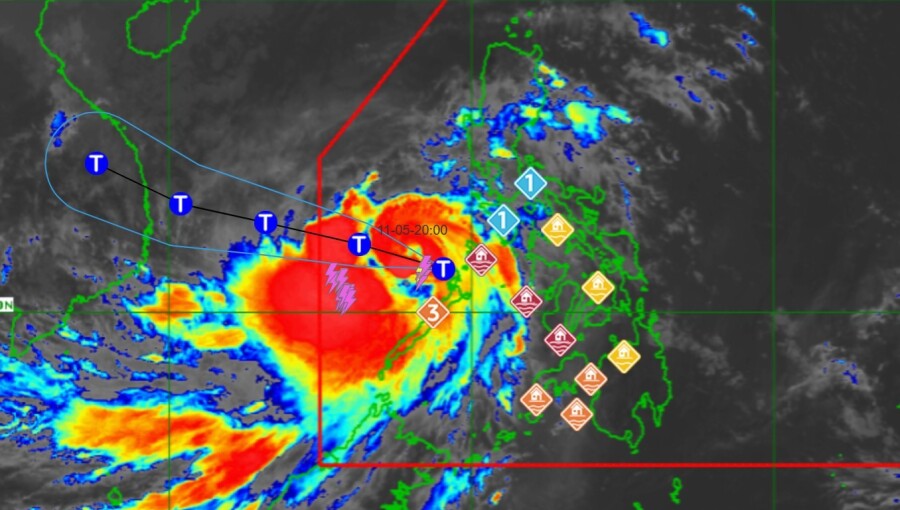
Scores dead, helicopter crashes as typhoon Kalmaegi hits Philippines
/ PAGASA
By bno - Jakarta Office November 5, 2025

Typhoon Kalmaegi, one of the strongest storms to hit the Philippines this year, has claimed at least 46 lives and forced hundreds of thousands to flee their homes, officials report. The typhoon, locally named Tino, has brought widespread flooding, particularly on the central island of Cebu, where most of the fatalities occurred. Authorities warn that the death toll is likely to rise, Aljazeera reports.

Kalmaegi struck shortly before midnight on November 3, sweeping across the Visayas and affecting areas of Luzon and Mindanao. Communities awoke to rising waters that forced residents onto rooftops as vehicles were swept along roads that turned into rivers. By November 4, the storm was moving westward over Cebu, Negros and Panay, generating sustained winds of around 150 km/h and gusts reaching 185 km/h. Trees were uprooted, electricity poles were toppled and vast areas were left without power.

The storm comes as the Philippines is still grappling with public anger over poorly managed flood control projects and alleged corruption, which critics say have left communities more vulnerable to disasters like Kalmaegi.

OCD Deputy Administrator Rafaelito Alejandro said that most of the casualties were believed to have drowned, with Cebu recording the highest number of deaths at 21. Social media images and video clips revealed towns in Cebu province almost completely submerged. In Talisay City, only the tops of houses were visible. Other footage from Cebu City showed stranded residents calling for rescue as floodwaters rose rapidly. Landslides blocked roads in some areas, including Tabuelan in Cebu, further hampering access for emergency teams.

Fatalities were also reported in neighbouring provinces: a man in Bohol died after being struck by a falling tree, and an elderly resident of Leyte drowned inside his home. The national meteorological agency, PAGASA, said Kalmaegi and an interacting weather system brought intense rain and strong winds to the central archipelago. PAGASA warned of dangerous waves and storm surges, particularly along low-lying coastal zones, with water heights potentially exceeding three metres.

More than 160 flights were cancelled, and maritime authorities instructed vessels to remain in port. While crossing land, the system may weaken slightly due to terrain, yet forecasters expect it to maintain typhoon strength until it exits towards the South China Sea.

In a separate incident, Aljazeera also reports that a military helicopter on a mission to aid typhoon-hit areas crashed in northern Mindanao. The aircraft went down near Loreto in Agusan del Sur. Military officials confirmed that six crew members’ bodies were recovered, and an investigation is underway.

Kalmaegi is the twentieth tropical system to hit the Philippines this year. Climate scientists warn that increasingly intense storms are linked to human-driven climate change, putting the country at continual risk.

Missing in Action: India And ASEAN Summit 2025 – Analysis


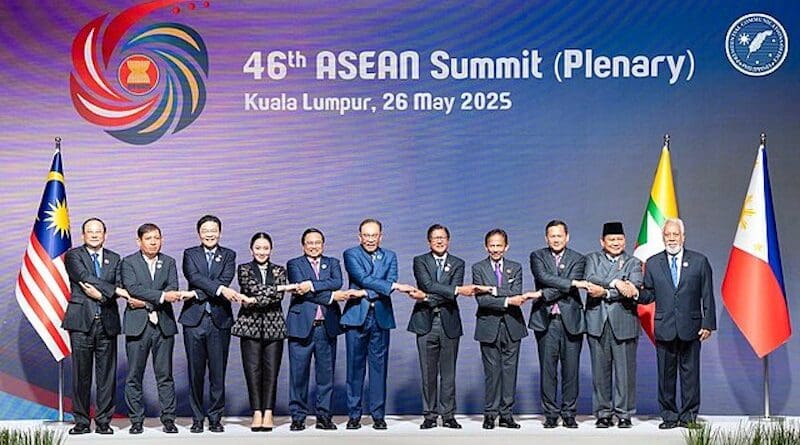
The leaders of the Association of Southeast Asian Nations (ASEAN) pose for a family picture doing the signature "ASEAN-way" handshake at the ASEAN Summit in Kuala Lumpur, Malaysia, on 26 May 2025.

November 4, 2025 
Institute of South Asian Studies

Indian Prime Minister Narendra Modi’s absence from the Association of Southeast Asian Nations Summit in late October 2025 is an outcome of India’s attempt to salvage its partnership with the United States. However, New Delhi likely did not anticipate its costs on India’s global image.


By Sandeep Bhardwaj

The 47th Summit of the Association of Southeast Asian Nations (ASEAN) concluded in Kuala Lumpur on 28 October 2025. Malaysia’s Prime Minister Anwar Ibrahim, Chairman of the summit, was keen to elevate ASEAN’s global profile by making it an unmissable multilateral event of the season. Alongside the prime ministers/presidents of the other ASEAN member states and ASEAN’s traditional dialogue partners (Japan, Australia, New Zealand and South Korea), the summit was also attended by Brazilian President Luiz Inácio Lula da Silva, South African President Cyril Ramaphosa and Canadian Prime Minister Mark Carney. Of course, most attention was focused on the presence of United States (US) President Donald Trump, whom Anwar managed to bring aboard in a successful diplomatic gambit.

The high-powered attendance made Indian Prime Minister Narendra Modi’s absence all the more conspicuous. Modi declined to attend the event in person, speaking virtually instead. Chinese President Xi Jinping and Russian President Vladimir Putin were also absent – they rarely attend these summits. In contrast, this is the only the second instance of an Indian prime minister skipping an ASEAN summit since India became a summit partner in 2002. Modi also missed the summit in 2022.

The Indian Ministry of External Affairs did not offer an explanation. However, it has been widely reported that the decision was made to avoid a face-to-face meeting with Trump. New Delhi and Washington have been locked in a contentious showdown over tariffs in the last few months. The US president has made things more difficult for Modi by repeatedly claiming that he brokered the India-Pakistan ceasefire in May 2025. He has recently also declared that India has agreed to cut its Russian oil purchase. These claims, which the Indian government has denied, put Modi in a politically awkward position.

It is important to note that Modi’s predicament is not the result of his political weakness but his relatively secure domestic position. The opposition remains weak and fractured, and there are no major elections on the horizon apart from the upcoming Bihar polls.

The government’s firm political footing has allowed it to take a softer approach in its crisis with Washington. India has not imposed retaliatory tariffs or taken any other punitive action. Indian officials have largely maintained conciliatory tone in their statements. Nationalistic outrage has been largely kept in check in the public discourse.

This is in contrast to many previous India-US crises when domestic opposition forced the government to take a tougher stance. For instance, when Indian diplomat Devyani Khobragade was arrested in New York in 2013, a minor diplomatic row snowballed into a major standoff. A weak United Progressive Alliance government at the time had to act tough against Washington under domestic pressure.

India’s soft approach in the current crisis is only possible as long as domestic opposition does not harden. Trump’s claims contradicting Modi are a major concern because they strengthen the opposition’s hand and put pressure on the government, thereby jeopardising ongoing attempts to salvage the India-US partnership. Therefore, the Indian government has avoided situations that may produce such embarrassing outcomes. It was previously reported that Modi had refused to take calls from Trump in the weeks before the trade negotiations broke down in August 2025.

While this is a sound strategy from a domestic political point of view, New Delhi likely conceived it without taking India’s global image into consideration. It has to be admitted that the decision to skip the summit to avoid Trump is a bad look. It undercuts India’s claim to regional power status. Modi’s absence was not only noted by the ASEAN member countries but was also played up in Pakistani and Chinese media.

India-ASEAN relations were effectively held hostage to the India-US crisis, an outcome that the Indian officials would not have wanted. The situation grates against New Delhi’s pursuit of vaunted strategic autonomy.

Both the US and China used the Kuala Lumpur summit to make substantive progress in their relationships with ASEAN. Trump signed trade deals with Thailand, Malaysia, Cambodia and Vietnam, and signalled renewed American commitment to the region. Chinese Premier Li Qiang signed version 3.0 of the ASEAN-China Free Trade Area. The first in-person meeting of leaders from the Regional Comprehensive Economic Partnership countries promised to revitalise the trade pact.
Financial software


Meanwhile, progress on the review of ASEAN-Indian Trade in Goods Agreement remains stalled. While Indian officials hoped that the new agreement would be ready to sign by the time of the summit, now it is unlikely to be completed until the end of the year. Modi’s statement at the summit, delivered virtually, was light on new proposals.

It is important to remember why Indian prime ministers – Atal Behari Vajpayee, Manmohan Singh and Modi – have attended ASEAN summits so diligently since 2002. At the end of the Cold War, India was considered peripheral to regional multilateralism in this part of the world. It was not included in the Asia-Pacific Economic Cooperation formed in 1989 and only belatedly involved in the ASEAN Regional Forum established in 1997. ASEAN Plus Three (including China, Japan and South Korea) emerged in 1997, once again leaving India out. Even India’s inclusion in the East Asia Summit in 2005 was contested by China, which claimed that it did not belong in the region.

It has taken consistent efforts for several years for India to signal its intent to remain a consistent, reliable and engaged partner to ASEAN. Although skipping a single summit is unlikely to change that, allowing India’s relations with great powers to unduly influence its relationship with the ASEAN might.


About the author: Dr Sandeep Bhardwaj is a Visiting Research Fellow at the Institute of South Asian Studies (ISAS), an autonomous research institute at the National University of Singapore (NUS). He can be contacted at sbhardwaj@nus.edu.sg. The author bears full responsibility for the facts cited and opinions expressed in this paper.

Source: This article was published by Institute of South Asian Studies (ISAS)


Institute of South Asian Studies

The Institute of South Asian Studies (ISAS) was established in July 2004 as an autonomous research institute at the National University of Singapore (NUS). ISAS is dedicated to research on contemporary South Asia. The Institute seeks to promote understanding of this vital region of the world, and to communicate knowledge and insights about it to policy makers, the business community, academia and civil society, in Singapore and beyond.

Defence conglomerate Czechoslovak Group acquires Serbian drone tech company MUST Solutions

Defence conglomerate Czechoslovak Group acquires Serbian drone tech company MUST Solutions
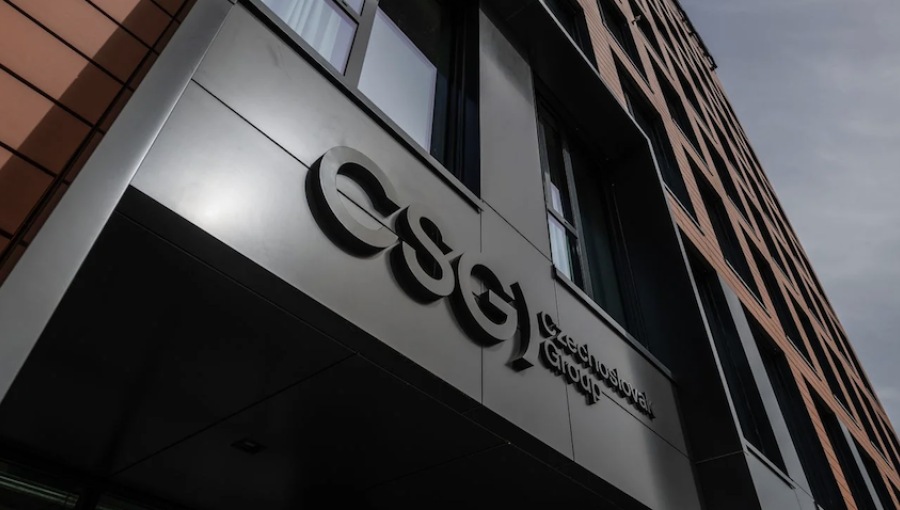
CSG has been on a shopping spree propelled by its boosted sales following the Russian full scale invasion of Ukraine in 2022 as well as armed conflicts in the Middle East and Africa. / Czechoslovak Group
By Albin Sybera in Prague November 5, 2025

Regional defence and heavy machinery conglomerate Czechoslovak Group (CSG) expanded into the Unmanned Aerial Systems sector by acquiring a majority of MUST Solutions, Serbian producer of propulsion systems for drones.

“The acquisition of MUST Solutions represents the first tangible step in implementing our UAS strategy, which we announced with the establishment of AviaNera Technologies,” CSG owner Michal Strnad commented in the company press release.

“Our goal is to acquire cutting-edge technologies and know-how in the field of propulsion systems, which are a key component—and often a bottleneck—in the development and production of modern unmanned platforms,” Strnad added.

CSG acquired 51% of MUST Solutions, founded and owned by Vladimir Jazarević, through its AviaNera Technologies. The financial details of the transaction have not been disclosed.  

CSG has been on a shopping spree propelled by its boosted sales following the Russian full scale invasion of Ukraine in 2022 as well as armed conflicts in the Middle East and Africa.

On its home market in Czechia, CSG also acquired the Zlín-based producer of hydraulic systems Hydraulics, Czech online news outlet Seznam Zprávy reported.

As bne IntelliNews reported last month, CSG could also be ending its rows with Promet Group inside its key Czech army supplier Tatra Trucks in a push to list CSG on the Amsterdam or Prague Stock Exchange. 

LA REVUE GAUCHE - Left Comment: Search results for PERMANENT ARMS ECONOMY


Foreign companies pay Russia $60bn in taxes since Ukraine invasion

Foreign companies pay Russia $60bn in taxes since Ukraine invasion
/ Astemir Almov - Unsplash
By bne IntelliNews November 4, 2025

Foreign companies in Russia paid at least $20bn (€17.2bn) in taxes in 2024 alone, and cumulative tax payments since early 2022 exceed $60bn (€51.8 bn), according to Euronews citing a joint report by the Kyiv School of Economics (KSE), B4Ukraine and the Squeezing Putin Initiative.

In particular, German companies have paid €1.7bn ($1.87bn) in taxes in Russia  to the Russian government since the start of the full‑scale invasion of Ukraine. 

As followed closely by bne IntelliNews,  23 international firms fully liquidated their Russian operations between July and September 2025, the highest quarterly total since 2022.

However, over two thirds of Western companies still operating in Russia have no plans to exit the market, citing long-term growth potential despite continued pressure from sanctions

The report cited by Euronews singles out Germany, noting that some 250 German companies continue to operate in Russia despite the war, representing more than half of the German firms present in the country before the invasion. 

Most of them work in fast‑moving consumer goods (FMCG), building materials, and other sectors not covered by direct sanctions. These include dairy‑product manufacturer Hochland Group still operating three plants in Russia, or building‑materials producer Knauf continuing to have operations there despite public scrutiny. 

The report stresses that about $60 bn collected since 2022 is roughly equivalent to half of Russia’s estimated defence budget for 2025. 

Beyond the tax‑flow issue, other risks include the supply‑chain links, spillovers from access to technology, and local investments that keep foreign firms embedded in the Russian market, all of which may indirectly bolster Russia’s war‑economy infrastructure.

Knauf Group denied and rejected accusations of supplying materials to Russia’s defence sector, but acknowledged the complexity of supervising downstream users. 

Euronews also reminds of the tougher exit regulations on foreign companies.

Namely, Hochland argues they cannot withdraw easily without harming employees or handing more control to the Russian state, invoking “responsibility toward our roughly 1,800 employees and their families” in Russia. 

As a reminder, a special government commission approves any foreign asset sale (at a minimum discount of 50%) and the government has set additional “exit taxes” for companies pulling out of Russia and their new local beneficiaries. 

In October 2024 Russia had put more strain on foreign companies still operating in the country and raised the “exit tax” from the current level of 15% of the market value of the assets to 35%. 

In addition, the minimum discount for such deals was increased to at least 60% from previous 50%, while deals worth more than RUB50bn have to be approved by the president in addition to approval by a special government commission on foreign investment.


Serbia braces for clashes as Kosovo Serbs join protests in Belgrade

Serbia braces for clashes as Kosovo Serbs join protests in Belgrade
/ Gavrilo Andric via Instagram
By Tatyana Kekic in Belgrade November 5, 2025

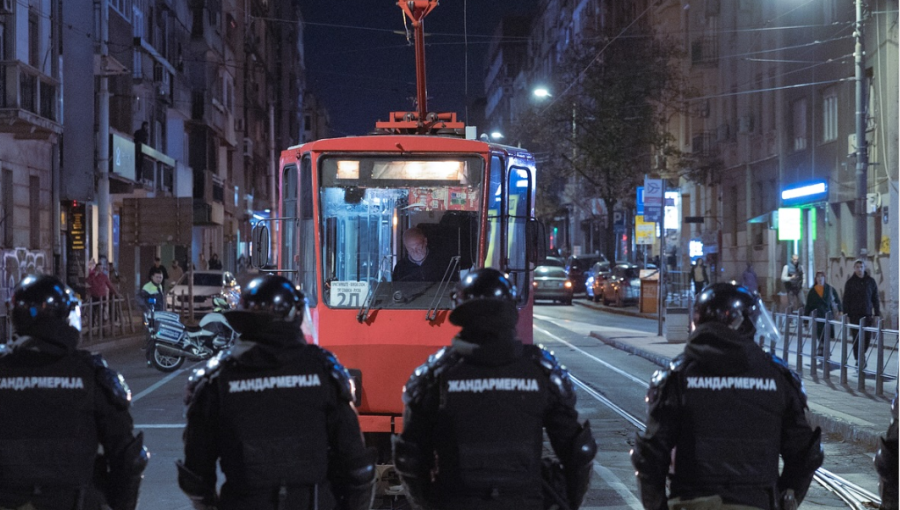
Serbian authorities prepared for potential clashes on November 5 as groups of Serbs from Kosovo arrived in Belgrade after a week-long march toward Novi Sad, joining pro-government demonstrators calling for an end to over a year of student-led blockades and anti-government protests.

Tensions have escalated outside the Serbian parliament over the past three nights, where pro- and anti-government demonstrators clashed, throwing flares and other objects. Police in riot gear and gendarmes have been deployed in large numbers around Pionirski Park and the parliament precinct.

The unrest follows a massive rally in Novi Sad on November 1 marking the first anniversary of a canopy collapse at the city’s railway station that killed 16 people. The tragedy sparked year-long protests demanding government accountability and anti-corruption reforms, largely led by students.

The government appeared to risk further escalation by bussing in supporters from across the country on November 5 to welcome the Kosovo marchers outside the Serbian parliament. Opposition media reported that the buses were mainly filled with elderly citizens and young men employed in state companies. Danas reported that Roma communities were transported on separate buses, alleging they were unfairly segregated.

Meanwhile, hunger-striking mother Diana Hrka, whose son died in the Novi Sad collapse, continued appealing for calm among students and anti-government demonstrators, urging citizens not to provoke violence. Prince Filip Karađorđević of Serbia also called for her to end the strike.

President Aleksandar Vucic, facing calls for early elections, dismissed claims that the government was orchestrating a large counter-protest in Belgrade but confirmed a reception for Kosovo marchers in Pionirski Park.


Not just a common cold: Singapore studies show RSV’s severity and impact on long-term health


In studies led by Singapore General Hospital, researchers collaborating under the Programme for Research in Epidemic Preparedness And REsponse found that the illness could be of comparable severity to other more well-known respiratory viral infections


SingHealth


Singapore, 5 November 2025 – Often confused for a common cold, respiratory syncytial virus (RSV) can in fact be serious and should be studied more closely. In studies led by Singapore General Hospital (SGH), researchers collaborating under the Programme for Research in Epidemic Preparedness And REsponse (PREPARE)[1] found that the illness could be of comparable severity to other more well-known respiratory viral infections (RVIs) – such as influenza and COVID-19.

In three large-cohort studies, the researchers looked at the severity of RSV, risk of cardiac complications, and long-term complications in patients who had RSV infections severe enough to require hospitalisation, versus influenza and COVID-19 hospitalisations. Throughout all three studies, it was found that RSV was of comparable severity to influenza and COVID-19.

Dr Ian Wee, Consultant, Department of Infectious Diseases, SGH and Deputy Lead, Databases Core, PREPARE, and first author for all three papers, said, “With about five to ten per cent of those experiencing flu-like symptoms having respiratory syncytial virus, it may not be as common compared to influenza or COVID-19, and more research about the illness is needed. However, this does not make the infection any less serious than other RVIs, especially in Singapore’s tropical climate where year-round transmission of RSV occurs.”

Key findings

Disease severity

Published in The Lancet Regional Health, the first study examined close to 13,000 adult hospitalisations for RSV, COVID-19 and influenza, and compared risk of 28-day mortality and intensive-care-unit admission, which are indicators of severity. Among patients hospitalised for RSV, about one in 20 died within 28 days of hospital admission. Overall, hospitalisations due to RSV were more severe than influenza, with higher death rates and more intensive care admissions. RSV was of comparable severity to COVID-19 hospitalisation in individuals previously boosted against COVID-19; the study pre-dated the availability of RSV vaccination in Singapore.

Risk of cardiac complications

The second study, published in JAMA Network Open, compared the risk of acute cardiac complications – defined as any cardiac, cerebrovascular or thrombotic event, such as abnormal or irregular heartbeat, heart failure, stroke, deep venous thrombosis, or pulmonary embolism. Assessing almost 33,000 adult hospitalisations for RSV, COVID-19 and influenza, slightly more than one in ten RSV hospitalisations had an acute cardiovascular event. These odds were significantly higher than patients hospitalised for COVID-19, as well as for patients with vaccine-breakthrough[2] influenza hospitalisations. 

Long-term complications

The third study looked at long-term complications following RSV infection in adults and children. Published in Clinical Microbiology and Infection, it studied about 83,000 adults hospitalised due to RVI. In adults hospitalised for RSV, increased risk of long-term cardiovascular and neurological complications was observed up to 300 days post-hospitalisation. This study also assessed paediatric RVI hospitalisations among 24,340 patients aged 0 to 17 and found that there was higher risk of post-acute respiratory complications such as wheeze/bronchitis following RSV hospitalisation, versus COVID-19/influenza. 

Understanding RVIs and RSV

RVIs are infections caused by viruses that affect the respiratory system, from the nose and throat to the airways and lungs. Beyond RSV, influenza, and COVID-19, other viruses can also cause respiratory infections. Common symptoms of RVIs include cough, sore throat and nasal congestion; while mild and self-resolving in most instances, progression to more severe illness (e.g. pneumonia or respiratory failure) can occur, particularly amongst at-risk groups. 

RSV is a respiratory virus that causes characteristic flu-like symptoms, including runny nose and sore throat. Like other respiratory viruses, it spreads through close contact, exposure to respiratory droplets from coughing or sneezing, or contaminated objects and surfaces. Most individuals experience only mild symptoms; however, young children, older adults, those who are immunocompromised or have existing respiratory or cardiac conditions are at higher risk of severe RSV.

Dr Wee added, “One common point across the three studies was that young children and elderly patients face the greatest risk of short-term and long-term complications following respiratory viral infections, especially those with pre-existing medical conditions. RSV can have a significant impact on one’s health, and at-risk individuals should remain vigilant and discuss RSV protection with their healthcare providers. The public should also protect against all RVIs by maintaining good personal hygiene, such as practising hand hygiene, staying home if feeling unwell, and wearing a mask if needing to leave home when symptomatic.”

Full details of the three studies are available here:

Wee LE, Lim JT, Ho RWL, et al. Severity of respiratory syncytial virus versus SARS-CoV-2 Omicron and influenza infection amongst hospitalized Singaporean adults: a national cohort study. Lancet Reg Health West Pac. 2025;55:101494. Published 2025 Feb 20. doi:10.1016/j.lanwpc.2025.101494

Wee LE, Lim JT, Ho RWL, Chiew CJ, Lye DCB, Tan KB. Cardiac Events in Adults Hospitalized for Respiratory Syncytial Virus vs COVID-19 or Influenza. JAMA Netw Open. 2025;8(5):e2511764. Published 2025 May 1. doi:10.1001/jamanetworkopen.2025.11764

Wee LE, Ho RWL, Lim JT, et al. Long-term sequelae post-hospitalization for respiratory syncytial virus vs. Omicron SARS-CoV-2 or influenza in adults and children: a retrospective cohort study. Clin Microbiol Infect. Published online April 26, 2025. doi:10.1016/j.cmi.2025.04.022

---

For media enquiries, please contact:

Candice Lee                                                                              

Communications Department                                              

Singapore General Hospital                                                                                                           

Email: Candice.lee.l.f@sgh.com.sg                                      

+++

About Singapore General Hospital (SGH)

Singapore General Hospital, established in 1821, is the largest tertiary hospital in Singapore and ranked among the world’s best. It provides the most comprehensive patient-centred care with over 50 clinical specialties on its campus. As an Academic Medical Centre, it takes pride in training healthcare professionals and conducting cutting edge research to meet evolving needs of the nation as well as the region. Driven by a strong sense of purpose, SGH is committed to give of its best to heal and bring hope, as it has for over 200 years.

For more information, please visit www.sgh.com.sg


[1] PREPARE is a national programme set up by the Ministry of Health (MOH) to support and strengthen Singapore’s key essential research capabilities, translational platforms, and expertise to develop tools, methods and products that can be tapped on to detect, respond to, and contain future infectious disease threats. PREPARE is a national programme under the Communicable Diseases Agency (CDA), and is supported by the Singapore Ministry of Health through the NMRC Office, MOH Holdings Pte Ltd under the National Epidemic Preparedness and Response R&D Programme Funding Initiative (MOH-001041/MOH-001073/MOH-001446).

[2] A vaccine-breakthrough is when a patient gets infected with the disease even though they have been vaccinated against it. This could be due to different factors, such as mutating virus strains or waning immunity.