Friday, November 07, 2025

 Countries agree to end mercury tooth fillings by 2034


By AFP
November 7, 2025


The World Health Organization considers mercury one of the top 10 chemicals of major public health concern, calling it "toxic to human health" - Copyright GETTY IMAGES NORTH AMERICA/AFP/File KEVORK DJANSEZIAN
Robin MILLARD

Countries agreed Friday to phase out the use of mercury-based dental amalgams in tooth fillings by 2034, in a move that will change how dentistry is done around the world.

At a conference in Geneva, signatories to a treaty aimed at protecting human health and the environment from mercury pollution decided to call time on mercury amalgams.

Nations agreed “to end the use of dental amalgam by 2034, marking a historic milestone in reducing mercury pollution”, the conference announced in its closing statement.

The World Health Organization considers mercury one of the top 10 chemicals of major public health concern, calling it “toxic to human health”.

Some countries have already banned its use in dental amalgam, a common filling material for treating tooth decay used for more than 175 years.

The Minamata Convention on Mercury is an international treaty to protect human health and the environment from the adverse effects of mercury and mercury compounds.

More than 150 countries are party to the convention, which was adopted in 2013 and came into force in 2017.

The sixth conference of parties to the treaty, held in Geneva this week, adopted amendments “establishing a global phase-out of dental amalgam by 2034”, the closing statement said.

“This science-based, time-bound agreement marks a decisive step toward the total elimination of mercury use in dentistry and a safer future for all communities.”

– African initiative –

The treaty already stipulated that signatories must take measures to phase out the use of mercury-based dental amalgams.

However, a bloc of African countries wanted to go further, with a ban on their production, import and export, starting in 2030.

In a video message as the conference opened on Monday, US Health Secretary Robert F. Kennedy Jr. asked why mercury was deemed “dangerous in batteries, in over-the-counter medications and make-up”, but acceptable in dental fillings.

“It’s inexcusable that governments around the world still allow mercury-based compounds in healthcare — and safe alternatives exist,” he said.

A few countries opposed the idea of a phase-out by 2030, including Iran and India, and Britain, which said it was too soon.

But countries came together and agreed a phase-out by 2034.

“We have just opened the door to another chapter of the mercury history book,” said the convention’s executive secretary Monika Stankiewicz.

“Mercury pollution is a scourge.”


However, “by understanding one another and bridging our differences, we can make a difference in the lives of people everywhere, and indeed in the life of this beautiful planet we share”.

The conference’s president Osvaldo Alvarez Perez added: “We have set ambitious new goals, and left mercury a little further behind.”

Overall, the conference adopted 21 decisions aimed at advancing the convention’s objective of protecting human health and the environment from mercury pollution.

COP6 decision on dental amalgam secures an equity-focused, patient-centred approach


FDI and IADR advocacy ensures extension of global phase-out date from 2030 to 2034 and inclusion of key exemption


International Association for Dental, Oral, and Craniofacial Research


Geneva, Switzerland — A landmark decision was reached at the Sixth Conference of the Parties (COP6) to the Minamata Convention on Mercury, where Parties agreed to set 2034 as the global phase-out date after which the manufacture, import, or export of dental amalgam will no longer be permitted. This milestone marks a major win for oral and public health and underscores the power of unified, science-based advocacy led by FDI World Dental Federation (FDI) and the International Association for Dental, Oral, and Craniofacial Research (IADR).

The final decision reflects a balanced and equity-focused approach to phasing down dental amalgam use worldwide. Crucially, it includes a key exemption that supports the joint advocacy by FDI and IADR, which ensures that even after phase-out of dental amalgam it can be used “when its use is considered necessary by the dental practitioner based on the needs of the patient.” This provision ensures that patient care remains at the center of decision-making, safeguarding access to essential restorative treatments where alternatives are not yet available or viable.

FDI and IADR, with the support of the International Dental Manufacturers Association (IDM) and the American Dental Association (ADA), worked tirelessly to secure a balanced outcome by actively engaging in and influencing discussions throughout the negotiations. Coordinated advocacy efforts emphasized that while accelerating the phase down and eventually phasing out dental amalgam is essential, it must be achieved through an evidence-based, patient-centered, and equitable transition that is fair to all countries and considers their specific challenges and capacities.

“As we move toward the eventual phase-out of dental amalgam, it is essential that the needs of our members, and the patients they serve, remain at the heart of every decision,” said Mr Enzo Bondioni, Executive Director of FDI. “This outcome provides much-needed time and clarity for our members to plan, prepare, and implement the necessary national policies. It reinforces FDI’s commitment to supporting the global dental community in maintaining continuity of care and advancing oral health equity during this important transition”.

Over four days of intense deliberation, both organizations delivered individual and joint statements reinforcing the continued relevance of dental amalgam in restorative dentistry, while emphasizing the importance of prevention. They called for research into affordable, effective, and sustainable alternative materials and emphasized that waste management should be compulsory to reinforce the Convention’s broader objective of reducing environmental mercury exposure. These concerted efforts helped ensure that the final phase-out timeline was extended beyond 2030, the date originally proposed to 2034.

“Science and evidence must remain at the heart of every global health policy decision,” said Dr Christopher Fox, Chief Executive Officer of IADR. “This outcome reflects the progress we’ve made by investing in research into mercury-free alternatives, as called for in the text of the Minamata Convention, from both the public and private sectors. “IADR remains committed to supporting continued innovation and research that will further the rapid improvement of affordable, effective, and sustainable restorative materials, so no one is left behind in this transition”.

The decision gives Parties nine years to adapt their national strategies and healthcare systems to this new framework. This aligns closely with FDI and IADR’s long-standing position advocating for a coordinated and equity-focused phase-down that allows all countries, especially low- and middle-income nations, to strengthen capacity, build technical expertise, and ensure continuity of patient care during the transition.

By recognizing the diverse realities of healthcare delivery worldwide, the 2034 phase-out date and practitioner-based exemption together provide flexibility that avoids widening existing oral health inequalities. The Minamata Convention on Mercury, which entered into force in August 2017, now counts 153 Parties as of September 2025. The Seventh Conference of the Parties (COP7) will take place in June 2027, coinciding with the tenth anniversary of the Convention.

About FDI World Dental Federation (FDI)

FDI World Dental Federation is the leading global voice of the dental profession and envisions a world with optimal oral health. It serves as the principal representative body for over 1 million dentists worldwide. Its membership includes some 200 national dental associations and specialist groups in over 130 countries. www.fdiworlddental.org/

About International Association for Dental, Oral, and Craniofacial Research (IADR)

The International Association for Dental, Oral, and Craniofacial Research (IADR) is a nonprofit organization with a mission to drive dental, oral, and craniofacial research for health and well-being worldwide. IADR represents the individual scientists, clinician-scientists, dental professionals, and students based in academic, government, non-profit, and private-sector institutions who share our mission. Learn more at www.iadr.org.

SPACE/COSMOS

Saturn’s icy moon may host a stable ocean fit for life, study finds


University of Oxford
Enceladus heat transfer infographic 

image: 

A new study has constrained the Enceladus’ global conductive heat flow by studying its seasonal temperature variations at its north pole (yellow). These results, when combined with existing ones of its highly active south polar region (red) provide the first observational constraint of Enceladus’ energy loss budget (<54 GW) – which is consistent with the predicted energy input (50 to 55 GW) from tidal heating. This implies Enceladus’ current activity is sustainable in the long term – an important prerequisite for the evolution of life, which is thought possible to exist in its global sub-surface ocean. Image credit: University of Oxford/NASA/JPL-CalTech/Space Science Institute (PIA19656 and PIA11141)

view more 

Credit: Image credit: University of Oxford/NASA/JPL-CalTech/Space Science Institute (PIA19656 and PIA11141)


New findings from NASA’s Cassini mission show that Enceladus, one of Saturn’s moons and a top contender for extra-terrestrial life, is losing heat from both poles – indicating that it has the long-term stability required for life to develop. The findings have been published today (7 November) in Science Advances.

A new study led by researchers from Oxford University, Southwest Research Institute and the Planetary Science Institute in Tucson, Arizona has provided the first evidence of significant heat flow at Enceladus’ north pole, overturning previous assumptions that heat loss was confined to its active south pole. This finding confirms that the icy moon is emitting far more heat than would be expected if it were simply a passive body, strengthening the case that it could support life.

Enceladus is a highly active world, with a global, salty sub-surface ocean, believed to be the source of its heat. The presence of liquid water, heat and the right chemicals (such as phosphorus and complex hydrocarbons) means that its sub-surface ocean is believed to be one of the best places in our solar system for life to have evolved outside the Earth.

But this sub-surface ocean can only support life if it has a stable environment, with its energy losses and gains in balance. This balance is maintained by tidal heating: Saturn’s gravity stretches and squeezes the moon as it orbits, generating heat inside. If Enceladus doesn’t gain enough energy, its surface activity would slow down or stop, and the ocean could eventually freeze. Too much energy, on the other hand, could cause ocean activity to increase, altering its environment.

“Enceladus is a key target in the search for life outside the Earth, and understanding the long-term availability of its energy is key to determining whether it can support life,” said Dr Georgina Miles (Southwest Research Institute and Visiting Scientist at the Department of Physics, University of Oxford), lead author of the paper.

Until now, direct measurements of heat loss from Enceladus had only been made at the south pole, where dramatic plumes of water ice and vapour erupt from deep fissures in the surface. In contrast, the north pole was thought to be geologically inactive.

Using data from NASA’s Cassini spacecraft, the researchers compared observations of the north polar region in deep winter (2005) and summer (2015). These were used to measure how much energy Enceladus loses from its “warm” (0°C, 32°F) subsurface ocean as heat travels through its icy shell to the moon’s frigid surface (–223°C, –370°F) and is then radiated into space.

By modelling the expected surface temperatures during the polar night and comparing them with infrared observations from the Cassini Composite InfraRed Spectrometer (CIRS), the team found that the surface at the north pole was around 7 K warmer than predicted. This discrepancy could only be explained by heat leaking out from the ocean below. The measured heat flow (46 ± 4 milliwatts per square metre) may sound small, but this is about two-thirds of the heat loss (per unit area) through the Earth’s continental crusts. Across the whole of Enceladus, this conductive heat loss totals around 35 gigawatts: roughly equivalent to the output of over 66 million solar panels (output of 530 W) or 10,500 wind turbines (output of 3.4 MW).

When combined with the previously estimated heat escaping from Enceladus’ active south pole, the moon’s total heat loss rises to 54 gigawatts: a figure that closely matches predicted heat input from tidal forces. This balance between heat production and loss strongly suggests that Enceladus’ ocean can remain liquid over geological timescales, offering a stable environment where life could potentially emerge.

“Understanding how much heat Enceladus is losing on a global level is crucial to knowing whether it can support life,” said Dr Carly Howett (Department of Physics, University of Oxford and Planetary Science Institute in Tucson, Arizona), corresponding author of the paper. “It is really exciting that this new result supports Enceladus’ long-term sustainability, a crucial component for life to develop.”

According to the researchers, the next key step will be to determine whether Enceladus’ ocean has existed long enough for life to develop. At the moment, its age is still uncertain.

The study also demonstrated that thermal data can be used to independently estimate ice shell thickness, an important metric for future missions planning to probe Enceladus’ ocean, for instance using robotic landers or submersibles. The findings suggest that the ice is 20 and 23 km deep at the north pole with an average of 25 to 28 km globally - slightly deeper than previous estimates obtained using other remote sensing and modelling techniques.

“Eking out the subtle surface temperature variations caused by Enceladus’ conductive heat flow from its daily and seasonal temperature changes was a challenge, and was only made possible by Cassini’s extended missions,” added Dr Miles. “Our study highlights the need for long-term missions to ocean worlds that may harbour life, and the fact the data might not reveal all its secrets until decades after it has been obtained.”

Notes to editors:

For media enquiries and interview requests, contact Dr Carly Howett (carly.howett@physics.ox.ac.uk).

The study ‘Endogenic heat at Enceladus’ north pole’ will be published in Science Advances at 19:00 GMT / 14:00 ET on Friday 7 November 2025, DOI 10.1126/sciadv.adx4338

To view a copy of the paper before this under embargo, access the Science Advances press pack https://www.eurekalert.org/press/vancepak or contact: vancepak@aaas.org

About the University of Oxford

Oxford University has been placed number 1 in the Times Higher Education World University Rankings for the tenth year running, and ​number 3 in the QS World Rankings 2024. At the heart of this success are the twin-pillars of our ground-breaking research and innovation and our distinctive educational offer.

Oxford is world-famous for research and teaching excellence and home to some of the most talented people from across the globe. Our work helps the lives of millions, solving real-world problems through a huge network of partnerships and collaborations. The breadth and interdisciplinary nature of our research alongside our personalised approach to teaching sparks imaginative and inventive insights and solutions.

Through its research commercialisation arm, Oxford University Innovation, Oxford is the highest university patent filer in the UK and is ranked first in the UK for university spinouts, having created more than 300 new companies since 1988. Over a third of these companies have been created in the past five years. The university is a catalyst for prosperity in Oxfordshire and the United Kingdom, contributing around £16.9 billion to the UK economy in 2021/22, and supports more than 90,400 full time jobs.

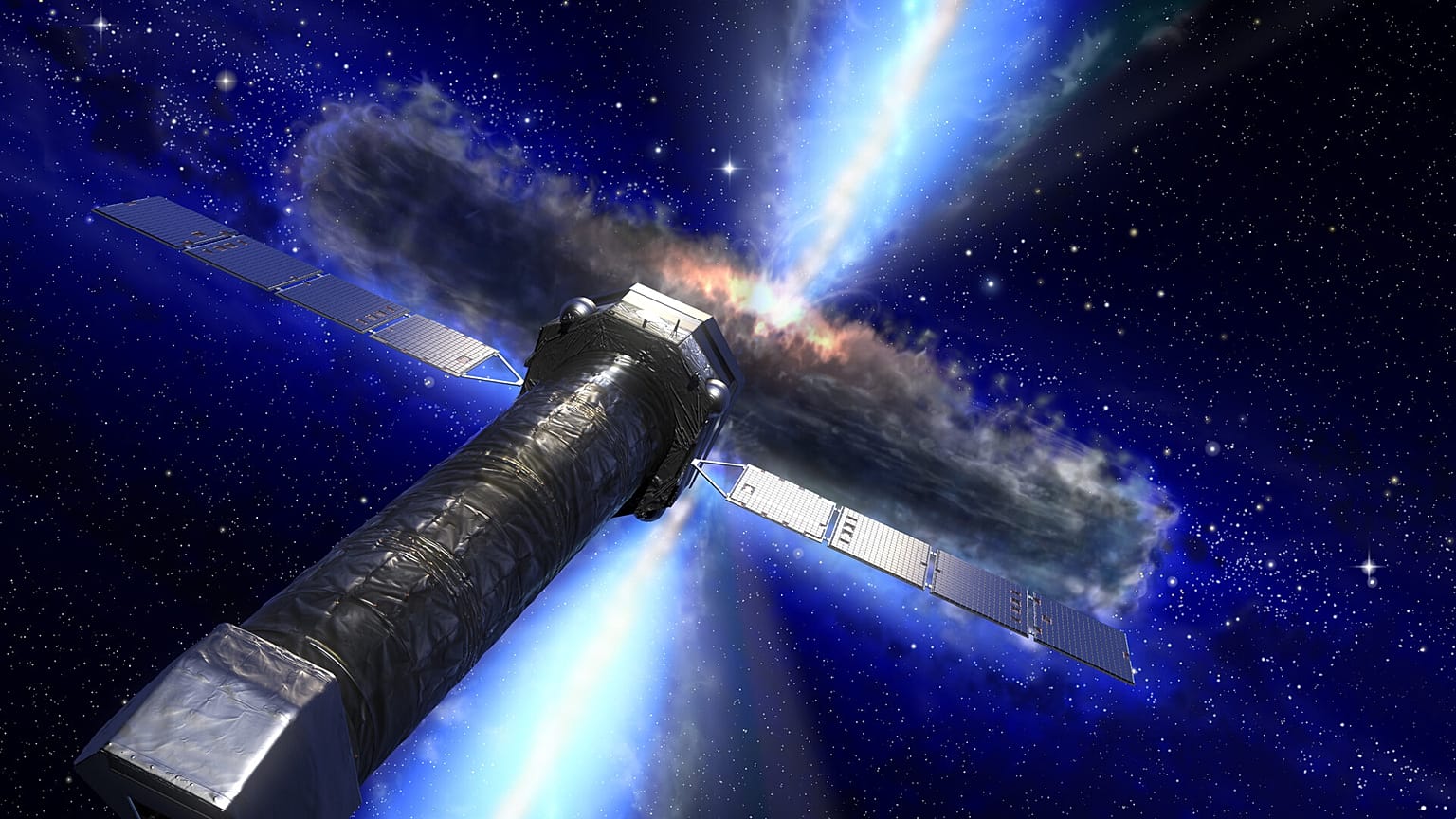
Europe's NewAthena telescope to detect supermassive black holes at the edge of the universe


Copyright DR

By Joana Mourão Carvalho
Published on 07/11/2025 - EURONEWS

Portuguese researchers predict that Europe's future space observatory will detect hundreds of thousands of supermassive black holes.

The European Space Agency's (ESA) future space observatory, the NewAthena telescope, could detect an unprecedented number of supermassive black holes – some formed when the universe was less than a billion years old.

At least that's the expectation of an international team led by Portuguese researchers who have created a simulated X-ray catalogue of the sky, using cosmological simulations to test NewAthena's ability to detect the faintest and most distant black holes.

Their research was recently publishedin the journal Monthly Notices of the Royal Astronomical Society.

"With NewAthena, it will be possible to discover around 250,000 active galactic nuclei, which are the black holes that are actively feeding," Nuno Covas, a researcher at the Institute of Astrophysics and Space Sciences (IA) at the University of Lisbon, told Euronews.

And of these 250,000, 20,000 will be around two billion years from the beginning of the universe and 35 will be around 1,000 million years from the beginning of the universe".

That's about 30 times stronger than current telescopes, Covas added.


This will be the first time that astronomers will be able to statistically study active galactic nuclei (AGNs) – the compact centre of a galaxy – in X-rays from the so-called Epoch of Reionisation, a phase in cosmic history when the universe was less than a billion years old.

According to the study authors, X-rays are an essential tool for finding these black holes while they are actively feeding, as the matter that spirals into them heats up to millions of degrees and emits high-energy radiation.

José Afonso, also from the IA and the University of Lisbon, says that currently "we have almost reached that first phase of the universe, where galaxies and black holes begin to appear".

But because NewAthena observes only a small region of the sky – an area of 10 square degrees – will make it possible to fully study those first galaxies and black holes.

Astronomers from the IA emphasise the importance of testing the potential of the NewAthena telescope to eventually overcome some of the great unknowns that still surround the formation of black holes.

One of the greatest challenges of modern astrophysics is to understand how galaxies and the black holes at their centre form and evolve together.

"What we really want is to discover these black holes giving rise to the formation of the first galaxies," Afonso said.


"Today we can't figure out what comes first. It's a bit of a game of chicken or the egg. Does a gigantic black hole appear first and then accrete a galaxy around it, or is there first the formation of the galaxy, which then somehow gives rise to the appearance of a gigantic black hole?"

He added that the telescope, by discovering these first black holes in the first galaxies, "could make it possible to understand whether these holes may have appeared in the Big Bang itself".

Israel Matute, one of the study's authors, also said that "the large-field, high-energy view of the universe provided by NewAthena will be an essential complement to the revolutionary observatories of the next decade, including LISA (NASA/ESA) and the Square Kilometre Array (SKAO)".

The NewAthena mission is currently in the development phase and should be formally adopted by ESA in 2027, but the telescope that will take an X-ray of the universe is scheduled for launch in 2037.

Another of the mission's objectives will also be to map hot gas structures and determine their physical properties.


NASA chief rebuts Kim Kardashian over moon landing claims

31.10.2025, DPA


Photo: Ian West Media Assignments/PA Wire/dpa


NASA chief Sean Duffy pushed back after US reality TV star and entrepreneur Kim Kardashian suggested on her show that the 1969 moon landing had been faked.

"Yes, we've been to the Moon before ... 6 times!" he wrote on the social media platform X.

He was responding to a clip from the latest episode of her programme, "The Kardashians," which was was released on Thursday.

"I think it was fake," Kardashian said of the Apollo 11 mission, crewed by Neil Armstrong, Michael Collins and Buzz Aldrin.

"I've seen a few videos on Buzz Aldrin talking about how it didn’t happen," she continued. "He says it all the time now, in interviews. Maybe we should find Buzz Aldrin.”

Aldrin, who was the second person to walk on the moon after Armstrong, has never denied the moon landing. Conspiracy theories suggesting it was faked have long been debunked.

In his post late Thursday, Duffy noted that the US plans to send humans back to moon as part of its Artemis programme. "We won the last space race and we will win this one too," he wrote.

The United States landed astronauts on the moon six times between 1969 and 1972, with a total of 12 men walking on the lunar surface.

Aldrin, 95, is the only Apollo 11 astronaut still living.

The Hidden Cost of Comfort: How Everyday Consumption Fuels Global Violence


In a world increasingly defined by convenience, luxury, and technological advancement, few pause to consider the true cost of their comfort. From the cars we drive to the cell phones we cradle, from the diamonds we gift to the beauty products we apply—modern life is saturated with commodities whose origins are steeped in exploitation, war, and environmental devastation.

This is not hyperbole. It is a reckoning.

Every airplane ticket, every high-rise building, every elite college education funded by oil wealth or corporate profit is part of a global system that thrives on conflict. The wars waged over fossil fuels, rare minerals, and territorial control are not distant tragedies—they are the foundation upon which much of our daily life is built. The American Dream, often romanticized as a symbol of opportunity, is in many cases underwritten by the suffering of others.

Consider the diamond trade. The phrase “If you don’t give me diamond rings, you don’t love me” may sound like a harmless cultural trope. But behind it lies a brutal truth: countless Africans have been slaughtered in the pursuit of these stones. The demand for luxury fuels the supply of violence. Where there are no buyers, there will be no sellers. And where there is silence, complicity thrives.

This is not merely a critique of capitalism—it is a moral indictment of consumer indifference. The war profiteers and manufacturers of weapons may pull the trigger, but it is the global consumer who loads the chamber. Every purchase made without awareness, every indulgence enjoyed without inquiry, contributes to a cycle of destruction that disproportionately affects the poor, the displaced, and the voiceless.

We must ask ourselves: What does it mean to live ethically in a world where comfort is so often purchased with blood? Can we continue to celebrate weddings, build skyscrapers, and send our children to elite institutions without acknowledging the invisible cost paid by others?

The answer lies not in guilt, but in awakening. In choosing to see the connections between our lifestyles and the global systems that sustain them. In demanding transparency, accountability, and justice—not just from governments and corporations, but from ourselves.

Until then, the bling on our fingers, the fuel in our tanks, and the glow of our screens will remain stained with the suffering of those we refuse to see—without mercy or thought.

Sammy Attoh is a Human Rights Coordinator, poet, and public writer. A member of The Riverside Church in New York City and The New York State Chaplains Group, he advocates for spiritual renewal and systemic justice. Originally from Ghana, his work draws from ancestral wisdom to explore the sacred ties between people, planet, and posterity. Read other articles by Sammy.