Friday, November 07, 2025

War Criminal Dick Cheney Dead at 84

“He should have died in The Hague,” said one journalist.
NO COMMENT FROM TRUMP

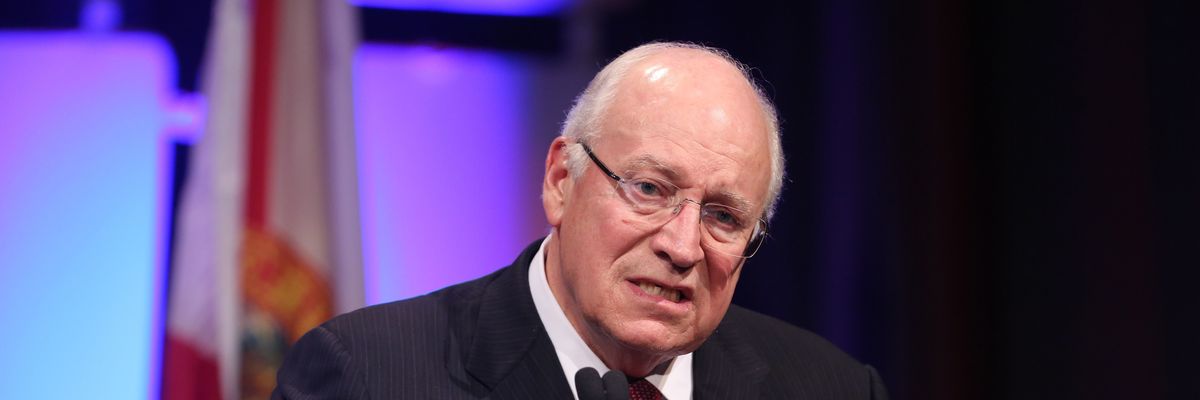
Former Vice President Dick Cheney spoke at an event on November 12, 2015 in Orlando, Florida.
(Photo by Tom Benitez/Pool/Getty Images)

Common Dreams Staff
Nov 04, 2025

Dick Cheney, a chief architect of the US invasion of Iraq and broader “war on terror” that has killed millions of people since its inception, has died at 84, his family announced in a statement Tuesday.

Cheney was best known for his central role in the administration of former President George W. Bush, under whom Cheney served as vice president.


An unapologetic advocate of preemptive war and torture in the wake of the September 11, 2001 terrorist attacks on the United States, Cheney was widely regarded as a war criminal who should have faced international prosecution.

“He should have died in The Hague,” journalist Mehdi Hasan wrote in response to the news of Cheney’s death.

Cheney’s family said he died “due to complications of pneumonia and cardiac and vascular disease.”

‘No, Not This Time’: Combat Veteran Graham Platner Doesn’t Mourn for Dick Cheney

“The only legacy we have to remember,” said the Maine candidate for US Senate about the former vice president, “is that he wasted thousands of young American lives, hundreds of thousands of Iraqi lives, and trillions of dollars for absolutely nothing.”
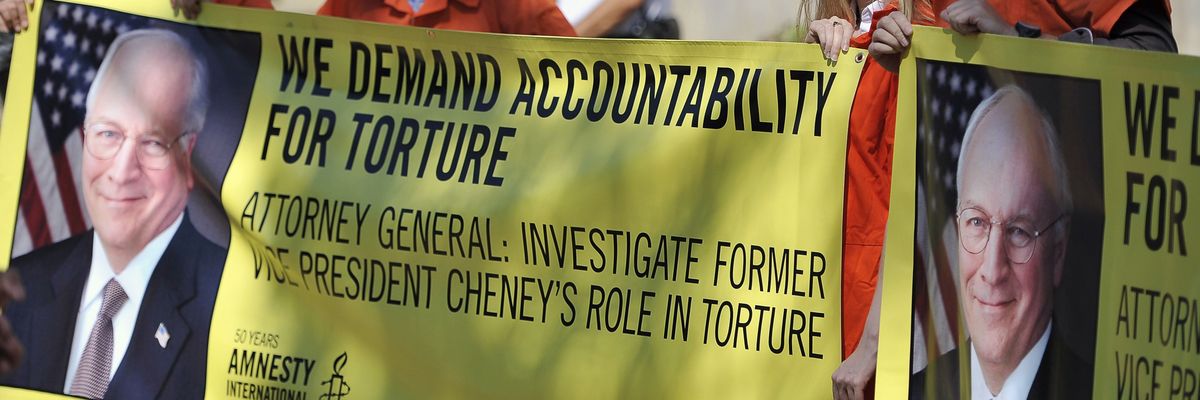

Activists of Amnesty International hold banners of former US Vice President Dick Cheney as they demonstrate in front of the US Justice Department in Washington, DC, on August 30, 2011.
(Photo: Mladen Antonov/Getty Images via Getty Images)


Jon Queally
Nov 05, 2025
COMMON DREAMS

Graham Platner, the US combat veteran and oyster farmer running for the Democratic nomination to defeat Republican US Senator Susan Collins of Maine in next year’s election, is not interested in mourning the life and legacy of reviled war criminal Dick Cheney, though he does have “some thoughts” on the subject.

While Democratic leaders of the old guard such as Barack Obama and Kamala Harris issued statements Tuesday fawning over Cheney’s service to country, contributing to the familiar hagiography that typically follows the demise of even the worst American leaders the nation has inflicted on the world, Platner stuck a distinctly different tone.



Allies Challenge Corporate Media Onslaught Against Working-Class Champion Graham Platner


‘The Establishment Is Spooked’: Poll Shows Platner With Big Lead Over Mills in Maine Democratic Primary

“Usually, when a former vice president passes, we all take some time to mourn,” Platner says in a video posted to social media Tuesday. “As a veteran of the Iraq war, I’m going to say: No, not this time.”

Platner, who served in the US Marines and in the US Army during multiple combat tours in both Iraq and Afghanistan, pushed back against the pattern of whitewashing the misdeeds of the dead, especially for elected leaders never held to account.

“Over the next couple days, I’m sure there are going to be thousands of think pieces about his legacy,” said Platner, “but the only legacy we have to remember is that he wasted thousands of young American lives, hundreds of thousands of Iraqi lives, and trillions of dollars for absolutely nothing.”


“If we take anything” from Cheney’s death, continued Platner, “it should be that we need to build a politics that keeps the politicians, like Susan Collins, who support illegal foreign wars like the one in Iraq, accountable and get them out of office.”

Platner has spoken at length about his time on the battlefields of Iraq and Afghanistan and how, after multiple tours, he became not only disillusioned with the wars but also incredibly angry over the foreign policy decisions that started them.

Cheney, who served as VP under former President George W. Bush, has long been seen as the chief architect and driving force behind the effort to manipulate the US public into backing the invasion of Iraq in the wake of the 9/11 attacks, despite Iraq having nothing to do with the plot.

Cheney infamously said after 9/11 it would be time to “take off the gloves,” which resulted in a torture regime operated by the CIA and war crimes across the Middle East, Afghanistan, Pakistan, and beyond at the direction of the Bush administration.

Bob Brigham, a self-identified progressive from Montana, was among those who applauded Platner for his statement.

“Dick Cheney was a war criminal who cost my buddy his life in Iraq,” said Brigham in a social media post. “Platner has a pitch-perfect remembrance of the a-hole. May Dick Cheney roast in hell!”

Cheney shaped US like no other VP. Until he didn’t. 

By AFP
November 4, 2025


US Vice President Dick Cheney takes to the stage on March 18, 2008 to deliver remarks to US troops stationed at Balad Air Base, Iraq - Copyright AFP/File Paul J. RICHARDS
Shaun TANDON

Dick Cheney achieved influence unrivaled for a vice president in shaping US foreign policy, ruthlessly pursuing military might and advocating pre-emptive war to reshape the world.

The descent of Cheney, who died Tuesday, was also spectacular. His hawkish brand of neoconservatism, including the invasion of Iraq, began to be repudiated even before he left office, and today both major US parties largely reject his views.

With America shellshocked by the September 11, 2001 attack, Cheney — his grim demeanor accentuated when he spoke from dark bunkers — advocated a doctrine of pre-emptive strikes, with the United States attacking first before threats materialize, toppling hostile regimes if needed.

Cheney also led the shattering of Western norms on treatment of prisoners, indefinitely jailing terrorism suspects without charges and approving “enhanced interrogation” techniques such as waterboarding that are widely considered torture.

Cheney, a veteran Washington insider with no ambition to be president himself, quickly towered over the less experienced commander-in-chief, George W. Bush.

“It would be hard to argue that he was not the most influential vice president,” said Aaron Mannes, a scholar of the American vice presidency who lectures at the University of Maryland School of Public Policy.

Cheney gained clout by focusing narrowly on national security and enabled Bush by “pushing an open door.”

“There were a lot of stories of him being a sort of secret president — the Darth Vader — running everything. I’m not sure that’s true,” Mannes said. “It was more a matter of where he put his weight.”


– Iraq bloodshed –


The decision to invade Iraq still reverberates across the Middle East and haunts American foreign policy.

Hundreds of thousands of civilians, as well as more than 4,000 US troops, died as the United States toppled Saddam Hussein and the country descended into sectarian bloodshed.

Cheney by the end of his 2001-2009 term began to lose policy debates.

Bush sided with his secretary of state, Condoleezza Rice, and pursued diplomatic options such as talks with North Korea defying Cheney’s motto, “We don’t negotiate with evil; we defeat it.”

Democrat Barack Obama swept to power rejecting Cheney’s worldview, offering an outstretched hand to those who “unclench your fist.”

Less expected, Cheney’s Republican Party shifted direction, as many veterans came home to struggling communities and drug addiction.

Donald Trump last year called Cheney “the King of Endless, Nonsensical Wars, wasting Lives and Trillions of Dollars,” though as president he has been eager to exert the swagger of force himself.

In another turn that would have been unthinkable when Cheney was vice president and a hate figure for Democrats, he said he voted for Democrat Kamala Harris last year over Trump.

He joined his daughter, former congresswoman Liz Cheney, who unlike many Republicans has spared no words in criticizing Trump as anti-democratic.

Danielle Pletka, a senior fellow at the conservative American Enterprise Institute who backed the Iraq war, nonetheless said she believed Americans still backed Dick Cheney’s idea that a “strong America is a power for good in the world.”

“And I don’t think Donald Trump would disagree with that characterization of his own stance,” she said.


– Never prosecuted –


Obama vowed on taking office that the United States “does not torture” but also decided not to prosecute anyone, hoping to turn the page.

The prison for indefinite detentions on Guantanamo Bay, Cuba — which Obama wanted to close within a year — remains open a decade and a half later, although with far fewer inmates.

Sarah Yager, Washington director of Human Rights Watch, which long urged an investigation against Cheney, said the US breaking of norms emboldened other nations to torture.

She also pointed to allegations of mistreatment of migrants sent by Trump to El Salvador.

“There is a direct line from Vice President Cheney to the torture that the US is now complicit in in El Salvador,” she said.

“It’s really a shame that accountability never closed the door for the United States on torture.”


Dick Cheney (1941–2025): The Dark Legacy of a War Criminal

by  | Nov 5, 2025 | ANTIWAR.COM

Former U.S. vice president Richard “Dick” Cheney died on 3 November 2025 at age 84; his family said he had suffered from pneumonia and cardiac and vascular disease. Best known for steering national security policy after the 9/11 attacks, he became the dominant force behind a “war on terror” that unleashed torture, preventive war and mass surveillance. Amnesty International has described him as one of the principal architects of a program that amounted to torture, while the Brown University Costs of War project attributes more than 900,000 deaths and trillions of dollars in spending to the post‑9/11 wars he championed. Cheney’s legacy is one of unprecedented destruction and the erosion of civil liberties.

From prudence to preemption

During the 1991 Persian Gulf War, Defense Secretary Dick Cheney and Joint Chiefs chairman Colin Powell resisted calls to topple Saddam Hussein. Cheney argued that invading Baghdad would force the U.S. to occupy Iraq alone, risk its territorial integrity, and require unacceptable casualties: “It’s a quagmire if you go that far,” he told PBS’s Frontline in 1994, asking how many additional dead Americans Saddam was worth. Those words reflect a prudence that vanished after the attacks of September 11, 2001. Within days, the vice president laid out a radical new doctrine. On NBC’s Meet the Press he said America must operate on the “dark side,” spend time in the shadows, and use “any means at our disposal” to achieve its objectives.

Cheney’s longtime counsel, David Addington, and Justice Department lawyers John Yoo and Jay Bybee drafted memos arguing that the Geneva Conventions did not apply to detainees captured in the war on terror. The State Department’s legal advisor warned that claiming the president could suspend the Geneva Conventions was legally flawed and would reverse over a century of U.S. policy. Cheney pressed ahead, telling the Washington Times that he “signed off” on the CIA’s secret detention and rendition program and, as a principal participant in National Security Council meetings, he authorized the agency’s interrogation program, including waterboarding. In 2006 he called waterboarding a “no‑brainer,” and in 2009 he acknowledged knowing about the practice “as a general policy that we had approved.”

Torture and the repudiation of law

The vice president’s embrace of waterboarding ignored that the technique has long been treated as torture under U.S. and international law. Amnesty International notes that Japanese officials were convicted at the Tokyo War Crimes Trials for subjecting U.S. pilots to waterboarding, and U.S. courts have sentenced sheriffs to prison for using the technique. Amnesty stresses that its status as torture is “not a matter of opinion.” The Senate Armed Services Committee concluded that approving aggressive interrogation techniques sent a message that physical pressure and degradation were acceptable treatment for detainees. Amnesty calls Cheney “one of the principal architects of a policy that amounted to torture.”

Cheney’s legal defense of the program was rife with distortions. He misrepresented Justice Department opinions, falsely suggested Japanese waterboarders were never prosecuted, overstated detainee recidivism, insisted detainees had no rights under the Geneva Conventions, and repeated unproven claims of ties between Saddam Hussein and al‑Qaeda.

The road to Baghdad and the case for war

He cautioned against occupying Iraq in 1994 but became the administration’s leading voice for war nine years later. On March 16, 2003 he declared that Saddam had “reconstituted nuclear weapons” and that Americans would be greeted as liberators. These claims proved false. He insisted there was “no doubt” Iraq possessed weapons of mass destruction and ties to al‑Qaeda, yet evidence was lacking. Retired colonel Lawrence Wilkerson later alleged the administration manipulated intelligence to justify invasion and suggested that Cheney’s push to ignore the Geneva Conventions may constitute a war crime.

Cheney’s radicalism was not limited to Iraq. He championed a “unitary executive” theory contending that the president alone decides matters within the executive branch. Legal scholar Martin Lederman observed that he sidelined dissenting views in the military and intelligence agencies. Chip Gibbons, writing in Jacobin, describes him as an enemy of democracy whose agenda included war, indefinite detention, warrantless surveillance, and torture.

Human cost: war, death, and permanent surveillance

The human toll of Cheney’s policies is staggering. Brown University’s Costs of War project estimates that more than 940,000 people have been killed by direct post‑9/11 violence in Iraq, Afghanistan, Syria, Yemen and Pakistan, including over 432,000 civilians. Indirect deaths raise the toll into the millions. In Iraq alone, about 29,199 bombs were dropped, causing heavy civilian casualties, and a 2006 survey estimated over 600,000 civilian deaths. Current Affairs compares Cheney’s record to that of serial killer Samuel Little, concluding that “Little was strictly an amateur.”

The costs extended beyond foreign battlefields. Ryan McMaken of the Mises Institute writes that in a more reasonable world, people like Cheney would be forgotten, shamed, and disgraced. The post‑9/11 wars did nothing to enhance freedom, yet thousands of American families paid with their blood and millions continue to pay through taxes and inflation. McMaken lists domestic infringements such as the Patriot Act, warrantless surveillance, TSA groping, and FISA abuses, and none of the architects have been held accountable.

Colonel Wilkerson, Powell’s former chief of staff, told ABC News that Cheney “was president for all practical purposes” during Bush’s first term and feared being tried as a war criminal. The Washington Post dubbed him the “vice-president for torture,” and Wilkerson said his push to disregard the Geneva Conventions amounted to an international crime. Chip Gibbons asserts that he “reduced nations to rubble, shredded the Bill of Rights, and enacted programs of surveillance, abduction, detention, and torture.”

The culture of impunity Cheney helped foster has not faded. Politicians continued to accept his endorsements despite his record, while he insisted the CIA’s interrogation techniques did not violate international agreements and his allies still argued for expansive presidential war powers.

An opinion essay by law professor Ziyad Motala in Al Jazeera argues that Cheney is the architect of some of the most disastrous foreign and domestic policies of the early twenty‑first century. Motala contends that Cheney’s policies left “a trail of death and destabilization” and that the havoc unleashed by the Iraq War and the broader “war on terror” continues to reverberate, causing “suffering and instability far surpassing anything Trump has wrought.” He notes that estimates of Iraqi civilian deaths range from hundreds of thousands to well over a million and that the war destabilized an entire region, paving the way for extremist groups like ISIL and ongoing cycles of violence and displacement. The war drained trillions from the U.S. economy and left thousands of U.S. troops dead and many more with life‑altering physical and psychological wounds.

The economic burden of these wars is also staggering. Nearly twenty years after the United States invaded Afghanistan, the global war on terror had cost about $8 trillion. That figure includes not only Department of Defense spending but also State Department expenditures, care for veterans, Department of Homeland Security funds, and interest payments on war borrowing. Brown’s Cost of War Project Co‑director Catherine Lutz said the Pentagon now absorbs the majority of federal discretionary spending, yet most people do not realize the scale of this funding. She warned that these costs will continue for decades as the country pays for veterans’ care and the environmental damage wrought by the wars.

Cheney championed the Patriot Act as a key pillar of the “war on terror” and campaigned aggressively to renew its provisions. In January 2006 he and President Bush launched a “double‑barrelled assault” on critics of domestic surveillance and opponents of the law; Cheney told the Heritage Foundation that Americans could not afford “one day” without the Patriot Act. Civil liberties groups argue that the Patriot Act dramatically expanded government surveillance powers at the expense of constitutional freedoms. Under the law, investigators can monitor online communications on an extremely low legal standard, and secret court orders can compel companies to hand over lists of what people read or which websites they visit. The American Civil Liberties Union notes that the law is enforced in secret, weakens judicial review, and allows agents to seize business and communications records without probable cause. By 2004 the ACLU had filed lawsuits challenging these provisions and denounced the administration’s claim that there were no abuses as a “red herring.” The Patriot Act turned ordinary Americans into subjects of a vast dragnet, chilling free speech and giving the executive branch powers reminiscent of past crises.

Assessing the indictment

The case against Dick Cheney therefore does not rest on partisan vitriol but on the record of his own words and deeds. He reversed his warnings about occupying Iraq and promoted a war based on false claims; advocated operating on the “dark side;” authorized secret prisons and waterboarding despite the practice being recognized as torture; backed legal memos undermining Geneva protections; and misled the public about weapons of mass destruction and al‑Qaeda ties. He championed a unitary executive theory that sidelined constitutional checks. The wars he supported killed hundreds of thousands and created millions of refugees, while at home they ushered in surveillance and curbs on civil liberties. He is the poster child of a modern war criminal in the American neo-conservative tradition.

It would be facile to claim that Cheney alone bears responsibility for America’s post‑9/11 disasters. Presidents George W. Bush and Barack Obama signed off on the wars and the surveillance, Congress appropriated funds, and the courts often acquiesced. Yet Cheney’s imprint on U.S. foreign policy is unmistakable. Through his mastery of bureaucratic infighting and his ability to marginalize dissent, he institutionalized torture, preventive war, and executive supremacy as tools of statecraft. His death prompts reflection on whether the nation will continue to venerate officials whose legacies consist of bombed cities, dead civilians, shattered constitutions, and a global “war on terror” that has left the world less free and no safer.

Alan Mosley is a historian, jazz musician, policy researcher for the Tenth Amendment Center, and host of It’s Too Late, “The #1 Late Night Show in America (NOT hosted by a Communist)!” New episodes debut every Wednesday night at 9ET across all major platforms; just search “AlanMosleyTV” or “It’s Too Late with Alan Mosley.”



Further


To the Long Hopeful Query, Is He Dead Yet? Yes.


Cheney during a 2012 interview
Photo by David Hume Kennerly/Getty Images

Abby Zimet
Nov 05, 2025
COMMON DREAMS

Variously dubbed Darth Vader, the Prince of Darkness and “one of the most evil people to exist in modern history,” Dick Cheney, the lying, blood-stained architect of America’s calamitous War on Terror, brutal torture program and an Imperial Presidency that today still afflicts us has died “after a lifetime of people wishing he had died sooner” - and in a prison cell. The consensus on a war criminal who faced no punishment and expressed no remorse: “No hell is hot enough or eternal enough.”

The long-awaited death of Cheney, at 84, resists all but the most groveling and dissonant of the hagiographies that often greet the demise of contentious figures; in Cheney’s case, much like Kissinger’s, schadenfreude rules the day. After years of harsh mock headlines - “Cheney Is Still Undead” - and a website that daily asked, and answered, “Is Cheney Dead Yet?”, the actual death of an American supervillain instrumental in creating an iniquitous, ineffective, indefensible, deeply sadistic torture and rendition regime that “destroyed any shred of humanity the U.S. could ever lay claim to” was met with caustic dispatches like, “Dick Cheney No Longer Still Undead” and, from The Nation, “His Works Completed, Dick Cheney, Mass Murderer of Iraqis and American Democracy, Dies.”

Let Them Eat Marble and Big Beautiful Ballroom

They note today’s MAGA, and alas the rest of us, “walk a path paved by the most powerful vice president in US history,” a reminder Cheney’s crimes belong not in the past but in the hateful, largely untethered presidential here and now. In light of his “long, putrescent career,” notes one account, “let us remember who Richard Bruce Cheney really was.” Born in 1941, growing up in Wyoming, Cheney had an inauspicious youth - flunked out of Yale twice, racked up two drunk-driving arrests - so “who knew he’d one day turn his life around to grow up to be a war criminal?” Despite his zeal for enabling the killing of brown people around the world from an office in D.C., he got five deferments in the Vietnam War; he later vaguely said, “I had other priorities in the ‘60s than military service.”

Parlaying connections among the neo-cons, he was elected to the House in 1978; he served five terms, during which he voted against a Department of Education, a Martin Luther King holiday, Head Start, and freeing Nelson Mandela while supporting apartheid. After years of rising through the GOP ranks as “one of the most belligerent politicians of our lifetime,” he became the insipid George Bush’s right-hand man, savoring playing the “evil genius in the corner that nobody ever sees come out of his hole” while working to make Bush as legally untouchable as possible. Espousing the Unitary Executive Theory - an unencumbered presidency controlling all aspects of the executive branch - he helped shape the 2000-2008 Bush-Cheney administration, one of the worst in American history.

Sept. 11 “happened on his watch,” notes one account. “Everything that came afterward - AfghanistanIraq, torture, surveillance, toxic patriotism - was overcompensation for his own initial failure.” It was also a chance to achieve his longtime goal of amassing in the White House the might of U.S. war-making - which he thought showcased American power, not “weakness, avarice, futility and manic resource extraction.” Thus did he forge, with the help of Bush, Blair, Rumsfeld, oil-greedy corporate powers, a complicit CIA, the invasion and occupation of Iraq - concocting ties between Saddam and al-Qaeda, inventing weapons of mass destruction, attacking critics for their “pernicious falsehoods” - that ranks as “one of the worst strategic decisions in U.S. history.”

And, of course, one of the most brutal. Official estimates say the so-called War on Terror killed between 897,000 and 929,000 people, mostly civilians; those numbers are widely recognized as far too low, with totals likely reaching beyond a million. Among the victims were myriad thousands of “ghost detainees” disappeared to other countries in extra-judicial renderings - in handcuffs, blindfolds, diapers - to be tortured. They were beaten, cut, raped, waterboarded, set upon by dogs, burned, electrocuted, restrained in excruciating positions, put into coffins, threatened with execution, power drills, “rectal rehydration,” the killing of their families. Later, confronted in a Senate hearing with a 6,000-page report documenting the horrors, Cheney dismissed it as “a crock” and “hooey.”

All the shameless lies, the endless hubris, the crimes, screams, bodies, blood, the millions he made at Halliburton in exchange - for all that, Cheney never faced any legal or even political accountability. He never expressed even a sliver of doubt or regret. In a 2008 interview, asked about the fact that two-thirds of Americans said the war wasn’t worth fighting, he responded, “So?” “So? You don’t care American people think?” he’s asked. “No,” he said. “You cannot be blown off course by fluctuations in the public opinion polls.” At other times, he insisted, “I’d do it again in a minute,” “I have no problem as long as we achieve our objective,” and on a torture program that repeatedly proved to generate no documented, actionable information, “It worked. It absolutely did work.”Cheney had five heart attacks and underwent at least 7 heart procedures before finally dying of pneumonia and cardiac and vascular disease, "killed by a coalition of the diseases willing to invade him." In 2012, he got a heart transplant, becoming "the only human capable of using another person's heart without caring who it previously belonged to." In an interview about the gift, he proved "an even bigger monster" than previously thought by declaring, "It's my new heart, it's not someone else's old heart." He conceded many people "generically thank donors...but I don't spend time wondering who had it, what they’d done, what kind of person." When Cheney accidentally shot a 78-year-old lawyer friend in the face in a 2006 hunting accident, the victim felt obliged to apologize for blocking his shot.


In the end, ironies abound in his life and death. He reportedly voted in the last election for Kamala Harrisarguing, “In our nation’s 246-year history, there has never been an individual who was a greater threat to our republic than Donald Trump,” even though he was long deemed that threat and Trump committed the same crimes as Bush - lying to steal an election. He died on a day he helped facilitate that 25 years ago, and lived to see another president turn the same bloated executive powers against his own daughter. “Cheney never expected to be displaced by what he empowered,” notes The Nation of the Bush/Cheney history of violence and deceit. “He surely did not expect to die on a day when New Yorkers are poised to elect a Muslim socialist mayor in a repudiation of his legacy.”

All in all, “History’s verdict has been merciless on the ‘father’ of the Iraq invasion and the excesses of the war on terror.” The jokes are bitter. It’s time for the The Onion‘s Cheney Library in “a vast, dark, sulfurous cave” with its millions of legal documents justifying torture, noxious fumes, endless surveillance, Hall of Obfuscation, Pit of Yellowcake Uranium, Quagmire Wing, interactive waterboarding for kids, sprawling security state and exhibits representing “the huge part he played in destabilizing the Middle East for generations to come.” Some report the Cheney family hasn’t decided how to handle his remains, but may award Halliburton “a no-bid contract” for clean-up; his daughters, struggling with their loss, have taken to calling it “enhanced death.”

Others are outright celebrating. “I woke up today feeling kinda shitty, knowing I needed to go to the gym but not wanting to,” wrote one. “Then I saw the headline that Dick Cheney was dead, and suddenly everything was great. All my aches and pains disappeared. I was so happy! I wanted to run up to strangers at the gym and see if they’d celebrate Cheney’s death with me! I didn’t know I had this much schadenfreude in me.” One announced, “The man who if Kubrick had a time machine could have been the inspiration for Dr. Strangelove has harvested his last organ.” One vowed, “AND NOW WE DANCE.” But Islamic scholar Omar Suleiman, summoning all those lost and grieving and ravaged, spoke to the dark heart of the deceased: “May the 1 million murdered souls of Iraq haunt you for eternity.”
CRIMINAL CAPITALI$M

New lawsuit alleges Spotify allows streaming fraud


By AFP
November 4, 2025


A new lawsuit against Spotify claims the company turns a blind eye to fraudulent streams in a way that benefits megastars like Drake - Copyright GETTY IMAGES NORTH AMERICA/AFP/File Rich Fury

A new lawsuit alleges streaming giant Spotify turns a blind eye to vast networks of bots that inflate streaming figures to benefit megastars such as Drake at the expense of lesser-known artists.

The legal action, filed in a US federal court on Sunday, claims the Canadian rapper gets millions of dollars in revenue from such fake streams, while Spotify garners significant commercial value from appearing to have more users than it really does.

“This mass-scale fraudulent streaming causes massive financial harm to legitimate artists, songwriters, producers and other rightsholders,” says the lawsuit, filed by rapper RBX — Snoop Dogg’s cousin.

Spotify uses a pro-rata model to pay artists from a central pot of income derived from subscriptions and advertising.

Inflated streaming figures for high-profile performers would therefore diminish the proportion of money available for other artists.

“Data analysis shows that billions of fraudulent streams have been generated with respect to songs of ‘the most streamed artist of all time,’…professionally known as Drake,” the suit says.

“But while the streaming fraud with respect to Drake’s songs may be one example, it does not stand alone.”

The class action suit — in which Drake is not named as a defendant and which does not allege any wrongdoing on the part of the “One Dance” hitmaker — is “brought on behalf of Plaintiff and a similarly situated class of music recording artists, song writers, performers, and other music rights holders.”

“Plaintiff gives a voice to more than one hundred thousand rightsholders who, among other things, may be unable or too afraid to challenge Spotify, a powerful force in the music business whose failure to act has caused significant problems and great financial harm.”

Spotify is the only defendant named in the suit, which focuses on the company’s alleged unwillingness to clamp down on fraud.

“To satisfy constant pressure from shareholders to grow the business and increase stock prices, Spotify needs an ever-expanding population of users to engage on its platform,” the suit says.

“The more users (including fake users) Spotify has, the more advertisements it can sell, the more profits the company can report, all of which serves to increase the purported value delivered to shareholders.”

The suspicion of streaming fraud has beset services like Spotify since they displaced downloads as the main way music is consumed.

A company spokesperson told AFP that they were unable to comment on pending litigation, but denied Spotify benefited from such fraud.

“We heavily invest in always-improving, best-in-class systems to combat it and safeguard artist payouts with strong protections like removing fake streams, withholding royalties, and charging penalties,” the spokesperson said.

The lawsuit is not the first legal action on streaming fraud.

Last year Drake accused record label Universal Music of conspiring to inflate streaming figures for a diss track by rival Kendrick Lamar.

That case — part of a high-profile beef between the two men — was dismissed in October. Drake is appealing the decision.

Concerns at ILO over expected appointment of close Trump advisor

Trump administration’s “rather virulent positions” against the ILO in a memo published in August.

By AFP
November 4, 2025


The ILO/OIT celebrated its 100th anniversary in 2019
 - Copyright AFP Fabrice COFFRINI


Agnès PEDRERO

The expected appointment of a close Donald Trump advisory to a top post at the International Labour Organization has sparked criticism internally, with Washington owing the UN agency tens of millions in dues.

Several well-informed sources told AFP that Nels Nordquist, a former top economic advisor to the US president, would soon be named the ILO’s deputy director-general — a position usually held by a US national.

The organisation itself declined to comment.

But the expected appointment has caused unease in Geneva, after his wife Jennifer Nordquist — also a former Trump advisor — took up the role of deputy head of the World Trade Organization (WTO) last month, which is also headquartered in the Swiss city.

“We have many questions about the situation,” Severine Deboos, head of the ILO staff union, told AFP.

“We are in a very particular situation with a Trump administration that has very firm positions on aspects at the heart of the ILO’s mandate,” she said, pointing among others to “the right to strike and the rights of migrant workers”.

It was all the more perplexing, she said, that this was happening after the United States — traditionally the agency’s biggest donor — halted its voluntary contributions, forcing the suspension of several ILO programmes.

“We are still dealing with the consequences.”

– ‘Very contested’ –

Deboos also pointed to the Trump administration’s “rather virulent positions” against the ILO in a memo published in August.

The document initially described the ILO as an organisation that “works to unionise foreign workers and punish US corporate interests abroad”, although those words and a decision to cancel $107 million in funding to the agency later mysteriously vanished from the text.

The American Enterprise Institute, a conservative think-tank, has meanwhile listed the ILO among organisations that “do not support major US policies or priorities”.

A source at the ILO, speaking on condition of anonymity because she was not authorised to comment publicly on the situation, confirmed to AFP that there was “real concern internally”.

The appointment of someone “from the MAGA administration (was) very contested”, she said, referring to Trump’s Make America Great Again movement.

“There is a fear that there will be very direct consequences” on departments, the source said.

The concern also stems from the fact that the ILO, unlike most other UN agencies, only has one deputy director-general.

“We are looking for a balanced situation at ILO, in particular in key positions,” a Geneva-based diplomatic source, who did not wish to be named, told AFP.

A number of other sources also said discussions were under way with the organisation about the expected appointment.

“For a scenario of a single, powerful DDG we seek assurances that the normative role of the ILO, (for instance on) labour standards, is strengthened”, not weakened, the diplomatic source said.

– ‘Influence peddling’ –

The ILO plays an important role in setting rules and regulations. For example, it is working on regulating digital labour platforms with a view to adopting international standards next year, guaranteeing decent working conditions.

“Internally, we have been told there is no need for concern that the person comes with strong support from the Trump administration since they must, once in office, remain loyal to the organisation,” an ILO official told AFP, requesting anonymity.

Concerns have also been raised about the United States lagging behind on its 2024 and 2025 ILO membership dues, with over $173 million unpaid.

“There is an expectation by member states that… the position comes with the country of origin having made its financial contribution,” the diplomatic source said.

The United States had also failed to pay its WTO contributions for the same period, but the dues for 2024 have now been paid, following Jennifer Nordquist taking up her appointment in early October.

“Payment of mandatory contributions should not be made conditional on certain appointments,” Deboos said.

“This opens the door to influence peddling” and “undermines the organisation’s independence.”

Mamdani Won New York City, But the Battle for Winning a Working-Class Agenda Has Just Begun


The battle for a more affordable and egalitarian society is just beginning. Leaders like Zohran Mamdani need to gain even deeper traction with working-class voters, no matter how working class is defined and no matter their racial identity—if they want to win.


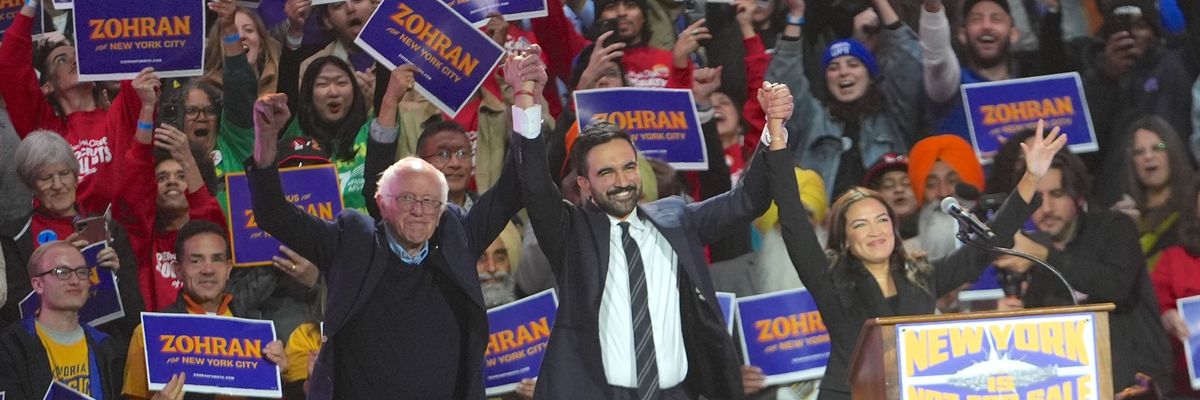
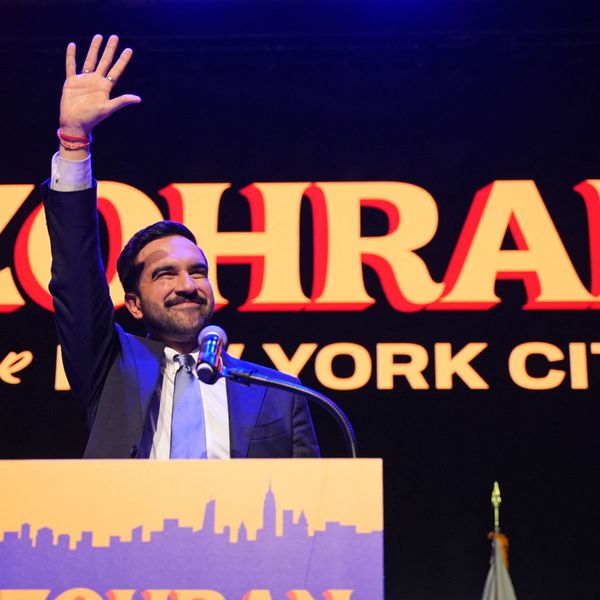
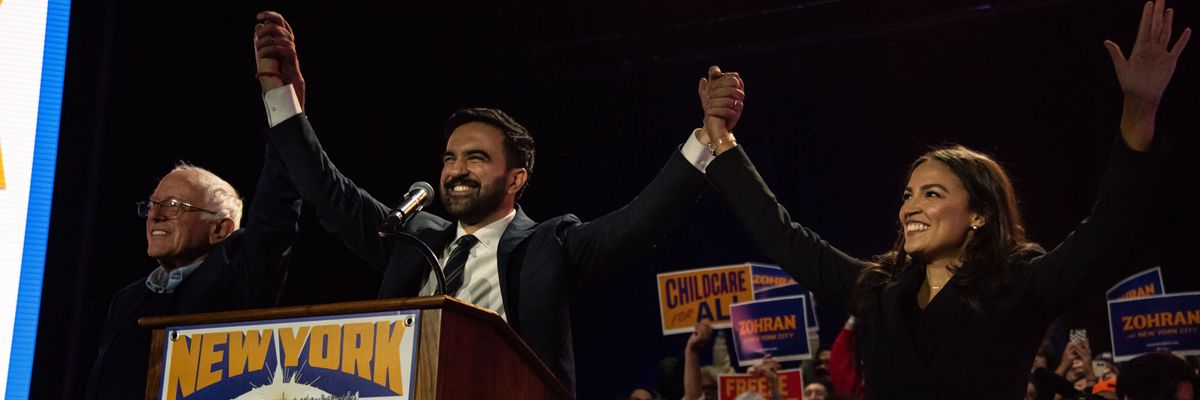
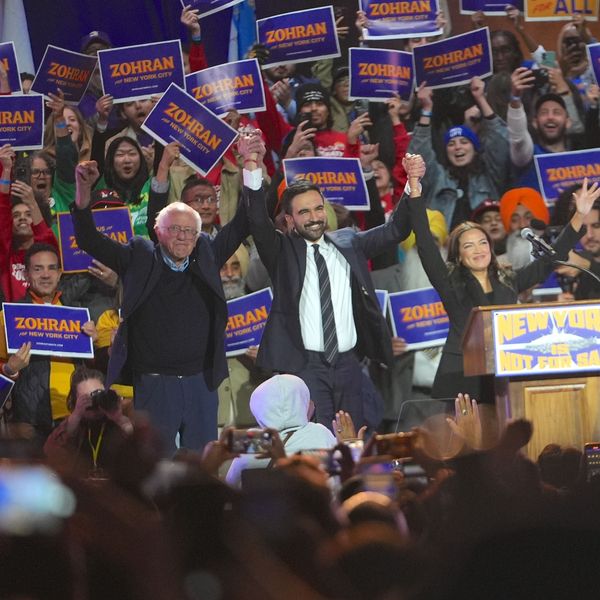
New York City mayoral candidate Zohran Mamdani speaks during the “New York is Not For Sale” rally alongside Senator Bernie Sanders, and Congresswoman Alexandria Ocasio-Cortez at Forest Hills Stadium in Queens, New York City, United States, on October 26, 2025.
(Photo by Selcuk Acar/Anadolu via Getty Images)

Les Leopold
Nov 07, 2025
Common Dreams

It truly is amazing that a Democratic Socialist has become mayor of the largest city in the United States, and that in the first line of his acceptance speech he quoted Eugene V. Debs, the brave socialist labor leader who was imprisoned in 1985 during the Pullman Strike and again in 1918 for his opposition to WWI:
“The sun may have set over our city this evening, but as Eugene Debs once said, ‘I can see the dawn of a better day for humanity.'”


Mamdani’s youth, charisma, humor, and incredible organizational skills led to this remarkable achievement. He worked hard and he earned it, and so did the many progressive groups that supported him.


‘Hope Is Alive!’ Mamdani Victory in NYC Seen as Historic Turning Point


Raucous Mamdani Rally Reveals Political Battle Stretches Beyond New York City

Mamdani may have the abilities and the working-class agenda to become a major transformational political leader. Free buses, free childcare, and a rent freeze are concrete and achievable, but the opposition will be fierce, especially as he intends to increase taxes on the rich and corporations to pay for these programs. And powerful landlords will be up in arms. This is the definition of class struggle.

There will be major battles ahead that won’t be settled by Mamdani’s charisma and negotiating skills alone.

Mamdani is operating in the belly of the beast called runaway inequality. It’s nearly impossible to wrap our minds around the wealth that’s concentrated in New York. There are 123 billionaires living in NYC with a combined net worth more than three-quarters of a trillion dollars. And those numbers are surely an underestimate, given the many who have hidden their purchases of luxurious Manhattan apartments using shell companies.

To succeed against the rich and powerful, Mamdani will need a mass movement behind him, and that movement has to include enthusiastic support and the active participation of New York’s working class and labor unions.

Does he already have it? Is his victory the result of overwhelming support from highly educated liberals? Or has his working-class agenda also excited the working class more broadly, the way Eugene Debs did when he received nearly a million votes in his run for president in 1912?

All we have to go by, right now, are the exit polls, which aren’t really designed to include a clear demographic definition of the working class. But there is some suggestive information.

Let’s start with the standard media definition of working class based on education: You are often counted as being in the working class if you don’t have a four-year college degree. By this definition, Mamdani received most of his support from college-educated voters and ran behind Cuomo among working-class voters.New Yorkers are well educated: 58 percent of all the voters in this election had a four-year college degree or higher.
This highly educated group overwhelmingly supported Mamdani over Cuomo, 57 percent to 37 percent.
But Mamdani ran behind Cuomo among those who never attended college, 41 percent to 48 percent. One out of five voters are in this group.

The picture becomes blurrier if working-class is defined as having a lower income. New York voters are fairly evenly split between those whose family income is less than $100,000 year (58%), and those with $100,000 or more in family income (42%). And Mamdani’s support was identical between the two groups (51%), an almost exact match with his final vote of 51.5 percent.

But a closer look at the income brackets shows that Mamdani didn’t do as well with those with family incomes under $30,000. That group accounts for 16 percent of all voters. They favored Cuomo 50 percent to Mamdani’s 41 percent. But Mamdani won every other income bracket except those with family incomes of $300,000 or more, which he lost to Cuomo 61 percent to 34 percent. No way was a Democratic Socialist going to do well with the group he promised to tax more heavily to pay for his agenda.

Cutting it up into two income slices, Mamdani did slightly better with upper-income voters than lower-income voters. Those with family incomes of less than $50,000 gave 47 percent of their votes to Mamdani, and those with more than $50,000 supported him with 52 percent of their votes.

Revenge of the White Working Class?

Unlike Debs, Mamdani did not come out of the labor movement. He’s well-educated, an Asian immigrant born in Africa, and Muslim. Was that all too much for the allegedly racist white working-class? The exit polls don’t provide the crosstabs to give us definitive answers, but we can get some clues.

Here’s Mamdani’s support by ethnicity (of all educational and income groups):White 46 %
Black 55 %
Hispanic 49 %
Asian 61 %
Other 51 %

It’s hard to point the finger at white racism when support for Mamdani is almost identical between white voters and Hispanic voters. The big outlier is Asian, Mamdani’s own ethnic group.

The breakdown by gender shows less support among white men, but again the gaps are not gigantic:White men 43%
White women 48%
Black men 60%
Black women 52%
Hispanic men 52%
Hispanic women 48%

Since we don’t know the income or education levels of these white men it’s not possible to see if working-class white men were less supportive, but that’s probably the case given the overall lower Mamdani numbers among those without four-year college degrees. However, while it’s not possible to tease apart racial identity and class when it comes to working-class voters of all shades, nothing big jumps out to suggest that this contest was about racial identity.

Mamdani needs those working-class voters, no matter how working class is defined and no matter what their ethnicity. He’s developed enormous support among liberal, well-educated New Yorkers, and that’s all to the good. But to take on the world’s richest, most powerful elites, that enthusiasm must spread deeply into the working class, where—even in New York—MAGA festers.

There will be major battles ahead that won’t be settled by Mamdani’s charisma and negotiating skills alone. That will require a mass movement in support of the progressive ideas the city’s new mayor campaigned on, the kind of movement New York hasn’t seen since the 1930s. Let’s hope Mamdani can reach even more deeply into the working class to strengthen his support. He’s going to need them.


Our work is licensed under Creative Commons (CC BY-NC-ND 3.0). Feel free to republish and share widely.


Les Leopold is the executive director of the Labor Institute and author of the new book, “Wall Street’s War on Workers: How Mass Layoffs and Greed Are Destroying the Working Class and What to Do About It." (2024). Read more of his work on his substack here.
Full Bio >

Time to Flex: Lessons for Mamdani From My Time With AOC

You can’t change a system by sending one or two people into it and hoping for the best. You have to build and use political power to break the system’s ability to resist you.


Sen. Bernie Sanders on stage with Zohran Mamdani and Rep. Alexandria Ocasio-Cortez as over 13,000 people packed Forest Hills Stadium in Queens, New York on October 26, 2025.
(Photo by Neil Constantine/NurPhoto via Getty Images)

Corbin Trent
Nov 07, 2025
Common Dreams

Lots of elections happened on Tuesday. Most of them good news for 2026. There are signs that the MAGA fever is breaking. It’s important that whatever we work to replace it with comes from a place of understanding how we got here, and builds the power necessary to repair the damage.

The most hopeful and potentially transformative victory of the night was that of Zohran Mamdani. He won the New York City mayoral race with over 50% of the vote, beating Andrew Cuomo for a second time. The turnout was amazing. More than 2 million people voted.


Raucous Mamdani Rally Reveals Political Battle Stretches Beyond New York City


‘Tax the Rich!’: Packed Mamdani Rally Features Sanders, AOC, and Hochul Ahead of Election Day

And here’s what should terrify the Democratic establishment: Mamdani didn’t just win the city. He won decisively in Hakeem Jeffries’ district. He won in Ritchie Torres’ district. These guys are vulnerable as hell in a primary, and they know it.

But I’ve been here before. I was there for AOC’s first primary victory. I helped recruit her to run, helped build her campaign, and then worked as her advisor and communications director. I can tell you with absolute certainty: this is just the beginning. And if the movement around Mamdani doesn’t understand that and act accordingly, this opportunity will slip away like so many others have.

I’m hopeful. Mamdani’s victory is real and it’s important. But my experience tells me that without active, aggressive political power-building, it won’t translate into anything more tangible.

The difference this time is that Mamdani doesn’t have to be one person alone. He’s an executive running the country’s largest city, which gives him powers and capacity that one member of Congress - one out of 535 - could never have. And NY has primary elections coming in June 2026. Federal races, state assembly, state senate—all of it.

The Democratic establishment is already moving to contain him. Obama is reaching out. Bill Ackman is extending olive branches. And they’ll succeed unless the movement around him understands that winning the election was just the starting line.

The Power Problem We Had With AOC

We won in 2018. We proved a grassroots movement could build a political operation to recruit and elect a new type of Democrat. But here’s what we didn’t do: we didn’t immediately use that victory to build more power. We didn’t flex.

We won one seat. We celebrated. We staffed up. We tried to work within the system. And while we were doing that, the establishment built a wall around her. Seniority rules shut her out of real committee power. Leadership froze her out. The party used her as a boogeyman to fundraise off while refusing to even look at her agenda.

We were taught the wrong lesson: that getting people in office was the goal. That was the mistake. You can’t change a system by sending one or two people into it and hoping for the best. You have to build and use political power to break the system’s ability to resist you.

What Actually Flexing Power Looks Like

Imagine if, right now, while Mamdani is being sworn in, AOC was publicly exploring a run for governor against Kathy Hochul in 2026. Not “maybe someday.” Now. Publicly. With rallies. With Bernie Sanders. With pressure.

Imagine if the movement announced tomorrow that they’re running a primary challenger against Hakeem Jeffries. Not quietly. Publicly. With resources. With a candidate who can actually compete. Imagine if Former DNC Vice Chair Michael Blake, the challenger who announced he is running against Torres yesterday, gets backed by Mamdani this week.

Imagine if the entire energy and machinery that just won a mayoral race with 2 million voters doesn’t go dormant. Imagine if it stays active, visible, and aggressive. Imagine if the message to every Democrat in New York is crystal clear: if you block Mamdani’s agenda, you will be primaried. You will be challenged. You will lose your seat.

That’s flexing power. That’s what we didn’t do. That’s what has to happen now.

Governor Hochul has already announced she won’t support tax increases on the wealthy—the foundation of Mamdani’s entire agenda. Hakeem Jeffries gave him the most tepid endorsement imaginable. Ritchie Torres called him “treacherously smart” and warned he’d make New York “ground zero for anti-Zionism.”

These people aren’t confused. They’re opposed to him. And they’ll stop him cold unless they fear losing their jobs. Not theoretically. Actually.

The Easy Enemy and the Hard One

When you’re fighting MAGA, it’s simple. They wear red hats. They’re loud. You know exactly who they are.

The Democratic establishment is different. They seem like they’re on your side. They talk about the same values. They talk about “pragmatism” and being “confined by what’s possible.” There’s always an explanation for why they couldn’t deliver.

I spent years wanting to believe those explanations meant something. That they were potential allies who just needed the right pressure.

But I don’t believe it anymore. I think they know their role. I think they know they are barriers to change, and they’re comfortable with that role.

If democratic socialism is shown to be productive, transformational, and beneficial to the vast majority of New Yorkers, it will have reverberations across the entire country. This is the front line. And they know it.

What This Actually Takes

One person can’t change something this entrenched alone. One person—no matter how brilliant—cannot overcome a system designed to resist them.

During the New Deal, it took three election cycles to build a supermajority. It can happen again in 2026, 2028, 2030. That’s the timeline.

When you’re fighting MAGA, it’s simple. They wear red hats. They’re loud. You know exactly who they are. The Democratic establishment is different. They seem like they’re on your side.

While Mamdani is picking up the trash and making the city function, the movement around him has to be simultaneously primarying Jeffries, running challengers against Torres, recruiting state legislators. It means rallies. Visibility. Making clear political risk to every Democrat in the state who opposes his agenda.

Yes, the infrastructure is collapsing. Yes, construction in New York costs seven times what it costs anywhere else. Yes, the MTA has a $62 billion backlog. Those problems require competent governance. But none of it matters if Hochul and the State Legislature just block him. So while Mamdani’s team is fixing potholes, the movement has to be in the streets, at the rallies, primarying the people in the way.

Where We Go From Here

I’m hopeful. Mamdani’s victory is real and it’s important. But my experience tells me that without active, aggressive political power-building, it won’t translate into anything more tangible.

The impulse will be to work within the system. Staff the administration. Make government function. That has to happen. But it can’t be all that happens. You’ve got to be running a political revolution simultaneously. You’ve got to use your platform. You’ve got to make it clear that opposing this agenda has political consequences.

Because the last 10 months aren’t a departure from the norm. They’re the natural evolution of the past 50 years. And if we want something different, we have to build it. Fast. Visibly. With political risk and political courage.

The impulse will be to work within the system. Staff the administration. Make government function. That has to happen. But it can’t be all that happens.

Starting Monday, November 10, I’m publishing four weeks of essays, supported by a series of videos, laying out exactly what this looks like. Not theory. Actual strategy. Actual targets. Actual timelines.

Then, on Tuesday December 9 - International Anti-Corruption Day - I’ll launch a new initiative designed to reframe and refocus our collective efforts toward meaningful change.

This is the work. This is what it takes. Whether this becomes a moment of transformative power, or just another progressive mayor and a handful of individual candidates fighting alone, depends on what happens in the next six months.

We’re just getting warmed up.


Our work is licensed under Creative Commons (CC BY-NC-ND 3.0). Feel free to republish and share widely.


Corbin Trent is an Appalachian-born general contractor and political organizer. He co-founded Brand New Congress and Justice Democrats, helped recruit AOC, and served as her first communications director. He publishes AmericasUndoing.com, a project exposing America’s economic decline and calling for bold, public-led rebuilding. Find morework on his TikTokYouTube, and Facebook channels.
Full Bio >

Op-Ed: Mamdani beats billionaires, redefines US political demographics. This time, the big money lost


By Paul Wallis
EDITOR AT LARGE
DIGITAL JOURNAL
November 5, 2025


Zohran Mamdani, who unashamedly describes himself as a socialist and campaigned on reducing costs for ordinary New Yorkers. - Copyright AFP Carlos Fabal

US politics is incredibly, inexcusably, ugly. Between the obscene self-interest and self-worship of billionaires, the nation is in unbelievably bad shape. Domestic realities make the political verbosity ridiculous.

Mamdani’s big mayoral win seems to draw a line after the blatant influence of unelected, very wealthy people dictating to the electorate. A large number of billionaires actively opposed Mamdani with big donations. The endorsement of both Trump and Musk didn’t make any difference.

It’s no surprise Americans are looking for better options. Any vestige of competence is hard to find in US news. Younger Americans are quite rightly and clearly tired of “Old White Guy Syndrome”. The perception is that the older guys have lost touch. Bernie Sanders seems to be the only exception.

The Democrats have been getting fully deserved flak for losing elections to the improbable Trump circus and the many seemingly inevitable train wrecks that followed.

That’s why this election is so very important. The Democrats have been given an unambiguous message regarding their performance. The Republicans have used their familiar strategies and failed utterly for the first time ever.

Mamdani, who bills himself as a Democratic Socialist. He couldn’t possibly have taken a position in more direct opposition to the obsolete, faded black and white political sides of US politics.

If you’re a billionaire, what do you want? Revenge?

The world doesn’t owe you a living, either.

Surely you can afford at least some sanity?

As total irresponsibility goes, such rich self-interest is insane. America needs more than geriatric rich egos to exist.

The rest of the world often wonders why the US is in such a mess and so very far behind the times. The incredibly advanced society and general prosperity everyone admired has been replaced by a few dismal egomaniacs.

American politics and the USA desperately need to modernize. The American idea of “socialism” is a huge problem. No universal health care, and medical bankruptcies are appallingly common. No free education, and you can see the results for yourself.

New York City’s high-profile mayoral race features state assemblyman Zohran Mamdani (L) facing off against former New York governor Andrew Cuomo in the Democratic Party primary – Copyright AFP Cléa PÉCULIER, Paz PIZARRO, Frédéric BOURGEAIS, Clara MORINEAU

Socially, it’s just as bad, or worse. Meaningless elitist groups that might as well have come from the 18th century constantly infest the news. Organized crime, fraudsters, and the rest of the largely useless corporate sector are on holiday and making lots of money.

Tax laws that could have been written on stone tablets create revenue havoc. Tax evasion cripples revenue at all levels of government. There’s no general consumer tax, unlike most of the rest of the world. It’s primitive beyond description.

What does this have to do with anything, you ask?

That decay is exactly what people are voting against.

It’s hardly surprising that people don’t want to vote for anyone who accepts this ancient, repulsive mess.

That’s what the Mamdani win means. Never mind the politics. This was a vote against obsolescence.

_________________________________________________________

Disclaimer
The opinions expressed in this Op-Ed are those of the author. They do not purport to reflect the opinions or views of the Digital Journal or its members.


Champagne and cheers across New York as Mamdani soars to victory


By AFP
November 5, 2025


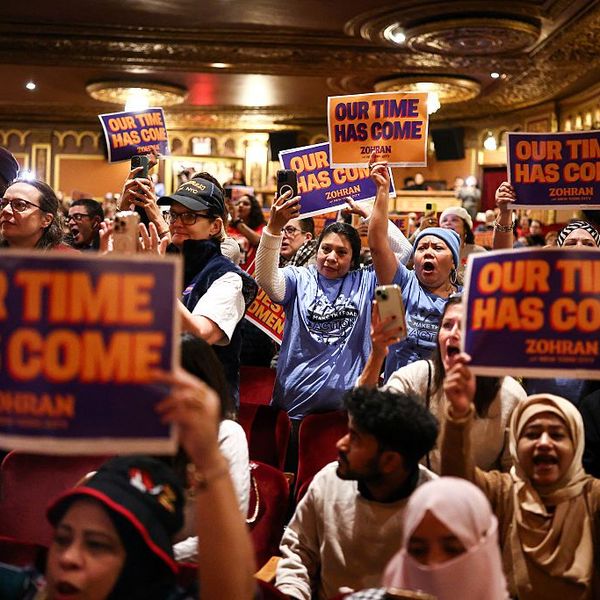
Supporters of New York City Mayoral candidate Zohran Supporters of New York City mayoral candidate Zohran Mamdani celebrate during an election night event at the Brooklyn Paramount Theater - Copyright AFP Angelina Katsanis


Maggy DONALDSON

Donald Trump had decisively won the US presidential election last November and very few people outside New York’s leftist circles knew Zohran Mamdani, who had just declared his longshot mayoral candidacy.

What a difference a year can make.

Crowds across the city chanted Mamdani’s name on Tuesday as champagne and tears flowed for the democratic socialist from Queens turned New York mayor-elect.

“Mamdaniiiiii,” one group exclaimed, substituting the 34-year-old’s name for the customary “cheese” as they posed for a photo at a Brooklyn bar watch party.

Voters gathered there in cautious optimism, sporting Mamdani merch as they anxiously awaited the evening’s results, classic songs such as Frank Sinatra’s “New York, New York” and edgier tracks from Lou Reed blasting from the speakers.

“It’s like, too scary to be hopeful,” Michelle Dimuzio told AFP with a nervous laugh before the polls closed.

However, Dimuzio’s trepidation proved unwarranted as early results began to roll in with Mamdani soundly in the lead.

The entire bar erupted in cheers and even a toddler joined in the applause, uttering a newly learned word that met the moment — “bravo!”

And when the race was called for New York’s first Muslim mayor, barely half an hour later, the excitement was palpable at bars across Brooklyn and Queens, where street parties raged, and in Manhattan, where the owner of a posh brasserie ordered celebratory glasses of champagne for everyone on the house.

It was a win by New Yorkers, for New Yorkers, Ben Parisi told AFP.

The 40-year-old said the night stood in stark contrast to Republican Trump’s election a year ago.

It was a “local victory” that offered a means of “resisting and pushing back” against the political establishment in Washington, Parisi said.

“A lot of us worked hard in one way or another to make this happen,” Parisi said, “and here we are… we get to celebrate.”

– ‘We are you’ –

Elsewhere in Brooklyn, a packed concert venue danced to Mamdani’s once-obscure, now-viral hip hop track “Nani”, which the young politician recorded years ago under his rap name “Mr. Cardamom.”

Supporters at Mamdani HQ greeted him with a deafening ovation as their incoming mayor walked onstage, flashing his megawatt smile that has lit up the city through his nonstop campaigning.

The once-improbable candidate claimed victory for his campaign but also for those who “made this movement their own” — his acknowledgements included Yemeni bodega owners, Mexican abuelas, and Uzbek nurses.

He also cited Eugene Debs, who at the turn of the 20th century was one of the best-known American socialists.

And he thanked young constituents who catapulted his candidacy, “the next generation of New Yorkers who refused to accept that the promise of a better future was a relic of the past.”

“We will fight for you,” Mamdani promised, “because we are you.”

He had criss-crossed the city again and again with his relentless ground game and, in his final days on the trail, Mamdani was seen traversing the Brooklyn bridge, doing tai chi with seniors and out at clubs till dawn.

Mamdani brought with him a message of affordability that 37-year-old Dimuzio said struck a chord with New Yorkers.

Dimuzio described living paycheck to paycheck despite a full-time job, and said Mamdani’s focus on making New York a more financially feasible place to live spoke to her in a way she said politicians on both sides of the aisle rarely do.

“He sticks to his message,” she said, and “he doesn’t just give the political tossed salad.”

Mamdani repeated that message Tuesday night, leading a raucous call-and-response of his promises, which include freezing rent and institutionalizing universal child care.

“Our greatness will be anything but abstract,” Mamdani told the crowd. “If tonight teaches us anything, it is that convention has held us back.”
Engine fell off US cargo plane before deadly crash: officials

LACK SAFETY INSPECTION 

By AFP
November 5, 2025


Smoke rose from the site of the UPS cargo plane crash
 - Copyright AFP Pablo PORCIUNCULA

Michael Mathes

The death toll from a cargo plane crash in the southern US state of Kentucky rose to 11 on Wednesday, with investigators saying the accident was caused by one of the engines catching fire and detaching during takeoff.

The McDonnell Douglas MD-11, operated by package delivery giant UPS and bound for Hawaii, crashed at 5:15 pm (2215 GMT) Tuesday, shortly after departing from Louisville Muhammad Ali International Airport.

It exploded into flames as it plowed into businesses adjacent to the airport, killing multiple people on the ground. A three-person crew was aboard.

Kentucky Governor Andy Beshear called the tragedy “heartbreaking” and “unimaginable.”

The death toll “is now up to 11. I expect it to reach 12, possibly by the end of the day,” he said, adding that a search was underway for a “handful of other people” who are unaccounted for.

The National Transportation Safety Board sent teams to Louisville to investigate the accident. NTSB member Todd Inman told reporters that investigators had reviewed closed-circuit airport footage “which shows the left engine detaching from the wing during the take-off roll.”

While the plane crashed and destroyed or damaged multiple buildings, leaving a fiery debris field nearly half a mile (800 meters) long, its left engine remained “on the airfield,” Inman said.

He added that the flight data recorder and the cockpit voice recorder, known as a plane’s black boxes, have been identified and will be sent to Washington for analysis.

Tuesday’s crash reportedly was the deadliest in the global package delivery giant’s history. Its main hub, Worldport, is in Louisville, where it employs thousands of people.

UPS has halted package sorting operations at its facility.


– 38,000 gallons of fuel –


Video shared by WLKY showed the left engine ablaze as the aircraft tried to lift off.

By early Wednesday, Louisville Mayor Craig Greenberg said on X that aviation officials had reopened a runway.

Airport spokesman Jonathan Bevin said the cargo flight “went down three miles (five kilometers) south of the airfield” after taking off.

The plane, filled with some 38,000 gallons of fuel for the long-haul flight to Hawaii, narrowly missed a major Ford vehicle assembly plant that employs some 3,000 people, adjacent to the UPS Worldport facility.

“It could have been significantly worse,” Beshear said of the tragedy.

Aerial footage of the crash site showed a long trail of debris as firefighters blasted water on the flames, with smoke billowing from the area.

Beshear said the aircraft hit a petroleum recycling facility “pretty directly.”

According to NTSB, the plane was built in 1991 and was modified into a cargo aircraft. McDonnell Douglas merged with Boeing in 1996.

Boeing, the US aviation giant which has experienced multiple fatal crashes and safety incidents in the past decade, said in a statement that “we stand ready to support our customer and have offered technical assistance to the NTSB.”

UPS travels to more than 200 countries via nearly 2,000 daily flights, with a fleet of 516 aircraft. It owns 294 of those planes and hires the rest.

The crash comes amid the longest government shutdown in US history with Transportation Secretary Sean Duffy warning of “mass chaos” due to a lack of air traffic control staff.

“You’ll see mass cancellations, and you may see us close certain parts of the airspace, because we just cannot manage it because we don’t have the air traffic controllers,” Duffy told reporters Tuesday.

NTSB member Inman said the agency was not aware of any staff shortages at Louisville’s airport at the time of the crash, although a full investigation into all aspects of the crash including air traffic control staffing has been launched.

In January, an American Eagle airliner hit a military helicopter outside Washington’s Ronald Reagan National airport, killing all 67 people on both aircraft.

That crash, which ended the country’s 16-year streak of no fatal commercial air crashes, has added to concerns about the US air traffic control system, which some regard as an understaffed operation beset by aging equipment problems.

Op-Ed: Musk $1 trillion pay adjustment approved by 75% of Tesla stockholders…But?!


ByPaul Wallis
EDITOR AT LARGE

DIGITAL JOURNAL

November 6, 2025


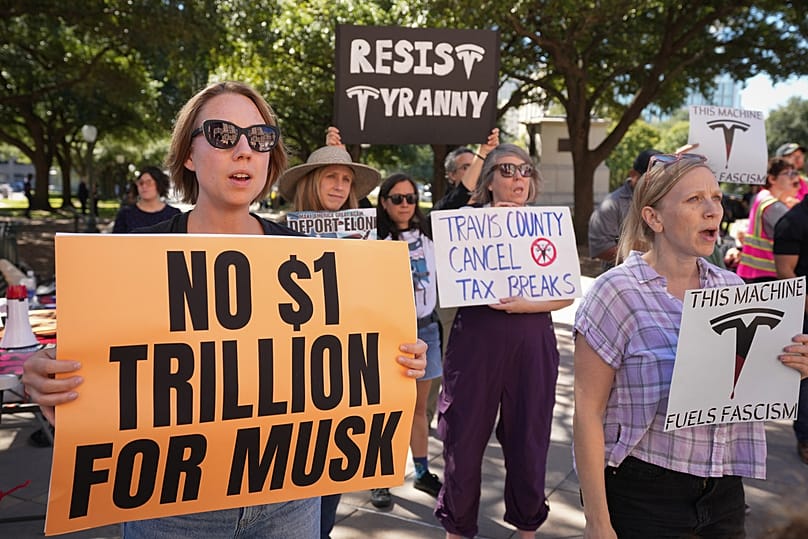
Opponents of Elon Musk's $1 trillion pay package rallied against the plan on the eve of Tesla's annual meeting - Copyright AFP RONALDO SCHEMIDT

Well, it’s happened. Musk is at least set up to become a trillionaire in future. Why it’s happening is debatable.

It’s a very strange public image that Musk has hammered together. The Tesla stock price has done a lot for stockholders, true, over the last 5 years. Musk’s profile and politics have made him unavoidable, too.

The big question remains – Is a $1 trillion package justified? Most Musk critics say it isn’t. Musk’s many faux pas over the years have won him a lot of detractors. To get this money, he’s required to turn Tesla into an $8.5 trillion market capitalization. He effectively becomes a trillionaire upon completion.

Tesla’s current market capitalization is $1 trillion. It’s a long way to go.

Is that doable? In terms of dollar values, probably. As most people trying to pay for basics have noticed, the dollar value of the same things just goes up and up. The irony is that at this rate, he’ll probably be worth about what he is now, in real terms, when he completes his task.

The big disconnect between the super-rich and, well, just about everybody else, is evident. Musk is on again/off again in many of his public positions, particularly political, which are entirely on the right.

Being the world’s richest has also made him a target. His cars are trashed, his rockets crash, and his satellites have issues of their own. The fundamental numbers for Tesla are under constant watch. Profits in particular have been on the downside recently.

All of these things make that $8.5 trillion a bit harder to achieve. I’m not going to wallow in a tedious description of stock valuations by the market. The fact is that the required market capitalization is dictated by the market in the most unambiguous way. Sellers can scuttle this deal if things go wrong.

Bear in mind that stockholders vote for their own self-interest, too.

It’s anything but clear what else is going on.

This looks very like the Twitter takeover with a few added pot plants as information.

The bar has been set pretty high. Let’s see if he can do it.

______________________________________________________________

Disclaimer
The opinions expressed in this Op-Ed are those of the author. They do not purport to reflect the opinions or views of the Digital Journal or its members.


Elon Musk could become history’s first trillionaire as Tesla shareholders approve giant pay package


By Jeremiah Fisayo-Bambi with AP
Publised on 

The vote followed weeks of intense debate about his managerial record at the electric car manufacturer and whether anyone should receive such extraordinary pay.

The world’s richest man, Elon Musk, was on Thursday handed a chance to become history’s first trillionaire after a shareholder vote gave the Tesla CEO stock worth $1 trillion if he hits certain performance targets over the next decade.

The vote followed weeks of debate over his management record at the electric car maker and whether anyone deserved such unprecedented pay, drawing heated commentary from small investors to giant pension funds and even the pope.

It also came just three days after a report from Europe showing Tesla car sales plunged again last month, including a 50% collapse in Germany.

In the end, more than 75% of voters approved the plan as shareholders gathered in Austin, Texas, for their annual meeting in Austin, Texas.

“Fantastic group of shareholders,” Musk said after the final vote was tallied, adding, “Hang on to your Tesla stock.”

Musk won the vote handily, demonstrating that investors still have faith in him despite Tesla's declining sales, market share, and profits—all of which are mostly attributable to Musk.

After his involvement in conspiracy theories and his forays into politics in both the US and Europe, car customers left the company this year.

Critics accuse directors of dependence on Musk

By giving Musk new shares, the vote makes it possible for him to become a trillionaire, but analysts expect this won't be that easy.

Musk must meet several challenging operational and financial goals set by the board of directors that created the compensation package, including raising the company's stock market value by almost six times.

Despite opposition from several large funds, including CalPERS, the biggest US public pension, and Norway’s sovereign wealth fund, Musk saw the unprecedented deal approved by 75% of votes, drawing huge applause from the audience at the firm's annual general meeting.

People participate in a protest outside the state Capitol in Austin, Texas, on Wednesday, Nov. 5, 2025, against Tesla's proposed $1 trillion pay package for CEO Elon Musk Jay Janner/ 2025 Jay Janner / Austin American-Statesman

Two corporate watchdogs, Institutional Shareholder Services and Glass Lewis, also opposed the package, which angered Musk so much that he took to calling them “corporate terrorists” at a recent investor meeting.

While Musk saw a majority of votes, critics argue that the board of directors was too beholden to Musk, his behaviour too reckless lately, and the riches offered too much.

“He has hundreds of billions of dollars already in the company, and to say that he won’t stay without a trillion is ridiculous,” said Sam Abuelsamid, an analyst at research firm Telemetry who has been covering Tesla for nearly two decades.

“It’s absurd that shareholders think he is worth this much.”

For many supporters, it was important for the Tesla CEO to be incentivised to focus on the company as he works to transform it into an AI powerhouse using software to operate hundreds of thousands of self-driving Tesla cars and Tesla robots deployed in offices, factories, and homes.

Iraq’s social media mercenaries dying for Russia


By AFP
November 4, 2025


Iraqi Russian recruit Mohammed Iman, 24, in Ukraine. He is now missing and thought dead - Copyright AFP Karrar Jabbar


Roba EL HUSSEINI, Karar JABBAR and Hayder INDHAR

Smiling broadly and clad in military fatigues, young Iraqi Mohammed Imad’s last TikTok post was in a field carved up with heavy vehicle tracks in what appeared to be Ukraine. Smoke was rising behind him.

“Pray for me,” read the caption next to a Russian flag.

That was in May. Months went by without a word, only rumours. Mohammed had been taken hostage, was injured, had the flu or had been killed in a Ukrainian drone strike.

Like many Iraqis now fighting in Ukraine, the 24-year-old travelled to Russia without his family’s knowledge to enlist in Russia’s armed forces, his mother Zeinab Jabbar, 54, told AFP.

Like them, he was drawn by promises of money and a Russian passport.

“He went and never came back,” Jabbar said, tears streaming down her face as she clutched a picture of Mohammed in their modest home in Musayab, south of Baghdad.

“We Iraqis have seen so many wars… we have had enough,” she added. “What do we have to do with Russia” and Ukraine, “two countries fighting each other?”

Mohammed was a baby when the US-led invasion of Iraq spawned decades of bloody sectarian violence, and the brutal but short-lived jihadist “caliphate”.

Many young people were called up into the army or joined Shiite paramilitary groups to fight the Islamic State group, with others pulled into Syria’s long civil war.

With one in three young people now jobless and the country mired in corruption and mismanagement, AFP found many Iraqis are being lured to fight for Russia by seemingly irresistible offers pushed by influencers on social media.

They include a monthly salary of $2,800 — four times what they could earn in the military at home — and a sign-up fee of up to $20,000 to set them up in life.

A Russian passport, insurance and pension also come as part of the package, they are told, as well as compensation in case of injury.

– TikTok recruiters –

AFP spoke to relatives of four men from impoverished families who travelled to Russia to join its army, three of whom are officially missing. A fourth was returned to his family in a body bag.

We also talked to another who has also donned the Russian uniform and doubles as an online cheerleader and recruiting sergeant.

“Give me an Iraqi soldier and a Russian weapon, and we will liberate the world from Western colonialism,” he declared in one post.

Social media apps like TikTok and Telegram are brimming with people offering help to Iraqis to join Russia’s ranks.

Early in the war, when Moscow was propping up former president Bashar al-Assad’s rule in Syria, Russian President Vladimir Putin said he wanted to recruit 16,000 fighters from the Middle East, with around 2,000 regular Syrian troops later reportedly sent to Russia.

The Telegram channels sharing the tempting deals are now targeting a different, younger demographic.

Their administrators offer assistance to other potential Arab recruits from Syria, Egypt, Algeria and beyond.

Similar methods have been used to recruit young men from Central Asia, India, Bangladesh and Nepal, AFP reporters have found, as well as from Cuba.

They even provide a list of important military terms to learn in Russian, including “ammunition is depleted”, “mission accomplished”, “we have casualties” and “suicide drone attack”.

One channel said it also provided assistance to Iraqis transferring money back home.

AFP contacted the phone number shared by the channel. A man responded saying all that was needed was a copy of a passport, an address and phone number.

He would then send an invitation for a visa, and later cover the ticket cost.

– ‘I want my son’ –

But among the enquiries about how to enlist are posts from families searching for missing sons.

Mohammed’s family believes that propaganda on social media persuaded him to travel to Russia to sign up earlier this year.

For weeks Mohammed posted videos on TikTok. In one, AFP geolocated him to the Oryol region, close to the border with Ukraine.

His family thought he was working in the southern Iraqi province of Basra.

But by the time Mohammed posted his last TikTok selfie video on May 12, they knew the truth. His mother Jabbar called him, begging him to return home.

“He told me he is going to war… and asked me to pray for him.” It was the last time she talked to him.

“I want my son… I want to know if he is dead or alive,” Jabbar said.

Mohammed’s sister Faten spends countless hours on social media tracking Iraqis who claim to have joined the Russian army, desperate to find some clue about her brother.

She has been given various accounts of his fate, including one that he just had the flu. But the worst account came from Abbas Hamadullah, a user who goes by the pseudonym Abbas al-Munaser.

Munaser, 27, is among many Iraqis who share their experiences in the Russian army on TikTok and Telegram and offer help to those who want to enlist.

His posts made him a reference for Mohammed. Munaser told AFP that Mohammed had sought his guidance and was determined to follow his footsteps.

Munaser finally delivered the devastating news to Faten: Mohammed had been killed by a Ukrainian drone near Bakhmut. He stood up and fired at the drone when others were taking cover.

His body was lying in a morgue.

“If he is dead, we want his body,” Faten told AFP, also furious that they have not been officially told what happened to him.

“It is not only my brother, but many others,” she said. “It is a shame that young men are going to die in Russia.”

– ‘There is death here’ –

Abdul Hussein Motlak’s son, Alawi, travelled to Russia with Mohammed in April. Both of them went missing in May.

Before he disappeared, the 30-year-old called his family almost every day and sent them pictures of himself sitting in a bunker with Mohammed in military fatigues, or training together near Bakhmut.

“I told him to come back,” his father told AFP, but Alawi was determined to complete his contract.

In one video, he thanked Munaser for helping them get to Russia.

Munaser said he travelled to Moscow with his heart set on continuing further to Europe, like thousands of other Iraqi migrants. But the streets of Russia offered him a more enticing prospect: billboards to join the army.

“There is no future in Iraq. I tried my best there, but I couldn’t make it,” he said. “It is not about Russia or Ukraine. My priority is my family.”

Munaser said he joined the Russian army in 2024 and now has a Russian passport.

Despite the risks, he said he is happy he can send his family “around $2,500 a month”, an amount unimaginable for many Iraqis.

On his Telegram channel, Munaser offers visa invitations for people hoping to enlist, which he said cost up to $1,000, most of which goes to travel agencies.

The website of the Russian embassy in Iraq said a single-entry visa costs up to $140.

Munaser said he did not charge recruits for his service but warned that “brokers” on social media exploit young Iraqis and take a percentage of their army sign-up fee.

AFP was not able to verify his claims.

But Munaser warned that whatever the financial rewards of fighting for Russia, “there is death here”.

“We lived through many wars in Iraq, but this one is different. It is a war of advanced technology, a war of drones.”

Still, he said he had no regrets about enlisting, and was fighting under a Muslim Chechen commander. He has even signed a new army contract for another year.

– ‘Shame’ –

Thousands of foreign fighters have joined the Russians in Ukraine, with the biggest acknowledged contingent sent from North Korea, and with Chinese volunteers now also reportedly serving alongside Russian troops.

Ukraine has around 3,500 foreign fighters, according to its embassy in Iraq, but they receive standard army pay.

Estimates vary on how many Iraqis are fighting for Russia, but they are certainly hundreds.

Ukraine’s ambassador to Iraq, Ivan Dovhanych, said they “are not fighting for an idea. They are looking for a job.” Russia’s embassy in Baghdad did not respond to AFP requests for comment.

Iraqis have long fought abroad, with many joining local pro-Iran factions to fight alongside Russia to support Syria’s former president Assad.

But that intervention was a political decision and, for many, a religious duty to protect Shiite shrines in Syria.

Although Russia has good relations with Iraq and long supplied Saddam Hussein with weapons and military training, it has few religious and historical ties with the country’s Shiite majority.

Baghdad has been at pains to remain “neutral” in the Ukraine war and does not welcome its young men going to fight for Russia. Indeed some believe they are shaming Iraq.

In September a court in the south of the country jailed a man for life for human trafficking, accusing him of sending people to fight “in foreign countries”.

A security source told AFP he was “recruiting” for Russia.

The same month Iraq’s embassy in Moscow warned of “attempts to lure or coerce some Iraqis residing in Russia or abroad into joining the war under various pretexts”.

The uncle of an Iraqi missing in Russia for over two months told AFP he hoped the government cracks down on those luring young men to Russia.

“Mercenary” is a particularly pejorative word in Arabic. Such is the taboo that a family of a Russian recruit left their village in the south when he joined up, a relative told AFP.

In September he came home in a body bag and was laid to rest under the cover of darkness with no loved ones to mourn him, such was the heavy feeling of “shame”.

The relative said that the family — who received more than $10,000 with the body — faced disapproval from their community. Many believed he had dishonoured them.

“It is heartbreaking. A boy died abroad and was buried in secret,” he said.

rh-strs/ser/fg/js/ceg/mjw
Reddit, Kick to be included in Australia’s social media ban


By AFP
November 4, 2025


Australia will from December 10 force social media platforms including Facebook, Instagram and Tiktok to remove users under the age of 16
 - Copyright AFP/File 

William WEST

Popular social media website Reddit and streaming giant Kick will be added to a list of websites banned for under-16s in Australia from next month, Canberra said Wednesday.

Australia will from December 10 force social media platforms including Facebook, Instagram and Tiktok to remove users under the age of 16, slapping hefty fines of up to Aus$49.5 million (US$32 million) if they fail to do so.

Streaming platform Kick and online forum Reddit will also be included in the new legislation, Minister for Communications Anika Wells said Wednesday.

“Online platforms use technology to target children with chilling control,” Wells told reporters.

“We are merely asking they use that same technology to keep children safe online,” she said.

“We want children to have a childhood and we want parents to have peace of mind.”

There is keen interest in whether Australia’s sweeping restrictions can work as regulators around the globe wrestle with the dangers of social media.

On paper, the ban is one of the strictest in the world.

But some experts are concerned that the law will be merely symbolic.

So far, platforms like Roblox, Discord and WhatsApp will not be banned, but streaming site Twitch is under review.

But Wells said the list of banned platforms was not static and could change.

And eSafety Commissioner Julie Inman Grant said while age restrictions were one “really potent solution” to stopping social media harm, they were not a quick fix.

Social media companies have previously described the laws as “vague”, “problematic” and “rushed”.

The government said earlier this year social media giants will not be required to verify the ages of all users, but must take “reasonable steps” to detect and deactivate underage ones.