It’s possible that I shall make an ass of myself. But in that case one can always get out of it with a little dialectic. I have, of course, so worded my proposition as to be right either way (K.Marx, Letter to F.Engels on the Indian Mutiny)
Saturday, November 08, 2025
US backs Serra Verde’s Brazilian rare earth project with $465M funding
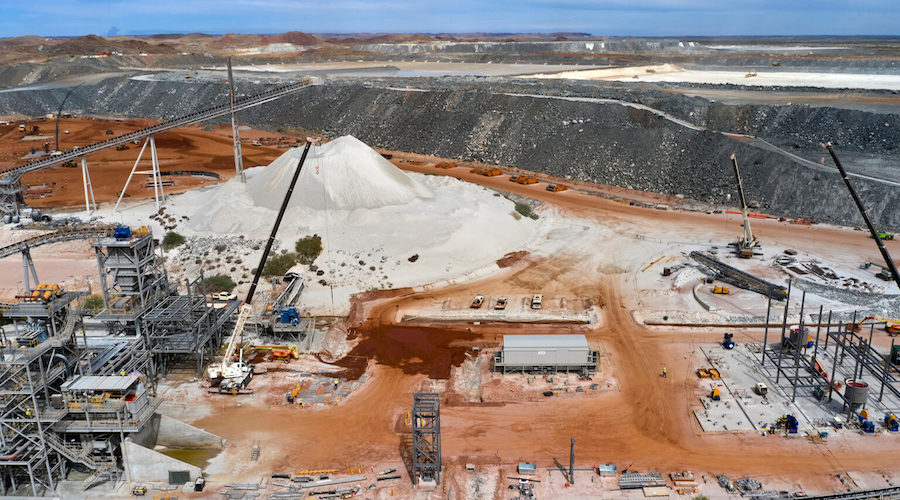
Pela Ema rare earths plant construction. (Image courtesy of Serra Verde.)
Brazilian rare earths producer Serra Verde secured as much as $465 million in funding from the US International Development Finance Corporation as Western nations seek to reduce reliance on China for the key minerals.
The financing is to help cover upgrades to the company’s Pela Ema mine in Brazil’s Goiás state, according to an Aug. 15 document on the website of the DFC. The federal agency was created under US President Donald Trump’s first term to offer financing and guarantees for projects in developing nations with a tie to US foreign policy objectives.
The Trump administration is turning to Brazil — the country with the biggest rare earth reserves outside of China — for its efforts to build alternative supply chains for key elements used in military hardware, electric vehicles and wind turbines.
The Pela Ema deposit contains light and heavy rare earths – mainly neodymium, praseodymium, terbium and dysprosium – that are key to production of magnets used in a wide range of applications. Serra Verde, backed by Denham Capital, Vision Blue Resources and Energy and Minerals Group, is Brazil’s first large-scale rare earths producer.
The DFC said the funding is to finance improvements of the Pela Ema mine as well as operational expenses and refinancing existing shareholder debt. The financing was earlier reported by the Financial Times.
Serra Verde began commercial production at its mine and processing plant in 2024. The firm aims to ramp up output to between 4,800 and 6,500 metric tons of total rare earth oxides by early 2027.
“This project is still undergoing several steps and reviews before closing,” a company spokesman said. “Since these details are not yet finalized, we prefer to wait to comment until the transaction is fully completed and we can provide accurate information.”
Speaking at the WA Mining Club in Perth on Thursday, the company’s chief executive officer Dale Henderson said the Brazilian mining state of Minas Gerais was similar to Western Australia, but the company had so far found it easier to get things done in Brazil.
“We would join the chorus of many others who say it’s got more difficult [in Australia],” Henderson said. “This state, and Australia at large, has been leading the world in resources, but we can lose that mantle.”
He warned that while Australia’s lithium sector had grown, it was falling behind in relative terms. “Others are growing faster. We’re regressing relative to the rest,” Henderson said. “If we don’t have a successful upstream, we certainly can’t have successful downstream – one leads to the other.”
PLS’ wish list
Henderson called on the Australian government to sharpen its focus on competitiveness, starting with shared infrastructure and energy.
He cited the Lumsden Point port development in WA as an example of smart government investment, saying similar initiatives were needed. “That’s a no-brainer. Then after that, it is power infrastructure. Those would be really the two key areas.”
Electricity costs were a major concern. Henderson said power at the Salinas site in Brazil was expected to cost A4–5c per kilowatt hour, compared to A10–20c/kWh in the Pilbara.
“[Australia] should have low-cost power. We’ve got the space. We’ve got the solar, wind – you name it,” he said. “That’s a key place for government to play – to leverage the incredible strengths we’ve got to bring that cost of power down.”
Lithium green shoots
Henderson also addressed the state of the lithium market, noting the price of spodumene had climbed above $900 per tonne last month, up from around $600/t in July. He said the company believed the rally was sustainable.
“Our view remains that there’s a structural deficit to emerge, ultimately, given the strong growth, the strong growth drivers and the absence of supply chain investment,” he said. “The big question everyone is wrestling with is when?”
PLS has weathered dramatic price swings before, from lows of $400/tonne in 2019 to selling spot cargoes for over $8000/t in 2022. Henderson said that volatility was par for the course in a young market lacking robust price discovery.
“It explains some of the outsized responses you can get from news or gossip, but ultimately, I think that will get remedied as the industry grows.”
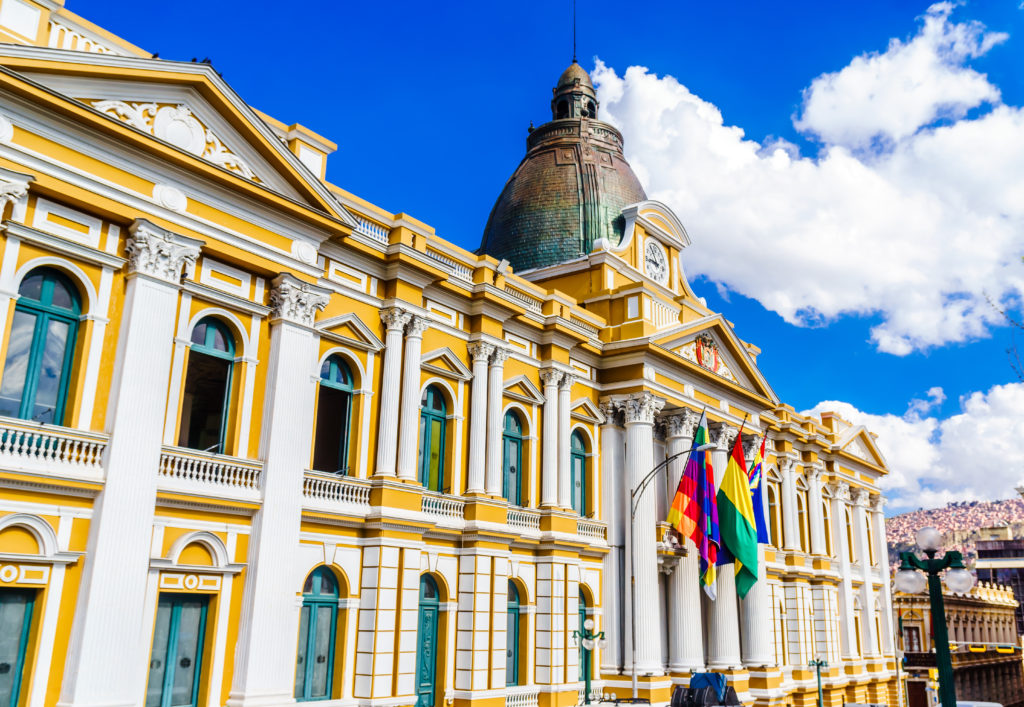
Bolivia is rethinking lithium deals with China, Russia in US pivot
“Starting from zero would have a huge cost,” departing President Luis Arce said in an interview. “We could miss the boat.”
Paz, a centrist who defeated conservative rival Jorge Quiroga in last month’s runoff ballot, is under pressure to quickly address painful dollar and fuel shortages and tame rampant inflation that derailed two decades of socialist rule. The new administration’s pledge to review the lithium contracts with China and Russia coincides with Paz’s plan to repair relations with the US.
Previous left-wing administrations in Bolivia have repeatedly tried to extract lithium at scale from the country’s highlands, mostly through a state mining company. At stake is a barely touched expanse of the metal locked beneath salt flats that could help power the world’s growing fleet of electric vehicles.
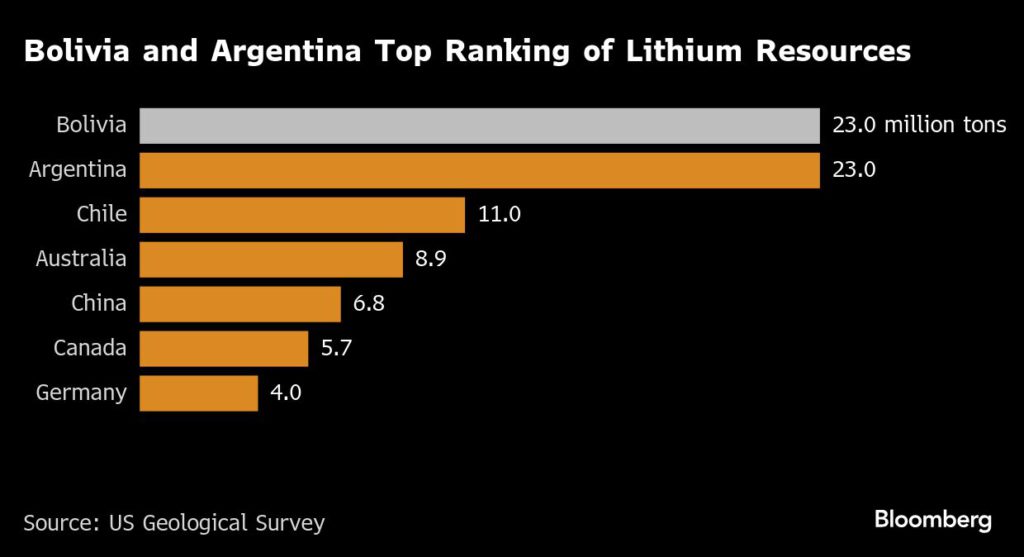
Bolivia has double the resources of neighboring Chile, but they aren’t yet deemed commercially viable by the US Geological Survey. Deposits suspended in brine have high levels of magnesium, making the lithium more expensive to produce, and the nearest port in Chile is more than 300 miles away.
The Arce government bet on new direct-extraction techniques to circumvent purity issues and shorten the path to production. Last year, state lithium company YLB signed up a unit of China’s Contemporary Amperex Technology Co. Ltd. and Russia’s Uranium One to develop projects using this method. Neither is close to commercial production and both face congressional scrutiny.
A senior economic adviser to Paz is promising a review. “If there’s something positive to resume it will be resumed, but we believe that those lithium contracts were forged behind the backs of the regions and the country,” José Luis Lupo told Bloomberg News.
“There’s no lithium certification, no lithium law. There’s a lot to do beforehand, but obviously we won’t act in a fundamentalist way,” Lupo said in a telephone call. “We’re going to review what those companies have and see what can be salvaged.”
The Russian ambassador to Bolivia, Dmitry Verchenko, told local media in February that Moscow was expecting Bolivia’s congress to approve the Uranium One contract soon. China’s embassy has not commented.
Analysts agree Bolivia can’t afford to start from scratch as more lithium supply comes onstream around the world in what is already an oversupplied and fast-changing market.
Prices of the key battery ingredient are more than 80% below a late-2022 record. Looking ahead, battery innovations that use lithium alternatives could erode future demand.
But rather than starting over, the new government should leverage the progress made to date, according to Andres Brockmann, a former lithium industry executive and founder of industry consulting firm AquaLitos.
Similarly, any rule changes need to be made quickly, using service contracts rather than trying to introduce new models such as concessions that could linger in congress, he said. The Paz administration could also take another look at companies that pre-qualified in previous bidding rounds, he added.
Such a pragmatic approach could see Bolivia producing from direct extraction in three to four years, Brockmann said.
“The window of opportunity we’re seeing is about to close,” he said. “If we don’t act quickly, it’s likely that we’ll end up with a very good law at a very bad time — five years from now — and it will no longer be applicable.”
Bolivia’s current contribution to the global market is insignificant. YLB hopes to produce about 3,500 tons this year at its conventional evaporation operation, well below a 15,000-ton capacity. Chile produces about 300,000 tons a year.
Even if Paz is able to create a regulatory environment acceptable to investors, politicians and communities, he’ll struggle to turn Bolivia into a significant producer any time soon, said Federico Gay, an analyst at Benchmark Mineral Intelligence. The nation’s investor-unfriendly record of political and social unrest and contract cancellations will take time to repair, while scaling up direct-extraction operations will take years.
“The reality is that Bolivia has a long history of broken reputation regarding foreign investment that needs a certain degree of higher assurances from the government,” Gay said. “I don’t see significant production coming from Bolivia before the end of the decade.”
De Beers sources about 70% of its diamonds from Botswana.(Image courtesy of Anglo American | Flickr.)
Botswana and Angola mining authorities met in Botswana’s capital Gaborone on Friday as both nations position themselves to take control of De Beers, the diamond unit Anglo American (LON: AAL) is selling as part of a major restructuring.
Botswana’s mines minister, Bogolo Joy Kenewendo, and Angola’s mineral resources minister, Diamantino Pedro Azevedo, talked behind closed doors for about 40 minutes before briefly addressing reporters. They said they discussed cooperation in the diamond sector, as well as energy and logistics, but did not provide details.
The meeting sparked market speculation about a possible deal through which the two countries could divide ownership of De Beers, in a potential alliance between Africa’s leading diamond producers.
“At the top of everyone’s minds this year is the performance of the diamond industry and our collaborative efforts in bringing back the spark and the shine to the industry,” Kenewendo said, according to Reuters.
“As some of the largest producers of diamonds by quantity and value in the world, it is only right that we meet and join hands in discussing how to get the most out of this natural resource,” she added.
Botswana, which owns 15% of De Beers through its Debswana joint venture and contributes about 70% of the company’s rough diamond supply, views De Beers as a strategic national asset. The southern African country’s economy has been hit hard by a global slump in diamond prices, intensifying its desire to secure greater control.
Angola recently overtook Botswana as Africa’s top diamond producer by value for the first time in two decades, according to the Kimberley Process, an international certification body. The nation’s 2024 output edged past Botswana’s, marking a symbolic shift in the continent’s diamond hierarchy.
Anglo American, which holds an 85% stake in De Beers, values the business at about $5 billion. Analysts at UBS estimate the final sale price could range from $3 billion to $4 billion, given soft market conditions.
The sale has drawn at least six potential buyers, including investor groups led by former De Beers executives Gareth Penny and Bruce Cleaver, Indian firms KGK Group and Kapu Gems, Qatari funds, and billionaire Anil Agarwal.
(With files from Reuters)
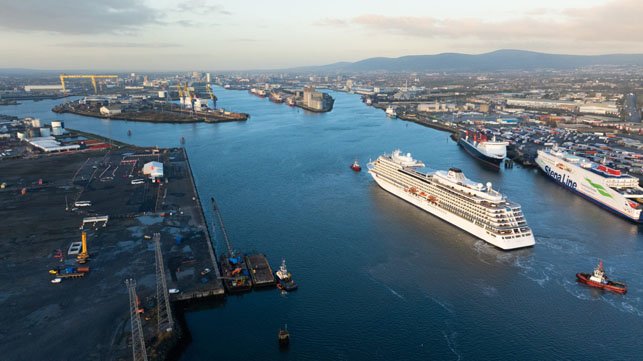
Offshore Wind Developers Invest to Make Belfast Harbor a Hub for Wind Farms
Wind developers will staging and construction to the port's storied history (Belfast Harbour)
The developers of two offshore wind farms that have gained government consent will make a large investment to develop the historic Belfast Harbor in Northern Ireland into a major offshore wind farm hub. The project was announced by the local authority, but also drew the attention of UK Prime Minister Sir Keir Starmer.
The two offshore wind projects, Mona and Morgan, are being developed by a partnership between EnBW and Jera Nex bp. As the companies move forward with the projects, they have entered into a commitment to invest approximately £100 million ($131 million) to develop the capabilities of the Port of Belfast.
“Belfast is the only port on the island of Ireland with offshore wind capabilities and we are delighted to work with the Mona and Morgan projects, whose commitment will position the port and local supply chain as central to the deployment of high-capacity wind farms, helping meet demand for clean energy as Northern Ireland, Ireland and Great Britain strive to reach net zero targets,” said Dr. Theresa Donaldson, Chair of Belfast Harbour.
The Mona project gained government consent in July 2025. The plan calls for up to 96 wind turbines with a total capacity of 1.5 GW. The Morgan project followed quickly, gaining its consent in August 2025. It is a similar-sized project also proposing up to 96 offshore wind turbines.
EnBW and Jera Nex bp will lease the port’s D1 terminal. The companies’ plan calls for the area to be prepared to support the assembly and marshalling of wind turbine components for the two projects. Which are two of the biggest so far planned for the Irish Sea.
To accommodate the projects, enabling works are being undertaken at Belfast Harbour, ensuring the site is ready for use from 2028. Port officials said approximately 300 jobs are expected to be created by the deal.
“The Mona and Morgan joint venture’s planned commitment of over £100 million to Belfast Harbour is a direct contribution to the infrastructure needed to drive the energy transition,” said Nathalie Oosterlinck, CEO of JERA Nex bp.
Port officials said that as a Trust Port, Belfast Harbour reinvests all profits back into the port and the Belfast Harbour estate. This deal has enabled Belfast Harbour to invest £90 million in construction work at the port's D3 terminal, which will be a new dual-purpose cruise and offshore wind site. Stage 1 of the project, to build a new deepwater berth, is already under construction. Stage 2 will see the terminal further reinforced to handle the next generation of offshore wind turbines, with some core components weighing more than 1,000 tonnes. This stage will also enable the provision of shore power facilities, so that vessels can run on clean energy while docked.
UK Seafarer Cadets Become First to Follow New ‘Futureproofed’ Syllabus
This year's cohort of seafarer trainees have become the first in the UK to learn under a new syllabus developed through an industry-wide initiative, led by the Maritime and Coastguard Agency (MCA), to ensure skills keep pace with modern technology and practices.
Lessons began in September this year using the updated syllabus. Its revision was completed and presented to nautical colleges in 2023 for implementation into courses now being rolled out for the next generation of seafarers.
Highlights are the inclusion of required learning in:
• Digital charts • Alternative fuels and propulsion • Cyber security and data skills
The new syllabus is the latest product of the Cadet Training and Modernisation (CT&M) Programme, led and coordinated by the Maritime and Coastguard Agency (MCA) and involving industry, training providers and seafarers.
It is believed to be the first time a maritime regulator has joined forces with industry experts on such a skills project which is bearing fruit including the recently announced new app-based electronic Training Record Book.
Ajit Jacob, MCA Chief Examiner, said:
“Developing the next generation of seafarers needs a strong foundation of skills for them to work effectively, safely and carry the maritime industry forward.
“That’s exactly what we have in our new, futureproofed syllabus: an up-to-date, regularly reviewed set of required learning that has been welcomed by the maritime industry.
“It is equipping trainees for new and developing technology and practices, but also modern skills to ensure welfare is a priority too. I wish the best of luck to all trainees beginning their studies – and careers – this year.”
Background
The CT&M Programme is based on recommendations made by the Seafarer and Cadet Training Review, launched by the Maritime Skills Commission on the instruction of the Maritime Minister in 2021.
It brings together key stakeholders, including the UK Chamber of Shipping, Merchant Navy Training Board, seafarer unions, educators and more, focused on improving seafarer training. It is believed to be the first time a maritime regulator like the MCA has joined forces with industry experts to shape such training in this way.
The MCA does not deliver training but is responsible for overseeing that standards are maintained by providers through seafarer assessments and regular audits of the training providers.
The products and services herein described in this press release are not endorsed by The Maritime Executive.
Dutch Escort Russian Spy Ship Yantar Further Out into the North Sea
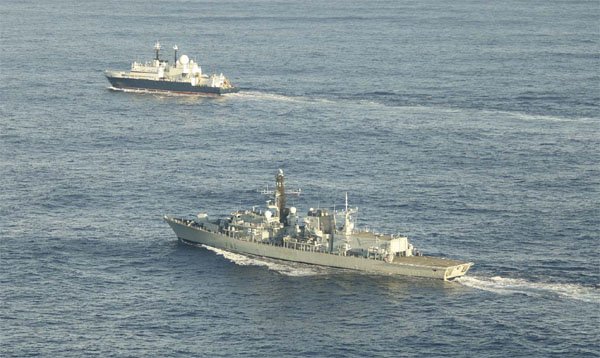
Dutch report they tracked and escorted the Yantar out into the North Sea (Netherlands Defense Ministry)
The Russian research vessel Yantar was spotted earlier this week operating near the Netherlands, and the Dutch Ministry of Defense reports it escorted the ship further out to sea. Widely believed to be a spy ship for the Russian Navy, the vessel has been frequently spotted operating in the waters around Northern Europe and the UK.
The vessel, which was commissioned in 2015, was identified by the Dutch operating in its area in the North Sea. The vessel remained outside Dutch territorial waters, but nonetheless drew the attention of the Royal Netherlands Navy.
The Navy reports it deployed its offshore patrol vessel HNLMS Friesland (3,750 tons displacement) to monitor and track the Russian vessel. While being escorted, the Yantar left the North Sea, moving away from the Netherlands.
After the vessel had departed, the Royal Netherlands Navy reports it also dispatched the HNLMS Snellius, a hydrographic survey vessel, to the area where Yantar was observed. A vessel normally used to map changes in the seabed in the major shipping lanes, Snellius is checking on the condition of the marine infrastructure in the area after the Russian vessel moved away.
The Ministry of Defense cites previous warnings from the Dutch Defense Intelligence and Security Service (MIVD), which has raised concerns over the operation of the Russian survey ships. MVID has said the vessels could be mapping the Dutch maritime infrastructure or other critical assets in the North Sea.
HMS Somerset tracking Yantar in the English Channel in January 2025 (Royal Navy)
Yantar is a 5,700-ton displacement vessel, which the Russians call a subsurface research vessel, but it is widely believed by the West to be a spy ship. It is 108 meters (354 feet) in length and thought to have a complement of 60 onboard. It has a helipad and deploys two autonomous underwater vehicles.
The vessel has raised suspicions in the past for its operations around the UK. The UK Ministry of Defence in January 2025 accused the vessel of “loitering over critical undersea infrastructure in UK waters.” The Royal Navy said it had “tracked a suspected spy ship” that is thought to conduct intelligence gathering for the Russian Navy.
The Royal Navy reported that it deployed HMS Somerset and HMS Tyne when they determined the Yantar was in UK waters in January. It reported that Somerset covertly launched its Merlin helicopter and used the sensors to locate the Russian ship as it made its way north towards the English Channel. Somerset tracked the Russian ship.
Two months earlier, in November 2024, the Yantar was also spotted operating in UK waters. That time, a Royal Navy submarine surfaced close to the Yantar to let it know that it was being tracked. HMS Tyne also deployed to track the movements of the Russian vessel. Yantar moved south and was believed to have proceeded to the Mediterranean.
Carrier USS George W. Bush Assists Long-Range Rescue off Cape Hatteras
On Thursday, a U.S. Navy aircraft carrier provided an assist in a long-range rescue mission off the coast of Cape Hatteras, aiding in the successful retrieval of survivors from a lost sailboat.
The mission started when Coast Guard Sector North Carolina received a distress call from the crew of the sailing yacht Magic Bus, which was taking on water in foul weather. Five people were aboard and were abandoning ship into a life raft.
In response, the sector command center dispatched an HC-130C search aircraft out of Air Station Elizabeth City, along with a Jayhawk helicopter aircrew. The cutter Angela McShan also diverted towards the scene. The HC-130C aircrew arrived first and established contact with the survivors, verifying that all of the crewmembers made it successfully away into the raft.
The helicopter aircrew would take longer to arrive. The location of the casualty was about 260 nautical miles off Cape Hatteras, pushing the limits of the Jayhawk's range. Luckily, a very large airfield was available nearby, with all of the equipment and resources needed to refuel a military helicopter: the supercarrier USS George W. Bush, which is currently on training maneuvers off the Mid-Atlantic states.
USS Bush provided fueling support for the mission, and the Jayhawk aircrew continued on to the scene of the sinking. The crew brought all five survivors safely aboard and delivered them to shore at Air Station Elizabeth City.
Three Killed in Malaysia as Maersk Manages Fires on Two Ships
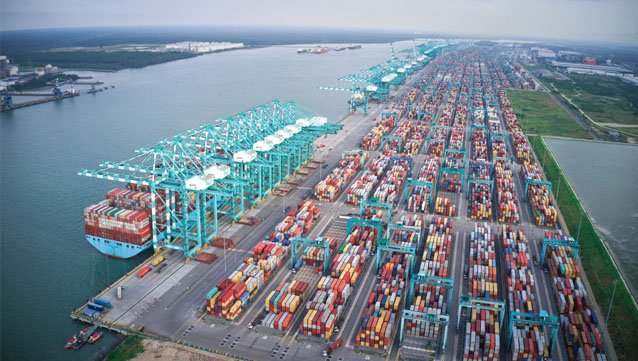
An explosion and fire on a containership alongside in Malaysia discharging cargo killed three and injured three others (PTP)
A fire aboard a containership alongside in Malaysia’s Port of Tanjung Pelepas (PTP) was fatal, killing three and injuring three more, reports Malaysia’s State Fire and Rescue Department. This fire, along with an ongoing incident on another Maersk ship in the United States, again highlights the dangers of cargo fires after a series of incidents this year.
The container vessel Kyparissia (70,461 dwt), owned and managed by Costamare and under time charter to Maersk, was alongside in PTP on Friday. November 7, when a fire was reported at midday. At first, the port’s fireboats were fighting the blaze and were later assisted by teams from the State Fire and Rescue Department.
A spokesperson for Maersk confirmed the tragic incident, reporting that an explosion occurred aboard the vessel as cargo was being discharged. The subsequent fire was reported to have taken place under deck in the fifth hold of the ship, which has a capacity of 4,957 TEU. The ship is operating on a route that includes Onne, Nigeria, Cotonou, Benin, and Singapore. The vessel is registered in Malta.
Maersk confirmed that three people, including one crewmember, had lost their lives. Malaysian officials identified the three as a 59-year-old Malaysian, a man from the Philippines, and another from Britain. Three others, a Malaysian and two Filipinos, were injured and are hospitalized.
“At this stage, we are unable to determine the full extent of the fire’s impact on the vessel and cargo aboard. We are working closely with PTP, authorities, the vessel owner, and ship manager to manage the situation and will provide updates as more information becomes available,” said Maersk.
Another Maersk-owned vessel, Laust Maersk (63,000 dwt), is being held off Charleston, South Carolina, in the United States after smoke was seen in one of the cargo holds. The vessel, which is registered in Hong Kong, had departed Charleston for Cartagena, Colombia, when the smoke was reported. The ship, which has a capacity of 4,258 TEU, operates on a route including Port Everglades, Newark, Baltimore, and Charleston in the United States and traveling to Cartagena and Manzanillo, Mexico.
Maersk reports the vessel is in a stable condition and no crew were injured. The ship, which had departed on November 5, returned to the anchorage off Charleston on November 6. A Maersk spokesperson reports the ship is undergoing necessary inspections and safety protocols to assess the situation on board.
Once the inspection is completed and approvals are given, Maersk expects the Laust Maersk to berth. The affected containers will be discharged.
Box fires and the dangers from poorly packed cargoes or incorrectly identified cargo remain a major concern for the industry. In mid-August, Maersk reported a container fire aboard another one of its vessels, Marie Maersk, off the coast of West Africa. The firefighting efforts took more than a week, but with specialized crew and equipment sent to the ship, they were able to control the situation, and the ship was able to proceed to Malaysia.
Wan Hai also recently reported that it is still working on salvage after a fire destroyed one of its vessels off India. That tragic incident caused the death of four crewmembers.
The industry is working on new tools, including the use of AI, to help identify dangerous cargoes. Insurer Allianz Commercial, in a 2025 report, called container fires one of the major dangers and said misdeclared cargo is still the leading cause of fires.
OUTLAW LIVESTOCK CARRIERS
Livestock Carrier Stranded Off Turkish Coast as Activists Demand Action
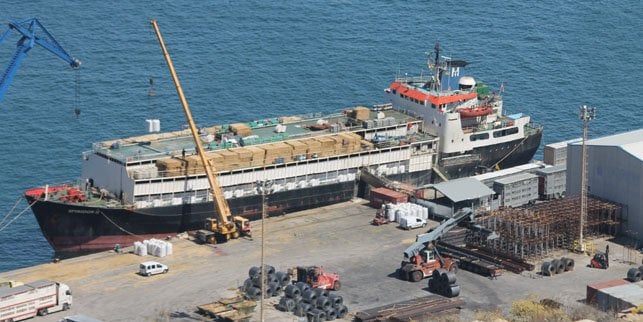
Spiridon II seen in Cartagena in 2018 (Animal Welfare Foundation)
Residents are complaining of odors, and animal rights groups are protesting the situation, as Turkish officials continue to deny the offloading of a livestock carrier for more than two weeks. Problems with the documents for the animals aboard have caused the ship to become stranded, while the owner of the vessel has warned that 48 animals have died and supplies are running out aboard the ship.
The vessel named Spiridon II loaded 2,901 cattle in Uruguay, departing on September 19. According to reports in the Turkish media, the Ministry of Agriculture and Forestry inspected the cattle when the vessel arrived, but denied permission to land the animals because approximately 500 of the ear tags did not match documentation on the ship. The “irregularities” raised concerns over the animals, and the ship was denied permission to begin offloading.
Residents near the Bandirma Port in Turkey began to complain of foul odors and insects, including flies. Port officials responded by ordering the ship to transfer offshore to the anchorage where it has mostly remained for the past 10 days since arriving on October 22. The government said it was also ordering additional pesticide spraying in the city.
The Animal Welfare Foundation (AWF), together with Animal Advocacy and Food Transition, Animals International, and a livestock shipping expert and veterinarian, Dr. Lynn Simpson, are appealing to the Turkish authorities to urgently authorize the unloading of the surviving animals to prevent further suffering.
“These animals are trapped in desperate conditions,” said Dr. Maria Boada Saña, veterinarian at Animal Welfare Foundation. “After such a long journey, these cattle are exhausted, dehydrated, and in urgent need of care. Every additional day at sea means further suffering.”
Together with its partner organizations, the Animal Welfare Foundation is calling on the Turkish authorities to “prioritize the animals' survival over bureaucratic issues and order an immediate unloading.”
The vessel’s owner, according to the Ihlas News Agency, has asked for permission to bring the ship to the dock on November 8 for eight hours. They want to supply the ship with two trucks of hay, two trucks of feed, and water. There was no mention of the disposal of the dead animals, with some activists claiming the ship likely dumped them at sea.
Built in 1973, the 4,054-dwt vessel was converted to livestock in 2011. It is 97 meters (318 feet) in length and listed as having 4,000 square meters of space for animals. Its owners are listed as being in Honduras, with management of the vessel from Lebanon. The ship has been registered since 2018 in Togo.
It is not the first time the vessel has become involved in a situation. In June 2022, the Spiridon II was loaded with approximately 7,900 bulls and sheep when its engine failed off the coast of Spain. The ship reportedly is not permitted to offload or transport animals in the EU. After drifting, the vessel was towed to Greece, where the animals had to be transferred to another carrier while the vessels were at anchor outside the port.
Animal rights activists are citing this new situation as another example of why the global export of live animals must be stopped. They call the transport of animals at sea inhumane and have won bans from countries including Australia and New Zealand, although in early 2025, Argentina repealed a 52-year ban on the live export of cattle. One of the best-known operators of livestock carriers, Wellard, sold its last vessel and ended its export business at the beginning of 2025, with most of the vessels still in the trade being older, converted from other services, and run by smaller operators.
Spanish Special Forces Liberate Greek Tanker After Pirate Attack
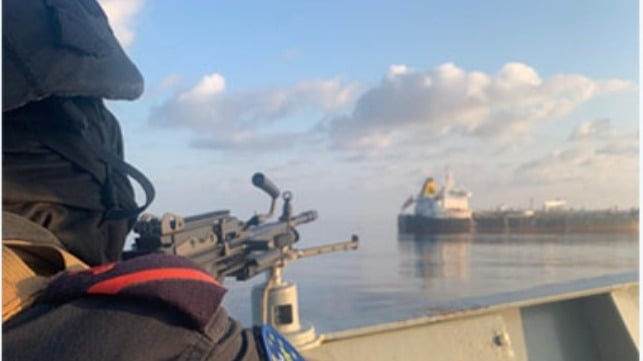
Spanish frigate working in the EU force liberated the tanker and released the crew (EUNAVFOR Aspides)
The Greek-owned tanker Hellas Aphrodite was liberated on the afternoon of November 7, more than 24 hours after the vessel was boarded by pirates off the coast of Somalia. EUNAVFOR Atalanta reports that the 24 crewmembers are safe, having been able to remain in the vessel’s citadel, and that the Spanish frigate ESPS Victoria was standing by the tanker as it prepared to get back underway.
The vessel was boarded yesterday, November 6, while approximately 560 nautical miles southeast of Eyl, Somalia. The master reported small arms fire and that the pirates had launched RPGs toward the tanker, which is loaded with gasoline, before boarding. The crew, which is reported to consist of a master from Montenegro, Greeks, and Filipinos, was able to secure itself in the citadel, where they remained.
The EU forces monitoring the region reported that the Spanish frigate ESPS Victoria (3,160 tons displacement, commissioned in 1987) was on patrol in the area. It was dispatched to the scene.
“After an early show of force, the Pirate Action Group abandoned the merchant tanker,” reports Atalanta. The Victoria was engaging its helicopter, uncrewed aerial vehicle, reconnaissance aircraft, and its Special Operations team.
Atalanta coordinated a combined effort that involved the authorities in the Putland region in Somalia, where the pirates are likely from, as well as a Japanese P3C aircraft, a Seychelles maritime reconnaissance patrol aircraft, and the Spanish Joint Operations Command. Atalanta reports that it remained in contact with the crew during the incident and was in contact with the vessel’s flag state and owner as the incident unfolded.
Hellas Aphrodite was further out to sea off Somalia when it was boarded by pirates using a mothership (EUNAVFOR Atalanta)
Both EUNAVFOR Atalanta and UK Maritime Trade Operations, as well as security consultants, however, are warning that the danger remains high in the region. Martin Kelly, Head of Advisory at EOS Risk Group, highlights that the incident with the Hellas Aphrodite was the third incident suspected to involve the same group of pirates.
While the liberation was taking place, another skiff with three pirates approached an LNG tanker that was 120 nautical miles north of the Hellas Aphrodite. Kelly identifies the vessel as the Marshall Island-flagged Al Thumama (113,749 dwt), which had departed Qatar bound for Poland. UKMTO reports the LNG carrier was able to outrun the small craft.
Atalanta highlights that a coordinated joint operation is ongoing to intercept the dhow that is being used as the mothership for the attacks. It is believed to be an Iranian vessel named Issamohamadi 2, which was taken around the beginning of the month. The team at the Hellas Aphrodite is gathering information that could be used in a prosecution of the pirates. Atalanta says an intensive search is continuing in the region for pirate groups.
The same group is suspected of the approach of the Seychelles-flagged commercial fishing vessel Intertuna Tres on November 2. That vessel’s security team fired warning shots, and the pirate group withdrew. That same day, the Norwegian-flagged bulker Spar Apus also reported a skiff traveling at 15 knots that was approaching. The bulker increased speed and changed course to avoid the suspicious vessel.
On November 3, the product tanker Stolt Sagaland also reported an approach. The pirates reportedly shot at the vessel, and the security team returned fire. The small boat abandoned the attempt and returned to the mothership.
EUNAVFOR Atalanta issued a Threat Bulletin that advises vessels to avoid the region if possible. UKMTO reports it has been briefing vessels in Dubai and shipping companies. Vessels entering the region are being advised to register with the security operations and increase their protection against the pirate groups.
Analysts note that it has been 18 months since the Somali pirate groups have targeted large commercial vessels. Groups have attacked smaller commercial fishing vessels and dhows, sometimes as robbery targets, but did hold a Chinese fishing vessel in December 2024, which was reportedly released the following month. The level of activity this month is raising concerns of a potential resurgence in the piracy efforts.