Saturday, November 08, 2025

Reform UK slammed for antisemitic Facebook post attacking Green Party leader Zack Polanski

4 November, 2025 
Left Foot Forward

"This open antisemitism is part of Reform’s wider far right and racist politics that must be called out."


Reform UK has been blasted for sharing an antisemitic AI-generated image of Green Party leader Zack Polanski.

The image, created using AI and shared by Reform UK’s Brighton and Hove branch last Friday for Halloween, distorted Polanski’s features using the same antisemitic stereotypes once pushed by Nazi propaganda.

Polanski’s ancestors fled pogroms in Latvia for Ukraine, before being forced to flee again to Poland, where they faced the Nazis. They eventually sought refuge in England, where they faced more antisemitism.

Campaign group Stand Up to Racism condemned the post on X yesterday: “Reform UK’s Brighton branch have posted an antisemitic AI image of Jewish Green leader Zack Polanski – echoing Nazi propaganda.

“This open antisemitism is part of Reform’s wider far right and racist politics that must be called out. We stand in solidarity with @ZackPolanski.”

Brighton and Hove Green Party also issued a statement “utterly condemning” the image, saying: “There can be no question that the graphic is antisemitic: depicting Zack Polanski, only the fifth Jewish leader of a UK political party in history, using tropes and imagery that deliberately and intentionally draw upon Nazi propaganda.

“The image itself is beneath contempt. Yet it is even more terrifying to reflect that for Reform UK, this is nothing new. This act of antisemitism represents only the latest demonstration of Reform’s openly racist and fascist platform. Nationally, they have been at the forefront of fuelling a rising tide of hatred, and discrimination.”

On Saturday, the same Reform UK page shared another racist graphic, this time branding Muslim New York mayoral candidate Zohran Mamdani a “terrorist”.

The Facebook page where the images were originally shared is no longer publicly accessible.

Olivia Barber is a reporter at Left Foot Forward
Two donors to Farage-linked think tank convicted of fraud

6 November, 2025 (
Left Foot Forward

The verdict comes after a ten-year probe into Brussels-based networks linked to Farage’s UK Independence Party


A criminal court in Brussels has convicted two donors to a Eurosceptic group linked to Nigel Farage of misusing EU funds.

The two Polish men, economist Marian Szolucha and Daniel Pawlowiec, who was working as a parliamentary assistant to a far-right Polish MEP until September, were convicted yesterday.

The court said transfers of €119,960 (£105,600) to Szolucha and Pawlowiec had no legitimate link to any official EU-activity, with one of the defendants using the proceeds to buy property.

The men have been ordered to repay more than €100,000 to the Parliament, as well as fines of €90,000 and €72,000.

They’ve also received suspended prison sentences of 18 and 15 months on charges of money laundering, breach of trust and forgery.

The verdict comes after a ten-year probe into Brussels-based networks linked to Farage’s UK Independence Party and other populist movements that were active prior to Brexit.

According to Euractiv, in 2014, Belgian authorities received a tip-off alleging financial wrongdoing by Mischaƫl Modrikamen, a far-right Belgian lawyer closely linked to Farage.

Two Eurosceptic entities, the Alliance for Direct Democracy in Europe (ADDE), of which Farage’s UKIP was the largest member, and its affiliated think tank, the Institute for Direct Democracy in Europe (IDDE), received €2 million in EU funding.

Modrikamen and his wife were later cleared. However, Belgian investigators found that around €100,000 had been channelled through UK and Cypriot firms connected to ADDE and IDDE before reaching the two Polish defendants.

In 2015, Pawlowiec donated €12,000 to ADDE. In the same year, Szolucha, who was a financial consultant to one of the Farage-linked political groups, donated €3,000 to ADDE.

Laure Ferrari, Farage’s partner, was also initially implicated in the case as she was a day-to-day manager and later as an executive director at the IDDE, before the group went into liquidation.

Ferrari was cleared of wrongdoing at the procedural stage and is no longer subject to prosecution.

Ferrari was recently embroiled in a controversy regarding Farage’s property in his constituency of Clacton in Essex.

While Farage initially said he bought the house, he later said she bought the £885,000 property outright with her own money.

Because the property was bought in Ferrari’s name, Farage, who also owns homes in Kent and Surrey, avoided paying the stamp duty surcharge applied to second homes.

Olivia Barber is a reporter at Left Foot Forward
UK Charities regulator tells right-wing IEA that it has to ‘act on transparency and balance’

Yesterday
Left Foot Forward


The Good Law Project’s initial complaint related to potential political bias as well as perceptions of a potential lack of transparency around funding.


TweetShareWhatsAppMail


The charities regulator has told the right-wing think tank the Institute of Economic Affairs that it must ‘act on transparency and balance’, following an investigation into its practices.

The IEA, which has long been accused of breaching charity laws and of being biased, is also widely acknowledged as the inspiration behind Liz Truss’s disastrous mini-budget. The Tufton Street based think-tank was reported to the regulator over apparent breaches of charity law in March last year, only for the Commission to take just 12 days to dismiss the complaint.

However, after the Good Law Project threatened legal action, the Commission agreed to take another look.

Now the commission has said that the IEA has provided evidence that “demonstrates a significant change in approach since it changed Chair and Director General / CEO in 2023; with a push for greater transparency and political neutrality”.

The Good Law Project’s initial complaint related to potential political bias as well as perceptions of a potential lack of transparency around funding.

However the organisation has cautioned against too much optimism, despite the latest action from the Charity Commission. It states: “The IEA’s CEO, Linda Edwards, has already made it clear the think-tank’s rightwing agenda is at its core. In July 2023, Edwards declared that “the IEA has profoundly influenced the United Kingdom’s economic trajectory”, adding that the “ethos of reduced state intervention and faith in free markets underpins the IEA’s continued mission.”

For Good Law Project’s executive director, Jo Maugham, the commission hasn’t gone far enough.

“Whilst we are pleased the Charity Commission recognised the need for formal guidance to the Liz Truss IEA,” Maugham said, “we think it is – not for the first time – remarkably complacent in believing the leopard of 55 Tufton Street will change its spots. We will not let the matter rest here, and are consulting with our lawyers.”

Basit Mahmood is editor of Left Foot Forward
Nothing will change until the political system is freed from the clutches of corporations and the super-rich

Prem Sikka 
Yesterday
Left Foot Forward

The law is being used to enforce existing power structures for the benefit of the few


We are all brought up to value ‘the rule of law’ as it provides stability, predictability, accountability and protection of human and property rights. We are frequently told that no one is above the law and all persons have access to courts. However, all is not well.

The traditional explanations of ‘the rule of law’ assume that the state is an umpire who receives inputs from citizens. These are processed and the output is laws. This is silent on how class, money, bribery, corruption, power shapes laws, or even prevents issues from being considered. The law is being used to enforce existing power structures for the benefit of the few. Occasionally, a few crumbs are thrown to pacify the masses but these concessions and can be withdrawn, as shown by the government’s push to cut disability benefits.

It is hard to recall any public petitions, marches or protests demanding unchecked profiteering, austerity, poverty, poor housing, homelessness, low wages and pensions, long queues for hospital appointments, sewage in rivers, cuts in education spending, gender pay gap, or closure of thousands of libraries and community centres. These are imposed because the rich and powerful demand laws to protect their wealth. The poorest 20% pay a higher proportion of their income in taxes than the richest 20%. Corporations and the rich fund political parties, hand consultancies to legislators and control means of production to colonise the legal system. The countervailing power of the low and middle class income households is weak, trade unions have been emasculated and protests are made difficult. For example, the Police, Crime, Sentencing and Courts Act 2022 empowers the police to ban noisy protests, and radicalism amongst the young has been squeezed out by £267bn of student debt.

Governments amplify the agenda of corporations and the rich. They tell workers that wage rises are inflationary but remain silent on ever increasing executive pay, dividends and share buybacks. Wages are taxed at marginal rates of 20% – 45% plus national insurance contributions (NIC). The returns on investment of wealth are taxed at lower rates. Capital gains are taxed at marginal rates of 18% to 32%, and no NIC is payable. Dividends are taxed at marginal rates of 8.75% to 39.35% and no NIC is levied.

Firing workers and rehiring at lower pay and inferior working conditions has become a widespread practice. P&O Ferries knowingly violated UK employment law and fired nearly 800 workers without notice and replaced them with cheaper agency workers to boost profits. No government department prosecuted the company. Delivery firm DPD has sacked drivers who criticised pay cuts. Grand Theft Auto maker Rockstar Games has been accused by a trade union of sacking staff to stop them from unionising. The Employment Rights Bill, soon to become law, will not end these practices. There is a huge inequity between the rights of workers and employers. Workers must have a ballot to withdraw labour; employers do not need one to withdraw capital and close operations. Secondary picketing is unlawful but secondary production is permitted.

Governments bend laws to transfer vast amount of wealth to corporations and their controllers. The Private Finance Initiative (PFI) is one such example. Under PFI, the government contracts with the private sector to design, build, finance and maintain long-life public assets, such as schools, hospitals, roads, prisons, office buildings bridges and tunnels. Since its inception in 1992, around £60bn of private money has gone into 700 PFI projects. In return, the government will pay £306bn. The government has revived PFI and now calls it Public-Private Partnership (PPP).

Corporate funded think-tanks, with easy access to policymakers, urge governments to cut benefits, pensions, free schools meals, education spending, and charge fees for seeing family doctors, but oppose tax rises on the rich. Such think-tanks have shaped laws to secure vast subsidies or free cash for corporations. Recipients include auto, steel, film, shipbuilding, oil, gas, biomass, semiconductor and internet companies. No equity stake is taken by the government. Full details are not published as the contracts are considered to be ‘commercially sensitive’ which prevents public and parliamentary scrutiny.

Despite public concern, laws have been enacted to privatise public services and boost corporate profits. Water, energy and other companies have skinned customers for years. Prison services are outsourced, enabling companies to make vast profits. The NHS doles out contracts to private sector cataract clinics with profit margins of 32%-43%. Local authorities spend around 61% of their budgets on social care, which is mostly controlled by the private sector. Profitability among the largest care home chains ranges from 11% to 42% of revenues. 15 largest children’s home providers made average annual profit of 23% per year. Companies providing residential care to children have pre-tax profit margins of 19%-25%. On 18th November 2024, the government said “We will crack down on care providers making excessive profit … put a limit on the profit providers can make”. A year later, nothing more has been heard. Instead, the government enacted laws to continue with the two-child benefit cap, impose disability benefit cuts and snoop on benefit claimants’ bank accounts.

Laws are enacted to make tax concessions to assets managers of private equity. The top marginal rate of tax for them will be 34.1%, instead of 45%. The NHS drugs prices could be increased by 25% to appease companies. Banks welcomed public bailouts but oppose accompanying regulation. Obedient governments have reversed the post-2008 crash laws. The cap on bankers’ bonuses has been removed. Capital adequacy requirements for banks are being watered down. The regulators’ duty of customer or public protection in almost all sectors has been diluted. Now they must balance their duty of customer protection with the goal of promoting economic growth. Chancellor Rachel Reeves sought to protect bank profits by overriding the Supreme Court hearing case against banks for mis-selling car loans. The Chancellor said that she was “considering overruling the Supreme Court’s decision with retrospective legislation, in order to help save lenders billions of pounds, in the event that it ruled in favour of consumers”. The same concern is not shown for victims of bank scandals. For example, the Financial Conduct Authority, the Serious Fraud Office and corporate-funded City of London Police have been unwilling to investigate HBOS frauds dating back to 2003. They have been content for Lloyds Bank (owner of HBOS since January 2009) to investigate. It promised a report, the Dobbs Review, in 2018. However, no report has been published, and Ministers fob-off parliamentary questions .

The poor are denied financial privacy. The Public Authorities (Fraud, Error and Recovery) Bill assumes that all recipients of universal credit; employment and support allowance; and state pension credit are likely to commit fraud. The state is taking powers to snoop on their bank accounts without any court order or right of appeal. Money for assumed frauds can be removed directly from their bank accounts. The government estimates that this will recover up to £1.5bn in the next five years.

No equivalent power is taken to monitor human traffickers, narcotics smugglers, directors of bankrupt businesses, banks selling dud products, or the tax avoidance industry. In 2023-24, HMRC failed to collect £46.8bn of taxes due to error, avoidance, evasion and fraud, which is around £500bn since 2010. The National Audit Office concluded that wealthy elites are dodging more tax than had been estimated by HMRC. In 2023-24, HMRC issued 456 penalties to wealthy individuals (individuals earning more than £200,000 a year, or with assets over £2 million, in any of the last three years) totalling £5.8 million, compared to 2,153 penalties totalling £16.2 million in 2018-19. The number of wealthy individuals prosecuted following HMRC’s criminal investigations was 30 in 2019-20, 5 in 2021-22, and 25 in 2023-24. The same benevolence is applied to accountants, lawyers, bankers and finance experts enabling tax abuse. Just five prosecutions were brought in 2023-2024, down from 16 in 2018-2019.

The low/middle income families can’t easily get legal advice or hire lawyers. Legal-aid is scarce. Even if they can cobble something together they won’t get a timely hearing. There is a backlog of 78,329 Crown Court and 361,027 Magistrates’ courts cases. The courts deliver interpretation of law, not justice. People have been in prison for over 20 years for stealing a phone. There are 8,493 ‘unreleased’ prisoners serving indeterminate sentences, often for petty crime. The law becomes blinkered when dealing with the well-off. The Post Office scandal shows that with the aid of corporations and lawyers, hundreds of innocent postmasters were convicted of fraud and forced to hand millions of pounds to the Post Office. After 26 years and despite tons of evidence, no beneficiary from the scandal has been forced to compensate the victims or charged for false criminal prosecutions. The treatment of people affected by Grenfell, Windrush, cladding, mortgage prisoners, infected blood, Hillsborough and other scandals, shows how selective the rule of law is.

Nothing will change until the political system is freed from the clutches of corporations and the super-rich.

Prem Sikka is an Emeritus Professor of Accounting at the University of Essex and the University of Sheffield, a Labour member of the House of Lords, and Contributing Editor at Left Foot Forward.
UK

Rupert Murdoch’s Times humiliated over fake interviews

Today
Left Foot Forward


Calls have been made for the press regulator to investigate “systematic failings which lead publishers to keep running fake, likely AI-generated, PR content.


Rupert Murdoch’s the Times hasn’t had the best of times of late. Two fake interviews published by the paper in recent weeks have been described as “humiliating” by one of its senior editors.

In a memo to staff, long-standing associate editor Ian Brunskill admitted: “Twice in the past few weeks we’ve been caught out by fake interviews.”

He explained how one incident involved a “bogus AI-generated case study” supplied by a “dubious PR outfit,” and the other a “fake email purporting to come from a high-profile figure in US politics…”

Brunskill added: “We should have been on our guard. We should have tried much harder to speak to the people concerned. If that’s not possible, why not?”

One of the incidents involved an apparent interview with a ‘royal cleaner’ called Anne Simmons, who claimed to have worked for the Royal Family for over a decade.

But, as the Press Gazette reported, there is no record of anyone called Anne Simmons having worked for Buckingham Palace.

Despite this, Simmons’ supposed revelations appeared not only in the Times but were picked up by the Daily Mail, Daily Express, Sun, and the New York Post.

But it was the Times which appeared to be the first to run the ‘cleaner spills’ story.

“How do you spruce up Buckingham Palace? A royal cleaner spills,” was the headline of an article published on March 5, 2025. The article has since been removed but is still viewable on Archive.

The second blunder involved a Times’ reporter believing they were interviewing former New York mayor Bill de Blasio for comment on the city’s new mayor, Zohran Mamdani. The quotes published by the Times showed ‘de Blasio’ criticising Mamdani’s policies, but the real Bill de Blasio quickly denied ever giving such an interview.

A Times spokesperson later admitted that the reporter “had been misled by an individual falsely claiming to be the former New York mayor.”

The article was hastily removed.

However, Semafor revealed that the journalist had in fact emailed the wrong person, a Long Island wine importer named DeBlasio, spelled without a space. The mistaken interviewee told Semafor:

“I never once said I was the mayor. He never addressed me as the mayor. So I just gave him my opinion.”

Press Gazette editor-in-chief Dominic Ponsford has urged the Independent Press Standards Organisation (IPSO) to investigate “systematic failings which lead publishers to keep running fake, likely AI-generated, PR content.”

In his memo, Brunskill conceded that both incidents had caused serious reputational harm:

“The first hoax (which others fell for too) prompted not just ridicule but calls for the press regulator to launch a full investigation into standards. The second (our own “exclusive”, alas) led to a widely reported retraction and apology.

“Both humiliating episodes did serious damage to our reputation. Both could have been avoided by good practice and due diligence.”


Class war in Romania: Austerity and the dismantling of trade unions

Protest in Romania

A wave of austerity measures were implemented in Romania in the wake of the 2008 Global Financial Crisis and subsequent Eurozone crisis. They represented another example of how austerity policies are nothing more than disguised class war on the working people. Austerity has been the perfect tool used by elites to dismantle the remnants of socialist era workers’ rights and completely cripple the trade unions. In this article, I will explore what this turbo-austerity program implied and its impact on trade unions in Romania. I will also analyse recent changes in legislation, dating from 2022, and how they may provide trade unions with renewed momentum today, as the country undergoes another austerity wave.

The long transition to capitalism

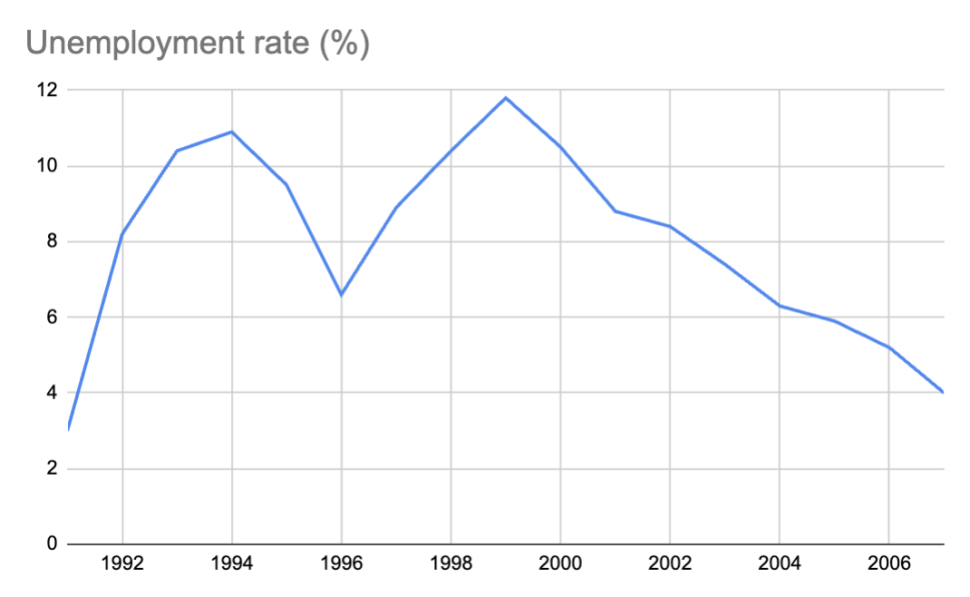
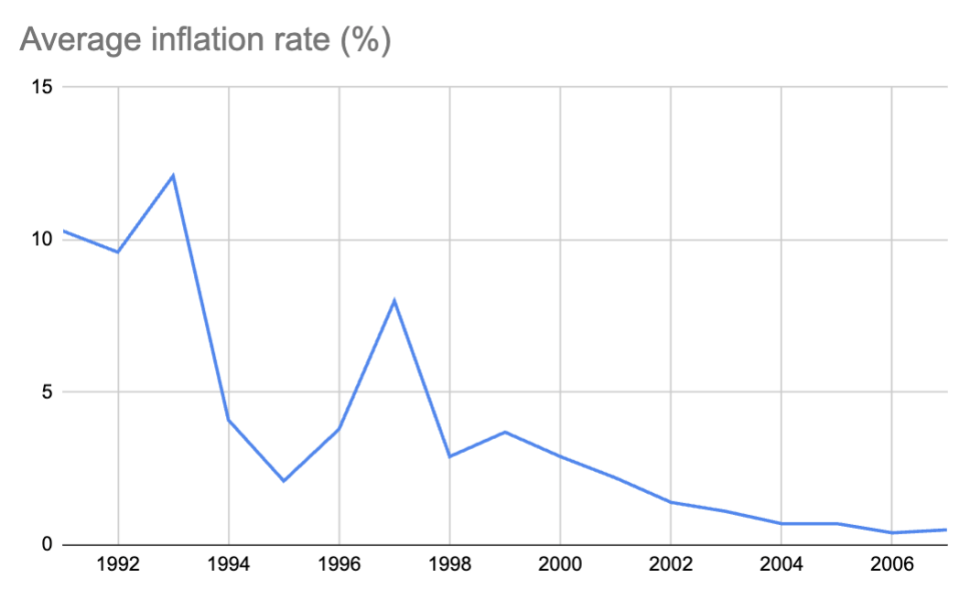
In the first 20 years after the fall of the Berlin Wall and the start of the “transition to capitalism”, Romania went through endless “reforms” meant to bring the country into the realm of the “developed” and “civilised” capitalist countries. These included the privatisation of dozens of state-owned companies, mostly through shady arrangements between politicians and business owners, which resulted in mass unemployment (see Figure 1). It also consisted of the devaluation of the local currency (Leu) and inflation rates of up to 12% in 1993 (Figure 2). These reforms were part of the Structural Adjustment Programs and Stand-by Agreements with the IMF, but also a requirement for Romania to join the European Union.

Image
Source: National Institute of Statistics (INS)
Figure 1. Source: National Institute of Statistics (INS)
Image
Source: National Institute of Statistics (INS)
Figure 2. Source: National Institute of Statistics (INS)

While in the 1990s there was no end in sight for this instability, the mid-2000s seemed to bring some stability, with Romania receiving EU member status in 2007. But this hopeful period was short-lived: the Global Financial Crisis hit Western economies in 2007-2008, and while it was not felt immediately in Romania due to its peripheral status in the global economy, its impact began to be felt in 2010. Indeed, Romania’s economy mostly relied on remittances from Romanians working in Spain and Italy — two of the countries hardest hit by the crisis. The subsequent Eurozone crisis further impacted remittances, and proved fatal for Romania’s trade unions and workers’ rights.

The 2010 turbo-austerity: A blueprint for class war

In 2010-2011, Romania experienced one of the most dire austerity programs in the 21st century — one less talked about than Greece’s austerity program under the diktat of the Troika, yet similarly destructive. The usual suspects were behind the plan, the IMF and the EU, imposing austerity measures in exchange for a 20 billion euro loan.

The austerity package was justified as “needed in order to reduce the public deficit” (6.5% of GDP in 2010). It was led by then-Prime Minister Emil Boc, under the presidency of Traian Basescu, both from the “liberal” right-wing Democratic Liberal Party (PD-L). The austerity package involved slashing public-sector wages by an incredible 25%, and old-age pensions by 15%.

Back then, the minimum wage was 600 lei (about 143 euros or 182 USD) while the minimum retirement pension was 350 lei (83 euros, 106 USD). Moreover, in 2010, absolute poverty affected 1.1 million people, out of a total population of 20.2 million (5.5%), while the population at risk of poverty was 41% of the population.

These measures were imposed undemocratically: the PM “assumed responsibility” through Article 114 of the Constitution, bypassing any parliamentary scrutiny (a common practice in Romania, showcasing a complete deficit of democracy).

The 2011 Social Dialogue Law and the demise of trade unions

The response from trade unions was swift: the early 2010s represent a period of resistance to austerity on a scale unprecedented since the 1989 “Revolution”.

The major trade unions managed to (separately) mobilise public-sector workers, pensioners, and pregnant women and mothers, whose child benefits were going to be slashed, for several large-scale protests lasting from the spring of 2010 until late autumn that same year. The protests peaked on October 27, when between 50–100,000 people protested in front of the government building (Victoria Palace). Pensioners took to the streets to protest because they had no money for medication. Public servants went on strikes to demand fair wages.

All these manifestations were met with violence from the Jandarmerie (a law enforcement institution, similar to the French Gendarmerie, belonging to the Army). Interestingly, the Police force also protested against austerity, though it was not repressed by the Jandarmerie. As a consequence of the September 24 protest, Interior Minister Vasile Blaga resigned while the Chief of the Bucharest Jandarmerie was demoted because he refused to intervene against the Police protest. Then, the Jendamerie decided to join the protesters and ensure they could protest free from repression.

Trade union power seemed to grow after this wave of protests. Though the past 20 years had not been easy for trade unions, with the media constantly portraying them in a negative light, the 2010 protests had shown to public sector workers that there was power in numbers. However, the government and employers’ associations had other plans. The government was more prone to discussions with employers than trade unions. As such, most of the labour law reforms after 1989 were undertaken by the government following intense lobbying by employers’ associations. 

This was also the case in 2011, when the Social Dialogue (SD) Law No. 62/2011 was passed. The SD law dismantled the collective bargaining procedure at the national level: up until then, 100% of employees from both public and private sectors were covered by a national-level unique Collective Labour Agreement (CLA), making Romania one of the few countries in the EU with such coverage. Following the 2011 SD law, coverage was slashed to 15% and CLAs were only possible at the sectoral level. 

The SD law also included other restrictive measures, such as raising the representation threshold of a trade union to 50+1% of employees in a company or a sector (branch of activity). It also made it more difficult to form a union, requiring at least 15 employees from the same company. This was done in a context where 90% of Romanian companies had less than 9 employees.

The right to strike was also negatively impacted: the law introduced a series of administrative requirements, including needing 50+1% employees willing to go on strike (close to impossible to achieve), and introduced the concept of an “illegal strike” in cases where trade unions did not gathered all the administrative paperwork needed to initiate a strike. An “illegal strike” carried with it serious legal consequences, and was deemed a felony. Moreover, the law made solidarity strikes illegal (solidarity strikes are strikes started by workers at a company in solidarity with their comrades at a different company, or even in a different economic branch, who are already on strike).

The 2011 SD law was essentially capital’s counter-offensive against the increased power of organised labour that had resisted an austerity program meant to restore capital’s profitability in the wake of a crisis. The law was designed to cripple workers’ ability to collectively resist (collective bargaining, strikes) against the increased extraction of surplus value. This legal offensive was needed to create the “ideal” conditions for capital accumulation: a working class stripped of its power to collectively bargain cannot but accept a smaller share of the wealth it produces.

The impact of the law was devastating for trade unions. Over the course of 11 years, confidence in trade unions diminished and membership plummeted to less than 20% in 2013 (down from about 40-45% in 2008). By losing their ability to go on strike and form new trade unions in smaller companies, trade unions became a shell of their former self. 

The impact was felt at the personal level as well: in my interviews with older trade unionists, now in their 50s-60s, they are very pessimistic and have lost hope, while young trade unionists do not have a very strong culture of trade unionism. There are very few young people in trade unions, and need serious capacity building to bring them up to speed to what trade unions need.

New hope against old capitalist tricks

So badly were trade unions affected that even the European Commission started to be alarmed. In 2022, the EC warned the Romanian government that its labour law was so skewed in favour of employers that it risked causing permanent damage to societal cohesion, and that there was a high risk of unrest in the coming years. As such, the EC conditioned access to the National Recovery and Resilience Plans to the passing of a new Social Dialogue law, 367/2022, which although not perfect, is much friendlier to TUs.

It maintains the concept of an illegal strike, but gives trade unions a 24-hour window to resolve any administrative issues and ensure their strike is legal. It also allows for solidarity strikes, and has lowered the representation threshold to 35% for negotiating a CLA and initiating a strike. It also allows new trade unions to be formed in companies with 10+ employees or by 10+ employees from different companies but belonging to the same economic sector (as defined by NACE code). While this law is not a panacea, it gives trade unions some room for manoeuvre. Nevertheless, decades of attacks has left a permanent scar on Romanian trade unions.

Today, we are witnessing more austerity in Romania. Complaining that the public deficit is too high (9.7% of GDP), the government has started another austerity wave. The first package of measures was passed in the summer of 2025, which saw the freezing of public sector wages and all retirement pensions until the end of 2026 (essentially a pay cut as inflation keeps rising); a freeze on all hirings in public sector jobs; a rise in the VAT (a regressive tax on the poor); and the removal of access to public health insurance for dependants (stay-at-home mothers, elder parents without pension, people with disabilities, etc). The package also included a doubling of taxes on capital, but which were very low to start with: taxes on dividends went from 8% to a timid 16%, while taxes on banks’ profits went from a minuscule 2% to a tiny 4%.

A second package focuses on “increasing public administration’s efficiency” by firing 10-30% of public servants in some services, as well as increasing tax collection capabilities and reducing expenses in the public healthcare sector. However, the package has not been adopted in its entirety because it also contained provisions for increasing the pension age for magistrates (currently at 48 years of age) to 65, like the rest of the population, as well as lowering their special pensions (currently an average of 4000 euros monthly while the average public pension is 370 euros a month.)

So far, trade unions have not initiated significant strikes nor have there been mass protests like in 2010. There have only been small weekly pickets during the summer, which peaked on September 8 when a 10,000-strong protest took place in Bucharest. The trade union confederations also managed to agree to hold a major protest on October 29th, with four out of five confederations participating.

The conditions are ripe for a real class war in Romania — the material basis for public discontent is obvious. But in the absence of a socialist alternative to channel popular anger into a coherent anti-capitalist strategy, the far-right “populist” party AUR (Alliance for the Union of Romanians) is monopolising the discourse on relevant issues (housing, wages, poverty, etc.) while distracting popular anger away from the capitalist class towards scapegoats (migrants, “the globalists”) and organising endless protests in favour of far-right presidential candidate Calin Georgescu.

There is a clear need for a united front of the left in Romania. The small pockets of left-leaning and Marxist groups must coalesce and overcome their petty theoretical disputes. They must overcome their Professional-Managerial Class (PMC) origin and integrate more blue-collar workers and trade unionists, in order to help trade unions rebuild the organisational capacities they lost in 2011. With the spectre of AUR looming large, our task as socialists is to reclaim the narrative of discontent, transforming the fight against austerity from a series of financial demands into a unified political struggle for working class power.

Maria-Luisa Guevara is a nom de guerre of a Romanian researcher and activist for housing rights, workers’ rights of non-European workers and progressive issues in general. You can read here writings at on Substack.


The Sanae Takaichi administration and Japan’s drifting imperialist democracy


Sanae Takaichi

A conservative government was established in Japan in October, led by Sanae Takaichi, a right-wing politician from the Liberal Democratic Party (LDP) and the country’s first woman president. Taking this opportunity, the Komeito Party, which had been the LDP’s partner for more than 25 years, withdrew from the governing coalition. By a whisker, Takaichi was elected Prime Minister in the Diet’s prime ministerial nomination election after hastily forming an irregular coalition with the neoliberal party, the Nihon Ishin no Kai (Japan Innovation Party). 

In this article, we shall refrain from detailing all these twists and turns, or touching upon the historical significance of Japan’s first woman prime minister. Rather, the focus is: how should we politically define the Takaichi administration?

Japan’s left-wing political forces, including the Japanese Communist Party (JCP) and the Social Democratic Party (SDP), label it “far-right.” What exactly “far-right” means in this context, and how fundamentally it differs from past LDP-Komeito coalition administrations — including the Fumio Kishida and Shigeru Ishiba administrations — which similarly pursued constitutional revision and military expansion, remains unclear. Nevertheless, Japan’s leftists seem satisfied with this characterisation. This view is fundamentally challenged here on the basis of the unique characteristics of postwar Japanese society.

The character of the Takaichi administration

Over thirty years ago I described the transformation of Japanese politics in an authoritarian direction, following the introduction of the single-seat constituency system (at the time referred to, in liberal terms, as “Political Reform”). Rather than using clichĆ©s like “fascism” or “a pre-war style restorationist regime,” I described this transformation using the term “imperialist democracy.”

While this type of regime is commonly seen in the old imperialist nations of the Western world, I further qualified it, taking Japan’s postwar uniqueness into account, as “Japanese-style imperialist democracy.” This term did not gain particular traction and was largely forgotten. However, I believe it remains the most fitting expression for the regime concept that is being pursued in Japan today. In my piece from 30 years ago, I characterised “Japanese-style imperialist democracy” as follows.

But what exactly is this “Political Reform”? It is the construction of a political and social system commensurate with Japan’s imperialist economic status. And this political and social system is neither a prewar-style restorationist political system nor fascism. It is a system of Japanese-style imperialist democracy. It is a form of “democracy” established domestically by institutionally and ideologically excluding or marginalizing minorities (political, racial, ethnic, etc.), and internationally by economically, politically, and militarily dominating, suppressing, and exploiting the Third World.

The “Japanese-style” model differs from its European equivalent primarily in that its survival critically depends on the country’s continued subordination to the United States. It also differs from the European welfare-state model of the high-growth era in that the “Japanese-style” is fundamentally neoliberal from the outset. Thirdly, while it resembles the American model in its introduction of an electoral system centered on single-seat constituencies and its pursuit of a capitalist two-party system, it differs from the American model in that, given various power dynamics, it cannot possess the same level of military power and aggressiveness as the United States.1

This characterisation remains broadly valid today. Even now, the Takaichi administration aims for some version of imperialist democracy, not fascism or a prewar restorationist regime.

Postwar Japan, thanks to its peace Constitution and the achievements of the postwar democratic and pacifist movements, enjoyed an exceptionally liberal system early on among the advanced capitalist nations. Despite the LDP consistently advocating constitutional revision from the time of its founding, there now remains no prospect of its achievement. Japan’s military still lacks constitutional legitimacy. Since neither the military nor war are legitimised, all associated military activities are significantly constrained (in the prewar era, in contrast, the military’s wishes took precedence over everything).

The right to collective self-defence, though partially sanctioned by the Peace and Security legislation enacted in 2015, has not been fully recognised. Japan’s Self-Defence Forces can only operate abroad within extremely limited scope. Despite the fervent efforts of conservatives and right-wingers, an anti-espionage law has not yet been enacted. Further, intelligence and espionage agencies commonly found in imperialist countries remain, in Japan, merely artisanal entities known as “Public Security Police”.

Rightists have consistently resented these constraints and sought their dismantling; the struggle over them was the postwar axis of confrontation between conservatives (the LDP) and progressives (Communists and Socialists). Even if everything the rightists demand, including constitutional revision, was to be achieved in the future (though this is extremely unlikely under the Takaichi administration), it would merely mean the liquidation of various postwar conditions that prevented Japan from becoming a normal imperialist state. It would not mean a return to the prewar system, nor would it mean the country becoming fascist.

Moreover, the harsh international environment surrounding Japan is not so fragile as to simply allow the intentions of a Japanese administration to be realised. China, now a global superpower, would not permit it; nor would the US, Japan’s greatest ally. Ironically, Japan’s subordination to the US has been both the driving force pushing Japan toward imperialism and a braking force that has contained its development into a truly independent, authentic imperialist power.

The constraints imposed by the Japanese Constitution and postwar democracy (which were both underpinned by a powerful labour movement, peace movement, and various grassroots movements of women and local residents) have become the norm for the postwar left. Consequently, when these constraints disappear, leftists tend to believe that the prewar regime has been revived or that fascism has arrived. In reality, however, their loss merely means the greater realisation of a more normal imperialist democratic regime.

Of course, this does not mean there is no problem. Japan’s Constitution and postwar democratic norms are historic achievements of great struggle. It goes without saying that we must absolutely protect them. However, it is undeniable that, as the strength of the labour movement, and of the Socialists and Communists that have supported these norms has weakened, resistance has also significantly diminished.

If today’s Takaichi administration appears “far right” to our leftists, it is not because it actually is “far right,” but because the left has become so powerless. When we shrink, our opponents appear larger. When we weaken, they seem stronger and more ferocious. Yet, in reality, the LDP itself is also significantly declining.

Sustained decline in Japan’s international status

The decisive difference between the prospects outlined in my piece thirty years ago and Japan’s current situation lies in the fact that Japan’s position in the world has shifted in an unexpected direction during that time. At that time, I believed Japan’s economic growth would continue, and predicted the country would increasingly elevate its imperialist status. 

However, what actually followed was the “Lost Three Decades,” during which Japan’s position among imperialist nations declined. This persistent degradation has inevitably slowed the ruling class’s pursuit of a political system befitting Japan’s imperialist ambitions, rendering its realisation incomplete.

Therefore, even if we speak of the same imperialist democracy, what exists today is not one in an ascendant phase, but one in decline. Japan’s subordination to the US shows no signs of improving; rather, it is deepening. Even within the right wing, tendencies toward independent imperialism are scarcely visible.

A proper bourgeois two-party system, where both parties compete in the sophistication of their imperialist democracy, remains far from realised even more than thirty years after the introduction of single-seat constituencies. Moreover, the hegemonic function of the LDP continues to decline. Once-effective coordination between factions within the LDP has gradually become dysfunctional. Consequently, the party has been forced to rely on the personal leadership of a charismatic politician such as Shinzo Abe, but now even Abe is gone from this world.2

However, while it is true that the relative strength of rightists and conservatives has increased because the left declined much earlier than the LDP, no clear path to its stable hegemonic restoration is in sight. The LDP government is currently experiencing a temporary resurgence due to the unexpectedly high personal popularity of Takaichi, but this has absolutely no institutional stability.

This is evident from the recent Miyagi gubernatorial election — the first major ruling-opposition showdown after the establishment of the Takaichi administration — where incumbent Governor Yoshihiro Murai, endorsed by Takaichi’s LDP and former coalition partner Komeito, saw his vote share halved compared to four years prior. He secured only a razor-thin victory of 16,000 votes over a newcomer backed solely by the right-wing Sanseito Party. 

Imperialist democracy, as previously noted, should be underpinned by a two-party system where conservatives and liberals compete. Ultimately, this system was never realised. Meanwhile, the hegemony of LDP politics has declined and fallen into crisis.

Even in advanced imperialist countries, two-party systems (or equivalent stable systems of alternating governments) are in crisis. In the US, the Republican Party has transformed into a populist party, barely maintaining the two-party system. In Europe, various right-wing populist parties have grown to threaten the dominance of the established major parties. In Britain, the oldest imperialist nation and one of the oldest countries with a two-party system, Reform UK is completely undermining the Conservative-Labour domination.

Therefore, before Japan’s belated imperialist democracy could fully mature and transform into a Western-style model, the old imperialist democracies fell into crisis. With their model to emulate lost, right-wing forces are groping in the dark. The partial return to Japan’s old traditions and its Mikado cult seen among some right-wing forces, such as the Sanseito Party, are merely a reflection of this loss of model rather than representing any real phenomenon.

Japanese conservatism and its neoliberal turn

After 1945, Japanese conservatism lacked a social and political model for postwar Japan. This distinguishes it from US conservatism, which upheld an idealistic vision: the US Constitution as its legal norm, Protestantism as a spiritual pillar, and the democratic world-leading US as its political paradigm. (After all, the US had fought hot wars against fascism as well as Japanese militarism, and, after the war, had fought the Cold War against the Soviet bloc, winning both.) It was a classic, ideal-based conservatism.

In contrast, Japan's postwar conservatism held on through passively accepting the liberal democratic system imposed by the Allied occupation forces, and through overnight transforming its wartime stance that demonised the US into one of extreme support. Consistently hostile to the Japanese Constitution and lacking religious underpinnings, Japan’s postwar conservatism was not an ideal type but a coordinated-interests type. Its view of an ideal society amounted to little more than a slightly modified version of prewar nostalgia for a strong state centred on the Mikado.

This vision was utterly incapable of recruiting a younger generation born and raised after the war. Its ability to maintain governmental power was thanks, above all, to the sustained economic growth made possible by Japan’s integration into the Western bloc under US dominance. Within this framework of subordination to the US and sustained economic growth, conservatives held on to power through skilfully mediated conflicts of interest between social classes, generations, and regions, distributing an ever-expanding economic pie.

On the other hand, postwar progressives, centred on the Socialist Party and the JCP, were the only idealistic political forces in postwar Japan. They presented an idealised vision of a future society modelled on the Socialist Bloc centred on the Soviet Union and China. The global expansion of the Socialist Bloc and the victory of Vietnamese socialism in the Vietnam War fostered a consensus among younger generations that this vision represented the future. 

Moreover, even before reaching socialism, the vision of a welfare-oriented, pacifist democratic nation foreshadowed by the progressive local governments established through Socialist-Communist cooperation in major urban areas in Japan offered people a more realistic ideal societal model. Their political rise during Japan’s period of high economic growth stemmed precisely from the enduring vitality of this vision.

However, it did not last long. In 1979, just four years after victory in the Vietnam War, the Soviet invasion of Afghanistan deeply wounded the authority of socialism as a model. A decade later, the collapse of the Soviet Union and Eastern Europe decisively undermined the idealistic model for the postwar left. 

Not only the socialist future, but also the more realistic dream of a progressive government centred on Socialists and Communists, became decisively unrealistic. This was due to the successive collapse of socialist local governments in the late 1970s, the Socialist Party’s political drift to the right in the 1980s, and the privatisation of the Japanese National Railways in the mid-1980s, which shattered the backbone of the postwar labour movement.

While the idealist views of postwar progressives crumbled, LDP politics also faced a crisis. The sustained high economic growth that had enabled the LDP’s stable rule had already begun to show signs of decline from the late 1970s. Even so, compared to economic stagnation in Europe and the US, the Japanese economy still appeared solid and powerful. Yet, at the same time, the money politics that had become synonymous with LDP rule was growing increasingly serious. The very mechanism of interest coordination, which had been a fundamental characteristic of postwar conservatism, had become a breeding ground for corruption.

The crisis that unfolded among both progressives and conservatives culminated in the historic period of the first wave of political fluidity in the early 1990s. Most of the new political parties that emerged at this time viewed bureaucratic governance based on interest coordination as the root of all evil. On one hand, they sought to destroy the political system of interest coordination among LDP’s factions by introducing the single-member district system, aiming to create a strong two-party system, and, on the other hand, sought to create a freer market economy by dismantling the economic system of interest coordination between the urban and rural, large capital and small capital, and the strong and weak among citizens.

The collapse of conservative ideals and the rise of identity politics

These two pillars formed the basis of the neoliberal two-party system (“democracy with alternating governments”). This was the first postwar social ideal vision compatible with the postwar system that conservatism ever achieved. Moreover, it was the first comprehensive postwar social model to encompass the majority of political forces from conservatives to liberals, and even many social democrats. Through this, postwar Japan finally seemed to have acquired a new social ideal distinct from restorationism and socialism. Yet this new model soon faded.

Shinshinto (The New Frontier Party), a hodgepodge formed to counter the LDP, failed to achieve the early change of government it had hoped for. Its centrifugal forces caused it to collapse almost immediately, rapidly converging back into the LDP’s one-party dominance. For a time, the Democratic Party appeared poised to become the new major player in a two-party system, replacing the New Frontier Party. Indeed, it finally achieved a change of government in 2009, but this lasted only three years. 

What followed was a long-term LDP administration that made the Komeito party an indispensable political complement. Notably, Prime Minister Abe, with his charismatic appeal, went on to set a new record for the longest tenure of any postwar prime minister.

However, despite the implementation of “Abenomics” and unprecedented monetary easing, economic growth failed to materialise. Instead, it produced severe inflation and yen depreciation, further stagnating the Japanese economy and depressing people’s livelihoods. While stock prices soared higher than during the bubble era of the late 1980s, enriching the asset class and institutional investors, the lives of ordinary citizens deteriorated. 

Furthermore, citing massive deficits, the tax burden on the public grew ever heavier. The anger of ordinary people toward the Ministry of Finance, which demanded fiscal discipline except for military spending, recently even gave rise to “Dismantle the Ministry of Finance” demonstrations. These were not led by leftists, but rather by rightists. Right-wing segments of the general public and hard-line conservatives had grown disenchanted with the LDP-Komeito coalition government.

Even in the West, the homeland of the neoliberal two-party system model, societies have been torn apart and divided by deepening economic inequality, social unrest over immigration issues, and severe culture wars. They no longer present an ideal societal model for the Japanese people. Instead, they have now become a bad role model for Japan. Even the US, Japan’s senior ally, is overwhelmed by issues beyond immigration: drugs, gun crime, the collapse of healthcare and education, and a rapid rise in homelessness engulfing society as a whole. The situation is similar internationally.

Despite the collapse of the Soviet Union and Eastern Europe, the US is now buffeted by threats from a newly ascendant China and Russia, and its position as the world’s leader has significantly diminished. Economically, the US can no longer maintain its position without extracting enormous tributary contributions from advanced capitalist nations such as Japan, South Korea, and the European countries. The once-generous international patron is increasingly becoming a global extortionist.

For conservatives (and for a significant portion of liberals), the neoliberal two-party system model collapsed, replaced by identity politics lacking a concrete vision of society. Idealistic visions of Japanese society with abstract and restorationist overtones, such as “Beautiful and Strong Japan” were brandished once again, leading to the rise of national identity politics centred on the concept of the “true Japanese.” 

Meanwhile, among liberals and leftists, equally abstract visions of society — such as “a society where no one is left behind” — are being touted, leading them to become engrossed in anti-discrimination identity politics that absolutises various minorities and individuals’ autonomy.

The rise of this kind of identity politics without a concrete social vision on both sides has led to deep divisions not only between the two political camps but across society as a whole, creating fertile ground for various forms of populism to flourish. The absolutisation of diverse identities without a common class foundation of people’s concrete demands, easily veers toward extremes.  

The role of the left

Amid this, the true left must urgently rebuild its front lines and maintain or regain its position as a political force capable of exerting significant influence on the formation of the domestic political landscape. While confronting the various reactionary policies the Takaichi administration will likely promote, it must engage in persistent “war of position”: broadening dialogue with the populace, taking up their livelihood demands from the bottom, and working to realise them. What is needed is not immersion in identity politics, but an upgrade of class politics.

The struggle among the younger generation is particularly decisive. Support for the Takaichi administration and right-wing populism among the younger demographics is not merely due to the influence of social media or political ignorance. It stems fundamentally from the fact that Japanese leftists, greatly aged, exert almost no influence over this generation. But it is this generation that has been hit hardest by the severe impact of the “Lost Three Decades.”

Furthermore, outreach and organising among non-elite women is also important. In Japan, over half of all women workers can secure only low-wage and non-regular employment. This group is relentlessly exposed to a culture of violence and sexual exploitation. This presents fertile ground for the left. Yet, these women are currently turning toward the right. This is because, on one hand, the left is preoccupied with anti-discrimination culture wars, and, on the other hand, the right appears to promise them protection.

Without a revival of the left, Japanese society itself will likely be swallowed up by the chaos of right-wing forces floating without finding a landing point. What this will produce, of course, is not a solid system, such as fascism, but merely the continuation of the “lost xx years” under a chaotic political situation and the further impoverishment of the people. This will form a foundation for a drifting imperialist democracy that grew old before reaching maturity.

  • 1

    Seiya Morita, “’Seiji Kaikaku’ to Teikokushugi-teki Minshushugi no seijigaku ['Political Reform' and the Politics of Imperialist Democracy],” Ba: Topos, No. 3, 1994, p. 15, included in Morita Seiya, Shin-jiyÅ«shugi to Nihon Seiji no Kiki [Neoliberalism and the Crisis of Japanese Politics], Kaden-sha, 2023, pp. 44-45.

  • 2

    ‘When the chickens came home to roost: Behind the assassination of Shinzo Abe’, Links International Journal of Socialist Renewal, July 23, 2022, http://links.org.au/chickens-came-home-roost-assassination-shinzo-abe