Thursday, November 13, 2025

European Commission unveils its big plan to save democracy


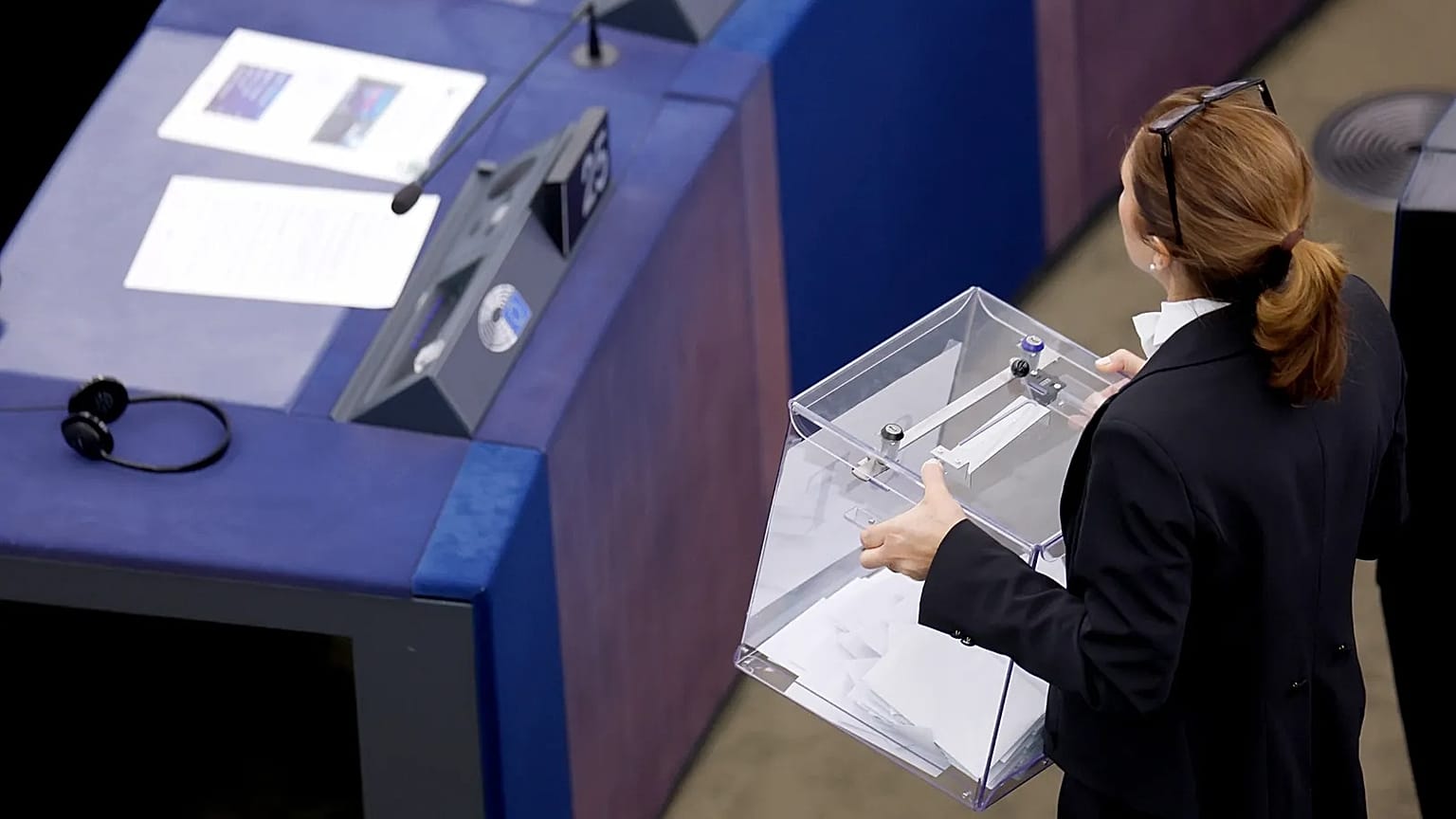
Copyright AP Photo/Jean-Francois Badias

By Romane Armangau
Published on 12/11/2025 - EURONEWS


Fighting for democracy is the 27-member bloc's foremost enshrined value, but NGOs and MEPs argue that the new Democracy Shield falls short on concrete measures and funding.

The European Commission unveiled its new Democracy Shield on Wednesday, a roadmap to better protect democracies and electoral processes from foreign interference and information manipulation — including those originating within the bloc itself.

At the heart of this strategy lies Russia and its “state or non-state proxies”, which for over a decade have conducted online destabilisation campaigns across the EU.

These efforts have been amplified by the rapid development of new technologies that make false information more convincing and its dissemination more viral.

Recent elections demonstrated how damaging online campaigns can be to democratic processes.

Last December in Romania, presidential elections were cancelled by the Constitutional Court after reports from intelligence services revealed Russian involvement in influencing voters through a propaganda campaign in favour of ultranationalist candidate Calin Georgescu.

Meanwhile, in Moldova, an EU candidate country, social media platforms were rife with disinformation in the run-up to the September parliamentary elections. Driven by artificial intelligence, bots were deployed to flood comment sections with posts deriding the EU and the pro-European party ahead of the vote.

What is Brussels' Democracy Shield about?

“Our Europe may die,” French President Emmanuel Macron warned during his Sorbonne speech in April 2024, a concern the European Union wants to address.

The Commission writes that the Democracy Shield “is not only necessary to preserve the EU’s values, but also to ensure Europe’s security and to safeguard its independence, freedom and prosperity.”

In the 30-page document, the Commission lays out its plan to “enhance democratic resilience across the Union”. Despite the strong rhetoric, the initiative comes with few concrete measures.

The centrepiece of the Democracy Shield is the creation of a European Centre for Democratic Resilience. Its purpose will be to identify destabilisation operations, pool expertise from member states, and coordinate the work of fact-checking networks already established by the Commission.

However, participation in this centre is purely voluntary for members. French MEP Nathalie Loiseau (Renew Europe), who heads the Democracy Shield committee, believes that the Commission should have gone further.

“There is a certain timidity about this Democracy Shield. It is true that some powers remain national and that the European Union cannot impose itself," Louiseau told Euronews.

"But let us remember that, just as with online platforms — where the Commission long relied on their goodwill only to realise it did not exist — it is time to build something that truly protects individuals, European citizens, including against states that would seek to undermine democracy.”

The EU executive put a strong emphasis on including EU candidates in this defensive plan, but also potentially "cooperation with like-minded partners could also be foreseen, and that is something that we will develop over the period ahead,” European Commissioner for democracy and rule of law Michael McGrath told journalists.

McGrath, who is in charge of the file, also explained that the nature of the centre would evolve in the future, “as the nature of the threat that it will be dealing with is constantly evolving.”

The Commission also proposed "setting up a voluntary network of influencers to raise awareness about relevant EU rules and promote the exchange of best practice," to hold influencers participating in political campaigns accountable.

Big promises, small purse

However, both the specific measures and their funding remain unclear. “There has to be funding to actually do this, otherwise it just ends up being hot air,” Omri Preiss, managing director of Alliance4Democracy nonprofit, told Euronews.

Although he recognised that it was an important step, Preiss highlighted that the Russian government spends an estimated two to three billion euros a year on such influence operations, while “the EU is not really doing anything equivalent.”

The allocation of funds will also depend on the outcome of the Commission budget discussion – currently under negotiation.

For Loiseau, protecting democracy means that the Commission must first apply the rules it adopted to regulate its online sphere.

“I’m a little afraid Ursula von der Leyen’s hand may have trembled, because what we are seeing today is, of course, massive Russian interference," she said.

"But it’s also the behaviour of platforms like TikTok, which raises many questions -and, even more so, the collusion between the US administration and American platforms," Loiseau added.

"On that front, it seems Ursula von der Leyen struggles to take the next step. She tells us that she will implement the legislation we have adopted and I should hope so. But we must go further.”

Several rules aimed at protecting electoral processes have already been adopted. Since 2023, the Digital Services Act has required greater transparency in recommendation algorithms and includes provisions to reduce the risks of political manipulation.

Meanwhile, the AI Act, adopted last year, mandates the labelling of AI-generated deep fakes. The European Media Freedom Act, which came into force this summer, is designed to ensure both transparency and media freedom across the bloc.

Yet, under pressure from US tech giants backed by the Trump administration, Commission sanctions have to materialise — despite serious suspicions of information manipulation and algorithmic interference.

“These rules reflect the will of those who elected us. Enforcing them is the first step in building a shield for democracy,” the centrist group Renew in the European Parliament said.

“It is imperative to ensure that the European Media Freedom Act is fully implemented across the European Union,” the group wrote in a letter to European Commission President Ursula von der Leyen.

“The actions will be gradually rolled out by 2027,” Commissioner McGrath said. This year will be a decisive test of the Shield’s resilience in the information war, as citizens in key EU member states — notably France, Italy and Spain — head to the polls.

Is Belgium Becoming Europe’s First ‘Narco State’? – Analy
sis


Antwerp port

November 13, 2025 
By EurActiv
By Miriam Saenz de Tejada

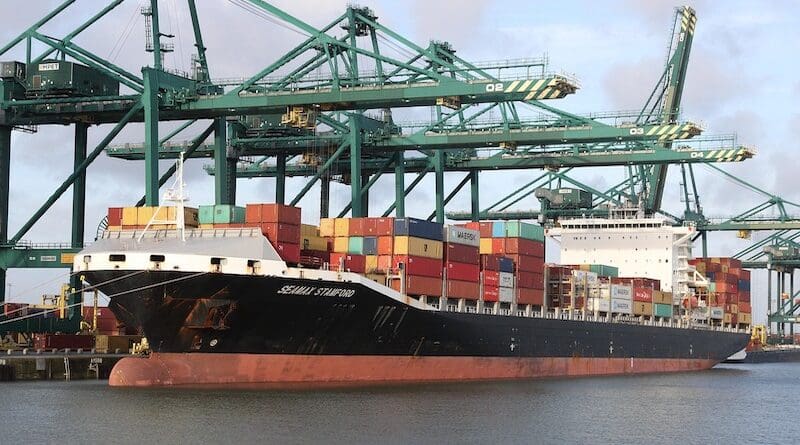
(EurActiv) — Belgium wasn’t always Europe’s drug hub. Today, its ports – Antwerp, Zeebrugge, and their sprawling container terminals – move millions of tonnes of cargo, concealing tonnes of cocaine, heroin, and synthetic drugs. Their deep-water access, nonstop container traffic, and Schengen freedoms make the country a dream for traffickers – and a nightmare for law enforcement.

In Antwerp alone, drug seizures surged from 91 tonnes in 2021 to nearly 110 in 2022, overtaking Rotterdam and cementing the port’s place at the centre of Europe’s narcotics trade.

Just 45 kilometres inland, Brussels now feels the shockwaves – shootings, gang turf wars, and fear spreading through neighbourhoods such as Molenbeek and Anderlecht.

So, after an Antwerp judge – who spent four months in a safe house – warned the country was at risk of becoming a “narco-state,” how real is the threat? The jurist also warned that organised crime is infiltrating ports, police, and even the judiciary, with mafia networks acting as a parallel power. Belgium’s ports remain a critical entry point to Europe, where drugs flow in, and its streets pay the price.

How smuggling works


The drug trade starts far from Europe. For cocaine – the most heavily trafficked drug through EU ports – bulk shipments leave Colombia, Peru, or Ecuador, stuffed inside legal cargo like fruit crates, machinery parts, or steel pipes. Some go straight across the Atlantic, while others zigzag through trans-shipment points in West Africa – via Senegal, Ivory Coast, or Cape Verde – or through Caribbean ports to blur their trail.

By the time containers reach Europe, the cargo manifests appear clean. Some pass through the Canary Islands or the Azores, making the paperwork even harder to trace. Then they dock at Antwerp, Zeebrugge, or Rotterdam, where “extractor” crews – often teenage recruits – break open the containers, remove the drugs, reseal them, and slip away before inspectors arrive.

In the numbers game of smuggling, networks have adapted quickly. Belgian customs data now show traffickers favor smaller, more frequent loads to dodge scanners – 82 cocaine shipments intercepted in early 2025 in Antwerp averaged 204 kilogrammes each, down from 359 kilogrammes in 2024.

Europol notes that gangs use feeder ships and container swaps during transit to obscure origin points and exploit weak checks.

The same patterns apply to other drugs. Heroin moves along the Balkan route from Afghanistan via Turkey and the Balkans, while cannabis resin still flows from Morocco into Spain, and synthetic drugs and precursors such as methamphetamine arrive from Asia by air freight or even postal parcels.

All roads lead to Belgium


Geography made Belgium a gateway, but globalisation made it a goldmine. Antwerp’s position, connected by road and rail to every major Western European market, means a large share of the cocaine that lands there is trucked elsewhere – cut, repackaged, and resold at many times the profit.

The scale is staggering. The European cocaine market is estimated at €11.6 billion, while cannabis adds another €12.1 billion. With that kind of money moving through legitimate supply chains, Belgium’s ports have become ideal not only for smuggling but also for money laundering. In 2024, the Antwerp region alone recorded 128 drug-related arrests, including 16 minors.

But what starts at the docks rarely stays there. Brussels – 45 km away inland – is now on the front line of the drug fallout. At a press conference in July 2025, prosecutors reported 57 shootings – 20 of them over the summer – many tied to turf wars between rival gangs, according to Brussels’ public prosecutor Julien Moinil.

In February, a gunfight outside Clémenceau metro in Anderlecht left one dead. In September, a massive police sweep checked 708 people and 621 vehicles across the city. Yet the violence never stops. Brussels now records a homicide rate of 3.19 per 100,000 people – among the highest in the EU’s major urban areas – with neighbourhoods like Molenbeek and Anderlecht hit hardest.

A fight that just started

Across the EU, overall drug seizures have climbed over the past decade, with the amounts of amphetamine, meth, and ecstasy fluctuating year to year. Every catch is a reminder of what still slips through. Belgian customs estimate they intercept only 10–40% of cocaine arriving at its ports. The rest floods Europe. A kilo bought for a few thousand euros in Latin America can fetch close to €30,000 on EU markets, warns the European Union Drugs Agency (EUDA).

The money doesn’t just disappear; it’s washed through trading firms, real estate, and logistics companies that double as laundering fronts operating in Belgium. Even with 16.7 tonnes of cocaine seized in Antwerp in the first half of 2025, traffickers are outpacing enforcement: hiding shipments behind encrypted networks, corrupt dockers, and shell firms.

Brussels is racing to catch up. The EU’s new Roadmap Against Drug Trafficking targets chemical precursors, widening controls to cover fast-evolving derivatives. The EUDA now backs the Commission on monitoring and threat assessments – completing the EU’s first-ever precursor risk reviews in early 2025. As for the city, other ideas come to mind: merging Brussels’ six police zonesand increasing spot raids.

But as prosecutor Julien Moinil warns: “Ten or twenty years of laxity can’t be fixed overnight.”

Belgium remains Europe’s gateway: seizures make headlines, but the real trade never stops.

EurActiv publishes free, independent policy news and facilitates open policy debates in 12 languages.

The Religious Landscape Of The United States – Analysis


November 12, 2025 
Anbound
By Chen Li

The religious ecosystem in the United States operates within the constitutional framework established by the U.S. Constitution. Religious organizations not only maintain vitality through market-like competition but also remain transparent under legal oversight and public scrutiny. According to the Pew Research Center’s 2023–24 Religious Landscape Study, about 62% of the U.S. population identifies as Christian. Although this proportion has gradually declined, religion continues to play a significant role in American social life.

The religious landscape of the United States is deeply rooted in its immigration history. In 1620, the Pilgrims arrived in the New World aboard the Mayflower. The Mayflower Compact became one of the earliest documents of self-governance in North America, reflecting the ideal of autonomy based on shared religious principles. Religious thought subsequently had a profound influence on the founding of the nation. The Declaration of Independence (1776) proclaimed that all men are endowed by their “Creator” with “unalienable Rights”. The term “Creator” embodies the influence of both Enlightenment philosophy and Christian natural theology. After the country’s founding, the First Amendment to the Bill of Rights (1791) explicitly prohibited the establishment of a national religion and guaranteed freedom of religious practice, enshrining the separation of church and state. Among the Founding Fathers, Thomas Jefferson emphasized that religion should thrive through free competition rather than rely on state privilege.

Within this institutional framework, religious groups have profoundly influenced nearly every aspect of American society. In the 1960s, Rev. Martin Luther King Jr., a Baptist minister, led the African American civil rights movement under the banner of nonviolence. Many rallies were held in churches, which served as organizational hubs and sources of moral strength. Religious groups have also played vital roles in the development of charitable and educational institutions. Numerous prominent universities and hospitals were either founded or financially supported by churches. Today, the Catholic Church operates a nationwide hospital network that provides care for roughly one-sixth of all inpatient admissions. Religion in the U.S., therefore, extends beyond private belief; indeed, it is a public force that contributes to social advancement.

Even today, religious influence remains deeply embedded in American political culture. Every U.S. president traditionally takes the oath of office with a hand on the Bible, reflecting the enduring symbolic power of religion. Yet, constitutional safeguards ensure that religious influence does not undermine the authority of the state. Instead, it functions as a form of moral capital. As a result, since the nation’s founding, the U.S. religious landscape has avoided monopolization, maintained vitality, and fostered an open and pluralistic environment.

Although predominantly Christian, the U.S. exhibits remarkable internal diversity. This diversity stems largely from doctrinal differences that have developed since the Reformation in the 16th century—such as disputes over baptism and infant baptism—that led to numerous denominational splits. According to the Pew Research Center, the United States is home to over 200 Christian denominations, a level of variety rarely seen elsewhere.

Roughly two-thirds of Americans identify as Christian. Within this group, Protestants form the largest branch, accounting for about 40% of the population, followed by Catholics, who number around 50 million (approximately 19% of the population), making the Roman Catholic Church the largest single Christian body in the country. Among Protestant groups, the Southern Baptist Convention is the largest, with over 16 million baptized members at its peak, maintaining strong influence in the southern states, where its emphasis on believer’s baptism is particularly pronounced. Methodist denominations, such as the United Methodist Church, long part of the “mainstream Protestant” tradition, also count millions of adherents nationwide, comprising about 2% of the population. Other major Protestant denominations—Presbyterian, Lutheran, and Episcopal—each have millions of members. Catholicism, meanwhile, expanded rapidly in the 19th century due to mass immigration and today encompasses believers of all ethnic backgrounds. With over 170 dioceses and approximately 22,000 churches nationwide, the Catholic Church remains a foundational component of American religious life.

Beyond mainstream Christianity, the U.S. has also given rise to various new religious movements. Among those emerging in the 19th century, the most prominent is the Church of Jesus Christ of Latter-day Saints (LDS), or Mormonism. Founded in New England in the 1830s, the movement grew rapidly as its adherents migrated westward, ultimately settling in Utah. Today, the Church claims more than 16 million members worldwide, about half of whom reside in the United States—roughly 1% of the national population. With its distinctive doctrines and highly centralized structure, headquartered in Salt Lake City, the LDS Church has often been compared to a “modern multinational corporation.” Its successes in business, education, and philanthropy have made it one of the most influential indigenous religious movements in the American context.

The economic operations of religious organizations in the U.S. are primarily based on voluntary donations and governed by nonprofit principles. Most churches rely on contributions from members—through weekly offerings, special donations, and tithes—to fund daily operations and charitable activities. Many conservative denominations encourage or require members to tithe 10% of their income. For example, the LDS Church mandates tithing from eligible members, raising approximately USD 7 billion annually. These funds support religious and charitable programs, as well as education and welfare initiatives. The LDS Church also manages substantial assets through Ensign Peak Advisors, a professional investment firm established in 1997. Conservative estimates place the firm’s reserve fund at over USD 100 billion, accumulated through decades of tithes and investment returns. This fund is intended to sustain long-term welfare projects and serve as a financial reserve for future emergencies.

Legally, most religious organizations in the U.S. are registered as 501(c)(3) nonprofits and enjoy tax-exempt status. They are, however, subject to regulations that prohibit the use of funds for personal gain or non-religious purposes. The Internal Revenue Service (IRS) and state charity regulators have oversight authority and may revoke tax-exempt status in cases of financial misconduct. Although churches are exempt from filing the Form 990—the detailed annual financial disclosure required of other nonprofits—many voluntarily publish summaries of income and expenditures or conduct independent audits to maintain transparency and public trust. Large denominations also implement internal accountability mechanisms: Catholic parishes report fundraising use to parish councils, while Protestant congregations often require budget approval by members. This multi-layered system of oversight, reinforced by a cultural expectation of transparency, helps guard against corruption and mismanagement.

American history has nonetheless witnessed occasional scandals involving religious leaders, including instances of financial and sexual misconduct. Notably, some televangelists have been exposed for embezzling donations to fund lavish lifestyles. However, such cases typically provoke swift public and media scrutiny, leading to corrective reforms, increased awareness, and higher standards of transparency within religious institutions. Overall, religious finances in the U.S. tend to operate within a virtuous cycle—“living within one’s means, taking from believers, and giving back to believers.” Supported by robust financial oversight and ethical norms, this system helps maintain trust and integrity within faith communities.

All in all, American religion, protected by constitutional freedoms and shaped by market-based dynamics, demonstrates openness, diversity, and transparency. Religious funding operates according to voluntary principles and standardized management models that effectively limit corruption and the monetization of faith. Although challenges and controversies persist, the U.S. institutional environment has largely succeeded in preventing the systemic problems that foster corruption, ensuring that religion continues to function as a positive moral and social force.


Chen Li, Economic Research Fellow at ANBOUND.


Anbound

Anbound Consulting (Anbound) is an independent Think Tank with the headquarter based in Beijing. Established in 1993, Anbound specializes in public policy research, and enjoys a professional reputation in the areas of strategic forecasting, policy solutions and risk analysis. Anbound's research findings are widely recognized and create a deep interest within public media, academics and experts who are also providing consulting service to the State Council of China.


Milan prosecutors probe claims Italians paid to shoot civilians in Bosnian war

Milan prosecutors probe claims Italians paid to shoot civilians in Bosnian war
/ Photo by Azur Golic on Unsplash
By bne IntelliNews November 12, 2025

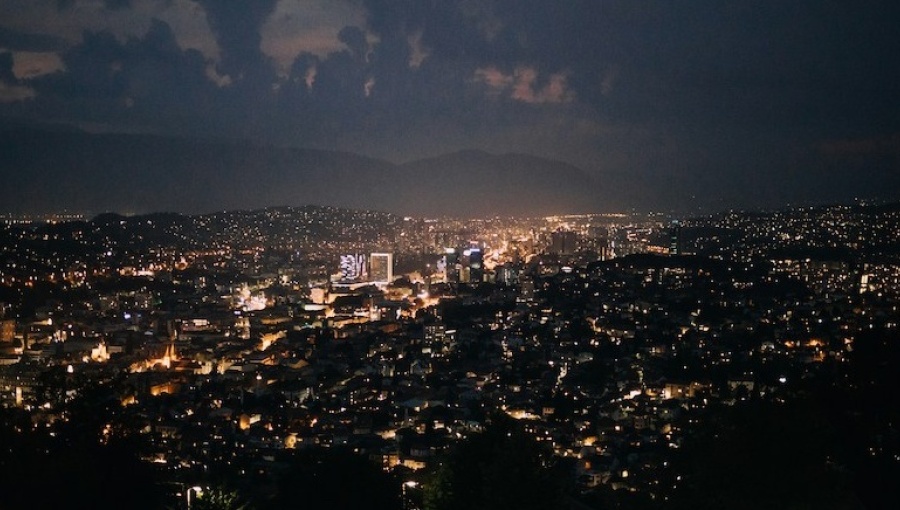
Prosecutors in Milan have opened an investigation into allegations that Italian nationals paid members of the Bosnian Serb army to shoot at civilians in Sarajevo during the city’s four-year siege in the 1990s. 

The probe, led by prosecutor Alessandro Gobbi, concerns suspected crimes of voluntary homicide “aggravated by cruelty and vile motives”, according to judicial sources cited in Italian press reports. Investigators are seeking to identify Italian citizens who allegedly travelled to Bosnia & Herzegovina during the war to take part in what witnesses have described as a “human safari”. 

The investigation was confirmed by Italian writer and journalist Ezio Gavazzeni, who filed the complaint, and former Sarajevo mayor Benjamina Karic. 

More than 10,000 people were killed in Sarajevo between 1992 and 1996 — the longest siege of a capital city in modern history — following Bosnia’s declaration of independence from Yugoslavia.

A stretch of Sarajevo’s main boulevard became known as “Sniper Alley”, where residents were routinely targeted by gunfire from surrounding hills during the Bosnian War.

Allegations of “sniper tourism”

The Milan case originated from a complaint filed by Gavazzeni, who said he collected testimony suggesting that wealthy Westerners including Italians paid soldiers loyal to Bosnian Serb leader Radovan Karadžić for the chance to fire on civilians. Karadžić was convicted of genocide and other crimes against humanity by a UN tribunal in 2016.

According to Gavazzeni, the alleged participants paid the equivalent of €80,000 to €100,000 for weekend trips arranged through contacts in Trieste and Belgrade. Some reportedly paid more to target children. The suspects are said to include businessmen and professionals from northern Italian cities such as Milan, Turin and Trieste.

“There were no political or religious motivations,” Gavazzeni said as reported by The Guardian. “They were rich people who went there for fun and personal satisfaction. We are talking about people who love guns who perhaps go to shooting ranges or on safari in Africa.”

The Bosnian authorities initially investigated similar claims after the release of Sarajevo Safari, a 2022 documentary by Slovenian filmmaker Miran Zupanič, which featured testimonies from former soldiers who alleged that foreigners paid to shoot civilians from the hills. The Bosnian prosecutor’s office later shelved the case, citing a lack of evidence and the difficulty of pursuing such a complex investigation in a country still deeply divided by war.

Gavazzeni said he began examining the claims after watching Zupanič’s film, which revived reports first circulated in the 1990s about alleged “sniper tourists.” He has since gathered witness statements and other materials, which he submitted to Milan prosecutors earlier this year.

Sarajevo’s former mayor calls for justice

The current Milan investigation was also prompted by a report submitted by Benjamina Karić, mayor of Sarajevo from 2021 to 2024, who first filed a criminal complaint in Bosnia in 2022 after Sarajevo Safari was released.

“Our children deserve justice, after so many years,” Karić wrote in a Facebook post. “What seemed so distant and unrealistic to many in 2022 is today the topic of the world's media.”

Karić said she shared her documentation with the Italian embassy and later with Milan prosecutors after learning that the Bosnian investigation had stalled.

Judicial sources told Italian media that the Milan prosecutors’ office is now reviewing evidence to verify whether any of the identified Italians can be formally accused. Gavazzeni has claimed that “many” Italians were involved, as well as individuals of other nationalities including English, French and German.


Bangladesh tense as violence erupts before Hasina verdict

Bangladesh tense as violence erupts before Hasina verdict
/ Pentagon
By bno Chennai Office November 13, 2025

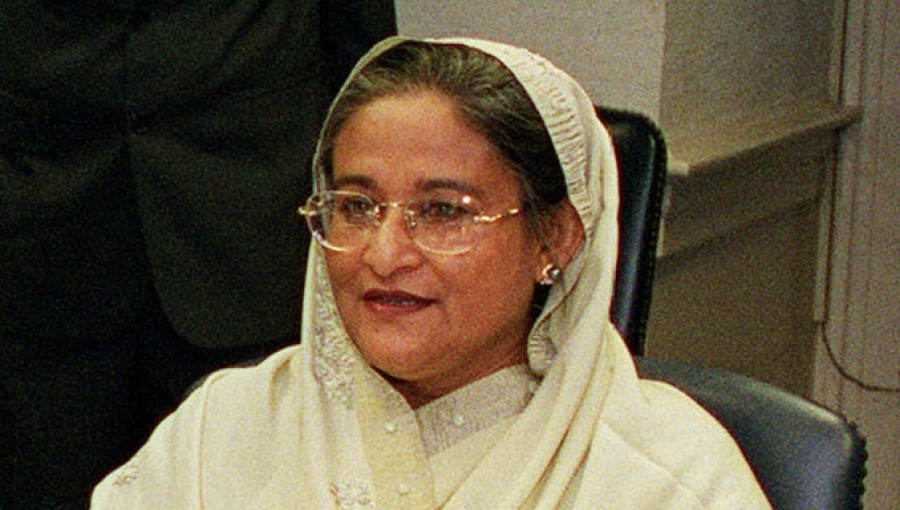
Bangladesh faced a surge of political unrest on November 12, 2025, as explosions and arson attacks rattled Dhaka and surrounding areas ahead of a tribunal ruling on former Prime Minister Sheikh Hasina. The International Crimes Tribunal–Bangladesh is set to announce its verdict on Hasina, a development seen as pivotal in the country’s ongoing political crisis, The Hindu reported.

The attacks followed a call for a nationwide lockdown and boycott of upcoming elections by supporters of Hasina and her party the Awami League. The former leader, now exiled in India, faces charges linked to the 2024 student-led violent protests that overthrew her government. The interim government’s prosecutors have demanded the death penalty for Hasina’s conduct during the unrest where she allegedly approved the use of deadly and excessive force against protestors.

Interim Chief Advisor to the Government Muhammad Yunus, who took charge after Hasina’s ouster, has rejected claims of political retribution in the functioning of the tribunal or any other legal proceedings in the country targeting Hasina and Awami League. As cited by The Hindu, official numbers indicate more than 3,000 Awami League members have been detained since October as part of a sweeping security crackdown by Bangladesh's authorities.

However an office of the Yunus founded Grameen Bank was set ablaze in Brahmanbaria during the early hours, while an abandoned railway coach caught fire later in the day at Dhaka’s central station. A series of crude bomb blasts were reported across the capital, including near Dhaka University, damaging vehicles and disrupting transport networks. Bangladesh’s Home Ministry said police and paramilitary forces had been ordered to enforce strict security.

Authorities conducted citywide drills in Dhaka, sealed off several routes, and deployed armed units at key installations. The Dhaka Metropolitan Police indicated that residents were being urged to remain calm amid the threat of further violence.


PANNIER: Booming breadbasket Kazakhstan now shipping grain to three continents


By Bruce Pannier November 11, 2025

Kazakhstan is widely recognised as the world's leading uranium producer and exporter and as a top-10 oil exporter. But for many of its neighbours, the fact that the country is also a leading and flourishing exporter of grain is equally, if not more, important.

However, Kazakhstan is in fact increasingly moving beyond its neighbours, finding additional markets for its grain commodities. These now include countries in North Africa, the Middle East, Europe and East Asia.

Abundant harvests

Kazakhstan’s Agriculture Minister Aidarbek Saparov told a government meeting on November 4 that this year’s harvest amounted to some 27.1mn tonnes of grain.

“This year has been record-breaking not only for grain, but also for high-yield and high-demand crops such as legumes and oilseeds…,” Saparov said.

The 27.1mn tonnes gathered breaks the previous record, set last year, of 26.7mn tonnes.

The latest record grain harvest is very good news for other countries in the region, most of which import grain from Kazakhstan.

Wheat makes up the majority of  Kazakhstan’s grain, at between 70% and 80%, with barley following at somewhere around 10-12%. The other grains are corn, rice, oats, miller, buckwheat and rye.

This year’s wheat harvest was 20.3mn tonnes, with barley weighing in with 4mn tonnes.

Growing list of customers

From September 2024 to April 2025, Kazakhstan’s grain exports to neighbours jumped by 58% compared to the same 2023-2024 period.

Uzbekistan was the biggest buyer, importing 2.7mn tonnes, up 29.7% y/y. Kyrgyzstan purchased 181,000 tonnes, mostly wheat, twice the amount it imported in 2023-2024. Tajikistan bought 51% more, taking 1.1mn tonnes.

Perhaps the country that benefits the most from having such a grain-rich neighbour is crisis-ravaged Afghanistan. Afghanistan purchased 270,000 tonnes of desperately-needed grain from Kazakhstan in 2024-2025.

At the opening of the third annual Afghan Goods Exhibition in Shymkent, Kazakhstan in late October, Serik Zhumangarin, the Kazakh Minister of National Economy, said wheat exports to Afghanistan nearly tripled in the first eight months of 2025, while sunflower oil exports more than tripled.

Iran has experienced periods of terribly severe drought in recent years and has very much needed to import wheat. Kazakhstan sold Iran 555,200 tonnes in 2021 and 560,000 tonnes in 2022. Sufficient rain returned in 2023 and Iran purchased only 66,600 tonnes of Kazakh wheat that year, but the respite was short and, in 2024, Iran’s imports of Kazakh wheat climbed to 427,500 tonnes.

In August, Ataollah Hashemi, the head of Iran’s National Syndicate of Wheat Farmers, said drought was again causing shortfalls in agricultural production and Iran would need to import some 4.5mn tonnes of wheat before March next year.

In January, Kazakh Agriculture Minister Saparov met with the head of Iranian investment firm Fawakeh Trading Company, who told Saparov that Iran was interested in importing up to 3mn tonnes of wheat from Kazakhstan.

Iran also buys wheat from Russia and there has been no recent indication that the Iranians are seeking to buy 3mn tonnes  of Kazakh wheat in the coming months. But Kazakhstan will certainly be one of Iran’s primary sources for wheat imports as its ongoing devastating drought continues.

Kazakhstan also exports wheat to its eastern giant neighbour China. In 2023, Kazakhstan shipped some 2.2mn tonnes of wheat, barley, soybeans, flax and sunflower seeds to the Chinese market.

In July 2024, Kazakh President Kassym-Jomart Tokayev  said Kazakhstan could increase exports of wheat to China to 2mn tonnes; however, China introduced new tariffs on wheat imports one month later and Kazakh grain exports to the country of 1.4bn dropped sharply for the rest of 2024.

Kazakhstan also sells wheat to Azerbaijan. It shipped the South Caucasus country some 569,000 tonnes during September 2024 to April 2025. That was more than twice the amount Kazakhstan sold to Azerbaijan from September 2023 to April 2024.

Saparov mentioned on November 4 that grain was also being delivered to Armenia and Georgia. The shipments to Armenia are the first since the Soviet Union collapsed. Thanks to improved relations between Yerevan and Baku, they can be transshipped via Azerbaijan to the Armenians.

Outside of Kazakhstan’s region, sales of the country’s wheat are expanding to countries quite far away.

Kazakhstan, for instance, exports high-quality durum wheat to Turkey. In mid-October, Agriculture Minister Saparov met with Turkish Agriculture Minister Ibrahim Yumakli. Among the topics discussed was a “grain hub” based near Baku. Reports published after the two ministers’ meeting said Kazakhstan was positioning itself to become the exclusive supplier of durum wheat to Turkey.

The exact amount of Turkey’s imports of Kazakh grain is unclear, though a recent report said Kazakhstan could increase grain exports to Turkey to 1mn tonnes in the near future.

Kazakhstan has already exported durum wheat to Italy. Between September 2024 and May 2025, it exported some 355,000 tonnes of the grain to the Italian market. Durum is especially well-suited for making pasta (and coucous).

In his comments on November 4, Saparov said shipments of Kazakh grain have also started to Belgium, Portugal, Poland, Norway, the United Kingdom, Vietnam and the United Arab Emirates.

There are also reports that Kazakhstan is shipping grain to Morocco and Algeria.

Shipping networks expand

The bumper grain crops of the last two years have been a boon for Kazakhstan but the increased ability to transport grain has also played a key role in boosting Kazakhstan’s grain exports.

Agriculture Minister Sapatov said grain exports last season came to some 13.4mn tonnes, marking a 47% y/y expansion.

Just a few years ago, Kazakhstan might have found it difficult to ship such big volumes of grain to customers.

However, since Russia launched its full-scale war on Ukraine in February 2022, Kazakhstan, in cooperation with international partners, has been working energetically to expand and improve road and railway networks and ports and add vessels to its Caspian Sea cargo fleet.

Europe and China are increasingly using the Middle Corridor, sometimes called the Trans-Caspian International Transport Route (TITR), for trade. The countries of Central Asia and the South Caucasus are benefitting from the expansion of this East-West trade route that crosses Kazakhstan.

Kazakhstan, Central Asia’s largest economy, is now much better connected by rail to all immediate neighbours and by railway branches through Uzbekistan to Afghanistan, and through Turkmenistan to Iran (and from there to Turkey). New railways and extensions to existing railway lines are already under construction.

Kazakhstan continues to improve and expand operations at its Caspian ports of Aktau and Kuryk, which ship increasing volumes of goods to Azerbaijan and Iran. Work is under way at Kuryk to build a grain terminal that eventually could handle 1.5mn tonnes of grain annually.

As is true with agricultural exports all over the world, Kazakhstan’s grain harvests depend on the weather and just four years ago many parts of the country were experiencing severe drought. Notably, the devastating floods that hit large areas of the country in the first half of 2024 had the benefit of filling many of Kazakhstan’s reservoirs and replenishing some lakes that had been dried out for decades.

Water has not been a major issue to the Kazakhs for the last two years, but the broader Central Asian region is one of the hardest hit regions in the world in terms of climate change.

For now, Kazakhstan’s plans call for grain exports this coming season to be at least as high as last season. Saparov said almost 2.2mn tonnes of this year’s harvest has already been exported, with the figure representing a jump of 21% y/y.

Kazakhstan very much remains a major supplier to the world of uranium and oil, but it is the country’s grain exports that are far more important at mealtime in many countries.

SHOW US THE MONEY!

US made money off Argentine currency swap, Treasury secretary confirms

US made money off Argentine currency swap, Treasury secretary confirms
"We used our financial balance sheet to stabilise the government, one of our great allies in Latin America, during an election," Bessent said.
By Mathew Cohen November 12, 2025

United States Treasury Secretary Scott Bessent announced that the US government has profited from the $20bn currency swap provided to Argentina. In addition to the initial $20bn swap line, which Bessent confirmed is now active, the US floated plans for an additional $20bn privately funded facility to invest in Argentine sovereign debt, bringing total US support to $40bn.

"We used our financial balance sheet to stabilise the government, one of our great allies in Latin America, during an election," Bessent stated in an MSNBC interview on November 11. "The president there won in a landslide, the government is going to make money."

Bessent referenced Argentina's midterm legislative elections, where President Javier Milei's La Libertad Avanza party secured a decisive victory. "In most bailouts, you don't make money," he continued. "The US government made money."

The Treasury Secretary framed the intervention as part of a broader strategy to build alliances across Latin America, a continent where China is rapidly expanding its footprint, citing upcoming elections in Chile and Colombia as additional opportunities for US-aligned conservatives to dislodge leftist governments. "By stabilising the economy there and making a profit, then that is a very good deal for the American people," Bessent said.

He explicitly contrasted this approach with potential outcomes under previous Argentine administrations, stating, "We are preventing the collapse of a government and the return to a Peronist agenda and a left-wing government." Bessent drew parallels to Venezuela under Hugo Chávez and Nicolás Maduro, suggesting the US intervention prevented a similar trajectory.

“I would rather use peace through economic strength than have to be shooting at narco boats coming offshore [after] a government collapse,” Bessent said, referring to the US military buildup off the Venezuelan coast which the US claims is aimed at combating narco-trafficking.

The extraordinary US support, which sparked controversy at home, extended beyond the swap agreement. Following Milei's defeat in provincial Buenos Aires elections in September, Washington intervened to prop up the falling peso with $1bn in purchases, helping the libertarian leader avoid the political fallout from a currency collapse in the midterm campaign's final stretch.

This unprecedented financial commitment to Argentina represents a significant geopolitical gamble for the Trump administration, effectively tying American economic interests to Milei's reform agenda. While Bessent's optimistic assessment projects profitability, the strategy's success depends on Argentina's ability to maintain fiscal discipline and political stability.

The substantial US backing could strengthen Milei's position domestically, though it increases pressure on his administration to deliver results that justify Washington's confidence.

Bolivia’s energy sector crisis poses early test for new president Rodrigo Paz

Bolivia’s energy sector crisis poses early test for new president Rodrigo Paz
To contain the energy crisis, newly elected President Paz has taken a hard security stance, ordering the Armed Forces to combat fuel smuggling, calling it an “attack on the national economy”. / unsplash
By Alek Buttermann November 12, 2025

Bolivia’s new centrist president, Rodrigo Paz Pereira, has taken office amid one of the gravest energy crises in the country’s recent history. With production in free fall, a financially crippled state oil company and the return of fuel shortages, his administration’s first task is not one of reform, but of survival.

Behind this effort stands economist Mauricio Medinaceli Monrroy, the newly appointed Minister of Hydrocarbons and Energy. A former OLADE coordinator and World Bank consultant, Medinaceli brings extensive experience across more than twenty countries, but inherits what he has called “a destabilised sector”. He has ordered immediate audits of state-owned energy firm Yacimientos Petrolíferos Fiscales Bolivianos (YPFB) and a revision of fuel prices and subsidies, describing the state of the company as “financially unsustainable”.

The figures are stark. YPFB closed 2024 with an operating loss of BOP11.7bn ($1.7bn), according to official financial statements. Despite posting a net profit on paper, its domestic sales of gasoline, diesel and liquefied gas generate losses with every litre sold, due to a subsidy system that has drained the treasury for decades. Subsidies to imported diesel alone reached BOP6.3bn ($914mn) last year, while production of crude and gas continues to plummet.

Economist Raúl Velásquez of the Fundación Jubileo told El Deber that gas output has fallen 54% in the past decade, transforming Bolivia from a regional energy powerhouse into a net importer. Ninety-five per cent of the diesel and more than half of the gasoline consumed in the country now come from abroad. The structural imbalance, he warned, risks collapsing public finances if subsidies persist.

Meanwhile, the newly appointed YPFB president Yussef Akly Flores, and the head of the National Hydrocarbons Agency (ANH), Margot Ayala Lino, face the immediate challenge of restoring supply. Akly, formerly head of the Bolivian Chamber of Hydrocarbons and Energy, confirmed that national reserves of fuel had fallen to “barely one day of stock”, making the system “extremely fragile”. The government has since reactivated contracts with suppliers in Argentina, Chile, Paraguay and Peru to restock distribution plants.

To contain the crisis, Paz has taken a hard security stance. In an address in Sucre, he ordered the Armed Forces to combat fuel smuggling, calling it an “attack on the national economy”. The illegal cross-border flow of subsidised fuels, he said, “betrays the homeland” and aggravates shortages at home.

Yet stabilisation may come at an environmental cost. According to El País, Bolivia’s declining gas output has driven a renewed push into Amazonian exploration, with YPFB drilling in the Tomachi X1 and X2 wells inside the Manuripi protected area—territory inhabited by the Tacana people. Environmentalists and the Centro de Investigación y Documentación de Bolivia (CEDIB) warn that this expansion violates consultation rights enshrined in the Constitution and risks irreversible ecological damage in the Madre de Dios basin, home to more than 10,000 animal species.

President Paz has not clarified whether he will continue the Upstream Reactivation Plan initiated under Luis Arce, but his campaign rhetoric of “intelligent energy capitalism” suggests a pragmatic mix of state control and private investment. Analysts believe his administration will seek to ease fiscal pressure through gradual subsidy reform, while attracting foreign capital to revive mature gas fields.

Former minister Álvaro Ríos was blunter in his assessment: “YPFB is practically bankrupt,” he said, citing political interference, corruption and chronic under-investment during the previous leftist MAS governments. For Medinaceli, reversing that legacy will require both restoring international confidence and rebuilding institutional capacity within the energy sector—a task that may prove as political as it is technical.

As Bolivia attempts to regain its footing, the government’s balancing act between economic recovery, environmental protection and social stability could shape the trajectory of its energy future. But for now, the priority is much simpler: keep the fuel flowing.