Thursday, November 13, 2025


Pig kidney functions normally for two months in brain-dead recipient


Columbia University Irving Medical Center


NEW YORK, NY (Nov. 13, 2025)--A study of a pig kidney that flourished for two months in a brain-dead recipient shows that a protocol developed by Columbia University immunologists can help prevent long-term rejection of a xenotransplant. 

In the study, surgeons at New York University Langone Health transplanted a pig kidney and the same animal’s thymus gland into a 57-year-old man with glioblastoma who had been declared brain-dead at the hospital. The study was published in Nature

Studying xenotransplants (organs from other species) in brain-dead individuals gives researchers more extensive details about how a transplanted organ is working and how the recipient’s immune system is reacting than is possible with living patients. But until now, xenotransplant studies in decedents have been short, ending one or two weeks after the surgery. 

“In our study, we obtained an unprecedented number of tissue, blood, and fluid samples from the recipient, allowing us to monitor immunological changes over time and identify ways to improve the success of xenotransplantation,” says Megan Sykes, director of the Columbia Center for Translational Immunology, one of the study’s co-leaders who developed the thymus-kidney strategy. 

Pig thymus reduces rejection 

Over the past three decades, Sykes and her colleagues have studied how to train a transplant recipient’s immune system to tolerate a donated organ, including xenotransplants.  

In animal studies, Sykes and her team have found that transplanting tissue from a donor’s thymus—which teaches immune cells to distinguish between native and foreign tissue—along with the replacement organ reduces the immune attack on the donated organ, producing remarkable long-term results.  

The approach also seemed to work in the decedent. 

“Our analyses suggested that the transplanted pig thymus may have helped to restrain the recipient’s immune system from attacking the kidney.” 

The thymus also may have prevented a dangerous loss of proteins from the body, which has hampered xenotransplants in living patients. “One of the kidney’s jobs is to keep proteins in the body and prevent their release into urine,” Sykes says. “With the thymo-kidney transplant, we saw no evidence of this complication.” 

Attack by recipient’s immune system still a challenge 

Despite the calming presence of the pig thymus, Sykes’s analyses found immunological challenges that still need to be addressed to improve long-term outcomes with xenotransplants. 

One month after transplantation, a rejection episode that was thought to be caused by antibodies occurred. However, studies in the Sykes lab implicated the recipient’s own T cells that existed before the transplant in attacking the pig kidney. The rejection episode was successfully treated by temporarily eliminating the recipient’s T cells.  

The researchers also found new antibodies directed against the donor organ after the transplant, but not against the pig antigens predicted to pose a problem (and which have been edited by some xenotransplant developers). 

“These antibodies are directed at other unknown pig antigens, and I think it will be really important to identify them to improve future xenotransplants,” Sykes says. 

Minimal gene editing required   

The pig kidney transplanted in this study had been genetically edited to eliminate the alpha-gal sugar molecule on pig organs, wich causes immediate rejection when the organs are transplanted into humans. 

Though some suppliers have made many other genetic modifications to pig organs to lower the risk of rejection, the minimally edited organ performed surprisingly well for two months. 

“At two months, the kidney was still functioning fine with no major problems,” Sykes says. “It suggests that extensive genetic editing of the donor pig organ may not be as important as controlling the response from the patient’s pre-existing T cells in recipients who do not have high levels of antibodies before the transplant.”   

Minimally edited pig organs are also easier to produce, promising a greater supply for patients than more rarefied pig organs.  

Future directions 

Though results from decedent studies may not apply to all xenotransplants in living recipients, there is a need to continue such studies. “Additional studies in decedents can help us improve xenotransplants,” Sykes says. 

“But it is a big sacrifice on the part of the family, and they must ultimately decide when the study stops. The family of the recipient in this study was very generous. What we’ve learned has been invaluable and will help us advance the science of xenotransplantation.” 

Additional information

The study, "Physiology and immunology of pig-to-human decedent kidney xenotransplant," by Robert A Montgomery and Jeffrey M. Stern, et al., was published in Nature on Nov. 13. 


###

Columbia University Irving Medical Center (CUIMC) is a clinical, research, and educational campus located in New York City. Founded in 1928, CUIMC was one of the first academic medical centers established in the United States of America. CUIMC is home to four professional colleges and schools that provide global leadership in scientific research, health and medical education, and patient care including the Vagelos College of Physicians and Surgeons, the Mailman School of Public Health, the College of Dental Medicine, the School of Nursing. For more information, please visit cuimc.columbia.edu


High-engagement social media posts related to prescription drug promotion for 3 major drug classes


JAMA Network


About The Study: 

The current analysis illustrates that drug promotion content is frequently posted by individual creators, lacks essential risk information, and bears the hallmarks of undisclosed marketing. These findings suggest that posts circumvented established advertising principles and potentially eroded the fair balance crucial for informed patient decision-making, consistent with prior literature on traditional direct-to-consumer advertising’s impact on prescribing.


Corresponding Author: To contact the corresponding author, Alex Kresovich, PhD, email kresovich-alex@norc.org.

To access the embargoed study: Visit our For The Media website at this link https://media.jamanetwork.com/

(doi:10.1001/jama.2025.19754)

Editor’s Note: Please see the article for additional information, including other authors, author contributions and affiliations, conflict of interest and financial disclosures, and funding and support.

#  #  #

Embed this link to provide your readers free access to the full-text article 

 https://jamanetwork.com/journals/jama/fullarticle/10.1001/jama.2025.19754?guestAccessKey=8f28a180-373c-4ac0-87d4-682153f277ac&utm_source=for_the_media&utm_medium=referral&utm_campaign=ftm_links&utm_content=tfl&utm_term=111325


Western Cross-Currents: Cultural Populism Vs Deep Architecture – OpEd


November 12, 2025 
By Alastair Crooke

The starting gun for the U.S. 2026 Midterms was fired this past week with three consequential elections and a key re-districting poll held in California. The Democrats swept three major races (NY, NJ, VA) and won the re-districting proposition in California. Californian re-districting could give the Democrats a further five seats in the House.

But the lens by which to understand these events perhaps is better that of the last British general election: The governing party was both discredited and widely disliked. The British electorate wanted to deliver to it a resounding slap – which they duly did. The problem was that electors did not like the alternative parties so much either. But to send the message, they had to vote for something. The Labour Party won a thumping majority, but no real mandate. The new Prime Minister, and his party (as it turns out), is as widely disliked as his predecessor.

Politics in the UK are broken for now. It is largely the same in France.

So, when the headlines say the Democrats ‘swept’ the races in the U.S., it likely reflects the same double-dislike that is evident in Europe. American Populists do not care for either Party’s ruling Establishment, seeing them as Tweedle Dum and Tweedle Dee – a plague on both your houses is their riposte. (The Democrats have their Populists too.)

This impasse is not susceptible to a quick fix. The ruling stratum is deeply embedded and owned by mega-donors precisely to keep it that way.

Nonetheless, the populist dynamic in the U.S. is irrefutable, and may soon evolve beyond the reach of donor speech repression structures.

The primary reasons for this impasse are deeply structural, as well as ideological.

Structurally, there is a crisis affecting all but the top 10% or so of households. The U.S. stock market has entered a fantasy euphoria: Fundamentals do not matter; data does not matter; only the meme of the day and how to trade it matters. (The top 10% of households oowns 87% of all stocks).

The bottom tier of society however, is further ‘punished’ by price rises (inflation) that have resulted in a crisis of consumer confidence not seen in decades. Even regular staples are being left unsold on supermarket shelves.

But criticism of Trump policies and especially tariffs (for their effect on prices) has been notably muted since this summer – the Financial Times writes – when Trump called for Goldman Sachs to fire its Chief Economist, who had penned a level-headed note on trade tariffs that drew the President’s ire. Cold water. Only two gurus seem licensed to speak their mind – Bridgewater’s Ray Dalio and JPMorgan’s Jamie Dimon, the FT opines.

The key structural shift sending shivers of anxiety at prospects of coming social unrest down the spine of the financial panjandrums however, is a simple chart showing vertically soaring U.S. stock market prices for its up-vector, crossing at a certain point with a sharply downward trajectory of job-openings. It is being widely termed a ‘death cross’.

This chart explains a lot of what hides in the background to western election outcomes.

The crossover point – where the vectors divide so explosively – is given as the launch date of the AI tool Chat GPT. The chart thus foreshadows a social time bomb. Are big companies anticipating that AI will bring massive job replacement?

Is such an outcome probable? A recent MIT study by contrast found that 95% of companies that had invested in AI tools were seeing zero return, and concluded that today’s AI doesn’t understand ‘environments’ – It just pattern-matches inside them.

Either way, the prospect is dour: It is either a crucial market misjudgement by the U.S. AI giants – one that might trigger a market crash – or else, the U.S. AI majors correctly are foretelling a coming tsunami of job replacements. Whichever it is has huge political implications.

Whether their judgement is right or wrong, the reality is that, with the top 4 U.S. AI spenders planning on investing $420 billion on infrastructure next year, the “Godfather of AI”, Geoffrey Hinton, says this level of spending can only be justified by replacing humans: “I think the big companies are betting on it causing massive job replacement by AI, because that’s where the big money is going to be … I believe that to make money you’re going to have to replace human labour”.

Just to be clear, Trump has made his bet on the U.S. dominating global AI: “If you go a couple of years out, you’re gonna see numbers like you’ve never seen. We’re building some of the biggest buildings ever built anywhere in the world: The AI buildings”.

Yet the CEO of Nividia told the FT that China will overtake the U.S. in AI, and Open AI has been angling for a government loan guarantee.

The ‘geological’ fault line here is that there is not one American (or European) economy, there are two quite separate economies: A financialised cornucopia as one, and structured privation as the other. The two do not meet. The West has invested too heavily in the ’cornucopia’ model to be able to change it at short notice. It would mean turning deep ‘architectural structures’ inside out.

If this is so, Trump is in peril and the November U.S. Midterms may be fraught. The outlook is inherently unstable. The AI bubble may anytime pop and trigger a sell-off in markets. And the U.S. Supreme Court too, possibly might rule that Trump’s heavy reliance on tariffs – both as a weaponised geo-political tool, and as a source of revenue to plug deficit holes in the Federal budget – be deemed to be partly or wholly unconstitutional.

Trump has said that, were the Supreme Court to rule his tariffs unconstitutional: “We would be defenceless, leading perhaps even to the ruination of our Nation”.

The outlook is unstable too at the level of Trump’s base: MAGA supporters backed away from the ballot this week, either staying home, or flipping to Democrat.

At the root of the MAGA disenchantment is both the ‘split economy’, but also – in the wake of the killing of Charlie Kirk – a growing breach between MAGA ‘America First’ supporters and the pro-Israel mega-donor cadre. Trump’s close identification with Netanyahu and Israel has been demonstrated to be a losing issue electorally. Yet, this is the sphere in which – uniquely – Trump is not simply transactional. He acts and speaks — and ‘walks-the-walk’ — of a zealous Zionist.

The big question therefore, is can Trump re-define himself in the wake of a clear signal that the Midterms are his to lose? If he cannot recalibrate, he faces a year, after which he may find himself facing House investigations or even impeachment – and with the U.S. entering into political and economic turmoil.

Trump’s options are limited: He will not be allowed to row back on the donor-financed deep foreign policy architecture that has been in place for four decades: i.e. unqualified support for Israel and the unconstrained open resort to U.S. military action wherever actors decline to align with U.S. and Israeli positions, or refuse to defer to dollar trade primacy.

Backstopping AI, which is viewed by much of MAGA as ‘Orwellian’, is no vote winner too. The key to the future (whether for the U.S. or Europe) is who can persuade voters they can, and will, provide solutions to the ‘bread-and-butter’ structural contradictions ruining their electors’ wellbeing.

Were Trump to be hammered in next year’s mid-terms, there will be no returning to the neo-liberal ways of the last 40 years. No candidate in the U.S. or Europe can any longer expect to win on a pro-globalisation or a DEI platform. That much is obvious. And if political solutions are disallowed (or gerrymandered) by the ruling strata, then insurrection becomes possible.

The bottom line? Trump’s foreign policy will face disruptions from both Israel (exacerbating MAGA disquiet) and from Europe. The European élite technocracy is still in denial that they are widely seen by their electorates as dysfunctional failures. Complacency that somehow a return to ‘normal’ will follow Trump’s expected loss at the midterms permeates their otherwise sealed technocratic retort.

To insulate themselves politically from imminent defeat in Ukraine, the European Establishment is sanguine that it can succeed in repressing dissent forcibly, and further control media narratives. ‘Russophobia‘ is their only rallying cry and we may expect further provocations aimed at Russia. They (still) hope to prove that they were right, all along – that Russia is indeed the threat. The Élites may believe that, but their electorates do not, despite the prevalence of ‘Estonia-itis’ as the ‘Baltic tail wagging the EU dog’ has occasionally been termed.

The Trump ‘Order’ is inherently unstable. Facing evident western decline, Trump sails ‘heroically’ against the tide – trying to revive the golden age of America. But that age, if it ever was golden, is no longer to be found. It has passed away; MAGA is finding its values more with the Pat Buchanan legacy, rather than from the Bush-Cheney world.

When the fundamental balance of an ‘order’ has become disrupted beyond a certain point; when the young turn against illusion and begin to search for something fresh to supplant the tired patterns of the old … this is known as waiting for the new moon.

That’s where we are. Waiting.


Alastair Crooke is a former British diplomat, founder and director of the Beirut-based Conflicts Forum.
It ain't no joke: Putin and Trump caricatures win top prizes at World Press Cartoon awards


Copyright Darco/Monitor
Published on 13/11/2025 - EURONEWS

The World Press Cartoon 2025 awards have given pride of place to Donald Trump and Vladimir Putin with caricatures of the two leaders earning top prizes. Global warming and the war in the Gaza Strip also featured heavily on press pages this year.

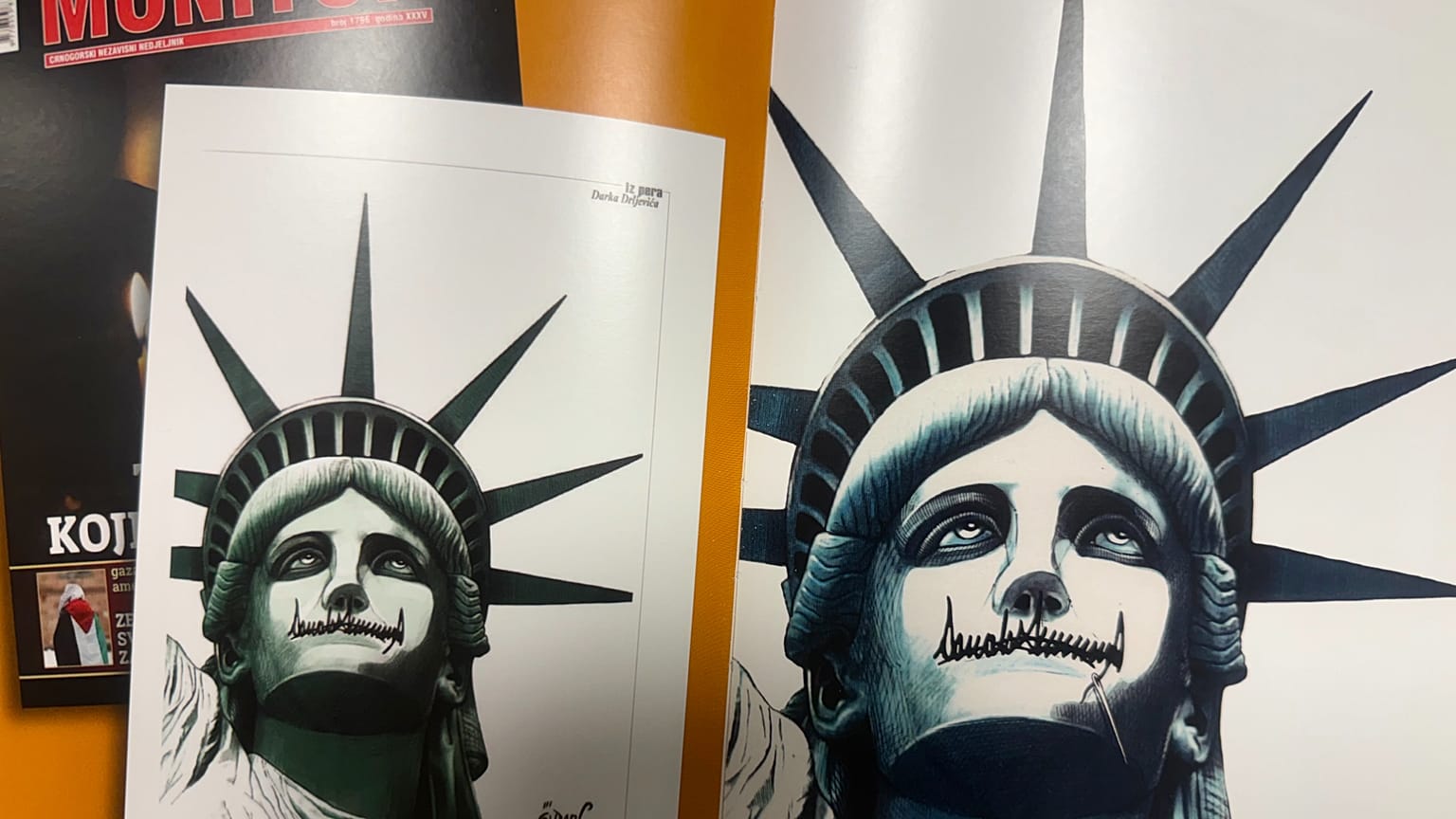
A drawing of the Statue of Liberty with her mouth sewn shut, preventing her from speaking. If you look closely, you realise that the lines sewing up Lady Liberty's mouth is actually Donald Trump's famous signature, which the US president loves to show on camera, signed in black marker whenever he seals an executive order. It's the work of cartoonist Darco, originally from Montenegro, and was published in the 21 March issue of Monitor magazine.

Awarded the Grand Prix, it was the big winner of this year's World Press Cartoon, the competition that brings together press cartoons and showcases the most accomplished, the funniest, and also the most thought-provoking images.

"In my opinion, Trump has suspended all the freedoms of the American people and wanted to make sure that each of his signatures shut the mouths of all free people. He also banned the publication of cartoons in well-known daily newspapers such as the Washington Post or the New York Times," Darco told Euronews. "Nowadays, there isn't much freedom in the world press, because newspapers have become private and are no longer the free press they used to be. That's why I think that even the directors and editors of newspapers have no idea what a cartoon is, what humour is, what freedom is," he adds.


Poster for the 2025 edition of World Press Cartoon World Press Cartoon

The exhibition, which is as important to press design as World Press Photo is to photography, has returned after a two-year break and once again has Portuguese cartoonist António Antunes as its director.

Organised for the first time in 2005, the WPC is celebrating its 20th anniversary with a new venue, moving to Palácio Anjos in Algés.

This year's edition is dominated by images of the US and Russian presidents, Donald Trump and Vladimir Putin.

"Trump and Putin are very present, naturally, because they've been in the news throughout the year. But we have other topics in the spotlight, such as global warming or the Gaza Strip," says António Antunes.

The Portuguese cartoonist, who for more than 50 years has been the main cartoonist for the weekly Expresso and one of the world's biggest names in cartooning, stressed the importance of the art form in the current climate: "With fake news, censorship, pressure, cartoonists being fired and newspapers closed, all of this makes the World Press Cartoon a very popular event for cartoonists from all over the world," .

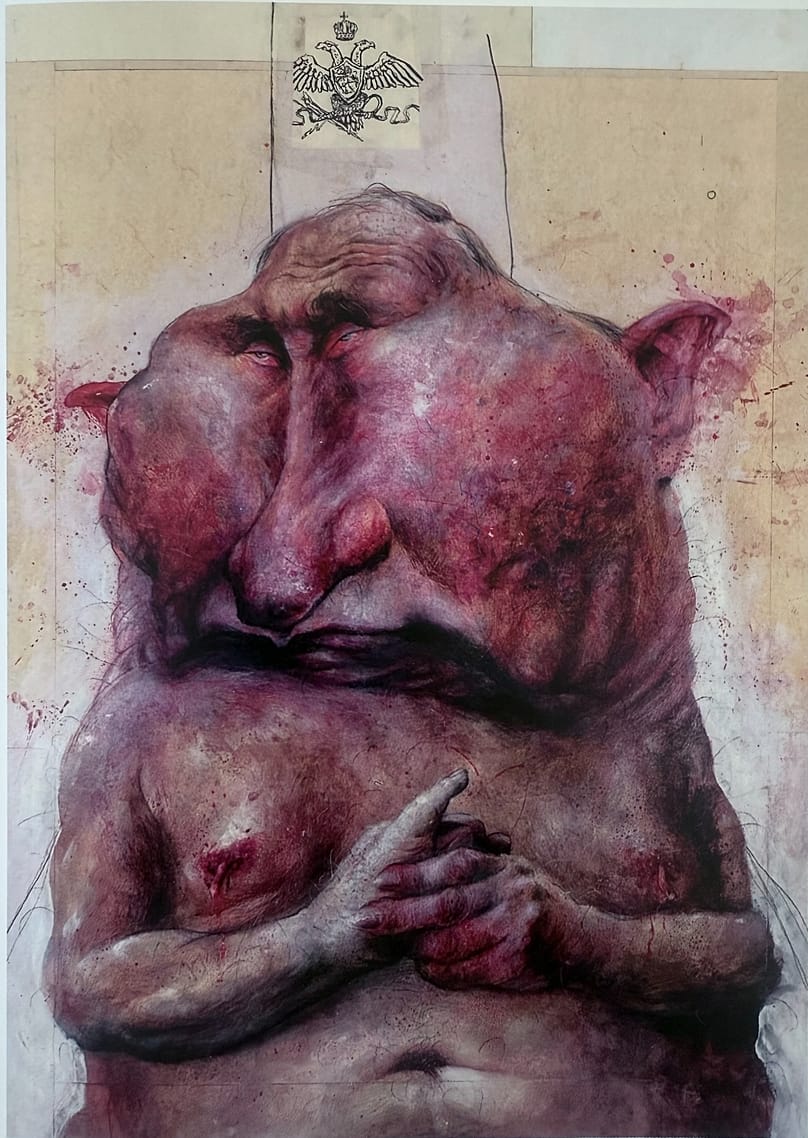
Vladimir Putin is depicted in a cartoon by German Frank Hoppmann which took first prize in the Caricature category. The work was published on the first day of the year edition of Italien magazine. Hoppmann had already won the Grand Prix in the 2020 edition with a caricature of Boris Johnson, Britain's former prime minister.


Vladimir Putin as seen by German Frank Hoppmann Frank Hoppmann / Italien

Commenting on his very particular style, the German cartoonist told Euronews: "What I like, when I paint or draw, is to provoke a strong reaction, not necessarily a positive one, but one that moves the viewer."

As for the threat to press freedom posed by politicians like Putin, he's not too worried: "I'm pretty sure that crooks like Putin, Erdogan or Trump don't care about caricatures, critical drawings or critical media. That's our job, which certainly requires a bit of courage, even if we're sitting at home and relatively protected. Sometimes we're the target of hostility, which is very common these days on social media. But we have to rise above that."

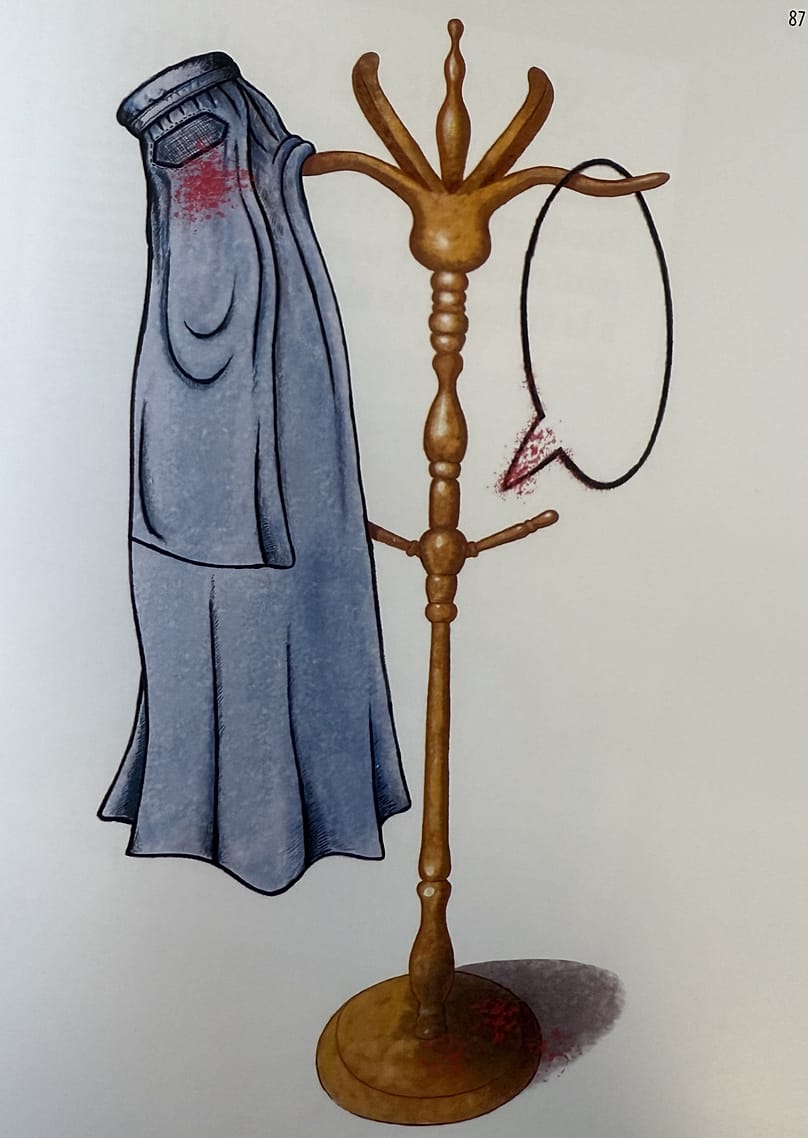
Finally, the first prize in the Humorous drawing category went to Iranian Nahid Maghsoudi whose cartoon alluded to International Women's Day on 8 March. Published by the Dutch website Cartoon Movement it shows a bloodied burqa hanging on a coatstand, next to an equally bloodied speech bubble, thus showing the silencing of women in some countries.
The World Press Cartoon exhibition, which brings together around 300 drawings from around the world, can be seen at the Palácio Anjos in Algés, Portugal until 8 February 2026.

 "International Women's Day", cartoon by Iranian Nahid Maghsoudi Nahid Maghsoudi

G7 foreign ministers close ranks on wars in Ukraine and Sudan

Top diplomats from the Group of Seven industrialised democracies presented a united front on Ukraine and Sudan on Wednesday, even as they skirted around the more contentious issues overshadowing the gathering.


Issued on: 13/11/2025 - RFI

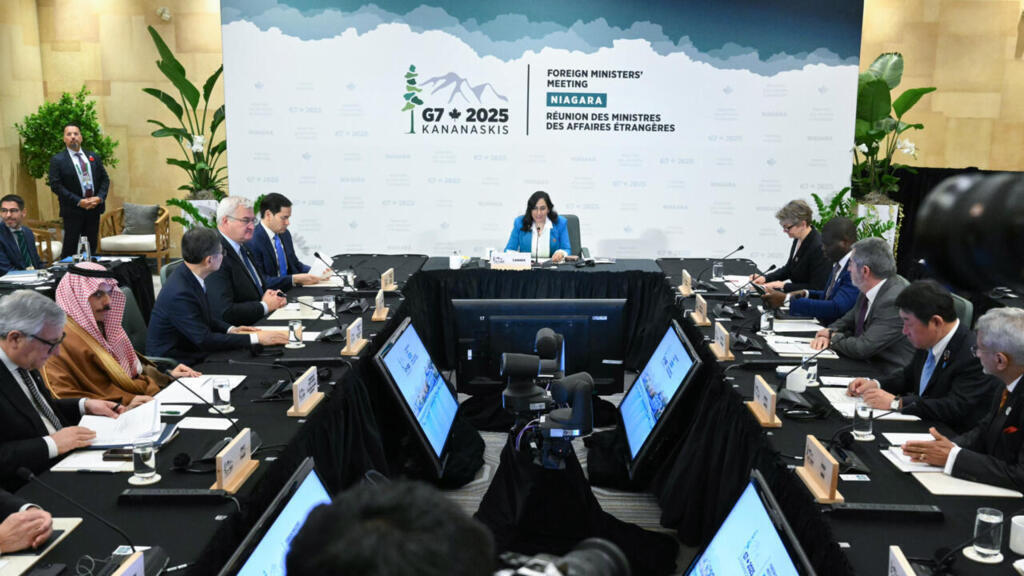
Canada’s Foreign Minister Anita Anand (centre) chairs a G7+ session on security during the G7 Foreign Ministers’ Meeting at the White Oaks Resort in Niagara-on-the-Lake, Canada, on 12 November 2025. © Mandel Ngan / POOL / AFP

Meeting in the Canadian town of Niagara-on-the-Lake – just a short hop from the US border – G7 foreign ministers held talks with their Ukrainian counterpart as Kyiv braces for what could be its most challenging winter yet.

Rolling blackouts triggered by Russian aerial attacks have underscored the fragility of Ukraine’s energy grid, and Foreign Minister Andriy Sybiha made no attempt to play down the scale of the challenge.

Ukraine, he said, needed the full support of its partners to withstand a “very difficult, very tough winter”. The priority now was to “move forward to pressure Russia, to raise the price for the aggression… for [President Vladimir] Putin, to end this war”.

Zelensky pushes EU to unlock €140bn in frozen Russian assets

Fresh pressure on Russia

Following two days of discussions, the G7 ministers issued a joint statement pledging to tighten economic pressure on Moscow and examine new measures targeting those who bankroll Russia’s war machine.

Canada, for its part, rolled out fresh sanctions aimed at individuals involved in the development and deployment of drones, while Britain earlier in the week committed additional funding to shore up Ukraine’s battered energy infrastructure.

Although the United States offered no new initiatives at the summit, US Secretary of State Marco Rubio said in a social-media post that ministers had explored ways “to strengthen Ukraine’s defence and find an end to this bloody conflict”.

Canada’s Foreign Minister, Anita Anand, struck a similarly determined note: “We are doing whatever is necessary to support Ukraine,” she said.

France sounds alarm on Caribbean unrest as G7 leaders meet in Canada
Trade tensions with US

The gathering took place against an awkward political backdrop. US President Donald Trump recently pulled the plug on trade talks with Canada after Ontario’s provincial government ran an anti-tariff advert in the United States – a move that reportedly infuriated him.

It capped a fractious spring during which Trump openly mused that Canada should simply become the 51st US state.

Anand, however, sidestepped questions about the dispute, insisting she was in Niagara-on-the-Lake solely to focus on G7 business. She added that she had not raised trade matters during her meeting with Rubio, noting that responsibility for the file lies with another minister.

One sensitive topic that barely featured – at least publicly – was the Trump administration’s expanding military campaign against alleged drug-smuggling vessels in the Caribbean and eastern Pacific.

Washington says it has carried out 19 strikes since early September, killing at least 75 people. Members of Congress have been pressing for clarity on who is being targeted and on what legal basis.

Yet Rubio insisted the issue simply did not arise in his discussions with fellow ministers. “It didn’t come up once,” he said, brushing aside reports that Britain had halted intelligence sharing.

“Nothing has changed or happened that has impeded in any way our ability to do what we’re doing,” he added. “Nor are we asking anyone to help us with what we’re doing – in any realm. And that includes military.”

Sudan’s civilians flee mounting atrocities as Darfur’s war deepens
Condemnation of Sudan violence

Where the ministers did speak out forcefully was on Sudan, where violence between the Sudanese army and the paramilitary Rapid Support Forces is spiralling.

In their statement, G7 countries condemned the escalation in fighting, while Rubio described the humanitarian situation as dire and urged efforts to halt the flow of weapons to the RSF.

Pressed on the widely reported role of the United Arab Emirates – allegations the UAE has repeatedly denied – Rubio was circumspect but pointed.

The United States, he said, knew exactly who was supplying the RSF. “At the highest levels of our government, that case is being made and that pressure is being applied to the relevant parties,” he said. “This needs to stop.”

Alongside the G7 members – Canada, the United States, Britain, France, Germany, Italy and Japan – Anand expanded the table by inviting ministers from Australia, Brazil, India, Saudi Arabia, Mexico, South Korea, South Africa and Ukraine.


G7 ministers unite on Ukraine and Sudan, avoid US military and trade disputes

Foreign ministers from the Group of Seven industrialised democracies wrapped up talks in Canada on Wednesday, reaffirming support for Ukraine and condemning violence in Sudan while steering clear of contentious issues such as recent US military strikes in the Caribbean and tensions over trade.


Issued on: 13/11/2025 -
By: FRANCE 24

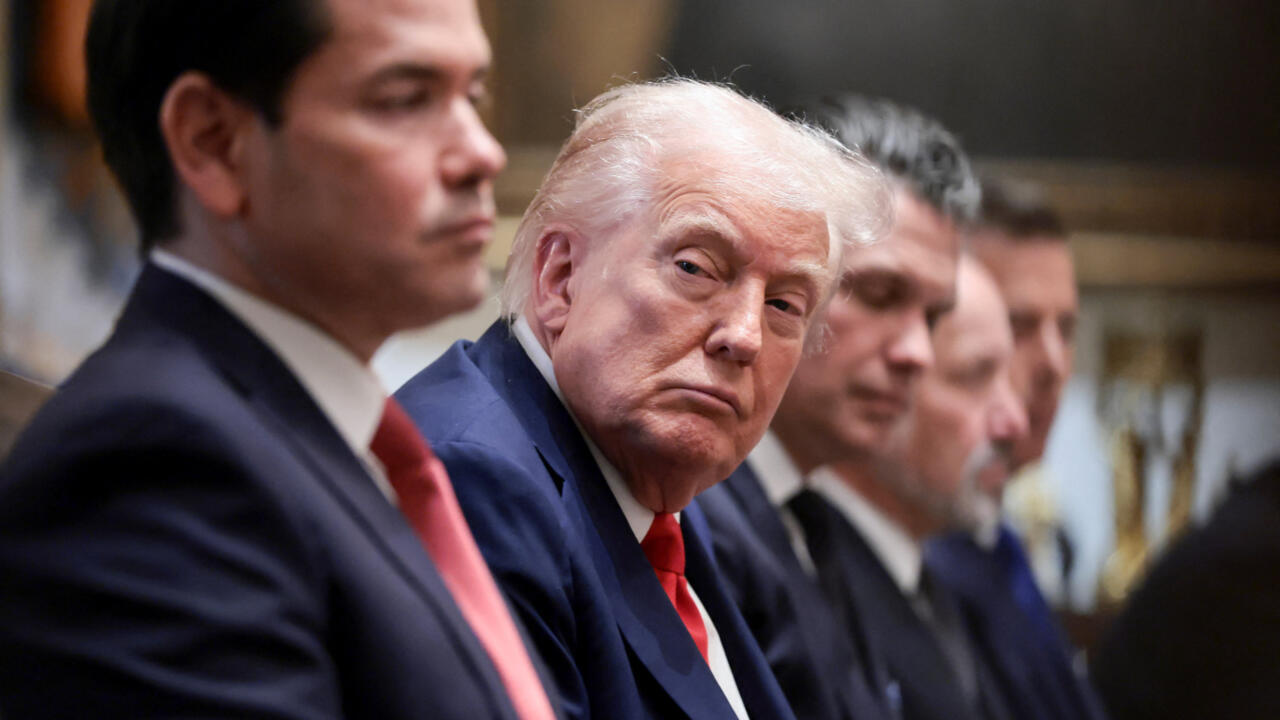
US President Donald Trump, Secretary of State Marco Rubio and Defence Secretary Pete Hegseth attend a cabinet meeting at the White House, in Washington, DC
. © Evelyn Hockstein, Reuters

Top diplomats from the Group of Seven industrialised democracies publicly showed their consensus on Ukraine and Sudan on Wednesday, but stayed away from contentious issues like the US military strikes on boats in the Caribbean and trade.

The foreign ministers of the G7 met with Ukraine's foreign minister on Wednesday as Kyiv tries to fend off Russian aerial attacks that have brought rolling blackouts across the country. Andriy Sybiha said Ukraine needs the support of its partners to survive what will be a “very difficult, very tough winter".

“We have to move forward to pressure Russia, to raise the price for the aggression, for Russia, for (Russian President Vladimir) Putin, to end this war,” Sybiha said.

The G7 ministers said in a joint statement at the conclusion of the two-day gathering that they are increasing the economic costs to Russia and exploring measures against those who finance Russia’s war efforts.

Canada announced more sanctions against Russia, including targeting those involved in the development and deployment of drones, and Britain, a day earlier, pledged money for Ukraine’s energy infrastructure.

US Secretary of State Marco Rubio made no immediate announcements about new US initiatives but said on social media that the meeting delved into ways “to strengthen Ukraine’s defence and find an end to this bloody conflict".

Deceived and deployed: Russia recruits Indians as cannon fodder on the Ukrainian front

“We are doing whatever is necessary to support Ukraine,” Canadian Foreign Minister Anita Anand said.

The meeting in Niagara-on-the-Lake, near the US border, followed President Donald Trump’s decision to end trade talks with Canada after the Ontario provincial government ran an anti-tariff advertisement in the US, which upset him. That followed a spring of acrimony, since abated, over the president’s insistence that Canada should become the 51st US state.

Anand declined to talk about the trade dispute.

“I am here to talk about the work that the G7 ministers are doing,” she said. “And that is exactly what I think I should be discussing.”

Anand met with Rubio, but said she did not bring up trade talks, noting that a different minister leads the trade issue.

The Trump administration says the US military has killed at least 75 people in 19 known strikes against what it says are drug-smuggling vessels in the Caribbean Sea and eastern Pacific Ocean since early September. The administration has been under pressure from Congress to provide more information about who is being targeted and the legal justification for the strikes.

READ MOREUS strikes 2 more Latin American ‘drug boats’, bringing death toll to 76

Rubio told reporters that questions about the military campaign and intelligence sharing in support of the operations were not raised with him at all by any of his G7 or other counterparts on Wednesday.

“It didn’t come up once,” Rubio said.

He also denied a report that Britain has stopped sharing intelligence.

“Again, nothing has changed or happened that has impeded in any way our ability to do what we’re doing. Nor are we asking anyone to help us with what we’re doing – in any realm. And that includes military,” Rubio said.

The G7 ministers in their joint statement strongly condemned the recent escalation of violence in war-torn Sudan, and Rubio decried the humanitarian situation and said “something needs to be done” to cut off the weapons and other support that the paramilitary Rapid Support Forces are receiving as they battle the Sudanese army.

Asked by reporters about the role of the United Arab Emirates in the conflict, Rubio said the US knows who’s involved in supplying the RSF.

“I can just tell you, at the highest levels of our government, that case is being made and that pressure is being applied to the relevant parties,” Rubio said, without naming any country. “This needs to stop. I mean, they’re clearly receiving assistance from outside.”

The Associated Press has reported that US intelligence assessments for many months have found that the United Arab Emirates, a close US ally, has been sending weapons to the RSF. The UAE denies backing the RSF.

The G7 comprises Canada, the United States, Britain, France, Germany, Italy and Japan. Anand also invited the foreign ministers of Australia, Brazil, India, Saudi Arabia, Mexico, South Korea, South Africa and Ukraine to the meeting, which began Tuesday.

(FRANCE 24 with AP)

GOOD NEWS

Algeria frees French-Algerian writer Boualem Sansal for transfer to Germany


Algeria has pardoned French-Algerian writer Boualem Sansal after a request from Germany, to where he will be transferred for medical treatment after a year in detention, it was announced Wednesday.


Issued on:  13/11/2025  RFI

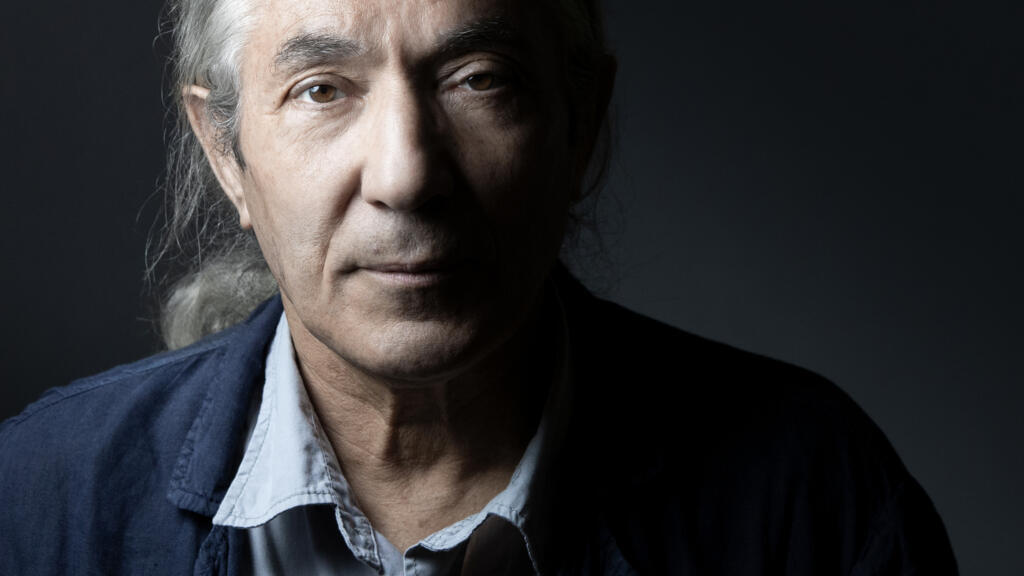
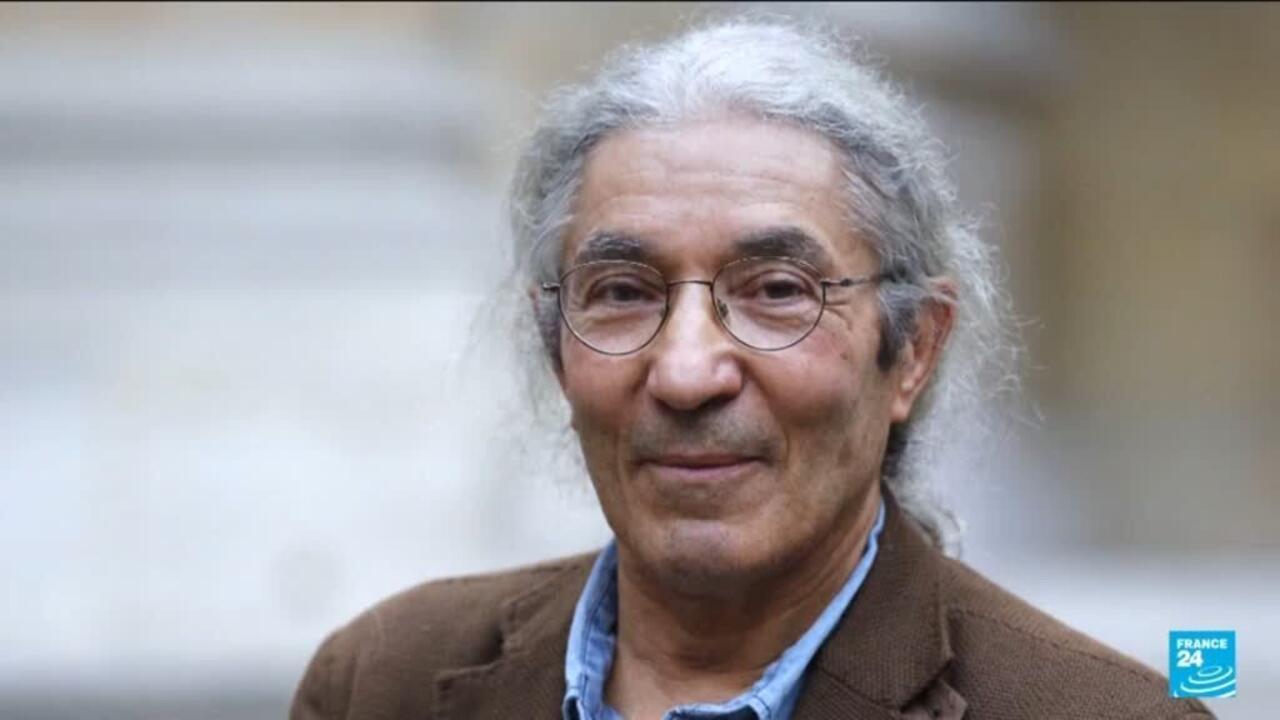
French Algerian writer Boualem Sansal, now 80 but pictured here in 2015, was suffering from prostate cancer in an Algerian jail, according to his family, and will now be treated in Germany. © JOEL SAGET / AFP

After German President Frank-Walter Steinmeier on Monday urged Algeria to free the 81-year-old, "the president of the republic decided to respond positively", the Algerian presidency said.

The statement said Germany would take charge of the transfer and treatment of Sansal, who has prostate cancer, according to his family.

Sansal was given a five-year jail term in March, accused of undermining Algeria's territorial integrity after he told a far-right French outlet last year that France had unjustly transferred Moroccan territory to Algeria during the 1830 to 1962 colonial period.

France 'concerned' over disappearance of writer Boualem Sansal in Algeria

Algeria views those ideas - which align with longstanding Moroccan territorial claims - as a challenge to its sovereignty.

He was arrested in November 2014 at Algiers airport. Because he did not appeal March's ruling, he was eligible for a presidential pardon.

Steinmeier urged Algeria to make a humanitarian gesture "given Sansal's advanced age and fragile health condition" and said Germany would take charge of his "relocation to Germany and subsequent medical care".
'Mercy and humanity'

French President Emmanuel Macron had also urged Tebboune to show "mercy and humanity" by releasing the author.

Sansal's daughter Sabeha Sansal, 51, told Ffrench news agency AFP by telephone from her home in the Czech Republic of her relief.

"I was a little pessimistic because he is sick, he is old, and he could have died there," she said. "I hope we will see each other soon."

A prize-winning figure in North African modern francophone literature, Sansal is known for his criticism of Algerian authorities as well as of Islamists.

He acquired French nationality in 2024.

Appearing in court without legal counsel on June 24, Sansal had said the case against him "makes no sense" as "the Algerian constitution guarantees freedom of expression and conscience".

When questioned about his writings, Sansal asked: "Are we holding a trial over literature? Where are we headed?"

French-Algerian writer Boualem Sansal sentenced to five years in prison

His case has become a cause celebre in France, but his past support for Israel and his 2014 visit there have made him largely unpopular in Algeria.

The case has also become entangled in the diplomatic crisis between Paris and Algiers, which has led to the expulsion of officials on both sides, the recall of ambassadors and restrictions on holders of diplomatic visas.

Another point of contention was the sentencing to seven years in prison of French sportswriter Christophe Gleizes in Algiers on accusations of attempting to interview a member of the Movement for the Self-Determination of Kabylie (MAK), designated a terrorist organisation by Algeria in 2021.

Both Sansal and Gleizes's prosecution came amid the latest rise in tensions between Paris and Algiers, triggered in July 2024 when Macron backed Moroccan sovereignty over the disputed Western Sahara, where Algeria backs the pro-independence Polisario Front.
Civil servant turned novelist

An economist by training, Sansal worked as a senior civil servant in his native Algeria, with his first novel appearing in 1999.

"The Barbarians' Oath" dealt with the rise of fundamentalist Islam in Algeria and was published in the midst of the country's civil war which left some 200,000 people dead according to official figures.

He was fired from his post in the industry ministry in 2003 for his opposition to the government but continued publishing.

Algeria court upholds writer Boualem Sansal's five-year jail term

His 2008 work "The German Mujahid" was censored in Algeria for drawing parallels between Islamism and Nazism.

He has received several international prizes for his work, including in France and Germany.

In recent years Germany has offered refuge to several high-profile prisoners from other countries.

The late Russian opposition leader Alexei Navalny was treated at Berlin's Charite hospital after being poisoned in August 2020.

Last year Germany welcomed several other high-profile Russian dissidents as part of a historic prisoner swap with Moscow.

(with newswires)


Algeria pardons French-Algerian writer Boualem Sansal


Algeria’s president on Wednesday granted a humanitarian pardon to French-Algerian novelist Boualem Sansal following a German request for his release. The 81-year-old writer, whose year-long imprisonment sparked widespread criticism, arrived in Berlin late Wednesday for medical treatment.


Issued on: 12/11/2025 - 
By: FRANCE 24
Video by: Morgan AYRE


French-Algerian writer Boualem Sansal was granted a humanitarian pardon, the Algerian presidential office said in a statement on Wednesday.

Sansal, 81, was arrested on November 16, 2024, in Algiers and sentenced on appeal in July 2025 to five years in prison for comments deemed harmful to national unity.

His pardon came after German President Frank-Walter Steinmeier urged Algeria to free Sansal. "The president of the republic decided to respond positively to the request of the esteemed president of the friendly Federal Republic of Germany", said the Algerian presidential statement.

READ MOREFrench-Algerian writer Boualem Sansal won't appeal sentence, hopes for pardon


Steinmeier thanked Algerian President Abdelmadjid Tebboune in a statement for the "humanitarian gesture" that "demonstrates the quality of the relations and trust between Germany and Algeria".

Hours after the pardon was announced, Sansal arrived in Berlin, according to the German presidential office.

French President Emmanuel Macron on Wednesday thanked his counterparts in Algiers and Berlin for Sansal's release on humanitarian grounds.

Macron, while visiting the southern city of Toulouse, said he had spoken by phone with Steinmeier "to express my deep gratitude for Germany's good offices", after Berlin requested and obtained Boualem Sansal's pardon.

"I acknowledge this gesture of humanity from President Tebboune and thank him for it," he said of the Algerian leader, adding that he remained "available to discuss with him all matters of interest to our two countries".

Prior to the pardon, Macron had called on Tebboune to show "mercy and humanity" by releasing the author.

READ MOREMacron urges 'mercy' for jailed writer Sansal in call with Algeria's Tebboune

Sansal is known for his criticism of Algerian authorities as well as of Islamists. He was arrested in November after saying, in an interview with a far-right French media outlet, that France unfairly ceded Moroccan territory to Algeria during the colonial era.

His statement, which echoed a long-standing Moroccan claim, was viewed by Algeria as an affront to its national sovereignty.

The author's arrest in Algiers deepened a diplomatic rift with France, which analysts have said is the worst the two countries have seen in years.

Sansal's pardon a 'relief' says French PM

© France 24
04:16


'I hope we will see each other soon'

Sansal's daughter Sabeha Sansal, 51, expressed her relief over the decision in a phone call from her home in the Czech Republic.

"I was a little pessimistic because he is sick, he is old, and he could have died there," she said. "I hope we will see each other soon."

A prize-winning figure in North African modern francophone literature, Sansal acquired French nationality in 2024.

Appearing in court without legal counsel on June 24, Sansal had said the case against him "makes no sense" as "the Algerian constitution guarantees freedom of expression and conscience".

When questioned about his writings, Sansal asked: "Are we holding a trial over literature? Where are we headed?"

His case has become a cause celebre in France, but his past support for Israel and his 2014 visit there have made him largely unpopular in Algeria.

The case has also become entangled in the diplomatic crisis between Paris and Algiers, which has led to the expulsion of officials on both sides, the recall of ambassadors and restrictions on holders of diplomatic visas.

READ MORE'Insult to injury': What’s behind the rising tensions between France and Algeria?

Another point of contention was the sentencing to seven years in prison of French sportswriter Christophe Gleizes in Algiers on accusations of attempting to interview a member of the Movement for the Self-Determination of Kabylie (MAK), designated a terrorist organisation by Algeria in 2021.

Both Sansal and Gleizes's prosecution came amid the latest rise in tensions between Paris and Algiers, triggered in July 2024 when Macron backed Moroccan sovereignty over the disputed Western Sahara, where Algeria backs the pro-independence Polisario Front.
Civil servant turned novelist

An economist by training, Sansal worked as a senior civil servant in his native Algeria, with his first novel appearing in 1999.

"The Barbarians' Oath" dealt with the rise of fundamentalist Islam in Algeria and was published in the midst of the country's civil war which left some 200,000 people dead according to official figures.

He was fired from his post in the industry ministry in 2003 for his opposition to the government but continued publishing.

His 2008 work "The German Mujahid" was censored in Algeria for drawing parallels between Islamism and Nazism.

He has received several international prizes for his work, including in France and Germany.

In recent years Germany has offered refuge to several high-profile prisoners from other countries.

The late Russian opposition leader Alexei Navalny was treated at Berlin's Charite hospital after being poisoned in August 2020.

Last year Germany welcomed several other high-profile Russian dissidents as part of a historic prisoner swap with Moscow.

(FRANCE 24 with AFP)
GO TO HELL!
Juan Ponce Enrile, architect of Philippine martial law, dies at 101: daughter

Manila (AFP) – Juan Ponce Enrile, a shrewd political operator who helped usher in the darkest repression of the late Philippine dictator Ferdinand Marcos's rule, died on Thursday at the age of 101, his daughter said.


Issued on: 13/11/2025 - RFI

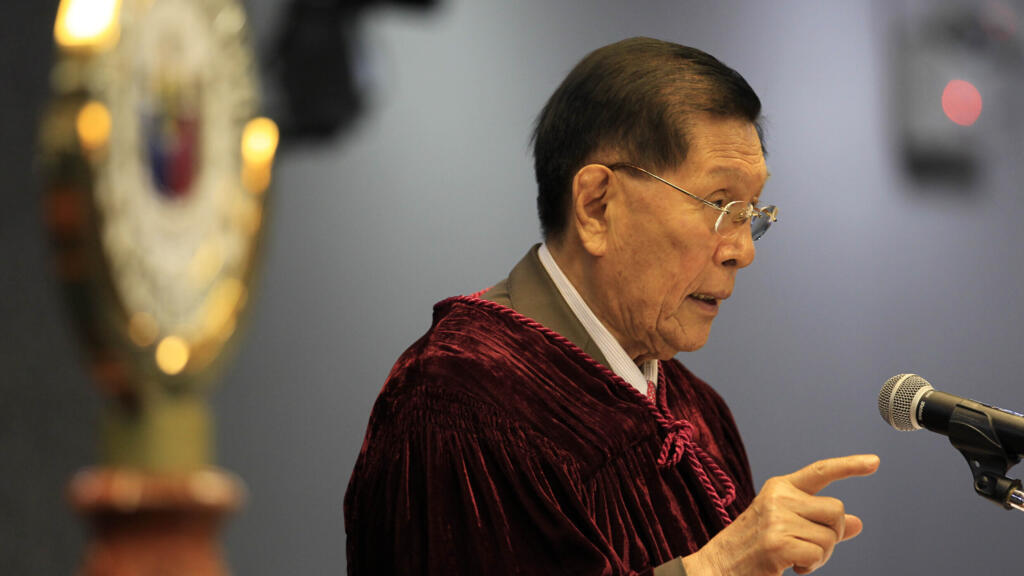
Juan Ponce Enrile, known as the architect of the Philippines' martial law dictatorship, has died aged 101 © BULLIT MARQUEZ / POOL/AFP

Advertising


Enrile, who was being treated for pneumonia, died at home at 4:21 pm (0821 GMT) "surrounded by our family", Katrina Ponce Enrile said on her Facebook page, adding there would be a public viewing.

Known as the architect of the brutal martial law used to crush opposition to Marcos's rule, Harvard-educated Enrile was a long-time top adviser to the authoritarian leader.

Enrile later turned on Marcos and was instrumental in sparking the popular 1986 uprising that led to the president's ouster less than three years after the 1983 murder of opposition leader Benigno Aquino.

True to his survivor instincts, Enrile switched sides again and helped the Marcos family in their remarkable political comeback after they returned to the Philippines from exile.


After Ferdinand Marcos Jr, the late dictator's son, won the 2022 presidential election, he named Enrile his chief legal counsel, two years shy of his 100th birthday.

A wily politician, Enrile never spent a day behind bars for his role in the Marcos dictatorship despite its human rights abuses.

Instead, he enjoyed a decades-long career as a lawmaker.
'A good beginning sours'

According to his memoir, Enrile was a widow's son by a prominent married lawyer. He was born Juanito Furagganan on February 14, 1924.

The boy later took his father's name and became a respected attorney himself, as well as a close confidant of rising politician Marcos, who would win the presidency in 1965.

Before becoming defence minister, Enrile held other key posts, including customs chief and justice minister.

Marcos's order implementing martial law in 1972 cited various acts of terror around the country, including an alleged communist guerrilla assassination attempt on Enrile.

Many years later, Enrile gave differing statements on that key event, saying at one point the claimed ambush was made up, and then writing in his memoir that it had actually happened.

Under martial law, Enrile was the second-most-powerful man in the country, deciding who could be jailed or freed.

Amnesty International estimates Marcos's security forces either killed, tortured, sexually abused, mutilated or arbitrarily detained tens of thousands of opponents.

Under legislation signed in 2013 by former president Benigno Aquino -- son and namesake of the opposition leader assassinated 30 years earlier -- more than 11,000 victims have been officially recognised and compensated.

Enrile never apologised for his role in the dictatorship and even defended martial law.

"It was operating well at least from 1972 all the way to 1975, but somehow along the way, just like everything that we do in this country, a good beginning sours," he told journalists in 2006.
'People Power'

By the 1980s, Marcos was ailing, and it was becoming clear that his wife Imelda and her allies were not planning to keep Enrile in the future regime.

In response, Enrile organised a cabal of disgruntled young military officers into the Reform the Armed Forces Movement (RAM), laying plans to seize power.

The 1983 murder of Aquino by soldiers loyal to Marcos and massive cheating in 1986 polls caused widespread unrest, further weakening Marcos's position.

The RAM sought to exploit the situation with a plot to overthrow the Marcos government, but their plan was discovered before it could be launched.

Facing arrest, Enrile and his allies holed up at the military headquarters in Manila and appealed to the public to protect them from an imminent government attack.

Millions of people poured onto the streets in response, triggering the "People Power" revolt that toppled Marcos, installed Aquino's widow Corazon as president, and restored democracy.

In gratitude for his role in Marcos's downfall, Aquino appointed Enrile as her defence minister, but he stayed in her cabinet for only a short time.

He was thrice briefly arrested, in 1990, 2001, and 2014, the first two times for alleged involvement in coup plots and the last over the embezzlement of public funds.

All the while, Enrile remained an influential figure, serving as a lawmaker for most of the period, including as Senate president from 2008 to 2013.

In 2014, Enrile was arrested with two other senators for allegedly receiving bribes as part of a massive corruption scandal in which hundreds of millions of dollars in public funds intended for development projects were pilfered.

But while his co-accused languished behind bars, the Supreme Court, citing Enrile's "fragile health", granted him bail in 2015, allowing him to spend his twilight days at home.

A special graft court dismissed the plunder, or massive corruption, charges against Enrile last year, and last month acquitted him of the remaining graft cases against him as well.

© 2025 AFP


Tanzania’s 2025 Elections: AU And SADC Condemn Final Results – OpEd


November 13, 2025 

By Kester Kenn Klomegah


Women’s empowerment was uniquely exemplified by voting for Samia Suluhu Hassan as the new president of the United Republic of Tanzania late October 2025, but that election has generated distressing reports. Samia Hassan was inaugurated as Tanzania’s first female president in March 2021, and her political status was highly praised as a noticeable breakthrough in gender representation within African politics.

While she has taken a transformative shift away from an era previously marked by oppression, Samia Hassan, 65-year-old Tanzanian politician serving as the sixth president of Tanzania, unexpectedly made drastic changes that signaled distinctive features toward political authoritarianism. She has also been blamed for shattering stability in the East African nation.

The October 2025 election, which consolidated Samia Hassan’s power with 97.66% of the vote, was marred by accusations of massive fraud and a severe repression of opposition protests. The African Union’s observer mission stated the election “did not comply” with regional or international standards, citing irregularities and the internet shutdown. Numerous human rights organizations accused her government of authorizing the use of live ammunition against civilians. The main opposition party claimed it had documented up to 1,000 people killed, labeling the acts as crimes against humanity.

The government denied these claims; while President Hassan acknowledged deaths occurred, her government called the opposition’s death toll “hugely exaggerated”

The Southern African Development Community (SADC), its Observer Committee issued the highest condemnation after the election results in Tanzania, declaring as the winner of the presidency. The Committee said it strictly followed and critically assess the conduct of the electoral process in accordance with the national legal framework.

In official remarks, SADC officials reiterated that there were serious violations relating to civic and political rights on 29 October 2025. In the period leading up to election day, massive demonstrations by opposition political parties, civil society organizations, youth and women’s groups signaling gross misunderstanding and that reflected diverse perspectives. SADC deployed its observers across 27 out of 31 regions in the country, underscoring its commitment to promoting democratic governance and credible electoral processes within the region.


An independent African Union’s election observation group, headed by Mokgweetsi E.K. Masisi, former President of the Republic of Botswana, was deployed in Tanzania and Zanzibar from 14 October to 3 November 2025, to observe the 29th October elections, later indicated, in an official statement published on its website, that there were serious election violations.

The group’s main task was (a) assess whether the 2025 electoral process complies with AU principles; (b) ascertain that the environment was peaceful for conducting democratic elections that will foster acceptance of the electoral outcomes; (c) evaluate the level of preparedness of the electoral commission and other electoral institutions; (d) provide recommendations for improving future elections and (e) demonstrate the AU’s solidarity and support for Tanzania’s democratic and electoral processes to ensure that the conduct of genuine elections contributes to the consolidation of peace and stability, and promotes inclusive development in the country.

It is worth noting that the group was unable to meet with some stakeholders due to restrictions imposed by the Government of Tanzania. Next, the group was unable to complete election day observations at some polling stations due to outbreaks of deadly protests and the subsequent six-day internet shutdown.

The subsequent arrest and prosecution of Chairperson Tundu Lissu on treason charges, and the arrest of Vice Chairperson John Heche on immigration charges, as well as the high courts banning of the opposition party from conducting any political activity due to allegations of disproportionate use of party resources, incapacitated the main opposition. Some of the key constitutional reforms that were not implemented before the final elections.

The group evaluated the elections in line with international and regional standards for democratic elections, but emphasised that regular elections without genuine competition and adherence to democratic principles result in voter apathy and ultimately lead to citizens’ disengagement from political activities.

It further noted serious violations relating to the voter registration drive that enrolled new voters, voter education, logistics planning, and the procurement of biometric verification kits, among others. Despite these efforts to show a mixed picture of women’s political participation, the numbers remained significantly low.

It noted that youth participation in electoral processes faced significant challenges and as such was under-represented. The group noted with concern, allegations of excessive use of force by the police and the military in maintaining law and order during protests that characterised election day and immediately afterwards.

While the group has acknowledged commendable efforts undertaken to prepare for the elections, to introduce technology in election administration, and to promote the participation of marginalised groups in voting, it however pointed to the legal framework’s failure to comply with some African Union (AU) democratic norms and international standards for democratic elections, non-implementation of recommended reforms from previous election observation missions, the interruption of the polling process in some parts of the country, and the internet shutdown on election day and afterwards compromised the integrity of the elections.

It concluded that (a) the 2025 Tanzania General Elections did not comply with AU principles, normative frameworks, and other international obligations and standards for democratic elections; (b) the environment surrounding the elections—before, during, and immediately after—was not conducive to peaceful conduct and acceptance of electoral outcomes; (c) the preparedness level of the electoral commission and other electoral institutions was inadequate to address the challenges that compromised the integrity of the 2025 Tanzania General Elections.


Kester Kenn Klomegah

Kester Kenn Klomegah is an independent researcher and a policy consultant on African affairs in the Russian Federation and Eurasian Union. He has won media awards for highlighting economic diplomacy in the region with Africa. Currently, Klomegah is a Special Representative for Africa on the Board of the Russian Trade and Economic Development Council. He enjoys travelling and visiting historical places in Eastern and Central Europe. Klomegah is a frequent and passionate contributor to Eurasia Review.