Thursday, November 13, 2025

Electricity Shortages Threaten to Pull the Plug on AI Expansion

  • Earlier this month, Nvidia’s chief executive warned that the West risks losing the AI race because electricity was too expensive.

  • Goldman Sachs: AI boom could reach 9% of the total energy demand in the United States.

  • AP reported this week that electricity bills are shaping up as a major topic of discussion in the upcoming midterm election as resentment towards Big Tech and its data centers grows.

Big Tech is building data centers everywhere it can. Companies are replacing employees with AI—and all this is just the start; or it would be, if there was enough electricity to power all those data centers that handle the AI that everyone is using more and more. That might be a problem.

Earlier this month, Nvidia’s chief executive warned that the West risks losing the AI race because electricity was too expensive. Yet the price of electricity is only one part of the problem that Big Tech faces with regard to its AI plans. The other is the availability of that electricity.

Bloomberg reported this week that at least two data center projects are sitting uncompleted, waiting for electricity supply to be secured before they get finalized. Both are relatively small projects, the publication noted, and highlight a major challenge to the continued proliferation of AI: power. Bloomberg blamed “aging power infrastructure, a slow build-out of new transmission lines and a variety of regulatory and permitting hurdles.”

Regulation and permitting regimes are invariably cited by the corporate world as a problem, so the inclusion of this factor in the list of culprits is essentially standard practice. As for aging infrastructure, this is a real problem that requires hefty investments by power utilities and takes time to solve—and pushes electricity bills higher, aggravating the financial part of the data center problem. Transmission lines are also in short supply—especially for data center operators who want to boost their climate-friendly credentials by contracting electricity supply from wind and solar installations. Yet even those climate-friendly data center operators need stable supply, and there is simply not enough of that.

Related: Oil Prices Sink 4% as OPEC Moves to Balanced 2026 Outlook

Goldman Sachs recently joined the ranks of AI forecasters putting a number on the industry’s energy demand. Per the bank, this number could reach 9% of the total energy demand in the United States. That total last year hit an all-time high, topping 4,000 billion kWh and is expected to keep breaking records this year, the Energy Information Administration predicted, especially noting data centers as one big reason for that.

“The demand has never been higher, and it's really a power-supply problem that we have,” a real estate brokerage executive told Bloomberg. “There are portions of data-center demand that need to be as close as possible to population centers,” Bill Dougherty also said. “That is the demand that needs to be in California. They can't bring it online because there’s constraints on power.”

The data centers that need to be closer to population centers are the smaller ones, which service local clients. Larger data centers can apparently be further from their clients—and for them, the transmission line problem could be a bigger one. But all that pales to the supply problem that has seen wait times for connection to the grid stretch for years. This problem is not going away anytime soon, because building new generation capacity also takes time, and there is a shortage of gas turbines.

Gas-powered plants have become a Goldilocks thing for the tech industry. They take less time to build than nuclear and generate baseload power, unlike wind and solar. But because new gas-powered plant construction has not exactly been booming in the past decades, turbine manufacturers do not exactly keep massive inventory. In other words, there will be a certain time gap between the surge in demand for new generation capacity and the supply response from turbine makers. This brings it all back to the price part of the AI problem, which is heating up.

AP reported this week that electricity bills are shaping up as a major topic of discussion in the upcoming midterm election as resentment towards Big Tech and its data centers grows. “There’s a lot of pressure on politicians to talk about affordability, and electricity prices are right now the most clear example of problems of affordability,” one politics and government professor from Fairleigh Dickinson University told AP.

“Voters are mad as hell about energy prices increasing,” Virginia State Delegate Shelly Simonds told NBC. “And they’re mad about affordability in general. And anybody who ignores these issues does so at their peril. It’s definitely going to be an issue during the midterms,” the Democrat delegate also said.

Interestingly, some researchers disagree that data centers are to blame for higher electricity prices. Instead, they argue it’s the infrastructure investments that are driving bills higher, per a Washington Post report. The study points to a counterintuitive link between electricity demand and prices where higher demand actually leads to lower prices—because with more demand, “you can then take some of those fixed infrastructure costs and end up spreading them around more megawatt-hours that are being sold — and that can actually reduce rates for everyone,” per one of the researchers.

Every website you visit offers an AI option these days. Every company that wants a competitive edge over competitors is using AI for whatever it can think of. But whether the full potential of the technology can be realized would depend on electricity—the availability and price of it.

By Irina Slav for Oilprice.com


Germany Caps Power Prices to Save Its Industrial Base

Germany has agreed to subsidize electricity for its heavy industries, capping prices at about €0.05 per kilowatt-hour from 2026 through 2028—a major policy move aimed at keeping its industrial base from eroding under the weight of Europe’s soaring energy costs.

Chancellor Friedrich Merz said Thursday that Berlin’s coalition partners reached the deal after months of debate, and that discussions with the European Commission for approval were “largely complete.” The measure will target energy-intensive industries such as steel, chemicals, and automaking—sectors that have warned repeatedly they cannot compete globally with power costs nearly double those in the U.S.

Germany’s power market is the largest in Europe, consuming roughly 500 terawatt-hours annually, and it’s been under severe pressure. Since the 2022 energy crisis, power prices have remained volatile—spiking again this fall as renewable generation faltered and gas-fired output surged to its highest level since 2021. Low wind speeds, weak hydro output, and grid bottlenecks forced Germany to burn more natural gas and coal to stabilize supply.

Those dynamics have made energy security a central political issue. Forecasts of a cold winter have already driven German power futures near €100 per megawatt-hour, reigniting public anger over industrial competitiveness and household affordability.

Industry groups say the temporary subsidy is essential to prevent production from shifting overseas. But critics warn it only papers over deeper structural problems—aging infrastructure, slow permitting, and unreliable renewable output—that have left Germany dependent on fossil fuels despite its ambitious climate targets.

Berlin hopes the three-year relief period will buy time to expand grid capacity and add flexible generation, but analysts say unless those projects materialize quickly, the country could face another round of industrial contraction by the decade’s end.

For Europe’s industrial heartland, the price of power has become the price of survival.

By Julianne Geiger for Oilprice.com


Pakistan Pulls Back on LNG as Cheaper Fuels Take Over

  • Pakistan has deferred several 2026 LNG cargoes as spot prices remain volatile, marking a sharp reversal from its rapid import growth just five years ago.

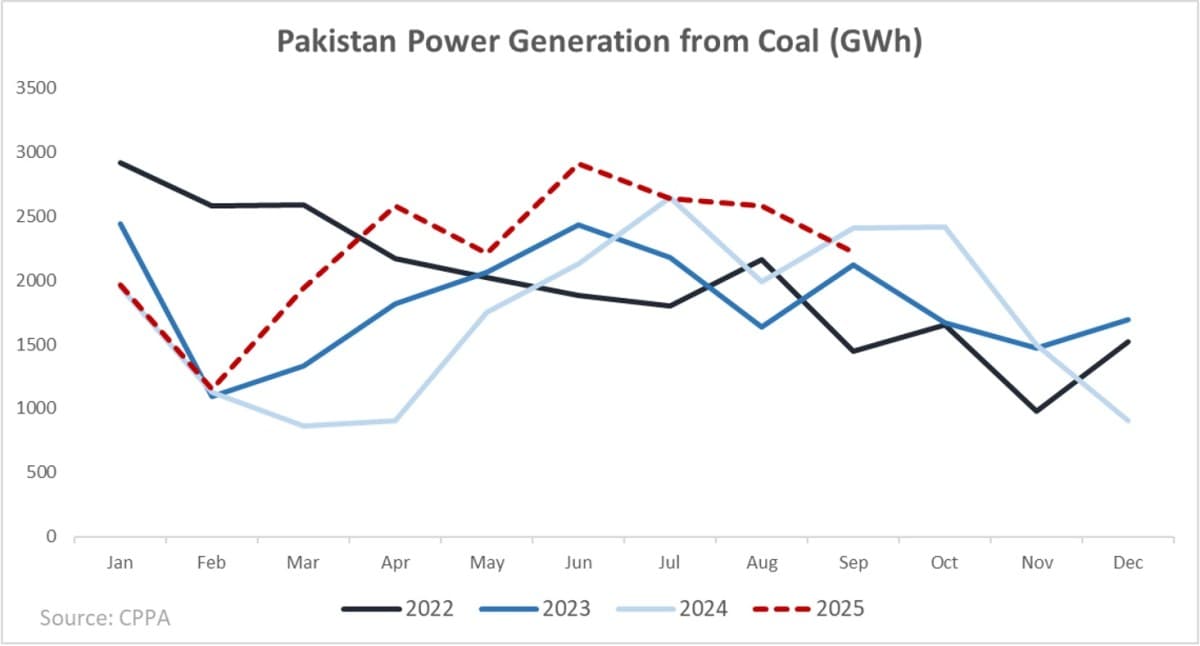
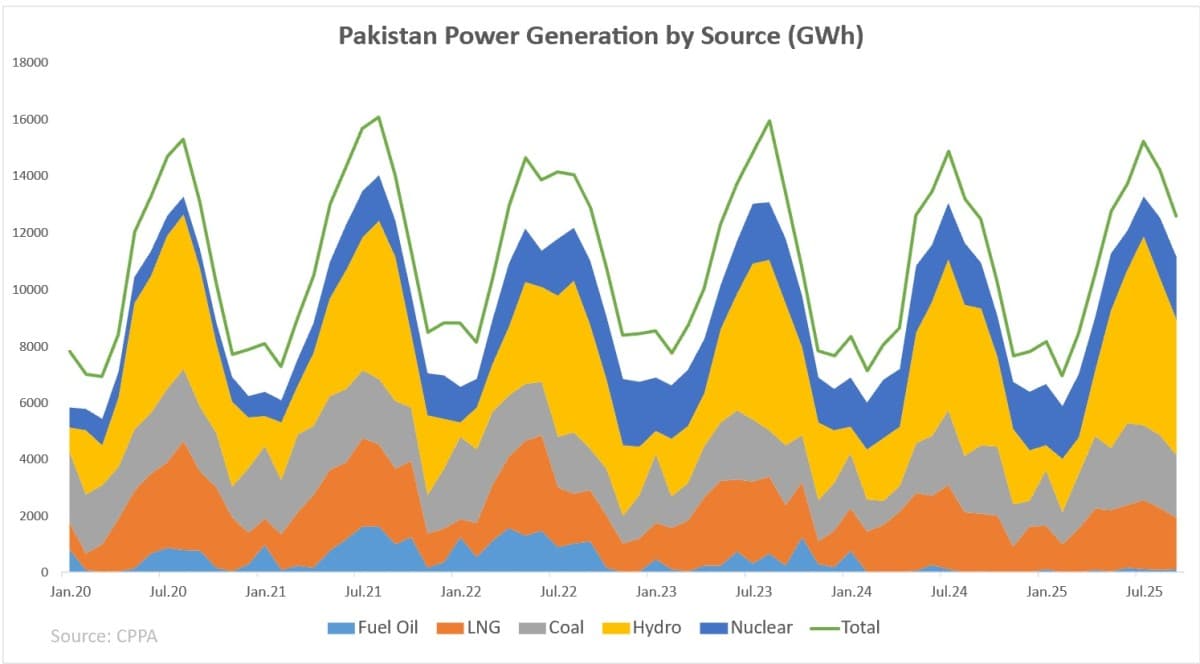
  • Coal’s share in power generation has risen to 27% this year to date, while hydropower climbed to 30% and nuclear output tripled since 2020.

  • With electricity tariffs reaching PKR 35–40 per kWh and external debt swelling — 20–30% owed to China — the country’s energy shift is testing its fiscal limits.

Pakistan is scaling back its dependence on imported LNG as volatile global prices and a weakened currency strain its economy. The government is deferring gas deliveries and turning instead to coal, hydropower, and nuclear energy to stabilize supply and reduce import costs. Cheaper coal and expanding hydro and nuclear capacity, much of it financed by China, are reshaping the country’s power mix. Yet persistent debt, rigid contracts, and grid inefficiencies keep electricity among the most expensive in South Asia.

Pakistan’s main buyer of LNG, the state-owned Pakistan LNG Limited (PLL) has been quietly renegotiating LNG delivery schedules, deferring several cargoes planned for 2026, and seeking additional postponements as spot prices remain volatile. The country’s long-term LNG portfolio – currently dominated by long-term contracts with QatarGas (3.8 million t/y, 2016–2031), Italy’s Eni (0.8 million t/y, 2017–2032) and Azerbaijan’s  Socar (0.8 million t/y, 2023–2028) – has become a liability as Brent-linked formulas sent import bills soaring in rupee terms. Government subsidies that once shielded consumers became fiscally unsustainable, while currency depreciation worsens the pain. Although Pakistan was careful not to link its binding commitments to spot JKM prices (which are currently $3/mmBtu higher than Brent-linked prices), and recent decline in oil prices has eased contract costs slightly, LNG in absolute terms remains far more expensive than when Pakistan signed its 15-year deals with Qatar.

After intensive talks that started in August, the PLL reached an agreement with QatarEnergy and Eni in October to defer up to two LNG cargoes per month in 2026. The arrangement is currently confirmed only for the next year, with future deferrals to be reviewed in line with Pakistan’s evolving gas balance. Meanwhile, the Azerbaijan supply deal—originally set to expire at the end of 2025—was extended to 2028. Unlike the Qatari and Italian contracts, it offers greater flexibility, allowing Pakistan to receive one cargo per month at a price below prevailing market rates, with no penalties foreseen in case PLL forgoes its right of purchase.

Related: Oil Prices Sink 4% as OPEC Moves to Balanced 2026 Outlook

Only a few years ago, Pakistan was a fast-growing buyer of liquefied gas, becoming one of the key drivers of spot-market demand in South Asia. Today, it is pulling back. Petroleum Minister Ali Pervaiz Malik has publicly blamed the country’s heavy reliance on LNG imports for stagnant domestic gas exploration. The guaranteed operation of regasified LNG (RLNG) plants inhibits local production and forces state buyers to absorb expensive contractual volumes even when demand is weak. According to data from the Central Power Purchasing Agency (CPPA), the share of LNG-fired power generation has fallen from 20% in 1Q 2024 to 14% in 3Q 2025, as the government prioritizes coal-based and renewable sources (mainly hydropower) to reduce import exposure. Yet transmission bottlenecks between Pakistan’s northern and southern grids often compel operators to run RLNG plants first, even when cheaper alternatives exist, locking the system into inefficiency.

Coal and hydropower have emerged as the main alternatives. With international coal prices collapsing from an average of $400/t in 2022 to around $100/t in the first nine months of 2025, Pakistan has quietly increased coal’s role in its generation mix. Imported coal’s share rose from 25% to 27% in first 10 months of  2025, with about 70 % of total coal consumption now directed to power plants. The government has also encouraged greater use of domestic reserves, reducing reliance on imports from 60% in 2020 to roughly 25% in 2024. Most imported coal still arrives from South Africa (50-55%) and Indonesia (20%), but local output – particularly from Sindh Province’s vast deposits – is becoming increasingly significant. Pakistan’s recoverable coal reserves exceed 186 billion tonnes, 99% of which lie in Sindh Province, where the Sindh Engro Coal Mining Company (SECMC) operates mines producing about 7 million tonnes annually. Although domestic coal is lower grade in comparison with South African or Indonesian alternatives, its average price of $90-95/t makes it cheaper than imported fuel, reinforcing coal’s appeal as a base-load source.

Hydropower has strengthened even faster. According to the Pakistan Electricity Review 2025, hydropower’s share of generation climbed to 30% in 2024 and continued rising into 2025, when June output peaked at an all-time monthly high of 6,670 GWh – about 44% of that month’s total electricity supply. Seasonal volatility remains an obstacle, but water-based generation seems to have become a critical buffer against imported-fuel shocks.

Nuclear energy, meanwhile, is expanding steadily. The nuclear sector’s share in Pakistan’s power mix has tripled from 8% in 2020 to 27% in 2025, generating roughly 2,227 GWh in January 2025. Pakistan now operates 6 commercial reactors at its Karachi and Chashma sites, with a combined capacity of 3.3 GW, all built by China National Nuclear Corporation. Construction of the seventh Chashma-5 reactor (1,200 MW capacity) began in December 2024, a $3.5 billion project under the China-Pakistan Economic Corridor (CPEC), underscoring Beijing’s pivotal role in the country’s energy transition.

The economics behind this transformation remain fragile. Power generation costs are rising as imported fuels and the rupee’s depreciation inflate electricity prices. According to the International Energy Agency, Pakistan’s energy-price component climbed from $39 to $55/MWh between 2019-20 and 2024-25, while the capacity-price element declined from $37 to $25/MWh. The shift reflects rising fuel prices, which even in the face of stable or even declining power plant operational costs still lift the consumer electricity prices. Indeed, residential tariffs followed the pattern: from roughly PKR 25/ kWh ($0.09) in 2023, they increased to PKR 35–40 ($0.12–0.14) in 2024 before easing slightly in 2025 as fuel prices stabilized. Despite this moderation, Pakistan’s power remains among the most expensive in the region, with persistent capacity payments still eroding fiscal space.

Behind these numbers lies a deeper structural constraint. Pakistan’s energy infrastructure is financed overwhelmingly by external debt — particularly loans from the IMF, the Asian Development Bank, and China. Many of the large power plants and transmission lines built under CPEC operate on take-or-pay or capacity-payment terms, obliging Islamabad to pay for output even when demand falls. Roughly 20-30 % of the country’s external debt is now owed to Chinese creditors, a burden exacerbated by dollar-linked tariffs and costly project guarantees. Without successive IMF bailouts, Pakistan would likely have defaulted several times in recent years. The paradox of its energy economy is that while state-owned power companies generate profits, those gains are consumed by compensation payments to private operators and by the inefficiencies of a grid unable to dispatch power from cheaper plants when transmission limits intervene.

Pakistan’s pivot away from LNG marks a pragmatic, if uneasy, adaptation to global price realities. Coal, hydropower, and nuclear energy are filling the gap, but each brings its own vulnerabilities — from environmental costs and water dependence to long construction cycles and heavy debt. The country’s next energy crisis may not be about scarcity, but about affordability: whether its evolving mix can deliver reliable power without deepening a financial strain already at the core of its economy.

By Natalia Katona for Oilprice.com

Putin Confronts Kazakhstan’s President Over U.S. Pivot

  • Tokayev sought to project unity with Putin but faced quiet pressure over Kazakhstan’s growing engagement with the U.S., EU, China, and Ukraine.

  • Russian influence is slipping as Kazakhstan tightens sanctions compliance and Russian businesses steadily withdraw from the Kazakh market.

  • Despite upbeat rhetoric and promises of $31 billion in potential deals, structural strains in bilateral relations are becoming increasingly visible.

Kazakh President Kassym-Jomart Tokayev kicked off a two-day visit November 11 to Russia by exchanging pleasantries in the Kremlin with Vladimir Putin and meeting with students at the prestigious Moscow State Institute for International Relations.

Tokayev sought to reassure Putin that bilateral ties retain “the character of strategic partnership,” adding that “there are no serious problems between our states.” Putin, meanwhile, voiced a desire to “talk informally about issues that are of particular interest.” 

What Putin likely meant is his concern about the evident erosion of Russian influence in Kazakhstan at the expense of not only the United States and European Union, but also China, which is now Astana’s top trade partner. In addition, Kazakhstan, along with Uzbekistan, has deepened engagement with Ukraine in recent months.

Behind closed doors, Putin no doubt pressed Tokayev on the outcome of the US-Central Asia summit on November 6 in Washington, where billions of dollars’ worth of deals were announced. The Kremlin leader also probably raised the topic of Kazakhstan’s toughening stance on enforcing Western sanctions against Russia.

On November 12, full delegations from both sides were scheduled to sit down and “go over the entire agenda” of bilateral relations.

At a business forum held in Moscow in conjunction with Tokayev’s visit, Kazakh Trade Minister Arman Shakkaliev said the two countries had 29 planned business deals in place with a potential collective value of up to $31 billion. But he did not disclose any details about the projects or provide timelines. He added that educational exchanges are a “key direction” in bilateral relations, noting that more than 55,000 Kazakh citizens were studying at Russian higher education institutions.

Despite the abundance of positive rhetoric, bilateral business ties seem to be fraying. During the first year of the Russia-Ukraine war, the number of registered Russian entities operating in Kazakhstan almost doubled, going from just under 8,000 to 15,600. The number peaked in 2024 at 19,400 before starting a gradual decline. During the first nine months of 2025, the number fell to 17,500, a 7.2 percent decline since the start of the year, the Kazakh financial news outlet Finratings reported November 12.

The news outlet cited a variety of factors fueling the downward trend, including “changes in logistics [and] sanctions pressure.” 

By Eurasianet


U.S. Sanctions Strand a Third of Russia’s Crude Exports at Sea

Nearly a third of Russia’s current seaborne oil export potential is now stuck in tankers as the U.S. sanctions upend crude flows and Russia’s top buyers, China and India, are still struggling to assess the implications of the sanctions, according to JPMorgan.  

“Russia’s oil exports are entering a new phase of disruption as sanctions targeting Rosneft and Lukoil are set to take effect, prompting its two largest customers — India and China — to sharply reduce their December purchases,” the Wall Street bank said in a note, as carried by Reuters.

According to JPMorgan’s estimates, as many as 1.4 million barrels per day (bpd) of Russian crude oil, or nearly a third of its exporting potential, are on tankers at present, amid re-routing and slowed unloading as buyers are hesitant following the U.S. sanctions on Russia’s top oil producers and exporters, Rosneft and Lukoil. 

Due to the sanctions, the discount of Russia’s flagship crude Urals to Brent has widened in recent days to the highest this year at $20 per barrel. 

As of Monday, Urals was priced $19.40 per barrel below Brent on a free-on-board (FOB) basis at the Russian Baltic Sea port of Primorsk and at the port of Novorossiysk on the Black Sea, widening from $13-$14 per barrel discount at the beginning of November, an industry source told Russian daily Kommersant earlier this week, citing data by Argus.  

All but two Indian refiners have skipped placing orders for Russian crude for December after the U.S. sanctioned Rosneft and Lukoil, sources with knowledge of the purchases told Bloomberg earlier this week.  

In China, major state-owned refiners have reportedly suspended purchases of Russian crude oil, but the independent refiners in the Shandong province, the so-called teapots, are unlikely to halt imports of the cheap crude that has become a staple for their refineries.    

By Charles Kennedy for Oilprice.com 

U.S. Treasury Sanctions Iran's Rocket Fuel Supply Chain

IRISL
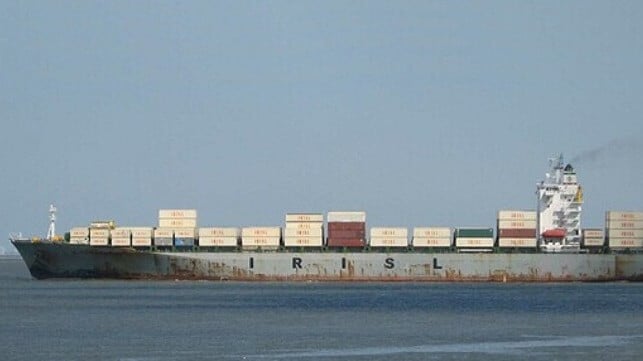
IRISL-owned boxships have transported rocket fuel ingredients from China to Bandar Abbas (file image courtesy Gerd Fahrenhorst / public domain)

Published Nov 12, 2025 8:08 PM by The Maritime Executive


The U.S. Office of Foreign Asset Control (OFAC) has sanctioned the procurement network that helps Iran's military import rocket fuel ingredients from China, an essential logistics arrangement for the Iranian ballistic missile program. 

The import scheme first came into public view in January, when intelligence sources tipped off the Financial Times to two Iranian ships that were loading chemical ingredients for ballistic missile propellant off Shanghai. The boxships Golbon and Jairan, owned and operated by the sanctioned Islamic Republic of Iran Shipping Lines (IRISL), were believed to be carrying about five dozen containers of Chinese-made sodium perchlorate. The substance is a precursor for ammonium perchlorate, the main ingredient in the solid rocket propellant that is used by Iran's prolific missile industry. The consignment later detonated in storage at the port of Bandar Abbas under unclear circumstances, killing dozens and injuring more than 1,000 people.

Iran's rocket fuel supply network is centered around a small, three-person business called the "MVM partnership," according to the U.S. Treasury. For the last two years, this network has arranged for the international procurement of sodium chlorate, sodium perchlorate, and sebacic acid - all useful for rocket propellant - for Iran's Parchin Chemical Industries (PCI). PCI is under an asset freeze imposed by the UN Security Council, and has been sanctioned by the U.S. for the last 17 years. 

According to OFAC, German national Marco Klinge handled the MVM network's procurement of rocket materials from India and China from an office in the UAE. Iran/Turkey-based partner Majid Dolatkhah handled procurement from Turkish suppliers and liaised between the Iranian buyers and Klinge. Vahid Qayumi, an Iranian national, conducted the business within Iran. They and their firm, MVM Amici Trading, have been added to OFAC's sanctions list. 

Several affiliated firms - Zagros Shimi Fars Manufacturing Industries Company, Furqan Novin Pars Manufacturing and Vahid Ghayoumy Goods Wholesalers - have been added to the list for similar activities. 

Battery companies join forces to deploy sodium-ion power systems


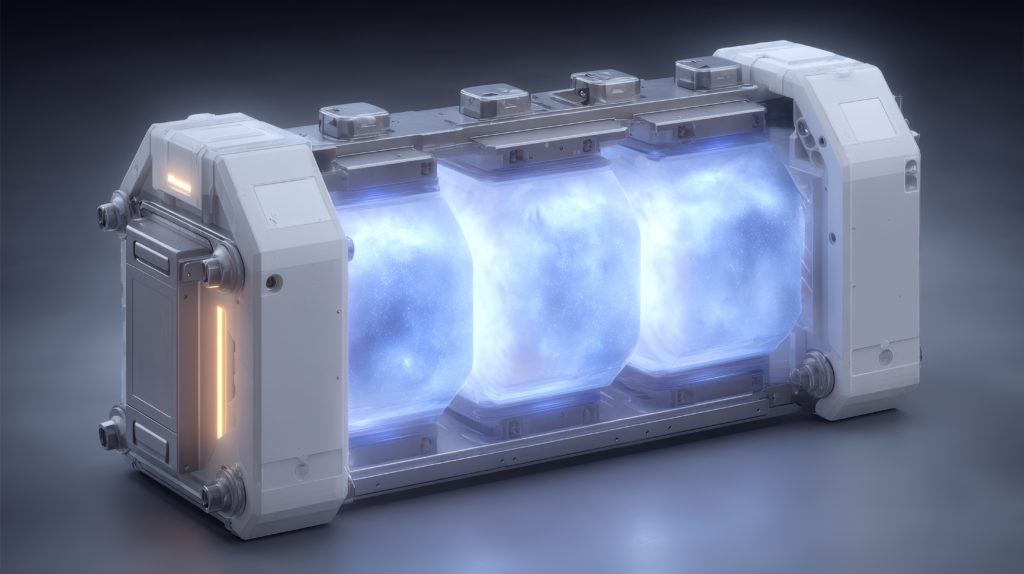
Sodium-ion battery module. AI-generated Stock image by Leopard.

Two battery companies are joining forces with a plan to deploy energy storage systems in the US that rely on sodium-ion technology.

Peak Energy, which was started two years ago by former employees of Tesla Inc. and Apple Inc., said on Wednesday in a statement that Jupiter Power will help bring its technology to the market.

In the agreement, Peak Energy plans to deliver 720 megawatt-hours of storage to Jupiter Power in 2027. Peak Energy said this would be the largest single deployment of sodium-ion batteries announced to date.

The vast majority of batteries deployed today rely on lithium-ion technology. Non-lithium-ion batteries have struggled to gain mainstream adoption, but sodium-ion batteries are considered among the industry’s most promising emerging technologies. Sodium-ion systems are less flammable and can cost less than lithium-ion counterparts, but they offer lower energy density.

Industry challenges remain, though: US-based sodium-ion battery manufacturer Natron Energy Inc. ceased operations in September after failing to raise enough capital.

(By Tope Alake)


Toyota opens US battery plant, confirms $10 billion investment plan

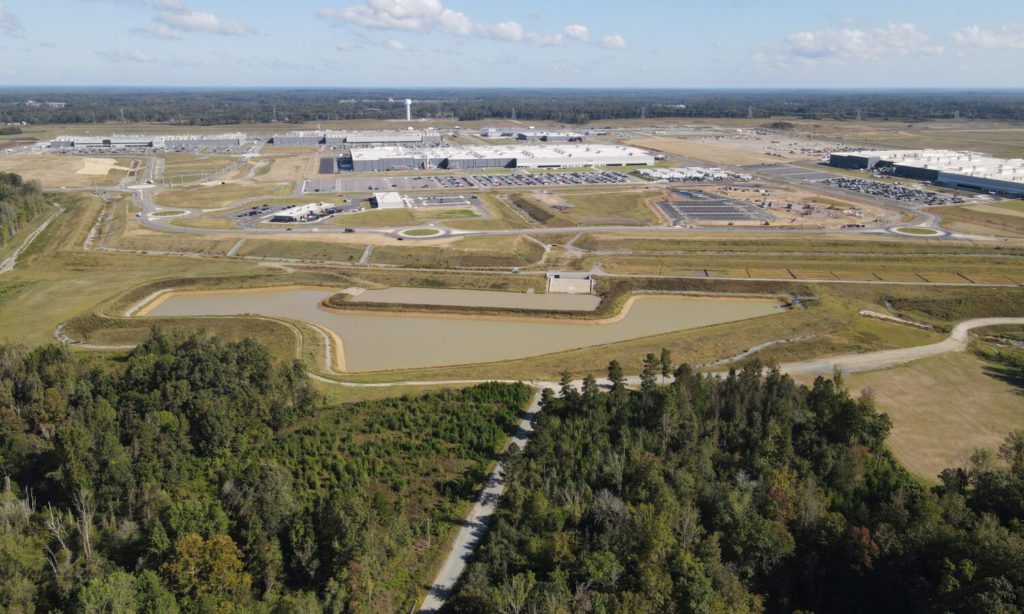
View of the North Carolina Facility. Credit: Toyota

Toyota Motor said on Wednesday it had begun production at its $13.9 billion North Carolina battery plant as it ramps up hybrid production and confirmed plans to invest $10 billion over five years in US manufacturing.

The Japanese automaker first announced the plan in December 2021 to produce batteries for its hybrid and electric vehicles. Batteries from the plant are set to power hybrid versions of the Camry, Corolla Cross, RAV4 and a yet-to-be-announced all-electric three-row battery electric vehicle. The plant is producing hybrid batteries for factories in Kentucky and a Mazda Toyota joint venture in Alabama.

“Over the next five years, we are planning an additional investment of $10 billion in the US to further grow our manufacturing capabilities, bringing our total investment in this country to over $60 billion,” said Toyota Motor North America president Ted Ogawa.

Toyota’s 11th US factory, on a 1,850-acre (749-hectare) site, will be able to produce 30 GWh annually at full capacity and house 14 battery production lines for plug-in hybrids and full EVs. It will eventually employ 5,000 workers.

Last month in Japan, US President Donald Trump said Toyota planned a $10 billion investment in the United States. “Go out and buy a Toyota,” Trump said. He has been critical of Japanese and other auto imports and imposed hefty tariffs on imported vehicles.

Toyota has been one of the slowest automakers to move to full EVs but has rapidly moved to convert its best-selling vehicles to hybrids.

“We know there is no single path to progress,” Ogawa said on Wednesday. “That’s why we remain committed to our multi-pathway approach, offering fuel-efficient gas engines, hybrids, plug-in hybrids, battery electronics and fuel cell electronics.”

Other automakers like Volkswagen have said they will add more hybrids as the Trump administration has rescinded EV tax credits and eliminated penalties that incentivized EV sales.

Transportation Secretary Sean Duffy said at the event the administration plans to soon propose to ease fuel economy standards, saying prior rules were too aggressive.

Duffy in January signed an order to direct the National Highway Traffic Safety Administration to rescind fuel economy standards issued under President Joe Biden for the 2022-2031 model years that had aimed to drastically reduce fuel use for cars and trucks.

(By David Shepardson; Editing by Richard Chang)


Solvay seals two deals to supply rare earths to US magnet makers

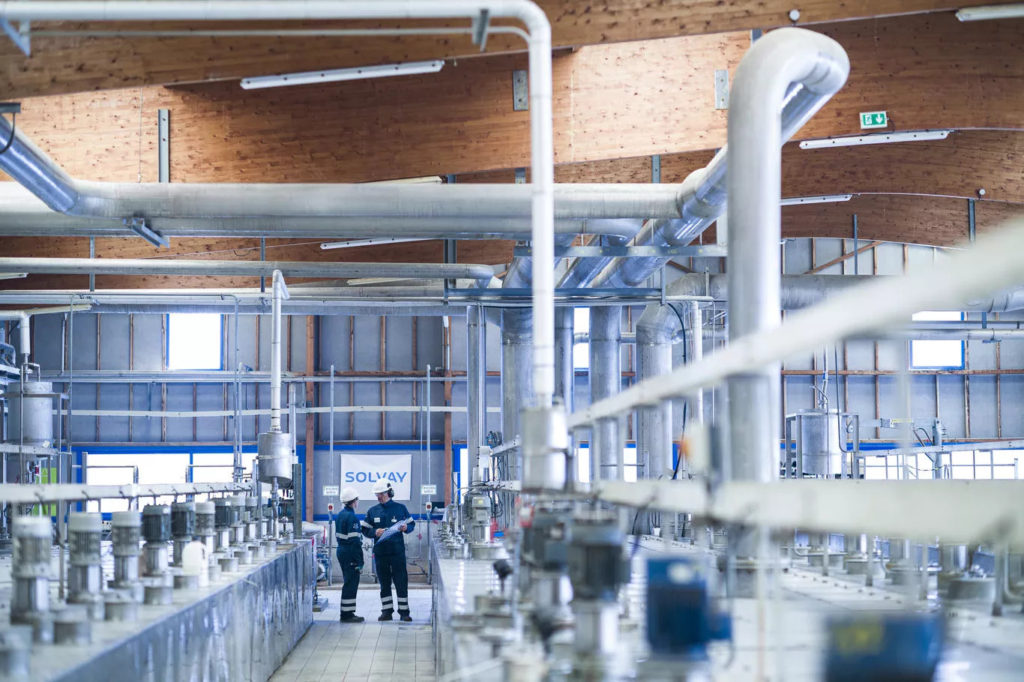
Credit: Solvay

Chemicals group Solvay has agreed two deals to supply rare earths to US magnet makers as it seeks to ramp up its processing plant in France, the company said on Wednesday.

Solvay, one of a few companies outside of China capable of the complex rare earths separation, in April launched modest processing of minerals needed for permanent magnets at its French plant, but said commercial production would depend on support from customers and governments.

Solvay concluded agreements with US companies Noveon Magnetics and Permag to supply rare earth oxides, separate statements said.

The United States, Europe and allies have been racing to create domestic industries to make super-strong rare earth magnets vital for defence, electric vehicles, electronics and wind turbines, and cut dependence on China.

The deal with privately-held Noveon is for elements neodymium, praseodymium, dysprosium and terbium – known as NdPr and DyTb – the four key rare earths needed to make permanent magnets.

“This collaboration is part of Solvay’s broader commitment to sustainable and secure rare earth supply chains, both in Europe and abroad,” An Nuyttens, president of Solvay Special Chemicals, said in a statement.

Texas-based Noveon began selling sintered neodymium-iron-boron (NdFeB) magnets commercially in 2023.

Deal to supply samarium oxide

The deal with Permag is to supply samarium oxide, which will be turned into samarium metal by British firm Less Common Metals.

Samarium is used to make a type of magnet that can withstand very high temperatures without losing its magnetic properties and is often used in defence applications and nuclear reactor components.

Solvay CEO Philippe Kehren said the agreements involved “limited volumes” but that the company’s plant in La Rochelle could increase production levels quickly.

Solvay can already produce NdPr and samarium oxide so will start those supplies very soon, the CEO said on a call with reporters. “DyTb we will need a few months, but we will start in the course of 2026,” he added.

Last week, Kehren said Solvay would be interested in building a rare earths processing plant in the United States, where financial support is stronger than in Europe.

“From our point of view, what we see is customers from the US being ready today to sign commercial contracts. Not yet fully in Europe, but we’re working on it,” Kehren told reporters on Wednesday.

European customers understand the long-term need for an independent rare earths supply chain in Europe.

“But how and when and how fast this will come will also depend on the European Commission,” Nuyttens added.

(By Eric Onstad and Tom Daly; Editing by Ed Osmond)


Aluminum breakthrough brings Elysis technology closer to market


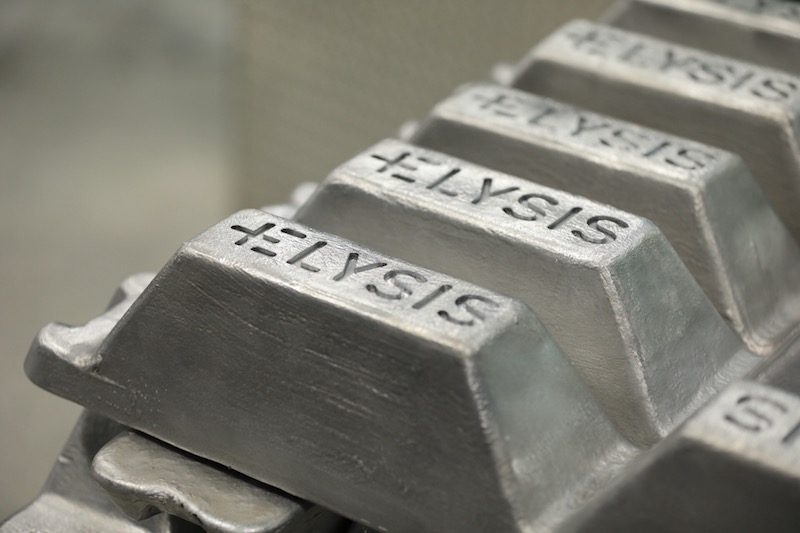
Image: Elysis

A collaboration between Alcoa Corp. and Rio Tinto Plc to use less polluting methods to produce aluminum is a step closer to commercialization after their venture hit a technological milestone at a Quebec smelter.

The joint venture, known as Elysis, said work at Rio Tinto’s Alma smelter showed it can do high-amperage aluminum production with no direct carbon dioxide emissions from the smelting process. Testing will continue on the technology, which was designed for industrial demonstration purposes, with the goal of commercial development by 2030.

“The program that we have will permit us to have a more grand scheme deployment by the end of the decade,” Elysis chief executive officer Francois Perras said in an interview.

Elysis, backed by Apple Inc., the Canadian government and province of Quebec, began in 2018 as a research and development firm with about C$650 million ($464 million) in capital commitments.

(By Mathieu Dion)


India revamps critical mineral royalties to boost local mining

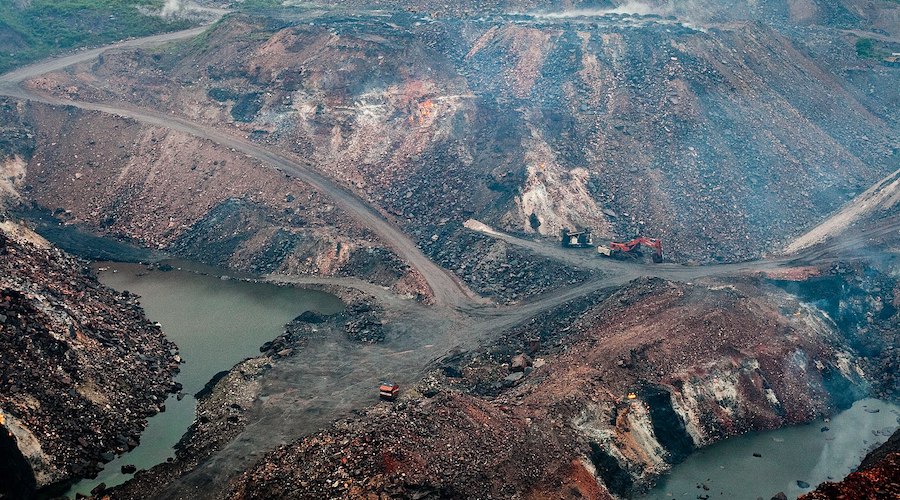
Open-pit mine in Jharia, India. (Reference image by the International Accountability Project, Wikimedia Commons.)

India approved changes to royalty rates for several critical minerals, as part of efforts to boost domestic mining and reduce the nation’s heavy reliance on imports.

Under the revised system, the royalties — the fees miners pay to local authorities for extraction — on graphite will be charged as a percentage of sale prices decided by the Indian Bureau of Mines, instead of a fixed value per ton. The government also set the rates for caesium, zirconium and rubidium, it said in a statement. Currently, there’s no royalty rate specified for these elements.

The new rates will help the bidders submit more rational offers in auctions, the government said. An increase in domestic production of these minerals would lead to a reduction in imports and supply chain vulnerabilities, it added.

New Delhi is stepping up efforts to secure critical mineral supply chains as demand for clean-energy materials accelerates worldwide. India remains a small producer of most critical minerals, including graphite, of which the country currently imports about 60% of its needs.

Prime Minister Narendra Modi’s government is seeking to attract private and foreign investment into mining projects and reduce its reliance on imports from China, which dominates the global market for processing. It approved a $1.9 billion program to secure supplies of a range of minerals, used mainly in the battery, electronics, defense and agriculture sectors, earlier this year.

(By Preeti Soni)