Tuesday, November 18, 2025


Shipmanager: Crewmembers Aboard Tanker Seized by Iran are Safe
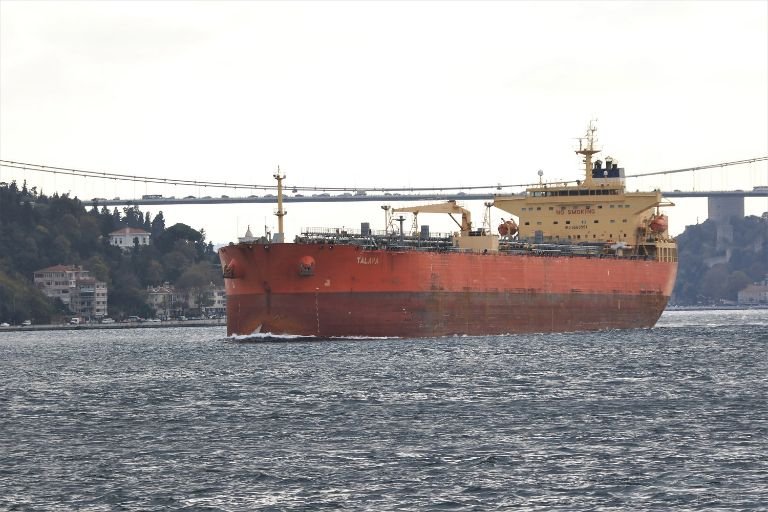
Talara (file image courtesy Cengiz Tokgoz / VesselFinder)

Published Nov 17, 2025 6:04 PM by The Maritime Executive


The 21-member crew of the seized tanker Talara are safe after their capture by Iranian forces, according to third-party manager Columbia Shipmanagement. 

"All crew members are reported to be safe and accounted for. The vessel is now safely anchored off the coast of Bandar Abbas," the company said in a statement. "Columbia Shipmanagement is working with regional partners to urgently resolve the situation and secure the release of our crew."

Talara was seized on Friday by the Islamic Revolutionary Guard Corps (IRGC) at a position off the UAE in the Gulf of Oman. According to U.S. Central Command, Iranian forces arrived aboard the vessel by helicopter. 

After boarding, IRGC personnel diverted the ship eastward into Iranian waters. From there, the vessel navigated to the anchorage just south of Bandar Abbas, a typical destination for foreign-flag ships captured by Iran. 

The IRGC has claimed responsibility for the capture of the vessel, and asserted that it was carrying 30,000 tonnes of petroleum products that were being transported "illegally" to Singapore. It was diverted to the anchorage "for investigation into violations," the group said, where it was found "to be in breach for transporting unauthorized goods."

"Iran's use of military forces to conduct an armed boarding and seizure of a commercial vessel in international waters constitutes a blatant violation of international law, undermining freedom of navigation and the free flow of commerce," said U.S. Central Command in a statement. "We call on Iran to articulate to the international community the legal basis for its actions." 

Talara is a 73,000 dwt crude oil tanker built in 2010, flagged in the Marshall Islands and managed in Cyprus. Iran's foreign-flag ship seizures typically coincide with its geopolitical concerns, and legal rationale aside, the actions are often perceived as a means to apply pressure or send a signal to Tehran's opponents.


 

NATO Video Shows Devastating Impact of a Heavyweight Torpedo

Torpedo hit
Courtesy NATO

Published Nov 17, 2025 6:56 PM by The Maritime Executive


NATO's Allied Joint Force Command has released a rare video of a submarine torpedoing a decommissioned vessel, filmed in high definition from on board the target ship. The enormous power of a heavyweight torpedo detonating under the keel is well known, but not often seen so close up. 

During exercise Aegir 25, several units of the Norwegian Navy, the Royal Navy and the Polish Navy joined forces off the coast of Andoy, Norway for live-fire drills. During the exercise, the Norwegian submarine KNM Uthaug fired a live torpedo at the decommissioned frigate KNM Trondheim, which had been laden with containers for the purpose of testing. The single shot lifted the frigate's hull out of the water and caused enough damage that the vessel sank. 

"The purpose of the shot was to verify and demonstrate the striking power that the weapon and the submarine represent. A submarine has long endurance, operates covertly, and has a unique ability to dictate the battle," NATO said in a statement.

KNM Uthaug is a Ula-class submarine, fitted with twin diesel generators and an electric motor final drive. The hull sections were built in Norway and transported to Germany for final assembly, and she was delivered in 1991. The six-vessel class has been in service for 35 years and has been continually upgraded; all six are operating on a life-extension, and the first replacement hulls (TKMS Type 212) will begin arriving in 2029. 


Study: Allseas' Nuclear Reactor Could Cut Shipping's Emissions By 5%

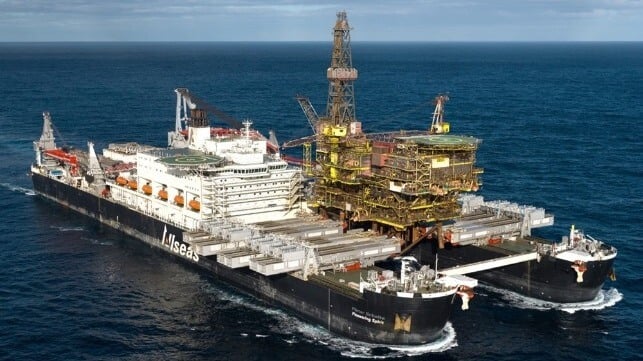
Big offshore vessels like Allseas' Hidden Gem and Pioneering Spirit stand to benefit

Allseas
Pioneering Spirit, the world's largest vessel by displacement and a candidate for nuclear power (Allseas)

Published Nov 17, 2025 8:13 PM by The Maritime Executive


Swiss-Dutch marine engineering giant Allseas has commissioned a new study on the economic benefits of offshore nuclear powerplants, a new specialty it is developing in cooperation with TU Delft and nuclear energy services company NRG Pallas. 

In June, Allseas announced plans to build a 25 megawatt small modular reactor (SMR) designed for marine propulsion, auxiliary power and microgrid applications. The company intends to adapt high-temperature gas-cooled reactor (HTGR) technology for offshore use. In this design, the reactor core is filled with tiny beads, each with a uranium core and a tough ceramic coating. The reactor is intended to cool itself and shut down automatically in the event of a fault, without any external input. 

Allseas has an ambitious five-year program to get the first reactors into operation. The program is starting this year with design studies, progressing through detailed design by 2028, and entering initial deployment by 2030. 

In a study commissioned by Allseas, consultancy Roland Berger estimates that there is a market for up to 700 Allseas reactors in the global maritime industry and up to 110 more on land in the Netherlands. This buildout could generate total economic activity of up to $150 billion and create up to 40,000 new jobs, according to the study. Along the way, it would save 55 megatons of CO2 in the shipping industry and 10 megatons in the Dutch industrial economy. 

One potential application could be in powering deep-sea mining vessels and other large offshore-sector ships, which would benefit from a reactor's five-year-long fuel cycle and could spend more time at sea. Allseas is a leading participant in the nascent deep-sea mining market, and it owns the largest cable-lay and heavy lift vessels in the world.

For other large vessel classes, Roland Berger believes that Allseas' SMR design will become cost-competitive with HFO - an ambitious goal, assisted by increasing future carbon fees. "Allseas' SMR will become cost-competitive between 2030 and 2040 as SMR costs will go down and CO2 costs will increase," predicted the consultancy. Larger boxships, which burn more fuel for higher speeds, could be best placed to benefit. 

"This study demonstrates our small modular reactor is technologically innovative and strategically valuable for the Netherlands," said Stephanie Heerema, Project Manager Nuclear Developments at Allseas. "With this technology, we can meet the urgent demand for stable, clean, and affordable energy, while creating an export product that accelerates the global energy transition."

'Guess who's Bach?': Two long-lost organ works by Bach unveiled in Germany

Two previously unknown organ pieces by a teenage Johann Sebastian Bach were unveiled Monday in Leipzig and performed for the first time in over 300 years. Long-mysterious manuscripts have now been confirmed as Bach's works, adding new repertoire and insight into the composer's early genius.


Issued on: 17/11/2025 
By: FRANCE 24


Two long-lost organ pieces written by a teenage Johann Sebastian Bach were presented in Germany on Monday. © Jens Schlueter, AFP

Two long-lost organ pieces written by a teenage Johann Sebastian Bach were unveiled in Germany on Monday in a discovery described as a "great moment for the world of music".

The two solo organ works, written while Bach was working as an organ teacher in the town of Arnstadt in Thuringia early in his career, first caught the attention of researchers over 30 years ago.

But it is only now that experts have been able to prove they were written by Bach after finally confirming the identity of the person who penned the manuscripts.

The Chaconne in D minor BWV 1178 and Chaconne in G minor BWV 1179 have been added to the official catalogue of Bach's works as of Monday.

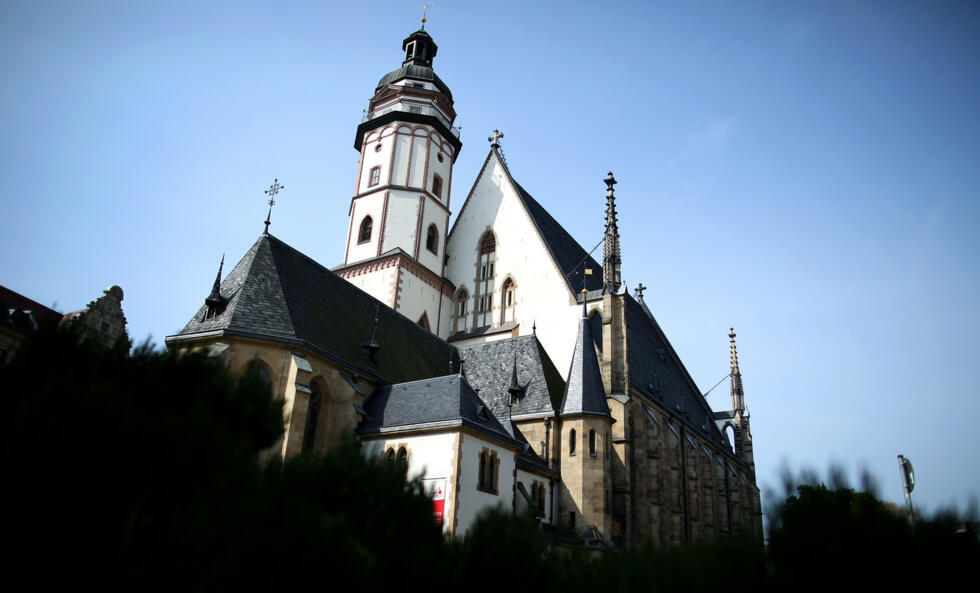
They were also performed for the first time in 320 years at the St Thomas Church in Leipzig, where Bach is buried and served as a cantor for 27 years.

In a press conference before the works were performed, Culture Minister Wolfram Weimer hailed the discovery as a "global sensation" and a "great moment for the world of music".

"This is a source of great joy for many, many music lovers around the world," he said.

Bach researcher Peter Wollny first came across the works in the Royal Library of Belgium in 1992, according to the Bach Archive in Leipzig, which documents and researches the composer's life and work.

'Missing puzzle piece'

The manuscripts were undated and unsigned but are thought to have been written in around 1705, when Bach would have been 18 years old.

Wollny was fascinated by the works from the outset because they contained several characteristics that were unique to Bach during that period.

But the identity of the manuscript writer remained a mystery.

Bach researcher Peter Wollny (centre) is joined by German Culture Minister Wolfram Weimer (left) and mayor of Leipzig Burkhard Jung (right). © Jens Schlueter, AFP


Several years ago, experts came across some very similar handwriting in a letter dating from 1729 written by a former pupil of Bach in Arnstadt, Salomon Guenther John.

But since the letter was written 20 years after the manuscripts and the handwriting was not identical, more evidence was needed.

It was only recently that earlier samples of John's writing were found, from around the same period, providing definitive proof that the handwriting was his.

"I searched for a long time for the missing piece of the puzzle to identify the compositions – now the whole picture is clear," Wollny said.

"We can now say with certainty that the copies were made around 1705 by Bach's pupil Salomon Guenther John."

'Lively new repertoire'

Ton Koopman, the Dutch organist and head of the Bach Archive who performed the works on Monday, said they were "of a very high quality".

"When one thinks of the young Bach or Mozart, it is often assumed that genius comes later in life – but that is not the case," he said.

"I am convinced that organists worldwide will be very grateful for this virtuoso, lively new repertoire and will perform it regularly in future."

The performance of the D minor piece lasted around six-and-a-half minutes, while the G minor one lasted around three-and-a-half minutes.

Johann Sebastian Bach is buried at the St Thomas Church in Leipzig, where he worked as a cantor for 27 years. © Ronny Hartmann, AFP/File

Bach was born in Eisenach in central Germany in 1685 and died in 1750.

Best known for composing the Brandenburg Concertos, he was described by the 18th-century composer Ludwig Van Beethoven as "the immortal god of harmony".

Founded 75 years ago, the Bach Archive has helped to unearth several previously lost works by the composer.

In 2008, an organ piece called "Wo Gott der Herr nicht bei uns haelt" (Where God the Lord does not stay by our side) was found in an auction lot by professors from the Martin-Luther University in Halle.

In 2004, a Bach cantata that had been lost for decades was rediscovered in the papers of Japanese pianist Chieko Hara.

(FRANCE 24 with AFP)


SWITCHED ON BACH MOOG SYNTHESIZER

Western aid cuts could cause 22.6 million deaths by 2030, study warns


Cuts to international aid by the US and European countries could cause more than 22 million preventable deaths by 2030, including 5.4 million children under five, a new research has warned on Monday, highlighting the unprecedented global impact of simultaneous reductions in development assistance.


Issued on: 17/11/2025 
By:FRANCE 24

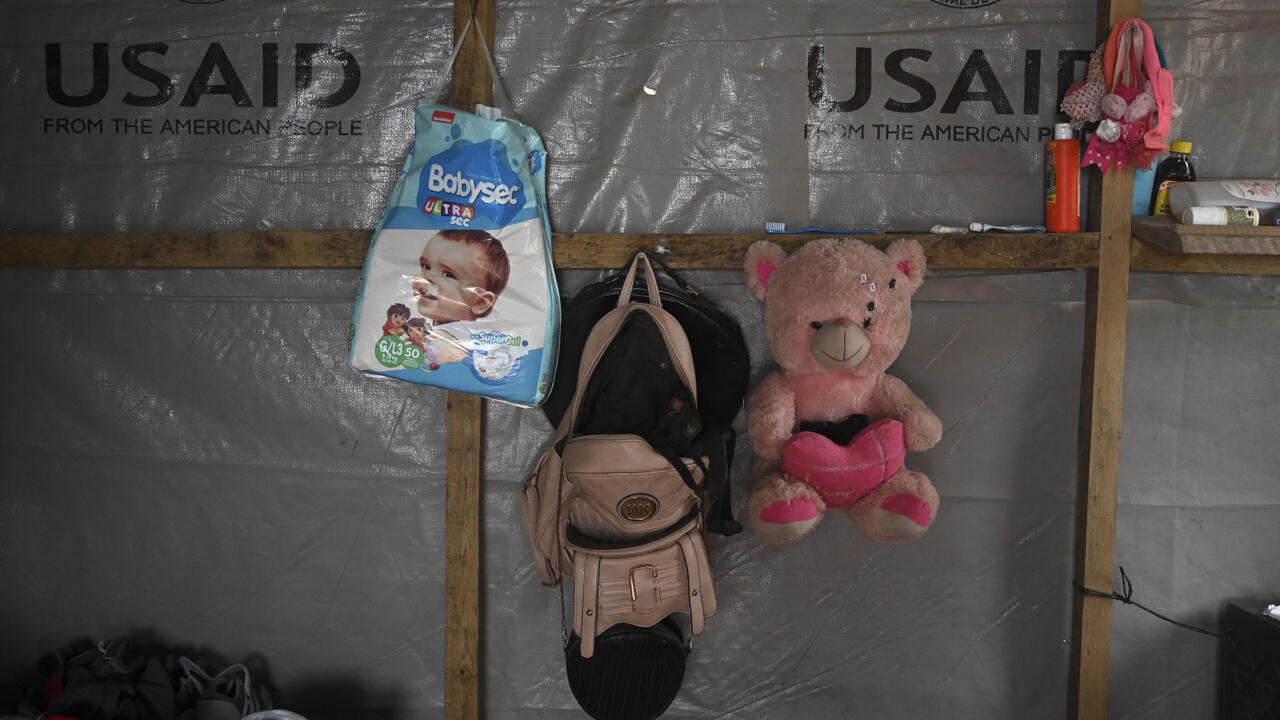
The shack of Sandra Ramos, which was built with the help of the US Agency for the International Development (USAID) on the banks of the Ulua river after the passage of hurricanes Eta and Iota in La Lima, Cortes department, Honduras, in 2022.
 © Orlando Sierra, AFP


More than 22 million people, many of them children, could die preventable deaths by 2030 due to aid cuts by the United States and European countries, new research said Monday.

The findings are an update of a study earlier this year that said President Donald Trump's sweeping reductions in assistance, including the dismantling the US Agency for International Development (USAID), could lead to 14 million additional deaths.

The new research, seen by AFP, takes into account reductions in all official development assistance as Britain, France and Germany also slash their aid to the developing world.

"It is the first time in the last 30 years that France, Germany, the United Kingdom and the United States are all cutting aid at the same time," said one of the new research's authors, Gonzalo Fanjul, policy and development director at the Barcelona Institute for Global Health (ISGlobal).


"The European countries do not compare with the US, but when you combine all of them, the blow to the global aid system is extraordinary. It's absolutely unprecedented," he told AFP.

The research by authors from Spain, Brazil and Mozambique was submitted Monday to The Lancet Global Health and is awaiting peer review.

The research is based off data on how aid in the past has reduced deaths, especially in preventable areas such as HIV/AIDS, malaria and tuberculosis.

In a scenario in which aid cuts turn out to be severe, the new research expects 22.6 million excess deaths by 2030, including 5.4 million children under the age of five.

The researchers gave a range of 16.3-29.3 million deaths to account for uncertainties, including which programs will be cut and whether there are external shocks such as wars, economic downturns or climate-related disasters.

A milder defunding scenario would see 9.4 million excess deaths, the research said.
Major donors cut at once

Trump, in a cost-cutting spree advised by the world's richest person Elon Musk, soon after taking office slashed foreign assistance by more than 80 percent and shut down USAID, which was the world's largest aid agency and handled $35 billion in the 2024 fiscal year.
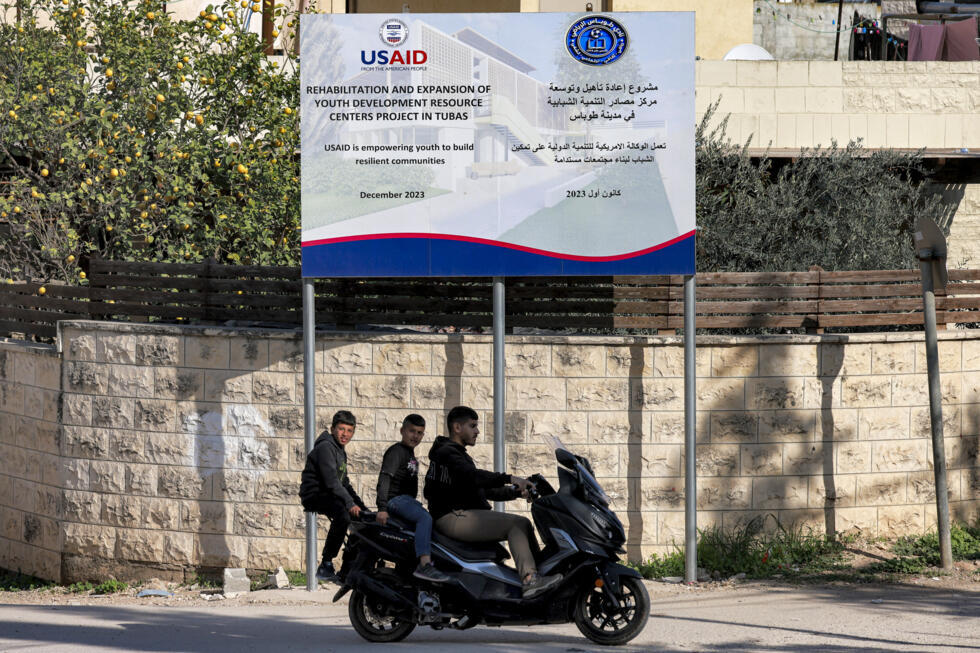
Boys ride behind a man on a scooter past a USAID-funded project for a youth center in Tubas in the north of the occupied West Bank on February 4, 2025. © Jaafar Ashtiyeh, AFP

Secretary of State Marco Rubio said that aid did not serve core US interests, pointing in part to how aid recipient nations have voted against the United States at the United Nations, and called instead for assistance with clear and narrow aims.

Testifying before Congress, Rubio denied any deaths from US aid cuts and accused critics of being beneficiaries of an "NGO industrial complex".

Instead of seeking to fill the gap, Britain, France and Germany have also cut aid owing to budgetary pressure at home and decisions to focus more on defense spending following Russia's invasion of Ukraine.

Among top donors of official development assistance, only Japan's assistance has remained relatively steady over the past two years.

Beyond the immediate ends to projects, the study said that cuts would have knock-on effects by tearing down institutional capacities "painstakingly built over decades of international cooperation".

Fanjul acknowledged a need for countries to transition from the existing setup, especially their reliance on international HIV/AIDS funding.

"The problem has been the speed and the brutality of the process. In six months, we are experiencing a process that should have taken over a decade" or more, he said.

Davide Rasella, the principal investigator on the latest research, put aid budgets in comparison by noting that the Trump administration has promised $20 billion to prop up Argentina.

"In the world context these amounts of money are nothing huge," Rasella said.

Policymakers "change budgets and they really have no perception how many lives are at stake", he said.

The research was funded by the Rockefeller Foundation and Spain's science ministry.

A Rockefeller Foundation spokesperson said the New York-based philanthropy will "look forward to the publication of the peer-reviewed numbers, which will make even clearer the human cost of inaction and the profound opportunity we have to save lives".

"This data is an urgent alarm for the world."

(FRANCE 24 with AFP)
Trump open to talks with Venezuela's Maduro, says US strikes in Mexico 'ok'

US President Donald Trump said Monday he is open to speaking with Venezuela's Nicolás Maduro and would not rule out deploying US troops, while also saying he'd be "OK" with launching anti-drug strikes inside Mexico – remarks that heighten tensions amid a major US military buildup in the region.


Issued on: 17/11/2025 
By: FRANCE 24

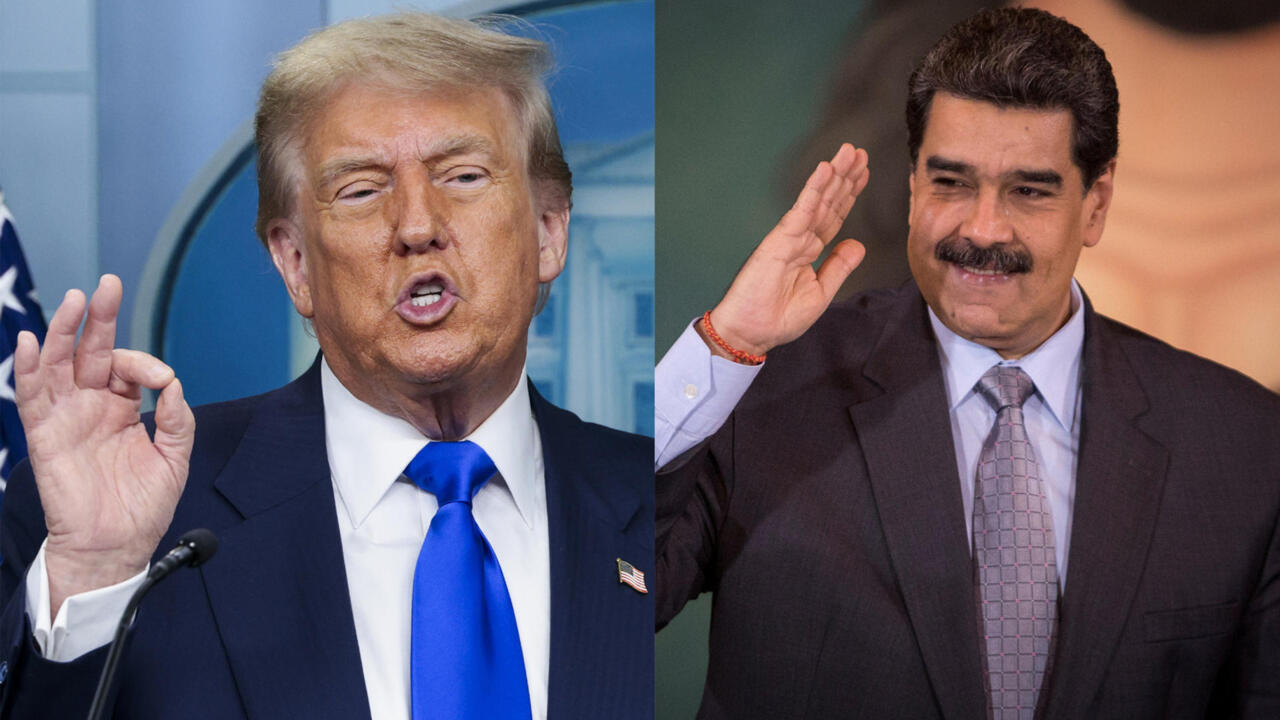
Combo of two archive photographs showing the President of the United States, Donald Trump (left), and the President of Venezuela, Nicolas Maduro. © EFE

President Donald Trump said Monday he will talk to Venezuela's Nicolas Maduro as Washington's military buildup stokes tensions, and added that he would be "OK" with US anti-drug strikes inside Mexico.

Trump has dramatically increased the number of US forces in the Caribbean to tackle what he calls drug traffickers based in a number of Latin American countries including Venezuela and Mexico.

"At a certain period of time, I'll be talking to him," Trump told reporters in the Oval Office when asked if he would speak to Maduro, while adding that the Venezuelan president "has not been good to the United States".

Asked if he would rule out US troops on the ground in Venezuela, Trump replied: "No I don't rule out that, I don't rule out anything.

"We just have to take care of Venezuela," he added. "They dumped hundreds of thousands of people into our country from prisons."

Venezuela has accused Washington of seeking regime change in Caracas with its military build-up including an aircraft carrier group, warships and several stealth jets.

Washington accuses of Maduro of leading a "terrorist" drug cartel, a charge he denies.

But Trump has also accused Mexico of failing to tackle drug trafficking groups, and stepped up his rhetoric towards the United States's southern neighbour.

"Would I launch strikes in Mexico to stop drugs? It's OK with me. Whatever we have to do to stop drugs," Trump said when asked by reporters at the White House whether he would sanction a US counter-drug operation in Mexico.

"I didn't say I'm doing it, but I'd be proud to do it. Because we're going to save millions of lives by doing it."

(FRANCE 24 with AFP)


'Not in our name': Afrikaners push back against Trump’s false white genocide claims in South Africa


While the US has announced special treatment for white South Africans seeking asylum, local division between left and right leaning groups in South Africa deepens.


Issued on: 16/11/2025 - 14:27
FRANCE24
By: Eunice Masson

Deputy Secretary of State Christopher Landau welcomes Afrikaner refugees from South Africa on May 12, 2025, at Dulles International Airport in Virginia, US. © Julia Demaree Nikhinson, AP

A group of prominent Afrikaners has denounced US President Donald Trump’s claims of "white genocide" in South Africa and reached out to members of the United States Senate Committee on Foreign Relations.

The group – made up of writers, academics, business leaders and descendants of apartheid-era figures – wrote an open letter titled "Not in Our Name", rejecting Trump’s repeated assertions that white South Africans face systematic persecution.

They argue that white Afrikaners are not under any "existential threat" and urge the international community to challenge Trump’s misinformation.

Political analyst Dr Piet Croucamp, one of the main initiators of the letter, told FRANCE 24 that he had held direct talks with Senator Chris Coons, a Democrat, about Trump’s false claims.

Croucamp confirmed that the letter was sent to multiple senators, mainly from the Democratic Party, and said that although they were "speaking to the converted", they hoped the Democrats ’opposition to the refugee policy would help convey the truth to the Senate.

Trump prioritises white Afrikaners, boycotts G20


The Trump administration has announced plans for a refugee policy that would cap the country’s refugee admissions for the 2026 fiscal year at 7,500 and prioritise white Afrikaners.

Only a handful of white South Africans appear eager to apply for asylum in the US. While public data do not show the full tally of South Africans granted refugee status, media reports suggest that around 59 white South Africans were resettled in the US in May this year. According to the Afrikaans newspaper Rapport, about 400 white South Africans had been granted asylum by the end of September.

Meanwhile, Trump continues to promote a narrative of white victimhood in South Africa. Last week, he announced on his social media platform Truth Social that the US would not attend the 2025 G20 summit in South Africa on November 22 - 23 "as long as these human-rights abuses continue.

"Afrikaners – people descended from Dutch settlers, as well as French and German immigrants – are being killed and slaughtered, and their land and farms are being illegally confiscated," he wrote.

During a recent conference in Miami, Trump added that South Africa "shouldn’t even be in the G20 anymore, because what’s happened there is bad. I’m not going to represent our country there. It shouldn’t be there".

It is against this backdrop that the group of Afrikaners wrote their open letter to challenge Trump’s narrative of "white genocide".

South Africa’s Department of International Relations and Cooperation has repeatedly debunked Trump’s claims.
Opening the letter: 'Not in Our Name'

The open letter initially had 40 signatories but has gathered more than 1,500 in just one week.

Responding to reports that white South Africans are receiving priority treatment as refugees in the US, the letter states that this has "brought our identity into the spotlight in ways that are deeply troubling. We reject the narrative that casts Afrikaners as victims of racial persecution in post-apartheid South Africa".

It goes on to say that singling out white Afrikaners as "victims of multiracialism" not only alienates them from their fellow South Africans but also harms relationships built since the end of apartheid 30 years ago.

The letter also argues that using race as a basis for special asylum status undermines the principles of refugee protection. "To elevate white suffering above others is to reinforce a racialised worldview that places whiteness at the centre and sees white identity as under existential threat."

The signatories insist this does not reflect their values or lived experience in South Africa. To call crime in South Africa "white genocide", they write, is "crass and narcissistic" when compared with people’s lived experiences in places such as Gaza and Sudan.

In its final paragraph, the letter urges South Africans and international observers "to challenge these distorted narratives and to recognise the dignity of all people – not just those who fit a political agenda".
Local divisions deepen

The open letter has reignited long-standing ideological divisions in South Africa over race, identity and representation within the Afrikaner community.

While the letter reflects the sentiment of many white South Africans critical of Trump’s remarks, it has also exposed a growing rift between the country’s left- and right-leaning groups.

Left-leaning media outlets have largely welcomed the letter as a rejection of victimhood politics while several commentators have sought to discredit it, claiming that a government official helped draft the statement. Although a government employee was involved, she did so in a personal capacity.

Ernst Roets, deputy chief executive officer of the right-leaning civil-rights organisation, AfriForum, who has repeatedly criticised the open letter, told FRANCE 24 that its signatories are "completely removed" from the reality and lived experiences of South Africans.

According to Roets, the division that followed the letter reflects long-standing tensions between conservative groups and intellectuals who are oblivious to people’s feelings and experiences on the ground.

The letter’s authors argue that portraying Afrikaners as victims of racial persecution – as some US conservatives and local lobby groups have done – feeds into the far-right "Great Replacement" theory and echoes campaigns such as "Make Afrikaners Great Again", a local variation of Trump’s "Make America Great Again" slogan.

AfriForum and Solidarity have in recent years sent representatives to the United States to lobby against South Africa’s proposed land-expropriation policies and to highlight farm attacks. But the letter’s signatories, who describe themselves as progressive Afrikaners, reject the notion that these groups represent all white Afrikaans speakers.

"No single organisation has a clear or legitimate mandate to speak on behalf of all Afrikaners," the letter states. "Afrikaners like us, who trace our South African roots to the 17th and 18th centuries, choose to identify as members of an inclusive and diverse Afrikaans-speaking community."

Roets said: "They are worried about criticism, but they themselves criticise," adding that the letter’s authors "do not understand their own people" and that this explains why they were "so shocked" by the backlash they received.

Speaking on condition of anonymity, a refugee who left South Africa for the US in late August told FRANCE 24 that she and her family do not disclose their refugee status to everyone as "some liberals here do not like refugees".

Her family have been resettled in the southern part of the US, where she says she feels safer than in South Africa. Although she was not personally affected by a farm attack, her husband was victim of one. She added that her family is progressing financially "much faster" in the US, but that success requires "a willingness to start with entry-level work" even after holding a professional position back in South Africa.
Canada’s minority government survives cliff-hanger budget vote

Canada’s Liberal government narrowly avoided collapse on Monday as Prime Minister Mark Carney’s budget squeaked through a confidence vote. Opposition divisions and a desire to avoid an early election helped the minority Liberals secure enough support and abstentions to pass the high-stakes fiscal plan.


Issued on: 18/11/2025 
By: FRANCE 24

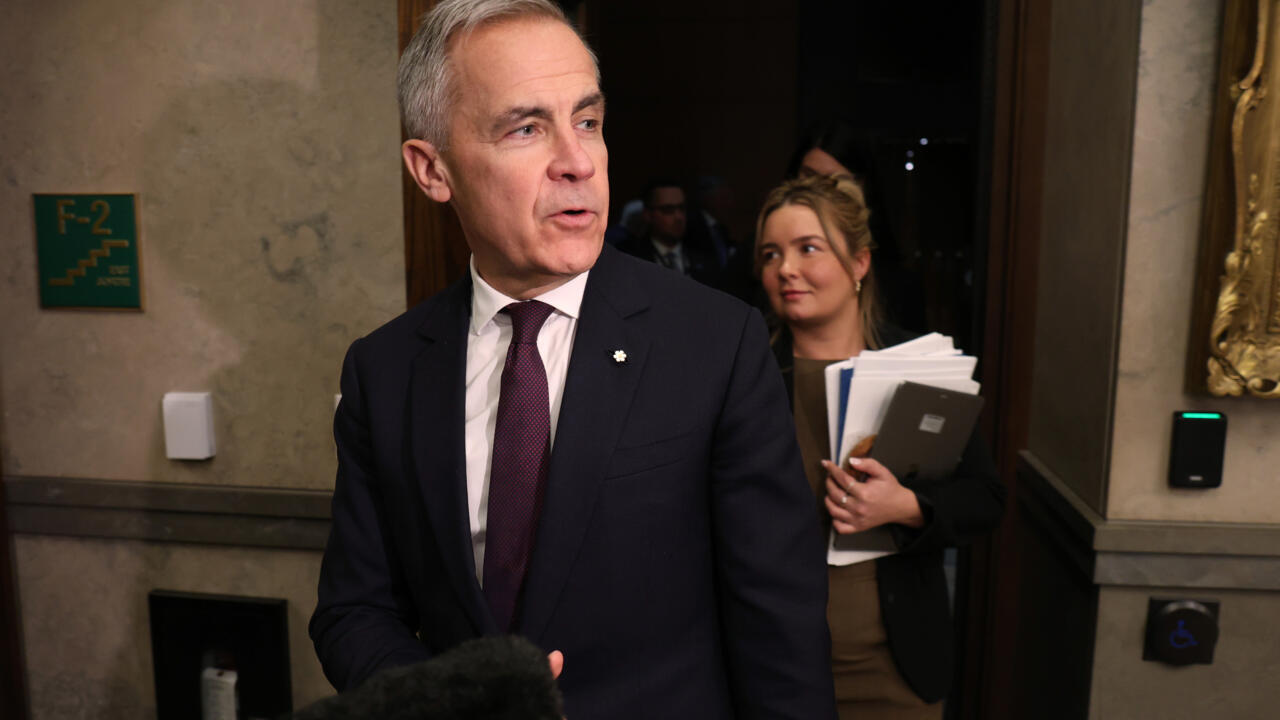
Canadian Prime Minister Mark Carney shown in Ottawa, Canada on November 17, 2025
. © Dave Chan, AFP


Canada’s Liberal government survived a confidence vote on Monday, as parliament narrowly passed a budget Prime Minister Mark Carney says is essential to bolster an economy threatened by US tariffs.

The minority Liberal government faced collapse over the cliffhanger budget vote, but a small group of opposition lawmakers — weary of triggering a snap election — allowed the fiscal plan to pass.

Carney had described the budget as a “generational” opportunity to invest in Canada’s economic future, bolstering self-reliance and reducing dependence on trade with US President Donald Trump’s administration.

“Now is not the time to be cautious, because fortune favours the bold,” Carney said last week.


Carney was elected to a full term in April to stare down Trump’s protectionist tariffs, but his Liberal Party fell just short of a majority.

To pass the budget, the Liberals required support from two opposition lawmakers — or abstentions.

They secured one opposition vote ahead of Monday’s vote.


The lone Green Party lawmaker, Elizabeth May, confirmed she would side with the Liberals after Carney promised in parliament that Canada would meet its commitments under the Paris Climate Accords.

Opposition leader Pierre Poilievre had panned Carney’s deficit-expanding proposals, insisting that his entire Conservative caucus opposed what he called a “credit card budget”.

The left-wing New Democratic Party (NDP) was also critical of the spending plan, saying it lacked protections for workers facing job losses caused by tariffs.


But the party performed dismally in April’s election, has no permanent leader, and is in financial debt — factors that left members uneasy about forcing Canadians back to the polls.

In a statement issued after the vote, the NDP said it was “clear that Canadians do not want an election right now”.

“We have decided to put the interests of our country first,” the party said, explaining the decision to abstain.

Deficit spending

The budget includes a near-doubling of the deficit from last year, reaching Can$78.3 billion (US$55.5 billion).

Carney has maintained that aggressive deficit spending is necessary to offset the damage caused by the Trump administration’s trade policies.

The vast majority of bilateral trade remains tariff-free — under the terms of the existing North American trade pact — but Trump’s levies targeting key sectors like autos, aluminium, and steel have hit Canada hard.

Carney said estimates indicated that “US tariffs and the associated uncertainty will cost Canadians around 1.8 per cent of our GDP”.

The prime minister, a former central banker, has said investments in Canada’s military and infrastructure will help improve economic sovereignty, repeatedly warning that relations with the United States are not going to return to a pre-Trump normal.

“It is a time to get big things done for Canadians, and get them done fast.”

Polls conducted ahead of Monday’s vote showed a majority of Canadians did not want new elections so soon after the last round.

A November survey from the Leger firm said only one in five Canadians wanted an election now or “as soon as possible”.

Half of Canadians surveyed by Leger said they were satisfied with Carney’s leadership, and his job approval rating measured at 52 per cent.

(FRANCE 24 with AFP)

Democracy Falls: Yves Engler and the NDP


A Canadian Gothic political horror documentary comedy
29 minutes in 3 chapters

1. Who’s afraid of Yves Engler?
2. Dost thou toe the line?
3. The Pizzeria Niagara Falls

Zachary Ruiter is a filmmaker and journalist who finds the art and comedy in documenting subjects including healing, athleticism, animals, populism, and the environment. Read other articles by Zach, or visit Zach's website.
Greenpeace claims French resumption of nuclear trade with Russia

Environmental campaign group Greenpeace hit out at the resumption of nuclear trade between France and Russia during its war with Ukraine after activists observed the loading of a tanker in northern France with reprocessed uranium bound for Russia.


Issued on: 18/11/2025 - RFI

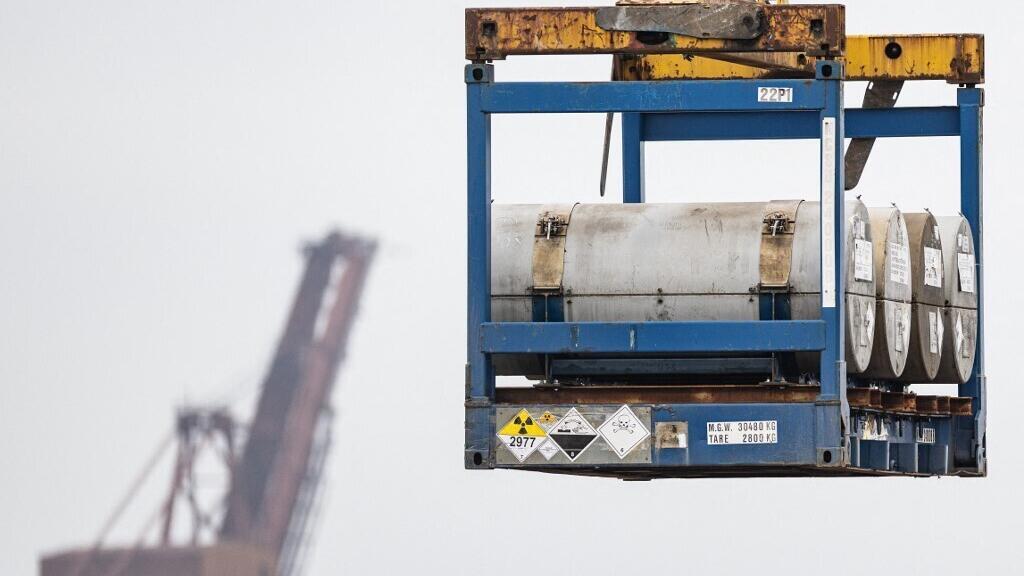
This photograph taken on 20 March, 2023, shows cylinders of uranium from the Russian cargo ship the Baltiyskiy 202, unloaded at the port of Dunkirk, northern France. 
AFP - SAMEER AL-DOUMY

Greenpeace published video that it said its activists shot on Saturday of around 10 containers with radioactive labels going onto a cargo ship in Dunkirk.

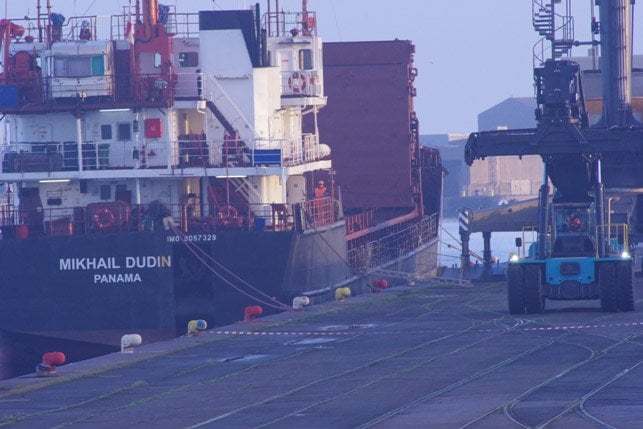
The Panamanian-registered ship, the Mikhail Dudin, is regularly used to carry enriched or natural uranium from France to St Petersburg, according to Greenpeace.

Saturday's consignment was the first of reprocessed uranium to be observed for three years, it added.

"The resumption of this trade once again shows France’s dependence on Russia," Pauline Boyer, the head of Greenpeace France's nuclear campaign, told RFI.


The images released by Greenpeace came two days ahead of a meeting in Paris between the French president, Emmanuel Macron and his Ukrainian counterpart, Volodymyr Zelensky, to discuss Ukraine's air defence systems.

"Despite the French government’s commitments to support Ukraine — which is, fortunately, the case — on the other hand, there is ongoing collaboration with Rosatom, the Russian nuclear company, which is indirectly contributing to the financing of the war."

Rosatom has occupied the Zaporizhzhia nuclear power plant for more than three and a half years.

"It has made itself complicit in crimes committed with the Russian army against the nuclear plant’s employees," Boyer added.

"It is outrageous that French nuclear companies — EDF, Orano, Framatome — continue to collaborate with Rosatom."

Greenpeace cries scandal as France continues to import Russian uranium

French state-controlled energy giant Electricité de France (EDF) signed a 600-million-euro deal in 2018 with a Rosatom subsidiary, Tenex, for the recycling of reprocessed uranium.

These operations have not been affected by international sanctions over the Ukraine war.

Rosatom has the only facility in the world - at Seversk in Siberia - capable of carrying out key parts of the conversion of reprocessed uranium to enriched reprocessed uranium.

Uranium can be reprocessed so it can be reenriched and reused. With uranium prices rising again on international markets, it is increasingly worthwhile for power companies to seek reprocessing of spent fuel.

Only about 10 percent of the reenriched uranium sent back to France by Russia is used at its Cruas nuclear power plant, in southern France, the only one in the country that can use enriched reprocessed uranium, according to Greenpeace.

Macron hopes trip to former Soviet states will secure uranium, counter Russia

France's energy ministry and EDF have yet to respond publicly to questions on the consignment or trade.

Top politicians in France ordered EDF chiefs to halt uranium trade with Rosatom in 2022 when Greenpeace France revealed the contracts in the wake of Russia's invasion of Ukraine.

France said in March 2024 that it was considering the possibility of building its own conversion facility to produce enriched reprocessed uranium.


Greenpeace France Photographs Uranium Loaded on Ship for Export to Russia

uranium shipment loaded in France
Containers were loaded on the cargo ship in the port of Dunkirk, France (Greenpeace France)

Published Nov 17, 2025 4:46 PM by The Maritime Executive


Greenpeace is calling for an end to the uranium trade between France and Russia after reporting that it has resumed after a nearly three-year hiatus. The group released pictures of containers with spent uranium being loaded onto a cargo ship in the port of Dunkirk and bound for Russia.

At least 10 containers of uranium, clearly marked with dangerous cargo symbols, were observed arriving in the port of Dunkirk, France, on Saturday, November 15, and being loaded aboard the cargo ship Mikhail Dudin (3,030 dwt). Built in 1996, the general cargo ship is owned by a company based in Hong Kong and operates under the Panama flag. The vessel departed France midday on Saturday and reports its destination as Ust-Luga, Russia, a run that Greenpeace says it regularly makes carrying enriched or natural uranium.

France, according to Greenpeace, is dependent on Russia to take its uranium that was spent and reprocessed, as Russia has the only plant in the world that carries out the operation of converting the reprocessed uranium. It undergoes conversion and re-enrichment, with 10 percent sent back to France according to Greenpeace. They report that France’s EDF plans to use reprocessed uranium at its 1300 MWe reactors. Between 1994 and 2013, they report 600 tonnes were used in the four reactors of Cruas-Meysse.

Greenpeace says it protested the shipments in 2022, leading the French government in September 2022 to halt the trade. It had only been resumed in 2021 after previously being halted in 2010. Orano, which supports the nuclear industry, EDF, and Rosatom, are reported to participate in the trade, which sees reprocessed material sent to Russia and a portion returned for re-use in France.

“Emmanuel Macron repeatedly states the need to develop our economic, technological, industrial, and financial independence, particularly from Russia, which he describes as a threat to France and Europe,” said Pauline Boyer, nuclear campaign manager for Greenpeace France. The group points out, however, that the resumption of URT shipments to Russia represents a “disconnect between the French President’s words and actions.”

They are calling for France to report the quantity of reprocessed uranium exported to Russia since 2022, as well as intervening to stop the exports. They are demanding a termination of all import and export contracts.

Greenpeace believe that France has quietly continued the trade because it has massive stockpiles, approximately 35,000 tonnes of reprocessed uranium in warehouses. They believe the underlying objective is to dispose of cumbersome stockpiles of radioactive waste, noting that 90 percent becomes stored waste.

Greenpeace believes that among the future sanctions being discussed for Russia’s energy trade would include blocks on Rosatom’s nuclear trade. It says they are being considered in addition to the continuing blocks on Russian gas and oil. However, they want France to move more aggressively to end the trade immediately.


Cop30 enters crunch week as fights over money and fossil fuels intensify

The Cop30 climate summit enters its final week in Brazil with ministers heading into closed rooms to fight over climate money, fossil fuels and how to protect people already hit by rising heat, storms and floods. Civil society groups say trust is thin after a decade of broken promises.


Issued on: 17/11/2025 - RFI

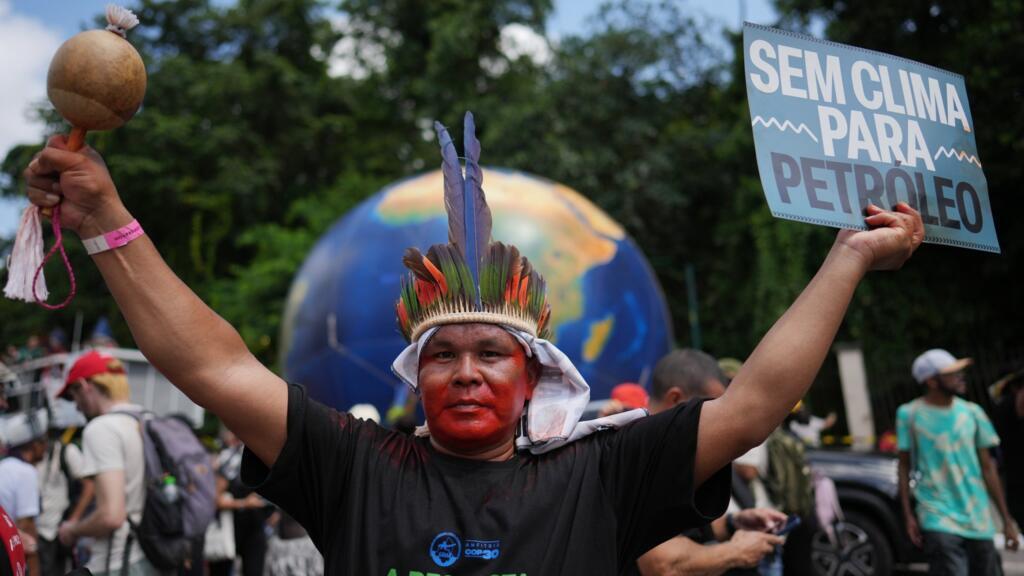
Indigenous activists take part in a climate protest during the Cop30 UN climate summit on Monday, 17 November in Belem, Brazil. AP - Andre Penner

By: Amanda Morrow


One of the biggest flashpoints is a new global checklist for adaptation – a set of measures showing whether countries are helping communities cope with climate impacts.

African, Latin American and Arab negotiators are blocking approval of this 100-point checklist unless rich nations commit between $120 billion and $150 billion a year for adaptation by 2030.

The existing $40 billion pledge ends this year, and wealthy states are delivering only $25 billion.

Climate Action Network (CAN), a coalition of more than 2,000 organisations, said talks now stand at a crossroads and warned that across all tracks “the implementation gap is a finance gap, and credibility will not be restored until that gap is addressed”.

Brazilian President Luiz Inácio Lula da Silva opened the summit by warning that climate change “is not a distant threat but a current tragedy”, and called for “a road map for humanity to overcome, in a just and planned way, its dependence on fossil fuels, reverse deforestation, and mobilise the resources needed to do so”.

Ministers now face rising pressure to deliver.


Money gap


A draft text on the Global Goal on Adaptation includes an option to triple adaptation finance by 2030 to at least $120 billion a year.

CAN said this shows recognition of need but not yet agreement on delivery. It said that in talks on national adaptation plans and just transition, developing countries cannot implement their climate plans “without real, predictable, grants-based finance”.

The Loss and Damage Fund has opened its first funding requests, but with only $250 million allocated for 2025-26, critics say it is woefully under-resourced.

The Union of Concerned Scientists, a US-based science advocacy group, said the shortage of climate finance from richer nations “remains a festering source of frustration and distrust for lower-income countries”, especially on adaptation.

Brazil’s flagship Tropical Forest Forever Facility has secured $5.5 billion of its $125 billion target. Norway has pledged $3 billion, but only if Brazil secures another $9.8 billion first.

Fossil fuel showdown

Ministers are under pressure to turn Lula’s roadmap vision into concrete action.

Small island states and several African delegations want stronger phase-out language for oil, gas and coal to keep the 1.5C goal alive.

Brazil is pushing for a formal fossil fuel phase-out plan, building on the 2023 Dubai deal to begin “transitioning away” from oil, gas and coal.

A coalition including France, Britain, Colombia, Denmark, Germany and Kenya supports the move, but major producers such as Saudi Arabia and Russia are resisting.

More than 70 organisations have issued an open letter urging governments to create fossil-free exclusion zones in high-integrity tropical forests.

“We must put a definitive end to the encroachment of the fossil fuel industry upon high-integrity forests that act as safeguards against a runaway climate crisis”, the groups wrote.

New maps show oil and gas blocks overlapping 183 million hectares of tropical forest across the Amazon, Congo Basin and Southeast Asia.

Cities are adding their own pressure.

C40 Cities, a network of almost 100 mayors, says Cop30 needs to move from talk to action with a clear plan for a just and orderly fossil fuel phase-out. C40 member cities have already pledged to halve their fossil fuel use by 2030.

The group says Brazil’s stance is helping push that shift. “Brazil is sending a powerful signal that the world must turn commitments into action and end the fossil fuel era”, said C40's Caterina Sarfatti.

London mayor Sadiq Khan told city leaders that “the climate wreckers want to chain us to the fossil fuels of the past”, but said the alternative is “freedom of lower bills and better health” and “the hope of a fairer, safer, cleaner, brighter, and more prosperous tomorrow”.

Indigenous voices

Belem has seen the largest indigenous presence at any Cop, with 3,000 people including 1,000 accredited leaders. Brazil has created a People’s Circle chaired by Indigenous Minister Sonia Guajajara.

A peaceful march of up to 70,000 people moved through Belem on Saturday, including a staged funeral for coal, oil and gas.

Indigenous leaders are demanding land rights, consent-based decisions and an end to what they call “extractive violence” linked to fossil fuels and transition minerals.

“This was promised to be the indigenous Cop, yet thousands of indigenous peoples are still outside”, said Larissa Baldwin-Roberts, a Widjabul Wia-bal woman and board member of Climate Action Network International.

She said they were promised access to be heard on “what’s happening to their territories – the privatisation of their waters, the illegal mining of their land”.

Protesters twice blocked the venue in week one.

During Friday’s action, Cop President André Corrêa do Lago spoke with demonstrators for nearly an hour. A protester placed a child in his arms, and he smiled as they talked before the group dispersed.

Aya Khourshid, an Egyptian-Palestinian member of A Wisdom Keepers Delegation – a group of indigenous representatives from around the world – said the Cop so far was a testament that unfortunately “for indigenous peoples to be heard, they actually need to be disruptive”.

The Union of Concerned Scientists said the Amazon setting has pushed the link between biodiversity and climate “to the forefront”.

Senior climate scientist Astrid Caldas said indigenous and local communities “play an integral role in conservation and stewardship of the land” and that closer cooperation between climate, biodiversity and desertification agreements is “a welcome signal”.

Information integrity is also on the agenda for the first time.

The new Declaration on Information Integrity on Climate Change, the first Cop initiative aimed at securing accurate and reliable climate information, signals what the Union of Concerned Scientists called “unprecedented international collaboration to address pernicious disinformation”.

The group warned that big tech is amplising and monetising disinformation on a range of topics including climate change.


Just transition clash


Just transition has become a major political clash.

CAN said the G77+China push for a Global Mechanism for Just Transition was the standout move of week one, echoing long-running demands from civil society and trade unions for a Belem Action Mechanism.

The European Union has put forward its own proposal.

But the network said wealthy countries have pushed back hard against creating any new mechanism, arguing that existing structures are enough. It warned this reflects “denial of responsibility” and a refusal to recognise that transitions without justice are neither durable nor legitimate.

Trade and carbon markets are adding strain.

Developing countries want unilateral trade measures such as the EU’s border carbon tax examined in climate talks, while rich nations refuse outright, activists warn.

In carbon market talks under Article 6.4 of the Paris Agreement, which covers global carbon trading rules, it said some states tried to weaken safeguards – putting environmental integrity and human rights at risk.

Brazil avoided an early agenda fight by moving four sensitive issues into closed presidency consultations – climate finance duties under Article 9.1, which sets out finance obligations for richer nations, EU trade measures, emissions transparency and keeping 1.5C alive.

A Sunday progress report from the presidency is expected to guide ministers this week.

UN climate chief Simon Stiell has urged countries “to give a little to get a lot” as ministers take over.

Pope Leo XIV urges ‘concrete actions’ on climate change at COP30


Pope Leo XIV on Monday warned that climate change is accelerating faster than political will, urging world leaders at COP30 to take “concrete actions” before the window to keep warming below 1.5C closes. He called for unwavering global solidarity behind the Paris Agreement.


Issued on: 18/11/2025
By: FRANCE 24

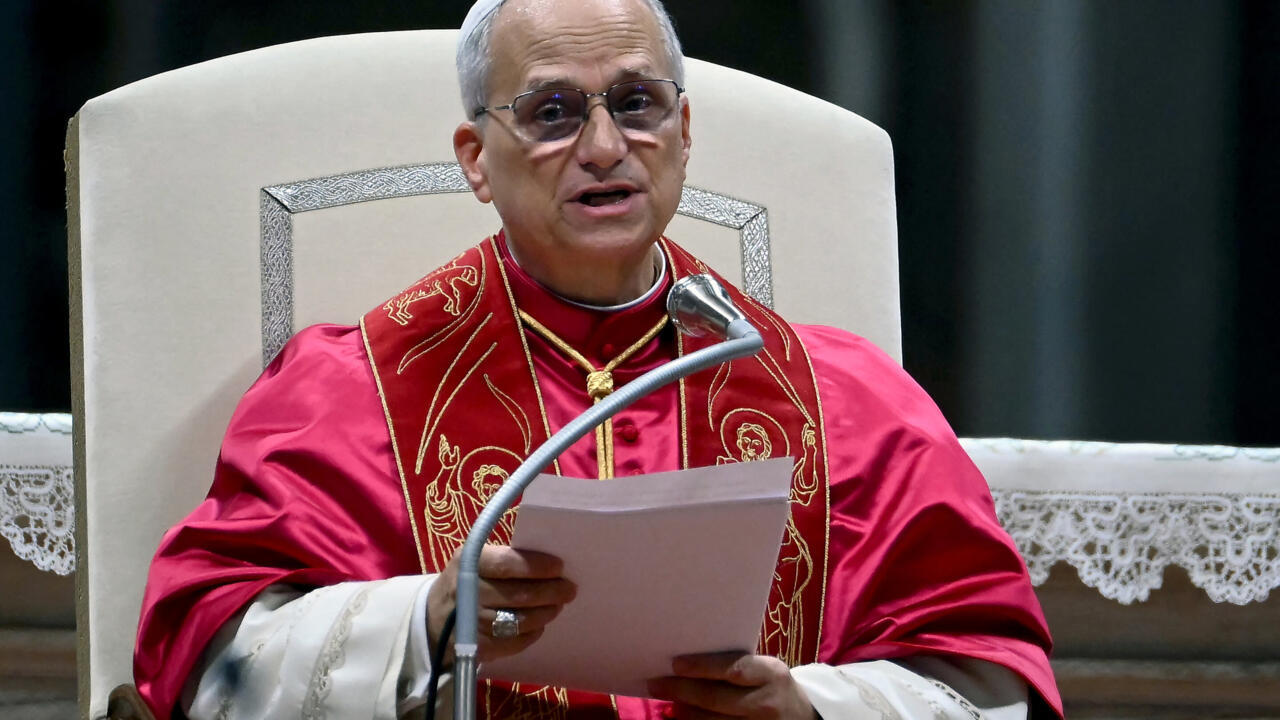
Pope Leo XIV presides over a prayer vigil as part of the Jubilee of Consolation, in St. Peter's Square, at the Vatican, on September 15, 2025. © Filippo Monteforte/AFP

Pope Leo XIV on Monday urged “concrete actions” on climate change and complained that some leaders lacked the will to act, as he addressed religious dignitaries on the sidelines of the COP30 summit.

The Vatican released the American pope’s address to churches of the southern hemisphere assembled on the margins of the UN climate talks in Belém, Brazil, in which he called the Amazon region “a living symbol of creation with an urgent need for care”.

“Creation is crying out in floods, droughts, storms and relentless heat,” the pope said.

“One in three people live in great vulnerability because of these climate changes. To them, climate change is not a distant threat, and to ignore these people is to deny our shared humanity,” he added.

“What is failing is the political will of some.”

READ MOREBrazil’s Lula opens COP30 by urging ‘defeat’ of climate change deniers

The UN climate negotiations enter their final stretch this week, with nations split on key issues as government ministers began arriving Monday to take over negotiations.

“There is still time to keep the rise in global temperature below 1.5C, but the window is closing,” warned Leo, who called for “concrete actions”, while championing the landmark Paris Agreement.
Pope defends Paris Agreement

The historic 2015 accord, from which US President Donald Trump has said he will withdraw the United States for the second time, aims to keep temperature rises “well below” 2C compared to pre-industrial levels and, if possible, to 1.5C.

The Paris Agreement was the “strongest tool for protecting people and the planet”, Leo said, decrying a lack of effort by some leaders, whom he did not name.

“True leadership means service and support on a scale that will truly make a difference,” he said, urging firmer climate action to bring about “stronger and fairer economic systems”.

READ MOREGlobal fossil fuel emissions to hit record high in 2025, study says

“Let us send a clear global signal together: nations standing in unwavering solidarity behind the Paris Agreement and climate co-operation,” he said.

Since being made pope in May, the Chicago-born pontiff — who spent about 20 years as a missionary in Peru — has urged more pressure on governments to stop climate change.

Last month, during a climate conference near Rome, he called for an “ecological conversion” to help vulnerable communities.

October marked the ten-year anniversary of the late Pope Francis’s landmark climate manifesto Laudato Si, which appealed for action on human-caused global warming.

COP30, without the presence of the US government, is scheduled to end in five days, but groups of countries still disagree on many issues, including climate ambition, unilateral trade measures, and finance.

Some countries also want a roadmap for phasing out fossil fuels.

UN climate chief Simon Stiell welcomed what he called Pope Leo’s “strong message”.

“His words urge us to continue to choose hope and action,” he said.

(FRANCE 24 with AP)