Tuesday, November 18, 2025


China to Expand Domestic Cruises by Acquiring ex-Costa Ship from Seajets

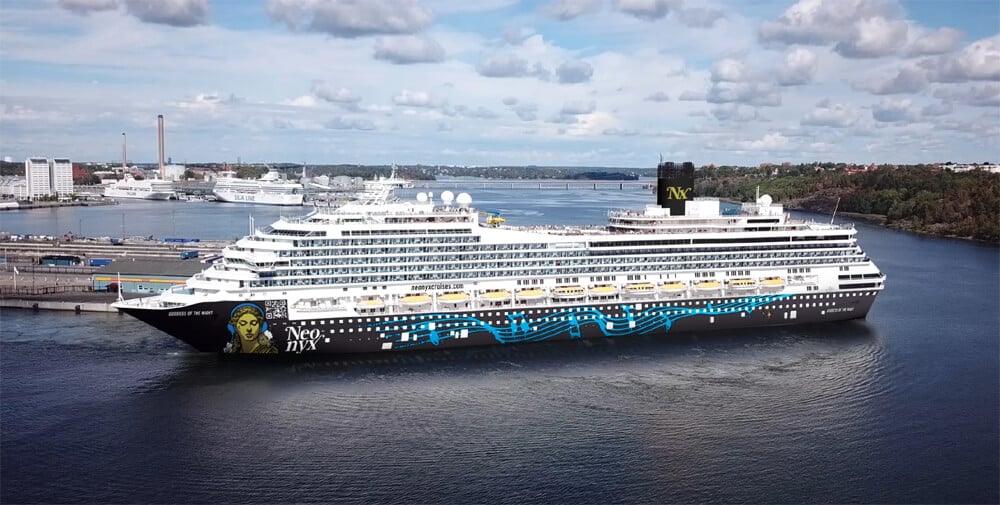
cruise ship Goddess of the Night
Seajets had planned to launch a party cruise operation calling the ship the Goddess of the Night (Ny

Published Nov 17, 2025 7:16 PM by The Maritime Executive


China looks to resume expansion of its domestic cruise market after a long hiatus following the COVID-19 pandemic. In the latest reports online, Tianjin Orient International Cruises, which was launched two years ago to restart the market from Tianjin, is now poised to acquire a second, larger cruise ship.

Travel agents in China are reporting that the company is acquiring the former Costa cruise ship Costa Magicia, which was sold in 2023 to Greece’s Seajets. The 102,780 gross ton cruise ship has been idle since the pandemic, first held by Carnival Corporation for sale, and since 2023 owned by Marios Iliopoulos’s Seajets, a Greek inter-island ferry company. Iliopoulos emerged as a speculator in cruise ship tonnage during the pandemic. It was the 24th cruise ship sold by Carnival Corporation as part of its pandemic-related downsizing.

Seajets briefly flirted with entering the cruise business, announcing the launch of a company called Neonyx Cruises and reactivating the ship, which was then named Mykonos Magic, as the Goddess of the Night. The plan was to launch a short party cruise service to the Greek Islands in the summer of 2024. The ship was refitted, but in June 2024, shortly before her entry into service, she was chartered as housing for security personnel during the G7 summit in Italy. Local media reported that the ship "was in terrible sanitary conditions, with dirty and damaged accommodation, unusable toilets, dilapidated showers, flooded cabins." Neonyx later canceled its cruises, saying it would start in 2025.

Databases are showing the vessel has been renamed Vision. According to the media reports, it is being prepared to sail to China, where it will undergo a complete renovation. It is due to enter service in 2026 for Tianjin Orient International Cruises.

The company acquired its first cruise ship, now called Dream, at the beginning of 2023 from Sanya International Cruise Development Co., which had purchased the 77,500 gross ton ship from Carnival Corporation and renamed it Charming for Chinese cruises. Sanya was a joint venture between Cosco Shipping, China National Travel Service (HK) Group, and China Communications Construction Co. that was launched to capitalize on the restart of the Chinese cruise market. The ship, which was built in 1998 by Fincantieri operated by Princess Cruises. It had started sailing from China, marketed to the domestic market, and then successfully restarted cruising from Tianjin in northern China in July 2023.

Seajets also owns the former Oceania of P&O, which is a sister ship to the Dream operated by Tianjin. It also still has the former Majesty of the Seas from Royal Caribbean and the former Veendam from Holland America. The company had said it planned to add additional ships to its Neonyx operation.


Bidding Heats Up for Former STX Shipbuilding with US Private Equity

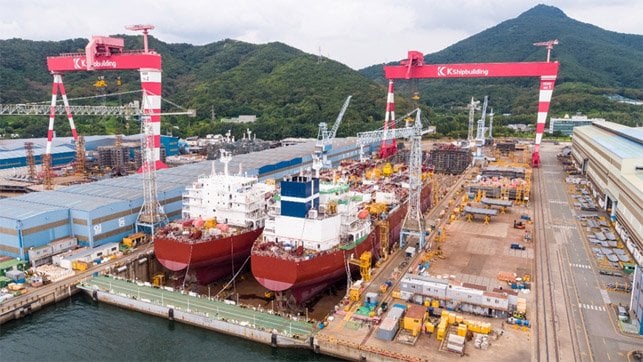
Korean shipbuilder K Shipbuilding
K Shipbuilding has emerged as a leading mid-sized Korean shipbuilder (K Shipbuilding)

Published Nov 17, 2025 8:04 PM by The Maritime Executive


The first round in the process for the potential sale of South Korea’s K Shipbuilding was completed last week, with reports that U.S. private equity investor TPG Group has jumped in as an entrant. The shipyard is reported to be drawing strong interest from investors as it is well-positioned to benefit from Korea’s Make American Shipbuilding Great Again (MASGA) initiative.

K Shipbuilding was relaunched in 2021 after the former STX Offshore & Shipbuilding was acquired by an investment group led by United Asset Management and KHI. The new owners were credited with stabilizing production, lowering costs, and restoring the financially troubled yard on a growth trajectory. In 2024, the yard reported sales of approximately $638 million and produced a profit. As of September, the yard reported it had already booked $560 million or orders for eight ships and options for two additional vessels. It again achieved an operating profit for the first half of 2025.

The investment group launched the sale program, setting November as the deadline for potential bidders to submit letters of intent. Korean media reports said that at least three companies are believed to have already indicated interest in participating in the auction, which will likely take place early next year. Korea’s three largest shipbuilders, Hyundai, Samsung, and Hanwha Ocean, are reported not to be among the bidders.

TPG, which was launched out of the former Texas Pacific Group, reports it currently has $286 billion under management. It is said to be looking at K Shipbuilding as an investment and not seeking management control. TPG joined with Korea’s Taekwang Group, an investment conglomerate with current investments in clothing and apparel, chemicals, real estate, and financial services, in the bid for the shipyard.

Media reports indicate the sellers have set a target price of $340 million or above for the shipyard. They currently hold 99 percent of the sales of the former STX. It is believed they are looking to cash out after the successful rejuvenation of the yard and to realize the future potential from the positioning to be part of MASGA. 

K Shipbuilding has previously built warships and is reported to be looking to enter the market for maintenance contracts from the U.S. Navy and for the support fleet. It is highlighted that the yard is also in proximity to the Republic of Korea Navy Fleet Support Unit.

The yard has emerged as the leading mid-sized shipbuilder in Korea. It has booked commercial contracts for ships, including recently two large petrochemical carriers.

Ellerman to Consolidate Short Sea Shipping by Acquiring Viasea Shipping

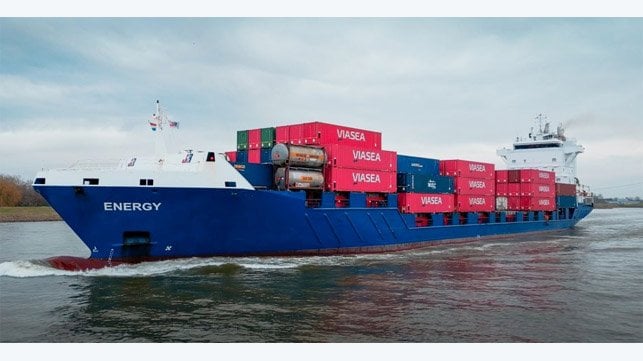
short sea container shipping
Ellerman looks to consolidate and expand the short sea shipping segment (Ellerman)

Published Nov 17, 2025 6:15 PM by The Maritime Executive


One of the storied names in cargo shipping, Ellerman City Liners, looks to continue its rebirth by expanding and consolidating Europe’s short sea shipping sector. The company reported last week that it has agreed to acquire Norway’s Viasea Shipping. 

Viasea Shipping, which was founded in 2016 by a Norway-based logistics company, ColliCare Holdings, was formed on the vision of moving cargo flows from the roads over to the sea. It became one of the largest operators in Oslo, Norway. Today, it provides service links to Lithuania, Poland, the UK, the Netherlands, and Norway. It also coordinates service to Spain and Portugal via Rotterdam.

“This acquisition isn’t just about growth, it’s about redefining shortsea shipping for the future,” said Iain Liddell, Founder & Managing Director of GB Global, a UK-based logistics company and the parent of Ellerman City Liners. “By combining Ellerman’s UK expertise with Viasea’s agile operational shortsea footprint and sustainable solutions, we’re building an extensive European network that delivers speed, reliability, and greener solutions for customers across Europe.”

According to the companies, the acquisition is a strategic move that unites two niche players in the shipping industry. It combines complementary strengths to deliver seamless end-to-end shipping logistics solutions as one partnership and expands the reach of the two operations. Viasea will also benefit from being part of a larger organization. Customers will also have the benefit of rail links to Poland, Hungary, and Romania.

Ellerman is a historic name in shipping that was reborn in 2021. It traces its origins to 1892 and, after early acquisitions, was branded Ellerman in 1902. It grew to have a large fleet of cargo ships and, in the 1960s, partnered with Cunard before being sold to Hamburg Sud in 2004, which ended the branded service. Today, it lists 13 ships among the providers contracted for container transport.

The companies highlight the growth in short sea shipping in Europe. It is presented as an alternative to over-road transport and is more environmentally friendly than long-distance trucking.


Anduril Plans to Build Unmanned Warships in Seattle

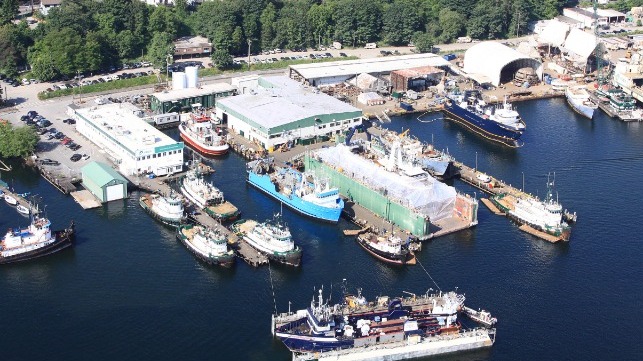
The former Foss Shipyard site in Seattle (Foss file image)
The former Foss Shipyard site in its heyday (Foss file image)

Published Nov 17, 2025 3:25 PM by The Maritime Executive


In the latest sign of development from the budding U.S.-Korea shipbuilding partnership, American tech firm Anduril reports that it will work with HD Hyundai to develop unmanned vessels for the Modular Attack Surface Craft (MASC) competition, the latest U.S. Navy program for an oceangoing unmanned warship. This particular platform will be built in Seattle for low-rate production, Anduril says. 

Anduril - the maker of Australia's Ghost Shark unmanned sub - says that the new "family" of USV designs will be autonomous, modular, mass production-ready, iteratively upgradeable, and capable of flexible mission payloads. Mission possibilities range from ISR to electronic warfare to strike, based on loadout. Its design philosophy is to use software for system integration, maximizing interchangeability of hardware components and minimizing vendor lock-in for parts in the sustainment phase. Similarly, Anduril and HD Hyundai picked all-steel construction for the hull, the least technically complicated, most repairable and most accessible option for smaller shipyards. 

Anduril and HD Hyundai are building the first prototype in Korea using HD Hyundai's advanced capabilities. This stage will prove out the design and technology in an advanced facility and prepare the system for production in America. For the next stage, Anduril is building up capacity at the small Foss Shipyard site in Seattle. The yard is located next to traditional firms like Western Towboat and Coastal Transportation on the Lake Washington Ship Canal, and Foss shut it down in 2021. It will be revived and used as the home base for Anduril's low-rate production for integration and testing. 

"The Pacific Northwest, home to the wartime legacy of Kaiser Shipyards and the original Freedom’s Forge, offers the infrastructure, supply chain depth, and skilled labor to expand U.S. shipbuilding capacity. The region provides the ideal conditions to re-energize American shipbuilding and grow the maritime workforce," said Anduril in a statement. 

In addition to its human workforce, Anduril is maximizing automation during production, in partnership with robotics firm Hadrian. The work will be done with precision automation and "rapid fabrication capabilities" to build structural and mechanical components, Anduril said. 


U.S. Navy Takes Delivery of Last Independence-Class Littoral Combat Ship

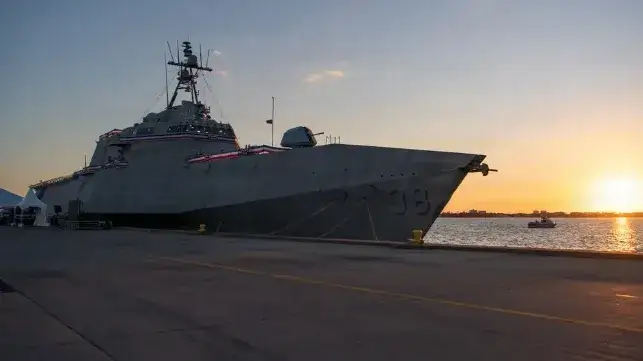
USS Pierre
USS Pierre (USN)

Published Nov 17, 2025 7:20 PM by The Maritime Executive


The U.S. Navy has commissioned USS Pierre, its very last Independence-class Littoral Combat Ship, bringing a challenging acquisition program one step closer to a close. Only one Freedom-class LCS is still pending delivery.  

"The commissioning of USS Pierre marks an important moment for the Fleet. President Trump is committed to restoring our shipbuilding capacity because he knows that to be a superpower, one must be a seapower," said Secretary of the Navy John Phelan. "This ship represents the skill, dedication, and craftsmanship of the builders, yard workers, and industry partners who brought her from concept to keel commissioning."

The final hull has been a long time coming. Design of the Independence-class formally began in 2004, in parallel with the swappable "mission packages" that the ships were supposed to carry interchangeably. The Pentagon opted not to down-select to a single ship design and yard, so there would be two classes: Austal built its aluminum trimaran Independence-class "variant," and Fincantieri/Lockheed built their steel monohull Freedom-class design as well. The choice to build two classes was made in order to secure political support for the project, former Navy Undersecretary Robert Work told ProPublica in 2023.

From a capability standpoint, the two designs came under fire from traditional navalists for their comparatively low survivability and lethality. The hulls were designed for high speeds and shallow draft, allowing for swift operations near shore. The unusually high speed requirement meant engineering tradeoffs for armor and armament, and they were not designed to the same standard as other combatants for resistance to shock. When it came time for shock trials, the Navy performed the blasts at reduced intensity to avoid damage to the ships, and halted tests for the Freedom-class series before reaching one-third of rated force. In 2016, official concerns were raised about whether they could survive in combat. 

In service, the Freedom-class quickly developed a reputation for mechanical issues, particularly a faulty gearbox design in the propulsion system. The class was assigned to tow a sonar array for antisubmarine warfare, but the sonar package failed to develop and was canceled in 2022. Even when all systems were functioning, the Freedom-class vessels were "noisy as an aircraft carrier," and that created challenges for sonar work, according to then-CNO Adm. Mike Gilday. Lacking a mission for the Freedom-class, the Navy decommissioned first-in-class LCS USS Freedom in 2021, 12 years ahead of her planned end of life. In 2022, Navy leadership tried to decommission all nine Freedom-class hulls then in service, the youngest of which had been active for less than three years; ultimately five were removed from the fleet.

The Independence-class has had fewer public issues. Beginning in 2019, structural defects resulting in hull cracking were found on at least six ships, according to Military Times - forcing low speed and sea state restrictions for at least one vessel. The issue was above the waterline only, and was fixed in later production with heavier hull plating in certain areas. Retrofits and repairs were planned for in-service vessels. At sea, the vessels have proven useful for interdictions and freedom of navigation patrols. In addition, the mine countermeasures package that the Independence-class is assigned to carry has reached initial operational capability, and deployed for the first time in 2025.

For both classes, a contractor-centric service model initially drove up operating costs near to full-sized destroyer levels, according to U.S. Navy budget data. In recent years the service has been working to shift more responsibility for repairs in-house and empower the crew to fix broken gear. 

The arrival of the last Independence-class hull also marks the end of a large order series for Austal USA's aluminum construction line. The all-aluminum Spearhead-class fast transport and a medical-ship version are still in production. In the meantime, Austal has started up a large and growing business in all-steel construction, which is rapidly expanding. 


Austal USA To Increase Submarine Industrial Base Capabilities Under AUKUS

Austal USA

Published Nov 17, 2025 4:40 PM by The Maritime Executive


[By: Austal USA]

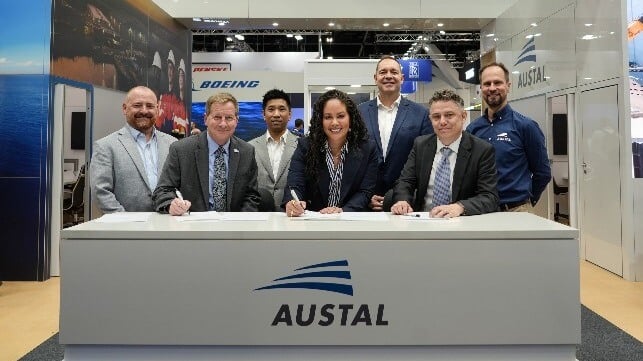
Austal USA entered a Memorandum of Understanding (MoU) with Australian Submarine Corporation (ASC) during the 2025 Indo Pacific International Maritime Exposition (INDOPAC 2025) in Sydney, Australia.  This MoU marks an agreement to advance the introduction of cutting-edge 3D printing in Australian shipbuilding and submarine sustainment, strengthening the supply chain to support the Virginia-class and Australian Collins-class submarine programs. 

“Austal USA is proud of the role we are playing in the international effort to fortify the submarine industrial base through innovations in additive manufacturing capabilities,” stated Austal USA President Michelle Kruger.  “We recognize the importance of AUKUS and are excited to be at the forefront of this monumental collaboration of Allies partnering to defend our freedom with an impenetrable fleet of surface and subsurface naval assets.”

The MoU, signed at the Austal USA stand by Austal USA Vice President Business Development & External Affairs, Lawrence Ryder, ASC Chief Capability Officer, Danielle Bull, and Austal Australia Chief Technology Officer, Dr. Glenn Callow, is another indication of the significant role Austal USA is playing in integrating AM technologies into the maritime industrial base of not only the US but also Australia. 

“This is another significant advance in our efforts to fully integrate the use of AM in the submarine and shipbuilding production and repair process,” stated Ryder. “Signing the MoU here at INDOPAC in Sydney highlights the growing achievements of AUKUS and the expanding relationship between the US and Australian industrial bases.” 

Austal USA’s advanced technologies team has been at the forefront of AM adoption, operating the U.S. Navy’s Additive Manufacturing Center of Excellence (AM CoE) in Danville, Va. Austal USA is responsible for developing a national network of vendors with qualified AM machines and processes to provide critical submarine parts. Austal USA has a unique familiarity with end-to-end production pathways using AM across multiple modalities and alloys. The company is using laser powder bed fusion (LPBF), wire arc additive manufacturing (WAAM), wire laser additive manufacturing (WLAM) and exploring the use of cold spray additive manufacturing (CSAM).

One of the most significant challenges is ensuring additive manufacturing digital data smoothly integrates with existing Navy logistics, inventory, and quality management systems. Austal USA is developing a network that will ensure digital traceability – a digital thread built to Navy requirements – through the development of Digital -Secure Exchange for Additive (Digital – SEA), a purpose-built platform that will connect the Navy and component OEMs with AM suppliers and digital manufacturing information.

Austal USA also formed a strategic partnership in 2022 with General Dynamics Electric Boat, supported by the U.S. Navy, to expand the submarine industrial base (SIB) by producing modules for the Virginia and Columbia -class programs.  As part of the partnership, Austal USA is constructing and outfitting Command and Control Systems Modules (CCSM) and Electronic Deck Modules (EDM) for the Virginia- and Columbia-class programs.

Austal USA has continued to expand its facilities and workforce to support the growing demand of the SIB. A new production facility, a 369,600 square foot manufacturing building, will be dedicated to submarine module manufacturing. The new building, Module Manufacturing Facility 3, will be fully operational in late 2026.

The products and services herein described in this press release are not endorsed by The Maritime Executive.


Op-Ed: Bamako Convention Cuts Africa Out of the Ship Recycling Industry

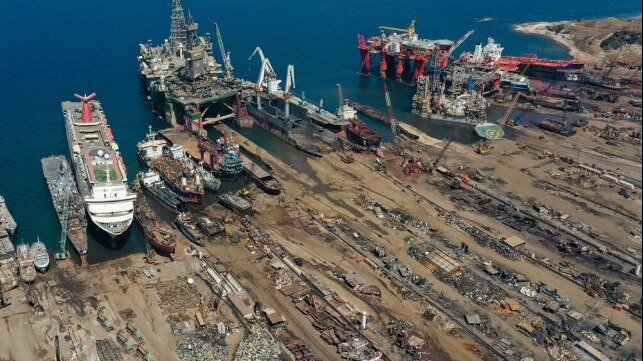
Shipbreaking at a Turkish yard (file image courtesy MOL)

Published Nov 17, 2025 4:47 PM by Dr. Ishtiaque Ahmed


As the global commercial fleet approaches the end of its operational life, demand for ship-recycling capacity is projected to triple over the next decade. This surge will be driven by accelerated decarbonization efforts and the retirement of large numbers of aging tankers and bulk carriers. At present, South Asia accounts for 80–90% of global ship-recycling activity, with Bangladesh, India, and Pakistan operating the world’s dominant dismantling yards.

If global demand rises as forecast, existing centers will not be able to meet it alone. The industry will require new regions of operation, diversified infrastructure, and expanded labor forces. Because ship recycling is inherently labor-intensive, many developing countries—and African states in particular—are strongly positioned to benefit from this emerging economic opportunity.

However, Africa risks being unable to capitalize on this demand due to constraints created by the Bamako Convention, one of the continent’s most important environmental treaties.

Ship-recycling facilities cannot operate without a predictable and continuous supply of end-of-life vessels. Such volume is essential for achieving economies of scale, retaining skilled labor, ensuring safety standards, and remaining globally competitive. Yet this requirement directly conflicts with the Bamako Convention’s strict prohibition on the import of hazardous waste from non-Contracting Parties.

Under Article 4(1), Parties must adopt legal and administrative measures “to prohibit the import of all hazardous wastes, for any reason, into Africa.” Any such import is deemed illegal and a criminal act, and the ban applies not only on land but throughout the territorial sea, exclusive economic zone, and continental shelf.

For policymakers, this presents a strategic challenge: how to reconcile legitimate environmental protections with the continent’s potential to participate in, and benefit from, a rapidly expanding global industry. Addressing this gap will require careful policy design, regional coordination, and legal innovation to ensure that Africa is not excluded from a transformative economic opportunity.

For end-of-life ships, this poses an immediate problem. Under prevailing legal interpretation in both Basel and IMO circles, a ship that is intended for dismantling and contains hazardous materials—such as asbestos, PCB-containing equipment, sludge oils or heavy-metal residues—is considered hazardous waste. As a result, importing such vessels into an African state that is Party to Bamako is prohibited outright. The ability of African states to build large-scale, internationally competitive recycling yards is therefore obstructed at the most fundamental level: they cannot legally import the ships they would need to dismantle.

The Convention also requires Parties to prohibit the export of hazardous waste to any state that has banned such imports. Although this obliges non-African exporters to respect Africa’s prohibitions, Bamako diverges from the Basel Convention in important ways. The Basel Convention—the global treaty governing hazardous-waste trade—relies on a “prior informed consent” (PIC) mechanism. Under Basel, a transboundary movement can only occur once the state of import has been notified and has given explicit written consent. Basel therefore regulates movement, but does not impose an absolute import ban.

Bamako, by contrast, adopts an outright ban on imports from non-Parties and applies PIC requirements primarily within Africa, not for imports from outside the continent. As comparative scholarship consistently notes, “the Bamako Convention adopts prior informed consent only within Africa.” The legal distinction is crucial: where Basel provides a conditional pathway for hazardous-waste imports, Bamako closes the door entirely.

This leaves African ship-recycling in a uniquely disadvantaged position. If a vessel destined for dismantling is classified as hazardous waste—and in most cases it will be—then a Bamako Party cannot legally import it. As a result, African yards cannot accumulate the volume of vessels required to scale operations or attract the investment needed to compete with South Asian facilities. In contrast, Bangladesh, India and Pakistan face no such regional treaty prohibitions and therefore continue to enjoy unrestricted access to ship-import flows, reinforcing their global dominance.

This structural disadvantage persists even when Africa receives international technical assistance. Through mechanisms such as the IMO’s Integrated Technical Co-operation Programme, several African coastal states are in the process or have received training, yard-design support and compliance assistance to prepare for HKC implementation. But technical capacity cannot overcome the legal barrier: a yard may be HKC-ready, but it cannot function without feedstock. And the recently issued voluntary IMO guidelines—Circular HKSRC.2/Circ.1 (1 November 2024)—which attempts to provide flexibility on the application of Basel and HKC, are non-binding and unlikely to alter the legal status of hazardous-waste shipments. Where voluntary guidelines conflict with binding treaty law, the latter prevails. Thus, infrastructure and training investments risk becoming symbolic rather than transformative.

The irony is that African states acted responsibly. Decades of hazardous-waste dumping in West and Central Africa made a strong treaty response necessary. Bamako is rightly regarded as one of the strictest environmental protection instruments in the world. But this protective framework now unintentionally excludes African states from a legitimate and potentially transformative industrial sector tied directly to the circular economy, green job creation and the decarbonization of maritime asset life cycles. If ship-recycling demand triples as projected, Africa’s inability to participate meaningfully will widen development gaps and reinforce existing geopolitical imbalances.

Even African states that have not ratified the Bamako Convention are not necessarily free to import end-of-life vessels. Many non-Parties have adopted domestic laws that replicate Bamako’s import ban, creating de facto restrictions. In addition, twenty-five African states have ratified the Basel Ban Amendment, which blocks the import of end-of-life ships from OECD countries, effectively eliminating this supply stream.

For the few African states that are not bound by Bamako or the Basel Ban and have no domestic prohibitions, another barrier remains: although almost all are Parties to the Basel Convention (except South Sudan), they generally lack the capacity to demonstrate the “environmentally sound management” required under Basel. Without proof of ESM capability, foreign exporters cannot legally send hazardous-waste vessels to them.

In short, across the continent, one of three barriers applies:

  1. Bamako directly prohibits import,
  2. Domestic law indirectly prohibits import, or
  3. Basel compliance capacity is insufficient to allow import.

Under all three scenarios, Africa remains effectively excluded from the import-driven ship-recycling model that dominates the global market.

Geography further compounds this legal disadvantage. South Asian recycling hubs—such as Chittagong in Bangladesh and Alang in India—benefit from unique coastal topography. Their long, gently sloping tidal flats allow for low-cost beaching of large vessels, enabling dismantling without expensive dry-dock infrastructure. Many African coastlines, by contrast, have deeper waters, rocky substrates or ecologically sensitive zones. To match South Asia’s cost structure, African states would need to build capital-intensive slipways, dry docks or engineered containment systems. Combined with legal constraints, these geographic realities make Africa even less competitive.

If global demand for ship recycling truly triples within the next decade, Africa risks being left behind—not through lack of ambition or capacity, but because the legal and geographic architecture governing hazardous-waste movement leaves the continent structurally unable to participate. The Bamako Convention remains essential in its protective function, but its unintended industrial consequences are now impossible to ignore. Unless policymakers confront this widening gap between legal obligations and economic opportunity, Africa will remain a spectator as the world’s aging shipping fleet is dismantled elsewhere. The opportunity cost is immense.

The path forward requires legal reform, controlled import channels under HKC-compliant standards, strengthened hazardous-waste management capacity and a realistic alignment of maritime-industry development with treaty constraints. Only then can Africa transform its precautionary stance into a competitive advantage and reshape ship-recycling from a missed opportunity into a strategic industrial sector for the future.

Author’s Biography: Dr. Ishtiaque Ahmed is a Professor and Chair of the Department of Law at North South University, Bangladesh. A former Merchant Marine Engineering Officer, he holds a Doctor of the Science of Law (J.S.D.) from the University of Maine School of Law, USA, where he specialized in International Ship recycling laws and policy. He contributed to the drafting of Bangladesh’s Ship Recycling Rule 2025 (proposed) and revising Bangladesh Ship Recycling Act 2018 as the sole Legal Consultant. Dr. Ahmed is also a qualified Barrister of England, an active member of Chartered Institute of Arbitrators (MCIArb) in London and an Advocate in Bangladesh Supreme Court. His expertise lies at the intersection of maritime law, environmental regulation, and sustainable ship recycling practices. He can be reached at ishtiaque.ahmed@northsouth.edu.

The opinions expressed herein are the author's and not necessarily those of The Maritime Executive.
 

Eregli Shipyard Begins Construction Of Turkey's Most Powerful Escort Tug

Med Marine

Published Nov 13, 2025 8:14 PM by The Maritime Executive


[By: Med Marine]

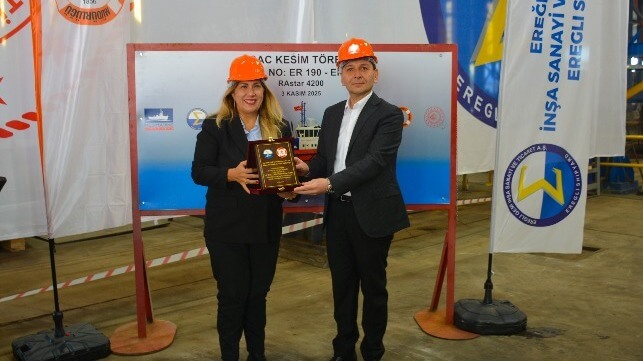
On November 3, 2025, a significant milestone was celebrated at Eregli Shipyard, marking the official commencement of construction for two of Türkiye’s most powerful escort tugs, being built for the General Directorate of Coastal Safety (KEGM). The steel-cutting ceremony symbolized the first tangible step in bringing this major project to life—one that reflects Türkiye’s steadfast commitment to advancing maritime safety and operational capability in its territorial waters, and once again demonstrates the engineering excellence of Med Marine’s Eregli Shipyard.

Under the contract signed on May 5, 2025, Eregli Shipyard will construct, outfit, test, and deliver two state-of-the-art escort tugs, each measuring 42 meters in length and boasting a minimum bollard pull of 130 tonnes. Designed to perform under the most challenging conditions, these vessels will feature FiFi-I class firefighting systems, advanced control technologies, and high-precision manoeuvrability to ensure rapid and reliable response in emergency operations.

The ceremony was attended by senior representatives from KEGM and Eregli Shiyard, including Mr. Mustafa Bankao?lu, General Director of KEGM, and Mr. Gökmen K?n?k, Deputy General Director of KEGM, among other distinguished guests from the organization. The event highlighted the shared sense of pride and responsibility in building vessels that will enhance the safety of Turkish seas and contribute to the nation’s maritime strength.

Reflecting on the occasion, Mrs. Y?ld?z Bozkurt Ozcan, General Manager of Med Marine Holding, expressed his enthusiasm, stating:

“Today, we begin a project of national importance—two powerful escort tugs that will stand as symbols of Türkiye’s maritime resilience and engineering excellence. Each plate of steel we cut today represents our dedication to safeguarding our coasts, advancing our shipbuilding capabilities, and contributing to a safer maritime future for the nation.”

As sparks flew and steel met flame, this ceremony marked more than the beginning of construction—it marked the continuation of Eregli Shipyard’s enduring mission to serve Türkiye’s maritime future through innovation, reliability, and craftsmanship.

Technical specifications of the tugboats:

Length: 42 m
Max. Draft: 7,5 m
Depth: 6,4 m
Beam: 16 m 
Bollard Pull: Min. 130 tons
Speed: 14 knots
Crew: 11 persons

The products and services herein described in this press release are not endorsed by The Maritime Executive.


Meet Gerard McAllister: McAllister’s Next-Gen Tug Arrives In Flagship NYC

McAllister Towing
GERARD MCALLISTER

Published Nov 13, 2025 8:25 PM by The Maritime Executive


[By: McAllister Towing]

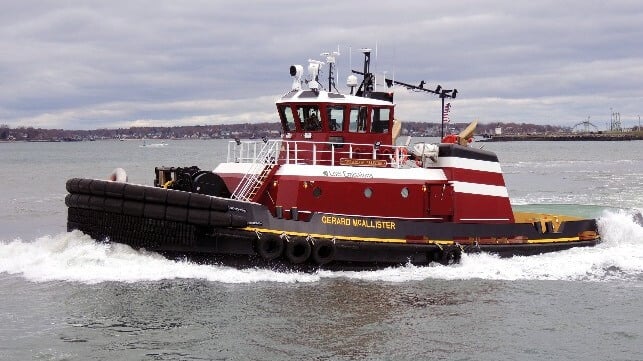
Power, ingenuity, maneuverability - McAllister Towing’s newest tractor tug, the GERARD MCALLISTER, brings all three to the Port of New York.

American made at Washburn & Doughty, the GERARD MCALLISTER is the fifth in a series of six 84-metric-ton bollard pull, low-emission tractor tugs. She is McAllister’s 42nd tractor tug and the 13th with over 80 metric tons of bollard pull, underscoring the company’s continuation toward a more powerful, hi-tech, and sustainable fleet.

Driven by 6,770 horsepower in her CAT engines, the GERARD MCALLISTER is built to handle the largest ships arriving on the U.S. East Coast. She joins her sister vessel, the GRACE MCALLISTER (launched in 2024), as the newest member of the fleet at McAllister’s flagship New York operation. With eco-friendly engines and Markey winches, these American-made tugboats rank among the most advanced and capable ship-docking tractor tugs serving the Port of New York.

The GERARD MCALLISTER’s first sail wasn’t just a delivery — it’s was a career showcase. On her way from the shipyard to New York, she stopped at Massachusetts Maritime Academy, giving cadets the chance to step aboard, tour the new tug, meet her crew, and ask real-world questions about working in the tugboat industry. For the next generation of mariners, the GERARD MCALLISTER is a terrific representation of where the industry is headed: high-tech, low-emission, and mission-critical to global trade.

“As vessel sponsor, it’s an incredible honor to see this tug bear my name,” said Gerard McAllister, the youngest of the fourth generation of McAllisters descended from company founder James McAllister. “This vessel represents where McAllister is headed — more power, cleaner technology, and new opportunities for the next generation of mariners. I hope the cadets who walk her decks at Mass Maritime can see themselves building a future in this industry and, one day, standing on a tug like this in New York Harbor.”

McAllister Towing is a fifth-generation owned and operated company that has been providing unsurpassed service since 1864. With four new state-of-the-art vessels added in the last two years and a fifth scheduled for delivery in 2026, McAllister continues to invest in innovation, sustainability, and safety across its operations on the U.S. East Coast.

The products and services herein described in this press release are not endorsed by The Maritime Executive.


Russian Attack Starts Fire on LPG Carrier and Damages Vessels in Ukraine

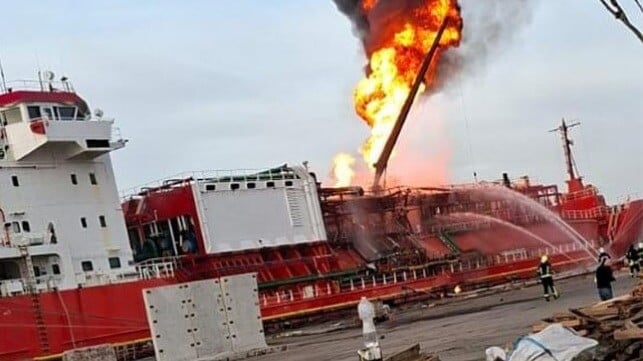
Fire on LPG carrier in Ukrainian port
Fire started in the gas pumping equipment during the Russian attack on the port (Turkish Ministry of Transport)

Published Nov 17, 2025 1:06 PM by The Maritime Executive


Ukrainian officials are reporting that several vessels were damaged and there is a fire aboard a Turkish-flagged LPG carrier after a Russian barrage targeting Ukrainian ports overnight along the Black Sea and Danube. Reports are that only one person was injured, but there are concerns for the safety of the gas carrier.

The Turkish vessel Orinda (9,352 dwt) was alongside at Izmail offloading a cargo of liquified petroleum gas when the attack occurred. Ukrainian port officials are reporting that the gas pumping equipment caught fire. The vessel, built in 2022, immediately commenced a shutdown operation, and the 16 crewmembers were safely evacuated. Ukrainian firefighters were working to put out the blaze.

Officials emphasized that there was no immediate danger from the fire. Romanian officials, however, said the vessel was just 500 meters (1,640 feet) from two villages across the Danube from Izmail. As a precaution, they evacuated between 100 and 150 people, with the local mayor saying they were concerned the ship could explode at any moment.


Odesa Regional State Administrator Oleg Kiper reported that energy and port infrastructure were damaged and said that the Russians had hit several port areas. He said that “several civilian vessels were damaged,” but did not provide details. A video posted online showing the burning Orinda appeared to show it as the only vessel docked in Izmail.

Ukraine claimed that Russia had launched 128 drones and two ballistic missiles in attacks across the country. Over 36,500 households were reported to be without power, and areas, including one port, according to Deputy Prime Minister Oleksii Kuleba.

This latest round of attacks prompted security consultants Diaplous Group to warn that vessels “face elevated collateral risk when alongside energy infrastructure.”

Both Russia and Ukraine have increased their attacks on each other’s energy infrastructure. On Friday, November 14, it was reported that Ukraine had struck Russia’s Novorossiysk oil port, briefly taking the infrastructure offline. By Sunday, it was reported that the port appeared to have resumed at least partial operations.


Mr. Container's Revenge

iStock
iStock

Published Nov 16, 2025 6:09 PM by Erik Kravets

(Article originally published in Sept/Oct 2025 edition.)


Remember 2021? COVID-19 sweeps the world. Freight rates spike fantastically. The world's largest container lines order hundreds of new ships in a rush to meet demand – and to cash in on the bonanza.

If you're lucky enough to have an empty container in Shanghai, you can get $9,865 to send it to Rotterdam. And what's even crazier? The C-Suite and their advisors claim to genuinely believe that this gold rush isn't going to end.

Johan Sigsgaard, Maersk's Head of Ocean Products, delivered the quote that embodies this hubris (see "Mr. Container's Wild Ride" in the May/ June 2021 edition) when he confidently stated, "We expect rates will normalize at a level above historical."

But he was wrong, as I predicted. Rates collapsed down to levels that were even lower than they had been in 2020. The Containerized Freight Index dropped from its COVID-19-induced fever peak of $5,109.60 on January 3, 2022 to comfortably under the $1,000 level by February 6, 2023, which is where it remained for the rest of the year.

In 2021 and 2022, container lines placed a lot of orders for big new ships: 561 boxship newbuilds in 2021 alone, in fact, compared to just 114 in 2020. The total cost: $43.49 billion.

That's a gamble.

MSC ordered over two million TEUs of new capacity including several megaships in Shanghai. Maersk placed orders with Hyundai Heavy Industries (HHI) in Korea. CMA CGM went on a shopping spree at China State Shipbuilding Corporation, ordering 2.7 million TEUs. And in due course they were ready for delivery – whether container freight rates were high enough to cover their costs or not.

TIMING IS EVERYTHING

But let's skip ahead in time and consider Hapag-Lloyd.

It ordered six 23,500-TEU+, ultra-large container carriers (ULCCs) from Daewoo on June 21, 2021. These ships entered service from June 2023 to June 2025. The first ones hit the market during the aforementioned slump, but the later ones? Well, let's just say they got lucky – thanks to the Houthis.

In November 2023, right when all this new tonnage began hitting the spot market, the Houthis began attacking vessels in the Red Sea with Iranian drones. It hurt insurers, Egypt, many Mediterranean and Red Sea ports and shippers everywhere. But it rescued freight rates.

Nora Szentivanyi, an economist at J.P. Morgan, noted that the attacks caused "an approximately nine percent reduction in effective global container shipping capacity" as ships were rerouted around the Cape of Good Hope – because that journey, relative to a Suez Canal transit, takes about 30 percent longer, which meant that ships and containers were out of circulation for longer than they would have been if they could have sailed straight to their destinations.

And indeed, as important as the Red Sea is for global shipping, carriers and insurers began to avoid it, opting for the longer and less deadly route around the southern tip of Africa.

With more ships on the high seas, rather than in port to accept or discharge cargo, the law of supply and demand caused "soaring freight rates and shipping insurance costs, contributing to inflation," according to an analysis by J.P. Morgan.

As a result, in the third quarter of 2024, total container industry profits hit $26.8 billion, which is up (and this is not a typo) 856 percent year-overyear, reversing six quarters of declining earnings after the pandemic's end.

Shipping maven John McCown noted that the cause for this exceptional result was "pricing increases emanating out of the Red Sea situation."

Moreover, volume was also 2.1 percent higher than it was during the pandemic: Container lines moved 47,121,793 TEUs in Q3 of 2024, a record. High prices and high volume mean money.

Several container lines were explicit about the source of their windfall. In a statement earlier this year, COSCO said that because of the "escalating situation in the Red Sea," there was a lack of capacity, so "the market freight rate remained at a relatively high level in 2024. Hapag-Lloyd told Reuters that "when capacity is relatively tight, rates simply go up." Taiwanese container line Yang Ming also attributed the absorption of excess container capacity to the Red Sea crisis.

CASE STUDIES

So the supposedly ill-conceived newbuilds of the COVID-19 era entered service in time for this newest crisis. A few case studies illustrate this happy circumstance.

In August 2021, Maersk ordered eight 16,000-TEU, dual-fuel ships from Korea's HHI with an option for four more. In November 2022, a further six 17,000-TEU, dual-fuel ships were ordered. Ane Maersk, the first of the 16,000-TEU ships, was delivered in January 2024 with the rest to follow that year and in 2025. From February 2024 onward, it was scheduled to run the AE7 string, carrying cargo between Asia and Europe.

In October 2022, CMA CGM ordered the hull that would become CMA CGM Seine, a 24,000-TEU ULCC. Its keel was laid down at Hudong-Zonghua Shipyard in China. CMA CGM Seine was delivered in April of this year, when freight rates were at a peak from the Houthi attacks.

In March 2021, Evergreen ordered 20 M-class ships, each carrying 15,000 TEUs. The $2.5 billion order was split between yards in South Korea, China and Japan. In December 2024, the 14th one of these ships, Ever Most, was delivered. Ever Max, the first, was delivered in June 2023. The subsequent deliveries fall within the 2025 timeframe.

In each of these cases, except for Ever Max, the timing of the delivery was impeccable and coincided with the November 2023 start of hostilities in the Red Sea. Galaxy Leader was captured by the Houthis on November 19, 2023, and its crew was released 430 days later. By December 2023, freight rates were already relatively out of control.

Those ships would otherwise have entered into a low freight rate environment, adding to already existing overcapacity and dragging profits down further. Instead, because of the disruptions caused by the Houthis, each TEU slot was suddenly precious.

BOOM OR BUST

But regardless, it's an iron principle of supply and demand that what goes up must come down – as the market always finds its equilibrium. And freight rates are already moving toward normal.

Drewry noted recently that "the major trade routes, Transpacific and Asia–Europe, are now aligned in a downwards trajectory," and "the momentum (…) has now faded." Drewry's Container Forecaster expects the "supply-demand balance to weaken again in 2H25." Specifically, Drewry remarked that carriers are struggling "to match increased capacity – due to new vessels entering the trade – with softening demand."

Does it matter, though, if the "new normal" of permanently higher freight rates never arrives? The $43.49 billion spent on new container ships in 2021 seems reckless, but not when set next to the $110 billion in net profit the industry earned during that year of the pandemic, according to Sea Intelligence.

Ocean cargo is cyclical, a "boom or bust" industry. Indeed, an argument can be made that if container rates are easily absorbed by shippers even during peak crises, then over-ordering when times are good makes sense. Then you're all set to cash in when freight rates are driven up by an unexpected event.

WAITING FOR THE NEXT CRISIS

Like an predator waiting for prey, suffering through lean years in between making a kill is part of the game. As long as humans keep causing chaos, freight rates will continue to be driven by one crisis after another. Freight volume keeps growing, and if it isn't COVID-19 or Houthi terrorism, it will likely be some other unfortunate disruption.

So if you still have a ticket for Mr. Container's Wild Ride, hold onto it!

The opinions expressed herein are the author's and not necessarily those of The Maritime Executive.