Thursday, November 20, 2025

Low Enrollment Continues to Plague Many U.S.  Charter Schools


Nearly three years ago Dissident Voice published an article titled “Low Enrollment Plagues Many Charter Schools.” Since then countless news articles have documented low enrollment at many charter schools across the country, raising doubts about, among other things, so-called “long waiting lists” at many charter schools.

Low enrollment has always been one of the four main reasons charter schools close regularly, leaving many families and educators shocked and abandoned. The other three reasons include financial malfeasance, mismanagement, and poor academic performance. Such interrelated problems are intrinsic to school privatization schemes at home and abroad. Privatization typically increases corruption and inefficiency, while lowering quality and restricting democracy.

Low enrollment in many charter schools also throws a wrench in the neoliberal narrative that enrollment is declining in public schools because students are flocking to charter schools. In this context, it should also be noted that charter school owners and operators never address the large number of students who leave charter schools over time and return to their host public school district. Such students are often “pushed out” of charter schools. This is on top of the fact that charter schools typically under-enroll special needs students, homeless students, and English Language Learners.

One of the most recent examples of how low enrollment persists in charter schools and causes many problems comes from North Carolina. A November 17, 2025 article, Charter Review Board considers higher hurdles to school openings, denies all-boys school, and more, takes a deep dive into why so many charter schools close in North Carolina, leaving many families and teachers out in the cold.

The North Carolina Charter Schools Review Board (CSRB) met in mid-November 2025 to discuss raising charter school enrollment requirements because so many charter schools in the state are falling short of meeting established enrollment requirements, thereby causing many charter schools to close (not long after they open). The state requires charter schools to enroll at least 80 students in order to launch a charter school. According to the article, “Catalysts for change [in enrollment requirements] include two recent mid-year closures of under-enrolled schools, along with trend data showing nearly three in four new schools fell short of enrollment projections.” In other words, close to 75% of charter schools are consistently falling behind when it comes to enrollment numbers. Looking at enrollment trends over a 5-year period, data shows that, “charter schools are enrolling about 13% fewer students, on average, in their first year than they projected. Just 26% of schools met or exceeded enrollment projections over the last five years.” But more troubling is the fact that, “over the past two years, the gap between projections and actual enrollment has become much larger.”

By any measure, such numbers and trends reveal a high failure rate and undermine the neoliberal narrative that more charter schools need to open to accommodate the so-called large number of families seeking to enroll their children in charter schools. On the contrary, “Such closures exact a high cost from families,” CSRB members said. Frequent charter school closures, in North Carolina and elsewhere, leave a bad taste in everyone’s mouth and make people think twice about approaching charter schools. Such harsh experiences are not easily forgotten.

It is easy to find many examples of low enrollment in charter schools coast to coast. This problem is a persistent one. The lesson here is that the public must remain vigilant when it comes to endless disinformation from charter school promoters about “how great and unassailable charter schools are” and stand ready to always defend public education and reject school privatization. Today, privatization in every sector, nationally and internationally, is dragging society backward and exacting a heavy toll on everyone. Those obsessed with expanding their own private interests can and must be opposed in order to advance the public interest.

Shawgi Tell (PhD) is author of the book Charter School Report Card. He can be reached at stell5@naz.eduRead other articles by Shawgi.
A little bird is signaling a major problem — and that bird is the  U.S.  insurance industry


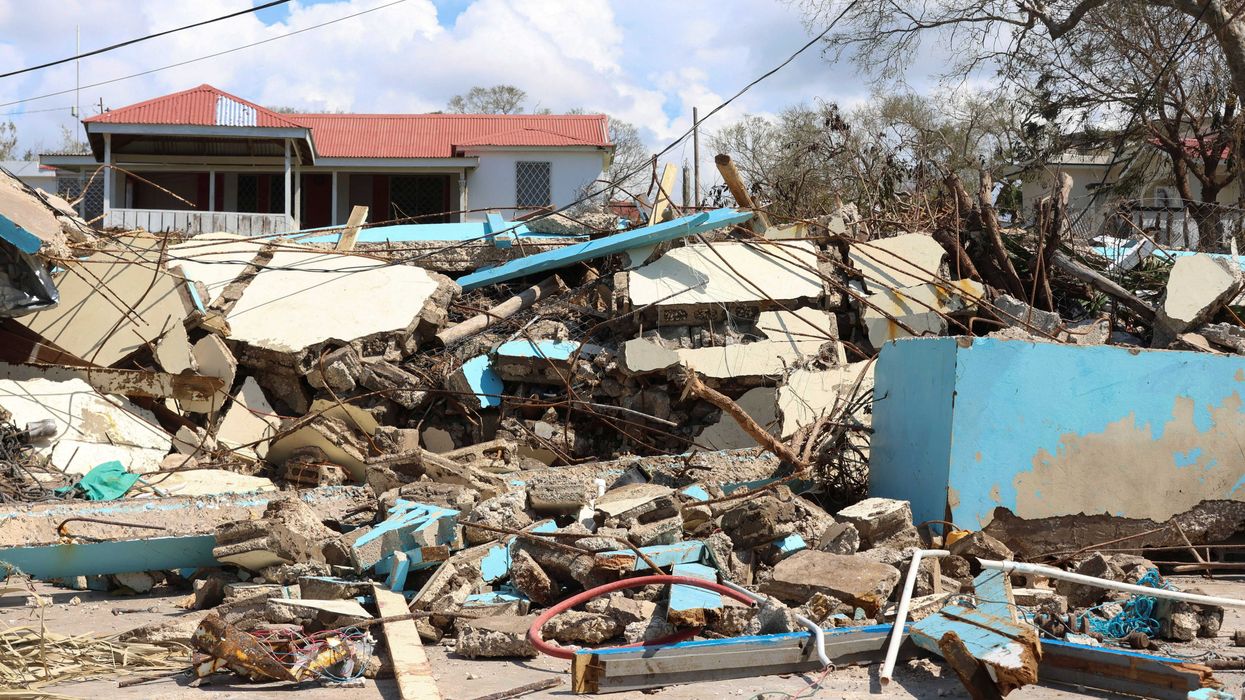
Damaged buildings along the shore after Hurricane Melissa made landfall, in Treasure Beach, Saint Elizabeth Parish, Jamaica October 30, 2025. REUTERS/Gilbert Bellamy

November 19, 2025 
ALTERNET

As the cost of insuring our houses escalates around the United States and the world, it appears that property insurance is acting like a canary in a coal mine.

Canaries used to be taken into coal mines because they served as an early warning system if dangerous gases were building up. Since the canaries were more sensitive to these gases than people, they protected the miners from life-threatening conditions. When the canary dropped dead, the miners could still get out.

Like the canaries, the actuaries who interpret data for insurance companies are more sensitive than most individual people to changes going on in the world. Actuaries earn big salaries because the financial health of their employers depends on them.

Things have already gotten so bad that the National Academies of Sciences, Engineering, and Medicine (NASEM) recently sponsored a webinar panel discussion: “Extreme Weather Events and Insurance: Households, Homeowners, and Risk.” (This link will take you to a video of the event.)

Any coal miner who refused to evacuate a mine when the mine’s canary keeled over—perhaps saying, “I don’t believe there is any real danger here”—would not have been long for this world.

The panelists were located in the United States (Washington, DC and Madison, Wisconsin) and England (London and Cambridge). Climate changes are not limited to the United States, nor is awareness that we need to do something about them if we can.

The panelists were not grinding particular political axes. They were discussing the measured fact that an increasing number of extreme weather events are destroying valuable property—housing, commercial buildings, streets, bridges, etc.—requiring insurance company payouts to policyholders.

These insurance payouts must be financed by the premiums charged to people who are insuring their property. As damages increase, the premiums also have to increase. Although premiums may be regulated by state regulators, if they do not allow the needed increases insurance companies will pull out of doing business in that state.

As insurance companies pull out, it may become more and more difficult—perhaps even impossible—for people to insure their houses. But if a house cannot be insured, banks won’t finance a mortgage on it, and if it cannot be financed the owner may be unable to sell it.

For many people, their home is their primary investment, and they cannot afford to live in it if they cannot insure it. If it burned down or was otherwise destroyed, they would be wiped out financially. But if they cannot sell it, then the homeowner is a real pickle.

Disrupted housing markets can produce disastrous results for a country’s economy in general, as we Americans discovered during the recession beginning around 2008.

The impact of a world that is heating up is not being felt as much in the United States as in many other countries in Europe, Africa, and Asia which are suffering from unusually long bouts of very hot weather, flooding downpours alternating with extreme droughts, forest fires, etc. Some island nations may be literally wiped out as melting icebergs and glaciers increase sea level, putting them underwater.

But enough extreme weather events are already occurring in the United States that the insurance companies must make major increases in their prices.

Any coal miner who refused to evacuate a mine when the mine’s canary keeled over—perhaps saying, “I don’t believe there is any real danger here”—would not have been long for this world.

Americans who continue to politicize discussion of global warming—either denying its existence, its extent, its speed, or its seriousness—will be like that coal miner. We too have a little bird trying to call our attention to a major problem. That bird is the insurance industry with its army of actuaries. We ignore that warning at our own risk, and at the risk of our children and grandchildren.
Fox News survey shows 'absolutely catastrophic numbers' for Trump: pollster


U.S. President Donald Trump reacts as he welcomes Israeli Prime Minister Benjamin Netanyahu (not pictured) at the White House in Washington, D.C., U.S., September 29, 2025. REUTERS Kevin Lamarque
November 19, 2025
ALTERNET

A new poll conducted by Fox News shows that President Donald Trump has the highest disapproval rating on record. The conservative network also found large majorities of respondents disapproved of his ability to lower prices for daily necessities.

On Wednesday, Fox News reported that just 41 percent of those polled approved of Trump's performance as president, with 58 percent disapproving. When separating out respondents by party, 86 percent of Republican respondents approved of Trump's presidency, though that figure is down from 92 percent in March.

Roughly 76 percent of American voters have a negative view of the economy. Only 18 percent of those surveyed thought inflation was either completely or mostly under control. And large majorities of poll respondents said that costs for basic needs had either increased by a little or by a lot. 85 percent said groceries had increased (60 percent saying grocery prices went up by "a lot") while 78 percent of those polled said the same of utilities.

When concerning healthcare costs, 67 percent of respondents told Fox News that they were paying more in 2025 compared to last year. 66 percent said the same of housing costs. 53 percent said gasoline prices were more costly now than in 2024. Inside Elections deputy editor Jacob Rubashkin said the results were "arguably the most worrisome poll of Trump's second term and potentially first term too."

"Absolutely catastrophic numbers for Donny," tweeted Zenith Polls founding partner Adam Carlson.

The latest Fox News polls suggests a sharp divide between Americans and Trump's consistent argument that prices have gone down under his administration. When a three-time Trump voter sent him a message through Fox News host Bret Baier earlier this month to "please do something" about the cost of living, the president defended his economy and insisted that costs under him were lower than under former President Joe Biden.

The Fox News survey marks the first national poll by the conservative network since this month's elections, which saw Republicans lose by significant margins in multiple states to Democratic candidates who largely ran on lowering prices.

Click here to read the full poll results.


Trump paying price 'for telling Americans not to believe their own eyes': Nobel economist


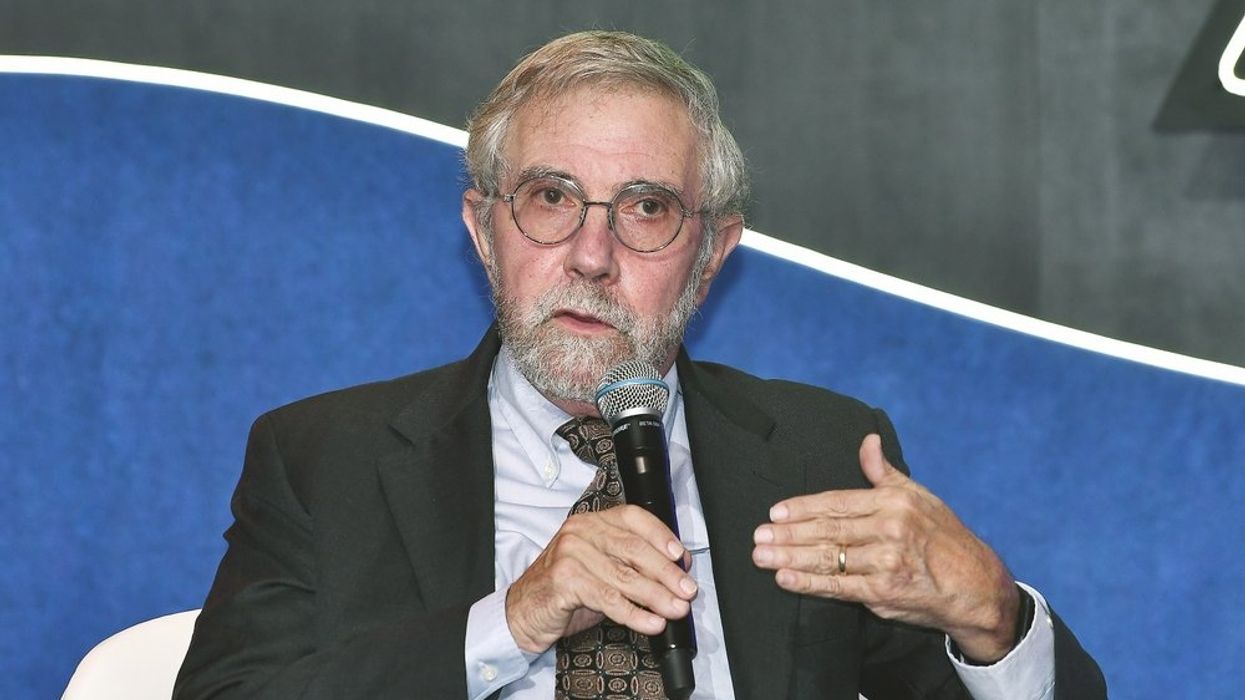
Economist Paul Krugman at FIDES 2023 in Rio de Janeiro, Brazil on September 25, 2023 (A. Pael/Shutterstock.com)

November 20, 2025 
ALTERNET


When there’s a Republican in the White House, nobody cheers harder than a Republican voter, said Nobel economist Paul Krugman. Only now they’ve stopped cheering.

“People’s reported perception of the economy is strongly affected by whether their preferred party is in power,” said Krugman. “This is true for both parties, but historically Republicans have tended to cheer harder and boo louder than Democrats. So other things equal we would have expected average sentiment to improve under [President Donald] Trump II.”

“Now, things aren’t equal,” Krugman said. “Objectively, the economy is worse in important ways than it was a year ago. Still, the extent of the plunge in perceptions is remarkable.”

Krugman earlier reported that the “Biden era vibecession — people feeling bad about an economy that looked good by standard measures — has persisted under Trump,” but he added that “public perceptions of the economy appear to be plumbing new depths” based upon a Fox News poll exploring Republican attitudes toward Trump’s economic policies.

In that poll, Republicans’ concern about the cost of groceries had “increased a lot” for 60- percent of surveyed respondents, while 40 percent were equally concerned about the cost of utilities. Add that to the group who felt their concern “increase a little” and you’re looking at roughly 80 percent of Republican respondents increasingly bothered by groceries and utilities.

“Honestly, I’m surprised,” said Krugman. “… It may be that Trump is … actually paying a price for telling Americans not to believe their own eyes.”

Biden and company similarly told Americans that their incomes were outpacing inflation, which was true but not what people wanted to hear, said Krugman. However, Trump keeps “insisting that grocery prices are way down, which is simply a lie. And people may be noticing.”

“The absolute absurdity of the Trump team’s efforts to explain away bad economic news may also be taking a toll. Remember when [U.S. Secretary of the Treasury] Scott Bessent was supposed to be the adult in the room? Now he’s blaming migrants taking diseased cattle with them for high beef prices,” said Krugman.

Krugman also wondered if Trump’s other problems, including the Epstein implications and ICE persecutions, were “bleeding over to economic sentiment.”

“Political consultants like to imagine that the public makes clear distinctions between issues: ‘kitchen table’ versus democracy versus corruption. In reality public opinion is much more of a gestalt in which bad or good feelings on different issues merge,” said Krugman.

Read Krugman’s full report on his substack at this link.

Billionaire Trump pal eyeing 'axing' CNN hosts the president 'is said to loathe': report


Larry Ellison at the White House, in Washington, U.S. February 3, 2025.
 REUTERS/Elizabeth Frantz
November 20, 2025   
ALTERNET


Senior White House officials say that they are in favor of Paramount Skydance acquiring Warner Bros Discovery, and one official has discussed potential programming changes and firings at CNN with Paramount's largest shareholder, Larry Ellison, The Guardian reports.

Paramount Skydance is currently engaged in a potential bidding war to acquire Warner Bros. Discovery, expected to submit a formal bid by the Thursday deadline, is in a competition between other parties including Comcast and Neftlix.

According to The Guardian, Paramount is poised "as the best bid" thus far.

Billionaire Ellison and President Donald Trump have a close relationship, marked by Ellison hosting fundraisers for Trump, meeting with him regularly, and potentially benefiting from Trump's administration on business deals like Oracle's role in the "Stargate" AI partnership and the proposed TikTok acquisition.

Ellison's son David is also a significant figure in the media landscape following his company Skydance's merger with Paramount.

Larry "Ellison often speaks to connections at the White House but, in at least one of the calls, engaged in a dialogue about possibly axing some of the CNN hosts whom Donald Trump is said to loathe, including Erin Burnett and Brianna Keilar, the people said," reports The Guardian.

"The conversation also touched on floating names to replace Burnett and the possibility of running CBS assets like its flagship 60 minutes program on CNN air – proposals that have animated the White House, the people said," they write.

Paramount already has an in with Trump after they paid a $16 million settlement to him after an edited interview of former Vice President Kamala Harria by 60 Minutes last year.

"Additional backing from White House officials would smooth over any other hurdles for the Paramount bid," The Guardian notes.

And while "the only regulatory scrutiny" of Paramount acquiring Warner Bros "would be an antitrust review by the justice department," a former White House official doesn't see it being a problem.

"This won’t pose serious antitrust issues,” they told The Guardian. “That’s just how the government relations game is played."

Trump loyalist Brendan Carr, Federal Communications Commission chair, agrees, telling The Guardian that a Paramount acquisition of Warner Bros Discovery would be very unlikely to require any review by his commission.

“I’d be very surprised if there was an FCC role at all in that type of transaction,” Carr said.
Bombshell report details more farm bankruptcies in 6 months of Trump tariffs than all of 2024


Combine harvests soybeans

November 20, 2025
ALTERNET

More Iowa farms have filed for bankruptcy in six months than in all of 2024, and President Donald Trump's tariffs are making it worse.

The bombshell report appeared on the front page of the Des Moines Register on Thursday, revealing that Iowa farmers think the problem "isn't just another economic cycle."

"Iowa farmers filed the second-largest number of bankruptcies nationally in the first half of the year, already twice as many as last year and the most since 2021," the report said.

Bankruptcy attorney Joseph Peiffer said that he sees "extreme financial distress" across not only Iowa but the Midwest as well. It's at a "level higher than I’ve seen in a long time."

“They’ve been losing money for a couple of years, and this year, they’re looking at losing a lot of money,” Peiffer said.

He isn't the only one. The report cited mediators and counselors, who say they have witnessed "a rush of farmers struggling with rising financial stress."

There were a total of 3,140 farm bankruptcies from January through October. It is 18 percent higher compared to the same time last year.

"Nationally, 181 farmers have filed for bankruptcy protection in the first two quarters of 2025, nearly 60 percent more than this time last year, according to U.S. Bankruptcy Court filings. Arkansas led the U.S. with 19 farm bankruptcy filings, followed by Iowa at 16; Georgia, 15; California, 12; and Nebraska, 11."

"We virtually don’t hear from farmers from planting 'til harvest,” Peiffer said. However, this year, that changed.

There is a hotline named Iowa Concern, which helps those struggling with financial and mental health challenges. In September alone, the group said they've seen three times more calls than the same time in 2024.

Iowa State University agricultural economist Chat Hart told the Register that the last crisis began in 2014 and lingered into 2020. The COVID-19 crisis led 138 Iowa farmers to file for bankruptcy, state court data shows.

But the trade war with China has created "deeper" pain for soybean farmers.

"The pain is deeper now, but the pattern is similar," Hart said.

Iowa farmers should expect a 24 percent decline in income in 2026, one new report warns.

It comes at a time when federal government assistance is also being slashed.


Read the full report here.


Trump DOJ overrules lawyer who warned boat strikes could 'legally expose' military: report

Robert Davis
November 19, 2025 
RAW STORY


FILE PHOTO: The crest of the United States Department of Justice (DOJ) is seen at their headquarters in Washington, D.C., U.S., May 10, 2021. REUTERS/Andrew Kelly/File Photo/File Photo


Officials in President Donald Trump's Department of Justice overruled a senior military lawyer who warned that the administration's strikes on alleged drug traffickers in international waters could "legally expose" service members, according to a new report.


NBC News reported on Wednesday that the lawyer, who is unnamed in the report, serves as the senior judge advocate general, or JAG in military parlance, at U.S. Southern Command in Miami. The report adds that the lawyer began raising concerns about the strikes in August, but was overruled by officials at the Justice Department’s Office of Legal Counsel, citing six sources familiar with the matter.

"The JAG at Southern Command specifically expressed concern that strikes against people on boats in the Caribbean Sea and the eastern Pacific Ocean, whom administration officials call 'narco-terrorists,' could amount to extrajudicial killings, the six sources said, and therefore legally expose service members involved in the operations," the report reads in part.


ALSO READ: 'We protect our own': Chicago parents stand up to ICE despite threat of gas and violence


"The opinion of the top lawyer for the command overseeing a military operation is typically critical to whether or not the operation moves forward," it added. "While higher officials can overrule such lawyers, it is rare for operations to move forward without incorporating their advice."

Read the entire report by clicking here.
The People of Ecuador Are Right: US Force Won’t Stop Narco-Traffickers

The US military is not a responsible partner in addressing “bad behavior” precisely because it is engaging in seriously bad behavior itself.


People react following the first results of a referendum in Quito on November 16, 2025 in which Ecuadoran voters appeared poised on November 16, 2025, to reject the return of US military bases.
(Photo by Rodrigo Buendia / AFP via Getty Images)

John Feffer
Nov 20, 2025
Foreign Policy In Focus

Ecuador, once one of the most peaceful countries in Latin America, is now one of its most dangerous. The murder rate in 2020 was 7.7 homicides per 100,000 people. That was roughly comparable to the United States where it was 6.4 that year. In nearby Brazil, on the other hand, it was 22.3.

By 2023, Ecuador’s homicide rate had leapfrogged over its neighbors to an astounding 46 per 100,000. In a mere three years, the number of murders had increased six-fold.

The reason: narco-traffickers. Ecuador had become a convenient transshipment hub, and various gangs were warring over territory, particularly in coastal cities.

In 2023, in a presidential election that featured the assassination of one of the candidates, Ecuadorians voted in Daniel Noboa, an undistinguished but telegenic conservative politician who promised an iron-fist approach to fighting drug kingpins. His tactics boiled down to unleashing the military to attack specific gangs. However, as Tiziano Breda points out in a report for ACLED, “The same measures that contributed to reining in violence in the first months of 2024—increased military pressure in prisons and on the streets—had the unintended consequence of further fostering intra-gang power struggles and fragmentation.”

Even in a country where people are dying left and right, voters overwhelmingly opposed any outside military intervention to address the problem of narco-traffickers.

As a result, homicides in Ecuador have superseded even the totals for 2023, with the expected rate rising to 50 per 100,000 in 2025.

All of which makes the result of the recent referendum all the more remarkable.

Last week, Ecuadorians rejected all four of the proposals coming from the Noboa government. In addition to preserving the “rights of nature” provision of their constitution—by rejecting a constitutional overhaul—Ecuadorians said no to foreign military bases. The Trump administration was practically salivating at the prospect of returning to a US base in Ecuador that the military had been kicked out of in 2009 when then-president Rafael Correa let the lease expire.

Even in a country where people are dying left and right, voters overwhelmingly opposed any outside military intervention to address the problem of narco-traffickers. The national government’s own militarized response has failed. Voters reasoned that US intervention would only make things worse.

It’s a powerful statement of popular sovereignty at a time of executive overreach (by Noboa) and an expanded war on drugs (by President Donald Trump). “We respect the will of the Ecuadorian people,” Noboa commented on X when the results had come in.

Trump, however, has shown no interest in respecting the will of any people.
Plan Mexico

The Trump push for regime change in Venezuela is only part of a larger effort to expand the US military footprint in the Western hemisphere. With Venezuela, Washington is moving against an adversary of 25 years.

With Mexico, however, Washington is confronting an ally of even longer standing. In the past, the United States has assisted Mexican army and police in their battle with drug lords. Direct intervention is something different. Given opposition from the Mexican government, Trump is planning to operate independently in the country.

According to administration sources:
Under the new mission being planned, US troops in Mexico would mainly use drone strikes to hit drug labs and cartel members and leaders, the two current US officials and two former US officials said. Some of the drones that special forces would use require operators to be on the ground to use them effectively and safely…


It seems likely that the administration will wait to see how the operation in Venezuela proceeds before initiating something in Mexico.

Meanwhile, Mexico has agreed to conduct its own interdiction of suspected drug shipments at sea. It’s a marriage of convenience: Mexico wants to prevent the Trump administration from indiscriminately attacking ships in the waters off the country, and Trump wants countries in the region to shoulder more of the burden of this “drug war.”

This is how Trump’s former secretary of defense Mark Esper applies lipstick to this particular pig:
The United States is sending a clear signal that it will not tolerate bad behavior in its hemisphere. While some measures are controversial, if not legally dubious, they are part of a broader truth: Regional security demands not only American strength and focus, but also shared action and responsibility by our partners.


Certainly, countries in the region could do a better job dealing with narco-traffickers. But this is a question of law enforcement, not lawbreaking. The US military is not a responsible partner in addressing “bad behavior” precisely because it is engaging in seriously bad behavior itself. The strikes against boats around Venezuela amount to extrajudicial murder, and those executing the policy might one day face indictment by the International Criminal Court. Any intervention in Mexico, against that government’s expressed wishes, would be a violation of sovereignty no different (in kind) from Russia’s “self-defense” rationale for invading Ukraine.

Trump’s Larger Strategy

Trump wants complete freedom of movement in this hemisphere. It’s not exactly a sphere-of-influences approach, since he frankly wants access, minerals, and privileged trade relations everywhere.

But Latin America is close, and the United States has a rich and noxious history of intervention in the region on which Trump can build. His administration has been beefing up its military presence in Puerto Rico as a staging area. In Panama, it established over the summer a new jungle warfare school at a US military base abandoned 25 years ago. According to ABC News:
By August, the military had set up the “Combined Jungle Operations Training Course” with Marines and Panamanian forces training as part of a pilot program. A military spokesperson said there have since been 46 graduates of the three-week course: 18 Marines, one Army soldier and 27 personnel from Panama’s National Aeronaval Service, National Border Service and National Police.

Last month, the United States began stationing combat aircraft in El Salvador. Because of Trump’s immigration policies, the Honduran government threatened to close down the US military base that hosts the Southern Command. But that hasn’t stopped US forces from creating a new Combined Joint Operation Center at the base to coordinate with the Honduran military and other entities.

The military is only a means to an end—of transforming the politics of the hemisphere. Trump has lavished $20 million to support his buddy Javier Milei, the far-right leader in Argentina, a cash infusion that gave his party a boost in the midterm elections last month. Trumps has tried to use additional tariffs to keep his Brazilian buddy Jair Bolsonaro out of jail for his attempted coup, presumably so that he could return to power just the way Trump has. He hosted Daniel Noboa at Mar-a-Lago before the Ecuadorian election last spring to convey the message that the conservative politician had the ear of the American president. Trump wants Xiomara Castro’s successor to lose the elections in Honduras at the end of the month, the far-right Jose Antonio Kast to dislodge the left in Chile’s presidential runoff next month, and a comparable rightist to replace Gustavo Petro in Colombia next year.

If Trump hates having a democratic socialist, Zohran Mamdani, in his backyard of New York, it’s even worse to have them leading countries in America’s backyard of Latin America. The “drug war”—on top of the deportation of hundreds of thousands of Venezuelans, Hondurans, and Ecuadorians—is a lever that the United States can use to impose MAGA throughout Latin America. More money and power for militaries in the region increase the likelihood that generals there will revive the “good old days” when coups were commonplace.

The United States has an addiction problem—opioids, cocaine, meth—that has been driving supply. Having slashed addiction treatment funding and contributed to worsening the economic conditions that fuel addiction, Trump is now entirely focused on the quixotic mission of suppressing this supply.

The president, too, has addictions far more dangerous than fast-food burgers. He is addicted to the expansion of US power and the consolidation of his own. He won’t voluntarily seek treatment. Only the voters can force him into rehab.


A Bold Campaign to Confront Global Crises

Although the world is experiencing severe global crises, there are new efforts underway to create a more effective means of coping with them.

The crises are clear enough. They include vast slaughter in horrific wars, worldwide climate catastrophe, massive population displacement, and deepening poverty.

Moreover, these disastrous situations are likely to worsen in coming years. Modern wars are fought with increasingly devastating weapons, and preparations for nuclear war have escalated to the level of global annihilation. Similarly, time is running out for saving the planet from an environmental cataclysm, which will surely lead to heightened displacement and poverty.

There is, of course, a global organization formally tasked with tackling global problems: the United Nations. And the officials of that international entity do frequently make admirable recommendations for how these problems can be solved. Indeed, there is a consensus among most of the UN’s 193 nations about what should be done to preserve a decent future for humanity: end the wars; foster nuclear disarmament; sharply reduce the burning of fossil fuels; assist refugees; promote social progress; and feed the hungry.

The problem is that the United Nations, despite its virtues, remains at the mercy of the major military and economic powers that created it. And they are not only frequently at odds with one another, but are usually determined to see to it that their national interests―as they define them―prevail over the interests of the world community.

When it comes to international security, each of the five permanent members of the UN Security Council (Britain, China, France, Russia, and the United States) can veto UN action―and all too often do so.

When it comes to UN efforts to address climate change, the situation is not much better, for the great powers continue to burn and (as in the case of Russia and the United States) extract and profit from selling vast quantities of fossil fuel. Consequently, they weaken or sabotage UN-sponsored climate agreements.

Another way the great powers hamstring the United Nations is by abandoning its operations and reducing its meager funding. The U.S. government, under Donald Trump, is particularly flagrant in this regard, pulling the United States out of key UN agencies and slashing voluntary contributions and mandated dues payments to the world organization. As of this October, the United States has compiled a debt of $1.5 billion in mandated funding to the United Nations, followed by China ($192 million) and Russia ($72 million).

Frustrated by the UN’s inability to adequately handle global challenges, a network of civil society organizations, scholars, policy experts, and diplomats took action on September 22, 2025 to launch Article 109, an international coalition to mobilize public opinion, social movements, and national governments to activate a UN Charter Review conference.

When the UN Charter was signed in 1945, the document’s drafters provided for its evolution through Article 109, which states that a Charter Review Conference can be launched by a two-thirds vote of the General Assembly and any nine members of the Security Council. As today’s Article 109 Coalition observes, this conference could update and empower the United Nations by enacting structural changes (e.g., reforming the Security Council, creating a UN Parliamentary Assembly, and establishing a Climate Council), as well as by making normative upgrades (e.g., supporting gender equality).

More than 40 civil society organizations are now part of the Article 109 Coalition. They include global campaigning organizations like Oxfam International, Democracy Without Borders, the Global Governance Forum, and the World Federalist Association; regional organizations in Africa and Latin America; think tanks like the Quincy Institute for Responsible Statecraft; and national organizations like EYC (which empowers youth in Cambodia) and Citizens for Global Solutions (which organizes in the United States). The Club de Madrid, a recent endorser of Charter review, is a forum that brings together more than 100 former Heads of State.

Indeed, recent heads of state and current government officials participated prominently in the September 22 launch event. Mary Robinson, former Irish President and UN High Commissioner for Human Rights, delivered the keynote address. She was followed by Alexander De Croo (former Belgian Prime Minister), Helen Clark (former New Zealand Prime Minister and UN Development Program Administrator), and Ambassador Muhammadou Kah (The Gambia’s Permanent Representative to the UN in Geneva).

UN Charter review has several potential drawbacks. For example, it could end up producing an amendment that reduces the purview of the international organization. Furthermore, the process will be lengthy. The Article 109 Coalition envisions a UN vote in 2027 to authorize a Charter review conference to convene in 2030. Finally, any amendment to the Charter must be ratified not only by two thirds of the UN membership, but by all permanent members of the Security Council―the five great powers that have helped enfeeble the world organization.

But these obstacles could be overcome. If there is a major campaign to strengthen the UN among members of the public, organizations, and nations, an amended Charter is likely to produce a more robust international institution. In addition, delaying a review conference until 2030 will provide the Article 109 campaign with the time to gather momentum and, also, increase the likelihood that some or all the world’s most stridently nationalist rulers (e.g., Trump, Putin, and Netanyhahu) are no longer in office. Indeed, who really knows what kind of reforms the leadership of the Security Council’s five permanent members would be willing to accept in the future, especially if global conditions worsen and there is substantial worldwide pressure for action?

Farsighted national leaders, at least, are ready for the challenge and, like Brazilian President Luiz Inácio Lula da Silva, are busy organizing for UN Charter Review. Addressing the September 2025 launch of the Article 109 campaign, Ireland’s Mary Robinson spoke out decisively for UN empowerment, proclaiming: “The moment has come, and we need to be brave.”

Lawrence S. Wittner is Professor of History Emeritus at SUNY/Albany and the author of Confronting the Bomb (Stanford University Press). Read other articles by Lawrence, or visit Lawrence's website.

Brazil: Guarani Leader Killed in Attack on Indigenous Community

Vicente Fernandes Vilhalva

Vicente Fernandes Vilhalva, a spokesman for the Guarani Kaiowá people was shot in the forehead by gunmen who attacked his community. © Aty Guasu/Survival International

While Indigenous land rights are under scrutiny at the COP 30 in Brazil, in the Sunday morning darkness on November 16, attackers descended on an Indigenous community far to the south of the country, opening fire — killing a Guarani Kaiowá leader and injuring four others.

Guns blazing, 20 attackers descended on Pyelito Kue, a community of Guarani Kaiowá people who recently reoccupied part of their ancestral land. They shot Vicente Fernandes Vilhalva, 36, in the head, killing him. Four more Guarani people were injured as the gunmen opened fire and burned down the community’s shelters and belongings.

One of the leaders of Pyelito Kue, speaking anonymously, told Repórter Brasil: “We were surrounded. The gunmen didn’t come to talk, they just started shooting. We have no weapons, we have no chance of defending ourselves. We retreated and went to the village, but they kept shooting…. They burned everything in the reclaimed area: our shacks, pots, chairs…”

The murderous attack — the fourth violent assault against the Pyelito Kue community in the last two weeks — was the latest episode in a vicious assault that ranchers have been conducting against the Guarani Kaiowá for decades.

“We, the Guarani Kaiowá Indigenous peoples, condemn the attacks that took place in Tekoha Pyelito Kue, which resulted in the murder of a leader. Our struggle is for life, for land, and for ‘Tekoha Guasu’ (our complete ancestral territory).

“We no longer accept being treated as invaders on our own land,” says a statement by the Guarani Kaiowá organization Aty Guasu.

Vicente deceased
Vicente Fernandes Vilhalva’s body surrounded by his fellow Guarani Kaiowá. Aty Guasu photo

The Guarani Kaiowá community of Pyelito Kue and other Guarani Kaiowá communities in the region were violently driven off their land in Mato Grosso do Sul state, Brazil, decades ago. Since then, almost all their land has been occupied by agribusiness and cattle ranches. Their resistance and attempts to reclaim the land have been met with brutal and often deadly attacks.

Guarani families of Pyelito Kue have been forced to live in a cramped 97-hectare area, with little room to grow crops, for more than 10 years. With people going hungry, they reclaimed another part of their land in Iguatemipeguá I Indigenous Territory at the beginning of November. This patch of land, where Vicente was killed, is occupied by Fazenda Cachoeira, a massive cattle ranch leased by Agropecuária Santa Cruz and Agropecuária Guaxuma – cattle export companies.

FUNAI, the government’s Indigenous peoples department, delimited the area in 2013, one of the first steps toward demarcation. The process has been stalled since then – in violation of Brazilian and international law, forcing the Guarani to endure violent attacks and killings at the hands of the ranchers and police backed by local politicians who act with impunity. An official agreement made between public prosecutors, FUNAI and the Guarani in 2007, and recent land demarcation promises by President Lula — have not been upheld.

According to witnesses, Brazil’s Military Police and members of the Department of Border Operations (Departamento de Operações de Fronteira) were involved in this latest attack.

“The Constitution guarantees our rights, and the Brazilian State has a duty to protect our peoples,” says the statement by Aty Guasu.

“We ask for the support of civil society, human rights organizations, the Federal Public Prosecutor’s Office, FUNAI and the Federal Public Defender’s Office to monitor the case and ensure the safety of the Guarani Kaiowá families in the face of the climate of hatred and threats that are intensifying.”

Caroline Pearce, Executive Director of Survival International, said: “A week ago in Belém, President Lula recognized that Indigenous lands are key to combating climate change. He said “perhaps” not enough of their land has been properly recognized. Vicente’s death is the stark reality of that lack of recognition: Indigenous people being evicted, dispossessed, denied their land, their rights, their livelihoods – their very lives.

“It is obscene that Guarani Kaiowá — of Pyelito Kue, and of other communities — are gunned down and killed simply for living in their own home, on their own ancestral land. The government of Brazil must complete land recognition, protect their territories, and prosecute those who evicted them and continue to terrorize them.”


Notes


Fazenda Cachoeira is just one of 44 ranches overlapping the Iguatemipeguá I Indigenous Territory. The 41,714-hectare territory encompasses many tekoha (Guarani ancestral lands) including that of the Pyelito Kue community.

Responding to previous attacks on Pyelito Kue community in 2011 and 2016, the Inter-American Commission on Human Rights called for precautionary measures.

This violence is the latest in a series of brutal attacks on Guarani communities. The Guarani of Guyra Roka community — home to the late Ambrosio Vilhalva, star of the film “Birdwatchers” — have also been targeted, with gunmen hired by ranchers and local police injuring several people with rubber bullets and teargas, and destroying their houses.

Survival International, founded in 1969 after an article by Norman Lewis in the UK's Sunday Times highlighted the massacres, land thefts and genocide taking place in Brazilian Amazonia, is the only international organization supporting tribal peoples worldwide. Contact Survival International at: info@survival-international.orgRead other articles by Survival International, or visit Survival International's website.
The US Isn’t Leading at COP30—But It Is Un-Damming Its Way to Climate Resilience

By removing obsolete dams, the US is reducing greenhouse gas emissions and building climate resilience.


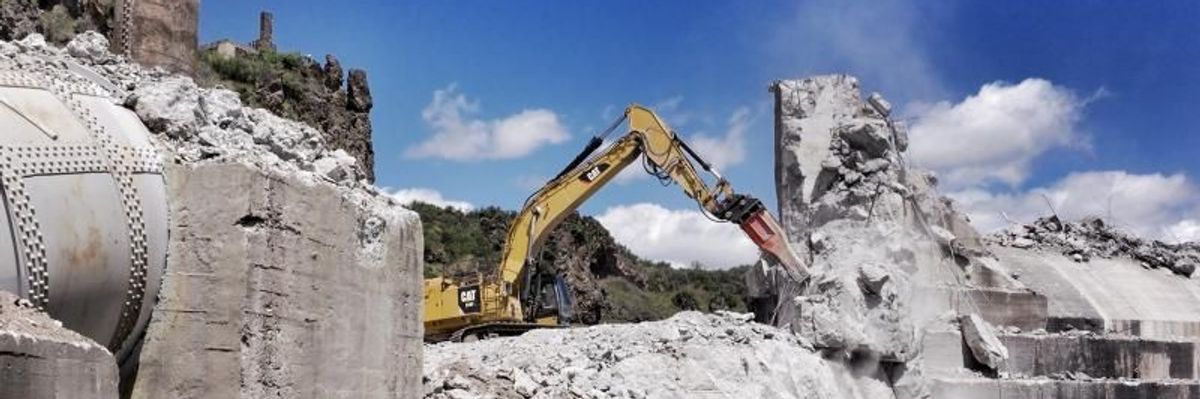
The demolition of Copco No. 1 Dam on the Klamath River is shown.
(Photo by Whitney Hassett/Swiftwater Films/ via NOAA)

Tara Lohan
Nov 20, 2025
Common Dreams

As delegates huddle in Belém, Brazil for the 30th United Nations Climate Change Conference, or COP30, they are considering how to prevent runaway climate change, and also how to bolster resilience to extreme weather. The United States won’t have much to offer officially—the Trump administration has said it won’t send any high-level delegates. And with President Donald Trump pulling the US out of the Paris Climate Agreement earlier this year, the country is far from a climate leader these days.

But all is not lost. Local level climate work continues in the United States, with accomplishments worth cheering—and replicating. For the last few years, I’ve tracked one of the most overlooked: the removal of harmful and obsolete dams. The United States has been leading the global charge on dam removals. In just the last 25 years nearly 2,000 dams have been blasted and backhoed from our rivers and streams.

Dam removals, like the four-dam effort completed last year on the Klamath River, are often celebrated for helping imperiled fish, like salmon. But they also offer two important benefits for the climate.

The first is reducing emissions. A growing body of scientific research dating back to the 1990s has found that reservoirs from dams can produce greenhouse gas emissions, some on par with thermal power plants. The biggest culprit is methane, a potent greenhouse gas that traps 80 times more heat as carbon dioxide over 20 years. As organic material breaks down in a reservoir, methane is diffused from the water into the air.

Dam removals aren’t a climate cure-all, but the magnitude of the crisis we face will require all the tools we can muster—and master.

As we take stock of our greenhouse gas emissions, an honest accounting of the input from dams could help us make reductions where dams are unneeded, unsafe, or doing more harm than good. In some states there are thousands of “deadbeat” dams, which serve no purpose at all anymore, and should be put on the chopping block. And if you’re wondering if it makes sense to remove infrastructure that can produce “clean” energy, know that the vast majority of large US dams—upward of 97%—don’t produce power.

The second is strengthening resilience. Many dams are outdated, dilapidated, or not designed to handle the onslaught of water that comes with climate-amplified storms. Some have already failed, risking lives and costing millions. After Hurricane Helene slammed North Carolina last year, 40 dams were damaged or destroyed. Expect to see more of that. A recent report from researchers at Utah State University found that incidents of dam failures or interventions needed to prevent failures are skyrocketing. From 1990 to 1999 we averaged two such incidents a year. That number jumped to an average of 50 a year from 2020 to 2023.

After two years of dangerous floods, Vermont has gotten the message. Last year the state passed a law to identify dams that worsen flooding and create a fund to remove them. Other states are also assessing dam removal to boost climate resilience. Removing damaging dams and helping rivers reconnect with their floodplains can help protect communities from severe weather and save money.

Dam removals offer other climate resilience benefits. Dams hold back water, but they also block the movement of sediment, which depletes coastal beaches and speeds erosion. One of the most notorious examples is the Matilija Dam near Ojai, California, a now-defunct dam that has corralled nearly 9 million cubic yards of sediment. Removing Matilija would reinvigorate downstream beaches in Ventura. As rising seas eat away at ocean beaches, upstream dam removals can help protect coastal communities.

Dams also change the temperature of rivers. As climate change pushes up the mercury, some reservoirs are becoming more like bathtubs. Higher water temperatures can foster toxic algal blooms that threaten human health and kill wildlife. Dam removals can flip the script, helping to restore more natural stream temperatures and flows, improving water quality in rivers that millions of Americans rely on for drinking water. It can also support biodiversity by enabling aquatic animals to find cooler upstream waters to better weather our changing climate.

Dam removals aren’t a climate cure-all, but the magnitude of the crisis we face will require all the tools we can muster—and master. Several decades of dam removals across the US has proved they work to restore rivers better and faster than anything else. Now let’s put them to use for climate action, too


Our work is licensed under Creative Commons (CC BY-NC-ND 3.0). Feel free to republish and share widely.

Tara Lohan
Tara Lohan is an environmental journalist and author of Undammed: Freeing Rivers and Bringing Communities to Life (Island Press, 2025).
Full Bio >