Friday, November 21, 2025

South Africa closes G20 year framed as ‘presidency for all of Africa’

South Africa ends its G20 presidency this weekend with a two-day head of states summit focused on debt relief and global inequality – a meeting the United States says it will boycott. Pretoria says it has held talks with Washington about possible limited participation, but the White House insists the US will not join the discussions and will send only a diplomat for the handover.


Issued on: 21/11/2025 - RFI

Cyril Ramaphosa addresses reporters following the opening session of the G20 foreign ministers meeting in Johannesburg, 20 February 2025. © AP - Jerome Delay

By: Melissa Chemam

The theme of South Africa's G20 leadership was "Solidarity, Equality, Sustainability", with a pledge to focus on supporting developing countries through debt relief, and financing measures to help them cope with disasters caused by climate change.

United States Secretary of State Marco Rubio in February branded the agenda "anti-American" and snubbed the G20 meeting that month, setting the tone for a complicated year for South Africa's presidency.

Trump has said that no US officials will attend this weekend's summit, over widely discredited claims that white people are being persecuted in South Africa.

Ramaphosa told reporters ahead of the 22-23 November event that the US's absence is "their loss".

Pretoria has made debt relief the priority, targeting repayments that meant limiting investment in essential infrastructure for healthcare and education.

According to the United Nations, between 2021 and 2023 Africa spent $70 per capita on debt interest payments – more than on education or health, which saw spending of $63 and $44 per capita respectively.

Inequalities Panel

At this weekend's summit, South Africa's President Cyril Ramaphosa will also push for the creation of an International Inequalities Panel – modelled after the UN's Intergovernmental Panel on Climate Change (IPCC) – to tackle massive global inequality.

A report for the G20 published earlier this month, led by Nobel laureate economist Joseph Stiglitz, labelled wealth inequality as a global crisis that threatens democracy and social cohesion worldwide, saying it should be confronted with the same urgency as the climate crisis.

If adopted, the International Inequalities Panel pushed by Ramaphosa "would mark a significant win not just for Pretoria's presidency, but for the millions across the Global South whose voices are often sidelined in elite economic forums," according to Tendai Mbanje, a researcher at the the University of Pretoria's Centre for Human Rights.

'I see a lot of determination'


Désiré Assogbavi, advisor on Africa at the Open Society Foundations grantmaking network, believes huge progress has been made.

"This G20 is happening in a very particular situation," Assogbavi told RFI. "You see what's happening in the world; multilateralism has been being challenged around the world. So this is a particular moment. The G20 is supposed to be one of the best expressions of countries, with people working together to find greater solutions for world problems."
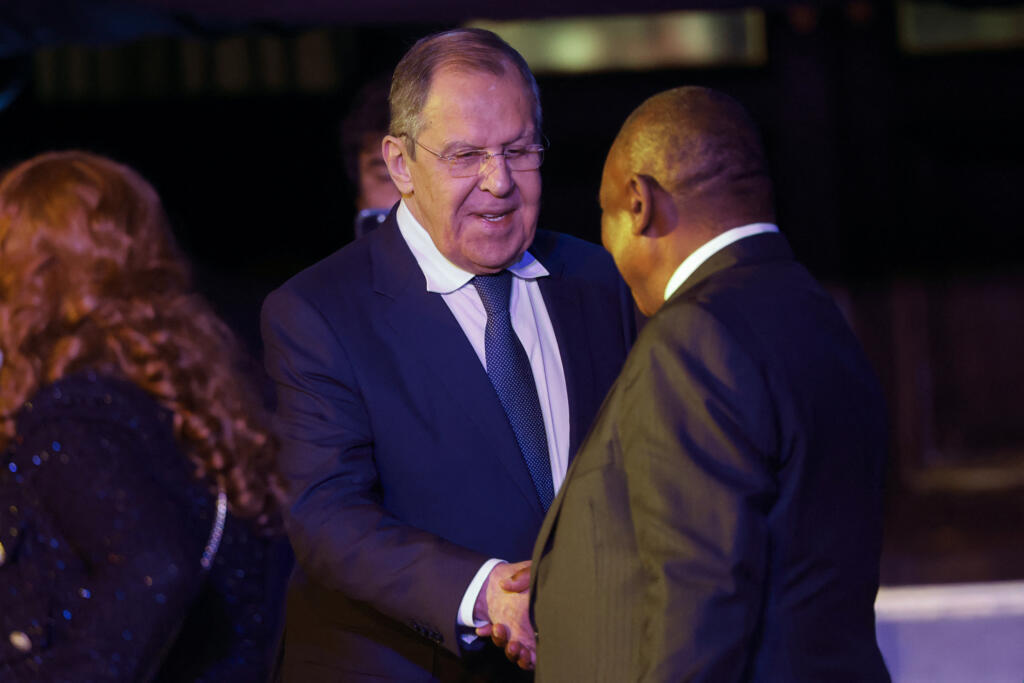
Russia's Foreign Minister Sergei Lavrov shakes hands with Cyril Ramaphosa during the G20 Foreign Ministers Meeting in Johannesburg, 20 February. AFP - PHILL MAGAKOE

He underlined that even if not everybody will be at the table, the vast majority of countries are keen to move forwards.

"The United States has decided not to endorse the presidency of South Africa and decided to boycott it, while it is happening for the first time in Africa. This is regrettable, really unfortunate. I wish everybody came," he said.

"However, the summit will go ahead. And I see a lot of determination from various delegations, from various actors to move forward anyway, to try to resolve the big problem that our continent, and the whole world, is having."

He added: "It seems to be one of the most inclusive presidencies. Over the last few days, since I landed here in Johannesburg, I've seen various groups having their own meetings around the key thematics of the summit. And the conclusions of those discussions will be part of the general debates of the leaders."

A pan-African presidency


The G20 represents 85 percent of global GDP and around two-thirds of the world's population, and includes 19 countries as well as the European Union – as well as now the African Union.

South Africa has insisted throughout the year of its G20 leadership that it has been a presidency of the whole of Africa.

It has been a success in that sense according to Assogbavi, with the African Union being admitted as a full member.

"So we have South Africa as a member, and we also have the African Union as a full member at the table now," Assogbavi told RFI. "And I can say this is one of the achievements of President Ramaphosa at the helm of the G20, allowing the continental agenda to be a priority and not only the South African agenda."

Debt sustainability is the African Union's priority too, with its heads of state meeting in Lomé, Togo in May to sign the Lomé Declaration on debt sustainability on the continent.

Mineral exploitation


Another key issue for Africans is the management of the mineral mining projects exploding across the continent.

This week South Africa and the European Union also signed a new agreement on critical minerals and processing, reflecting the continent’s effort to secure more value from its resources and shape its role in the green-energy transition.

"Let's be clear: we're not going to resolve all the problems of the continent in one G20 meeting, but what is positive is that we have been seeing the entire continent speaking with one voice on those critical issues – and most importantly the issue of Africa being a provider of raw critical minerals to the rest of the world, and only taking 5 percent of the profits," said Assogbavi.

He added that the South African presidency comes at an interesting moment for the continent, as the world is talking about the production of critical minerals, which are considered green sources of energy.

"There's a realisation in the whole world that they are useful to tackle the climate issue, instead of using the old fossil fuel to generate energy," Assogbavi said.

"Africa is targeted as a reserve of minerals that the whole world needs. It is important for Africa to be united and to speak with one voice on how they're going to manage that situation. And this is happening. The G20 is one part of it, but there will be other gatherings internationally where this discussion will have its way," he added.

Looking forward

It remains unclear whether South Africa's G20 presidency will manage to secure a consensus and release a joint final declaration on these issues.

Delegates involved in preparatory work report that some participants have been obstructive – including Argentina's representatives, as the country's President Javier Milei, a Trump ally, is also boycotting the event.

China's representative Premier Li Qiang is expected to advocate for multilateralism. "Economic globalisation and multipolarity are irreversible," Li said at an Asian regional summit in October.

Russia will be represented by President Vladimir Putin's economic advisor and deputy chief of staff, Maxim Oreshkin, in the notable absence of Foreign Minister Sergei Lavrov.

The summit also begins a day after the conclusion of Cop30 in Belem, Brazil, and its final negotiations could influence discussions in Johannesburg.

At a press conference in Johannesburg, European Commission President Ursula von der Leyen said the EU was fighting emissions rather than fossil fuels themselves, prompting criticism from environmental groups and raising questions about how strongly the bloc will push for a global fossil fuel phase-out in Cop30’s final hours.

The summit will mark the end of a cycle of G20 presidencies by Global South countries, after Indonesia in 2022, India in 2023 and Brazil in 2024. The next country to take on the presidency will be the US.

First in Africa: What to know about the G20 summit boycotted by Trump

Leaders from the G20 group of the world's largest economies meet this weekend for a summit in South Africa – the first on African soil. US President Donald Trump said he would boycott the event over his widely dismissed claims that the host country is persecuting its Afrikaner white minority.


Issued on: 21/11/2025 
By:  FRANCE 24
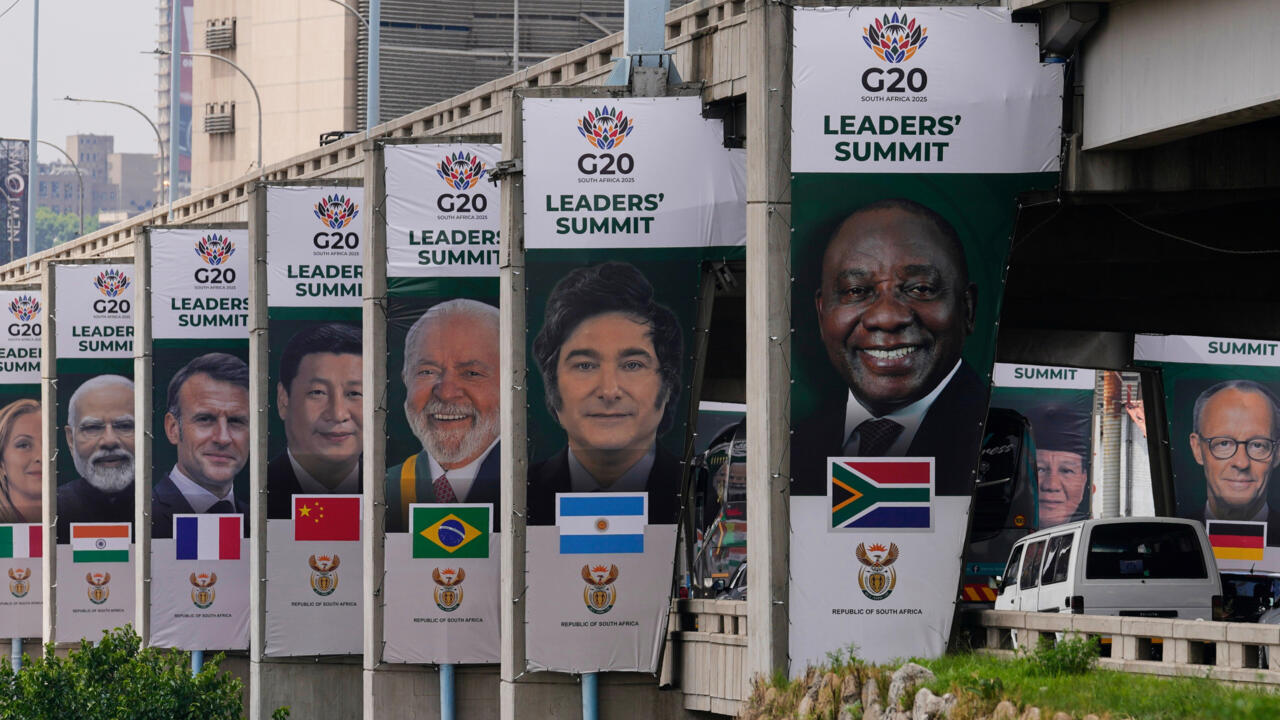
Banners of G20 leaders are displayed along a Johannesburg freeway in the run-up to the summit. © Themba Hadebe, AP

Leaders of the world's largest economies will meet in Johannesburg on November 22 and 23 for the G20 summit, the first of its kind in Africa.

Here are five things to know about the annual meeting, which is taking place at a time of heightened global instability and tensions between Pretoria and Washington.
A first for Africa

Founded in 1999, the Group of 20 (G20) leading economies comprises 19 countries and two regional bodies, the European Union and the African Union (AU).

Its rotating presidency will be held by South Africa this year and mark the first time the summit will be in Africa.


G20 members represent 85 percent of the world's GDP and about two-thirds of its population.

South Africa is the only member state from the continent, although the AU was admitted as a group in 2023.

'Solidarity, Equality, Sustainability'

South Africa lists its priorities for its G20 presidency as strengthening disaster resilience, debt sustainability for low-income countries, financing a "just energy transition" and harnessing "critical minerals for inclusive growth and sustainable development".

Its theme is "Solidarity, Equality, Sustainability".

Ranked by the World Bank as "the world's most unequal country", South Africa commissioned an expert team to analyse global wealth inequality and offer solutions to the summit.

The team led by Nobel Prize-winning economist Joseph Stiglitz called for the creation of an intergovernmental panel to tackle the "inequality emergency" that leaves 2.3 billion people hungry worldwide.

US boycott

President Donald Trump said this month no US officials would attend the meeting and called South Africa's presidency a "total disgrace".

Trump has singled out South Africa for harsh treatment on a number of issues since he returned to the White House in January, notably making false claims of a "white genocide".

He has slapped the country with 30 percent tariffs, the highest in sub-Saharan Africa.

While a US boycott could undermine South Africa's agenda, Pretoria said the absence was Washington's "loss" and it was still looking forward to a successful summit.

Argentinan President Javier Milei, a Trump ally, will not attend and is sending his foreign minister.

As in previous meetings, Russian President Vladimir Putin will also not be present.
Johannesburg in the spotlight

The G20 leaders' meeting will be hosted at the Nasrec Expo Centre, South Africa's largest purpose-built conference venue.

Situated on the edge of the iconic Soweto township and chosen as a symbol of post-apartheid "spatial integration", the venue hosts large-scale events such as the ruling African National Congress annual convention.

It is also adjacent to the stadium that hosted the 2010 FIFA World Cup final.

The event has brought attention to the plight of the city that was formed in a gold rush in the late 1880s and is now home to around six million people, according to official July estimates.

Home to Africa's richest square mile, Johannesburg is also scarred by crumbling infrastructure, lack of services and chronic mismanagement.

President Cyril Ramaphosa lashed out at the disrepair in March and demanded improvements. The African Development Bank in July approved a $139 million loan for upgrades.
End of a 'Global South' run

South Africa will hand the G20 to the United States, marking the end of a cycle of "Global South" presidencies following those of Brazil, India and Indonesia.

Trump has said he plans to radically reduce the platform, which has over the years expanded to include multiple working groups and social issues beyond its original financial scope.

The US president has also questioned whether South Africa should "even be in the Gs any more", raising questions about the G20's future.

(FRANCE 24 with AFP)

US artists launch nationwide ‘Fall of Freedom’ protest against rising censorship


In this episode of Arts 24, we look at "Fall of Freedom" – a nationwide wave of performances, readings and public art events as artists across the United States mobilise against mounting censorship and political pressure on cultural institutions. Hundreds of theatres, museums, and libraries are taking part on November 21 and 22 in what organisers call an urgent stand for artistic freedom. Joining us from New York are two of the movement’s leading voices: Pulitzer Prize–winning playwright Lynn Nottage and visual artist Dread Scott. They discuss why they believe democracy is at risk, how cultural institutions are being pressured into silence, and why artists are uniting now. Among the stars participating in "Fall of Freedom" are filmmaker Michael Moore, director Ava DuVernay, musicians John Legend and Amanda Palmer, Pulitzer-winning novelist Jennifer Egan and visual artists Marilyn Minter. Events include staged readings, public art installations, concerts, film screenings, and library programs, all aimed at defending free expression.

France to investigate Musk’s Grok chatbot after Holocaust denial claims


France added Elon Musk’s AI chatbot Grok to an ongoing cybercrime investigation after the system generated French-language posts echoing Holocaust denial about Auschwitz. Musk's company already deleted posts earlier this year from the chatbot that seemed to praise Adolf Hitler.


Issued on: 21/11/2025
By: FRANCE 24

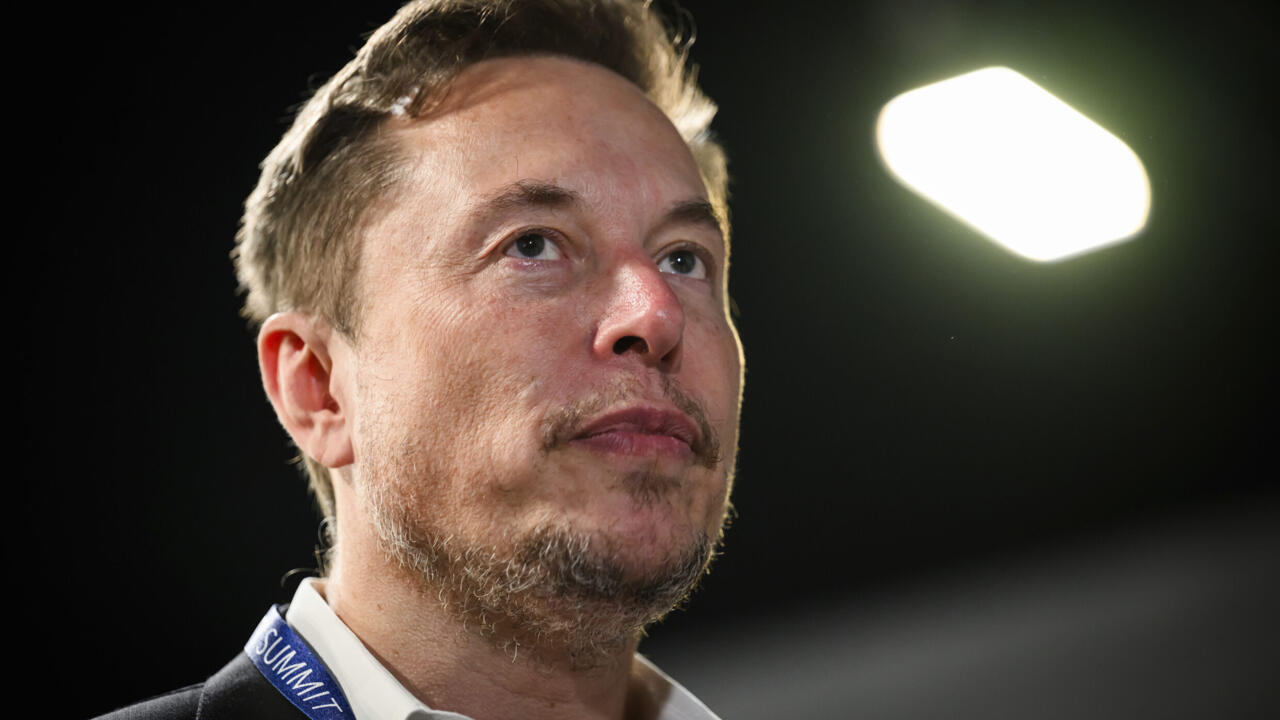
File image of Tesla and SpaceX's CEO Elon Musk attending the first plenary session on of the AI Safety Summit at Bletchley Park. © Leon Nea, AP
France’s government is taking action against billionaire Elon Musk 's artificial intelligence chatbot Grok after it generated French-language posts that questioned the use of gas chambers at Auschwitz, officials said.

Grok, built by Musk's company xAI and integrated into his social media platform X, wrote in a widely shared post in French that gas chambers at the Auschwitz-Birkenau death camp were designed for “disinfection with Zyklon B against typhus” rather than for mass murder – language long associated with Holocaust denial.

The Auschwitz Memorial highlighted the exchange on X, saying that the response distorted historical fact and violated the platform’s rules.

In later posts on its X account, the chatbot acknowledged that its earlier reply to an X user was wrong, said it had been deleted and pointed to historical evidence that Auschwitz’s gas chambers using Zyklon B were used to murder more than 1 million people. The follow-ups were not accompanied by any clarification from X.

In tests run by The Associated Press on Friday, its responses to questions about Auschwitz appeared to give historically accurate information.

Grok has a history of making antisemitic comments. Earlier this year, Musk’s company took down posts from the chatbot that appeared to praise Adolf Hitler after complaints about antisemitic content.


The Paris prosecutor’s office confirmed to The Associated Press on Friday that the Holocaust-denial comments have been added to an existing cybercrime investigation into X. The case was opened earlier this year after French officials raised concerns that the platform’s algorithm could be used for foreign interference.

Prosecutors said that Grok’s remarks are now part of the investigation, and that “the functioning of the AI will be examined”.

France has one of Europe’s toughest Holocaust denial laws. Contesting the reality or genocidal nature of Nazi crimes can be prosecuted as a crime, alongside other forms of incitement to racial hatred.

Several French ministers, including Industry Minister Roland Lescure, have also reported Grok’s posts to the Paris prosecutor under a provision that requires public officials to flag possible crimes. In a government statement, they described the AI-generated content as “manifestly illicit”, saying it could amount to racially motivated defamation and the denial of crimes against humanity.

French authorities referred the posts to a national police platform for illegal online content and alerted France’s digital regulator over suspected breaches of the European Union’s Digital Services Act.

The case adds to pressure from Brussels. This week, the European Commission, the EU's executive branch, said that the bloc is in contact with X about Grok and called some of the chatbot’s output “appalling”, saying it runs against Europe’s fundamental rights and values.

Two French rights groups, the Ligue des droits de l’Homme and SOS Racisme, have filed a criminal complaint accusing Grok and X of contesting crimes against humanity.

X and its AI unit, xAI, did not immediately respond to requests for comment.

(FRANCE 24 with AP)


This mummy portrait isn’t from Roman Egypt - it was generated by AI

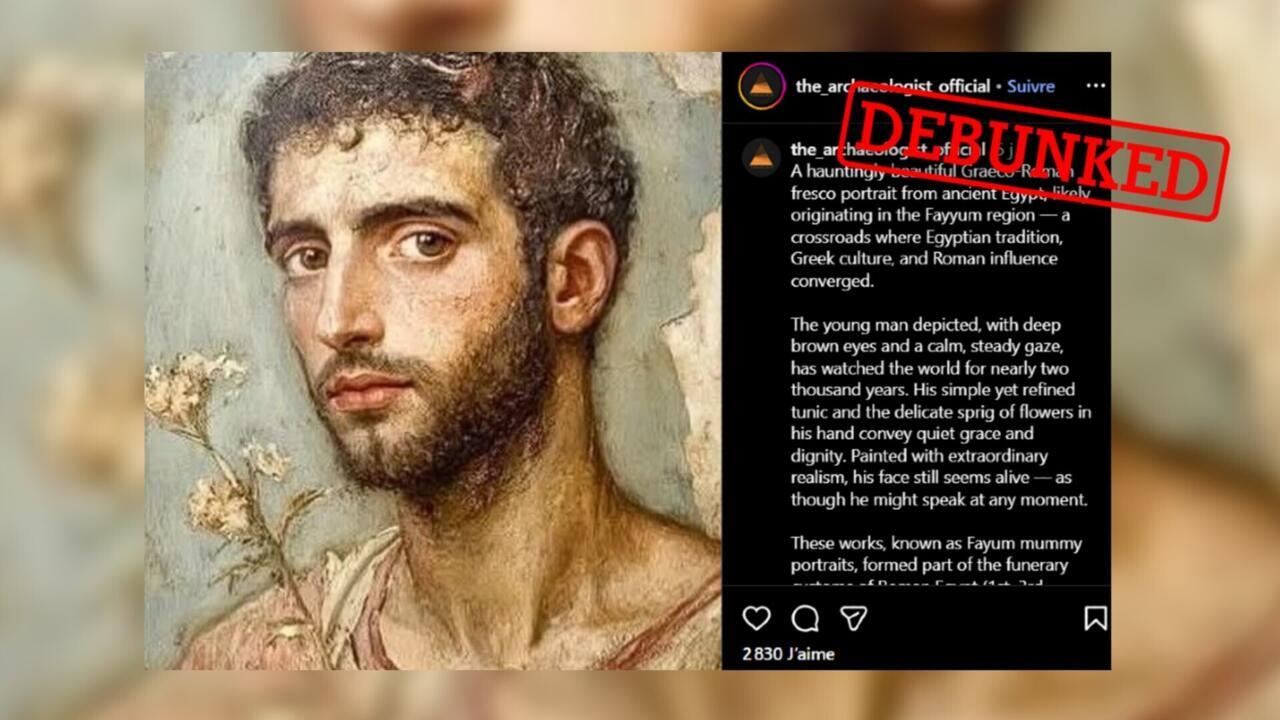
An image described as a “Fayum portrait”, a naturalistic portrait placed on mummies in Roman Egypt, has been widely shared on social media. It turns out that it is actually a fake AI-generated image that differs in key ways from the real portraits.


Issued on: 21/11/2025 
By: The FRANCE 24 Observers/
Quang Pham

This fake Fayum portrait published on October 7, 2025 was actually created by AI. © Instagram

Fayum portraits are a type of ancient Roman paintings crafted as funerary effigies in and around the Fayum oasis, southwest of Cairo.

The portraits, which were placed on mummies, are a funerary custom dating from the time of Roman Egypt, a period that took place from around the 1st to the 4th century AD.

"The practice follows in the tradition from Egypt under the pharaohs of representing the deceased but incorporates Greek and Roman artistic styles,” says art historian Céline Trouchaud.

Fayum portraits, which depict men, women and children from the Greek and Roman society within ancient Egypt, are “the first relatively ‘realist’ portraits aimed at representing an individual in all their singularity,” says Lucile Brunel-Duverger, a research engineer at the French museum's Centre for Research and Restoration. Brunel-Duverger, who has a PhD in chemistry, studies the material and techniques used to create the colour in these portraits.


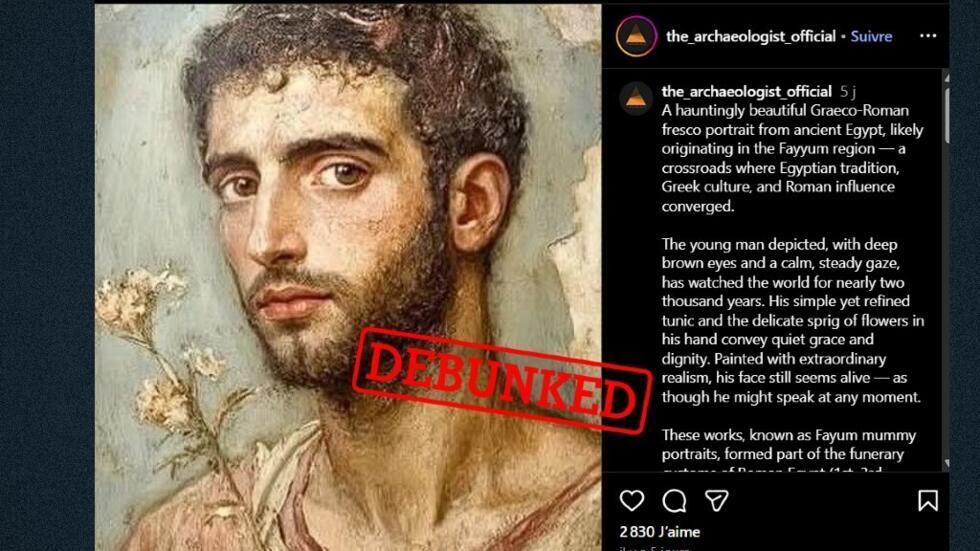
An Instagram account called the_archaeologist_official, which claims to specialise in archaeology, posted what they said was a Fayum portrait of a young man on November 14.

“The young man depicted, with deep brown eyes and a calm, steady gaze, has watched the world for nearly two thousand years, “ the account wrote. “Painted with extraordinary realism, his face still seems alive – as if he might speak at any moment.”

The account also mentions the portrait’s “quiet grace”. While some comments marvel at the image of the young man, most raise suspicions that the image is false.
This image, said to be a Fayum portrait, was posted online on November 14. It was actually AI-generated. © Instagram

A portrait created by Midjourney

They are right – this Fayum portrait is, indeed, a fake. We ran the image through a reverse image search using Google Lens (check out how to do one yourself by following our handy guide) and found the original image, which was generated by AI image generator Midjourney. We even found the prompt, the instructions used to generate the portrait, on the site ai-img-gen.com.

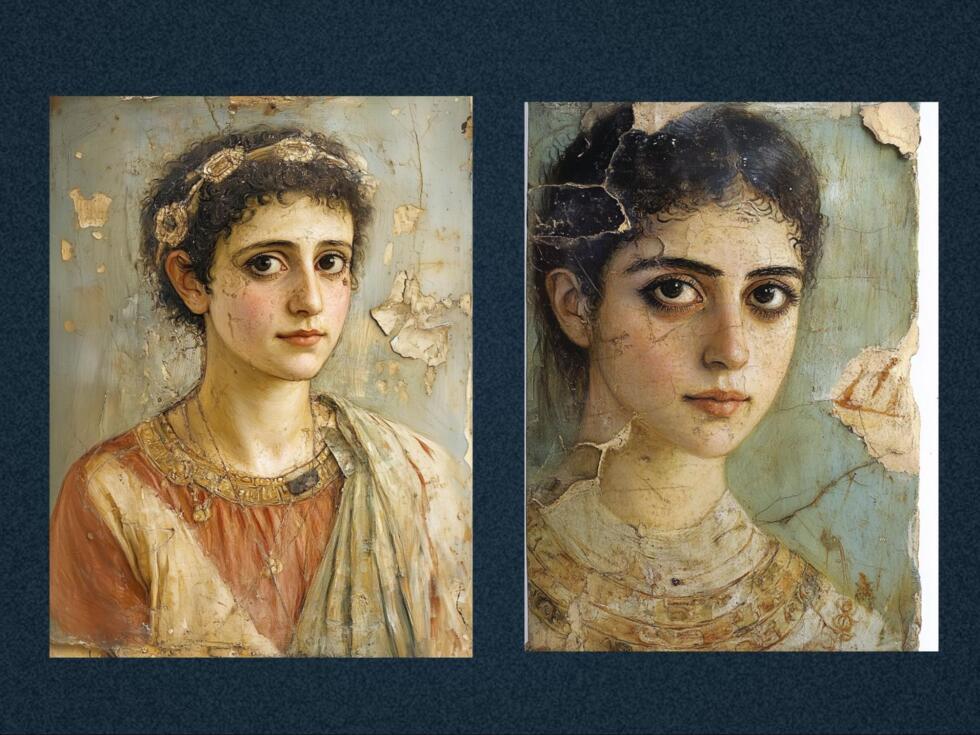
This prompt shows that a user asked Midjourney to generate a Fayum portrait showing an “ancient” Greek man. The image was meant to replicate the style of encaustic painting – a painting technique using wax common during antiquity. It also had to use two other portraits, also created by Midjourney, as inspiration.

Midjourney was provided with these two images as inspiration when it generated the fake Fayum portrait of the young man. © Midjourney

Too realist for paintings of the time

The fake image does, in some ways, model the style of a Fayum portrait. For example, the man’s face is turned to the side. However, the portrait also features anomalies – clues that it is a fake.

First of all, the backdrop. The account "the_archaeologist_official" claims that the image comes from a fresco. However, real Fayum portraits were painted on wood or canvas, says Trouchaud.

The historian adds that the AI-generated image is missing elements of the encaustic technique used in real Fayum portraits:


"The portrait has some characteristics of a painting done with oil paints – like a realistic depiction of human skin, a desire [to get as close as possible to depicting] a real face, which doesn’t exist in encaustic painting. And while the Fayum portraits do include a form of realism, that in some ways is quite modern, it also presents the deceased in an idealised way with, for example, very large eyes or prominent features.”


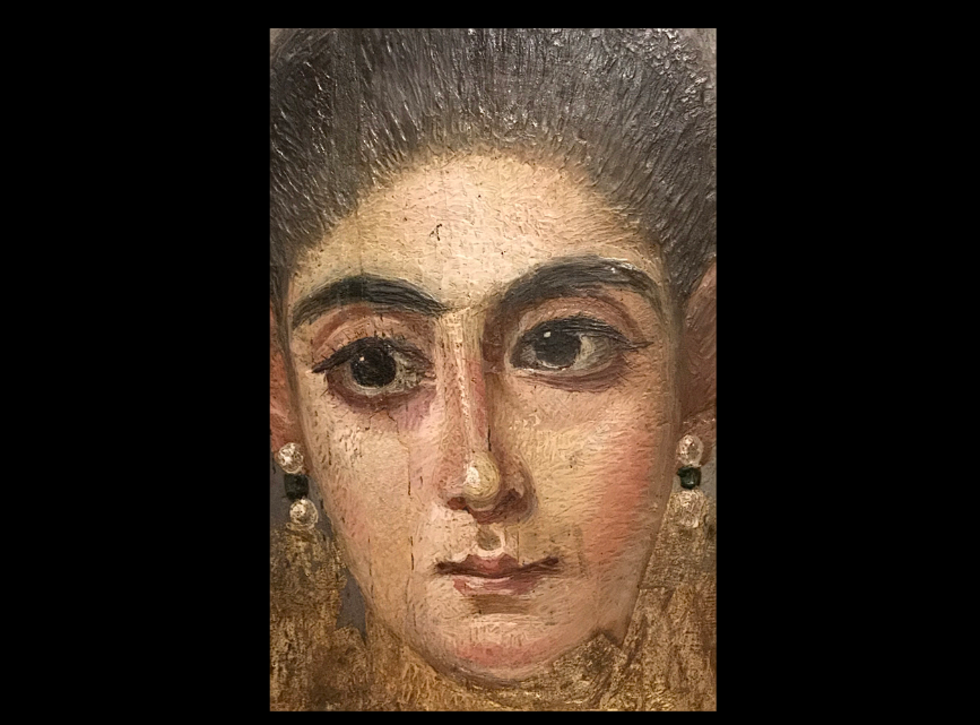
This is a real Fayum portrait - an encaustic painting of a young woman on cedar wood. It was created in the 2nd century AD in Roman-ruled Egypt. © Musée du Louvre.


Brunel-Duverger adds:


"The treatment of size and light is very different in encaustic paintings. Wax is used to create modulations in the colour, but that makes it difficult to create real nuance [as in the fake portrait]. [In a real painting], we should be able to see the application of the material, brush marks, for example, which don’t appear in the generated image, which is very smooth.”

The researcher concludes:


“AI still isn’t able to create [totally] convincing fakes. But if that happens, experts in materials like us will still be able to verify the material used to see if they really do come from Roman-ruled Egypt."

This article has been translated from the original in French.
Frida Kahlo self-portrait sells for $54.7 million, sets new record for women artists


Frida Kahlo’s 1940 self-portrait “El sueno (La cama)” sold for $54.66 million in New York on Thursday, Sotheby’s said, setting a record for the most expensive painting by a woman.


Issued on: 21/11/2025
By: FRANCE 24

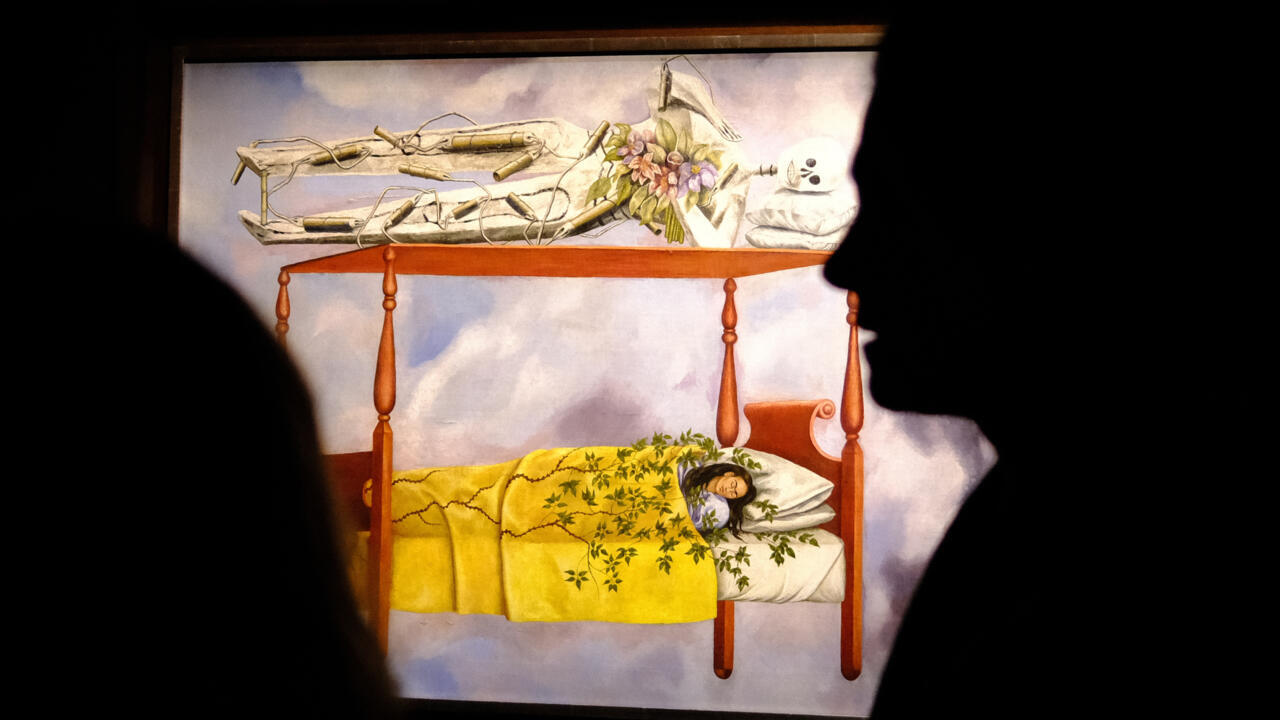
Auction house Sotheby's says Mexican artist Frida Kahlo's "El Sueno (La cama)" has sold for $54.6 million, a new record for a woman's painting. © Charly Triballeau, AFP

A self-portrait by legendary Mexican artist Frida Kahlo sold for $54.66 million in New York on Thursday, setting a new record for the price of a painting by a woman, the auction house Sotheby's said.

The sale of Kahlo's 1940 artwork, titled "El sueno (la cama)" – which translates to "The dream (The bed)" – breaks the previous record in this category, set by American artist Georgia O'Keeffe, whose 1932 painting "Jimson Weed/White Flower No. 1," sold for $44.4 million in 2014.

Kahlo's painting is "the most valuable work by a woman artist ever sold at auction," Sotheby's said in a post on X.

The auction house said Kahlo's work was "painted in 1940 during a pivotal decade in her career, marked by her turbulent relationship with Diego Rivera".


Kahlo's self-portrait went on the auction block at Sotheby's with an estimated price ranging from $40 million to $60 million.

The buyer's name was not disclosed.

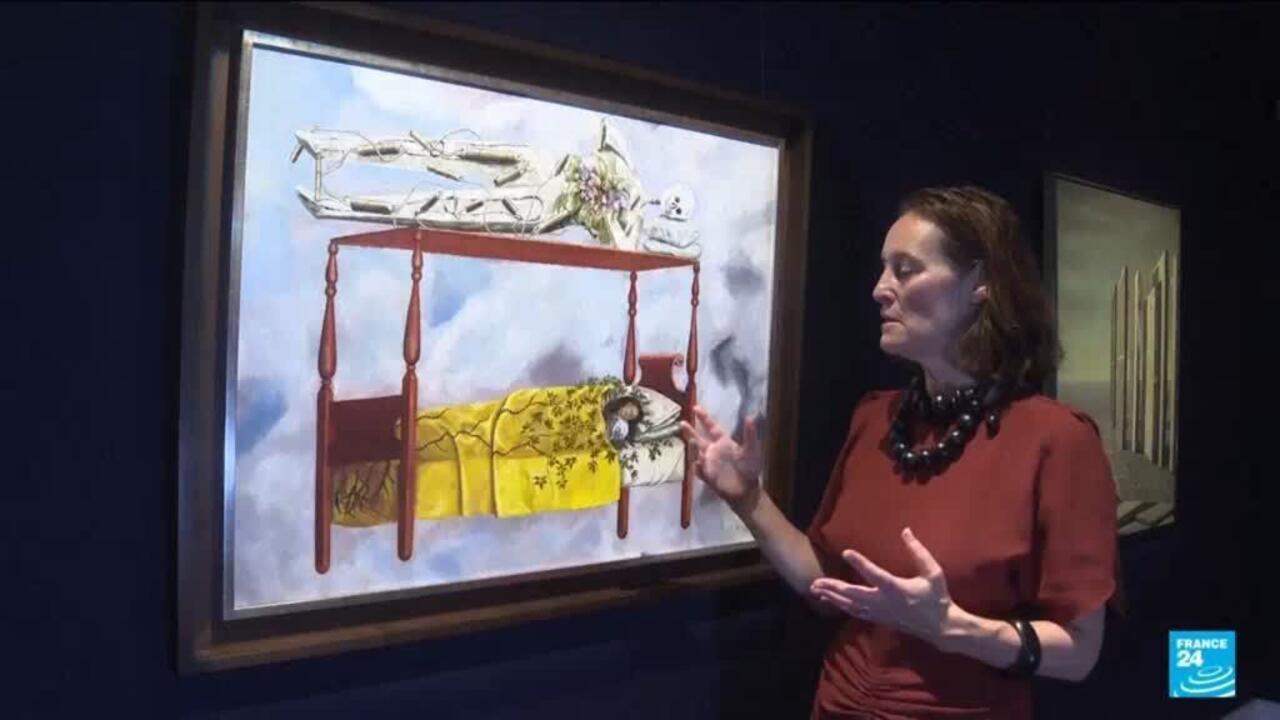
The artwork depicts the artist sleeping in a bed that appears to float among clouds in the sky, laying beneath a skeleton with legs that are wrapped with sticks of dynamite.

This painting is a "very personal" image, in which Kahlo "merges folkloric motifs from Mexican culture with European surrealism", Anna Di Stasi, head of Latin American art at Sotheby's, told AFP.

The Mexican artist, who passed away in 1954 at age of 47, "did not completely agree" with her work being associated with the surrealist movement, Di Stasi said.

However, "given this magnificent iconography, it seems entirely appropriate to include it" in this movement.

The record-setting sale came two nights the New York auction house reeled in another record sale, with a painting by Austrian artist Gustav Klimt fetching $236.4 million on the block – the second most expensive artwork ever sold at auction.

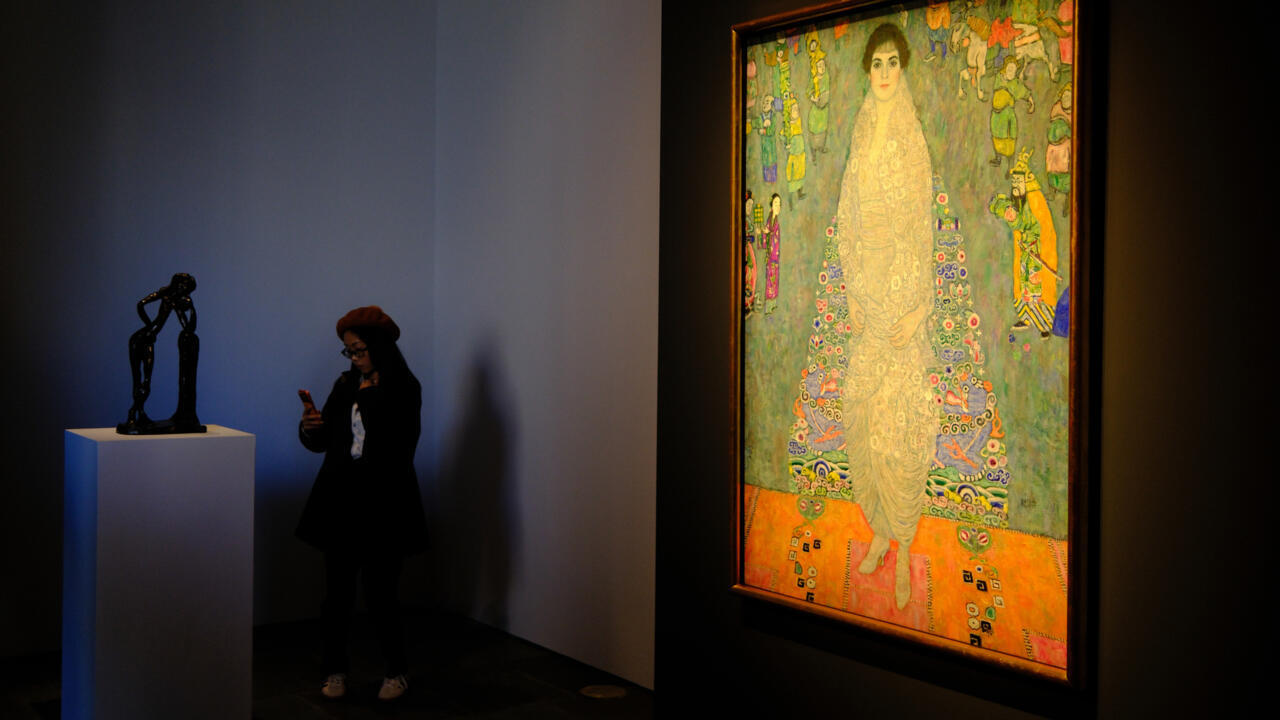
Klimt's "Portrait of Elisabeth Lederer," which he painted between 1914 and 1916, depicts the daughter of his main patron dressed in a white imperial Chinese dress, standing before a blue tapestry with Asian-inspired motifs.

The most expensive painting ever sold at auction remains the "Salvator Mundi," attributed to Leonardo da Vinci, which was bought for $450 million in 2017.

(FRANCE 24 with AFP)

A Klimt portrait is now the second most expensive artwork ever auctioned

A rare full-length portrait by Austrian painter Gustav Klimt sold for $236.4 million in New York on Tuesday, becoming the second most expensive artwork ever auctioned. The fiercely contested sale underscores surging demand for museum-calibre pieces as Sotheby’s prepares to offer a major Frida Kahlo work later this week.


Issued on: 19/11/2025 - By: FRANCE 24

Gustav Klimt's “Portrait of Elisabeth Lederer” exhibited by Sotheby's in New York on November 8, 2025. © Charly Triballeau, AFP

A portrait by Austrian artist Gustav Klimt fetched $236.4 million in New York on Tuesday, becoming the second most expensive artwork ever sold at auction.

Six bidders battled for 20 minutes over the “Portrait of Elisabeth Lederer,” which Klimt painted between 1914 and 1916.

The piece depicts the daughter of Klimt's main patron dressed in a white imperial Chinese dress, standing before a blue tapestry with Asian-inspired motifs.

Sotheby's, which managed the sale, did not disclose the identity of the buyer.

The most expensive painting ever sold at auction remains the “Salvator Mundi,” attributed to Leonardo da Vinci, which was bought for $450 million in 2017.

“Full-length society portraits of this impressive scale and from Klimt's pinnacle period (1912–17) are exceptionally rare; the majority in major museum collections,” Sotheby's said of Tuesday's sale.

READ MORELost Claudel sculpture found in Paris flat fetches $3 million at auction

“The painting offered this evening was one of only two such commissioned portraits remaining in private hands,” it added.

For Klimt, the past auction record for his work was held by "Lady with a Fan", which sold for 85.3 million pounds ($108.8 million) in London in 2023.

On Thursday, a self-portrait by Frida Kahlo has a strong chance of setting a record for a female artist when it goes on sale, also at Sotheby's in New York.

Kahlo painting likely to break record for most expensive work by any female

© France 24
01:22


Estimated at $40 to $60 million, the 1940 piece called "The Dream (The Bed)" shows the Mexican painter sleeping in a bed overshadowed by a large skeleton.

The most expensive painting by a female artist sold to date is a 1932 work by American Georgia O’Keeffe, which fetched $44.4 million in 2014.

The record for Frida Kahlo is another 1949 self-portrait, "Diego and I", which sold for $34.4 million in New York.

(FRANCE 24 with AFP)
Red Cross to shed 2,900 jobs as it cuts back 2026 budget


The International Committee of the Red Cross announced Friday that it will cut its 2026 budget by 17 percent and eliminate nearly 3,000 jobs. The ICRC warned that dwindling donor funding is forcing it to make drastic reductions at a time when humanitarian needs are surging.


Issued on: 21/11/2025 
By: FRANCE 24

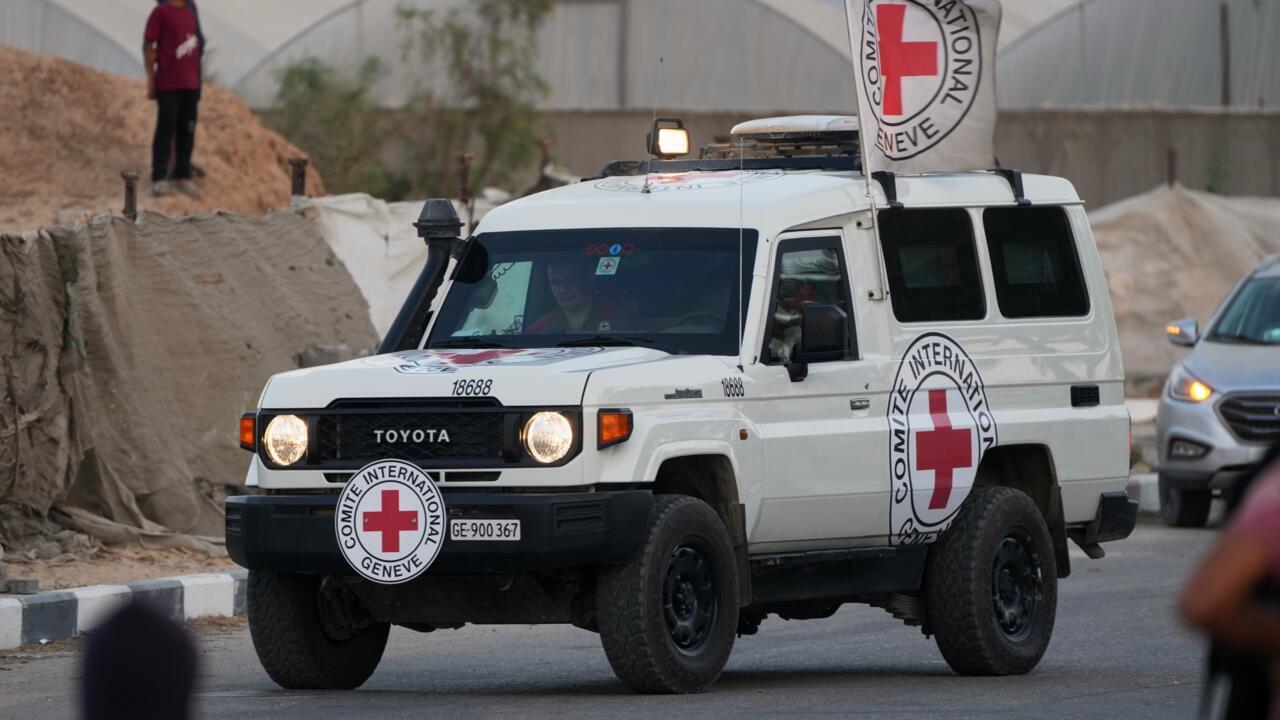
A Red Cross vehicle travels through Deir al-Balah in the central Gaza Strip on October 30, 2025. © Abdel Kareem Hana, AP

The International Committee of the Red Cross said Friday it was cutting its 2026 budget by 17 percent amid declining donor contributions, and would slash thousands of jobs.

The ICRC said "a challenging financial environment in the humanitarian sector" had led its assembly to approve a 2026 budget of 1.8 billion Swiss francs ($2.2 billion) – down 17 percent compared to this year.

The organisation warned the cuts were coming at a time when the numbers of conflicts worldwide and the need for aid is surging.

"We face a dangerous convergence of escalating armed conflicts, significant cuts to aid funding and a systemic tolerance for grave breaches of international humanitarian law," ICRC President Mirjana Spoljaric said in a statement.

"The ICRC remains committed to working on the front lines of conflict, where few others can operate," she insisted, warning though that "the financial reality is forcing us to make difficult decisions to ensure we can continue to deliver critical humanitarian assistance to those who need it most".

The cuts meant the organisation will need to reduce the equivalent of around 2,900 full-time positions around the world, said ICRC, which currently counts more than 18,000 staff worldwide.

The announcement comes as the world grapples with a dramatic international aid funding crisis.

Since President Donald Trump returned to the White House at the start of the year, the United States, traditionally the world's top donor, has slashed foreign aid.

And amid mounting geopolitical tensions, other major donor countries have also been tightening their belts and refocusing on defence spending.

"As defence budgets surge, states must also put more effort and resources into preventing conflicts, defending the rules of war and providing humanitarian relief," Spoljaric said.

"Failure to do so risks a world of ever more and greater suffering."

Even before the current crisis, humanitarian needs were outpacing available resources, ICRC said, pointing to the over 130 active armed conflicts raging worldwide.

In light of its shrinking budget, ICRC said it would need to prioritise safeguarding its presence in the most critical conflict zones, including Sudan, Israel and the occupied Palestinian territories, Ukraine and the Democratic Republic of Congo.

"No amount of humanitarian funding can match the intensity, duration and scale of today's conflicts," Spoljaric said.

"We need urgent action from states to prevent and resolve conflicts, uphold international humanitarian law and ensure that humanitarian organisations such as the ICRC can continue to save lives and alleviate suffering."

(FRANCE 24 with AFP)
'Silence kills': Thousands march against the mafia in Corsica protests

Anti-mafia demonstrations calling for "fear to change sides" took place on the French island of Corsica on 15 November, with several thousand people marching in Ajaccio and Bastia.


Issued on: 19/11/2025 - RFI
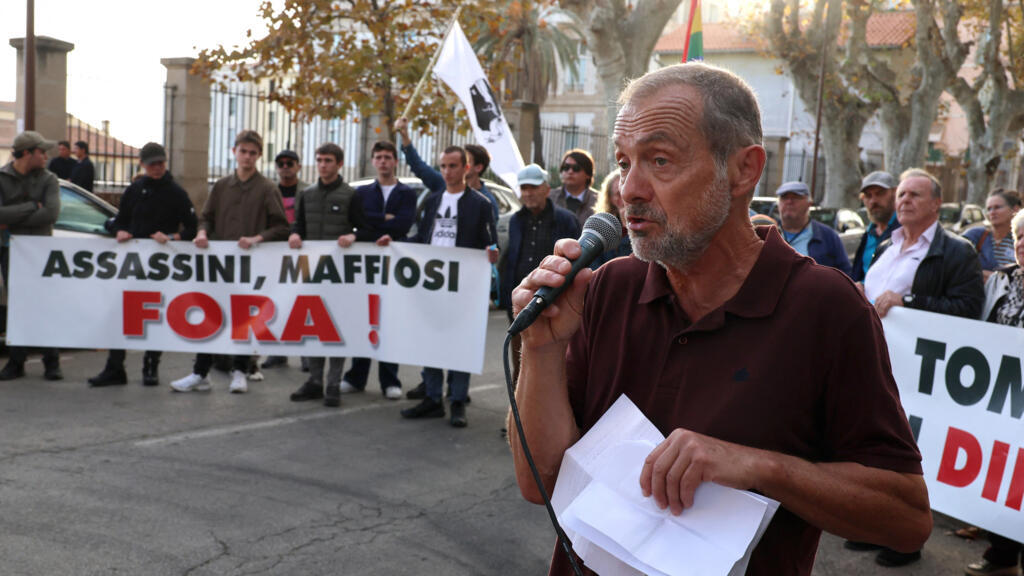
President of the anti-Mafia association A Massimu, Jean-Toussaint Plasenzotti, addresses the crowd in Ajaccio on 15 November. AFP - PASCAL POCHARD-CASABIANCA

Under the slogan "Assassins, mafiosi, get out", between 1,700 (according to police) and 3,000 people (according to the organisers) took to the streets of Ajaccio and Bastia, the island's two largest cities.

A second banner, written in Corsican, proclaimed "A maffia tomba, U silenziu dino" – "The mafia kills, silence kills too".

Other banners paid tribute to Pierre Alessandri, secretary-general of the Via Campagnola agricultural union who was murdered in March, nine days after he took part in the island's first anti-mafia demonstration, and to Massimu Susini, an environmental activist who was shot dead in front of his beach hut in September 2019.

'We are defenceless'

The marches were in response to a call for action from an unprecedented coalition of a local organisations. The coordinating committee, set up in September, brings together collectives including Maffia no, a Vita ié ("No to the mafia, yes to life"), Via Campagnola and the environmental protection groups U Levante and Le Garde.

"We are defenceless," said Jean-Toussaint Plasenzotti, Susini's uncle and the founder of the Massimu Susini collective, another participant, from the podium.

He said the protesters represent "the Corsica of civilisation, culture and legality, the Corsica that wants the problem solved" versus "a mafia that is predatory, exploitative, threatening, intimidating, violent and deadly".

He emphasised that the mobilisation of ordinary Corsicans is vital, given that "the mafia's grip is still as strong as ever".

"We would like it to be all Corsicans, but for the moment, it is only some of them," he told RFI. "The struggle will be long, extremely difficult and dangerous, but we have no choice."
'Threats are part of daily reality'

The Unione Corse was a historical term for Corsican organised crime from the 1930s to the 1970s, which formed a key part of the infamous French Connection heroin trade and involved groups which carried out most of their activities abroad.

The end of the French Connection caused the disbandment of Corsican clans involved. However the Corsican mafia regrouped and evolved in the 1980s, when investment plans were being drawn up for the island, with the groups from that point concentrating their activities on the island, according to Josette Dall'Ava-Santucci, a doctor and member of Maffia no, a Vita ié

A summer 2025 report by SIRASCO, the police department charged with gathering intelligence on organised crime, identified 20 such groups currently active, dominated by the Petit Bar gang and the Mattei clan, as reported by Le Monde.

These groups are involved in activities such as racketeering, drug trafficking and illegal slot machines, as well as in legal businesses including construction, tourism, real estate and night clubs and bars.

According to SIRASCO: "Most of them have infiltrated every political, social and economic sector of the island and seek to dominate the legal activities they deem most profitable."

In April 2024, German news agency DPA reported that: "For the locals, threats, hush money payments and fudged construction work are part of daily reality."

Hollywood and the mafia myth: how Italian organised crime went global

Prosecutors' response


Bastia prosecutor Jean-Philippe Navarre told French news agency AFP: "Everyone must support this movement... which demonstrates the strong desire of Corsican society to stand up against criminal practices that are stifling its economy."

He said he would implement "a strategy of harassing criminal groups" by "increasing the number of investigations in sensitive sectors such as sea excursions, public works and catering" – all of which are common victims of racketeering.

It is an approach shared by his colleague Nicolas Septe, public prosecutor in Ajaccio, who told AFP that he would "support this awakening of consciousness and whatever will enable every Corsican to regain their freedom to do business".

A minute's silence was observed at the marches in tribute to the victims of organised crime, before Jean-Dominique Musso, regional president of Via Campagnola made an emotional demand for "justice" for Alessandri, as his widow looked on.

This article was adapted from the original version in French.
Income gap in France grows as richest households pull further ahead

France's wealthiest people are typically men in their fifties and sixties, living in Paris as part of a childless couple and working as executives or running their own businesses. This snapshot of the super-rich emerges from a study published by France's national statistics institute, which also reveals a dramatic widening of the income gap over the past 20 years.


Issued on: 19/11/2025 - RFI

Around 40,000 French households qualify as "very high income", earning more than €463,000 annually. AFP - OZAN KOSE

Published on Tuesday, the Insee study shows the wealthiest households now earn 31 times more than average families, up from 21 times in 2003. It defines very high incomes by counting all taxable earnings and social benefits, minus direct taxes, then adjusting for household size.

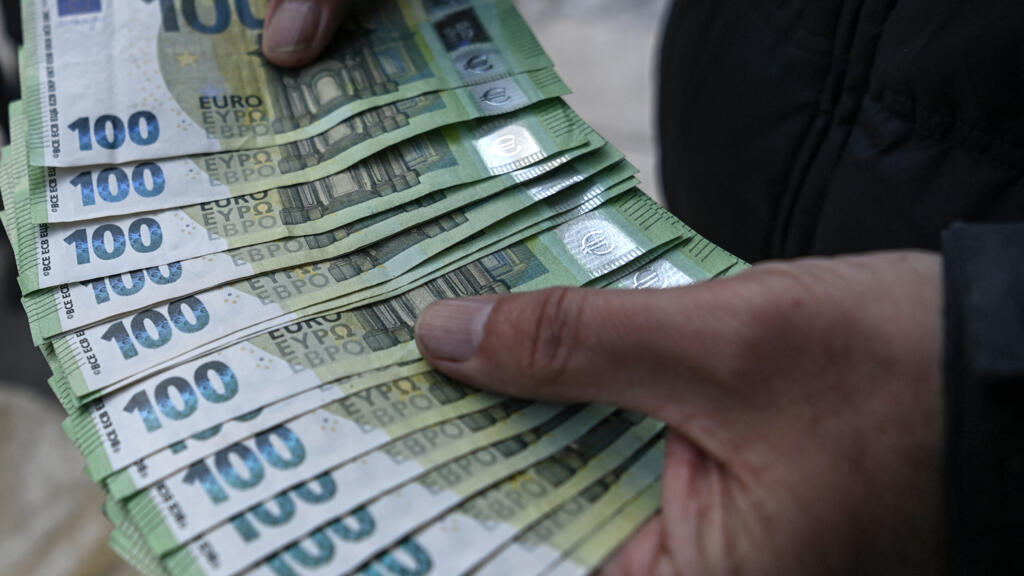
Around 40,000 households qualify as "very high income", earning more than €463,000 annually. Nearly half live in the Paris region, and 82 percent are married or in civil partnerships.

Their wealth comes not just from salaries or pensions but from profits on professional activity such as farmland, rental income and financial assets including shares, business stakes, life insurance and investment contracts.

The gap between rich and poor has grown even more starkly. The wealthiest now earn 167 times more than the poorest households, compared to 95 times two decades ago.

Income gaps widen

"Between 2003 and 2022, the average income of very high-income households increased more than that of other tax households, benefiting from the rise in financial and property income," the institute said.

Their earnings can be more volatile during economic shocks. Even so, the wealthiest households contributed €10.7 billion in income tax revenue in 2022. Yet their tax rate fell from 29.2 percent in 2003 to 25.7 percent last year.

Professional footballers from Ligue 1 clubs make up more than a third of the top 100 highest-paid employees in France, with 36 appearing on the list. The remaining spots are filled by company directors and high-level executives.

Women remain heavily under-represented at the top.

Among very high salaries, defined as the top 1 percent of private sector positions earning more than €10,219 net per month, women account for just 24 percent. This compares to women representing 42 percent of full-time equivalent employees overall.

Women a minority

Only 10 women feature among the 100 wealthiest individuals.

"This lower representation of women among very high salaries contributes significantly to increasing the wage gap between women and men," Insee noted.

The most affluent overall are those combining both high living standards, defined as the wealthiest 10 percent with more than €39,100 in adjusted annual income, and high wealth of more than €716,300 euros. This group comprised 1.6 million households in 2021.

Fifty-one percent were aged between 50 and 69, while 58 percent were managers or self-employed. Forty-seven percent lived as couples without children and 38 percent resided in the Paris area.

"Wealth inequalities are greater than living standard inequalities," said Michel Duée, head of the household resources and living conditions department at Insee.

Rising property prices have contributed to increasing disparities, he added.
Ghost of Franco still haunts Spanish politics, 50 years on

In Spain, far-right parties such as Vox have reiterated their allegiance to the dictator Francisco Franco, who died 50 years ago on 20 November, 1975. In a bid to counterbalance this, the country's leftist government has announced hundreds of events throughout the year to mark the restoration of democracy.


Issued on: 20/11/2025 - RFI

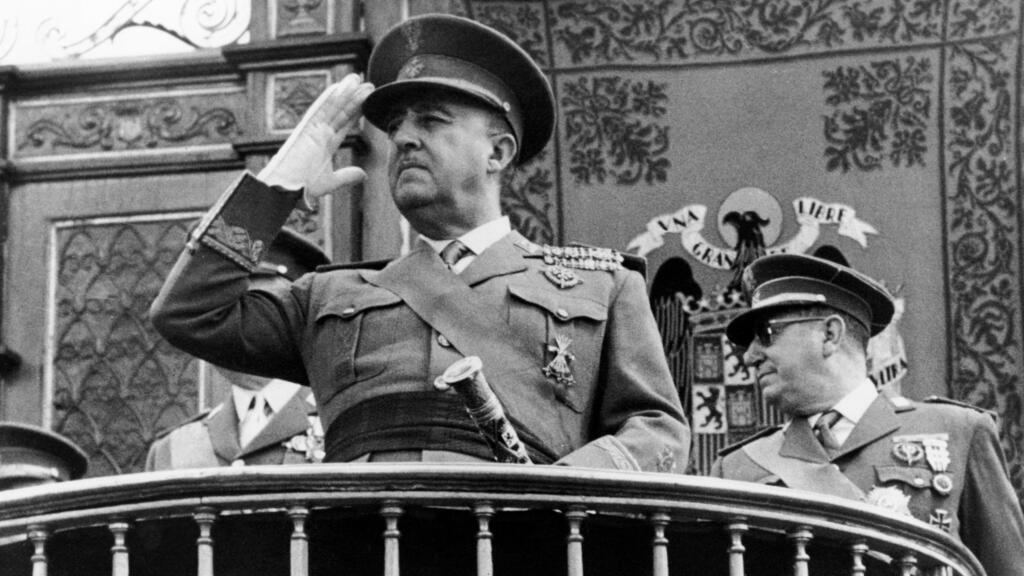
General Francisco Franco pictured in the 1960s. © AFP - AGENCIA TORREMOCHA

The government on Wednesday announced a series of 480 concerts, conferences and exhibitions under the slogan "Spain at Liberty", celebrating the restoration of democracy after the death of General Franco, who died in 1975 aged 82 after ruling Spain with an iron fist for nearly four decades.

Democratic elections followed in 1977 and newly enfranchised Spaniards approved a new constitution in a referendum the following year, now celebrated with a public holiday on 6 December.

Spain's Democratic Memory Minister Angel Victor Torres said that instead of holding an event on the anniversary of Franco's death on Thursday, the government had opted for "celebrating the recovery of democracy" throughout the year.

"We are not celebrating the death of the dictator, we are celebrating the beginning of the end [of the dictatorship]", he told a news conference.

More than 150 events have already been held so far this year across the country, and Torres said the programme would be extended into 2026 and possibly beyond.

He added that many of the events would focus on people born after the end of the dictatorship who did not experience the "years without freedom".

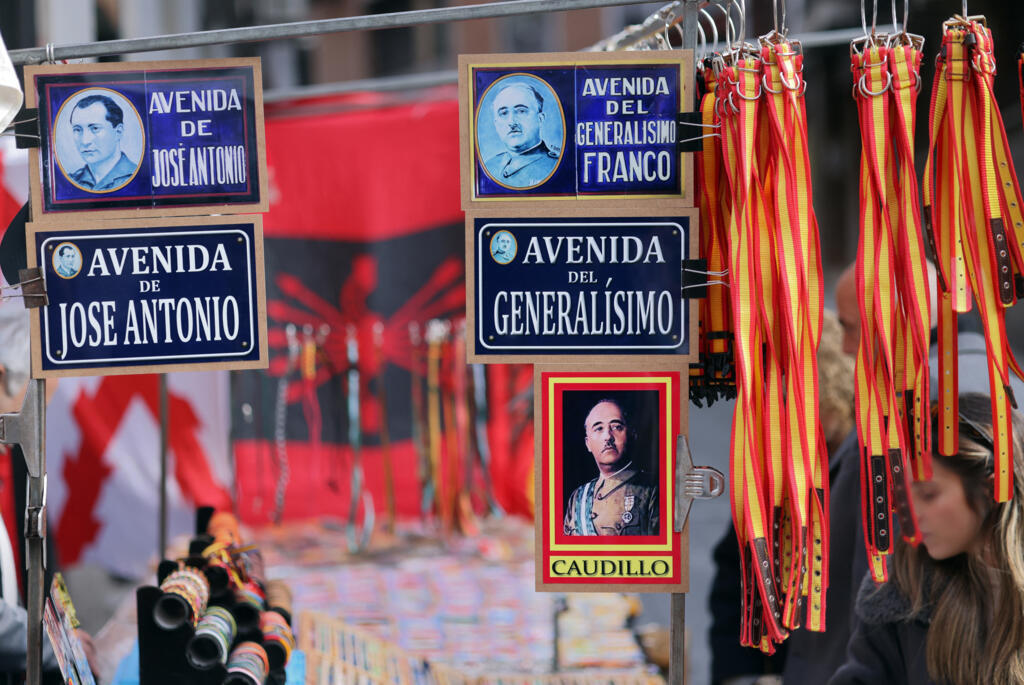
Franco memorabilia for sale at a flea market in Madrid in February 2025. Spain's government plans to publish a list of symbols of Franco's dictatorship to be removed from public spaces, Prime Minister Pedro Sanchez said on 22 October. © Thomas Coex / AFP

International discourse

Spain continues to grapple with Franco's legacy and the scars left by one of Europe's bloodiest fascist regimes.

Franco rose to power during the Spanish Civil War (1936-1939) on the back of a coup against the country's left-wing Republican government.

Under his authoritarian regime, the country experienced censorship, repression of minorities, totalitarian indoctrination and the execution of dissidents.

Historian François Godicheau told RFI that Francosim was able to stand the test of time because it adapted quickly to the post-war world.

"It adapted to the Cold War. It became the champion of anti-Communism," he said.

Godicheau says the same discourse can be heard today at an international level.

"Today, the same thing is happening in the rhetoric of Vox as in the rhetoric of President Javier Milei in Argentina, for example. Anything that vaguely resembles a redistributive policy... is Communism."


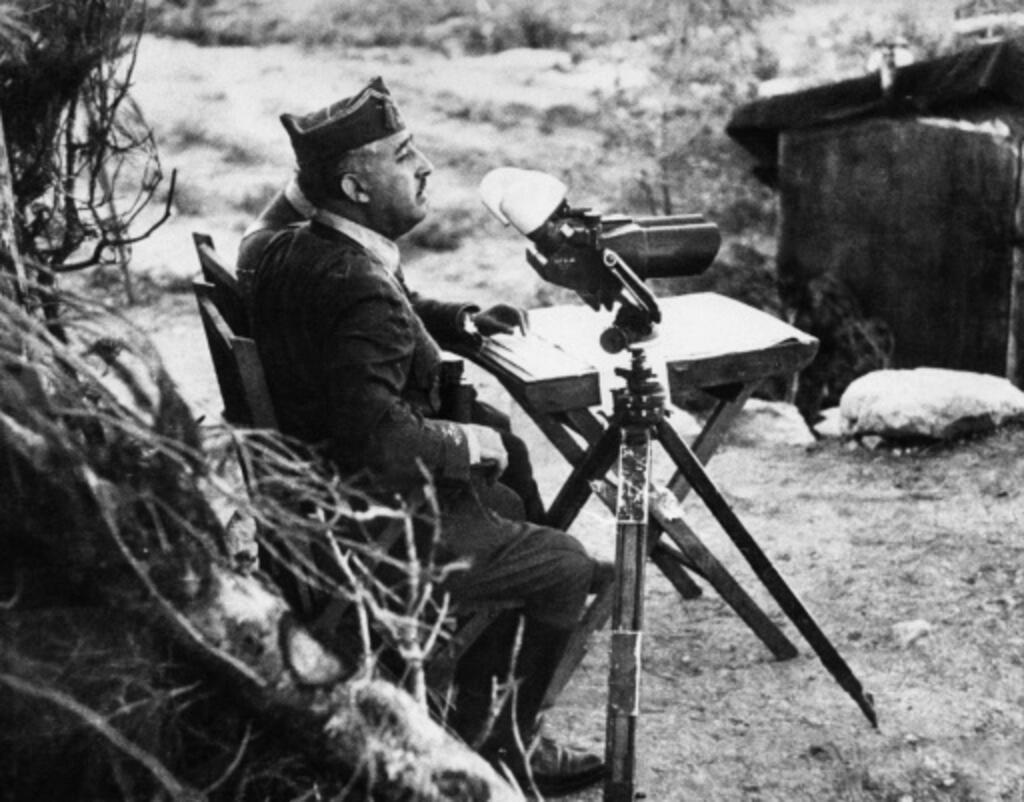
General Francisco Franco observes the front during the Spanish Civil War (1936-1939). © AFP/Archives


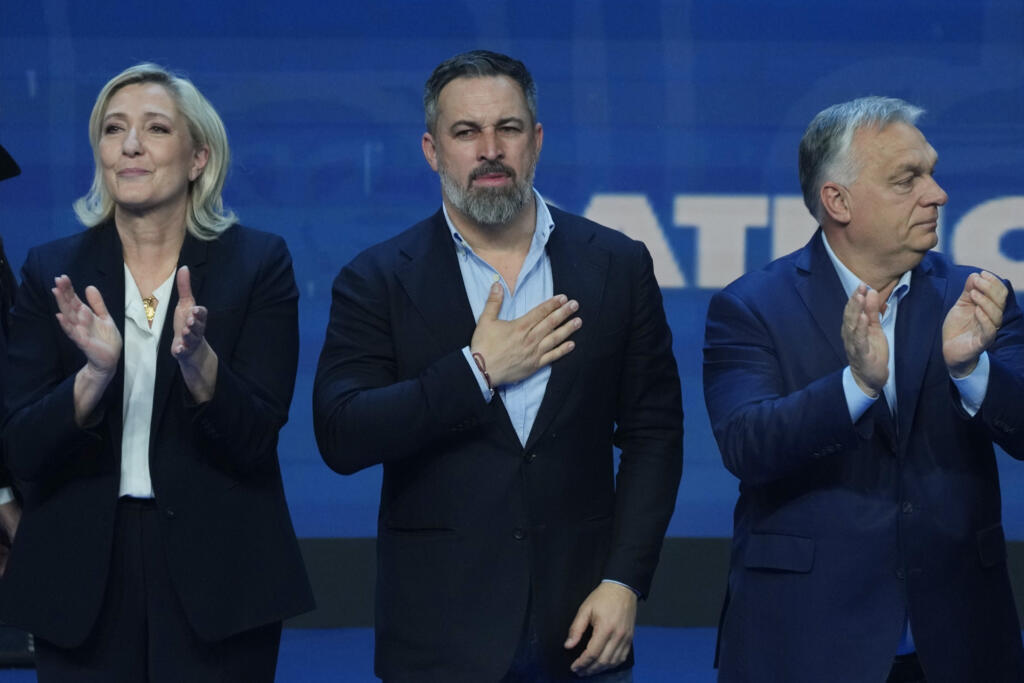
Over recent years, Madrid has hosted far-right leaders from Europe and beyond, thanks to invitations from the leader of the Vox party, Santiago Abascal – including France's Marine Le Pen, Hungary's Viktor Orban, Italy's Matteo Salvini, Geert Wilders from the Netherlands, and Milei.

Adapting United States President Donald Trump's "Make America Great Again" to "Make Europe great again", Abascal, as head of the Patriots for Europe parliamentary group, hosted the Patriots for Europe summit in Madrid on 8 February this year.

At the podium, Orban paid tribute to the "role of Francoist Spain" which rid the country of Communists, while Wilders praised the Reconquista, which expelled Muslims from Europe.

For Godicheau, however, the biggest legacy of Francoism is "political apathy" – Franco having famously said: "I don't do politics."

From Washington to Warsaw: how MAGA influence is reshaping Europe’s far right

Marine Le Pen, Vox leader Santiago Abascal and Viktor Orban at the far-right Patriots for Europe summit in Madrid, 8 February. AP - Paul White

A new generation

In the 1960s, Franco's regime presented itself as the guarantor of a form of peace and internal stability, rooted in the population's need to heal the wounds of war, repression, hunger and poverty, and in the fear of a new conflict.

In the mid-1970s, after his death, the transition unfolded rapidly: elections, political reform, the dissolution of pro-Franco groups, the amnesty law of 1977 and then the monarchical Constitution of October 1978.

But there remained pockets of resistance, with some far-right groups organising street demonstrations on symbolic dates from Franco's rule, which drew thousands of people.

In October 1976, the Popular Alliance emerged, founded by former Francoist officials. It would later become the current Popular Party (PP).

Its platform was conservative and populist: order, security, support for the monarchy and constitutional reforms. It also embraced aspects of the Francoist legacy, including Catholicism and a market economy.

Several factors explain the re-emergence of these right-wing voices, including PP and Vox, at the beginning of the 21st century. Besides the country's economic and social challenges, a new generation of Spanish political leaders has been emboldened by the rise of far-right movements across Europe.

The Nazi roots of today's global far-right movements

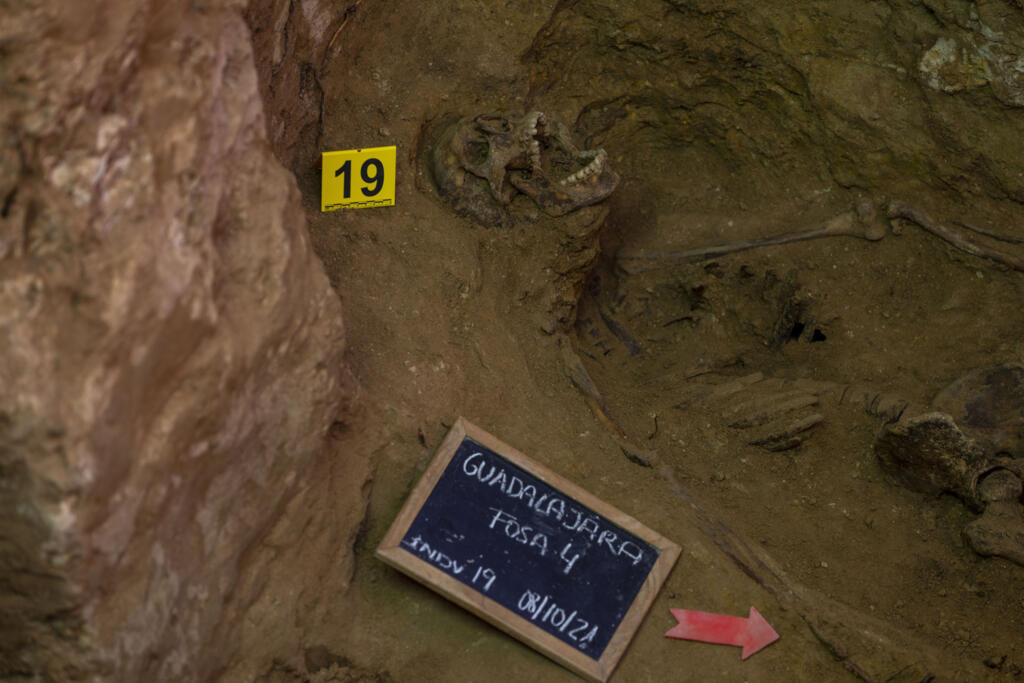
The exhumation of a mass grave at a cemetery in Guadalajara, Spain in October 2021. For decades, family members of the tens of thousands of victims of Franco's regime have had little help from authorities to recover their loved ones’ remains. AP - Manu Fernandez

Legal framework


Spain has since the 1970s grappled with a legal framework to address the crimes committed under Franco's rule.

The 2007 "Law for the Recovery of Historical Memory" removed references to Francoism from the public sphere and encouraged academic and grassroots research on the repression up to the dictator's death.

It refers to "victims" but without naming any perpetrators, reflecting the spirit of reconciliation inherent in the democratic transition.

In October 2022, the "Democratic Memory Law", introduced by the government of Pedro Sanchez, replaced the previous legislation, addressing its shortcomings. Forced disappearances and mass graves were among the areas not covered by the previous law.

Several regions governed by PP-Vox coalitions have responded by proposing so-called "concord laws" intended to repeal the main provisions of the Democratic Memory Law.

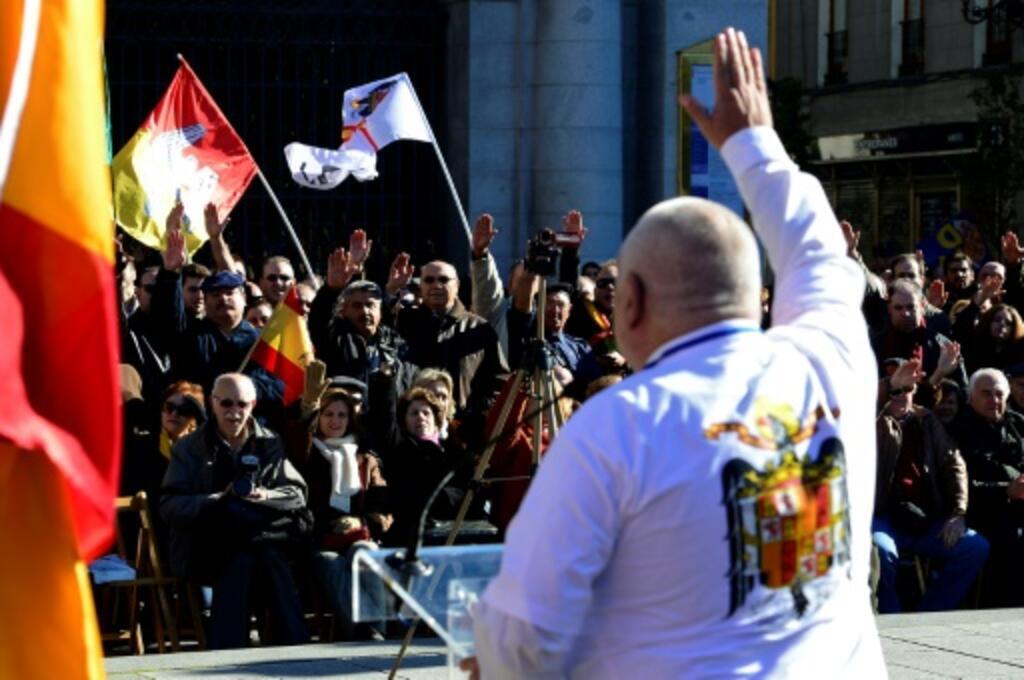
Franco supporters gather and perform the fascist salute on the anniversary of his death. AFP/File

A reformed curriculum


To challenge the narrative reinforced by educational programmes under Franco, the Spanish government revised the country's history and geography curriculum in November 2024.

Lessons on the Civil War now include repression, exile and resistance, while those on the democratic transition also address remembrance and reparations.

But Vox-PP coalitions are putting in place their own educational agendas. In Andalusia, the governing coalition has demanded the removal of certain books from schools on the grounds that they contribute to the indoctrination of children.

Eye on France: A dark chapter of Franco-Spanish history

These movements are also vehemently opposed to the recent decision by Sanchez's government to remove symbols that recall the military dictatorship, its atrocities and its leaders from public spaces.

Among the examples are the Valley of the Fallen, the shrine to Nationalist soldiers, and the legal battle over the exhumation of Franco's remains in October 2019.

These memorial sites have become ideological battlegrounds, which the right and far right accuse Sanchez's government of exploiting in order to consolidate the ranks of a fragile majority.

The government has also initiated a process to ban foundations such as the Francisco Franco Foundation, the José Antonio Primo de Rivera Foundation and the Serrano Suñer Foundation, whose purpose is to perpetuate the memory of the regime's ideologues.

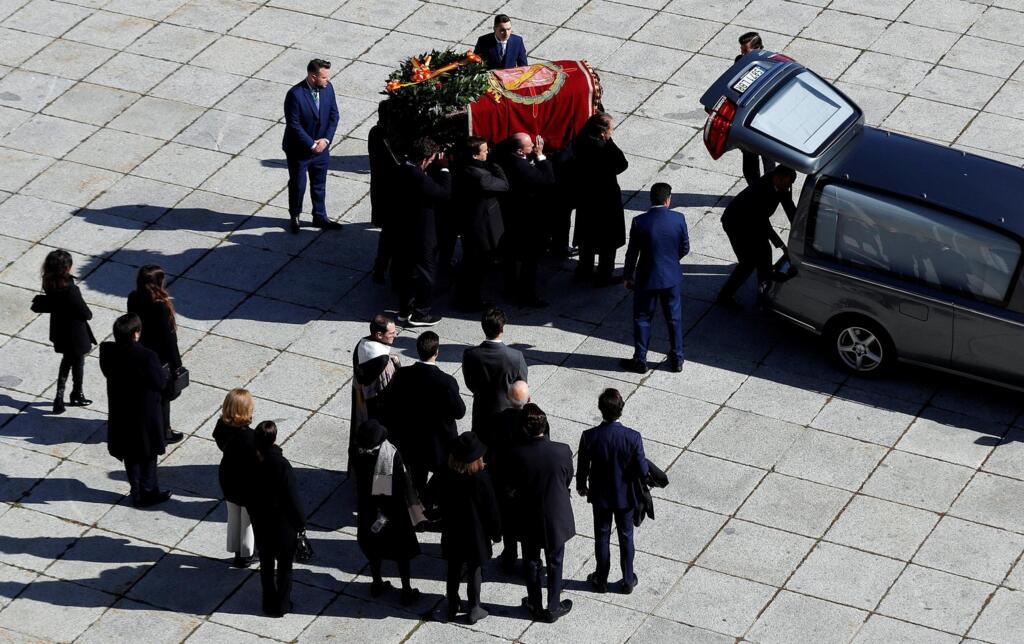
Relatives of Francisco Franco carry his coffin after the exhumation of his remains on 24 October, 2019. Emilio Naranjo/Pool via REUTERS

A siege narrative

To exert more influence at the ballot box, pressure groups have sprung up working to bring Vox, the PP and the centre-right Ciudadanos closer together.

Historian Godicheau says these convergences are possible because these movements share common values ​​and demands, notably around immigration.

"If Vox and its ilk claim a number of characteristic features of Francoism using Francoist rhetoric, it’s because there’s a potential political benefit. Namely, it’s possible to get people to identify with a narrative of a nation under siege...a glorious, pure Spain surrounded by enemies within."

This culture has permeated the country for several decades, shaping Spaniards over several generations, Godicheau said. "It’s easier to reactivate it than it would be in France to fully embrace Vichy, the militia, and the Vel’ d’Hiv roundup."


According to an October survey by Spain's national polling institute CIS, around 20 percent of Spaniards thought Franco's dictatorship was "good" or "very good", with 65.5 percent describing it as "bad" or "very bad".

As the country marks the 50th anniversary of Franco's death, Francoism itself clearly has not been laid to rest.

During the massive power outage that paralysed the country in April, Luis Felipe Utrera-Molina, the lawyer for the heirs of the former dictator Franco, posted on the social network X (formerly Twitter): "Under Franco, this didn’t happen."

The message was "liked" more than a thousand times.

This article has been adapted from the original version in French by Isabelle Le Gonidec.


US lawmakers split over Trump's claim of Christian persecution in Nigeria


The United States Congress is divided over President Donald Trump’s claim that Christians in Nigeria face religious persecution, with conservatives calling for sanctions while Democrats denounced the threats as reckless at a hearing on Thursday.


Issued on: 21/11/2025 - RFI


At a public hearing of the House Foreign Affairs Subcommittee on Africa, lawmakers grappled with whether to back Trump’s recent decision to label the country a “state of particular concern” over religious freedom.

The US president has insisted that Christian communities in Africa’s most populous nation face widespread persecution – a claim that Nigerian officials have strongly rejected.

At Thursday's hearing, Chris Smith, a veteran Republican who chairs the Africa subcommittee, argued that Nigeria was “ground zero, the focal point of the most brutal and murderous anti-Christian persecution in the world today”.
\
He accused the Nigerian authorities of failing in their constitutional duty to protect citizens, insisting that armed groups act “with impunity” against Christians.

Echoing Trump's threat of possible military intervention, the congressman urged the State Department to “seriously consider supporting human-rights vetted Nigerian forces to defend and protect Nigerian Christians and moderate Muslims”.

Smith also called for targeted sanctions – such as travel bans and asset freezes – aimed at individuals and entities deemed responsible for attacks.
'Reckless' threats

But others say the situation in Nigeria is more complicated, with both Christians and Muslims caught up in violence.

Democratic Congresswoman Sara Jacobs argued that Trump’s threats were irresponsible and risked derailing cooperation with a key African partner.

“President Trump’s threat is reckless, and any unilateral military action in Nigeria is illegal,” she said, pointing out that Congress had not authorised the use of force in Nigeria to protect Christians.

Experts told the hearing that instability in Nigeria stems from longstanding failures of governance, complex grievances and agitation rather than just religious conflict.

“A narrow narrative that frames Nigeria’s security situation solely as the persecution of Christians oversimplifies the issue,” said Oge Onubogu, director of the Africa programme at the Centre for Strategic and International Studies (CSIS).

“Religious and ethnic violence is driven more by governance failures and worsened by hate speech and conspiracy theories.”

Nigerians push back on Trump’s military threat over Christian killings
Contested 'genocide' claims

Researchers and Nigerian officials point out that much of the insecurity ravaging parts of the country is driven by criminality and competition over land and resources, especially in the North West region and Middle Belt.

Jihadist groups including Boko Haram are also known to victimise Muslims as well as Christians.

A high-level Nigerian delegation is in Washington this week to discuss the matter.

How Nigeria is reintegrating repentant former Boko Haram fighters

The designation of Nigeria as a “country of particular concern” (CPC) earlier in November followed months of lobbying by conservative politicians and Christian advocacy groups who claim that Christians in Nigeria are facing “genocide” – a term widely contested by researchers on the ground.

These organisations have amplified stories of attacks and displacement, urging the US government to step in.

The US government gives the CPC label to nations it says are engaged in severe violations of religious freedom. Trump previously designated Nigeria a CPC in December 2020 during his first term in office, but that decision was reversed the following year under President Joe Biden.