It’s possible that I shall make an ass of myself. But in that case one can always get out of it with a little dialectic. I have, of course, so worded my proposition as to be right either way (K.Marx, Letter to F.Engels on the Indian Mutiny)
Sunday, November 23, 2025
Barrick and Mali agree in principle to resolve dispute over gold mine
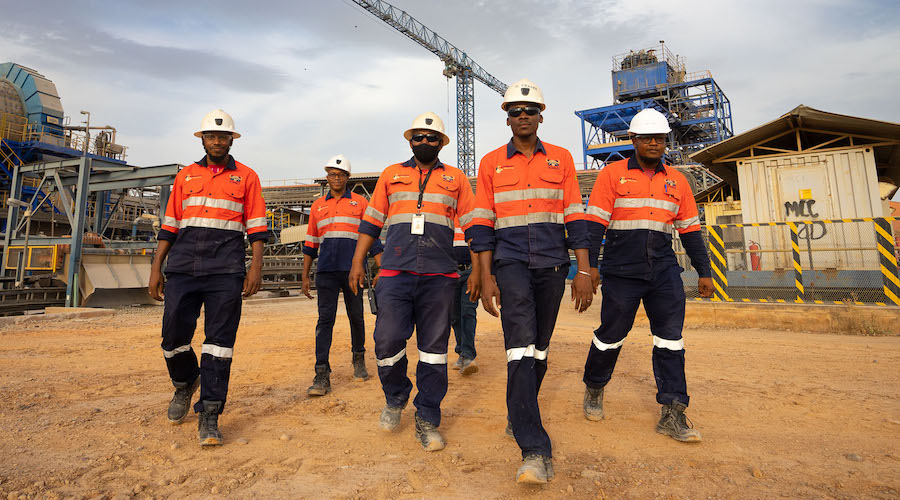
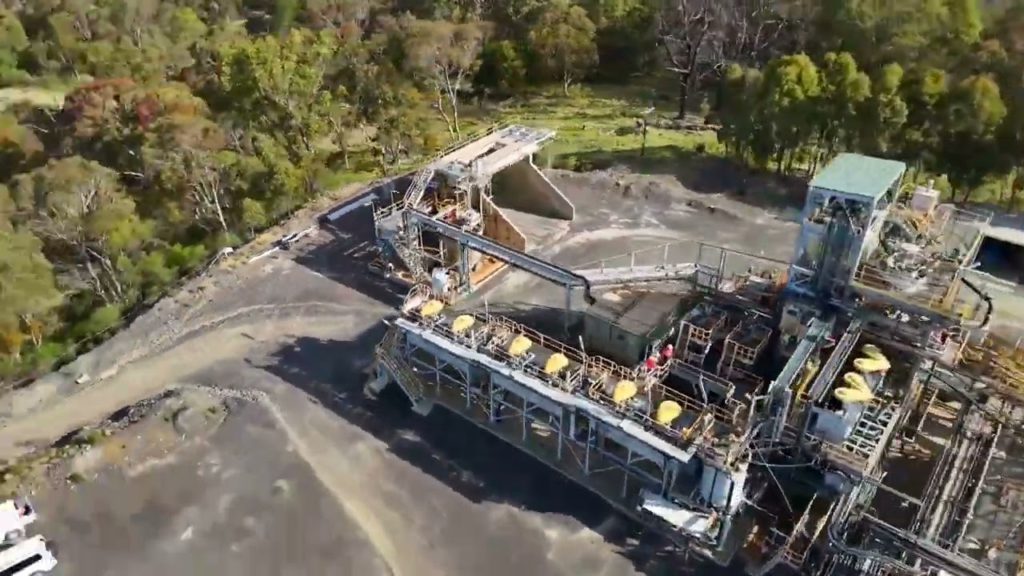
Mali’s government has put the Loulo-Gounkoto gold complex under state control. (Image: Barrick.)
Barrick Mining and Mali’s government have reached a verbal agreement in principle to resolve their dispute over the Loulo-Gounkoto gold mining complex, two sources familiar with the situation told Reuters on Friday.
No agreement has yet been signed, the sources said.
A spokesperson for Barrick Mining did not immediately respond to a request for comment. A spokesperson for Mali’s mines ministry said negotiations were progressing well but did not provide further details.
The two sides have been in a dispute since 2023 over the implementation of a new Mali mining code that raises taxes and gives the government a greater share of gold mines.
They met for talks on Friday, a week after Barrick’s interim CEO Mark Hill wrote a letter to Mali’s administration asking to restart negotiations, one of the sources said.
Barrick suspended operations at the massive Loulo-Gounkoto complex in January. A Malian court in June appointed a provisional administrator to restart operations, although blasting did not begin until October.
(By Divya Rajagopal, Portia Crowe and Pranav Mathur; Editing by Edmund Klamann)
Britain unveils critical minerals strategy to cut reliance on foreign supply
Britain on Saturday rolled out a critical minerals strategy designed to reduce dependence on foreign suppliers by 2035, with targets to source 10% of domestic demand from UK production and 20% from recycling, the government said, as global competition for these essential resources intensifies.
Backed by up to 50 million pounds in new funding, the strategy seeks to ensure no more than 60% of the UK’s supply of any one critical mineral comes from a single country by 2035, according to a statement.
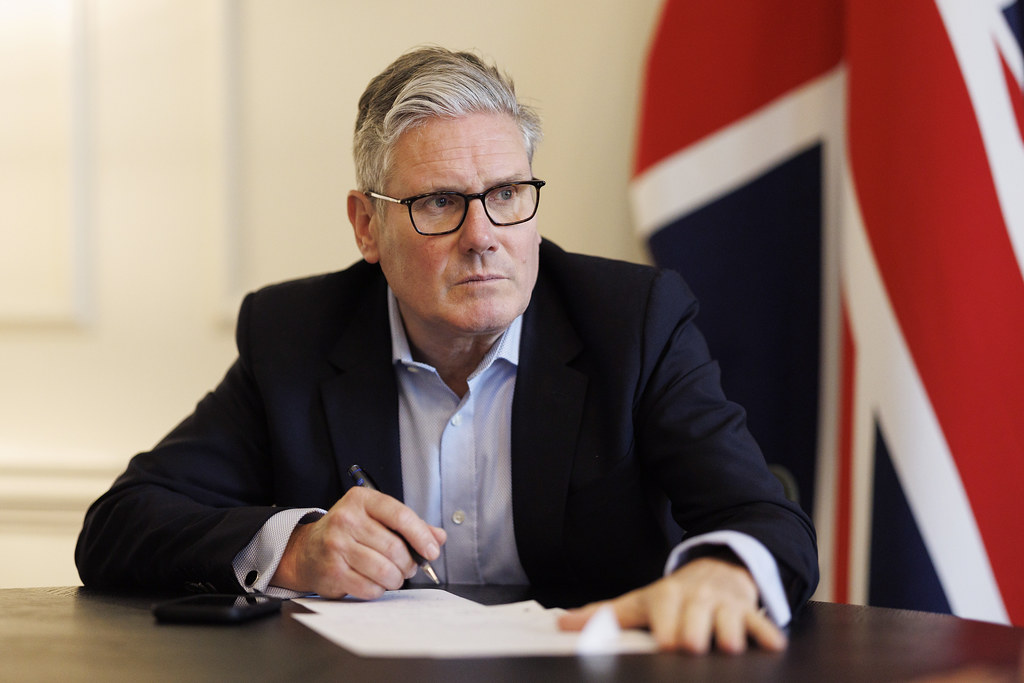
British Prime Minister Keir Starmer said in the statement critical minerals “are the backbone of modern life and our national security,” arguing that boosting domestic production and recycling would help shield the economy and support efforts to lower living costs.
The government said the UK currently produces 6% of its critical mineral needs domestically. Under the plan, it wants to expand domestic extraction and processing, with a particular focus on lithium, nickel, tungsten and rare earths. It aims to produce at least 50,000 tonnes of lithium in the UK by 2035.
Britain faces an urgent need for a secure, long-term supply of critical minerals, including copper, lithium and nickel, which are essential for smartphones and electric vehicles and increasingly crucial for building data centers that power artificial intelligence.
British demand for essential materials is climbing sharply, with copper consumption projected to nearly double and lithium demand expected to surge by 1,100% by 2035, Britain’s government said.
The strategy underscores China’s grip on critical mineral supplies, leaving the sector exposed to price swings, geopolitical strains and sudden disruptions. Britain noted China accounts for about 70% of rare earth mining and 90% of refining, a dominance that puts countries such as the UK at risk.
Earlier this year, Britain struck a minerals cooperation deal with Saudi Arabia aimed at bolstering supply chains, opening doors for British firms, and drawing fresh investment into the UK.
(By Mrinmay Dey; Editing by Chris Reese)
Column: Aluminum scrap is the new battle front in critical minerals war
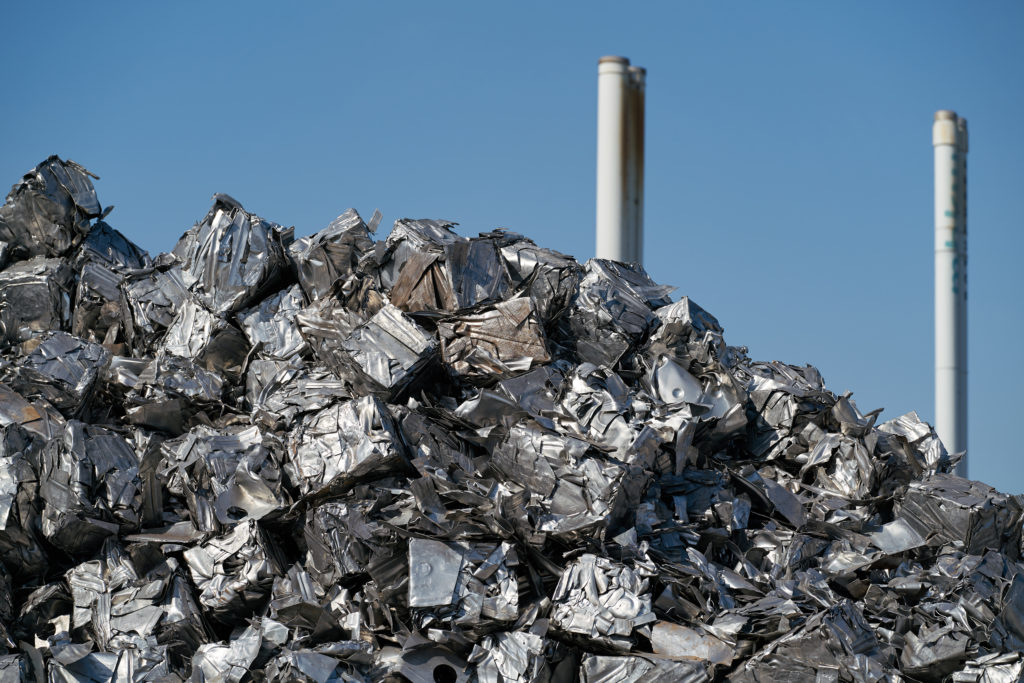
Cubes of pressed scrap at a scrap yard in the harbor in Magdeburg in Germany. Stock image.
The global competition for critical minerals has reached the least glamorous part of the metallic supply chain.
Aluminum scrap may not be most people’s idea of “a strategic commodity” but that’s exactly what it is, according to EU trade chief Maros Sefcovic. And too much of it, over a million metric tons a year, is leaking out of the bloc in the form of exports.
The European Commission is preparing what Sefcovic described as “a balanced measure” to ensure more recyclable material stays in Europe.
Industry association European Aluminium points the finger at the United States, arguing that the country’s import tariffs have created a price differential that is pulling more European scrap to the US market.
US industry group The Aluminum Association is equally concerned about scrap leakage but it blames China and is calling for “smart, targeted export controls.”
The global battle for scrap has begun. A strategic commodity
Scrap metal has strategic value to European policy-makers because it sits at the heart of the bloc’s industrial policy, the nexus where circularity, decarbonization and strategic autonomy align.
Europe has set a target for recycling to meet 25% of the region’s critical minerals demand by 2030.
Aluminum is already there. The metal is infinitely recyclable and remelting it requires only five percent of the energy needed to make virgin metal, which means a much lower carbon footprint.
Scrap’s importance as a feedstock for European manufacturers has steadily increased over recent years as many of the region’s aluminum smelters have succumbed to high energy prices. The region’s annual primary aluminum production has fallen by a quarter since 2011.
The worry is that European recycling capacity is now also at risk, with European Aluminium estimating around 15% of the bloc’s recycling furnace capacity is idle for want of feed.
Aluminum scrap is exempt from US import tariffs on primary metal and semi-manufactured products, doubled to 50% by US President Donald Trump in June. But the resulting arbitrage window is accelerating Europe’s scrap leakage, the association warns.
US import figures through July show increased shipments from Germany and Spain in particular but from a very low base. The biggest suppliers of scrap to the US remain Mexico and Canada, accounting for 53% and 32% of total imports respectively.
However, there is no denying the broader trend. Consultancy Project Blue calculates that European exports of aluminum scrap to non-EU countries rose at a compound average growth rate of 8.9% between 2018 and 2024. A graded question
Of course, it all depends on what sort of scrap we’re talking about.
Both Europe and the United States have long exported low-grade, end-of-life scrap due to declining domestic dismantling and recycling capacity.
China and India, both hungry for raw materials, have been the biggest buyers, although China’s crackdown on low-grade imports in 2020 created a transshipment loop through countries such as Malaysia and Thailand, where scrap is upgraded before onward dispatch to Chinese recyclers.
The European Commission’s promise that there won’t be a blanket export ban is tacit acknowledgement that Europe currently can’t process all the grades of aluminum scrap it generates.
Types of scrap such as “Zorba” and “Twitch” sound exotic but denote less than glitzy bales of shredded, mixed-up material, most often from end-of-life vehicles. They are difficult and expensive to process, hence the growing trade with countries willing to recycle them.
High-purity types of scrap such as used beverage cans are an altogether different matter, which is why the Aluminum Association is calling for an immediate ban on exports of such material outside of North America.
Although the Europeans are worried about rising US imports, the reality is that the United States runs a consistent trade deficit with the rest of the world in aluminum scrap to the tune of a million tons last year.
India was the single largest destination for US aluminum scrap shipments, followed by Thailand and Malaysia, the two largest suppliers to China. China pivots to scrap
China is the West’s primary competitor in the global race for critical minerals and so it is also when it comes to aluminum scrap.
China’s imports of recyclable aluminum have been rising at a fast clip since the ill-considered ban on “foreign garbage” in 2020, quickly reversed under pressure from China’s recycling industry.
Chinese demand for aluminum scrap is set to grow even more in the coming years. The country’s huge primary smelter sector is now operating close to Beijing’s mandated capacity cap, meaning more demand must be met from recycling.
There is an official target of lifting aluminum recycling capacity to 15 million tons per year in 2027, creating a huge potential draw on recyclable material from the rest of the world.
The danger for both Europeans and Americans is that China is gearing up to dominate the secondary aluminum sector just as it has already done the primary. Where there’s muck, there’s brass (and aluminum)
The drift towards scrap protectionism is testament to how important the dirty world of metals recycling has become to Western supply chains.
With China so dominant in the primary processing of critical metals, including aluminum, recycling is one of the West’s easiest routes to reduce import dependency.
It seems somewhat inevitable then that there will be some sort of export restrictions on some types of aluminum scrap on both sides of the Atlantic.
But, as the Aluminum Association concedes, part of the West’s solution is also to get the general public to recognize the importance of scrap.
It’s still a fact that the United States has one of the lowest aluminum beverage can recycling rates at just 43% in 2023, compared with a global rate of 75%. That’s a lot of high-quality mill-ready metal that is being thrown away.
Trade measures look inevitable but the answer to scrap availability also lies closer to home.
(The opinions expressed here are those of the author, Andy Home, a columnist for Reuters.)
(Editing by Philippa Fletcher)
Inalum targets 2029 to commission new aluminum plant
State aluminum company PT Indonesia Asahan Aluminium (Inalum) will aim for 2029 to commission the new aluminum plant it plans to build in West Kalimantan, its chief executive said on Thursday.
The company plans to build a smelter capable of producing 600,000 metric tons of aluminum a year with an estimated investment of nearly $2.5 billion, chief executive Melati Sarnita told members of parliament.
The new plant will add to the company’s current production capacity of around 275,000 tons.
The additional capacity is designed to reduce Indonesia’s dependence on imports, she said, noting that the country currently sources around 54% of its aluminum from abroad.
“Looking ahead, we believe that we can increase our capacity to reduce reliance on imports and strengthen the national aluminum supply chain,” she told parliamentarians.
The company is in talks with potential strategic partners for the aluminum plant, including sovereign wealth fund Danantara and other global companies, Melati said.
A Chinese company providing the smelting technology is also expected to take a stake of around 5% to 10% in the project, she said. She did not give the name of the company.
The project will require 1.2 gigawatts of power capacity, and is planning to purchase the electricity from the state utility firm or other suppliers.
The company is also expanding the capacity of its refinery to double its output of smelter-grade alumina, the raw material for aluminum, raising production to 2 million tons by 2028 from 1 million tons now.
(By Fransiska Nangoy; Editing by David Stanway)
Europe faces copper shortages unless EU halts scrap exports, industry says
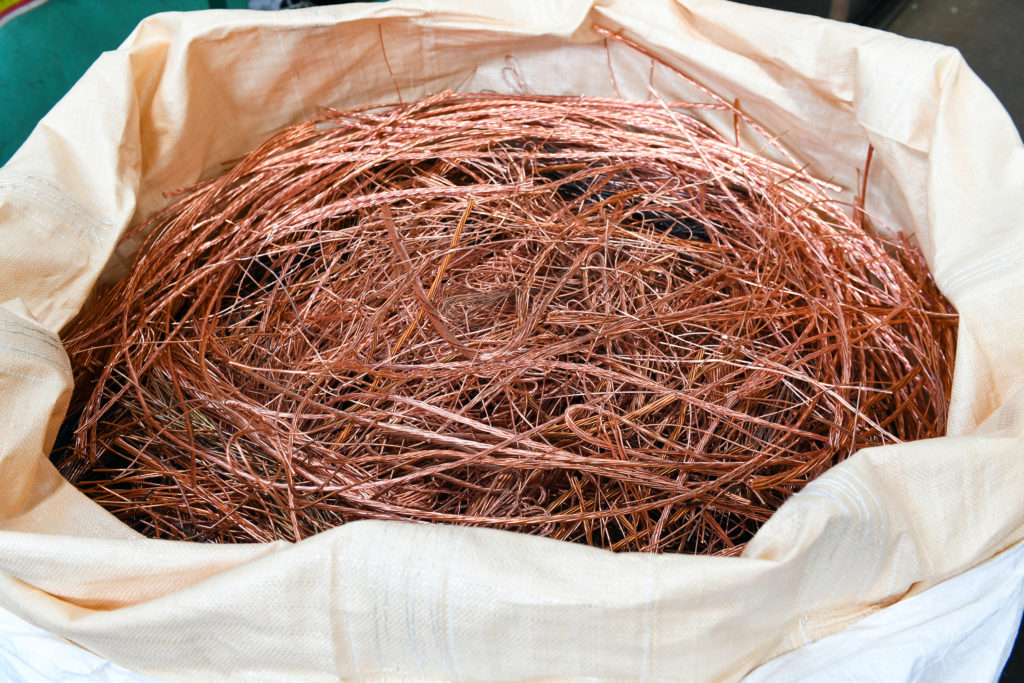
European companies that make products from copper have warned they are facing critical shortages unless the EU takes action to curb exports of scrap, as it has for aluminum.
Large amounts of refined copper have been shipped to the US by investors attracted by higher prices there based on tariff expectations.
At the same time, exports of copper scrap from the EU have surged by 31% since 2022, with about half going to China, according to a position paper issued by companies accounting for more than 90% of European copper scrap usage.
“What makes me nervous is there’s a high risk of a cathode shortage in Europe next year,” said Uwe Schmidt, an executive at German metal products producer Wieland.
“Scrap shortage and cathode shortage will be a dangerous mixture for the semi-fabricators.”
Cathodes are slabs of refined copper and fabricators use copper to produce a variety of semi-finished products such as wire, tubes and rods.
Lithium prices in China fell sharply on Friday, short-circuiting a rally, after the main exchange stepped in to curb speculative trading and on a report that battery giant CATL could restart production at its flagship lithium mine.
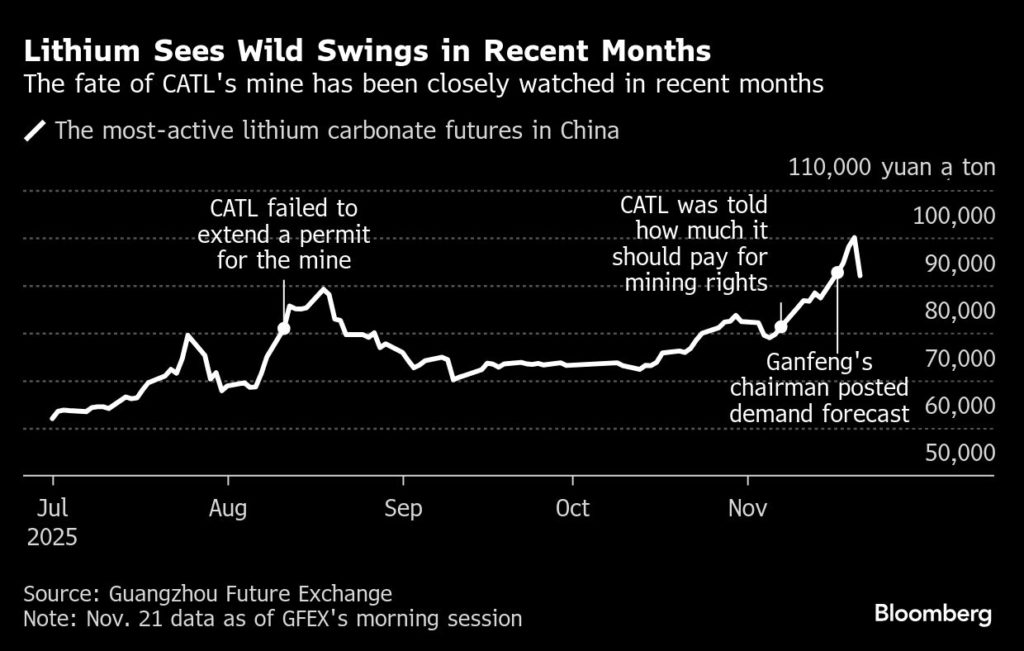
The most-active lithium carbonate contract on the Guangzhou Futures Exchange closed daytime trading down 9% at 91,020 yuan ($12,804.21) per metric ton, hitting its lower limit and giving back most of this week’s gains.
The contract on Thursday hit its highest since June 2024 at 102,500 yuan a ton.
On Thursday, GFEX said it would increase transaction fees for some futures contracts of lithium carbonate from November 24, and it also planned to limit the daily open position for non-futures company members.
Such a move was widely seen as targeting speculative trading, analysts said, blaming some of the price correction on the decision.
The Jianxiawo mine, where production has been suspended since August due to the expiration of its mining licence, can produce just over 46,000 tons of lithium carbonate equivalent a year, about 3% of global output for 2025, according to data from the Australian government.
CATL has told its lithium carbonate smelters to be prepared for a resumption of the Jianxiawo mine, two sources told Reuters without specifying a date.
The sources requested anonymity as they are not authorized to speak to the media.
CATL did not respond to a request for comment.
($1 = 7.1086 Chinese yuan renminbi)
(By Dylan Duan and Lewis Jackson; Editing by Kirsten Donovan)
CATL aims to restart key Chinese lithium mine by early December
CATL’s headquarters in Ningde, in China’s Fujian Province. (Image courtesy of CATL.)
A key Chinese lithium mine run by Contemporary Amperex Technology Co. Ltd. is preparing to reopen as soon as early next month.
The battery maker has formulated a preliminary plan to restart its Jianxiawo mine by early December, according to people familiar with the matter, who declined to be named as they aren’t authorized to speak publicly. The company has asked suppliers and partners to ready equipment, chemicals and workers, they said, as well as notifying the refiners that draw feedstock from the mine.
CATL’s preparations aren’t a guarantee that the mine will get regulatory approval. The people said the company’s schedule could be subject to change, and that they’re still awaiting sign-off from the authorities.
CATL didn’t immediately respond to requests for comments. Calls to the natural resources departments of both Yichun city and Jiangxi province, where the mine is situated, went unanswered.
The fate of Jianxiawo, owned by the world’s biggest maker of batteries for electric vehicles, has fixated the industry in recent months. Production at the mine was suspended in August after CATL failed to get an extension on an expired permit.
The mine is expected to account for about 3% of global lithium production. The supply uncertainty, at a time of tighter government scrutiny of the sector, has fueled heightened volatility in prices of the battery metal. Earlier this month, CATL was told how much it should pay for the mining rights, a crucial step in the process that would allow Jianxiawo to restart.
The lithium industry has struggled with a global glut, exacerbated by slowing demand for EVs, although prices have been boosted in recent weeks as the market becomes more confident in demand prospects from the energy storage sector.
The most-active lithium carbonate contract on the Guangzhou Futures Exchange has jumped over 10% this month, topping 100,000 yuan ($14,000) a ton earlier this week. Bullish sentiment intensified after Ganfeng Lithium Group Co.’s chairman predicted prices could reach as much as 200,000 yuan next year, if demand grows more than 30%.
(By Annie Lee and Alfred Cang)
Antimony in a ‘perfect storm’ of falling production, surging demand, Larvotto MD says
Hillgrove project is located 23 km east of Armidale in northern New South Wales. Credit: Larvotto Resources
Larvotto Resources (ASX: LRV) this week determined the viability of tungsten as a byproduct at its past-producing 100%-owned Hillgrove antimony and gold project in New South Wales, which it aims to bring into commercial production in Q2 2026.
The company reported 90% tungsten recovery with a 16X increase in feed grade delivered in recent metallurgical testwork, which it said also indicates a simple and cost-effective processing circuit would produce a saleable tungsten concentrate.
Tungsten is the material of choice for a key defense application – what the military calls penetrators – high-density, armour-piercing projectiles. As with other critical minerals key to defense applications, its production and refining are heavily dominated by China.
The discovery adds more momentum to the project’s mineral resource estimate (MRE) of 8.77 million tonnes grading 4.0 grams per tonne (g/t) gold and 1.1% antimony, for 7.2 g/t gold equivalent (AuEq).
After China’s exports limits on antimony, the Hillgrove project “has become a strategic asset being one of the world’s top 10 antimony deposits with material near-term production potential in a Western jurisdiction”, analysts at Blue Ocean equities said in a note in September. Antimony is a lesser-known metal with multiple applications. Its largest end-use is as a flame retardant, but it is also found in solar panels and lead-acid batteries.
The US Department of the Interior has designated it a critical mineral because it is also essential for armour-piercing ammunition, infrared sensors and precision optics.
China, Russia and Tajikistan control a significant portion of global antimony production, with China being the largest producer and refiner. Hillgrove ahead of the game
Last year, Larvotto signed a binding offtake agreement with trading house Wogen Resources for sales of its first seven years of antimony output at Hillgrove.
Larvotto only acquired the Hillgrove project in late 2023, and has since released initial resources, reserves, and prefeasibility and definitive feasibility studies.
“We started the financing project in January this year. It was quite a unique thing that we did, but that shows you the strength of it,” managing director Ron Heeks told MINING.COM in an interview.
“Eight weeks after the DFS we funded the project, we did 100 US bonds and a $60 million capital raise on top of that, and we’ve effectively been in build since that time, and we will be in first production Q2 next year,” Heeks said.
The Australian company aims to produce 5,400 metric tons of antimony annually at Hillgrove, representing 7% of global production. Larvotto’s ASX-listed stock is up 123% over the last year.
The Hillgrove mine produced antimony intermittently since its discovery in 1857, with significant modern-era production from 1969 until a temporary closure in 2014 due to low antimony prices.
“The perpetual story is that antimony has been mined here from World War I, World War II, Vietnam, Korea,” Heeks said.
Heeks said while the antimony price is always affected by ammunition demand, what is driving antimony at the price at the moment is that 30% to 40% of antimony now is going into solar panel use.
“And then you’ve got the military uses of it, so every bullet and anything with military lead in it has somewhere between 2.5% and 6.5% antimony in it, which is why the US military is getting desperate,” he said.
“Then you’ve got the unique thing that around the world, most of these ore bodies are very similar, that at the top of the system [are] higher mercury grades. Luckily, that bit for us is long gone, withered away. But then you get high antimony for about 200 or 300 metres. Then you get antimony gold, which is where most of our resources sit,” Heels said.
There’s been zero interest in antimony for 20, 30 years. So, there’s nothing ready to go. So, you’ve got this perfect storm of production decreasing by 60%, demand going up by 60%. The whole Western world, including us, has shut down all their refineries – China – they’re the only ones with the refineries.” Destination markets unclear
The company will sell 100% of its concentrate to Wogan at Rotterdam pricing.
The traders will sell to whoever gives them the best price, and Heeks won’t know the destination when the trucks pick up product and leave the site, but he doesn’t believe the antimony would enter China.
“At the moment, that would never be China because China has created an artificial internal market, as they do occasionally. They tried this on Australia a few years ago on iron ore, and all they did was more than double the price that they ended up paying for it.
“They’ve created an artificial market, so essentially, nobody is selling to China at the moment, which is causing China a spectacular amount of grief because they can’t produce enough to get their solar panels. And internally, it’s not like they can say, ‘let’s go do more with these old projects and restart them’, because it’s gone.”
But Heeks points out that even as miners in the Western world are starting to dig again for the minerals they left in the ground for decades, the grip China has on the refining market can’t be loosened any time soon.
“If we sold it to the US, they’d have to send it to China to refine it. We can’t refine it here. The only facility you’ve got in the United States is the US Antimony Corps smelter, which has got to be 70 years old and at full capacity can only do about 2,000 tons per annum,” Heeks said.
USAC operates the only significant antimony smelter in the United States and it is in a “sold out” condition, according to the company’s website.
“Wogan will sell to smelters in Asia, non-China, or Europe. India is probably the biggest smelting market at the moment outside China,” he said. “Nobody in the US can treat this. Nobody in North America can treat an antimony concentrate,” Heeks said.
“We’ve been awarded the underground mining contract. We have 15 kilometres of underground development in place and about 12 months of ore ready to go,” he said.
“We’re the only project, in all honesty, that is going to be producing significant amounts of antimony in the next four years, arguably more.”
Pentagon lends $700 million to Vulcan, ReElement for rare earth magnets
The US Department of Defense agreed to lend $700 million to producers of rare earth magnets in a bid to increase domestic production of materials used in consumer electronics and weapons.
The conditional loan package is made up of $620 million to Vulcan Elements Inc. and $80 million to ReElement Technologies Corp. to lift production of magnets made from neodymium, iron and boron, the Pentagon said in a statement Friday. The Department of Commerce will take a $50 million equity stake in Vulcan.
It’s the latest in a string of US funding as the Trump administration looks to loosen China’s grip on supply chains for key elements used in military hardware, electric vehicles and wind turbines.
With the funding, Vulcan and ReElement expect to produce as much as 10,000 metric tons of the magnet material over the next several years.
ReElement separates and refines rare earths from mined concentrate and waste or recycled materials, producing oxides that are used to make metal for magnets. Vulcan supplies magnets in the US for defense and commercial production.
The US Defense Department will reissue an updated tender for up to $500 million worth of cobalt by end-November 2025, with an award expected in early February 2026, according to Argus News.
The Defense Logistics Agency first sought offers in mid-August for up to 7,500 tons of cobalt over the next five years, but in mid October cancelled the tender due to “outstanding issues with the Statement of Work” after interested parties missed several deadlines.
The DLA was seeking offers for alloy-grade cobalt from three producers: units of Vale SA in Canada, Sumitomo Metal Mining Co. in Japan and Glencore Plc’s Nikkelverk plant in Norway. It asked suppliers to propose fixed prices for the supplies over five years and there was one amendment last month excluding one brand from Vale, Bloomberg News previously reported.
A surge in supply from the Congo, responsible for 80% of the world’s cobalt output, coupled with cooling demand from the electric vehicle market, saw cobalt prices sink to historic lows at the start of 2025.
Copper production in the DRC increased by nearly 40% last year and in October Kinshasa began implementing a quota system to replace a ban announced in February. Allowed base volumes of 87,000 tonnes per year is around half total exports registered in 2024.
Cobalt consumption in EV batteries overtook other sources of demand like aerospace alloys several years ago and the downstream impact of the DRC strategy has been swift.
The price of cobalt sulphate entering the EV battery supply chain in China is now trading 335% higher than at the start of the year, averaging $11,932 tonne in October which translates to a price of $58,200 on a 100% cobalt content basis. That remains far off the March 2022 peak of more than $90,000 per tonne, however.
Cobalt prices would likely remain elevated and could rise further under the quota scheme put in place for 2026 and 2027 and will be further supported if the US government does re-enter the market for the first time since 1990.
The CEO of the world’s number one producer of cobalt, China’s CMOC Group, warned last month that cobalt at these levels could lead to demand destruction and substitution, although that has been a long-running trend for cobalt users.
Why Financial Wellbeing Is Central to Seafarer Welfare
Conversations about seafarer welfare rightly focus on life at sea: safety, rest, and fair pay. But there is another, often overlooked, element that shapes how seafarers feel about their work and their lives: what happens when they send money home.
For most seafarers, supporting loved ones through their earnings is not just a financial act but one of care and responsibility. Yet the simple process of transferring funds can be slow, expensive, and unpredictable. The anxiety that creates, wondering whether salaries have arrived safely or how much has been lost to hidden fees, is real and persistent.
I’ve seen first-hand how financial peace of mind affects mental wellbeing. When a seafarer knows money gets home quickly, fairly, and predictably, anxiety drops. That’s part of welfare under the Maritime Labour Convention: fair treatment, not just safety at sea.
What Seafarers Can Keep Matters
Pay and conditions matter, but so does what actually reaches a seafarer’s family. Too often, a meaningful share of wages disappears through high or unfair correspondent banking fees.
In the Philippines, a typical receiving-bank charge can equate to two bags of rice. When you think of it that way, it’s not a small loss.
That’s why we spend so much time examining payment routes, negotiating with banks, and finding compliant alternatives when traditional channels close. When sanctions hit a particular country, for example, we’ve spent months maintaining pathways so crews could still get paid.
We don’t stop when a route closes, we find another. The same persistence helped us eliminate a $30 correspondent charge in Myanmar by partnering locally to secure fairer rates. Behind every percentage point saved is a family meal. That keeps us pushing.
Scale that Drives Fairness
Scale gives us bargaining power on behalf of seafarers. Marcura’s acquisition of Brightwell Navigator means we ensure around 150,000 crew are paid in any given month across a total of half a million active accounts. We process in the region of $17 billion in payments every year.
We use that scale to negotiate better exchange rates and lower receiving-bank fees that no individual could secure alone. The result benefits everyone: less friction for shipowners and managers, and more confidence for crews.
Technology as an Enabler
Reliable onboard connectivity and new digital tools have transformed how seafarers stay in touch with their families. Financial services need to evolve just as fast.
Technology only matters if it removes worry. If a card goes missing mid-voyage, you can freeze it in the app, if you are concerned of the funds on the card you can unload them. If there’s a spare card on board, the captain provides it to you and you can re-link it so you’re not stuck. It will then reveal your PIN when you need it.
Those details aren’t glamorous, but they’re the difference between I’ll sort it out when I’m ashore and it’s already sorted.
Money worries aren’t just about cost; they’re about rhythm. Most seafarers work fixed contracts, nine months at sea, a few months at home. Income doesn’t flow evenly.
Families still need stability through those gaps. Crews told us they wanted a simple way to separate what they can spend from what they need to keep. So, we made it possible to hold back savings in the account and load a chosen amount onto the card when they reach port. It’s a small feature, but it gives real control and peace of mind: you can enjoy your time ashore knowing you’ve already looked after what matters most.
And because salary sometimes lands when connectivity is patchy, transfers to family can run automatically as soon as you’re paid. The money gets home on time, even if you’re still halfway across the world.
Partnerships Beyond Payments
Money worries and mental wellbeing are often intertwined. Anyone who’s spent time at sea knows how a small delay or unexpected charge can sit in the back of your mind for days. That’s why we’ve partnered with the International Seafarers’ Welfare and Assistance Network (ISWAN), the charity behind the 24/7 multilingual SeafarerHelp helpline.
The partnership grew from a shared understanding that financial and emotional welfare can’t really be separated. ISWAN supports seafarers and their families when life becomes difficult; we focus on removing the financial friction that so often adds to that strain.
As part of the collaboration, we have added ISWAN’s SeafarerHelp details inside the MarTrust app so crews can find the helpline from the same place they manage their money. As ISWAN CEO Simon Grainge said: “If support isn’t on their phone, it barely exists for today’s seafarers. Our partnership with MarTrust helps put help where it’s needed.”
It’s a partnership built on shared intent and mutual respect. ISWAN brings deep experience supporting seafarers through the hardest moments; we bring the daily connection that keeps them financially secure.
Together, we can listen, learn, and respond to what crews are really facing, using both technology and compassion to make life at sea a little fairer, and a little easier.
Putting Words into Practice
Welfare is built on consistency. It’s about doing what you say you’ll do, even when it’s not easy or visible. As a financial institution dedicated to the maritime industry, we see our role as delivering that reliability.
Our approach is straightforward: we combine technology, advocacy, and a genuine commitment to fairness. When we reduce unnecessary costs, or simply make payments work as they should, we make life a little easier for the people who keep global trade moving.
Errikos Andreakos is Chief Commercial Officer at MarTrust (a Marcura Company). This article is sponsored by Marcura.
The opinions expressed herein are the author's and not necessarily those of The Maritime Executive.
Russia Proposes Cooperation with India to Develop Shipbuilding Industry
Russian officials including the Chairman of the Maritime Board met with the Indian Navy and others to discuss cooperation in shipbuilding (Russian Embassy in India)
Russian officials launched talks in India ahead of a planned visit by President Vladimir Putin to India scheduled for next month. The delegation touched on many issues for potential cooperation, with reports saying Russia is proposing steps to build India’s shipbuilding industry. The Indian government has already mapped an aggressive plan of investments and policies designed to support the development of shipbuilding and the maritime industry.
Preparing for the meeting between Putin and Indian Prime Minister Narendra Modi, Russia's Foreign Minister Sergey Lavrov led a delegation to discuss issues of mutual interest to the two countries. The Russian Embassy in India pointed out, “This is our sixth meeting this year, which shows that Russia-India relations are of a particularly privileged strategic partnership and are our top foreign policy priority.”
A key participant in the meetings was Russian presidential aide and Russian Maritime Board Chairman Nikolai Patrushev. His meetings ranged from India’s National Security Advisor to India’s Maritime Security Coordinator, the Minister of Ports, Shipping, and Waterways, and the Indian Navy. He was also received by Prime Minister Modi, and during a meeting, the Embassy reports, “The two sides emphasized their mutual interest in deepening interaction between Russia and India to strengthen their maritime capabilities.”
According to the official report from the Maritime Board’s news service, Russia proposed establishing shipbuilding and ship repair operations as part of the clusters planned for Mumbai and Chennai. Russia highlighted its willingness to aid India in its goals for “green shipbuilding,” as well as in areas ranging from crew training to scientific and other research activities in ocean exploration.
"We can offer India interesting initiatives in shipbuilding, including providing existing or developing new designs for fishing, passenger, and auxiliary vessels. We have extensive experience in creating specialized ships — such as ice-class vessels, not to mention icebreakers, where Russia has no rivals whatsoever,” Patrushev reportedly told Indian officials in New Delhi.
Russian officials highlighted the opportunities for enhanced bilateral cooperation in the civil maritime sector, the Maritime Board reports. It said the cooperation would range from shipbuilding to port infrastructure and maritime logistics. It also proposed steps to develop databases and other steps to “drastically reduce the cost of renovating” India’s fleet.
Prime Minister Modi has emphasized the need for India to reduce the amount of trade it ships on foreign carriers. He has outlined policies to support the enhancement of the Indian merchant marine while also calling for India to become a world-class shipbuilder.
India hailed the exchange of views on strengthening cooperation in connectivity, shipbuilding, and the blue economy. It said it looks forward to hosting President Putin, and it is anticipated that agreements would be finalized during the December meetings.
Report: TKMS Seeks More Capacity by Acquiring German Naval Yards Kiel
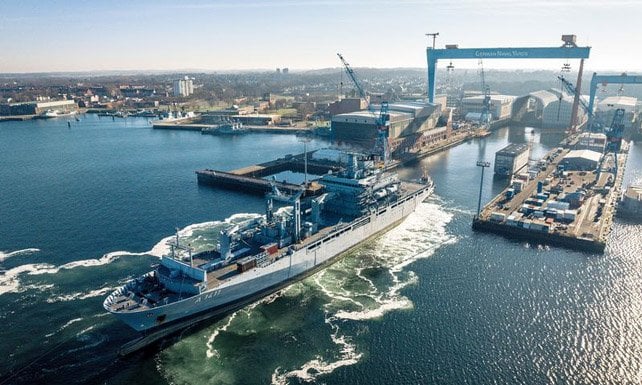
TKMS is reported in advanced negotiations to acquire German Naval Yards Kiel
A month after completing a spin-off to become an independent publicly traded company, Germany’s naval shipbuilder TKMS is reported to be pursuing the acquisition of German Naval Yard Kiel, both for expansion and consolidation in naval shipbuilding. The German news outlet Kieler Nachrichten reports that advanced negotiations are nearly complete for the acquisition from the French group CMN Naval to combine the two Kiel-based shipbuilders and expand TKMS’s product reach.
Management of German conglomerate Thyssenkrupp and TKMS had said the spin-off of the shipbuilder was designed to position it for growth. They suggested as an independent company, TKMS could further pursue consolidation in the industry.
Analysts point out that the combination of TKMS and German Naval Yards would be well-suited. TKMS builds submarines in Kiel, adjacent to German Naval Yard’s facilities, which focus on large and technically complex surface naval ships such as corvettes, frigates, and OPVs, as well as a repair and maintenance business and building luxury yachts.
German Naval Yards has been in operation since 1838 as Howaldtswerke and later Howaldtswerke – Deutsche Werft Aktiengesellschaft (HDW) after a 1967 consolidation in the industry. The company took its present form in 2005 as the group split into surface shipbuilding, separate from the submarine operations, which became TKMS. The German Shipyards Group was launched in 2009 and consolidated with the surface shipbuilding operations in 2011.
It continues to build frigates for the German Navy as well as maintenance operations. The company, in addition, the news report points out, has leased space and personnel to TKMS. It has also collaborated with NVL (Naval Vessels Lürssen) on projects.
TKMS has been actively seeking additional capacity. In 2022, it acquired the facilities in Wismar from the bankrupt MV Werften. It leased the building hall for the completion of the cruise ship, which became Disney Adventure, and since the cruise ship departed the yard earlier this year has the full operations in Wismar.
The move comes as Germany, along with other nations, is expected to dramatically increase spending to expand naval capacity. As a leader in submarines and vessels such as corvettes, TKMS is also competing for large international contracts, including from Canada and Poland.
The naval shipbuilding industry is consolidating ahead of the anticipated surge in orders. Earlier this year, the Lürssen Group agreed to sell NVL to German defense contractor Rheinmetall. Lürssen, like German Naval Group, builds and repairs surface vessels and separated its business a few years ago to put its yacht construction into a separate business. Lürssen plans to continue its yacht business after the sale of the naval shipbuilder.
Fincantieri to Expand Ancona Shipyard for Naval Shipbuilding
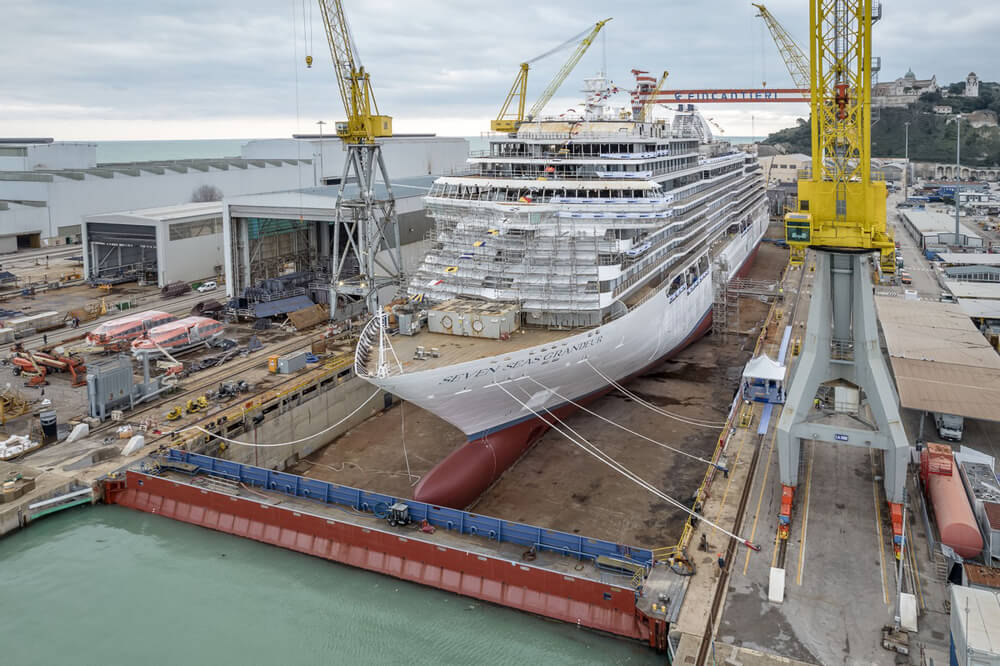
Ancona is currently used to build the smaller, luxury cruise ships (Fincantieri)
Fincantieri has completed the last of a series of agreements with the Central Adriatic Sea Port Authority for the expansion of the shipbuilding yard in Ancona, Italy. The Italian shipbuilder reports that the agreements confirm the joint commitment to enhancing the strategic role of the port and the shipyard, strengthening their contribution to the economic development of the region and the Italian naval sector.
One of the most historic sites within the group, shipbuilding at Ancona traces back to 1843. Today, as one of the smaller yards in the group, it specializes in cruise ships and luxury yachts. The yard is being used as the site for the construction of the luxury cruise ships for companies including Viking, which has built a dozen cruise ships and has 10 additional vessels on order, as well as for Regent Seven Seas, Silversea, and currently Four Seasons.
“The signing of the concession represents a fundamental step for the future of the Ancona shipyard and for the entire Italian naval industry,” said Pierroberto Folgiero, CEO and General Manager of Fincantieri. “With our development plan, we intend to transform the shipyard into a center of excellence, where tradition and technology come together to generate value for the region and the entire industrial chain.”
The concession gives Fincantieri the use of over 314,000 square meters of land, water, and facilities, which is a significant portion of the Port of Ancona. Fincantieri has rights to use the port and its facilities until the end of 2064, and according to the company will permit it to conduct and expand its shipbuilding activities.
Fincantieri has committed to investing €40 million for a major modernization and development of the capabilities for the Ancona shipyard. With the expansion of the yard, Fincantieri says it will make it increasingly competitive in the construction of large naval vessels. Ancona has not built naval vessels since the 1980s, but the company looks to expand its capabilities to realize the expected increase in naval shipbuilding as countries in Europe and elsewhere seek to increase their capacities. Fincantieri has been expanding its naval shipbuilding capabilities as it seeks to grow and diversify its business.
The new agreement is the latest in a series of steps that started in 2017 to enhance the Ancona shipyard. Two years ago, the Port System Authority of the Central Adriatic Sea agreed to a €40 million publicly funded investment into the port’s facilities. Half of the investment was for the construction of a new pier for the shipyard, and the other half was for the extension of the dry dock and securing the breakwater.