Sunday, November 23, 2025

LME to stop running benchmark platinum and palladium auctions
Credit: LME

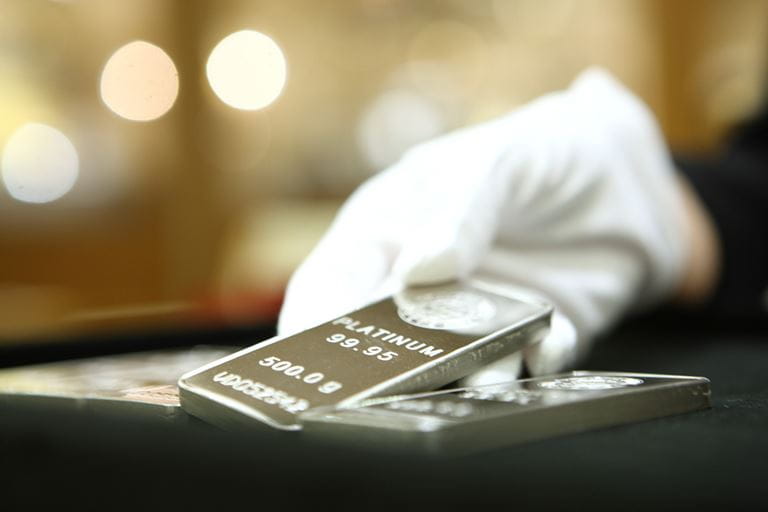
The London Metal Exchange will stop administering twice-daily auctions that set benchmark platinum and palladium prices from the middle of next year, as it focuses on its core base metals offering.

Results of the LBMA Platinum and Palladium Price auctions are used across the market and industry for settling contracts and transactions. The auction process itself also provides a window of increased liquidity that helps those trading in large volumes.

The LME began running the auctions in 2014, with the electronic procedure replacing a previous phone-based system. The overhaul — a similar revamp also took place in the gold and silver markets — came as scrutiny increased on how benchmarks are set.

The platinum and palladium auctions “no longer represent a core activity for us and, therefore, we believe it is in the best interests of the LME and the market to transition pricing to an alternative venue,” Jamie Turner, chief operating officer at the LME, said in a statement.

Details on a new administrator of the auctions will be announced in January, said Ruth Crowell, chief executive officer of the LBMA, which oversees London’s precious metals markets. Daily gold and silver auctions are currently run by ICE Benchmark Administration.

Six participants are currently able to directly take part in the platinum and palladium auctions, according to the LBMA’s website. They are BASF Metals Ltd., Goldman Sachs Group Inc., HSBC Holdings Plc, Johnson Matthey Plc, ICBC Standard Bank Plc and StoneX.

Last year, Goldman Sachs and HSBC units were among four companies that agreed to pay a combined $20 million to settle claims they manipulated prices in the platinum and palladium markets after a decade of litigation.

(By Jack Ryan)


China expands BHP iron ore ban to new product as talks drag

Credit: BHP

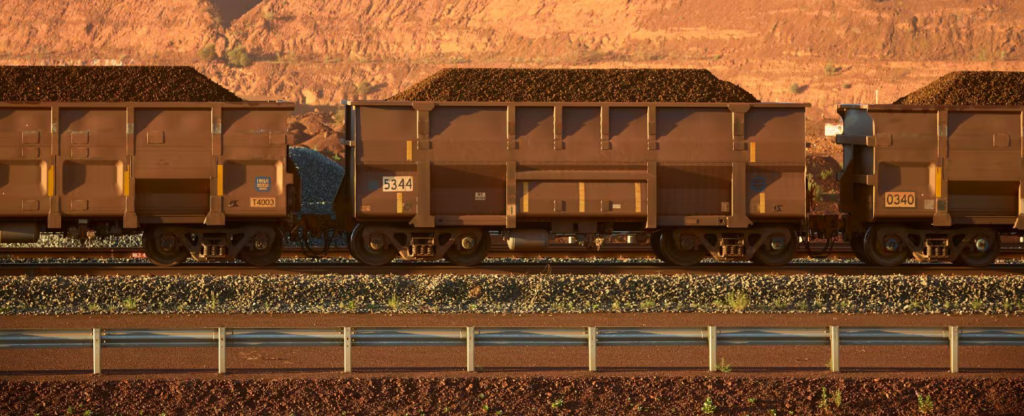
China’s state-owned iron ore buyer has ordered steel mills and traders to stop purchasing a certain type of BHP iron ore, sources said, adding to a separate ban already in place and escalating a dispute over a new contract.

China Mineral Resources Group (CMRG), set up in 2022 to centralize iron ore purchasing and win better terms from miners, asked Chinese steel mills and traders this week not to buy new cargoes of Jinbao fines, a type of low-grade iron ore from the world’s third-largest iron ore miner BHP, according to two sources familiar with the matter.

“CMRG told mills that they are not allowed to take delivery of Jinbao fines from ports in three days … so there might be a hustle and bustle at ports these few days,” said one of the sources.

Reuters could not determine how many iron ore traders and steel mills received the order from CMRG this week.

The ban is the second after CMRG asked Chinese steel mills and traders in September to stop buying BHP’s Jimblebar Blend Fines. The parties are locked in lengthy negotiations over an annual contract for 2026.

BHP said in response to questions about the Jinbao ban that it does not comment on commercial negotiations. Earlier in the day the miner said it was still negotiating with CMRG.

CMRG did not immediately respond to questions.

Small trade volumes

CMRG may have chosen to target Jinbao fines instead of other BHP cargoes because trade in the lower-grade iron ore is very small and the ban would not drastically disrupt the market, said both sources and an analyst, who all spoke on condition of anonymity given the sensitivity of the matter.

All three sources said the trade is so small they don’t regularly track volumes.

Tightening supplies of medium-grade iron ore like Pilbara Blend Fines at ports following the first ban have underpinned prices despite weakening demand for the key steelmaking ingredient.

Iron ore prices hit a more than two-week high on Wednesday even as crude steel output in the world’s largest producer of the metal slid to the lowest level since December 2023 as bad weather led some northern mills to cut production.

(Editing by Louise Heavens and Aidan Lewis)

Stand-off between China’s iron ore buyer and BHP tightens iron ore supplies


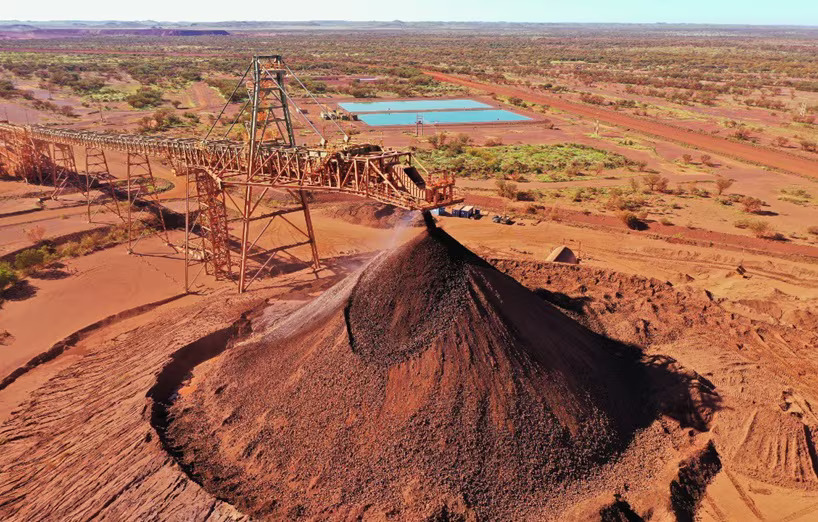
The Jimblebar iron ore mine is a part of an 85:15 joint venture between BHP and Mitsui and ITOCHU. Credit: BHP

Protracted negotiations between China’s state iron ore buyer and miner BHP have tightened availability of some iron ore, seven sources said, underpinning prices despite weakening demand for the key steelmaking ingredient.

China Mineral Resources Group (CMRG), set up in 2022 to centralize iron ore purchasing and win better terms from miners, asked Chinese steel mills and traders in September to stop buying BHP’s Jimblebar Blend Fines while negotiating annual contract terms with the Australian miner for 2026 supply.

Trade of Jimblebar fines is still frozen in China, leaving mills that previously used it switching to a substitute, Pilbara Blend Fines (PBF), rival Rio Tinto’s flagship product, resulting in a rapid drawdown in PBF inventory, the sources said.

A BHP spokesperson told Reuters “negotiations are ongoing”, declining to elaborate. CMRG did not immediately respond to a Reuters request for comment.

Rio Tinto had no immediate comment.

Portside inventories of PBF began falling in mid- to late September and were down by around 40% to 6.5 million tons on November 18, the lowest since August, according to two of the sources with knowledge of the matter.

By contrast, portside stocks of Jimblebar fines, which account for around a quarter of BHP’s production, continued to pile up, surging by 156% over the same period, one of the sources said.

All sources requested anonymity due to the sensitivity of the matter.

Thinning margins have propelled Chinese steel mills to favor medium-grade cargoes such as PBF, heating up competition and accelerating the drawdown in port inventories, sources said.

Profitability among Chinese steel mills has been falling since mid-August, with only around 39% of mills operating at a profit by November 13, versus 55% in the same period a month before and 58% at the same time in 2024, data from consultancy Mysteel showed.

Iron ore futures prices hit a more than two-week high on Wednesday even as crude steel output in the world’s largest producer of the metal slid to the lowest level since December 2023 as bad weather led some northern mills to cut production.

The tightened availability of PBF at Chinese ports contributed to surprising resilience in iron ore prices, said the two trade sources and the other two analysts, with one of them adding that the situation created a “man-made bull market”.

Ore prices have climbed 3% from a month before and 8.4% from the beginning of the year to close at 791.5 yuan ($111.23) per metric ton on Wednesday.

($1 = 7.1157 Chinese yuan)

(By Melanie Burton; Editing by Lewis Jackson and Lincoln Feast)


Northern Graphite halts Lac des Iles operations for repairs

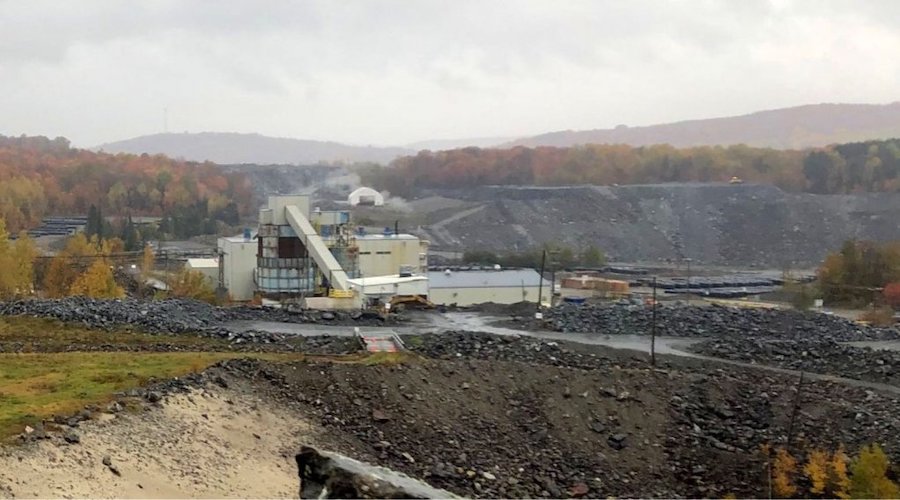
The Lac des Iles mine in Quebec (LDI) is the only graphite producer in North America.
 (Image courtesy of Northern Graphite.)

Northern Graphite (TSXV: NGC) says it has temporarily halted its Lac des Iles mine and mill to address an unexpected equipment issue, and to bring forward the planned maintenance and development work ahead of its pit expansion next year.

The decision follows a bearing failure at the mill, a long-lead-time component with a replacement window of approximately four to six weeks, the Canadian graphite developer said in a press release Thursday, adding that a replacement part has already been ordered.

While it completes the repair, the company will also advance other maintenance and repair projects at Lac des Iles that had originally been scheduled for January, designed to support the transition to mining from the new pit.

“Rather than stopping the plant now and again in January, we decided to start the maintenance program immediately in order to avoid having two separate shutdowns,” Northern Graphite’s chief executive Hugues Jacquemin said in a news release.

Located 150 km northwest of Montreal, Quebec, Lac des Iles is the only operating graphite mine in North America.

Expanding graphite mine

The Lac des Iles mine has been in operation for 35 years, serving primarily industrial clients in the US, from refractories for steelmaking to heat management in electronics and friction materials for the global automotive sector.

Currently, it produces around 15,000 tonnes of concentrates per year, but has the installed capacity to produce up to 25,000 tonnes annually. Pre-stripping activity is now underway as part of Phase 1 of an expansion program that could potentially add eight years to the mine life by opening a new pit.

The Canadian government is covering 75% of the expansion costs by providing around C$6.22 million in interest-free, repayable contribution. The funding, announced in late August, also allowed Northern Graphite to keep the mine in operation. Before that, the company had considered shutting it down by year-end without sufficient funding for the planned expansion.

The pit extension is based on the mine’s resource published in January 2024 which outlined 3.3 million indicated tonnes at an average grade of 6.4% graphitic carbon (Cg), containing around 213,000 tonnes of Cg, plus 1.4 million inferred tonnes averaging 7.4% Cg containing approximately 106,000 tonnes Cg.

Permit being finalized

First production from the expanded pit could come as soon as the second quarter of 2026, Northern Graphite said, noting that it is now in the final stages of permitting with the Quebec environmental ministry for the Phase 1 expansion.

The Phase 1 permit, if received, would allow the company to mine to 203 metres above sea level. It is currently authorized to mine to 209 metres in the current pit, which is approximately 10 metres above the water table.

However, Northern Graphite said in its press release that mining has already reached that depth, and a relatively small amount of material has inadvertently been mined and blasted slightly below 209 metres. As a result, mining operations have been temporarily halted until the company confirms there have been no adverse impacts and will request a minor amendment to its existing certificate of authorization to mine remaining ore in the current pit to 203 metres.

This could result in a production gap of approximately two to three months between existing operations and production from the expanded pit, it warned.

Shares of Northern Graphite fell by 9.3% to C$0.20 on the latest update, bringing its market capitalization down to C$28 million ($19.9 million).

Codelco signs partnership with Japan’s NTT DATA for AI and robotics

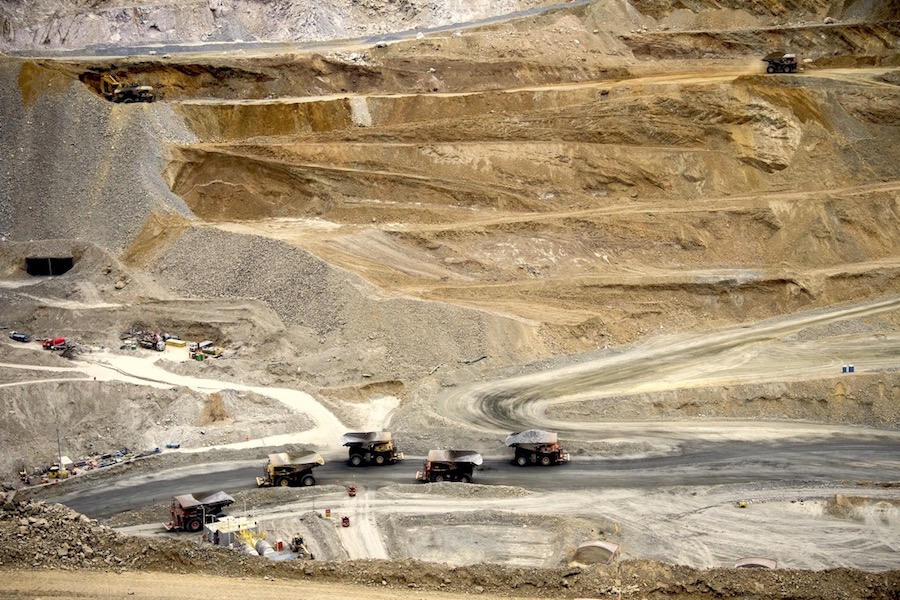
(Image courtesy of Codelco via Flickr)

Chile’s state-run Codelco, the world’s largest copper producer, and Japanese technology firm NTT DATA have signed a memorandum of understanding in Tokyo, Codelco said on Thursday.

The partnership will focus on using artificial intelligence, robotics and quantum computing to improve automation, safety, and sustainability at Codelco’s mines.

Codelco did not specify any investments tied to the partnership.

The partnership covers 5G/6G connectivity, photonic and satellite networks, generative AI, robotics, quantum computing, autonomous operations and clean technologies.

NTT DATA will provide an R&D framework encompassing generative AI, autonomous robot control, operational understanding through digital twins and process productivity improvement using quantum computing.

“Improving safety and productivity within the mining industry is essential. NTT DATA will help address these challenges,” said NTT DATA CEO Yutaka Sasaki in a statement.

The agreement includes governance structures with strategic committees and technical coordination teams to oversee projects.

(By Daina Beth Solomon; Editin by Aida Pelaez-Fernandez)

Australian mining giant BHP drops Anglo American takeover bid

Sydney (AFP) – Australian resources giant BHP said Monday it had dropped a bid to take over British rival Anglo American that would have created the world's largest miner of copper.


Issued on: 24/11/2025 - FRANCE24

MINING IS UNSUSTAINABLE

Copper demand has exploded in recent years, with the metal needed for solar panels, wind turbines, electric-vehicle batteries and consumer electronics © - / AFP/File

Bloomberg News reported on Sunday that BHP, the world's largest mining company, had approached Anglo with a bid in an attempt to disrupt a merger with Canadian peer Teck Resources.

But Anglo knocked back the offer.

"BHP Group confirms that it is no longer considering a combination of the two companies," the firm said in a statement on the Australian Securities Exchange website.

BHP "continues to believe that a combination with Anglo American would have had strong strategic merits and created significant value for all stakeholders," the firm said.


"BHP is confident in the highly compelling potential of its own organic growth strategy," it added.

Asked for comment, Anglo referred AFP to the statement from BHP.

The failed bid is BHP's second attempt in as many years to take over Anglo American.

Last year it walked away from a $49 billion offer to buy the firm after disagreements over "regulatory risk and cost" in South Africa, where BHP had sought to split off Anglo's platinum holdings in a politically sensitive move that stirred government opposition.

Copper demand has exploded in recent years, with the metal needed for solar panels, wind turbines, electric-vehicle batteries and consumer electronics.

It is also used in military hardware, including aircraft, and there is growing demand linked to the boom in artificial intelligence and data centres.

Prices of the industrial metal soared to record highs last month.

The new combined group between Anglo and Teck would be worth more than $50 billion according to the companies' current market values.

An agreed deal is expected to complete in 12-18 months, subject to regulatory hurdles, said a joint statement.

Shareholders of Anglo American -- the bigger of the two firms with revenue of more than $27 billion in 2024 -- will own 62.4 percent of the new group and Teck shareholders the remainder.

Teck has said the new group will be "a top five global copper producer".

In August, US group Peabody Energy walked away from a $3.8-billion deal to buy Anglo American's steelmaking coal business.

© 2025 AFP

Anglo, Teck pushed by Canada to give head-office job guarantees


Downtown Vancouver, British Columbia. Stock image.

Canada is putting pressure on Anglo American Plc to make stronger commitments to executive and management jobs at its proposed Vancouver headquarters as a condition of taking over Teck Resources Ltd., according to people familiar with the matter.

Industry Minister Melanie Joly is reviewing the tie-up between the two mining companies and has the power to block it. Anglo has promised to relocate its global headquarters from London to the largest city on Canada’s west coast, an unusual move meant to boost the chances of winning government approval in Ottawa.

But Joly’s office wants guarantees it would be more than just a paper move. The minister is arguing the Vancouver office should be the home of a significant number of executives and employees — and that Anglo should go further than what was outlined in its initial deal proposal, according to people with knowledge of matter, speaking on condition they not be identified.

The government isn’t asking Anglo to change its legal domicile to Canada from the UK, the people said.

The government also wants to ensure the new entity, to be called Anglo Teck, would support the critical minerals strategy of Canada and the Group of Seven, the people said. The G-7 recently announced a production alliance to counter what they describe as China’s manipulation of the market.

Teck’s smelter in British Columbia produces refined zinc and lead, which can be used in military hardware, and Joly wants to ensure the merged company fits into Canada’s efforts to build up a larger defense industrial sector.

Government officials have also discussed options for stockpiling strategic commodities produced by Teck such as copper, the people said. The talks between the companies and the government are still active and it’s unclear whether that would end up in the final agreement. Joly’s office declined to comment, referring Bloomberg News back to her previous statements.

A spokesperson for Anglo American referred to the company’s previous statements in which it said it will maintain at least current levels of employment. A “significant majority” of the executive team — including the chief executive officer, the deputy CEO and the chief financial officer — will be based in Canada, the company said. Anglo Teck also promised to invest at least C$4.5 billion ($3.2 billion) in projects over five years, including the extension of a major copper mine.

Shareholders of both companies are set to vote on the transaction on Dec. 9.

Speaking to reporters this week, Joly declined to get into specifics about what she’s looking for from Anglo and Teck. But she said the government wants to see greater economic benefits for Canada in order to approve the deal.

“We’re having many conversations with both companies,” she said, adding that she has a broader goal of ensuring Canada has more “national champions” and homegrown companies that become major players.

“That’s what I want to do with our new industrial policy, that’s what I want to do also through our new defense industrial strategy, and that’s certainly something I have in mind when looking at Anglo Teck,” she said.

Previous Canadian governments have been criticized for approving foreign takeovers of major resource and manufacturing companies without securing solid guarantees over employment, executive jobs and production.

In 2009, Canada sued United States Steel Corp. for breaking pledges to keep jobs and production after it took over steelmaker Stelco Inc. That experience may have factored into the government’s decision the following year to block BHP Group’s attempt to buy Potash Corp. of Saskatchewan.

In 2019, Barrick Mining Corp. merged with Randgold Resources Ltd. and still technically maintains its headquarters in Toronto’s financial district, but that office is much smaller than it used to be.

Prime Minister Mark Carney’s government has unveiled a series of measures to shore up access to critical minerals, including pledges to fund domestic projects and secure supply of key metals. Energy Minister Tim Hodgson said this month Canada has begun stockpiling scandium and graphite after reaching deals with domestic miners.

Anglo has said it expects secondary stock listings for the new entity in Toronto and New York, but it’s not looking to move its primary listing from London.

(By Jacob Lorinc and Brian Platt)


China starts $1.4 billion revamp of Mao-era African railway


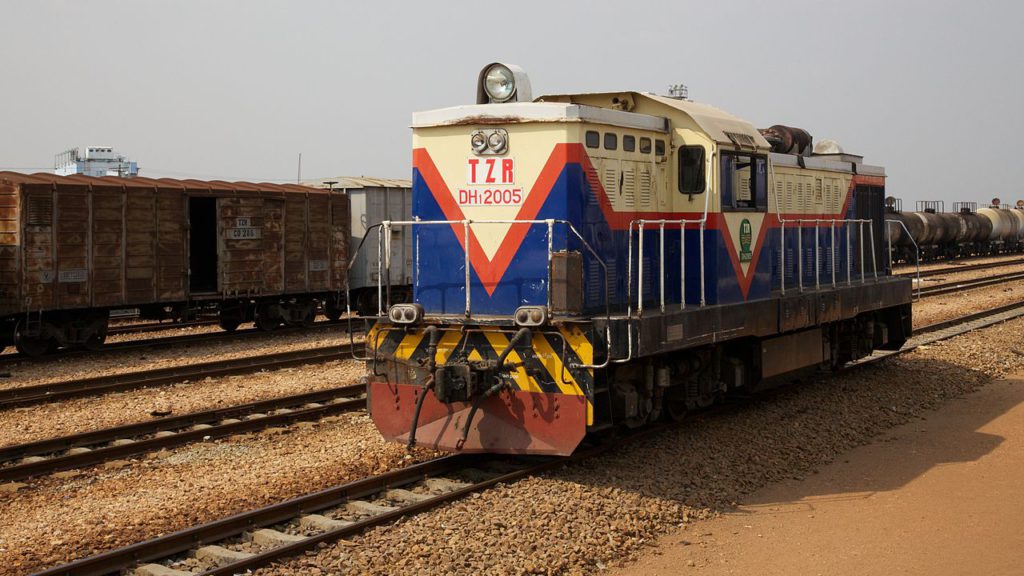
Tazara Railway. David Brossard, Wikimedia Commons, under licence CC BY-SA 2.0.

Zambia initiated a $1.4 billion overhaul of a key railway linking the southern African nation’s copper region to a port on the Indian Ocean, in a ceremony that marked the first visit by a Chinese premier to the country in almost three decades.

The launch of the upgrade by Zambian President Hakainde Hichilema was attended by Chinese Premier Li Qiang and Tanzanian Vice President Emmanuel Nchimbi. It follows a September agreement by the three nations to revamp a route originally financed and built with Beijing’s assistance under Mao Zedong in the 1970s.

“The Tazara railway is a signature project of China-Africa corporation,” Li said in a speech in Lusaka, the capital, on Thursday. “China is ready to work with Zambia and Tanzania to let this railway carry hope, brim with new vigor in the new era and provide more momentum for the development of Tanzania, Zambia and Africa as a whole.”

The 1,860-kilometer (1,156-mile) Tanzania-Zambia railway has fallen into disrepair, operating at only a fraction of its original capacity. Once completed, the upgrade will ease severe congestion at regional border crossings, where most cargo currently moves by road, as Zambia and neighboring Democratic Republic of Congo ramp up copper production.

The line will compete with another — the Lobito Corridor — backed by the US and the European Union, which links the same copper-producing region of Zambia to an Atlantic port on Africa’s west coast.

(By Taonga Mitimingi)


A2MP secures $300 million from Afreximbank for African minerals

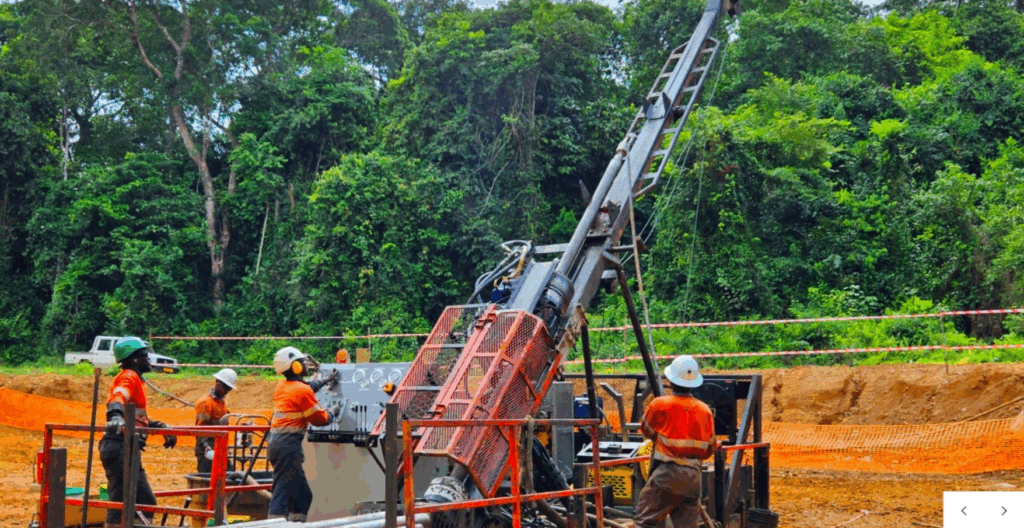
Minkebe and Mboumi project in Gabon. Credit: A2MP

A2MP, a minerals processing company controlled by the family of Indian businessman Gagan Gupta, has secured $300 million of funding from a subsidiary of the African Export-Import Bank.

The Dubai-headquartered firm will use the mix of debt and equity from Afreximbank’s Fund for Export Development in Africa to support existing projects and target acquisitions, according to A2MP’s global strategy adviser, Adjou Ait Ben Idir. A2MP has mining interests from Gabon and Cameroon to Mozambique, while owning almost 50% of FG Gold, which is building the Baomahun gold mine in Sierra Leone.

“The idea is to cover the whole value chain from exploration to exploitation to processing to trading,” Ben Idir said in an interview. A2MP’s focus is “pan-African and multi-mineral,” she said.

A2MP’s portfolio includes companies with manganese mines and an iron ore project in Gabon, as well as a bauxite venture in Cameroon. One company is already building a ferroalloy smelter in Gabon, Ben Idir said, while another is studying constructing a refinery in Cameroon that would transform bauxite into alumina, the feedstock used to make aluminum.

The leaders of African nations including Democratic Republic of Congo, Guinea and Zimbabwe are pressing investors to build more processing facilities on the continent. Gabon plans to ban the export of raw manganese from 2029.

“We’d love to do it,” Ben Idir said, commenting on mineral-processing projects in Gabon. “If it’s not us, then it’ll be someone else.”

Gupta is the founder and chief executive officer of Arise Integrated and Industrial Platforms, an operator of industrial parks that’s active in more than a dozen African countries. The former Olam Group Ltd. executive’s family office controls A2MP, but is separately backing the construction of a gold mine in Mali and copper exploration in Zambia.

(By William Clowes)


Barrick and Mali agree in principle to resolve dispute over gold mine


Mali’s government has put the Loulo-Gounkoto gold complex under state control. (Image: Barrick.)

Barrick Mining and Mali’s government have reached a verbal agreement in principle to resolve their dispute over the Loulo-Gounkoto gold mining complex, two sources familiar with the situation told Reuters on Friday.

No agreement has yet been signed, the sources said.

A spokesperson for Barrick Mining did not immediately respond to a request for comment. A spokesperson for Mali’s mines ministry said negotiations were progressing well but did not provide further details.

The two sides have been in a dispute since 2023 over the implementation of a new Mali mining code that raises taxes and gives the government a greater share of gold mines.

They met for talks on Friday, a week after Barrick’s interim CEO Mark Hill wrote a letter to Mali’s administration asking to restart negotiations, one of the sources said.

The talks included a renewal of Barrick’s mine license, which expires in February 2026, for an additional 10 years. They also discussed the release of four Barrick employees arrested in Mali, the return of 3 metric tons of gold that were seized by Mali officials, and the dropping of arbitration proceedings initiated by Barrick against Mali, the source said.

Barrick suspended operations at the massive Loulo-Gounkoto complex in January. A Malian court in June appointed a provisional administrator to restart operations, although blasting did not begin until October.

(By Divya Rajagopal, Portia Crowe and Pranav Mathur; Editing by Edmund Klamann)


Britain unveils critical minerals strategy to cut reliance on foreign supply

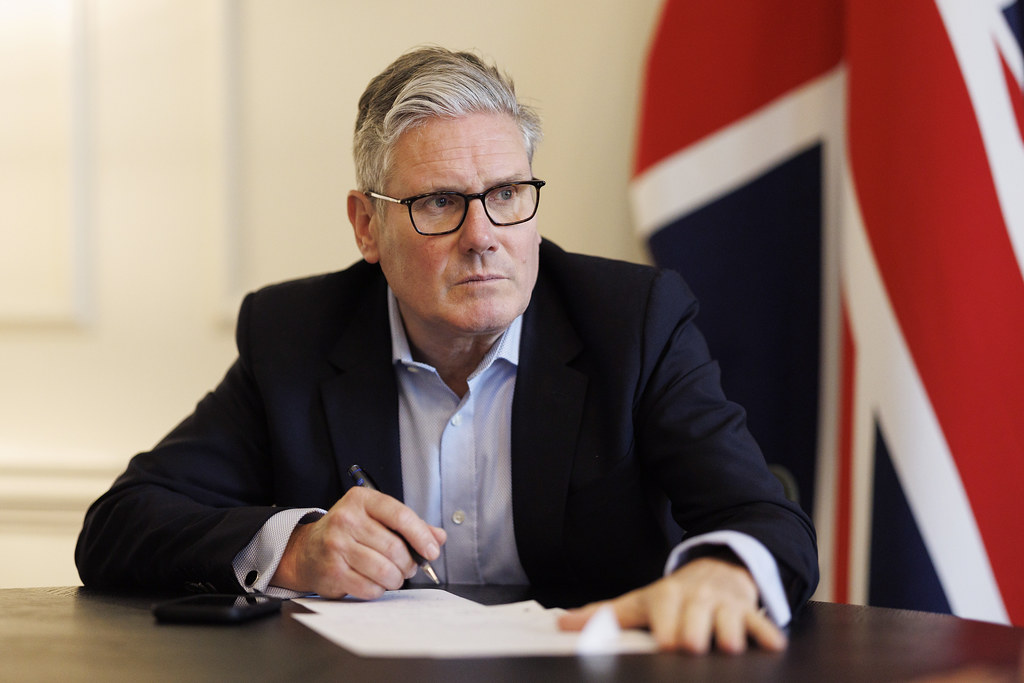
British Prime Minister Keir Starmer. Credit: Number 10 | Flickr, under Creative Commons licence CC BY-NC-ND 4.0.

Britain on Saturday rolled out a critical minerals strategy designed to reduce dependence on foreign suppliers by 2035, with targets to source 10% of domestic demand from UK production and 20% from recycling, the government said, as global competition for these essential resources intensifies.

Backed by up to 50 million pounds in new funding, the strategy seeks to ensure no more than 60% of the UK’s supply of any one critical mineral comes from a single country by 2035, according to a statement.

British Prime Minister Keir Starmer said in the statement critical minerals “are the backbone of modern life and our national security,” arguing that boosting domestic production and recycling would help shield the economy and support efforts to lower living costs.

The government said the UK currently produces 6% of its critical mineral needs domestically. Under the plan, it wants to expand domestic extraction and processing, with a particular focus on lithium, nickel, tungsten and rare earths. It aims to produce at least 50,000 tonnes of lithium in the UK by 2035.

Britain faces an urgent need for a secure, long-term supply of critical minerals, including copper, lithium and nickel, which are essential for smartphones and electric vehicles and increasingly crucial for building data centers that power artificial intelligence.

British demand for essential materials is climbing sharply, with copper consumption projected to nearly double and lithium demand expected to surge by 1,100% by 2035, Britain’s government said.

The strategy underscores China’s grip on critical mineral supplies, leaving the sector exposed to price swings, geopolitical strains and sudden disruptions. Britain noted China accounts for about 70% of rare earth mining and 90% of refining, a dominance that puts countries such as the UK at risk.

Earlier this year, Britain struck a minerals cooperation deal with Saudi Arabia aimed at bolstering supply chains, opening doors for British firms, and drawing fresh investment into the UK.

(By Mrinmay Dey; Editing by Chris Reese)

Column: Aluminum scrap is the new battle front in critical minerals war

Reuters | November 22, 2025 |
 

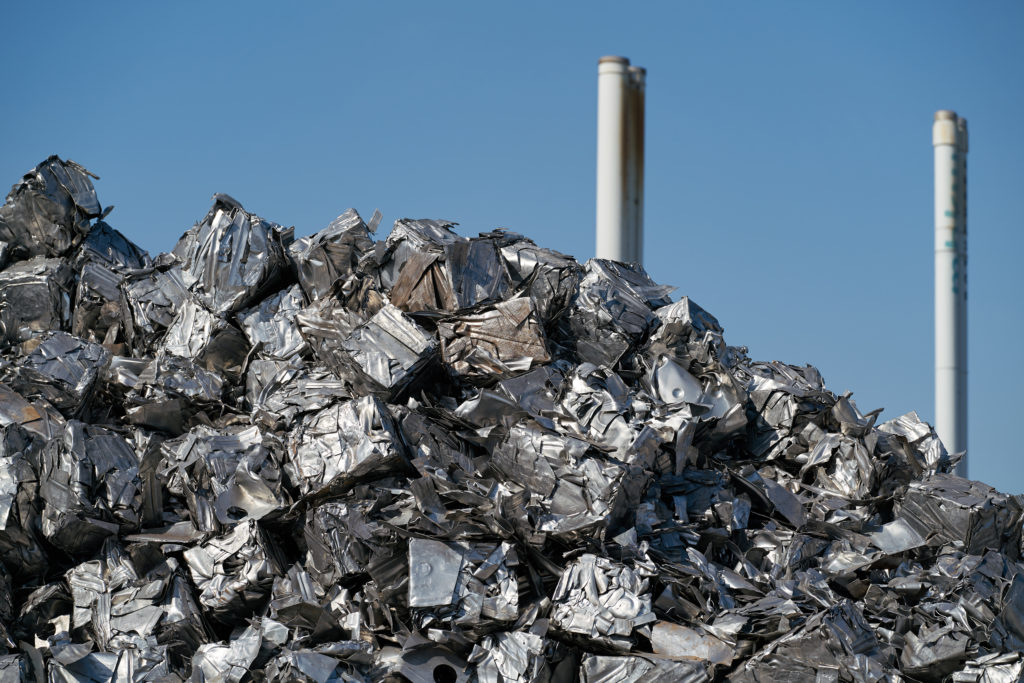
Cubes of pressed scrap at a scrap yard in the harbor in Magdeburg in Germany. Stock image.

The global competition for critical minerals has reached the least glamorous part of the metallic supply chain.


Aluminum scrap may not be most people’s idea of “a strategic commodity” but that’s exactly what it is, according to EU trade chief Maros Sefcovic. And too much of it, over a million metric tons a year, is leaking out of the bloc in the form of exports.

The European Commission is preparing what Sefcovic described as “a balanced measure” to ensure more recyclable material stays in Europe.

Industry association European Aluminium points the finger at the United States, arguing that the country’s import tariffs have created a price differential that is pulling more European scrap to the US market.

US industry group The Aluminum Association is equally concerned about scrap leakage but it blames China and is calling for “smart, targeted export controls.”

The global battle for scrap has begun.
A strategic commodity

Scrap metal has strategic value to European policy-makers because it sits at the heart of the bloc’s industrial policy, the nexus where circularity, decarbonization and strategic autonomy align.

Europe has set a target for recycling to meet 25% of the region’s critical minerals demand by 2030.

Aluminum is already there. The metal is infinitely recyclable and remelting it requires only five percent of the energy needed to make virgin metal, which means a much lower carbon footprint.

Scrap’s importance as a feedstock for European manufacturers has steadily increased over recent years as many of the region’s aluminum smelters have succumbed to high energy prices. The region’s annual primary aluminum production has fallen by a quarter since 2011.

The worry is that European recycling capacity is now also at risk, with European Aluminium estimating around 15% of the bloc’s recycling furnace capacity is idle for want of feed.

Aluminum scrap is exempt from US import tariffs on primary metal and semi-manufactured products, doubled to 50% by US President Donald Trump in June. But the resulting arbitrage window is accelerating Europe’s scrap leakage, the association warns.

US import figures through July show increased shipments from Germany and Spain in particular but from a very low base. The biggest suppliers of scrap to the US remain Mexico and Canada, accounting for 53% and 32% of total imports respectively.

However, there is no denying the broader trend. Consultancy Project Blue calculates that European exports of aluminum scrap to non-EU countries rose at a compound average growth rate of 8.9% between 2018 and 2024.
A graded question

Of course, it all depends on what sort of scrap we’re talking about.

Both Europe and the United States have long exported low-grade, end-of-life scrap due to declining domestic dismantling and recycling capacity.

China and India, both hungry for raw materials, have been the biggest buyers, although China’s crackdown on low-grade imports in 2020 created a transshipment loop through countries such as Malaysia and Thailand, where scrap is upgraded before onward dispatch to Chinese recyclers.

The European Commission’s promise that there won’t be a blanket export ban is tacit acknowledgement that Europe currently can’t process all the grades of aluminum scrap it generates.

Types of scrap such as “Zorba” and “Twitch” sound exotic but denote less than glitzy bales of shredded, mixed-up material, most often from end-of-life vehicles. They are difficult and expensive to process, hence the growing trade with countries willing to recycle them.


High-purity types of scrap such as used beverage cans are an altogether different matter, which is why the Aluminum Association is calling for an immediate ban on exports of such material outside of North America.

Although the Europeans are worried about rising US imports, the reality is that the United States runs a consistent trade deficit with the rest of the world in aluminum scrap to the tune of a million tons last year.

India was the single largest destination for US aluminum scrap shipments, followed by Thailand and Malaysia, the two largest suppliers to China.
China pivots to scrap

China is the West’s primary competitor in the global race for critical minerals and so it is also when it comes to aluminum scrap.

China’s imports of recyclable aluminum have been rising at a fast clip since the ill-considered ban on “foreign garbage” in 2020, quickly reversed under pressure from China’s recycling industry.

Chinese demand for aluminum scrap is set to grow even more in the coming years. The country’s huge primary smelter sector is now operating close to Beijing’s mandated capacity cap, meaning more demand must be met from recycling.

There is an official target of lifting aluminum recycling capacity to 15 million tons per year in 2027, creating a huge potential draw on recyclable material from the rest of the world.

The danger for both Europeans and Americans is that China is gearing up to dominate the secondary aluminum sector just as it has already done the primary.
Where there’s muck, there’s brass (and aluminum)

The drift towards scrap protectionism is testament to how important the dirty world of metals recycling has become to Western supply chains.

With China so dominant in the primary processing of critical metals, including aluminum, recycling is one of the West’s easiest routes to reduce import dependency.

It seems somewhat inevitable then that there will be some sort of export restrictions on some types of aluminum scrap on both sides of the Atlantic.

But, as the Aluminum Association concedes, part of the West’s solution is also to get the general public to recognize the importance of scrap.

It’s still a fact that the United States has one of the lowest aluminum beverage can recycling rates at just 43% in 2023, compared with a global rate of 75%. That’s a lot of high-quality mill-ready metal that is being thrown away.

Trade measures look inevitable but the answer to scrap availability also lies closer to home.

(The opinions expressed here are those of the author, Andy Home, a columnist for Reuters.)

(Editing by Philippa Fletcher)

Inalum targets 2029 to commission new aluminum plant

Aluminum smelter. Stock Image.

State aluminum company PT Indonesia Asahan Aluminium (Inalum) will aim for 2029 to commission the new aluminum plant it plans to build in West Kalimantan, its chief executive said on Thursday.

The company plans to build a smelter capable of producing 600,000 metric tons of aluminum a year with an estimated investment of nearly $2.5 billion, chief executive Melati Sarnita told members of parliament.

The new plant will add to the company’s current production capacity of around 275,000 tons.

The additional capacity is designed to reduce Indonesia’s dependence on imports, she said, noting that the country currently sources around 54% of its aluminum from abroad.

“Looking ahead, we believe that we can increase our capacity to reduce reliance on imports and strengthen the national aluminum supply chain,” she told parliamentarians.

The company is in talks with potential strategic partners for the aluminum plant, including sovereign wealth fund Danantara and other global companies, Melati said.

A Chinese company providing the smelting technology is also expected to take a stake of around 5% to 10% in the project, she said. She did not give the name of the company.

The project will require 1.2 gigawatts of power capacity, and is planning to purchase the electricity from the state utility firm or other suppliers.

The company is also expanding the capacity of its refinery to double its output of smelter-grade alumina, the raw material for aluminum, raising production to 2 million tons by 2028 from 1 million tons now.

(By Fransiska Nangoy; Editing by David Stanway)