Thursday, November 27, 2025

Frankenstein at the border: Pakistan, the Taliban, and the wounds of a region
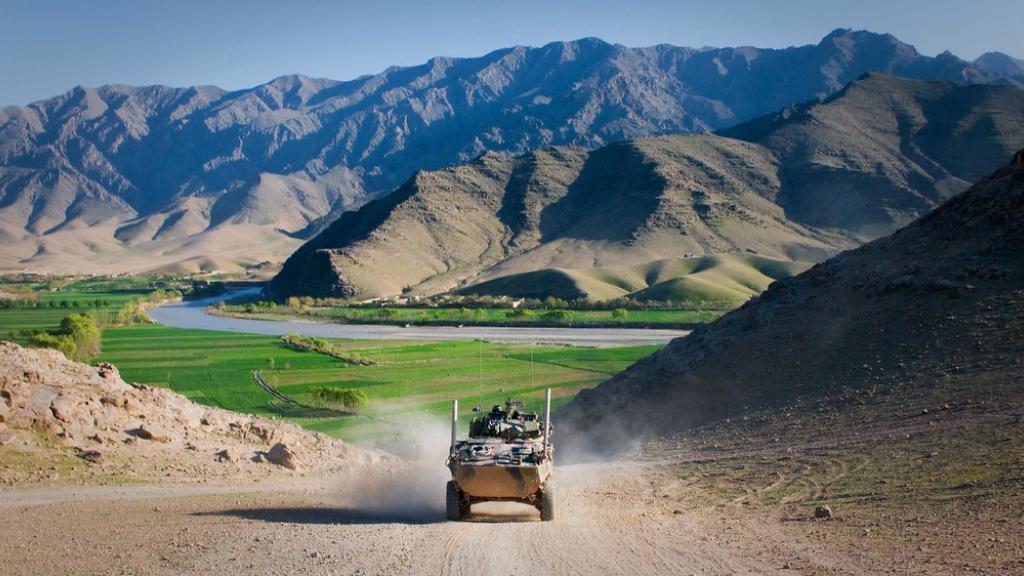
Tank on Pakistan border

First published at Alternative Viewpoint.

As border clashes between Pakistan and Afghanistan erupt once more, the fault lines of South Asia’s post–9/11 order have been starkly exposed. What initially resembled a relationship of patronage — Islamabad’s enduring quest for “strategic depth” through its Taliban protégés — has devolved into overt hostility. Pakistan’s economic decline, the diminishing legitimacy of its military, and the Taliban’s newfound diplomatic assertiveness have created a precarious situation that threatens to reshape regional dynamics.

In this extensive conversation, Farooq Sulehria — writer, scholar, and long-time observer of South Asian politics — engages with Alternative Viewpoint regarding the crisis along the Afghanistan-Pakistan border, the misconceptions within Pakistan’s military establishment, and the shifting global and regional power landscape.

Sulehria outlines the historical trajectory from the CIA-sponsored “Afghan Jihad” of the 1980s to the current standoff between a weakened Pakistani state and the empowered Taliban regime in Kabul. He contends that Pakistan’s longstanding strategy of nurturing militant proxies has ultimately backfired, resulting in a “Frankenstein’s monster” that is now aligning with India and challenging its former patron.

The conversation covers a range of topics, from the domestic repercussions of Pakistan’s militarism to the evolving geopolitics of the U.S.–China rivalry, India’s growing role in Afghanistan, and the dire situation of Afghan refugees caught amid failing states. Sulehria asserts that the only viable alternative lies in fostering socialist, secular, and internationalist solidarity across South Asia — transcending militarised borders and imperial configurations.

You describe the Taliban as Pakistan’s “Frankenstein’s monster.” Could you please explain what you mean by this metaphor in today’s context — especially after the recent border clashes?

Since the 1980s, the Pakistani state has nurtured and supported armed fundamentalist groups. This initial collaboration involved the USA, Saudi Arabia, and others within the framework of the so-called Afghan Jihad. However, even after the Soviet troops withdrew in 1988-89 and the left-wing government in Kabul fell in 1993, the policy of backing fundamentalist militias continued. The focus shifted away from Afghanistan and toward Indian-administered Jammu-Kashmir. The establishment deployed these groups against civilian governments. 

After 9/11, some factions became dissatisfied with Islamabad’s apparent alignment with Washington against the Taliban in Kabul. Consequently, Pakistan experienced a wave of terrorism for the next fifteen years. Simultaneously, the Afghan Taliban received safe havens in Pakistan for two decades. 

Pakistan has functioned as a client state, consistently reliant on US support. Such an approach has proven to be a risky strategy. Islamabad prioritized US patronage to bolster the Taliban, aiming to restore their control over Kabul and transform Afghanistan into a “strategic backyard,” devoid of Indian influence. Ironically, the Taliban, nurtured and armed at great cost to the state and society, have now aligned with Pakistan’s primary rival, India. This is where the Frankenstein’s monster analogy comes into play.

Are we witnessing a genuine breakdown between Pakistan and the Taliban regime, or just a renegotiation within a long, uneasy alliance?

It’s difficult to determine whether we are witnessing a true breakdown between Pakistan and the Taliban regime or merely a renegotiation within their longstanding, uneasy alliance. Both parties lack principles, and opportunism defines the behavior of both the Taliban and the Pakistani elite. This opportunistic behavior is not unique to them; ruling elites worldwide often act in similar ways. However, I believe the current breakdown is genuine. Amir Khan Mutaqi’s trip to New Delhi represents a significant crossing of what Islamabad considers a diplomatic redline.

How do Pakistan’s current internal crises — economic collapse, IMF dependence, and political disarray — shape its new aggressiveness toward Afghanistan?

In fact, aggressiveness towards Afghanistan shows newfound confidence. Since the “winning of war” against India used to legitimise the hybrid regime, Donald Trump’s nonstop pat on the back and silencing of all sorts of opposition and dissent, the ruling elite has become drunk with power. However, Islamabad continues to face challenges from militancy in Balochistan and the Pakistani Taliban, also known as Tehrik-e-Taliban Pakistan (TTP). The TTP attacks from their safe havens in Afghanistan are annoying the establishment. Perhaps there is an illusion in Islamabad that they can coerce Kabul into submission. In short, I do not see the aggression against Kabul as an expression of crisis. Quite the opposite is true.

To what extent are the recent military actions an attempt by Pakistan’s army to reassert legitimacy at home?

There exists a prevalent Afghanphobia, propagated through various means of media and propaganda. This sentiment has been developing since the events of 9/11. In addition to India, Afghanistan has emerged as the new ‘other’ for Pakistan. As a result, there is either support for military actions against Afghanistan or widespread indifference among significant segments of society.

In an earlier article, you had mentioned that “ running with the hare and hunting with the hound” has been Pakistan’s state policy for decades. Why has this duplicity persisted across regimes — both civilian and military?

In the realm of international politics involving India, Afghanistan, and major powers such as China and the USA, military influence predominates. The so-called civilian leaders have very little authority in these matters.

You note that the Taliban have adopted patriotic rather than religious rhetoric in their recent clashes with Pakistan. Does this mark a shift in their ideological project, or is it purely tactical?

It is akin to the situation in Iran, where the Ayatollahs blended their interpretation of fundamentalism with a form of nationalism during the war against Iraq. The Taliban remain steadfast in their fundamentalist ideology; without it, they would cease to be the Taliban. Nonetheless, they strategically incorporate elements of jingoistic-nationalistic rhetoric.

How do ordinary Afghans perceive Pakistan today, and does this popular sentiment limit Islamabad’s leverage over Kabul?

Long before the current stand-off, Pakistan had already lost any sympathy among the Afghan population. Many Afghans hold them accountable, largely justifiably, for the numerous miseries they have endured.

What role does internal factionalism within the Taliban — particularly the Haqqani vs. Kandahar groups — play in this escalating tension?

There are numerous rumours circulating, yet no concrete information is available. It is difficult to make definitive statements. However, those who are monitoring the situation in Afghanistan, including Afghan citizens and the diaspora, continue to emphasise internal differences, as do various commentators in the media.

You hint at the US–China rivalry shaping the regional situation. How plausible is the idea that Washington sanctioned Pakistan’s attacks on Afghan territory, possibly to reclaim influence through Bagram or challenge China?

Once again, the matter is largely speculation, and no documented evidence supports these claims. Donald Trump’s comments provide context regarding the attack on Kabul, as he stated that the USA aimed to regain control of Bagram Airbase in Afghanistan to encircle China. However, it is crucial to note that Pakistan cannot afford to irritate China either.

On the other hand, Pakistan’s economy is deeply dependent on Beijing. How is the Pakistani ruling class managing this contradiction between U.S. appeasement and Chinese dependency?

They have been managing this relationship since the 1960s. The issue is not merely how they will appease both Beijing and Washington; rather, it is that Islamabad has two patrons, and this dual patronage poses a threat to democracy in Pakistan. Notably, the two patrons often have overlapping interests that Pakistan attempts to satisfy simultaneously.

Does this triangular tension (Pakistan–US–China) suggest a broader crisis in the “post-war on terror” regional order?

Yes, it is a complicating factor. However, this triangular relationship is merely one aspect of the broader situation. India is another significant element. Anwar ul Haq, a former caretaker prime minister, once candidly remarked, ‘Pakistan is China’s Israel.’ Such a Freudian slip is rather unusual in Pakistan. Nevertheless, an India-China rapprochement may be crucial for keeping the USA at bay in this region. Currently, especially with the BJP’s ideological grip on India, such a rapprochement seems increasingly like a mirage.

Afghanistan’s foreign minister’s visit to New Delhi, as you note, embarrassed Islamabad. How should we read this growing India–Afghanistan proximity?

I believe that any government in Kabul will strive to maintain strong relations with New Delhi. The Taliban regime may seek to reconcile with Islamabad in the near future; however, they are unlikely to sacrifice their newly formed friendship with India. They may be ruthless, but they are not foolish. They will refrain from placing all their trust in Pakistan.

Is New Delhi seeking to fill the vacuum left by the U.S. withdrawal — or is it more about projecting regional hegemony under the Modi government’s nationalist agenda?

I am not well-placed to analyse this issue for an Indian audience. Nevertheless, I do not believe that India can effectively fill the gap left by the United States.

How do you view Indian media and policy narratives around Pakistan’s “instability”? Do they serve a strategic function domestically, beyond foreign policy?

In the past, Indian media, particularly during the dominance of print, commanded significant respect in Pakistan and beyond. However, in the present, Indian media, except for a few alternative outlets, often lacks credibility. I also follow a few bloggers, such as Shekhar Gupta from The Print and Praveen Swami, to gauge what the Indian establishment is thinking. Ravish Kumar is a notable exception, though he tends to focus on domestic politics. Overall, even on platforms like YouTube, there is a noticeable lack of quality journalism, particularly regarding Pakistan.

Pakistan’s deportation of nearly a million Afghan refugees has shocked many observers. What does this reveal about the militarised and xenophobic direction of Pakistan’s state?

In addition to reflecting xenophobia, it also highlights opportunism. During the 1980s, media outlets celebrated Afghan refugees, portraying them as ‘Muslim brothers’ resisting ‘infidel Soviets’. The narrative framed the Afghan Jihad as, in reality, a Pakistan Jihad aimed at thwarting Soviet aspirations to access the warm waters of the Arabian Sea. I believe their expulsion was also manipulated as a means to exert pressure on the Taliban. However, it is worth noting that the Taliban treat Afghans in a manner reminiscent of how Pakistan treated Afghan refugees. This situation should also be viewed as part of a broader global trend in the era of Trumpism. When so-called liberal democracies violate refugee and human rights, they normalise poor practices. Iran, too, has expelled Afghan refugees with comparable brutality. Ironically, both Pakistan and Iran profess to champion the rights of the Ummah.

How is this militarism affecting the working class, both in Pakistan and Afghanistan? Is there any visible resistance, solidarity, or dissent emerging from below?

In Afghanistan, perhaps nobody wants any more trouble. They are already enduring a life-threatening situation. Likewise, the civil society has been utterly destroyed. In Pakistan, the left and certain progressive nationalists in Balochistan and Khyber Pakhtunkhwa (formerly NWFP) have opposed this escalation. But they are marginalised.

You end a recent article by saying, “ Frankensteins cannot live in peace when terror-monsters rule the roost.” Is there any political force—inside or outside these states — capable of breaking this vicious cycle?

Presently, the situation is very pessimistic. However, the source of hope always struggles. We in the Af-Pak region have no other option but to organise ourselves against all these forces of darkness on both sides of the border. We need international solidarity on the level of South Asia, in particular.

What would a progressive, anti-imperialist regional framework look like today — one that can counter both Taliban reaction and militarist nationalism in Pakistan and India?

I think it has to be unapologetically socialist, secular, internationalist, and anti-imperial. It is important to highlight that sections of the left in India-Pakistan have huge illusions about China. The left needs to understand that China represents a new form of imperialism. Furthermore, the so-called multipolarity is being projected as an opportunity. It is an opportunity for the ruling classes, not the working classes.

Unfortunately, a section of the left in Pakistan is even giving up on secularism, let alone internationalism and an anti-imperialism anchored in Marxist principles rather than campism. As Marxists, what we privilege over everything else is the interest of the working class.

Finally, what can the Indian left learn from Pakistan’s experience with “strategic depth” and its disastrous consequences?

I think the primary lesson is: do not support imperial-style elite adventures outside of the country. The working classes and subaltern sections bear the consequences.


An Unexpected Con To End Free Speech


How Trump Uses Jews

by  and  | Nov 27, 2025 

Rooting out terrorism and antisemitism was the supposed reason that plainclothed ICE agents arrested doctoral student Rümeysa Öztürk on a street in Somerville, Massachusetts, after she coauthored an op-ed calling on Tufts University to divest from companies with ties to Israel due to the killing and starvation of Palestinian civilians. There is an international movement to boycott, sanction, and divest from Israel, but in the United States, President Donald Trump is imperiling the freedom even to publicly discuss such ideas, which should, in effect, be considered a test case for his larger attack on free speech. So far, the test is going well for Trump.

In what seems a long time ago, in 2024, the Heritage Foundation, a right-wing think tank, released a blueprint for what it called “a national strategy to combat antisemitism” by addressing what it described as “America’s virulently anti-Israel, anti-Zionist, and anti-American ‘pro-Palestinian movement.’” In essence, and in what’s amounted to an extraordinarily effective work of political theater that has been sold to my own state, Massachusetts, among other places, that foundation dubbed its political opponents “supporters of terrorism.” It also labeled organizations working in opposition to its agenda a “terrorist support network,” and claimed for itself the noble mantle of “combating antisemitism” — even as it deftly redefined antisemitism from hatred of Jewish people to criticism of the U.S.-Israel alliance. President Trump has put the Heritage Foundation strategy into action and gone even further.

It may be his most original idea. As political scientist Barnett Rubin put it in September, “President Trump always says he’s very creative and accomplishes things no one has ever done before. And now he is building a fascist regime which is legitimized by the fight against antisemitism. Nobody ever thought of doing that before.”

How the Defense Department (Oops, Sorry, the War Department) Promotes World Peace

I attended Hebrew school as a child, and today, when I try to recall what I learned there about Israel and Palestine, I find in my memory an image of a desert, replete with flowers, and the pleasant recollection that the State of Israel was founded in that empty landscape. In 1998, I visited Israel with my family. My brother had his bar mitzvah at the mountain-top fortress of Masada overlooking the Dead Sea. Though I enjoyed an enviable private school education, I didn’t hear the word Nakba until adulthood. That Arabic word for catastrophe refers to the displacement of 700,000 Palestinian people for Israel’s founding in 1948. A majority of the population of the modern-day Gaza Strip descended from refugees of the Nakba.

According to Amnesty International and the Israeli human rights organization B’Tselem, Israel has imposed a system of oppression on Palestinians across Israel and in the Occupied Palestinian Territories through an enforced system of segregation that constitutes apartheid. For decades, Israel has controlled who could enter or exit the Gaza Strip and, from 2007 on, that 25-mile strip of land functioned as what Human Rights Watch called an “open-air prison.” As of 2022, the unemployment rate in Gaza had hit 45%, and 65% of the people there were living in poverty. On October 7th of the following year, an armed group broke out of Gaza and waged attacks on Israel that killed 1,195 people, 815 of whom were civilians.

In the two years since then, Israel has responded by killing more than 67,000 Palestinians in Gaza in a military campaign of such horror that, as the head of Doctors Without Borders reported to the U.N. Security Council, children as young as five said that they preferred to die rather than continue living in fear while witnessing the slaughter of their family members. A girl named Sham was born in Gaza in November 2023 and survived smoke poisoning as an infant. As a toddler, she was diagnosed with acute malnutrition, before being killed on May 6th of this year when Israel dropped explosives on the shelter where she was living with her family. The United Nations and prominent experts, including Israeli-American professor of Holocaust and genocide studies Omer Bartov, have concluded that Israel’s war on Gaza is a genocide. The current ceasefire has slowed, not stopped, the death toll.

By 2024, the International Court of Justice, the world’s highest court, had ruled that Israel’s occupation of Gaza, the West Bank, and East Jerusalem was illegal; that Israel needed to halt all settlement construction, evacuate its settlers, pay restitution to Palestinians, and allow them the right of return. It also indicated that all states and international organizations have a legal obligation not to assist Israel’s further occupation of the area.

However, since October 2023, according to the Israeli Defense Ministry and the Council on Foreign Relations, using 800 transport planes and 140 ships, my own country has delivered 90,000 tons of arms and equipment to Israel, including tanks, artillery shells, bombs, and rockets. The U.S. government gives Israel billions of dollars annually in military aid, which that country spends mostly on purchases made through the U.S. “Foreign Military Sales” program. According to a Defense Department website, that program sells “articles and services [that] will strengthen the security of the United States and promote world peace.”

Despite how, as Israeli historian Lee Mordechai described it, Israel has limited the flow of information out of Gaza and campaigned to discredit critical voices, a July Gallup poll found that 60% of Americans disapprove of Israel’s military actions there. Even more strikingly, a September Washington Post poll found that nearly half (48%) of Jewish Americans disapprove (and only 46% approve).

But according to recommendations issued by the Massachusetts Special Commission on Combating Antisemitism, a group created by state law in 2024, a teacher discussing such polling in a classroom could precipitate an anonymous complaint filed with the state police on the grounds that the educator has rendered the learning environment in my state hostile to Jewish students.

School Teachers Are the Problem!

Last February, Special Commission co-chair and State Representative Simon Cataldo conducted an inquisition — yes, an inquisition — into the president of the Massachusetts Teachers Association (who is himself Jewish), including presenting a series of materials on Israel/Palestine that Cataldo had obtained from a database of educator resources. He displayed a graphic called “Born Unequal Abroad,” which lists the different rights afforded to an American Jewish child and the child of Palestinian refugees in Lebanon. The former can visit Israel and even become an Israeli citizen at any time, while the latter is barred from visiting and has no pathway to citizenship (even through marriage). Cataldo seemed to regard that graphic (and others like it) as self-evidently antisemitic and displayed it as a smoking gun that revealed the supposed antisemitism festering within the Massachusetts Teachers Association.

In other words, in my home state today, “combating antisemitism” means a governor- and legislature-appointed commission conducting an inquisition of a (Jewish) union leader for the offense of failing to suppress critical discussion of a foreign nation that the world’s leading human rights organizations have found to be upholding a system of apartheid and committing genocide. At the same time, actual antisemitism — that is, the hatred of Jewish people by xenophobic nationalists — has gone largely unexamined by the Commission in the midst of its campaign to shut down criticism of Israel. (I imagine President Trump and the Heritage Foundation applauding in the background.)

Indeed, over the course of a year of hearings, the Special Commission has perhaps irreparably merged the concept of antisemitism with criticism of Israel, which seems to have been the point. State Senator and Commission Co-Chair John Velis actually uses the terms “anti-Israel” and “antisemitic” interchangeably, though they do have different meanings and anyone charged with the responsibility of leading a state panel on antisemitism should know that. Velis, who is not Jewish, has taken multiple trips to Israel paid for by the Israeli government as well as a charity affiliated with the American Israel Public Affairs Committee, the lobby group known as AIPAC.

The Special Commission has unveiled recommendations for Massachusetts schools that include utilizing a definition of antisemitism that, according to the ACLU, will have the effect of chilling free speech. It has also recommended launching a statewide reporting system in which anonymous allegations of antisemitism in schools would be collected by the state police.

Following the initial release of those recommendations, Governor Maura Healey issued a statement applauding the Commission’s work. Organizations like the Jewish Community Relations Council of Greater Boston have also sent out emails to their membership commending the Commission.

Perhaps in response to the hours of dissenting public testimony that (mostly Jewish) people as well as scholars and education experts have offered, the commissioners wrote in their most recent report, “We should listen to and respect people who say that they have been harmed by antisemitism; we should not gaslight them or tell them that their experience is invalid.”

Who could argue?

A Federal Judge Weighs In

After Tufts University student Rümeysa Öztürk was abducted from the street by ICE agents for the offense of co-writing an op-ed in the school paper asking the school to divest from companies with ties to Israel, a federal judge found that Secretary of State Marco Rubio and Secretary of Homeland Security Kristi Noem had violated the First Amendment through a policy of targeting for deportation noncitizens who criticized Israel or voiced support for Palestinians. The judge also found that executive orders issued by President Trump had relied on a definition of antisemitism that encompassed First Amendment-protected speech (the same definition recommended by the Massachusetts Commission!).

But will that federal court ruling even matter? According to the same judge, “The effect of these targeted deportation proceedings continues unconstitutionally to chill freedom of speech to this day.”

Pulitzer Prize-winning author Benjamin Moser has noted that, after October 7th, some American Jewish institutions not only supported Israel’s reign of terror over Palestinian civilians but also applauded the clampdown on free speech in order to sustain the killing. “The younger generations, people who have seen with their own eyes the crimes of the so-called Jewish state, and who feel the sacrilege, the impious desecration, of the values they thought were Jewish,” he wrote, “will never return to these institutions.”

But will it matter? Surely, it won’t stop Donald Trump from using his version of Jewish identity as a moral shield for his attack on free speech.

In Massachusetts, a coalition of organizations has publicly opposed the Special Commission’s recommendations and, in the western part of the state where I live, a group of residents has resorted to putting out yard signs with QR codes on them to call attention to this travesty. I’m part of that effort, but does it matter?

In California, a new law, ostensibly intended to protect Jewish students from discrimination, goes into effect on January 1st. It has, however, put educators on alert that they may be accused of antisemitism if they share information deemed critical of Israel.

Meanwhile, the leaders of civil society organizations appear ill-suited to resist such suppression of free speech and, in some cases, seem to embrace it. In January, members of the American Historical Association voted 428 to 88 in favor of declaring their opposition to “scholasticide” (the deliberate destruction of an education system) in Gaza. But the Association’s leadership council vetoed that vote. A similar episode occurred at the Modern Language Association.

Amy Hagopian, a professor emeritus of global health at the University of Washington, who for years taught a class on war and health, recently wrote about how she was expelled from the American Public Health Association after publicly protesting a decision by its executive board to halt consideration of a resolution on Palestinian health justice. (An anonymous complaint had alleged that the protest was antisemitic.)

An Alternative Could Look Like This

The usual line-toeing of politicians in both major parties has involved reciting statements of support for Israel, whatever it does. By contrast, Zohran Mamdani was clear during his victorious campaign to become mayor of New York City that he supports an end to apartheid for Palestinians and opposes the crimes against humanity committed by Israel. In American politics, that represented a fresh playbook. He focused successfully on his city’s absurdly high cost of living and did so as part of a coalition that included people of the Jewish faith and other faiths, even as powerful moneyed interests lined up against him. And he won.

Keep in mind that a clear majority of Americans do indeed disapprove of Israel’s actions in Gaza, so it makes sense that there was an electorate for a candidate who would tell the truth about the oppression of Palestinians, while rejecting claims that it’s antisemitic to do so. Mamdani won a third of voters who specified Judaism as their religion (just as he won a third of Catholics). He also overwhelmingly won among those with no religious affiliation (a quarter of the electorate) and those whose religious affiliation was described as “Other,” which is where exit pollsters put people who are Muslim.

Trump’s urge to suppress free speech may be about Israel today, but count on one thing: it will be about something else tomorrow. The real question is whether Americans will accept his violations of the First Amendment or fight to protect free speech even when they dislike things other people have to say.

Copyright 2025 Mattea Kramer

Mattea Kramer, a TomDispatch regular, is the author of the award-winning novel The Untended about capitalism and the American opioid crisis.

Follow TomDispatch on Twitter and join us on Facebook. Check out the newest Dispatch Books, John Feffer’s new dystopian novel, Songlands (the final one in his Splinterlands series), Beverly Gologorsky’s novel Every Body Has a Story, and Tom Engelhardt’s A Nation Unmade by War, as well as Alfred McCoy’s In the Shadows of the American Century: The Rise and Decline of U.S. Global Power, John Dower’s The Violent American Century: War and Terror Since World War IIand Ann Jones’s They Were Soldiers: How the Wounded Return from America’s Wars: The Untold Story.