Sunday, November 30, 2025

Hondurans vote in election shadowed by Trump aid threats

Will Grant - Mexico, Central America and Cuba correspondent; Emma Rossiter
Sun, November 30, 2025 


Rixi Moncada, Salvador Nasralla and Nasry "Tito" Asfura [Getty Images]


Hondurans are casting their ballots in a general election that is being dominated by threats from US President Donald Trump.

There are five presidential candidates on the bill, but the poll is essentially being seen as a three-way race between former defence minister Rixi Moncada of the leftist Libre party, TV host Salvador Nasralla from the centrist Liberals, and businessman Nasry "Tito" Asfura, of the right-wing National Party.

Trump has thrown his support behind Asfura and threatened to cut financial aid to the Central American nation if he does not win.

The most recent opinion poll puts Nasralla in the lead, but with 34% of voters saying they are still undecided, it could be anyone's race.

Presidents in Honduras can only serve a single four-year term so the incumbent, Xiomara Castro, who was the country's first female president when she took office in 2021 for the Libre party, is not on the ballot.

She has backed Moncada to take her place. The 60-year-old lawyer has pledged to protect "natural wealth" from "21st-century filibusters who want to privatise everything" if she wins. Moncada has also expressed her commitment to combating corruption "in all its forms".

On Saturday, Moncada accused Trump of meddling in the election, calling his endorsement of her right-wing opponent "totally interventionist".

Trump had said that the US would be "very supportive" if Tito Asfura wins Sunday's presidential election, which will also see voters choose all 128 members of congress and almost 300 local representatives.

"If he doesn't win, the United States will not be throwing good money after bad, because a wrong Leader can only bring catastrophic results to a country, no matter which country it is," Trump wrote on his social media platform, Truth Social.

The US sent more than $193m (£146m) to Honduras last fiscal year, according to the State Department website, and despite aid cuts, has sent more than $102m this year. The Trump Administration has already reportedly cut $167m in economic and governance aid that had been earmarked for 2024 and 2025, the Congress website says.

In another post, Trump wrote that he and Asfura, who is the former mayor of the capital, Tegucigalpa, could "work together to fight the Narcocommunists" and counter drug trafficking.

Nasry Asfura has pledged in a series of social media posts to bring "development and opportunities for everyone", to "facilitate foreign and domestic investment into the country" and "generate employment for all."

However, his party has been plagued by scandals and corruption accusations in recent years - including the sentencing of former party leader and ex-president Juan Orlando Hernández last year.

Hernández was jailed for 45 years in the US on drug-smuggling and weapons charges - a decision Trump now intends to overturn.

Asfura has carefully tried to distance himself from Hernández. On Friday he told news agency AFP that he has "no ties" with the ex-president, and that "the party is not responsible for his personal actions."


Nasry "Tito" Asfura is seeking to restore his party's reputation after a series of scandals in recent years [Reuters]

The current front runner, though, is 72-year-old Salvador Nasralla, who is running for president for the fourth time.

He claims that his win in 2017 was stolen due to "electoral fraud perpetrated by Hernández". This was never proven and a partial recount found no irregularities, though the decision did spark mass protests across the country.

According to his campaign website, Nasralla says his government's main focus would be "an open economy", and that he is committed to generating employment. He also says that if he wins, he will sever ties with China and Venezuela.

Tensions between Venezuela and the US have escalated recently - the US has built up its military presence in the area and carried out at least 21 deadly strikes on boats it says were carrying drugs. Venezuela's President Nicolás Maduro has said the US actions are attempt to oust him.

On Saturday, Trump declared that Venezuela's airspace should be considered closed, even though he does not have the power to do that.

Beyond Honduras' relationship with the US, many voters are asking more fundamental questions about this race as they cast their ballots.

Will the vote pass off smoothly and will the results be delivered on time?

Will the ruling Libre party accept defeat and give up power if they lose?

Crucially, will the armed forces, who have been accused of creeping politicisation, remain independent and not aligned with any individual party or politician?

Polls for the single-round elections opened at 07:00 CST (13:00 GMT) and will close after 10 hours of voting.

Pre-emptive accusations of election fraud, made both by the ruling party and opposition, have sown mistrust in the vote and sparked fears of post-election unrest.

US Progressives Warn Trump Against Interference in Honduras Election

The president backed a right-wing candidate as he announced a pardon for former President Juan Orlando Hernández—despite his involvement with drug trafficking, which Trump claims he’s fighting in Latin America.
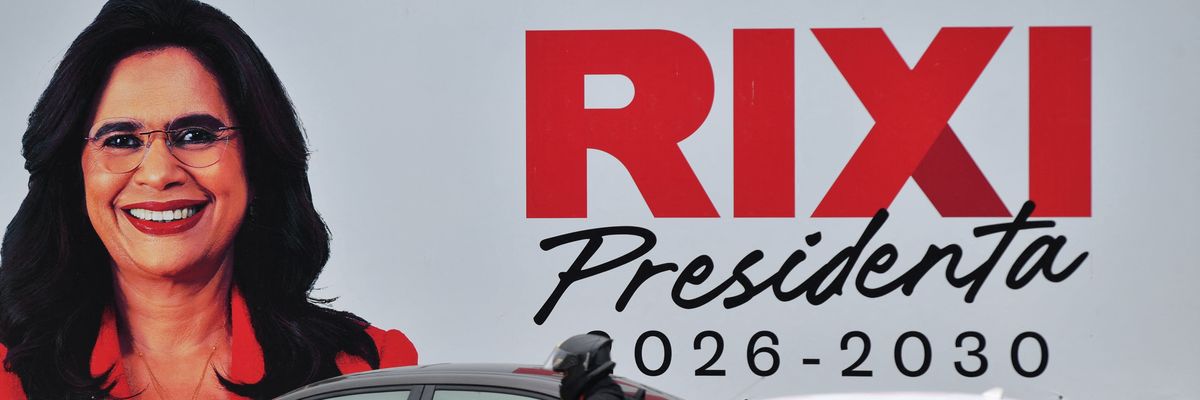


A billboard ad for Honduran presidential candidate for the LIBRE party, Rixi Moncada, is seen in Tegucigalpa on November 13, 2025.
(Photo by Orlando Sierra / AFP)

Julia Conley
Nov 29, 2025
COMMON DREAMS

The US Congressional Progressive Caucus on Friday accused President Donald Trump of “flagrantly interfering” in Honduras’ upcoming presidential election after Trump announced his endorsement of right-wing candidate Nasry “Tito” Asfura and repeated threats he’s made previously ahead of other electoral contests in which he sought to secure a conservative win.

On the social media platform X, Trump warned that only a victory for former Tegucigalpa Mayor Asfura and the National Party in Sunday’s election will allow Honduras and the US to “fight the Narcocommunists, and bring needed aid to the people” of the Central American country.

RECOMMENDED...


As Trump Issues New Threats to Mexico and Colombia, Democrats Push to End Unauthorized Aggression


Senate Dems Aim to Stop Trump ‘From Dragging This Country Into War’ With Venezuela

He accused Asfura’s opponents—former finance and defense minister Rixi Moncada of the left-wing Liberty and Refoundation (Libre) Party, which is now in power, and sportscaster Salvador Nasralla of the centrist Liberal Party—of being communists and said Nasralla is running as a spoiler in order to split the vote and weaken Asfura. He added that a loss for the right-wing candidate would allow Venezuelan President Nicolás Maduro “and his Narcoterrorists [to] take over another country like they have taken over Cuba, Nicaragua, and Venezuela.”

The president also wrote on his social media platform, Truth Social, that “if [Asfura] doesn’t win, the US will not be throwing good money after bad,” repeating a comment he made during New York City’s mayoral election in which he urged voters to reject progressive candidate Zohran Mamdani or risk losing federal aid for the city. Trump also offered Argentina a $40 billion bailout if voters elected his ally, Javier Milei, earlier this year.

Under President Xiomara Castro, the Libre Party’s government has invested in hospitals and education, and has made strides in halting the privatization of the country’s electricity system, Drop Site News reported. The poverty rate has also been reduced by about 13% since Castro took office in 2021, although, as the outlet reported, some rights advocates have criticized Castro’s government for keeping “many of her predecessor’s militarized policies in place, despite her commitment to implement a more community-minded strategy.”

Trump added in his social media post that he was issuing a pardon to former Honduran President Juan Orlando Hernández, who represented the National Party and is currently serving a 45-year prison sentence in the US after being convicted of working with drug traffickers who paid bribes to ensure more than 400 tons of cocaine were sent to the US. The pardon was announced as Trump continues his threats against Venezuela, which he has accused of trafficking drugs to the US.


CPC Deputy Chair Ilhan Omar (D-Minn.) and Whip Jesús “Chuy” García (D-Ill.) called Trump’s “smearing” of Asfura’s opponents “completely unacceptable,” and noted that the president has been joined by other congressional Republicans in making “wild, unsubstantiated allegations” regarding Honduras’ election—including Rep. María Elvira Salazar (R-Fla.), who voiced “support for a military coup.”

Salazar said recently that “16 years ago, the military saved its country from communism and today, they need to do the same thing,” referring to the US-backed overthrow of democratically-elected President Manuel Zelaya.

“These Cold War-era threats and blatant interventions create hostile conditions for free and fair elections and must stop immediately,” said Omar and García. “We also cannot tolerate premature declarations by prominent US politicians regarding the election results before ballots are fully counted. Attempts to delegitimize the vote based on who wins could be disastrous in light of the harmful history of US interference in modern Honduran politics.”

The two progressive leaders were echoing concerns brought up by Honduran Vice Foreign Minister Gerardo Torres, who spoke at a gathering of left-wing leaders on Thursday in Tegucigalpa.

Torres warned that the Electoral Council could claim Nasry is winning “with an irreversible trend” before the actual winner of the wide-open race is clear on Sunday.

“Even Trump could congratulate him—and that’s when real trouble will erupt in this country,” said Torres.

The chaos that could result could lead election officials to “nullify the elections and hold new ones in six months, leaving Libre weakened and allowing the right to win,” reported El País. Torres posited that this is the National Party’s “strategy.”

“The right wing cannot win on Sunday; that needs to be clear and repeated ad nauseam,” Torres said, urging advocates to promote Moncada’s candidacy on social media and help mobilize voters to get to the polls early.

Omar and García noted that after Honduras’ 2017 election, the Trump administration endorsed Hernández’s reelection “despite evidence of fraud and the killing by his security forces of Hondurans who protested the results.”

More than 20 people were killed in the aftermath of the disputed 2017 election

The two progressive leaders said that “Sunday’s elections are taking place at a critical moment, as the country aims to elect and transfer political power to a new leader for the first time outside of the context of the repressive post-coup regimes that persisted from 2009 to 2021.”

“At a time of global democratic fragility, we must move beyond US bullying and political interference in Honduras’s sovereign affairs. We need a relationship based on mutual respect, including respect for the will of Honduran voters,” said Omar and García.

Torres expressed hope that Trump’s backing of Asfura will have the opposite effect that the US president intended, saying Trump’s comments on social media were “a blow to the right; it hurts one of their candidates.”

“If there was anyone who didn’t know there were elections in Honduras this Sunday, now everyone knows,” said Torres. “There are even people who went to look at a map to see where Honduras is and find out who Rixi Moncada is... It puts us in an important position, which creates a wonderful scenario, because Rixi’s victory will be more famous and important. We have no doubt about her victory.”

Torres added that many conservative voters in Honduras are likely to reject the party formerly led by Hernández.

“These are right-wing people who opposed the narcostate, who stood with us in 2015 against [Hernández’s] embezzlement of social security, and who know what those criminals are,” he said, referring to previous governments. “Trump can tweet all day and those people aren’t going to vote for the return of the conservatives.”

José Mario López of the Jesuit Reflection, Research, and Communication Team in Honduras also told Drop Site News that the “red scare” tactics that the National and Liberal parties have joined Trump in using in the final weeks of the election are likely to have some sway with older people, but are “not expected to impact younger voters.”

“It’s a discourse that doesn’t really land, in my view,” López told the outlet. “I think what can move votes is the economic issue, because historically one of the main problems identified in public opinion polls is unemployment and lack of economic opportunities.”


Trinidad's leader backtracks and says US Marines are in the country working on airport radar

ANSELM GIBBS
Fri, November 28, 2025 
AP


FILE - Trinidad and Tobago Prime Minister Kamla Persad-Bissessar stands at the State Department in Washington, Sept. 30, 2025. (AP Photo/Mark Schiefelbein, File)


PORT-OF-SPAIN, Trinidad (AP) — The prime minister of Trinidad and Tobago retracted comments where she asserted that no U.S. Marines were currently in the twin-island nation — a development that comes as the U.S. government seeks allies amid ongoing strikes on suspected drug traffickers in the Caribbean and beyond.

Prime Minister Kamla Persad-Bissessar told reporters Thursday that U.S. Marines were at the airport on the island of Tobago working on its radar, runway and road just days after she said they had left.

“They will help us to ­improve our surveillance and the intelligence of the radars for the narco-traffickers in our waters and outside our waters,” she said, without providing details.


Trinidad and Tobago’s attorney general, and the ministers of defense and homeland security did not immediately return messages seeking comment on Friday.

It was not clear if the U.S. government plans to use the radar that they’re working on at the Tobago airport.

It also wasn’t clear whether they were installing a new radar or upgrading the current one.

Persad-Bissessar met Wednesday with Gen. Dan Caine, chairman of the Joint Chiefs of Staff and U.S. President Donald Trump’s primary military adviser, who traveled to Trinidad and Tobago.

A day after the visit, Persad-Bissessar told reporters that Trinidad had not been asked to be a base for any attack against Venezuela, and that Venezuela was not mentioned in recent conversations with the U.S.

Officials in Tobago have confirmed that at least one U.S. military plane recently touched down on the island, saying it was for the purpose of refueling.

Earlier this year, the U.S. approached the eastern Caribbean island of Grenada asking if they could install a temporary radar at its main international airport, but officials there have not said whether they would authorize such a move.

Grenada, like Trinidad and Tobago, is located close to Venezuela, with some experts saying that the ongoing U.S. military buildup in the Caribbean, the largest in generations, is a tactic to force Venezuelan President Nicolás Maduro to resign.

Earlier this week, the president of the Dominican Republic, Luis Abinader, announced that he would allow the U.S. government temporary access to restricted areas at an air base and at the Caribbean country’s main international airport to help the U.S. in its ongoing fight against drug trafficking. He made the announcement with U.S. Defense Secretary Pete Hegseth at his side.

The U.S. strikes that began in early September have killed at least 83 people.

____

Follow AP’s coverage of Latin America and the Caribbean at https://apnews.com/hub/latin-america


Towards the General Strike in Portugal - Only the strength of those who work can halt the labour package

Sunday 30 November 2025, by Toupeira Vermelha


The “Draft labour-law reform bill” (the so-called labour package) [1] is a set of more than one hundred regressive amendments to the Portuguese Labour Code presented by the Government of the Social Democratic Party (PSD) and the CDS – People’s Party (CDS-PP) [2], with the support of the Liberal Initiative (IL) and CHEGA, the far-right party. This package constitutes a deliberate and planned programme of rolling back labour rights in Portugal, reviving the offensive launched by Pedro Passos Coelho’s Government during the Troika years (2012–2015). [3]

While some proclaim the death of capitalism, in Portugal it remains very much alive. With the State on its side, capital uses technological pretexts and innovation to reorganise the capital–labour relationship in its favour.

No rhetoric of “modernity” or the “digital economy” can conceal the true plan. The attacks on labour rights are clear and undeniable. Proposals to extend working hours, normalise precariousness, facilitate dismissals, and attack time for social reproduction (rest, holidays, health, parenting, leisure) unequivocally aim to shift the balance of power in favour of employers. But to achieve this aim, it is also necessary to restrain workers’ forms and capacities for organisation, as well as the tools of struggle they mobilise. Thus, the package introduces various measures designed to weaken workers’ collective strength, undermining collective rights, the framework and security of collective agreements, and the very right to strike.

This attack is not new: it follows on from the neoliberal policy of devaluing labour implemented during the Troika period. That policy was partly contained by the Socialist Party governments (2015–2019 – the “geringonça” [4]; 2019–2023 – PS minority government) which, despite restoring some rights, were unable to reverse the trajectory of labour devaluation set in motion during that period.

Maximum minimum services: emptying the strike, emptying the struggle

The measure that seeks to broaden the interpretation of minimum service obligations during a strike is a clear attack on the most important instrument of workers’ struggle. The proposal to expand minimum services to more sectors is practically a way of abolishing the right to strike. [5] With this labour package, the strike – the tool that gives force to the fight for dignified and full employment – becomes mere performativity: the appearance of a right, but without material strength.

Workers are also left without material strength in the face of measures that reinforce the expiry of collective agreements, that is, mechanisms that favour employers by allowing them to terminate collective labour contracts more easily. This change gives employers greater tools to split and divide workers and to use non-unionisation as a weapon of management.

Normalising precariousness: the return of lives on hold


On the front of attacks against contracts offering stronger safeguards, and in addition to those targeting collective bargaining agreements, several proposals deepen and broaden precariousness, particularly affecting people working on digital platforms. [6] The package also seeks to extend the duration of fixed-term and uncertain-term contracts and to multiply “atypical” arrangements (intermittent work, temporary work, etc.), thus making it harder to obtain a stable employment relationship. These measures aim to ensure a more “efficient” management of labour from the employer’s perspective and to restore the employment contract as a permanent disciplining mechanism. It marks the return of the precariousness policy pursued by Pedro Passos Coelho, where lives are kept on hold.

The way in which this labour package brings back coercive instruments over work is closely linked to measures aimed at hindering workers’ self-organisation. By facilitating dismissals, the measures foreseen in the labour package encourage forced competition among workers, distorting existing forms of solidarity. With the PSD–CDS labour package, it becomes easier for employers to get rid of workers and replace them with outsourcing and impoverished subcontracting. By removing restrictions on hiring external companies after collective dismissals and limiting the possibilities of effective reinstatement after unlawful dismissal, capital is handed tools and legitimacy to exploit labour without restraint.

Eight hours’ labour, eight hours’ recreation, eight hours’ rest


Another attack targets the working time, which is central to workers’ lives and has long been an arena of historic struggle. With the new labour package, we are faced with proposals that aim to extend working hours, directly attacking reproductive time and political participation. Stretching the working week to nearly fifty hours, concentrated in peaks of work when it suits the company, pushes workers into a regime where rest, family life, and health are subordinated to the volatility of business and markets. Furthermore, proposals to reduce overtime pay or to generalise flexible working-time banks empty the very concept of supplementary work. “Flexibilisation” conceals a single goal: to provide capital with tools to better manage its accumulation process, stripping workers of power and control over their own time. Taking advantage of the plasticity of human labour, the company decides, and the worker adapts.

It is therefore no surprise that the package also targets rest time. Holidays and pay are undermined, encouraging the commodification of time for social reproduction. Holiday time becomes treated as a privilege rather than a right – a right won by the workers’ movement after 1974.

The possibility of exchanging holidays for money is, in reality, a response to structurally low wages: those who cannot make ends meet are pushed into giving up rest to fill the gaps. If wages were sufficient, there would be no need to trade rest for income. Through contractual means, the Government is cutting wages outright. If wages are insufficient, it is not because workers have “too much holiday”: it is because employers accumulate more.
Those who defend the family do not destroy the time needed to build it

There is also a glaring contradiction in this labour package. A Government that presented itself as “family-friendly”, heir to Pedro Passos Coelho’s discourse on birth-related rights, now promotes attacks on parenting and on work-life balance. They claim to want higher birth rates, yet in practice they make parenting more expensive by increasing, through various reforms, the emotional, physical, and organisational costs of having children. They claim to support work-life balance, yet they reinforce flexible scheduling mechanisms used primarily to serve employers’ interests. They claim to value motherhood and fatherhood, yet they have used these rights as bargaining chips in negotiations.

It is therefore important to expose this contradiction, which also serves as a strategy for the Government in managing negotiations. By putting extremely aggressive proposals on the table, the Government and capitalists know that these will become the focus of negotiations and are prepared to withdraw them to present the final result as a “balanced compromise”, tying workers’ struggle to the negotiating table. But even if many of these measures fall, the essential remains: more working time under capitalist control, widespread precariousness, hollowed-out strike rights, greater expiry of collective bargaining agreement – all meaning less time and availability for personal, family and political life.

Negotiation without strength is not enough: long live organisation in the workplace!


Faced with a labour package of this nature, it is not enough to pressure the Government at the negotiating table. Workers’ autonomous action in their workplaces must be strengthened. A negotiating table will only be strong for workers if it reflects the real strength of organised workers. Only a movement of workers with capacity and autonomy, rooted in the everyday life of each company and service, can transform a general strike into a process of confrontation and reversal of this offensive.

The PSD/CDS labour package, besides being a profound attack on wages, time, stability, and workers’ rights, is also a moment of defining the future of work: either we accept that the future is decided in offices and social-concertation forums, or we enforce a bottom-up “no”, with collective capacity and organised strength to stop these attacks. It is this persistent and rooted workers’ struggle that gives weight to the negotiating table and can prevent this offensive from passing into history as “inevitable”.

A Toupeira Vermelha therefore joins the mobilisation efforts for the general strike on 11 December 2025.

26 November 2025

In Portuguese Toupeira Vermelha.

Attached documentstowards-the-general-strike-in-portugal-only-the-strength-of_a9287.pdf (PDF - 922.1 KiB)
Extraction PDF [->article9287]

Footnotes


[1] A draft bill is a preliminary version of a law prepared before it is formally submitted to Parlia-ment. Its purpose is to test public reaction, and open negotiations before the final legislation is finalised. The document can be consulted in Portuguese at this link.


[2] The current Portuguese government, sworn in on 5 June 2025, is the result of a coalition be-tween the Social Democratic Party (PSD) and the CDS – People’s Party (CDS), which ran to-gether in the elections under the name AD – PSD/CDS Coalition.


[3] Pedro Passos Coelho led the XIX Governo Constitucional de Portugal, between 2011 and 2015. His administration is widely associated with austerity, fiscal consolidation, and structural re-forms, largely shaped by the context of the Eurozone financial crisis and the EU–ECB–IMF bailout (“troika”), which Portugal entered shortly before he took office.


[4] “Geringonça” was the informal designation given to the left-wing governing arrangement in Por-tugal that supported António Costa’s first government from 2015 to 2019. It was a parliamentary agreement between the Socialist Party (PS), the Left Bloc, the Communist Party, and the Greens, which enabled the PS to govern as a minority with their support.


[5] The government’s proposal expands the obligation to provide minimum services during strikes to several new areas, adding schools and nurseries, care homes and social-care institutions, food-supply services, and private security activities to the sectors that must remain partially operational, alongside the already established essential services such as health, transport, and utilities.


[6] The proposed labour package is likely to affect many more people working through digital platforms by making it harder for them to be recognised as employees. Instead of strengthening the presumption that platform workers should have employee rights, the reform raises the threshold for that recognition, meaning many couriers, drivers and other gig-economy workers may continue to be treated as self-employed. As a result, they risk remaining without guaran-teed minimum wage, paid leave, social-security protection or regulated working conditions, leaving a large and growing group of workers in a more precarious position.

Portugal
The bromance between André Ventura and Luis Montenegro in Portugal
“There is a strategic impasse on the left on the issue of race”
Building an anti-liberal left in Portugal is difficult but necessary
The crossroads of the Portuguese left
Victory for right, neo-fascists in second place in Portuguese elections
Trade unions/workplace organizing
China’s labour movement under fire
“We Are The Working Class”?: Indonesia’s Labour Party and the Limits of Reformist Politics
Energy, Infrastructure, and Civilians Targeted: Ukrainian Trade Unions Call for Solidarity
The return to slavery will not pass in Greece!
More pay, but less union democracy - A complicated strike victory at Air Canada


Toupeira Vermelha


International Viewpoint is published under the responsibility of the Bureau of the Fourth International. Signed articles do not necessarily reflect editorial policy. Articles can be reprinted with acknowledgement, and a live link if possible.


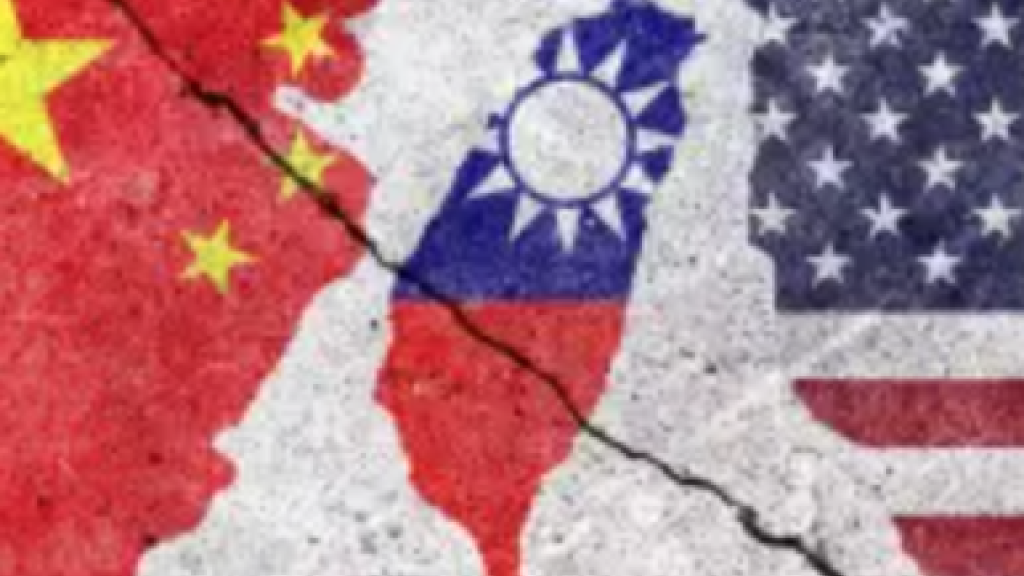
Worker Democracy (China): Preliminary theses on the Taiwan Strait Crisis and Taiwanese self-determination


China Taiwan US

First published at Worker Democracy

The historical rights of Taiwanese People

The history of Taiwan’s colonization from 1895 to the one-party rule of the Kuomintang (KMT) from 1945 to 1996 has solidified a Taiwanese identity and experience distinct from those of the Chinese on the mainland. This has also empowered the Taiwanese, who have been oppressed for more than a century (by the Japanese and mainland regimes), with the right to decide their own destiny democratically, including their relationship with mainland China.

The myth of “One China”

Even now, Taiwan’s official state name is still the “Republic of China” (ROC). In effect, there are two ‘Chinese’ governments today, though the government in Beijing — the People’s Republic of China (PRC) — refuses to recognize this reality. However, many benshengren (those with ancestors who came to Taiwan before Japanese colonization) have disagreements with the ROC name, and instead call for Taiwan’s independence. Thus, we believe that the people of Taiwan should also have the right to decide on their own country’s name.

As seen from the three joint communiqués between the United States and China on the issue of Taiwan’s sovereignty, neither side has respected the wishes of the people of Taiwan. Both sides have violated the most basic principles of democracy. China believes that both sides have agreed that “Taiwan’s sovereignty belongs to the PRC.” However, from the text and the US’ subsequent elaborations, it is clear that the US is only “aware that both sides of the Taiwan Strait advocate that Taiwan is a part of China,” not “Taiwan belongs to the PRC.” The two positions are different. And after the establishment of diplomatic relations between China and the US in 1979, the US acknowledged that the PRC represents “China.” Still, it did not fundamentally change its position on who should have sovereignty over Taiwan. So, the US and China have disagreed on who should have sovereignty over Taiwan. However, with the establishment of diplomatic relations between the two countries, the US has also severed diplomatic relations with Taiwan, influencing other countries to sever ties with the ROC and instead establish ties with Beijing. Taiwan’s international relations have continued to shrink in the face of China’s rapid rise on the global stage. Today, Taiwan has diplomatic relations with only 11 small countries (that are members of the United Nations).

The historical development of the People’s Republic of China and the Republic of China

But we must first consider the status of “Taiwan” or “ROC” from the Taiwanese people’s point of view, not those of the Chinese, American, or other governments. Such a point of view must also be considered independently, in accordance with democratic principles, and in light of the history of political developments on both sides of the Taiwan Strait. The PRC was founded in 1949, while the KMT, whose corrupt and authoritarian behavior is well-known, retreated to Taiwan. At that point, global anti-colonial and progressive movements saw the PRC as a symbol of revolutionary advancement. Thus, they largely dismissed Taipei’s regime, and sympathized with or supported the PRC’s reunification of Taiwan. However, the PRC’s treatment of its people has become increasingly reactionary, even before, but especially after 1979. Meanwhile, in Taiwan, one-party dictatorship has ended, and its people now enjoy basic democratic rights, especially the freedom to protest against the government’s injustices (which is not the case in mainland China at all). And so, cross-strait politics today is very different from what it was in the past. The KMT finally lost power in 2000 under the pressure of mass movements outside the party. And so, a military reunification of Taiwan under the PRC would only be a reactionary dictatorship conquering a representative democracy (even with its limitations), eliminating the Taiwanese people’s basic political rights, especially their right to social protest.

Historically, China under the Mao era appeared to be developing along an anti-capitalist course, in contrast to KMT rule in Taiwan, which evolved into an authoritarian capitalist regime heavily dependent on the West. But anti-capitalism does not always signal a continued path of socialist transformation. The PRC had already degenerated into governance by a privileged clique of bureaucrats, serving only itself and causing the death and suffering of tens of millions of people. By the time the PRC had completely restored capitalism since Deng Xiaoping’s reign, the regimes on both sides of the Taiwan Strait had become homogeneous in their class character, that is, capitalist. One can no longer say that China’s class character is more progressive than that of Taiwan. Coupled with the fact that the PRC has become even more totalitarian, there would not be the slightest ounce of progress if it conquered and ruled Taiwan through military invasion. This is not to mention that the PRC has ignored the wishes of the Taiwanese people, committing the cardinal sin of a large nation oppressing a smaller nation.

There is another view in the international community that the crisis in the Taiwan Strait is merely a proxy war in the struggle between the US and China for hegemony. In this consideration, Taiwan only matters in the context of geopolitics, just as an appetizer is only meaningful in relation to the main course of a meal, so Taiwan’s own wishes do not matter. This is an imperialistic perspective, not one that people should share, or else we would completely forfeit the legitimate rights of 23 million Taiwanese people.

The PRC’s understanding of the Chinese nation

The PRC’s chauvinist attitude towards Taiwan comes directly from its theory of the “Chinese nation”. The PRC has directly inherited the KMT’s claim that “the five ethnic groups are one” and does not recognize the right of self-determination of the ethnic minorities. Nor does it recognize the right of national minorities to secede from the “Chinese nation” if they are oppressed after joining it. Its chauvinistic arrogance manifests in its complete omission of the Indigenous residents of Taiwan in its official documents, who are not Han Chinese and were never part of any conception of a Chinese nation. This position thus betrays a founding principle of the Chinese Communist Party (CCP) that existed until the 1930s, which “recognizes the right of self-determination of China’s minorities.” In fact, the Taiwanese Communist Party advocated Taiwanese independence before the KMT destroyed it. Today, the PRC no longer mentions this part of its history. This conception of the Chinese nation is as reactionary as Russian President Vladimir Putin’s claim that “Russia and Ukraine are one and the same” (a principle that has justified Russia’s invasion of Ukraine). Both must be opposed.

The PRC accuses Taiwanese people of harboring “separatist” sentiments. But the PRC has never ruled Taiwan, and Taiwan’s separation from China occurred long ago. It is also worth noting that the ROC preceded the PRC, which emerged 38 years later. Regardless of one’s perspective, the separation of Taiwan from China is a historical fact. If the PRC truly regards the Taiwanese as “compatriots,” it must first acknowledge this history and reality as a foundation for dialogue with the Taiwanese government, instead of dictating the myth that “Taiwan has belonged to China since ancient times” to the Taiwanese people.

Two types of peace movement

And so, we oppose the PRC’s armed reunification, and advocate cross-strait dialogue between the two governments. The people of Taiwan have elected the Democratic Progressive Party (DPP) administration. Therefore, if the PRC respects public opinion at all, it should set aside its arrogance, prioritize diplomatic negotiations, and abandon the prospect of armed reunification. But, people on both sides of the Taiwan Strait cannot expect the PRC to back down voluntarily, and must prepare accordingly. Mainland Chinese people must mobilize a peace movement in civil society, calling for cross-strait dialogue and pushing against armed reunification. Although space for collective action is limited in the mainland because of totalitarian rule, we must remember that there are many Chinese and Sinophone students and other communities living abroad. The diaspora can play a crucial role in developing such a peace movement: if these ideas can take root among these communities, it may break the PRC’s media blockade and spark ideas among those at home.

There is a kind of peace movement that focuses its attention on calling for Taiwanese people not to provoke the PRC and to reject arms from the US, telling them to sit and wait with the hope that peace will come. However, it pays little attention to how the PRC’s revanchism is not legitimate at its core. The whole concept of “the Chinese nation as a whole” is even more wrong, as it violates the basic principle that nationalities have the right to determine their own identity, or the right of national minorities to self-determination. This framework is not genuine peace, but an unprincipled accommodation of the PRC’s autocracy and expansionism.

Why Taiwan has the right to self-defense

An armed reunification of Taiwan by the PRC would be an unjust war — an invasion. And so, though we must support calls for peace in Taiwan now, we also recognize that Taiwan is a weaker nation threatened by a larger neighbor with force. So, if the Taiwanese people choose to prepare for war and decide to fight against it in the event of war, they have every right to do so. For the oppressed nation, there is no contradiction between calling for peace and preparing for resistance in principle. Taiwan has the right to buy arms from other countries, including rival imperialists like the US, to defend itself.

As people outside of Taiwan, we respect the democratic decision of the Taiwanese people, whether they want to prepare for war and/or resist. This is a natural extension of respecting Taiwan’s right to self-determination. This does not mean that we, as outsiders, should directly encourage Taiwan to prepare for war and resist: by recognizing that they have the right to do so in principle, we are also acknowledging that they have the freedom not to exercise that right (e.g., not to prepare for war or resist, and accept the PRC’s conditions). We can recognize Taiwan’s right to prepare for war, resist, or purchase arms, without necessarily agreeing that it is always prudent for Taiwan to exercise such a right. However, whether Taiwan’s decision is prudent or not, we can criticize it while being clear that the Taiwanese people should be empowered to make these decisions.

These basic democratic principles remain unchanged even if the ruling party changes. Whatever party comes to power after an election, as long as the election is truly fair and its behavior after coming to power does not violate the sovereignty and will of the Taiwanese people, the ruling party can be considered as more or less representative of the public opinion, and has the right to exercise the right of preparedness for war and self-determination, if necessary. This is not the same as recognizing that the ruling party’s decisions are always correct. “Electoral autocracy” is possible; as Thomas Paine once said, government is at best a “necessary evil.” The state, as a specialized institution of coercion and violence, can easily become a tyrannical force overriding the will of the people. It is even more frightening when state power could be combined with multinational consortia. This is why we need to guard against any abuse of power by the government, and emphasize that support for a ruling party’s preparedness for war against foreign invasion is not the same as political endorsement of that party. The two aspects should be handled separately.

For peace in East Asia; oppose US militarism

All things should have limits. First, at this stage, it may be appropriate for Taiwan to emphasize peace and unconditional dialogue, while preparing for resistance in a low-profile manner. Second, when it comes to national defense, the government must exercise restraint, avoiding excessive measures and respecting the people’s civil rights. It must also not foment exclusionary nationalism and vilify Chinese people, giving the PRC an excuse to demonize its struggle further. Lastly, the strategy to defend Taiwan should concern politics as much as it does military defense, not just the latter. The more Taiwan strengthens its democracy and protects people’s livelihood while preparing for war, the more it bolsters its soft power in the international arena. In China, there are many potential sympathizers of Taiwan within civil society, as well as within the party-state, including even the military. Winning over these elements, and not to mention, exploiting any fissures within the party caused by Xi Jinping’s personal dictatorship, would be advantageous for Taiwan’s allies at home and abroad.

Regarding international relations, being aware of our limits is even more important. We must oppose a US military landing on Taiwan or setting up a command center on Taiwan, and any efforts to use Taiwan’s war preparations as an excuse to justify the development of nuclear weapons (as Chiang Kai-shek once tried). Any preparation for atomic warfare could escalate any war of self-defense into a major war between the US and China. In a war of this scale, the damage to the island of Taiwan would be devastating. And so, Taiwan’s war preparations must have certain limits. We must be vigilant for any signs that a war of self-defense is escalating into more disastrous proportions. Otherwise, the impact will extend far beyond the Taiwan Strait and affect the people of East Asia as a whole, who also have the right to consider their own safety. For example, the residents of Okinawa in Japan, who, in addition to the bitter experience of World War II, have been suffering from eight decades of suffering brought about by American military bases. They have been mobilizing for peace in Asia, and also have every right to speak and act in the Taiwan Strait crisis. We also recognize that the US aggression against China builds on and stokes a long legacy of Sinophobia, which places a target on Chinese and other Asian communities. And so, it is all the more important to firmly oppose exclusionary sentiments toward Chinese people in Taiwan’s fight for self-determination.

The US-China rivalry and Taiwan’s right to self-defense

Some “pacifists” oppose Taiwan’s right to prepare for war and purchase arms from foreign countries. Their reasons can be broadly categorized into three types. The first is based on the desire to avoid escalating tensions between China and the US over Taiwan, which could lead to an escalation of inter-imperial rivalry, even to the point of war. The second is due to an absolute opposition to US hegemony and military competition. The third argues that only the US is imperialist, not China, thus opposing the US while supporting China. Each of these viewpoints has its own focus and areas of avoidance, but they all reach the same conclusion. We believe that, first and foremost, it is essential to distinguish between stronger and weaker nations. Confusing the two is inherently misleading. As a hegemon, China is asserting power against the weaker nation of Taiwan. China’s threat of armed unification is inherently an act of bullying the weak, and must be opposed. One cannot strip Taiwan of its right to self-defense just because of the threat of American intervention. Second, some argue that in the US-China rivalry, the US poses a greater threat than China, so to support Beijing, one cannot also support Taiwan’s existence as a political entity. However, China is a nuclear-armed state, the world’s largest trading nation, the second-largest economy, and the second-largest military spender. Who can convincingly claim that China’s threat to the world’s people will always be negligible in the future? China’s military may be inferior to the United States’, but its overall threat, especially for Taiwan, may not be smaller. There is also a political consideration: while Trump may be authoritarian and bellicose, there is still some room for social movements from below to check his power and defend various institutional and non-institutional checks and balances in place. In contrast, China has already established authoritarian rule, with little room for dissent, let alone organized resistance. If Xi were to launch a war, there would be no one to check him, and it would be far more difficult for anti-war movements to emerge and sustain themselves in China than in the United States.

The three viewpoints above all oppose Taiwan’s right to self-defense to varying degrees due to the possibility of US intervention. However, this simplistic approach is far too crude to capture the complex nuances of geopolitics, especially the relations between the world’s leading imperial power and the nearly 200 other nations. As advocates of democracy and peace, we oppose any hegemonic nation engaging in military competition. However, international relations are extraordinarily complex. At certain times and in certain places, the need for self-defense for smaller countries may overlap and intersect with the designs of different imperialists, which is not uncommon. In light of these limits, weaker nations purchasing arms from another imperialist may result in some profit for the latter. However, the survival of a weaker nation facing war from a rival imperialist is one gain that offsets this harm, in a sense. Of course, between the US and China, the US is a stronger imperialist than China. However, between China and Taiwan, China is stronger than Taiwan, and also treats various Southeast Asian countries with arrogance (not dissimilar to the US). The viewpoints above focus solely on the dangers of the US-China rivalry, while ignoring that China’s armed unification of Taiwan would also be disastrous for the world. If Beijing successfully unifies Taiwan by force, it will become even more emboldened to bully other small countries. It would further entrench its imperialist tendencies, competing with the US on the international stage, which would exacerbate the dangers of a world war rather than mitigate them. Instead, we should address both issues simultaneously. Regarding the US-China rivalry, we emphasize the need to oppose military competition between the two countries. However, regarding China’s dominance over Taiwan, we continue to support Taiwan’s right to self-defense.

During World War I, Lenin remarked that Tsarist Russia was at once subordinate to British and French imperialism on the global stage, just as it was the dominant threat to national minorities in its peripheries, like the Poles. At that time, peace movements challenged European hegemony, just as they combated any expressions of Great Russian chauvinism in Russia’s peripheries. Our two-pronged approach to the US-China rivalry and Taiwan’s self-defense serves the same purpose. This also means that we support all other local peace movements that oppose the US imperialists’ use of Taiwan as an excuse to intensify the military competition. We support grassroots anti-war and peace movements in Okinawa, South Korea, the Philippines, and mainland China. We also call on these anti-war and peace movements in East Asia to actively intervene and speak out against any bullying of small countries by large countries in the event of a Taiwan Strait crisis.

De facto/de jure independence?

Taiwan is too small (only one-sixteenth the size of Ukraine) to initiate a major military war, let alone a long-term and/or nuclear one. However, one political maneuver would surely escalate the possibility of armed conflict: for Taiwan to renounce the ROC title and formally become independent as the Republic of Taiwan (de jure independence). Although we support the right of the Taiwanese people to self-determination, including the right to independence, it would be unwise to risk serious escalation by pursuing de jure independence, given the disparity in power between the two sides of the Taiwan Strait. If the DPP maintains the ‘ROC’ state name, providing less justification for the PRC to pursue armed reunification, it would be more likely for Taiwan to win international support. Although the DPP’s party platform, the “Resolution on Taiwan’s Future” (1999), declared that the ROC had “in fact become a sovereign and independent democratic country,” this sovereignty does not include mainland China (except for the three small islands of Penghu, Kinmen, and Matsu). This position makes it clear that the DPP is not pursuing de jure independence of Taiwan, but rather maintaining its de facto independence. It also makes clear that, although the country’s name is the ROC, Taiwan’s territorial boundaries have already excluded mainland China; therefore, this “China” no longer has territorial disputes with the Beijing government.

Supporting Taiwan’s Self-Determination while opposing inter-imperialist rivalry

Although the US ostensibly defends Taiwan, it does not genuinely respect the Taiwanese people’s right to self-determination, which is why it has joined the PRC in suppressing Taiwan’s independence. After all, it protects Taiwan primarily for its own interests, not for the Taiwanese people. The US has also adopted the position of “strategic ambiguity”; in other words, it remains unclear whether it will actually come to Taiwan’s aid in the event of a cross-strait war. This deceptive attitude maximizes its own flexibility, while at the same time deterring both sides from making any rash moves — thus killing two birds with one stone. In Trump’s second term, the fate of the Taiwan Strait has never been more uncertain and treacherous. The US-China rivalry is increasingly dominating the frontstage of geopolitics, with cross-strait relations being a key flashpoint. This situation is particularly unfavorable to Taiwan. In these conditions, there is a greater responsibility for all the East Asian countries outside Taiwan, the US, and different peace movements to speak out for Taiwan — which must begin on the foundation of recognizing Taiwan’s right to self-determination.

Taiwan is caught between the US and China, and even if it pursues the best course of action, it is difficult to ensure that the two nuclear-armed countries will not go to war with each other. Regardless of whether Taiwan exists or not, once inter-imperial rivalry reaches a certain level, the possibility of nuclear war would increase to some extent. This is why peace activists around the world must intensify our opposition to inter-imperial rivalry, advocate for global nuclear disarmament and global arms reduction, starting with the US, China, and Europe, which are the root causes of global rivalry.


COP 30: Entrenching the crisis of climate politics


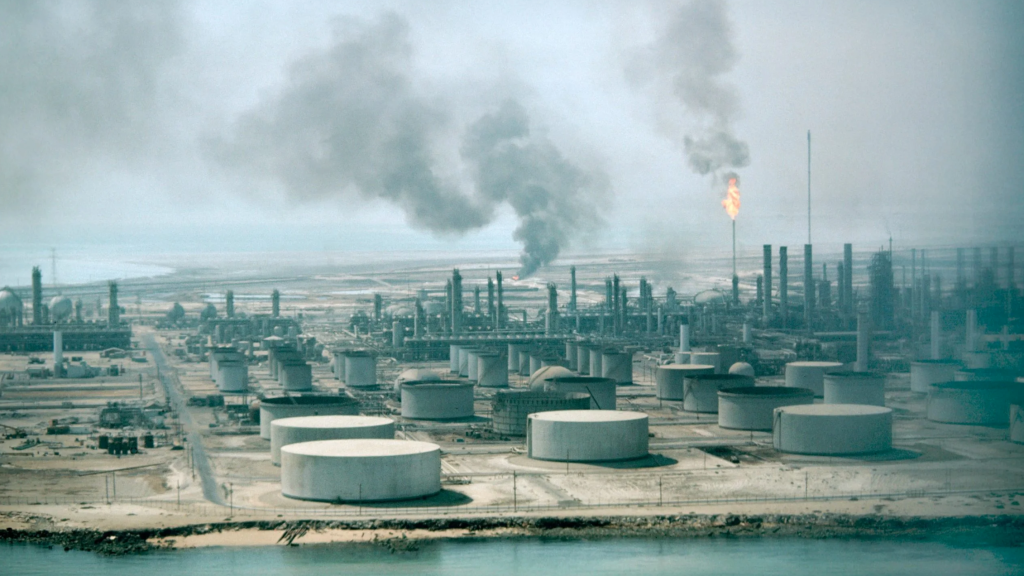
The Aramco oil refinery in Dhahran, Saudi Arabia. COP30 offered no fossil-fuel phase-out; oil-producing nations blocked binding language, and the final deal focused on voluntary road maps instead.

First published at Amandla!.

As the dust settles after COP30 in Belém, the scale of the failure becomes impossible to ignore. The world is on a path toward catastrophic warming, ecological systems are collapsing, and millions across the Global South face annihilation, not in the distant future, but today. The world’s political and economic elites arrived in the Amazon to negotiate when the 1.5°C target had already slipped out of reach, and they left with little more than symbolic gestures. No binding emissions cuts. No serious plan to phase out fossil fuels. No meaningful climate finance for adaptation. No accountability for the destruction already unleashed.

The gap between official international climate policy and the lived reality of a warming world has never been wider. In Belém, that gap became a chasm.

The world is heading towards roughly 2.8°C of warming by the end of the century. This is not a scenario compatible with human dignity — or even, for many, with life itself. Rising seas, extreme heat, drought, and flooding are eroding food security, displacing communities, and driving inequality to historic heights. The economic costs of climate disasters are skyrocketing, but the social and human costs are immeasurable: lives lost, livelihoods shattered, ecosystems irreversibly damaged.

These worsening crises play out in a world shaped by neoliberal austerity and debt dependency. Countries battling climate shocks are forced to cut social spending, privatise public goods, and surrender sovereignty to creditors. Governments continue pouring billions into militaries, fossil fuel subsidies, and the enrichment of corporate elites. The current political economy accelerates both warming and war.

The growing irrelevance of the COP

COP30 offered no mechanisms for enforcement, no firm deadlines, and no clear pathways to keep warming below 1.5°C. Nor did it include a fossil-fuel phase-out; oil-producing nations blocked binding language, and the final deal focused on voluntary road maps instead. What it did offer was an expanded space for corporate actors, carbon traders, and mining interests seeking to greenwash extractivist projects.

What is staring society in the face — and what too few scientists are willing to acknowledge — is that the climate-crisis regime cannot be separated from the logic of capitalism. So-called “green transitions” simply open new arenas for profit while remaining embedded in the same global system of accumulation. Renewable energy may be expanding, but it does not replace fossil fuels; it merely adds to an energy expansion rather than driving a real transition.

Climate summits have become a “safety valve” for capital. They offer the illusion of action, while allowing the core exploitative relations to continue. For workers and communities already suffering climate breakdown, it is indisputable that the COP has failed them.

The Just Transition heist

COP 30 adopted the Belem Action Mechanism for a Global Just Transition (BAM) — a proposed new institutional arrangement under the UNFCCC designed to address the current fragmentation and inadequacy of global just transition efforts. Trade unionists and workers should have no illusions about this mechanism. It has no finances or concrete plans to protect workers and communities affected by energy and other decarbonising initiatives. There are no resources for a re-industrialisation in harmony with the protection of nature. So workers and other vulnerable sectors will simply be left behind. Words and policies in COP statements are a dime a dozen. Reality is harsher.

Why mass movements matter — and why institutions don’t

If COP30 cannot deliver the mechanisms for decarbonisation or social protection, then the hope must lie in movements of people: workers, peasants, indigenous people, women, youth, and the urban poor. Outside of a global mass movement rooted in national realities, the necessary steps to confront the climate crisis will not occur. Yet such a movement cannot be built if it fails to address the immediate needs of the working classes and the poor. The fight for climate protection and ecological justice must therefore begin with the fight for life itself — for clean water, decent housing, jobs, food, and security against the elements.

Right-wing climate denialists exploit the desperation of the poor to drive a wedge between ordinary people and climate action. They present environmentalism as a threat to livelihoods rather than the path to survival. To win the majority, our movement must link ecological transformation with social justice. We must demand the redistribution of wealth and power away from the billionaire class, big tech, and ruling elites who plunder the planet for profit.

Brian Ashley is a member of Zabalaza for Socialism and serves on the Amandla! editorial collective.


Facing the Climate Crisis, Can We Make Politics Move Faster Than Physics?

As Tehran runs low on water, New York City considers divesting from planet-wrecker Blackrock. We need more of the latter to prevent more of the former.


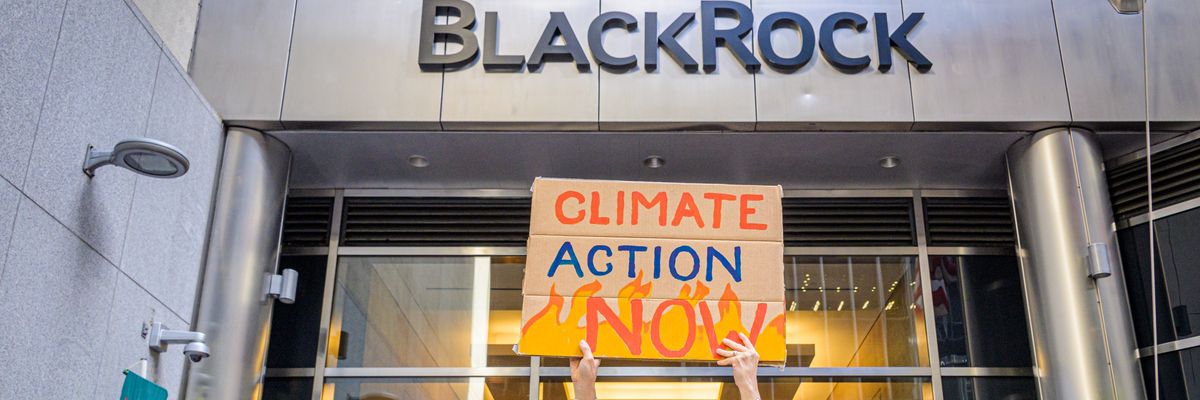
The Jewish Youth Climate Movement, with support from the interfaith organization GreenFaith, led a nonviolent civil disobedience action outside of BlackRocks New York headquarters to demand the global asset management firm stop funding the fossil fuel industry.
(Photo by Erik McGregor/LightRocket via Getty Images)

Bill Mckibben
Nov 29, 2025
The Crucial Years


We are not getting out of the climate crisis without immense amounts of damage—the only question at this point is whether we can extricate ourselves with something like our civilizations intact. And the news from one cradle of civilization isn’t heartening: In Iran, where urban settlements date back to 4400 BC, the deepest drought in the country’s recorded history has now reached the havoc stage.

Tehran, shrouded in truly toxic smoke because the country’s power plants have run short of natural gas and begun burning “mazut, a dark residue of petroleum high in sulphur and other impurities,” is now facing a possible evacuation because it has run out of water. As Yeaganeh Torbati points out in an excellent essay, Iran’s water woes are deeply rooted in agricultural policy that prioritized irrigation above all (see also California); its international isolation has not helped it cope (including with the tragic fires that broke out last week in the Hyrcanian Forest, one of the oldest woodlands on Earth and a biodiversity hotspot). But the savage drought has been the final domino here, in a country where, as the head of one water utility points out, “Higher than normal heat has intensified the evaporation of water resources.” As the Australia Broadcasting Corporation summarized it:
Faced with a perfect storm of weather woes and decades of mismanagement, President Masoud Pezeshkian issued a warning to his country earlier this month that the situation could deteriorate even further.

“We’ve run short of water. If it doesn’t rain, we in Tehran… must start rationing,” he said.

“Even if we do ration and it still does not rain, then we will have no water at all.”

“They [citizens] must evacuate Tehran.”

While it may seem like an exaggeration, it is the shocking reality facing the Iranian population—particularly in its capital, which has in excess of 15 million people across the broader metropolitan area.

RECOMMENDED...


UN Climate Chief: Refusal to Halt Planetary Destruction Will ‘Never, Ever Be Forgiven’


This particular kind of disaster is becoming more common on a rapidly warming world. We’ve already had severe Day Zero scares in big cities in Brazil and South Africa; a new study earlier this month warns that:
Moments when water levels in reservoirs fall so low that water may no longer reach homes—could become common as early as this decade and the 2030s.

To find out where and when DZDs are most likely to occur, scientists at the Center for Climate Physics in Busan, South Korea ran a series of large-scale climate simulations. They considered the imbalance between decreasing natural supply (such as years of below-average rainfall and depleted river flows).


By some estimates, 2 billion humans are at risk.

The residents of New York are not at present among them. The city’s water supply system is one of the miracles of the modern world, and after six decades the “third tunnel” that will make that water system more secure is almost complete. (As a cub reporter in the early 1980s I spent several happy days underground, watching “sandhogs” from Local 147 blowing up rock walls to extend the shaft).

But that doesn’t mean New York is immune from climate danger, as anyone who lived there during Hurricane Sandy will recall. (As the financial journal Business Week printed in block letters on its cover the week after that catastrophe, “IT’S GLOBAL WARMING STUPID”).

And it certainly doesn’t mean that New York isn’t part of the cause of the global climate collapse. Not from its emissions—subway-riding New Yorkers are fairly green—but from the churn of capital through its financial markets that underwrites the ongoing expansion of the fossil fuel enterprise, in ways that scientists have said for years now simply has to stop.

A huge step in the right direction came Wednesday morning, when the city’s comptroller, Brad Lander, announced that he was recommending the city stop investing its money with Blackrock, the largest single representative of irresponsible capitalism on planet Earth.
Lander is urging three of the city’s pension funds to drop BlackRock Inc. because of “inadequate” climate plans, the latest move to penalize investment firms for failing to tackle global warming.

The guidance to reject BlackRock, the city’s largest money manager overseeing $42.3 billion of index funds for the pensions, follows a review of the firm’s efforts to press companies to decarbonize. Lander said Wednesday he’s also asking plan trustees to terminate much smaller mandates with Fidelity Investments and PanAgora Asset Management.


It’s hard to overstate the importance of this decision. To call Blackrock a “giant” is to pitifully underestimate its size—it has $13.46 trillion under management as of this fall. It owns 10% of the world’s stock market. If it wanted to stop the expansion of the fossil fuel industry, it could, more easily than any other single entity on planet Earth.

Instead it has dithered endlessly, making occasional noises of climate concern and then backtracking when red state treasurers (with far smaller portfolios than Lander’s to wave around) squawked at them. In August, Democratic officials from a dozen states sent warning letters to asset managers, calling on them to “reject pressure from the Trump administration and GOP lawmakers, and instead commit to thorough evaluations of risks tied to global warming, supply chains, and corporate governance.” Lander’s recommendation is the first concrete outcome.

Or, fairly concrete. Lander’s term ends on December 31. The advocates who have pressed for this policy—especially New York Communities for Change—are pushing him to get one of the city’s three pension plans—the New York City Employees Retirement System or NYCERS—to actually commit to the plan at its December 17 meeting. They think that with some prodding by Lander the votes are there to make the change.

If anyone has the political credibility to get it done before Christmas, that would be Brad Lander. Though he finished third in the primary, he emerged from this year’s mayoral contest with more love than any player in the city, maybe even including Zohran Mamdani. Partly that was because stood up for immigrants early, getting arrested by an Immigration and Customs Enforcement thug. Mostly it was because he figured out he was going to lose to Mamdani, took it with exceptionally good grace, and ended up playing the important role of his being his verifier—assuring people with both his insider and his Jewish credentials that the young socialist was up to the job. He comes out of 2025 both a macher and a mensch, and now he’s rumored to be planning a run for Congress; assuming he ties up some of the loose ends here, he will take on any future race with the fervent support of the environmental community, for whom he has delivered big-time. (And with the fervent opposition of Wall Street, which is proving to be a useful credential in itself).

In a larger sense, I’ve been reading accounts for months now of how climate is dead as a political issue. I think this move makes clear that isn’t true; in fact, I’d wager that as energy affordability takes center stage in next year’s midterms, the transition off fossil fuels will be a key issue for progressives to seize.

They will need to do so quickly. As events in Tehran make clear, time is now moving fast. The physics of global warming are implacable: Run out of water and you have to move your city. We’ll have to make politicians move fast to have any hope of getting ahead of the curve.


© 2022 Bill McKibben


Bill Mckibben
Bill McKibben is the Schumann Distinguished Scholar at Middlebury College and co-founder of 350.org and ThirdAct.org. His most recent book is "Falter: Has the Human Game Begun to Play Itself Out?." He also authored "The End of Nature," "Eaarth: Making a Life on a Tough New Planet," and "Deep Economy: The Wealth of Communities and the Durable Future."
Full Bio >
UN Report Details Israel’s ‘De Facto State Policy’ of Torturing Palestinian Prisoners

A United Nations committee found Palestinian prisoners are regularly deprived of food and water and subjected to attacks by dogs, electrocution, and sexual abuse.


A woman holds up a mobile phone showing a picture of a family member at Nasser Hospital in Khan Younis, Gaza, on October 16, 2025, when medical teams reported signs of torture and abuse on many of the bodies returned by Israeli forces after a ceasefire was agreed to in Gaza.
(Photo by Doaa Albaz/Middle East Images via AFP)


Julia Conley
Nov 29, 2025
COMMON DREAMS


Reports of Israeli authorities torturing Palestinian prisoners have been publicized for years, with freed detainees describing frequent beatings, attacks by dogs, and rape and sexual abuse, and the United Nations Committee Against Torture now says Palestinians have been victimized by a “de facto state policy of organized and widespread torture.”

Both Palestinian and Israeli rights groups gave reports to the committee on conditions in Israeli detention centers, detailing Israel’s regular deprivation of food and water for detainees as well as the “severe beatings,” electrocution, waterboarding. and sexual violence Israeli guards and other authorities perpetrate.


A state policy of torturing prisoners constitutes the crime of genocide under international law, the committee said.

Peter Vedel Kessing, a member of the committee and a senior researcher at the Danish Institute for Human Rights, told the BBC the panel was “deeply appalled” by the accounts they heard, and expressed concern about the lack of investigations and prosecutions following allegations of torture.

The de facto policy of torture in Israel’s has “gravely intensified” since Israel began bombarding Gaza after a Hamas-led attack on October 7, 2023, the report found. Despite a ceasefire that was agreed to in October, those retaliatory attacks against the exclave are continuing and still constitute a genocide, Amnesty International said this week.

Friday’s UN report, said progressive Greek economist Yanis Varoufakis, provided the latest proof that “Israel’s insidious war crimes have not subsided just because Trump succeeded in convincing Western public opinion that the genocide in Gaza has paused.”

The UN committee found that at least 75 Palestinians have died in Israeli custody since the Gaza war began—an “abnormally high” death toll which “appears to have exclusively affected the Palestinian detainee population.”

“To date, no state officials have been held responsible or accountable for such deaths,” said the panel.

“Israel’s insidious war crimes have not subsided just because Trump succeeded in convincing Western public opinion that the genocide in Gaza has paused.”

The report comes nearly two weeks after the Israel-based rights group Physicians for Human Rights released an analysis showing that at least 98 Palestinian prisoners have died in Israeli custody since October 2023.

The UN committee noted that Israel’s use of “administrative detention,” in which roughly 3,474 Palestinians are currently being held without trial, has reached an “unprecedented” level in the last two years, with children among those who have been imprisoned without charges.

Child prisoners, some of whom are under the age of 12—despite 12 being the age of criminal responsibility in Israel—“have severe restrictions on family contact, may be held in solitary confinement, and do not have access to education, in violation of international standards,” the report says.

The report was released the same day the UN Human Rights Office accused Israeli soldiers of carrying out a “summary execution” of two Palestinian men who were seen with their hands up—indicating surrender—in the West Bank.

The committee emphasized its “serious concern” that Israel has no “distinct offense criminalizing torture, and that its legislation allows public officials to be exempted from criminal culpability under the so-called ‘necessity’ defense when unlawful physical pressure is applied during interrogations.”

The report was released days after Israel was one of just three countries—along with the US and Argentina—that voted against a UN General Assembly resolution against torture.