David Sacks’ Financial Conflicts Mean He Can No Longer Credibly Serve as White House AI Advisor. He Should Resign.
Monday December, 01 2025
Public Citizen
WASHINGTON - A damning investigation by the New York Times has found that top White House A.I. and Tech Advisor David Sacks has “positioned himself to personally benefit” from his official government role – which he has only been allowed to hold because of his designation by President Trump as a “Special Government Employee” exempted from key financial disclosure requirements and anti-corruption laws.
The Times investigation found that Sacks – despite claims that he had sold most of his A.I. assets – has retained at least 449 stakes in companies with ties to A.I. that could be aided directly or indirectly by his policies.
The Times investigation also found that Sacks has recommended A.I. policies that have sometimes run counter to national security recommendations and has dramatically raised the profile of his weekly podcast, “All-In,” through his government role, expanding its business and sharing profits in areas such as event tickets and liquor sales, with a new $1,200 “All-In”-branded tequila.
Lisa Gilbert, co-president of Public Citizen, issued the following statement in response:
“These revelations explain so much about why the Trump Administration’s A.I. policies have looked like a big juicy government giveaway to tech billionaires – because they’ve been written by one of them. Mr. Sacks should resign from his government role and Congress should step up and investigate whether he has improperly benefited himself.”
In April, a Public Citizen report titled “Isn’t That Special?” named Sacks as one of a dozen other high-level Trump Administration officials who, like Elon Musk, had been designated “Special Government Employees” but were likely to have disqualifying conflicts-of-interest that should prevent them from serving in those sensitive roles.
The author of that report, Public Citizen Democracy Advocate Jon Golinger, said: “The Trump Administration’s wild abuse of the Special Government Employee law has enabled people to enrich themselves from their government jobs at the expense of the American people. The SGE law should be either radically reformed or eliminated entirely so that it can never be abused like this again.
It’s possible that I shall make an ass of myself. But in that case one can always get out of it with a little dialectic. I have, of course, so worded my proposition as to be right either way (K.Marx, Letter to F.Engels on the Indian Mutiny)
Tuesday, December 02, 2025
‘We Are Being Held to Ransom’: Trump-Starmer Deal Would Force NHS to Pay More for Medicines
One British lawmaker condemned the agreement as “a Trump shakedown of the NHS.”

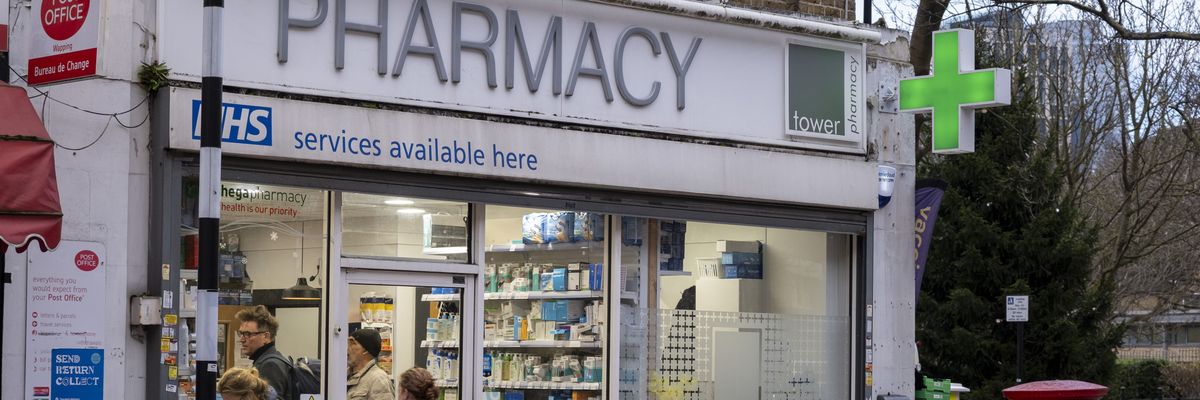
National Health Service pharmacy on Wapping Lane on December, 2 2024 in London, United Kingdom.
(Photo by Mike Kemp/In Pictures via Getty Images)
Jake Johnson
Dec 01, 2025
COMMON DREAMS
The government of British Prime Minister Keir Starmer faced swift backlash on Monday after the Trump administration announced a deal under which the United Kingdom’s prized National Health Service would pay higher prices for new medicines in exchange for tariff exemptions.
The agreement in principle, outlined in a statement by the Office of the United States Trade Representative, was seen by UK lawmakers and advocacy groups as a gross capitulation to US President Donald Trump and the pharmaceutical industry that would harm the NHS and British patients for years to come.
RECOMMENDED...
Biden-Era Law That Trump Has Attacked Delivers Price Cuts for 15 More Drugs Under Medicare
Trump Healthcare Payment Proposal Sparks Fresh Medicare for All Demands to Fix ‘Broken’ Healthcare System
“Giving in to Big Pharma’s demands to hike the price of medicines spells disaster for our NHS, and for the lives of ordinary people,” said Global Justice Now, a UK-based group. “We are being held to ransom. Our government must stand up to Big Pharma and for our NHS by reversing course.”
Under the three-year deal, the NHS would boost the net price it pays for new pharmaceutical drugs, many of which emerge from the US, by 25%—a change that’s expected to cost British taxpayers roughly £3 billion. In return, Trump has agreed not to impose tariffs on UK pharmaceuticals.
Helen Morgan, the Liberal Democrat MP for North Shropshire, denounced the new agreement as “a Trump shakedown of the NHS.” As evidence, she pointed to US Health and Human Services Secretary Robert F. Kennedy Jr.'s celebration of the bilateral deal.
“It cannot go ahead,” said Morgan. “RFK Jr. has put it in black and white: Trump demanded these pay rises to put Americans first, and our government rolled over. Patients stuck on crammed hospital corridors, or unable to get an ambulance, won’t forget it.”
“The British people didn’t vote for this,” Morgan added. “The government must put this agreement to a vote in parliament.”
Andrew Hill, a visiting health economics researcher at the University of Liverpool, similarly criticized the deal.
“The UK hasn’t benefited from this at all, but we’re having to pay all this extra money,” said Hill. “More money spent on drugs means less money spent on ambulances, doctors, nurses, simple health interventions.”
In addition to facing the threat of Trump tariffs, the UK government was under pressure from the powerful pharmaceutical industry to jack up NHS drug spending. The Guardian reported in September that “big pharmaceutical companies have ditched or paused nearly £2 billion in planned UK investments so far this year” as the firms “accused the government of not spending enough on new medicines.”
Survey data released just ahead of Monday’s deal announcement shows that 64% of the British public is opposed to the NHS paying higher prices for medicines.
“This is a betrayal of NHS patients,” said Diarmaid McDonald, executive director of the advocacy group Just Treatment. “Big Pharma have got what they want. Donald Trump has got what he wants. In the face of their coordinated threats, the government has folded and thousands of patients will pay for this with their lives, as precious funds get stripped from other parts of the health service to line the pockets of rich pharmaceutical execs.”
“MPs need to urgently hold the government to account,” McDonald added, “and demand they publish the evidence showing the impact of this catastrophic move.”
“This outrageous giveaway to Big Pharma does nothing to lower prices in the United States. It only hurts UK patients.”
Asked at a Monday press briefing if the deal would actually benefit US patients and consumers, as the Trump administration has claimed, or if the alleged revenue generated by the agreement would just be “sucked up” by the drug companies, White House Press Secretary Karoline Leavitt did not have an immediate answer.
“I’m going to be honest with you, Ed,” Leavitt told the reporter: “I’ll get you an answer to that question after the briefing.”
Peter Maybarduk, Public Citizen’s Access to Medicines director, argued in a statement that the agreement wouldn’t help Americans or Britons.
“ Drug prices are far too high everywhere, including in the UK, backed by patent monopolies and contributing to rationing and preventable suffering,” said Maybarduk. “This outrageous giveaway to Big Pharma does nothing to lower prices in the United States. It only hurts UK patients while distracting from the serious action needed at home to hold Pharma accountable and make medicine affordable and available for all.”
‘Truly Barbaric’: Number of People Killed or Maimed by Landmines Hits Five-Year High
“Even when fighting stops, these hidden killers remain active for decades, continuing to destroy lives long after the combat has stopped,” said one campaigner.
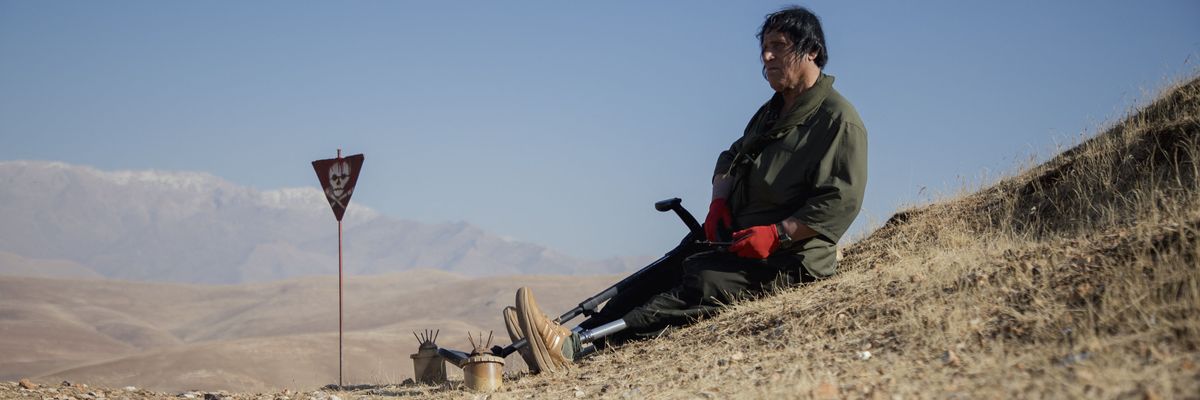
Hoshyar Ali, who lost both legs and several family members to explosions, sits near landmines on a hillside in Halabja, Iraq on November 20, 2025. He has been clearing landmines for over four decades.
(Photo by Showan Sulaiman/Middle East Images/AFP via Getty Images)
Jessica Corbett
Dec 01, 2025
COMMON DREAMS
The 27th annual Landmine Monitor report revealed on Monday that antipersonnel landmines and other explosive remnants of war killed at least 1,945 people and injured another 4,325 in 2024—the highest yearly casualty figure since 2020 and a 9% increase from the previous year.
Since the Mine Ban Treaty entered into force in 1999, “casualty records have included 165,724 people recorded as killed (47,904) or injured (113,595) or of unknown survival outcome (4,225),” according to the new report from the Nobel Peace Prize-winning International Campaign to Ban Landmines (ICBL).
The ICBL published the report as state parties to the treaty kicked off a meeting in Geneva, Switzerland. It details not only casualties but also treaty updates; production, transfers, and stockpiles of mines; alleged or confirmed uses; existing contamination; and international efforts to aid victims and clean up impacted regions.
Also known as the Ottawa Treaty, it is now supported by 166 countries, after the Marshall Islands ratified the pact in March and Tonga acceded in June. Despite that progress, there have also been steps backward, as Mark Hiznay, Landmine Monitor editor for ban policy, highlighted in a Monday statement.
“Five states renounced their treaty obligations in a matter of months,” Hiznay said, “when evidence shows if they use mines, it can take decades and enormous resources to clear contaminated land and assist the new victims, who will feel the impact of mine use long after the conflict has ceased.”
Dec 01, 2025
COMMON DREAMS
The 27th annual Landmine Monitor report revealed on Monday that antipersonnel landmines and other explosive remnants of war killed at least 1,945 people and injured another 4,325 in 2024—the highest yearly casualty figure since 2020 and a 9% increase from the previous year.
Since the Mine Ban Treaty entered into force in 1999, “casualty records have included 165,724 people recorded as killed (47,904) or injured (113,595) or of unknown survival outcome (4,225),” according to the new report from the Nobel Peace Prize-winning International Campaign to Ban Landmines (ICBL).
The ICBL published the report as state parties to the treaty kicked off a meeting in Geneva, Switzerland. It details not only casualties but also treaty updates; production, transfers, and stockpiles of mines; alleged or confirmed uses; existing contamination; and international efforts to aid victims and clean up impacted regions.
Also known as the Ottawa Treaty, it is now supported by 166 countries, after the Marshall Islands ratified the pact in March and Tonga acceded in June. Despite that progress, there have also been steps backward, as Mark Hiznay, Landmine Monitor editor for ban policy, highlighted in a Monday statement.
“Five states renounced their treaty obligations in a matter of months,” Hiznay said, “when evidence shows if they use mines, it can take decades and enormous resources to clear contaminated land and assist the new victims, who will feel the impact of mine use long after the conflict has ceased.”
The state parties in the process of legally withdrawing are Estonia, Finland, Latvia, Lithuania, and Poland. ICBL director Tamar Gabelnick argued Monday that “governments must speak out to uphold the treaty, prevent further departures, reinforce its provisions globally, and ensure no more countries use, produce, or acquire antipersonnel mines.”
“Turning back is not an option; we have come too far, and the human cost is simply too high,” Gabelnick warned.
There have been recent reports of mine use by both state parties to the pact and countries that have refused to embrace the treaty. The publication notes alleged use by government forces in Myanmar; by Iran, along its borders with Afghanistan and Pakistan; and by North Korea, along its borders with China and South Korea. Additionally, in July, Thailand accused a fellow state party, Cambodia, of using mines along their disputed border. Cambodia has denied the allegations.
Another state party, Ukraine, is trying to unlawfully “suspend the operation” of the treaty while battling a Russian invasion, and the report points to “increasing indications” of mine use by Ukrainian forces in 2024-25. Russia—one of the few dozen nations that have not signed on to the agreement—has used mines “extensively” since invading its neighbor in February 2022.
The United States has also never formally joined the treaty and has come under fire for recent decisions. After initially aiming to accede to the treaty, the outgoing Biden administration last year approved a plan to provide antipersonnel landmines to Ukraine. This year, the Trump administration has made deep cuts to foreign aid that have disrupted mine clearance operations.
“Even when fighting stops, these hidden killers remain active for decades, continuing to destroy lives long after the combat has stopped,” Anne Héry, advocacy director at the group Humanity & Inclusion US, said in a Monday statement. “States parties must live up to their obligations under the Mine Ban Treaty: to condemn, in the strongest possible terms, any use of antipersonnel mines by any actor, under any circumstance.”
“A large part of the victims recorded in the Landmine Monitor 2025, like in the previous years, are injured or killed by landmines and explosive remnants long after the fighting has ended, when people return to their homes believing they can start a new life,” she continued. “Landmines are truly barbaric weapons that kill and injure largely outside periods of active conflict.”
On Wednesday, Humanity & Inclusion US executive director Hannah Guedenet will join fellow experts for a virtual briefing “to discuss the latest Monitor reports, the human cost of these weapons, and the role US leadership must play at this pivotal moment,” the group leader previewed in a Monday opinion piece for Common Dreams.
“Bringing these insights directly to policymakers and advocates is essential to strengthening global norms and advancing effective solutions,” she wrote. Despite never joining the Mine Ban Treaty or the 2010 Convention on Cluster Munitions, “the United States has long been one of the world’s largest supporters of mine clearance and victim assistance, helping make former battlefields safe for farming, economic investment, and community life.”
“The case for action is both moral and pragmatic. Every mine removed or cluster bomb destroyed reopens land for cultivation, enables displaced families to return home, and prevents future casualties. These are tangible, measurable outcomes that support US foreign policy priorities: stability, economic recovery, and the protection of civilians in conflict,” she added. “In a time of never-ending partisan fights, this is a place where both sides can come together and agree on the right steps forward.”
Over 150 Religious Orgs Endorse Salvadoran Mining Ban Reversed by Bukele
A joint letter expresses “steadfast support for the people of El Salvador and their religious institutions and leaders who are struggling to maintain their country’s historic ban on metal mining... so all Salvadorans can enjoy their God-given right to clean water.”

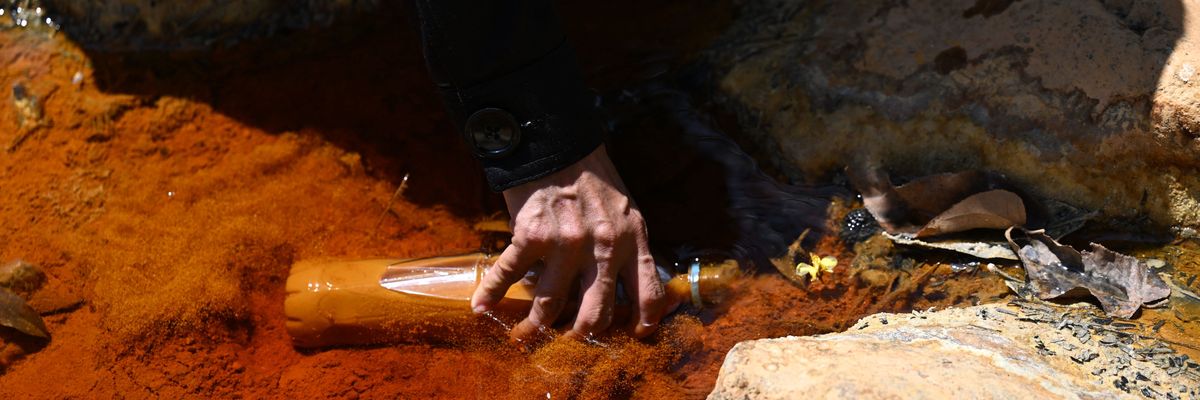
An environmentalist takes a sample of water from San Sebastian River polluted by mining activity in Santa Rosa de Lima, La Union department, El Salvador on February 28, 2025.
(Photo by Marvin Recinos / AFP via Getty Images)
Olivia Rosane
Dec 01, 2025
COMMON DREAMS
More than 150 faith-based organizations from 25 countries launched an open letter on Monday supporting an El Salvadoran ban on metals mining that was overturned by right-wing President Nayib Bukele in 2024.
The original ban was passed by the country’s legislature in 2017 following years of study and the advocacy of El Salvador’s religious communities. The letter signatories, which include 153 global and regional groups from a wide range of traditions, stood with faith groups in El Salvador in calling both for no new mining and for an end to the political persecution of land and water defenders.
“We, the undersigned, from a diversity of church structures (representing local, regional, and national expressions of churches and related agencies), express our steadfast support for the people of El Salvador and their religious institutions and leaders who are struggling to maintain their country’s historic ban on metal mining—in place from 2017 to 2024—so all Salvadorans can enjoy their God-given right to clean water,” the letter begins. “We stand in solidarity with civic and religious leaders who are being persecuted and imprisoned for working against injustices, including the devastation that metals mining would cause their communities.”
The faith leaders also released a video reading sections of the letter aloud.
“This letter is a hope-filled expression of solidarity and humanism.”
“Through this declaration, faith communities from around the world have affirmed their solidarity with faith leaders in El Salvador as they carry out their duty to protect water as a sacred inherited trust, a human right meant to be shared by all,” Rev. Dr. Japhet Ndhlovu, executive minister for the Church in the Mission Unit of The United Church of Canada, said in a statement.
El Salvadorans already struggle to gain access to clean and plentiful water. The water of 90% of Salvadorans is contaminated, half of all Salvadorans have “intermittent access to water,” and one-half of those with water access report it is poor quality, said Gordon Whitman, managing director for international organizing at letter-signatory Faith in Action, at a Monday press briefing anouncing the letter.
“Restarting mining would be catastrophic,” Whitman said.
The mining ban was already hard won.
A 2012 study commissioned by the government affirmed that mining would endanger the nation’s rivers and watersheds with cyanide, arsenic, and other toxins and found widespread public opposition to mining. Before the ban was passed in March of 2017, the archbishop of San Salvador mobilized support for it by leading a march to deliver a draft of the ban to the National Assembly. After it passed unanimously, he called it a “miracle,” according to John Cavanagh, a senior adviser at the Institute for Policy Studies.
The law made El Salvador “the first nation on Earth to ban mining to save its rivers,” Cavanagh said at the press briefing.
“The Salvadoran precautionary approach banning metal mining is essential to protect drinking water and aquatic ecosystems, given the irreparable damage that has been done by irresponsible mining around the world,” Willamette University professor emeritus Susan Lea Smith of the Ecumenical Water Network of the World Council of Churches said in a statement. “El Salvador had made a difficult but wise choice in banning metal mining. Clean water is a gift from God, and so, for the sake of clean water and the rest of Creation, we work together for the common good.”
“It is a sin to render water undrinkable.”
However, in December 2024, Bukele’s government passed a new law that allows mining once again without environmental oversight or community consultation.
“It’s a law that has become one of the main threats for the Salvadorans’ right to clean water,” Pedro Cabezas of International Allies Against Mining in El Salvador said in the press conference.
Cabezas also said the new law was a “symptom of what El Salvador has been going through over the last five years” as Bukele concentrates all power within the executive and his own party.
While the Salvadoran public and civil society groups remain opposed to mining—a December 2024 poll found that 3 in 5 are against the practice in the country—the Bukele government has ramped up its criminalization of dissent.
In this context, the Catholic, protestant, and evangelical churches in El Salvador are among the remaining institutions “with space to speak out” against mining, Christie Neufeldt of the United Church of Canada explained at the briefing.
For example, in March, Mons. José Luis Escobar Alas, the archbishop of San Salvador, presented an anti-mining petition signed by 150,000 people.
International faith groups wanted to stand in solidarity with their Salvadoran counterparts.
“This letter is a hope-filled expression of solidarity and humanism in the face of forces that would degrade” the Earth, human rights, and democracy, Neufeldt said.
Salvadoran faith groups “remind us that access to water is a fundamental human right and that clean water is not a commodity, but a shared inheritance entrusted to all people by God. And they remind us that ending the mining ban is fueling egregious rights violations against those organizing to protect their water and land from destruction,” the letter says.
Whitman spoke about the importance of water to several religious traditions.
“All of our faith traditions teach that water is a sacred gift of God,” Whitman said, adding, “It is a sin to render water undrinkable.”
In the press briefing, speakers acknowledged the link between rising authoritarianism and environmental deregulation, in El Salvador and beyond.
Cavanagh noted that, as the energy transition increases demand for rare earth minerals and global instability makes gold more attractive, “oligarchs linked to extractivism” have begun “pumping money into elections” to boost candidates who will allow them to exploit resources.
“It’s not at all surprising that the opposition to mining comes from the people, and so it’s absolutely natural that the oligarchs, that the transnational corporations are going to want to crack down on public dissent,” Smith said, adding there was an “intimate connection between authoritarianism and any extractive industry, including mining.”
In the end, however, the letter signatories expressed faith for a greener, freer future.
“We pray for the Salvadoran people and their government, that they protect the sacred gift of creation, uphold human rights, and ensure every family clean water—now and for generations to come,” they concluded.
A joint letter expresses “steadfast support for the people of El Salvador and their religious institutions and leaders who are struggling to maintain their country’s historic ban on metal mining... so all Salvadorans can enjoy their God-given right to clean water.”

An environmentalist takes a sample of water from San Sebastian River polluted by mining activity in Santa Rosa de Lima, La Union department, El Salvador on February 28, 2025.
(Photo by Marvin Recinos / AFP via Getty Images)
Olivia Rosane
Dec 01, 2025
COMMON DREAMS
More than 150 faith-based organizations from 25 countries launched an open letter on Monday supporting an El Salvadoran ban on metals mining that was overturned by right-wing President Nayib Bukele in 2024.
The original ban was passed by the country’s legislature in 2017 following years of study and the advocacy of El Salvador’s religious communities. The letter signatories, which include 153 global and regional groups from a wide range of traditions, stood with faith groups in El Salvador in calling both for no new mining and for an end to the political persecution of land and water defenders.
“We, the undersigned, from a diversity of church structures (representing local, regional, and national expressions of churches and related agencies), express our steadfast support for the people of El Salvador and their religious institutions and leaders who are struggling to maintain their country’s historic ban on metal mining—in place from 2017 to 2024—so all Salvadorans can enjoy their God-given right to clean water,” the letter begins. “We stand in solidarity with civic and religious leaders who are being persecuted and imprisoned for working against injustices, including the devastation that metals mining would cause their communities.”
The faith leaders also released a video reading sections of the letter aloud.
“This letter is a hope-filled expression of solidarity and humanism.”
“Through this declaration, faith communities from around the world have affirmed their solidarity with faith leaders in El Salvador as they carry out their duty to protect water as a sacred inherited trust, a human right meant to be shared by all,” Rev. Dr. Japhet Ndhlovu, executive minister for the Church in the Mission Unit of The United Church of Canada, said in a statement.
El Salvadorans already struggle to gain access to clean and plentiful water. The water of 90% of Salvadorans is contaminated, half of all Salvadorans have “intermittent access to water,” and one-half of those with water access report it is poor quality, said Gordon Whitman, managing director for international organizing at letter-signatory Faith in Action, at a Monday press briefing anouncing the letter.
“Restarting mining would be catastrophic,” Whitman said.
The mining ban was already hard won.
A 2012 study commissioned by the government affirmed that mining would endanger the nation’s rivers and watersheds with cyanide, arsenic, and other toxins and found widespread public opposition to mining. Before the ban was passed in March of 2017, the archbishop of San Salvador mobilized support for it by leading a march to deliver a draft of the ban to the National Assembly. After it passed unanimously, he called it a “miracle,” according to John Cavanagh, a senior adviser at the Institute for Policy Studies.
The law made El Salvador “the first nation on Earth to ban mining to save its rivers,” Cavanagh said at the press briefing.
“The Salvadoran precautionary approach banning metal mining is essential to protect drinking water and aquatic ecosystems, given the irreparable damage that has been done by irresponsible mining around the world,” Willamette University professor emeritus Susan Lea Smith of the Ecumenical Water Network of the World Council of Churches said in a statement. “El Salvador had made a difficult but wise choice in banning metal mining. Clean water is a gift from God, and so, for the sake of clean water and the rest of Creation, we work together for the common good.”
“It is a sin to render water undrinkable.”
However, in December 2024, Bukele’s government passed a new law that allows mining once again without environmental oversight or community consultation.
“It’s a law that has become one of the main threats for the Salvadorans’ right to clean water,” Pedro Cabezas of International Allies Against Mining in El Salvador said in the press conference.
Cabezas also said the new law was a “symptom of what El Salvador has been going through over the last five years” as Bukele concentrates all power within the executive and his own party.
While the Salvadoran public and civil society groups remain opposed to mining—a December 2024 poll found that 3 in 5 are against the practice in the country—the Bukele government has ramped up its criminalization of dissent.
In this context, the Catholic, protestant, and evangelical churches in El Salvador are among the remaining institutions “with space to speak out” against mining, Christie Neufeldt of the United Church of Canada explained at the briefing.
For example, in March, Mons. José Luis Escobar Alas, the archbishop of San Salvador, presented an anti-mining petition signed by 150,000 people.
International faith groups wanted to stand in solidarity with their Salvadoran counterparts.
“This letter is a hope-filled expression of solidarity and humanism in the face of forces that would degrade” the Earth, human rights, and democracy, Neufeldt said.
Salvadoran faith groups “remind us that access to water is a fundamental human right and that clean water is not a commodity, but a shared inheritance entrusted to all people by God. And they remind us that ending the mining ban is fueling egregious rights violations against those organizing to protect their water and land from destruction,” the letter says.
Whitman spoke about the importance of water to several religious traditions.
“All of our faith traditions teach that water is a sacred gift of God,” Whitman said, adding, “It is a sin to render water undrinkable.”
In the press briefing, speakers acknowledged the link between rising authoritarianism and environmental deregulation, in El Salvador and beyond.
Cavanagh noted that, as the energy transition increases demand for rare earth minerals and global instability makes gold more attractive, “oligarchs linked to extractivism” have begun “pumping money into elections” to boost candidates who will allow them to exploit resources.
“It’s not at all surprising that the opposition to mining comes from the people, and so it’s absolutely natural that the oligarchs, that the transnational corporations are going to want to crack down on public dissent,” Smith said, adding there was an “intimate connection between authoritarianism and any extractive industry, including mining.”
In the end, however, the letter signatories expressed faith for a greener, freer future.
“We pray for the Salvadoran people and their government, that they protect the sacred gift of creation, uphold human rights, and ensure every family clean water—now and for generations to come,” they concluded.
‘Fighting for Our Lives’: Youth Sue to Block Utah Fossil Fuel Permits
“Some days I can’t even go outside because the air is so polluted,” said one plaintiff. “I get headaches, feel dizzy when it’s too hot, and sometimes I can’t even see down my own street because of smoke from wildfires.”

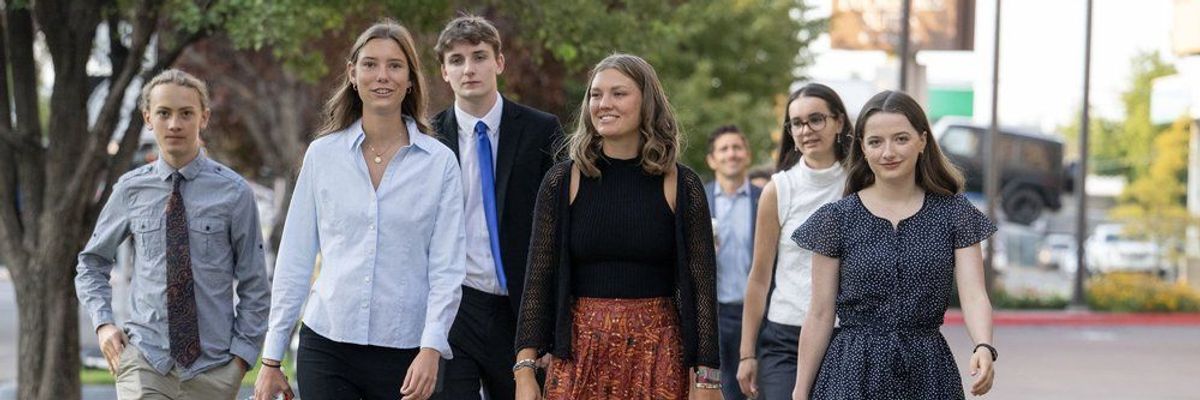
Young people from Utah are suing to block fossil fuel permits in the state.
(Photo by Our Children’s Trust)
Jessica Corbett
Dec 01, 2025
COMMON DREAMS
Following the Utah Supreme Court’s dismissal of a youth-led constitutional climate lawsuit earlier this year, 10 young Utahns on Monday launched a new case intended to block state permits for coal, gas, and oil development.
Backed by Our Children’s Trust—a legal group behind various youth climate suits, including Juliana v. United States and Held v. State of Montana—the plaintiffs are suing the Utah Board of Oil, Gas, and Mining; the Division of Oil, Gas, and Mining; and the director of the latter, Mick Thomas, in state court.
“Plaintiffs bring this action to protect their fundamental rights to life, health, and safety that defendants are violating by permitting fossil fuel development, when doing so is harmful, unnecessary, and more expensive than clean, renewable forms of energy,” says the complaint.
“Due to localized air and climate pollution caused by defendants’ permitting activities, plaintiffs live in some of the worst air quality of any state in the nation and face climate disruptions, including elevated temperatures and deadly heatwaves, frequent and severe wildfires and smoke, exceptional drought, exacerbated medical conditions, and increased health risks,” the filing continues.
“Defendants’ fossil fuel permitting challenged here is unconstitutional because it harms the health and safety of plaintiffs, interferes with their healthy development, and takes years off of their lives,” the document adds.
When the Utah Supreme Court upheld the dismissal of the earlier lawsuit in March, Our Children’s Trust called it a “partial win” because, as lead attorney Andrew Welle explained at the time, “the decision opens a clear path forward for continuing our challenge to the state’s actions in promoting fossil fuel development.”
The lead plaintiff for both cases is Natalie Roberts, an 18-year-old who lives in Salt Lake City. In April, the American Lung Association’s annual State of the Air report gave the state capital’s metro area an “F” grade for both ground-level ozone (smog) and particle (soot) pollution.
“Both ozone and particle pollution can cause premature death and other serious health effects such as asthma attacks, heart attacks and strokes, preterm births, and impaired cognitive functioning later in life. Particle pollution can also cause lung cancer,” said Nick Torres, advocacy director for the American Lung Association, in a statement when the report was released.
“Unfortunately, too many people in the Salt Lake City metro area are living with unhealthy levels of ozone and particle pollution,” Torres continued. “This air pollution is causing kids to have asthma attacks, making people who work outdoors sick and unable to work, and leading to low birth weight in babies. We urge Utah policymakers to take action to improve our air quality, and we are calling on everyone to support the incredibly important work of the US Environmental Protection Agency.”
Roberts, in a Monday statement, shared her experiences with her city’s polluted air and increasingly hot temperatures.
“Some days I can’t even go outside because the air is so polluted,” the teenager said. “I get headaches, feel dizzy when it’s too hot, and sometimes I can’t even see down my own street because of smoke from wildfires. I worry every day about my health, my future, and what kind of world I’ll live in if the state keeps approving these fossil fuel permits. We’re fighting for our lives and asking the court to protect us before it’s too late.”
The complaint details similar experiences by other plaintiffs. When 21-year-old Park City resident Sedona Murdock “is exposed to dangerous air quality, she experiences pain in her chest and lungs, difficulty breathing, and coughing, and it can trigger life-threatening asthma attacks,” it says. “Sedona experiences stress and anxiety because of the harms to her health that she has already suffered.”
Otis W. and Lev W., brothers from Salt Lake City who are respectively 16 and 13, “experience painful headaches from bad air quality and have often had days where their schools have not allowed them or their peers to go outside,” according to the filing. “Increasingly intense rain events have resulted in flooding and water intrusion in Otis and Lev’s home, threatening their shelter and presenting a risk of dangerous mold growth.”
“Decreased snowfall, snowpack, precipitation, and warming temperatures are diminishing water sources that provide water for Otis and Lev’s family and community, threatening their water security,” the complaint says. “Several trees in Otis and Lev’s yard that provided shade for their home have already died from increased heat and drought conditions, making their home hotter and increasing the dangers to them of rising temperatures and heatwaves.”
The document also points out how the pair and other youth plaintiffs have had to alter or abandon beloved outdoor activities, from team sports such as soccer to camping, hiking, mountain biking, rafting, running, and skiing, because of the fossil fuel-driven climate emergency.
“The state cannot continue issuing fossil fuel permits that put children’s lives and health in jeopardy,” said Welle, the lead attorney. “This case is about holding Utah accountable to its constitutional obligations to protect youth from serious harm caused by air pollution, climate impacts, and unsafe fossil fuel development. The court now has what it says it needs to hear and decide this case and prevent further harm to these young people and ensure the state governs responsibly.”
“Some days I can’t even go outside because the air is so polluted,” said one plaintiff. “I get headaches, feel dizzy when it’s too hot, and sometimes I can’t even see down my own street because of smoke from wildfires.”

Young people from Utah are suing to block fossil fuel permits in the state.
(Photo by Our Children’s Trust)
Jessica Corbett
Dec 01, 2025
COMMON DREAMS
Following the Utah Supreme Court’s dismissal of a youth-led constitutional climate lawsuit earlier this year, 10 young Utahns on Monday launched a new case intended to block state permits for coal, gas, and oil development.
Backed by Our Children’s Trust—a legal group behind various youth climate suits, including Juliana v. United States and Held v. State of Montana—the plaintiffs are suing the Utah Board of Oil, Gas, and Mining; the Division of Oil, Gas, and Mining; and the director of the latter, Mick Thomas, in state court.
“Plaintiffs bring this action to protect their fundamental rights to life, health, and safety that defendants are violating by permitting fossil fuel development, when doing so is harmful, unnecessary, and more expensive than clean, renewable forms of energy,” says the complaint.
“Due to localized air and climate pollution caused by defendants’ permitting activities, plaintiffs live in some of the worst air quality of any state in the nation and face climate disruptions, including elevated temperatures and deadly heatwaves, frequent and severe wildfires and smoke, exceptional drought, exacerbated medical conditions, and increased health risks,” the filing continues.
“Defendants’ fossil fuel permitting challenged here is unconstitutional because it harms the health and safety of plaintiffs, interferes with their healthy development, and takes years off of their lives,” the document adds.
When the Utah Supreme Court upheld the dismissal of the earlier lawsuit in March, Our Children’s Trust called it a “partial win” because, as lead attorney Andrew Welle explained at the time, “the decision opens a clear path forward for continuing our challenge to the state’s actions in promoting fossil fuel development.”
The lead plaintiff for both cases is Natalie Roberts, an 18-year-old who lives in Salt Lake City. In April, the American Lung Association’s annual State of the Air report gave the state capital’s metro area an “F” grade for both ground-level ozone (smog) and particle (soot) pollution.
“Both ozone and particle pollution can cause premature death and other serious health effects such as asthma attacks, heart attacks and strokes, preterm births, and impaired cognitive functioning later in life. Particle pollution can also cause lung cancer,” said Nick Torres, advocacy director for the American Lung Association, in a statement when the report was released.
“Unfortunately, too many people in the Salt Lake City metro area are living with unhealthy levels of ozone and particle pollution,” Torres continued. “This air pollution is causing kids to have asthma attacks, making people who work outdoors sick and unable to work, and leading to low birth weight in babies. We urge Utah policymakers to take action to improve our air quality, and we are calling on everyone to support the incredibly important work of the US Environmental Protection Agency.”
Roberts, in a Monday statement, shared her experiences with her city’s polluted air and increasingly hot temperatures.
“Some days I can’t even go outside because the air is so polluted,” the teenager said. “I get headaches, feel dizzy when it’s too hot, and sometimes I can’t even see down my own street because of smoke from wildfires. I worry every day about my health, my future, and what kind of world I’ll live in if the state keeps approving these fossil fuel permits. We’re fighting for our lives and asking the court to protect us before it’s too late.”
The complaint details similar experiences by other plaintiffs. When 21-year-old Park City resident Sedona Murdock “is exposed to dangerous air quality, she experiences pain in her chest and lungs, difficulty breathing, and coughing, and it can trigger life-threatening asthma attacks,” it says. “Sedona experiences stress and anxiety because of the harms to her health that she has already suffered.”
Otis W. and Lev W., brothers from Salt Lake City who are respectively 16 and 13, “experience painful headaches from bad air quality and have often had days where their schools have not allowed them or their peers to go outside,” according to the filing. “Increasingly intense rain events have resulted in flooding and water intrusion in Otis and Lev’s home, threatening their shelter and presenting a risk of dangerous mold growth.”
“Decreased snowfall, snowpack, precipitation, and warming temperatures are diminishing water sources that provide water for Otis and Lev’s family and community, threatening their water security,” the complaint says. “Several trees in Otis and Lev’s yard that provided shade for their home have already died from increased heat and drought conditions, making their home hotter and increasing the dangers to them of rising temperatures and heatwaves.”
The document also points out how the pair and other youth plaintiffs have had to alter or abandon beloved outdoor activities, from team sports such as soccer to camping, hiking, mountain biking, rafting, running, and skiing, because of the fossil fuel-driven climate emergency.
“The state cannot continue issuing fossil fuel permits that put children’s lives and health in jeopardy,” said Welle, the lead attorney. “This case is about holding Utah accountable to its constitutional obligations to protect youth from serious harm caused by air pollution, climate impacts, and unsafe fossil fuel development. The court now has what it says it needs to hear and decide this case and prevent further harm to these young people and ensure the state governs responsibly.”
Idaho bar dog-piled with one-star reviews after offering free beer for helping ICE
Alexander Willis
November 30, 2025
RAW STORY

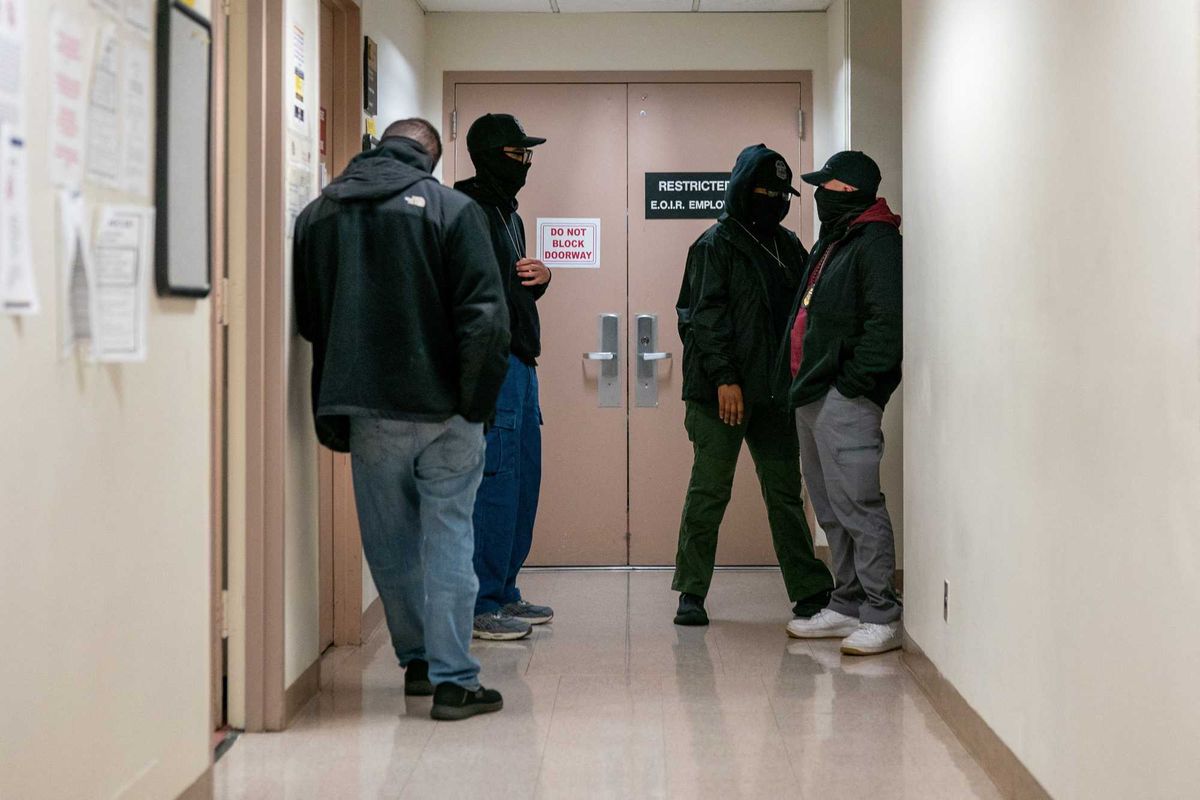
Federal immigration officers wait for respondents to depart from their hearings to conduct targeted detainments at U.S. immigration court in Manhattan, in New York City, U.S., November 26, 2025. REUTERS/David 'Dee' Delgado
A bar in Idaho is getting pummeled with one-star reviews online after offering customers “free beer for one month” if they provide proof of having assisted Immigration and Customs Enforcement in deporting an undocumented migrant.
“ALERT: Anyone who helps ICE identify and ultimately deport an illegal from Idaho gets FREE BEER FOR ONE MONTH at Old State Saloon!” reads an online post Saturday from Old State Saloon, a bar and grill in Eagle, Idaho.
The bar’s Google page was immediately flooded with negative reviews, many of which staff at Old State Saloon responded to, calling reviewers “angry progressive liberals” and “liars.”
“And the 1 star reviews roll in from the loser LEFT,” reads another post from the Old State Saloon X account.
One such one-star review reads: “Don’t bother. Place is trashy and overly political.” Old State Saloon staff, in turn, responded to the review.
“Another liar. Politics is not our entire personality. We have locally focussed food and entertainment along with organic coffee that is FREE for veterans!” reads the response from Old State Saloon.
“We host home school meetups, line dancing lessons, karaoke nights, etc. [You] must be an angry progressive liberal to be so sensitive and such a liar.”
Old State Saloon even resorted to attacking one-star reviews that made no mention of the bar’s political activism, such as from one reviewer who called the food “super greasy.”
“Liar,” Old State Saloon responded. “You never came to Old State Saloon. Let me guess, another lib? All you people do is lie, lie, lie.”
The post gained enough traction that the official X account for the Department of Homeland Security reported Old State Saloon’s initial post, drawing even more attention to Old State Saloon from both supporters and critics alike.“Oh so this is where the Nazis hang out in Idaho?” wrote X user “Wu Tang is for the Children,” a popular political and cultural commentator who’s amassed more than 281,000 followers.
Alexander Willis
November 30, 2025
RAW STORY

Federal immigration officers wait for respondents to depart from their hearings to conduct targeted detainments at U.S. immigration court in Manhattan, in New York City, U.S., November 26, 2025. REUTERS/David 'Dee' Delgado
A bar in Idaho is getting pummeled with one-star reviews online after offering customers “free beer for one month” if they provide proof of having assisted Immigration and Customs Enforcement in deporting an undocumented migrant.
“ALERT: Anyone who helps ICE identify and ultimately deport an illegal from Idaho gets FREE BEER FOR ONE MONTH at Old State Saloon!” reads an online post Saturday from Old State Saloon, a bar and grill in Eagle, Idaho.
The bar’s Google page was immediately flooded with negative reviews, many of which staff at Old State Saloon responded to, calling reviewers “angry progressive liberals” and “liars.”
“And the 1 star reviews roll in from the loser LEFT,” reads another post from the Old State Saloon X account.
One such one-star review reads: “Don’t bother. Place is trashy and overly political.” Old State Saloon staff, in turn, responded to the review.
“Another liar. Politics is not our entire personality. We have locally focussed food and entertainment along with organic coffee that is FREE for veterans!” reads the response from Old State Saloon.
“We host home school meetups, line dancing lessons, karaoke nights, etc. [You] must be an angry progressive liberal to be so sensitive and such a liar.”
Old State Saloon even resorted to attacking one-star reviews that made no mention of the bar’s political activism, such as from one reviewer who called the food “super greasy.”
“Liar,” Old State Saloon responded. “You never came to Old State Saloon. Let me guess, another lib? All you people do is lie, lie, lie.”
The post gained enough traction that the official X account for the Department of Homeland Security reported Old State Saloon’s initial post, drawing even more attention to Old State Saloon from both supporters and critics alike.“Oh so this is where the Nazis hang out in Idaho?” wrote X user “Wu Tang is for the Children,” a popular political and cultural commentator who’s amassed more than 281,000 followers.
Trump-tapped economist describes poverty as ‘a choice’ in rant against SNAP recipients
Alexander Willis
December 1, 2025
RAW STORY

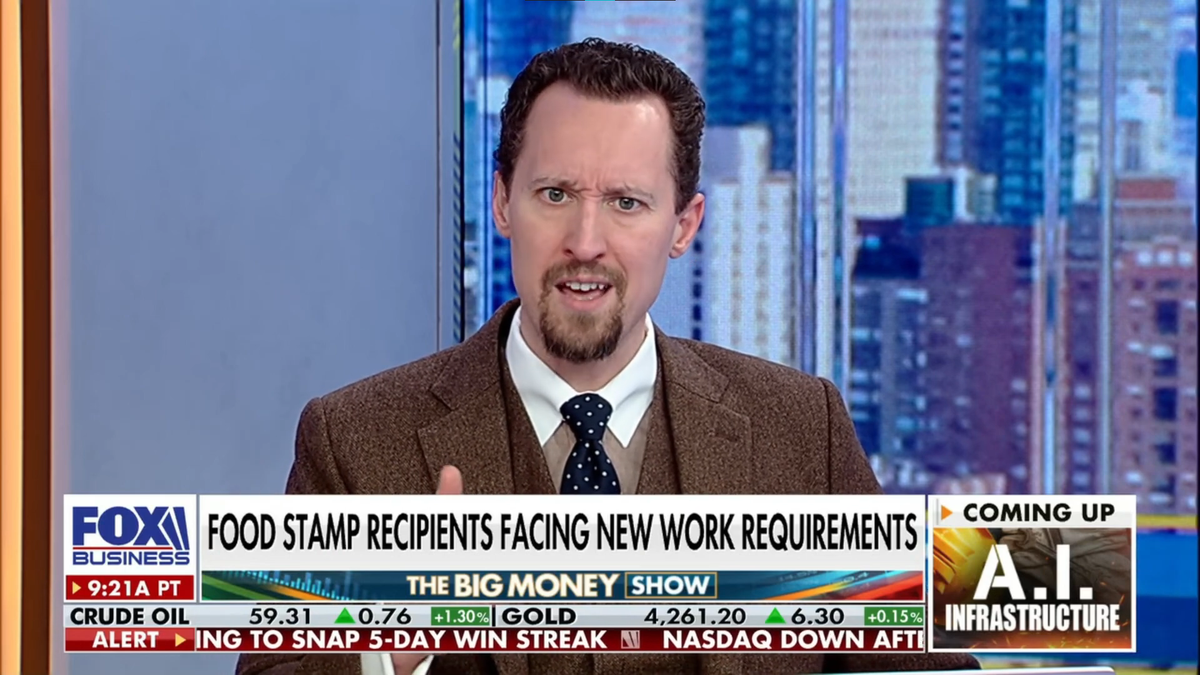
Economist E.J. Antoni speaks on Fox Business' "The Big Money Show," Dec. 1, 2025.
RATIONAL CHOICE ECONOMICS NOT SO RATIONAL
Alexander Willis
December 1, 2025
RAW STORY

Economist E.J. Antoni speaks on Fox Business' "The Big Money Show," Dec. 1, 2025.
(Screengrab / Fox Business)
Economist E.J. Antoni, who President Donald Trump nominated to take charge of the Labor Department before reversing course, erupted at Americans receiving federal food assistance on Monday on Fox Business, claiming that many of them chose to live in poverty.
There are around 42 million Americans – including 16 million children – who receive food assistance through the Supplemental Nutrition Assistance Program, or SNAP, which, due to Trump’s One Big Beautiful Bill Act, is projected to boot at least 2.4 million people from the program, though it may affect as many as 22.3 million families over 10 years.
And, while the program provides an average monthly benefit of just under $188 per month in food assistance, with strict income caps that average out across the nation at $20,352 per year, Antoni considered it a “moral issue” for many Americans to even receive said benefits.
“Yes, you can see how many of them are in poverty, have little to no income, but for many of these people, that's a choice!” Antoni said. “That's not right, and this is actually a moral issue, it's not just economic; it is morally wrong that the taxpayer is footing the bill for people who can but are simply choosing not to work. That's not right!”
Fox Business anchor Taylor Riggs jumped into the conversation as well, and recalled how her father – who she suggested owned a business – struggled to hire workers amid the COVID-19 pandemic due to offering low wages, or, at least, wages lower than what unemployment benefits offered, which the CARES Act bolstered with an additional $600 per week for three months, later lowered to $300 before ultimately expiring.
“I firmly believe in my blood [that] there is dignity in work. Work is a moral issue; it's good for the soul, it's good for families, it's good for communities, it's good for your work ethic, it's good for kids to see moms and dads go off to work every day,” Riggs said.
“...We're undergoing a shift in society right now where there are some younger workers who don't want to work, maybe where there's sort of this entitlement, and I'm hoping that that isn't the case. Is that changing? Is this new generation thinking 'nah, I feel entitled, I kind of want to sit at home and collect that paycheck, I'm not sure I want revenue, I think I want handouts!'”
Economist E.J. Antoni, who President Donald Trump nominated to take charge of the Labor Department before reversing course, erupted at Americans receiving federal food assistance on Monday on Fox Business, claiming that many of them chose to live in poverty.
There are around 42 million Americans – including 16 million children – who receive food assistance through the Supplemental Nutrition Assistance Program, or SNAP, which, due to Trump’s One Big Beautiful Bill Act, is projected to boot at least 2.4 million people from the program, though it may affect as many as 22.3 million families over 10 years.
And, while the program provides an average monthly benefit of just under $188 per month in food assistance, with strict income caps that average out across the nation at $20,352 per year, Antoni considered it a “moral issue” for many Americans to even receive said benefits.
“Yes, you can see how many of them are in poverty, have little to no income, but for many of these people, that's a choice!” Antoni said. “That's not right, and this is actually a moral issue, it's not just economic; it is morally wrong that the taxpayer is footing the bill for people who can but are simply choosing not to work. That's not right!”
Fox Business anchor Taylor Riggs jumped into the conversation as well, and recalled how her father – who she suggested owned a business – struggled to hire workers amid the COVID-19 pandemic due to offering low wages, or, at least, wages lower than what unemployment benefits offered, which the CARES Act bolstered with an additional $600 per week for three months, later lowered to $300 before ultimately expiring.
“I firmly believe in my blood [that] there is dignity in work. Work is a moral issue; it's good for the soul, it's good for families, it's good for communities, it's good for your work ethic, it's good for kids to see moms and dads go off to work every day,” Riggs said.
“...We're undergoing a shift in society right now where there are some younger workers who don't want to work, maybe where there's sort of this entitlement, and I'm hoping that that isn't the case. Is that changing? Is this new generation thinking 'nah, I feel entitled, I kind of want to sit at home and collect that paycheck, I'm not sure I want revenue, I think I want handouts!'”
Trump slapped with major lawsuit as Costco demands refund on his tariffs
Matthew Chapman
December 1, 2025
D.E.I. AND UNIONIZED
Matthew Chapman
December 1, 2025
RAW STORY

FILE PHOTO: Shopping carts are seen at the Costco store ahead of Black Friday in Arlington, Virginia, U.S., November 27, 2024. REUTERS/Benoit Tessier/File Photo
The wholesale membership big-box chain Costco is suing the Trump administration, demanding a refund on its tariff expenses.
According to NBC News, "The company said in a Nov. 28 filing that it is seeking a 'full refund' of all ... duties paid as a result of President Donald Trump's executive order which imposed what he called 'reciprocal' tariffs," on the grounds that the International Emergency Economic Powers Act (IEEPA) does not authorize him to unilaterally impose tariffs in the first place.
Trump's "reciprocal tariffs" levy billions of dollars in taxes on Americans who import from practically any foreign country, based on calculations of the U.S. trade balance with those countries — even if a trade surplus or deficit exists for reasons other than statutory trade laws.
“Because IEEPA does not clearly authorize the President to set tariffs ... the Challenged Tariff Orders cannot stand and the defendants are not authorized to implement and collect them,” stated Costco's legal filings.
This comes as the Supreme Court is weighing a landmark case that decides precisely whether IEEPA gives the president the authority to impose tariffs.
Trump has repeatedly taken to his Truth Social platform to demand the Supreme Court let him do what he wants, saying in one recent rant that “The USA is respected again, respected like never before. All of this was brought about by Strong Leadership and TARIFFS, without which we would be a poor and pathetic laughingstock again. Evil, American hating Forces are fighting us at the United States Supreme Court. Pray to God that our Nine Justices will show great wisdom, and do the right thing for America!”
Costco has clashed with MAGA forces on previous occasions as well, having fended off an attempt by a Trump-aligned think tank to pressure its shareholders into abolishing the company's diversity policies.

FILE PHOTO: Shopping carts are seen at the Costco store ahead of Black Friday in Arlington, Virginia, U.S., November 27, 2024. REUTERS/Benoit Tessier/File Photo
The wholesale membership big-box chain Costco is suing the Trump administration, demanding a refund on its tariff expenses.
According to NBC News, "The company said in a Nov. 28 filing that it is seeking a 'full refund' of all ... duties paid as a result of President Donald Trump's executive order which imposed what he called 'reciprocal' tariffs," on the grounds that the International Emergency Economic Powers Act (IEEPA) does not authorize him to unilaterally impose tariffs in the first place.
Trump's "reciprocal tariffs" levy billions of dollars in taxes on Americans who import from practically any foreign country, based on calculations of the U.S. trade balance with those countries — even if a trade surplus or deficit exists for reasons other than statutory trade laws.
“Because IEEPA does not clearly authorize the President to set tariffs ... the Challenged Tariff Orders cannot stand and the defendants are not authorized to implement and collect them,” stated Costco's legal filings.
This comes as the Supreme Court is weighing a landmark case that decides precisely whether IEEPA gives the president the authority to impose tariffs.
Trump has repeatedly taken to his Truth Social platform to demand the Supreme Court let him do what he wants, saying in one recent rant that “The USA is respected again, respected like never before. All of this was brought about by Strong Leadership and TARIFFS, without which we would be a poor and pathetic laughingstock again. Evil, American hating Forces are fighting us at the United States Supreme Court. Pray to God that our Nine Justices will show great wisdom, and do the right thing for America!”
Costco has clashed with MAGA forces on previous occasions as well, having fended off an attempt by a Trump-aligned think tank to pressure its shareholders into abolishing the company's diversity policies.
'Grotesque': Ex-DOJ pardon attorney slams Trump for freeing Ponzi schemer
GRIFTER PARDONS GRIFTER
Robert Davis
December 1, 2025
Robert Davis
December 1, 2025
RAW STORY

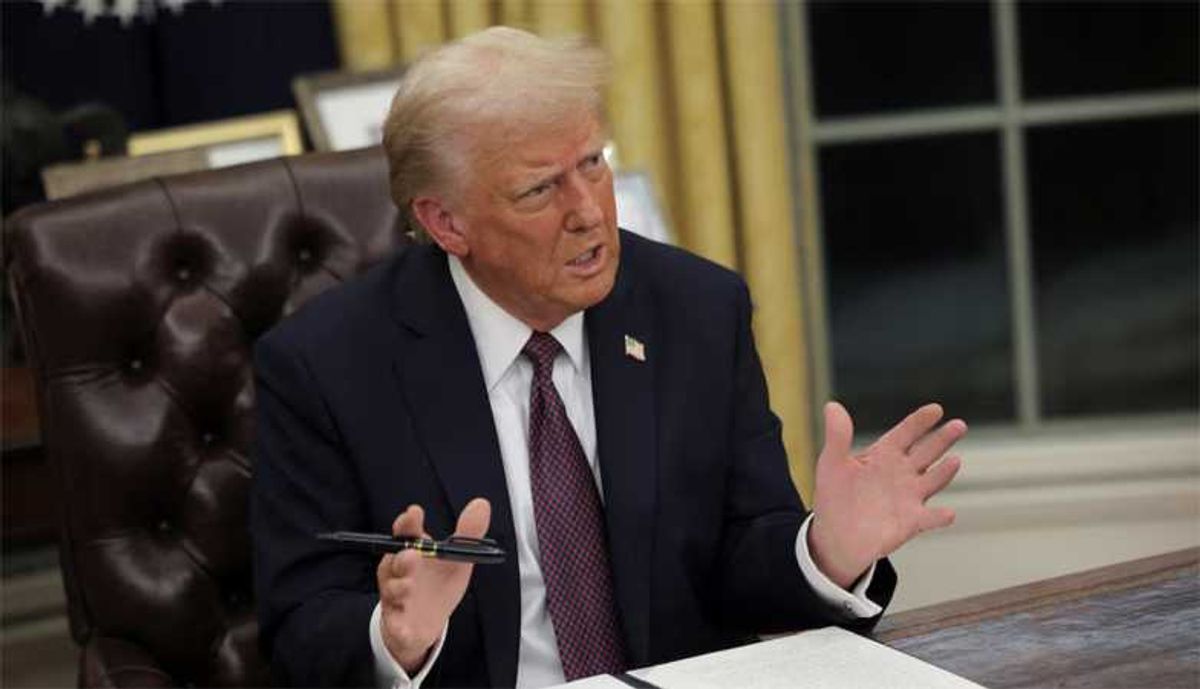
Donald Trump in the Oval Office (Photo via Reuters)
A former Department of Justice pardon attorney slammed President Donald Trump on Monday for freeing a billion-dollar Ponzi schemer from federal prison just before Thanksgiving.
The White House confirmed on Monday that Trump commuted the sentence of David Gentile, the former CEO of GPB Capital, who was convicted in May of wire and bank fraud charges, according to a report by CNN. Gentile was just 12 days into his seven-year sentence when Trump commuted it.
CNBC reported that Gentile defrauded tens of thousands of investors while at GPB Capital, costing them billions. The investigation into Gentile began in 2018, during Trump's first term, and one of Trump's DOJ attorneys pushed the courts to give Gentile a 15-year sentence earlier this year.
Liz Oyer, a former pardon attorney, commented on Trump's decision to commute Gentile's sentence in a new YouTube video.
"Once again, Trump has offered no explanation to the American people or to the victims of Gentile's fraud," Oyer said in the video, arguing that he tried to keep the clemency a "secret."
"We cannot let these corrupt abuses of the pardon power fly under the radar," she continued.
Gentile is not the first white-collar criminal the Trump administration has freed since taking office. Trump also pardoned Changpeng Zhao, the billionaire founder of cryptocurrency trading platform Binance. Zhao was convicted on money laundering charges, and his company paid more than $4 billion in fines.
"This is another grotesque abuse of the pardon power that should outrage all Americans," Oyer said in a post on X.

Donald Trump in the Oval Office (Photo via Reuters)
A former Department of Justice pardon attorney slammed President Donald Trump on Monday for freeing a billion-dollar Ponzi schemer from federal prison just before Thanksgiving.
The White House confirmed on Monday that Trump commuted the sentence of David Gentile, the former CEO of GPB Capital, who was convicted in May of wire and bank fraud charges, according to a report by CNN. Gentile was just 12 days into his seven-year sentence when Trump commuted it.
CNBC reported that Gentile defrauded tens of thousands of investors while at GPB Capital, costing them billions. The investigation into Gentile began in 2018, during Trump's first term, and one of Trump's DOJ attorneys pushed the courts to give Gentile a 15-year sentence earlier this year.
Liz Oyer, a former pardon attorney, commented on Trump's decision to commute Gentile's sentence in a new YouTube video.
"Once again, Trump has offered no explanation to the American people or to the victims of Gentile's fraud," Oyer said in the video, arguing that he tried to keep the clemency a "secret."
"We cannot let these corrupt abuses of the pardon power fly under the radar," she continued.
Gentile is not the first white-collar criminal the Trump administration has freed since taking office. Trump also pardoned Changpeng Zhao, the billionaire founder of cryptocurrency trading platform Binance. Zhao was convicted on money laundering charges, and his company paid more than $4 billion in fines.
"This is another grotesque abuse of the pardon power that should outrage all Americans," Oyer said in a post on X.
‘Shamelessly Corrupt’: Trump Frees Private Equity Executive Convicted of Defrauding 10,000+ Investors
One elderly victim said they “lost a significant portion” of their retirement savings to David Gentile’s $1.6 billion scheme.

US President Donald Trump speaks during a press conference in the Oval Office of the White House on October 15, 2025 in Washington, DC.
(Photo by Kevin Dietsch/Getty Images)
Jake Johnson
Dec 01, 2025
COMMON DREAMS
In yet another gift to corporate criminals, President Donald Trump has reportedly used his executive authority to commute the seven-year prison sentence of a former private equity executive convicted of defrauding more than 10,000 investors of around $1.6 billion.
David Gentile, the founder and former CEO of GPB Capital, was convicted of securities and wire fraud last year and sentenced to prison in May, but he ended up serving just days behind bars. The New York Times reported over the weekend that the White House “argued that prosecutors had falsely characterized the business as a Ponzi scheme.”
One victim said they lost their “whole life savings” to the scheme and are now living “check to check.” Another, who described themselves as “an elderly victim,” said they “lost a significant portion” of their retirement savings.
“This money was earmarked to help my two grandsons pay for college,” the person said. “They had tragically lost their father and needed some financial assistance. So this loss attached my entire family.”
In a statement following Gentile’s sentencing earlier this year, FBI Assistant Director in Charge Christopher Raia—who was appointed to the role by Trump’s loyalist FBI director, Kash Patel—said the private equity executive and his co-defendant, Jeffry Schneider, “wove a web of lies to steal more than one billion dollars from investors through empty promises of guaranteed profits and unlawfully rerouting funds to provide an illusion of success.”
“The defendants abused their high-ranking positions within their company to exploit the trust of their investors and directly manipulate payments to perpetuate this scheme,” said Raia. “May today’s sentencing deter anyone who seeks to greedily profit off their clients through deceitful practices.”
Critics said Trump’s commutation of Gentile’s sentence sends the opposite message: That the administration is soft on corporate crime and rich fraudsters despite posturing as fierce protectors of the rule of law and throwing the book at the vulnerable.
“Trump will deport an Afghan living in the US with Temporary Protected Status if he is accused of stealing $1,000,” said US Rep. Sean Casten (D-Ill.). “But he’ll set a white dude free who was convicted of stealing $1.6 billion from American citizens to go commit more crime.”
After criticizing former President Joe Biden for commuting the sentences of death-row prisoners, Trump has wielded his pardon power to spare political allies—including January 6 rioters—and rich executives while his administration works to “delegitimize the very concept of white-collar crime.”
Since the start of Trump’s second term, his administration has halted or dropped more than 160 federal enforcement actions against corporations, according to the watchdog group Public Citizen. White-collar criminals reportedly view Trump as their “get-out-of-jail-free card.”
“The most shamelessly corrupt administration in history,” journalist Wajahat Ali wrote in response to the Gentile commutation.
One elderly victim said they “lost a significant portion” of their retirement savings to David Gentile’s $1.6 billion scheme.

US President Donald Trump speaks during a press conference in the Oval Office of the White House on October 15, 2025 in Washington, DC.
(Photo by Kevin Dietsch/Getty Images)
Jake Johnson
Dec 01, 2025
COMMON DREAMS
In yet another gift to corporate criminals, President Donald Trump has reportedly used his executive authority to commute the seven-year prison sentence of a former private equity executive convicted of defrauding more than 10,000 investors of around $1.6 billion.
David Gentile, the founder and former CEO of GPB Capital, was convicted of securities and wire fraud last year and sentenced to prison in May, but he ended up serving just days behind bars. The New York Times reported over the weekend that the White House “argued that prosecutors had falsely characterized the business as a Ponzi scheme.”
One victim said they lost their “whole life savings” to the scheme and are now living “check to check.” Another, who described themselves as “an elderly victim,” said they “lost a significant portion” of their retirement savings.
“This money was earmarked to help my two grandsons pay for college,” the person said. “They had tragically lost their father and needed some financial assistance. So this loss attached my entire family.”
In a statement following Gentile’s sentencing earlier this year, FBI Assistant Director in Charge Christopher Raia—who was appointed to the role by Trump’s loyalist FBI director, Kash Patel—said the private equity executive and his co-defendant, Jeffry Schneider, “wove a web of lies to steal more than one billion dollars from investors through empty promises of guaranteed profits and unlawfully rerouting funds to provide an illusion of success.”
“The defendants abused their high-ranking positions within their company to exploit the trust of their investors and directly manipulate payments to perpetuate this scheme,” said Raia. “May today’s sentencing deter anyone who seeks to greedily profit off their clients through deceitful practices.”
Critics said Trump’s commutation of Gentile’s sentence sends the opposite message: That the administration is soft on corporate crime and rich fraudsters despite posturing as fierce protectors of the rule of law and throwing the book at the vulnerable.
“Trump will deport an Afghan living in the US with Temporary Protected Status if he is accused of stealing $1,000,” said US Rep. Sean Casten (D-Ill.). “But he’ll set a white dude free who was convicted of stealing $1.6 billion from American citizens to go commit more crime.”
After criticizing former President Joe Biden for commuting the sentences of death-row prisoners, Trump has wielded his pardon power to spare political allies—including January 6 rioters—and rich executives while his administration works to “delegitimize the very concept of white-collar crime.”
Since the start of Trump’s second term, his administration has halted or dropped more than 160 federal enforcement actions against corporations, according to the watchdog group Public Citizen. White-collar criminals reportedly view Trump as their “get-out-of-jail-free card.”
“The most shamelessly corrupt administration in history,” journalist Wajahat Ali wrote in response to the Gentile commutation.
USA
Violence and Death at Home and Abroad
Monday 1 December 2025, by Dan La Botz
Rahmanullah Lakanwal, an Afghan immigrant, walked up to two Virginia National Guard members stationed in Washington, D.C. on November 26 and shot them point blank. One of them, Sarah Beckstrom, 20, died of her injuries, while the other, 24-year-old Andrew Wolfe, remains in critical condition. Lakanwal was also severely wounded and he has ben accused of murder. À Following the shootings, Trump immediately paused migration from Afghanistan and 19 other “Third World Countries,” in Africa and Asia. He is pouring fuel on the fire of xenophobia.
Trump said of the shooter, “He went cuckoo, he went nuts. And that happens, happens too often with these people.” Well, who are “these people”? How did Lakanwal lose his mind? The U.S. war against Afghanistan began in 2001 when Lakanwal was five years old, when he reached adulthood, he joined a “Zero Unit” run by the U.S. Central Intelligence Agency (CIA). These units have been described by diplomats and human rights organizations as “death squads” that carried out extrajudicial killings.
When the war ended in 2021 with the victory of the Taliban and the withdrawal of U.S. troops, tens of thousands of Afghans, including Lakanwal and his family, were given refuge in the United States. He settled in Bellingham, Washington. His wartime experiences murdering people for the CIA in his homeland evidently left him with post-traumatic stress disorder and one day he lost his mind, traveled 3,000 miles to Washington, D.C., walked up to a Guard unit, and shot Beckstrom and Wolfe.
The CIA death squads drove Lakanwal crazy, and it was Trump who as part of his campaign against Democratic Party mayors sent the National Guard to Washington. The CIA and Trump can be held responsible for Sarah Beckstrom’s death.
Now in the Caribbean, the United States is heading into another war that will also have its CIA and Zero Unit death squads, leading to more trauma and more violence not only abroad but here at home too. Trump continues murder on the high seas, having blown up 22 boats and killed 83 people. He claims that the boats are carrying drugs that will harm Americans, which he says constitutes a war on the U.S. and therefore give him the right to wage war on drug smugglers. The Trump administration has offered no proof that the boats and the people on them are drug dealers, but even if it did, the U.S. government would have no right to kill them.
The Washington Post reports that, according to two witnesses, Pete Hegseth, Secretary of Defense, gave a verbal order during one attack. “The order was to kill everybody.” When in one attack two survivors in the sea clung to debris, following Hegseth’s orders, they were blown to bits. Hegseth is a war criminal for ordering the killing of unarmed civilians. This is precisely the reason that six U.S. congresspeople, all with military backgrounds, recently posted a video saying military personnel should and must refuse illegal orders. Trump called those legislators traitors.
The attacks on the boats form part of Trump’s growing campaign against Venezuela that could lead to war at any moment. The Trump administration, which doesn’t recognize Venezuelan President Nicolás Maduro’s government, it has accused him of being the head of the Cartel de Los Soles, a government-led drug cartel, and it has offered a $50 million reward for Maduro’s capture. Trump has sent a U.S. carrier group to the waters off Venezuela and has 15,000 troops in the area. He also announced the closing of Venezuelan airspace and threatened to attack Venezuela on land soon.
The U.S. war against Afghanistan lasted twenty years and a war against Venezuela could become a protracted conflict as well. Trump and Hegseth will have responsibility not only for the war, but for the long chain of events that follow, with more trauma and more violence.
2 December 2025
Attached documentsviolence-and-death-at-home-and-abroad_a9293.pdf (PDF - 905.2 KiB)
Extraction PDF [->article9293]
Dan La Botz was a founding member of Teamsters for a Democratic Union (TDU). He is the author of Rank-and-File Rebellion: Teamsters for a Democratic Union (1991). He is also a co-editor of New Politics and editor of Mexican Labor News and Analysis.

International Viewpoint is published under the responsibility of the Bureau of the Fourth International. Signed articles do not necessarily reflect editorial policy. Articles can be reprinted with acknowledgement, and a live link if possible.
Trump said of the shooter, “He went cuckoo, he went nuts. And that happens, happens too often with these people.” Well, who are “these people”? How did Lakanwal lose his mind? The U.S. war against Afghanistan began in 2001 when Lakanwal was five years old, when he reached adulthood, he joined a “Zero Unit” run by the U.S. Central Intelligence Agency (CIA). These units have been described by diplomats and human rights organizations as “death squads” that carried out extrajudicial killings.
When the war ended in 2021 with the victory of the Taliban and the withdrawal of U.S. troops, tens of thousands of Afghans, including Lakanwal and his family, were given refuge in the United States. He settled in Bellingham, Washington. His wartime experiences murdering people for the CIA in his homeland evidently left him with post-traumatic stress disorder and one day he lost his mind, traveled 3,000 miles to Washington, D.C., walked up to a Guard unit, and shot Beckstrom and Wolfe.
The CIA death squads drove Lakanwal crazy, and it was Trump who as part of his campaign against Democratic Party mayors sent the National Guard to Washington. The CIA and Trump can be held responsible for Sarah Beckstrom’s death.
Now in the Caribbean, the United States is heading into another war that will also have its CIA and Zero Unit death squads, leading to more trauma and more violence not only abroad but here at home too. Trump continues murder on the high seas, having blown up 22 boats and killed 83 people. He claims that the boats are carrying drugs that will harm Americans, which he says constitutes a war on the U.S. and therefore give him the right to wage war on drug smugglers. The Trump administration has offered no proof that the boats and the people on them are drug dealers, but even if it did, the U.S. government would have no right to kill them.
The Washington Post reports that, according to two witnesses, Pete Hegseth, Secretary of Defense, gave a verbal order during one attack. “The order was to kill everybody.” When in one attack two survivors in the sea clung to debris, following Hegseth’s orders, they were blown to bits. Hegseth is a war criminal for ordering the killing of unarmed civilians. This is precisely the reason that six U.S. congresspeople, all with military backgrounds, recently posted a video saying military personnel should and must refuse illegal orders. Trump called those legislators traitors.
The attacks on the boats form part of Trump’s growing campaign against Venezuela that could lead to war at any moment. The Trump administration, which doesn’t recognize Venezuelan President Nicolás Maduro’s government, it has accused him of being the head of the Cartel de Los Soles, a government-led drug cartel, and it has offered a $50 million reward for Maduro’s capture. Trump has sent a U.S. carrier group to the waters off Venezuela and has 15,000 troops in the area. He also announced the closing of Venezuelan airspace and threatened to attack Venezuela on land soon.
The U.S. war against Afghanistan lasted twenty years and a war against Venezuela could become a protracted conflict as well. Trump and Hegseth will have responsibility not only for the war, but for the long chain of events that follow, with more trauma and more violence.
2 December 2025
Attached documentsviolence-and-death-at-home-and-abroad_a9293.pdf (PDF - 905.2 KiB)
Extraction PDF [->article9293]
Dan La Botz was a founding member of Teamsters for a Democratic Union (TDU). He is the author of Rank-and-File Rebellion: Teamsters for a Democratic Union (1991). He is also a co-editor of New Politics and editor of Mexican Labor News and Analysis.

International Viewpoint is published under the responsibility of the Bureau of the Fourth International. Signed articles do not necessarily reflect editorial policy. Articles can be reprinted with acknowledgement, and a live link if possible.
Subscribe to:
Comments (Atom)
.jpg)
.jpg)
.jpeg)

.jpg)