Wednesday, December 03, 2025


Pakistan Inks Five Oil and Gas Exploration Deals

Pakistan has signed five deals for oil and gas exploration with local private and state-owned companies that will develop three offshore and two onshore blocks, Pakistani media reported, citing a securities filing.

The companies that will be involved in the development of the five blocks include Mari Energies, Oil & Gas Development Company Limited, Pakistan Petroleum, Fatima Petroleum, Government Holdings Limited, and Turkish Petroleum Overseas Company.

Last month, the Pakistani government auctioned 40 offshore blocks and got 23 bids from four consortia involving local energy companies and Turkey’s state-owned energy major Türkiye Petrolleri Anonim Ortakl???.

The four consortia have committed $80 million in investments for the exploration phase of the blocks’ development, with potential total investments that could reach $1 billion if they move on to the production phase.

An earlier report cited Turkish energy minister Alparslan Bayraktar as saying the Turkish state energy firm had inked deals for the development of the five blocks with local Pakistani companies and was planning on beginning exploration activities in 2026.

The official also highlighted President Recep Tayyip Erdogan's earlier visit to Pakistan, which set a target of boosting bilateral trade to $5 billion. Energy and mining collaboration, Bayraktar said, will be critical in reaching—and potentially surpassing—that goal. The two countries are also exploring a joint procurement model for energy products, including LNG, to leverage scale and reduce costs.

Earlier this year, Pakistan also inked an energy deal with the United States, with President Trump saying U.S. companies will take part in the development of Pakistani oil and gas resources.

“We have just concluded a deal with the country of Pakistan, whereby Pakistan and the United States will work together on developing their massive oil reserves,” Trump wrote on Truth Social in August, following the signing of the deal. “We are in the process of choosing the Oil Company that will lead this partnership. Who knows, maybe they’ll be selling Oil to India someday!”

By Irina Slav for Oilprice.com


Turkey Strikes Major Oil and Gas Deals With Pakistan for 2026 Launch

Turkey and Pakistan have taken a major step toward deepening their energy partnership after Turkey’s state oil company TPAO signed a series of hydrocarbon exploration and production agreements with leading Pakistani energy firms. The deals, announced Tuesday by Turkey’s Energy Ministry, cover three offshore blocks in Pakistani territorial waters and two additional onshore fields.

The agreements were finalized during Energy Minister Alparslan Bayraktar’s visit to Islamabad, where he met with Prime Minister Shehbaz Sharif and senior members of Pakistan’s energy leadership, including Petroleum Minister Ali Pervaiz Malik and Federal Energy Minister Awais Ahmad Khan Leghari. Bayraktar said the agreements represent a significant expansion of bilateral cooperation and align with Ankara’s growing ambitions in overseas oil and gas ventures.

Under the new arrangements, TPAO will partner with Pakistani companies Mari Energy, Fatima, OGDCL, PPL, Prime, and GHPL to jointly explore for crude oil and natural gas. Turkey will operate one of the offshore blocks, while seismic survey vessels and drilling equipment are expected to arrive in Pakistan in 2026.

“Our aim is to start work in these fields within 2026,” Bayraktar said, noting that operations will include both seismic research and direct drilling. “We are extremely hopeful about the work here and confident these efforts will deliver concrete results for Türkiye–Pakistan cooperation.”

Bayraktar also emphasized broader plans to expand cooperation into mining. Turkey’s state-owned mining enterprises, including MTAIC and Eti Maden, are set to increase their activity in Pakistan, a country with significant untapped mineral potential.

The minister highlighted President Recep Tayyip Erdo?an’s earlier visit to Pakistan, which set a target of boosting bilateral trade to $5 billion. Energy and mining collaboration, Bayraktar said, will be critical in reaching — and potentially surpassing — that goal. The two countries are also exploring a joint procurement model for energy products, including LNG, to leverage scale and reduce costs.

Calling Pakistan “a country with huge potential” and strong historical ties to Turkey, Bayraktar said Ankara intends to further ramp up high-level visits and technical cooperation in the coming years.

 

Private Equity Circles Big Oil’s Pipelines as Majors Hunt for Cash

  • Private equity giants are increasingly buying stakes in oil and gas infrastructure.

  • Investors see pipeline and storage assets as high-return, long-life opportunities, offering majors billions in upfront cash while allowing them to retain operational control.

  • The trend is accelerating across the Gulf and beyond, with blockbuster deals from ADNOC, Aramco, and Bahrain’s Bapco Energies now echoed in BP and Shell transactions.

The world’s biggest private equity groups are investing in infrastructure assets of the national oil companies of the Middle East as Saudi Arabia and the United Arab Emirates (UAE) opened their pipeline networks to foreign capital.

Private equity giants are now seeking a slice of the infrastructure assets of the international majors in deals that would give Big Oil funds to reinvest in oil and gas production. These days, amid lower oil prices and continued reluctance of public-market investors despite the dramatic shift in the ESG narrative, private equity money could be an opportunity for the top Western majors to raise cash by selling parts of their pipeline and storage assets.

The infrastructure deals in the oil and gas sector began from the Middle East, but these could spread to the international majors, which need capital to sustain dividends and buybacks at $60 oil and have enough to invest in boosting oil and gas production.

Investors Eye Big Oil’s Infrastructure Assets

Investors have recently urged top executives from ExxonMobil, BP, TotalEnergies, and Eni to consider selling stakes in pipeline and storage assets to private equity groups in what would be a new way for Big Oil to monetize their infrastructure assets and one that doesn’t involve equity-market investors.

Ahead of ADIPEC, one of the energy industry’s top gatherings, private equity teams sat down at a closed-door meeting with Exxon, BP, TotalEnergies, and Eni and told their executives that they could offload more of their infrastructure assets, the Financial Times reports.

“You guys need to rethink how you think about capital,” one participant at the meeting told the majors, the FT says.

Right now, private equity giants are more inclined to invest in Big Oil than the equity markets that are “not as receptive” to the oil and gas industry, the participant told FT.

Related: U.S. Sanctions Force Serbia's Only Refinery to Shut Down

“Take the cheap capital and reinvest it in your core business,” the person added, referring to Big Oil’s opportunities to attract funds from the infrastructure arms of the biggest investment firms.

Some deals have been made this year.

For example, Apollo-managed funds in March signed a deal with BP to invest about $1 billion to purchase a 25% non-controlling stake in BP Pipelines (TANAP) Ltd, the BP subsidiary that holds BP’s 12% interest in TANAP, owner and operator of the pipeline that carries natural gas from Azerbaijan across Turkey.

While the deal enables BP to monetise its interest in TANAP, BP will remain the controlling shareholder of BP TANAP and retain a long-term commercial and strategic interest, including governance rights, in the pipeline - a vital part of the gas value chain for the BP-operated Shah Deniz gas field in Azerbaijan.

Prior to that, Apollo and BP signed an agreement for Apollo to buy a non-controlling stake in BP Pipelines TAP Limited, which holds a 20% share in Trans Adriatic Pipeline AG (TAP) in a transaction valued at about $1 billion.

“BP and Apollo continue to explore opportunities for further cooperation, including in infrastructure, gas and low carbon energy assets,” the UK-based supermajor said in March 2025, just as it had unveiled its strategic reset to shift focus back to oil and gas.

This summer, Shell completed the sale of its 16.125% interest in the company owning the Colonial Pipeline in the U.S. to Colossus AcquireCo LLC, a wholly owned subsidiary of Brookfield Infrastructure Partners L.P. and its institutional partners.

Other supermajors have yet to announce major deals in the trend that the Middle East’s national oil companies kicked off.

Investors Flock to Middle East Energy Infrastructure

As early as in 2020, Abu Dhabi’s ADNOC struck a $20.7-billion deal with Global Infrastructure Partners (GIP) and Brookfield, among other investors, to sell a 49% stake in ADNOC Gas Pipeline Assets LLC.

This year, global investment firm KKR bought a minority stake in ADNOC Gas Pipeline Assets.

KKR was part of the first-ever energy infrastructure deal for a Middle Eastern NOC when it bought in 2019 a minority stake in ADNOC’s oil pipelines business. The 2019 acquisition of 40% in ADNOC Oil Pipelines by KKR and BlackRock was the first-ever investment of foreign asset managers in infrastructure of a state-owned energy firm in the Gulf.

Last year, KKR and BlackRock sold the 40% stake in ADNOC Oil Pipelines to Abu Dhabi-based alternative investment manager Lunate. 

Saudi Arabia is also looking for opportunities to monetize Aramco’s infrastructure with deals with global funds.

Earlier this year, Saudi Aramco signed an $11 billion lease and leaseback deal involving its Jafurah gas processing facilities with a consortium of international investors, led by funds managed by Global Infrastructure Partners (GIP), a part of BlackRock.

Jafurah, the largest non-associated gas development in Saudi Arabia, is a key part of Aramco’s plans to increase gas production capacity by 60% between 2021 and 2030, to meet rising demand. 

Infrastructure deals have flourished in the Middle East in recent months.

Last year, Bapco Energies of Bahrain sold to a BlackRock fund a minority ownership stake in the Saudi Bahrain Pipeline Company (SBPC).

Kuwait’s state firm Kuwait Petroleum Corporation (KPC) is looking to raise up to $7 billion from leasing part of its pipeline network in a transaction that would be similar to Aramco’s deal, Bloomberg reported in September. 

The trend of global infrastructure funds buying into energy infrastructure started in the Middle East but is already expanding to Big Oil, as evidenced in the recent Shell and BP pipeline deals. Private equity money would be a win-win for the participants in transactions—the international majors will get capital outside of their traditional (and drying) public-markets base, while infrastructure funds will get long-term reliable returns on their investment.

By Tsvetana Paraskova for Oilprice.com

AU


Barrick IPO proposal puts Nevada Gold Mines in M&A spotlight

Cortez gold project. Credit: Barrick

Barrick Mining Corp.’s proposal to hive off its US assets from its sprawling portfolio in riskier countries will pique the interest of rival miners, according to analysts.

A separate company housing Barrick’s joint-venture interests and the Fourmile discovery in the state of Nevada, as well as a mine in the Dominican Republic, would be attractive to Newmont Corp. and Agnico Eagle Mines Ltd., Jefferies analysts wrote Monday.

“It’s an easier acquisition to execute versus current Barrick because it’s smaller and doesn’t require divesting non-core assets in challenging jurisdictions,” a group of Jefferies analysts including Fahad Tariq wrote.

Agnico and Newmont declined to comment.

Barrick’s plan to explore an initial public offering for its North American gold assets follows Bloomberg report in October that Newmont had studied a deal to gain control of the mines the companies share in Nevada, which have benefited from recent investments.

The new vehicle is “likely to become an acquisition target for Newmont,” National Bank Financial analyst Shane Nagle wrote in a note to clients.

Still, Barrick probably will focus on additional drilling at Fourmile to increase the resource before considering a sale, which would have to garner a significant premium, the Jefferies analysts wrote.

(By James Attwood)

Navoi Mining receives S&P credit rating upgrade


Image: NMMC

Navoi Mining and Metallurgical Company (NMMC) has received a credit rating upgrade by S&P Global to reflect its status as one of the world’s biggest gold producers.

On Tuesday, S&P upgraded the Uzbekistani miner’s long-term credit rating to ‘BB’, with a ‘Stable’ outlook, citing the Central Asian nation’s improved sovereign rating. The upgrade reflects “the company’s solid financial position and the resilience of its operational performance,” the firm said in a statement.

The agency expects NMMC to maintain a balanced financial approach, enabling the company to continue making a significant contribution to the national economy, it added.

S&P’s rating also aligns with the issuer default rating given recently by Fitch, which cited NMMC’s status as the fourth-largest gold producer globally with production of over 3 million oz. and one of the lowest cost producers with long mine life, high profit margins and low leverage.

Earlier this year, the company successfully placed a new $500 million corporate bond in London, with Citi, JP Morgan, Société Générale and MUFG serving as its bookrunners. Proceeds from the placement will be used to further optimize and diversify the company’s existing credit portfolio on more favorable terms, NMMC said in a May press release.

NMMC currently operates the massive Muruntau deposit in the Kyzylkum Desert, one of the largest in the world. Across all its projects in the region, the company holds a resource gold base that is estimated at 150 million oz.


UK has no immediate plans for critical minerals price floor, minister says


Industry Minister Chris McDonald. Image source: Chris McDonald MP | X

Britain has no plans to match the United States in supporting domestic rare earth companies with a price floor to cut reliance on dominant producer China, Industry Minister Chris McDonald said.

So far Britain is attracting adequate investment in the critical minerals sector to develop home-grown supply, but it will monitor the situation in case other mechanisms are needed, he told Reuters.

Group of Seven (G7) members and the European Union are considering price floors to promote rare earth production, as well as taxes on some Chinese exports to incentivize investment, sources told Reuters in September.

The US provided a guaranteed minimum price to rare earths group MP Materials in July as part of a multibillion-dollar investment by the Pentagon and sources told Reuters the mechanism would likely be extended to other firms.

On Monday, McDonald met with US Pentagon officials in London, who outlined their support policies for critical minerals, including the price floor, he said.

“We’re doing most of them but we’re not doing all of them, and a price floor is one of them that’s currently not on our list. But maybe I’ll keep an eye on how that goes,” he said in an interview.

“Ultimately for me it’s about can we attract this investment, and at the moment we are attracting the investment.”

Britain launched its critical minerals strategy last month, which set targets to meet 10% of domestic demand from UK mining and 20% from recycling by 2035, backed by up to 50 million pounds in funding.

China accounts for about 70% of rare earth mining and 90% of refining.

Britain, which currently produces 6% of its critical mineral needs domestically, is focusing its strategy on lithium, nickel, tungsten and rare earths.

Britain expects lithium processing projects in northern England to break ground within the next few years and aims to produce at least 50,000 metric tons of lithium by 2035.

The country also plans to include stockpiling of critical minerals in its defence procurement plan.

(By Eric Onstad; Editing by Louise Heavens)


Trump pressure fuels Latin America’s critical minerals push


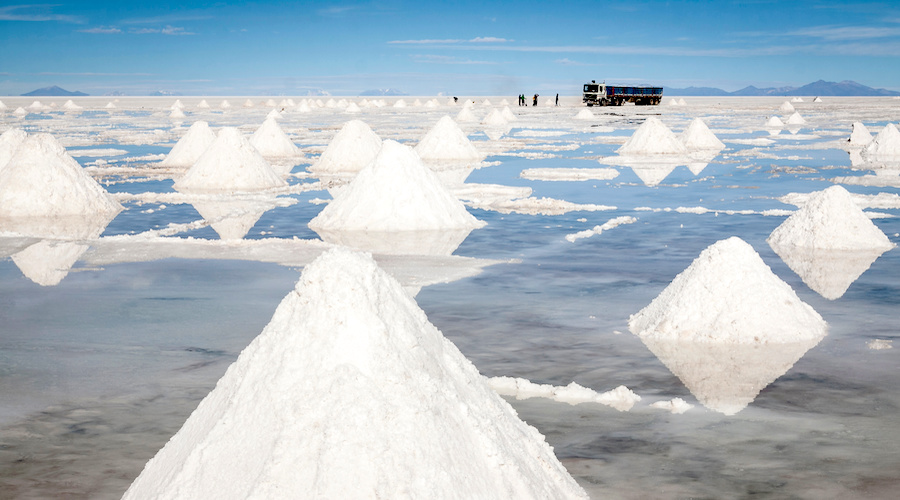
Piles of salt in Bolivia’s Salar de Uyuni­. (Image: Dante | AdobeStock.)

Latin America is stepping up efforts to build critical mineral supply chains as the Inter-American Development Bank (IDB) says governments want to add more value at home while the Trump administration pushes for production closer to the US.

IDB president Ilan Goldfajn said countries across the region are working on increasing their refining and processing capabilities for lithium, copper and other key minerals instead of exporting raw material to Asia. 

Together with the European Union, the IBD launched last year a joint initiative to boost responsible investment and develop value chains for critical minerals in Latin America and the Caribbean. Under this program the EU provided a grant of nearly €6.3 million ($7.3m), which is expected to unlock about €120 ($140m) million in IDB funding for mineral-related projects in countries including Argentina, Bolivia, Brazil, Chile and Ecuador.

The funding is especially aimed at supporting downstream activities like processing, refining, and building value chains.

Through a project called Mining for the Energy Transition (MET), the IDB is also providing technical assistance to Latin American nations, with the objective of Strengthening regulatory and investment frameworks, improving geological knowledge and data, supporting low-carbon, sustainable mining and production practices, and enhancing infrastructure.

In an interview with the Financial Times, Goldfajn said Washington has signalled it prefers sourcing and processing within the hemisphere and that governments across the political spectrum see a rare opening to capture more value.

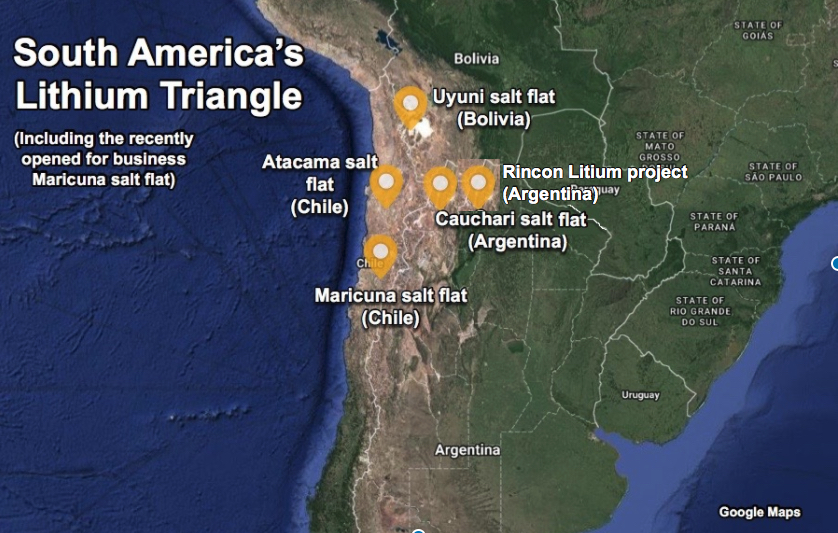
Latin America holds about 60% of the world’s identified lithium reserves and produces roughly 46% of its copper, leading production of the red metal alongside Peru.

Brazil has the world’s second largest rare earths reserves, though its output remains modest because of technical and commercial hurdles. China dominates global processing and its low prices have long undercut efforts by resource countries to move beyond extraction.

Trump pressure fuels Latin America’s critical minerals push
By: MINING.COM.

Argentina exports 70% of its lithium to China, only to import it back at prices eight or nine times higher after processing. 

Long-term supply contracts are key to closing the cost gap with Asia, Goldfajn said, pointing to a 20-year deal for Chile to sell green hydrogen to Germany that helped unlock IDB financing for the sector.

Extraction too

The bank is also backing extraction and processing projects directly. In Argentina, it is making a $100-million loan toward Rio Tinto’s (ASX: RIO) $2.5 billion plan to produce battery-grade lithium in Salta province.

Goldfajn noted the political divides between the Trump administration and major leftwing governments in Brazil, Mexico and Colombia, but said Washington’s renewed focus on the region was constructive. 

Rising demand for financing tied to critical minerals is part of why the IDB group expects to mobilize more than $30 billion this year, up from $23 billion last year. Nearly $20 billion will come from its public-sector arm, while IDB Invest and IDB Lab will finance more than $11 billion for companies. 

Appian talking to US, Australia on critical minerals after IFC deal

European Union delegation on a visit to Mt Weld rare earths mine. Credit: Government of Western Australia

Appian Capital Advisory said it is in talks with the US and Australia about replicating the critical minerals investment partnership it recently agreed with a World Bank division.

The private equity firm and the International Finance Corporation (IFC) launched a $1 billion fund in October to invest in projects in Africa and Latin America.

Major economies are stepping up efforts to secure access to critical minerals, which are essential to advanced defence systems, communications equipment and next-generation industrial technologies, including electric vehicles.

“We think that the IFC formula is very attractive,” said Dominic Raab, head of global affairs at Appian, on Tuesday, adding: “We’ve had a lot of interest off the back of the announcement and we’re talking with the US and Australians”.

“We’ve had conversations around Ukraine and things as well about this,” added Raab, a former UK deputy prime minister and foreign minister who joined Appian, which has about $5 billion in assets under management, in February 2024.

Washington and Kyiv signed an agreement in late April that gives the US preferential access to new Ukrainian minerals deals. In October, US President Donald Trump and Australian Prime Minister Anthony Albanese sealed a pact aimed at countering China’s dominance of critical minerals.

Raab said the IFC could rely on Appian’s in-house team of geologists and finance experts, while having more control over project delivery by virtue of owning equity.

Governments want assurances that the mineral offtake they are trying to secure and the mining asset itself will not be “snaffled up by China”, Raab said at the Resourcing Tomorrow conference in London. “Equity control gives you that.”

(By Tom Daly; Editing by Alexander Smith)


Li

Vulcan Energy bags $2.6B financing package for Germany lithium project

Vulcan’s Lionheart project in the Upper Rhine Valley. Credit: Vulcan Energy Resources

Vulcan Energy Resources said on Wednesday it had secured a financing package of 2.2 billion euros ($2.56 billion) that would allow it to begin construction at its Lionheart lithium and renewable energy project in Germany this week.

The Australia-listed company will supply lithium for 10 years from 2028 to companies, including carmaker Stellantis, LG Corp, Umicore and Glencore, from the project, as well as provide renewable energy.

“The board has taken the final investment decision (FID), it’s fully funded and we will be putting shovels in the ground on Friday,” executive chair Francis Wedin told Reuters, noting strong support from European and Australian government-backed institutions for the project.

“It’s a two-and-a-half-year build, so the clock starts now.”

Vulcan will raise up to 603 million euros in equity, via institutional placement and entitlement offers, at a fixed price of 2.24 euros per new share, as part of the financing package.

The project has been backed by European and German government agencies, and a syndicate of 13 financial institutions comprising the European Investment Bank, five export credit agencies and seven commercial banks.

Vulcan is “very positive” on the lithium market going forward despite the price downturn, Wedin said.

“There’s been a deficit of new projects being FID-approved, so at some point that deficit is going to hit home,” he said.

About 72% of its contracted volumes are covered by floor or fixed pricing for the first decade, providing downside protection, he said, with prices “well above the spot price.”

The lithium explorer in July received 104 million euros in German government grants to produce clean lithium, as Berlin aims to boost electric vehicle output and reduce reliance on raw material imports.

Trading was halted on Wednesday in Vulcan shares, which have gained 14.6% so far this year.

($1 = 0.8604 euros)

(By Melanie Burton and Sherin Sunny; Editing by Krishna Chandra Eluri and Subhranshu Sahu)


Rio Tinto Hits the Brakes on Lithium in Strategy Shakeup

  • New CEO Simon Trott is driving a fundamental reorganization at Rio Tinto, streamlining operations, cutting costs, and potentially selling assets.

  • Lithium will face tougher internal competition, with Rio Tinto slowing or mothballing projects.

  • Despite volatility in lithium markets, Rio Tinto still expects strong long-term demand, supported by rising EV and stationary battery sales

Rio Tinto is streamlining operations and drafting a fundamental reset to accelerate projects with quicker and better returns. The strategy overhaul is courtesy of the mining giant’s former head of the iron ore division, the group’s biggest business, who became chief executive officer a few months ago.

New Rio Tinto CEO Simon Trott will unveil his vision of a streamlined Rio Tinto at a Capital Markets Day event in London on Thursday.

Trott has signaled that reorganization will continue to fundamentally reset the company’s businesses. This could include asset sales, slowing developments in lithium projects, and additional cost cuts, analysts tell The Wall Street Journal.

Rio Tinto could slow the timeline for development of some lithium projects, according to investors, after the mining giant bet big on the critical metal last year with the $6.7 billion acquisition of Arcadium Lithium.

The mining group will still bet on lithium, but projects will have to compete with the iron ore and copper developments, analysts say.

Days after becoming CEO, Trott announced in August “a new operating model and executive team to shape the company’s next chapter.”

Effective immediately, Rio Tinto simplified its product group structure to three businesses: Iron Ore, Aluminium & Lithium, and Copper.

Rio Tinto’s Lithium business moved into the Aluminium product group under the leadership of Jérôme Pécresse.

“I think if you try and do everything, you get nothing done,” Trott said at the   Goldman Sachs Global Metals and Mining conference 2025 in October.

“One of the really good things about having options, and we've got lots of options in the lithium space, is that the bar is really high, and so we can look at those projects and progress the very best of them.”

Trott hinted Rio Tinto would be more selective in the lithium business to progress the most profitable projects.

The miner still sees strong lithium demand going forward, it said in its Third Quarter Operations Review.

“Lithium demand remains strong, underpinned by a 27% YoY increase in global electric vehicle (EV) sales across the first seven months of this year (compared to 22% over the same period in 2024). Demand from stationary batteries remains solid and is providing additional upside,” Rio Tinto said.

However, last month the group decided to mothball a $2.4 billion lithium project in Serbia after years of trying to obtain all necessary permitting.

“As part of our focus across the overall portfolio to simplify and prioritize near term opportunities, the decision has been made to transition the Jadar project to care and maintenance,” an internal memo reviewed by The Wall Street Journal showed. 

Prioritizing quicker returns and payback opportunities will be core to Rio Tinto’s new strategy under Trott.

“The changes we are making are not incremental — they are fundamental,” the CEO wrote in October in an emailed message shared with Bloomberg.

“We are transforming to make life easier for our frontline and lift our performance. It will take discipline and effort from all of us.”

Lithium demand has seen ups and downs in recent years, from booms to busts, as the pace of electric vehicle (EV) adoption, China’s economic growth, and faded energy transition enthusiasm in the U.S. have shaped the market trends.

“Over the past five years, lithium prices have gone from bust to boom and back to bust again because of a disjoint between demand and supply,” said Oliver Heathman?, Head of Metals Assets, Metals & Mining Research at Wood Mackenzie.

“New producers, such as Brazil and Zimbabwe, have emerged in recent years spurred on by higher prices, while the level of optimism over EV demand has subsequently waned creating the current market oversupply as demand growth rates have slowed.”

By Tsvetana Paraskova for Oilprice.com