Wednesday, December 03, 2025


UBC researchers develop cleaner way to make rayon-type fibres


New solvent-efficient technique reduces chemical use by up to 70 per cent in fibre production


University of British Columbia

Dr. Feng Jiang and Huayu Liu 

image: 

Dr. Feng Jiang and Huayu Liu

view more 

Credit: UBC


A UBC research team has developed a cleaner way to produce rayon, a popular fabric used in clothing for more than a century. The process could significantly reduce chemical use and improve sustainability in textile manufacturing.

The study, led by UBC Forestry associate professor Dr. Feng Jiang and doctoral student Huayu Liu, demonstrates a method for spinning continuous cellulose fibres without the harsh, toxic solvents traditionally used in commercial fibre production.

“People have been making man-made cellulose fibres like rayon for more than 130 years,” says Dr. Jiang. “The material itself is biodegradable and renewable, but the processes behind it can be highly toxic, energy-intensive and damaging to the environment. Our goal was to find a way to dramatically reduce that impact.”

How it’s made

Traditional methods for producing synthetic cellulose fibres involve fully dissolving cellulose using large amounts of strong, often toxic chemicals. UBC researchers took a different approach. Instead of dissolving everything, they worked with microfibrillated cellulose (MFC) - tiny, hair-like strands of cellulose that can be made with simple mechanical grinding and very few chemicals.

MFC is easy to source and much gentler to produce, but it usually doesn’t flow well enough to be spun into long, continuous threads. To solve that, the researchers added a small amount of softened, dissolved cellulose that acts like a natural “glue,” helping the tiny fibres slide, connect and twist together into a smooth fibre.

The outcome: a strong, continuous thread that can be woven just like conventional textile fibres.

“What we found is that we don’t actually need to dissolve cellulose completely to get continuous fibres,” says Liu. “By dissolving only a portion of it, we can reduce the amount of solvent needed by as much as 70 per cent — and we can recycle all of it.”

Cleaner and more sustainable

As this method works with less processed pulp it also cuts out several steps that normally involve bleaching or harsh chemical treatment for dissolving pulp, making the entire process cleaner, simpler and more sustainable.

Dr. Jiang says the findings represent real progress. “Making man-made cellulose fibre with less chemical input and far lower environmental impact is a meaningful step,” he said. “Sustainability isn’t only about the final material - it’s about sourcing the raw material responsibly and ensuring the entire process avoids toxic solvents and minimizes pollution.”

The fibres have so far been produced at lab scale, and the team is now exploring opportunities to scale up production. They have partnered with Professor Stephanie Phillips at Kwantlen Polytechnic University’s fashion design school to test knitting and weaving prototypes once larger quantities are available.

“We hope these fibres will eventually be used for sustainable clothing and fabric manufacturing,” said Dr. Jiang. “This research shows that a more circular, lower-carbon pathway for textiles is possible.”

The study was recently published in Chem Circularity.


Cleaner rayon-type fibre produced by Dr. Feng Jiang and Huayu Liu


Concern over harmful medical advice from social media influencers


Experts call for coordinated action by governments and platforms to protect the public


BMJ Group


Biased or misleading medical advice shared by social media influencers can cause harm and requires coordinated action by governments and platforms to protect the public, argue experts in The BMJ today.

Social media influencers are a growing source of medical advice, say Raffael Heiss and colleagues. More than 70% of young adults in the US follow influencers, and over 40% have purchased products based on their recommendations. 

Yet they warn that influencer advice can be subject to four sources of bias: lack of medical expertise or relevant knowledge, industry influence, entrepreneurial interests, and personal beliefs.

“Such advice can cause psychological, physical, financial, and systemic harm—from inaccurate self-diagnosis and inappropriate treatments to unnecessary spending and higher healthcare costs,” they write. 

A prominent example is celebrity Kim Kardashian, who encouraged her 360 million Instagram followers to have full body screening with magnetic resonance imaging—a test without proven benefits and linked to overdiagnosis, unnecessary interventions, and costs. 

Influencers with health-related credentials can also provide misleading advice. For instance, Eric Berg, a US chiropractor with 14 million YouTube subscribers promotes high dose supplementation while selling his own brand of vitamin D and other supplements, some of which were subject to a legal warning for lead content above safety levels. 

The effect of these biases is magnified by influencers’ ability to form real or one sided (often referred to as “parasocial”) bonds with followers, making them highly persuasive communicators, say the authors.

They acknowledge that some influencers do provide useful health advice including doctors and others who help to debunk common misconceptions, while influencers who are patients themselves may also provide valuable peer support, especially for stigmatised conditions, by creating safe spaces and sharing personal experiences, they write.

Nevertheless, they say maximising the benefits and minimising the harms of influencers’ medical advice will require collaboration between multiple stakeholders, particularly governments and social media platforms. 

Strategies include effective regulation, stronger platform and influencer accountability, and user empowerment through targeted education and access to reliable, fact checked information. 

The authors acknowledge that there is no one-size-fits-all solution, but conclude: “Together, these strategies can help create a safer information environment in which influencers are constructive rather than harmful sources of health advice.”

Regulating and moderating platforms and influencers is necessary, but fostering trust through verified communities, clinician-endorsed forums, and participatory public health campaigns, will be indispensable, say Tina Purnat and David Scales in a linked editorial. 

They discuss how digital platforms, clinical encounters, and community spaces, both online and offline, shape what people see, believe, and do, including how evidence is negotiated in clinical consultations.

“Shared decision making must evolve for the digital age,” they write. “The key is structuring interventions around people’s information environments, where exposure, like exposure to physical environments, shapes health and deserves similar care.”

In a linked feature, Stephanie Santos Paulo speaks to ‘patient influencers’ who have amassed large followings on social media by sharing personal stories of their conditions and care that foster a sense of authenticity and emotional connection with followers.

“I think partly people are finding social media better for answers because it’s not easy to get hold of a medical professional,” says Liam Robertson, whose Instagram page @livingwithulcerativecolitis has 9,300 followers. “It’s almost like a strategy to help them,” he adds. “I don’t feel like they should need that, but we do.”

Lily Mae, whose Instagram account @chronicallylil details her life with Ehlers-Danlos syndrome, endometriosis, and vascular compression syndrome, says: “I wish healthcare professionals would listen and engage more with patient communities online. There’s such a wealth of firsthand knowledge being shared—real stories, symptoms, and lived experiences that could help improve care if more providers took the time to understand them.”

Jen Moore, who posts about endometriosis and adenomyosis on her Instagram account @jen.dometriosis, emphasises the role of patient influencers in signposting followers towards medical professionals. “Unless we involve clinicians in what we're trying to do, nothing's going to change,” she says.


Cutting-edge technology helps to further understand effects of Gulf War Illness


In an Australian-first, researchers have been able to map inflammatory pathways and genetic signatures in Australian veterans who have been diagnosed with Gulf War Illness (GWI).


Griffith University


In an Australian-first, researchers have been able to map inflammatory pathways and genetic signatures in Australian veterans who have been diagnosed with Gulf War Illness (GWI).

The study, led by Griffith University’s National Centre for Neuroimmunology and Emerging Diseases (NCNED), uncovered immune gene activity, offering new insights, additional evidence and fresh hope for veterans.

GWI effects up to one-third of veterans deployed during the 1990-1991 Gulf War, with the illness causing debilitating symptoms such as chronic fatigue, pain, brain fog, and sleep disturbances.

Despite decades of research, the biological mechanisms of this condition remain elusive.

NCNED Director Professor Sonya Marshall-Gradisnik said the research involved the use of cutting-edge NanoString transcriptomic technology to analyse the expression of immune-related genes in blood samples from Australians with GWI.

“Research into the pathomechanism of GWI is limited in Australian cohorts,” Professor Marshall-Gradisnik said.

“Ongoing research in this area is critical to improve health outcomes for many Australian veterans living with GWI.

“Our team is dedicated to using multidisciplinary and innovative technologies to enhance our understanding of GWI.”

This novel study identified 33 significant gene changes pointing to chronic inflammation and immune activation perhaps decades after the exposures reported during the Gulf War.

First author, Dr Natalie Eaton-Fitch, said the findings marked a path forward for future research into biomarker identification and targeted treatment development.

“The study underscores the urgent need for large-scale investigations to validate potential biomarkers and explore therapeutic interventions,” Dr Eaton-Fitch said.

“With no current diagnostic test or approved treatment for GWI, this research offers additional breakthroughs in this area.”

The paper ‘Immune transcriptomic changes in Australian Gulf War veterans’ has been published in PLOS One.


Note- taking alone or combined with large language models helps students understand and remember better than large language models alone


But the learning experience can be enriched with AI


Cambridge University Press


A new study suggests that traditional learning activities like making notes remain critical for students’ reading comprehension and retention, while also suggesting that large language models (LLMs), such as ChatGPT or Microsoft Copilot, could be a useful tool for helping students clarify, explore, and contextualise learning material.

Although many students are already using LLMs, there is a lack of research on the impact of generative AI on the fundamental processes of learning.

The study by Cambridge University Press & Assessment and Microsoft Research, which is published today (Thursday) in the journal Computers & Education , is one of the first randomised classroom experiments to investigate how LLMs affect students’ reading comprehension and retention.

The research involved 405 secondary school students aged 14-15 attending seven different schools across England.

The students were asked to study texts covering topics from the UK’s national History curriculum: one about apartheid in South Africa, and the other about the Cuban missile crisis.

The students were divided into two groups. One group was asked to study one text with an LLM (ChatGPT 3.5 turbo) and another text by writing notes. The second group was also asked to study one of the texts with the LLM, but, for the other text, they were asked to combine using the LLM and making notes. In all LLM conditions, students were given a brief tutorial and allowed to use the tool however they liked.

Three days later, and without advance warning, the students were asked questions about the two texts designed to see how well they understood and remembered the information. For example: What horrific event happened at the Soweto Youth Uprising in 1976? And: Explain the role of the Soviet Union in the Cuban Missile Crisis.

After both the study and test sessions, students were asked about the task, for example whether they enjoyed it or found it interesting.

The results suggest that either making notes or making notes combined with using an LLM, are better than just using the LLM alone for helping students understand and remember new information. However, students enjoyed using the LLM to engage with and explore relevant topics beyond the text.

The study’s first author, Dr Pia Kreijkes, a senior researcher at Cambridge University Press & Assessment, UK, said: “We know that students are using chatbots and other AI tools, including to help them with their schoolwork. However, there has been very limited research on how LLM use influences students’ ability to understand and remember information. Our study shows that students enjoyed using AI chatbots but note taking was more effective for learning outcomes

“Our findings can help guide the use of LLMs for learning. In particular, they indicate that students should take notes separately from using LLMs to avoid copying the LLM. They also indicate that students should receive training and guidance on how to use LLMs to support active and constructive learning.”

“Teachers could also benefit from their students’ use of LLMs. For example, in the future, teachers may be able to leverage insights from students’ LLM interactions to understand where support is needed and tailor class materials accordingly.” 

Dr Jake Hofman Senior Principal Researcher from Microsoft Research said: “I was struck by how many students used the LLM to try to deepen their understanding — asking about historical context, clarifying unfamiliar references, and exploring the significance of key events. Rather than viewing traditional learning techniques, like note-taking, and newer generative-AI approaches as competing alternatives, we should view them as complementary.”
 

Fraudster Trump pardoned now off the hook for paying restitution to victims


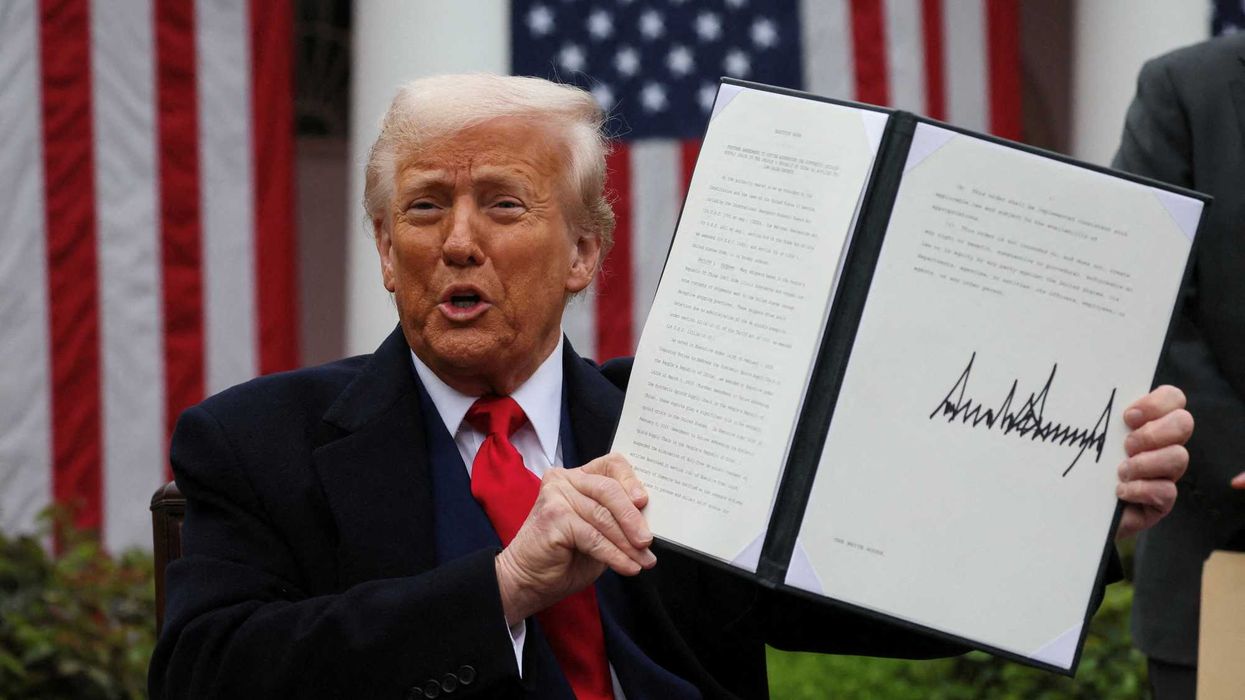
U.S. President Donald Trump holds a signed executive order
 REUTERS/Leah Millis

December 03, 2025
ALTERNET


President Donald Trump pardoned former private equity executive David Gentile this week, and made it so he will also be free from the responsibility of making his victims whole.

That's according to a Wednesday article in Politico, which reported that Gentile — who was convicted of conspiring to defraud thousands of people to the tune of $1.6 billion – will no longer have to come up with $15.5 million in restitution a judge ordered him to pay to victims. White House press secretary Karoline Leavitt insisted that Gentile was innocent in the scheme he was convicted of carrying out with his business partner, Jeffry Schneider.

"At trial, the government was unable to tie any supposedly fraudulent representations to Mr. Gentile," Leavitt said. "This is another example that has been brought to the president’s attention of the weaponization of justice from the previous administration and therefore he signed this commutation."

At the time he was pardoned, Gentile had served less than two weeks of a seven-year prison sentence.The scam involved Gentile misrepresenting the performance of three different of three private equity funds, and masking the source of investor payments. Gentile and Schneider's scheme affected approximately 17,000 investors, with 4,000 of those people being senior citizens.

Bloomberg reported this week that the judge overseeing Gentile's sentencing said she received hundreds of letters from victims of the scam. Some wrote that they had lost their life savings to Gentile's fraudulent scheme. One retiree in their seventies said that the scam cost them $450,000. Schneider is still serving his sentence and has not received clemency from the administration.

Gentile is merely one of several white-collar defendants who Trump had pardoned in recent days. CNN reported Wednesday that Trump pardoned Rep. Henry Cuellar (D-Texas) and his wife, who were charged in 2024 with accepting roughly $600,000 in bribes from foreign entities. While Cuellar is a Democrat, he has consistently spoken out against the Democratic Party's pro-choice stance and has endorsed Republican calls for more stringent border enforcement.

"Henry, I don’t know you, but you can sleep well tonight — Your nightmare is finally over," Trump wrote on Truth Social.

Click here to read Politico's full report.
CNN uses Trump’s own words with supercut of 'sleepy Joe' insults to mock Cabinet nap


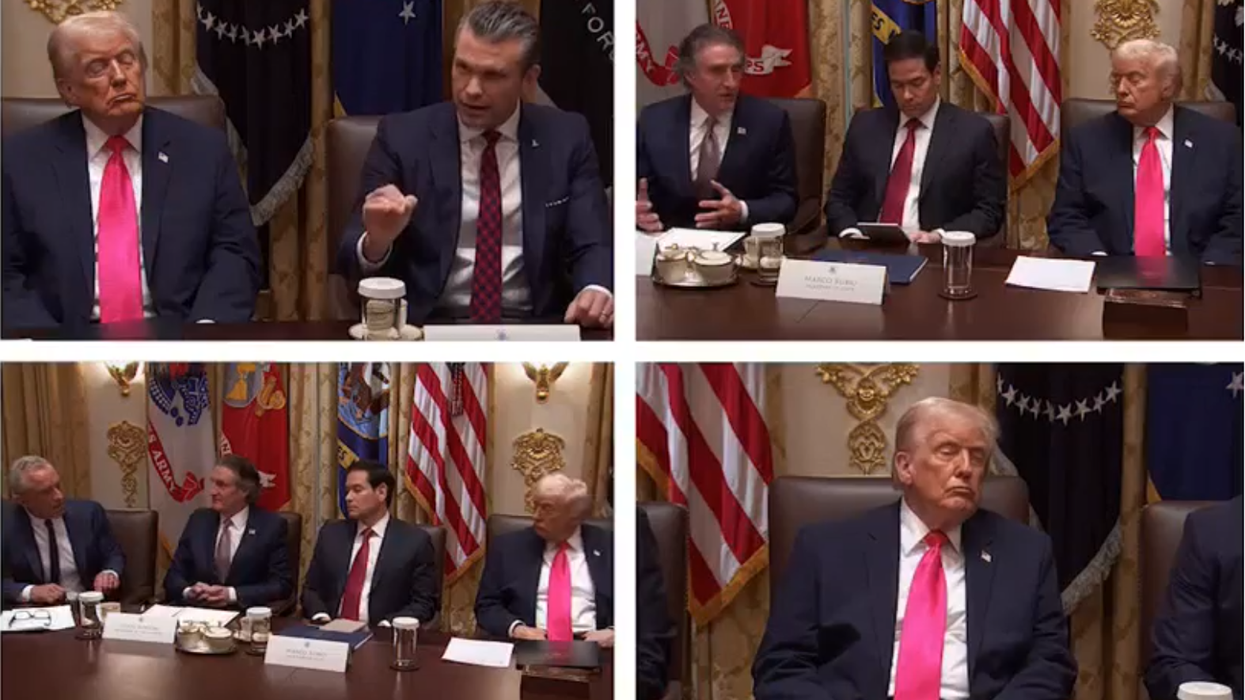
Trump at a December 2, 2025 cabinet meeting. (YouTube ScreenGrab)
December 03, 2025

CNN anchor Audie Cornish played a devastating supercut of footage showing President Donald Trump mocking former president Joe Biden for looking drowsy at public events, followed by Tuesday’s clips of Trump himself appearing to nod off at an intense cabinet briefing covering potential war crimes by the Trump administration.

“So, the president said a lot during Tuesday’s cabinet meeting at the White House, but there were plenty of moments where he wasn't saying anything at all,” Cornish told a CNN panel of contributors. “In fact, while his secretaries went around the table, the 79-year-old president might have looked to some as though he may have dozed off a few times, eyes closed, head nodding down. … So why are we talking about this? Well, it's something that Trump himself made a central issue on the campaign trail a year ago.”

“He spends a day and then comes back,” Trump said last year at a campaign stop. “He falls asleep at every single event.”

“They don't target Joe on the beach as he sleeps. He sleeps. How do you fall asleep when cameras are raging?” Trump later said.

“I wish I could do that. Sleep with the cameras [going],” he claimed at yet another campaign event.

“The White House says what you're seeing here is the president listening attentively while running a marathon three-hour cabinet,” said Cornish, but Argument Founder Jerusalem Demsas said she wasn’t buying it.

“Obviously there's like a level of hypocrisy here about, you know, his own ability to remain really alert and awake, as in performing his duties,” said Demsas. “… But I do think there's a question here about why it stuck so much with Biden when it doesn't seem to stick with Trump. There's a there's a lot of frustration among Democrats about why isn't this sort of thing sticking with Trump when it's stuck with Biden?”

“I think the reason it doesn't stick is because Democrats don't have a messenger who is calling him ‘Sleepy Don,’ over and over and over again,” said another panelist. “The branding is not there and they are not as ruthless about making and pushing the criticism.”