Wednesday, December 24, 2025

Deadly border clashes with Thailand displace more than 500,000 Cambodians

More than 500,000 Cambodians have been displaced after two weeks of deadly border clashes with Thailand. The conflict involving drones and air strikes shattered a fragile truce and reignited a decades-old territorial dispute.


Issued on: 21/12/2025 
By: FRANCE 24
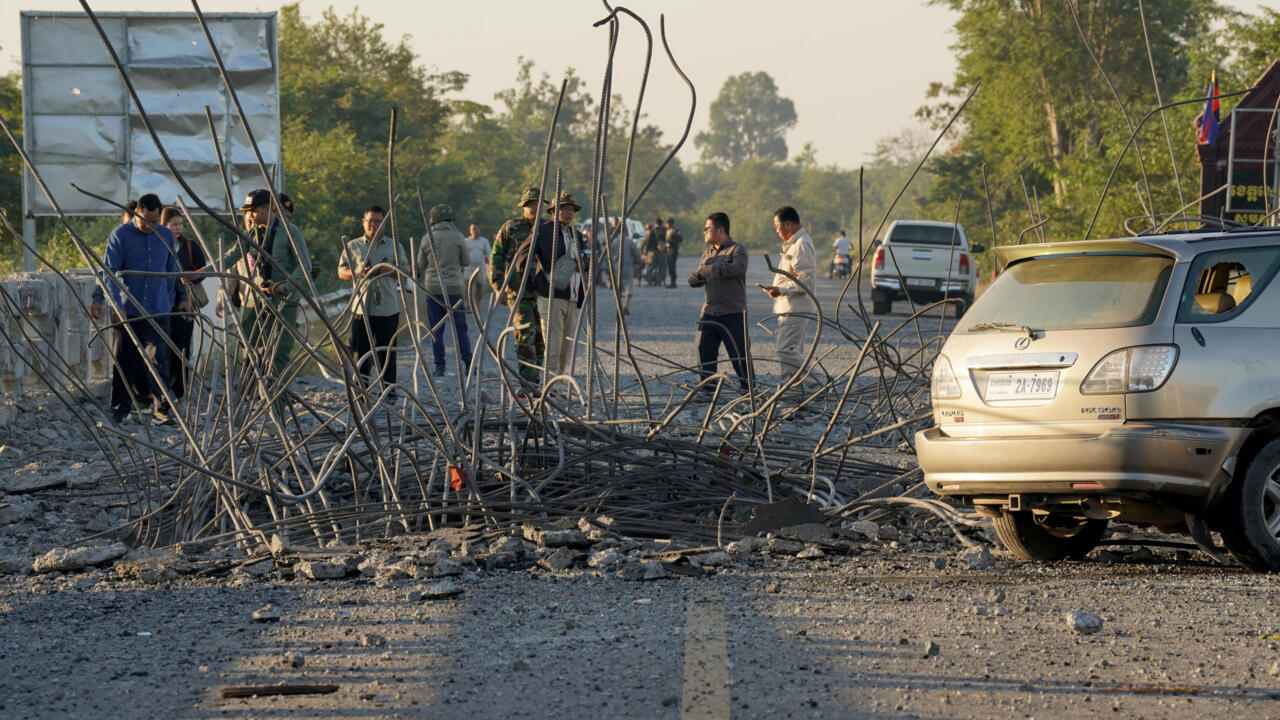

People look at a damaged bridge after Thailand carried out air strikes in an area between Cambodia's Oddar Meanchey and Siem Reap provinces. © STR, AFP

More than half a million people in Cambodia have been displaced from their homes by two weeks of deadly border clashes with neighbouring Thailand, Phnom Penh's interior ministry said Sunday.

The renewed fighting between the Southeast Asian neighbours this month, including with tanks, drones and artillery, has killed at least 22 people in Thailand and 19 in Cambodia, according to officials.

The conflict stems from a territorial dispute over the colonial-era demarcation of their 800-kilometre (500-mile) border and a smattering of ancient temple ruins situated on the frontier.

"At present, more than half a million Cambodian people, including women and children, are suffering severe hardship due to forced displacement from their homes and schools to escape artillery shells, rockets, and aerial bombardments carried out by Thailand's F-16 aircraft," Cambodia's interior ministry said in a statement, giving the total number of people evacuated as 518,611.

Around 400,000 people have been displaced in Thailand due to the reignited border conflict, Bangkok has said.

Each side has blamed the other for instigating the fresh fighting and traded accusations of attacks on civilians, after five days of clashes in July killed dozens.

The United States, China and Malaysia brokered a truce to end that round of fighting, but the ceasefire was short-lived.
Border temple clashes

In October, US President Donald Trump backed a follow-on joint declaration between Thailand and Cambodia, touting new trade deals after they agreed in Kuala Lumpur to prolong their truce.

But Thailand suspended the agreement the following month, after Thai soldiers were wounded by landmines while on patrol at the border.

Bangkok has accused Cambodia of laying fresh mines, an allegation denied by Phnom Penh.

Trump, who has placed the conflict between Cambodia and Thailand on a list of wars he said he solved, this month claimed the two countries had agreed to a new ceasefire.

But Bangkok denied any truce had been agreed, and fighting has continued daily since a border skirmish on December 7 sparked the latest clashes.

US Secretary of State Marco Rubio said on Friday that Washington was hoping Cambodia and Thailand would reach a new ceasefire by Monday or Tuesday.

Foreign ministers of ASEAN nations, including Cambodia and Thailand, are set to meet on Monday in Kuala Lumpur for talks aimed at finding a diplomatic solution.

China sent its special envoy for Asian affairs to Cambodia and Thailand last week, with Beijing aiming to "rebuild peace".

Cambodia's foreign ministry said in a statement on Saturday that the Chinese envoy, Deng Xijun, met with Prime Minister Hun Manet in Phnom Penh the day before, urging a truce.

Cambodia, which is outgunned and outspent by Bangkok's military, said Sunday that Thai forces had continued to attack since dawn, with fighting occurring on the border near the 900-year-old Preah Vihear temple.

A patch of contested land next to the UNESCO-listed heritage site was the site of military clashes in 2008, and sporadic violence for several years after led to the deaths of two dozen people.

A UN court ruling in Phnom Penh's favour in 2013 settled the matter for more than a decade, but this year's crisis erupted in May when a Cambodian soldier was killed in a new clash.

(FRANCE 24 with AFP)
Algerian parliament brands French colonisation a crime, demands apology and reparations


Algeria’s parliament voted unanimously on Wednesday to declare France’s 130-year colonisation of the country a crime, calling for a formal apology and reparations from Paris. The largely symbolic move comes amid a widening diplomatic rift between the two countries and underscores the enduring sensitivity of the North African country's colonial past.


Issued on: 24/12/2025
By: FRANCE 24


File photo: A view of the building of Algerian council of nation, or the parliament, in Algiers, Algeria, Wednesday, June 28, 2017. © Anis Belghoul, AP


Algeria's parliament unanimously approved on Wednesday a law declaring France's colonisation of the country a "state crime" and demanding an apology and reparations.

Standing in the chamber, lawmakers wearing scarves in the colours of the national flag chanted, "Long live Algeria" as they applauded the passage of the bill, which states that France holds "legal responsibility for its colonial past in Algeria and the tragedies it caused".

The vote comes as the two countries are embroiled in a major diplomatic crisis, and while analysts say the move is largely symbolic it is still politically significant.

Parliament speaker Brahim Boughali told the APS state news agency before the vote that it would send "a clear message, both internally and externally, that Algeria's national memory is neither erasable nor negotiable".


READ MOREFrench ‘counter-monument’ holds up a mirror to ghosts of colonial Algeria

The legislation lists the "crimes of French colonisation", including nuclear tests, extrajudicial killings, "physical and psychological torture" and the "systematic plundering of resources".

It states that "full and fair compensation for all material and moral damages caused by French colonisation is an inalienable right of the Algerian state and people".

France's rule over Algeria from 1830 until 1962 remains a sore spot in relations between the two countries. The period was marked by mass killings and large-scale deportations, all the way up to the bloody war of independence from 1954-1962.

Algeria says the war killed 1.5 million people while French historians put the death toll lower, at 500,000 in total, some 400,000 of them Algerian.

READ MORERemembering Sétif, the VE Day colonial massacres that ‘lost Algeria’ for France

French President Emmanuel Macron has previously acknowledged the colonisation of Algeria as a "crime against humanity" but has stopped short of offering an apology.

Asked last week about the vote, French foreign ministry spokesman Pascal Confavreux said he would not comment on "political debates taking place in foreign countries".

Hosni Kitouni, a researcher in colonial history at the University of Exeter in the UK, said that "legally, this law has no international scope and therefore is not binding for France".

But "its political and symbolic significance is important: It marks a rupture in the relationship with France in terms of memory," he said.

(FRANCE 24 with AFP)
Supreme Court blocks Trump’s National Guard deployment in Chicago

The US Supreme Court on Tuesday halted President Donald Trump’s attempt to deploy National Guard troops in Chicago, dealing a setback to his immigration crackdown and raising fresh questions about the limits of presidential authority to use the military for domestic law enforcement.


Issued on: 24/12/2025
By: FRANCE 24


The US Supreme Court dealt a blow to President Donald Trump’s immigration crackdown on Tuesday by blocking his deployment of National Guard troops in Chicago.

The conservative-dominated court kept in place, for now, a lower court order barring the deployment of troops on the streets of the city in the midwestern state of Illinois.

“At this preliminary stage, the Government has failed to identify a source of authority that would allow the military to execute the laws in Illinois,” the court said in an unsigned order.
'Deportation machine': How Donald Trump and ICE are changing America


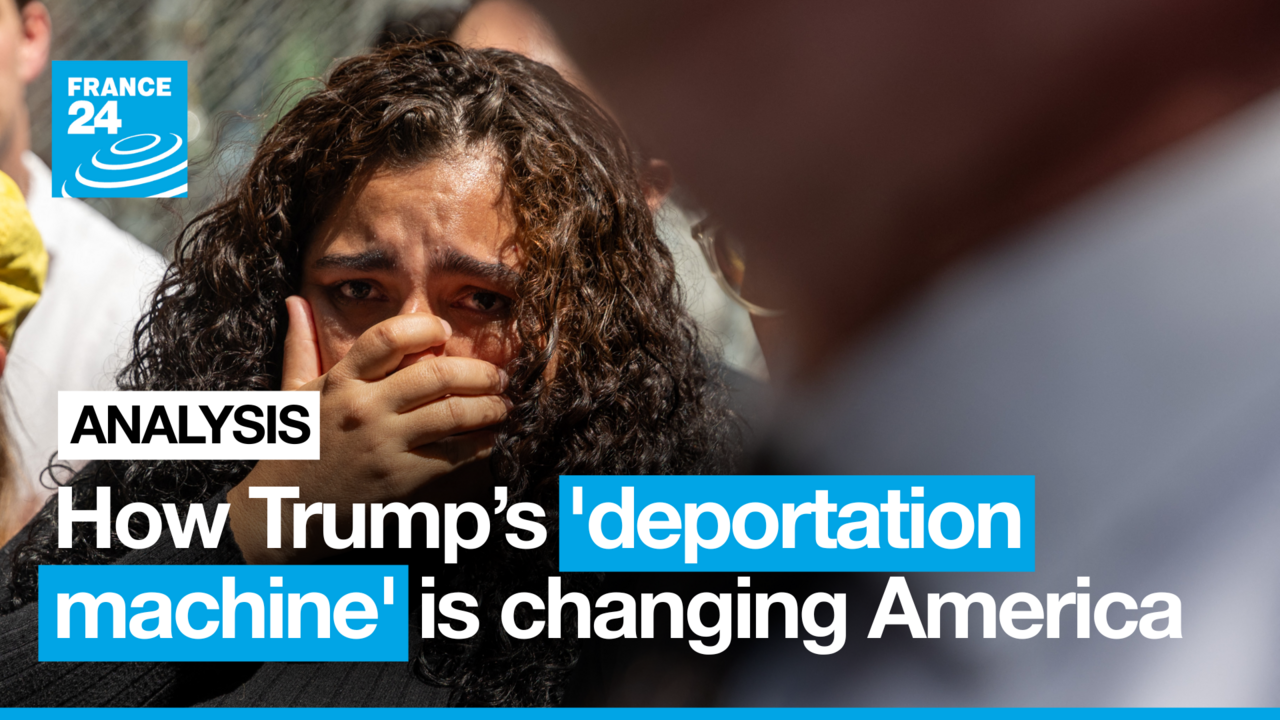
'Deportation machine': How Donald Trump and ICE are changing America © AFP
17:30


Three conservative justices – Samuel Alito, Clarence Thomas and Neil Gorsuch – dissented.

The Republican president has sent National Guard troops to three Democratic-led cities this year – Los Angeles, Washington and Memphis – but his efforts to deploy soldiers in Portland and Chicago have been tied up in the courts.

White House spokeswoman Abigail Jackson, reacting to the ruling, said the president “activated the National Guard to protect federal law enforcement officers, and to ensure rioters did not destroy federal buildings and property”.

“Nothing in today’s ruling detracts from that core agenda,” Jackson said.

JB Pritzker, the Democratic governor of Illinois, who strongly opposed the deployment along with the Democratic mayor of Chicago, welcomed the ruling, calling it a “big win for Illinois and American democracy”.

“This is an important step in curbing the Trump administration’s consistent abuse of power and slowing Trump’s march toward authoritarianism,” Pritzker said.

After two lower courts blocked Trump from sending troops into Chicago, his administration made an emergency appeal to the Supreme Court.

In his filing with the top court, Solicitor General John Sauer claimed federal agents in Chicago were being “forced to operate under the constant threat of mob violence”.

The court order blocking deployment of the National Guard “improperly impinges on the president’s authority and needlessly endangers federal personnel and property”, Sauer added.

The Supreme Court rebuff of the emergency appeal was a rare defeat for Trump at the top court, where conservatives hold a 6–3 majority.

It was not immediately clear how Tuesday’s decision would affect other cases in which Democratic-led states have challenged Trump’s National Guard deployments.

California and Oregon have both filed legal challenges against the Trump administration’s extraordinary domestic use of the National Guard.

Trump sent troops to Los Angeles earlier this year to quell demonstrations sparked by a federal crackdown on undocumented migrants.

A district court judge ruled the deployment unlawful, but an appeals court panel allowed the Los Angeles operation to proceed.

Some 300 National Guard troops remain activated in the Chicago area but are not engaged in operations.

(FRANCE 24 with AFP)

Trump says comedian Colbert should be 'put to sleep'

THE KING SAYS BEHEAD THE COURT JESTER

Washington (United States) (AFP) – On the eve of Christmas, President Donald Trump has unleashed a fresh blast of vitriol at late-night comedy talk shows, saying comedian Stephen Colbert is a "pathetic trainwreck" who should be "put to sleep."


Issued on: 24/12/2025 - FRANCE24

Stephen Colbert's "The Late Show" is scheduled to end in May, a decision his fans say smacks of censorship © ANGELA WEISS / AFP

Colbert's "The Late Show" is scheduled to end in May 2026, a decision his fans say smacks of censorship.

In a late night Truth Social post, Trump wrote that Colbert "has actually gotten worse" since being "terminated by CBS, but left out to dry."

"Stephen is running on hatred and fumes ~ A dead man walking! CBS should, 'put him to sleep,' NOW," Trump wrote.

Colbert has hosted the "The Late Show" since 2015 and it has been the highest-rated late night talk show on US television. His opening monologues often take aim at the Republican president.


There was no immediate public response from Colbert or CBS to Trump's post.

CBS announced the sunsetting of Colbert's show after one more season in July, the same month its parent company reached a $16 million settlement with Trump. CBS called the cancellation "a purely financial decision."

Trump had sued Paramount, alleging that CBS News' "60 Minutes" program deceptively edited an interview with his 2024 election rival, Kamala Harris, in her favor.

In another overnight post, Trump repeated threats to yank the broadcast licenses of networks whose content he deemed overly critical.

"If Network NEWSCASTS, and their Late Night Shows, are almost 100% Negative to President Donald J. Trump, MAGA, and the Republican Party, shouldn’t their very valuable Broadcast Licenses be terminated? I say, YES!"

On Sunday, CBS's new editor-in-chief, Bari Weiss, pulled a "60 Minutes" segment on alleged torture at El Salvador's CECOT prison -- where Trump sent hundreds of deported Venezuelans -- saying it needed more reporting.

In August, Disney-owned ABC briefly suspended its late-night star, Jimmy Kimmel, before bringing him back on a one-year contract.

Kimmel had annoyed conservatives with comments in the wake of the murder of right-wing activist Charlie Kirk.

Trump appears to be aiming to reshape the US media landscape, which he says is biased against conservatives.

His appointee to head the Federal Communications Commission, Brendan Carr, turned heads when he told a Congressional hearing that "the FCC is not formally an independent agency," implying that his actions could justifiably be aligned with the political priorities of the White House.

© 2025 AFP
UK, Canada, Germany and others condemn Israel’s West Bank settlement expansion


The UK, Canada, Germany and several other countries on Wednesday condemned Israel’s decision to approve 19 new settlements in the occupied West Bank, saying the move violated international law and risked fuelling further instability, and calling on the Israeli government to reverse the decision.


Issued on: 24/12/2025 
By: FRANCE 24

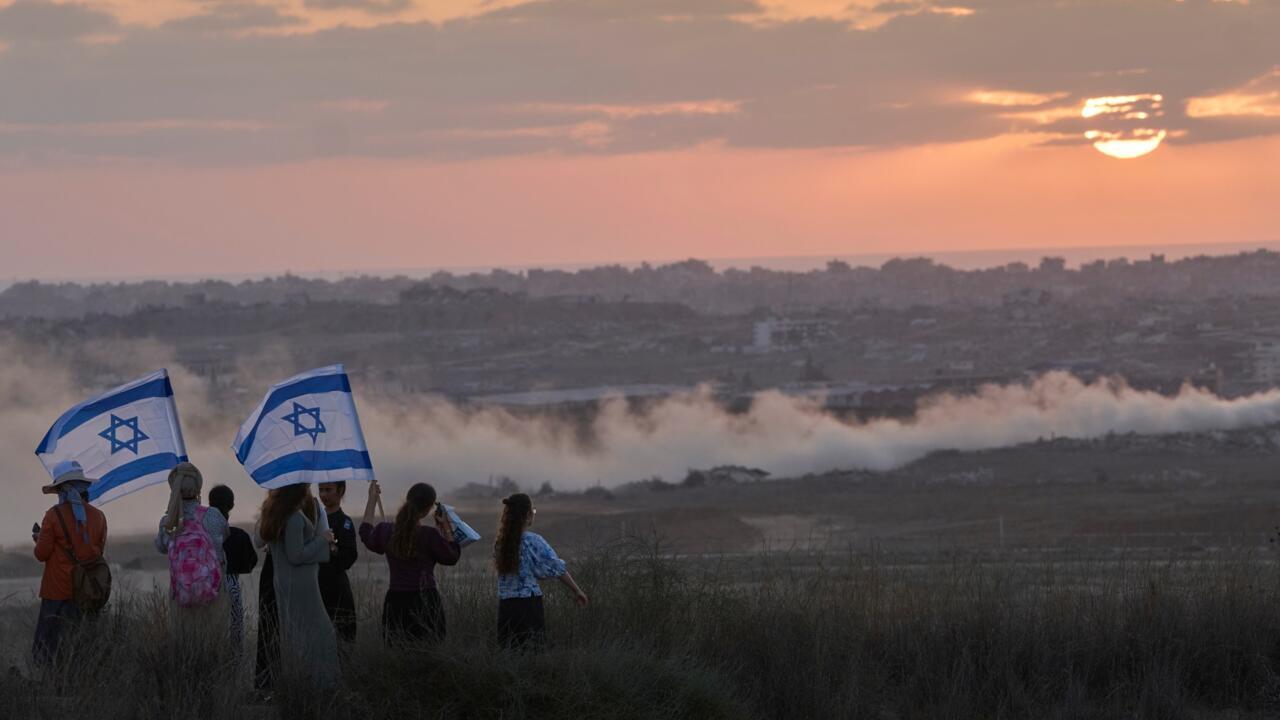
File photo: Israeli right-wing activists watch the northern Gaza Strip during a rally calling for the re-establishment of Jewish settlements in the Gaza Strip, near the border in southern Israel, July 30, 2025. AP - Ohad Zwigenberg

Fourteen countries, including France, Britain, and Germany, condemned on Wednesday Israel's recent approval of new Jewish settlements in the occupied West Bank.

"We, States of Belgium, Canada, Denmark, France, Germany, Italy, Iceland, Ireland, Japan, Malta, the Netherlands, Norway, Spain and the United Kingdom condemn the approval by the Israeli security cabinet of 19 new settlements in the occupied West Bank," said a joint statement released by the French foreign ministry.

"We recall our clear opposition to any form of annexation and to the expansion of settlement policies," it added.

On Sunday, Israel's far-right Finance Minister Bezalel Smotrich announced the authorities had greenlit the settlements, saying the move was aimed at preventing the establishment of a Palestinian state.

In their statement, the countries stressed such unilateral actions "violate international law" and risk undermining a fragile ceasefire in Gaza as mediators push for the implementation of the second phase of the truce.

The countries urged Israel "to reverse this decision, as well as the expansion of settlements".

They also reaffirmed their "unwavering commitment to a comprehensive, just and lasting peace based on the two-state solution... where two democratic states, Israel and Palestine, live side-by-side in peace and security".

Israel has occupied the West Bank following a war in 1967.

Excluding east Jerusalem, which was occupied and annexed by Israel in 1967, more than 500,000 Israelis live in the West Bank, along with about three million Palestinian residents.

Earlier this month, the United Nations said the expansion of Israeli settlements in the West Bank – all of which are illegal under international law – had reached its highest level since at least 2017.

(FRANCE 24 with AFP)
‘Year of the octopus’: How climate change is pushing the sea’s smartest creature into new territory


By Liam Gilliver
Published on 22/12/2025 EURONEWS

Unprecedented numbers of the common octopus have been found in British waters this year, but what’s behind the rare ‘bloom’?

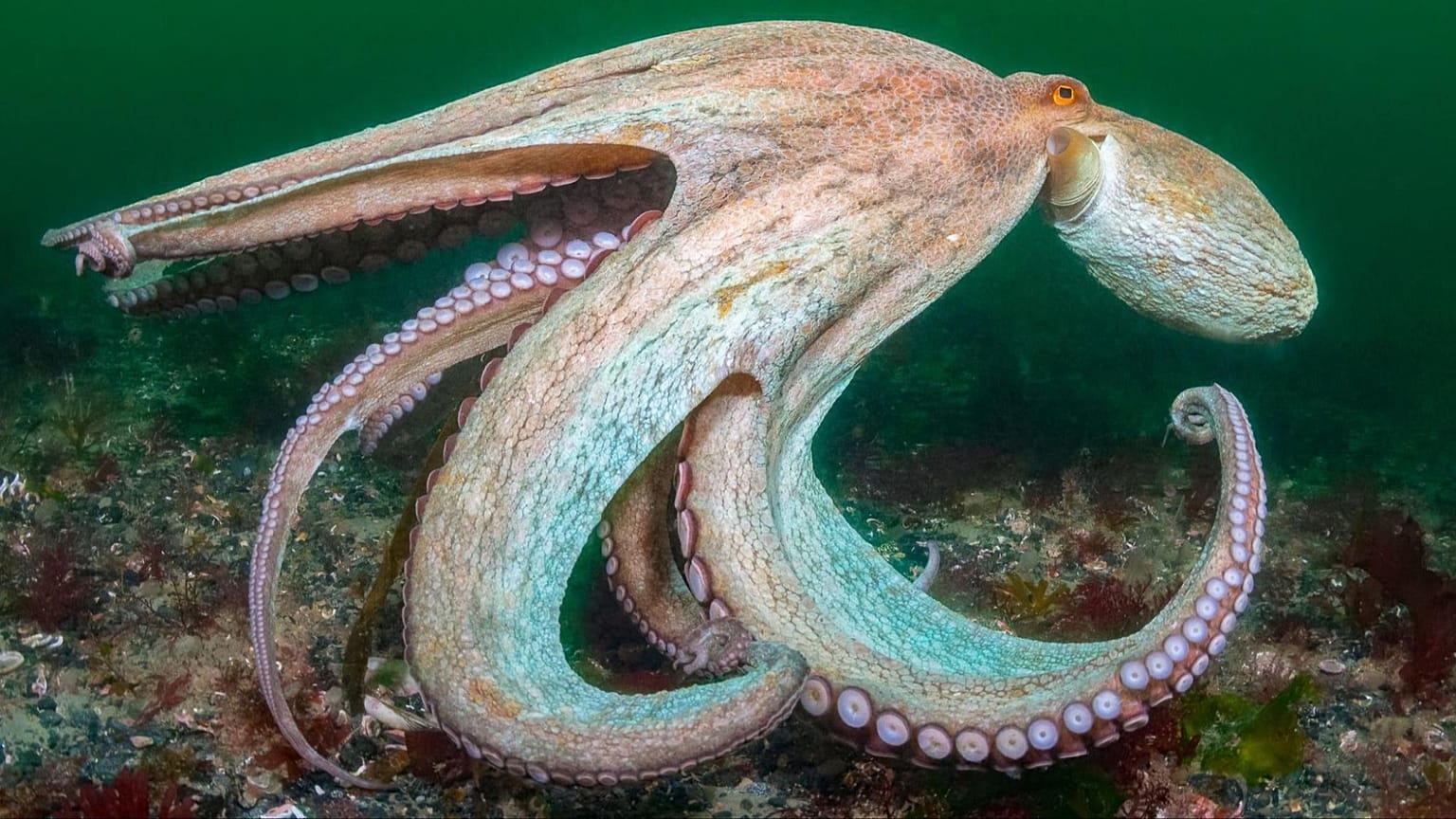
An “exceptional” number of Mediterranean Octopus have been spotted along the south coast of England this year, putting on rarely-seen displays in shallow waters.

Revered as one of the most intelligent sea creatures, the elusive cephalopod (also known as the Common Octopus) is usually found further south in the warmer waters of the Mediterranean. They have been recorded in large numbers, often referred to as a bloom, in the UK before, but this year’s surge was the biggest since 1950.

Volunteers recorded a staggering 1,500 per cent increase in numbers from the “mini bloom” in 2023, and managed to get rare footage of the creatures ‘walking’, cleaning themselves and mating. One was even filmed grabbing at an underwater camera.

The influx led to conservation charity The Wildlife Trusts declaring 2025 ‘the Year of the Blooming Octopus’. But, is it really a phenomenon worth celebrating?

Why are octopuses moving to UK waters?


Ruth Williams, head of marine conservation at The Wildlife Trusts, says the “population explosion” is likely due to a combination of different environmental factors aligning, including warming waters.

“Sea temperatures are 1.5 to 3℃ higher than usual in the Southwest and warmer winters allow the octopus eggs to survive at higher rates,” she tells Euronews Green.

“However, more research is needed to understand the bloom in more detail.”

The temperature of seas and oceans is rising at an accelerating rate, as they continue to absorb excess heat from human-produced greenhouse gases.

A 2025 study, published in the journalEnvironmental Research Letters, warned that the surface of the ocean is warming four times faster than it was 40 years ago, while average sea surface temperatures have hit an all-time high.

“If the oceans were a bathtub of water, then in the 1980s, the hot tap was running slowly, warming up the water by just a fraction of a degree each decade,” says lead author Professor Chris Merchant.

“But now, the hot tap is running much faster and the warming has picked up speed. The way to slow down that warming is to start closing off the hot tap, by cutting global carbon emissions and moving towards net-zero.”
How does the octopus bloom impact the UK?

While the blooms are classed as a natural occurrence, this year’s record-breaking numbers caused trouble for the shellfish industry - with some workers claiming their catch had plummeted by at least 60 per cent during the summer months.

“Octopuses are predators and feed on lobster, crab and scallops, which are also caught by fishers,” explains Williams.

“If the number of octopus continues to increase then fishers will have to adapt and change their fishery accordingly and there is work underway to look into possible options.”

However, Williams adds that the spike in octopus numbers may be “short-lived” and numbers could return to more normal levels in future years.
A ‘welfare issue’: Is it legal to fish octopus in the UK?

The decrease in shellfish has heightened the demand for more restaurants to start offering octopus on their menu - and helps fishermen maintain their profits.

This summer, more than 1,200 tonnes of octopus were caught by fishermen in UK waters.

This is a significant increase on previous years, but won’t be well-received by animal-rights activists who have long called for octopus to be protected from being killed for human consumption.

In 2021, the UK government amended its Animal Welfare Bill to recognise octopuses as sentient beings, acknowledging that they can feel pain. This prohibits practices such as boiling them alive but does not go as far as stopping them from being killed.

“These are highly intellectual animals so there is a welfare issue, as with many animals caught or farmed for food production,” Williams adds.


Chocolate could disappear by 2050. Could this climate-resistant alternative take its place?


Copyright NUS Faculty of Science

Published on 24/12/2025 - EURONEWS


As cocoa production plunges, scientists have turned to a climate-resilient plant to save the chocolate industry.


Chocolate is facing a “climate barometer” as extreme weather conditions threaten the future of global cocoa crops.


The majority of cocoa(around 60 per cent) comes from West Africa, produced in humid countries such as Côte d’Ivoire and Ghana, where warm temperatures and ample rainfall alternate with short dry seasons.


But over the past two years, cocoa production has plummeted by as much as 40 per cent. This has resulted in chocolate prices soaring to levels not seen since the 1970s, with experts warning of a cocoa-free world by 2050.
How climate change is threatening the chocolate industry

There are many factors pointing to chocolate’s demise. Previous reports have blamed illegal gold mining, aging trees and even cocoa smugglers – but research suggests the primary culprit is contrasting extremes of rainfall.

The Salata Institute for Climate and Sustainability at Harvard University says cocoa’s weather sensitivity is nothing new, but climate change is “amplifying the intensity of heavy rainfall events” as temperatures rise.

For every 1℃ increase in air temperature, the atmosphere is able to hold around seven per cent more moisture, which can cause more intense and heavy rainfall.

“The basic physics are straightforward: A warmer atmosphere holds more moisture, amplifying the intensity of rainfall extremes,” the researchers say. “This brings waterlogging, soil erosion, and conditions that allow for fungal diseases.”

Motivated by this climate-fuelled meltdown, scientists from the National University of Singapore have now set out to find a solution.
Can scientists save the chocolate industry?

Researchers focused their attention on carob, a climate-resilient plant grown in the Mediterranean that has slowly gained attention as a promising cocoa alternative.

Unlike cocoa, carob thrives in hot, arid climates with very low water requirements, and is able to survive through droughts. After roasting, it releases a "unique aroma” that resembles cocoa – but its flavour doesn’t quite hit the spot.

To overcome the issue, the team devised two techniques to alter the plant’s flavour, using enzymes to increase bitterness and enhance sweetness.

Enzyme treatment is a straightforward and clean method that requires minimal processing, compared to other methods which involve harsh chemicals such as hydrochloric acid to enhance flavour.

By improving carob’s flavour profile, researchers say these techniques could encourage confectioners to use carob in food products that usually require cocoa, such as chocolate bars, cocoa powders, malt drinks, and other cocoa-based products.

If adopted at scale, it could “significantly reduce” the chocolate industry’s dependence on cocoa, making supply chains more resilient to climate change and crop disease outbreaks.

“Our research is not just about replicating the flavour of cocoa – it’s about diversifying the ingredients we use to make chocolate alternatives,” says Manfred Ku, first author of the research paper.

“By turning to hardy, climate-resilient crops like carob, we can help the industry adapt to environmental challenges while giving consumers a product they will enjoy.”
Trump’s rollbacks made 2025 a turbulent year for clean energy. So why are experts optimistic?


Copyright AP Photo/John Locher, File

By Jennifer McDermott with AP
Published on 24/12/2025 EUR0NEWS


“Trump’s effort to... harm clean energy just isn’t enough to offset the natural advantages it has,” says one expert.


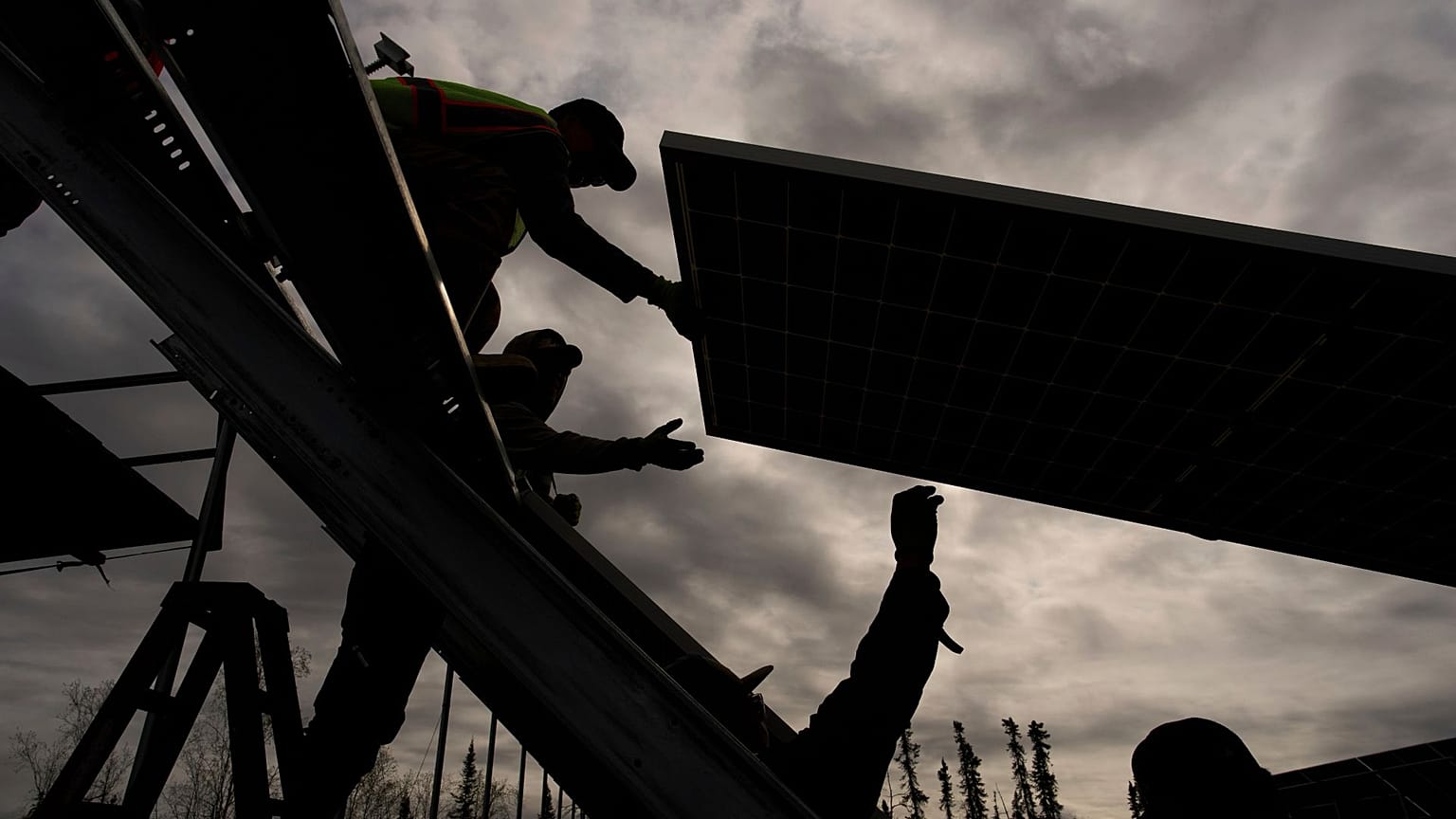
This year, US President Donald Trump worked to boost polluting fuels while blocking wind and solar. But amid the lows, there were some highs for clean energy, experts promise.

News agency The Associated Press surveyed dozens of energy developers, experts and politicians, many of whom described 2025 as turbulent and challenging for clean energy, though there was progress as projects connected to the electric grid.

They said clean energy must continue to grow to meet skyrocketing demand for electricity to power data centres and to lower utility bills.

Solar builder and operator Jorge Vargas said it has been “a very tough year for clean energy” as Trump often made headlines criticising renewable energy and Republicans muscled a tax and spending cut bill through Congress in July that dramatically rolled back tax breaks for clean energy.

“There was a cooldown effect this year,” said Vargas, cofounder and CEO of Aspen Power. “Having said that, we are a resilient industry.”

Plug Power president Jose Luis Crespo said the developments - both policy recalibration and technological progress - will shape clean energy’s trajectory for years to come.
USA faced energy policy whiplash in 2025

Much of clean energy's fate in 2025 was driven by booster Joe Biden's exit from the White House.

The year began with ample federal subsidies for clean energy technologies, a growing number of US-based companies making parts and materials for projects and a lot of demand from states and corporations, said Tom Harper, partner at global consultant Baringa.

It ends with subsidies stripped back, a weakened supply chain, higher costs from tariffs and some customers questioning their commitment to clean energy, Harper said. He described the year as “paradigm shifting”.

Trump called wind and solar power “the scam of the century” and vowed not to approve new projects. The federal government canceled grants for hundreds of projects.

The Republicans’ tax bill reversed or steeply curtailed clean energy programs established through the Democrats’ flagship climate and health care bill in 2022. Wayne Winegarden, at the Pacific Research Institute think tank, said the time has come for alternative energy to demonstrate viability without subsidies. (Fossil fuels also receive subsidies.)

Many energy executives said this was the most consequential policy shift. The bill reshaped the economics of clean energy projects, drove a rush to start construction before incentives expire and forced developers to reassess their strategies for acquiring parts and materials, Lennart Hinrichs said. He leads the expansion of TWAICE in the Americas, providing analytics software for battery energy storage systems.

Companies can't make billion-dollar investments with so much policy uncertainty, said American Clean Power Association CEO Jason Grumet.

Consequently, greenhouse gas emissions will fall at a much lower rate than previously projected in the US, said Brian Murray, director of the Nicholas Institute for Energy, Environment and Sustainability at Duke University.
Still, solar and battery storage are booming

Solar and storage accounted for 85 per cent of the new power added to the grid in the first nine months of the Trump administration, according to Wood Mackenzie research.

That's because the economics remain strong, demand is high and the technologies can be deployed quickly, said Mike Hall, CEO of Anza Renewables.

Solar energy company Sol Systems said it had a record year as it brought its largest utility-scale project online and grew its business. The energy storage systems company CMBlu Energy said storage clearly stands out as a winner this year too, moving from optional to essential.

“Trump’s effort to manipulate government regulation to harm clean energy just isn’t enough to offset the natural advantages that clean energy has,” Democratic US Sen. Sheldon Whitehouse said. "The direction is still all good.”

The Solar Energy Industries Association said that no matter the policies in Washington, solar and storage will grow as the backbone of the nation's energy future.
Nuclear and geothermal had a good year, too

Democrats and Republicans have supported investing to keep nuclear reactors online, restart previously closed reactors, and deploy new, advanced reactor designs. Nuclear power is a carbon-free source of electricity, though not typically labeled as green energy like other renewables.

“Who had ‘restart Three Mile Island’ on their 2025 Bingo card?” questioned Baringa partner David Shepheard. The Pennsylvania plant was the site of the nation’s worst commercial nuclear power accident, in 1979. The Energy Department is loaning $1 billion to help finance a restart.

Everyone loves nuclear, said Darrin Kayser, executive vice president at Edelman. It helps that the technology for small, modular reactors is starting to come to fruition, Kayser added.

Benton Arnett, a senior director at the Nuclear Energy Institute, said that as the need for clean, reliable power intensifies, “we will look back on the actions being taken now as laying the foundation."

The Trump administration also supports geothermal energy, and the tax bill largely preserved geothermal tax credits. The Geothermal Rising association said technologies continue to mature and produce, making 2025 a breakthrough year.

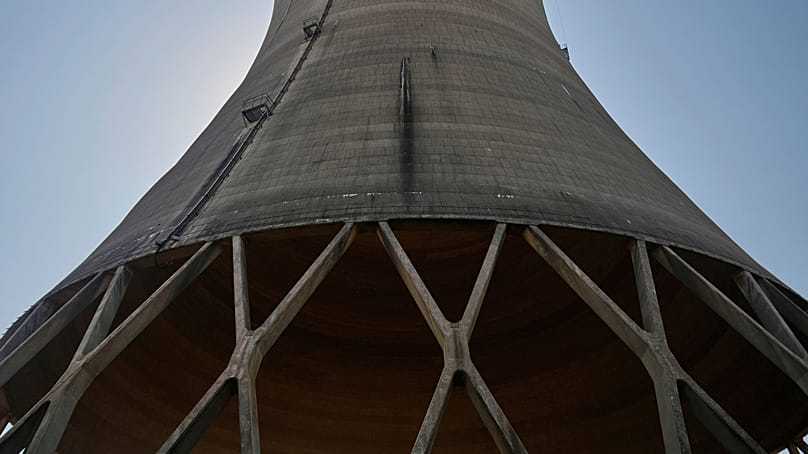
The base of a cooling tower at Constellation's nuclear power plant stands on Three Mile Island near Middletown, Pa., June 25, 2025. AP Photo/Stephanie Scarbrough, File


Offshore wind had a terrible year


Momentum for offshore wind in the United States came to a grinding halt just as the industry was starting to gain traction, said Joey Lange, a senior managing director at Trio, a global sustainability and energy advisory company.

The Trump administration stopped construction on major offshore wind farms, revoked wind energy permits and paused permitting, canceled plans to use large areas of federal waters for new offshore wind development and stopped federal funding for offshore wind projects.

That has decimated the projects, developers and tech innovators, and no one in wind is raising or spending capital, said Eric Fischgrund, founder and CEO at FischTank PR. Still, Fischgrund said he remains optimistic because the world is transitioning to cleaner energy.
More clean energy needed in 2026

An energy strategy with a diverse mix of sources is the only way forward as demand grows from data centres and other sources, and as people demand affordable, reliable electricity, said former Democratic Sen. Mary Landrieu. Landrieu, now with Natural Allies for a Clean Energy Future, said promoting or punishing specific energy technologies on ideological grounds is unsustainable.

Experts expect solar and battery storage to continue growing in 2026 to add a lot of power to the grid quickly and cheaply. The market will continue to ensure that most new electricity is renewable, said Amanda Levin, policy analysis director at the Natural Resources Defense Council.

Hillary Bright, executive director of Turn Forward, thinks offshore wind will still play an important role too. It is both ready and needed to help address the demand for electricity in the new year, which will become increasingly clear "to all audiences”, she said. Turn Forward advocates for offshore wind.

That skyrocketing demand "is shaking up the political calculus that drove the administration’s early policy decisions around renewables,” she said.

BlueWave CEO Sean Finnerty thinks that states, feeling the pressure to deliver affordable, reliable electricity, will increasingly drive clean energy momentum in 2026 by streamlining permitting and the process of connecting to the grid, and by reducing costs for things like permits and fees.

Ed Gunn, Lunar Energy's vice president for revenue, said the industry has weathered tough years before.

“The fundamentals are unchanged," Gunn said, "there is massive value in clean energy.”


Bay of Biscay fishing ban to return in 2026 after proving successful at reducing dolphin deaths


Copyright Copyright 2012 AP. All rights reserved.

By Christina Thykjaer
Published on 24/12/2025 - EURONEWS

Winter closures in recent years have gained positive results, although the measure will affect around 300 vessels.

Every winter, the Bay of Biscay becomes a risky place for dolphins. The clash between their seasonal movements and intense fishing activity means that, year after year, the probability of accidental catches increases. This is a reality that scientists and authorities have been aware of for some time and which has forced Brussels to intervene once again.

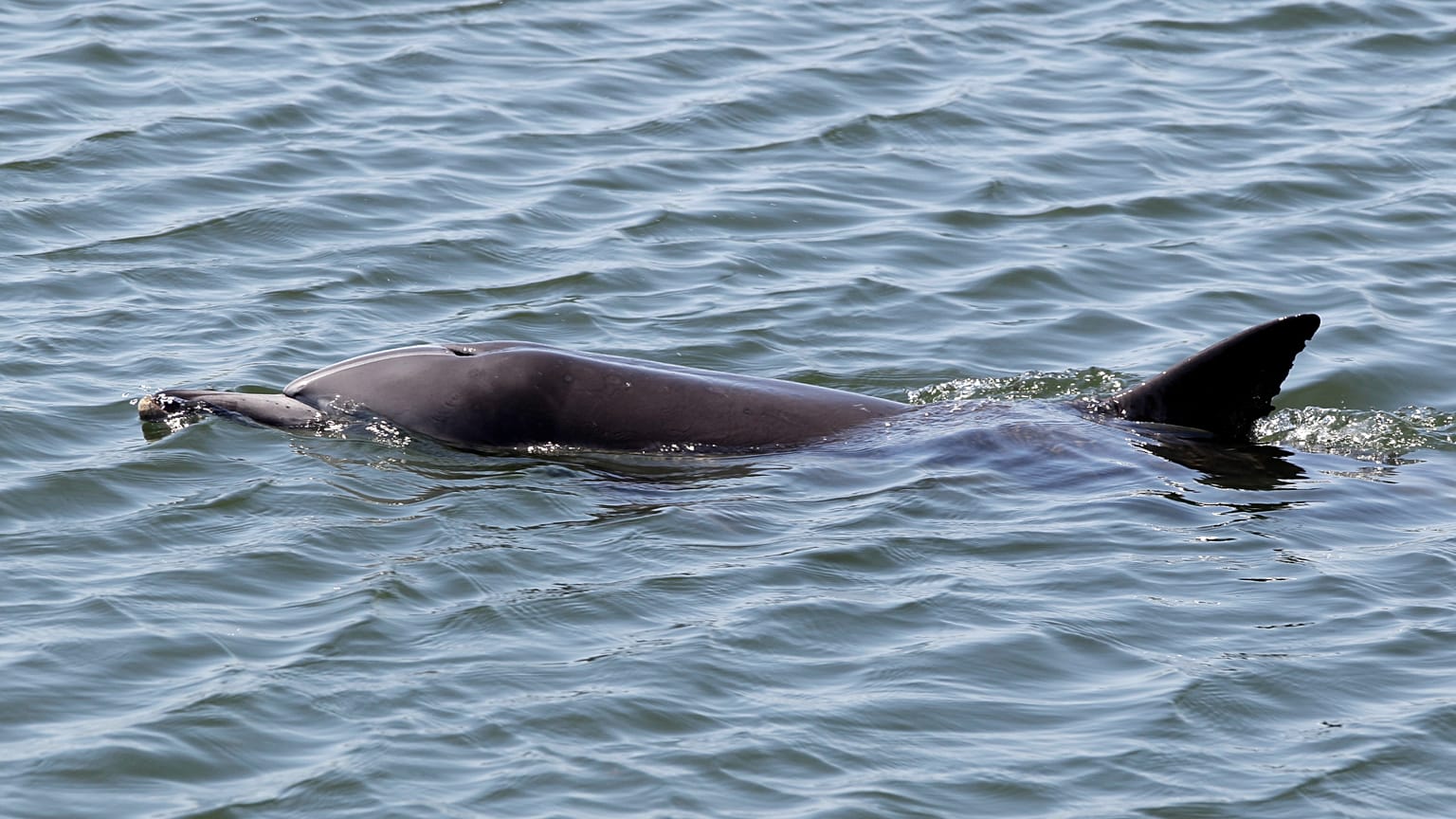
The European Commission announced this week that in 2026 it will re-implement a temporary fishing ban in the area, a measure designed to reduce deaths of dolphins and other small cetaceans. The closure will run from 22 January to 20 February and will affect vessels over eight metres in length, which will have to remain in port during that period.


The decision does not come out of the blue. It is the third consecutive year in which the European Union has resorted to this type of winter closure, after finding that previous restrictions have worked. According to data cited by Brussels, the number of dolphins killed in 2025 was significantly lower than before the closures were introduced, a key argument for repeating the measure.

Behind this policy is a persistent problem. Every winter, hundreds of dolphins wash up dead on the Atlantic coasts, many of them with clear signs of having been caught in fishing nets. Scientific organisations such as the French observatory PELAGIS have been documenting this situation for years and calling for concrete action to stop it.

Some 300 vessels will be affected by the fishing ban

The new closure will affect some 300 EU vessels, an impact that the Commission acknowledges. For this reason, Brussels has said that fishermen will be able to access economic compensation through the European Maritime, Fisheries and Aquaculture Fund, as well as possible national aid, with the aim of cushioning the loss of income during the period of inactivity.

The closure, however, is not the only measure envisaged. The Commission maintains the obligation for certain vessels to use acoustic deterrent devices throughout the year, devices that emit sounds to keep cetaceans away from nets. In addition, monitoring programmes will be strengthened, with on-board observers and camera systems to monitor interactions between fisheries and marine wildlife.

Overall, Brussels is seeking to repeat a formula that has already proved effective: reducing fishing pressure at the most critical times of the year to give dolphins a break, without losing sight of the need to sustain the activity of a key sector for many coastal communities.
Travelling to Portugal over the New Year? Beware of airport strikes on these dates


Copyright Ana Brigida/Copyright 2025 The AP. All rights reserved

By Euronews
Published on 24/12/2025 


A court order mandates that minimum services must be maintained.


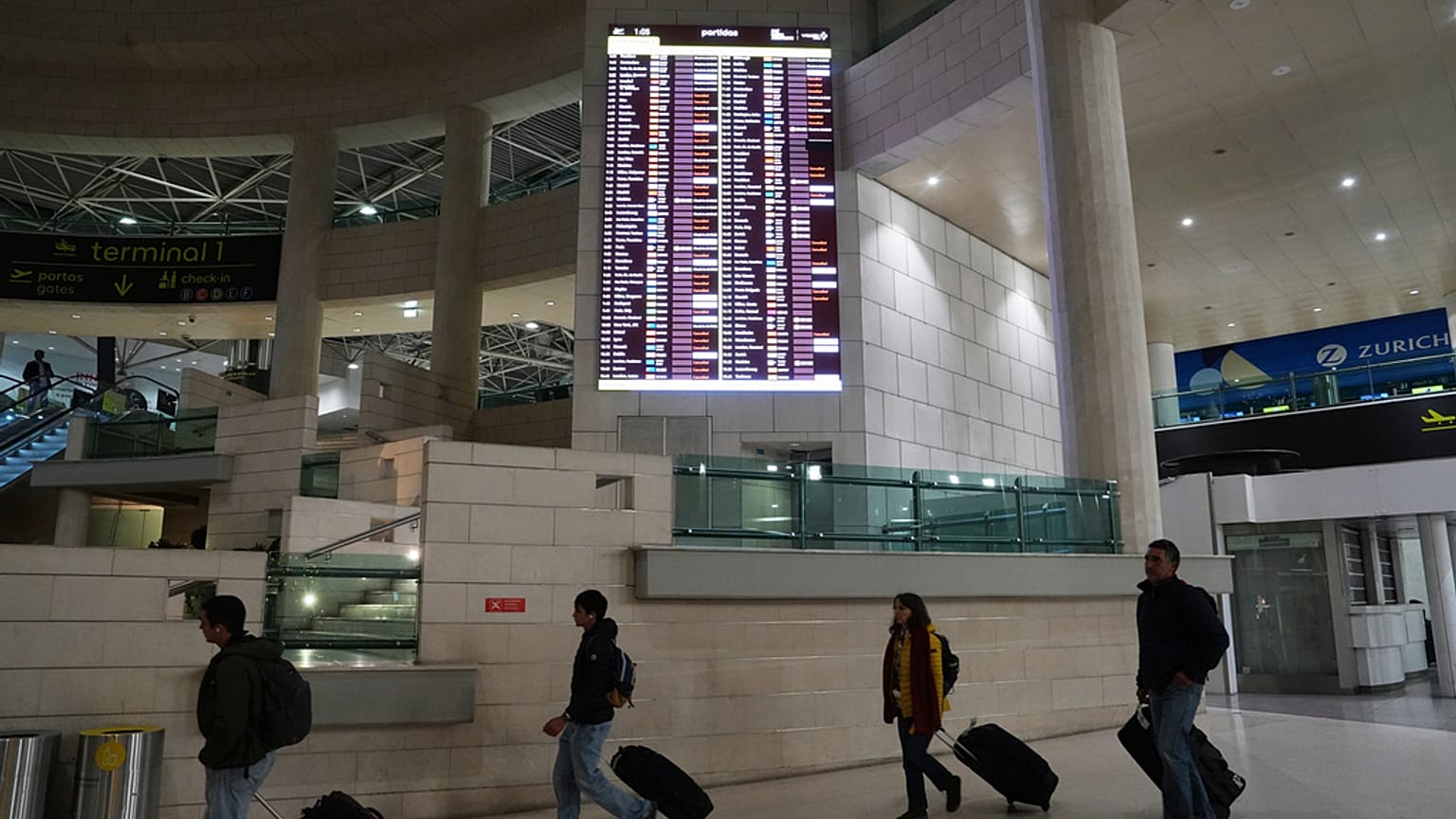
Portuguese airports will be hit by travel chaos over the New Year as ground handlers go on strike.


Workers of SPdH/Menzies, formerly Groundforce, plan to walk out on 31 December and 1 January. However, Portugal's arbitration court has ruled that minimum services must be guaranteed, reports Lusa.

During the strike, ground handling for state, military, emergency, humanitarian and rescue flights must not be disrupted, as well as operations essential to the safety of people, aircraft and installations.

Air connections to the autonomous regions - at least one flight - and "other operations considered essential, under the terms of the applicable labour legislation", will also be covered by minimum services, according to the court ruling.

Why are airport workers striking in Portugal?

The strike on the last day of 2025 and the first day of 2026 was called by Sitava - the Aviation and Airport Workers' Union - and STHAA - the Handling, Aviation and Airport Workers' Union.

The unions blame uncertainty over the future of the workers due to the call for tenders for ground handling licences. A preliminary report by the National Civil Aviation Authority (ANAC), quoted by Lusa, puts the Clece/South consortium in first place in this tender.

The government has already extended the licences up to May 2026, but the unions want written guarantees that jobs will be maintained: of the approximately 3,700 SPdH/Menzies workers, around 2,000 will be directly affected by this tender.