Wednesday, December 24, 2025

Nairobi sounds alarm over recruiters luring Kenyans into Russian war effort

Kenya has pledged to crack down on overseas recruitment networks after hundreds of its citizens were lured to Russia with promises of work, only to be sent to military camps and, in some cases, the front line in Ukraine.


Issued on: 19/12/2025 - RFI
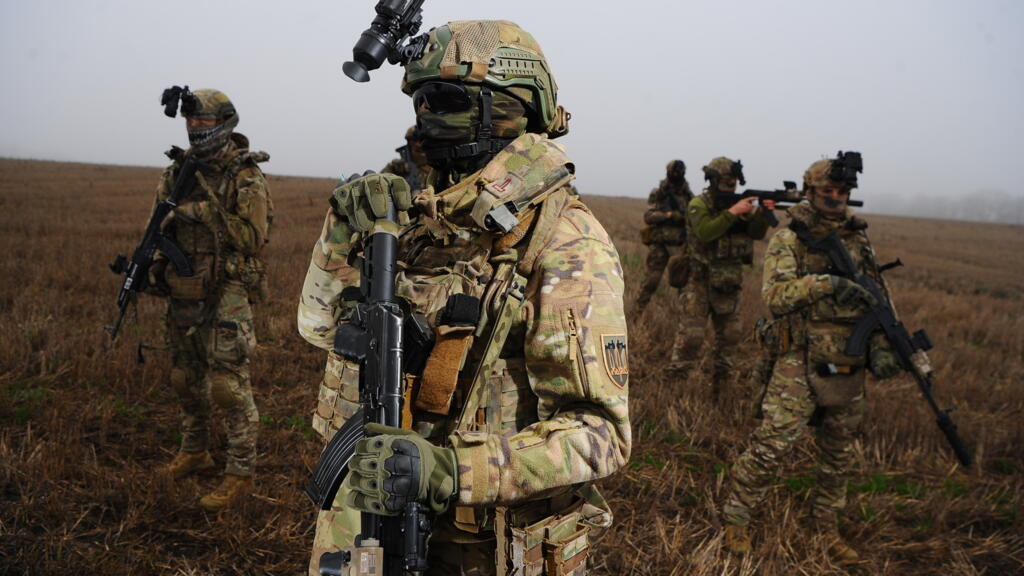
Soldiers at a training ground near Kupiansk, in the Kharkiv region of Ukraine, on 9 November 2025. © AP - Anatolii Lysianskyi

The government announced this week that 18 Kenyans who had been sent to fight on the Ukrainian front had been repatriated from Russia as part of a diplomatic push to assist Kenyans who have found themselves trapped in Russian military camps.

More than 200 Kenyans may have joined the Russian military, including some former members of the country's security forces, Foreign Minister Musalia Mudavadi said in a briefing last month.

“It is estimated that recruitment networks are still active in both Kenya and Russia,” he warned, adding that Kenya’s embassy in Moscow had documented cases where recruits were injured – some seriously.

Crackdown on recruitment agencies

The government has now promised tighter oversight of recruitment agencies that offer jobs abroad. Mudavadi said all such recruiters must be registered with Kenya’s National Employment Authority, noting that around 600 agencies have already been struck off the approved list.

Anti-trafficking groups have been calling for tougher action. Paul Adoch, director of the NGO Trace Kenya, says the phenomenon is neither new nor limited to combat roles.

“We have been seeing these departures to Russia for three years now,” he told RFI.

Before men were sent to the front lines, he said, young women were being recruited under false pretences to work in factories making military equipment.

The US State Department’s 2025 report on human trafficking cites reports of Kenyan women aged between 18 and 22 who believed they were heading for vocational training, only to end up working in Russian drone factories.

Adoch is calling for comprehensive legislation to regulate migrant labour. A draft law was submitted to parliament last year, but has yet to be debated.

Lured by promises


The Foreign Ministry has received reports of agents fraudulently convincing victims to sign contracts by promising to pay the equivalent of €15,000 for visas, travel and accommodation.

Leaked diplomatic cables exchanged between the ministry and Kenya’s embassy in Moscow, published in the Daily Nation newspaper earlier this week, paint a picture of how recruitment networks operate.

In one case, a man said he thought he had secured a job in meat processing in Russia. Recruited by a Nairobi-based agency, he paid 30,000 Kenyan shillings – less than €200 – to obtain a Russian visa within a week. The entire process was handled through WhatsApp.

On arrival in Moscow, he was taken to a military training camp and later deployed to Ukraine.

While he is among a handful of Kenyans who have been repatriated with the help of the embassy, at least 82 others are believed to remain stranded in Russia.

According to the cables, Kenyan nationals have been sent to camps in Belgorod, Saint Petersburg, Rostov-on-Don and Istra. Many recruits have no military background and receive less than a week of training before being sent to fight.

Four ended up in hospitals in Moscow, including for fractures and amputations.

Martin Macharia Mburu, a man from north of Nairobi who believed he was going to work as a chauffeur, is believed to be the first Kenyan officially recorded dead in the fighting in Ukraine, according to the Nation's sources. He was reportedly killed at the end of October on the front in Lyman.

African recruitment pool

In September, Kenyan police raided a housing complex outside Nairobi where 21 people were found allegedly being readied for deployment to the front line. A Russian suspect was arrested.

Kenyan officials say they have since raised the issue of fraudulent recruitment with Moscow.

Kenya is not the only country affected. A Ukrainian intelligence report published last year said Moscow had recruited foreign nationals from Somalia, Rwanda, Burundi, Congo and Uganda as well as Nepal, India and Cuba, while nationals of several more countries have spoken to the media about their ordeal.

According to the French Institute of International Relations (Ifri), African countries are fertile ground for Russian recruiters. Sub-Saharan Africa in particular represents "a vast and easily accessible recruitment pool due to high poverty rates in most countries in the region combined with a strong desire to emigrate", the think tank said in a report released on Thursday.

RFI spoke to one Cameroonian who thought he was going to Russia to work as a caretaker and ended up on the Ukrainian front.

"What I want is to mobilise the Africans who are travelling to Russia, so that they understand that they are being used. I want to tell people what's going on... so that it stops, so that Africans stop coming here to die," he said.

"We come here to die in a war that we don't know where it came from or why it started."

This story was adapted from the original in French by RFI correspondent Gaƫlle Laleix.

Russian WhatsApp users challenge restrictions in Moscow court

Russian WhatsApp users challenge restrictions in Moscow court
Russian WhatsApp users challenge restrictions in Moscow court / bne IntelliNews
By bne tech December 24, 2025

A group of 42 Russian cellphone users filed an administrative lawsuit against the telecoms regulator and the Digital Development Ministry, challenging restrictions on calls in Telegram and WhatsApp messengers, RBC reported on December 24.

The lawsuit was filed on December 23 at Moscow's Tagansky District Court, with plaintiffs requesting that actions by Roskomnadzor and the Digital Development Ministry to partially restrict calls be declared illegal and unfounded.

Plaintiffs stated that according to Central Bank of Russia data, mobile calls and SMS remain the main channels of telephone fraud rather than messengers.

They argue that combating fraud is possible through alternative methods not affecting law-abiding users' rights, including optional blocking of messenger internet traffic at clients' request.

The lawsuit states that the introduced restrictions violate freedom to receive and transmit information, communication secrecy and private life, alongside the principle of inadmissibility of arbitrary limitation of citizens' rights and freedoms.

Roskomnadzor, the regulator, announced measures to restrict voice calls in foreign messengers in August 2025, citing the need to combat fraud and WhatsApp's failure to comply with Russian legislation.

The agency claimed these services became primary tools for deceiving citizens, extorting funds and involving people in illegal activities.

Sergei Novikov, head of the presidential administration's public projects department, stated on December 23 that blocking voice calls in foreign messengers since August has helped reduce cyber fraud statistics.

As a replacement, Russia is promoting "MAX", a state-backed "super-app" developed by government-aligned VK (Russia's largest social media firm), as the primary alternative to WhatsApp and Dubai-based Telegram, whose founder also created the VK platform more than a decade ago.

WhatsApp use in Russia has declined by 27% in 2025, analytics firm Digital Budget told RBC on December 15.

The average session duration on the messenger reached 118 seconds. During the comparable week in 2024, this figure stood at 148 seconds, representing a 21% year-on-year decline.

At the same time, average daily app openings decreased from nearly 13 times to less than 12 times.

Russia plans to track every click as Kremlin pushes internet ID scheme

Russia plans to track every click as Kremlin pushes internet ID scheme
Russia plans to track every click as Kremlin pushes internet ID scheme / CC: Stock image
By bne IntelliNews December 24, 2025

Russia is rolling out a new scheme to tag every internet user with a single tracking number that follows them across every website and app they visit, Deputy Digital Development Minister Bella Cherkesova revealed on December 24.

The government plans to link the permanent ID to people's mobile phone numbers before claiming to strip away their identity - though critics warn the system could still expose what Russians are watching, reading and doing online, Rossiyskaya Gazeta also reported on December 24.

Officials insist the tracking is needed because the same person using different devices currently gets counted multiple times, messing up audience statistics. But the real winners could be advertisers hungry for data on who's clicking what.

"No one will ever know what a specific user watched. Data is transmitted to Mediascope in already anonymised form," the ministry claimed, referring to the television and online audience measurement company that will hoover up the information.

The scheme has sparked alarm amongst industry insiders who say it won't fix the real problems plaguing digital advertising.

"The key problem consists in matching user profiles on different platforms, even those that do not require user authorisation. Ecosystems 'lock' data inside and do not allow cross-platform user synchronisation. As a result, communication with consumers is duplicated, leading to increased costs of quality contact," Alexander Papkov, vice president of advertising industry body ARIR, stated.

Papkov warned that simply creating tracking numbers won't solve anything - Russia needs secure systems for sharing data without exposing sensitive business secrets. He demanded equal access for all companies if the ID scheme goes ahead.

"In any case, even with introduction of a unified identifier, it is critically important to ensure full and equal access to possibilities of its use by all market participants, since advanced solutions can only appear through healthy competitive struggle," Papkov stated.

The ministry is still thrashing out details with online cinemas, social networks and other digital platforms about how the tracking system would actually work. Internet resources would strip away names before passing encrypted data to Mediascope, officials claim.


Solid-state sodium batteries breakthrough to challenge lithium dominance with safer, cheaper alternative

Solid-state sodium batteries breakthrough to challenge lithium dominance with safer, cheaper alternative
A new cheaper, safer sodium-ion battery could challenge lithium's dominance in the rechargeable battery technology. / bne IntelliNews
By bne IntelliNews December 23, 2025

A new class of solid-state sodium-ion batteries could reshape the future of electric vehicles and renewable energy storage that may replace the dominant lithium batteries and solve several headaches along the way.

Sodium-ion (Na-ion) batteries offer a safer, lower-cost alternative to the lithium-ion systems that currently dominate the business, according to recent studies published in Advanced Materials and Advanced Functional Materials.

The long-sought breakthrough outlines a novel solid-state battery architecture that achieves 99.26% efficiency after 600 charge cycles, while eliminating lithium, cobalt, and flammable liquid electrolytes — long-standing weaknesses in current lithium-ion (Li-ion) designs.

The new batteries use a solid electrolyte based on sulphur and chlorine that mimics the conductive performance of liquid systems while offering dramatically improved thermal stability. Unlike conventional Li-ion cells, which are prone to thermal runaway and catching fire, sodium-ion batteries have lower electrochemical potential and more stable cathode materials, making them far less susceptible to overheating.

The potential implications are significant. Li-ion batteries currently account for roughly 70% of the world’s rechargeable batteries, with the energy sector alone consuming over 90% of global supply, according to data from the International Energy Agency.

Their role in battery energy storage systems (BESS) — which store intermittent solar and wind power — that is part of the current battery revolution, has come under scrutiny recently following a series of fires at US grid storage sites, particularly in California. A move to Na-ion will end this problem while lowering the already tumbling costs further.

However, the biggest advantage is the wide availability of sodium, one half of the regular table salt molecule. By contrast, lithium ore deposits, the sister element of sodium in the first group in the periodic table, are relatively rare and the ore is difficult and expensive to process. There are major deposits in Bolivia, Argentina, Chile, Australia and China. In Europe, Ukraine holds one third of, as yet untapped, European deposits.

Historically Na-ion batteries have lagged behind lithium in energy density and cycle life, limiting their commercial uptake. However, the new research brings sodium cells closer to the performance levels needed for widespread adoption. The next step will be to balance safety with energy output, and to find manufacturing processes that can scale to meet global demand.

As part of its green energy dominance agenda, China is already moving aggressively in this direction. In April 2025, battery giant CATL announced it had begun mass-producing Na-ion batteries using its new “Naxtra” platform, with deployment in cars expected from 2026. Chinese automaker BYD is also developing Na-ion systems for grid storage.

Sodium’s availability also contributes to lower costs and simpler recycling, with no cobalt or heavy metals involved. As one researcher noted: “No cobalt, no lithium, no drama.”

Still, the challenge of manufacturing Na-ion batteries at commercial scale remains to be overcome. Experts caution that, while the material-level breakthroughs are promising, real-world deployment hinges on economies of scale, supply chain development, and integration with existing vehicle and grid architectures.

Addressing interfacial challenges in lithium metal batteries: A multi-pronged approach with 2-FBSA


Tsinghua University Press

Addressing interfacial challenges in lithium metal batteries: A multi-pronged approach with 2-FBSA 

image: 

This study explores the effectiveness of 2-fluorobenzenesulfonamide (2-FBSA) as a multifunctional additive in lithium metal batteries. 2-FBSA modifies the electrolyte solvation structure, lowers the Li+ desolvation energy barrier, and promotes faster Li+ transport. Its decomposition forms a robust solid electrolyte interphase (SEI) layer rich in inorganic Li salts, effectively suppressing Li dendrites and mitigating parasitic reactions. This leads to significantly improved cycling stability and rate performance in both Li-Li symmetric cells and Li-LiFePO4 full cells, offering a promising solution for the practical application of lithium metal batteries.

view more 

Credit: Nano Research, Tsinghua University Press


As the most widely used energy storage device, lithium-ion batteries (LIBs) with graphite as the negative    electrode have already approached the theoretical limit of energy density, which cannot provide enough energy density required in electric vehicles in the pursuit of high driving range. Li metal, with an ultrahigh theoretical capacity (3860 mAh g1) and the lowest redox potential (−3.04 V vs. standard hydrogen electrode), is regarded as the “holy grail”of the next-generation negative electrode material.  As well known, the commercial electrolyte formulae with LiPF6 as solute and organic carbonate as solvent have been widely used in the battery industry for several decades. However, carbonate solvents are tend to decompose on the surface of highly reductive Li metal anode and form loose solid electrolyte interphase (SEI) rich in organic Li salts. This phenomenon induces Li dendrite growth and the continuous electrolyte decomposition, greatly limiting the practical application of Li metal batteries

The team published their research in Nano Research on November 28, 2025.

The authors report an additive 2-fluorobenzenesulfonamide (2-FBSA), which possesses three major functional groups that can regulate both electrode interfaces effectively. Comprehensive characterization analyses reveal that the solvation clusters formed by 2-FBSA molecules exhibit a lower de-solvation energy barrier, thereby accelerating Li+ transport kinetics. Further comprehensive characterization analyses are carried out to study the working mechanism of 2-FBSA additive. Furthermore, the introduction of 2-FBSA enhances the solvation degree of ions and free solvent molecules, and the newly formed solvation clusters were more inclined   to adsorb on the Li electrode surface, preferentially participating in the further interface construction. Thus, the C-F, amino, and sulfonyl functional groups existing in 2-FBSA will be decomposed preferentially to form SEI rich in F, N, and S inorganic Li salts on the electrode surface. As excellent Li+ conductors and electronic insulators, these inorganic Li salts can homogenize the transport behavior of Li+. At the same time, the high Young’ s modulus of inorganic Li salts enables them to resist stress changes caused by volume expansion    during electrode cycling. This effectively alleviates both interfacial side reactions and uncontrollable Li dendrite growth affecting the Li metal anode, thereby improving the mechanical and     electrochemical performance of the SEI and ensuring stable battery cycling. In addition, ROSO2Li is produced on positive particles owing to the decomposition of sulfonyl group, which has been proven to be a good passivation component, and effective in maintaining the stability of the positive electrode interface. Therefore, with assistance of optimal dosage additive, Li-Li symmetric batteries prolong the lifetime (2400 h) at 0.5 mA cm-2, more than twice that of additive free cells. And the assembled Li-LiFePO4 full cells have also been tested, demonstrating outstanding capacity retention (72%) after 400 cycles at 1 C, significantly higher than that without additive participation.


This work was supported by the National Natural Science Foundation of China (Nos. 22279070 (L. W.) and U21A20170 (X. H.)), the Ministry of Science and Technology of China (2019YFA0705703 (L. W.)), the Beijing Natural   Science   Foundation (No. L242005 (X. H.))   and   the “Explorer 100” cluster system of Tsinghua National Laboratory for Information Science and Technology.


About Nano Research

Nano Research is a peer-reviewed, open access, international and interdisciplinary research journal, sponsored by Tsinghua University and the Chinese Chemical Society, published by Tsinghua University Press on the platform SciOpen. It publishes original high-quality research and significant review articles on all aspects of nanoscience and nanotechnology, ranging from basic aspects of the science of nanoscale materials to practical applications of such materials. After 18 years of development, it has become one of the most influential academic journals in the nano field. Nano Research has published more than 1,000 papers every year from 2022, with its cumulative count surpassing 7,000 articles. In 2024 InCites Journal Citation Reports, its 2024 IF is 9.0 (8.7, 5 years), and it continues to be the Q1 area among the four subject classifications. Nano Research Award, established by Nano Research together with TUP and Springer Nature in 2013, and Nano Research Young Innovators (NR45) Awards, established by Nano Research in 2018, have become international academic awards with global influence.


China powers ahead in nuclear while US reactor ambitions stall

China powers ahead in nuclear while US reactor ambitions stall
China is currently building 26 nuclear power reactors. The US is building none. / bne IntelliNews
By Ben Aris in Berlin December 23, 2025

China has emerged as the world’s leading builder of nuclear power plants, completing new reactors in as little as five years, while the United States—once the global leader in nuclear technology—has seen its reactor development efforts stall amid rising costs, regulatory uncertainty, and political hesitation.

According to the World Nuclear Association, China currently has 26 reactors under construction, more than any other country, and continues to invest heavily in nuclear energy as a core pillar of its long-term energy strategy. In contrast, the United States is not building any new commercial reactors, following the cancellation or indefinite delay of multiple high-profile projects.

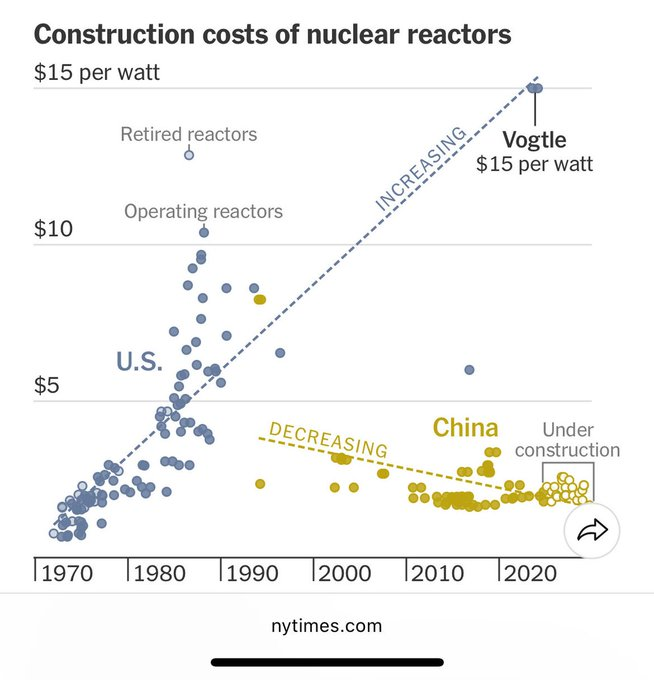
Nuclear power is the cheapest and most efficient way to generate reliable electricity yet over the past decades, the US has become worse at building reactors, while China has become better, say experts.

The divergence in timelines is stark: China typically completes a nuclear reactor in five to six years, while in the US projects routinely take ten years or more, often running far over budget. The most recent example, the Vogtle expansion in Georgia, was completed in 2023—seven years behind schedule and more than $17bn over budget.

The US Department of Energy had supported efforts to revive domestic nuclear construction during the Trump administration, including a small modular reactor (SMR) demonstration project near Idaho Falls. The reactors were intended to operate as a cooperative on federal property, using advanced passive safety features. But the project was cancelled in late stages, after participating states withdrew over cost concerns.

Despite the promise of new reactor designs—many of which offer improved safety and scalability—funding gaps and political uncertainty have limited US momentum.

By contrast China is emerging as the global green energy champion and has thrown itself into nuclear power station construction. Nuclear development continues to be state-driven and centrally coordinated, with the government viewing it as essential to achieving energy security, decarbonisation, and industrial competitiveness. China has also become a leading exporter of nuclear technology, challenging Russia's long lead in nuclear technology. China has plans to supply reactors to countries in the Middle East, Africa, and Southeast Asia, while Russia’s nuclear exports are already booming.

This growing asymmetry in industrial capability has contributed to Washington’s strategic anxiety over Beijing’s rise and threatens to displace it economically, industrially, and technologically.

China’s nuclear buildout is not without challenges—local opposition, environmental concerns, and long-term waste storage remain unresolved. But the country’s ability to deliver projects consistently and at scale underscores a growing gap in technical competence.

EU leaders stand by Denmark after Trump appoints special US envoy to Greenland


Denmark said Monday it will summon the US ambassador after President Donald Trump announced he had appointed a special envoy to Greenland, the Danish autonomous territory he has threatened to annex. In response, European Commission chief Ursula von der Leyen and European Council President Antonio Costa said they stood "in full solidarity with Denmark and the people of Greenland".


Issued on: 22/12/2025 
By: FRANCE 24

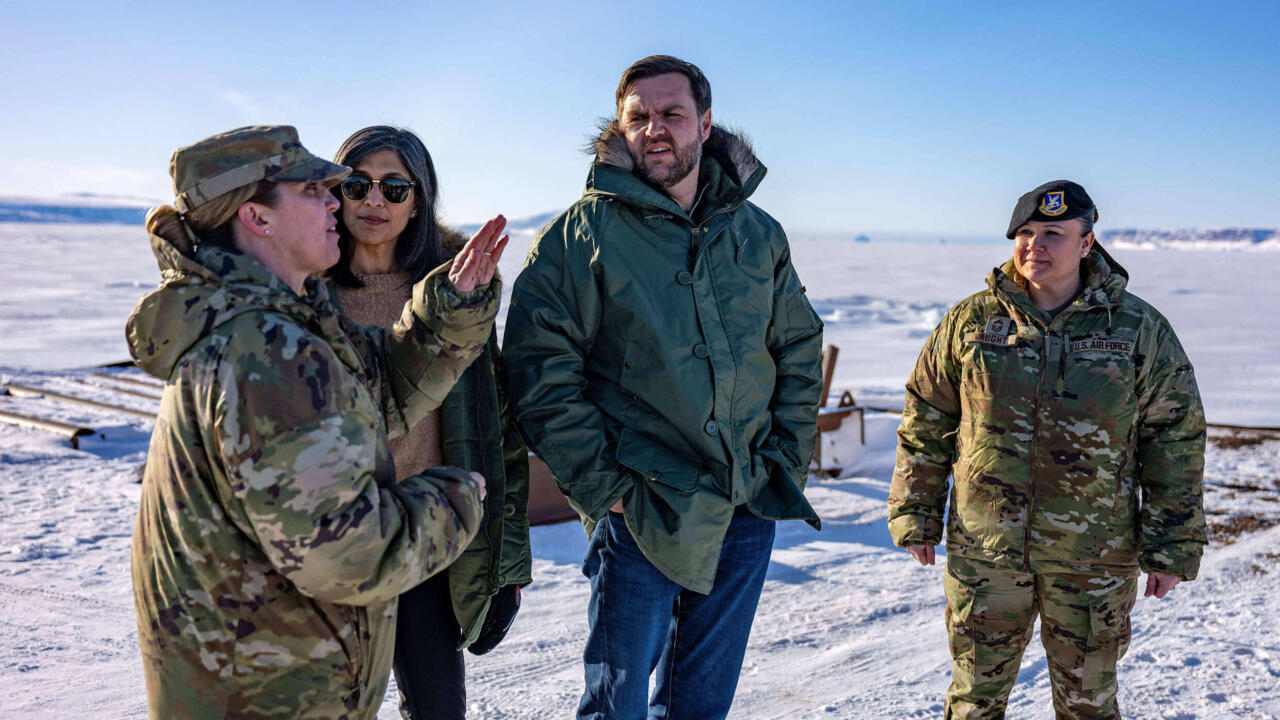
File photo: Vice President JD Vance and second lady Usha Vance tour the US military's Pituffik Space Base in Greenland on Friday, March 28, 2025. © Jim Watson, AP

Denmark said Monday it would summon the US ambassador after President Donald Trump appointed a special envoy to Greenland who immediately vowed to make the Danish autonomous territory "a part of the US".

Since returning to the White House in January, Trump has repeatedly said the US needs the resource-rich Arctic island for security reasons, and has refused to rule out using force to secure it.

On Sunday, Trump appointed Louisiana Governor Jeff Landry as special envoy to Greenland.

Danish Foreign Minister Lars Lokke Rasmussen said Monday he was "deeply angered" by the move and warned Washington to respect Denmark's sovereignty, with the EU later offering its "full solidarity".

In a post on his social media platform Truth Social, Trump said Landry understood "how essential Greenland is to our national security, and will strongly advance our country's interests for the safety, security, and survival of our allies, and indeed, the world".

Landry responded directly to Trump in a post on X: "It's an honour to serve you in this volunteer position to make Greenland a part of the US."

The Danish foreign minister told television TV2 the appointment and statements were "totally unacceptable" and said his ministry would call in the US ambassador in the coming days "to get an explanation".

"As long as we have a kingdom in Denmark that consists of Denmark, the Faroe Islands, and Greenland, we cannot accept that there are those who undermine our sovereignty," he said.

Greenland's Prime Minister Jens-Frederik Nielsen and Danish Prime Minister Mette Frederiksen said in a joint statement: "You cannot annex another country.

"We expect respect for our joint territorial integrity."

In a Facebook post addressed to Greenlanders, Nielsen said the appointment of a special envoy had not changed anything for Greenlanders.

"We will determine our future ourselves. Greenland is our country," he wrote, adding: "Greenland belongs to Greenlanders."

European Commission chief Ursula von der Leyen and European Council President Antonio Costa stressed on social media that territorial integrity and sovereignty were "fundamental principles of international law".

"These principles are essential not only for the European Union, but for nations around the world. We stand in full solidarity with Denmark and the people of Greenland," they wrote on X.
'Show respect'

Most of Greenland's 57,000 people want to become independent from Denmark but do not wish to become part of the United States, according to a January opinion poll.

Leaders of both Denmark and Greenland have repeatedly insisted that the vast island is not for sale and that it will decide its own future.

Lokke Rasmussen said the appointment confirmed continued American interest in Greenland.

"However, we insist that everyone -- including the US -- must show respect for the territorial integrity of the Kingdom of Denmark," he said in a statement emailed to AFP.

The US believes Greenland, located between North America and Europe, can give it an economic edge over its rivals in the Arctic region.

The island has untapped rare earth minerals and could be a vital player as the polar ice melts and new shipping routes emerge.

Greenland's location also puts it on the shortest route for missiles between Russia and the United States.

The US has its Pituffik military base in Greenland and opened a consulate on the island in June 2020.

In August, Denmark summoned the US charge d'affaires after at least three US officials close to Trump were seen in Greenland's capital Nuuk trying to find out how people felt about deepening US ties.

Trump's determination to take over Greenland has stunned Denmark, a fellow member of NATO that has fought alongside America in its wars in Afghanistan and Iraq.

In January, Copenhagen announced a $2-billion plan to boost its military presence in the Arctic region.

(FRANCE 24 with AFP)