Thursday, December 25, 2025

Iran Rejects US Terms at UN Council


DV coeditor Faramarz Farbod joined AnewZ.tv (Baku, Azerbaijan) this morning to discuss the escalating U.S.-Iran nuclear standoff and the sharp divisions at the UN Security Council over the status of UNSC Res. 2231, the snapback mechanism, the reimposition of sanctions against Iran, and uranium enrichment.

Faramarz Farbod, a native of Iran, teaches politics at Moravian College. He is the founder of Beyond Capitalism a working group of the Alliance for Sustainable Communities-Lehigh Valley PA and the editor of its publication Left Turn. He can be reached at farbodf@moravian.eduRead other articles by Faramarz.

Iran and the Price of Sovereignty: What It Takes Not to Be a Client State

 December 25, 2025

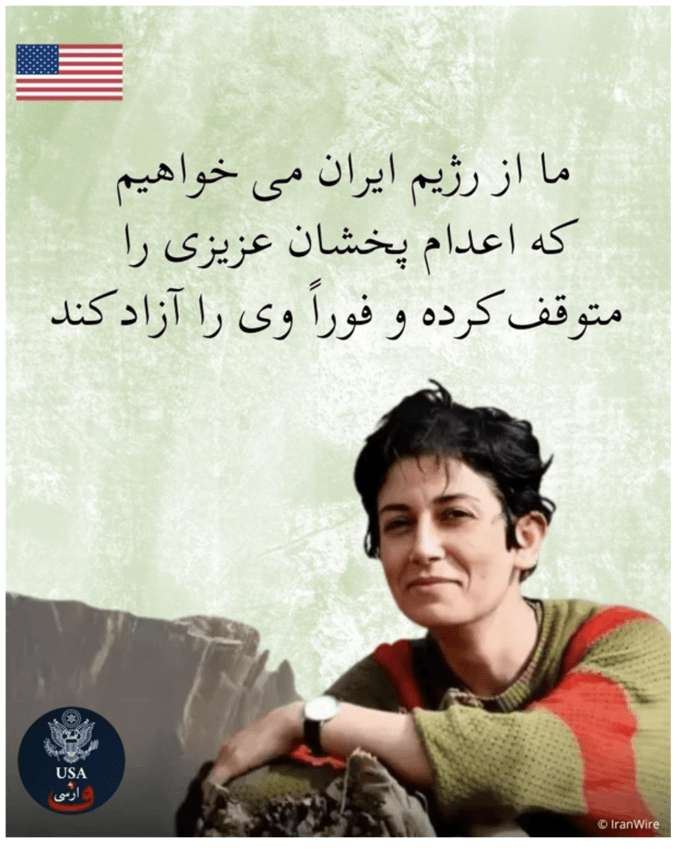
The U.S. State Department Poster: We ask the Iranian regime to halt the execution of Pakhshan Azizi and release her immediately.


On June 12, 2025, for the first time after more than twenty years, the International Atomic Energy Agency (IAEA) board of governors passed a resolution declaring that Tehran was breaching its non-proliferation obligations. The day after, on June 13, Israeli warplanes began a campaign of bombing Tehran and other major Iranian cities. With the help of their proxies inside the country, they assassinated top military commanders, killed leading nuclear scientists at their residence along with their families, bombed the cabinet meeting in Tehran, wounding the President, indiscriminately shelled urban residential areas, and even targeted Evin prison where most political prisoners are incarcerated.  The U.S. offered intelligence, refueled their jetfighters in mid-air, and finally entered the war directly by bombing the Iranian nuclear enrichment sites with bunker buster weapons.

This unprovoked Israeli attack happened in the midst of seemingly constructive negotiations between Iran and the U.S. in Rome and Muscat. The Friday the 13th attack happened just before the two countries were to meet on Sunday the 15th to finalize a framework for further agreements on the Iranian enrichment program. In all close to 1000 people were killed in the Israeli attacks, thousands injured, and hundreds of families lost their homes.

There is no solid evidence whether the IAEA board coordinated the release of their report with the Israelis. But the suspicious choreography of the timing of the report’s release with the Israeli attacks affords credibility to the Islamic Republic’s claims that some of the IAEA inspectors spied for Israel. In its report, the IAEA excavated questions from twenty years earlier about highly enriched particles found in three Iranian sites. The case for the Iranian noncompliance is primarily based on the Agency’s conclusion “that these undeclared locations were part of an undeclared, structured programme carried out by Iran until the early 2000s, and that some of these activities used undeclared nuclear material” (my emphasis). Obfuscated in the report was the fact that the IAES has found no evidence of any weaponization program or military component in the Iranian nuclear activities. It was only a few days after the attacks that the IAEA’s Director General, Rafael Grossi, reiterated that “Iran has not been actively pursuing a nuclear weapon since 2003.”

Israel used the IAEA report to legitimize its unlawful military actions. However, such all-out attack was in the making for months, if not years. It could not have been launched simply in response to the IAEA report. For more than two decades, since the established one of the most intrusive regimes of inspections on the Iranian enrichment program, the IAEA had not cited Iran for breach of its obligations.  This was not unprecedented. In the 1990s, the United Nations Special Commission (UNSCOM), whose mandate was to eliminate Iraq’s weapons of mass destruction program, worked closely with the U.S. intelligence agencies. Through UNSCOM, during Clinton administration, the CIA carried out ambitious spying operations to penetrate the Iraqi intelligence and defense apparatus.

Now, the so-called 12-day war is over. Iranians have returned to the devastating perpetual violence of U.S. led sanctions and targeted assassinations by the Mossad. The Trump administration and its European allies have called on Iran to accept its defeat, surrender unconditionally, and “return” to the negotiating table. They ask Iran to dismantle its nuclear technology, halt the production of its advance missile program, cease its support of the Palestinian cause, and terminate its network of what is known as the “axis of resistance” against the Israeli and American expansionism. In other words, become a client state. Iran is one of the few remaining fronts of defiance against the American extortionist posture and the Israeli carnage that has engulfed the Middle East. That defiance comes with a very hefty price.

The United States desires a return to the pre-1979-revolution Middle East alignment, complete with Iran as a client state that shields American interests in the region.  For more than four decades this objective has informed the U.S. strategic position toward Iran. Successive American administrations have pursued this policy with campaigns of intimidation, building more than a dozen permanent air base and naval facilities in the region, sabotage, military threats, draconian sanctions, and ultimately, under the Trump administration, bombing nuclear enrichment sites. The U.S. does not necessarily aspire to bring the prerevolution monarchy back to power, though the CIA uses the son of the disgraced Shah as a scarecrow in photo-ops.  But it seeks to install a state that lacks the authority to challenge the American regional influence—a state without sovereignty.  In the absence of that, perhaps a failed state will do…

The United State has surrounded Iran with permanent military bases to contain any influence the Islamic Republic might assert in regional politics.

The avowed objective of the Israeli government has been the overthrow of the Islamic Republic and the Balkanization of Iran. The Israelis, with the help of their American and European supporters, wish to exploit the multiethnic composition of Iran, particularly the Kurds, Azeris, and Baluchis, and to deepen the tensions between the minority Sunni communities and the ruling Shi‘ite class to replicate a Syrian/Libyan model of the failed state. Since the end of Iran-Iraq war in 1988, the Mossad and the IDF strategists have devised and executed a variety of plans to infiltrate minority opposition groups to foment ethnic unrest to partition Iran. Israel also supports opposition parties, particularly the Mojahedin-e Khalq (MEK) and the royalist organizations of the exiled son of the late Shah, with intelligence, funds, and a vast network of propagandato create instability inside the country. The emergence of the MEK as a Zionist proxy and as mercenaries of the American neocon project shows how deeply the politics of the Middle East has been transformed since the 1979 revolution. A Left, anti-imperialist revolutionary organization in the 1970s, the MEK now hosts John Bolton and Rudy Guiliani as the keynote speakers in their conventions. Israel’s  June 13th, 2025, unprovoked attack on Iran was primarily made possible by the Mossad-trained Iranian commandos inside the country. They successfully sabotaged or destroyed the Iranian air defenses prior to the Israeli attacks and made it possible for the Israeli jetfighters to roam the Iranian skies freely.

The twelve-day war on Iran produced two major unexpected results. With their superior airpower and the capacity to decapitate the Iranian military and intelligence apparatus, the Israelis expected a quick dismantling of the regime. They were confident enough to send a voice message to the key military leaders at the commence of operations – instructing them to step down or be killed along with their entire families. The message, leaked to the Washington Post, heard in Farsi, warned: “I can advise you now, you have 12 hours to escape with your wife and child,” said an intelligence operative, whose voice had been altered in the recording. “Otherwise, you’re on our list right now.” Not only did the Iranian military leaders reject that “advice,” but they pulled their wounded command structure together and launched formidable counter offensive missile attacks. Iran inflicted unprecedented destruction deep inside Israel, forcing the Israelis to ask the U.S. for a more direct involvement in the war. As they faced an alarming depletion of their anti-missile interceptors, the Israelis pleaded for an immediate ceasefire. A week into the war, Iran managed to breach the supposedly impenetrable Israeli “iron dome” air defense system.

The second unexpected event of the twelve-day war was the way Iranians rallied around the flag. The debilitating sanctions and the crony capitalism they have fostered have resulted in grave economic hardships for most Iranians. The Israelis believed that their attack would turn that hardship and the ruling classes’ rampant economic corruption into mass protests against the Islamic Republic.  Moreover, the political order appeared particularly vulnerable  after the year-long “Women-Life-Freedom” protests. Israeli strategists believed that the social discord around gender politics in Iran would resurface after the bombing campaign.  That calculus proved wrong; in fact things worked in the opposite direction.  Striking Iran with American-made bombs, delivered by American-made fighter jets, falling on peoples’ homes and neighborhoods, revived nationalist sentiment and only gave credibility to the Islamic Republic’s long framing of the United States and Israel as existential threats. The public perception that the Supreme Leader is plagued by “blind paranoia” about Western powers no longer could hold. That fleeting sense of solidarity might not last. But the calculus that said Iranians were ready to accept anything but the Islamic Republic proved to be premature.

For several decades, Western intelligence agencies promoted the idea that Ayatollah Khamenei suffers from a chronic case of paranoia that the United States and Israel are plotting to overthrow the Islamic Republic. These types of images are commonly used in the Western media to depict Khamenei’s paranoiac mindset.

As is so often the case, after the fighting stopped, a war of narratives began. President Trump claimed that the American bombs annihilated the Iranian nuclear sites and forced the Iranian regime to accept their inevitable defeat. He asked the Islamic Republic to surrender without conditions and consent to the American demand of shutting down their enrichment programs. The Israelis celebrated the public demonstration of their intelligence prowess and military might without revealing the extent of damages inflicted by the Iranian missile attacks. Iran proved that they are not another Iraq, Syria, or Libya and can withstand the assault of two nuclear powers.  They showed they can and will respond in kind with their own homegrown military muscle.

The war of narratives determines what the next steps will be in the conflict between Iran and Israel and its western allies. The U.S., Israel, and their three willing partners, the UK-Germany-France troika, have made it clear that Iran faces two options, both of which will lead to the client status that the US demands. When they ask Iran to “return” to the negotiating table, never mind that Iran never left it, never mind that Israel is in the habit of assassinating the negotiators, they mean that Iran needs to submit to their terms: stop the enrichment program, shut down their missile production, and terminate their relations with their allies in the region.

To a varying degree, Iranian opposition groups have tried to exploit the Israeli attacks to advance their own agenda. The monarchists, the MEK and other defenders of military intervention believe that the Islamic Republic is now at the brink of collapse and the West needs to act promptly to overthrow the regime in Tehran. Their members collaborated with the Mossad and promoted that collaboration as their patriotic mission to liberate Iran from the yoke of the Islamic Republic.

After the war, a coalition of groups and personalities who have been working from within the existing political order to transform the Islamic Republic, the Reformist Front of Iran, release a statement arguing that the only solution to overcome the current crisis is to accept the terms and conditions put forward by the United States. The statement asks for a series of reforms, such as the release of political prisoners, respect for the freedom of expression, revising laws that promote gender discrimination, free elections, and anti-corruption policies. These are demands that need to be respected. There are many political and civil society actors who have been organizing around those demands and have gain considerable successes on those fronts in the past decades. Many of those actors have paid a hefty price for their activism, from long-term imprisonments to exile or worse. What is troubling in the statement is the coupling of these legitimate concerns with the way it situates Iran in the existing world order–Iran as the pariah. Iran needs to end its hostility toward the existing world order, the statement asserts, and end its international isolation! But how is such a goal accomplished and what conditions do the Islamic Republic need to meet in order to be accepted in that world order? Is there any room in that world order for a nation that refuses to be a client?

A considerable number of those who have worked from within the ruling classes to reform the political order, as well as many public intellectuals subscribe to this hegemonic narrative which maintains that (a) the threats of war against Iran will subside if the Islamic Republic initiates meaningful structural reform to guarantee civil liberties and consent to free and fair elections; (b) Iran needs to respect the existing international order and abide by its laws and conventions; (c) the Islamic Republic is the source of instability in the region and needs to halt its enrichment program, degrade its military capabilities, abandon its regional allies, “the axis of resistance,” and recognize the state of Israel, without holding it responsible for the genocide in Gaza and for attacking Iran.

There is no need to delve deeply into the logic that holds the authoritarian character of the Islamic Republic as the culprit for the Israeli attacks and American hostilities toward Iran. Had repression in Iran disturbed the conscience of American strategists, the United States allies in the region should have been the cradles of democracy in the Middle East. The instrumental appropriation to the cause of human rights and civil liberties in Iran is a mere smoke screen for the Israeli and American expansionist ideologies.

For example, on September 30, 2025, the U.S. State Department Farsi X account posted a photo of political prisoner Pakhshan Azizi on which they plastered a US flag and State Department seal, calling for Iran to revoke her death sentence and immediately release her. The State Department original message in English also called on the Islamic Republic to respect peaceful acts of protest and to stop targeting Kurdish and other ethnic minorities for their legitimate anti-discriminatory demands.
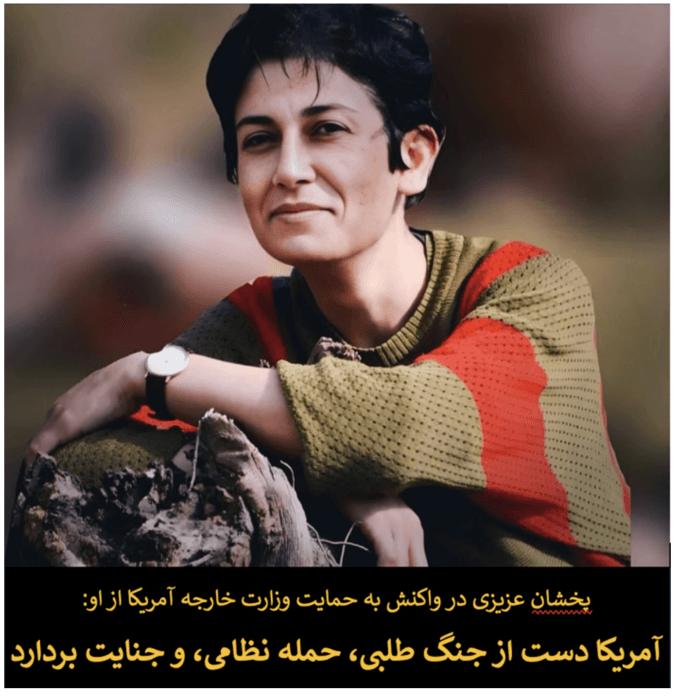

Pakhshan Azizi’s message from prison: The United States must stop warmongering, military attacks, and committing crime in the region

Pakhshan Azizi is a Kurdish social worker who has been active in providing social services and counseling to victims of ISIS in northeastern Syria. She returned to Iran and was arrested in the summer of 2023 on charges of being a member of a Kurdish armed group. She was sentenced to death by a lower court and awaits the results of her appeal. In response to the U.S. State Department’s call for her release, from her death row cell in Evin prison, she sent out a message casting off the American sinister instrumentalization of her case.

I reject all the baseless accusations leveled against me and am in process of appealing the judiciary’s unjust death sentence. I also would like to address the recent statement released by the U.S. Department of State, which appeared to express support for me. If the United States government truly believes in the principles of human rights and humanity, it must first cease its warmongering, aggression, and crimes in the region. It must also end its explicit support for the Zionist regime, which has committed genocide against the people of Gaza. For decades, the U.S. has imposed sanctions and economic blockades that have caused immense suffering and hardship for innocent people. If America genuinely values human dignity, it must bring these inhumane policies to an end. I also hope that the American people will realize that their government’s statements are far removed from compassion and genuine respect for human rights. (translated from Farsi by Yassamine Mather).

From almost the morning after the revolution of 1979 that toppled the Shah’s regime, opposition parties have advocated regime change, believing that the days of the Islamic Republic are numbered. The opposition to the Islamic Republic has taken many different forms, including organized labor movements, civil liberty campaigns, freedom of the press, women’s movements for equal rights and against gender discrimination. But there have always been those who advocated foreign intervention, from the Iraqi invasion of Iran in the 1980s to the latest Israeli-American war on Iran. The 12-day war offered a new hope to those interventionists who believe that servitude of the empire is the price of freedom. Pakhshan Azizi’s message powerfully reiterates that the struggle for social justice cannot find its solution in acquiescence to empire.

Holding Iran solely responsible for regional instability and calling on the Islamic Republic to abide by international treaties and conventions is a curious matter. There is no doubt the Islamic Republic refuses to become a U.S. client, and this refusal explains much in how they resist American dominance in the Middle East and have been competing with the U.S. allies, particularly Israel, for influence in the region. During the past four decades, Iran has built an anti-Zionist coalition primarily as a deterrent, rather than an expansionist, project. The Islamic Republic’s support for the Palestinian cause has always been composed to prioritize the Iranian national interests over the liberation of Palestine. Despite their provocative rhetoric, Iran has never committed any aggression against Israel. Indeed, inside the country, the radical proponents of the Palestinian cause have criticized the state for their inaction in the face of Israeli aggressions, such as a decade-long assassinations of the Iranian nuclear scientists, bombing the Iranian consulate in Damascus, the assassination of the Hamas chief negotiator, Ismael Hanieh, in Tehran, and various kinds of sabotage in the Iranian infrastructure.

The Orwellian demand on Iran to respect international laws when Israel has repeatedly violated the Iranian sovereignty and the United States has illegally bombed Iran’s nuclear sites has no meaning except asking Iran to capitulate to American and Israeli conditions. No other countries in the world have breached international laws as many times as Israel and the United States. The global order to which Iran is bullied to join requires total submission to the interests of American imperialism.

As became evident with the release of Trump’s 20-point Gaza peace plan, negotiation in Trump administration has no meaning except take it or we annihilate you. Like their unilateral proposals to Iran, the White House drafted the Gaza peace proposal without any input from the Palestinians. They revised the original proposal after consultation with Netanyahu and published the final draft as a peace plan without having the other side of the peacemaking, the Palestinians, at the table. The US allowed Netanyahu to create key loopholes in the deal to ensure Israel can continue its Gaza genocide – regardless of the ‘ceasefire’ agreement. In effect, as with Iran, the U.S. and Israel follow the same political logic with Hamas: either surrender or be killed. This logic lacks any assurances that if they do surrender, they will not be killed. And to ensure this lasting peace, they have composed a new “mandate” to govern Palestine under the viceroyship of the former British Prime Minister Tony Blair. The uncanny reference to a “mandate” is another display of unbridled imperial ambitions that the U.S., Israel and their European allies pursue.

Many Iranians are exhausted from decades of sanctions and a repressive state apparatus to which the sanctions afford more legitimacy and longevity. It is not surprising that many inside the country are ready to throw up their hands and take whatever deal the United States offers. There is an awareness inside the country of the Balkanization of Iran as a real possibility, so too the “failed state” Libyan/Syrian/Iraqi scenarios of total disintegration of society. At the same time, continuing life in the purgatory of constant threats of war and destruction, while managing the effects of the draconian sanctions inflicted on the country has been pushing large segments of the polity, public intellectuals, and general population toward a politics of resignation.

There remain no good options for the Islamic Republic and for the subjects over which it rules. The U.S.-Israeli war on Iran momentarily collapsed the distinction between the state and the nation. As the unifying influence of the war fades, Iranians of all walks of life find themselves faced with the unresolvable economic deprivation and disparity while the beleaguered state grapples with the boundless avarice of the American empire and its cronies. Iranians need to decouple the defense of the country’s sovereignty from the struggle for social justice and civil liberties.  It remains to be seen whether Iranian sovereignty will remain intact after the dust of the war settles. That is if the dust of war ever settles with the Israeli ambitions and the West’s desire to hold the pen for redrawing the map of the Middle East.

Behrooz Ghamari is affiliated with the Elahé Omidyar Mir-Djalali Institute of Iranian Studies at the University of Toronto. He is the former Chair of the Department of Near Eastern Studies at Princeton University and the author of Islam and Dissent in Postrevolutionary Iran (2008); Foucault in Iran: Islamic Revolution after the Enlightenment (2016); Remembering Akbar (OR/Books, 2016); and the forthcoming book The Long War on Iran: New Events and Old Question (OR/Books, January 2025).

Behrooz Ghamari-Tabrizi is an Iranian-born American historian, sociologist, and professor.


“The threat is not Venezuela, The threat is the US government.”

Trump Blockade of Venezuela, Murders on High Seas Violate International Law: UN Experts

“The illegal use of force, and threats to use further force at sea and on land, gravely endanger the human right to life and other rights in Venezuela and the region.”


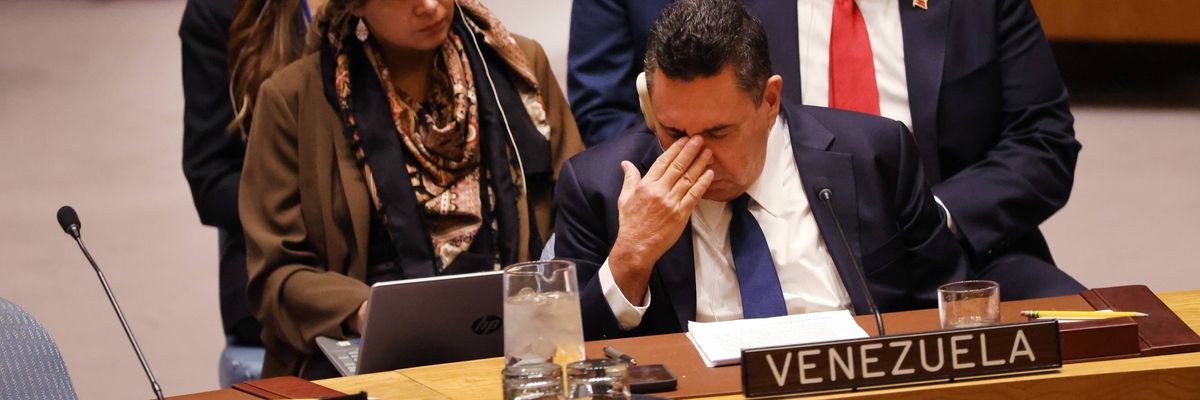
Samuel Reinaldo Moncada Acosta, the Permanent Representative of Venezuela to the United Nations, reacts during an emergency United Nations (U.N.) Security Council meeting regarding the situation in Venezuela on December 23, 2025 at UN headquarters in New York City. Venezuelan officials formally requested the meeting last week, pointing to U.S. maritime actions and oil sanctions.
(Photo by Spencer Platt/Getty Images)

Jon Queally
Dec 24, 2025
COMMON DREAMS

Experts at the United Nations on Wednesday issued a scathing rebuke to US President Donald Trump’s aggression toward Venezuela, saying attempts to impose an oil blockade based on US-imposed sanctions and a series of bombings of alleged drug-trafficking vessels at sea are clear violations of international law.

“There is no right to enforce unilateral sanctions through an armed blockade,” said the UN experts.

According to their statement:
A blockade is a prohibited use of military force against another country under article 2(4) of the UN Charter. “It is such a serious use of force that it is also expressly recognized as illegal armed aggression under the General Assembly’s 1974 Definition of Aggression,” the experts said.

“As such, it is an armed attack under article 51 of the Charter – in principle giving the victim State a right of self-defence,” they said.

“The illegal use of force, and threats to use further force at sea and on land, gravely endanger the human right to life and other rights in Venezuela and the region,” the experts said.

Aggression is a crime attracting universal jurisdiction under international law, which gives all countries the power to prosecute it, although the most senior government leaders retain immunity from foreign prosecution while still in office.

The experts behind the joint statement were: Ben Saul, Special Rapporteur on the promotion and protection of human rights and fundamental freedoms while countering terrorism; George Katrougalos, Independent Expert on the promotion of a democratic and equitable international order; Surya Deva, Special Rapporteur on the right to development; and Gina Romero, Special Rapporteur on the rights to freedom of peaceful assembly and of association.

Their statement notes that the US sanctions imposed on Venezuela may be “unlawful” because they are “disproportionate and punitive” under international statute. The Trump administration has used alleged violations of US sanctions to justify its blockade and the seizure of vessels.

“The threat is not Venezuela. The threat is the US government.” —Venezuela UN Ambassador Samuel Moncada

The aggression of the US government toward Venezuela was also rebuked at an emergency meeting of the UN Security Council on Tuesday, with China, Russia, Cuba, Colombia, and others backing Venezuela’s call for an end to the series of criminal boat bombings against alleged drug traffickers in the Caribbean and eastern Pacific and the unlawful seizure of oil tankers as a way to coerce the government of President Nicolas Maduro.

Venezuela’s UN Ambassador Samuel Moncada equated Trump’s Dec. 16 order that the US was establishing a “total and complete blockade of all sanctioned oil tankers” coming into or out of Venezuela an admission of “a crime of aggression” by the US president, who Moncada said wants to “turn back the clock of history 200 years to establish a colony” in the Latin American country.

Moncada characterized the recent US seizure of two oil tankers in international waters as “worse than piracy” and “robbery carried out by military force,” warning that such brazen acts set “an extremely serious precedent for the security and navigation of international trade” in the region and worldwide.

“We are in the presence of a power that acts outside of international law,” he said of the US delegation, “demanding that Venezuelans vacate our country and hand it over. We are talking about pillaging, looting, and recolonization of Venezuela.”

During his comments to the council, Mike Waltz, the US Representative to the UN, defended Trump’s policies by calling the threat of “transnational terrorist and criminal groups” the “single most serious threat” in the hemisphere. Waltz repeatedly claimed, without providing evidence, that Maduro’s government is part of a criminal gang called “Cartel de Los Soles,” which Moncada said was “ridiculous” as the group is “non-existent,” an invention of the Trump administration.


Human rights groups, UN experts, and scholars of international have all stated that Trump’s extrajudicial targeting of alleged drug boats—which have now left over 100 people killed—are nothing short of “murder” on the high seas.

In their Wednesday statement, the four UN experts said the killings at sea ordered by Trump “amount to violations of the right to life,” citing the International Covenant on Civil and Political Rights, which the US government ratified in 1992.

The experts called on all UN member states “to urgently take all feasible measures to stop the blockade and illegal killings” by the US government, “including through diplomatic protest, General Assembly resolutions, and peaceful counter-measures—and bring perpetrators justice.”

“Collective action by States is essential to uphold international law,” they said. “Respect for the rule of law, sovereignty, non-use of force, non-intervention, and the peaceful settlement of disputes are essential to preserving peace and stability worldwide.”

In his remarks, Moncada said Venezuela would defend itself against aggression but did not consider itself at war with the United States.

“Let it be clear once and for all that there is no war in the Caribbean, there is no international armed conflict, nor is there a non-international one, which is why it is absurd for the US government to seek to justify its actions by applying the rules of war,” Moncada told the council.

“The threat is not Venezuela,” he said. “The threat is the US government.”


Sanctioned Ships Still Loading Venezuelan Oil Despite U.S. Blockade

At least half a dozen sanctioned tankers have loaded oil from Venezuela since December 11, when the U.S. escalated the pressure on Venezuelan oil exports, Bloomberg reported on Tuesday, quoting data from Kpler.  

Loadings of oil from Venezuelan ports appear to have been happening in recent weeks at a more or less typical pace despite the U.S. crackdown on vessels involved in illicit oil trade, according to Kpler’s data.   

Earlier this month, the Trump Administration intensified pressure on Venezuela’s Nicolas Maduro by designating his regime as a “foreign terrorist organization”. 

U.S. President Donald Trump has also ordered a naval blockade offshore Venezuela to intercept sanctioned vessels trying to travel to and from the South American country.  

This weekend, the United States seized a second oil tanker offshore Venezuela.

Commenting on the seizure, U.S. Homeland Security Secretary Kristi Noem posted on X that “The United States will continue to pursue the illicit movement of sanctioned oil that is used to fund narco terrorism in the region. We will find you, and we will stop you.”

In an interview with Fox & Friends on Monday, Secretary Noem said that 

“We’re not just interdicting these ships, but we’re also sending a message around the world that the illegal activity that Maduro is participating in cannot stand, he needs to be gone, and that we will stand up for our people.”  

Most of Venezuela’s crude is being shipped on shadow-fleet tankers to China. The U.S. blockade is paralyzing this lifeline for Nicolas Maduro’s regime in Caracas. At the same time, the Trump Administration allows Venezuelan crude to flow to the U.S. Gulf Coast via shipments chartered by U.S. supermajor Chevron, which has a special license to operate in Venezuela and export to the U.S. part of the crude it pumps through its joint ventures there.   

President Trump’s military campaign against Venezuela is threatening an $8-billion market of shadow-fleet oil trade as the U.S. pressure on Venezuela is disrupting oil exports, with tankers diverting, crude piling up at sea, and Venezuelan state oil firm PDVSA facing imminent well shut-ins due to shrinking storage capacity.  

By Tsvetana Paraskova for Oilprice.com


One Killed in U.S. Attack on Suspected Drug Smuggling Boat

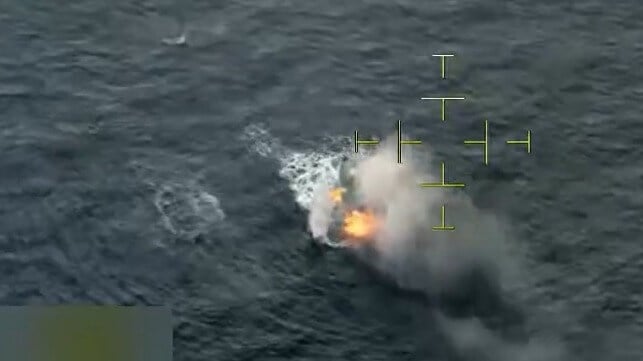
Drug boat strike
Image courtesy U.S. Southern Command

Published Dec 22, 2025 10:56 PM by The Maritime Executive


On Monday, U.S. Southern Command announced the destruction of another suspected smuggling boat in the waters of the Eastern Pacific, the 29th such strike since the new campaign of lethal-force interdictions began on September 2. This instance marked a new turn: video released by the military appears to show the use of cannonfire and machine gun fire to destroy the target vessel, indicating the possible involvement of an AC-130J gunship previously seen in the region.

The first 28 interdictions appeared to be carried out at a distance using small guided missiles. In the initial Caribbean phase of the operation, U.S. officials told The Intercept that the strikes were being carried out by Air Force drone units attached to U.S. Special Operations Command. The attacks were conducted with single missile strikes, with a notable and much-debated exception - a follow-up strike conducted in early September. The video of that "double tap" strike has not been released, and the Pentagon asserts that it is classified.

The video released Monday is different from prior compilations: it shows repeated and frequent small impacts interspersed with explosions, and has visual similarities to prior exercises pitting an AC-130J Ghostrider gunship against small wooden fishing vessels.

Monday's suspected drug boat strike (U.S. Southern Command)

A 2024 live fire exercise in the Philippines centered on the use of the AC-130J (USAF)

At least one AC-130J is known to be operating in the Southern Command area of operations. Since mid-October, one airframe has been observed along with a P-8A maritime surveillance aircraft at Comalapa Air Base in El Salvador, a nation that enjoys friendly relations with Washington. 

The aircraft can carry Hellfire guided missiles on wing pylons, but its characteristic armaments protrude from the port side of the fuselage: a 105mm howitzer mounted on a recoil carriage and a 30mm chain gun. If accurate, the 29th drug-boat strike would appear to be the first time that these weapons have been employed in the new counternarcotics effort, and the first involving visual-range gunfire by U.S. servicemembers on scene. 

The legality of the strike program has been questioned by political critics, legal experts and even the United Nations' top human rights official. The program occurs outside of a declared war and targets criminal suspects in the smuggling trade, who have been historically viewed as civilians rather than combatants, even if their activities have lethal effects on U.S. citizens. 

In October, former International Criminal Court prosecutor Luis Moreno Ocampo advised that the strikes could be considered planned attacks on civilian criminals, and as such, could be viewed as crimes against humanity under international law - opening the possibility of legal hazards for participating servicemembers. The Pentagon asserts that the strikes are fully lawful. 


China Protests U.S. Seizures of Venezuela-Linked Tankers

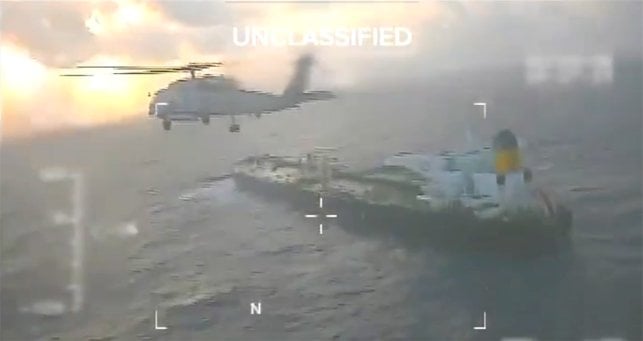
U.S. forces seize the tanker Centuries (USCG)
U.S. forces seize the tanker Centuries and its cargo of Venezuelan oil (USCG)

Published Dec 22, 2025 9:57 PM by The Maritime Executive


China's government is voicing its opposition to the Trump administration's campaign of tanker seizures off the coast of Venezuela. The U.S. Coast Guard has captured two China-bound tankers full of Venezuelan oil this month, and on Monday, President Donald Trump said that the U.S. government will be keeping both vessels and their cargoes. 

The first tanker seized, Skipper, was a stateless and sanctioned vessel. It was carrying about 1.85 million barrels of oil, according to TankerTrackers.com, and was headed to deliver the cargo to a Chinese buyer. The second, the VLCC Centuries, was also headed for China with about 1.8 million barrels on board. The U.S. sought and obtained permission from Centuries' flag state, Panama, before conducting a boarding. In an interview with local media on Monday, Panamanian foreign minister Javier Martinez-Acha said that Centuries had disabled its AIS transponder, changed its name and failed to respect Panama's regulations during its loading in Venezuela. 

China, which is the top buyer for Venezuelan oil, believes that Washington's recent tanker seizures in the Caribbean are out of line. At a press conference Monday, Chinese foreign ministry spokesman Lin Jian said that the boardings infringe on other countries' sovereignty and constitute "unilateralism and bullying."

"By arbitrarily seizing other countries’ vessels, the U.S. has seriously violated international law. China stands against unilateral illicit sanctions that lack basis in international law or authorization of the UN Security Council, and against any move that violates the purposes and principles of the UN Charter," Lin said. 

China routinely uses force in asserting its claims to sovereignty in the South China Sea, including areas inside of its neighbors' internationally-recognized exclusive economic zones. Earlier this month, China Coast Guard personnel injured several Filipino fishermen and damaged their vessel while attempting to drive them away from Sabina Shoal, a reef located well within the Philippine EEZ. The Philippine Coast Guard called the Chinese actions “unprofessional and unlawful.” 


Report: U.S. Coast Guard Awaits Specialized Team to Board Third Tanker

Coast Guard MSRT team prepares to board a Venezuela-linked tanker, December 20 (DHS)

Published Dec 24, 2025 3:41 PM by The Maritime Executive


U.S. officials say that the U.S. Coast Guard's "pursuit" of the sanctioned VLCC Bella 1 will come to a conclusion after a team of boarding specialists arrives on scene. The service's cuttermen and law enforcement detachments (LEDETs) are skilled at interdicting small craft, but boarding a noncompliant vessel on the high seas requires the specialized skills of a Maritime Security Response Team (MSRT), the counterterrorism SWAT units that the service created after the 9/11 attacks. 

On Saturday, American forces began chasing a tanker linked to Venezuela's oil exports, the third attempt at an interdiction this month. The vessel has been identified as the Bella 1, a stateless, sanctioned tanker with a past in the Iranian oil trade. Bella 1 was in ballast and approaching Venezuela, and it was the first ship that the U.S. targeted before it loaded a cargo. 

Bella 1 declined to submit to a boarding and reversed course, U.S. officials told the New York Times on Sunday. The Coast Guard continued its pursuit of the ship, according to the Times, and on Monday President Donald confirmed that a chase was ongoing. 

The Bella 1 is a VLCC with a deadweight in excess of 300,000 tonnes, and has a sea speed commensurate with her design. AIS data provided by Pole Star shows that over the past year, the tanker has rarely exceeded 12 knots. This is less than half of the speed required to outrun a U.S. Coast Guard cutter or a U.S. Navy surface combatant, and more than a few analysts have suggested that American forces should be able to conclude the "pursuit" in short order. 

The delay in boarding is not the result of difficulty in catching up to the tanker, two officials told Reuters. The service only has two active MSRTs, and those personnel are otherwise occupied. They have already captured two shadow fleet tankers this month, and the arrested vessels require onboard oversight and possible crew augmentation for their journeys to U.S. waters. The first tanker has already arrived off Galveston. 

Specialized Marine Corps and Navy units (like U.S. Navy SEAL teams) have world-class skills for boarding, search and seizure missions, but they lack the Coast Guard's legally-authorized law enforcement capabilities. Meanwile, standard Coast Guard units lack the SEALs' fast-roping skills for opposed boardings, officials said. 

So far, the services have not employed a pure Navy or Marine Corps unit to secure the vessel, followed later by a Coast Guard officer who could conduct legal procedures in a noncombat environment. Instead, the "pursuit" elements are waiting for an MSRT to be freed up to board the Bella 1 in international waters of the Atlantic, moving further from Venezuelan shores at a likely rate of 200 nautical miles or more per day.

The shortage of resources is a long-running theme for the Coast Guard. Congress and successive administrations have often viewed the agency's budget as a pay-for, a lower-priority item when compared to other missions - with consequences for readiness. Its eldest oceangoing patrol vessels are passing their 60th anniversaries in service, and it faces a persistent manning shortfall. 

"The Service is now stretched thin, with significant workforce shortages and aging, underfunded assets that often cannot meet mission requirements. The Coast Guard’s current organizational structure and reactive posture are no longer adequate to meet current and emerging challenges," commandant Adm. Kevin Lunday told a House committee earlier this year. Recent improvements in recruitment numbers will help going forward, as will a massive cash infusion for fleet recapitalization under the One Big Beautiful Bill Act. 


Venezuela's Oil Exports Grind Towards a Halt Under U.S. Pressure

USS Trump
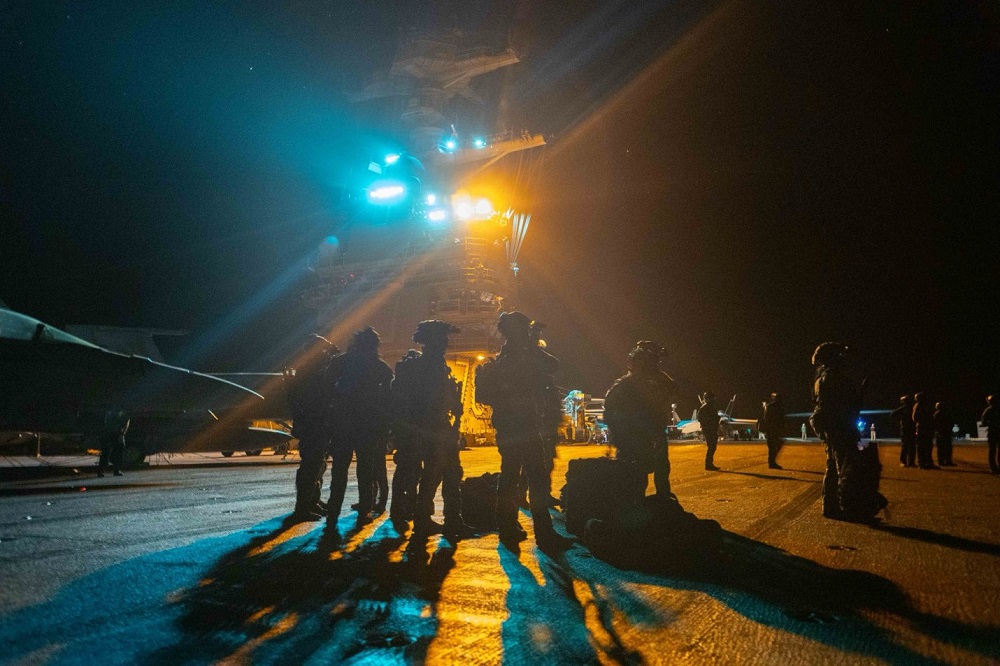
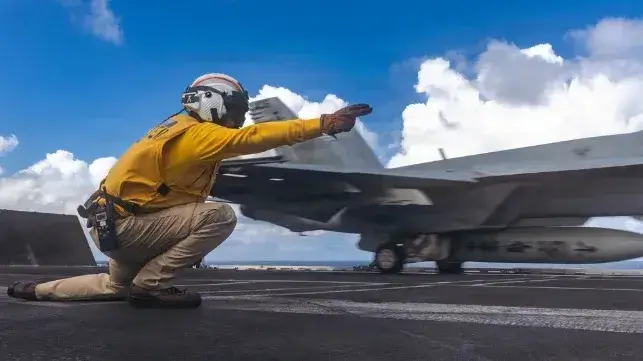
A sailor aboard USS Gerald R. Ford directs the launch of an F/A-18 fighter at an operating position in the Caribbean, Dec. 2025 (USN)

Published Dec 23, 2025 7:04 PM by The Maritime Executive


Venezuela is having difficulty in getting its oil to market due to U.S. tanker seizures in the Caribbean, multiple officials told the New York Times and Reuters. Two laden VLCC tankers have been captured by the U.S. Coast Guard; another  has been "pursued" back into the Atlantic without capture; at least several more have turned around mid-voyage, according to TankerTrackers.com; multiple tanker owners have declined signing new charters for future Venezuelan loadings, officials said; and about 30 tankers are stranded in the country's territorial seas, stranded by risk of capture and awaiting a safe political forecast for departure. 

The oil buyers who pay for state oil company PDVSA's shipments to China are reticent to approve shipments because of the risk of seizure, company sources told Reuters. Chevron's loadings for export to the United States have continued unaffected - the company confirms that it has experienced no disruption - but PDVSA's storage tanks are filling up. 

As an interim measure, PDVSA is using stranded foreign-flag tankers as floating storage, filling as many as possible in hopes of delaying the day when it will have to begin shutting in production for lack of a place to put the oil. So far, PDVSA has not declared force majeure to formally suspend loadings and reduce its contractual obligations. 

According to Reuters, this strategy has its limits: some customers are pushing to offload their cargoes back to Venezuelan terminals, freeing up their tankers for onward voyages with less risk of interdiction. 

To assuage buyers' concerns, Venezuelan dictator Nicolas Maduro has dispatched the country's navy to escort outbound tankers on their way to China. But those escorts are stopping at the boundary of Venezuela's territorial seas,  according to the New York Times. So far, all interdictions have occurred in international waters. 

Venezuela's national assembly approved legislation to criminalize tanker seizures on Tuesday, and officials told the Times that Maduro is contemplating putting Venezuelan soldiers aboard outbound tankers in order to counter the risk of a U.S. Coast Guard boarding. However, this would raise the odds of a direct military-to-military clash, which could trigger a broader and more forceful U.S. intervention. The Pentagon has built up the most substantial naval task force seen in the region since the Cuban Missile Crisis, including the supercarrier USS Gerald R. Ford and a three-ship Navy-Marine Corps amphibious ready group. 

The U.S. pressure campaign is "probably" aimed at removing Maduro from power, President Donald Trump said Monday night at a press conference in Florida. 

"Well, I think it probably would. I can't tell him. That's up to him what he wants to do. I think it would be smart for him to do that. But again, we're going to find out," Trump said. "If he plays tough, it'll be the last time he's ever able to play tough. . . . We have a massive armada for him."


A Big End to the Year for BP

  • BP’s sale of a majority stake in Castrol marks one of its largest divestments and signals a renewed focus on higher-return core businesses.

  • A forthcoming CEO transition underscores a broader strategic reset centered on capital discipline and improved execution.

  • The startup of Atlantis Drill Center 1 highlights continued momentum in BP’s upstream portfolio, particularly in the Gulf of Mexico.

BP is closing out the year with a flurry of moves that underline a decisive shift in strategy, marked by major portfolio changes, a leadership transition, and continued momentum in upstream project delivery.

The company has agreed to sell a majority stake in its Castrol lubricants business, one of BP’s best-known consumer-facing brands, in a deal that values the unit at just over $10 billion, including debt. BP will retain a significant minority interest, but the transaction hands operational control to a financial partner and represents one of the company’s largest divestments in years. The sale fits squarely within BP’s broader effort to streamline its portfolio, raise cash, and refocus capital on businesses with higher returns, particularly oil and gas. Proceeds are expected to support balance sheet strengthening and fund core investments, as BP comes under sustained pressure from investors to improve performance and narrow the valuation gap with peers.

The asset sale comes as BP also prepares for a change at the top. The company has confirmed that its chief executive will step down, triggering a leadership transition at a time when BP is reassessing the direction it set earlier in the decade. The board has signaled that the next phase will place a stronger emphasis on capital discipline, operational execution, and cash generation, after several years in which ambitious low-carbon investments weighed on returns. The leadership change is widely seen as part of a broader reset aimed at restoring investor confidence and sharpening BP’s strategic focus.

Operationally, BP is ending the year on a stronger footing. The company has brought online Atlantis Drill Center 1 in the U.S. Gulf of Mexico, its seventh major upstream project startup of 2025. The project, a subsea tieback to the existing Atlantis platform, adds new production capacity in one of BP’s most important core regions and was delivered ahead of schedule. Atlantis Drill Center 1 is expected to contribute meaningful volumes at peak production and reinforces BP’s push to grow high-margin offshore output, particularly in the Gulf, where the company sees long-term growth potential.

Taken together, the Castrol divestment, the CEO transition, and the latest upstream startup highlight a company in the midst of a significant recalibration. As BP heads into the new year, its strategy appears increasingly centered on simplifying the business, doubling down on oil and gas, and improving execution after a period of strategic uncertainty. Whether these moves are enough to reverse years of underperformance is yet to be seen, but the oil major will certainly be one to watch closely in 2026.

By Charles Kennedy for Oilprice.com

The Critical Failure Point in Modern High-Efficiency Solar Cells

  • The global photovoltaic (PV) adhesive film market is a critical, $38.2 billion industry projected to grow to $45.3 billion by 2031, but this growth is driven by the necessity of upgrading materials to ensure asset longevity.

  • Traditional EVA film, which holds a 65% market share, degrades under heat and moisture by releasing acetic acid, which corrodes cells and causes significant power loss in as little as eight years in humid climates.

  • The shift to advanced materials like POE (Polyolefin Elastomer) is an essential, multi-billion-dollar engineering fix required for new, high-efficiency solar modules (like Bifacial and N-type) to meet their promised 25-year lifespan.

There is a specific, sharp smell that hits you when walking through a high-volume solar module assembly line. It isn’t the clean, clinical scent of silicon or the metallic tang of glass. It’s the sweet, cloying odor of heated ethylene vinyl acetate (EVA)... the industrial-grade "hot glue" that essentially holds the world’s energy transition together.

We are currently witnessing a massive, multi-decade financial bet on the physical integrity of a thin layer of plastic. Data from Valuates Reports shows that the global photovoltaic (PV) adhesive film market…the sector responsible for these encapsulants…was valued at $38.2 billion in 2024. By 2031, that figure is projected to hit $45.3 billion.

On paper, a 3.5% CAGR looks like a steady, low-drama climb. But if you look at the hardware, the story is far more friction-filled. We are asking these chemical films to survive 30 years in the desert, under a relentless assault of UV radiation and thermal cycling, all while maintaining the optical clarity of a high-end lens.

If the glue fails, the asset dies.

Efficiency’s Hidden Friction

The official industry narrative is one of "increasing reliability" and "high-efficiency designs." It sounds like a victory lap.

But when you look at the underlying shifts in material science, you realize the industry is actually running a feverish race to outrun its own technical debt. 

Traditional EVA film...which still holds a dominant 65% market share...has a dirty secret. Under the combined stress of heat and moisture, it can break down and release acetic acid.

Essentially, your solar panel starts to produce vinegar on the inside.

This acid corrodes the silver fingers on the cells, causing "browning" or yellowing that eats away at efficiency. In the humid tropics, modules that were supposed to last 25 years are sometimes seeing significant power degradation in just eight.

The move toward polyolefin elastomer (POE) and EPE (a sandwich of EVA and POE) isn't just a "growth trend"... it’s a desperate engineering fix for a corrosion problem that threatens the bankability of utility-scale projects.

The Weight of a 7-Year Upgrade

To understand the consequence of this $45 billion market, you have to look at the surface area. In 2024 alone, the global industry manufactured roughly 650 GW of modules.

That translates to approximately 600 million square meters of adhesive film. To put that in perspective: we are laminating an area roughly the size of Chicago every single year.

If the adhesive film in a single 100 MW plant fails prematurely, the loss isn't just the cost of the plastic. It’s the Levelized Cost of Energy (LCOE) for the entire project. When a developer builds a site based on a 25-year lifespan and the "vinegar effect" kicks in at year 12, the project’s internal rate of return (IRR) doesn't just dip... it evaporates.

The projected $7 billion increase in market value by 2031 represents the premium developers are now forced to pay for POE and specialized films just to ensure their assets don't turn into expensive glass tables a decade early.

Who Collects the Equity?

While the sun is free, the metallocene catalysts required to make high-performance POE are not. The production of these advanced polymers is gated by intense capital requirements...about $1,500 per metric ton of capacity...and complex patent landscapes.

Currently, about 30% of new solar panels have shifted to POE. This move shifts the power away from generic chemical suppliers toward a handful of elite material science giants who can control the supply chain.

The public pays for the "energy transition" through subsidies and grid fees, but the equity of that transition is increasingly held by the companies that own the "molecular gates"... the specific chemical formulations that make long-term solar viable.

Resisting the Utopia

The solar industry loves to talk about "limitless growth" and "abundance." But the balance sheet of a PV adhesive film manufacturer is governed by the laws of thermodynamics, not the laws of Moore.

The growth in this market isn't entirely a "forward leap" in technology. A significant portion of that $45 billion is actually a maintenance bill.

As we move toward Bifacial and N-type (TOPCon) modules, the technical requirements for the adhesive film become exponentially more difficult. Bifacial modules need to stay clear on both sides to catch reflected light, doubling the surface area at risk of yellowing. N-type cells are highly sensitive to Potential Induced Degradation (PID), which is often facilitated by moisture ingress through...you guessed it...inferior adhesive films.

The industry is spending billions more on "advanced" films just to maintain the same 25-year promise it made a decade ago with simpler tech.

We aren't necessarily getting "better" solar; we are just paying more to keep the lights on as the hardware gets more temperamental.

The Metallocene Monopoly

The data shows POE film prices are significantly higher than EVA, often by a margin of 30% to 50%. While EVA resin prices were sliding in mid-2024...dropping over 8% in a single month...the high-end POE market remained stubbornly expensive.

I see this as a looming bottleneck for the U.S. and European markets. As they try to "de-risk" from Chinese supply chains, they are finding that the underlying raw materials for the best adhesive films are often tied back to specific global feedstock hubs.

You can build a module assembly plant in Ohio or Germany, but if you don't have the "glue" that prevents your cells from corroding, you’re just assembling a liability.

The real cost of "onshoring" solar isn't the labor; it's the chemical supply chain.

A 30-Year Guarantee on a 2-Year Test

Here is the "gut punch" for the skeptical investor:

Most of the advanced adhesive films being deployed today have only been in "real-world" field conditions for a fraction of their 25-year warranty periods.

We are relying on "accelerated aging" tests in labs... essentially blasting a panel with UV and steam for 2,000 hours and hoping it equates to 25 years in the Mojave. But as Fraunhofer ISE and others have noted, real-world wear is "chaotic."

We are currently in the middle of a global, $45 billion experiment. If the "reality audit" comes back negative in 2035, the cost of replacing or repowering these failing assets will make the current investment look like pocket change.

The industry isn't just selling energy; it's selling a promise that its chemistry can defeat the sun... eventually.

By Michael Kern for Oilprice.com 

Eni Partners With Prysmian to Recycle Plastic Cable Waste

Prysmian and Versalis have entered into a strategic partnership to establish a dedicated chemical recycling supply chain for plastic cable scrap, including difficult-to-recycle cross-linked polyethylene. Under the agreement, Prysmian will collect plastic waste from its manufacturing operations and from decommissioned cables returned by customers, while Versalis will process the material using its proprietary Hoop® chemical recycling technology at its Mantua facility in northern Italy.

The Hoop® process converts mixed and cross-linked plastic waste into pyrolysis oil, which is then transformed into feedstock for new plastic polymers. Prysmian plans to reintroduce these recycled polymers into the production of high-performance energy cables. The companies estimate that around 60% of XLPE scrap can be recovered and reused through this approach, a significant improvement over conventional mechanical recycling methods.

The initiative is described as the first large-scale application in the cable industry where cross-linked cables, with all polymeric layers combined, can be chemically recycled, potentially creating a closed-loop, circular system for cable materials.

A pilot project is scheduled to begin in Italy in the second half of 2026.

Plastic insulation materials such as XLPE are widely used in energy and power cables because of their durability and electrical performance, but they pose a major recycling challenge at end of life due to their cross-linked structure. As electrification, grid expansion, and renewable energy deployment accelerate, volumes of decommissioned cables are expected to rise sharply across Europe and other mature markets.

Chemical recycling has emerged as a key area of investment for energy and materials companies seeking to address plastic waste that cannot be mechanically recycled. Eni, through Versalis, has been positioning Hoop® as a scalable solution for complex plastic streams, aligning with broader European Union policy goals on circular economy and waste reduction. For Prysmian, the world’s largest cable manufacturer, the partnership supports its sustainability strategy by lowering supply-chain emissions and reducing reliance on virgin polymer feedstocks.

The agreement also reflects a broader trend of collaboration between industrial manufacturers and energy or chemical companies to decarbonize hard-to-abate segments of the energy infrastructure value chain.

By Charles Kennedy for Oilprice.com