Thursday, December 25, 2025

We, the (Night) People… Glimpses of Life in the Shadows of TechnoBabylon
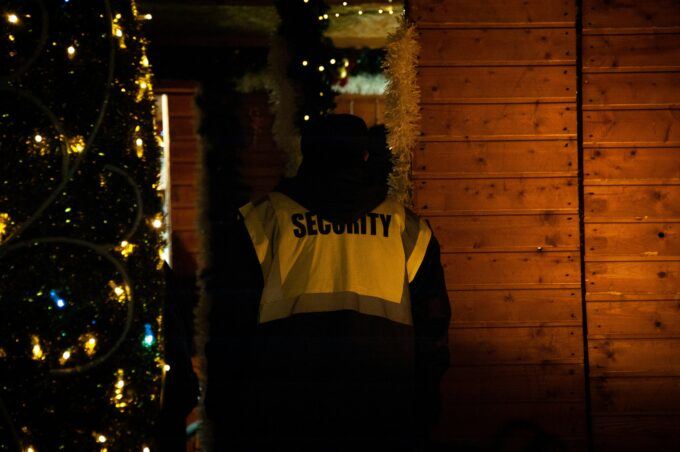


Image by Richard Wang.

“The world you live in is just a sugar-coated topping.”

Blade (1998)

Since the COVID-19 apocalypse, I’ve worked as a professional road warrior—over five years of sitting in my car on graveyard shifts in lonely industrial areas, packing a pistol and hoping for a boring night.

“Security Officer” is the term I use on those rare occasions when I’m talking to nice, square, middle-class people; I personally prefer “thug-for-hire”—when your job involves the possibility of having to fight street people, foil burglary attempts, or dodge small arms fire, it helps to keep a gleam in the eye and some sense of the romantic. As I once read in a book on professional use of force, you can take yourself seriously, or the job seriously, but never both at the same time.

Working this job has given me a glimpse into certain aspects of our society that the day-walkers never see. Here there be life; here there be monsters.

***

Warehouse buildings where goods are dropped off and picked up, industrial products are manufactured or stored; these are processing centers and supply depots for the things you buy at the store or have installed in your home or business. The workers come and go at all hours; they might finish or begin a shift at three or four in the morning, driving over-sized pick-ups or utility trucks, wearing thick jackets and reflective vests, carrying coolers of food and big thermoses of coffee. The ubiquitous glare of fluorescent lighting casts shadows on the cement and over their faces as they trudge to and from ugly, sterile buildings. These are the hands that move and make the stuff of consumer living.

***

Long-haul truck drivers are an interesting breed. Based on my limited experience interacting with them (they always wanna know if they can park their truck in the red zone to sleep for a few hours before making their deliveries), I’d say many of them are on the autism spectrum. It makes sense; it takes a certain kind of person to spend that many hours alone in a gigantic vehicle, navigating precarious highways, reckless drivers, road hazards, and tedium.

***

Now that I think about it, it takes a certain kind of person to do what I do: alternately sitting in a car or walking around asphalt lots, for nine or twelve or fourteen hours overnight, alone, on constant vigilance for potential danger. It makes sense; out of a profound distrust for institutional authority I would never submit to the testing, but I’ve suspected for years now that I’m on the autism spectrum. It would certainly explain a great deal about my life.

It would also explain why at least half of the e-mail responses I’ve gotten to my Counterpunch articles are from autistic people; something about my writing seems to resonate with folks who are, shall we say, unconventional thinkers.

***

Tow truck companies around here employ a lot of ex-gangbangers and reformed felons. The drivers have many tattoos and few teeth. They work late hours and travel widely through the state, sometimes hundreds of miles from their company headquarters. They enjoy telling stories; like everyone who works in the service field, they deal with a lot of obnoxious behavior, and can’t wait to talk about it.

Sometimes, though, they also get laid by rich trophy wives.

Sounds like slumming to me… but for whom?

***

I’m parked in the driveway of a site on a cul-de-sac when an SUV comes roaring around the corner. It goes to the end of the cul-de-sac and pulls over. A woman in a mini-skirt gets out of the passenger seat and stands next to the vehicle. A man gets out of the driver’s seat, comes around to her side of the vehicle, bends her over and fucks her, then gets back behind the wheel and speeds off, leaving her standing at the curb pulling her skirt down.

She strolls by me but doesn’t look at me; she’s busy on the phone, casually telling someone on the other line that she’s ready to be picked up.

***

These secret corners of the urban wasteland are full of raggedy RVs and the people who live in them. Some of those people are regular citizens—they’re employed, sometimes at multiple jobs, they come and go in work clothes, they keep to themselves—they just can’t afford to pay rent. Thank you, capitalism.

Others are junkies and addicts, petty thieves and hustlers, mentally ill, or some combination of the above. I’ve watched them laugh, argue, scream at each other, make deals, sell dope, walk dogs, ride around on mini-bikes, weld trailers, strike at invisible foes.

Generally, when I’m around, what they don’t do is fight.

***

I’ve always hated the phrase “bleeding heart” as an insult to anyone who demonstrates compassion. That said, it’s clear to me that most liberal-ish, “oh those poor oppressed whoevers” and “get rid of prisons” types have never actually spent much quality time with criminals, crooks, hustlers, hoodlums, and street people. If you’re a middle-class, college-educated, liberal professional reading this, please understand: I spend more time around them than I spend around people like you… And I used to be one of you.

Someone always wants to bum a cigarette or get you to do them a favor or sell you stolen merch or maybe just suck up your energy by filling your ears with gibberish. They’re accustomed to living life in the shark tank, and if they think they can take advantage of you somehow, they will. They might even tell their buddies how nice you are. Now you smell like food.

By the way, twenty-one feet is the minimum safe distance to draw and fire a sidearm before someone can run up on you with a knife and stab you to death. I’ve got a phrase that I’ve added to my lexicon in recent years: That’s Close Enough. I’m relaxed. I’m present. Everything about my tone and body language says that I will not hesitate to drop them if they try to move on me. They understand this language, because it’s the native tongue of the shark tank.

Anything they ask for, I refuse. I ain’t the one.

What I never do is insult them or act like I’m better than them. Even a lowlife deserves basic human respect.

***

I used to have late-night conversations with a guard from another company who worked an adjacent site. He always brought his dog with him to work—a living alarm system. He also had that certain twitch that former heavy meth users get.

He told me he used to bounce at a college bar… where he had to fight people almost every night.

***

A car cruises by, way too slowly. There are at least three people in it, and they glare at me with malicious intent as they pass. Without making a show of it, I draw my weapon, rack a round into the chamber, and put a hand on my car’s door handle. I glare right back at them.

The first thing I do at any new site is scope out nearby objects and structures that can provide cover—that is to say, stop bullets. The plan is: if they jump out, I jump out and take cover, then take aim. The last place you want to be stuck in a shoot-out is inside a vehicle. Most of a car will not stop bullets.

The car with the glaring men leaves and doesn’t return; now I can take the time to notice the sick feeling in my stomach.

***

I was the night relief for the daytime guard, a big, jolly and gregarious dark-skinned brother from Mississippi; put a red stocking cap and a fake white beard on him and he could easily play Santa at the mall in Atlanta. He’s a warm-hearted, funny individual, and he keeps one pistol with a laser sight strapped to his hip, and another in the pocket of his hoodie. “I’m just an old street dude,” he tells me. “I been packin’ a thumper since I was a shorty. I feel naked without it.”

On the job a couple of years ago, he got in a shoot-out with five cars full of armed men… at a site that I’ve worked. He shows me a video on his phone of the car he was driving at the time—the windows are all shattered, there are bullet holes in the front, rear, and side of the vehicle. He got away without a scratch. One of the gunmen wasn’t so lucky.

Even though I’m curious, I don’t ask him how many gun fights he’s been in, or how many people he’s shot. It’s not polite.

***

Last year I saw a man get murdered—shot to death in the middle of an intersection less than a block from where I was posted. Five rounds in quick succession, pop-pop-pop-pop-pop. It took the Oakland police a little over two hours to show up. They roped off the scene, took photos, chatted with each other, then collected the body. One officer walked over to me to take my information and a statement. There was no follow-up. They deal with this kind of thing every day. Life is cheap.

I saw a man get murdered, and afterwards the only feeling I had about it was: better you than me.

If you think that’s insane or horrifying, you’ve probably never spent much quality time with people who live in this world. And you’re definitely not one of us.

***

The next week, at the same site, an RV on the far side of the intersection caught on fire. A propane tank exploded. The fire department arrived in less than five minutes. They had the fire out in ten.

***

Three times I’ve pointed a loaded firearm at someone while working. The people involved never saw it; it was hidden behind my door.

The first time, a beat-up old Honda pulled right up next to my driver’s side door. I’ve never watched anything so intently. A man was driving and a woman was in the passenger seat; both looked like junkies. They said what’s up, then left and didn’t come back. They were probably looking for a quiet place to get high. But it’s also possible that would-be robbers paid them to cruise by and see if the guard on duty was awake and alert. That happens out here. Guards at my company have been robbed.

The second time, it was a well-heeled gay guy cruising for a hook-up. That happens out here. Down-low dudes cruise the long-haul and tow-truck drivers, security guards, and RV dwellers. I kept it professional and told him to leave. He left. Plenty of guards I’ve known would have barked on him like a drill sergeant. Or worse.

The third time, it was some rich asshole in a maroon Tesla who for some reason thought that he could get free parking in my lot, then catch an Uber to the airport. He was the only one who tried to argue with me when I informed him he was trespassing and needed to leave immediately.****

Many of these industrial work sites are haunted. By what, I’m not sure, but I have my suspicions. This entire nightmare of hideous lighting, cement, metal, and plastic is built on the corpse of what was, just a couple centuries ago, a wild and fecund landscape, with an abundance of living beings, including humans, who were killed or driven off in the worst ways. Do you think those spirits are resting easily?

I keep tobacco and white sage in my car; the first to ask their forgiveness, the second to drive the bad ones off.

***

A couple of years ago I was at a re-qualification class for my Exposed Firearm Permit. Before we hit the range, a man came into the meeting room to give a brief presentation on behalf of his security company, which was hiring. The company, founded by ex-cops, paid good wages and benefits to patrol the streets around expensive residential high-rises in San Francisco—rousting beggars and homeless people.

Anyone with a decent moral and ethical core has certain things they will and will not do. I’ll use force to defend myself, but I’ll be damned if I’ll use it to defend the property—and feelings—of wealthy technocrats. They couldn’t pay me enough.

***

Kevlar vests, pepper spray, pistols, and poor wages; RVs, garbage piles, and shitty drugs; cops and robbers, murdered trees, rusted metal, and paved-over lands of destroyed and forgotten tribes.

These are the artifacts of a failed society.

Malik Diamond is a hip hop artistcartoonistauthor, educator, and martial arts instructor. Born and raised in the San Francisco Bay Area, he is the descendant of kidnapped Africans, conquered Natives, and rural laborers of the Scots-Irish, Swiss, and German varieties. He currently lives in Oakland, California, with two brown humans and a white cat. E-mail: malikdiamond (at) hotmail (dot) com

Technology’s Imposition: Violence and “Democracy”


Image by Logan Voss.

December 25, 2025

The technology imposed upon us is not free; it entails costs beyond the money we spend on personal purchases or the increase in public-utility bills. It becomes firmly entrenched in our lives before the realization that people are being killed for us to have it takes hold. Just like the piano keys of the 18th century, modern tech gets cleansed of the blood long before we consume the product. And, like the music emanating from that instrument, we become engrossed and distracted with a cool new invention, completely alienated from the process of how we came to acquire it–by violence.

Lay people rarely engage any in-depth discussions about technology even though it is omnipresent in most of our lives in the modern Western world. Supposedly, we live in a democratic society in the U.S.. Yet, the masses don’t have input on the way our society progresses. In fact, we don’t think of it at all. Each generation has different experiences than our parents and grandparents. That’s progress, we’re told. But, what and who are the material drivers of that progress, along with the material circumstances that bring it about? Human society has steadily made improvements on ways of living as part of our evolution as a species. Spinning fiber into string may not seem innovative in our contemporary lives, but at one point it served as revolutionary technology. String allowed humans to create nets, thereby increasing the opportunity to capture more yield when fishing, and feed more people. It allowed people to weave cloth–strips of which at one point in time functioned like currency. The point is that humans always innovate ways to improve our lives. Yet, we now live under a system where–according to some metrics–these can be considered improvements. However, others lead lives that devolve in ways that the beneficiaries of these so-called advancements don’t ever see, or have to consider.

Technological advancement under capitalism is market driven, which means profits over everything, including death and destruction of the natural environment–all flora and fauna. Cristofori invented the piano in the early 18th century, a grand instrument that graced the homes of the elite of the Western world. When the melodic tunes flowed from its soundboard, how many thought about the annual massacre of 75,000 majestic African elephants as their fingers flitted over keys cleansed of the spilled blood it took to create it? The desire for material consumption is promulgated by the ruling class, thereby further entrenching the slaughter required to produce the luxuries of the haves that the have-nots often strive to acquire too–none of which are human necessities, but leave society ensnared in an endless loop of unnecessary, conspicuous consumption.

A Leap Forward?

We are often told of the great transformation at the onset of the Industrial Revolution, fueled by the need to expand capitalist accumulation following the calculus that chattel slavery was a waning profitable means of production. Many new inventions came to market for the masses to experience. There is no explanation of the material circumstances required at the start of the value chain to produce whatever inventive outcomes are imposed on our lives. The advent of electric power in the late 19th century provides the base for other technologies we experience now; street lights, air conditioning, computers, smart phones, etc. Those of us who turn the lights on and off each night never have to think about the mechanisms in place allowing this to happen, specifically minerals extracted from the earth like uranium–used not only to light up our lives, but to create the bombs used to maintain the violence required to collect the ore from the land of others in the first place.

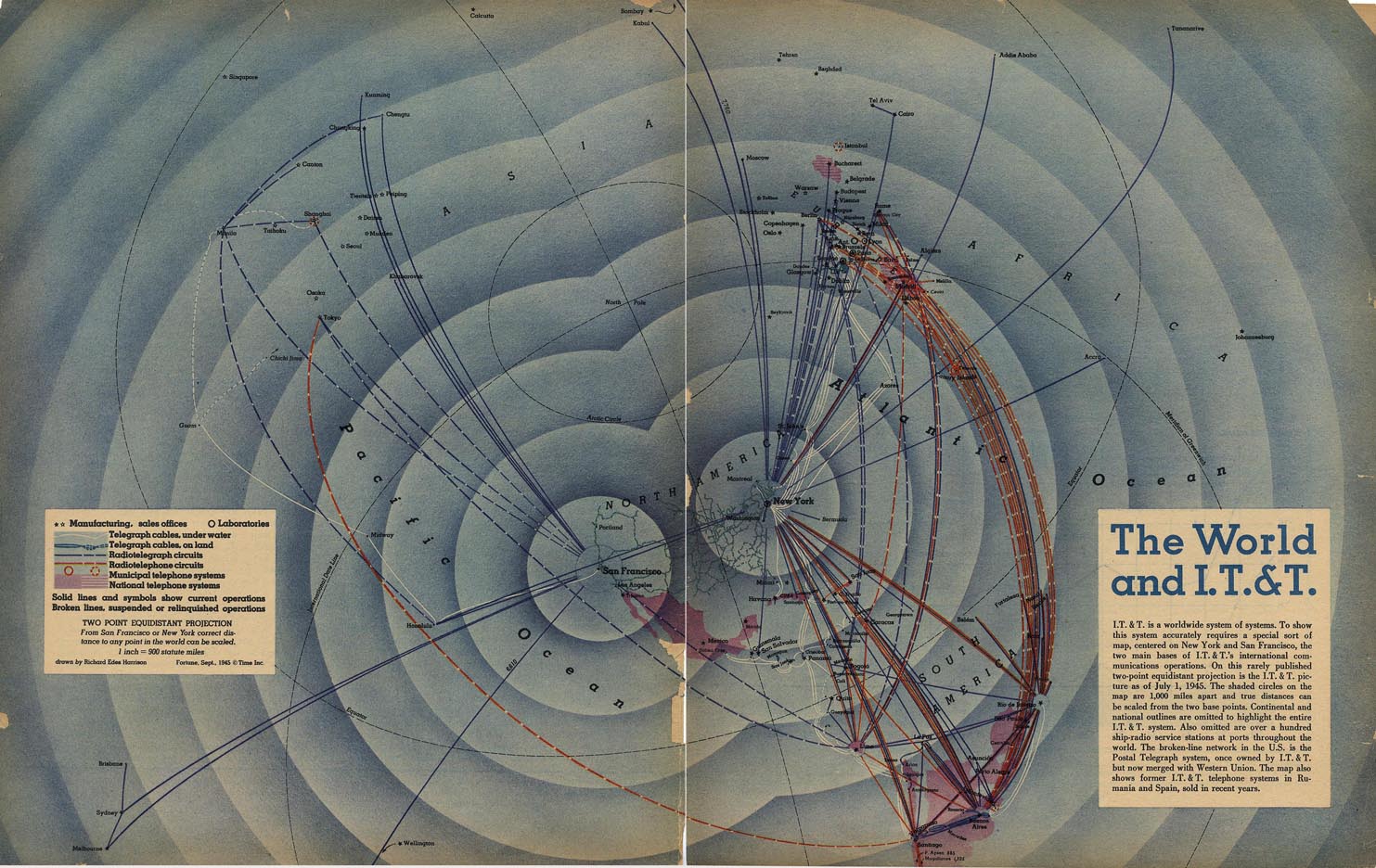
Telecommunications, driven by the need to transmit information quicker to allow capitalists to accumulate more wealth, saw the construction of the fiber optic sea cables that allow masses of people to access the internet right now. Once the first successful cable was laid between New York and London in 1857 to support that quicker communication in the form of the telegraph, the groundwork was laid for continuous advancements. As the mass public was also allowed to make use of telecommunication technology, no one thought of quartz, copper, or germanium (among other minerals) that needed to be mined to build the cables, nor ever consider the entire network residing on the ocean floor–which enters the U.S. via San Francisco in addition to New York. For this network to grow meant setting up a system to constantly extract resources from land outside of the Western world.

Aluminium is a staple on the shelves of modern grocery stores, whether it is the foil rolls used in our kitchens or the soda cans so easily discarded. Aluminum requires bauxite of which the U.S. has almost none. Perhaps the booming steel-mill industry in the U.S. ceased because the iron and manganese required for its production were not readily available in North America, necessitating the extraction of these resources from other lands to sustain the industry. When U.S. Commerce Secretary Howard Lutnik made public statements before Congress in defense of tariffs, he stated that, “The issue is you can’t fight a war without steel and aluminum production in America.” Steel manufacturing returning to the U.S. doesn’t resolve the issue of primary ingredients needing to be imported, but, in fact, relies on public ignorance of the steel-making process. It hinges on the masses not understanding that acquiring the ingredients is not based on a fair trading relationship–that tariffs cannot resolve, but military/mercenary violence ensuring capitalists can extract what they need cheaply to maintain their industry profits at the cost of human lives.

Data Centers

The tide of so-labeled Artificial Intelligence (AI) is coming. It’s being imposed. In a democracy, the masses could stop it. Since it’s been decades of back-room dealing in the planning, there’s nothing democratic about its rollout. The emergence of data centers to support AI technology, collectively occupying thousands of acres of land across the U.S., rather than for food or housing, was not something the public had a voice in creating. Knowledge workers in offices are being mandated to integrate AI usage into their work product, presumably to help train that system en masse, and thereby actively participate in the demise of large segments of a future human workforce. Even though we’re told that the servers to maintain AI require exclusively fresh water and consume lots of energy–let alone the earth’s minerals constantly needed to build its infrastructure–the masses have no input on whether we choose to use it. What happens when human populations begin competing with data farms for clean water, a primary human need? Or, when we cannot heat and cool our homes because those data farms consume more energy than the out-of-date U.S. electric grid was designed to deliver? Yet, the building of the data centers to support AI moves forward without prior public knowledge or consent, and with the collusion of elected officials who are in place to conspire with the business community’s profits to the detriment of ordinary people who supposedly voted them into office.

Billionaires such as Bill Gates insist that AI will take over human jobs such as doctors and teachers within the next ten years. (If humans aren’t needed, is that a call to terminate masses of the population capitalism deems surplus?) Yet, in order to have AI replace these jobs, it requires more exploitation of certain human labor to extract the mineral resources from the Global South to support this change. When public policy supports the whims of wealthy oligarchs in control of society’s productive forces without input from the people most impacted, this contributes to social murder–mass premature death. There is no one to hold accountable other than the system of capitalism itself. Constant inventions require resource extraction for the masses to consume to generate wealth for companies that have nothing to do with providing life’s basic requirements of water, food, shelter, etc. The next time one gets excited over the newest advancement, stop to think critically of how it came about, and it won’t seem so nice, but convenient that you are not the one experiencing the violent exploitation at the bottom of the food chain.

US tech enabled China’s surveillance empire. Now Tibetan refugees in Nepal are paying the price


KATHMANDU, Nepal (AP) — This technology is now a key part of China’s push for global influence, as it provides cash-strapped governments cost-effective, if invasive, forms of policing — turning algorithms and data into a force multiplier for control.


Aniruddha Ghosal and Dake Kang
December 22, 2025


KATHMANDU, Nepal (AP) — The white dome of Boudhanath rises like a silent guardian over the chaotic sprawl of Nepal’s capital, Kathmandu, crowned by a golden spire that pierces the sky. Painted on each of the spire’s four sides are the benevolent eyes of the Buddha — wide, calm, and unblinking — said to see all that unfolds below.

Those eyes have served as a symbol of sanctuary for generations of Tibetans fleeing the Chinese crackdown in their homeland. But today, Tibetan refugees are also watched by far more malevolent eyes: Thousands of CCTV cameras from China, perched on street corners and rooftops to monitor every movement below. This intense surveillance has stifled the once-vibrant Free Tibet movement that had resonated around the world.

Nepal is just one of at least 150 countries to which Chinese companies are supplying surveillance technology, from cameras in Vietnam to censorship firewalls in Pakistan to citywide monitoring systems in Kenya. This technology is now a key part of China’s push for global influence, as it provides cash-strapped governments cost-effective, if invasive, forms of policing — turning algorithms and data into a force multiplier for control.

The irony at the heart of this digital authoritarianism is that the surveillance tools China exports are based on technology developed in its greatest rival, the United States, despite warnings that Chinese firms would buy, copy or outright steal American designs, an investigation by The Associated Press has found.

For decades, Silicon Valley firms often yielded to Beijing’s demands: Give us your technology and we will give you access to our market. Although tensions fester between Washington and Beijing, the links between American tech and Chinese surveillance continue today.

For example, Amazon Web Services offers cloud services to Chinese tech giants like Hikvision and Dahua, assisting them in their overseas push. Both are on the U.S. Commerce Department’s Entity List for national security and human-rights concerns, which means transactions with them are not illegal but subject to strict restrictions.

AWS told AP it adheres to ethical codes of conduct, complies with U.S. law, and does not itself offer surveillance infrastructure. Dahua said they conduct due diligence to prevent abuse of their products. Hikvision said the same, and that they “categorically reject any suggestion that the company is involved in or complicit in repression.”

Chinese technology firms now offer a complete suite of telecommunications, surveillance, and digital infrastructure, with few restrictions on who they sell to or how they’re used.

China pitches itself as a global security model with low crime rates, contrasting its record with the United States, said Sheena Greitens, a political scientist at the University of Texas at Austin.

“It’s got a set of solutions that it’s happy to share with the world that nobody else can offer,” she said. “(But) they’re certainly exporting the tools and techniques that are very important to authoritarian rule.”

The AP investigation was based on thousands of Nepali government procurement documents, corporate marketing material, leaked government and corporate documents, and interviews with more than 40 people, including Tibetan refugees and Nepali, American and Chinese engineers, executives, experts and officials.

While thousands of Tibetans once fled to Nepal every year, the number is now down to the single digits, according to Tibetan officials in Nepal. In a statement to AP, the Tibetan government in exile cited tight border controls, Nepal’s warming ties with China and “unprecedented surveillance” as reasons for the drastic plunge.

A 2021 internal Nepali government report, obtained by AP, revealed that China has even built surveillance systems within Nepal and in some areas of the border buffer zone where construction is banned by bilateral agreements. In a statement to AP, the Chinese Ministry of Foreign Affairs denied coercing Western companies to hand over technology or working with Nepal to surveil Tibetans, calling it a “sheer fabrication driven by ulterior motives.”

“Attempts to use Tibet-related issues to interfere in China’s internal affairs, smear China’s image, and poison the atmosphere of China-Nepal cooperation will never succeed,” the statement said.

The Nepali government and the Chinese-controlled Tibetan authorities did not respond to requests for comment.


Under pressure, many Tibetans are responding the only way they can: Leaving. The Tibetan population in Nepal has plunged from over 20,000 to half that or less today.

Former activist Sonam Tashi gave up protesting years ago. Now 49, today he’s just a father trying to get his 10-year-old son out — before the net pulls tighter. The boy was born in Nepal but has no document proving he is either a refugee or a citizen, a result of Chinese pressure.

Tashi described how those considered likely to protest are picked up in advance around key dates — like March 10, which marks the 1959 Tibetan uprising, or July 6, the Dalai Lama’s birthday. In 2018, Nepal’s police magazine confirmed that it was building predictive policing, which allows officers to watch people’s movements, identify in advance who they think will protest and arrest them preemptively.

“There are cameras everywhere,” Tashi said, sitting on a bus winding toward the Indian border. “There is no future.”

‘They gave us all the hardware’

After China crushed a Tibetan uprising in 1959, thousands fled across the Himalayas to Nepal, carrying only what they could: Religious paintings, prayer wheels and the weight of families left behind.

Their exodus, led by the charismatic Dalai Lama, captured the American imagination, with Hollywood films and actor Richard Gere’s congressional appeals putting Tibet in the spotlight. Washington trod a careful line, defending the rights and religious freedom of Tibetans without recognizing independence.


Today, the future of the Free Tibet movement is in question. Without refugee cards that grant basic rights, Tibetans in Nepal can no longer open bank accounts, work legally or leave the country.

Cameras are now everywhere in Kathmandu, perched on traffic lights and swiveling from temple eaves. Most link back to a four-story brick building just a few blocks down from the Chinese embassy, where officers watch the country in real time.

The building hums with the low breath of cooling fans. Inside, a wall of monitors blinks with feeds from border towns, busy markets and clogged traffic crossings.

Officers in crisp blue uniforms and red caps sit in the glow, scanning scenes. Beneath the screens, a photo published in a Nepali daily shows, a sign in English and Chinese reads: “With the compliments of the Ministry of Public Security of China.”

Their reach is vast.

Operators can track a motorbike weaving through the capital, follow a protest as it forms, or patch an alert directly to patrol radios. Many cameras are equipped with night vision facial recognition and AI tracking — able to pick a single face out of a festival crowd or lock onto a figure until it disappears indoors. The system not only sees but is learning to remember, storing patterns of movement, building a record of lives lived under its gaze.

A 34-year-old Tibetan cafe owner in the city watched the city change in quiet horror. “Now you can only be Tibetan in private,” he said. He and other Tibetans in Nepal spoke to AP anonymously, fearing retaliation.


The first cameras in Boudhanath were installed in 2012, officially to deter crime. But after a Tibetan monk doused himself in petrol and set himself ablaze in front of the stupa in 2013, police added 35 night vision cameras around it.

NEW: Bring more puzzles and play to your week with RNS Games

The Chinese embassy in Kathmandu worked closely with the police, said Rupak Shrestha, a professor at Simon Fraser University in Canada who studied surveillance in Nepal. He said the police received special training to use the new cameras, identify potential symbols associated with the Free Tibet movement and anticipate dissent.

In 2013, a team of Nepal Police officers crossed the northern border into Tibet for a seemingly straightforward mission: Collect police radios from Chinese authorities in Zhangmu, a remote border town, about 120 kilometers (75 miles) from Kathmandu. A truck was loaded with equipment and a few handshakes later, they were driving back to Kathmandu.

The radios — made by the partly state-owned Chinese firm Hytera — looked like walkie-talkies but ran on a digital trunking system, a scaled-down mobile network for police use. Officers could talk privately, coordinate across districts, even patch into public phone lines. The entire system — radios, relay towers, software — was a $5.5 million gift from China.

“They didn’t give us the money,” recalled a retired Nepali officer who made the trip. “They gave all the hardware. All Chinese.”

He remembered not the border guards but the tech — sleek, reliable, and far ahead of anything they’d used before. He spoke on condition of anonymity to describe sensitive internal discussions.


He said Nepal had initially considered buying the technology from the U.S. and only wanted to deploy the system in its two biggest cities. Hytera was a fraction of the cost and performed comparably, but China also wanted coverage near the border with Tibet. Nepal acquiesced.

They installed the technology in Sindhupalchowk, a border district with a key road to China used by Tibetan refugees. “We understood their mindset,” the retired officer said. “A secure border.”

A police envoy from the Chinese embassy began making regular visits to the Nepal Police headquarters. He’d chat over coffee, flip through brochures from Chinese companies. “He’d say, ‘You want anything?’” the retired officer recalled.

China began donating tens of millions in police aid and surveillance equipment, including a new school for Nepal’s Armed Police Force. Hundreds of Nepali police traveled to China for training on policing and border control, according to Chinese government posts.

Ahead of a summit of South Asian leaders in 2014, among the goods on offer were ones from Uniview, China’s pitch for an all-seeing eye.

The company was the Chinese surveillance business of what was then Hewlett Packard, or HP, before it was spun off in a 2011 deal. Since 2012, Uniview has been selling mass surveillance solutions to the Tibetan police, such as a command center, and developed cameras that track ethnicities such as Uyghurs and Tibetans.


Uniview installed cameras in Kathmandu for Nepal’s first “safe city” project in 2016. It started with the city’s roads, then went up across the capital — in tourist areas, religious sites, high-security zones like Parliament and the prime minister’s home.

The cameras didn’t just record. Some could follow people automatically as they moved. Others were designed to use less data, making it easier to store and review footage.

Hewlett Packard Enterprise, or HPE, a successor company to HP that sells security solutions, has no ownership in Uniview and declined to comment. Hytera and Uniview did not respond to requests for comment.

Nearly all the cameras installed in Nepal are now made by Chinese companies like Hikvision, Dahua and Uniview, and many come bundled with facial recognition and AI tracking software.

Hikvision’s website and marketing materials advertise camera systems in Nepal linked via Hik-Connect and HikCentral Connect, cloud products that rely on Amazon Web Services. Hikvision sells to the Nepali police and government, and a template for Nepali tenders indicates CCTV cameras procured for the government are required to support Hik-Connect.

In return for Beijing’s support, top Nepali officials have thanked China repeatedly over the years, promising never to allow “anti-China activities” on Nepali territory.


The Nepali police head offices aren’t far from the now-forlorn Tibetan reception center, which used to shelter tired, hungry Tibetans fleeing across the border.

The building is nearly empty. The gates are locked. Those who do escape, like Namkyi, arrested at 15 for protesting Chinese rule, often have to wait for weeks confined indoors until they’re smuggled out again to the Tibetan capital in exile in India.

Silence has become survival.

“They know they are being watched,” she said. “Even though we are free, the surveillance cameras mean we’re actually living in a big prison.”

From clients to competitors

From the start, U.S. companies eager for China’s vast markets exchanged technology for entry.

Many were required to start joint ventures and research operations in China as a precondition for being allowed in. Dozens, if not hundreds, complied, transferring valuable know-how and expertise — even in sensitive areas like encryption or policing.

Little by little, Chinese companies chipped away at the lead of American tech companies by luring talent, obtaining research, and sometimes plain copying their hardware and software. The flow of technology continued, even as U.S. officials openly accused China of economic espionage and pressuring American companies for their technology.

“China is by far the most egregious actor when it comes to forced technology transfer,” Robert D. Atkinson, then-president of a think tank focused on innovation, warned Congress in a 2012 hearing.


American tech resistance came to a final, definitive end later that year with Edward Snowden’s revelations that U.S. intelligence was exploiting American technology to spy on Beijing. Spooked, the Chinese government told Western firms they risked being kicked out unless they handed over their technology and provided security guarantees.

After companies like HP and IBM agreed, their former partners became their fiercest global competitors — and unlike American firms, they faced few questions about the way their technology was being used. Companies like Huawei, Hikvision and Dahua have now become global behemoths that sell surveillance systems and gear all over the world.

American technology was key to this:

– Uniview, the Chinese AI-powered CCTV camera supplier, supplied the first phase of Nepal’s safe city project in 2016, installing cameras in Kathmandu. Uniview was carved out of California-based HP’s China surveillance video business.

– Hytera provided data infrastructure for the Nepali police, such as walkie-talkies and digital trunking technology, which enables real-time communication. Earlier this year, Hytera acknowledged stealing technology from U.S. company Motorola in a plea agreement, and had acquired German, British, Spanish, and American tech businesses in their growth phase.

– Hikvision and Dahua, China’s two largest surveillance camera suppliers, sell many of the cameras now in Nepal. They partnered with Intel and Nvidia to add AI capabilities to surveillance cameras. Those ties ended after U.S. sanctions in 2019, but AWS continues to sell cloud services to both companies, which remains legal under what some lawmakers call a loophole. AWS has advertised to Chinese companies expanding overseas, including at a policing expo in 2023.

– Chinese tech giant Huawei has become one of the world’s leading sellers of surveillance systems, wiring more than 200 cities with sensors. In Nepal, they supplied telecom gear and high-capacity servers at an international airport. Over the years, the company benefited from partnerships with American companies like IBM, and has been dogged by allegations of theft — including copying code from Cisco routers wholesale, a case which Huawei settled out of court in 2004.


Huawei said it provides “general-purpose” products “based on recognized industry standards.” Intel has said it adheres to all laws and regulations where it operates, and cannot control end use of its products. Nvidia has said it does not make surveillance systems or work with police in China at present.

IBM and Cisco declined comment. Policing gear maker Motorola Solutions, a successor company to Motorola after it split, did not respond to requests for comment.

U.S. technology transfer to Chinese firms has mostly stopped after growing controversy and a slew of sanctions in the past decade. But industry insiders say it’s too late: China, once a tech backwater, is now among the biggest exporters of surveillance technologies on earth.

Few realized “the U.S. shouldn’t be selling the software to China because they might copy it, they might use it for these types of surveillance and bad stuff,” said Charles Mok, a Hong Kong IT entrepreneur and former lawmaker now living in exile as a research scholar at Stanford. “Nobody was quick enough to realize this could happen.”

‘The great big eye in the sky’

Inside a 15th-century monastery in Lo Manthang in Nepal’s Mustang district, light slants through wooden slats, catching motes of dust and the faded faces of bodhisattvas.

Crumpled notes of Chinese currency lie at the feet of deities in the walled city along the Tibetan border. Here, shops stock Chinese instant noodles and cars with Chinese plates rumble down mountain roads.


A gleaming white observation dome just inside Chinese territory looms over the city. Visible from 15 kilometers (9 miles) away, it’s trained on the district that has long been a refuge for Tibetans, including a guerrilla base in the 1960s.

The dome is just one node in China’s vast 1,389-kilometer (863-mile) border network with Nepal — a “Great Wall of Steel” of fences, sensors and AI-powered drones.

Chinese forces have barred ethnic Tibetans from accessing traditional pastures and performing sacred rites. They have pressured residents of Lo Manthang to remove photos of the Dalai Lama from shops. And a “China-Nepal joint command mechanism” meets several times a month on border patrols and repatriations, according to a post by the Chinese-run Tibetan government.

The result is that the once-porous frontier is now effectively sealed, and China’s digital dragnet reaches deep into the lives of those who live near it.

In April 2024, Rapke Lama was chatting with a friend across the border on WeChat when he received an invitation to meet. He set out from his village and crossed into Tibet — only to be arrested almost immediately.

Lama believes his WeChat exchange was monitored; Chinese police appeared with unsettling precision, as if they knew where to look. After accusing him — wrongly, he maintains — of helping Tibetans flee into Nepal, the police seized his phone, which had photos of the Dalai Lama and Tibetan music. Then came months in a Lhasa prison, where isolation and inadequate medical care hollowed him out.


Lama did not return to Nepal until May 2025, gaunt and shaken. He later said he entered Tibet to harvest caterpillar fungus, valued in traditional Chinese medicine. Another friend who crossed the border remains in custody.

“Even now, I’m scared,” Lama says. He wears masks when wandering the streets, he says, “because of that lingering fear.”

The Chinese observation dome is a giant symbol of the same fear, towering over the border.

“It’s the great big eye in the sky,” said a 73-year-old Tibetan hotel owner in Nepal, who spotted the installation during a trip near the border last year. “For Tibetan refugees, Nepal has become a second China.”

__

Associated Press journalists Niranjan Shrestha and Binaj Gurubacharya in Kathmandu, Manish Swarup and Rishi Lekhi in New Delhi, Ashwini Bhatia in Dharamshala, India, and David Goldman in Washington contributed to this report.

—-

Contact AP’s global investigative team at Investigative@ap.org or https://www.ap.org/tips/.


An American mathematician wants to work with the Vatican on AI

VATICAN CITY (RNS) — Po-Shen Loh never expected the pope to be part of the debate over artificial intelligence. But when Pope Leo XIV began urging AI developers to prioritize moral discernment — and was seemingly mocked online by a Silicon Valley investor — the Carnegie Mellon mathematician took notice.


Pope Leo XIV attends an audience with Vatican employees in the Paul VI Hall at the Vatican to exchange Christmas greetings, Dec. 22, 2025. (AP Photo/Domenico Stinellis


Claire Giangravé
December 23, 2025
RNS


VATICAN CITY (RNS) — Po-Shen Loh, a U.S.-born mathematician and inventor, didn’t have the leader of the world’s 1.4 billion Catholics weighing in on the future of artificial intelligence on his 2025 bingo card. Nor did he think that a new pope would be involved in a meme war with a Silicon Valley investor.

A Catholic and the father of three, Loh, 43, has watched the development of AI with concern for its profound impact on society, especially on young people. Since the launch of ChatGPT in 2022, Loh has traveled around the country trying to prepare the next generation. The Vatican is his latest stop.

“I’m here because I’ve been running around the world trying to figure out how to help humanity survive AI,” said Loh, a professor at Carnegie Mellon University in Pittsburgh.

Loh is among a growing number of mathematicians, tech experts and entrepreneurs who have expressed interest in the Catholic Church’s moral leadership on AI. With the new pope’s vocal interest in the subject, Loh hopes the church can use its resources to promote a model of critical thinking and kindness.

In a November post on X, Pope Leo XIV urged the builders of AI to “cultivate moral discernment as a fundamental part of their work — to develop systems that reflect justice, solidarity, and a genuine reverence for life.” That post brought on the meme war Loh referred to, when billionaire and AI enthusiast Marc Andreessen reacted to the pope’s appeals for an ethical approach to AI with apparent skepticism. Andreessen, in a since-deleted post, replied to Leo’s post with an image of a seemingly confused journalist interviewing actress Sydney Sweeney about her controversial American Eagle advertisement.

Loh will be at the Vatican until Saturday (Dec. 27), meeting with people with ties to the Vatican and concerned with AI. He hopes to collaborate with the Catholic Church on its related efforts.


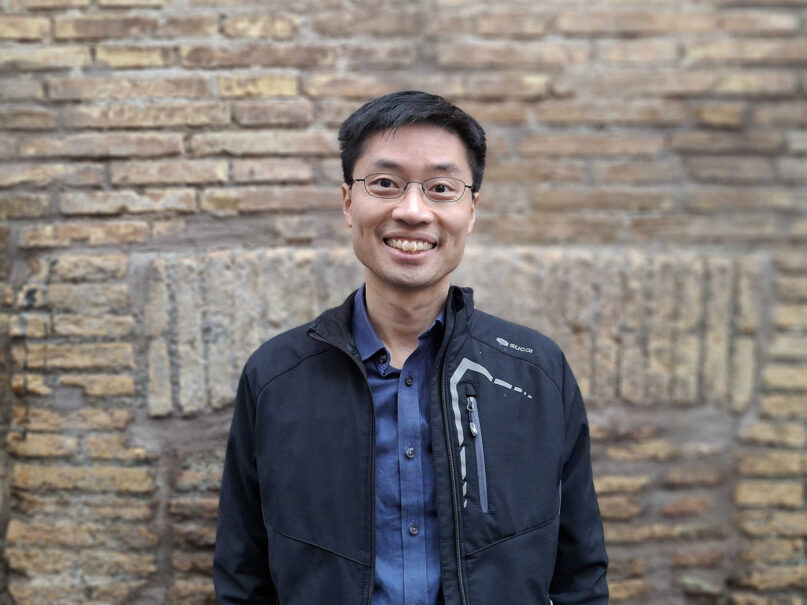
Po-Shen Loh at the Vatican. (RNS photo/Claire Giangravé)

Especially struck by Leo’s degree in mathematics from Villanova University in Pennsylvania, Loh said, “It occurred to me, maybe this pope’s background is making him see the future and see the big danger in artificial intelligence in a way that’s making him take action.”

Loh won a silver medal at the International Math Olympiad for Team USA in 1999 and went on to be the team’s coach for 10 years between 2014 and 2023. In December 2021, he launched his Live program, where gifted high schoolers or “math streamers” livestream to teach younger students.

Meanwhile, his experience teaching in K-12 classrooms led Loh to realize that young people today care a lot about their phones and social media. “I looked at this and I saw, oh boy, this is creating a whole generation of people who are pretty self-absorbed,” he said.

And in the tech world, Loh said he found that ruthless development of AI risked shattering the job market.

“If AI can make every worker able to do even 50% more work, then you only need two-thirds as many people,” he said. “The worldwide labor market is not prepared for a shock of laying off one-third of the people.”


Marc Andreessen’s social media meme reaction to Pope Leo. (Screen grab)

Loh’s solution to these issues is rooted in his Catholic faith, he said, but aimed at helping people from all faith backgrounds. He calls his approach “Thought + Full,” and he intends to inspire a new generation to delight in making others happy and to become independent, critical thinkers ready to face the challenges of the future. His livestreamed math classes have talented high-school students sit on gaming chairs with colorful lights in the background, resembling Twitch gaming streams.

“The only way to become one of these high schoolers is to not only be good at mathematics, you also have to care about other people, like being a nice person — you have to want to make other people’s lives brighter,” he said.

In exchange for teaching math, the student teachers get paid and the chance to be coached in “charisma” — such as learning public speaking skills or how to ask someone on a date — by paid professional actors and improvisers. “You stream math, we teach rizz,” he said, using the Generation Z shorthand for charisma.

Four years in, the project counts roughly 200 high schoolers involved and about 2,000 middle schoolers learning from the live videos. But Loh hopes that the ecosystem he created will expand and promote a renewed interest for math and critical thinking in the world.

The issues Loh considers in his teaching models seem to be reflected by the pope’s interests, too.

“The advent of artificial intelligence is accompanied by rapid and profound changes in society, which affects essential dimensions of the human person, such as critical thinking, discernment, learning and interpersonal relationships,” Leo told participants of a Vatican-sponsored conference called “Artificial Intelligence and the Care of Our Common Home” on Dec. 5.

And when the cardinals elected him in May, the pope said he chose the name Leo to honor the legacy of his predecessor Pope Leo XIII, best known for his encyclical “Rerum Novarum” (“On Revolutions”), which tackled transformations and challenges associated with the Industrial Revolution in the 1800s. “Today, the church offers to all her treasure of social teaching in response to another industrial revolution and the developments in the field of artificial intelligence that pose new challenges for the defense of human dignity, justice and labor,” Leo said.


Opinion

AI comes with a built-in worldview. Christians need to understand it.

(RNS) — Christians must engage to remain a cultural force for good in our technology-infused world.


(Photo by Andrew Ruiz/Unsplash/Creative Commons)


Nick Skytland
December 23, 2025
RNS


(RNS) — It’s one thing to steer clear of doing harm. It’s something else entirely to pursue what’s genuinely good. Right now, most artificial-intelligence model companies are focused on establishing a moral floor, making sure their models don’t do anything illegal, immoral or destructive. That’s important work, especially in the short term. The harder and far more important challenge is figuring out how to make sure AI works to affirm and further humankind.

That’s not simple. AI is trained on the vast content of the internet, which means it comes with a built-in worldview, whether we acknowledge it or not. As long as users use AI to write emails, there would be little cause for alarm. But people are increasingly asking AI questions once reserved for their most trusted relationships, like spouses and pastors. As a result, people continue to experience psychological breaks, suicidal ideation and other forms of self-harm and relationship breakdown in the course of their unguided and untutored interaction with chatbots.

Indeed, when it comes to how Christianity itself is being represented, we’re finding that none of the frontier models are particularly well-trained, consistent or accurate when it comes to providing explicitly Christian answers. That’s why it’s critically important that Christians understand both how AI is drawing from the world, and the technology itself.

Christians have the chance to influence AI for the good. I’d even argue that the church is uniquely well positioned to provide a rigorous, comprehensive vision of human flourishing — an essential component of ethical AI development.

At Gloo, a technology platform for the faith and flourishing ecosystem, we’ve developed a benchmark that evaluates whether AI models support human flourishing from a Christian perspective. We can measure how well the answers from various AI models promote wisdom, purpose and, yes, biblically grounded guidance.

What we have found is that AI has a hidden worldview. Most AI models operate from a secular, therapeutic and pluralistic framework that prioritizes neutrality, often erasing theological perspectives. Even when asked explicitly Christian questions, they default to secular or generic spiritual guidance. We found that the AI models avoid theological reasoning unless forced to do so. They rarely refer to Scripture, Christian practices or theological reasoning unless prompted.

This requires thoughtfulness and wisdom about the AI we let into our lives, informing our thoughts, beliefs and decisions. We must pay attention. We must use discernment. We must engage to remain a cultural force for good in our technology-infused world.

Shaping AI isn’t just the work of tech companies. Individual users have the capacity to make powerful change, if they use technology wisely. Equipping users at every level of the church with the knowledge and tools they need to use AI well will help bring about important change today and flourishing in the long term.

AI is the most influential technology of our lifetime. Christians have a responsibility to live in and reach the world. AI is part of that world and is not something to fear. We have the capacity to shape how this technology grows, rather than passively accept the ways it might shape us. We have the agency, and for now, we have the time.

So, stand firm instead of shrinking back. Engage AI with wisdom, courage and conviction. Use this moment — and your place in the church — to help build a future that strengthens humanity rather than confuses it.

(Nick Skytland is vice president of AI research at Gloo. The views expressed in this commentary do not necessarily reflect those of Religion News Service.)