Saturday, December 27, 2025

WWIII

China’s DF-27 Missile: Threatening Pacific Ships and the U.S. Homeland

By becoming the first major anti-ship ballistic missile (ASBM) power, China has dramatically changed the naval balance in the Western Pacific

One of the handful of known photos of a suspected DF-27 in the public domain (via Chinese social media / Shahryar Pasandideh)
One of a handful of known photos of a suspected DF-27 in the public domain (via Chinese social media / Shahryar Pasandideh)

Published Dec 26, 2025 2:40 PM by Andrew S. Erickson


Among the 2025 Pentagon report’s greatest revelations, the People’s Republic of China (PRC) has fielded a conventional intercontinental ballistic missile (ICBM) able to range parts of America’s homeland. This makes China the first nation publicly assessed to have fielded an operational, conventionally-armed ICBM—the DF-27—albeit at the low end of the ICBM range band and with variant-dependent roles. America’s homeland is not a sanctuary from either PRC nuclear or conventional missiles.
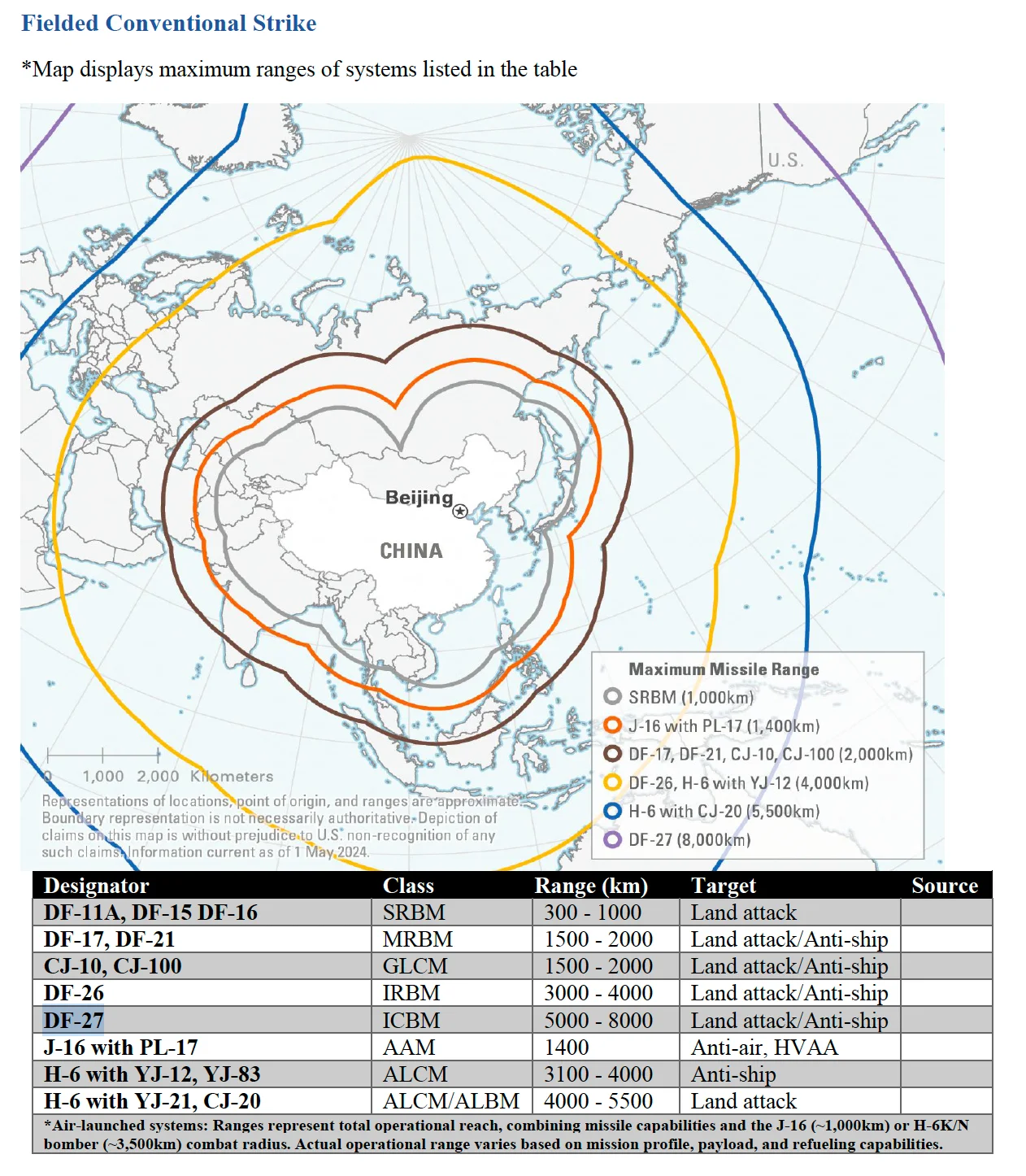
The report’s “Fielded Conventional Strike” figure (p. 85, reproduced above) identifies the DF-27 as a conventional ICBM with an estimated 5,000–8,000-km range, and denotes an anti-ship ballistic missile (ASBM) variant.

The DF-27’s 8,000-km maximum-stated range covers not only Alaska and Hawaii but also parts of the continental United States (CONUS). Like China’s shorter-range DF-21 medium-range ballistic missile (MRBM) and DF-26 intermediate-range ballistic missile (IRBM) families—which have both land-attack and anti-ship variants—and the DF-17 hypersonic glide vehicle (HGV) MRBM family, the DF-27 family now includes both land-attack and anti-ship configurations. Anti-ship targeting capabilities thus make at least one variant of each of these four ballistic-missile families an ASBM.

As the Pentagon’s 2024 report explained, for example, “The PRC’s deployment of the DF-17 HGV-armed MRBM will continue to transform the [People’s Liberation Army] PLA’s missile force. The system, which was fielded in 2020, may replace some older [short-range ballistic missile] SRBM units and be used to strike foreign military bases and fleets in the Western Pacific.”

This year’s report is the first to explicitly confirm the DF-27’s deployment, status as an ICBM, and inclusion of an ASBM variant. Earlier U.S. assessments classified the DF-27’s range class as straddling the IRBM-ICBM boundary. The Pentagon’s 2021 and 2022 reports mentioned a “long-range” DF-27 ballistic missile in development. “Official PRC writings indicates [sic] this range-class spans 5,000-8,000km,” the 2022 report elaborated, with similar wording in 2023. The 2024 report (p. 89) stated that “The DF-27 may have an HGV [hypersonic glide vehicle] payload option in addition to conventional land-attack, conventional antiship, and nuclear payloads. The PRC probably is developing additional advanced nuclear delivery systems, such as a strategic HGV and a FOB [fractional orbital bombardment] system.”

These developments bespeak larger dynamics of tremendous importance. Conventional ballistic missiles have been a priority for China since its strategic rocket force—known as the Second Artillery Force from its establishment in 1966 until its redesignation as the PLA Rocket Force (PLARF) at the end of 2015—began building a conventional missile component in the early 1990s, in the wake of PLA reassessments prompted by U.S. precision-strike performance in the 1990–91 Gulf War. Beijing stood up the core of what became its first conventional ballistic-missile brigade (equipped with the DF-15 short-range ballistic missile/SRBM) in 1991 and subsequently formally commissioned the brigade in 1993, at the same time that the Second Artillery was formally assigned a conventional strike mission.

With Washington and Moscow self-constrained by their bilateral 1987 Intermediate-Range Nuclear Forces (INF) Treaty—which banned both nuclear and conventional ground-launched ballistic and cruise missiles, their launchers, and related support infrastructure with ranges of 500–5,500 km—Beijing built the world’s largest arsenal of conventional ground-launched ballistic and cruise missiles in precisely that range band, with conventional ballistic missiles outnumbering nuclear ballistic missiles many fold (on the order of seven-to-one, by some estimates).

China today has the world’s most active and diverse ballistic missile development program, rapidly producing and fielding purpose-built systems at staggering scope and scale. With the world’s largest organizational system for acquiring and applying technology by all means possible, as well as the world’s largest defense industrial base by key measures, Beijing is able to translate doctrine into deployment with remarkable speed.

The DF-27 is a case in point. In 2020, PLA National Defense University’s new edition of Science of Military Strategy, a textbook for senior officers, observed in typical oblique fashion that “conventional strategic missiles that have the ability for rapid global precision attacks will become an important component of major military powers’ strategic missile strengths.” Always determined to be a major military power in every way possible, less than five years later China became the first to field an analogous capability: a conventional ICBM—with an ASBM variant—that can conduct rapid, long-range precision strikes out to intercontinental distances, including against its “strong enemy’s” homeland and its naval forces at sea.

Continuing a multi-year assessment, the Pentagon’s 2025 report judges that “China has the world’s leading hypersonic missile arsenal and continued to advance the development of conventional and nuclear-armed hypersonic missile technologies during the past year.” It bears emphasis that all ballistic missiles are hypersonic (faster than Mach 5) during a portion of their flight. What is new is the recent fielding of mature, hypersonic missiles with maneuvering payloads by American adversaries, including Russia and China.

China’s fielded hypersonic missiles, including its ASBM families, combine very high speed with maneuverability to greatly complicate missile defense and fleet operations. Maneuvering payloads can approach from unexpected azimuths, fly at lower-than-traditional trajectories, and potentially exploit gaps in radar and interceptor coverage. In exchange for these advantages, such systems may trade some speed in the terminal phase to reduce ionized plasma-related effects that can interfere with guidance and communications, while remaining firmly hypersonic.

Taken together, China’s ASBMs—now potentially extending to intercontinental ranges with the DF-27—pose a potent threat to surface ships across much of the Pacific. In effect, they constitute a new form of naval force. Although the United States and its allies possess manifold countermeasures in what would be a complex systems-of-systems contest, there is no denying that, by becoming the first major ASBM power and steadily expanding its ASBM families, China has dramatically changed the naval balance and the prospective ways of war in the Western Pacific and beyond.

Meanwhile, even as Beijing pursues what U.S. defense assessments such as the Pentagon’s 2025 report show to be the world’s most rapid, expansive buildup of nuclear and conventional ballistic missiles—including the fielding of missile families such as the DF-21, DF-26, and DF-27 with both nuclear-capable and conventional (including ASBM) variants, whose operational employment could increase the risk of warhead ambiguity or misinterpretation in a crisis—China has thus far proven unwilling to engage in sustained, substantive nuclear or conventional ballistic missile risk-reduction or arms-control discussions. As Commander-in-Chief Xi Jinping seeks to expand operational options across manifold rungs of the escalation ladder to strengthen coercive leverage and potential warfighting capabilities (particularly regarding a Taiwan contingency), the attendant risks continue to grow. The latest revelations concerning the DF-27 ICBM are an important new chapter, but are far from the end of the story.

Disclaimer: The views expressed here are those of the author alone, based solely on open sources. They do not necessarily represent the views, policies, or positions of the U.S. Department of War or its components, to include the Department of the Navy or the U.S. Naval War College.

Dr. Andrew S. Erickson is Professor of Strategy in the U.S. Naval War College (NWC)’s China Maritime Studies Institute (CMSI). A core founding member, he helped establish CMSI in 2004 and stand it up officially in 2006, and has played an integral role in its development; from 2021–23 he served as Research Director. He is a China Aerospace Studies Institute (CASI) Associate, and is currently a Visiting Scholar at Harvard University’s John King Fairbank Center for Chinese Studies, where he has been an Associate in Research since 2008. 

This analysis appears courtesy of Andrew S. Erickson and may be found in its original form here.

The opinions expressed herein are the author's and not necessarily those of The Maritime Executive.


China Has Turned a Small Container Feeder Into an Arsenal Ship
Zhong Da 79
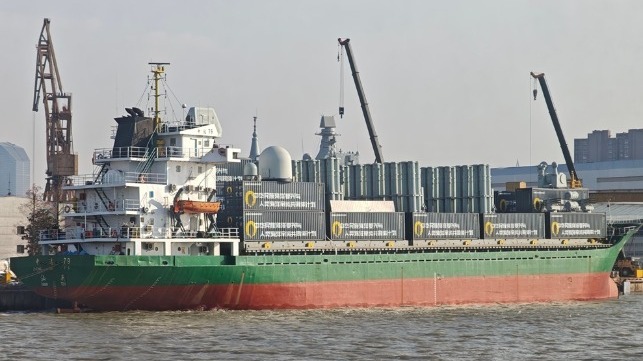
Three rows of quad-pack containerized VLS missile cells aboard Zhong Da 79 (Chinese social media)

Published Dec 25, 2025 10:26 PM by The Maritime Executive


The U.S. Navy wants to compete with China's PLA Navy for sea control in the Western Pacific, which would be essential to defending U.S. allies and protecting American economic interests in the region. But year on year, China's naval fleet continues to grow and modernize, adding more (and more credible) combatant vessels to the order of battle. On Thursday, new open-source imagery from downtown Shanghai showed that the contest could get harder: the photos show that the People's Liberation Army has outfitted a standard container feeder with most of the trappings of a frigate, with an abundance of missile capacity.  

The vessel in question, Zhong Da 79, is a Chinese-flagged container feeder of about 320 feet in length. She has no IMO number or Equasis record, consistent with a purely domestic vessel. AIS data from Pole Star Global shows that she only engages in coastwise trade along China's eastern and southern seaboard. 

Zhong Da 79's trackline suggests that the vessel has spent months undergoing a refit over the past year. She put into a small regional shipyard in Longhai in mid-April, emerging again in mid-August. Ever since, she has been moored alongside an industrial pier on the Huangpu River near downtown Shanghai. 

A coastal vessel of such a small size hardly registers in most assessments of national maritime strength. Nonetheless, Zhong Da 79 appears to be large enough to host 60 full size containerized missile cells, an air defense radar, a close-in weapons system, and potentially more equipment in other containers on deck. Measured purely by missile capacity, this is nearly twice the firepower planned for the U.S. Navy's Constellation-class frigate, which was recently canceled due to delays and cost overruns.

Zhong Da 79 lacks the speed, shock hardening and compartmentalization of a real frigate, and would be vulnerable if unescorted. The challenge is in China's vast potential for making many more, and cheaply. China's flag (including Hong Kong) covers nearly 8,000 vessels, and Chinese beneficial owners hold another 4,400 ships under other nations' registries. China's industrial base is well-equipped to deliver the military hardware and shipyard man-hours to conduct conversions or deliver additional newbuild units. At minimum, in a high-end fight, a boxship/arsenal ship would complicate planning and absorb scarce precision munitions. At maximum, such a vessel class could deliver effective antiaircraft or antiship missile fire, hide amongst civilian vessel traffic, and be replaced rapidly if lost. 

China’s Solar Rebound Signals Discipline, Not Another Boom

China’s solar installations jumped to a six-month high in November, with developers adding roughly 22 gigawatts of new capacity, according to data released by the National Energy Administration. That’s even after 2025 proved to be a brutal year defined less by climate ambition and more by policy whiplashtariffs, and overcapacity.

On paper, November looks like a comeback. But it’s really more of a controlled burn. Installations surged earlier this year as developers raced to beat a policy deadline, front-loading an extraordinary 93 GW in May alone. When Beijing shifted its renewable pricing mechanism mid-year, removing guaranteed returns for new projects, activity fell off a cliff. The November pickup reflects a late-year scramble by state-owned firms to finish projects before the close of the 14th Five-Year Plan, not a return to free-running growth.

What makes this moment interesting is what’s happening behind the scenes. While installations recovered, China’s solar manufacturing sector has been shrinking itself on purpose. Polysilicon output has been slashed, wafer production cut, and losses sharply reduced as Beijing leans hard on producers to end price wars and kill zombie capacity. After years of exporting deflation to global solar markets, China is finally trying to stabilize its own supply chain before it breaks something important.

That tightening matters for demand signals. Developers are no longer building just to build. Margins, grid access, and project quality now matter again. Analysts at BloombergNEF have already trimmed China’s 2025 solar outlook and expect installations to contract further in 2026, reflecting a system that is intentionally slowing itself down.

The result is a solar sector entering a new phase. Fewer moonshot installation months. Less chaos in manufacturing, more discipline.

By Julianne Geiger for Oilprice.com

China to rein in copper, alumina capacity expansion under next five-year plan

Stock image.

China will tighten oversight of new copper and alumina projects to curb irrational investment and disorderly expansion from 2026 to 2030, the country’s top economic planner said on Friday.

In an article on its website, the National Development and Reform Commission (NDRC) said local governments must strengthen feasibility studies for major projects and align their approvals with national industrial policy.

The guidance targets copper and alumina, industries the commission said are key to economic and military development but whose development must take into account “differences in regional industrial bases, resource endowments and environmental capacity.”

China will also encourage mergers and restructuring led by large firms to increase industry concentration and competitiveness, the NDRC said. In addition, Beijing will continue to support overseas mining investment in its next five-year plan.

China is the world’s largest producer and consumer of copper and alumina and has repeatedly warned of the risks of overcapacity and unchecked investments in the industry.

China suspended plans for around 2 million metric tons of planned copper smelting capacity, the China Nonferrous Metals Industry Association said last month.

From January to November of 2025, China produced 13.3 million metric tons of refined copper, up 9.8% from a year earlier, on track for record refined copper output in 2025.

Alumina output in China reached 84.7 million tons in the same period and was also likely to set a record in 2025.

The most traded copper contract on the Shanghai Futures Exchange closed daytime trading up after hitting a record high of 99,730 yuan earlier in the session.

Shanghai aluminum closed the session higher after hitting a near-four-year high of 22,640 yuan.

Major copper firm Jiangxi Copper rose 10%. Yunnan Copper rose as much as 8.68% and Tongling Nonferrous Metals Group gained as much as 8.33%.

Aluminum heavyweight Aluminium Corporation of China rose as much as 8.94%.

(Reporting by China C&E Team; Editing by Thomas Derpinghaus)


China steel group urges domestic pricing in iron ore contracts


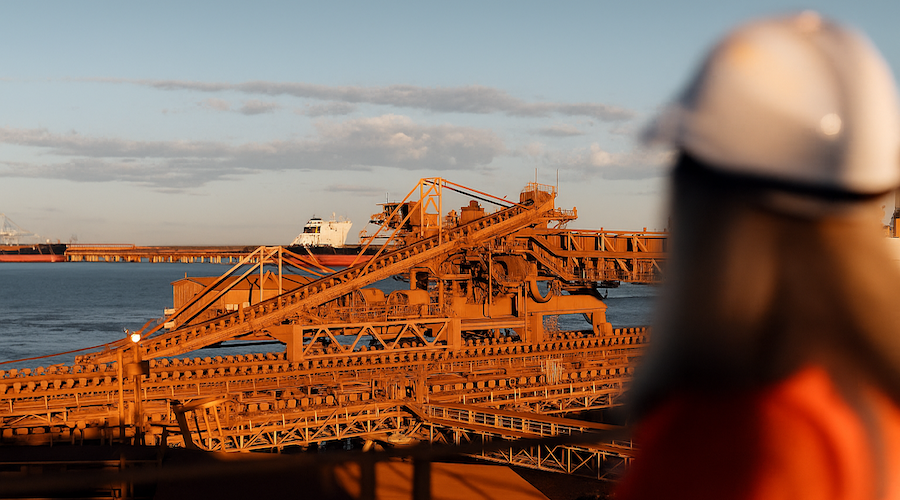
BHP is China’s third-biggest iron ore supplier. (Image courtesy of BHP.)

China’s top steel industry group has urged the state-backed iron ore trader, China Mineral Resources Group Co., to push for using domestic price benchmarks in supply talks with major miners including BHP Group and Rio Tinto Group.

A newly launched port-side spot price index should become a core pricing reference for the market, the China Iron and Steel Association said in a statement on its website on Saturday. It added CMRG should seek to use the gauge in long-term contract negotiations with major mining firms.

The statement, based on comments made by CISA vice chairman Luo Tiejun at an industry conference on Dec. 18, underscore a continued effort to shift pricing power back toward China. The country consumes most of the world’s seaborne iron ore, but has complained that prices are still largely set using US-dollar benchmarks influenced by overseas futures markets.

CMRG, which was set up in 2022 to give China more bargaining power with big miners, has taken a more assertive approach this year, including restricting purchases of certain products from BHP after long-term contract talks stalled. It is now negotiating supply deals with other miners for next year, aiming to secure more favorable terms for steel mills.

Luo also flagged that spot trading — the buying and selling of iron ore for immediate delivery — has highlighted tensions in the market, noting there have been periods when long-term contract prices ended up higher than spot prices. He said spot prices remain essential as they reflect real supply and demand but should serve mainly as a reference for long-term contracts.

(By Katharine Gemmell)

Op-Ed: Washington is Beginning to Accept China's Rise

Two factors are forcing a re-think: Trump’s diplomacy, and the realization that China’s growth cannot be halted.

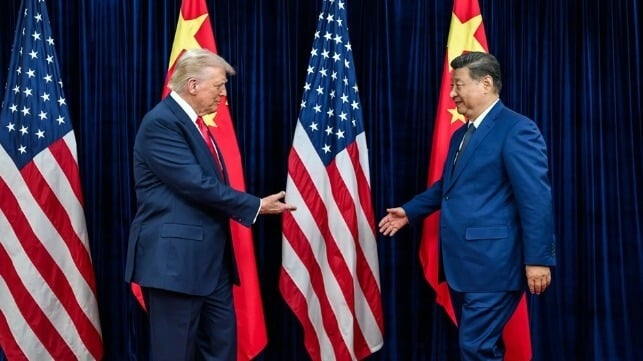
Trump Xi Jinping
Courtesy of the White House

Published Dec 26, 2025 1:05 PM by The Maritime Executive


[By Ali Wyne]

US discourse on China policy is slowly but decidedly expanding on account of two factors: the increased influence of President Donald Trump in formulating it, and a growing recognition among observers, including current and former senior government officials, that the United States can only do so much to slow China’s technological progress and organize a counterbalancing coalition. 

There is an opening, then, to press for a reorientation of US policy away from a misguided objective of victory and towards the inescapable imperative of cohabitation.

According to a common narrative, the second Trump administration is unwinding the alleged “consensus” on China policy that the first one introduced — beginning with the White House’s December 2017 National Security Strategy (NSS) and culminating with a November 2020 report by the State Department, The Elements of the China Challenge. This seeming dissonance is easier to resolve when one appreciates that Trump himself does not subscribe to the foundational view of some past advisors: that competition between the United States and China is zero-sum, ideological, and existential, rooted in Chinese leader Xi Jinping’s determination to ensure that China regains a central position in the international order. 

During his first term, Trump permitted or ignored more confrontational actions by his deputies so long as he believed this would not undermine his principal agenda: securing a trade deal with Xi (the two leaders’ talks culminated in a “phase one” agreement in January 2020).

Trump embraces a narrow conception of competition, with few persistent grievances beyond the size of China’s trade surplus and its export of fentanyl precursors. He seems to regard Xi not as an imperial autocrat but as a business rival, one with whom he can build an enduring rapport and place bilateral ties on a more stable footing. 

Indeed, Trump's respect for Xi seems to have increased over the course of the trade standoff that has dominated US-China relations since he launched his “Liberation Day” tariff offensive in early April. Before they met in Busan at the end of October, Trump declared that the “G2” would be convening, seemingly doing what none of his predecessors thought — or needed — to countenance: accepting Beijing’s status as a peer to Washington.

Trump provides a degree of political cover for lawmakers who seek more regular, substantive dialogues with top China. 

The new NSS reflects that conclusion, assessing that the US-China relationship “has transformed into one between near-peers.” Unlike the first Trump administration’s NSS, though, which spotlighted “great-power competition” with China and Russia, and the Biden administration’s NSS, which declared that China is “the only competitor with both the intent to reshape the international order and, increasingly, the...power to do it,” the latest strategic guidance deprioritizes Beijing’s resurgence, instead giving top billing to threats that emanate from within the Western Hemisphere.

While such stances place Trump squarely at odds with most Republican members of Congress, who view China as America’s foremost adversary, those lawmakers understand that their political fortunes would plummet were they to criticize him publicly. 

And because he is invested in leader-level diplomacy with Xi, he provides a degree of political cover for lawmakers who seek more regular, substantive dialogues with top Chinese interlocutors. It is encouraging that four members of the House of Representatives, including a Republican, Michael Baumgartner of Washington State, visited China in September (the first such delegation since 2019) and expressed the hope that their initiative would “lead to more opportunities for members of Congress to engage in meaningful conversations with senior Chinese government officials.”

The leader of the delegation, Democrat Adam Smith, also from Washington State, has argued that “China is going to exist. [The United States is] going to exist.” It might seem self-evident to conclude, as Smith does, that Beijing will prove an enduring power, and that Washington will have to recalibrate its mindset accordingly. Yet esteemed observers still feel compelled to rebut the assessment that China’s comprehensive national power has peaked or will soon plateau.

That China confronts mounting structural challenges at home and an increasingly contested environment abroad is indisputable. Its accelerating military modernization, its growing diplomatic sway — especially across the developing world — and, most importantly, its burgeoning economic heft all suggest, however, that its weight in international affairs is increasing. 

One sometimes hears that, were the United States to coordinate more closely with allies and partners, Washington could “win” its competition with Beijing.

China has demonstrated a heightened capacity not only to adapt to US sanctions, tariffs, and export controls, but also, with little exertion, to inflict damage across many US industries, particularly thanks to its dominance in producing and processing rare earths, which are indispensable to America’s automotive sector and defense industrial base. Meaningfully diversifying away from China on those fronts will likely be a decades-long undertaking, as will reducing reliance on its pharmaceuticals.

On the flip side, the limits of America’s economic leverage are becoming more apparent. Former US Commerce Secretary Gina Raimondo has noted that while US officials once “thought they were going to hobble Huawei,” a major Chinese telecommunications company, it is “stronger than ever, making incredible chips.” Scholars Jennifer Lind and Michael Mastanduno conclude that “not only are export controls failing to hold China back, they might actually be accelerating Chinese innovation through the scarcity they impose."

One sometimes hears that, were the United States to coordinate more closely with allies and partners to form a bloc whose defense spending and economic output would be several times larger than China’s, Washington could “win” its competition with Beijing. The mathematical logic of this conclusion, though, lags its practical likelihood. Many of those countries, after all, aim to de-risk not only from a more assertive Beijing but also from a more unreliable Washington, where the America First wing of the Republican Party could well retake power periodically and therefore exert a substantial influence over US foreign policy indefinitely.

There are at least two other indicators that the space for a fresh conversation on China policy may be expanding. First, a small but growing body of scholarship challenges the widespread presumption that China is immutably set on replacing the United States as the world’s preeminent power and establishing a Sinocentric order. 

China does not want to be subordinate to the United States, but it recognizes that either an armed conflict or a protracted struggle with the world’s preeminent power could derail its present trajectory. It wants to modify aspects of the present order, sometimes to America’s detriment — for example, by working to gain more traction for authoritarian approaches to economic development and technological standard-setting. But China is also significantly invested in that order, where it wields enormous influence by virtue of its integration within institutions such as the United Nations, World Bank, and International Monetary Fund.

Second, contrary to the erstwhile hope among some US commentators that China’s resurgence would ease political polarization among Americans, a recent survey by the Chicago Council on Global Affairs finds that “Republicans and Democrats now hold distinctly different views on a range of China-related questions.” Thus, instead of bringing Americans together in common cause, the China challenge might prove to be another vector and accelerant of that polarization.

The good news, then, is that the Overton window on US policy towards China is expanding. The bad news is that one can all too easily imagine how it could close. 

Inertia could prevail. Washington’s discourse remains more focused on achieving an unlikely victory over Beijing — rendered even unlikelier given that there is no agreement on what such an outcome would entail in practice — than on grappling with competitive coexistence. Trump’s successor could hold that the United States is losing a “new Cold War” and must therefore move aggressively and globally restore its competitive footing. 

Alternatively, China could overplay its hand, as it did when it pursued its campaign of “Wolf Warrior” diplomacy during the height of the coronavirus pandemic. Were Xi to authorize a quarantine or blockade of Taiwan, Trump — whatever he might say or indicate in advance — would face enormous pressure to respond, lest domestic political opponents and US allies and partners depict him as weak. Alternatively, were China to employ new forms of economic leverage that harm US consumers and companies, Trump might feel personally slighted and empower officials in his administration who want to decouple the US and Chinese economies.

Trump rightly seeks a sustained dialogue with Xi, and he appears to have instructed top advisors to prioritize calm in bilateral ties. US Secretary of War Pete Hegseth said in a keynote address at this month’s Reagan National Defense Forum that Trump seeks “a stable peace, fair trade, and respectful relations.” Days earlier, US Trade Representative Jamieson Greer said that “the decision right now is…to have stability in this relationship.”

Trump’s execution, however, has been misguided. His trade gambit has imbued Xi with greater confidence, and his sustained economic attacks and diplomatic broadsides against US allies and partners erode trust in Washington. And while Trump has helped create room for a new, more nuanced, construct to guide China policy, he himself has neither supplied one nor evinced an interest in doing so. This paradigmatic vacuum risks incentivizing China to behave more coercively, should Beijing conclude that Washington would be indifferent. There is an opportunity and an imperative to fill it. 

Ali Wyne is the senior research and advocacy advisor for US-China relations at the International Crisis Group. He is the author of "America’s Great-Power Opportunity: Revitalizing US Foreign Policy to Meet the Challenges of Strategic Competition" (Polity, 2022).

This article appears courtesy of The Lowy Interpreter and may be found in its original form here.

The opinions expressed herein are the author's and not necessarily those of The Maritime Executive.


Judge Lets Hawaii’s “Green Fee” Tax on Cruises Go Ahead

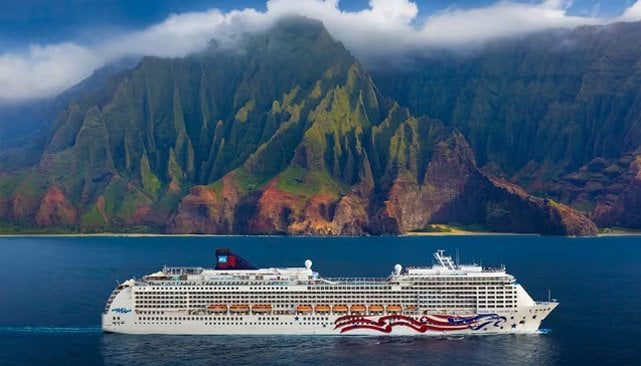
cruise ship off Hawaiian coast
Hawaii has one full time cruise ship, Pride of America, and gets over 300,000 cruise passengers annually (NCL)

Published Dec 26, 2025 4:19 PM by The Maritime Executive


A judge in U.S. District Court in Hawaii rejected a lawsuit by the cruise industry and vendors seeking an injunction against extending for the first time Hawaii’s tax on transient visitors to cruise ships. Known as the “Green Fee,” the state in May enacted an increase to the tax and for the first time included cruise ship passengers, saying the state needs more tools to deal with climate change.

Hawaii asserts that Act 96 of 2025 establishes the Green Fee, which requires, in part, cruise operators to pay their fair share of transient accommodation tax to address the threats of climate change to the state. Hawaii’s governor cited the impact of beach and shoreline erosion and the devastating wildfires, saying the environment is one of the chief draws to bring tourists to the state.

The law, which was passed in May and is due to go into effect on January 1, 2026, adds .75 percent to the tax paid by hotel guests and short-term rentals to a total of 11 percent. Cruise passengers must also pay the 11 percent for the days their ships are in Hawaiian waters, and local governments can add a further three percent surcharge. Hawaii estimates the tax could generate $100 million per year.

The cruise industry, represented by the trade group Cruise Lines International Association (CLIA), had sued seeking an injunction from the court to prevent the implementation of the tax. The suit argued that the tax on cruise ships was unconstitutional because the U.S. Constitution prohibits a tax by states for entry into ports and says only Congress can impose such taxes. It was pointed out that the tax was not for the benefit of the ports or for services, but instead would go to the state’s revenues.

“The vast majority of the cruise industry’s claims were dismissed,” said Attorney General Anne Lopez. “While the litigation is not over, we are confident in the legality of this law and will continue to vigorously defend it on behalf of the people of Hawaii.”

Cruises they report bring about 3000,000 tourists annually to Hawaii based on 2023 data. Hawaiian government data shows that there were more than 9.6 million visitors to the state in 2023.

Judge Jill Otake in the U.S. District Court for Hawaii notes the case presented a challenging question and said she sought to balance competing interests. The Constitution gives federal supremacy over interstate maritime commerce, but she notes it creates tension with a state’s critical power to generate revenue from businesses operated within its borders.

The injunction was denied because the cruise industry did not establish it was likely to succeed on the merits of its argument. The judge writes that it would have given the “cruise lines preferential treatment over land-based transient accommodations businesses.” 

The court declined at this stage to halt the implementation of the transient accommodation tax on cruise ships in Hawaii. It, however, notes that the issues of Federal rights in this area have been rarely litigated and that the court might revise its opinions in the future. The court rejected the claims from CLIA and local businesses that provide shore services to the cruise ships “without prejudice but without leave to amend.” It also denied a motion from the federal government that had sought to intervene, calling the tax a “scheme to extort American citizens and businesses solely to benefit Hawaii.”

CLIA immediately appealed its claims against the tax. The cruise industry asserts that Hawaii will damage its industry by making the price of cruises too expensive, especially for families. An additional claim based on free speech about a requirement to post and advertise participation in the Hawaiian program was rejected by the court.

The Green Fee is the first of its kind tax in the United States and is being closely watched. Other destinations are also wrestling with the challenges of climate change, the environmental impact from cruise ships, and the issues of overtourism. Greece, for example, introduced new peak season fees at its most popular destinations, and an environmental tax on cruises was proposed for France’s new budget. The cruise industry contends it already pays extensive fees and that its ships are among the cleanest, while representing a small part of the broader challenge of emissions from commercial shipping.

TRUMP'S WAR ON WIND POWER

Dominion Energy Sues BOEM as Governors Demand Briefing and End of Stop Work

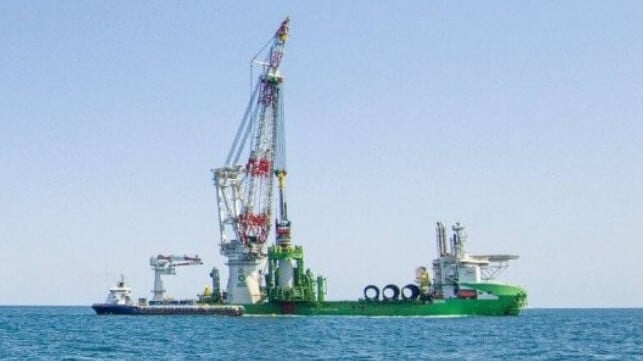
offshore wind farm installation
Dominion Energy sued for an injunction against the stop work order on its offshore wind farm

Published Dec 26, 2025 3:14 PM by The Maritime Executive


Dominion Energy, the developer of one of the five offshore wind energy projects that received a stop-work order from the Trump administration, filed suit in District Court seeking an immediate injunction against the order. At the same time, the governors of the four states impacted by the order sent a strongly worded letter to the Department of the Interior, saying they rejected the “transparent pretext” of new information impacting national security and demanded a classified briefing and retraction of the order.

Secretary of the Interior Doug Burgum on Monday ordered the five offshore wind projects currently under construction to immediately stop all offshore work, citing “national security concerns.” The brief statement and order to the companies cited concerns raised by the Pentagon, saying wind turbine blades and towers cause radar interference known as clutter. The statements cited “recently completed classified reports.” Work was to be suspended for at least 90 days while BOEM conducted a review and sought possible mitigation steps before canceling the projects.

Dominion Energy, in its civil action filed the following day, calls the Bureau of Ocean Energy Management’s order “arbitrary and capricious.” They called for an immediate injunction against the order and its enforcement, saying that the order “sets forth no rational basis, cannot be reconciled with BOEM’s own regulations and prior issued lease terms and approvals.” Further, they contend the order is unconstitutional as it infringes upon constitutional principles that limit actions by the Executive Branch, as well as violating the Outer Continental Shelf Lands Act.

Coastal Virginia Offshore Wind, they highlight has been under construction since early 2024 after years of review and gaining all its permits. The company reports it has spent approximately $8.9 billion to develop the project, which is projected at a total cost of $11.2 billion and was expected to start generating power early in 2026. 

The court filing says BOEM’s arbitrary and illegal order is fundamentally inconsistent with the legal framework. They assert the action is “sudden and baseless.” 

Dominion Energy asserts the illegal order is causing serious, irreparable harm to the company and its customers. U.S. District Court Judge Jamar Walker set a hearing for Monday, December 29, regarding the request for a temporary restraining order.

At the same time, the governors of Connecticut, Massachusetts, New York, and Rhode Island sent a letter to Secretary Bugum calling the order an “irrational and erratic action.” They rejected the assertions of national security concerns as a “transparent pretext,” demanding a briefing on the purported information and an immediate rescission of the suspension.

“The sudden emergence of a new ‘national security threat’ appears to be less a legitimate, rational finding of fact and more a pretextual excuse to justify a predetermined outcome consistent with the President’s frequently stated personal opposition to offshore wind,” the governors write in their letter.

They highlight that the states were not informed of any “purportedly news risks prior to these suspensions,” and that the action did not account for the states' “substantial reliance interest.” They say the states’ economies depend on these approvals and reject the national security claims, saying the action risks a “national security and economic disaster.” They highlight the vital need for more electricity generation, the Trump administration’s policy of energy independence, and assert the order risks grid failure.

“Administrative actions, such as those you have taken here, cannot be based on undisclosed, secret rationales – especially not when thousands of jobs and vital energy projects are at stake,” the governors write. They demand a classified briefing for personnel to review this evidence and all information related to the rationale of the order.

Dominion Energy notes that this action is specific to its project but that there are four other projects that have related interests. Ørsted said on Tuesday that it would evaluate potential legal proceedings, while all of the companies said they were willing to work with BOEM and the Department of the Interior to address concerns and take further mitigation steps.


Trump’s unscrupulous reign is being ignored by America's most powerful organizations


December 26, 2025
ALTERNET


Sorry to burden you with this question, but it nags at me.

Why haven’t the American Bar Association or the American Medical Association stood up against the unethical behavior of professionals in the Trump regime?

I was always told that professional associations existed to maintain professional standards, not merely to restrict the number of licensed professionals to maintain professional prices.

But Lindsey Halligan, now the U.S. attorney for the Eastern District of Virginia, is ethically unmoored.

She was appointed by Trump and Pam Bondi for the express purpose of prosecuting Trump enemies James Comey and Letitia James.


Halligan is a former insurance lawyer with no criminal law experience. (She had helped Trump “de-wokify” the Smithsonian.)

On November 17, 2025, a federal magistrate judge identified multiple instances of Halligan’s misconduct, including making “fundamental misstatements of the law” to a grand jury.

Halligan admitted she never showed the final indictment to the entire grand jury after it had rejected her first submission, a remarkable failure.

A judge subsequently found that Halligan had been illegally appointed U.S. attorney to begin with and dismissed the indictments against Comey and James. The Justice Department is now appealing.

According to the American Bar Association’s model rules of conduct (adopted by every state bar association), a prosecutor in a criminal case must “refrain from prosecuting a charge that the prosecutor knows is not supported by probable cause.” It is also considered professional misconduct for a lawyer to “engage in conduct that is prejudicial to the administration of justice.”

If legal ethics mean anything, Halligan should be disbarred.

If medical ethics mean anything, Dr. Vinay Prasad should no longer be a doctor.

Prasad, the Food and Drug Administration’s top vaccine regulator, recently claimed that Covid vaccines were dangerous for children and had caused the deaths of “at least 10 children.”

Twelve former FDA commissioners said Prasad’s claim broke sharply from long-standing scientific norms and posed “a threat to evidence-based vaccine policy and public health security.”

Inside Medicine reported that Prasad used incomplete information and that the pediatric death toll from Covid shots was between zero and seven.

More to the point, how many children would have died without the Covid vaccine? The Centers for Disease Control reported that more than 2,100 American children have died of Covid since the pandemic began.

I could have used many other examples of doctors now ostensibly serving the public in the Trump regime who have thrown their own integrity and ethics out the window and into the Potomac.

What is unfolding among doctors inside the Department of Health and Human Services is an attempt to rewrite the rules governing the entire U.S. public health system based on ideology rather than science.

Likewise, I could have found many other examples of attorneys in the Trump regime who are violating professional standards.

What’s occurring among lawyers in the Justice Department and the U.S. attorney’s offices is an attempt to rewrite the rules governing the entire U.S. system of criminal justice based on Trump’s vindictiveness rather than the rule of law.

If professional associations have any legitimate purpose in our system, it is to enforce ethical standards and hold professionals accountable to them.

Hell, if the American Economic Association can permanently ban Harvard economist (and former treasury secretary) Larry Summers for conduct “fundamentally inconsistent with its standards of professional integrity” (Summers had repeatedly asked Jeffrey Epstein for advice on Summers’s pursuit of a younger economist), surely the American Bar Association should ban Lindsey Halligan, and the American Medical Association, Vinay Prasad.

Where are the American Bar Association and the American Medical Association during Trump’s unscrupulous reign?


Robert Reich is a professor of public policy at Berkeley and former secretary of labor. His writings can be found at https://robertreich.substack.com/.
Conservatives mock Trump’s spiritual advisor

Pastor Paula White in Grapevine, Texas on June 11, 2021
 (Gage Skidmore/Flickr)
December 26, 2025 
ALTERNET

When President Donald Trump announced the creation of the White House Faith Office on February 7, he appointed far-right evangelical pastor and televangelist Paula White as its leader. Rev. White is a longtime spiritual adviser to Trump, giving an inaugural invocation during his first presidential inauguration on January 20, 2017. And she claimed the 2020 election was stolen from Trump by "demonic forces."


White once equated defying Trump with defying God, and she is the target of brutal mockery in a video posted on X, formerly Twitter, on Friday, December 26 by Republicans Against Trump — not to be confused with the conservative Never Trump group formerly known as Republican Voters Against Trump. Organizers for that group, now called Republican Accountability (RA), have included Bill Kristol, Sarah Longwell, Tim Miller and other well-known conservative Trump opponents associated with The Bulwark.


The video shows a collage of White making over-the-top comments, including "Wherever I go, God rules. When I walk on White House grounds, God walks on White House grounds….. I had every right to declare the White House holy ground because I was standing there. And where I stand is holy."

One of the clips shows White saying, "To say no to President Trump would be saying no to God, and I won't do that." And White, in another clip, describes Trump's opponents as "demonic."

"Let every demonic network that has aligned itself against the purpose — against the calling of President Trump — let it be broken," White declares in that clips. "Let it be torn down in the name of Jesus."


Trump brutally mocked by Daily Show video montage of him falling asleep in meetings


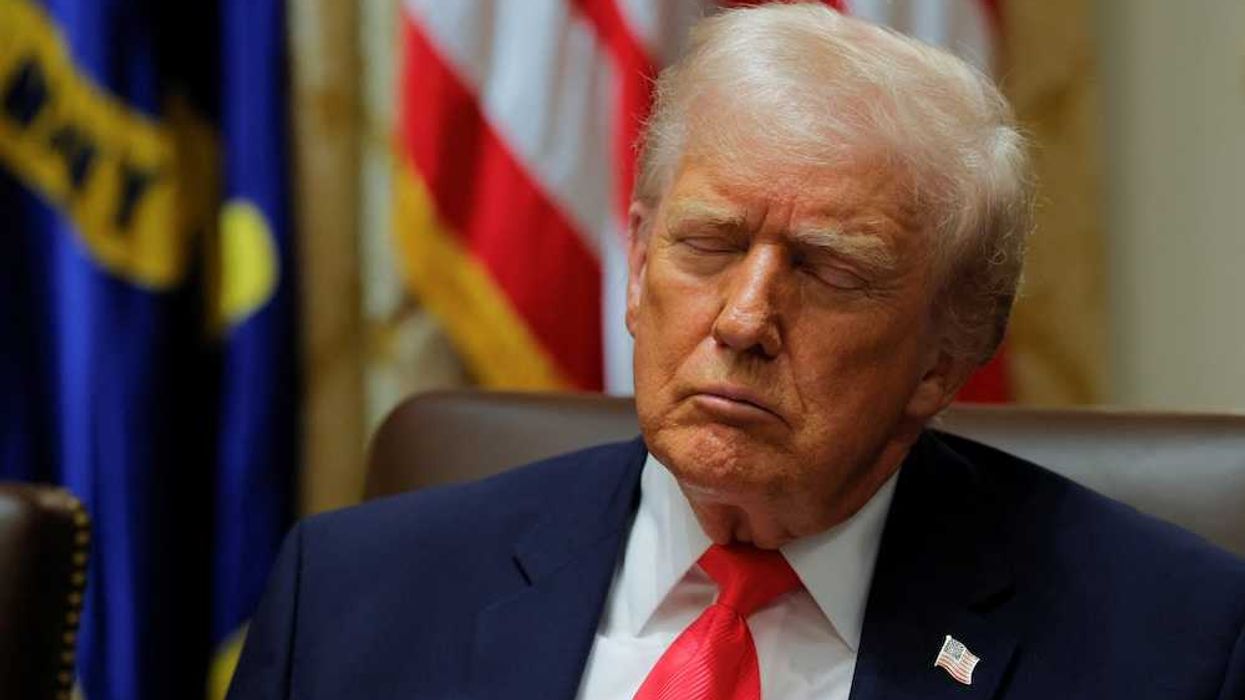
U.S. President Donald Trump attends a cabinet meeting at the White House in Washington, D.C., U.S., December 2, 2025. REUTERS/Brian Snyder
December 24, 2025  
ALTERNET

Comedy Central's "The Daily Show" is bringing in the Christmas holiday by mocking President Donald Trump's habit of falling asleep during public meetings.

In a video montage posted Wednesday to its social media channels, the Daily Show assembled clips of Trump dozing off in various meetings, set to the traditional Christmas classic "Silent Night." The Daily Show also spliced in Trump's mocking of former President Joe Biden for sleeping in view of cameras.

"Merry Christmas to all, and to Donald Trump, good night," The Daily Show wrote in a post to their Bluesky account.

"Who the hell sleeps in front of the paparazzi, the media?" Trump is heard saying as a clip plays of him drifting off in the Oval Office. "How do you sleep in front of the media?"

"And he's out cold! You see the dribble coming down the side of his cheek," Trump is heard saying of Biden, as footage plays of him nodding off in a Cabinet meeting.

"Who the hell wants to sleep with these people watching?" Trump can be heard saying as "Silent Night" continues playing in the background. "I could never fall asleep under those circumstances."

"You'll never see me sleeping in front of the cameras," Trump said at the end of the video.

The president's increasingly frequent public sleeping episodes have even caught the attention of his fellow Republicans. Sen. Lisa Murkowski (R-Alaska) gently criticized Trump in an interview with The Bulwark's Joe Perticone earlier this month, suggesting the president should spend more time getting a good night's rest rather than posting to social media.


"He doesn’t keep very good bedtime manners, does he?" Murkowski said at the time.

Watch the Daily Show's montage below:


Friday, December 26, 2025

Bezos-Owned Newspaper Bashes Medicare for All in Christmas Day Editorial

The Washington Post editorial predictably ignores research showing that a single-payer system would save hundreds of billions of dollars—and tens of thousands of lives—each year.


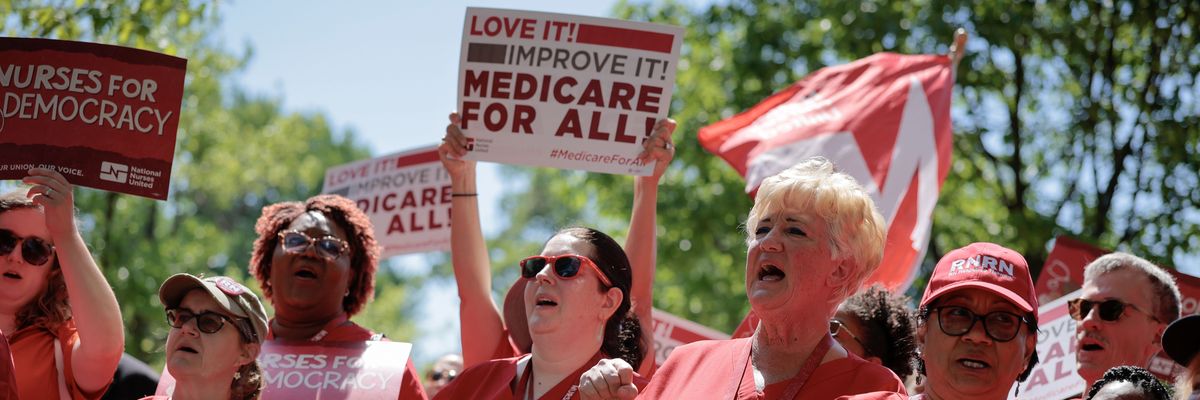
Nurses rally with lawmakers to show their support for Medicare for All on April 29, 2025 in Washington, DC.
(Photo by Chip Somodevilla/Getty Images”

Jake Johnson
Dec 26, 2025
COMMON DREAMS

An editorial published on Christmas by the Jeff Bezos-owned Washington Post inveighed against supporters of Medicare for All in the United States, pointing to the struggles of Britain’s chronically underfunded National Health Service as a “cautionary tale” while ignoring research showing that a single-payer system would save the US hundreds of billions of dollars and tens of thousands of lives each year.

The editorial, headlined “Socialized medicine can’t survive the winter,” laments the “religious-like devotion to the NHS” in the United Kingdom even as “hospital corridors overflow and routine procedures get canceled due to a catastrophic event commonly known as ‘winter.’”


Medicare for All Sees Key Polling Shift as Americans Fume Over Surging For-Profit Insurance Premiums

The Post editorial board, led by opinion editor Adam O’Neal, waves away expert analyses showing that the UK government is underinvesting in its healthcare system relative to other countries in Europe, resulting in the kinds of problems the Thursday editorial attributed to the supposedly inherent flaws of single-payer systems.

“This is the dark reality of single-payer and a cautionary tale for the third of Americans who mistakenly believe Medicare for All is a good idea,” the editorial declared ominously.

The editorial understates Medicare for All’s popularity among US voters. A recent Data for Progress survey found that even after hearing common opposing arguments, 58% of voters strongly or somewhat support improving Medicare and expanding it to cover everyone in the US


A separate poll conducted by GQR Research found that 54% of voters nationally, and 56% in battleground districts, support Medicare for All. US Rep. Pramila Jayapal (D-Wash.), the co-leader of the Medicare for All Act in the House, is reportedly planning to present those findings to colleagues next month as she pushes Democrats to rally behind her legislation ahead of the critical midterm elections.

The renewed push for Medicare for All comes as the corporate-dominated healthcare status quo hits Americans with massive premium hikes stemming from congressional Republicans’ refusal to extend Affordable Care Act tax credits.

Predictably, the Post‘s editorial board—which Bezos has instructed to write “every day in support and defense of two pillars: personal liberties and free markets”—neglected to mention the myriad horrors of the United States’ for-profit system in its diatribe against Medicare for All.

The editorial also ignores research showing potentially massive benefits from a transition to Medicare for All, which would virtually eliminate private insurance while providing comprehensive coverage to everyone in the US for free at the point of service.

One study published in The Lancet estimated that a Medicare for All system would save more than 68,000 lives and over $450 billion in healthcare expenditures annually.

An analysis by Yale researchers calculated that “if the US had had a single-payer universal healthcare system in 2020”—which marked the onset of the Covid-19 pandemic—“nearly 212,000 American lives would have been saved that year” and “the country would have saved $105 billion in Covid-19 hospitalization expenses alone.”