Saturday, December 27, 2025

Rights Group Warns Israel’s Genocide Isn’t Over in Gaza


Israel has killed at least 400 Palestinians and injured over 1,100 others since the ceasefire began in October.


By Sharon Zhang ,
December 26, 2025

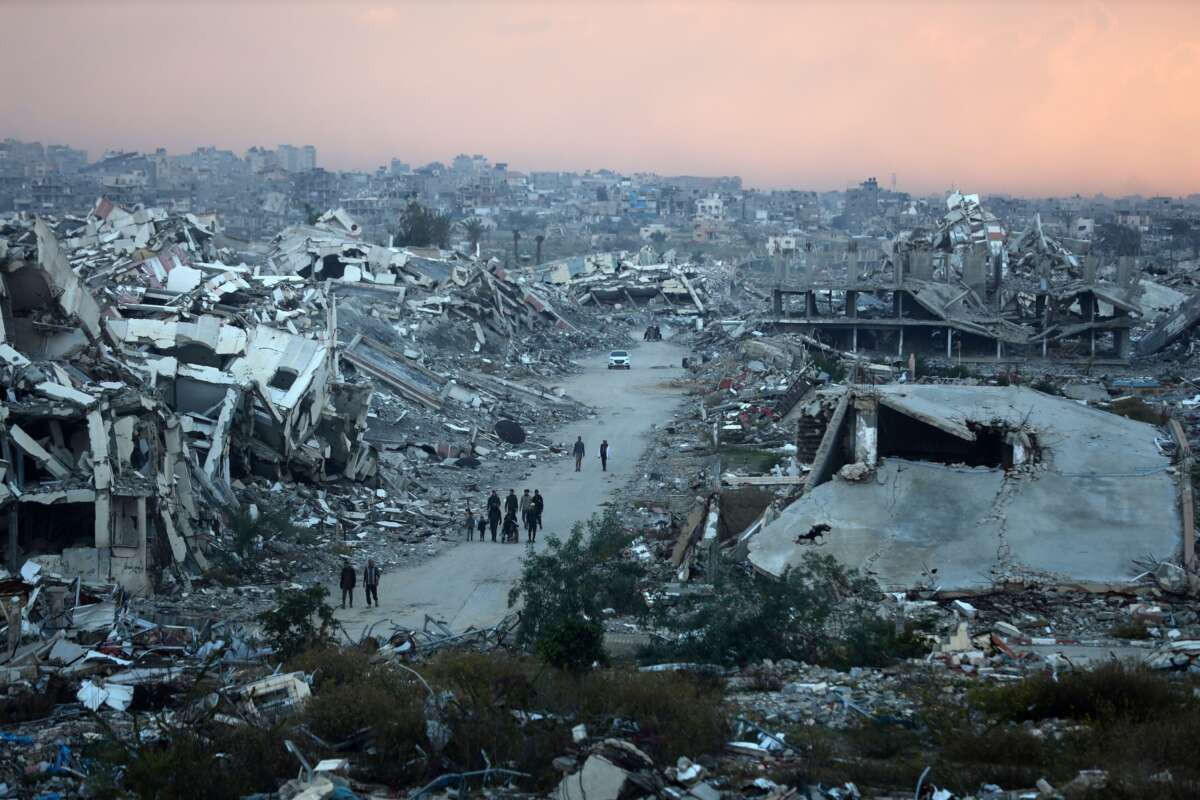
A general view shows destroyed houses in Nuseirat camp in the central Gaza Strip on December 26, 2025.Majdi Fathi / NurPhoto via Getty Images

Human rights groups have reiterated that the “ceasefire” deal in Gaza hasn’t stopped Israel from continuing its genocide of Palestinians, killing hundreds in the 12 weeks since the agreement began.

Israeli human rights group B’Tselem said in a statement on Thursday that “the genocide in Gaza is not over.”

“Since the ‘ceasefire’ was declared on 10 October 2025, Israel has been continuing its onslaught on the ground,” the group said. “The so-called ceasefire has been in effect for 75 days. In practice, Israel is continuing its campaign of killing, destruction, displacement and complete control of Palestinians’ lives in Gaza. The international community must stop enabling this façade and take action to help the people of Gaza.”

B’Tselem noted that Israel has killed 405 Palestinians and injured 1,114 since the ceasefire began on October 10 as of Monday, through continued strikes and military attacks.

Just last week, Israeli forces bombed a wedding in Gaza, killing six Palestinians and wounding others as the couple sought to have a moment of joy amid the violence. Gaza officials have said that Israel has committed 875 violations of the ceasefire thus far.


Gaza health officials have also said that several Palestinian children and infants have died due to exposure to cold, wet winter conditions. The UN says that Israel has been blocking food, shelter, and other essential humanitarian supplies like medicine since March, leaving millions exposed to the harshest conditions.

“Refusing to let it in is a choice — one that deprives people inside Gaza of the means to survive and recover,” the UN Relief and Works Agency for Palestine Refugees (UNRWA) said on Friday.

B’Tselem noted that, as of December 16, Israel had only allowed 57 percent of 556 planned aid missions to proceed.

Israel has claimed in public statements that it is allowing the requisite 600 trucks of aid in per day since the ceasefire began, but even Israel’s own internal accounting suggests that authorities have only allowed in 459 trucks per day on average, with a significant proportion consisting of commercial goods; the UN reported earlier this month that only 113 trucks of UN-coordinated aid have been allowed to enter per day on average.

Israel is also continuing to exert control over Palestinians’ lives in other ways, including its ongoing occupation past the “yellow line” in Gaza as well as its continued demolition of buildings in Gaza.

“Nearly 1 million people who lived east of the line before the genocide are now crowded west of it in unlivable conditions,” said B’Tselem.

Amnesty International Secretary General Agnès Callamard shared B’Tselem’s statement, noting that Amnesty has also warned of the farce of the ceasefire. “This is [Amnesty’s] conclusion as well. Israel’s genocide in Gaza is continuing,” Callamard said.

Amnesty warned last month that Israel is “continuing to deliberately inflict conditions of life calculated to bring about [Palestinians’] physical destruction” in Gaza, even after receiving all of the remaining living Israeli captives.

“The ceasefire risks creating a dangerous illusion that life in Gaza is returning to normal. But while Israeli authorities and forces have reduced the scale of their attacks and allowed limited amounts of humanitarian aid into Gaza, the world must not be fooled,” Callamard warned.


Turkey Has A Crucial Role In The Rebuilding Of Gaza – OpEd

A family in Rafah, Gaza. Photo Credit: Tasnim News Agency

By Dr. Sinem Cengiz

After more than two years of Israel’s war on Gaza, a conflict that has left thousands of Palestinians dead, a breakthrough occurred in October with the signing of a US-led Gaza ceasefire agreement in Sharm El-Sheikh, Egypt. With the truce now in place, the time has come to move to the next phase of the agreement: the establishment of an International Stabilization Force.

Turkiye was one of four countries that signed the agreement alongside the US, Egypt, and Qatar. This agreement was not the achievement of a single party, but a collective effort aimed at Gaza’s future. As such, each signatory bears significant responsibility for implementing it.

President Recep Tayyip Erdogan’s personal diplomacy with the leaders of the other guarantor states, along with the constructive dialogue maintained by Turkish institutions, including the Foreign Ministry and intelligence services, with their regional counterparts, helped bring the process to this stage. However, Israel continues to pursue a spoiler strategy to disrupt the process. The main pretext for this strategy is Turkiye’s inclusion.

There are now growing divergences between the US and Israel regarding Turkiye’s role. Washington’s position is clear: It considers Turkiye’s role crucial and supports its inclusion in the post-Gaza framework. Regional countries share this view, seeking to broaden regional cooperation for Gaza by involving all key actors. Turkiye maintains close ties with all four guarantor states. Qatar is a key ally, working closely with Ankara to bring Hamas to the negotiating table and encourage the group toward disarmament. Egypt, particularly after the normalization of ties with Ankara, has strengthened its security cooperation with Turkiye. The Gaza war has further consolidated Turkish-Egyptian relations, as Cairo increasingly views Turkiye as a reliable security actor in the region, despite disagreements over some aspects of its foreign policy.


For Washington, including Turkiye in post-war arrangements is essential, particularly regarding Hamas’ position. On Wednesday, Turkish Foreign Minister Hakan Fidan met Hamas political bureau officials in Ankara to discuss the Gaza ceasefire and advancing the agreement to its second phase. On Monday, US Ambassador to Turkiye Tom Barrack met Israeli Prime Minister Benjamin Netanyahu in an effort to ease Israeli concerns about Turkiye. However, a real breakthrough is likely to depend on the meeting between Netanyahu and US President Donald Trump in Florida, scheduled for Monday. This will be the latest attempt to revive the Gaza plan, which aims to move from a ceasefire toward a new governing arrangement in Gaza, the deployment of a peacekeeping force, and the disarmament of Hamas.

In this meeting, even if Trump appears to agree — unwillingly — with Israel’s veto on Turkiye, mediators such as Egypt and Qatar will keep pressure to have Turkiye on their side. If Trump fails to convince Israel on Turkiye’s inclusion, then it is expected to at least initially push for a Turkish role framed as “symbolic” or limited. For Ankara, this would not be a problem. Turkiye is not insisting on a leading role in post-war arrangements; rather, it seeks to complement the roles played by Egypt, Qatar, and other regional actors. A secondary role does not conflict with Turkiye’s vision for Gaza.

However, even a limited Turkish role remains a concern for Israel, which views any Turkish troops in Gaza as crossing a “red line.” This reflects Israel’s long-standing rejection of deploying Turkish troops in the territory. In reality, Israel’s opposition stems from its desire to maintain maximum operational freedom in Gaza.

Moreover, Israel, whose forces are exhausted after prolonged operations and which lacks a naval force, is particularly concerned about Turkiye’s military and intelligence capabilities in the region. Israel argues that Turkiye’s relations with Hamas, which Ankara views as a liberation movement rather than a terrorist organization, is the problem. However, Hamas’ disarmament depends on the establishment of a new Palestinian governing entity and the presence of international peacekeepers, with Turkiye acting as a guarantor. In reality, without Turkiye’s involvement, the disarmament of Hamas may not even be realized. Turkiye has already played a prominent role in the first phase of the Gaza agreement, including efforts to secure the return of hostages. Trump himself acknowledges this and publicly thanked Ankara for using its influence to encourage Hamas to accept the peace plan.

Turkiye is, therefore, an indispensable actor and guarantor, given its active communication channels with Hamas, experience in humanitarian operations, and significant military and reconstruction capabilities. It has decades of experience in post-conflict zones across the world and is now ready to contribute to one of the world’s toughest post-conflict areas through all means if possible. According to reports, Turkiye has already planned to have roughly 2,000 personnel, including ground forces, as well as specialists in logistics and explosive ordnance disposal, for potential participation in the peacekeeping force.

Given Trump’s good relations with Erdogan, it is likely that he will try to bring options to assign Turkiye a role in the ISF. These roles may not — at the first stage — include Turkish troops patrolling in Gaza but may have a critical role in shaping policy and rebuilding the enclave. If Netanyahu continues to reject Turkiye’s inclusion, it is time for Washington to come up with a concrete plan for the second phase of the agreement in the meeting with the Israeli leader. Rather than attempting to fully convince him — given that he views Turkiye’s presence as an existential threat — the goal should be to reach a point where he agrees to disagree while allowing the process to move forward.

• Dr. Sinem Cengiz is a Turkish political analyst who specializes in Turkiye’s relations with the Middle East. X: @SinemCngz


Arab News

Arab News is Saudi Arabia's first English-language newspaper. It was founded in 1975 by Hisham and Mohammed Ali Hafiz. Today, it is one of 29 publications produced by Saudi Research & Publishing Company (SRPC), a subsidiary of Saudi Research & Marketing Group (SRMG).
Somalia, African nations denounce Israeli recognition of Somaliland

Mogadishu (AFP) – Somalia and the African Union reacted angrily Friday after Israel became the first country to formally recognise the northern region of Somaliland as an independent state.


 27/12/2025 - RFI

In Hargeisa, crowds took to the streets to celebrate, many carrying the flag of the breakaway state © LUIS TATO / AFP

Somaliland declared independence from Somalia in 1991 and has pushed for international recognition for decades, with president Abdirahman Mohamed Abdullahi making it a top priority since taking office last year.

Israel announced Friday that it viewed Somaliland as an "independent and sovereign state", prompting Somalia to call the decision a "deliberate attack" on its sovereignty that would undermine regional peace.

Several other countries condemned Israel's decision. The African Union (AU) rejected the move and warned that it risked "setting a dangerous precedent with far-reaching implications for peace and stability across the continent".

Somaliland "remains an integral part" of Somalia, an AU member, said the pan-African body's head Mahamoud Ali Youssouf.

Israeli Prime Minister Benjamin Netanyahu's office said the decision was "in the spirit of the Abraham Accords", referring to a series of agreements brokered by US President Donald Trump in his first term that normalised ties between Israel and several Arab nations.

Netanyahu had invited Abdullahi to visit, the Israeli leader's office said.

Asked by the New York Post newspaper whether the United States planned to also recognise Somaliland, Trump said "no".

"Does anyone know what Somaliland is, really?" he added.

With a new president, Somaliland seeks international recognition

Hailing Israel's decision as a "historic moment", Abdullahi said in a post on X that it marked the beginning of a "strategic partnership".

The Palestinian Authority rejected Israel's recognition of Somaliland.

It said on X that Israel had previously named Somaliland "as a destination for the forced displacement of our Palestinian people, particularly from the Gaza Strip", and warned against "complicity" with such a move.

In Hargeisa, the capital of Somaliland, crowds of people took to the streets to celebrate, many carrying the flag of the breakaway state, said sources.
'Overt interference'

Turkey, a close ally of Somalia, also condemned the move.

"This initiative by Israel, which aligns with its expansionist policy... constitutes overt interference in Somalia's domestic affairs", a foreign ministry statement said.

A video showed Netanyahu speaking to Abdullahi by telephone to confirm the recognition © Ariel Schalit / POOL/AFP

Egypt said its top diplomat had spoken with counterparts from Turkey, Somalia and Djibouti, who together condemned the move and emphasised "full support for the unity, sovereignty and territorial integrity of Somalia".

In a video showing Netanyahu speaking to Abdullahi by telephone, the Israeli leader said that he believed the new relationship would offer economic opportunities.

"I am very, very happy and I am very proud of this day and I want to wish you and the people of Somaliland the very, very best," Netanyahu said.

A self-proclaimed republic, Somaliland enjoys a strategic position on the Gulf of Aden and has its own money, passports and army.

But it has been diplomatically isolated since unilaterally declaring independence.
Strategic move

Israel's regional security interests may lie behind the move.

"Israel requires allies in the Red Sea region for many strategic reasons, among them the possibility of a future campaign against the Houthis," said the Institute for National Security Studies in a paper last month, referring to Yemen's Iran-backed rebels.

Israel repeatedly hit targets in Yemen after the Gaza war broke out in October 2023, in response to Houthi attacks on Israel that the rebels said were in solidarity with Palestinians in the Gaza Strip.

The Houthis have halted their attacks since a fragile truce began in Gaza in October.

Somaliland's lack of international recognition has hampered access to foreign loans, aid and investment, and the territory remains deeply impoverished.

A deal between landlocked Ethiopia and Somaliland last year to lease a stretch of coastline for a port and military base enraged Somalia.

Israel has been trying to bolster relations with countries in the Middle East and Africa.

Historic agreements struck late in Trump's first term in 2020 saw several countries including the Muslim-majority United Arab Emirates and Morocco normalise relations with Israel.

But wars that have stoked Arab anger, particularly in Gaza, have hampered recent efforts to expand ties further.

(AFP)


Trump says not ready to follow Israel recognizing Somaliland: Report


December 27, 2025 
Middle East Monitor

US President Donald Trump said Friday he did not intend to immediately follow Israel in recognizing Somalia’s breakaway region of Somaliland as an independent country, Anadolu reports.

“Everything is under study … We’ll study it. I study a lot of things and always make great decisions and they turn out to be correct,” Trump told the New York Post in a phone interview.

“Does anyone know what Somaliland is, really?” he asked.

On Somaliland’s proposal to provide the US with access to a port on the strategically significant Gulf of Aden, Trump responded dismissively, saying: “Big deal.”

Israel on Friday became the first country to formally recognize Somaliland’s separation from Somalia, and Prime Minister Benjamin Netanyahu said he would convey the development to Trump during a planned meeting scheduled for Monday.

Speaking during a video call with Somaliland President Abdirahman Mohamed Abdullahi to mark the diplomatic move, Netanyahu said he would inform Trump of Somaliland’s interest in joining the Abraham Accords.

Trump underlined that he was not swayed by the proposal and that the upcoming talks with Netanyahu would prioritize issues related to the Gaza Strip, particularly the ceasefire he brokered in October and ongoing reconstruction efforts under a UN-approved framework.


DESANTISLAND
Florida Sets the Record for Death Penalties This Year


“We’re looking at execution roughly every 16 days,” said Grace Hanna of Floridians for Alternatives to the Death Penalty.
December 27, 2025

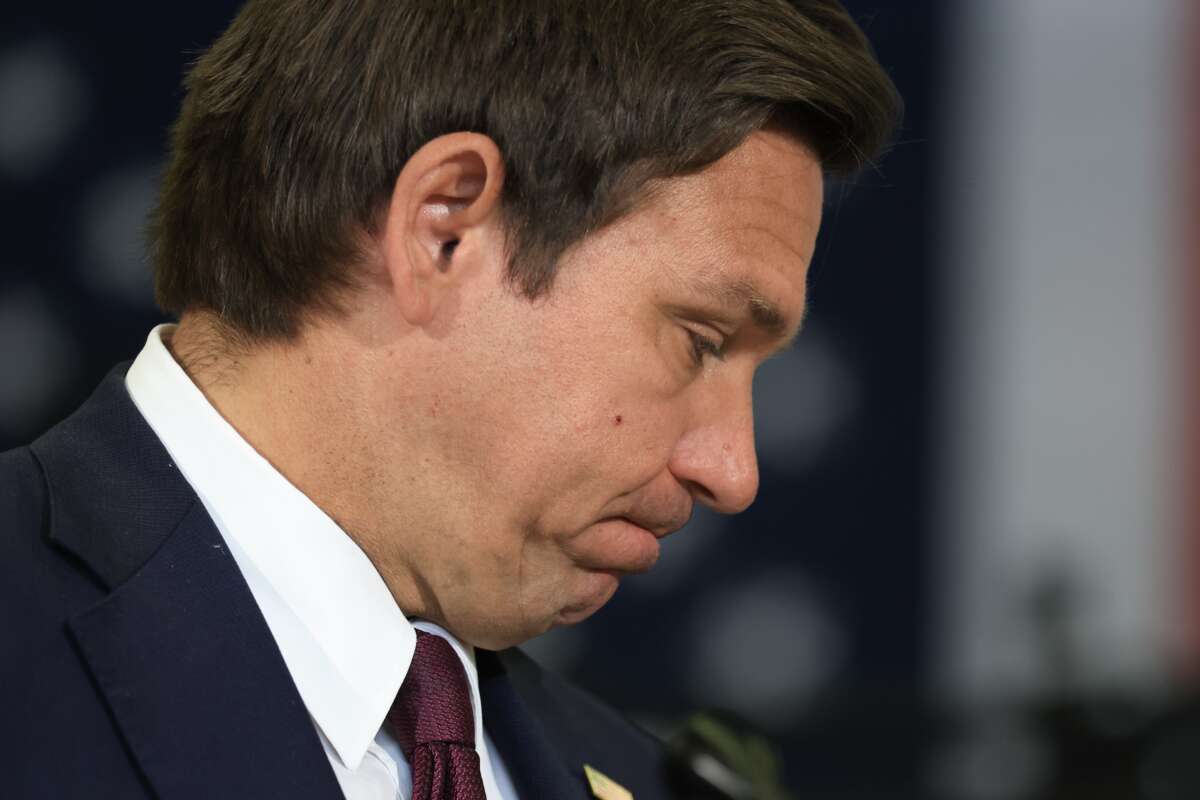
Florida Gov. Ron DeSantis speaks during a press conference on May 1, 2025, in Miramar, Florida. DeSantis has been criticized for setting executions and deciding clemency requests without providing any explanation for his decisions.
Joe Raedle / Getty Images

Edward Zakrzewski’s wife had known him since they were in the fourth grade. Growing up in the same neighborhood in Michigan, she and Zakrzewski had a close friendship. “I always had a crush on him, but I always knew that he was a ladies’ man in high school, and I was a good girl, so I wasn’t having that,” she said. As happens with many childhood friendships, they lost touch when her family moved away to Illinois. After decades of not being in touch, in a conversation with some old friends, she found out that Zakrzewski was on death row in Florida.

“I wrote him a letter, and all I said was, ‘I’m there for you if you need somebody to talk to, you probably don’t even remember me,’” she said. He wrote her back. “I went to visit him. And one thing led to another.” This December would have been their 11th marriage anniversary, but Zakrzewski was executed in July this year for the murder of his then-wife and their two children, in 1994.

His current wife did not want to be named to avoid attracting negative attention as the widow of a man who was executed. “It was like somebody had grabbed my heart and yanked it out of my chest,” she said when she heard that his execution warrant had been signed. “These guys are not all monsters. They are human beings that people exploit in the worst moments of their life. They don’t know the whole entire back story.”

Zakrzewski was an Air Force veteran who pled guilty without a plea agreement from the state, and only faced a jury for sentencing, according to a statement by Floridians for Alternatives to the Death Penalty (FADP). Almost half of his capital jury believed that the murders of his family were heavily mitigated by his exemplary military service and his “deep mental anguish” at the time of the crime. Five jurors wanted to spare his life for two of the murders, and six voted to sentence him to life without parole for the third, according to the same statement. But at the time, Florida law only required a simple majority to sentence someone to death row. Under Florida’s current law passed in 2023, Zakrzewski may not have qualified for execution, as the jury vote currently required for a death sentence is at least 8-4 (and is still the lowest in the nation).

His execution in July was the ninth execution in Florida in 2025, marking a state record for executions in one year since the restoration of the death penalty in the U.S. in 1976. The state surpassed its record of eight executions, which was set in 2014. Florida has executed 19 people since February 13, making it the state with the highest number of executions carried out in any given year since the death penalty was reinstated.


Trump Directs DOJ to Seek the Death Penalty in DC “in All Appropriate Cases”
Trump’s executive order is “designed to spread fear,” Free DC says, “something we know authoritarians always do.” By Elizabeth Weill-Greenberg , Truthout September 29, 2025


“That means we’re looking at execution roughly every 16 days. This is a really phenomenal pace,” said Grace Hanna, Executive Director of FADP. “In [some] other states, there have actually been court orders saying that they need to give 30 or 60 or even 90 days between executions to give the corrections staff time to regroup, but here in Florida, we have gone nonstop.”

In Florida, unlike most other states where the courts are heavily involved in the process, the governor has the sole authority to issue execution warrants. Current Gov. Ron DeSantis has been criticized for setting executions and deciding clemency requests without providing any explanation for his decisions.

“When you ask Governor DeSantis, he says it is for the victims’ families. And while that is certainly true in some cases, we also work with a lot of victims’ families who don’t want the death penalty and don’t feel that that honors their loved one’s legacy,” Hanna said. “I think also, we see political motivations. Perhaps, you know, President Trump has encouraged governors and the attorney general to pursue the death penalty whenever possible. We also look at any potential elections that are coming up, and does someone want to run as a tough on crime candidate.”

Donald Trump, in his first term, carried out a record number of federal executions during his last seven months in office, executing 13 individuals.

“He kind of set this precedent for how quickly you could go with the death penalty. And I think DeSantis for many reasons, wanted to either carry on that legacy or best that legacy,” Hanna said.

In 2023, Florida had a similar spree of executions, though 2025 has tripled that number. The six executions in 2023 followed three years of no executions in the state. In 2023, Governor DeSantis also launched his presidential campaign, and while Bridget Maloney, communications director for FADP, doesn’t “know that that was the reason why he [DeSantis] was doing so many … he was not doing any of them, and then was doing a lot.”

Further, on Trump’s first day in office, he signed an executive order titled “Restoring the Death Penalty and Protecting Public Safety,” encouraging a pro-punishment outlook and encouraging state attorneys general to bring capital charges.

“President Trump’s messaging around the death penalty really shows how out of touch he is with the views of the American public,” said Robin Maher, executive director of the Death Penalty Information Center. “His support for the death penalty is really a message from another era when public support for the death penalty was much higher than it is today, and at its time, that the American public didn’t have the same concerns about the death penalty, cost, effectiveness and accuracy.”

The punitive approach of Trump and Attorney General Pam Bondi, who was the Florida attorney general under Gov. Rick Scott’s administration, has impacted the number of death sentences carried out this year, according to Maloney. Under Scott’s administration, Florida executed eight people, the state record before 2025 for the number of executions in one year. “I think that our administration, Florida, has really taken all of those calls to the extreme,” Maloney said.

“My advice to those who are seeking to avoid the death penalty in Florida would be to not murder people,” said communications director Alex Lanfranconi when Truthout reached out to DeSantis’s office for comment.

Experts are concerned about the seemingly arbitrary nature of the selection process for whose execution warrant will be signed next. They have also expressed concerns about racial motivations for signing execution warrants and inadequate legal representation.

Kayle Bates, who was executed earlier this year in August, had previously gotten a stay on his execution and was ordered a new sentencing hearing due to ineffective counsel. He was ultimately given the death penalty again. Throughout his trials and appeals process, he had challenged being denied DNA testing, and argued that he was tried by a biased jury. Shortly before his planned execution, Bates, who is Black, brought a civil suit against DeSantis alleging Florida’s execution warrant process ​“is infected with racial discrimination and unconstitutional arbitrariness.” Included in the claim is a statistical analysis showing that ​“95% of the executions that Governor DeSantis has authorized involved white victims.” They also argued that a defendant who is convicted of killing a white victim is over fifteen times more likely to be executed than a defendant whose victims are not white.” It notes as well that “[n]early 88% of Florida’s modern executions have been for cases with white victims.”

Hours after the lawsuit was filed, DeSantis signed the execution warrant for Curtis Wyndham, who had killed three Black people. In the response to the lawsuit brought by Bates, DeSantis and his team said that four of the 21 warrants signed by Governor DeSantis have been for Black prisoners, which was true at the time that the response was filed, and the number as of today is that 6 of the 28 warrants signed have been for Black defendants. “They signed that warrant specifically to skew the numbers. And we know that this was a rushed warrant. We know that it wasn’t planned,” Hanna said. Prior to Wyndham’s warrant being signed, only 18 percent of the victims involved in those warrants were non-white victims.

“He was hopeful that that [the lawsuit] was going to give him some relief. I was hopeful of that also I thought it was a well litigated claim, and unfortunately, the courts did not,” said Thomas Dunn, a member of Bates’s legal team who became his longtime friend after he no longer represented him.

“Kayle had actually exhausted his first rounds of appeals, and at that point in time this case sat for many years and nothing happened, and I had convinced myself, and I think Kayle had convinced himself, that perhaps he wasn’t going to ever get an execution,” Dunn said. “When I found out that he got a warrant, it was, personally, very devastating to me. I represented hundreds of people facing the death penalty. Kayle’s the only one that was facing an execution.”

He was adamant that people continue to fight for him to the end, and his wish to his daughter and his sister and to Dunn was that they continue to talk about his case, Dunn said. “There’s two issues that still remain open. He had DNA in his case, which I think could have exculpated him. He was denied the testing of DNA evidence twice,” he said. “And then in the late stages of his federal litigation, after I left the case, it was determined that one of the victims’ second cousins, actually sat on the original jury.” The courts prohibited anyone on Kayle’s team from interviewing this person and denied the claim, saying it was 40 years too late, Dunn said.

“I thought we were going to have more time. And I know for years, he’s been pressing to get the DNA tested, and that’s what he wanted,” said Gabrielle Wise-Brice, Bates’s cousin. “The only thing that I felt that I could do was just keep advocating and just just ask, you know, for the DNA to be tested.”

Further, experts believe that the chance for anyone to receive clemency in Florida is also low. The board that decides on matters of clemency is made up of Governor DeSantis; Florida Attorney General James Uthmeier, who succeeded Ashley Moody and is a big proponent of the death penalty; State CFO Blaise Ingoglia, who sponsored the bill for non-unanimous juries being able to recommend the death penalty in 2023; and Commissioner of Agriculture Wilton Simpson.

For a clemency request to be granted, three of the four members need to vote in favor of it, including the governor, who also has sole discretion to deny the request. “Why on earth would two people who are solely responsible for signing and defending this warrant, then, you know, turn around and be objective as to whether or not the person deserves clemency, particularly with a third vote being somebody who led this expansion of the death penalty in the legislature?” said Maloney. “I think it really kind of shows how concentrated power is in Governor DeSantis and the attorney general’s hands.”

For those on death row and their loved ones, the system seems to be working against them. “Zak had made his peace with death, and he was okay with it. I think he was just more concerned on how I would handle it,” Zakrzewski’s widow said. “I feel like it doesn’t do any good to execute these men, because it’s not stifling our criminal records here…. It’s not doing anything and it’s taking away loved ones from people that love people on death row. I mean, it doesn’t make any sense…. They want to just go ahead and kill as many as they can.”


Copyright © Truthout. May not be reprinted without permission.

Nayanika Guha is a freelance writer who focuses on writing about social justice, identity and community. She has a background in psychology and social work, which informs her writing and world view. Her work has appeared in The Guardian, The Lily, Refinery 29, and more.


The Trump official who did the most harm to public health in 2025 isn't Kennedy


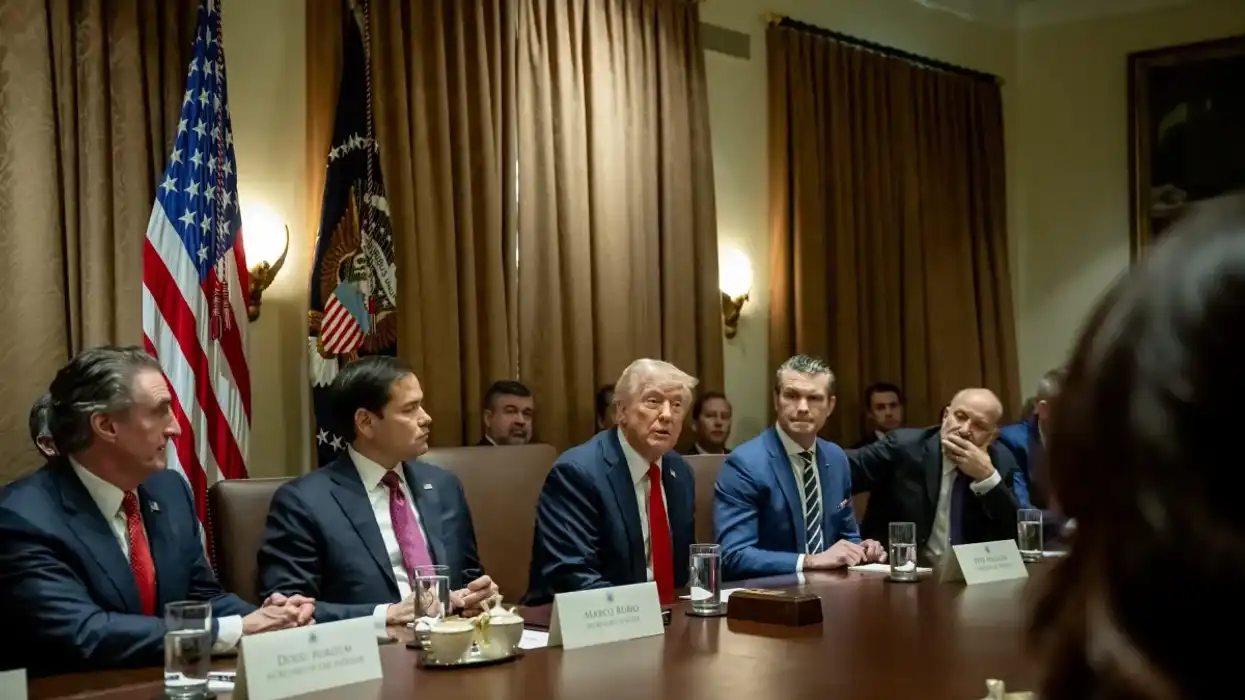
President Donald Trump with members of his Cabinet, including Secretary of State Marco Rubio, Defense Secretary Pete Hegseth, an
d Interior Secretary Doug Burgum in 2025 (image from White House galleries)


December 27, 2025 


For much of 2025, public-health debates in the United States have focused on the damage being caused by Health Secretary Robert F. Kennedy Jr. with his reckless vaccine policy decisions, deep funding cuts, the wholesale firing of experienced public health professionals across Health and Human Services agencies, and the loss of trust in public health institutions like the Centers for Disease Control and Prevention.

His actions weakened domestic health protections and further eroded trust in science, evidence based decision making and the scientific method itself.

But even accounting for all of Kennedy’s harm, the most destructive public health decision of 2025 didn’t come from his agency. It came from the Secretary of State Marco Rubio via elimination of the U.S. Agency for International Development.

That decision will cost more lives, undermine more health systems and increase global health risk more than any other public health policy choice made this year. It also delivered a severe blow to America’s ability to lead through diplomacy.

USAID provided key global public health infrastructure

For decades, USAID was one of the most important public-health institutions on the planet, arguably more consequential than the World Health Organization or the Gates Foundation. It served as a core pillar of global disease prevention and health-system stability. Today, it’s gone.

USAID funded (and held partners accountable for) infectious disease surveillance, HIV treatment, tuberculosis and malaria prevention, maternal and child health services, clean water and sanitation systems, nutrition programs for mothers and infants, vaccine delivery infrastructure and health workforce training in developing nations.

USAID’s work stopped outbreaks before they became pandemics. It reduced mass displacement. It stabilized regions where collapsing health systems fuel hunger, conflict and migration. It improved women’s health, helped families plan their futures and helped entire populations escape poverty.

USAID focused on upstream prevention on a global scale. It was also one of our most effective tools for building diplomatic influence.

Hard power, soft power and why USAID mattered

In international affairs, countries project power in two ways. Hard power relies on forces like military strength, sanctions and the threat of punishment. Soft power relies on trust, humanitarian aid, scientific cooperation and being seen as a reliable partner acting in good faith.

USAID was a cornerstone of American soft power. When the U.S. helped countries prevent disease, strengthen health systems, and keep children alive and families out of poverty, it built credibility. We earned cooperation and trust. It made American leadership legitimate rather than coercive.

Eliminating USAID didn’t just dismantle public health infrastructure; it dramatically weakened our soft power. It broadcasts that the U.S. is transactional, unreliable and disinterested in shared global responsibility.

That erosion of trust will make cooperation during future emergencies far more difficult not only for this administration, but for future ones that may want to restore America’s role as a force for good.


The damage is u
Thanks to Secretary Rubio disease surveillance is collapsing, meaning outbreaks are detected later or not at all. Interruptions in HIV and tuberculosis treatment are fueling drug resistance, which will inevitably reach us as well.

Gaps in maternal and child health services are translating into preventable deaths. Weakening vaccine infrastructure invites the return of diseases that were on the decline.

Who owns this decision

Responsibility for this decision is clear. As Secretary of State, Rubio presided over, defended, and even trumpeted the dismantling of USAID. President Trump supported it. Elon Musk helped drive the ideological and operational wrecking ball that made it possible.

Together, they reframed global public health as expendable “foreign aid” rather than what it is: A frontline defense against disease, instability, humanitarian catastrophe and a key source of American soft power.

What history will remember

Robert F. Kennedy Jr. has done real damage to public health in 2025. But history will judge the elimination of USAID as something even worse: an abdication of public health responsibility trading several decades of disease prevention and diplomacy for personal ambition and professional survival.


History will remember Rubio’s decision as an abandonment of global public health and soft power, not dollars “saved.”
The Bright Side: Wild cat feared extinct for 30 years rediscovered in Thailand


An elusive wild cat long feared extinct in Thailand has been rediscovered three decades after its last recorded sighting, conservation authorities said. Camera traps in southern Thailand’s Princess Sirindhorn Wildlife Sanctuary captured 29 detections, including a female with her cub, offering rare hope for the endangered flat-headed cat.


Issued on: 26/12/2025 
By:  FRANCE 24

Flat-headed cats are among the world's rarest and most threatened wild felines. 
© Panthera Thailand, AFP

An elusive wild cat long feared extinct in Thailand has been rediscovered three decades after the last recorded sighting, conservation authorities and an NGO said Friday.

Flat-headed cats are among the world's rarest and most threatened wild felines. Their range is limited to Southeast Asia and they are endangered because of dwindling habitat.

The domestic cat-sized feline with its distinctive round and close-set eyes was last spotted in a documented sighting in Thailand in 1995.

But an ecological survey that began last year, using camera traps in southern Thailand's Princess Sirindhorn Wildlife Sanctuary, recorded 29 detections, according to the country's Department of National Parks, Wildlife and Plant Conservation and wild cat conservation organisation Panthera.

"The rediscovery is exciting, yet concerning at the same time," veterinarian and researcher Kaset Sutasha of Kasetsart University said, noting that habitat fragmentation has left the species increasingly "isolated".

It was not immediately clear how many individuals the detections represent, as the species lacks distinctive markings which makes counting tricky.

But the findings suggest a relatively high concentration of the species, Panthera conservation programme manager Rattapan Pattanarangsan said.

The footage included a female flat-headed cat with her cub – a rare and encouraging sign for a species that typically produces only one offspring at a time.

Nocturnal and elusive, the flat-headed cat typically lives in dense wetland ecosystems such as peat swamps and freshwater mangroves, environments that are extremely difficult for researchers to access, Rattapan said.

Globally, the International Union for Conservation of Nature estimates that around 2,500 adult flat-headed cats remain in the wild, classifying the species as endangered.

In Thailand, it has long been listed as "possibly extinct".

Thailand's peat swamp forests have been heavily fragmented, largely due to land conversion and agricultural expansion, said Kaset, who was not involved in the ecological survey but has researched wild cats for years.

The animals also face mounting threats from disease spread by domestic animals, and they struggle to reproduce across isolated areas.

While the rediscovery offers hope, it is only a "starting point" for future conservation efforts, he said.

"What comes after this is more important – how to enable them to live alongside us sustainably, without being threatened."

(FRANCE 24 with AFP)
South Korea to end overseas adoptions amid UN concern over human rights abuses


South Korea on Friday announced plans to end foreign adoptions over a five-year period, aiming for zero by 2029, as UN investigators raise “serious concern” over decades of abuses. Many adoptees were sent abroad with falsified records or suffered mistreatment, and critics say Seoul has failed to provide truth-finding, reparations, or full accountability for past violations.


Issued on: 26/12/2025 
By: FRANCE 24

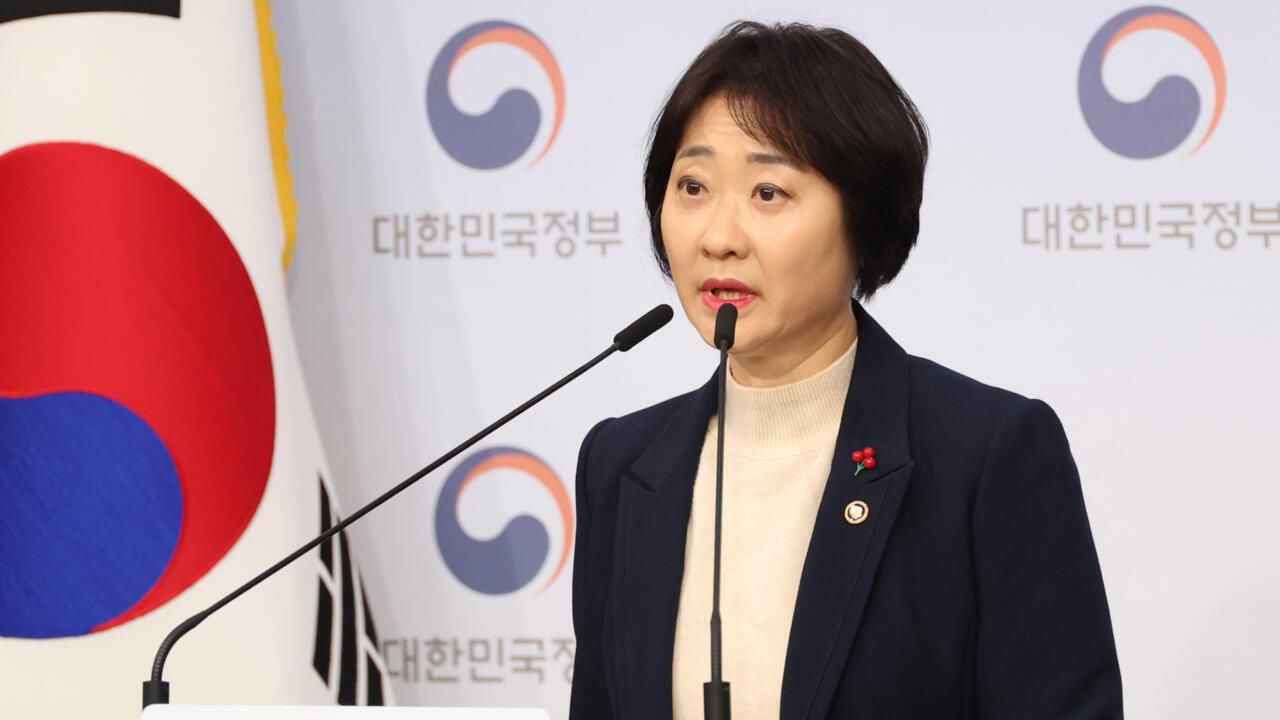
South KoreanVice Minister of Health and Welfare Lee Seuran speaks during a briefing at the government complex building in Seoul, South Korea, Friday, December 26, 2025. © AP

South Korea’s government said it plans to end its waning foreign adoptions of Korean children, while United Nations investigators voiced “serious concern” over what they described as Seoul’s failure to ensure truth-finding and reparations for widespread human rights violations tied to decades of mass overseas adoptions.

The announcement Friday came hours after the United Nations human rights office released South Korea’s response to investigators urging Seoul to spell out concrete plans to address the grievances of adoptees sent abroad with falsified records or abused by foreign parents.

The issue had rarely been discussed at the UN level, even as South Korea faces growing pressure to confront widespread fraud and abuse that plagued its adoption programme, particularly during a boom in the 1970s and 1980s when it annually sent thousands of children to the West.

The country will phase out foreign adoptions over a five-year period, aiming to reach zero by 2029 at the latest as it tightens welfare policies for children in need of care, Vice Minister of Health and Welfare Lee Seuran said during a briefing.


WATCH MORESouth Korean adoption scandal: Belgian adoptees seek justice

South Korea approved foreign adoptions of 24 children in 2025, down from around 2,000 in 2005 and an annual average of more than 6,000 during the 1980s.

In the health ministry’s briefing and response to the UN, officials focused on future improvements rather than past problems.

“Adoptions were mainly handled by private adoption agencies before, and while they presumably prioritised the best interests of the child, there may have also been other competing interests,” Lee said.

“Now, with the adoption system being restructured into a public framework, and with the Health Ministry and the government having a larger role in the process for approving adoptions, we have an opportunity to reassess whether international adoption is truly a necessary option,” she added, citing efforts to promote domestic adoptions.

UN investigators, including special rapporteurs on trafficking, enforced or involuntary disappearances and child abuse, raised the adoption issue with Seoul after months of communication with Yooree Kim. The 52-year-old was sent to a French family in 1984 without her biological parents’ consent, based on documents falsely describing her as an abandoned orphan.

Kim said she endured severe physical and sexual abuse by her adopters and petitioned the UN as part of a broader effort to seek accountability from governments and adoption agencies in South Korea and France.

Citing broader systemic issues and Kim’s case, UN investigators criticised South Korea for failing to give adoptees effective access to remedies for serious abuses and for the “possible denial of their rights to truth, reparations, and memorialisation”.

They also voiced concern over the suspension of a government fact-finding investigation into past adoption abuses and fraud, despite reports of grave violations including cases that may amount to enforced disappearances.

In its response, South Korea highlighted past reforms focused on abuse prevention including a 2011 law that reinstated judicial oversight of foreign adoptions, which ended decades of control by private agencies and resulted in a significant drop in international placements.

South Korea also cited recent steps to centralise adoption authority.

However, the government said further adoption investigations and stronger reparations for victims would hinge on future legislation. It offered no new measures to address the vast backlog of inaccurate or falsified records that have blocked many adoptees from reconnecting with birth families or learning the truth about their origins.

Choi Jung Kyu, a human rights lawyer representing Kim, called South Korea’s response “perfunctory”. He noted that promises of stronger reparations, which were meant to reduce the need for victims to litigate, are not clearly spelled out in draft bills proposing a relaunch of the Truth and Reconciliation Commission to investigate past human rights abuses.

The government also vetoed a bill in April that would have removed the statute of limitations for state-related human rights violations, although that was before President Lee Jae-myung took office in June. Lee issued an apology in October over past adoption problems, as recommended by the truth commission.

READ MORES. Korean president apologises over foreign adoptions of stolen children

Choi, who represents multiple plaintiffs suing the government over human rights abuses under past dictatorships, said they often face prolonged legal battles when authorities dismiss truth commission findings as inconclusive or cite expired statutes of limitations.

Kim, who could not immediately be reached for comment, filed a rare petition for compensation against the South Korean government in August, noting that authorities at the time of her adoption falsely documented her as an orphan despite having a family.

Following a nearly three-year investigation into complaints from 367 adoptees in Europe, the US and Australia, the truth commission in March recognised Kim and 55 other adoptees as victims of human rights violations including falsified child origins, lost records and child protection failures.

That was weeks before the commission halted its adoption investigation following internal disputes among commissioners over which cases warranted recognition as problematic. The fate of the remaining 311 cases, either deferred or incompletely reviewed, hinges on whether lawmakers establish a new truth commission through legislation.

The commission’s findings acknowledged state responsibility for facilitating a foreign adoption programme rife with fraud and abuse. The programme was driven by efforts to reduce welfare costs and enabled by private agencies that often manipulated children’s backgrounds and origins. The findings largely aligned with previous reporting by The Associated Press.

The AP investigation, in collaboration with Frontline (PBS), detailed how South Korea’s government, Western countries and adoption agencies worked in tandem to send some 200,000 Korean children overseas despite evidence that many were procured through questionable or unscrupulous means.

Seoul’s past military governments passed special laws promoting foreign adoptions, removing judicial oversight and giving vast powers to private agencies, which bypassed proper child relinquishment procedures while shipping thousands of children overseas each year.

Western nations largely ignored the abuses and sometimes pressured South Korea to maintain the supply to meet their high demand for babies.

(FRANCE 24 with AP)
'We won't stop': How Gen Z’s anger became a global movement in 2025


From Kathmandu to Lima, Generation Z took to the streets in 2025 to denounce inequality, corruption and political exclusion. Across the Global South, young people turned scattered local protests into a shared moment of mobilisation. FRANCE 24 looks back on a pivotal year for a generational movement set to remain in the spotlight in 2026.


Issued on: 27/12/2025 - 
FRANCE24


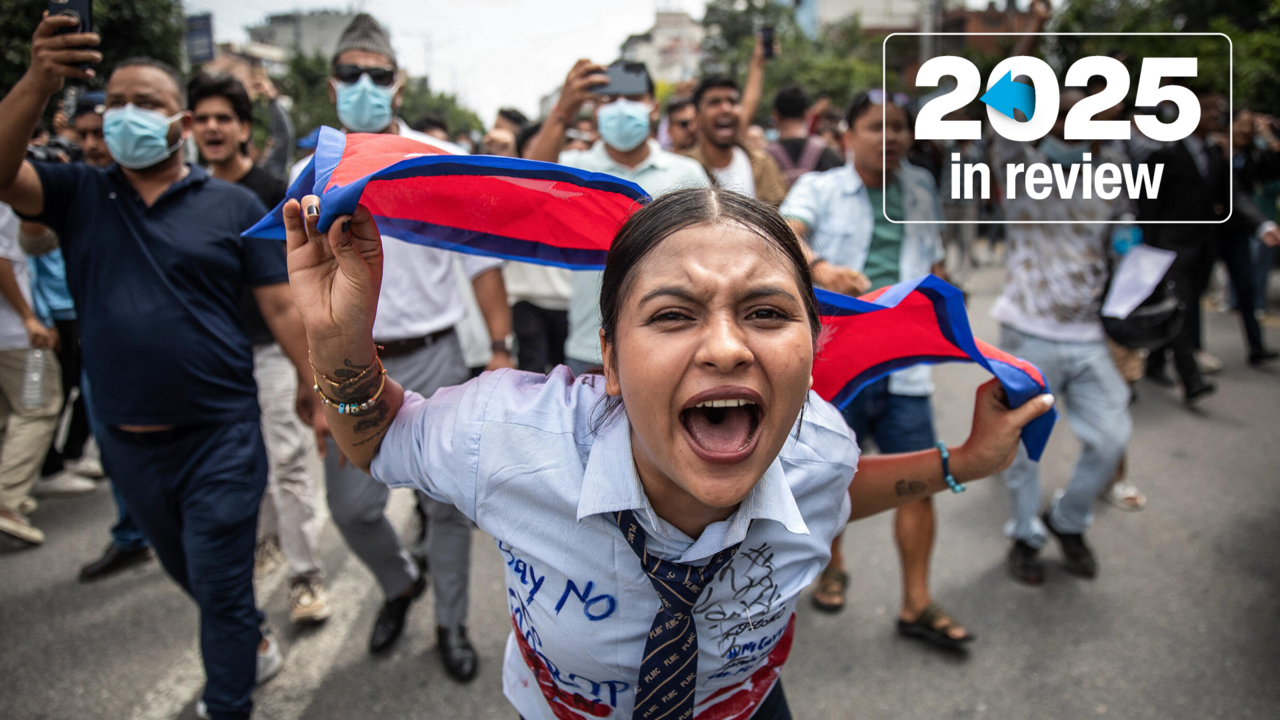
In this file photo, a demonstrator shouts slogans during a protest outside the Parliament in Kathmandu Nepal on September 8, 2025. © Prabin Ranabhat, AFP

Across continents and cultures, young people faced very different daily realities, from experiencing insecurity in Lima to living with rolling power cuts in Antananarivo. Yet in 2025, one experience brought them together: protests. Generation Z – born between the late 1990s and early 2010s – shared frustration and anger at elites seen as out of touch, and a determination to be heard.

Across countries separated by thousands of kilometres, similar scenes unfolded, featuring young crowds, hand-painted placards, viral slogans born on platforms like TikTok or Discord and simple demands.

"This is a generation that is not acting only for itself, but so that everyone has access to education, healthcare and housing, and to put an end to corruption in power," said sociologist Michel Wieviorka, director of studies at the School for Advanced Studies in the Social Sciences (EHESS). “It is a protest driven by universal values.”


Gen Z: How social media fuel this generation's global revolt
EN Gen Z thumbnail © France 24
02:18


A contagion effect

The movement began in Indonesia at the end of the summer. In Jakarta, the announcement of housing allowances for MPs – nearly ten times the minimum wage – acted as a trigger, prompting students to take to the streets.

One symbol quickly emerged from the marches: the pirate flag from the world’s best-selling manga, "One Piece", which became the emblem of the Gen Z revolt.

In September, the movement gained dramatic momentum in Nepal. Viral videos on Instagram and TikTok exposed the lavish lifestyles of “nepo-kids”, while the government blocked around twenty digital platforms.

Anger erupted in Kathmandu, where parliament was set on fire. For two days, the country was gripped by violent riots.

READ MORENepal's parliament burns as PM gives in to protesters' call to resign

The shockwave then reached Africa. In Madagascar’s capital Antananarivo, youth-led protests no longer denounced only water and power cuts but also demanded the resignation of the president.

"We are not asking for luxury, just the means to live with dignity," demonstrators chanted, many of them students or young precarious workers.

In Morocco, mobilisation took a different form. The Gen Z 212 collective – a reference to the country’s telephone code – organised on Discord, coordinating calls to demonstrate and pushing its priorities, including school reform, access to healthcare and social justice.

On the American continent, Peruvian youth mobilised from Lima to Cusco against political instability, corruption and record levels of insecurity.

READ MOREPeru to impose state of emergency in Lima after Gen Z protests turn deadly

While demands differed, the broader context was similar.

"These are countries where democracy, if it exists, remains illiberal or weakly liberal," Wieviorka said. "They are also more or less authoritarian regimes, where power responds with repression, fuelling a spiral of violence."

The toll was heavy: a dozen people were killed in Indonesia, at least three in Morocco and five in Madagascar. In Nepal, at least 76 people died and more than 2,000 were injured, according to police.
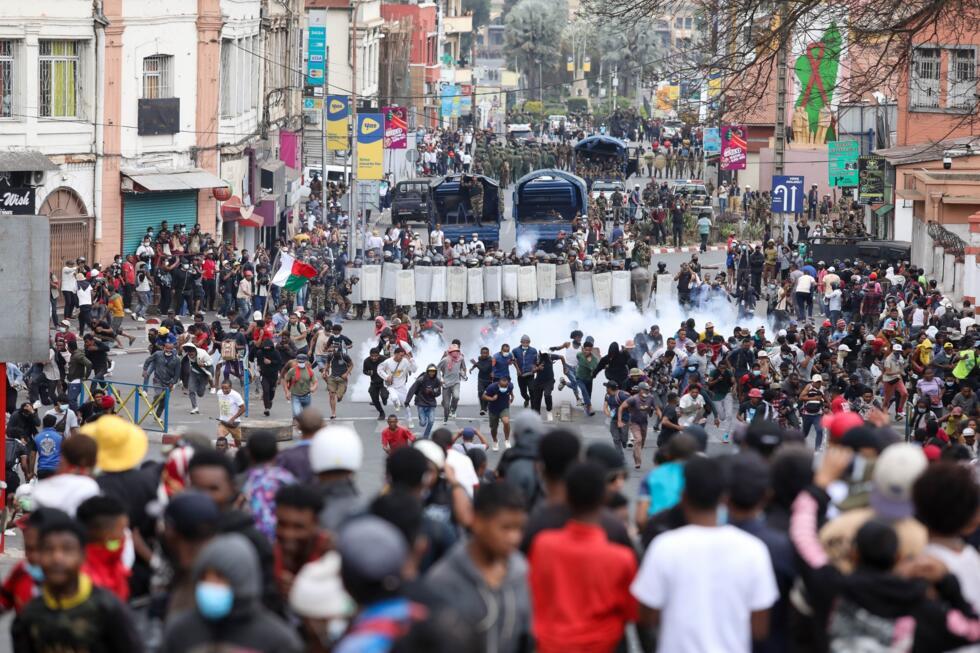
This file photo shows demonstrators protesting against chronic electricity and water cuts confront riot police in Antananarivo, Madagascar, on September 30, 2025. © Mamyrael, AP

Victories and disappointments

Despite repression, Generation Z made gains. In Nepal, the protest movement led to the fall of the government.

In an unprecedented move, an interim prime minister – former Supreme Court chief justice Sushila Karki – was appointed following a vote organised on Discord.

A commission of inquiry was tasked with shedding light on the deaths of protesters.

For Nepal’s youth, this marked a victory: for the first time, a mobilisation born online and on the streets resulted in a tangible political transition.

In Madagascar, the outcome left a bitter taste. After several weeks of demonstrations, President Andry Rajoelina was overthrown in a military coup.

READ MOREWho is Michael Randrianirina, the colonel who toppled Madagascar's president?

The government that followed, however, remained in the hands of a familiar actor in the country’s political life: the army.

"The military hijacked a protest that had failed to constitute itself as a political force," Wieviorka said.

In Morocco, the protest did not shake the monarchy but forced the authorities to respond.

The royal cabinet announced modernisation measures and investments in hospitals and schools, implicitly acknowledging the legitimacy of the demands.

READ MOREMorocco vows social reforms after youth-led protests shake government

Repression nevertheless tempered the momentum. According to official figures, 1,473 young people remain detained, including 330 minors.
Lasting momentum or fleeting wave?

In Nepal, mobilisation has not subsided. Early legislative elections are scheduled for March 2026.

"We are in the second phase of the movement," protester Yujan Rajbhandari told AFP.

The focus has shifted to voter registration and the fight against corruption.

"We won’t stop," he said.

READ MOREAfter toppling a government, young Nepalis drive a new wave of voters and candidates

Elsewhere, the future remains uncertain.

"This movement can endure and produce lasting effects, or on the contrary, fade away as a whole," Wieviorka said. "There are no rules."
People take part in a youth-led protest calling for education and healthcare reforms, in Tangier, Morocco on October 18, 2025. © Mosa'ab Elshamy, AP

Recent history urges caution. From the Arab Spring to Spain’s “indignados”, from Occupy Wall Street to France’s Nuit debout, movements have emerged, lost momentum and sometimes left lasting traces, sometimes not.

"Social movements are not eternal," Wieviorka said.

One feature nevertheless distinguishes Generation Z: its ability to organise, impose its themes and extract concessions without immediately seeking to take power.

"They do not have a fully formed political platform,” Wieviorka said. “But they do have a clear horizon: that of profound change."

This article was translated from the original in French by Anaëlle Jonah.


BREAKING – Taiwan, southwestern Japan hit by M7.0 earthquake

BREAKING – Taiwan, southwestern Japan hit by M7.0 earthquake
/ Taiwan Central Weather Administration
By Mark Buckton - Taipei December 27, 2025

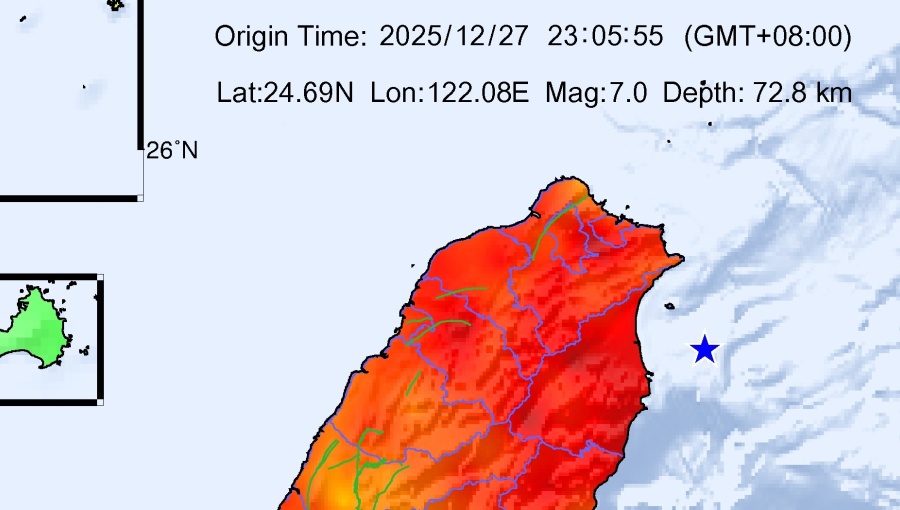
Taiwan and the southwestern islands of Japan have been hit by an earthquake initially reported as measuring magnitude 7.0 by Taiwanese authorities.

Japanese government agencies meanwhile reported the tremor as a M6.7 quake. The quake hit the Pacific island nation at 11:05 pm local time on the evening of December 27.

The epicentre was off the northeast coast of Taiwan near Turtle Island - itself a dormant volcanic peak - at a depth of just over 70km Taiwan’s Central Weather Administration reported.

The tremors shook the whole island with much of the north, including the capital Taipei recording a level of 4 according to local reports.

More to follow in the next few hours.