It’s possible that I shall make an ass of myself. But in that case one can always get out of it with a little dialectic. I have, of course, so worded my proposition as to be right either way (K.Marx, Letter to F.Engels on the Indian Mutiny)
Saturday, December 27, 2025
Dave Chappelle Criticizes Israel, Media Double Standards in New Netflix Special
In his latest Netflix special, Dave Chappelle sharply criticizes Israel and the Western media’s double standards in reporting on journalist deaths in Gaza.
When American stand-up comedian Dave Chappelle released his latest Netflix special, ‘Dave Chappelle: The Unstoppable’, on December 19, early commentary largely focused on his open contempt for liberal media figures and his confrontational remarks directed at fellow comedian Bill Maher.
However, a central moment of the special involved a sharp and explicit criticism of Israel, delivered during a segment addressing the backlash over Chappelle’s appearance at a Saudi comedy festival earlier this year.
In the routine, Chappelle contrasted the international outrage surrounding the murder of journalist Jamal Khashoggi with what he described as the far higher number of journalists killed by Israel in Gaza, framing the comparison as evidence of a media double standard.
Khashoggi and the Politics of Moral Outrage
Between September 26 and October 9, 2025, Chappelle performed at the inaugural Riyadh Comedy Festival in Saudi Arabia.
The timing was immediately seized upon by critics: the festival coincided with the seventh anniversary of the murder of journalist Jamal Khashoggi, killed inside the Saudi consulate in Istanbul in 2018.
By appearing in Riyadh, critics argued, Chappelle had compromised his principles and tacitly legitimized a state responsible for a notorious political assassination.
The argument was framed as a defense of press freedom, human rights, and journalistic lives.
On October 3, Maher amplified this framing on Real Time, mocking Chappelle’s remark that it was “easier to talk” in Saudi Arabia than in the United States.
Counting the Dead
In ‘The Unstoppable’, Chappelle dismissed Maher’s critics. “Yes, Saudi Arabia killed a journalist,” he said, explicitly honoring Khashoggi and acknowledging the brutality of his murder.
But then he continued: “Israel’s killed 240 journalists in the last three months, so I didn’t know y’all were still counting.”
Through this line, Chappelle exposed a hierarchy of grief that has become normalized: one journalist’s death is endlessly memorialized, while the systematic killing of Palestinian journalists in Gaza is treated as background noise, statistical clutter, or worse, an inconvenience to dominant narratives.
Through this line, Chappelle drew attention to what he presented as an unequal public and media response to the killing of journalists.
Chappelle explicitly acknowledged the gravity of Khashoggi’s murder, emphasizing that his remarks were not intended to minimize that crime. Instead, the point was directed at what he characterized as an inconsistent moral framework, in which certain victims are treated as emblematic while others remain marginal in mainstream coverage.
Co-option and Control of Public Speech
In the final portion of Dave Chappelle: The Unstoppable, Chappelle addresses the broader risks faced by public figures who occupy highly politicized spaces. He refers to Charlie Kirk, the conservative activist who was assassinated on September 10 while speaking at an event at Utah Valley University in Orem, Utah.
Chappelle used Kirk’s death to illustrate his concern about how public voices can become targets once they are seen as aligned with a fixed ideological position.
Chappelle framed the reference as an example of how speaking publicly in a contentious political environment can carry personal danger.
Within this context, he introduced the idea of a “code word” — a phrase that would signal to the audience that his own voice has been compromised and should no longer be taken at face value.
He chose “I stand with Israel” as the hypothetical code word because, within the logic of the routine, it represents a position so opposed to his stated views in the special that its utterance would indicate he had been influenced or manipulated beyond his own intent.
(The Palestine Chronicle)
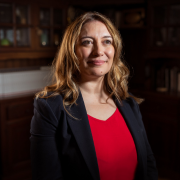
– Romana Rubeo is an Italian writer and the managing editor of The Palestine Chronicle. Her articles appeared in many online newspapers and academic journals. She holds a Master’s Degree in Foreign Languages and Literature and specializes in audio-visual and journalism translation.
Israeli-UAE Aggression In Yemen Could Backfire Enormously – Analysis
No matter which way you slice it, the US and Israel have no answer for the predicament they face in Yemen. The only option is to try and keep the nation in perpetual war.
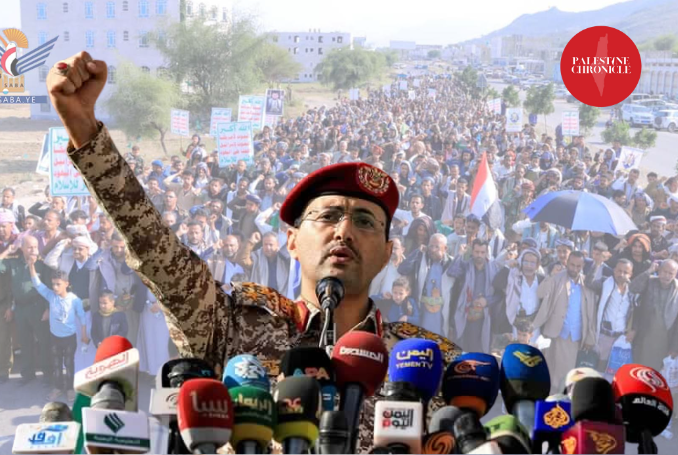
Although the Yemeni Armed Forces have halted their ballistic missile and drone attacks against Israel, adhering to the Gaza ceasefire, officials in Tel Aviv are continuing to insist that their front against Sana’a is not over.
Meanwhile, the United Arab Emirates (UAE) backed Southern Transitional Council (STC) has been busy seizing territory from Saudi-backed forces and signalling an intent to declare southern Yemen’s independence. Far from simply domestic disputes between armed groups, these developments will have major regional implications.
On December 3, the STC seized Hadramout province from forces aligned with Saudi Arabia, followed by a takeover of al-Mahra province. The UAE-backed separatists even went a step further, with a number of officials declaring their intent to break away and declare southern Yemen an independent state.
For context here, the UAE and Saudi proxies in Yemen were operating a joint governing body out of southern Yemen’s port city of Aden. For years, the Saudi-led coalition had attempted to prop up deposed Yemeni President, Abdrabbuh Mansur Hadi, with the backing of the US, UK, and Israel. Hadi was therefore referred to as the “internationally recognised” leader of the Yemeni State, when in reality he had no such power.
Despite the glaringly obvious fact that Ansarallah had set up and was operating a government in the nation’s capital, enjoying a lot of popular support, the United Nations continued to play along with the West’s demands to recognise Saudi’s puppet proxy regime. In 2022, Riyadh then created what is known as the Presidential Leadership Council (PLC), which was endowed with the powers of the Presidency and serves as the “internationally recognised government”.
The head of the PLC is a man named Rashad al-Alimi, who is an unelected leader and is part of the eight-member body. As of May 2023, three of the eight seats in the PLC were handed to officials belonging to the UAE-backed STC, which recently ran Saudi-backed officials out of Aden.
The STC’s recent territorial gains have posed an active security threat to Saudi Arabia and Oman, deepening the ongoing feud between Abu Dhabi and Riyadh. The UAE, for its part, also appears to have been sizing up an offensive campaign against Ansarallah at some stage, as it acts in coordination with the Israelis.
The recent developments in Yemen have triggered anxiety amongst Zionist analysts in Washington, as they see a UAE-Saudi conflict in Yemen between their proxies as detrimental to the fight against Ansarallah in Sana’a. In line with this way of thinking, the Washington Institute for Near East Policy (WINEP) recently published a Policy Analysis piece arguing that such a UAE-Saudi conflict should be avoided and instead both should focus on Ansarallah.
It is clear that the primary goal of the Israelis is to see their Emirati allies use the STC to try and seize the port city of Hodeidah, thus securing dominance over the Red Sea. This is important to Tel Aviv as it means weakening the Yemeni Armed Forces and preventing them from being able to effectively impose a blockade on their ships. Israel even pushed the Trump administration to launch a war in Yemen for over a month in an attempt to break the blockade in the Red Sea, which resulted in resounding failure.
The Zionist think-tank WINEP has warned that any conflict between Saudi proxies and Emirati proxies could open the door for Ansarallah’s forces to seize the oil-rich region of Marib, a major catastrophe for the Israelis and Americans. Yet, so far, no UAE-Saudi understandings appear to have come about to find any solution to their competition in Yemen.
Instead, the major agreement that was just brokered came between the Yemeni government in Sana’a and Saudi Arabia, the largest prisoner exchange deal since the beginning of the war. This meant agreeing upon the release of 1,700 Ansarallah detainees in exchange for 1,200 opposition prisoners.
Another important clarification is that the Ansarallah government is often labelled “the Houthis” in the Western media, and the Saudi proxy opposition is called the “Yemeni government”. This can sometimes get confusing, but it is important to point out that this propagandistic rhetoric is used to shape the conflict in a way that reflects Western bias, not the objective reality on the ground.
Some will try to argue that the Saudi proxy opposition is the “internationally recognised government” according to the United Nations, which is true, but again, this has little bearing on the reality on the ground. There simply aren’t enough powerful States or even smaller nations that are willing to bat for recognising the government in Sana’a, therefore the West and their Arab allies have managed to prevent any reflection of reality reaching the United Nations or even the international media.
At this phase, the UAE’s STC appears to be in control of the majority of opposition-held territory in Yemen, greatly undermining Saudi Arabia’s role. However, the STC is not exactly a movement with the popular support to sustain and operate a lasting, or stable, southern Yemeni State. The STC has faced countless protests against their rule, after failing to deliver even basic services to the people living under its control. Blatant corruption, combined with criminal activities and a lack of basic governing skills, has left people with very little. Even in the Hadramout and al-Mahra provinces, there is significant opposition that could lead to their swift overthrow.
Amidst this, if the STC decides to commit to offensives against the Yemeni Armed Forces of Ansarallah, the strategy to defeat the UAE-proxy forces is rather simple. Ansarallah will not only most likely batter these armed militants on the ground, but need only direct drone and missile fire towards the real headquarters of the STC, Dubai. If ballistic and cruise missiles, along with drones, flood Dubai and Abu Dhabi, the Emirati plot will quickly collapse.
When it comes to Saudi Arabia, it is a much larger nation and has the capacity to endure a lot more than the much smaller Emirates, making Riyadh a more formidable foe than Abu Dhabi. If the STC proxy forces become the main opposition and Saudi Arabia can no longer maintain any significant foothold in Yemen, the recipe for Yemeni unification becomes much simpler.
A war between Ansarallah and the STC has a very easy solution: flooding the UAE with missiles and drones for a sustained period, which will force them to give up and depart from Yemen. If this happens, Riyadh will have no choice but to reach a broader agreement with Sana’a, effectively ending the war altogether.
In the eyes of the Israelis and the United States, this outcome would be a catastrophe. If Ansarallah, even under a power-sharing styled agreement, reigned supreme over all of Yemen and became its officially recognised leadership, it would significantly increase its power and pose an even greater threat to Israel. In Tel Aviv’s eyes, this would be Iran 2.0 in the Arab World, an Islamic government that is openly hostile to Israel and a staunch supporter of the Palestinian resistance.
No matter which way you slice it, the US and Israel have no answer for the predicament they face in Yemen. The only option is to try and keep the nation in perpetual war, tightening the sanctions and ensuring immense suffering amongst its civilian population, all to avoid the inevitable rise of an Ansarallah-controlled Yemeni State, equipped with a military arsenal that will continue to develop. (The Palestine Chronicle)
– Robert Inlakesh is a journalist, writer, and documentary filmmaker. He focuses on the Middle East, specializing in Palestine. He contributed this article to The Palestine Chronicle.
The Rebirth of ISIS, Israel and the Continuation of Syria’s Civil War – Analysis
Earlier this year, Israel also took advantage of tensions between Syria’s Druze community and sectarian militants aligned with Damascus, backing Druze separatist militias.
The chaotic predicament in which Syria now finds itself was, in many ways, predictable, yet this makes it nonetheless tragic. Despite the recent removal of the US’s crushing Caesar Act sanctions, the challenges ahead are so numerous as to render this a minor victory for the country.
In order to begin to understand what is happening inside Syria, we first have to begin to comprehend what happened following the fall of Bashar al-Assad. Although the moment that Hayat Tahrir al-Sham (HTS) entered Damascus, and Ahmed al-Shara’a declared himself leader, was dubbed a liberation of the country, thus interpreted as the end to the nation’s civil war, what had really happened was the birth of a new chapter in the Syrian war.
On December 8, 2024, the Israeli air force saw its opportunity and hatched a long-planned strategy to destroy Syria’s strategic arsenal and occupy key portions of territory in the south of the nation. That day, however, much of the Arabic language world’s media completely ignored the historic event and refused to cover its ramifications.
Another key point was that, beyond Israel’s land grab, the country’s territory still remained divided, as the US-backed Kurdish-led Syrian Democratic Forces (SDF) maintained its control over the northeast of the country. This movement believes that the territory it controls, with Washington’s backing, is called Rojava and is part of the land of Kurdistan.
Türkiye, to the north, views the Kurdish movement as a strategic threat and treats the SDF as an extension of other Kurdish organizations it deems terrorist groups. The majority of the people living inside SDF-controlled territory are Arabs, an issue that can also not be overlooked.
HTS Ascendant and the Collapse of the State
Then we have the HTS government that took over Damascus, which originally pledged to rule for all Syrians and not just the Sunni majority. However, HTS is a rebranding of Jabhat al-Nusra, al-Qaeda’s Syrian offshoot. Understanding this fact is key, because HTS was the de facto government in the territory called Idlib, in northwestern Syria; although a secular leadership was on paper, supposed to be the ruling authority.
In 2018, when Bashar al-Assad’s forces halted their offensive and sent all the armed groups opposing them on “Green Buses” to the Idlib enclave, Ahmed al-Shara’a, who called himself Abu Mohammed al-Jolani at the time, had started to consolidate power. This led to HTS establishing its own prisons and undergoing a process whereby it managed to control various al-Qaeda-affiliated Salafist armed groups inside the territory.
When HTS took Damascus, it did so with a ragtag army composed of militants from dozens of armed groups from inside Idlib, including many former ISIS fighters and others from different groups that were given the options to join forces with HTS, lay down their weapons, or face fierce crackdowns.
The way these crackdowns on dissidents were carried out, along with corruption in the governance of Idlib, even led to protests inside the province against HTS. Many hardline militants had also accused al-Shara’a of providing the US with details on the whereabouts of former ISIS leader Abu Bakr al-Baghdadi.
Keep in mind now that when HTS took over Damascus, they did so without a fight and the former regime simply collapsed in on itself. So here was HTS, now tasked with managing the majority of Syria and had to do so without any army, because the Syrian Arab Army (SAA) had been disbanded.
Many elements of the former government, intelligence, and military under Bashar al-Assad were told they had been granted amnesty, yet forces aligned with HTS, and in some cases those within it, decided to take the law into their own hands through brutal field executions.
This eventually led to a group of former SAA fighters in the coastal region taking up arms against the new HTS security forces, triggering a response from a broad range of sectarian groups and others who were seeking “revenge” in blood feuds. The result was the mass murder of Alawite civilians across the coast.
Israel, the Druze File, and Syria’s External Fronts
Earlier this year, Israel also took advantage of tensions between Syria’s Druze community and sectarian militants aligned with Damascus, backing Druze separatist militias. This had been a strategy that Tel Aviv attempted to implement all the way back in 2013, when Israel began backing some dozen opposition groups, including al-Qaeda- and ISIS-linked militants that were committing massacres against the Druze.
The Syrian Druze population is primarily situated in the Sweida province in southern Syria. Israel long sought to create a Druze rump state there, which would serve as a land bridge to the Euphrates and allow for the total Israeli domination of the south. The Israelis are also allied with the SDF, although not as overtly as the Americans are, meaning that if their strategy works, then they have secured their domination all the way through to the Iraqi border.
This Monday, tensions again flared up between the Syrian forces aligned with Damascus and HTS in eastern Aleppo, with both sides blaming each other for the violence. Periodically, tensions continue to escalate in Sweida, yet come short of the large-scale sectarian battles we saw earlier this year.
Meanwhile, US forces have now expanded their footprint throughout Syria and have taken over more military air bases, even working alongside Damascus as a partner in the “fight against ISIS,” or “Operation Inherent Resolve.”
On December 13, an attack that killed three US servicemembers was blamed on a lone-wolf ISIS fighter. In response, the US then declared it was launching a retaliatory bombing campaign across the country.
The narratives of both Washington and Damascus make little sense, regarding this being a lone-wolf ISIS attack. Instead, the evidence suggests that the attack was carried out by a member of the HTS security forces, but this is perhaps a story for another day.
Now we hear report after report about the rise of ISIS. And while it is certainly true that ISIS is on its way back, even if in a weaker state, the context is never mentioned.
Internal Fractures, ISIS, and an Unstable Future
Not only has the current Syrian administration managed to play right into Israel’s hands with the management of the situation in Sweida, set up a shadow governance model that is even more corrupt than the previous regime, while isolating all of Syria’s minority communities in one way or another, but it has also effectively turned many of its own allies against it.
There is no actual “Syrian Army” to be spoken of right now, at least there isn’t one that is professionally trained or big enough to handle any major war. Instead, the Syrian state will rely on its allies, like major tribes and a range of militant groups. However, as time goes on, more and more of HTS’s allies and even many who now fill the ranks of its own security forces are growing tired of the government’s antics.
A large component of their anger comes from issues concerning tight Syrian relations with the US, leading to the hunting down of Sunni militants across the country, but particularly in and around Idlib. As mentioned above, HTS had integrated many ISIS fighters and those belonging to other hardline Salafist Takfiri fighting groups, but many of these militants have never been willing to sacrifice their core beliefs for a secular state.
For years, the man they knew as Jolani had preached against the United States and Israel, yet, after taking power, he began cozying up with them and targeting Sunni militants alongside the US military. In addition to this, the large number of foreign fighters inside the country have not been granted citizenship and feel as if their futures are threatened.
In other words, the conditions are ripe for some kind of revolt, and Ahmed al-Shara’a is surrounded by countless threats. If ISIS were to begin gaining traction, there is a good chance many of these fighters, currently allying themselves with the Damascus government, will switch sides. In fact, this is something that has already been happening, although in small numbers and isolated cases.
What we see is a recipe for disaster, one which could explode in any direction, triggering a much larger chain of events in its wake. So far, it appears as if there are four primary threats to the stability of the HTS government. These are the Sweida front, the Israel front, the SDF front, and the potential for an internal insurgency.
Mike Huckabee, the US ambassador to Israel, recently gave an interview during which he commented that Ahmed al-Shara’a “does know that any pathway for stability in Syria, his pathway for survival, is that he has to be able to have peace with Israel.”
It is important to understand that the two most powerful influences on Damascus are Washington and Ankara, yet it is clear that the US has the edge and could quickly overthrow the HTS regime at any time of its choosing.
Türkiye now has enormous influence inside Syria, where it is competing with the Israelis and attempting to set red lines, yet has failed to impose any equations as of yet. Perhaps the only way that the Turkish state could deter the Israelis is through backing a resistance front in the south of the country, yet it is clear that the US will not allow such a scenario to develop.
Even if a rather weak resistance group, or collection of groups, were to be formed and pose little strategic threat to Israel, this could also end up presenting a challenge to the rule of HTS in the long run. This is because such a resistance organization would enjoy enormous popular support and likely encourage other armed actors inside the country to join forces, creating a Lebanon-style system, whereby the forces of the state are incapable of confronting the occupier and instead, a resistance group would handle security instead.
The United States and Israel would never permit something like this to evolve, likely moving to commit regime change before such a plot is even conceived.
This leaves Ahmed al-Shara’a in an impossible position. He has no confidence in him as a ruler from the country’s minorities, growing anguish amongst the majority Sunni population, and no real army to be spoken of. Instead of resisting the Israelis, as his men and population at large seek, he sends his officials to sit around the table with them, while Syria’s official social media pages publish images of Syria without including the occupied Golan Heights.
Since 1967, most of the Syrian Druze living in the occupied Golan Heights had refused to take Israeli citizenship. After the sectarian bloodshed that occurred earlier this year, these Syrian Druze began applying for Israeli citizenship en masse. This is the impact that the rulers in Damascus have had on their own people; they have pushed Syrians who resisted Israeli citizenship for decades to switch sides, playing right into Tel Aviv’s hands.
Meanwhile, little is being done to reassure the disillusioned militants who had fought alongside HTS and believed they were fighting for a liberation cause and/or Islamic Caliphate, only to realize that they fought for a regime that negotiates with Israel and bows to the White House. Therefore, it is no wonder that when a group like ISIS appeals to them through its propaganda, it manages to convince them to join the organization’s fight.
What’s more is that this outcome was barely difficult to predict; only days after the fall of Bashar al-Assad, militants from Idlib were posting photos on Facebook of themselves holding up pictures of Abu Bakr al-Baghdadi in the Umayyad Mosque, the most important mosque to Sunni Muslims in Syria.
Not only this, while ISIS networks on social media were, in the past, blocked almost instantly, they began popping up in the open on places like Facebook again. This begs the question as to why such obvious ISIS glorification and supporters were permitted to begin operating so openly online during this period.
When it comes to Takfiri Salafist doctrine, whether someone is affiliated with ISIS or al-Qaeda offshoots, they do not simply abandon this ideology overnight because of changing political circumstances.
Now, Takfiri militants idolize a man named Mohammed ibn Abd al-Wahhab, which is why these Salafi groups are often referred to as Wahhabis. Historically speaking, this ideology was the bedrock on which the Saudi family launched their offensives to conquer Arabia, declaring the Ottomans kafir (disbelievers) and justifying their alliance with Britain, against other Muslims, on this basis. Therefore, some may justify the actions of al-Shara’a on the basis of their doctrine, but only to a certain extent.
When HTS began killing fellow Sunni Muslims, alongside the United States and cozying up to individuals responsible for the mass murder of their co-religionists, this started to become a major problem. It could no longer be branded an “alliance with the people of the book,” especially when fellow Salafists were kidnapped and killed by HTS government forces.
Some attention has recently been placed on the comments of the US envoy to Syria, Tom Barrack, who remarked that Syria should not be a democracy and instead a monarchy, even explicitly stating that this plan could include merging Syria with Lebanon. Such a system would certainly please many allies of al-Shara’a, and comments like these could be made in the interest of restoring faith in the leader.
Nonetheless, the current system is still operating on a knife-edge and is far from achieving a monarchy that rules the northern Sham region. In the distance, the Israelis are watching on and simply waiting for the next opportunity to achieve even more of their goals.
This is all because the war in Syria never truly ended; the only thing that changed is that Bashar al-Assad’s government fell, and perhaps if that had occurred during the first years of the war, there wouldn’t have been so many issues.
As is normally the case with human psychology, we seek to frame things in a favorable way to our worldview, meaning that we simply ignore evidence to the contrary. Yet, the case of Syria is really not all that dissimilar from the post-US-backed regime change realities currently existing in Libya, although there are key differences, of course.
So long as Syria remains without an effective resistance front against the Israelis, it will never recover and remain trapped. In Lebanon, it took years before such a resistance force truly took off in the south, and even then, it took decades to expel and then deter the Israelis. Syria is a much more complex picture, which makes predicting outcomes even more difficult.
– Robert Inlakesh is a journalist, writer, and documentary filmmaker. He focuses on the Middle East, specializing in Palestine. He contributed this article to The Palestine Chronicle.
'Jesus is Palestinian' in New York's Times Square stirs debate, draws ire of pro-Israelis
An ad placed in Times Square has attempted to highlight the plight of Palestinians, but Israel supporters are furious
The ADC described the ad as an 'act of resistance' [Getty]
A billboard in New York's Times Square shared a Christmas message declaring that "Jesus is Palestinian", drawing praise from social media users, and outrage from pro-Israelis.
The ad, along with another which displayed a Quranic verse, was funded by the American-Arab Anti-Discrimination Committee (ADC), who described the campaign as an "act of resilience".
"Our two NY billboards are an act of cultural resilience: 1. 'Jesus is Palestinian. Merry Christmas.' 2. The Quranic verse (3:45) announcing the blessed birth of Jesus, with 'Merry Christmas' in English and Arabic," the ADC wrote on its Instagram page.
The post drew hundreds of messages of support, with many agreeing with the statement.
"Thank you for spreading truth! Those who truly follow and relate to the teachings of Christ do recognize this," wrote one Instagram user.
"Truly remarkable and inspiring," wrote another.
However, many supporters of Israel expressed anger with the ad.
Writing on X, ADC Director Abed Ayoub said: "Christians and Christianity are under attack in the birthplace of Jesus - doesn’t matter what you want to call it. There is no disputing that."
"This billboard upset more people than the actual attack on Christians by Israel. You may disagree with it, but it finally got you talking about Christians and Palestine. The Israel First crowd really got triggered today because they don’t want you to know Christians reside in Palestine, including in Gaza," he added, referring to the growing US political divide between those branded as "Israel First" and those seen as "America First".
"They want to push back against us so much that the Israeli Foreign Minister purchased ad space on the same billboard to counter us. At least we didn’t use American taxpayers dollars for our ads," he added, likely referring to Washington's multi-billion-dollar financial support for Israel.
The festive season has increasingly become a cultural battleground between supporters of Israel and their critics. While bombing and displacing Palestinians - including Muslims and Christians - Israel has sought to whitewash its image by claiming to be a safe haven for the Middle East's Christians.
In the occupied West Bank - home to the birthplace of Jesus - Israel's increasing checkpoints and restrictions on Palestinians have restricted access to Christianity's holiest sites in Bethlehem, including during Christmas.
Palestinian resilience is mind-boggling, says Kneecap rapper
Móglaí Bap (right) argues that it is Ireland’s turn to speak out against oppression.
ANP via ZUMA Press
Kneecap, the Irish hip hop group, was widely criticized by Israel’s supporters earlier in the year after using its performance at the Coachella festival in California to denounce the genocidal war against Gaza.
In the aftermath of the event, the band found itself at the center of controversy, with concerts canceled, reports that its members had lost their US work visas, and even terrorist charges being brought against one of them by the British state.
Yet through it all, the three members of the band – who go by the stage names Móglaí Bap, Mo Chara and DJ Próvaí – have refused to remain silent, continuing to raise awareness, campaign and participate in practical initiatives to support the Palestinian people.
In an interview with The Electronic Intifada, Kneecap’s Móglaí Bap (given name: Naoise Ó Cairealláin) spoke about the band’s activism.
Hailing from Belfast, Móglaí Bap attributed his support for the Palestinian cause to his upbringing in the British-occupied north of Ireland.
“Growing up in Belfast, we were more aware of the politics of colonialism and the consistent trends associated with it,” he explained. “And what we have in Palestine is colonialism.”
“I remember going on marches with my ma, and when I was 15 or 16 tagging along with her to protests against Israeli products being sold at a local supermarket,” he recalled.
“I think within Irish consciousness generally, there is an awareness of colonialism, and what that means, especially in Belfast. But across the island, amongst young people, there seems like there’s big shifts, with a lot more awareness of Palestine and anti-colonialist movements in general.”
Móglaí Bap has observed how support for the Palestinian people has grown among young people internationally during the Gaza genocide.
“Even on TikTok there was a survey done, which is used by mainly young people, and most were pro-Palestine. That’s the direction it’s going because they’re watching what’s happening there every day over there on their phones.” Practical support
While the band’s support of Palestine has been widely recognized in recent months, Kneecap has a long association with the Palestinian cause.
In the past, the band was involved in helping raise funds to establish a gymnasium in Bethlehem’s Aida refugee camp in the occupied West Bank.
The Aclaí Palestine community gym, located in Aida’s Lajee Center, was set up by Naoise Ó Cairealláin’s brother Ainle, who previously ran a gym in Cork in the southwest of Ireland. The Aida facility opened in 2020 and provides free access to the entire community.
“One of the lessons we learned in the north [of Ireland] is that activism can extend to something practical,” explained Naoise Ó Cairealláin (Móglaí Bap), “and practical support is sometimes the most worthwhile form of activism because it has an impact on people.”
Consistent with this approach, he also spoke of plans to build a community music studio in Aida. Funds for the project will be raised in a collaboration between Kneecap and Bohemians, a football club in Dublin, which sees the band sponsoring the club’s 2026 away jersey.
The white shirt is patterned with a kuffiyeh – Palestinian checkered scarf – design and features interwoven Irish and Palestinian flags.
Thirty percent of profits from sales of the shirt will go to Aclaí Palestine to build the music studio in the Lajee Center.
While paying tribute to the “mind-boggling resilience and spirit” of the Palestinian people in the face of occupation, oppression and the daily brutality of the Israeli apartheid regime, Móglaí Bap pointed to the importance of these practical initiatives and the provision of community resources such as the music studio.
“It’s something where people can go to be expressive and enjoy life and not have to just be in survival mode all the time,” he said. Media pile on
In April, Kneecap hit the headlines when, performing at the annual Coachella festival in California, the band took aim at the genocide in Gaza. At the end of their performance, the Kneecap trio flashed up a few messages on the screen behind them.
“Israel is committing genocide against the Palestinian people,” read the first, followed by, “it is being enabled by the US government who arm and fund Israel despite their war crimes.” The final message read, “Fuck Israel. Free Palestine.”
The extraordinary repercussions of the band’s actions were swift, as a political and establishment media pile on ensued.
Móglaí Bap said the band was as surprised as anyone by the frenzy which greeted its stance.
“We had done the same graphics at all our gigs in Europe and never thought it would cause the storm it did as we had done it everywhere,” he explained. “In fact, it seemed just like a normal gig, despite reports about people leaving, fearing for their safety, we didn’t see anything like that. It was actually a great concert, yet nobody talks about that.”
“But as we were on our way back on the plane from Coachella, we saw we were on Fox News and thought, ‘this is different.’”
In the weeks and months to follow, the band’s members would find themselves in the eye of the storm as the political and media establishment colluded in what Kneecap’s manager Daniel Lambert called a “concerted campaign” to silence the band because of its temerity to call out the Israeli apartheid regime.
The TV personality Sharon Osbourne called for the band’s US visas to be revoked. The band has been forbidden from going to Hungary for three years and a Canadian politician announced the group was banned from entering that country (although the politician in question did not have the power to impose such a ban).
The lengths to which the British establishment would go to try and silence Kneecap became evident in May. The British authorities brought charges against band member Mo Chara (given name: Liam Óg Ó hAnnaidh) under anti-terror legislation, over allegations that he displayed the flag of a proscribed organization at a concert approximately six months earlier.
While terror charges against Mo Chara were thrown out by a London court in September, the British authorities refused to let the case go and have appealed the court’s decision. The appeal has not yet been heard.
Móglaí Bap acknowledged that the proceedings have been an ordeal.
“It was tough, but we knew [we had to], just bear the storm and get through it,” the rapper said. “We knew we were on the right side.”
“It’s important to speak out and counter those that are trying to control the narrative – it’s a propaganda war. But this is what happens when you do speak out,” Móglaí Bap explained.
“We see the same thing happening with Bob Vylan – they’ve been labeled anti-Semitic for criticizing Israel, which is crazy,” he added. “It’s like with us, when we wrote ‘fuck Israel.’ It’s a shortened version of ‘fuck the Israeli government.’”
The British band Bob Vylan is currently taking legal action against Ireland’s RTE for defamation after the broadcaster accused the duo of leading anti-Semitic chants. The band’s chants of “death to the IDF” at the Glastonbury festival in England had actually been focused on the Israeli military, which is carrying out a genocide.
While Móglaí Bap feels that Kneecap’s stance could act as a source of encouragement to other musicians and empower them to speak up, he admitted that some would be reluctant to do so.
“If you’re in a band, you might be afraid to speak out because there are repercussions, especially if you are an up-and-coming band, dependent on small gigs – it can be a hard place to be,” he explained. “We’re established now, it’s different for us, so I would never judge up-and-coming bands.”
However, when it comes to established performers refusing to speak out, Móglaí Bap has no sympathy.
“If you’re a big artist, yet you’re getting sponsored by McDonald’s, that’s different,” he said. “There’s not saying anything, and then there’s actively supporting a group that’s on the BDS [boycott, divestment and sanctions] list.”
As Kneecap’s profile and popularity continues to grow, it is evident that efforts to muzzle the band will not work.
“We’re in a privileged position here in Ireland, so we don’t have to remain quiet. We can use our platform to speak out. And in Ireland we have a long tradition of resistance to colonialism.” “Huge impact”
Móglaí Bap also pointed out how even the smallest action of defiance can become an act of resistance and have an impact far greater than one might imagine.
He referred to the example set by Mary Manning, a worker in the Irish retail chain Dunnes Stores, a few decades ago. Manning and a number of her colleagues went on strike rather than facilitate the sale of South African goods during that country’s apartheid era.
“We saw how the Dunnes Stores staff and Mary Manning in Dublin during the 1980s refused to handle products from apartheid South Africa,” Móglaí Bap said. “Working class people taking action and having a huge impact. And, of course, Ireland is where the concept of the ‘boycott’ originated.”
The Kneecap rapper recalled how at the time of Ireland’s Great Famine in the 1840s – a hunger crisis exacerbated by Britain – the Choctaw Nation demonstrated practical solidarity with the starving.
“We need to remember that during the famine, the Choctaw Nation gave food to the Irish although they themselves had very little,” he reflected. “Small acts of solidarity can raise the spirits and give energy to people.”
“For so long, we saw the colonial myths about Ireland, calling the Irish backward and subhuman, and we see this same dehumanization being done in Palestine to justify mass murder and genocide against the Palestinian people,” he added.
“But, as I’ve said, we’re in a privileged position now. We have a platform and a pretty comfortable life in Ireland, so it’s our turn to speak out.”
Originally from Ireland, Roddy Keenan is a freelance journalist and author based in the UK.
Archbishop of York says he was 'intimidated' by Israeli 'militias' in West Bank
Archbishop of York Stephen Cottrell recounted his experience on a recent visit to the Occupied West Bank during his Christmas Day Sermon.
Rev Stephen Cottrell has previously described the situation in the occupied West Bank as 'apartheid' [Getty]
The Archbishop of York said he was "intimidated" by Israeli militias during a visit to the Occupied West Bank earlier this year, in a Christmas Day sermon that highlighted the stark reality of the Israeli occupation.
The Most Rev Stephen Cottrell, who is the second most senior clergyman in the Church of England, gave the sermon at the York Minster on Thursday.
"We were stopped at various checkpoints and intimidated by Israeli militias who told us that we couldn’t visit Palestinian families in the occupied West Bank," Cottrell said.
“We have become — and really, I can think of no other way of putting it — we have become fearful of each other, and especially fearful of strangers, or just people who aren’t quite like us.
“We don’t seem to be able to see ourselves in them, and therefore we spurn our common humanity,” he added.
Recounting a visit to the Young Men's Christian Association (YMCA) in Bethlehem, the archbishop described a nativity carving gifted to him, which included a "large grey wall" - likely a reference to Israel's separation wall in the West Bank - which blocks the three kings from visiting the infant Jesus.
“It was sobering to see this wall for real on my visit to the Holy Land,” he said.
“But this Christmas morning, as well as thinking about the walls that divide and separate the Holy Land, I’m also thinking of all the walls and barriers we erect across the whole of the world and, perhaps most alarming of all, the ones we build around ourselves and construct in our hearts, and of how our fearful shielding of ourselves from strangers."
This is not the first time the Archbishop has spoken on the situation in the occupied West Bank, which he described in an interview with the Church Times in November as "apartheid" and "ethnic cleansing".
Cottrell has also said Israel is committing "genocidal acts" in Gaza, where its forces have killed over 71,000 Palestinians since October 2023